


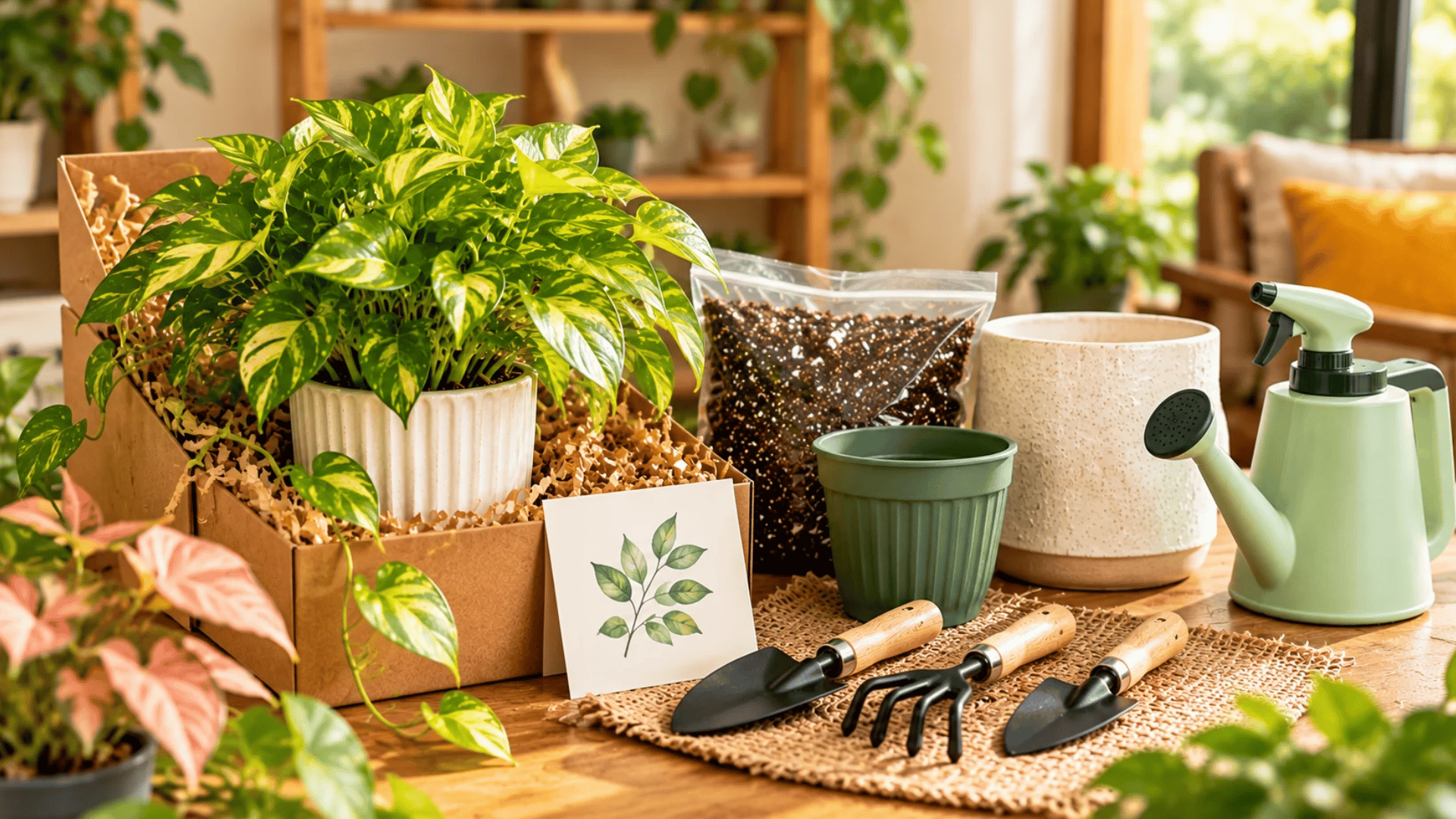
From housewarming gifts to office desk plants, discover practical hamper combinations, thoughtful care notes and simple ways to pack living gifts safely.
Key Takeaways
-
-
- Pair a Money Plant with a decorative planter. A gift-ready Jade Plant already in a ceramic pot needs no extra planter.
- Check pot size and drainage before choosing a planter.
- Include potting mix only for planned repotting. Water-grown Lucky Bamboo needs no soil.
- Add gardening tools for recipients who enjoy repotting and plant care.
- Match the plant to the recipient’s sunlight, space, and pets.
- Keep the pot upright and pack tools separately to protect the plant.
- Include a care card with light and watering instructions.
-
A small plant in a ceramic pot can make a lovely gift. Add a watering can, some potting mix, or a set of gardening tools, and you have something even more personal.
But here's something worth considering. The same gift hamper won't be equally useful to everyone.
Your friend who spends Sunday mornings caring for balcony plants might appreciate a new set of gardening tools. Someone who has just received their first indoor plant may be happier with a decorative pot and a few simple care tips.
It's these little details that make a plant gift feel personal. The plant you choose matters, but so do the things you pair with it.
Here is how to pair a plant with the pots, soil, and tools that suit both the plant and the person receiving it.
Quick Overview
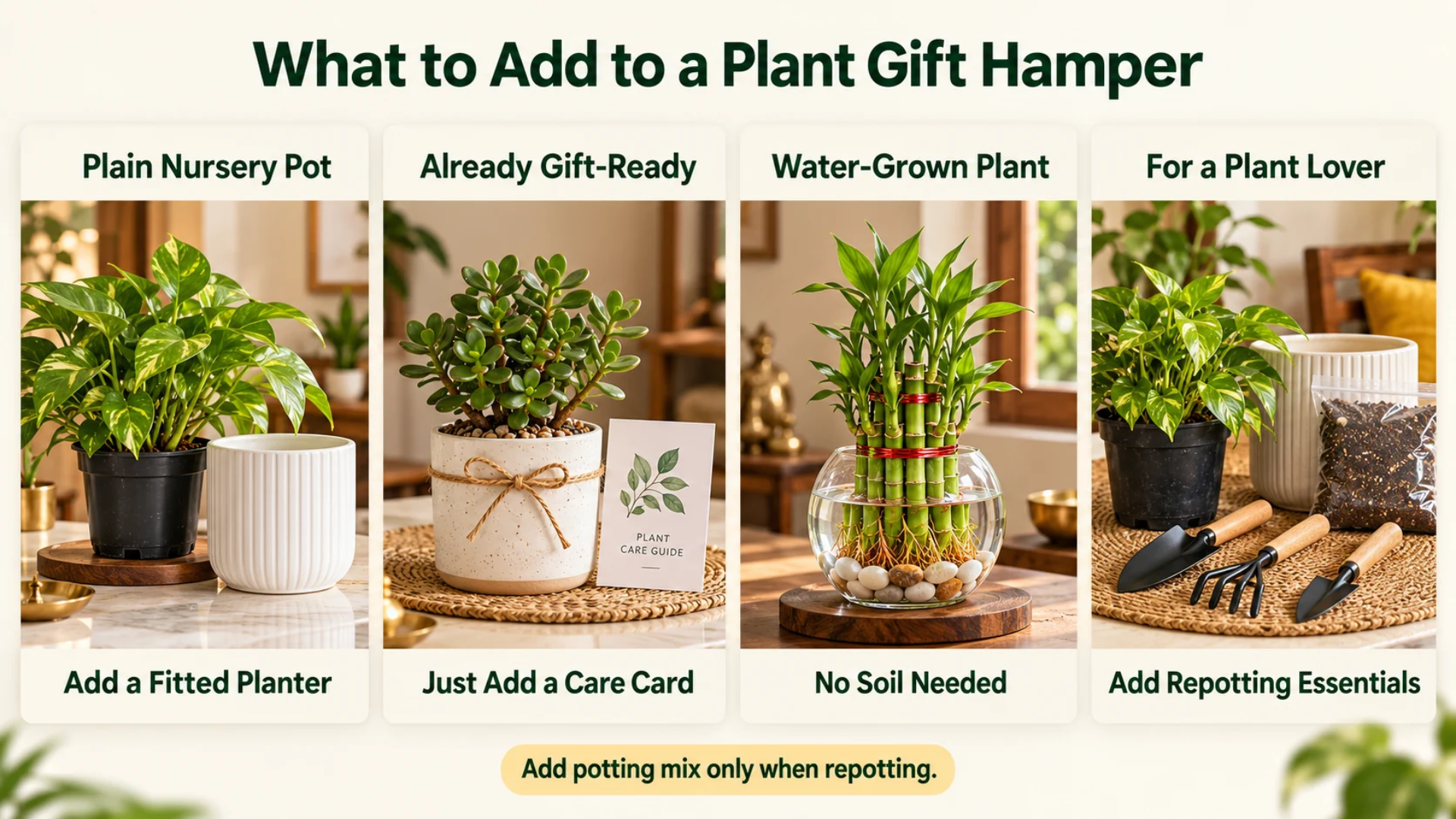
| If the Plant Arrives | Add Now | Worth Adding Only When |
|---|---|---|
| In a plain nursery pot | One planter that fits it | Soil, if the planter is a size up |
| In a decorative pot or gift bag | A short care note | Nothing else, the gift is complete |
| Growing in water, like Lucky Bamboo | Nothing | The recipient collects plants and wants a second arrangement |
| To someone who already gardens | Planter, small tool pack, 1 kg potting mix | Fertilizer, after the first three to four months |
Note: Every product named below is one Urvann currently stocks, so the combinations can be put together in a single order.
Plant Gift Ideas for Indian Homes
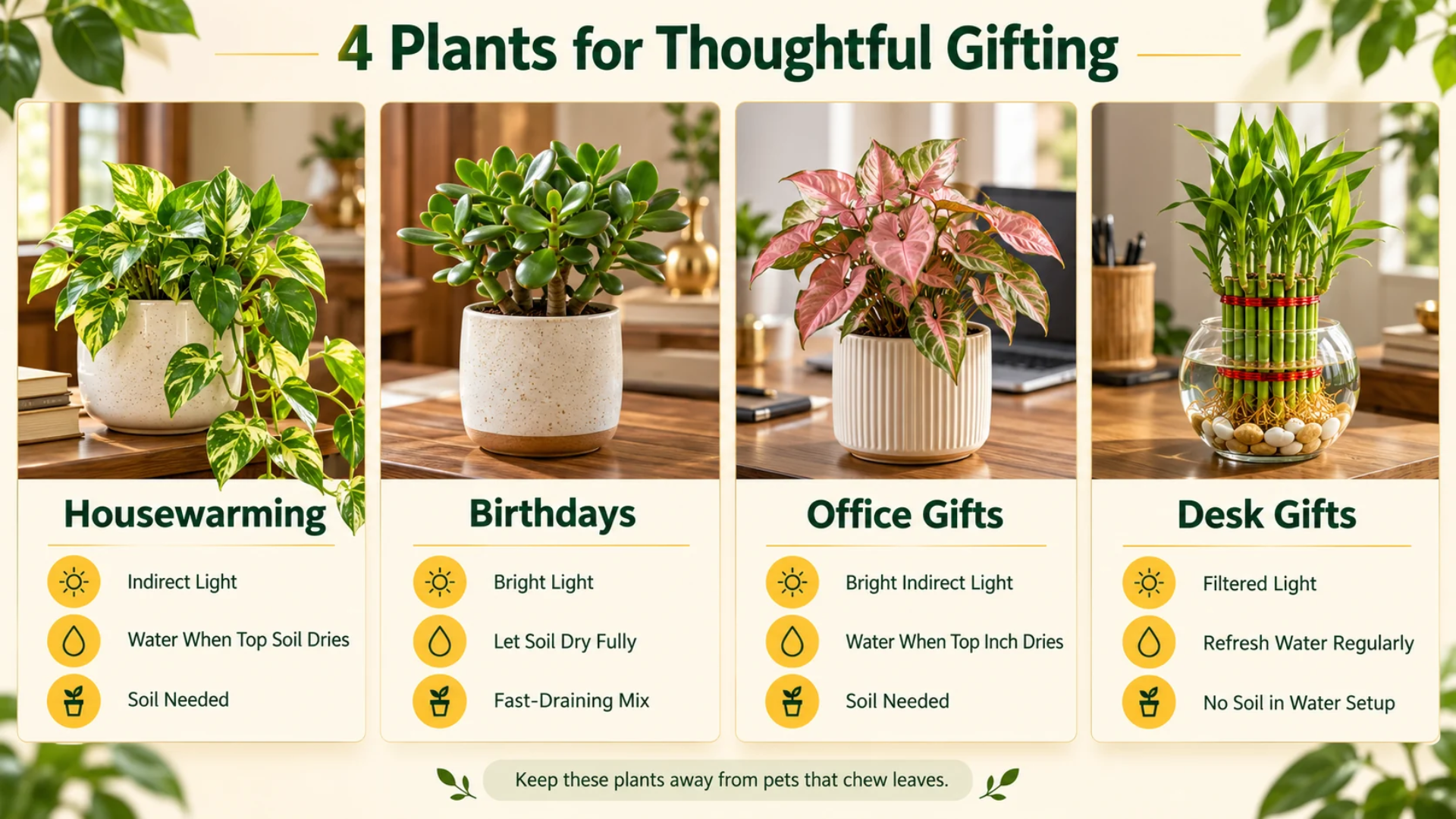
Four plants cover most gifting occasions in Indian homes, and each one suits a different kind of recipient:
- Money Plant (Epipremnum aureum; Hindi: मनी प्लांट; Kannada: ಮನಿ ಪ್ಲಾಂಟ್), for housewarmings, because it handles the indirect light most flats offer.
- Jade (Crassula ovata; Hindi: जेड प्लांट; Kannada: ಜೇಡ್ ಗಿಡ), for birthdays, since this succulent forgives a missed watering or three.
- Syngonium Pink (Syngonium podophyllum; Hindi: तीर पत्ता; Kannada: ಸಿಂಗೋನಿಯಂ), for a home shelf or office desk, where its colour does the work.
- Lucky Bamboo (Dracaena sanderiana; Hindi: लकी बैम्बू; Kannada: ಲಕ್ಕಿ ಬ್ಯಾಂಬೂ), for someone with no time at all, because it grows in water rather than soil.
Before you pick any accessory, it helps to see what each plant actually needs, since most hamper mistakes come from pairing something with a plant that has no use for it.
| Plant | Light | Watering | Needs Soil? | Hardest Part for a Beginner |
|---|---|---|---|---|
| Money Plant | Indirect or diffused | When the top 1 to 2 inches are dry | Yes | Overwatering in a pot without drainage |
| Jade | Bright, 4 to 6 hours | Only after topsoil dries fully | Yes, gritty and fast-draining | Watering it like a regular houseplant |
| Syngonium Pink | Bright indirect, never direct sun | When top 1 inch is dry | Yes | Pink fades to green in harsh sun |
| Lucky Bamboo | Medium or filtered | Change water every 5 days | No, grows in water | Leaving it in direct sun |
You can explore options beyond these plants, such as:
- Varieties that can tolerate neglect, which are perfect for people who have never kept a plant
- Plants for air quality, which are suitable for a new flat
If you are looking for plants that are perfect for weddings, anniversaries, and work occasions, read our guide to gifting by occasion.
What to Pair With a Money Plant Housewarming Gift
The Money Plant Green in a 4-inch nursery pot arrives in a pot that is functional rather than presentable, which makes this the one plant here where a separate planter genuinely improves the gift.
It grows happily in the diffused light most Indian flats and shaded balconies offer, and it only needs water once the top inch or two of soil feels dry. Being a fast-growing vine, it pushes out new leaves within weeks, so the recipient sees something happening early on, and that is a large part of why it works as a gift rather than an ornament.
- Suits: someone moving into a new home, a flat with low light, a first-time plant owner.
- Does not suit: a household with a cat or dog that chews leaves. Money Plant belongs to the Araceae family and carries calcium oxalate crystals, which can irritate pets, so a variety that is safe around animals is the better call for those homes.
Money Plant also carries a long-standing association with prosperity in Vastu. If the recipient takes to it, several varieties are grown in Indian homes beyond the common green one, which is a useful thing to mention on the card.
What to Pair With a Jade Plant Birthday Gift
For birthdays, you can take a look at various Jade Plant options that will suit your needs. A Jade Plant in a decorative pot makes a simple birthday gift without needing another planter. Add a handwritten card with its care instructions and a personal birthday message.
What makes Jade such a reliable birthday gift is how much it tolerates.
It stores water in its leaves, wants four to six hours of bright light, sits comfortably anywhere between 15 and 30 degrees Celsius, and asks for water only once the topsoil has dried out completely.
- Suits: a colleague, a frequent traveller, anyone who has killed a plant before, a pet household.
- Does not suit: a dark north-facing flat, where it will stretch and go leggy within a few months.
One line is worth writing on the card: Jade is a succulent, not a regular houseplant, and the most common way people lose it is by watering it on the same schedule as everything else on the shelf. Its association with wealth in both Vastu and Feng Shui gives you something warmer to add underneath.
What to Pair With a Syngonium Pink Office Gift
There are two routes here, and the only real mistake is taking both. Syngonium Pink in 4 Inch Classy Cylindrical Ceramic Pot with Tray arrives potted and ready to give, while the Syngonium Pink in 4 Inch Nursery Pot is also a good option.
Also known as the arrowhead plant, Syngonium Pink changes leaf shape as it matures, moving from a simple arrow to a five-lobed form, which gives the recipient something to notice over time. It is air-purifying and handles indoor conditions well, which is why it holds up on an office desk where light is average and attention is occasional.
- Suits: an office desk, a shelf with bright indirect light, someone who wants colour rather than just green.
- Does not suit: a pet household, for the same Araceae reason as Money Plant, or an open balcony, where direct sun will turn the pink foliage green.
That colour detail is the one thing worth writing down, because the pink is usually why the plant was chosen in the first place. An indoor shelf or an east-facing window will keep it, and a balcony railing will not.
What to Pair With a Lucky Bamboo Desk Gift
The 2 Layer Lucky Bamboo in a glass bowl is a finished arrangement rather than a starting point. The recipient changes the water every five days or so, and that is genuinely the whole routine.
- Suits: a small desk, a colleague you do not know well, someone with no time at all.
- Does not suit: anyone hoping for a plant that visibly grows and changes, since Lucky Bamboo stays much the same for months.
In Feng Shui, the number of stalks carries its own meaning, with three for happiness, five for health and eight for growth and prosperity, which makes a far better card line than a generic good-luck message. Keep it in medium or filtered light, as direct sun will scorch the stalks.
Planters for Gifting: Choosing the Right Pot
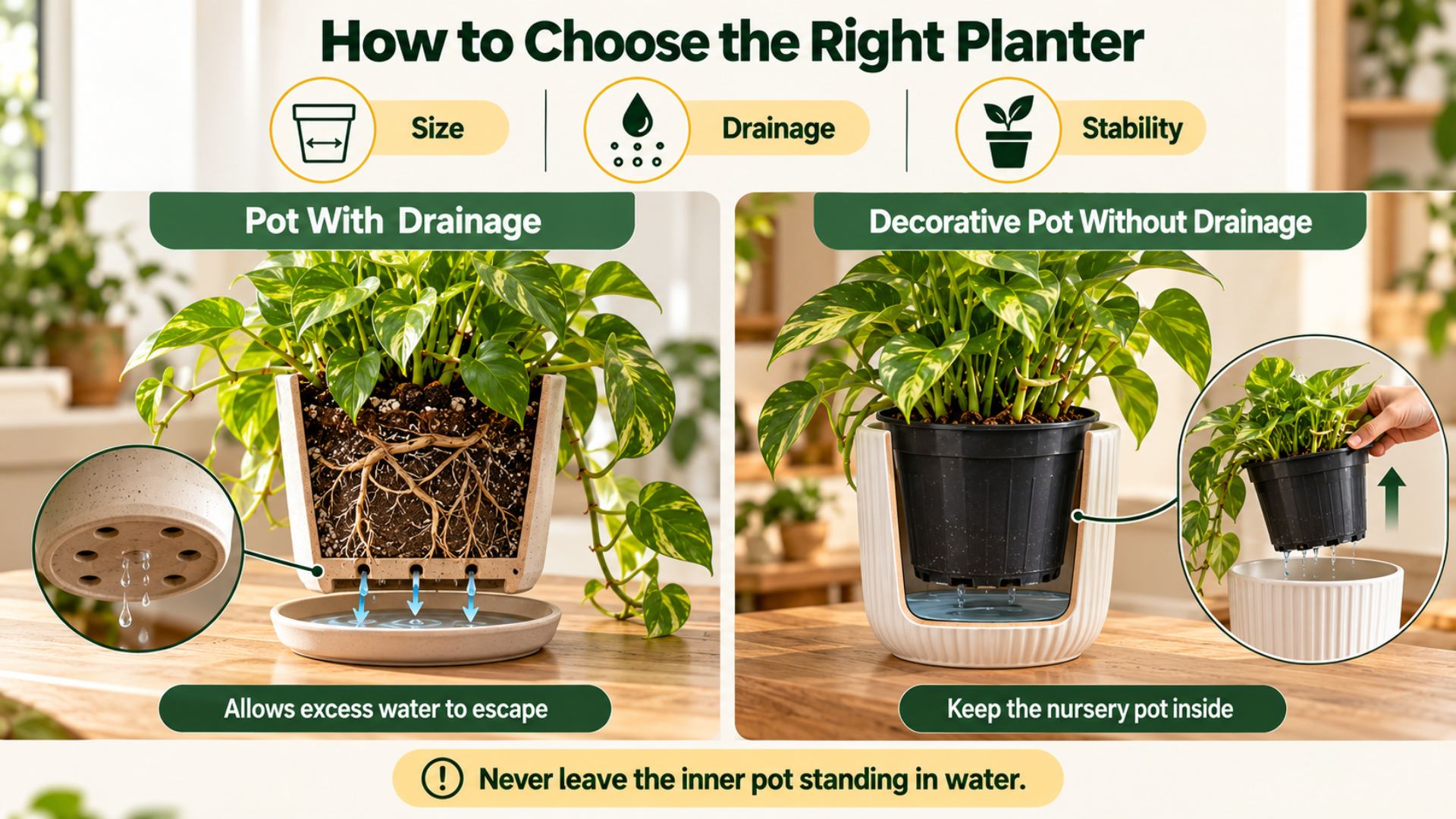
Match a 4-inch plant to a planter sized for a 4-inch pot, or go one size up if the recipient is likely to repot soon. Pot size is listed as a diameter on each planter, so three quick checks will settle most purchases:
- Size, measured against the pot the plant currently sits in, not the plant itself.
- Drainage, which decides whether the plant can live in the planter or only sit inside it.
- Weight, since a tall plant in a light pot tips over on a windy balcony.
Ceramic Planters for Indoor Plant Gifts
Ceramic sits better on a shelf or dining table than plastic does, and the extra weight keeps a top-heavy plant upright, though it chips easily enough that it needs careful packing.
The thing to watch is that many decorative ceramic pots have no drainage hole at all, which matters for both Money Plant and Jade.
The fix costs nothing: leave the plant in its nursery pot and slide that pot inside the ceramic planter, so water drains through into the outer pot and can be poured out after twenty minutes. As a bonus, it also lets the recipient swap the plant later without repotting anything.
Lightweight Plastic Pots for Everyday Care
Plastic is the easier choice for a balcony or a crowded windowsill, since it survives a knock and stays light enough to move when the afternoon sun shifts. The 4-inch white orchid round plastic pot has drainage holes and takes a 4-inch plant directly, no inner pot needed.
For a first-time plant owner, drainage beats decoration every time, because overwatering is the single most common reason new plant owners lose a plant.
Potting Mix and Fertilizer for Plant Gift Hampers
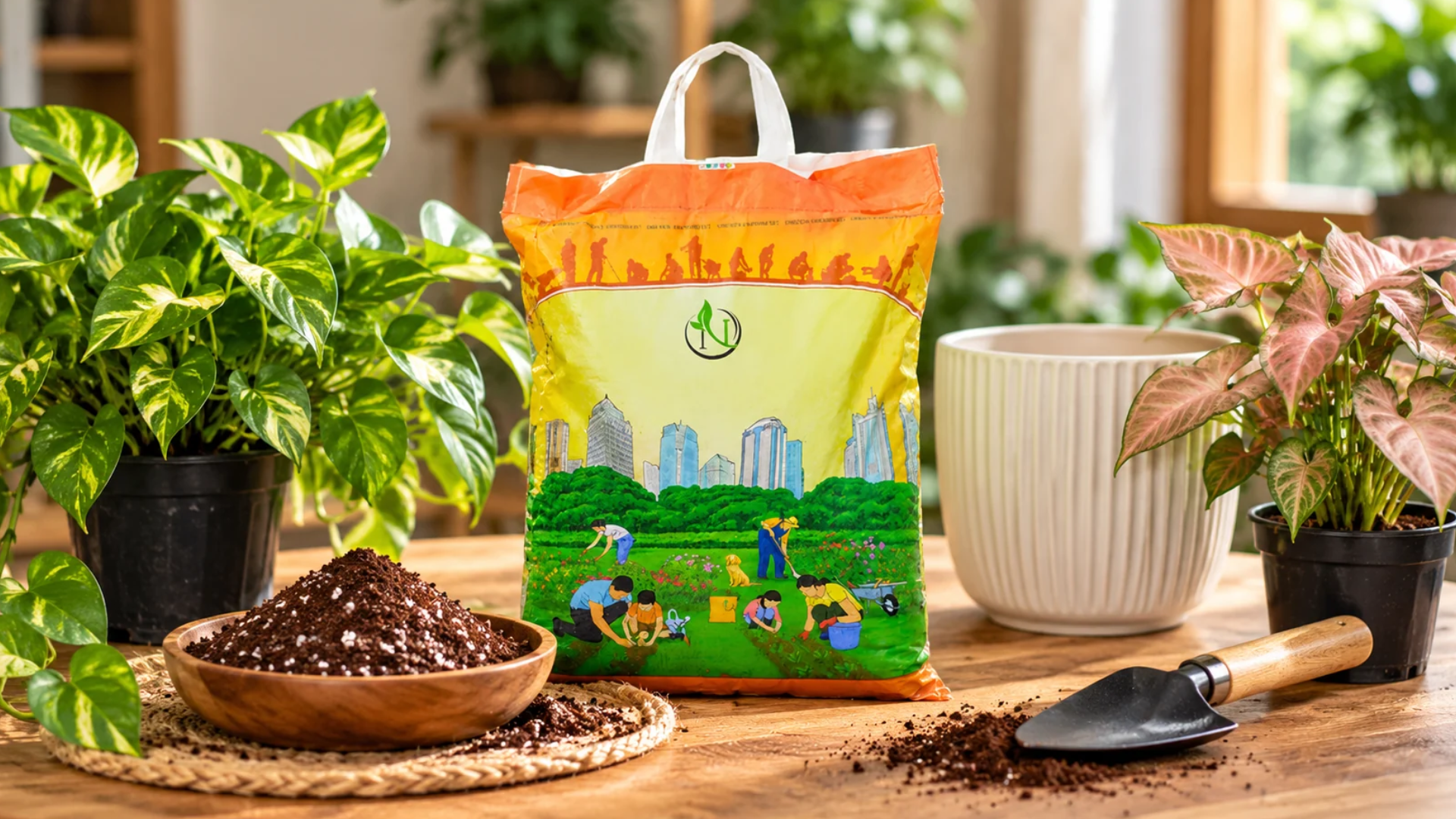
The 1 kg Potting Mix helps improve soil aeration, drainage, and moisture retention, supporting healthy root growth.
It makes a useful addition to a plant gift hamper for someone planning to repot their plants. Pair it with a slightly larger planter and choose a mix that suits the plant's needs.
Match the mix to the plant:
- Money Plant and Syngonium do well in this indoor mix as it comes.
- Jade needs something grittier and faster-draining, so add perlite or vermiculite, cocopeat and vermicompost rather than using a standard mix on its own.
- Lucky Bamboo in water needs no soil whatsoever.
Fertilizer follows much the same logic. A new plant arrives in fresh growing medium and needs no feeding for the first three or four months, so it belongs in a hamper only for someone with an established collection who will use it on other plants. After that first stretch, Money Plant takes vermicompost every three to four months, and Jade only around twice a year.
Gardening Tools to Add to Plant Gift Hampers
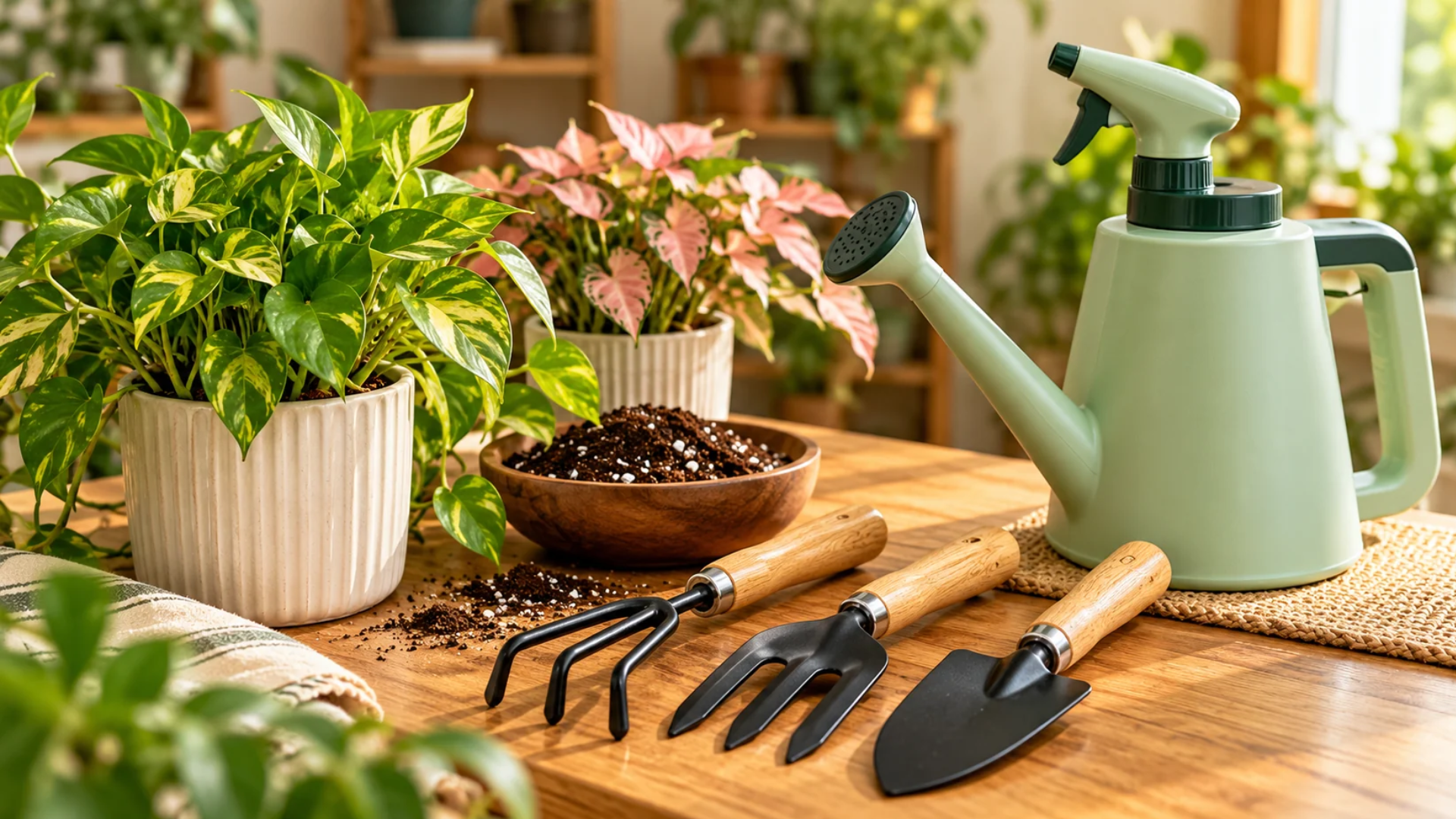
Gardening tools are useful gifts for people who enjoy repotting, pruning, and caring for plants. Choose them according to the recipient's gardening routine.
- For indoor plant owners: The 1.5-litre two-in-one watering spray and can combines regular watering and gentle spraying.
- For balcony gardeners: Urvann's 4-piece Essential Garden Tool Kit includes a hand cultivator, garden fork, trowel, and gloves for repotting and soil care.
- For terrace gardeners: The 10-inch gardening tool set includes a cultivator, trowel, and garden fork. Pruning scissors are another useful addition for trimming stems and branches.
For someone who already owns basic gardening tools, choose an individual khurpi, pruning scissors, or gloves instead of another complete kit.
Add a short care note explaining how to check soil moisture before watering. Urvann's guide to the best time to water plants offers additional guidance.
Plant Gift Hamper Ideas for Different Occasions
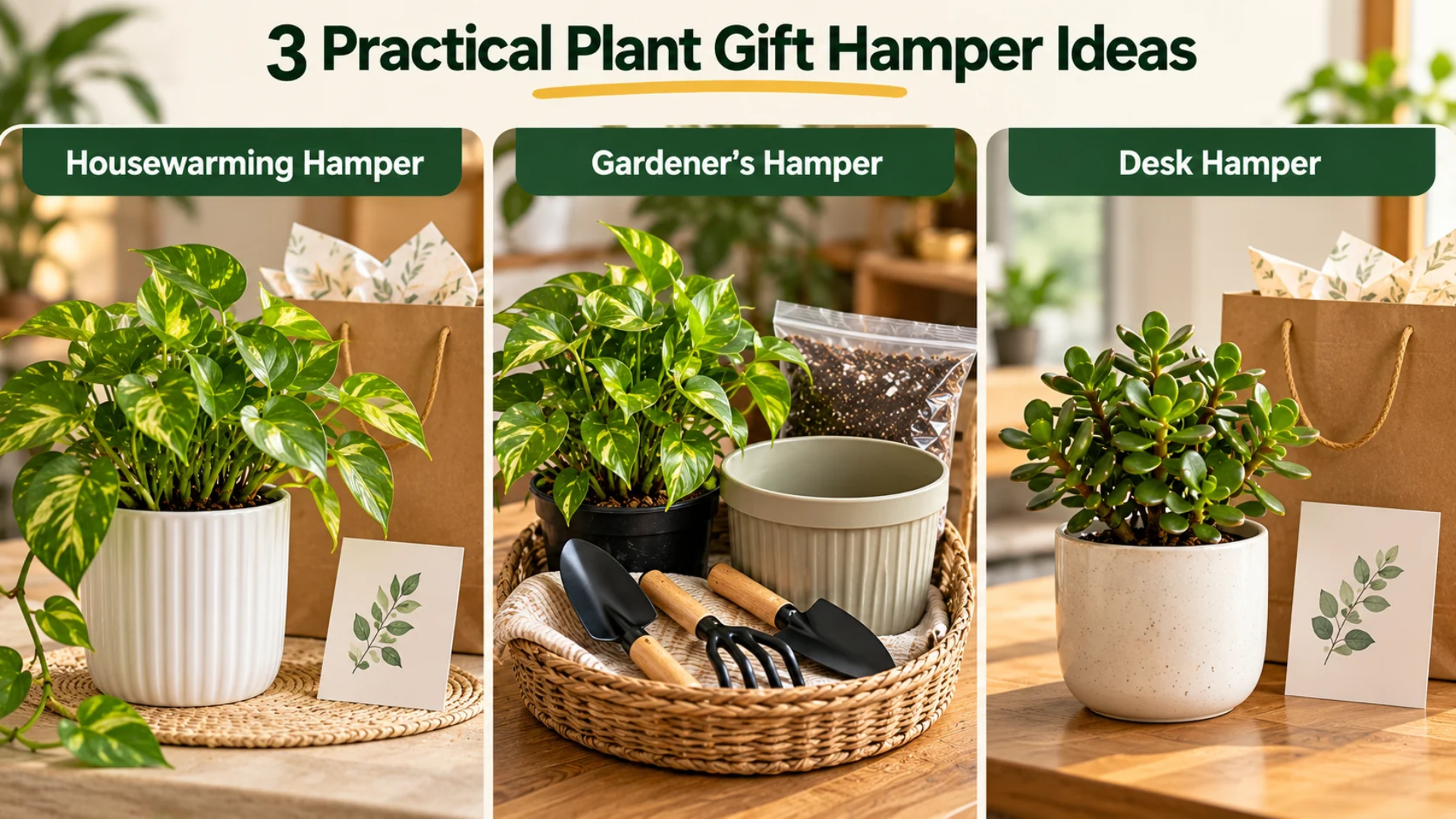
Three worked examples described how the recipient will see them when they open the gift.
The Housewarming Hamper
A Money Plant sits in its nursery pot, which in turn sits inside a plain white ceramic planter, with the nursery pot hidden below the rim so only the finished planter shows. A folded card, three lines long, is tucked against the inside edge. The whole thing travels in a flat-based paper bag with the plant kept upright, and nothing else goes in. It looks complete because the planter frames the plant instead of competing with it.
The Gardener’s Hamper
This one is deliberately a kit rather than a decoration. A Money Plant goes in alongside a 4-inch white orchid round plastic pot, a size up for repotting, a 1 kg pack of indoor potting mix and a 10-inch tool pack. Arrange it in a shallow basket or carton with the soil pack flat at the base, the tools laid beside it, and the plant standing at the back so nothing leans on the leaves. It reads as generous because every item has an obvious next use.
The Desk Hamper
Gift-ready: Jade in Classy Ceramics, presented with a card. That is the entire hamper, and it works precisely because the pot, the plant and the packaging were designed together, so anything added would sit outside that design.
What the three have in common is one visual focus, with everything else either hidden or clearly functional. A hamper looks expensive when the items relate to each other, not when there are more of them.
Plant Gift Wrapping Ideas for Safe Delivery
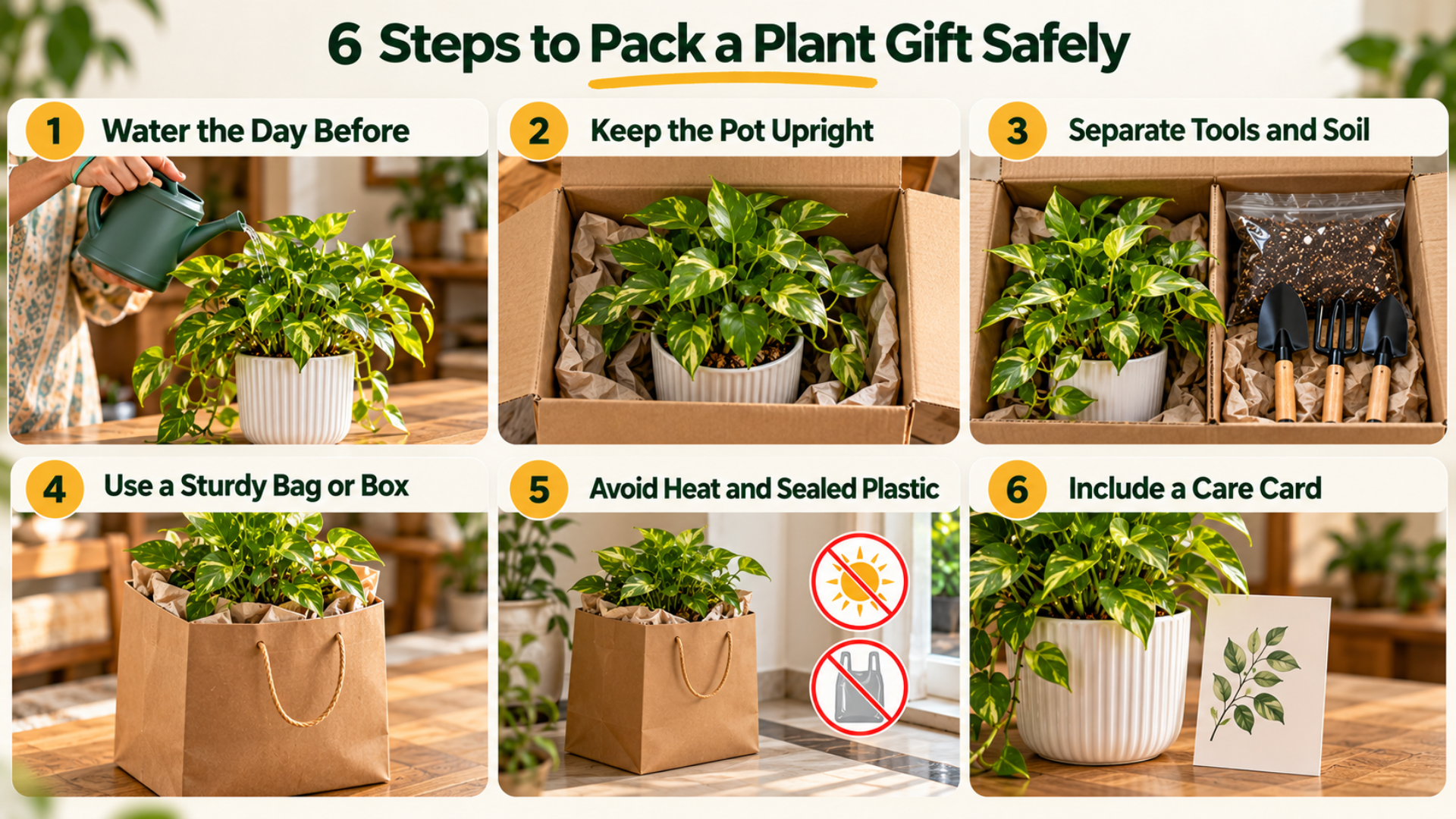
A living gift is fragile in ways a boxed one is not, so six small steps prevent most of the damage:
- Water lightly the day before, not on the day, because wet soil is heavy and spills in transit.
- Wedge the pot upright, since a flat-based bag or small carton holds far better than a soft bag.
- Keep tools and soil away from the plant, as a loose trowel sliding across leaves will tear them.
- Reuse the bag or box it came in, which was already sized for that pot.
- Avoid sealed plastic and hot cars, both of which cook a plant within a couple of hours.
- Add a three-line care note with the plant name, its light needs and how to check the soil.
Festival hampers follow slightly different rules, since they usually hold more than one plant. Container and decoration ideas for festival arrangements are covered separately, as are picks sorted by recipient for Diwali.
Common Mistakes When Creating Plant Gift Hampers
- Gifting an Araceae plant to a pet household: Money Plant and Syngonium can both irritate a cat or dog that chews the leaves.
- Choosing a decorative pot without drainage: A sealed ceramic pot holds water at the roots with nowhere for it to go.
- Pairing potting mix with a water-grown plant: Lucky Bamboo in a glass bowl has no use for soil.
- Watering Jade like a regular houseplant: It is succulent and needs considerably less.
- Sending a bright-light plant to a dark flat: No amount of care compensates for the wrong spot.
- Buying a second planter for a plant that arrived in one: The most frequent and most expensive error of the lot.
Conclusion
The plant decides the hamper. A plant in a plain nursery pot is asking for a planter, while a plant in a ceramic pot with a gift bag is already finished and needs nothing but a card. Someone with a balcony collection will use tools and soil within the week, and someone opening their first plant will get more out of three lines of care advice than either.
Get those two decisions right, the plant and the one thing beside it, and the hamper looks considered rather than assembled.
If you are still deciding, it is worth comparing plants that arrive ready to gift against plainer potted plants you would rather pair yourself, since the two need very different accessories.
Frequently Asked Questions (FAQs)
1. What to put in a plant gift basket?
Start with the plant and add one thing at most. A plant in a plain nursery pot needs a planter that fits it, while a plant already in a ceramic pot or gift bag needs nothing at all. Potting mix is worth including only if you are also gifting a bigger planter, and a small tool pack only once the recipient is caring for three or four plants. A three-line care note costs nothing and gets used more than any accessory in the hamper.
2. What plant makes a good gift in India?
A good plant gift survives the recipient’s actual conditions rather than ideal ones. Money Plant handles indirect light and suits most flats, Jade tolerates missed watering and works for people who travel, Syngonium Pink stays compact enough for a desk, and Lucky Bamboo in water needs almost no care at all. Match the plant to the light the person has and the time they can realistically give it, and start with a variety that tolerates neglect if they have never kept one before.
3. Which plants should not be gifted?
Three categories are worth avoiding, each for a different reason.
- Thorny plants, including cactus. In Vastu, thorny plants are traditionally kept out of living areas and are not considered an auspicious gift, though this is a belief rather than a rule and matters only if the recipient follows it. For someone who collects succulents, a cactus is a thoughtful gift rather than a wrong one.
- Plants that need more light than the recipient has. A sun-loving plant sent to a north-facing flat will struggle no matter how carefully it is looked after.
- Araceae family plants, if there are pets at home. Money Plant and Syngonium both belong to this family and contain calcium oxalate crystals, which can irritate a cat or dog that chews the leaves, so a variety that is safe around animals is the safer choice.
4. What are some quirky or unusual plant gifts?
Novelty usually comes from the container or the arrangement rather than from a rare plant. A two-layer Lucky Bamboo in a glass bowl reads differently from a standard potted plant because the roots are visible, and a Jade in a Buddha-shaped designer ceramic pot works as a desk object as much as a plant. Jade also prunes into a bonsai-style form over the years, which gives the recipient something to shape rather than simply maintain. Rare varieties are a poor choice unless you know the person already gardens, since unusual plants tend to need more precise care than a gift recipient expects.
5. Why send plants instead of flowers?
Cut flowers last roughly a week, whereas a Money Plant or Jade lasts years and keeps growing, so the gift stays visible long after the occasion has passed. Plants also work out cheaper per month of life and never need to be thrown away. The trade-off is that a plant asks something of the recipient, so for someone with no time or a very dark home, flowers may still be the kinder choice.
6. How to give a plant as a gift?
Water it lightly the day before rather than on the day, since wet soil is heavy and spills in transit, and keep the pot upright and wedged while carrying it. Reuse the gift bag or box it arrived in, because that packaging was already sized for the pot. Add a short note with the plant’s name, its light needs, and how to check the soil. If the plant came in a plain nursery pot and you have bought a decorative planter, leave the plant inside the nursery pot and place that inside the planter, so water can still drain away.
7. What are some good gardening tools gift ideas?
Here are good gardening tools gift ideas you can consider:
- Indoor plant owners: A 2-inch Khurpi for loosening soil in small pots.
- Balcony gardeners: Urvann's 4-piece tool kit with a cultivator, fork, trowel, and gloves.
- Terrace gardeners: A 10-inch gardening tool set for planting and soil care in larger pots.
- Pruning enthusiasts: Gardening scissors or 8-inch pruning secateurs for trimming plants.
Choose a complete kit for beginners or individual tools for experienced gardeners.