


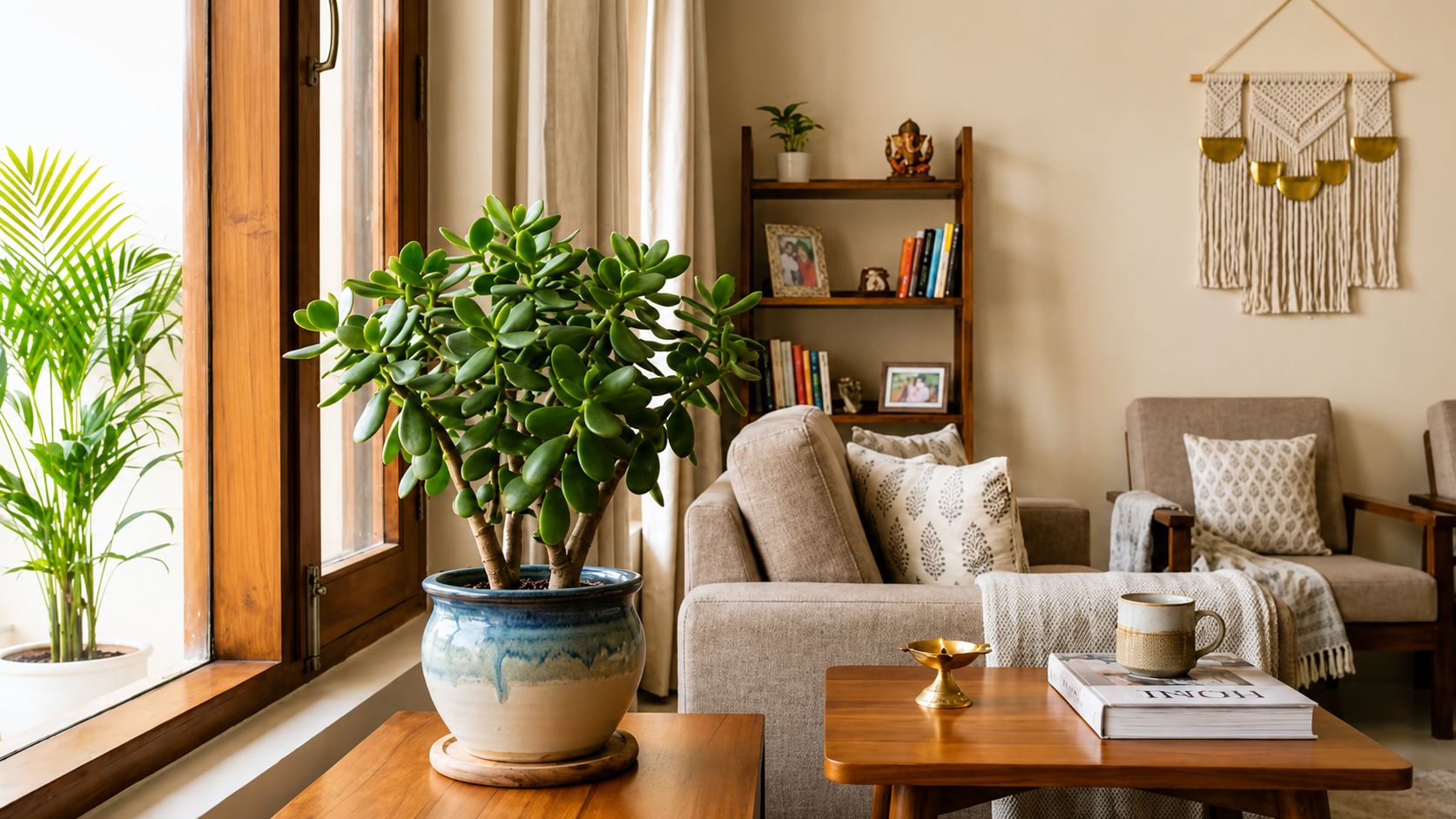
Jade plants symbolise wealth, prosperity, and positive energy. Learn their meaning, Vastu placement, benefits, care tips, and common mistakes to avoid.
Key Takeaways
- The Jade plant symbolises wealth, prosperity, stability, and positive energy in both Feng Shui and Vastu Shastra.
- The best places to keep a Jade plant are near the entrance, in the southeast corner, or on a work desk for financial and career growth.
- Jade plants need bright indirect light, well-draining soil, and minimal watering. Overwatering is the most common cause of damage.
- A healthy Jade plant is considered auspicious, while a neglected or dying plant is believed to reduce positive energy in a space.
- Jade plants are long-living, low-maintenance plants that also make meaningful gifts for housewarmings, weddings, festivals, and business openings.
There is a saying that has been passed around for generations: "Jade by the door, poor no more."
Nobody knows exactly who said it first. But the belief has persisted across cultures, continents, and centuries, and there is a reason for that.
The Jade plant (जेड प्लांट), known botanically as Crassula ovata, is one of the most widely recognised symbols of luck, prosperity, and positive energy in both Feng Shui and Vastu Shastra. Its thick, glossy, coin-shaped leaves have made it a fixture in Indian homes, offices, and entranceways for decades.
But what actually makes this plant lucky?
Where does that belief come from?
And does placement really matter?
This guide covers all of it:
- The meaning behind the plant
- Its real benefits
- Where to keep it
- How to care for it so it stays healthy enough to do its job
What Does the Jade Plant Mean?
Each leaf is small, round, and fleshy, closely resembling a coin. In Chinese culture, round shapes symbolise completeness and financial abundance. The Jade plant, with its clusters of coin-like leaves growing continuously outward, became a natural symbol of money multiplying and wealth accumulating over time.
In Feng Shui, the plant is believed to activate positive financial energy, or chi, in any space where it is kept. Its vibrant green colour represents renewal, growth, and vitality. Its slow but steady growth over decades mirrors the idea of long-term prosperity rather than quick, unstable gains.
In Vastu Shastra, the Jade plant represents the earth element, grounding, stability, and security. A plant that thrives for 50 to 70 years without much intervention is, in itself, a symbol of endurance. Many Indian families have Jade plants that have been passed down through generations, living, growing reminders of continuity and good fortune.
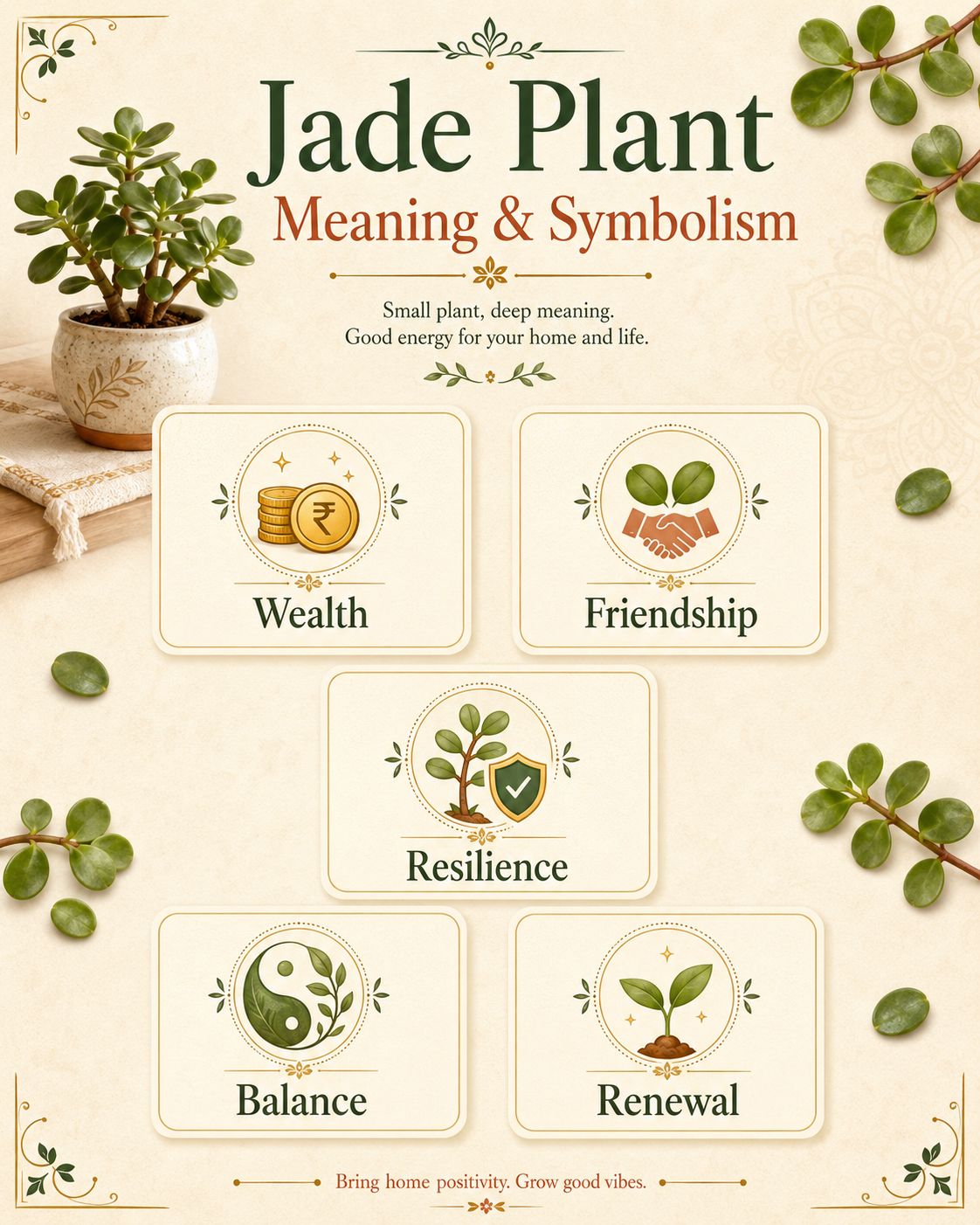
Beyond wealth, the plant carries several other layers of meaning:
- Friendship: It is often called the “Friendship Plant” because gifting it is seen as an expression of goodwill and long-term loyalty
- Resilience: Its ability to survive neglect and bounce back represents perseverance through difficulty
- Balance: As an earth element plant in Vastu, it brings a grounding energy that balances more active or unstable energies in a space
- Renewal: Its evergreen nature, never losing its leaves and always growing, represents continuous fresh starts
Benefits of Keeping a Jade Plant at Home
The Jade plant earns its reputation. Here is what it actually delivers.
1. Attracts Wealth and Positive Energy
This is the benefit most people know. In both Feng Shui and Vastu, a healthy Jade plant placed in the right direction is believed to attract financial prosperity, career growth, and business success. The operative word is healthy. A thriving, well-maintained plant amplifies positive energy, while a neglected or dying one can do the opposite. More on placement below.
2. Purifies Indoor Air
The Jade plant filters indoor air by absorbing volatile organic compounds, including acetone and toluene, chemicals commonly found in paints, cleaning products, and furniture. While it is not a replacement for proper ventilation, it can help improve the overall feel and freshness of indoor spaces.
3. Produces Oxygen at Night
Most plants absorb carbon dioxide during the day and release it at night. The Jade plant is different. It uses Crassulacean Acid Metabolism, a unique photosynthetic process that means it absorbs CO2 at night and releases oxygen. This makes it one of the few plants genuinely suited to bedrooms from an air quality perspective, despite Vastu recommendations to keep it elsewhere.
4. Increases Indoor Humidity
The Jade plant naturally releases moisture into the air through a process called evapotranspiration. In Indian winters, or in air-conditioned spaces year-round, this helps maintain indoor humidity levels, reducing dryness that can cause respiratory irritation and skin problems.
5. Reduces Stress and Improves Focus
Multiple studies confirm that the presence of indoor plants reduces cortisol levels and promotes a calmer mental state. The Jade plant, with its compact, structured appearance and low-maintenance nature, provides visual calm without the anxiety of a demanding plant. Keeping one on a work desk is associated with improved focus, clarity, and productivity.
6. Extremely Low Maintenance
This is an underrated benefit. A plant that stresses you out is not improving your home environment. It is adding to the chaos. The Jade plant requires watering every two to three weeks, tolerates low light better than most succulents, and survives weeks of neglect without complaint. For busy households, this reliability is itself a form of good fortune.
7. Long Lifespan
With basic care, a Jade plant lives for 50 to 70 years. It is one of the longest-living houseplants you can own. That longevity gives it a quality no other decorative object can match. It grows with you, changes with your home, and can genuinely become part of a family's history.
Things to Know Before Growing a Jade Plant
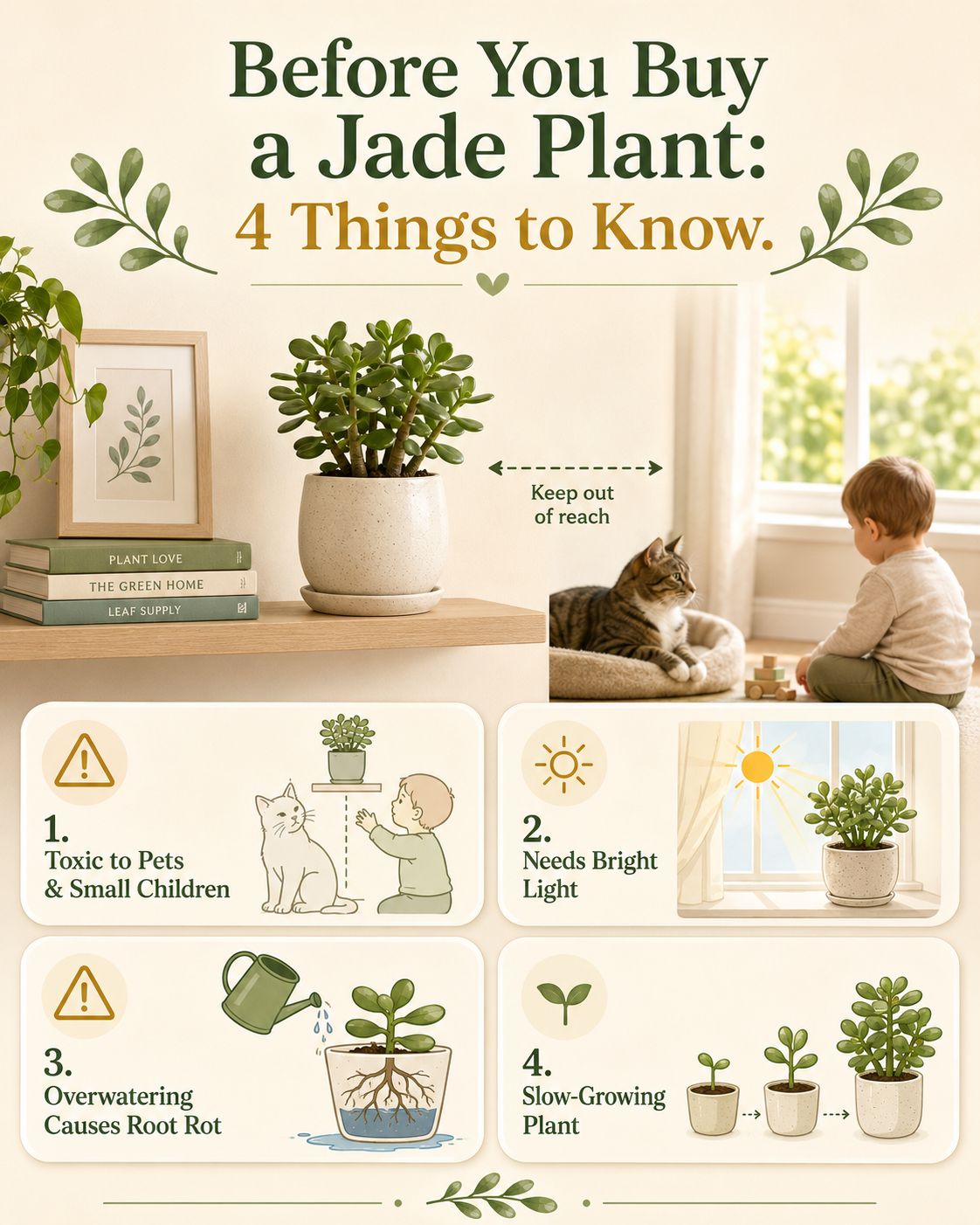
Here is what to be aware of:
1. Toxic to Pets and Children
The Jade plant contains compounds that are toxic to cats, dogs, and small children if ingested. It can cause vomiting, lethargy, and, in larger quantities, more serious symptoms. If you have pets or very young children, keep the plant out of reach, on a high shelf or in a room they cannot access freely.
2. Needs More Light Than Most People Expect
Despite its reputation as a low-maintenance plant, a Jade plant that does not receive at least four hours of bright light per day will become leggy, lose its compact shape, and eventually decline. Indoor corners with no natural light will not work.
3. Overwatering Kills it Fast
The single most common way people lose a Jade plant is through overwatering. Because its leaves store water, it does not need frequent watering, and waterlogged soil can lead to root rot within days. If in doubt, always wait another day before watering.
4. Slow Grower
If you are looking for a plant that transforms a space quickly, the Jade plant is not it. Its growth is slow and deliberate. That is part of its character and symbolism, but it is worth knowing upfront.
Best Placement for Jade Plant at Home as per Vastu and Feng Shui
Placement is where the Jade plant's reputation either earns its keep or falls flat. Both Vastu Shastra and Feng Shui are specific about this.
Where to Keep a Jade Plant
1. Entrance of Your Home
The most universally recommended placement. Positioning a Jade plant near the main door, either just inside or just outside, is believed to welcome prosperity and positive energy into the home. It creates an immediate visual anchor and sets the energetic tone for the entire space.
2. Southeast Direction (Wealth Corner)
In both Vastu and Feng Shui, the southeast corner is associated with wealth, financial growth, and abundance. It is governed by the fire element in Vastu and linked to Venus, the planet of luxury and material comfort. A Jade plant in the southeast corner of your living room, home office, or business space is considered the most powerful placement for financial benefit.
3. East Direction
The east is associated with the sun, new beginnings, health, and vitality. Placing a Jade plant here promotes personal growth, good health, and clarity. A study table or work desk in the east of a room is an ideal spot.
4. Office Desk or Workspace
A small Jade plant on your work desk, especially in the southeast corner of the desk, is believed to attract business success and career growth. It also keeps the workspace calm and focused, which has practical value regardless of belief system.
5. Living Room
A well-lit corner of the living room, near a window, works well for both the plant's health and the flow of energy through the home's most social space.
Where NOT to Keep a Jade Plant
1. Bedroom
Vastu advises against keeping active, wealth-attracting plants in the bedroom. The energy of the Jade plant is considered too stimulating for restful sleep. From a practical standpoint, bedrooms also tend to have lower light levels, which affects the plant's health over time.
2. Bathroom or Toilet
In both Vastu and Feng Shui, bathrooms represent drainage, water and energy flowing out. Placing a luck-attracting plant here is considered counterproductive, symbolically washing away the prosperity you are trying to bring in.
3. North Direction
Despite the north direction being associated with a career in Vastu, placing a Jade plant here is not recommended. The earth element of the plant can conflict with the water element of the north direction, potentially blocking rather than supporting progress.
4. Dark Corners With No Natural Light
This is practical rather than philosophical. A Jade plant in a dark corner will decline. A declining or dying plant, regardless of its placement direction, is considered inauspicious in both Vastu and Feng Shui. A healthy plant in a slightly less ideal location is always better than a struggling plant in the "correct" corner.
Vastu Tips for Jade Plant Placement
- Keep the plant at eye level or slightly below for the best energy flow
- Use red, brown, or gold-coloured pots to amplify wealth energy
- Remove yellow or dry leaves immediately. They are believed to attract negative energy
- Never let the plant become root-bound and neglected. Repot when needed
- Avoid moving the plant frequently once it is settled in a spot
Jade Plant As a Gift: What It Means
The Jade plant is one of the most meaningful gifts you can give, and one of the most practical.
Gifting a Jade plant carries the wish for prosperity, long-term success, and enduring friendship. Its 50-plus year lifespan means your gift will outlast most other presents the recipient ever receives. Every time the plant grows a new leaf, puts out a branch, or flowers in winter, it becomes a living reminder of the relationship.
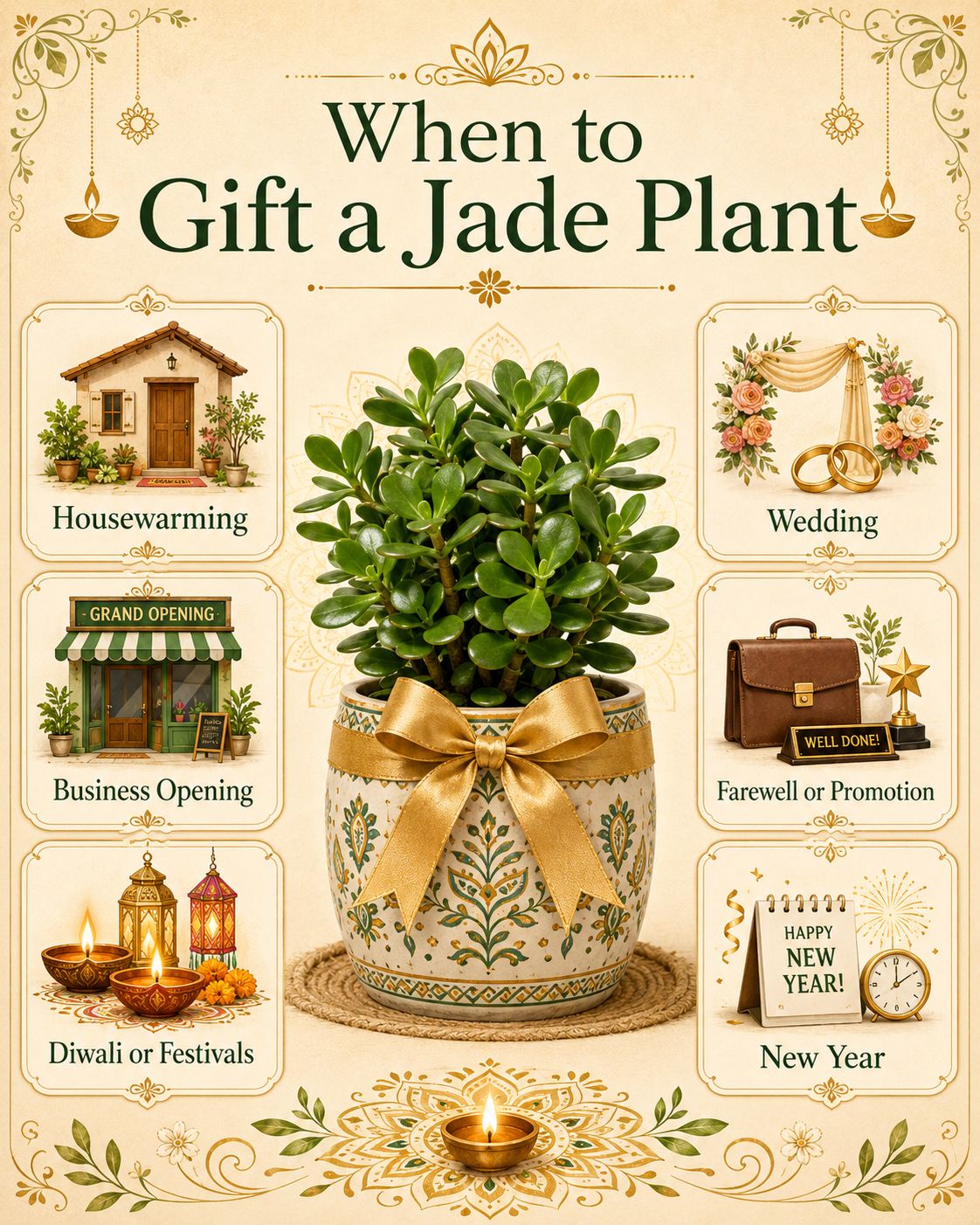
When to Gift a Jade Plant
- Housewarming: Welcoming wealth and positive energy into a new home
- Business opening: Wishing success and financial growth to a new venture
- Diwali or festivals: Considered one of the most auspicious prosperity gifts in Indian tradition
- Wedding: Symbolising growth and abundance in a couple's new life together
- Farewell or promotion: Wishing continued success to someone moving forward
- New Year: Setting the intention for a prosperous year ahead
A Jade plant in a ceramic or terracotta pot, paired with a short note explaining its meaning, becomes a thoughtful gift that requires very little maintenance from the recipient.
How to Care for Your Jade Plant
A lucky plant that is dying is not bringing you luck. Here is how to keep it thriving:
1. Sunlight
Jade plants need bright, indirect light for at least four hours a day. A south or east-facing window is ideal. Direct afternoon sun can scorch the leaves in Indian summers. Morning sun is gentler and better. If the plant starts growing tall and leggy with stretched stems, it needs more light.
2. Watering
Water only when the top one to two inches of soil are completely dry. In summer, that typically means every seven to ten days. In winter, reduce watering to once every two to three weeks. Overwatering is the most common cause of Jade plant death. The leaves turn yellow, become mushy, and the plant declines quickly. When in doubt, wait.
3. Soil
Use a well-draining succulent or cactus mix. If you are mixing your own soil, combine regular potting soil with coarse sand or perlite. The goal is soil that lets water pass through quickly and does not stay wet. Always use a pot with drainage holes.
4. Fertiliser
Feed once a month during the growing season, from spring through early autumn. Use a balanced, water-soluble fertiliser at half strength. Stop fertilising in winter when the plant is resting. Over-fertilising damages roots and causes rapid, weak growth.
5. Pruning
Prune in spring to maintain shape and encourage bushier growth. Cut just above a leaf node. Remove dead or yellowing leaves as soon as you notice them. They drain energy from the plant and, in Vastu terms, are believed to introduce negative energy into the space.
6. Repotting
Jade plants like being slightly root-bound, so do not rush to repot. When roots start coming out of the drainage holes, move the plant to a pot that is two to three inches larger. Use fresh soil when repotting.
Common Problems and Quick Fixes
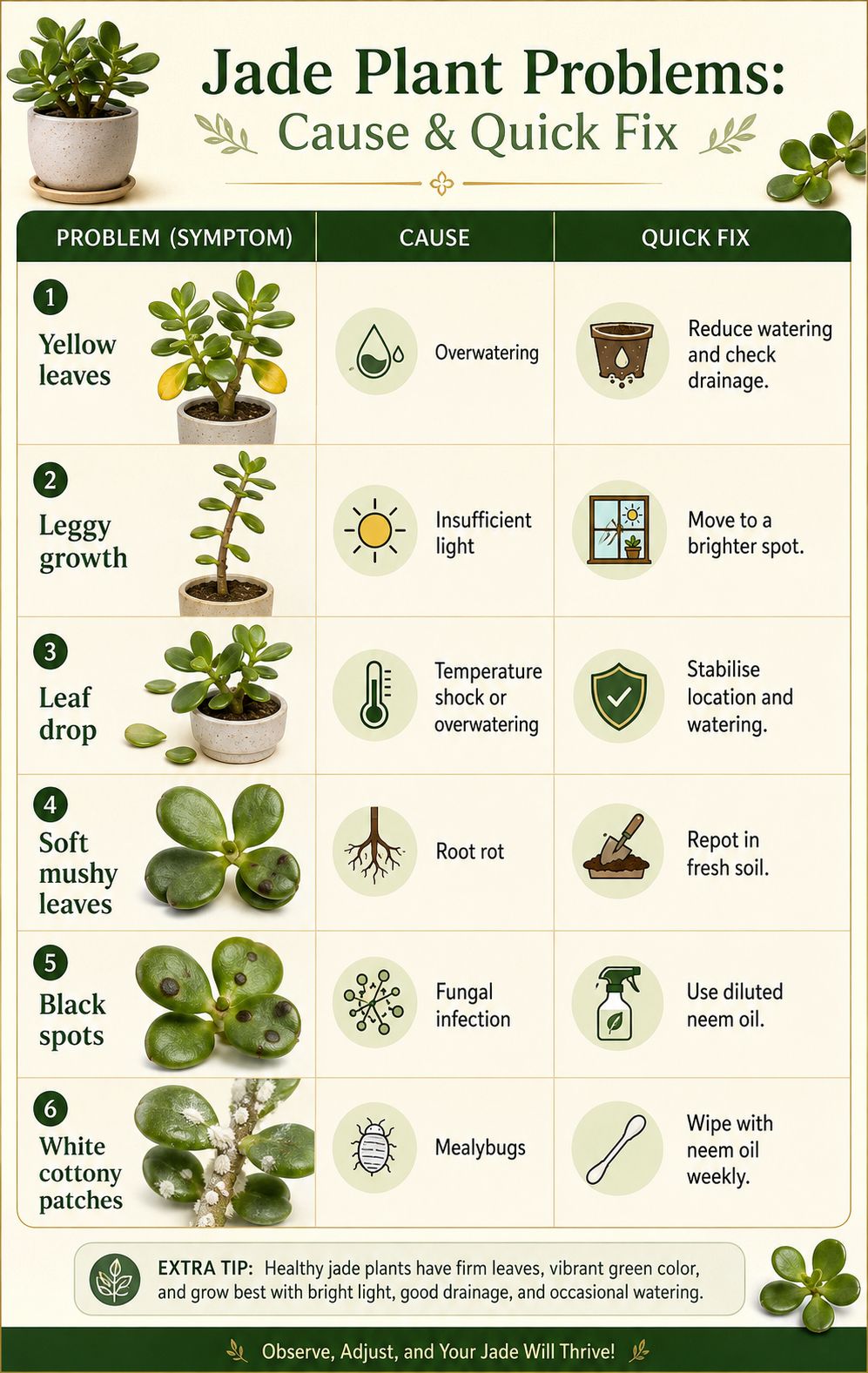
| Problem | Likely Cause | Fix |
|---|---|---|
| Yellow leaves | Overwatering | Reduce watering and check drainage |
| Leggy growth | Insufficient light | Move to a brighter spot |
| Leaf drop | Temperature shock or overwatering | Stabilise the location and watering |
| Soft, mushy leaves | Root rot from overwatering | Reduce watering and repot in fresh soil |
| Black spots on leaves | Fungal infection | Spray with diluted neem oil |
| White cottony patches | Mealybugs | Wipe with neem oil and treat weekly |
Ready to Bring Prosperity Home?
Urvann delivers fresh, healthy Jade plants directly to your doorstep with next-day delivery available.
Shop Jade Plants on Urvann →
Frequently Asked Questions
1. Is the jade plant lucky for the home?
Yes. The Jade plant is considered one of the luckiest plants you can keep at home, according to both Feng Shui and Vastu Shastra. Its coin-shaped leaves symbolise wealth and abundance, and when placed correctly, near the entrance or in the southeast corner, it is believed to attract financial prosperity and positive energy.
2. Where should I keep a jade plant at home for money?
The southeast corner of your home or living room is considered the most powerful placement for wealth. The entrance of your home is the second-best option. Both are recommended in Vastu and Feng Shui for attracting financial growth and abundance.
3. Where should you not keep a jade plant?
Avoid the bedroom, bathroom, toilet, and the north direction of your home. Bathrooms are considered inauspicious because they represent outward drainage of energy. Bedrooms can disturb restful sleep due to the plant's active energy. The north direction can conflict with the plant's earth element energy.
4. What makes a jade plant lucky?
The belief originates from the plant's round, coin-shaped leaves, associated with money and abundance in Chinese and Eastern cultures. Its ability to thrive for decades, grow slowly but steadily, and survive almost any condition reinforces the symbolism of long-term, enduring prosperity.
5. Is the jade plant the same as the money plant?
No. The Jade plant is Crassula ovata, a succulent with thick, oval, glossy leaves. The Money plant, commonly referred to in India, is Epipremnum aureum, also known as Golden Pothos, a climbing vine with heart-shaped leaves. Both are considered auspicious, but they are entirely different plants with different care needs.
6. What are the disadvantages of keeping a jade plant?
The main disadvantages are that it is toxic to pets and small children if ingested, it requires more light than most people expect, and overwatering can kill it quickly. It is also a slow grower, which is part of its symbolism, but can feel frustrating if you want fast results.
7. Is it good to give a jade plant as a gift?
Yes. Gifting a Jade plant is considered one of the most meaningful things you can give. It carries the wish for prosperity, friendship, and long-term success. Its lifespan of 50 years or more means your gift keeps growing long after most presents are forgotten.
8. Which type of jade plant is luckiest?
The classic Crassula ovata with round, deep green leaves is the most widely recommended variety for luck and Vastu benefits. Variegated varieties are beautiful but are considered slightly less potent in terms of energy. Whatever variety you choose, a healthy, well-maintained plant is always more auspicious than a perfect placement with a struggling plant.