


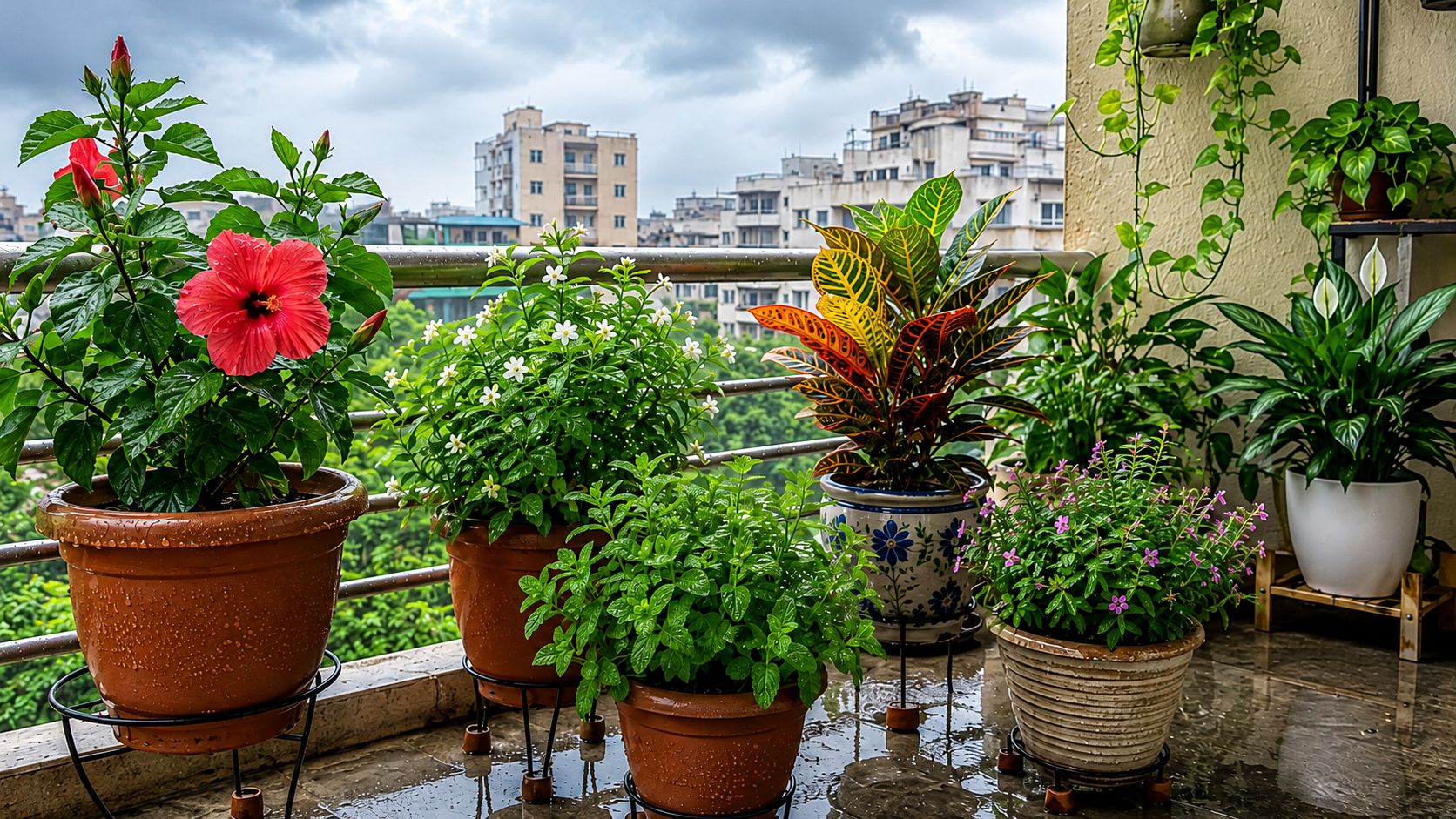
Discover 16 plants that survive Delhi's heavy monsoon without root rot. Learn prevention tips, drainage fixes, and which plants to move indoors.
Key Takeaways
- Root rot happens when roots sit without oxygen, not just from too much water.
- Delhi's monsoon is riskier because short, heavy bursts leave little time to dry out between showers.
- Many fast-growing plants, plants with established root systems, and species with thick leaves generally cope better with monsoon conditions when grown in well-draining soil.
- Not every humidity-loving plant wants wet soil. ZZ Green actually does worse in damp soil.
- Mint and Pennywort are real exceptions and genuinely thrive in wet, marshy conditions.
- Even rain-tolerant plants still need pots with good drainage.
- Succulents and cacti should be moved under cover before heavy rain, not after.
- Elevating pots and emptying saucers cuts root rot risk fast, for any plant.
Delhi often experiences Orange Alerts during peak monsoon, with heavy rainfall causing waterlogged pots and root rot problems for gardeners.
If you have a balcony or terrace full of pots, you already know what that means. Waterlogged soil, mushy stems, and that sinking feeling when a plant you've grown for months suddenly looks like it's giving up. The good news is that not every plant reacts to rain the same way. Some actually grow faster and healthier in the monsoon. Others need to be moved indoors before the next downpour.
This guide tells you which is which, so you know exactly what to keep out, what to shift, and what new plants are worth adding to your collection this season.
Why Delhi's Rain Causes Root Rot in the First Place
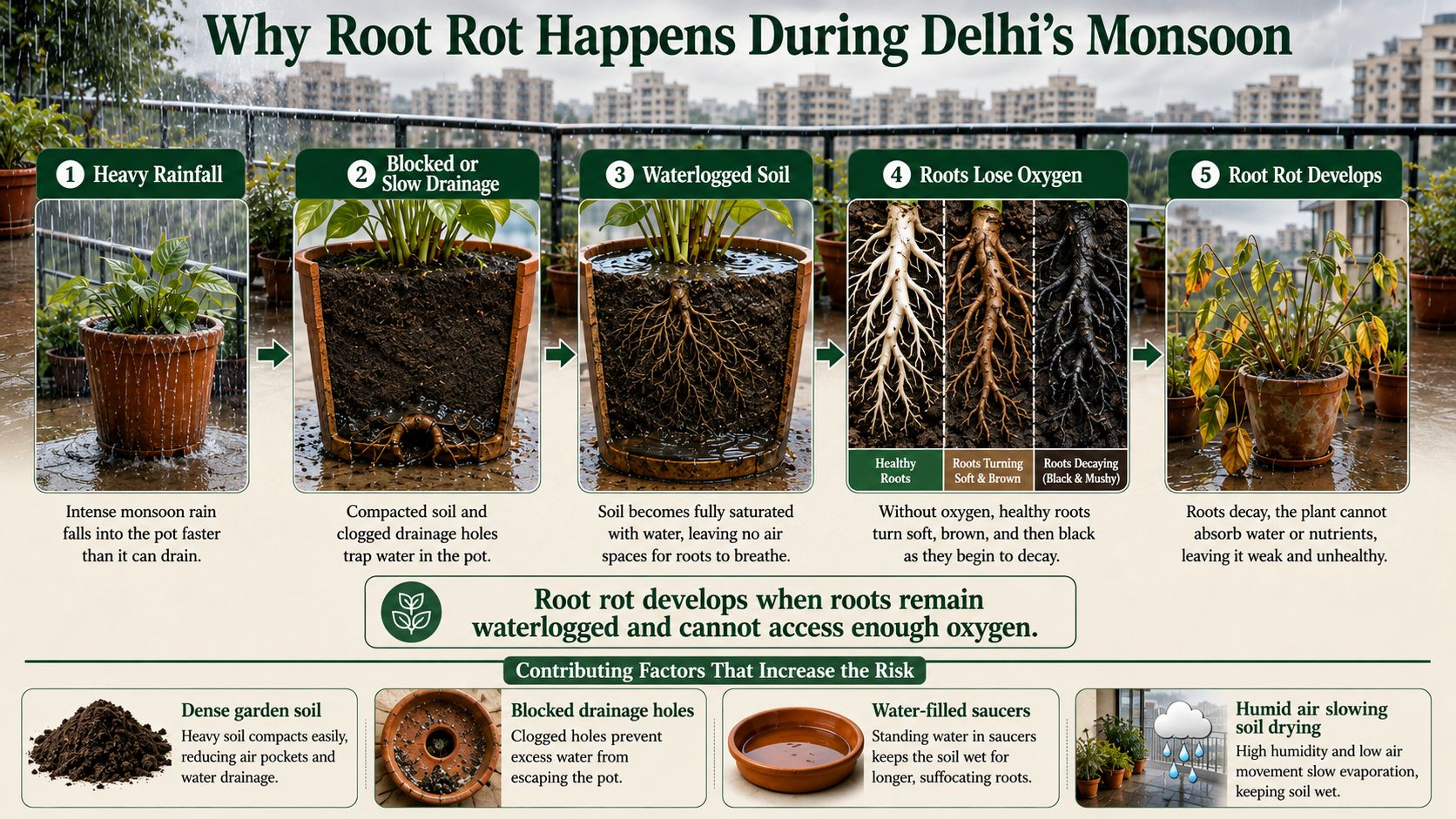
Root rot happens when roots sit in water for too long and can't get any oxygen.
Roots need oxygen as much as they need water. When soil stays soggy for days, the roots begin to suffocate. Once this happens, the roots turn soft and brown or black instead of firm and white. Although the soil is wet, the damaged roots can no longer absorb water or nutrients properly.
Delhi's monsoon makes this worse because the rain comes in short, heavy bursts rather than a gentle drizzle.
A pot can fill up faster than it can drain, especially if the drainage holes are blocked or the potting mix is dense. Delhi's humid air also slows evaporation, leaving the soil little time to dry before the next spell of rain.
Signs your plant may already have root rot include:
- Leaves turning yellow even though the soil is wet
- A plant that looks droopy despite regular watering
- A bad smell coming from the pot
- Stems that feel soft near the base
How to Prevent Root Rot Before It Starts
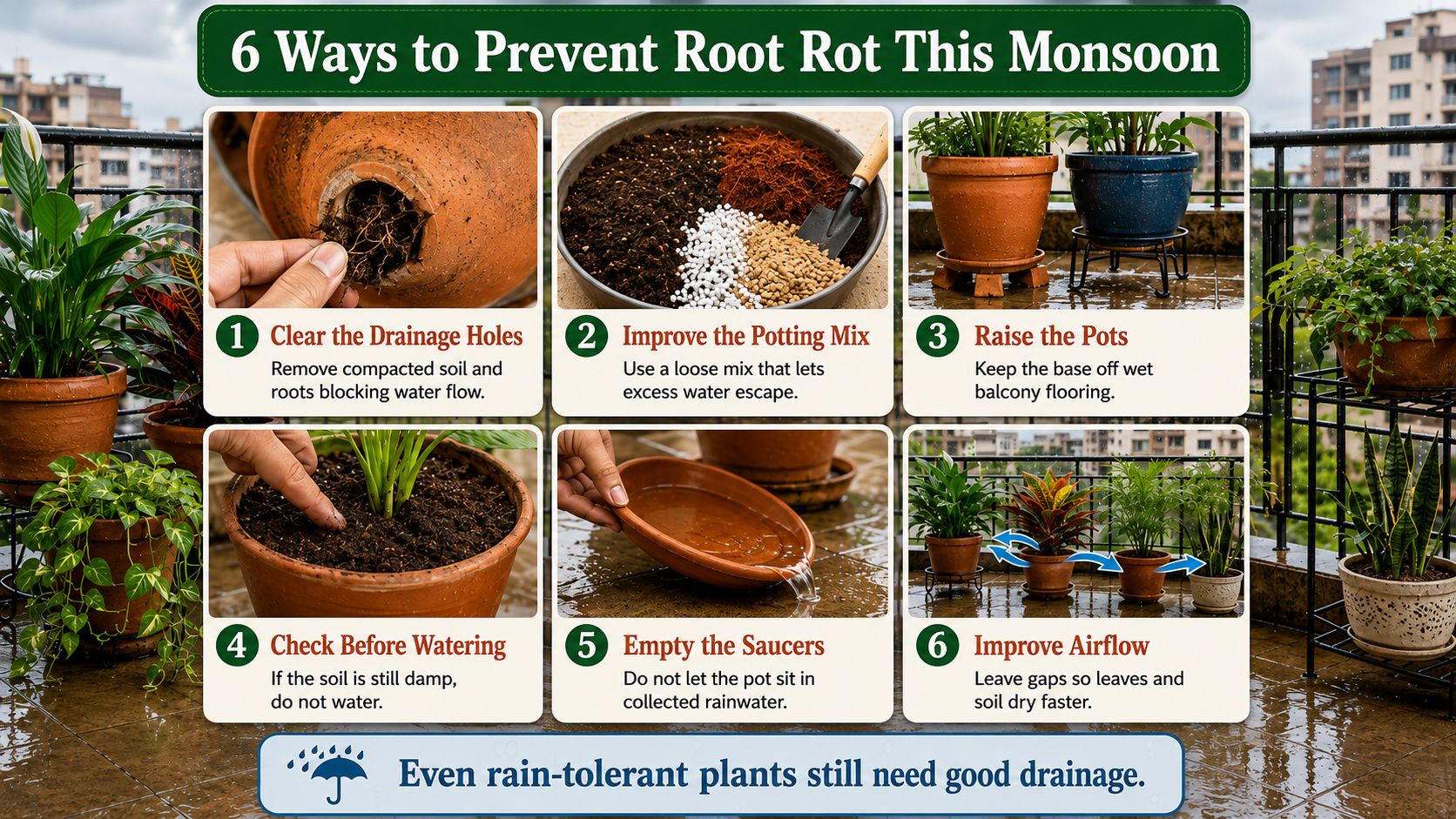
A few simple habits can significantly reduce the risk of root rot during Delhi's monsoon.
1. Check Your Drainage Holes
Before the next heavy spell, look under each pot and make sure the holes aren't blocked by compacted soil or roots. If water pools on top of the soil for more than a few minutes after rain, the holes need clearing.
2. Fix Your Potting Mix
Plain garden soil turns dense and holds too much water. Mix in cocopeat, perlite, or coarse sand to improve drainage and prevent water from collecting around the roots.
3. Elevate Your Pots
Keep pots off the floor of your balcony or terrace using stands or pot feet. This stops water from collecting under the pot and keeps the roots from sitting in a puddle.
4. Skip the Watering Schedule
During monsoon, the rain is often doing the watering for you. Check the top inch of soil with your finger before adding more water. If it's still damp, wait.
5. Empty the Saucers
Water trays under pots should be emptied after every heavy spell. Standing water breeds mosquitoes and keeps the pot's base wet even after the rain stops.
6. Give Plants Some Airflow
Pots crammed close together stay damp longer and are more likely to develop fungal issues. Leave a little gap between them so air can move around.
Also Read: You can also go through the step-by-step guides related to how to fix a pot that’s already waterlogged and repotting your old plants.
Best Outdoor Plants for Delhi's Heavy Rain
No plant is completely immune to root rot. Proper drainage, an appropriate potting mix, and avoiding prolonged waterlogging are essential for keeping any container plant healthy during the monsoon. These plants can take a direct soaking as long as the pot drains well. All of them are available on Urvann’s Delhi plant collection.
1. Hibiscus (Gudhal/गुड़हल)
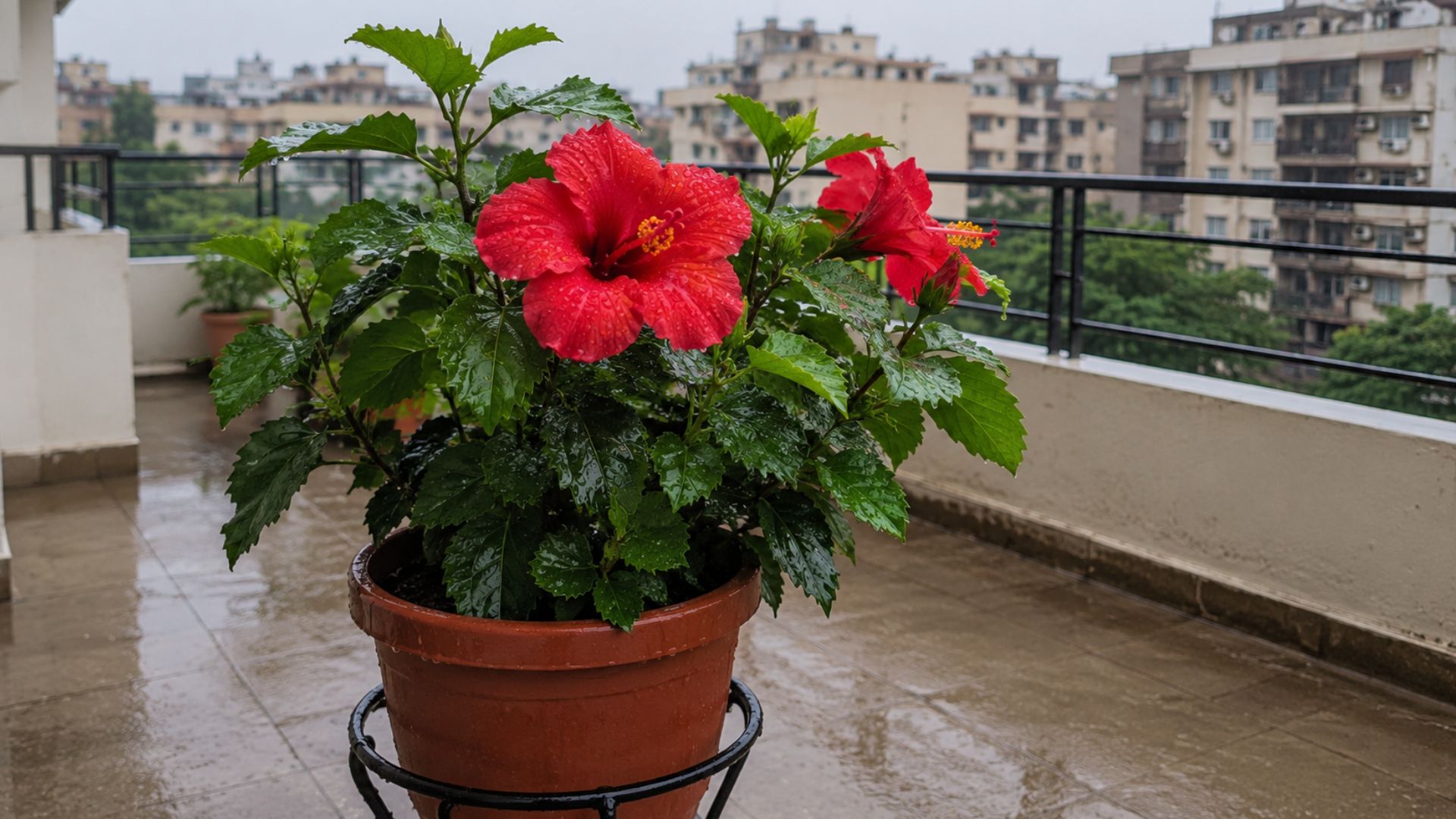
Gudhal grows rapidly during the monsoon, using large amounts of water to support new leaves and flowers. This helps reduce excess moisture around the roots. Even so, it still needs a well-draining pot because standing water can eventually cause root rot.
2. Jasmine (Mogra/मोगरा)
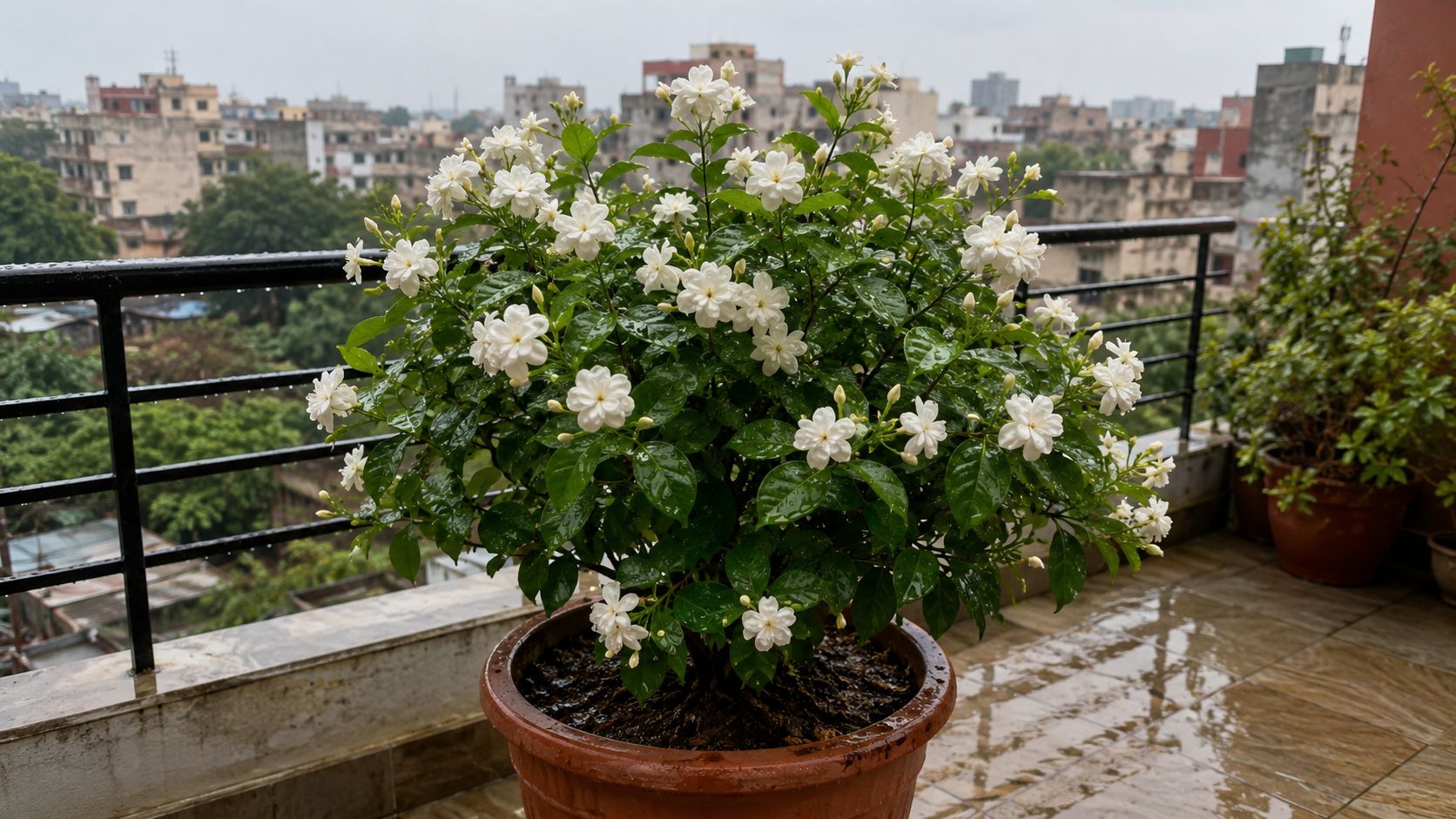
Unlike other flowering plants that have soft and fine roots, Jasmine has a woody, well-branched root system. This allows it to tolerate short wet spells. Its active growth and flowering throughout the rainy season help it use excess moisture efficiently. It still needs a fast-draining pot, since even a hardy root system will eventually rot if it's sitting in standing water for days.
3. Aparajita (Butterfly Pea/अपराजिता)
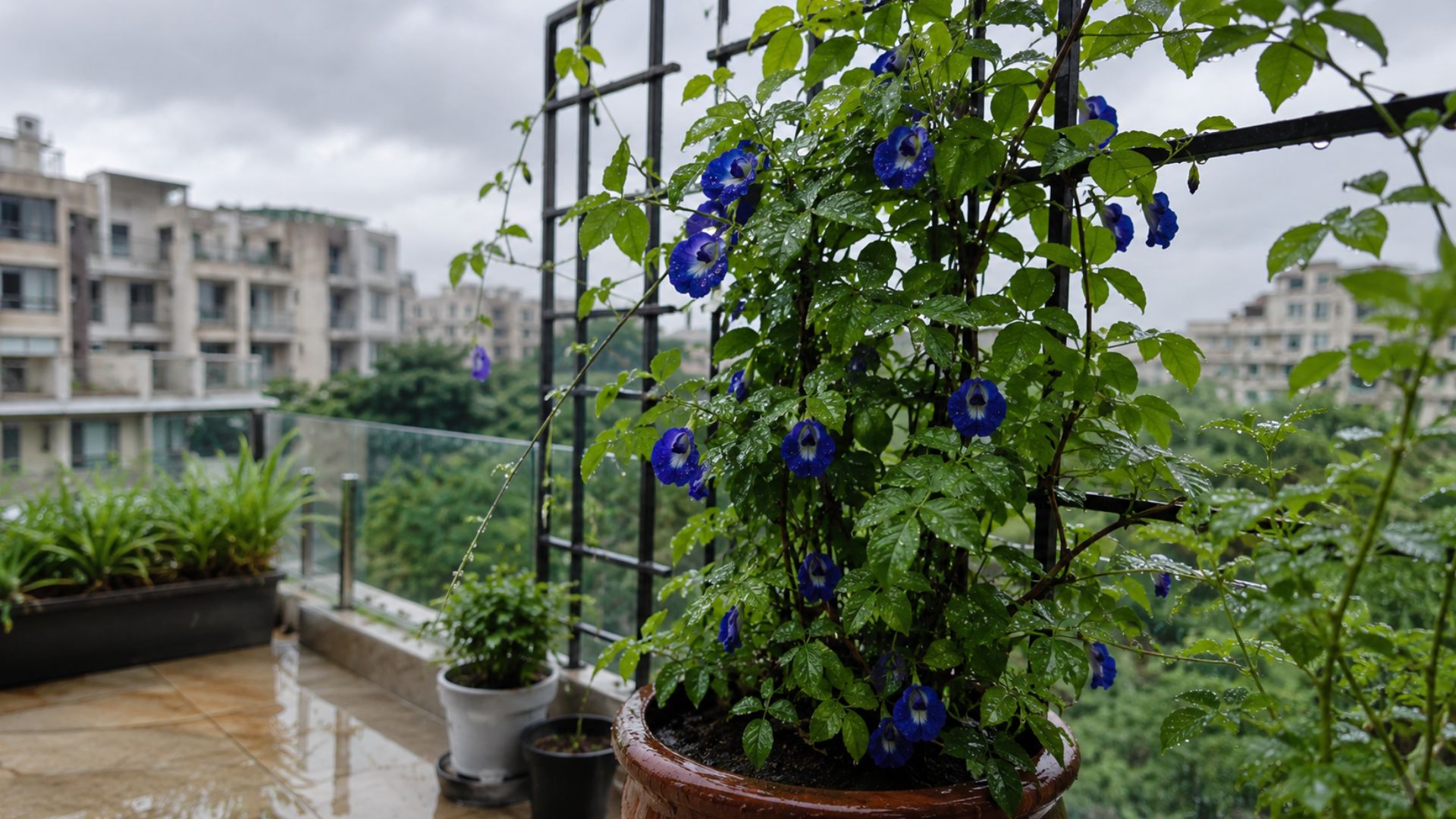
Aparajita is a fast-growing climber that uses plenty of water during the monsoon to produce new vines and flowers. This active growth helps prevent excess moisture from building up around the roots. Growing it on a trellis or railing also keeps the base of the plant away from wet soil, which further lowers the risk of root rot during Delhi's rainy season.
4. Curry Patta (Curry Leaf Plant/करी पत्ता)
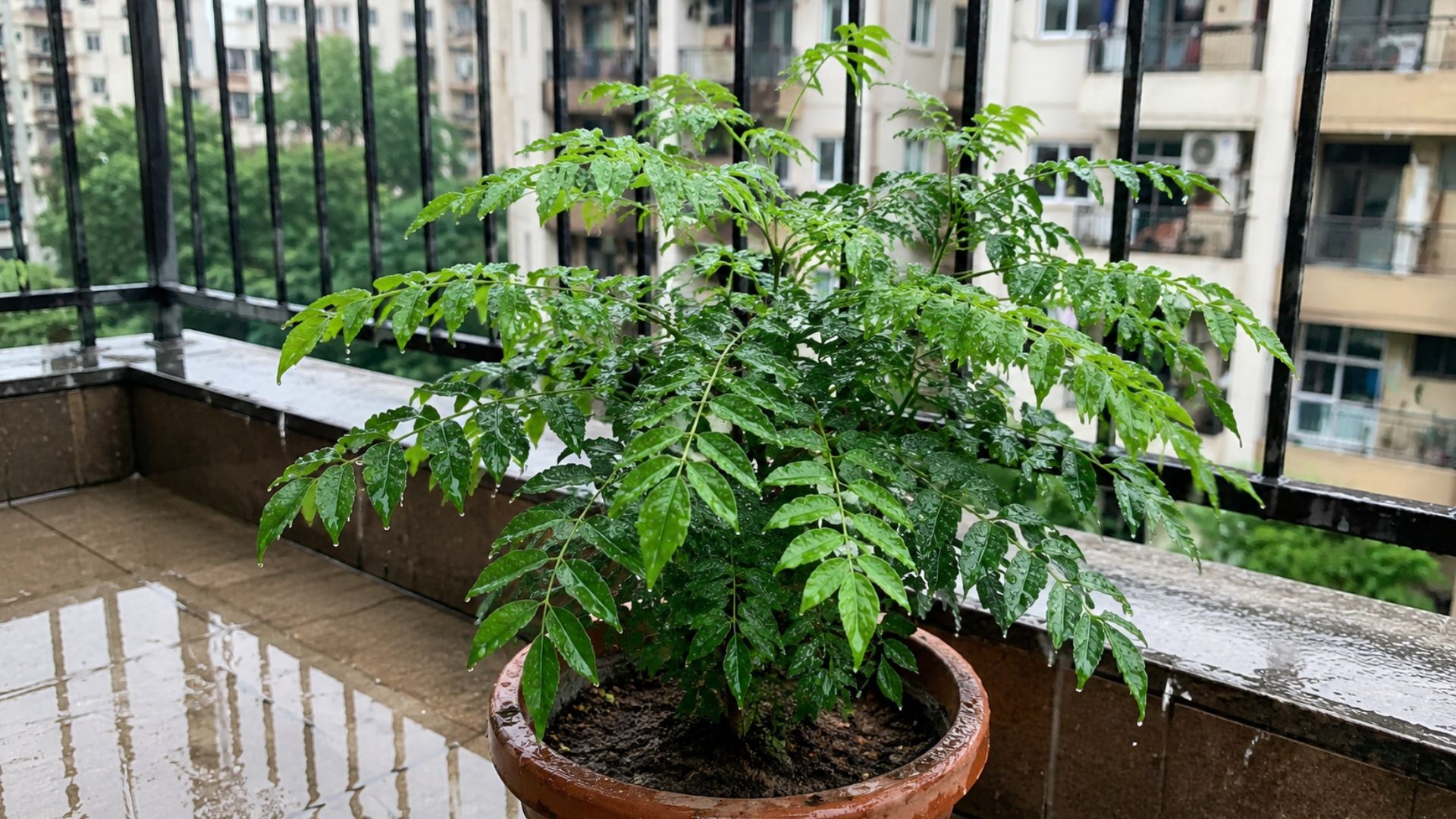
Curry Patta has a deep taproot rather than a shallow mat of fine roots. Its established taproot helps anchor the plant, but Curry Leaf still requires well-drained soil because prolonged waterlogging can damage the roots.
5. Croton Petra (क्रोटन पेट्रा) and Baby Croton Gold Star (बेबी क्रोटन गोल्ड स्टार)
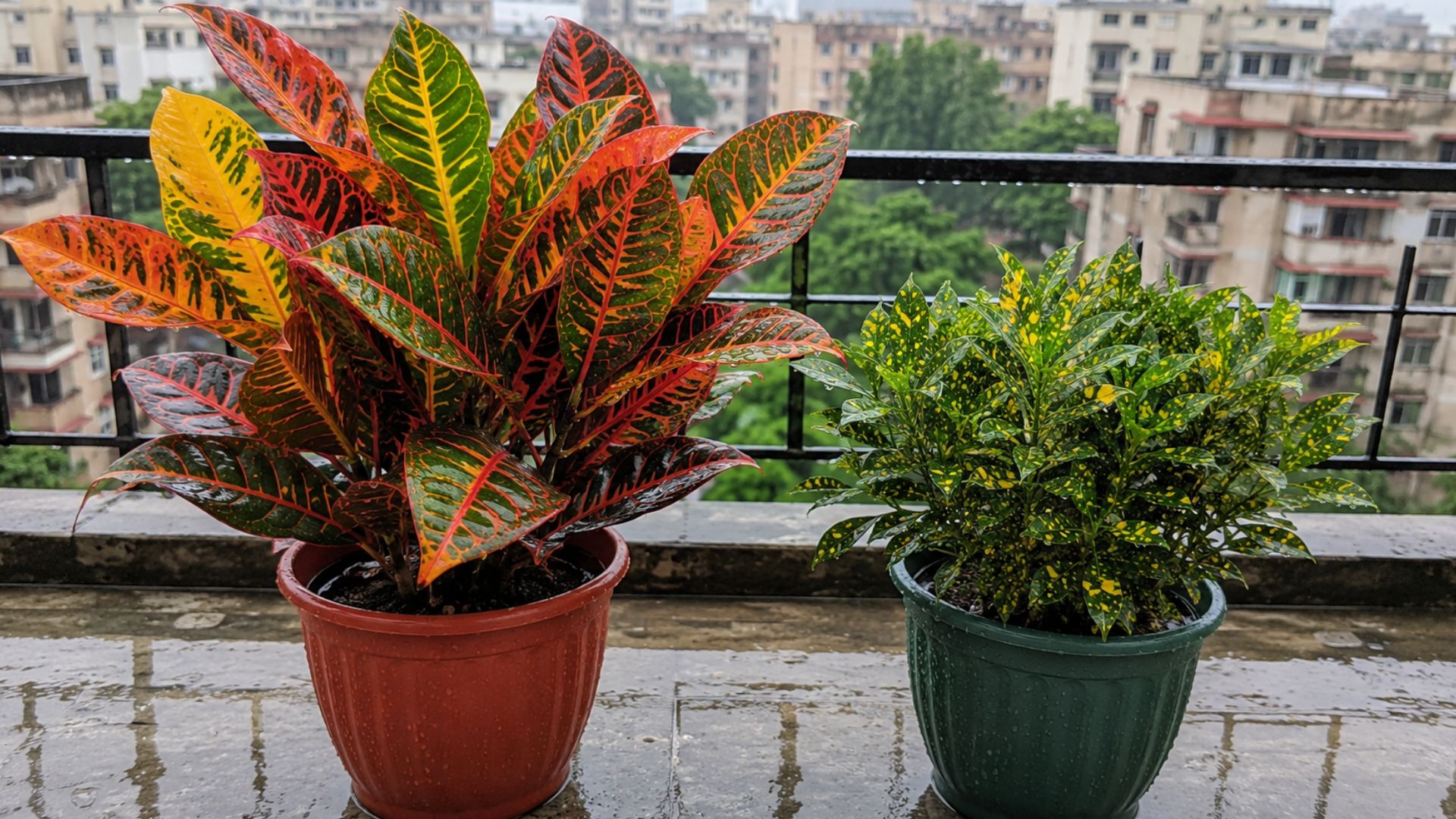
Croton's thick, leathery leaves reduce water loss, helping the plant tolerate humid conditions more effectively. That moderate water need means the roots aren't under pressure even when the soil around them is temporarily damp from rain.
6. Cuphea (False Heather/कुफिया)
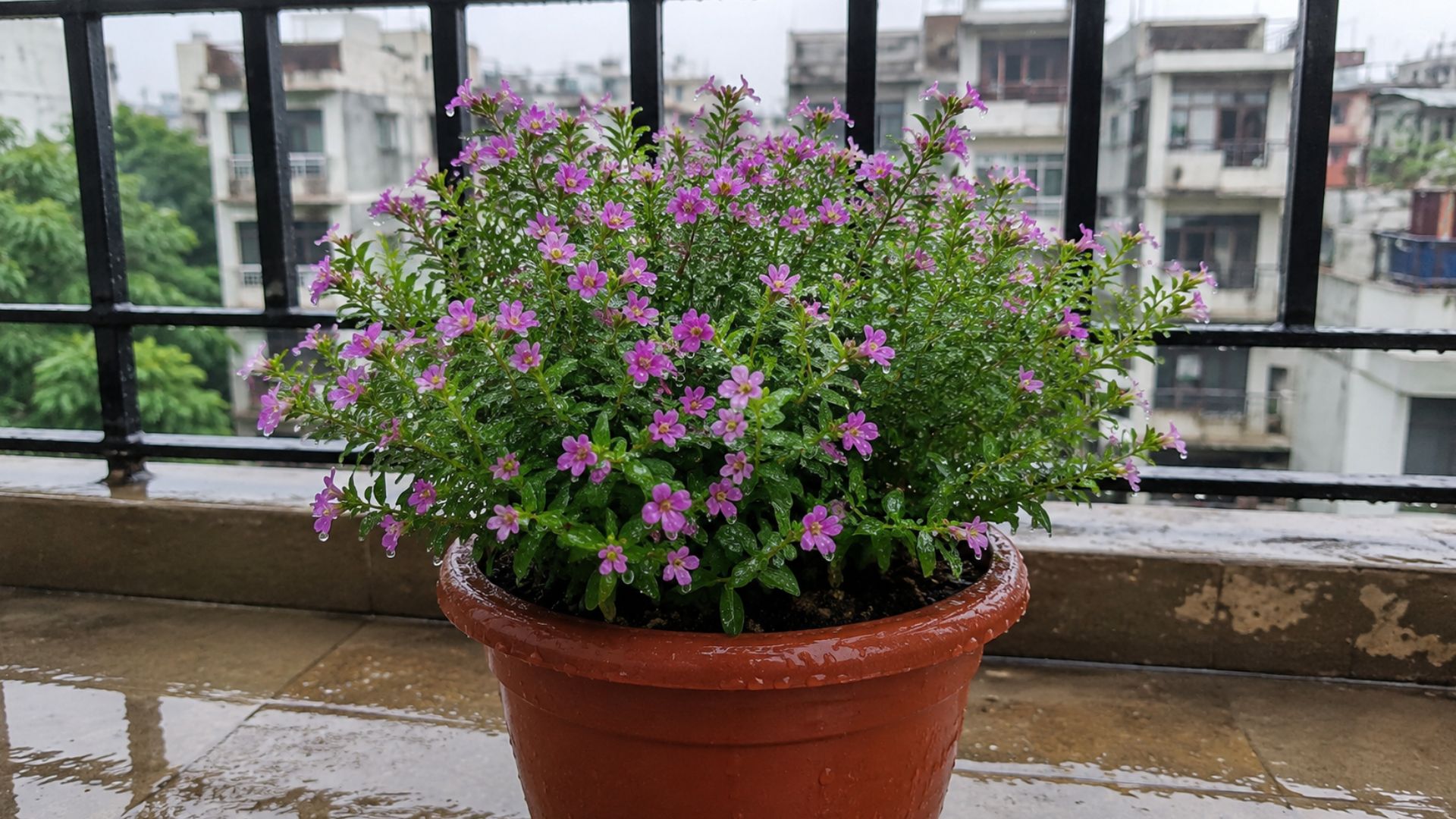
Cuphea prefers well-draining soil and grows well during Delhi's rainy season as long as excess water drains away quickly. Because the soil dries faster between spells of rain, its roots are less likely to stay wet long enough to develop root rot.
7. Mint (पुदीना)
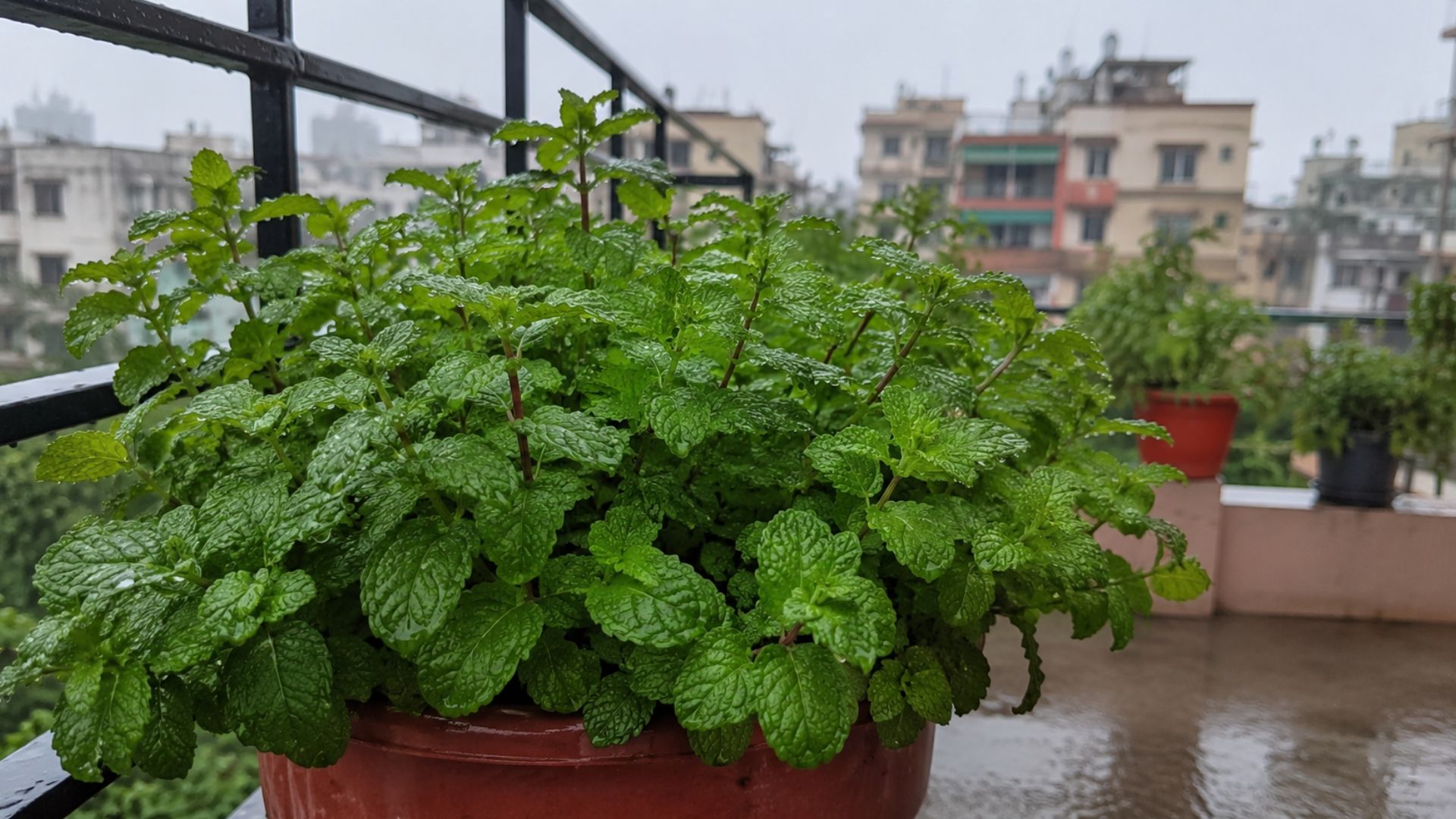
Mint has spreading rhizomatous roots that are naturally suited to consistently moist soil. In fact, mint grows along streams and in damp ground in the wild, so its roots don't react to wet conditions the way a drought-adapted plant's roots would. This is one of the few plants where you genuinely don't need to worry much about monsoon moisture; just give it a container of its own since it spreads fast.
Best Indoor and Semi-Shaded Plants for Rainy Season Delhi
These plants prefer to be kept out of direct, heavy rain but genuinely enjoy the humid air that comes with Delhi's monsoon. Keep them on a covered balcony, near a window, or indoors.
8. Money Plant Green (Pothos/मनी प्लांट)
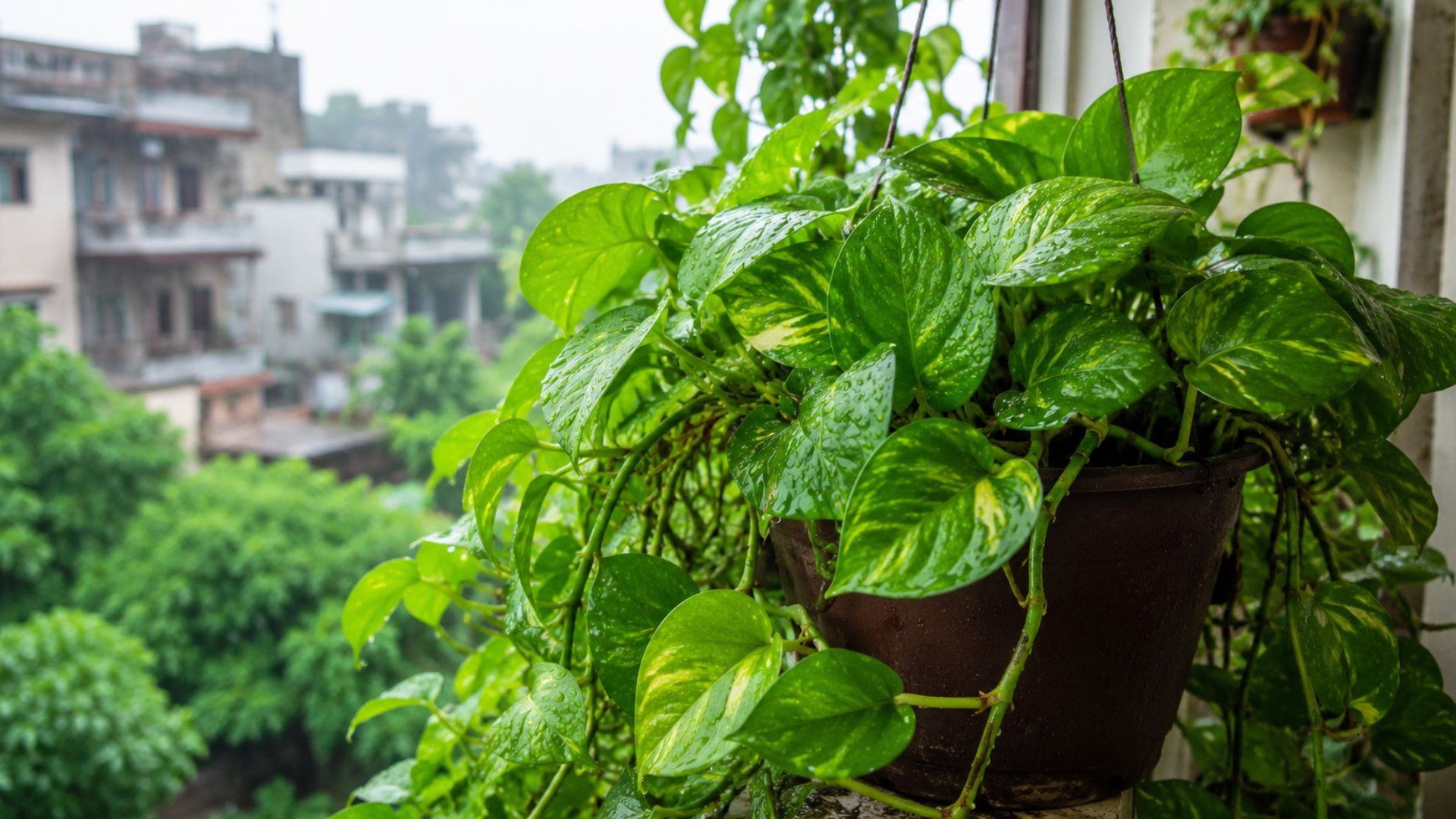
Pothos grows in the understorey of humid forests in the wild, where the soil stays damp for long stretches. Its roots tolerate consistently moist soil better than many other houseplants, making it well suited to humid monsoon conditions.
9. Peace Lily (पीस लिली)
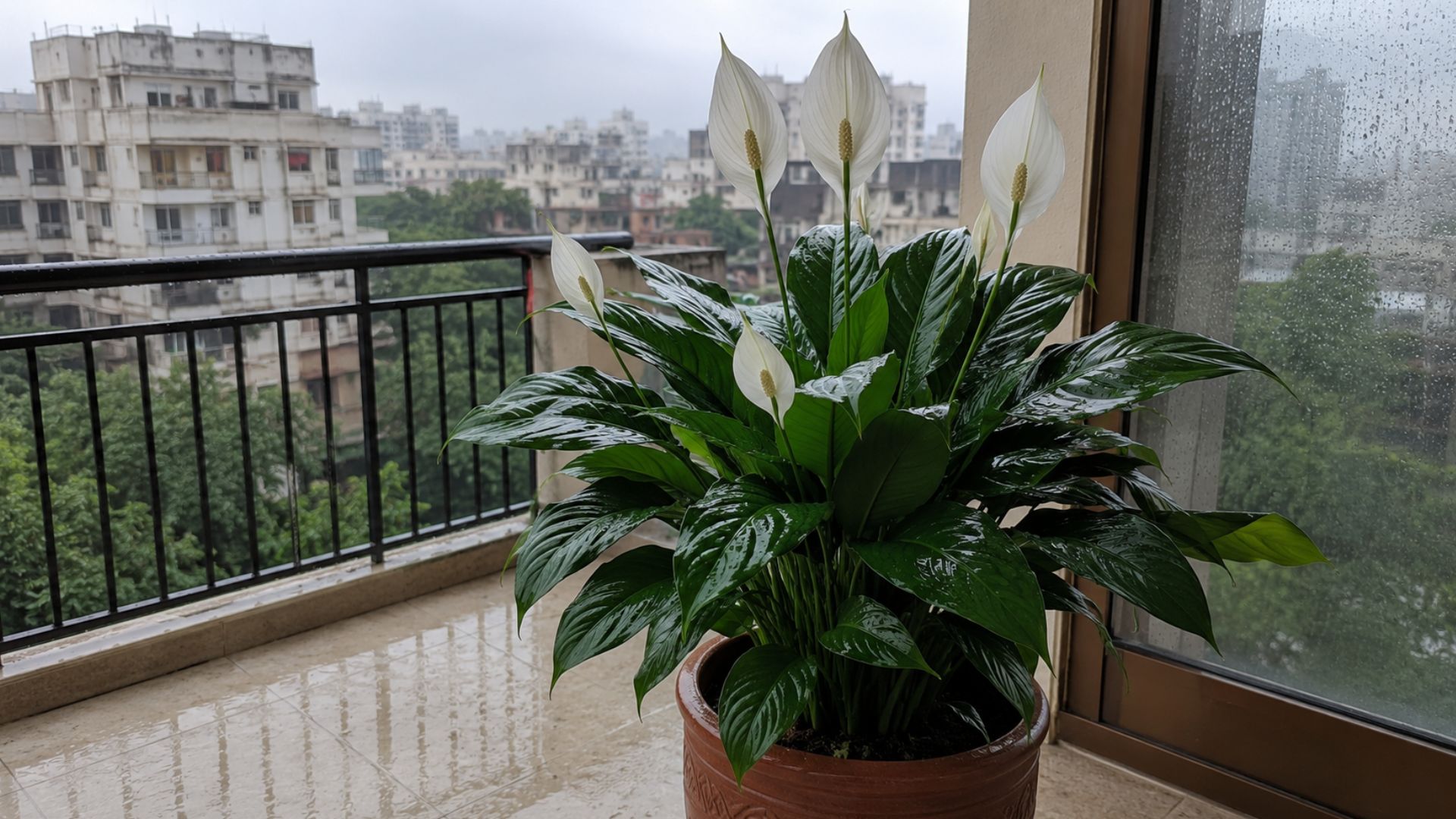
Peace Lily has thick, fleshy roots that tolerate consistently moist soil better than many indoor plants. However, prolonged waterlogging can still cause root rot. It also provides an early warning by drooping when the roots become stressed.
10. Spider Plant (स्पाइडर प्लांट)
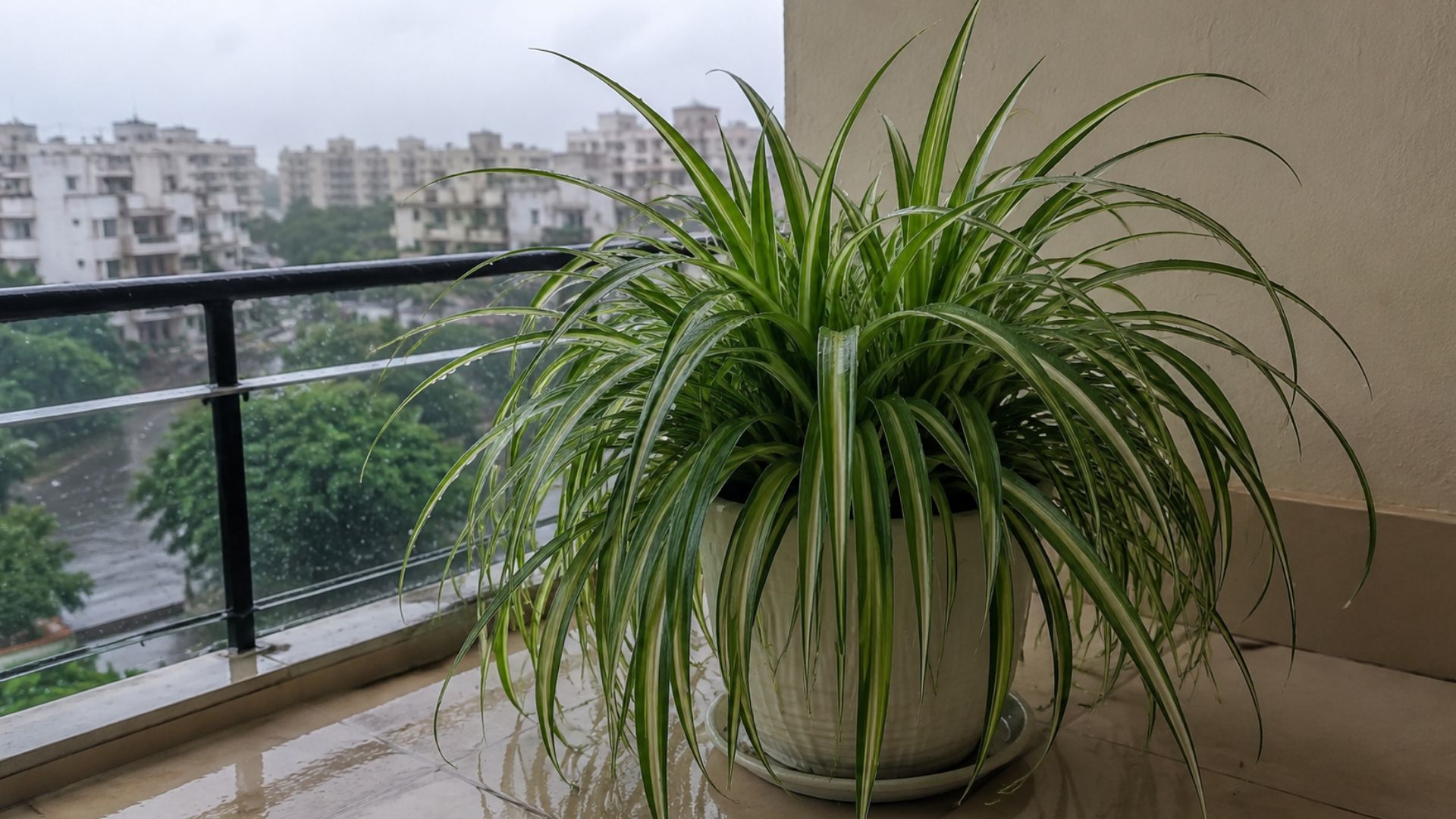
Spider Plants store water in their thick, tuberous roots, helping them tolerate short periods of excess moisture. They also grow well in Delhi's warm, humid monsoon weather, making them less likely to suffer from occasional heavy rain. However, they still need well-draining soil because standing water for several days can cause root rot.
11. Areca Palm (अरेका पाम)
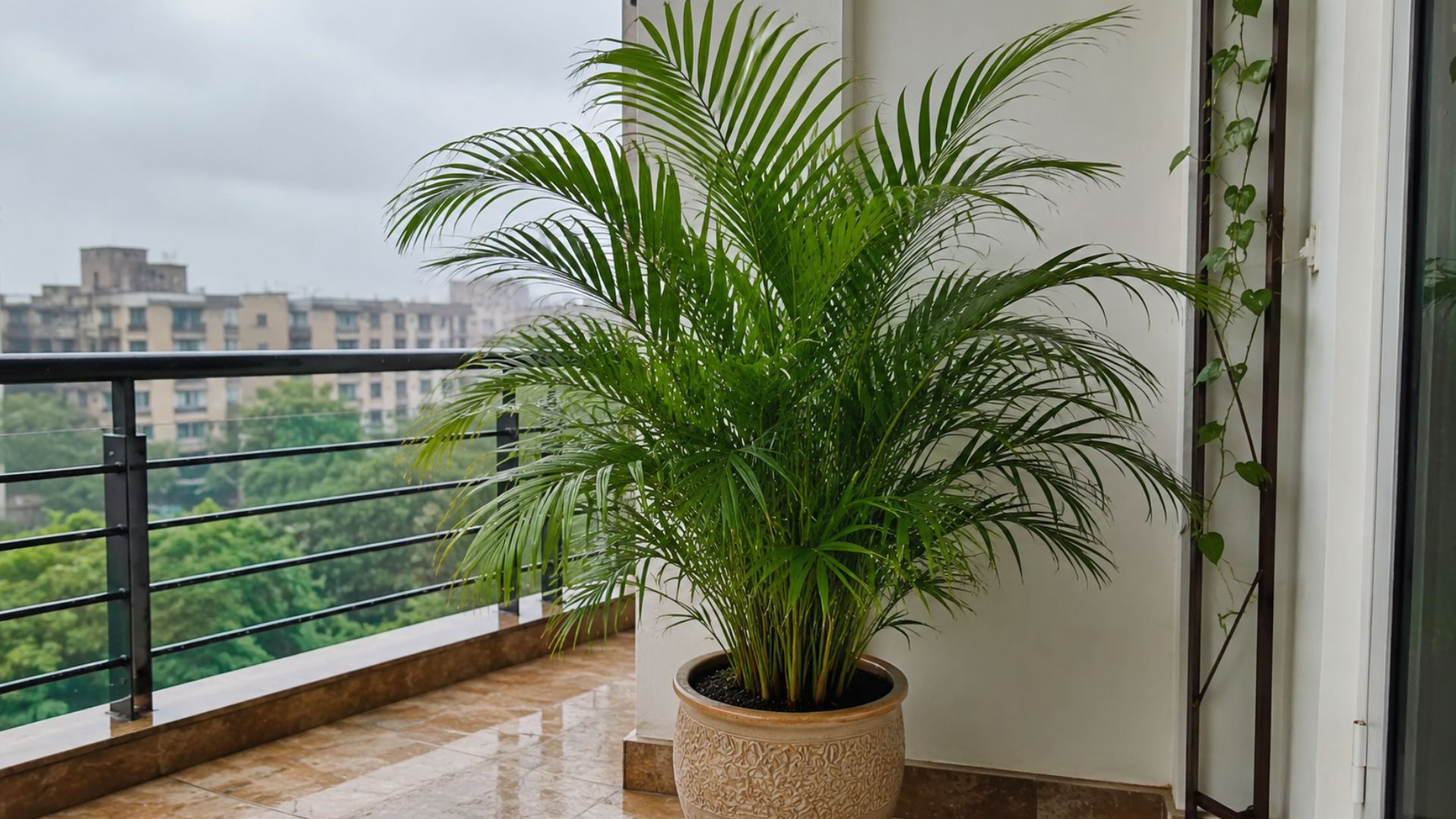
Areca Palm has a dense, fibrous root system built to handle humid, tropical conditions, but that root mass also needs oxygen to keep functioning. It handles humid air well but not standing water in the pot, so keep it somewhere it gets moisture from the air rather than direct, heavy rain hitting the soil.
12. Monstera Broken Heart (मॉन्स्टेरा ब्रोकन हार्ट)
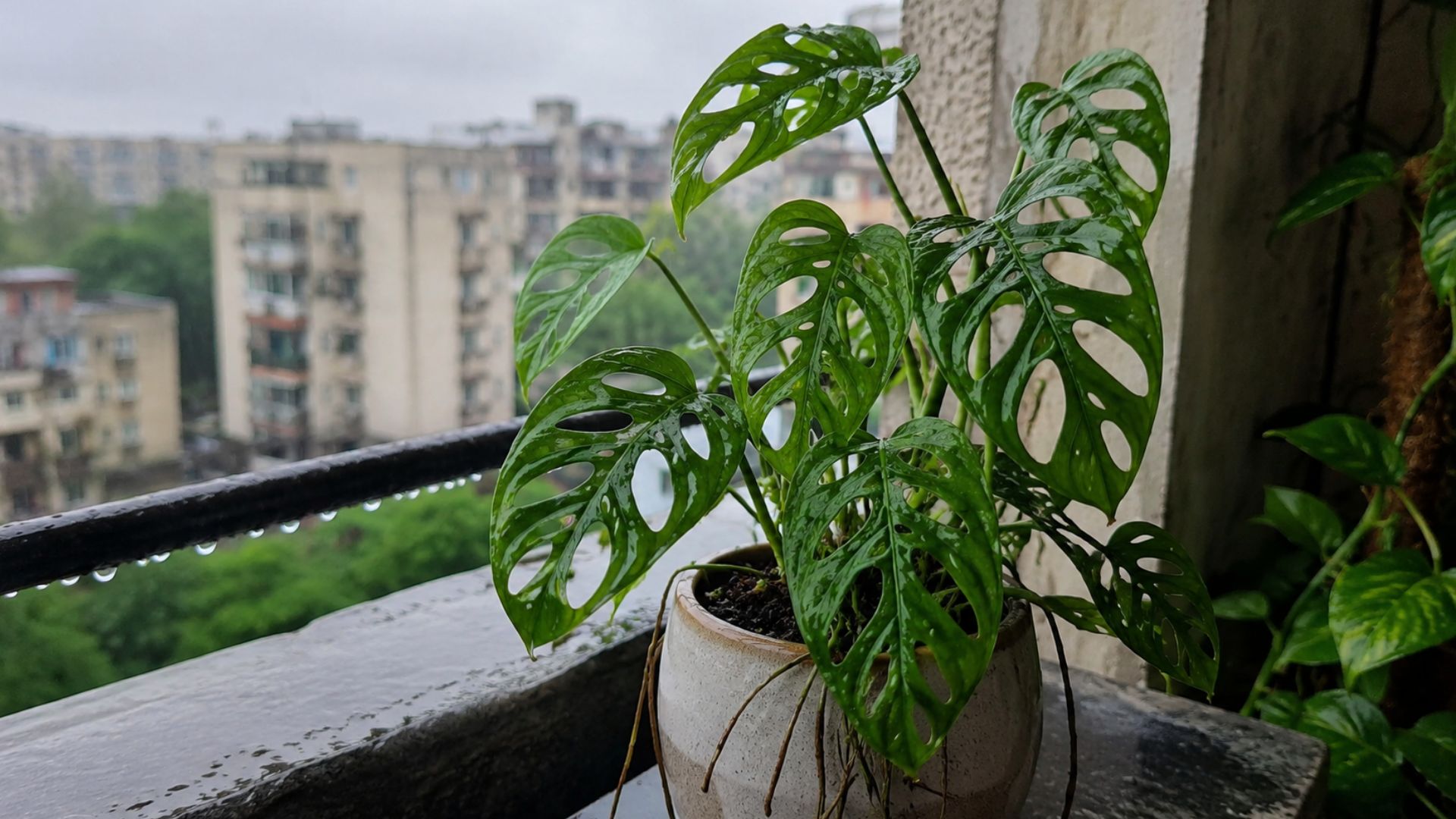
Monstera produces aerial roots that absorb moisture from the air, helping it thrive in Delhi's warm and humid monsoon season. However, it still needs well-draining soil and should be protected from prolonged heavy rain, as waterlogged soil can cause root rot.
13. Rubber Plant (रबर प्लांट)
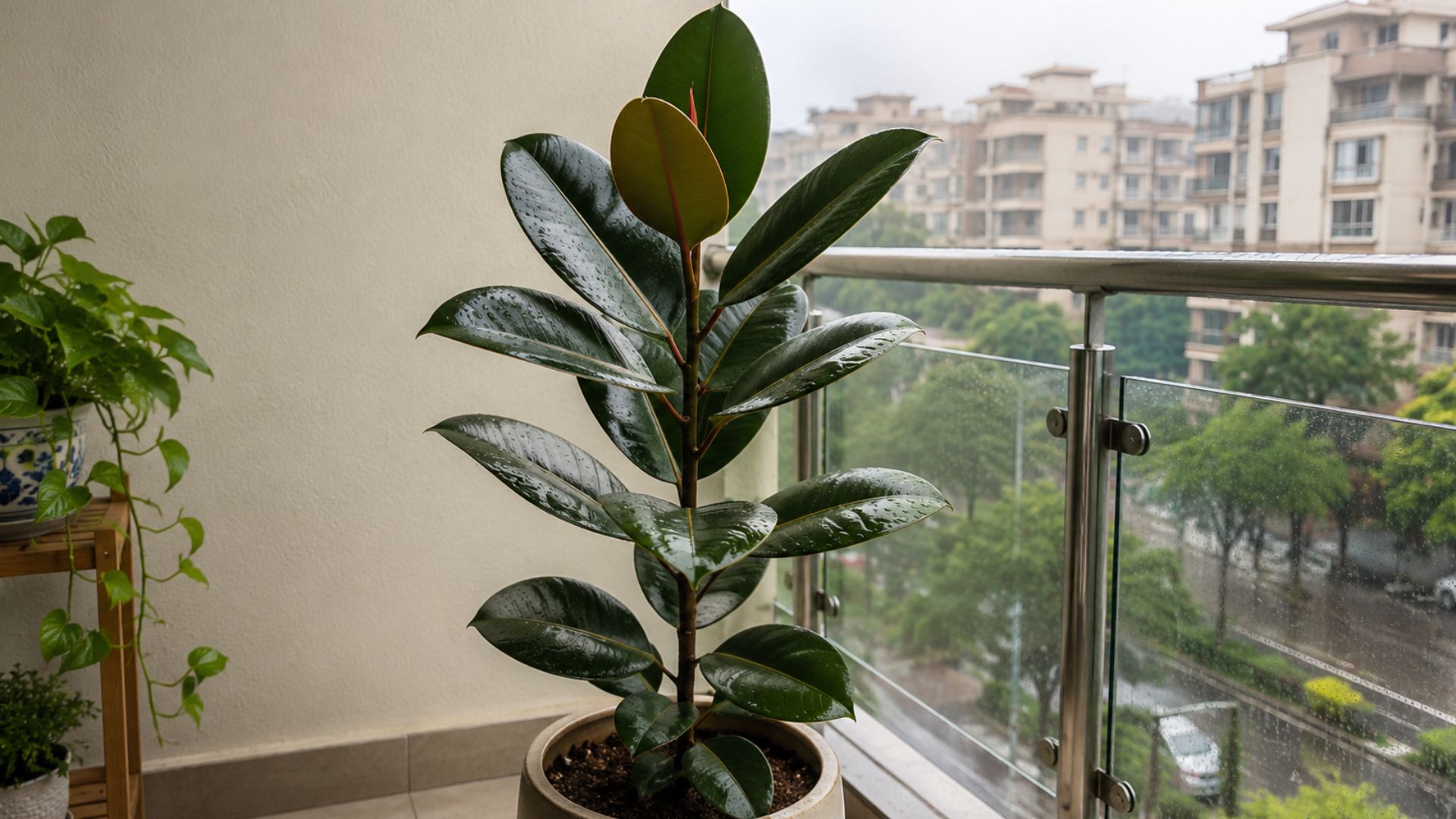
In the wild, Rubber Plant grows into a large tree that regularly deals with heavy tropical rainfall, so it has developed a thick, structured root system suited to that kind of moisture. Its large, leathery leaves also help regulate water loss, which keeps the roots from being overworked even when the soil stays damp a little longer than usual.
14. Zz Green (ज़ी ज़ी प्लांट)
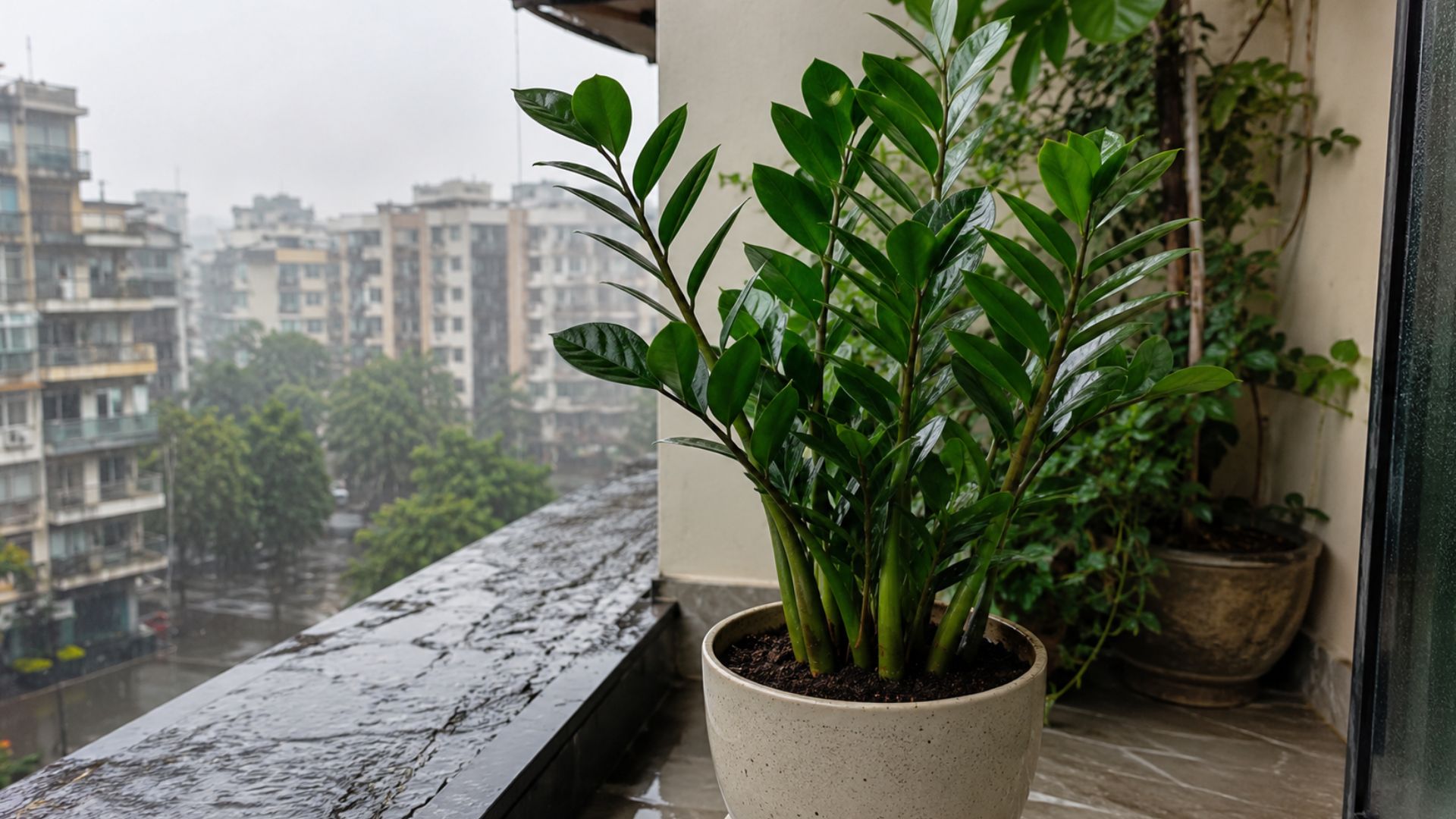
ZZ Plant survives Delhi's rainy season by relying on the water stored in its underground rhizomes instead of constantly absorbing moisture from the soil. As long as the pot drains well and doesn't stay waterlogged, the plant can handle the humid monsoon weather without developing root rot.
15. Brahmi Dollar / Pennywort (ब्राह्मी)
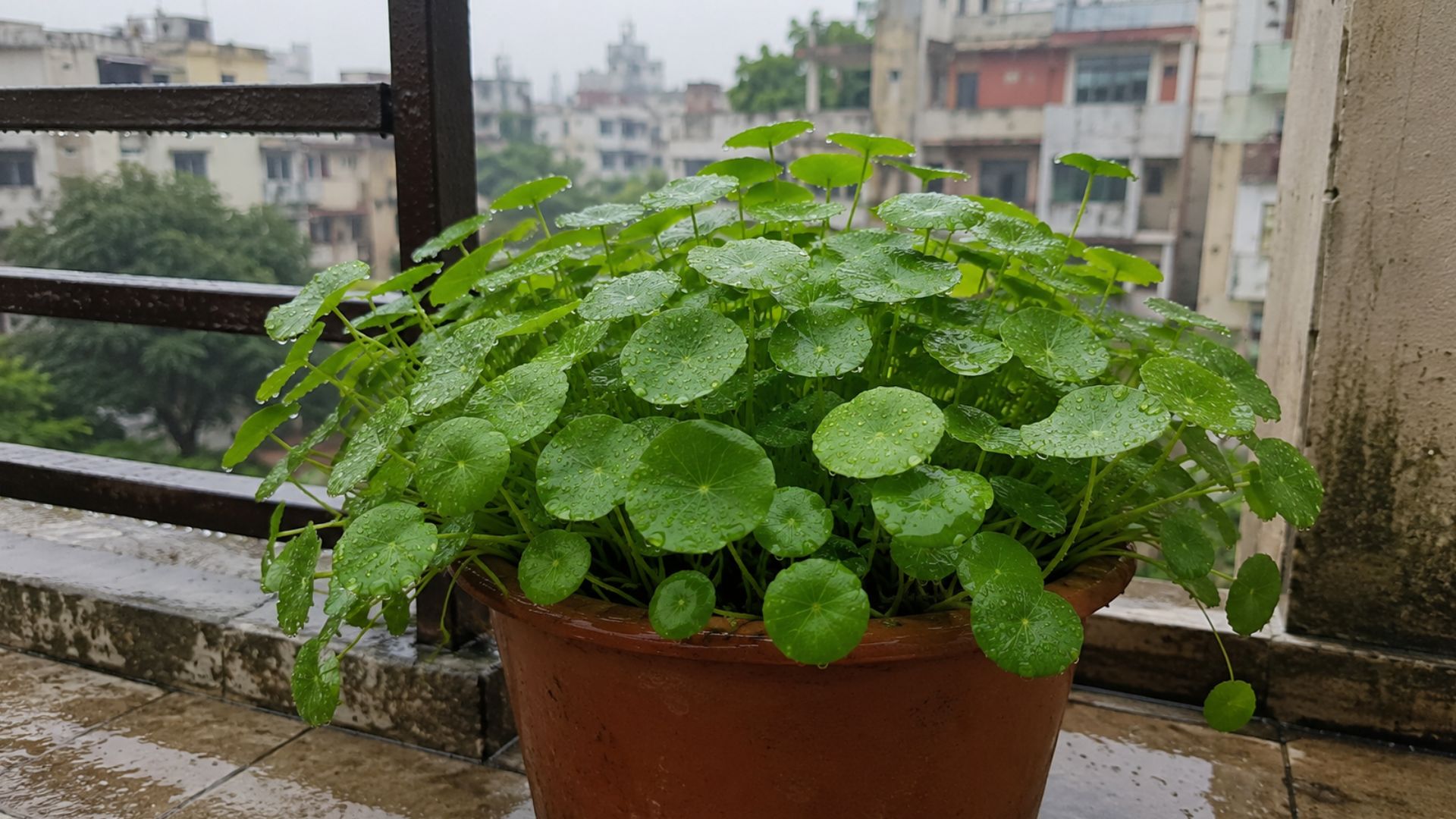
Pennywort naturally grows in marshy, waterlogged ground, so its roots are genuinely adapted to sit in consistently moist soil without rotting. This is one of the very few plants where more monsoon moisture is actually a good thing rather than something to manage around.
16. Coleus (कोलियस)
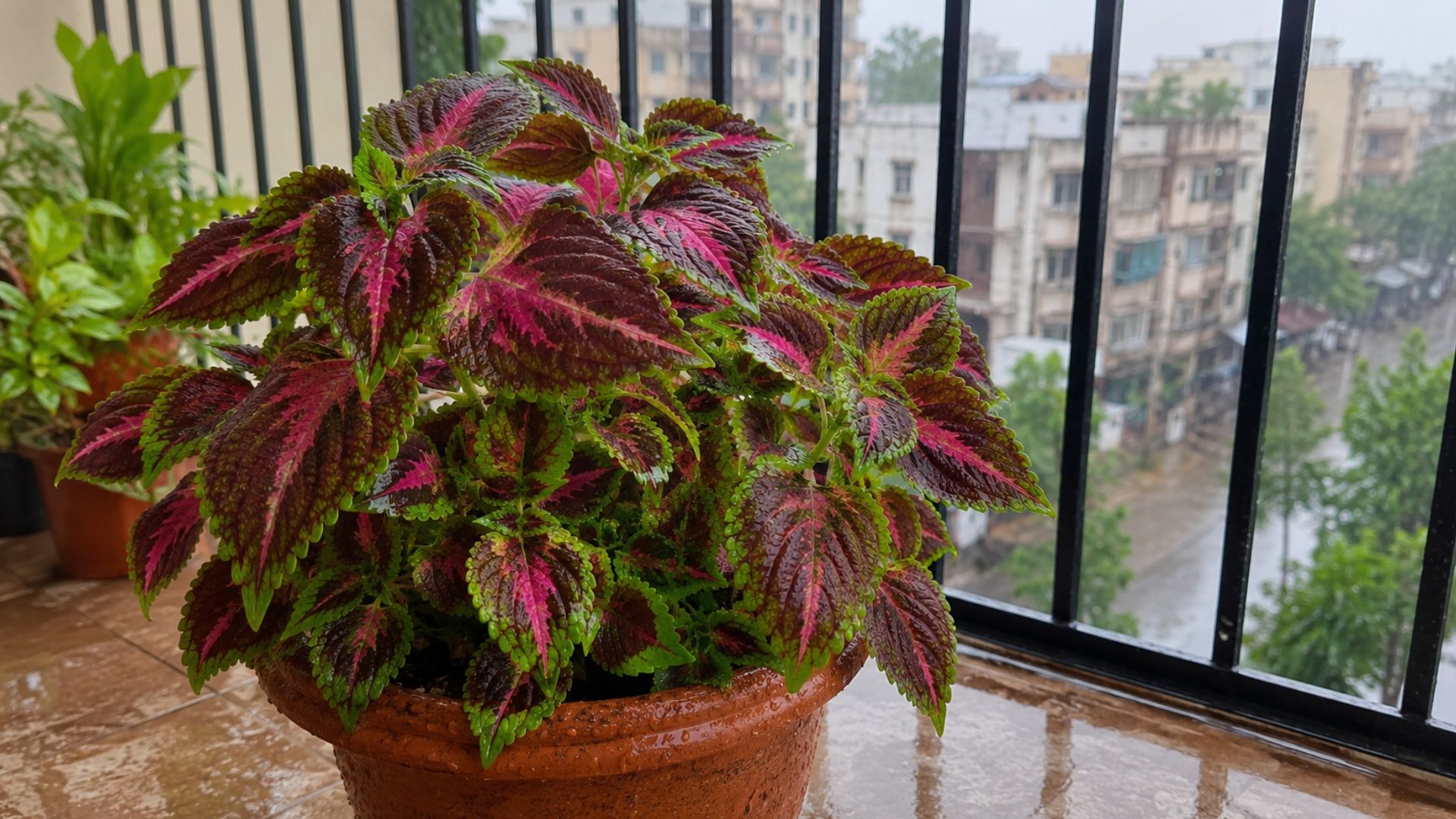
Coleus has soft, fast-growing stems that use up water quickly to fuel new leaf growth, which helps keep moisture from sitting stagnant around the roots. However, those soft stems are also more likely to rot if they remain in standing water. So, grow Coleus in semi-shade with a well-draining pot.
Plants You Should Move Indoors Before the Next Downpour
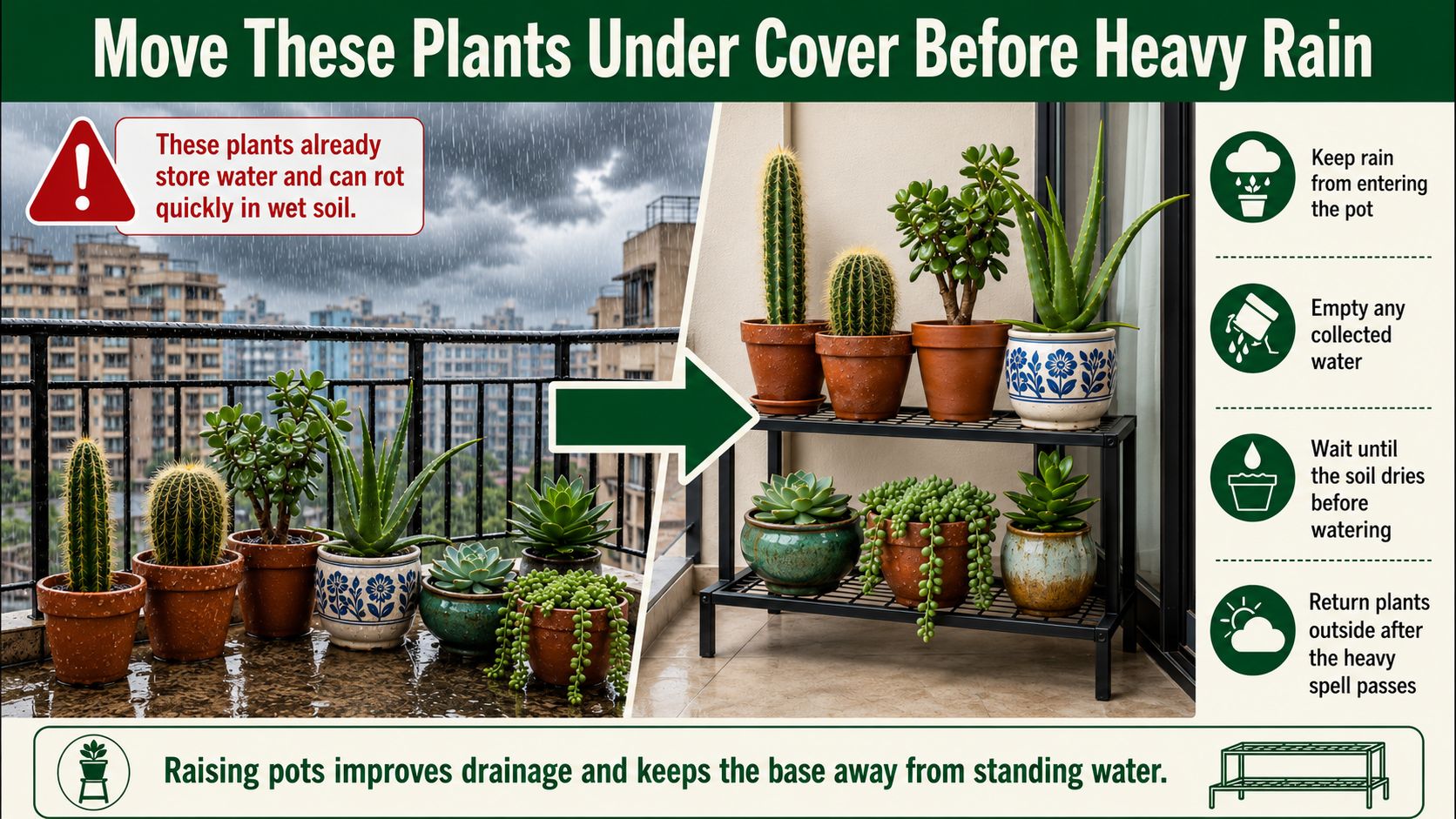
Not every plant on your balcony is built for Delhi's rain, and it's worth knowing which ones to shift before the next heavy spell rather than after the damage is done. Succulents, cacti, and other plants with thick, fleshy leaves already store water in their tissues. During prolonged rain, wet soil can quickly lead to root rot. Move them to a covered area or indoors until the weather improves, then allow the soil to dry completely before watering again.
You can also use a plant stand. It is a simple, practical way to keep your outdoor plants better protected. Elevating pots off the ground improves drainage and airflow, which lowers the chances of root rot even if a plant does get caught in a downpour.
Ready to Add Some Monsoon-Proof Plants to Your Balcony?
Delhi's rain isn't going anywhere for the next few weeks, but that doesn't mean your garden has to suffer. Choose plants that naturally tolerate heavy rain, improve drainage, and move vulnerable plants under cover before prolonged downpours.
Browse Urvann's full plant collection for Delhi and get healthy, nursery-fresh plants delivered to your doorstep. For more monsoon-friendly options, check out these 12 rainy season flowers you can grow in Delhi.
Frequently Asked Questions (FAQs)
1. Can root rot be prevented?
Yes, and it's mostly about drainage. Well-draining soil, pots with proper holes, and watering only when the soil is actually dry go a long way in preventing root rot, especially during Delhi's monsoon.
2. How to fix root rot fast?
Remove the plant from its pot, trim away any soft, brown, or black roots with a clean pair of scissors, and repot it into fresh, well-draining soil in a pot with good drainage holes. Hold off on watering for a few days afterward so the remaining roots can recover.
3. What to put in soil to prevent root rot?
Mixing cocopeat, perlite, or coarse sand into your potting soil helps excess water drain through instead of sitting around the roots.
4. Is root rot caused by overwatering?
Overwatering is the most common cause, but poor drainage plays just as big a role. Even a plant watered the right amount can develop root rot if the pot doesn't drain properly, which is exactly why Delhi's heavy monsoon showers are so risky for potted plants.
5. Can root rot be reversed?
If it's caught early, yes. Trimming the affected roots and repotting into fresh, well-draining soil gives the plant a real chance to recover. If most of the root system has turned soft and mushy, recovery becomes much harder.
6. Can vinegar cure root rot?
No, vinegar isn't a reliable treatment for root rot. The best approach is still trimming the damaged roots and fixing the drainage and soil conditions that caused the problem.