


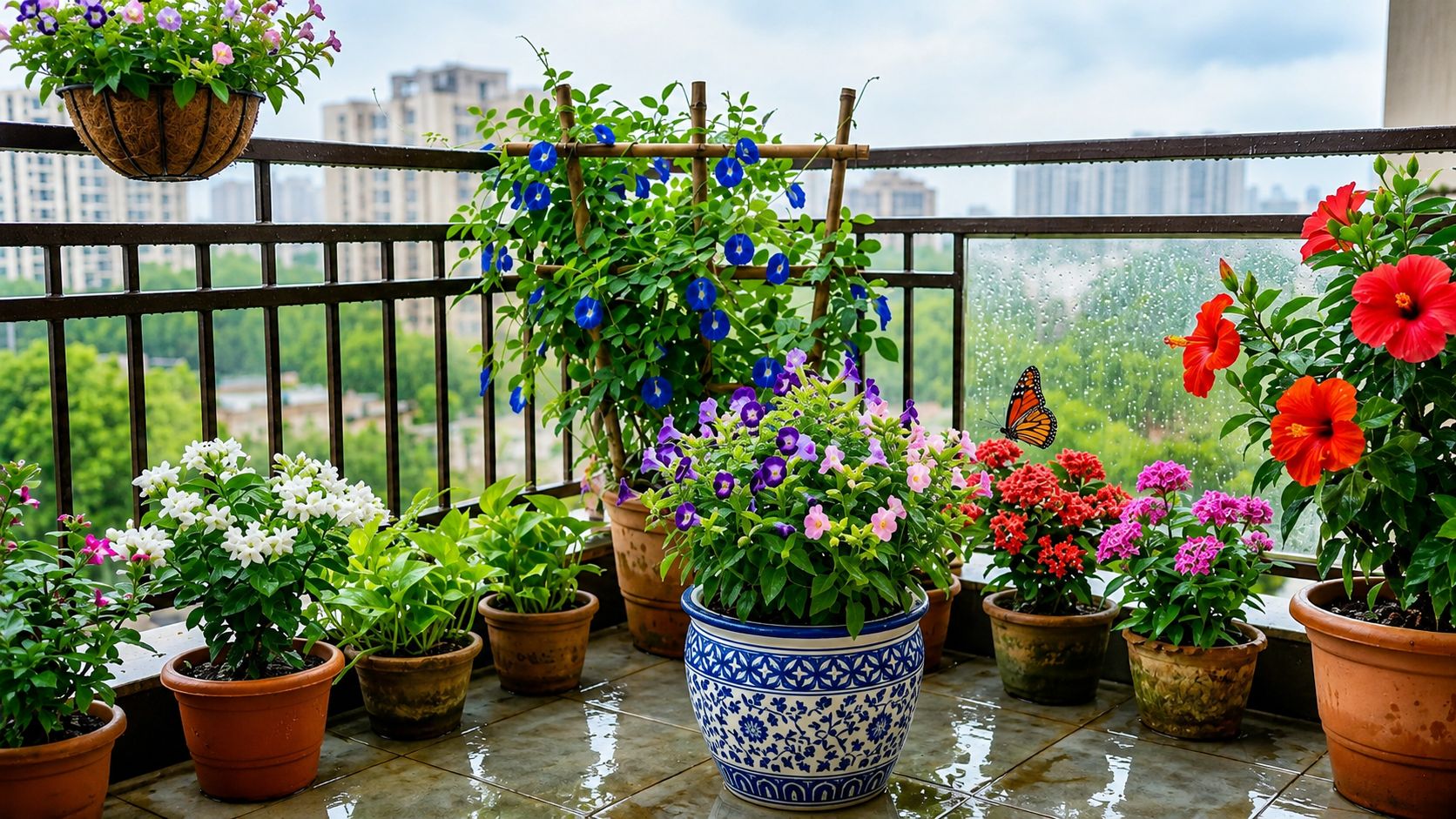
Here are the 12 best rainy season flowers for Delhi, plus easy care tips, balcony-friendly picks, and expert advice to keep your monsoon garden blooming.
Key Takeaways
- Hibiscus, Mogra (Jasmine), Rain Lily, Balsam, Aparajita, Madhumalti, Torenia, Ixora, Begonia, Pentas, Cuphea, and Allamanda grow well in Delhi's warm and humid monsoon weather.
- Rain Lily blooms after rainfall and needs very little care. Cuphea is hardy and easy to maintain. Balsam grows easily from seeds and often self-seeds, giving you new plants the following season.
- Torenia, Begonia, and Balsam grow well in shade. They are excellent choices for north-facing balconies in Delhi.
- Mogra and Madhumalti fill the air with a pleasant fragrance, especially during cool and humid monsoon evenings.
- Plant these flowers from late June to mid-July, when the monsoon begins in Delhi. The regular rainfall and high humidity help young plants establish strong roots.
- Do not water plants on a fixed schedule during the rainy season. Check the soil before watering. During weeks with regular rainfall, most potted plants do not need extra watering.
- All 12 flowering plants featured in this guide are available on Urvann with next-day delivery across Delhi.
If your balcony or garden looked dull after Delhi's harsh summer, the monsoon is the perfect time to bring it back to life. Many flowering plants actually grow better during the rainy season. Cooler temperatures, regular rainfall, and high humidity help them establish faster and produce more flowers.
But not every flowering plant enjoys Delhi's monsoon. Some flowering plants struggle in waterlogged soil. Others thrive and bloom for months with very little care.
In this guide, you'll discover 12 flowering plants that grow well in Delhi's rainy season, whether you have a sunny terrace, a shaded balcony, or a small apartment. You'll also find simple care tips and a quick comparison table to help you choose the right plants for your space.
Why Does the Monsoon Season Bring Out the Best Flowers in Delhi?
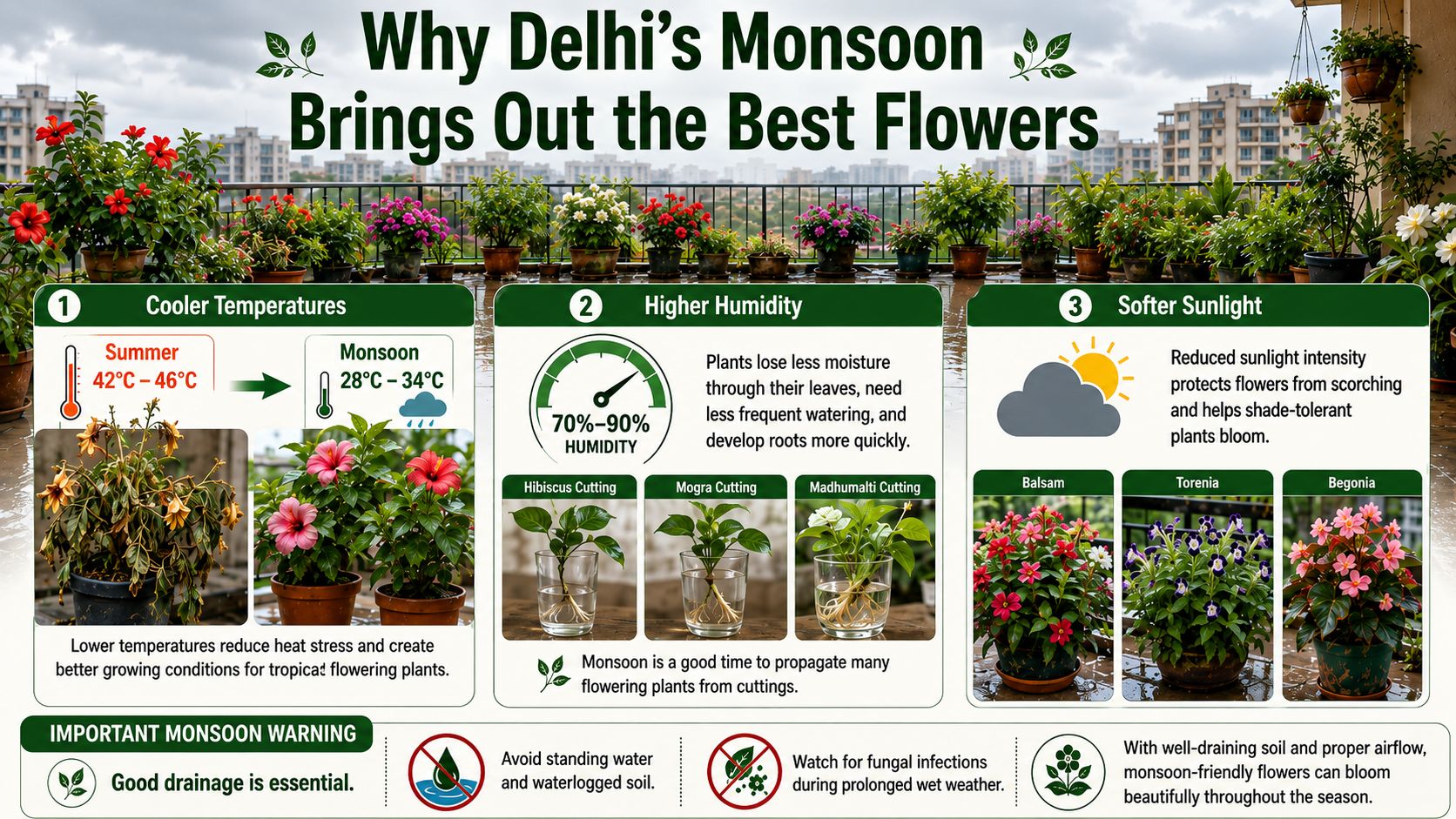
Delhi's monsoon creates the perfect growing conditions for many flowering plants. Here are three reasons:
1. Temperatures Become Much Cooler
After the intense summer heat of 42°C to 46°C, the weather drops to a more comfortable 28°C to 34°C during July and August. Most tropical flowering plants bloom better in this temperature range because they experience less heat stress.
2. Humidity Levels Increase to Around 70% to 90%
This slows water loss through the leaves, so they need less frequent watering. Many plants that require watering twice a day in May can often rely on rainfall during August. High humidity also helps cuttings develop roots faster.
3. Cloudy Skies Reduce the Intensity of Direct Sunlight
Many flowering plants grow better in this softer light than under Delhi's harsh summer sun. Plants like balsam, torenia, and begonia often produce more flowers in partial shade during the monsoon.
However, the rainy season also increases the risk of waterlogging and fungal diseases. The plants in this list are well suited to Delhi's monsoon conditions. As long as you use well-draining soil and avoid standing water, they can grow and flower beautifully throughout the season.
12 Best Rainy Season Flowers for Delhi Gardens and Balconies
1. Hibiscus (गुड़हल)
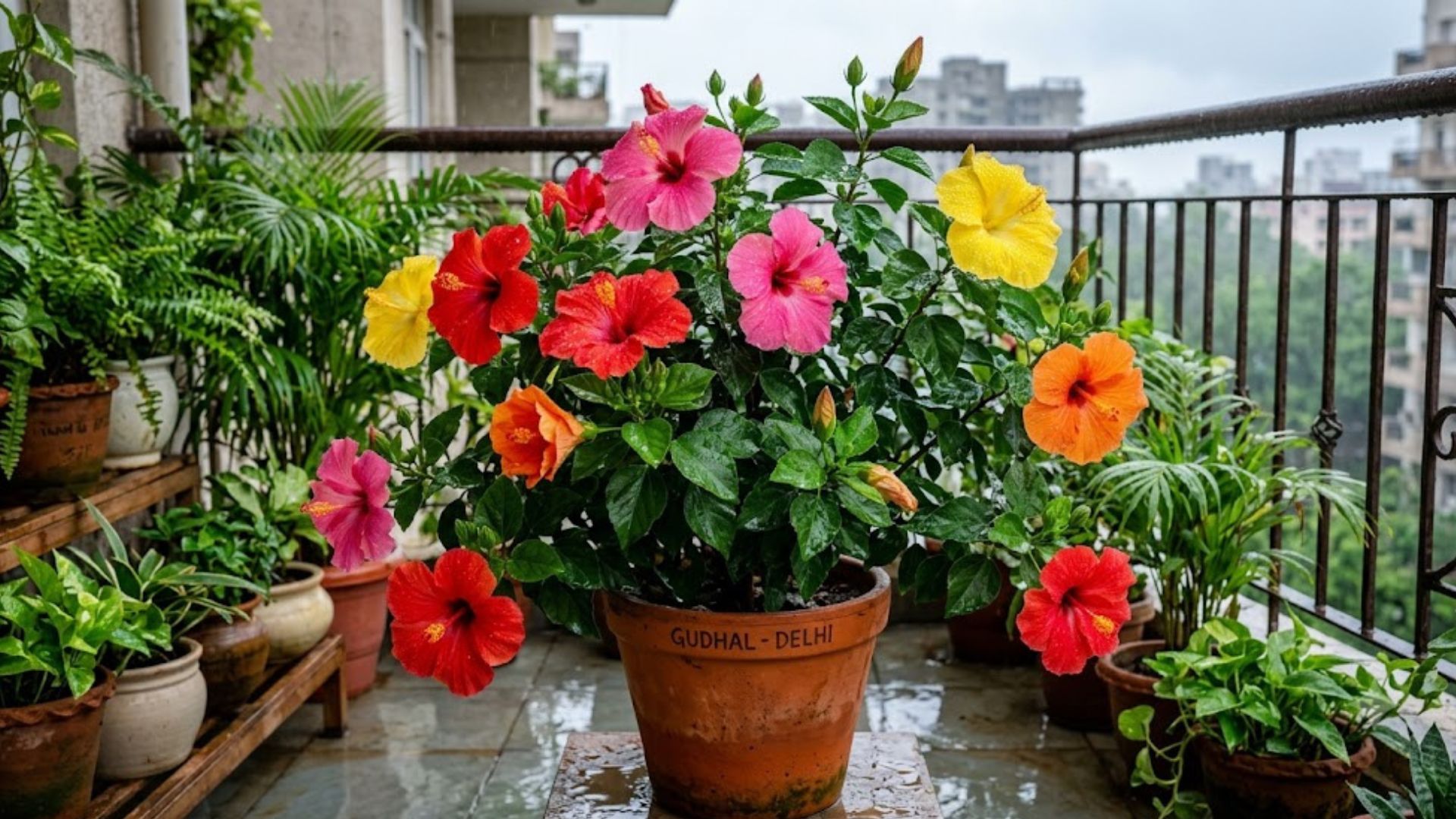
Hibiscus is one of the most reliable flowering plants for Delhi's monsoon season.
Its large, trumpet-shaped flowers bloom every morning in shades of red, pink, orange, yellow, and white. Each flower lasts just one day, but fresh blooms appear daily.
During the peak monsoon season, a healthy hibiscus plant can produce 3 to 5 flowers every day.
Why Does Hibiscus Grow Well in Delhi
Hibiscus is a tropical plant that enjoys both warmth and humidity. It grows well during Delhi's monsoon and can handle heavy rainfall if the soil drains well.
Delhi-Specific Care
- Place the plant where it receives at least 5 to 6 hours of direct sunlight every day.
- Use a well-draining potting mix made with one part garden soil, one part cocopeat, and one part vermicompost.
- Lightly prune the plant after each flowering cycle to encourage more branches and blooms.
- Spray neem oil every 10 to 15 days to help prevent mealybugs, which are common during Delhi's humid monsoon months.
Propagation Tip: The monsoon season is the best time to grow hibiscus from cuttings. Take an 8-10 inch semi-hardwood cutting, dip the end in rooting hormone, and plant it in moist soil. The high humidity helps the cutting develop roots in about 3 to 4 weeks.
If you'd like a flowering plant that blooms almost every day during the monsoon, you can find healthy Hibiscus plants on Urvann.
2. Mogra (Jasmine/मोगरा)
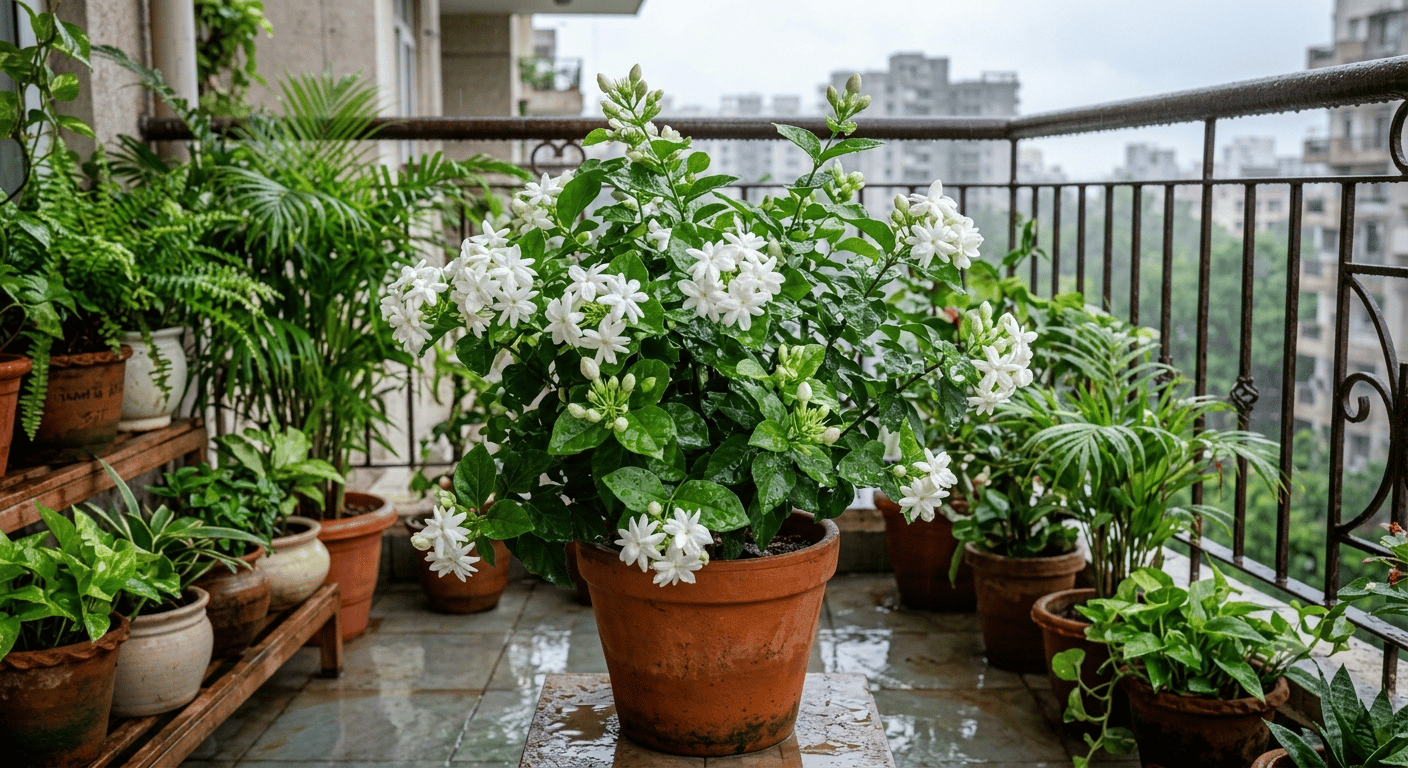
Mogra is one of the most loved flowering plants during the Indian monsoon.
Its small, star-shaped white flowers fill the air with a sweet fragrance, especially after an evening shower. The plant blooms from June to October in Delhi, with the heaviest flowering during July and August.
Why Does Mogra Grow Well in Delhi
Mogra, also known as Arabian jasmine, is a tropical plant that grows well in Delhi's warm and humid monsoon weather. It produces even more flowers when night temperatures stay below 30°C, which is common during the rainy season.
Delhi-Specific Care
- Place the plant in a spot that receives full sunlight.
- It also grows well on cloudy monsoon days with filtered sunlight.
- Water the plant only when the top inch of soil feels dry.
- Feed the plant with a potassium-rich fertiliser once a month to encourage more flowers.
- Remove faded flowers regularly to help the plant keep producing new buds.
Best Time to Harvest Flowers
Pick the flowers early in the morning, just before sunrise. This is when their fragrance is at its strongest.
Want your balcony to fill with the sweet fragrance of jasmine after every evening shower? You can find healthy Jasmine (Mogra) plants on Urvann.
3. Rain Lily (Zephyranthes/तूफ़ान लिली)
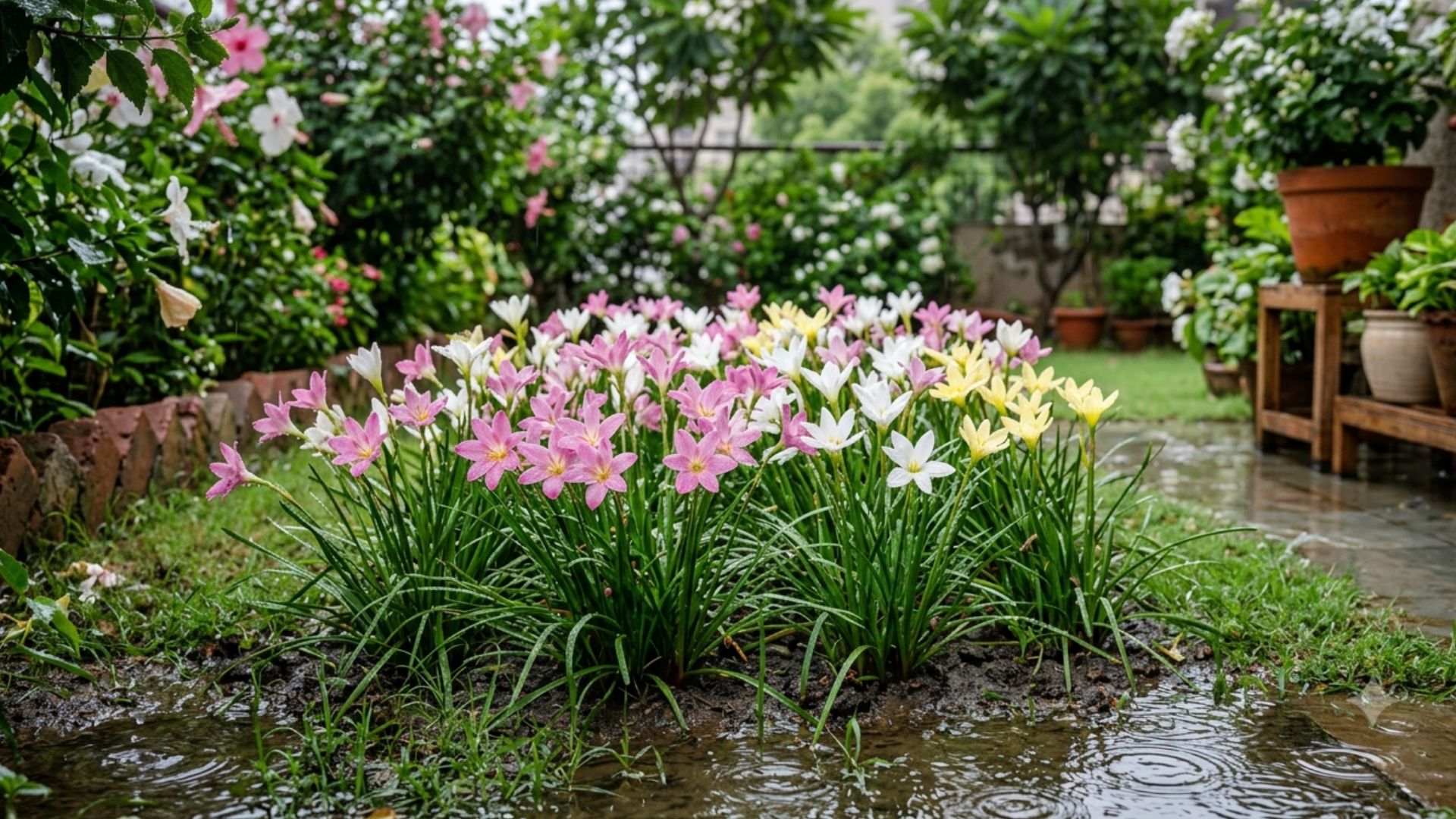
Rain lilies are one of the most beautiful flowers to grow during the monsoon.
As their name suggests, they bloom a few days after a good rainfall. The plants produce delicate, cup-shaped flowers in pink, white, and yellow. Each flower lasts for about 2 to 3 days. After the next rainfall, the plant blooms again.
Why Does Rain Lily Grow Well in Delhi
Rain lilies are bulb plants that stay almost dormant during Delhi's hot summer. They start growing and flowering when the monsoon rains arrive. They are also naturally resistant to most common pests and multiply quickly. Healthy bulbs gradually multiply and form clumps over time.
Delhi-Specific Care
- Plant the bulbs about 2 inches deep in well-draining soil.
- Rain lilies grow well in both full sun and partial shade.
- Once planted, leave the bulbs in place. Unlike some bulb plants, they do not need to be removed from the soil after the growing season.
- During the monsoon, rainfall is usually enough, so extra watering is not needed.
- New leaves and flowers usually appear within 10 to 14 days.
Pro Tip: Rain lilies look beautiful along garden borders. They also grow well in wide, shallow pots, where they create a colourful carpet of flowers.
If you love flowers that bloom after every rainfall with very little care, you can find Rain Lily plants on Urvann.
4. Balsam (Gulmehndi/गुल मेहेंदी)
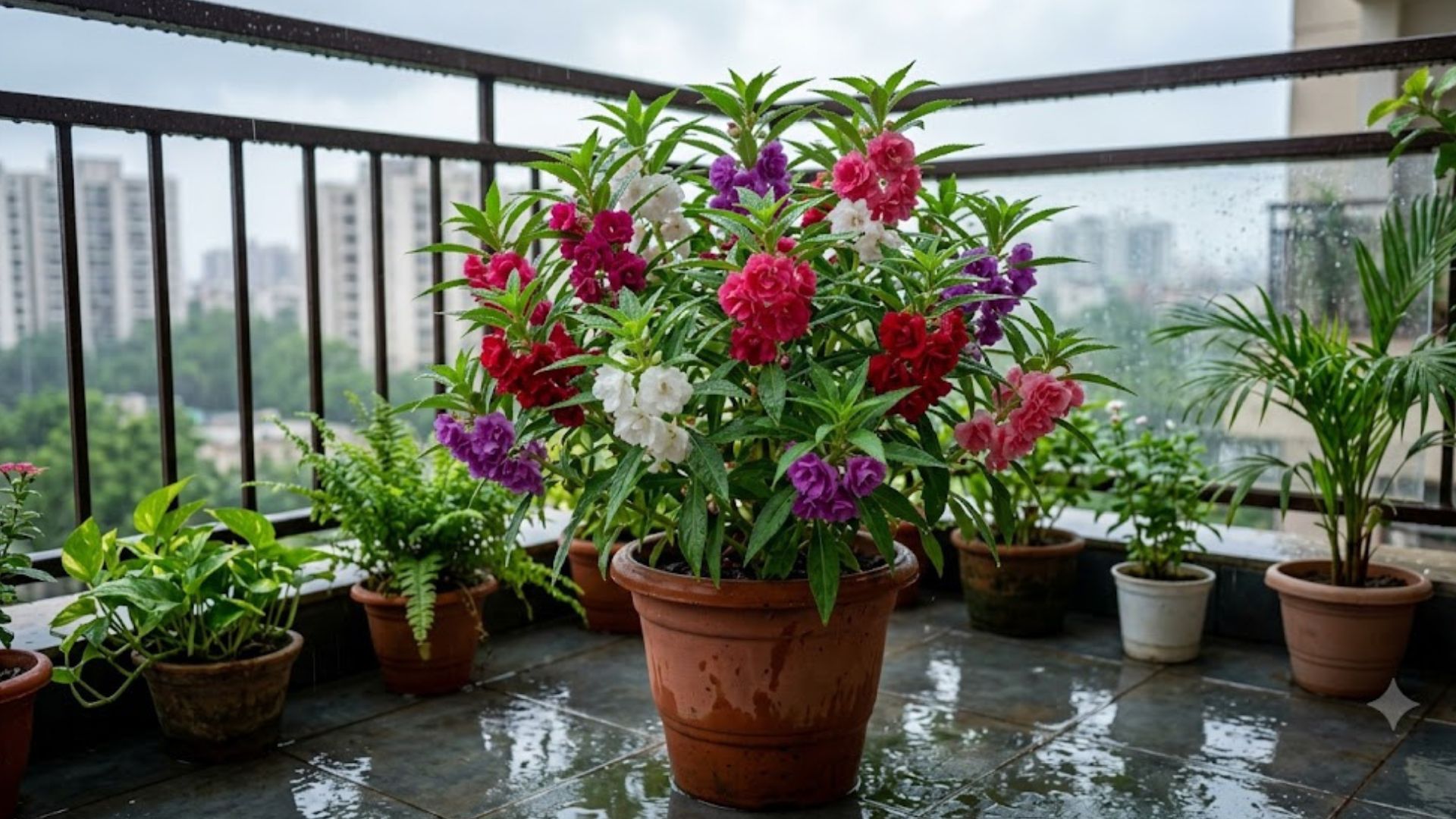
Balsam is one of India's most popular monsoon flowering plants.
It is also one of the easiest flowers to grow from seeds. The plant produces soft, double flowers that look similar to camellias. You can find them in shades of pink, red, white, and violet. Once established, balsam blooms continuously for 3 to 4 months.
It is also a great choice for north-facing balconies in Delhi because it grows well in partial shade.
Why Does Balsam Grow Well in Delhi
Balsam thrives in warm and moist weather, making Delhi's monsoon season ideal for healthy growth. It grows well in both full sun and partial shade. However, it produces the most flowers when it receives morning sunlight and afternoon shade. The plant also self-seeds easily, so new plants can grow on their own in the following season.
Delhi-Specific Care
- Sow the seeds directly in pots or garden beds about ¼ inch deep.
- The seeds usually germinate within 7 to 10 days.
- Leave 8 to 10 inches of space between plants.
- Water regularly during dry periods between rains.
- Make sure the pots have drainage holes because balsam does not grow well in standing water.
- The plant does not need heavy fertilising.
- Mixing a small amount of compost into the soil at planting time is enough.
Seed-Saving Tip: Mature balsam plants produce seed pods that burst out when touched. If you want to collect seeds, pick the pods just before they dry completely. If you leave them on the plant, they will naturally spread seeds and grow new plants.
Looking for an easy flowering plant for the monsoon? You can find healthy Balsam plants on Urvann.
5. Aparajita (Butterfly Pea/अपराजिता)
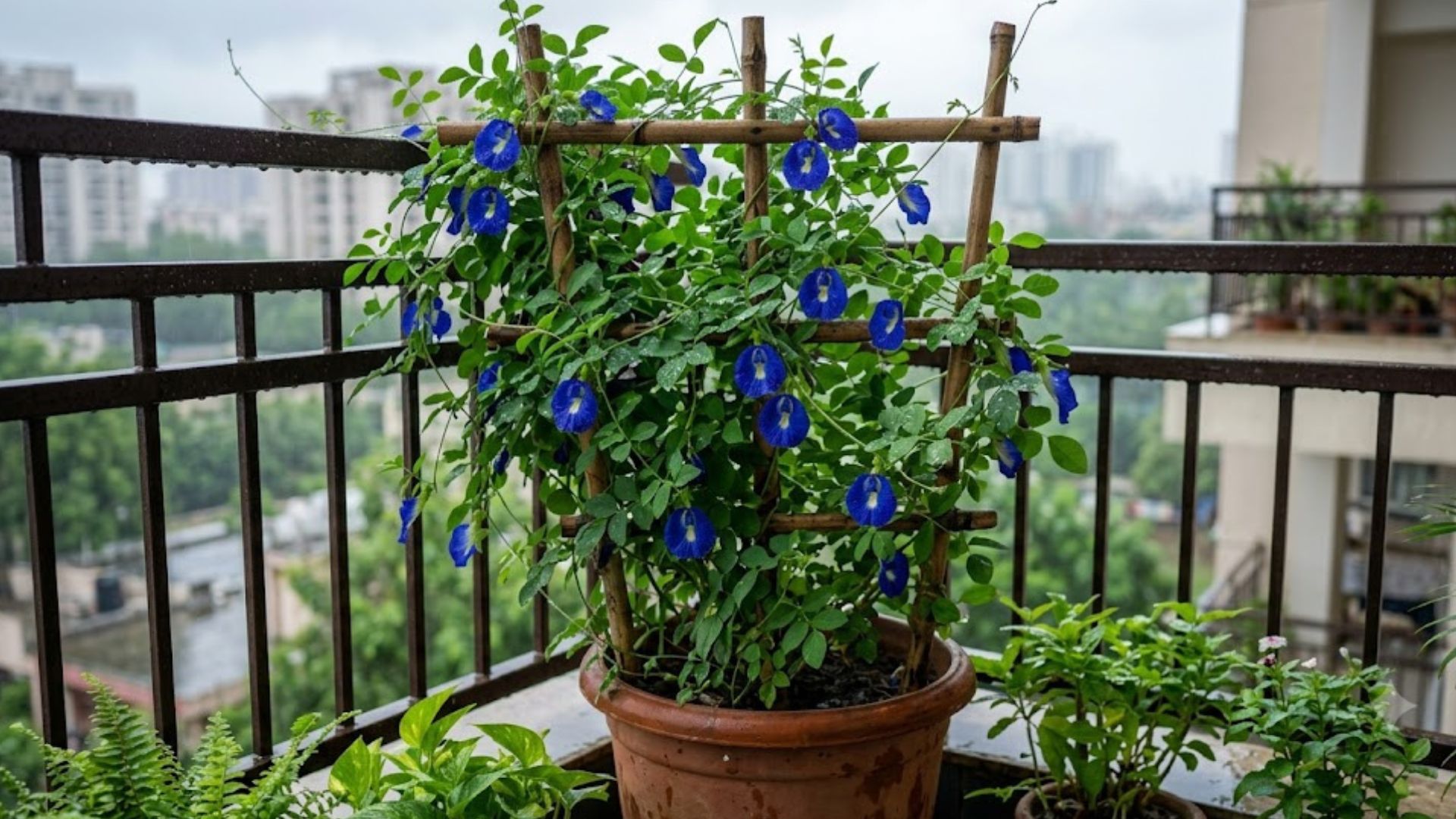
Aparajita is a fast-growing climbing plant that produces beautiful deep blue flowers throughout the monsoon season.
The flowers are edible and are commonly used to make blue tea. When lemon is added, the tea changes from blue to purple. In Ayurveda, Aparajita has traditionally been used in herbal preparations, although more research is needed to confirm many of its claimed health benefits.
Aparajita is also widely grown in Delhi near temples and homes because of its religious importance.
Why Does Aparajita Grow Well in Delhi
Aparajita is a legume, which means it adds nitrogen to the soil and helps improve soil health. Once established, the plant can tolerate dry conditions. However, it flowers most during the monsoon when there is plenty of moisture. It is a fast-growing vine and can grow 6 to 8 feet in a single monsoon season.
Delhi-Specific Care
- Provide a trellis, railing, or wire mesh for the vine to climb.
- The plant grows well in both full sun and partial shade.
- Soak the seeds overnight before planting to improve germination.
- The seeds usually sprout within 7 to 10 days.
- Once the plant is established, it needs very little care.
- Make sure it has proper support to climb, and trim the vine if it becomes too long or untidy.
If you'd like a fast-growing climber with beautiful blue flowers, you can find Aparajita plants on Urvann.
6. Madhumalti (Rangoon Creeper/मधु मालती)
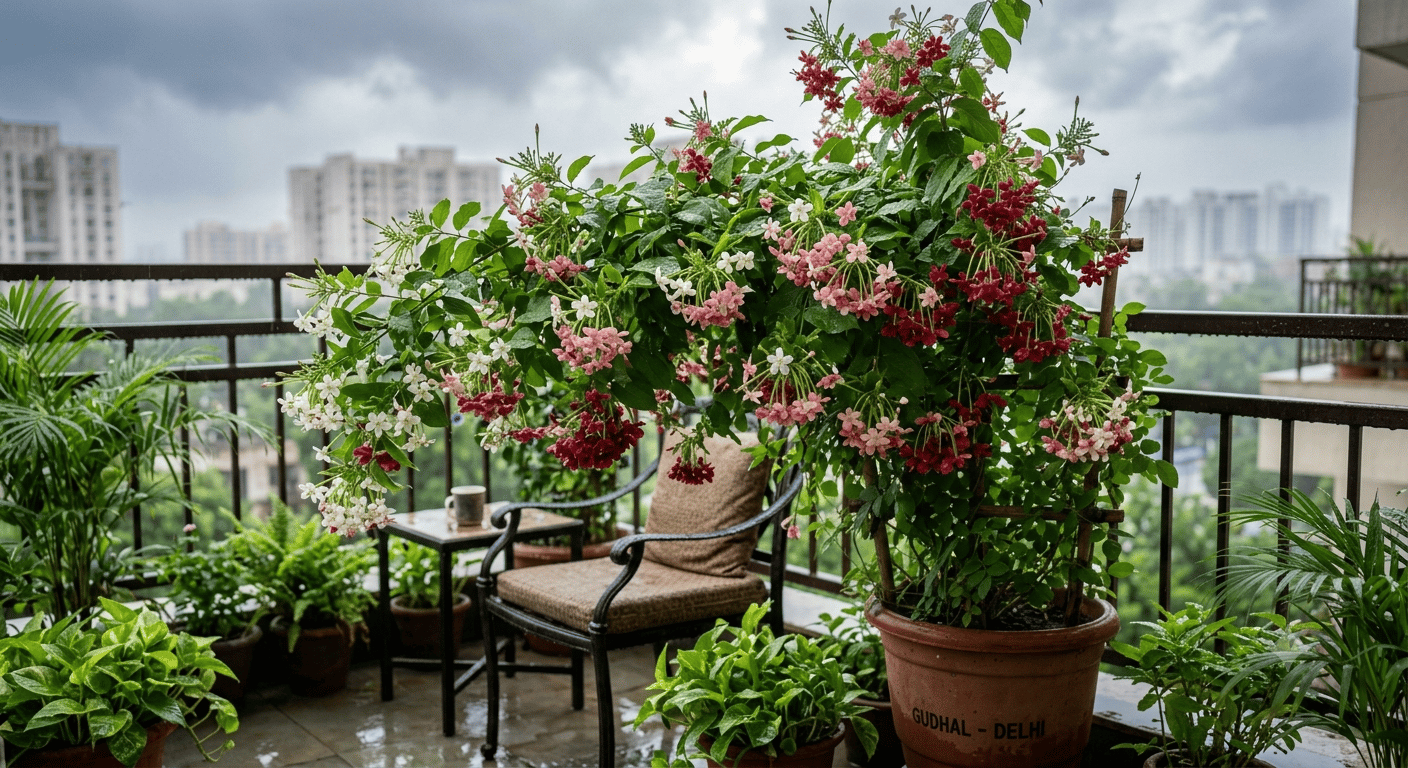
Madhumalti is one of the most eye-catching flowering plants for the monsoon season.
Each flower cluster displays three colours at the same time. Fresh flowers are white, they turn pink as they mature, and become deep red before they fall. This creates a beautiful mix of colours on a single plant.
The flowers also release a sweet, honey-like fragrance in the evening.
Why Does Madhumalti Grow Well in Delhi
Madhumalti is a fast-growing perennial climber that thrives in Delhi's warm and humid monsoon weather. It usually takes one growing season to become established. After that, it needs very little care. A healthy plant can quickly cover a wall, fence, or trellis with lush green leaves and colourful flowers.
Delhi-Specific Care
- Plant madhumalti in a spot that receives full sunlight for the best flowering.
- Provide a strong trellis, fence, or other support because a mature vine becomes heavy during the blooming season.
- Prune the plant well in February after the risk of frost has passed.
- During the monsoon, lightly trim the vine after each flowering cycle to encourage healthy growth.
- Water regularly during dry periods, but avoid waterlogging.
- In winter, the vine may lose its leaves and look dormant. This is normal, and fresh growth returns in spring.
Want a flowering climber that adds colour and fragrance to your balcony or garden? You can find healthy Madhumalti plants on Urvann.
7. Torenia (Wishbone Flower/टोरेनिया)
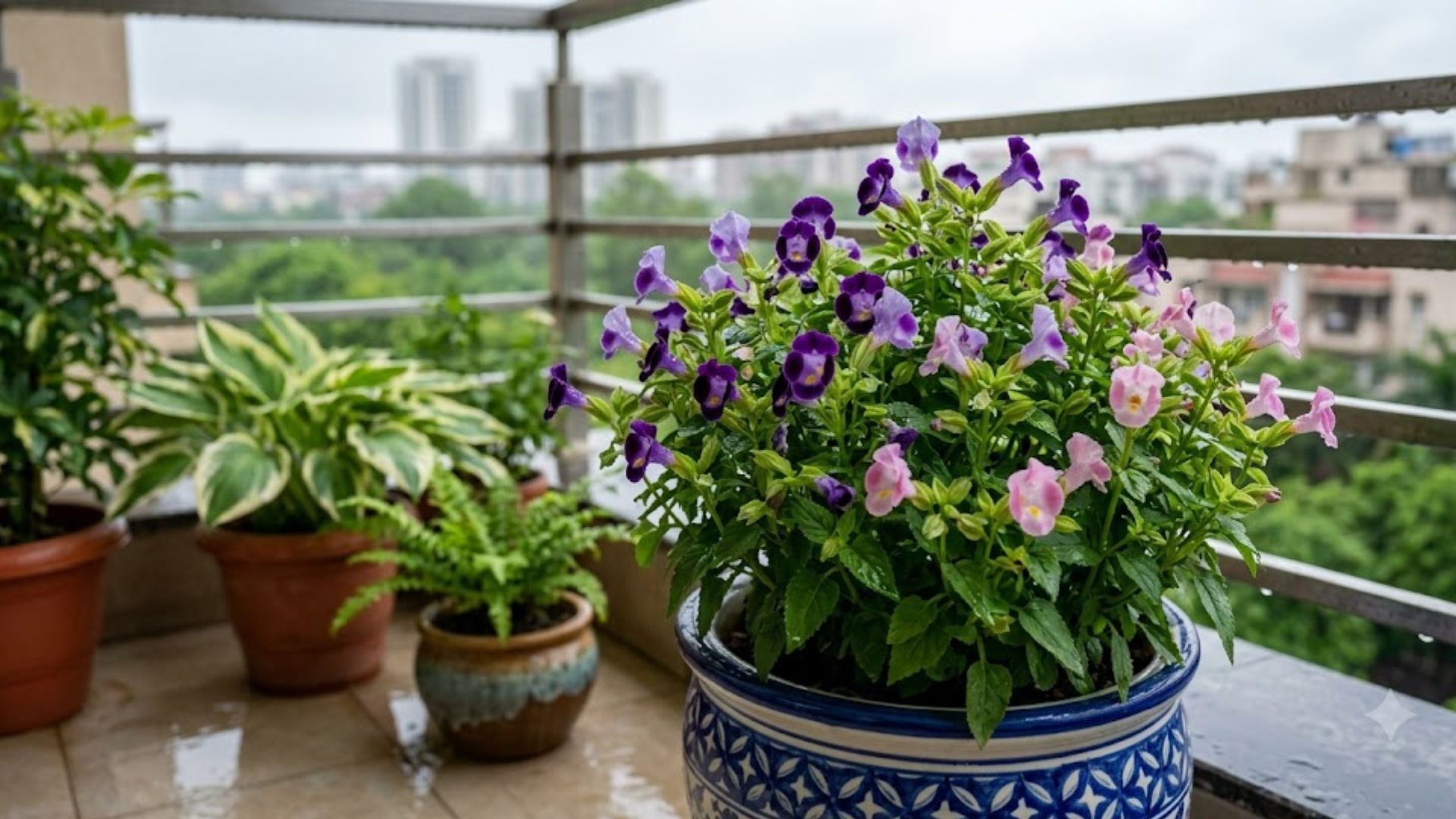
Torenia is a beautiful flowering plant that is often overlooked.
It produces small, trumpet-shaped flowers in shades of purple, blue, and pink. Inside each flower is a tiny wishbone-shaped stamen, which gives the plant its common name. Torenia is one of the few flowering plants that grow and bloom well in shade.
This makes it an excellent choice for Delhi balconies that receive little direct sunlight.
Why Does Torenia Grow Well in Delhi
Torenia is a warm-season annual that flowers best from July to September. It grows well in Delhi's humid monsoon weather and continues blooming even during cloudy and rainy days when many other flowering plants produce fewer blooms.
Delhi-Specific Care
- Grow Torenia in partial shade or full shade for the best results.
- Strong afternoon sunlight can damage the delicate flowers.
- Keep the soil evenly moist, but do not let water collect around the roots.
- Torenia is a great choice for hanging baskets and window boxes.
- Pinch the growing tips when the plant is young to encourage more branches and produce more flowers.
Do you have a shaded balcony? Torenia is one of the easiest flowering plants to grow, and you can find it on Urvann.
8. Ixora (Flame of the Woods/रुग्मिनी)
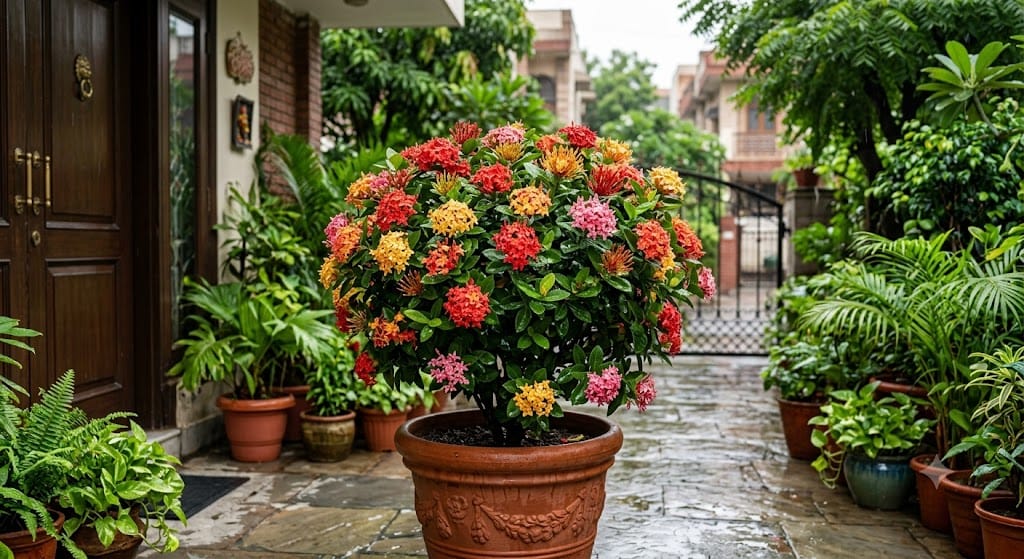
Ixora is a beautiful evergreen shrub that produces large clusters of small flowers.
The flowers come in shades of red, orange, yellow, and pink. Each flower cluster contains around 30 to 60 tiny blooms, creating a bright display that lasts for several weeks.
In Delhi, Ixora flowers most heavily during the monsoon season.
Why Does Ixora Grow Well in Delhi
Ixora is a tropical shrub that thrives in warm and humid weather. It grows well during Delhi's monsoon and is naturally resistant to many common pests. Since it is evergreen, the plant keeps its green leaves throughout the year and adds colour to the garden even when it is not flowering.
Delhi-Specific Care
- Plant Ixora in a spot that receives full sunlight for the best flowering.
- It also grows well in partial shade.
- Ixora prefers slightly acidic soil.
- You can mix peat or pine bark into the potting mix to help reduce yellowing of the leaves, which is common in Delhi's alkaline soil.
- Water the plant regularly during dry periods between rains.
- Lightly prune the plant after each flowering cycle to encourage healthy growth.
- During winter, the plant may grow more slowly, but it usually keeps its leaves.
Propagation Tip: The monsoon season is the best time to grow Ixora from stem cuttings. Take a healthy stem cutting that is 4 to 6 inches long during July or August. Plant it in a mix of cocopeat and sand, and keep it in partial shade. The high humidity during the monsoon improves the chances of successful rooting.
If you'd like colourful flower clusters that return year after year, you can find healthy Ixora plants on Urvann.
9. Begonia (पत्थरचट्टा)
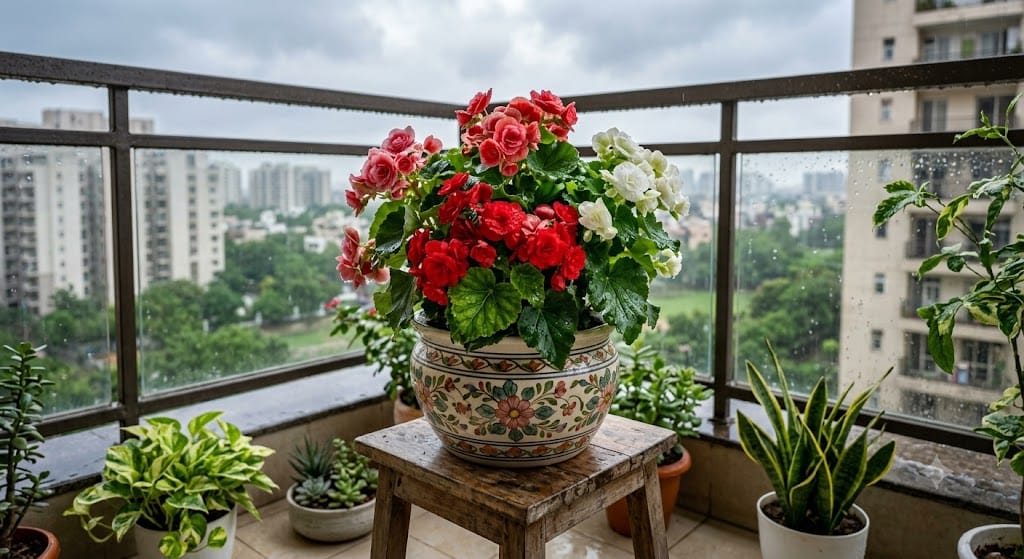
Begonias are beautiful flowering plants with blooms in shades of red, pink, and white.
Many varieties also have attractive leaves that add colour and texture even when the plant is not flowering. Their compact size makes them perfect for small pots, balconies, and apartments in Delhi.
Why Does Begonia Grow Well in Delhi
Begonias grow best in shade and enjoy the cooler, humid weather of the monsoon season. They do not perform well in Delhi's harsh summer sun. However, they start to grow and flower well once the rains arrive and temperatures fall below 35°C.
Delhi-Specific Care
- Place the plant where it receives bright, indirect light or morning sunlight with afternoon shade.
- Use a light and well-draining potting mix made with equal parts cocopeat, perlite, and compost.
- Avoid wetting the leaves while watering because this can lead to fungal diseases.
- Water only when the top layer of soil feels dry.
- Begonias do not tolerate overwatering, so always use a pot with proper drainage holes.
Looking for a flowering plant that's perfect for compact balconies and shaded spaces? You can find Begonia plants on Urvann.
10. Pentas (पेंटास)
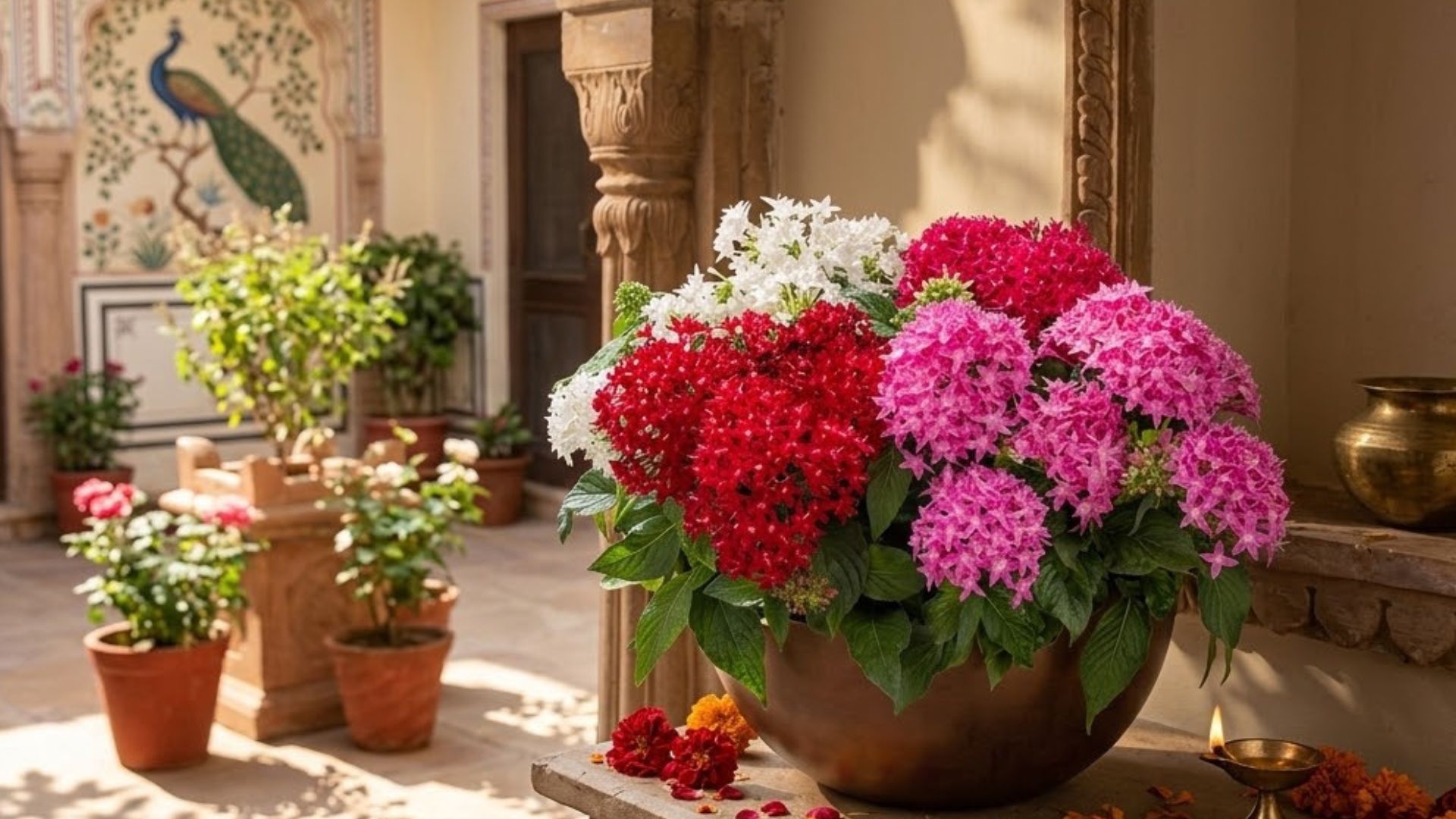
Pentas is a colourful flowering plant that produces clusters of small, star-shaped flowers.
The flowers come in shades of pink, red, white, and purple. The plant blooms continuously from the monsoon season until early winter. Pentas is also one of the best plants for attracting butterflies and bees, making it a great choice for balconies and gardens in Delhi.
Why Does Pentas Grow Well in Delhi
Pentas loves warm, humid weather and grows well during Delhi's monsoon season. It also continues to bloom during the warmer weather of October, even after the monsoon has ended.
Delhi-Specific Care
- Plant pentas in a spot that receives full sunlight for the best flowering.
- Use well-draining soil to keep the roots healthy.
- Remove faded flower clusters regularly to encourage the plant to produce more blooms.
- Feed the plant with a balanced fertiliser every 2 to 3 weeks during the monsoon season.
- Pentas usually has very few pest problems, but check for whiteflies if you are growing it in an enclosed balcony.
Want colourful flowers that also attract butterflies? You can find healthy Pentas plants on Urvann.
11. Cuphea (False Heather/क्यूफिया)
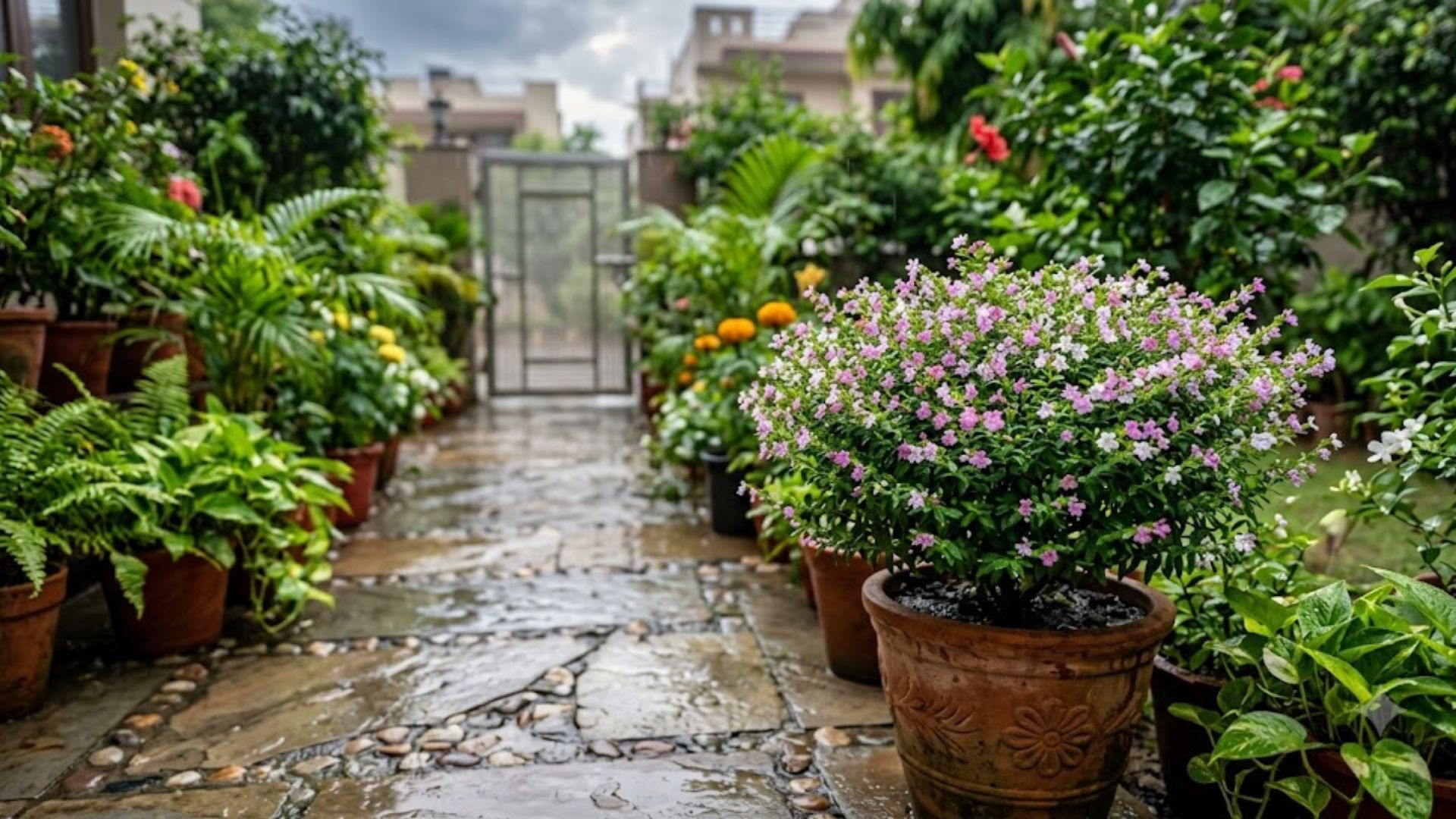
Cuphea is a compact and bushy flowering plant with tiny tubular flowers in shades of pink, white, and purple.
It flowers almost throughout the year in Delhi, but the display is at its best during the monsoon season. Its dense foliage and continuous blooms make it an excellent choice for garden borders, pathways, and low hedges.
Why Does Cuphea Grow Well in Delhi
Cuphea can tolerate both dry weather and humid conditions. This makes it a dependable plant for Delhi's changing climate. Once established, it needs very little care and continues to flower for most of the year.
Delhi-Specific Care
- Grow cuphea in full sun or partial shade.
- Prune the plant regularly to keep it compact and encourage more flowers.
- Water moderately.
- It can handle both rainy days and short dry periods.
- Cuphea is also resistant to most common pests in Delhi.
If you're looking for a low-maintenance flowering plant that keeps blooming for months, you can find Cuphea plants on Urvann.
12. Allamanda (Pilaghanti)
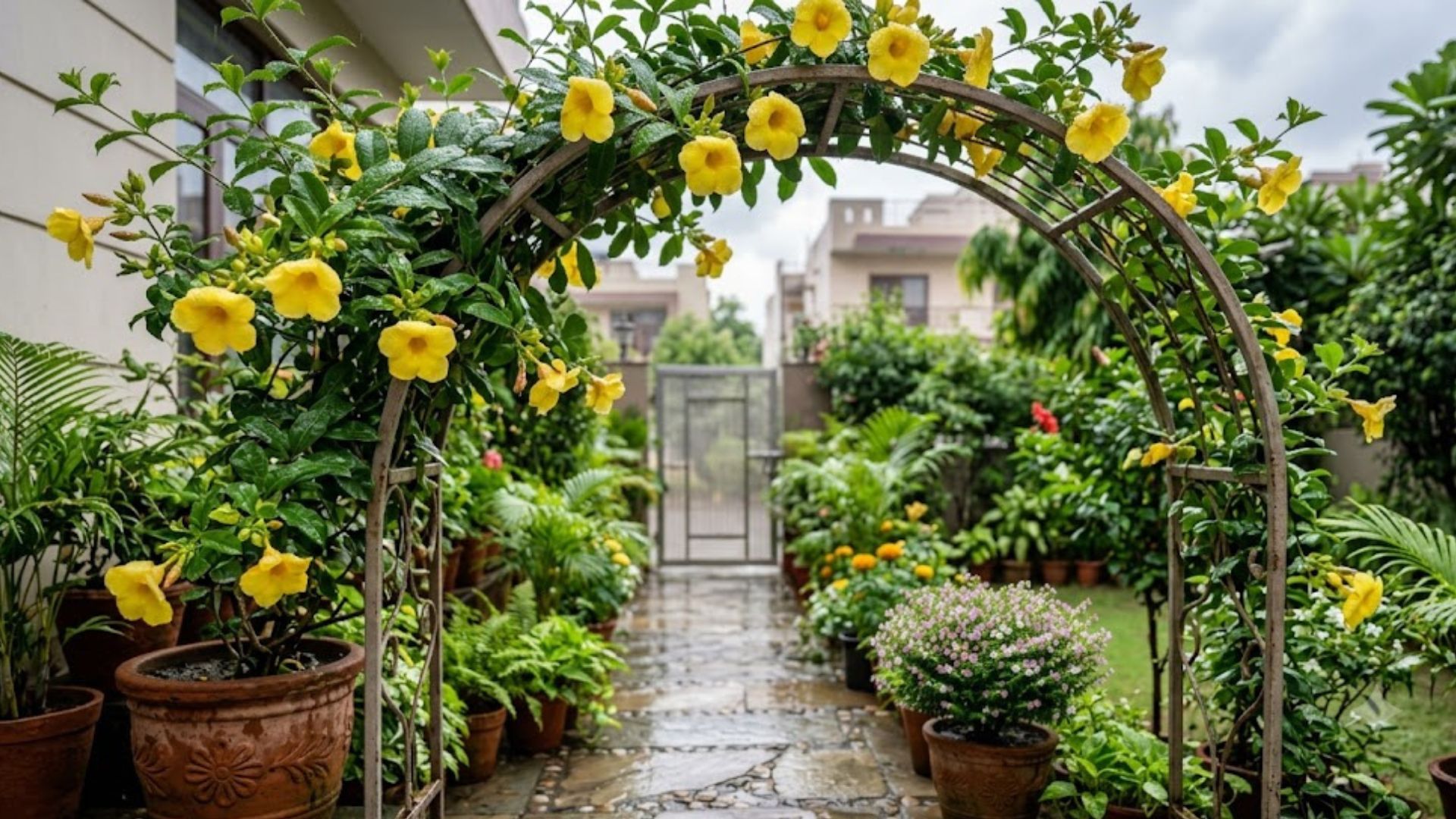
Allamanda is a tropical flowering plant with large, funnel-shaped flowers. The most common variety produces bright yellow blooms, while some varieties have purple or magenta flowers. Dwarf varieties are ideal for pots and containers. Climbing varieties can be trained over railings, fences, and arches.
Why Does Allamanda Grow Well in Delhi
Allamanda loves full sunlight and humid weather, making Delhi's monsoon season ideal for healthy growth. It flowers heavily from July to September and can continue blooming when faded flowers are removed regularly.
Delhi-Specific Care
- Plant allamanda in a spot that receives at least 6 hours of direct sunlight every day.
- Use rich, well-draining soil and feed the plant regularly during the growing season.
- Prune it after each flowering cycle to encourage fresh blooms.
- If you are growing a climbing variety, provide a strong trellis or other support.
- Keep the plant away from pets and small children because all parts of allamanda are mildly toxic.
Want bold tropical flowers to brighten up your balcony or garden? You can find Allamanda plants on Urvann.
Quick Reference: Rainy Season Flowers Comparison Table
| Flower | Sunlight | Pot Size | Bloom Period | Fragrant? | Difficulty |
|---|---|---|---|---|---|
| Hibiscus | Full Sun | 8-10 inch | July-October | No | Easy |
| Mogra/Jasmine | Full Sun | 8-10 inch | June-October | Yes | Easy |
| Rain Lily | Sun to Part Shade | 6-8 inch (wide) | After every rain | No | Very Easy |
| Balsam | Part Shade to Sun | 6-8 inch | July-October | No | Very Easy |
| Aparajita | Full Sun to Part Shade | 8-10 inch | July-November | No | Easy |
| Madhumati | Full Sun | 10-12 inch | July-September | No | Moderate |
| Torenia | Part Shade to Shade | 6-8 inch | July-September | No | Easy |
| Ixora | Full Sun to Part Shade | 8-10 inch | Year-round (peak monsoon) | No | Easy |
| Begonia | Bright Indirect | 6-8 inch | July-October | No | Moderate |
| Pentas | Full Sun | 6-8 inch | July-December | No | Easy |
| Cuphea | Full to Part Sun | 6-8 inch | Year-round (peak monsoon) | No | Very Easy |
| Allamanda | Full Sun | 8-10 inch | July-September | No | Moderate |
Essential Monsoon Care Tips for Delhi Gardeners
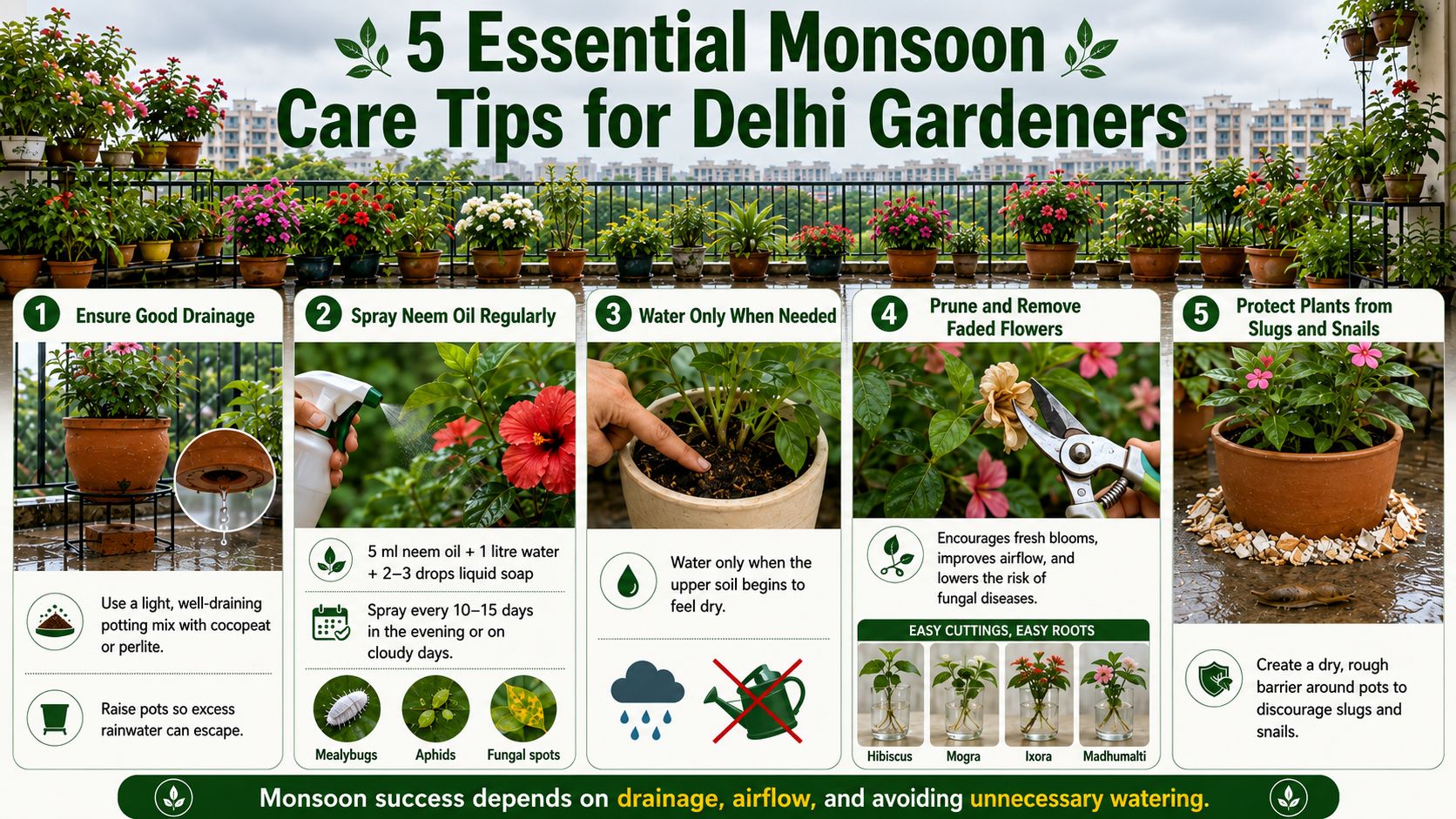
Growing flowering plants during the monsoon is easy when you follow a few simple care tips. These practices will help your plants stay healthy and bloom throughout the rainy season.
1. Ensure Good Drainage
Good drainage is the most important part of monsoon plant care. Delhi can receive heavy rainfall in a short time, and waterlogged soil can damage plant roots. Make sure every pot has proper drainage holes. Use a well-draining potting mix with ingredients like cocopeat or perlite to keep the soil light. Raise pots on plant stands or bricks so excess water can drain easily. If you are planting in the ground, raised beds can help prevent waterlogging.
2. Spray Neem Oil Regularly
High humidity during the monsoon encourages pests and fungal diseases. Mealybugs, aphids, and fungal infections are common during this season. Spray a diluted neem oil solution every 10 to 15 days to protect your plants. Mix 5 ml of neem oil with 1 litre of water and add 2 to 3 drops of liquid soap. Spray in the evening or on cloudy days to prevent leaf burn.
3. Water Only When Needed
One of the most common mistakes during the monsoon is watering plants too often. Before watering, check the top 1 to 2 inches of soil. If the soil is still moist, wait until it begins to dry. During weeks with regular rainfall, most potted plants do not need extra watering.
4. Prune and Remove Faded Flowers
Remove faded flowers regularly to encourage more blooms. Trim dead or yellow leaves to improve air circulation and reduce the risk of fungal diseases. The monsoon season is also a great time to grow new plants from cuttings. Hibiscus, mogra, ixora, and madhumalti root quickly during July and August because of the high humidity.
5. Protect Plants from Slugs and Snails
Slugs and snails become more active during Delhi's monsoon and can damage flowers overnight. Sprinkle crushed eggshells or coarse sand around the base of your pots. This simple method helps keep these pests away from your plants.
Which Rainy Season Flowers Are Best for Delhi Balconies?
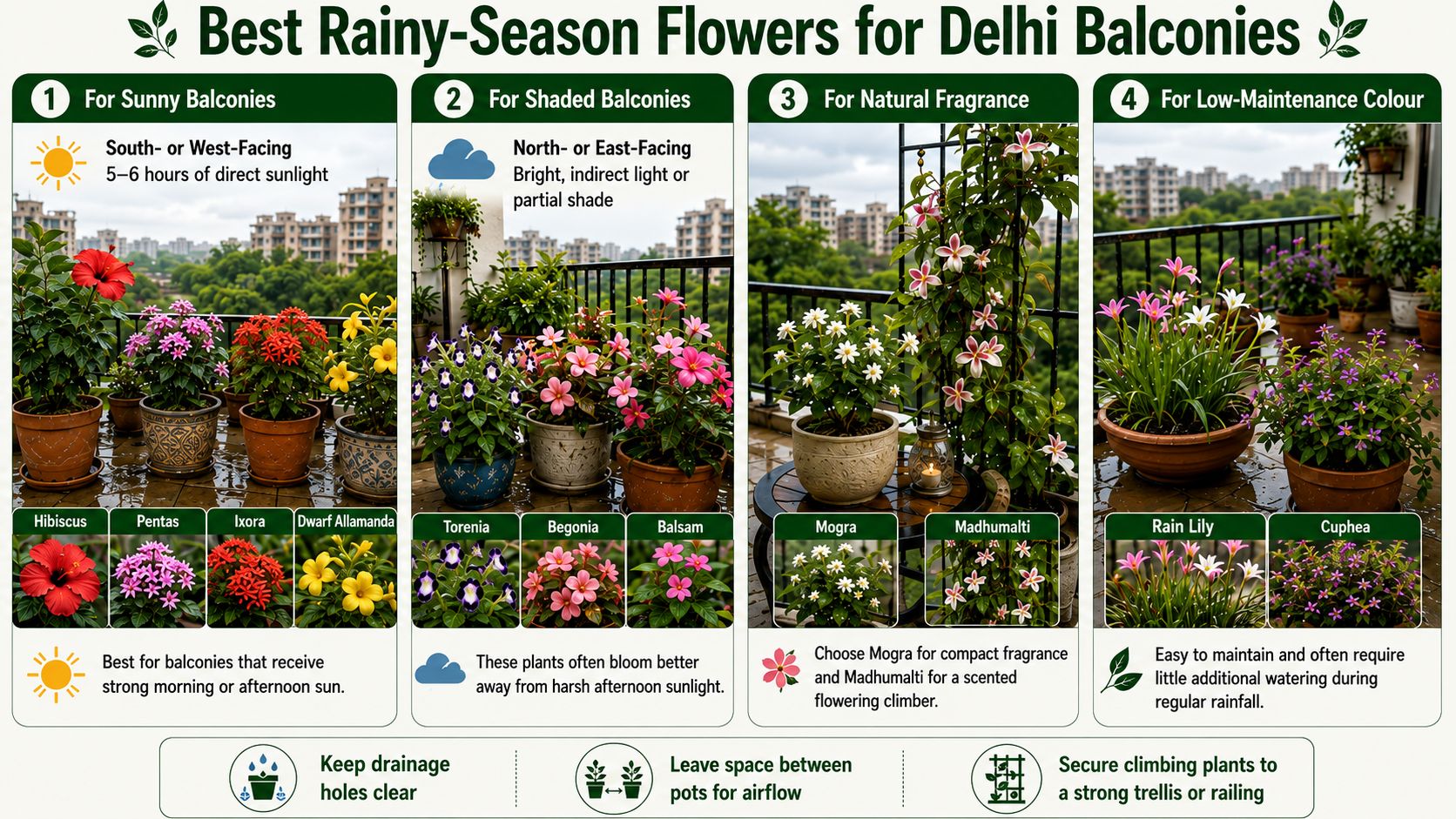
You do not need a large garden to enjoy beautiful monsoon flowers. Many flowering plants grow well in pots and are perfect for Delhi balconies.
For Sunny Balconies (South or West-Facing)
Choose hibiscus, pentas, ixora, or allamanda. These plants produce the most flowers when they receive 5 to 6 hours of direct sunlight every day.
For Shaded Balconies (North or East-Facing)
Torenia, begonia, and balsam are excellent choices. They grow well in bright, indirect light and often flower better in shade than in strong afternoon sun.
For Fragrant Flowers
Mogra and madhumalti are perfect if you enjoy natural fragrance. Mogra grows well in pots, while madhumalti needs a railing, fence, or trellis for support.
For Low-Maintenance Plants
Rain lilies and cuphea are easy to grow and need very little care during the monsoon. In most cases, regular rainfall provides enough water for these plants.
Conclusion
The monsoon season is one of the best times to grow flowering plants in Delhi. Cooler temperatures, higher humidity, and regular rainfall create ideal conditions for many beautiful flowers. From the colourful blooms of hibiscus to the charming flowers of rain lily, there are plenty of options for every garden and balcony.
All 12 flowering plants in this guide are well suited to Delhi's climate and are available in Urvann's Monsoon Plants collection. Whether you're growing your first balcony garden or refreshing an existing one, the monsoon gives your plants the best possible start.
Explore Urvann and bring home beautiful flowering plants this season.
Frequently Asked Questions (FAQs)
1. Which flowers bloom during the rainy season in India?
Many flowers bloom during the monsoon in India. Popular choices include hibiscus, mogra (jasmine), balsam, rain lily, aparajita (butterfly pea), madhumalti (Rangoon creeper), ixora, pentas, torenia, begonia, cuphea, and allamanda. These plants grow well in the cooler and more humid weather from July to September.
2. Which flower grows best during the rainy season in Delhi?
Hibiscus and mogra are among the best flowering plants for Delhi's monsoon season. Hibiscus produces fresh flowers almost every day and grows well in humid weather. Mogra blooms heavily during July and August and fills the air with a pleasant evening fragrance. Rain lily is another excellent choice because it flowers after rainfall and needs very little care.
3. Which rainy season flowers grow well in shade?
Torenia, begonia, and balsam are some of the best flowering plants for shaded areas. Torenia grows especially well in shade, making it a great option for north-facing balconies. Balsam also performs well with morning sunlight and afternoon shade.
4. Which plants grow well during heavy rainfall?
Plants with healthy root systems and good drainage grow best during heavy rains. Hibiscus, ixora, pentas, and cuphea are all well-suited to Delhi's monsoon season. It is also important to use pots with drainage holes and a well-draining potting mix to prevent waterlogging.
5. Can I grow rainy season flowers in pots on my balcony?
Yes. All 12 flowering plants in this guide can be grown in pots. Choose a pot between 6 and 10 inches wide, depending on the plant. Use a well-draining potting mix and make sure every pot has drainage holes. Raising pots slightly above the floor also helps excess water drain away.
6. When is the best time to plant monsoon flowers in Delhi?
The best time to plant monsoon flowers in Delhi is from late June to mid-July, when the rainy season begins. The regular rainfall and high humidity help young plants establish strong roots. Many of these flowering plants are available as nursery-grown plants, so you can start enjoying your garden without growing them from seeds.
Pranav Pharakte
7/26/2026, 11:30 AMGood information. Want to buy all these plants.wnats to know price.