


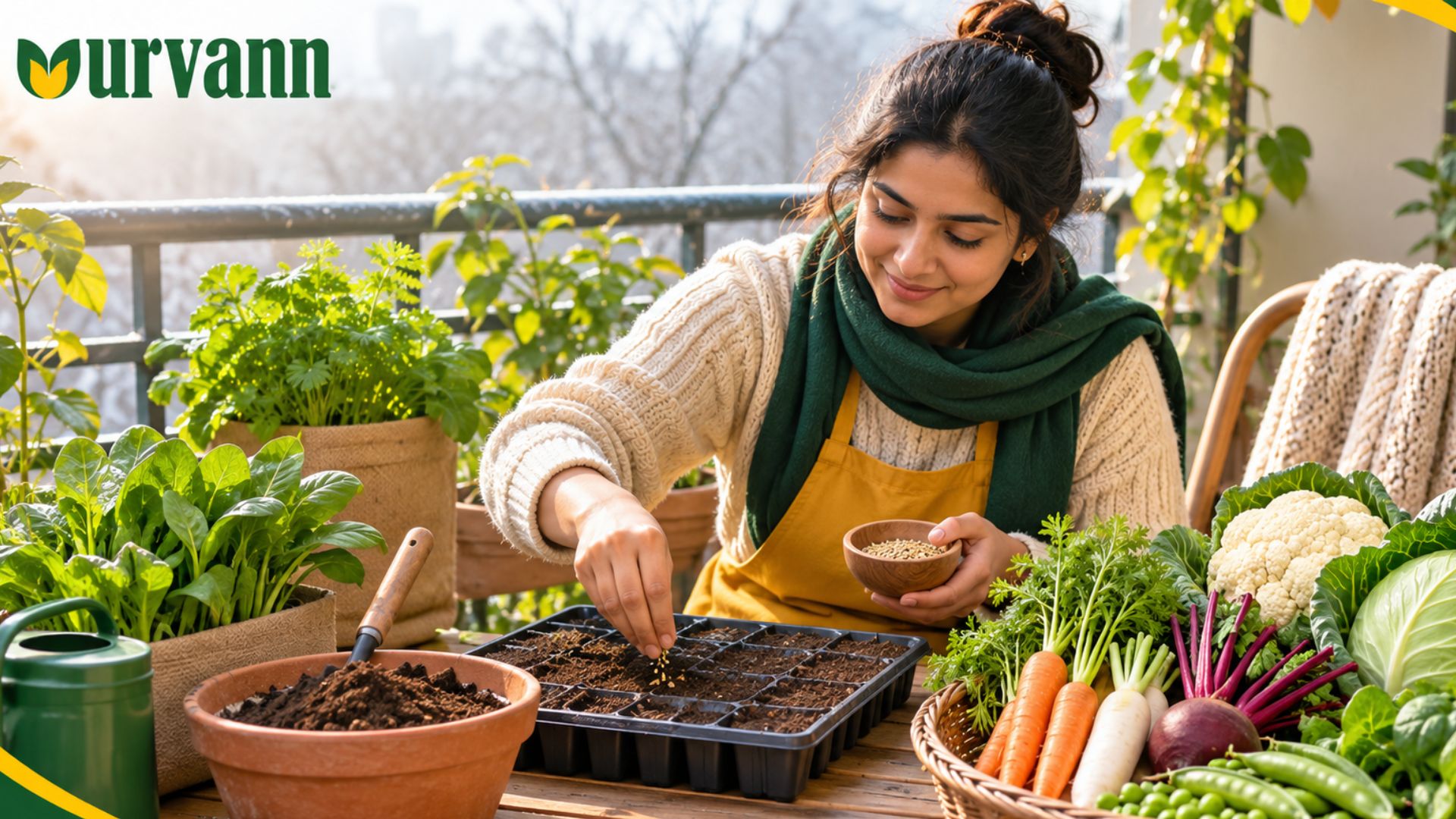
Start your winter veggie garden with 16 easy-to-grow winter vegetables in pots. Learn what to plant in December and January, plus tips on watering, sunlight, and harvesting.
Key Takeaways
- Spinach, fenugreek, coriander, radish, turnip, and mustard greens are good winter vegetable choices for home gardens to grow in December and January.
- Methi, palak, coriander, and some radish varieties are some of the fastest-growing winter veggies that can provide their first harvest in approximately 20–40 days.
- Leafy greens grow well in 6–8-inch-deep planters, while carrots, radishes, and larger vegetables need deeper or wider containers.
- Provide adequate sunlight, use well-draining soil, and water based on soil moisture for the winter vegetables you are growing in December and January.
November is almost over, and if you are a home gardener, you are probably already looking at those winter vegetable seed packets and wondering, "Ab December aur January mein kaunsi winter vegetables aur crops ugayein?"
And why not? Winter is one of the best seasons to grow fresh vegetables at home in India. From palak and methi to gajar, mooli, and matar, there are plenty of winter veggies you can grow in pots, grow bags, or a small kitchen garden. In this guide, we will explore 12 vegetables to grow in winter, their sowing and harvesting times, and simple tips for growing them in December and January.
What Vegetables Grow in Winter in India?
Winter vegetables, or सर्दियों की सब्जियां / ಚಳಿಗಾಲದ ತರಕಾರಿಗಳು, are crops that grow well during the cooler months. Most cool-season vegetables prefer mild daytime temperatures, often around 10–25°C, although the ideal growing temperature varies by crop and location.
In Delhi NCR, the colder winter months create favourable conditions for vegetables like spinach, methi, peas, carrots, radish, cauliflower, and cabbage. Bangalore (Bengaluru), on the other hand, experiences milder winters, making it suitable for growing leafy greens, coriander, lettuce, beetroot, and broccoli.
Some vegetables, like spinach and mustard greens, tolerate colder temperatures well. Others, such as tomatoes and capsicum, prefer warmer conditions and may need protection from frost or extreme cold, particularly in Delhi NCR.
Here's a quick look at popular winter vegetables in India.
- Leafy vegetables: Spinach (Palak), Fenugreek (Methi), Coriander (Dhaniya), and Mustard Greens (Sarson).
- Root vegetables: Carrot (Gajar), Radish (Mooli), Beetroot (Chukandar), and Turnip (Shalgam).
- Pod vegetables: Green Peas (Matar).
- Cruciferous vegetables: Cauliflower (Phool Gobhi) and Cabbage (Patta Gobhi).
But the important question is among these, which vegetables should you plant in December, and which ones can still be planted in January?
Let's find out!
12 Best Winter Vegetables to Grow in December and January
If you are wondering what vegetables to grow in winter, this table will help you compare harvest times before planning your garden.
| Winter Vegetable (English / Hindi / Kannada) | Approximate First Harvest |
|---|---|
| Spinach (Palak) / पालक / ಪಾಲಕ್ ಸೊಪ್ಪು | 25–40 days |
| Fenugreek (Methi) / मेथी / ಮೆಂತ್ಯ ಸೊಪ್ಪು | 20–30 days |
| Coriander (Dhaniya) / धनिया / ಕೊತ್ತಂಬರಿ ಸೊಪ್ಪು | 25–40 days |
| Radish (Mooli) / मूली / ಮೂಲಂಗಿ | 25–50 days for quick varieties |
| Carrot (Gajar) / गाजर / ಕ್ಯಾರೆಟ್ (ಗಜ್ಜರಿ) | 65–100 days |
| Green Peas (Matar) / मटर / ಬಟಾಣಿ | 60–90 days |
| Cauliflower (Phool Gobhi) / फूलगोभी / ಹೂಕೋಸು | 65–110 days from transplanting |
| Cabbage (Patta Gobhi) / पत्तागोभी / ಎಲೆಕೋಸು | 70–110 days from transplanting |
| Beetroot (Chukandar) / चुकंदर / ಬೀಟ್ರೂಟ್ | 55–85 days |
| Turnip (Shalgam) / शलजम / ಟರ್ನಿಪ್ | 40–60 days |
| Mustard Greens (Sarson) / सरसों का साग / ಸಾಸಿವೆ ಸೊಪ್ಪು | 30–45 days for tender leaves |
| Onion ( Pyaz) /प्याज़ / ಸೊಪ್ಪು | 90–150 days after transplanting |
Note: These winter vegetable harvest times are approximate and may vary by state. Weather, variety, seed quality, sunlight, and watering can also affect how quickly your vegetables grow.
Now, let's look at how to grow these Winter Vegetables / सर्दियों की सब्जियां / ಚಳಿಗಾಲದ ತರಕಾರಿಗಳು, along with sowing instructions, pot sizes, sunlight requirements, and approximate harvest times.
1. Spinach (Palak) / पालक / ಪಾಲಕ್ ಸೊಪ್ಪು
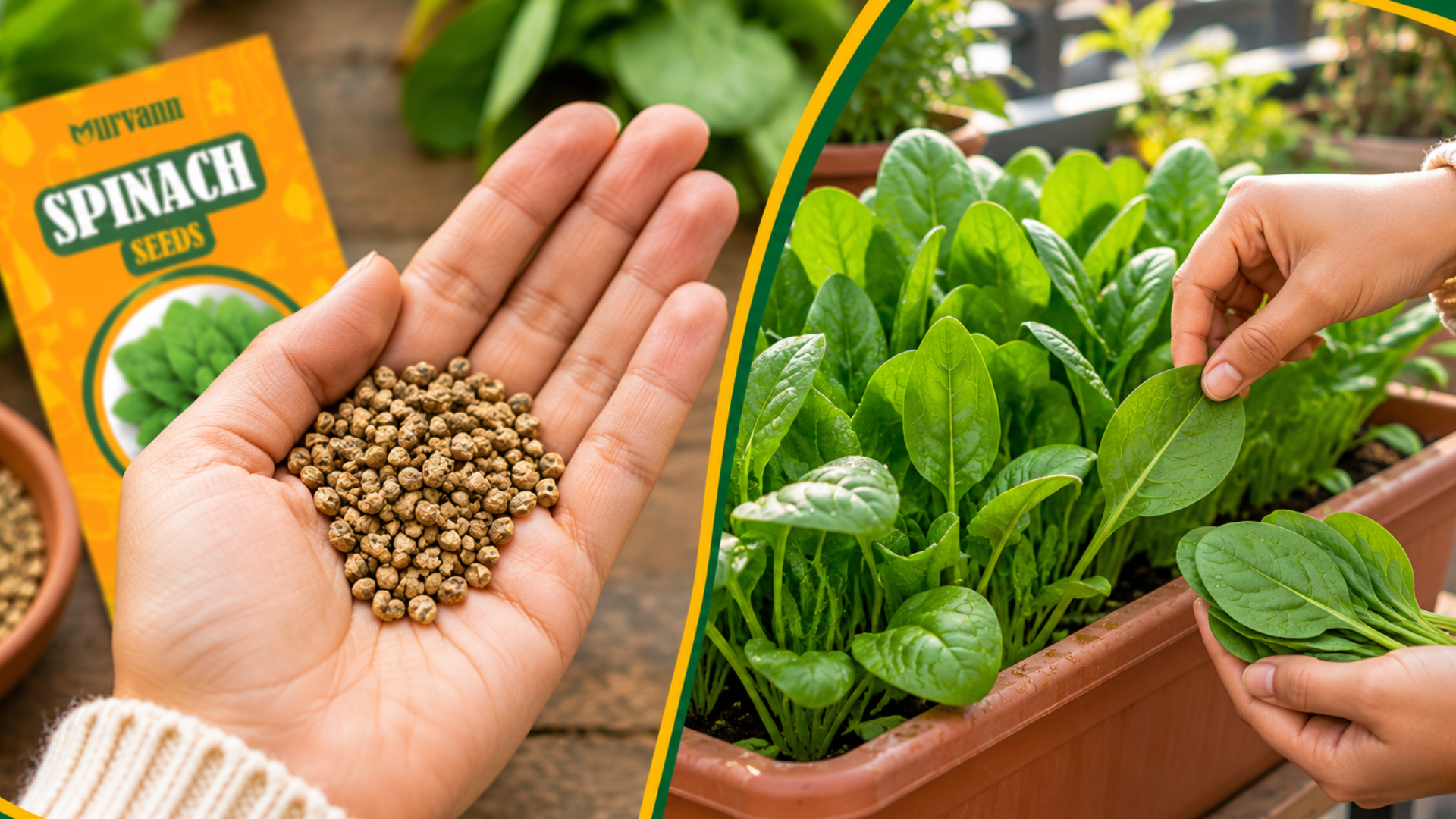
Palak is one of the easiest winter vegetables to grow at home. It grows quickly, doesn't demand much space, and gives you fresh leaves for palak paneer, dal, soup, and parathas.
You can grow it in rectangular planters, grow bags, or shallow pots in December and January. The best part? You don't always have to uproot the whole plant. Harvesting a few outer leaves at a time allows the center to continue producing new growth.
How to Grow Spinach in Winter (सर्दियों में पालक कैसे उगाएं / ಚಳಿಗಾಲದಲ್ಲಿ ಪಾಲಕ್ ಸೊಪ್ಪು ಬೆಳೆಯುವುದು ಹೇಗೆ)
- Fill a 6–8-inch-deep planter with loose, compost-rich soil.
- Sow spinach seeds directly into the soil, about 1–1.5 cm deep.
- Place the container in a location that receives 4–6 hours of direct sunlight daily.
- Keep the soil evenly moist, but avoid overwatering.
- Harvest the tender outer leaves after approximately 25–40 days, allowing the center to continue producing new leaves.
Tip: Sow a small batch of palak seeds every 10–15 days to enjoy fresh leaves over a longer period.
2. Fenugreek (Methi) / मेथी / ಮೆಂತ್ಯ ಸೊಪ್ಪು
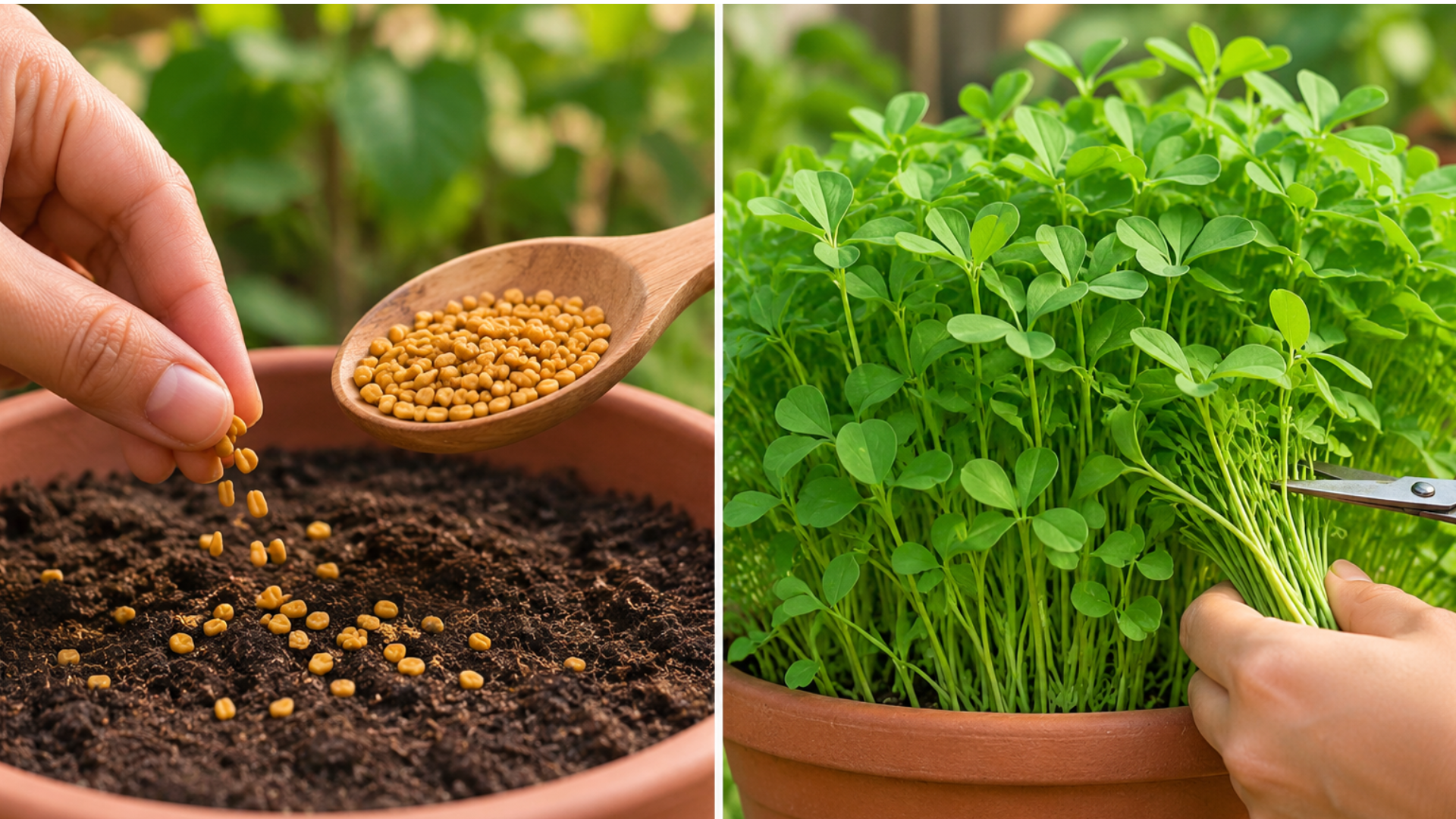
Garam methi paratha with makhan on a cold morning? That's a good enough reason to grow methi at home. Fenugreek is one of the quickest veggies to plant in winter, in December and January.
It needs little space, grows well in shallow containers, and is especially suitable for beginners. Even if you only have a sunny kitchen window or small balcony, you can try growing methi seeds in a wide planter.
How to Grow Methi in Winter (सर्दियों में मेथी कैसे उगाएं / ಚಳಿಗಾಲದಲ್ಲಿ ಮೆಂತ್ಯ ಸೊಪ್ಪು ಬೆಳೆಯುವುದು ಹೇಗೆ)
- Fill a 6–8-inch-deep container with loose, well-draining soil mixed with mature compost.
- Soak methi seeds in room-temperature water for 8–12 hours if desired, then sow them about 1–2 cm deep.
- Place the planter where it receives 4–6 hours of sunlight daily.
- Water gently to keep the soil moist and thin overcrowded seedlings if growing full-sized plants.
- Harvest tender methi leaves after approximately 20–30 days.
Tip: Don't overcrowd seedlings if you want stronger individual fenugreek/methi (मेथी / ಮೆಂತ್ಯೆ ಸೊಪ್ಪು) plants. For baby methi leaves, closer sowing is possible.
3. Coriander (Dhaniya) / धनिया / ಕೊತ್ತಂಬರಿ ಸೊಪ್ಪು
 seeds to plant.png "Prickly Coriander (Dhaniya) seeds sowing.")
Imagine making fresh dhaniya chutney using coriander leaves from your own balcony. Coriander is one of the most useful winter crops for Indian kitchens. Whether you are preparing sabzi, dal, chutney, or pulao, fresh coriander always comes in handy.
It prefers relatively cool weather, making December and January suitable growing months in many parts of India.
How to Grow Coriander in Winter (सर्दियों में धनिया कैसे उगाएं / ಚಳಿಗಾಲದಲ್ಲಿ ಕೊತ್ತಂಬರಿ ಸೊಪ್ಪು ಬೆಳೆಯುವುದು ಹೇಗೆ)
- Fill a 6–8-inch-deep pot with loose, compost-rich, well-draining soil.
- Gently split the round coriander seed fruits into halves and sow them approximately 1 cm deep.
- Place the pot where it receives 4–6 hours of sunlight daily.
- Keep the soil evenly moist during germination without allowing water to collect in the container.
- Harvest coriander leaves after approximately 25–40 days, once the plants have developed enough foliage.
Tip: Instead of harvesting all your coriander at once, sow a new batch every two or three weeks for staggered harvesting.
4. Radish (Mooli) / मूली / ಮೂಲಂಗಿ
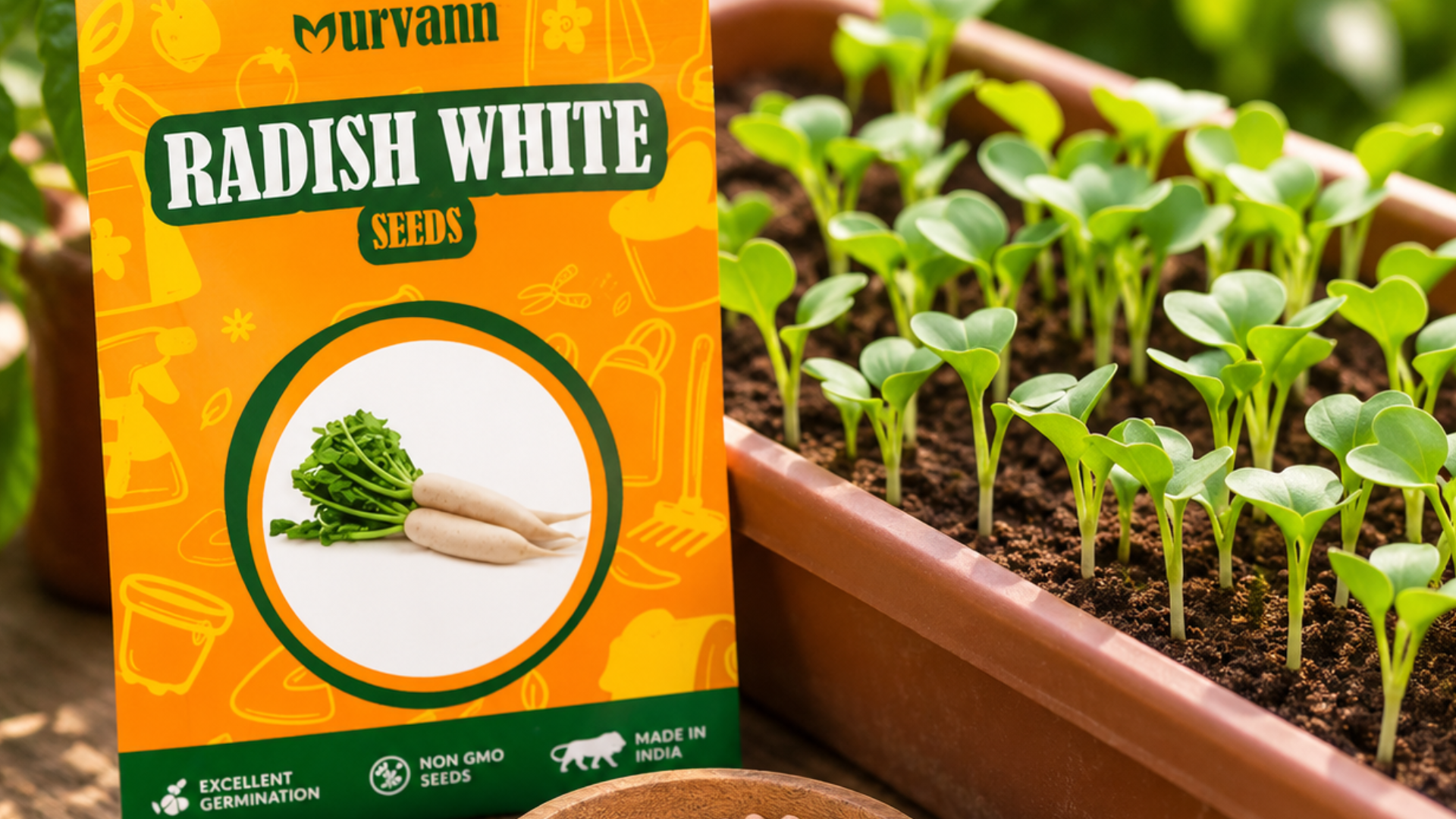
Mooli ke parathe, fresh salads, and homemade achar—radish has a special place in winter cooking. The good news is that radish is also one of the fastest-growing root vegetables to grow in December and January. Many quick varieties can be harvested in about a month, although long white radishes may take longer.
How to Grow Radish in Winter (सर्दियों में मूली कैसे उगाएं / ಚಳಿಗಾಲದಲ್ಲಿ ಮೂಲಂಗಿ ಬೆಳೆಯುವುದು ಹೇಗೆ)
- Fill a 10–14-inch-deep container with loose, stone-free soil, depending on the radish variety.
- Sow radish seeds directly into the soil, about 1–1.5 cm deep.
- Place the container in a sunny spot receiving 5–6 hours of sunlight daily.
- Thin crowded seedlings after germination and keep the soil consistently moist.
- Harvest radishes after approximately 25–50 days for quick-growing varieties, while the roots are still tender.
Tip: Don't leave mature radishes in the soil too long. Overgrown roots may become woody, fibrous, or less tender.
5. Carrot (Gajar) / गाजर / ಕ್ಯಾರೆಟ್ (ಗಜ್ಜರಿ)
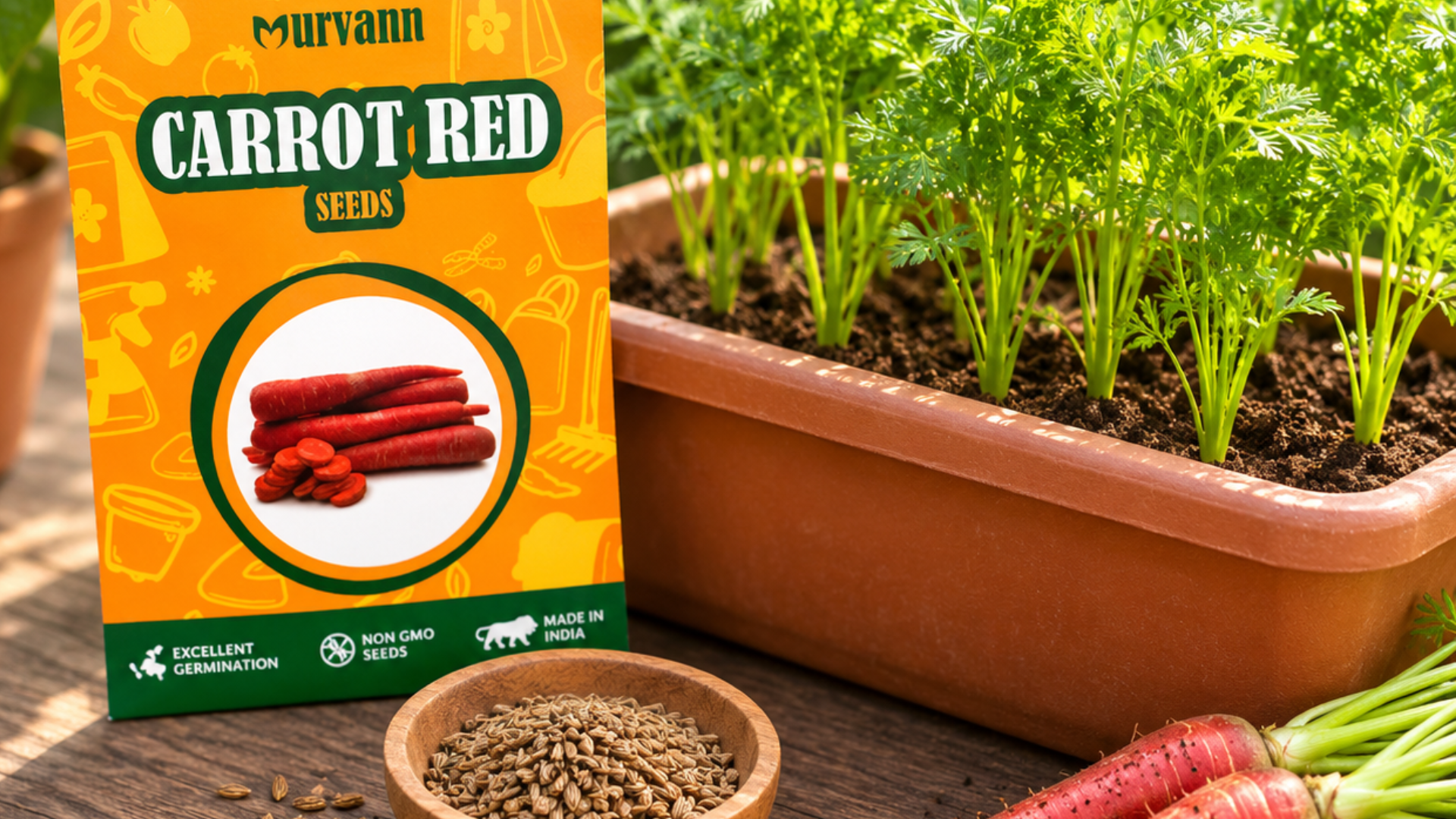
Winter feels incomplete without fresh gajar ka halwa. Carrots are classic winter vegetables, especially in North India, where cool weather helps support healthy root development. They are also suitable for container gardening, provided you choose a deep enough pot.
How to Grow Carrots in Winter (सर्दियों में गाजर कैसे उगाएं / ಚಳಿಗಾಲದಲ್ಲಿ ಕ್ಯಾರೆಟ್ ಬೆಳೆಯುವುದು ಹೇಗೆ)
- Fill a 12–15-inch-deep pot or grow bag with loose, well-draining soil free from stones and hard lumps.
- Sow carrot seeds directly into the container, approximately 0.5–1 cm deep.
- Place the pot in a location that receives about 6 hours of direct sunlight daily.
- Keep the soil evenly moist and thin seedlings to provide enough space for root development.
- Harvest carrots after approximately 65–100 days, depending on the variety and growing conditions.
Tip: If your balcony has limited space, try shorter or round carrot varieties that are better suited to containers.
6. Green Peas (Matar) / मटर / ಬಟಾಣಿ
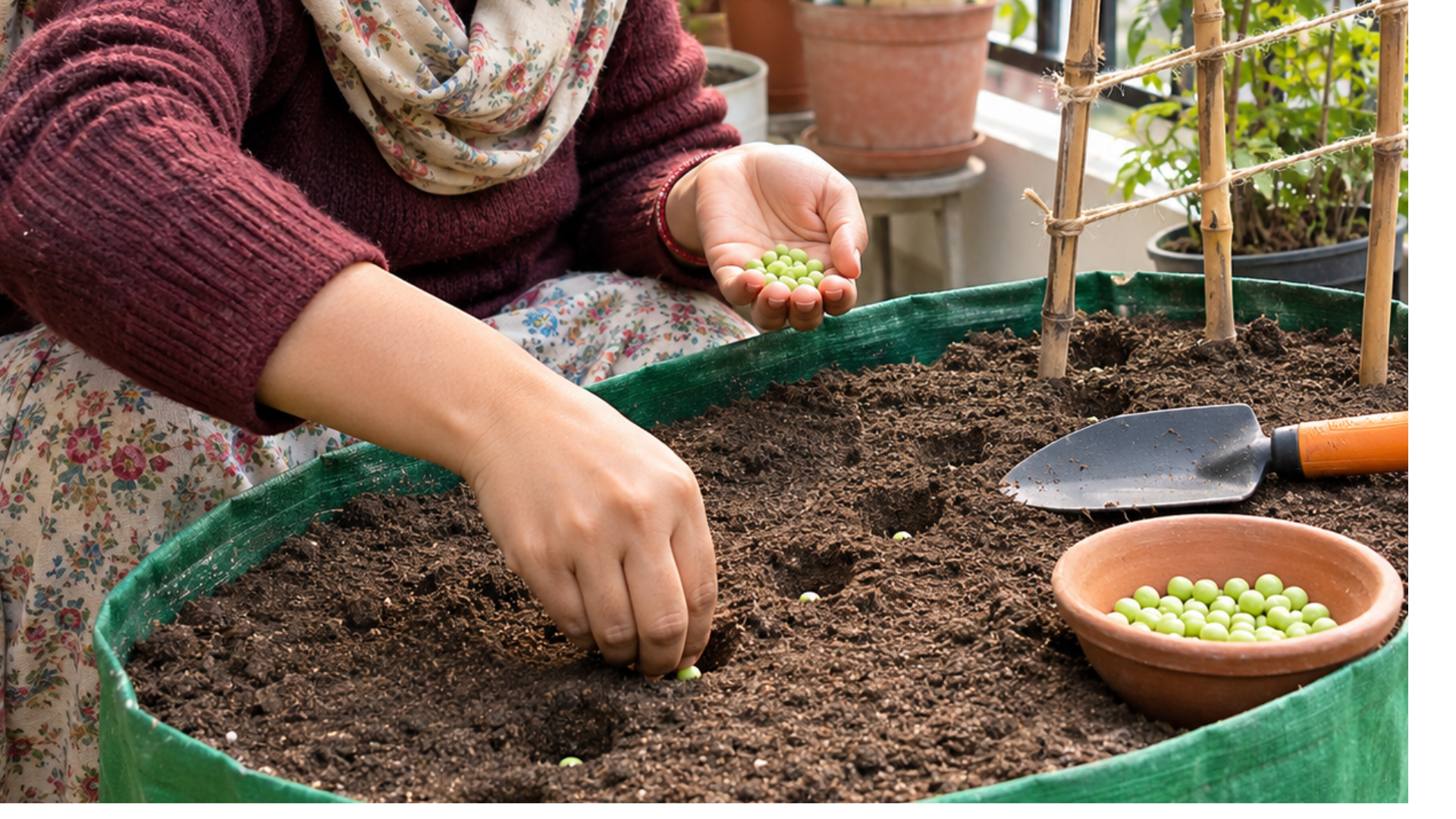
Fresh matar straight from the plant is one of the small pleasures of winter vegetable gardening. You can use homegrown peas in matar paneer, aloo matar, pulao, poha, and many other dishes. But unlike palak or methi, green peas require more careful timing for sowing.
How to Grow Green Peas in Winter (सर्दियों में मटर कैसे उगाएं / ಚಳಿಗಾಲದಲ್ಲಿ ಬಟಾಣಿ ಬೆಳೆಯುವುದು ಹೇಗೆ)
- Fill a 10–12-inch-deep or larger container with fertile, well-draining soil.
- Sow green pea (matar) seeds directly into the soil at a depth of approximately 3–5 cm.
- Place the container in a location that receives about 6 hours of direct sunlight daily.
- Provide bamboo sticks or a small trellis for climbing varieties and keep the soil consistently moist.
- Harvest tender green pea pods after approximately 60–90 days, depending on the variety.
Tip: If you planted peas in November, December and January may be the right time to harvest them rather than sow a fresh crop.
7. Cauliflower (Phool Gobhi) / फूलगोभी / ಹೂಕೋಸು
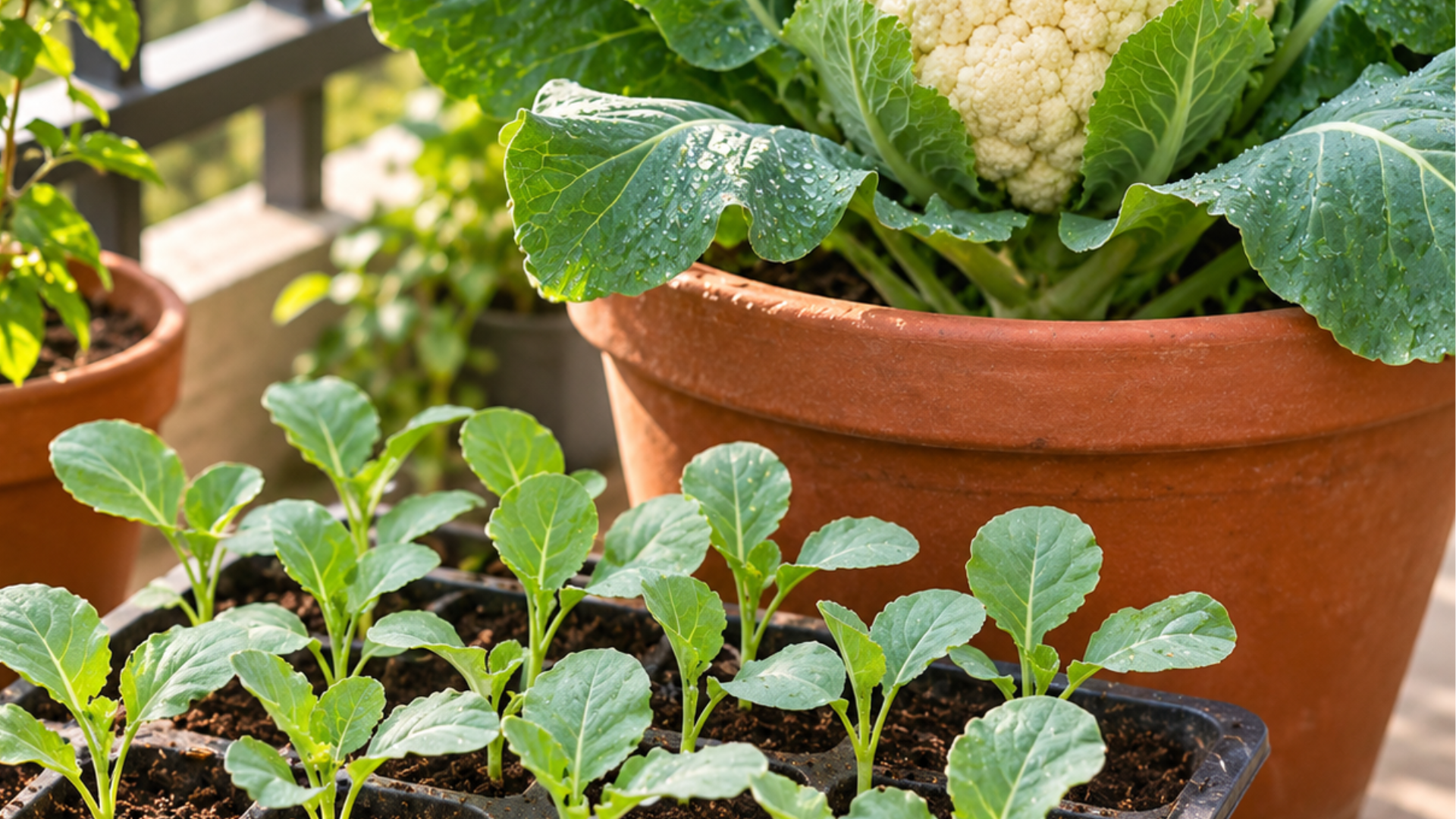
Winter and gobhi paratha are almost inseparable. Cauliflower is one of the most popular winter vegetables to grow in December and January, but it's a little more demanding than leafy greens.
The biggest challenge is temperature. Different cauliflower varieties form their white curds at different temperatures. That's why choosing the right variety matters just as much as choosing the right month.
How to Grow Cauliflower in Winter (सर्दियों में फूलगोभी कैसे उगाएं / ಚಳಿಗಾಲದಲ್ಲಿ ಹೂಕೋಸು ಬೆಳೆಯುವುದು ಹೇಗೆ)
- Sow cauliflower seeds in a container.
- After germination, fill a 12–15-inch-wide or larger pot with fertile, well-draining soil enriched with mature compost.
- Transplant one healthy cauliflower seedling into the center of the container.
- Place the pot in a location that receives approximately 6 hours of direct sunlight daily.
- Water consistently, provide balanced nutrients, and check the leaves regularly for caterpillars.
- Harvest the cauliflower when its curd is firm and well-developed, usually around 65–110 days after transplanting.
Tip: Select a cauliflower/phool gobhi (फूलगोभी/ಹೂಕೋಸು) variety appropriate for your local season. Planting the wrong variety at the wrong temperature may prevent proper curd formation.
8. Cabbage (Patta Gobhi) / पत्तागोभी / ಎಲೆಕೋಸು
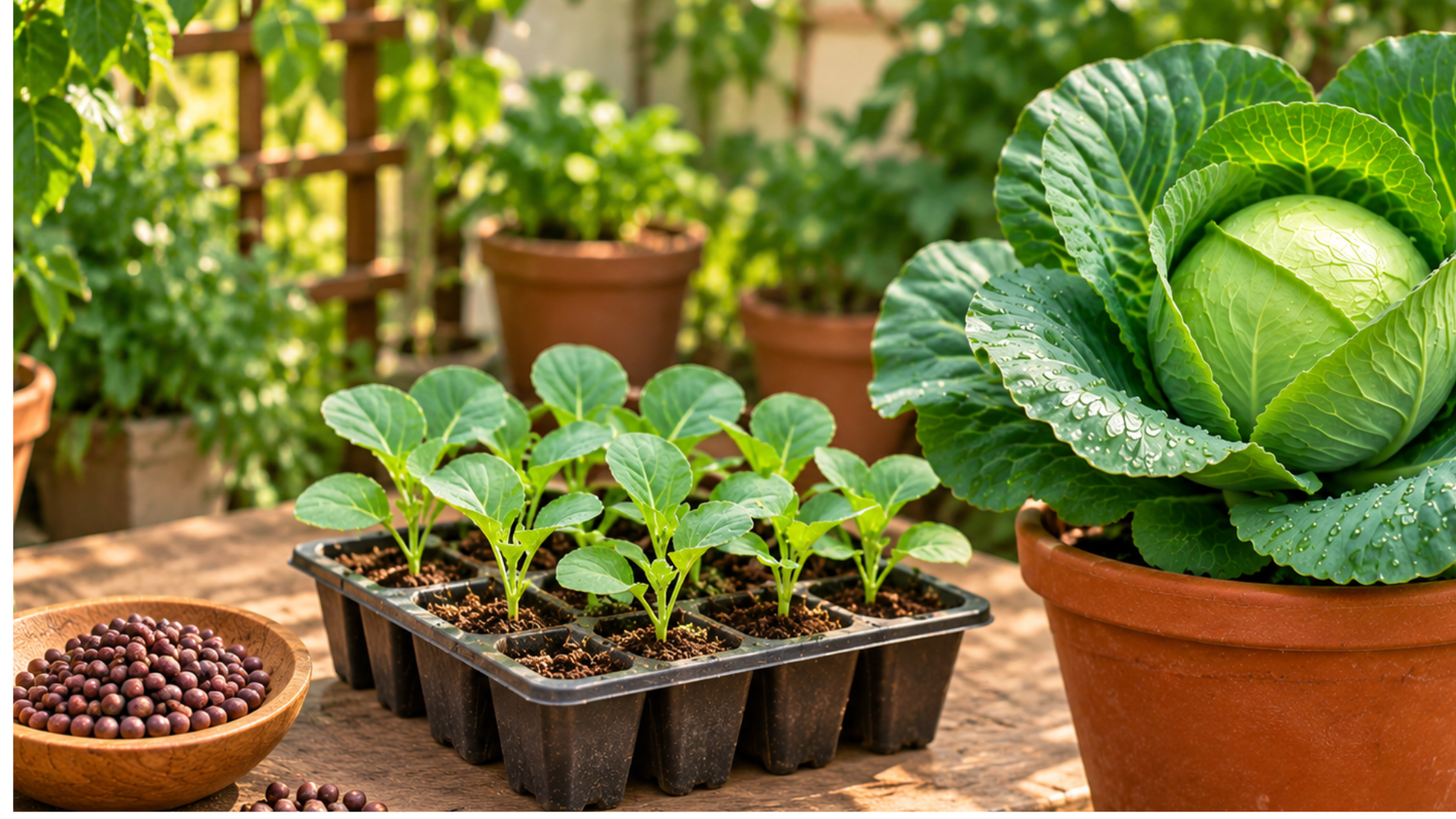
Cabbage is another winter veggie favourite that you can grow at home in December and January. From sabzi and stir-fries to soups and momos, homegrown cabbage has plenty of uses. It needs more space than palak or methi, but growing a firm cabbage head in your own garden can be very satisfying.
How to Grow Cabbage in Winter (सर्दियों में पत्तागोभी कैसे उगाएं / ಚಳಿಗಾಲದಲ್ಲಿ ಎಲೆಕೋಸು ಬೆಳೆಯುವುದು ಹೇಗೆ)
- Sow Cabbage seeds in a bigger container. After germination, fill a 12–15-inch-wide or larger container with nutrient-rich, well-draining soil.
- Plant one healthy cabbage seedling per container, leaving enough space for its leaves and head to develop.
- Place the pot in a sunny location receiving 5–6 hours or more of direct sunlight daily.
- Keep the soil evenly moist and provide suitable compost or balanced fertilizer during growth.
- Harvest cabbage approximately 70–110 days after transplanting, when the head feels firm.
Tip: Check underneath the Cabbage leaves for caterpillar eggs and other pests. Cabbage leaves can look healthy from above while pests hide underneath.
9. Beetroot (Chukandar) / चुकंदर / ಬೀಟ್ರೂಟ್
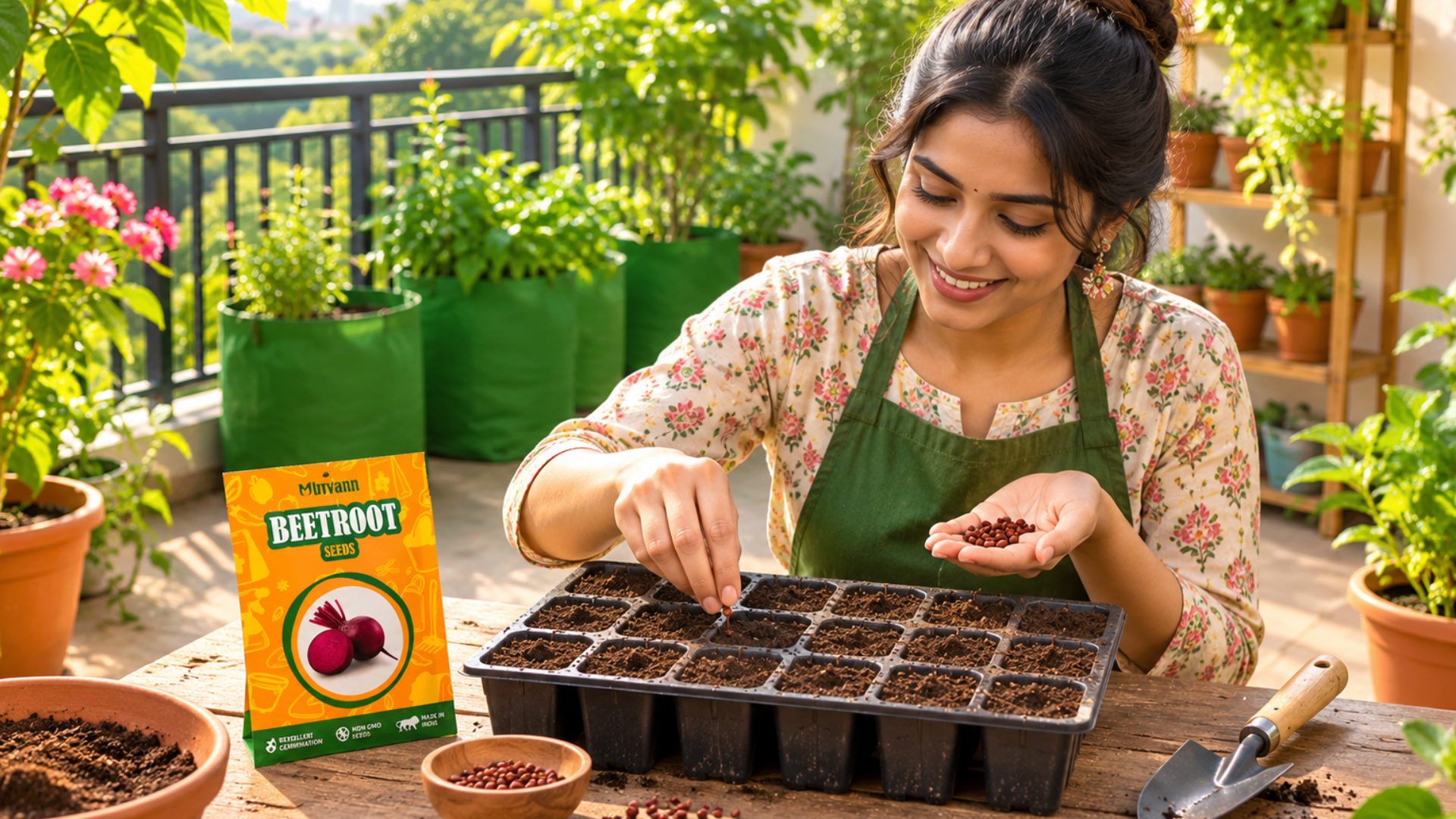
Beetroot is one of those winter veggies to grow in December and January that adds colour to both your garden and your plate. Its deep red roots are useful in salads, juices, soups, and roasted dishes. Tender beetroot leaves are also edible. Beetroot grows well in containers when given loose soil and enough space.
How to Grow Beetroot in Winter (सर्दियों में चुकंदर कैसे उगाएं / ಚಳಿಗಾಲದಲ್ಲಿ ಬೀಟ್ರೂಟ್ ಬೆಳೆಯುವುದು ಹೇಗೆ)
- Fill a 10–12-inch-deep pot with loose, well-draining soil enriched with mature compost.
- Sow beetroot (chukandar) seeds directly into the soil, about 1–2 cm deep.
- Place the container in a location that receives approximately 5–6 hours of direct sunlight daily.
- Thin overcrowded seedlings after germination and maintain consistent soil moisture.
- Harvest beetroots after approximately 55–85 days, when the roots reach the desired size.
Tip: Beetroot leaves are also edible when grown safely, so tender leaves can be used in cooked greens.
10. Turnip (Shalgam) / शलजम / ಟರ್ನಿಪ್
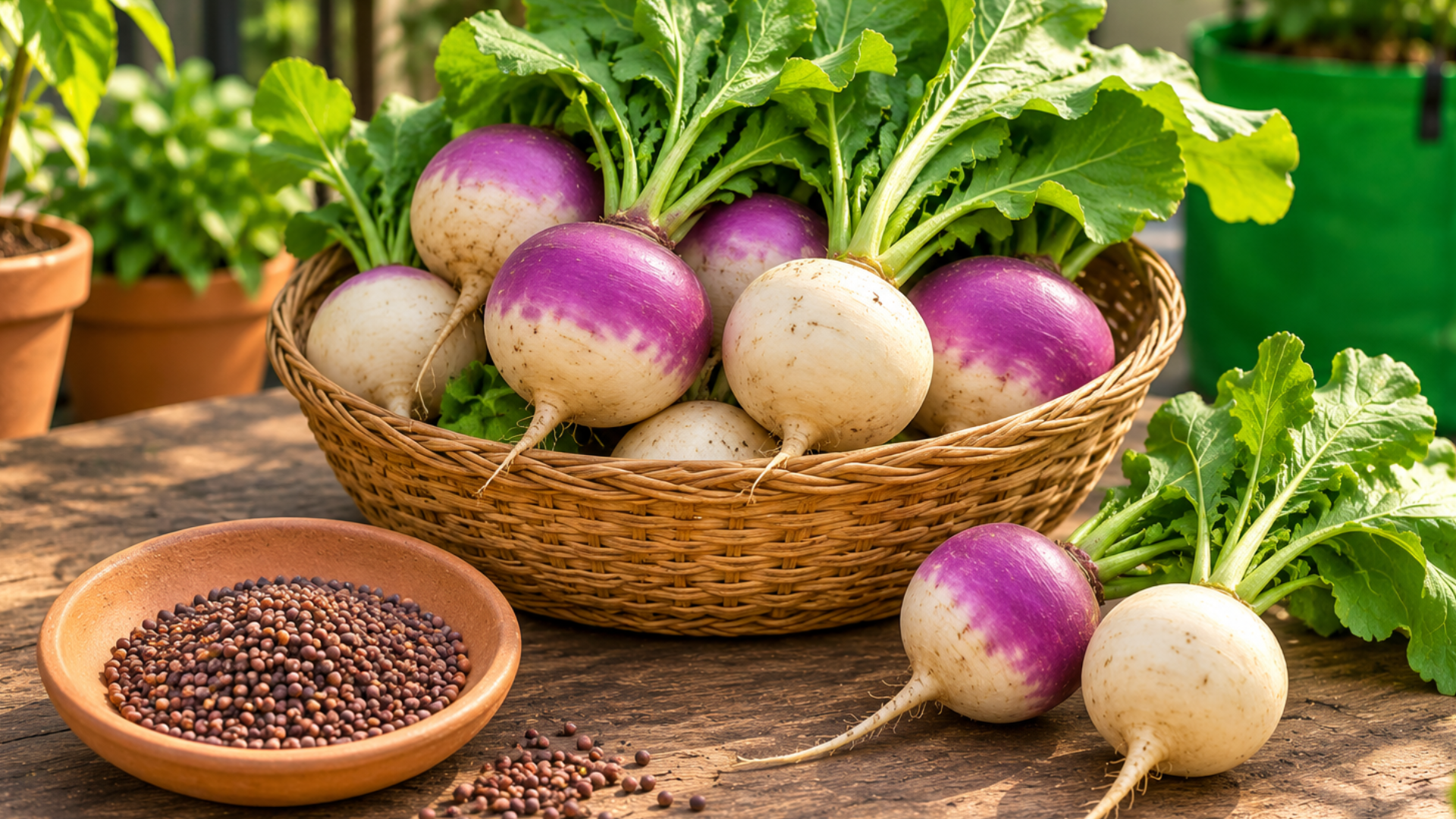
Shalgam is an underrated winter vegetable that deserves more attention. It's popular in traditional North Indian cooking and can be used in sabzi, soups, and pickles. Turnips grow relatively quickly, which makes them a good option for home gardeners who want to harvest before winter ends.
How to Grow Turnips in Winter (सर्दियों में शलजम कैसे उगाएं / ಚಳಿಗಾಲದಲ್ಲಿ ಟರ್ನಿಪ್ ಬೆಳೆಯುವುದು ಹೇಗೆ)
- Fill a 10–12-inch-deep container with loose, well-draining soil.
- Sow turnip seeds directly into the soil, about 1 cm deep, and thin seedlings after germination.
- Place the container in a location that receives approximately 5–6 hours of direct sunlight daily.
- Keep the soil evenly moist without allowing it to become waterlogged.
- Harvest turnips after approximately 40–60 days, while the roots are still tender.
Tip: Young turnips generally have a milder flavour and more tender texture than oversized roots.
11. Mustard Greens (Sarson) / सरसों का साग / ಸಾಸಿವೆ ಸೊಪ್ಪು
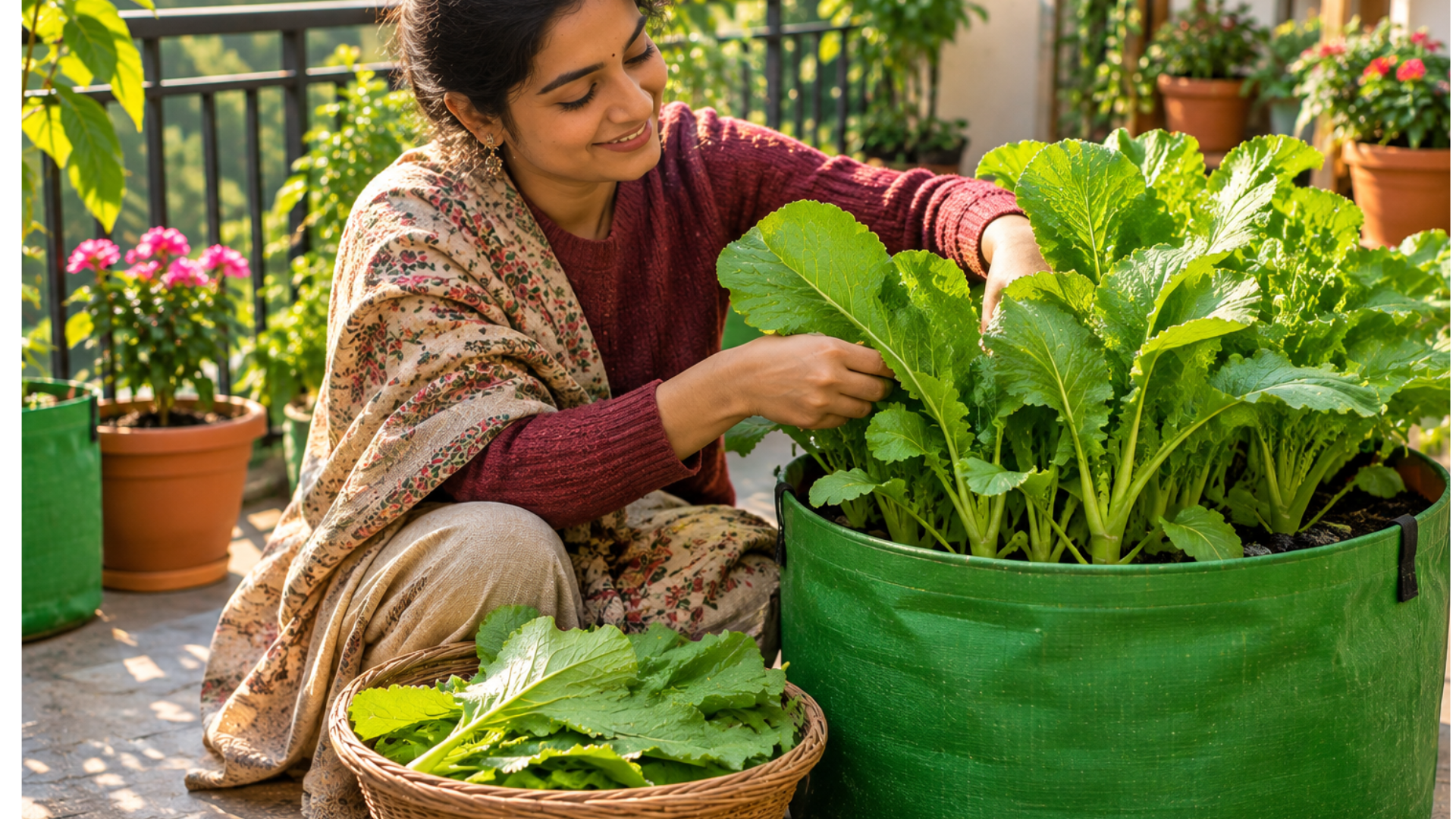
Winter without sarson ka saag? Difficult to imagine for many North Indian households. Mustard greens are cold-tolerant vegetables that grow well in December and January and can be cultivated in medium-sized pots. They are especially useful for gardeners who enjoy cooking fresh leafy greens.
How to Grow Mustard Greens in Winter (सर्दियों में सरसों का साग कैसे उगाएं / ಚಳಿಗಾಲದಲ್ಲಿ ಸಾಸಿವೆ ಸೊಪ್ಪು ಬೆಳೆಯುವುದು ಹೇಗೆ)
- Fill an 8–10-inch-deep container with loose, compost-rich soil.
- Sow mustard greens (sarson) seeds directly into the soil to a depth of approximately 1 cm.
- Place the pot in a sunny location receiving 5–6 hours of direct sunlight daily.
- Keep the soil evenly moist and thin overcrowded seedlings after germination.
- Harvest tender outer leaves after approximately 30–45 days, allowing the plant to continue growing.
Tip: Harvest tender outer leaves of Mustard Greens regularly. Avoid removing too much foliage at once if you want the plant to continue producing.
12. Onion (Pyaz) / प्याज / ಈರುಳ್ಳಿ
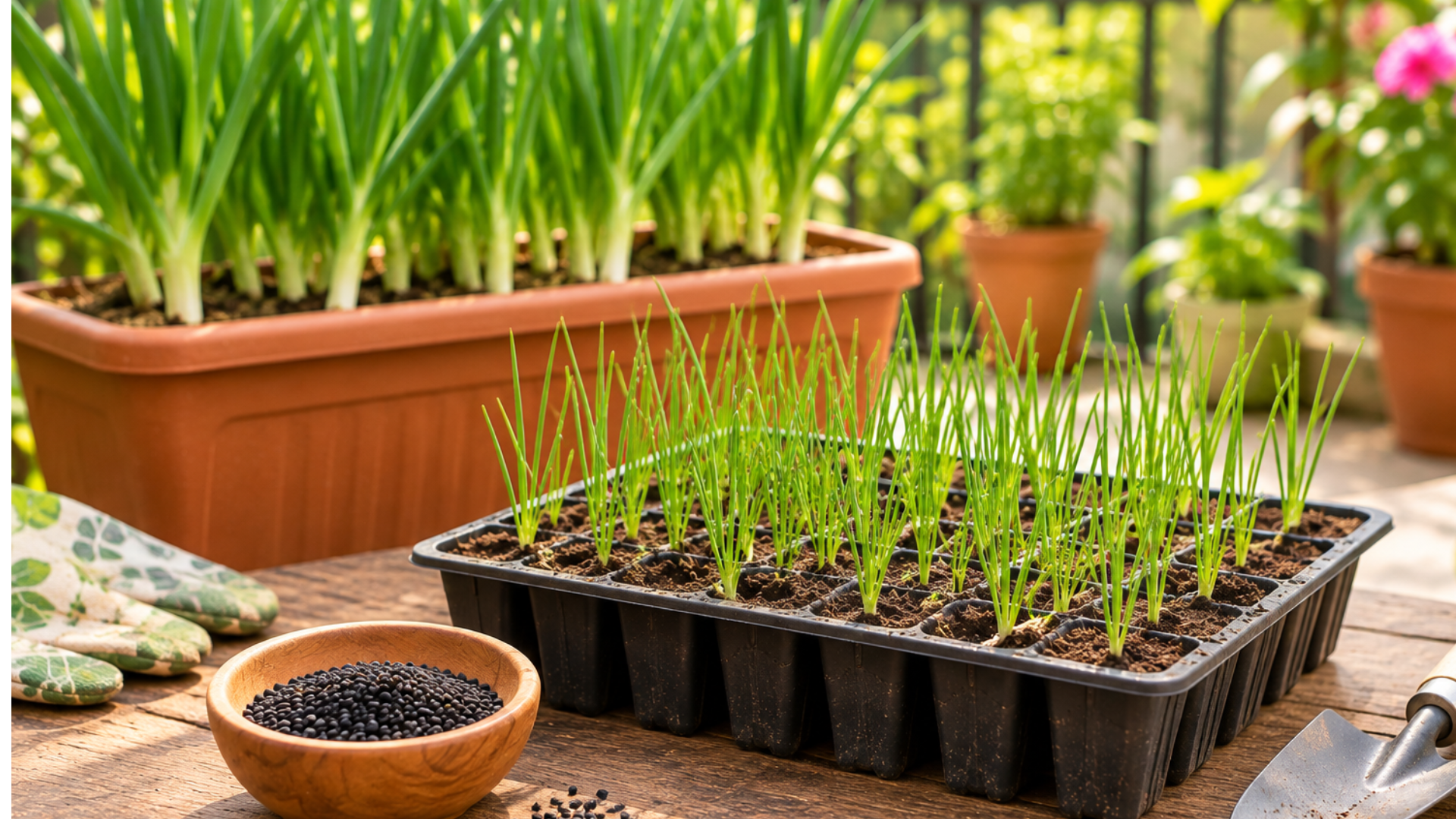
From making everyday tadka to preparing sabzi, pulao, and curries, onions are used in almost every Indian kitchen. But have you ever tried growing fresh onions in your own balcony garden?
Onion is one of the best vegetables to grow in winter, especially during the rabi season in North India. December and January are suitable months for transplanting onion seedlings in Delhi-NCR. In Bangalore, November and December are generally better for the main rabi crop, while January planting depends on the variety and growing conditions.
You can grow onions in wide pots, rectangular planters, or grow bags. However, unlike spring onions, mature bulb onions need more time and space to develop properly.
How to Grow Onion in Winter (सर्दियों में प्याज कैसे उगाएं / ಚಳಿಗಾಲದಲ್ಲಿ ಈರುಳ್ಳಿ ಬೆಳೆಯುವುದು ಹೇಗೆ)
- Fill an 8–10-inch-deep, wide container with loose, compost-rich, well-draining soil.
- Start onion seeds in a nursery tray ahead of the planting season, or use healthy, season-appropriate onion seedlings.
- Transplant the seedlings into the container, leaving approximately 8–10 cm between plants for bulb development.
- Place the pot in a location that receives at least 6 hours of direct sunlight daily.
- Keep the soil evenly moist during growth, avoiding waterlogging, and gradually reduce watering as mature bulbs approach harvest.
- Harvest mature onions approximately 90–150 days after transplanting, depending on the variety and growing conditions.
Tip: Choose an onion variety suited to your local day length. If you're growing onions for green leaves instead of mature bulbs, you can harvest them much earlier.
NOTE: Harvest times are approximate and depend on the variety, sowing date, local temperatures, and growing conditions. For cabbage, cauliflower, and broccoli, the estimates are generally counted from transplanting.
How to Set Up a Winter Vegetable Garden on Your Balcony
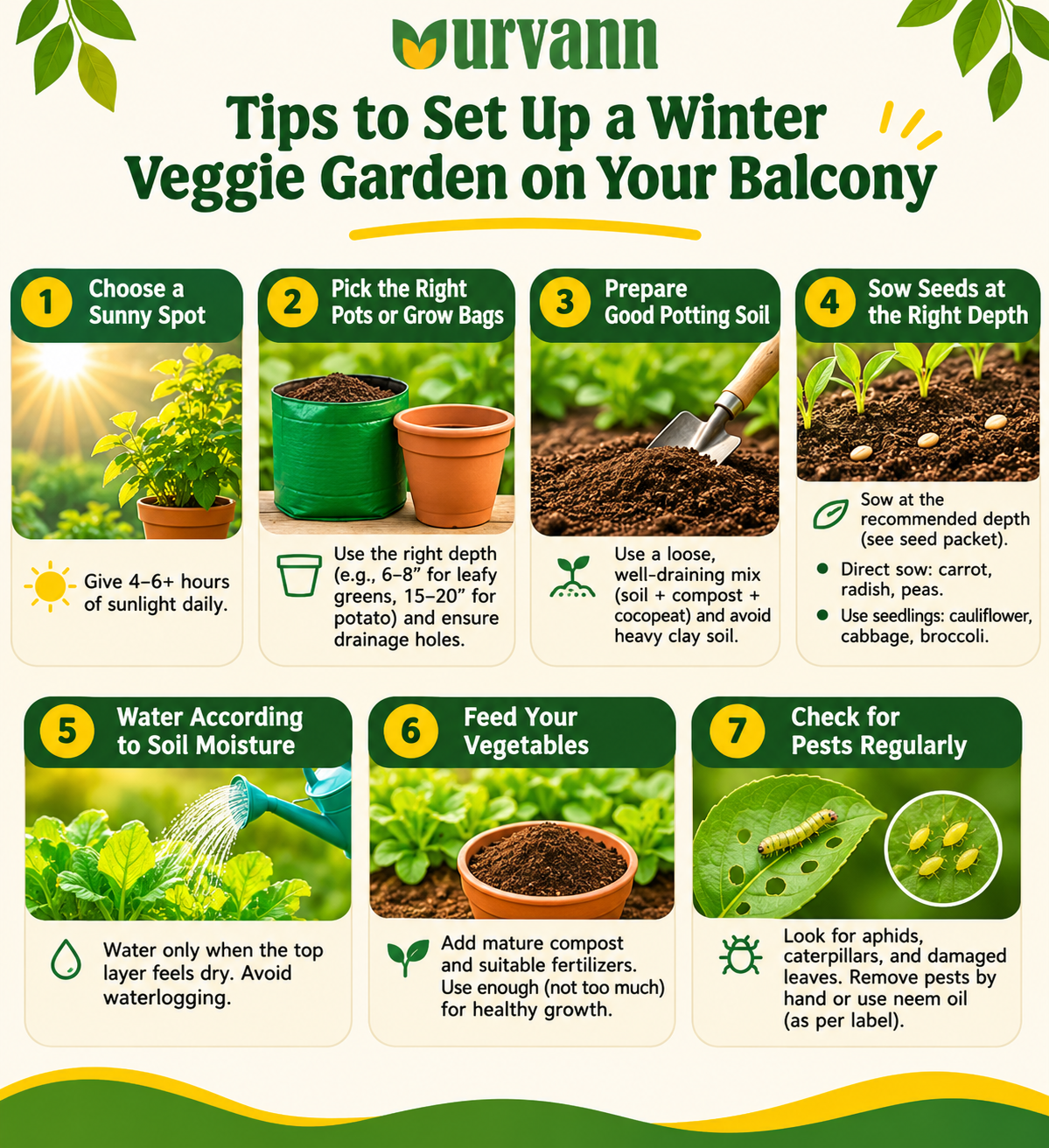
You don't need to grow all winter vegetables at once. Start small. A few healthy pots will teach you more than an overcrowded balcony full of struggling plants.
Step 1: Choose a Sunny Spot
Most winter vegetables grow best in full sun, typically 4–6 hours or more, depending on the crop. Leafy greens may tolerate less direct sunlight than fruiting vegetables and large heading crops. Observe your balcony throughout the day before placing the pots.
Step 2: Pick the Right Pots or Grow Bags
Different winter vegetables need different pots and grow bag sizes.
| Vegetable Type | Suggested Pot Depth | Examples |
|---|---|---|
| Shallow leafy greens | 6–8 inches | Palak, methi |
| Herbs and compact greens | 8–10 inches | Coriander |
| Root vegetables | 10–15 inches | Radish, carrot, beetroot, turnip |
| Climbing and larger crops | 12–15 inches or more | Peas, cabbage |
These are practical starting dimensions. Wider containers may also be needed, especially for plants that develop large leaves or heads. Always choose pots with drainage holes.
Step 3: Prepare Good Potting Soil
Healthy vegetables start with healthy soil. Use a loose, well-draining potting mix enriched with mature compost. A suitable mixture may include garden soil, compost, and a drainage-improving material such as cocopeat or an appropriate potting component. Avoid using heavy clay soil alone in containers because it can become compacted. For root vegetables, remove stones and hard clumps so the roots can develop properly.
Step 4: Sow Seeds at the Right Depth
One common beginner mistake is burying seeds too deeply. Small winter vegetable seeds generally need shallow sowing, while larger seeds are planted deeper according to their requirements. Follow the instructions on the seed packet whenever available. Carrots, radishes, and peas are commonly sown directly into their final containers. Cauliflower and cabbage are usually easier for beginners to grow from healthy seedlings.
Step 5: Water According to Soil Moisture
Winter vegetables need water, but they don't necessarily need daily watering. Check the soil before adding water. If the upper layer is still moist, wait. If the soil is becoming dry, water thoroughly enough to moisten the root zone without leaving the pot waterlogged. In cool, foggy weather, containers may remain damp for longer.
Step 6: Feed Your Vegetables
Vegetables remove nutrients from the soil as they grow. Use mature compost and appropriate fertilizers according to the crop's needs. Leafy vegetables benefit from adequate nitrogen, while root and heading crops require balanced nutrition. Avoid applying too much fertilizer, which can damage roots or encourage excessive leaf growth at the expense of other plant parts.
Step 7: Check for Pests Regularly
Even winter veggies can attract pests. Check for aphids, caterpillars, and damaged leaves. Remove visible pests by hand when practical and use suitable pest-control measures only when needed. If using neem oil or other pest-control products, follow the product label carefully, including whether it is approved for edible crops and any pre-harvest restrictions.
Common Mistakes to Avoid When Growing Winter Vegetables
Before you begin planting winter vegetables, watch out for these common problems.
| Mistake | What Can Happen | Better Approach |
|---|---|---|
| Overwatering | Root problems and fungal growth | Check soil moisture before watering |
| Using small pots | Restricted root growth | Match the container to the crop |
| Sowing too densely | Crowded, weak plants | Thin seedlings when needed |
| Ignoring sunlight | Slow or uneven growth | Place pots according to light requirements |
| Planting at the wrong time | Poor germination or crop development | Follow regional and variety-specific guidance |
| Using compacted soil | Misshapen roots and poor drainage | Prepare loose, well-draining soil |
| Delaying harvest | Tough or oversized vegetables | Harvest at the appropriate stage |
Grow Your Winter Sabzi at Home!!
A winter vegetable garden doesn't have to be complicated. Start with easy crops such as palak, methi, coriander, radish, and peas. Choose the right pots, provide enough sunlight, and pay attention to your city's winter weather. As your confidence grows, experiment with carrots, broccoli, cauliflower, and other seasonal favourites.
At Urvann, you can explore a range of vegetable seeds, pots, grow bags, compost, and gardening essentials to help you set up your own kitchen garden. Check availability for your delivery pincode and start growing your next winter harvest at home.
Happy Winter Gardening!
Frequently Asked Questions (FAQs)
1. What vegetables grow in winter in India?
Palak, methi, coriander, radish, carrot, peas, cabbage, cauliflower, and beetroot are popular winter vegetables in India. The best choices depend on your local weather and planting season.
2. गमलों में सर्दियों में कौन-सी सब्जियाँ उगाना सबसे आसान है?
पालक, मेथी, धनिया, मूली और लेट्यूस गमलों में उगाने के लिए आसान सब्जियाँ हैं। इन्हें सही धूप और पानी की निकासी वाले गमलों में उगाएँ।
3. Which vegetables grow in December?
In December, you can grow spinach, methi, coriander, radish, turnip, lettuce, mustard greens, and onion. Carrots, beetroot, cabbage, and cauliflower can also be grown with suitable varieties and local conditions. Choose vegetables according to your city's winter temperatures.
4. दिसंबर में कौन सी सब्जियां लगाएं?
दिसंबर में पालक, मेथी, धनिया, मूली, शलजम, सरसों, लेट्यूस और हरा प्याज उगा सकते हैं। सही किस्म और मौसम के अनुसार गाजर, चुकंदर, पत्तागोभी और फूलगोभी भी लगाई जा सकती हैं।
5. जनवरी में उगाने के लिए सबसे अच्छी सब्जियां कौन सी हैं?
जनवरी में पालक, मेथी, धनिया, मूली, शलजम, सरसों, लेट्यूस और हरा प्याज अच्छे विकल्प हैं। दिल्ली-NCR जैसे ठंडे इलाकों में छोटे पौधों को पालना और तेज ठंड से बचाना जरूरी है। सही तापमान वाले क्षेत्रों में गाजर और चुकंदर भी उगाए जा सकते हैं।
6. How much sunlight do winter vegetables need?
Many winter vegetables grow best with around 4–6 hours or more of direct sunlight daily. Leafy greens may tolerate less light than peas and other larger crops.
7. क्या छोटी बालकनी में सर्दियों में सब्जियाँ उगा सकते हैं?
हाँ, आप छोटी बालकनी में पालक, मेथी, धनिया, मूली, लेट्यूस और मटर की छोटी किस्में उगा सकते हैं। सही आकार और पानी की निकासी वाले गमले चुनें।
8. ಚಳಿಗಾಲದ ತರಕಾರಿಗಳಿಗೆ ಎಷ್ಟು ಬಾರಿ ನೀರು ಹಾಕಬೇಕು?
ಚಳಿಗಾಲದಲ್ಲಿ ಪ್ರತಿದಿನ ನೀರು ಹಾಕುವ ಬದಲು ಮಣ್ಣಿನ ತೇವಾಂಶವನ್ನು ಪರಿಶೀಲಿಸಿ. ಮಣ್ಣಿನಲ್ಲಿ ಅಗತ್ಯವಿರುವಷ್ಟು ತೇವಾಂಶ ಇರಲಿ, ಆದರೆ ಕುಂಡದಲ್ಲಿ ನೀರು ನಿಲ್ಲದಂತೆ ನೋಡಿಕೊಳ್ಳಿ.
9. What are the easiest winter veggies for beginners?
Palak, methi, dhaniya, and mooli are among the easiest winter vegetables for beginners because they are relatively quick-growing and suitable for container gardening.
10. Which winter vegetables grow in 30 days?
Fenugreek, tender spinach leaves, coriander leaves, and some quick-growing radish varieties may be ready for harvesting in approximately 20–35 days under favourable conditions.
11. Which vegetables can I grow in December and January in Bangalore?
In Bangalore, you can grow spinach, methi, coriander, radish, lettuce, turnips, and spring onions during suitable winter conditions. Carrots, peas, cabbage, cauliflower, broccoli, and beetroot are also winter crops, but many are best established in October or November and harvested later.
12. What are the best vegetables to grow in January in Delhi-NCR?
In Delhi-NCR, January is suitable for cold-tolerant vegetables such as palak, methi, dhaniya, mooli, sarson, shalgam, and onion. Protect tender seedlings during severe cold spells.
13. What are some good vegetables to grow during the winter season in North India?
Some of the best winter vegetables to grow in North India include Spinach (Palak), Fenugreek (Methi), Coriander (Dhaniya), Radish (Mooli), Carrot (Gajar), Green Peas (Matar), Cauliflower (Phool Gobhi), Cabbage (Patta Gobhi), and Mustard Greens (Sarson). These vegetables grow well in cool weather and can be cultivated in home gardens, pots, and grow bags.
14. What vegetables are in season in Delhi?
Popular seasonal vegetables in Delhi during winter include carrots, radishes, green peas, cauliflower, cabbage, spinach, fenugreek, mustard greens, turnips, and beetroot. December and January are particularly suitable for growing many cool-season vegetables, although peas and some longer-growing crops are generally best planted earlier in the season.