

UrvannUrvann is your one-stop online nursery for plants, planters, gardening accessories, and tools. Order fresh plants and get free home delivery on the next day!https://www.urvann.com/s/6176774ef575bbd2b3331c8a/61db06dd744e78df7592f6d9/final-logo-01-1-_cropped-1-480x480.png
E-176110060DelhiIN
Urvann
E-176Delhi, IN
+919599585773https://www.urvann.com/s/6176774ef575bbd2b3331c8a/61db06dd744e78df7592f6d9/final-logo-01-1-_cropped-1-480x480.png"[email protected]
Dieffenbachia<p>Add bold tropical foliage to your home or office with a Dieffenbachia plant from Urvann. Also known as dumb cane, this popular indoor plant is recognised by its broad green leaves patterned with cream, white, lime or yellow.</p> <p>Explore Dieffenbachia Seguine, Tropic Snow, Honeydew, White, Dumbcane, Camille, Sparkle Green and Triumph listings. Choose from nursery plants, decorative plastic pots, ceramic or fibreglass planters, gift-ready options and indoor plant combinations.</p> <div style="background: #f6eddc; border: 1px solid #e2c27b; padding: 15px 20px; border-radius: 8px; margin: 25px 0;"> <p style="margin: 0;"><strong> Note: </strong> Prices of the products may vary as per the location. Please check the final price based on your delivery address.</p> </div> <h2><br>Why 50,000+ Indian Plant Parents Buy Dieffenbachia Plants from Urvann</h2> <p>⭐ Rated 4.8/5 by 12,340+ verified buyers<br><strong>✓ Free Next-Day Delivery - </strong>Available on orders placed by 7 PM in Delhi-NCR and Bengaluru.<br><strong>✓ Pan-India Deliveries -</strong> Delivery timelines vary by location.<br><strong>✓ Hassle-Free Replacement - </strong>2-day replacement window if the plant arrives damaged or incorrect.<br><strong>✓ Healthy, Well-Rooted Plants -</strong> Every Dieffenbachia plant is grown at Urvann Farms in the best conditions.<br><strong>✓ Authentic Flowering Varieties - </strong>We stock single-petal, double-petal, and colour-specific Madhumalti Bel varieties.<br><strong>✓ Complete Garden Care in One Place - </strong>Along with Dieffenbachia plants, shop for <a href="https://www.urvann.com/browse/planters-and-pots">pots</a>, <a href="https://www.urvann.com/browse/fertilizers">fertilizers</a>, <a href="https://www.urvann.com/browse/gardening-tools-and-equipment">tools</a>, and other garden care products.</p> <h2><br>Which Option Should You Choose?</h2> <table style="border: 1px solid #ccc; border-collapse: collapse; width: 100%; text-align: left; font-family: 'Poppins', sans-serif;"> <thead> <tr style="background-color: #2b703a; color: white; font-weight: bold;"> <th style="border: 1px solid #ccc; padding: 12px; text-align: center;">Product Type</th> <th style="border: 1px solid #ccc; padding: 12px; text-align: center;">Best for</th> </tr> </thead> <tbody> <tr> <td style="border: 1px solid #ccc; padding: 12px; font-weight: 600;">5-inch nursery bag or pot</td> <td style="border: 1px solid #ccc; padding: 12px;">Starting with a young plant and choosing your own planter</td> </tr> <tr style="background-color: #f8f8f8;"> <td style="border: 1px solid #ccc; padding: 12px; font-weight: 600;">5- or 7-inch decorative pot</td> <td style="border: 1px solid #ccc; padding: 12px;">Desks, shelves, side tables and gifting</td> </tr> <tr> <td style="border: 1px solid #ccc; padding: 12px; font-weight: 600;">8- or 10-inch premium planter</td> <td style="border: 1px solid #ccc; padding: 12px;">A ready-to-place floor or office plant</td> </tr> <tr style="background-color: #f8f8f8;"> <td style="border: 1px solid #ccc; padding: 12px; font-weight: 600;">Sets of two or six</td> <td style="border: 1px solid #ccc; padding: 12px;">Gifting or creating an indoor plant grouping</td> </tr> </tbody> </table> <h2><br>What Is a Dieffenbachia Plant?</h2> <p>Dieffenbachia is a tropical evergreen perennial in the Araceae family. Widely familiar varieties are cultivars or hybrids associated with Dieffenbachia seguine. The plant grows upright from thick, cane-like stems and is valued mainly for its large variegated leaves.</p> <p>The common name &ldquo;dumb cane&rdquo; refers to the burning, numbing and swelling that can occur if the plant is chewed. Its botanical name is more precise and is preferable in normal product copy.</p> <p><br><br></p> <h2 dir="ltr"><span>Popular Dieffenbachia Varieties</span></h2> <table style="border: 1px solid #ccc; border-collapse: collapse; width: 100%; text-align: left; font-family: 'Poppins', sans-serif;"> <thead> <tr style="background-color: #2b703a; color: white; font-weight: bold;"> <th style="border: 1px solid #ccc; padding: 12px; text-align: center;">Variety</th> <th style="border: 1px solid #ccc; padding: 12px; text-align: center;">Key Feature</th> </tr> </thead> <tbody> <tr> <td style="border: 1px solid #ccc; padding: 12px; font-weight: 600;">Dieffenbachia Seguine</td> <td style="border: 1px solid #ccc; padding: 12px;">Broad variegated foliage and upright growth</td> </tr> <tr style="background-color: #f8f8f8;"> <td style="border: 1px solid #ccc; padding: 12px; font-weight: 600;">Tropic Snow</td> <td style="border: 1px solid #ccc; padding: 12px;">Large green leaves with creamy central markings</td> </tr> <tr> <td style="border: 1px solid #ccc; padding: 12px; font-weight: 600;">Honeydew</td> <td style="border: 1px solid #ccc; padding: 12px;">Lighter lime-and-green foliage</td> </tr> <tr style="background-color: #f8f8f8;"> <td style="border: 1px solid #ccc; padding: 12px; font-weight: 600;">Dieffenbachia White</td> <td style="border: 1px solid #ccc; padding: 12px;">Cream or white-dominant variegation</td> </tr> <tr> <td style="border: 1px solid #ccc; padding: 12px; font-weight: 600;">Camille</td> <td style="border: 1px solid #ccc; padding: 12px;">Pale centre surrounded by green margins</td> </tr> <tr style="background-color: #f8f8f8;"> <td style="border: 1px solid #ccc; padding: 12px; font-weight: 600;">Sparkle Green and Triumph</td> <td style="border: 1px solid #ccc; padding: 12px;">Compact choices available in decorative pots and combinations</td> </tr> </tbody> </table> <p>Leaf patterns and plant size naturally vary. Check the product images and supplied height before buying.</p> <p><br><br></p> <h2 dir="ltr"><span>Why Choose Dieffenbachia for an Indoor Space?</span></h2> <h3 dir="ltr"><span>Decorative Foliage</span></h3> <p dir="ltr"><span>Dieffenbachia provides colour and pattern through its leaves, so you do not need to wait for flowers. Its upright growth suits desks, side tables and floor planters.</span></p> <h3 dir="ltr"><span>Suitable for Bright Indoor Light</span></h3> <p dir="ltr"><span>It grows well near a bright window without needing harsh direct sun. Low light may slow growth and reduce variegation, while strong afternoon sun can scorch the leaves.</span></p> <h3 dir="ltr"><span>Several Sizes and Pot Styles</span></h3> <p dir="ltr"><span>The collection includes young nursery plants, gift-ready pots, larger decorative planters and multi-plant sets. Choose according to the available space and whether you already own a planter.</span></p> <div style="background: #f6eddc; border: 1px solid #e2c27b; padding: 15px 20px; border-radius: 8px; margin: 25px 0;"> <p style="margin: 0;"><strong> Note: </strong>Dieffenbachia should be purchased for its foliage, not as a substitute for ventilation or an air purifier. Ordinary potted plants do not clean a typical room at a meaningful rate.</p> </div> <p><br><br></p> <h2 dir="ltr"><span>Where Should You Keep a Dieffenbachia Plant?</span></h2> <table style="border: 1px solid #ccc; border-collapse: collapse; width: 100%; text-align: left; font-family: 'Poppins', sans-serif;"> <thead> <tr style="background-color: #2b703a; color: white; font-weight: bold;"> <th style="border: 1px solid #ccc; padding: 12px; text-align: center;">Space</th> <th style="border: 1px solid #ccc; padding: 12px; text-align: center;">Suitable?</th> <th style="border: 1px solid #ccc; padding: 12px; text-align: center;">What It Needs</th> </tr> </thead> <tbody> <tr> <td style="border: 1px solid #ccc; padding: 12px; font-weight: 600;">Living room</td> <td style="border: 1px solid #ccc; padding: 12px;">Yes</td> <td style="border: 1px solid #ccc; padding: 12px;">Bright indirect light near a window</td> </tr> <tr style="background-color: #f8f8f8;"> <td style="border: 1px solid #ccc; padding: 12px; font-weight: 600;">Home office</td> <td style="border: 1px solid #ccc; padding: 12px;">Yes</td> <td style="border: 1px solid #ccc; padding: 12px;">Natural light and protection from direct AC airflow</td> </tr> <tr> <td style="border: 1px solid #ccc; padding: 12px; font-weight: 600;">Bright bathroom</td> <td style="border: 1px solid #ccc; padding: 12px;">Sometimes</td> <td style="border: 1px solid #ccc; padding: 12px;">A window or strong daylight; humidity alone is not enough</td> </tr> <tr style="background-color: #f8f8f8;"> <td style="border: 1px solid #ccc; padding: 12px; font-weight: 600;">Shaded balcony</td> <td style="border: 1px solid #ccc; padding: 12px;">Yes</td> <td style="border: 1px solid #ccc; padding: 12px;">Protection from direct afternoon sun, rain and winter cold</td> </tr> <tr> <td style="border: 1px solid #ccc; padding: 12px; font-weight: 600;">Windowless room</td> <td style="border: 1px solid #ccc; padding: 12px;">No</td> <td style="border: 1px solid #ccc; padding: 12px;">Move to natural light or use a suitable grow light</td> </tr> <tr style="background-color: #f8f8f8;"> <td style="border: 1px solid #ccc; padding: 12px; font-weight: 600;">Child- or pet-accessible area</td> <td style="border: 1px solid #ccc; padding: 12px;">No</td> <td style="border: 1px solid #ccc; padding: 12px;">The plant is toxic if chewed</td> </tr> </tbody> </table> <p><br><br></p> <h2 dir="ltr"><span>Dieffenbachia Plant Care Guide</span></h2> <h3 dir="ltr"><span>Sunlight</span></h3> <p dir="ltr"><span>Provide bright, indirect light. Gentle morning sun may be tolerated, but harsh direct sun can burn the leaves. Variegated varieties usually need brighter filtered light to retain their colour.</span></p> <h3 dir="ltr"><span>Watering</span></h3> <p dir="ltr"><span>Water when the top 2&ndash;3 cm of potting mix feels dry. Soak the mix thoroughly, allow it to drain and empty the tray. Constantly wet soil can cause root or stem rot.</span></p> <h3 dir="ltr"><span>Soil</span></h3> <p dir="ltr"><span>Use a loose, organic and well-draining indoor potting mix. Dense garden soil alone can compact in a container and restrict airflow around the roots.</span></p> <h3 dir="ltr"><span>Temperature and Humidity</span></h3> <p dir="ltr"><span>Dieffenbachia prefers warm conditions around 18&ndash;29&deg;C and should be protected from temperatures below approximately 15&deg;C. Keep it away from cold drafts and direct air-conditioner or heater airflow.</span></p> <h3 dir="ltr"><span>Fertiliser</span></h3> <p dir="ltr"><span>Feed lightly with a balanced houseplant fertiliser every four to six weeks during active growth. Reduce feeding in winter and never fertilise a plant suffering from root rot.</span></p> <h3 dir="ltr"><span>Pruning and Repotting</span></h3> <p dir="ltr"><span>Remove damaged leaves with clean tools. Repot when roots become crowded, choosing a container only slightly wider than the current root ball. Wear gloves whenever the plant is cut because its sap can irritate the skin and eyes.</span></p> <p><br><br></p> <h2 dir="ltr"><span>How to Propagate Dieffenbachia</span></h2> <p>Dieffenbachia propagates easily from stem cuttings, making it simple to grow your collection or share a plant with a friend.</p> <ul> <li>Using clean, sharp scissors and gloves, as the sap can irritate skin, cut a healthy stem section with at least one node, or a leaf-bearing tip cutting.</li> <li>Let the cut end air-dry for a few hours to reduce the risk of rot.</li> <li>Place the cutting in water or moist, well-draining potting mix.</li> <li>Roots typically develop within 3&ndash;4 weeks in warm, bright, indirect light. Once roots are a couple of inches long, pot the cutting into soil if it was rooted in water.</li> </ul> <p>A bare, leggy stem left in the original pot after top-cutting will often sprout new shoots from the remaining nodes, so don't discard the stem base.</p> <p><br><br></p> <h2 dir="ltr"><span>Common Dieffenbachia Problems</span></h2> <table style="border: 1px solid #ccc; border-collapse: collapse; width: 100%; text-align: left; font-family: 'Poppins', sans-serif;"> <thead> <tr style="background-color: #2b703a; color: white; font-weight: bold;"> <th style="border: 1px solid #ccc; padding: 12px; text-align: center;">Problem</th> <th style="border: 1px solid #ccc; padding: 12px; text-align: center;">Likely Cause</th> <th style="border: 1px solid #ccc; padding: 12px; text-align: center;">Solution</th> </tr> </thead> <tbody> <tr> <td style="border: 1px solid #ccc; padding: 12px; font-weight: 600;">Yellow leaves</td> <td style="border: 1px solid #ccc; padding: 12px;">Overwatering, poor drainage, low light or normal ageing</td> <td style="border: 1px solid #ccc; padding: 12px;">Check soil moisture and roots before watering again</td> </tr> <tr style="background-color: #f8f8f8;"> <td style="border: 1px solid #ccc; padding: 12px; font-weight: 600;">Drooping leaves</td> <td style="border: 1px solid #ccc; padding: 12px;">Soil too dry, waterlogged roots or cold stress</td> <td style="border: 1px solid #ccc; padding: 12px;">Feel the soil and correct the actual cause</td> </tr> <tr> <td style="border: 1px solid #ccc; padding: 12px; font-weight: 600;">Brown edges</td> <td style="border: 1px solid #ccc; padding: 12px;">Dry air, irregular watering or excess fertiliser salts</td> <td style="border: 1px solid #ccc; padding: 12px;">Stabilise watering and reduce feeding</td> </tr> <tr style="background-color: #f8f8f8;"> <td style="border: 1px solid #ccc; padding: 12px; font-weight: 600;">Fading variegation</td> <td style="border: 1px solid #ccc; padding: 12px;">Insufficient light</td> <td style="border: 1px solid #ccc; padding: 12px;">Move to brighter indirect light</td> </tr> <tr> <td style="border: 1px solid #ccc; padding: 12px; font-weight: 600;">Bleached patches</td> <td style="border: 1px solid #ccc; padding: 12px;">Direct-sun damage</td> <td style="border: 1px solid #ccc; padding: 12px;">Move behind filtered light</td> </tr> <tr style="background-color: #f8f8f8;"> <td style="border: 1px solid #ccc; padding: 12px; font-weight: 600;">Sticky leaves or webbing</td> <td style="border: 1px solid #ccc; padding: 12px;">Scale, aphids, mealybugs or spider mites</td> <td style="border: 1px solid #ccc; padding: 12px;">Isolate the plant and use an appropriately labelled treatment</td> </tr> </tbody> </table> <p><br><br></p> <h2 dir="ltr"><span>Is Dieffenbachia Toxic?</span></h2> <p>Yes. Dieffenbachia contains insoluble calcium oxalate crystals. Chewing it can cause intense mouth irritation, swelling, drooling, vomiting and difficulty swallowing in people and pets.</p> <p>Touching an intact leaf is generally not a problem, but sap from broken tissue may irritate the skin and eyes. Wear gloves while pruning or propagating, wash your hands afterward and seek medical or veterinary advice if ingestion occurs.</p> <p><br><br></p> <h2 dir="ltr"><span>Does Dieffenbachia Flower?</span></h2> <p>Yes, but flowering is uncommon indoors. It can produce a small aroid-type spadix and spathe, although the bloom is much less noticeable than the foliage. A healthy plant may never flower indoors.</p> <p><br><br></p> <h2 dir="ltr"><span>Buy Dieffenbachia Plant Online from Urvann</span></h2> <p>Shop Dieffenbachia Seguine, Tropic Snow, Honeydew, White, Dumbcane, Camille, Sparkle Green and Triumph in nursery containers, decorative pots and indoor plant combinations.</p> <p>Urvann offers free next-day delivery on orders placed by 7 PM in serviceable Delhi-NCR and Bengaluru pincodes. Enter your delivery address to see the available products and final prices. If an item arrives damaged or incorrect, report it with photographs within 48 hours under the published policy.</p> <p><br><br></p> <h2 dir="ltr"><span>Frequently Asked Questions (FAQs)</span></h2> <h3 dir="ltr"><span>1. Is Dieffenbachia a good indoor plant?</span></h3> <p dir="ltr"><span>Yes. It grows well in bright indirect light and provides year-round decorative foliage. However, it must be kept away from children and pets.</span></p> <h3 dir="ltr"><span>2. Is Dieffenbachia a lucky plant?</span></h3> <p dir="ltr"><span>Some Vastu and Feng Shui traditions associate leafy plants with growth or prosperity, but this is a cultural belief. Choose the placement according to light and safety needs.</span></p> <h3 dir="ltr"><span>3. Is Dieffenbachia toxic to touch?</span></h3> <p dir="ltr"><span>An intact leaf is generally safe to touch, but sap from cut or broken tissue can irritate the skin and eyes. Wear gloves while pruning or repotting.</span></p> <h3 dir="ltr"><span>4. Where should I put Dieffenbachia in my house?</span></h3> <p dir="ltr"><span>Place it near a bright east- or north-facing window or behind a sheer curtain. Avoid direct afternoon sun, cold drafts, and pet-accessible areas.</span></p> <h3 dir="ltr"><span>5. Does Dieffenbachia need sunlight?</span></h3> <p dir="ltr"><span>It needs bright, indirect daylight rather than strong direct sun. Very low light slows growth and can reduce leaf variegation.</span></p> <h3 dir="ltr"><span>6. What is the lifespan of a Dieffenbachia?</span></h3> <p dir="ltr"><span>There is no fixed lifespan. With healthy roots, suitable light and periodic pruning, a Dieffenbachia can live for many years indoors.</span></p> <h3 dir="ltr"><span>7. Is Dieffenbachia the same as dumb cane?</span></h3> <p dir="ltr"><span>Yes. Dumb cane is the common name used for Dieffenbachia, particularly Dieffenbachia seguine and related cultivars.</span></p> <h3 dir="ltr"><span>8. How often should I water Dieffenbachia?</span></h3> <p dir="ltr"><span>Water when the top 2&ndash;3 cm of soil is dry. Check the soil instead of following a fixed weekly schedule.</span></p> <h3 dir="ltr"><span>9. Why are my Dieffenbachia leaves turning yellow?</span></h3> <p dir="ltr"><span>One old lower leaf may yellow naturally. Several yellow leaves often indicate overwatering, poor drainage, inadequate light, or cold stress.</span></p> <h3 dir="ltr"><span>10. Can I buy Dieffenbachia combinations online?</span></h3> <p dir="ltr"><span>Yes, when available. Urvann lists Dieffenbachia with plants such as </span><a href="https://www.urvann.com/collection/aglaonema-collection"><span>Aglaonema</span></a><span>, </span><a href="https://www.urvann.com/collection/philodendron-collection"><span>Philodendron</span></a><span>, </span><a href="https://www.urvann.com/collection/areca-palm-collection"><span>Areca Palm</span></a><span>, and </span><a href="https://www.urvann.com/collection/peace-lily-collection"><span>Peace Lily</span></a><span>. Check each product card for the exact plants and pots included.</span></p> <h3 dir="ltr"><span>11. Why is my Dieffenbachia "crying" or dripping water?</span></h3> <p dir="ltr"><span>Small droplets on Dieffenbachia leaves are usually caused by guttation, a harmless process where the plant releases excess water. If it occurs frequently with yellowing leaves, check for overwatering.</span></p>

Shop

Dieffenbachia

Add bold tropical foliage to your home or office with a Dieffenbachia plant from Urvann. Also known...

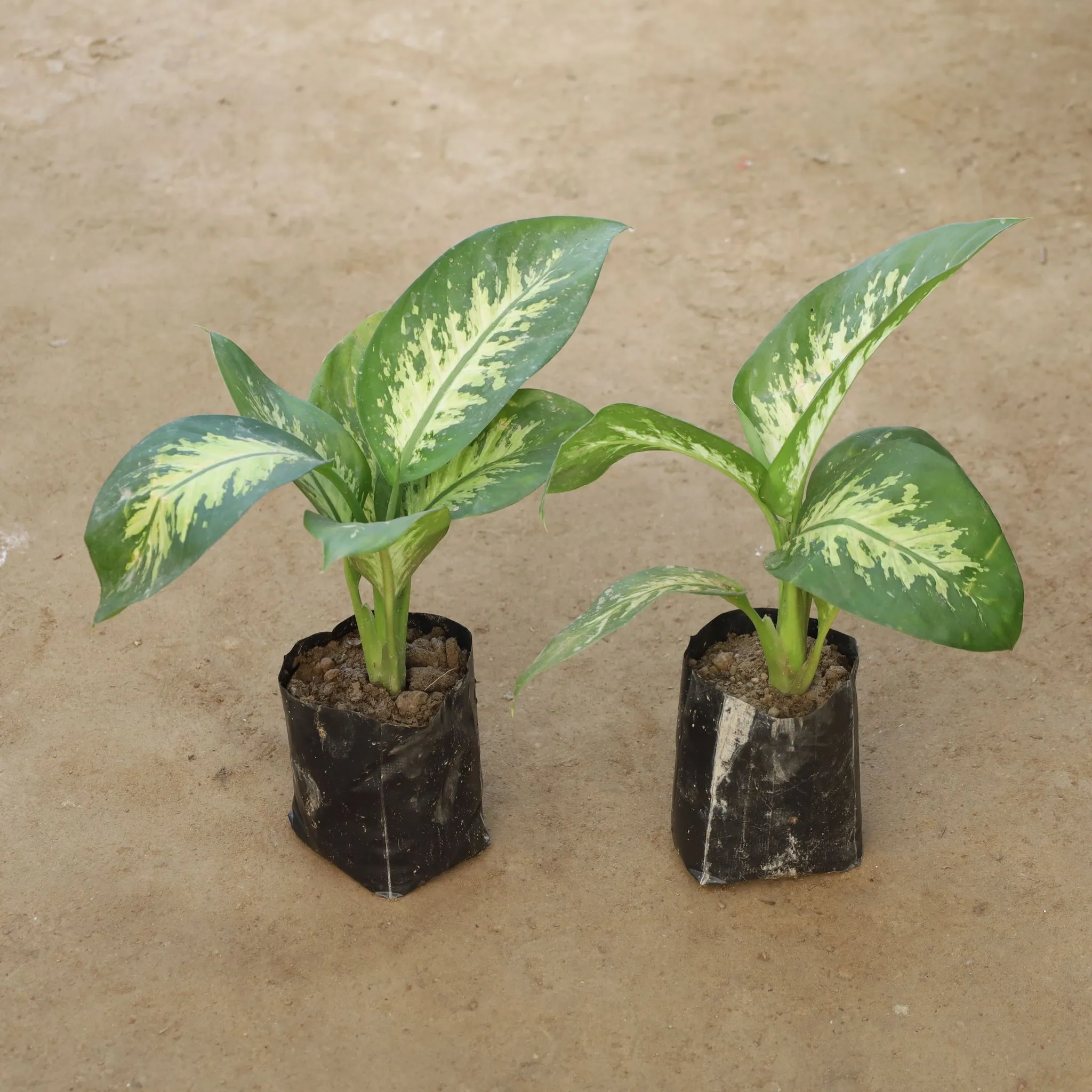
Add bold tropical foliage to your home or office with a Dieffenbachia plant from Urvann. Also known as dumb cane, this popular indoor plant is recognised by its broad green leaves patterned with cream, white, lime or yellow.

Explore Dieffenbachia Seguine, Tropic Snow, Honeydew, White, Dumbcane, Camille, Sparkle Green and Triumph listings. Choose from nursery plants, decorative plastic pots, ceramic or fibreglass planters, gift-ready options and indoor plant combinations.

Note: Prices of the products may vary as per the location. Please check the final price based on your delivery address.


Why 50,000+ Indian Plant Parents Buy Dieffenbachia Plants from Urvann

⭐ Rated 4.8/5 by 12,340+ verified buyers
✓ Free Next-Day Delivery - Available on orders placed by 7 PM in Delhi-NCR and Bengaluru.
✓ Pan-India Deliveries - Delivery timelines vary by location.
✓ Hassle-Free Replacement - 2-day replacement window if the plant arrives damaged or incorrect.
✓ Healthy, Well-Rooted Plants - Every Dieffenbachia plant is grown at Urvann Farms in the best conditions.
✓ Authentic Flowering Varieties - We stock single-petal, double-petal, and colour-specific Madhumalti Bel varieties.
✓ Complete Garden Care in One Place - Along with Dieffenbachia plants, shop for pots, fertilizers, tools, and other garden care products.


Which Option Should You Choose?

Product Type Best for
5-inch nursery bag or pot Starting with a young plant and choosing your own planter
5- or 7-inch decorative pot Desks, shelves, side tables and gifting
8- or 10-inch premium planter A ready-to-place floor or office plant
Sets of two or six Gifting or creating an indoor plant grouping


What Is a Dieffenbachia Plant?

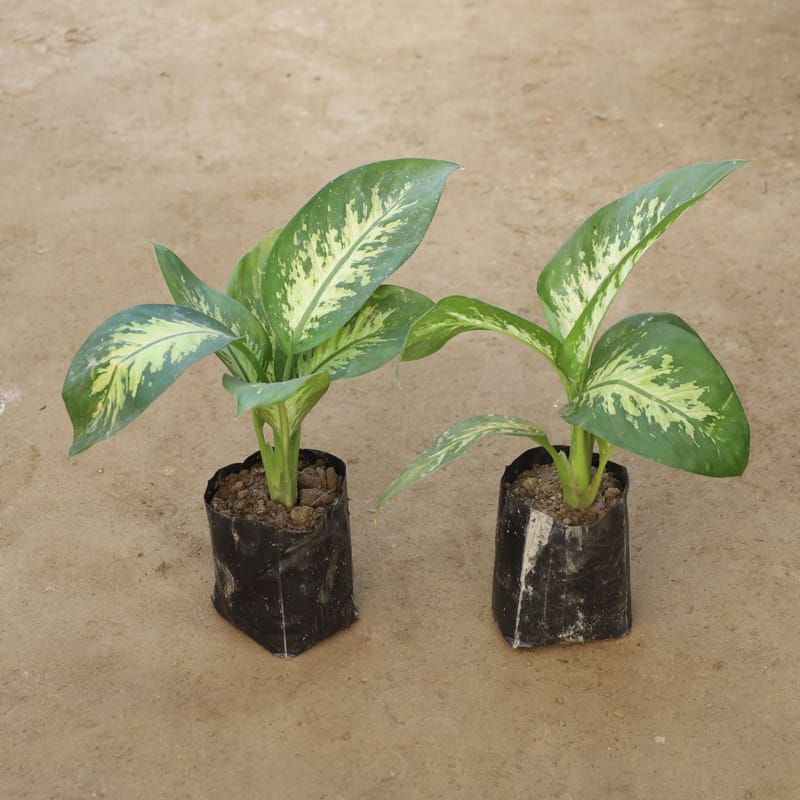
Dieffenbachia is a tropical evergreen perennial in the Araceae family. Widely familiar varieties are cultivars or hybrids associated with Dieffenbachia seguine. The plant grows upright from thick, cane-like stems and is valued mainly for its large variegated leaves.

The common name “dumb cane” refers to the burning, numbing and swelling that can occur if the plant is chewed. Its botanical name is more precise and is preferable in normal product copy.


Popular Dieffenbachia Varieties

Variety Key Feature
Dieffenbachia Seguine Broad variegated foliage and upright growth
Tropic Snow Large green leaves with creamy central markings
Honeydew Lighter lime-and-green foliage
Dieffenbachia White Cream or white-dominant variegation
Camille Pale centre surrounded by green margins
Sparkle Green and Triumph Compact choices available in decorative pots and combinations

Leaf patterns and plant size naturally vary. Check the product images and supplied height before buying.


Why Choose Dieffenbachia for an Indoor Space?

Decorative Foliage

Dieffenbachia provides colour and pattern through its leaves, so you do not need to wait for flowers. Its upright growth suits desks, side tables and floor planters.

Suitable for Bright Indoor Light

It grows well near a bright window without needing harsh direct sun. Low light may slow growth and reduce variegation, while strong afternoon sun can scorch the leaves.

Several Sizes and Pot Styles

The collection includes young nursery plants, gift-ready pots, larger decorative planters and multi-plant sets. Choose according to the available space and whether you already own a planter.

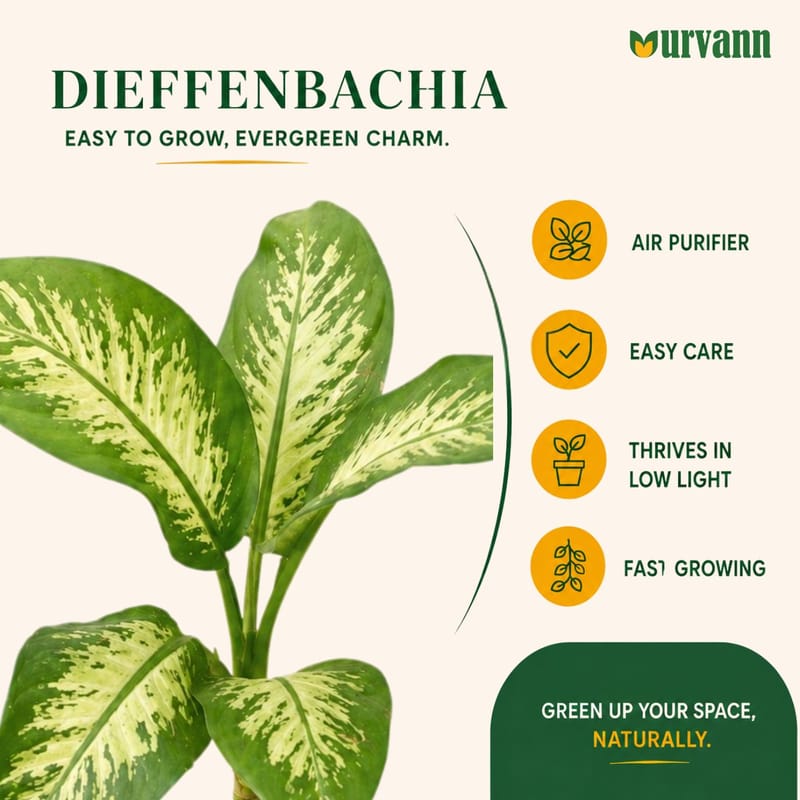
Note: Dieffenbachia should be purchased for its foliage, not as a substitute for ventilation or an air purifier. Ordinary potted plants do not clean a typical room at a meaningful rate.


Where Should You Keep a Dieffenbachia Plant?

Space Suitable? What It Needs
Living room Yes Bright indirect light near a window
Home office Yes Natural light and protection from direct AC airflow
Bright bathroom Sometimes A window or strong daylight; humidity alone is not enough
Shaded balcony Yes Protection from direct afternoon sun, rain and winter cold
Windowless room No Move to natural light or use a suitable grow light
Child- or pet-accessible area No The plant is toxic if chewed


Dieffenbachia Plant Care Guide

Sunlight

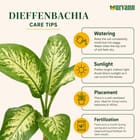
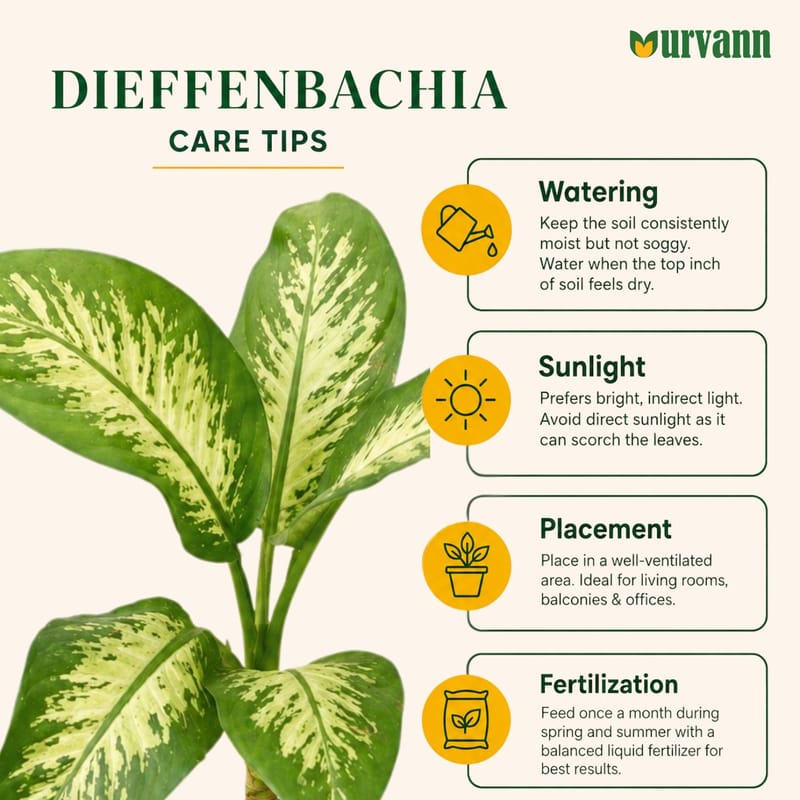
Provide bright, indirect light. Gentle morning sun may be tolerated, but harsh direct sun can burn the leaves. Variegated varieties usually need brighter filtered light to retain their colour.

Watering

Water when the top 2–3 cm of potting mix feels dry. Soak the mix thoroughly, allow it to drain and empty the tray. Constantly wet soil can cause root or stem rot.

Soil

Use a loose, organic and well-draining indoor potting mix. Dense garden soil alone can compact in a container and restrict airflow around the roots.

Temperature and Humidity

Dieffenbachia prefers warm conditions around 18–29°C and should be protected from temperatures below approximately 15°C. Keep it away from cold drafts and direct air-conditioner or heater airflow.

Fertiliser

Feed lightly with a balanced houseplant fertiliser every four to six weeks during active growth. Reduce feeding in winter and never fertilise a plant suffering from root rot.

Pruning and Repotting

Remove damaged leaves with clean tools. Repot when roots become crowded, choosing a container only slightly wider than the current root ball. Wear gloves whenever the plant is cut because its sap can irritate the skin and eyes.


How to Propagate Dieffenbachia

Dieffenbachia propagates easily from stem cuttings, making it simple to grow your collection or share a plant with a friend.

  • Using clean, sharp scissors and gloves, as the sap can irritate skin, cut a healthy stem section with at least one node, or a leaf-bearing tip cutting.
  • Let the cut end air-dry for a few hours to reduce the risk of rot.
  • Place the cutting in water or moist, well-draining potting mix.
  • Roots typically develop within 3–4 weeks in warm, bright, indirect light. Once roots are a couple of inches long, pot the cutting into soil if it was rooted in water.

A bare, leggy stem left in the original pot after top-cutting will often sprout new shoots from the remaining nodes, so don't discard the stem base.


Common Dieffenbachia Problems

Problem Likely Cause Solution
Yellow leaves Overwatering, poor drainage, low light or normal ageing Check soil moisture and roots before watering again
Drooping leaves Soil too dry, waterlogged roots or cold stress Feel the soil and correct the actual cause
Brown edges Dry air, irregular watering or excess fertiliser salts Stabilise watering and reduce feeding
Fading variegation Insufficient light Move to brighter indirect light
Bleached patches Direct-sun damage Move behind filtered light
Sticky leaves or webbing Scale, aphids, mealybugs or spider mites Isolate the plant and use an appropriately labelled treatment


Is Dieffenbachia Toxic?

Yes. Dieffenbachia contains insoluble calcium oxalate crystals. Chewing it can cause intense mouth irritation, swelling, drooling, vomiting and difficulty swallowing in people and pets.

Touching an intact leaf is generally not a problem, but sap from broken tissue may irritate the skin and eyes. Wear gloves while pruning or propagating, wash your hands afterward and seek medical or veterinary advice if ingestion occurs.


Does Dieffenbachia Flower?

Yes, but flowering is uncommon indoors. It can produce a small aroid-type spadix and spathe, although the bloom is much less noticeable than the foliage. A healthy plant may never flower indoors.


Buy Dieffenbachia Plant Online from Urvann

Shop Dieffenbachia Seguine, Tropic Snow, Honeydew, White, Dumbcane, Camille, Sparkle Green and Triumph in nursery containers, decorative pots and indoor plant combinations.

Urvann offers free next-day delivery on orders placed by 7 PM in serviceable Delhi-NCR and Bengaluru pincodes. Enter your delivery address to see the available products and final prices. If an item arrives damaged or incorrect, report it with photographs within 48 hours under the published policy.


Frequently Asked Questions (FAQs)

1. Is Dieffenbachia a good indoor plant?

Yes. It grows well in bright indirect light and provides year-round decorative foliage. However, it must be kept away from children and pets.

2. Is Dieffenbachia a lucky plant?

Some Vastu and Feng Shui traditions associate leafy plants with growth or prosperity, but this is a cultural belief. Choose the placement according to light and safety needs.

3. Is Dieffenbachia toxic to touch?

An intact leaf is generally safe to touch, but sap from cut or broken tissue can irritate the skin and eyes. Wear gloves while pruning or repotting.

4. Where should I put Dieffenbachia in my house?

Place it near a bright east- or north-facing window or behind a sheer curtain. Avoid direct afternoon sun, cold drafts, and pet-accessible areas.

5. Does Dieffenbachia need sunlight?

It needs bright, indirect daylight rather than strong direct sun. Very low light slows growth and can reduce leaf variegation.

6. What is the lifespan of a Dieffenbachia?

There is no fixed lifespan. With healthy roots, suitable light and periodic pruning, a Dieffenbachia can live for many years indoors.

7. Is Dieffenbachia the same as dumb cane?

Yes. Dumb cane is the common name used for Dieffenbachia, particularly Dieffenbachia seguine and related cultivars.

8. How often should I water Dieffenbachia?

Water when the top 2–3 cm of soil is dry. Check the soil instead of following a fixed weekly schedule.

9. Why are my Dieffenbachia leaves turning yellow?

One old lower leaf may yellow naturally. Several yellow leaves often indicate overwatering, poor drainage, inadequate light, or cold stress.

10. Can I buy Dieffenbachia combinations online?

Yes, when available. Urvann lists Dieffenbachia with plants such as Aglaonema, Philodendron, Areca Palm, and Peace Lily. Check each product card for the exact plants and pots included.

11. Why is my Dieffenbachia "crying" or dripping water?

Small droplets on Dieffenbachia leaves are usually caused by guttation, a harmless process where the plant releases excess water. If it occurs frequently with yellowing leaves, check for overwatering.


Showing 24 of 169 products
New In
Dieffenbachia in 8 Inch Nursery Pot
(1)
₹399₹1,599 -75%
New In
Dieffenbachia in 5 inch Nursery Bag
New In
Dieffenbachia in 5 Inch Nursery Bag
(8)
₹349₹1,399 -75%
Today's Deal
Dieffenbachia Seguine in 4 Inch Nursery Bag

Add bold tropical foliage to your home or office with a Dieffenbachia plant from Urvann. Also known as dumb cane, this popular indoor plant is recognised by its broad green leaves patterned with cream, white, lime or yellow.

Explore Dieffenbachia Seguine, Tropic Snow, Honeydew, White, Dumbcane, Camille, Sparkle Green and Triumph listings. Choose from nursery plants, decorative plastic pots, ceramic or fibreglass planters, gift-ready options and indoor plant combinations.

Note: Prices of the products may vary as per the location. Please check the final price based on your delivery address.


Why 50,000+ Indian Plant Parents Buy Dieffenbachia Plants from Urvann

⭐ Rated 4.8/5 by 12,340+ verified buyers
✓ Free Next-Day Delivery - Available on orders placed by 7 PM in Delhi-NCR and Bengaluru.
✓ Pan-India Deliveries - Delivery timelines vary by location.
✓ Hassle-Free Replacement - 2-day replacement window if the plant arrives damaged or incorrect.
✓ Healthy, Well-Rooted Plants - Every Dieffenbachia plant is grown at Urvann Farms in the best conditions.
✓ Authentic Flowering Varieties - We stock single-petal, double-petal, and colour-specific Madhumalti Bel varieties.
✓ Complete Garden Care in One Place - Along with Dieffenbachia plants, shop for pots, fertilizers, tools, and other garden care products.


Which Option Should You Choose?

Product Type Best for
5-inch nursery bag or pot Starting with a young plant and choosing your own planter
5- or 7-inch decorative pot Desks, shelves, side tables and gifting
8- or 10-inch premium planter A ready-to-place floor or office plant
Sets of two or six Gifting or creating an indoor plant grouping


What Is a Dieffenbachia Plant?

Dieffenbachia is a tropical evergreen perennial in the Araceae family. Widely familiar varieties are cultivars or hybrids associated with Dieffenbachia seguine. The plant grows upright from thick, cane-like stems and is valued mainly for its large variegated leaves.

The common name “dumb cane” refers to the burning, numbing and swelling that can occur if the plant is chewed. Its botanical name is more precise and is preferable in normal product copy.


Popular Dieffenbachia Varieties

Variety Key Feature
Dieffenbachia Seguine Broad variegated foliage and upright growth
Tropic Snow Large green leaves with creamy central markings
Honeydew Lighter lime-and-green foliage
Dieffenbachia White Cream or white-dominant variegation
Camille Pale centre surrounded by green margins
Sparkle Green and Triumph Compact choices available in decorative pots and combinations

Leaf patterns and plant size naturally vary. Check the product images and supplied height before buying.


Why Choose Dieffenbachia for an Indoor Space?

Decorative Foliage

Dieffenbachia provides colour and pattern through its leaves, so you do not need to wait for flowers. Its upright growth suits desks, side tables and floor planters.

Suitable for Bright Indoor Light

It grows well near a bright window without needing harsh direct sun. Low light may slow growth and reduce variegation, while strong afternoon sun can scorch the leaves.

Several Sizes and Pot Styles

The collection includes young nursery plants, gift-ready pots, larger decorative planters and multi-plant sets. Choose according to the available space and whether you already own a planter.

Note: Dieffenbachia should be purchased for its foliage, not as a substitute for ventilation or an air purifier. Ordinary potted plants do not clean a typical room at a meaningful rate.


Where Should You Keep a Dieffenbachia Plant?

Space Suitable? What It Needs
Living room Yes Bright indirect light near a window
Home office Yes Natural light and protection from direct AC airflow
Bright bathroom Sometimes A window or strong daylight; humidity alone is not enough
Shaded balcony Yes Protection from direct afternoon sun, rain and winter cold
Windowless room No Move to natural light or use a suitable grow light
Child- or pet-accessible area No The plant is toxic if chewed


Dieffenbachia Plant Care Guide

Sunlight

Provide bright, indirect light. Gentle morning sun may be tolerated, but harsh direct sun can burn the leaves. Variegated varieties usually need brighter filtered light to retain their colour.

Watering

Water when the top 2–3 cm of potting mix feels dry. Soak the mix thoroughly, allow it to drain and empty the tray. Constantly wet soil can cause root or stem rot.

Soil

Use a loose, organic and well-draining indoor potting mix. Dense garden soil alone can compact in a container and restrict airflow around the roots.

Temperature and Humidity

Dieffenbachia prefers warm conditions around 18–29°C and should be protected from temperatures below approximately 15°C. Keep it away from cold drafts and direct air-conditioner or heater airflow.

Fertiliser

Feed lightly with a balanced houseplant fertiliser every four to six weeks during active growth. Reduce feeding in winter and never fertilise a plant suffering from root rot.

Pruning and Repotting

Remove damaged leaves with clean tools. Repot when roots become crowded, choosing a container only slightly wider than the current root ball. Wear gloves whenever the plant is cut because its sap can irritate the skin and eyes.


How to Propagate Dieffenbachia

Dieffenbachia propagates easily from stem cuttings, making it simple to grow your collection or share a plant with a friend.

  • Using clean, sharp scissors and gloves, as the sap can irritate skin, cut a healthy stem section with at least one node, or a leaf-bearing tip cutting.
  • Let the cut end air-dry for a few hours to reduce the risk of rot.
  • Place the cutting in water or moist, well-draining potting mix.
  • Roots typically develop within 3–4 weeks in warm, bright, indirect light. Once roots are a couple of inches long, pot the cutting into soil if it was rooted in water.

A bare, leggy stem left in the original pot after top-cutting will often sprout new shoots from the remaining nodes, so don't discard the stem base.


Common Dieffenbachia Problems

Problem Likely Cause Solution
Yellow leaves Overwatering, poor drainage, low light or normal ageing Check soil moisture and roots before watering again
Drooping leaves Soil too dry, waterlogged roots or cold stress Feel the soil and correct the actual cause
Brown edges Dry air, irregular watering or excess fertiliser salts Stabilise watering and reduce feeding
Fading variegation Insufficient light Move to brighter indirect light
Bleached patches Direct-sun damage Move behind filtered light
Sticky leaves or webbing Scale, aphids, mealybugs or spider mites Isolate the plant and use an appropriately labelled treatment


Is Dieffenbachia Toxic?

Yes. Dieffenbachia contains insoluble calcium oxalate crystals. Chewing it can cause intense mouth irritation, swelling, drooling, vomiting and difficulty swallowing in people and pets.

Touching an intact leaf is generally not a problem, but sap from broken tissue may irritate the skin and eyes. Wear gloves while pruning or propagating, wash your hands afterward and seek medical or veterinary advice if ingestion occurs.


Does Dieffenbachia Flower?

Yes, but flowering is uncommon indoors. It can produce a small aroid-type spadix and spathe, although the bloom is much less noticeable than the foliage. A healthy plant may never flower indoors.


Buy Dieffenbachia Plant Online from Urvann

Shop Dieffenbachia Seguine, Tropic Snow, Honeydew, White, Dumbcane, Camille, Sparkle Green and Triumph in nursery containers, decorative pots and indoor plant combinations.

Urvann offers free next-day delivery on orders placed by 7 PM in serviceable Delhi-NCR and Bengaluru pincodes. Enter your delivery address to see the available products and final prices. If an item arrives damaged or incorrect, report it with photographs within 48 hours under the published policy.


Frequently Asked Questions (FAQs)

1. Is Dieffenbachia a good indoor plant?

Yes. It grows well in bright indirect light and provides year-round decorative foliage. However, it must be kept away from children and pets.

2. Is Dieffenbachia a lucky plant?

Some Vastu and Feng Shui traditions associate leafy plants with growth or prosperity, but this is a cultural belief. Choose the placement according to light and safety needs.

3. Is Dieffenbachia toxic to touch?

An intact leaf is generally safe to touch, but sap from cut or broken tissue can irritate the skin and eyes. Wear gloves while pruning or repotting.

4. Where should I put Dieffenbachia in my house?

Place it near a bright east- or north-facing window or behind a sheer curtain. Avoid direct afternoon sun, cold drafts, and pet-accessible areas.

5. Does Dieffenbachia need sunlight?

It needs bright, indirect daylight rather than strong direct sun. Very low light slows growth and can reduce leaf variegation.

6. What is the lifespan of a Dieffenbachia?

There is no fixed lifespan. With healthy roots, suitable light and periodic pruning, a Dieffenbachia can live for many years indoors.

7. Is Dieffenbachia the same as dumb cane?

Yes. Dumb cane is the common name used for Dieffenbachia, particularly Dieffenbachia seguine and related cultivars.

8. How often should I water Dieffenbachia?

Water when the top 2–3 cm of soil is dry. Check the soil instead of following a fixed weekly schedule.

9. Why are my Dieffenbachia leaves turning yellow?

One old lower leaf may yellow naturally. Several yellow leaves often indicate overwatering, poor drainage, inadequate light, or cold stress.

10. Can I buy Dieffenbachia combinations online?

Yes, when available. Urvann lists Dieffenbachia with plants such as Aglaonema, Philodendron, Areca Palm, and Peace Lily. Check each product card for the exact plants and pots included.

11. Why is my Dieffenbachia "crying" or dripping water?

Small droplets on Dieffenbachia leaves are usually caused by guttation, a harmless process where the plant releases excess water. If it occurs frequently with yellowing leaves, check for overwatering.

Load More