
Shop

Downalod our app

Please provide your delivery pincode to see products available in your area
Recent Search
Marigold/Genda 🏵️🌼
Marigold [(ಚೆಂಡು ಹೂವು (Chendu Hoovu)] is one of the most recognisable flowering plants in India. A single Marigold plant in a 6-inch pot can produce over 30 flowers across one season, enough to cover your daily pooja and Diwali décor, while still having blooms. The plant grows well in pots, grow bags, and garden beds, making it suitable for balconies, terraces, courtyards, and even small kitchen gardens. For first-time gardeners and experienced growers alike, Marigold is one of the most rewarding flowering plants you can have at home.
 Enriches Soil
About the Marigold Plant
Marigold is commonly known as Genda Phool, Zendu, Banthi, or Galgota across different regions of India. It belongs to the Tagetes genus in the Asteraceae (daisy) family. Native to the Americas, this flowering plant arrived in India centuries ago and quickly became a staple of Indian culture, religion, and horticulture. This plant can grow from 6 to 48 inches tall and 6 to 36 inches wide, depending on the variety. In India, there are two types of Marigold that are widely grown in gardens and nurseries:
- African Marigold (Tagetes erecta): Taller plant (up to 90 cm) with large, fully double, pom-pom-shaped flowers in shades of yellow, orange, and gold. In India, it is most commonly used for garlands, loose-flower markets, and garden displays.
- French Marigold (Tagetes patula): Compact, bushy plants (15 to 30 cm) with smaller flowers in yellow, orange, red, and bicolour combinations. They are popular for borders, pots, and ornamental planting.
Marigold is an annual flowering plant. It completes its lifecycle in one season but produces abundant flowers during that time. The plant has dark green, deeply divided, aromatic foliage. The flowers are known for their strong, distinctive scent, which also helps repel certain garden pests.
NOTE: “Marigold” refers to Tagetes in Indian gardens and nurseries. A separate plant, Calendula officinalis (also called “pot Marigold”), is sometimes confused with it online but is a different species from Europe, mostly grown for skincare and herbal tea.
Marigold Plants Available on Urvann
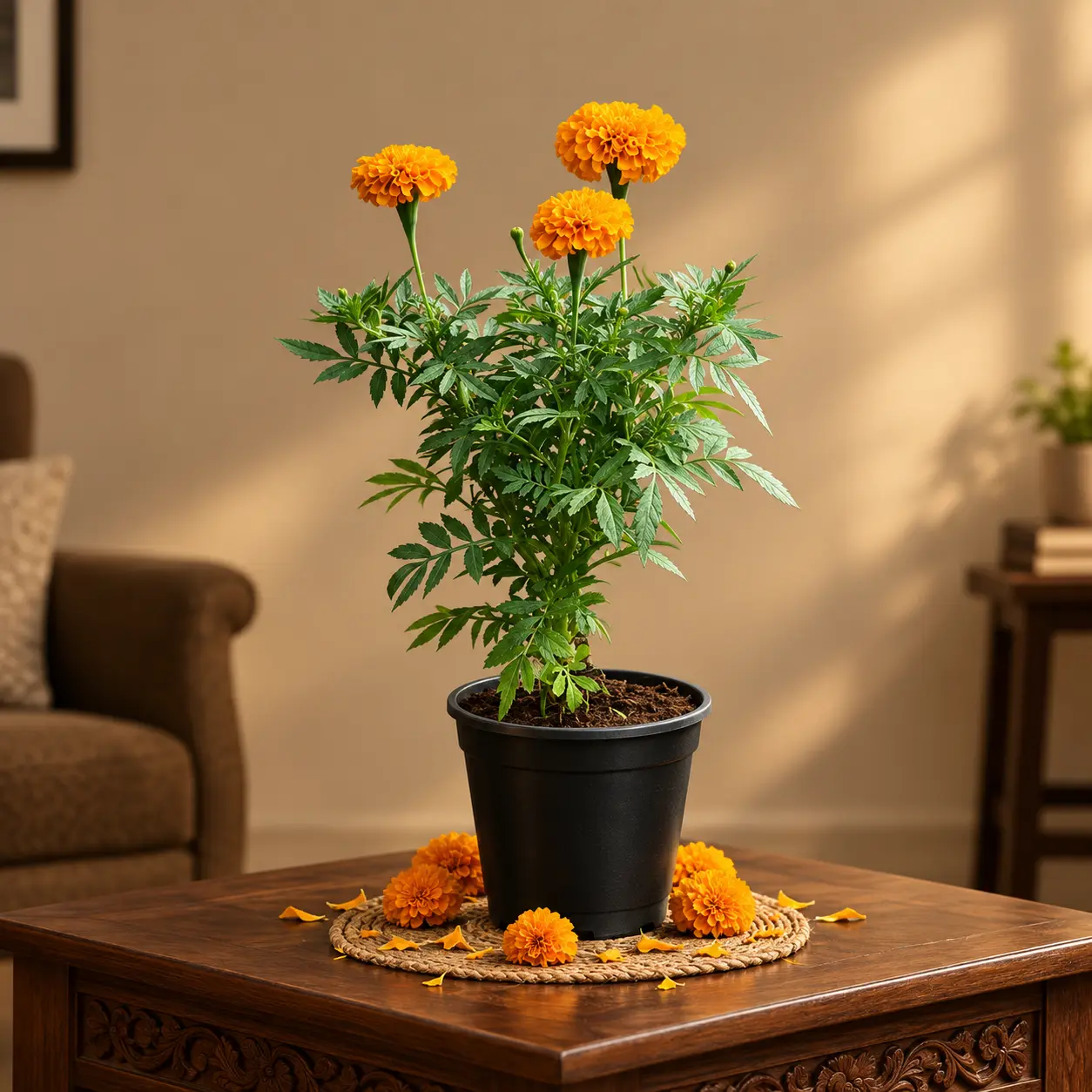
Best for: Beginners
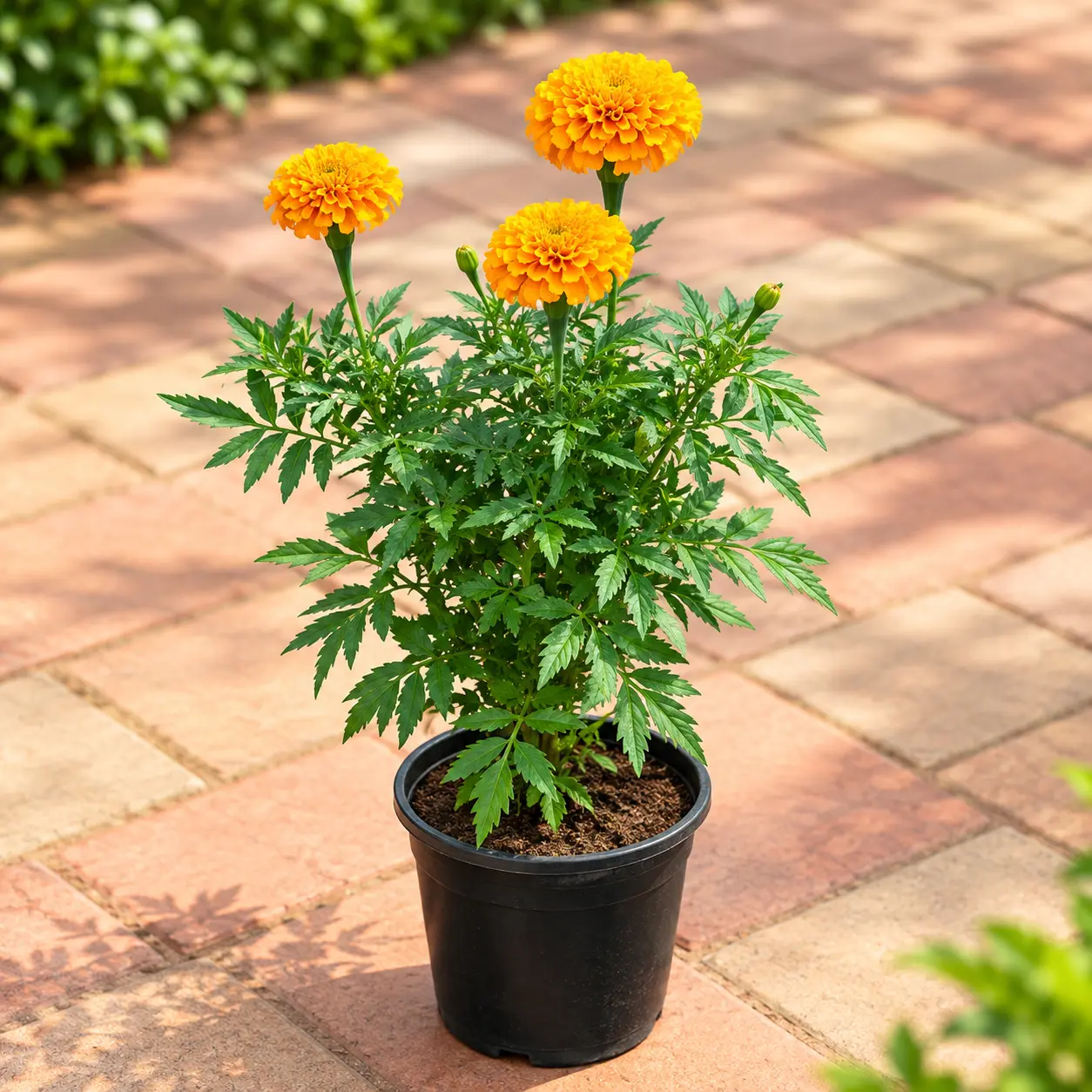
Best for: Faster Blooming
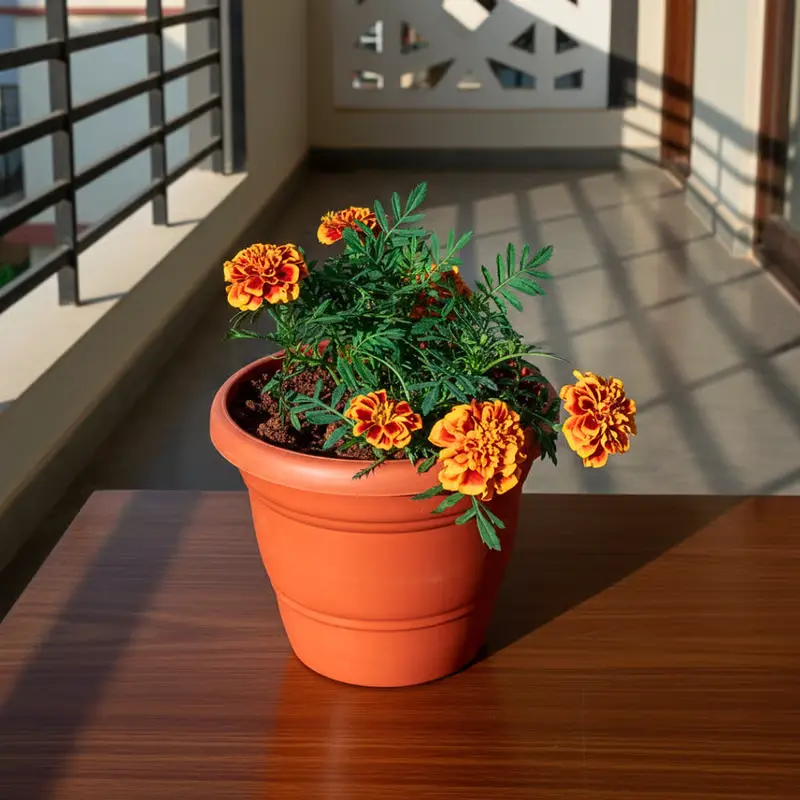
Best for: Gifting & Festival Decor
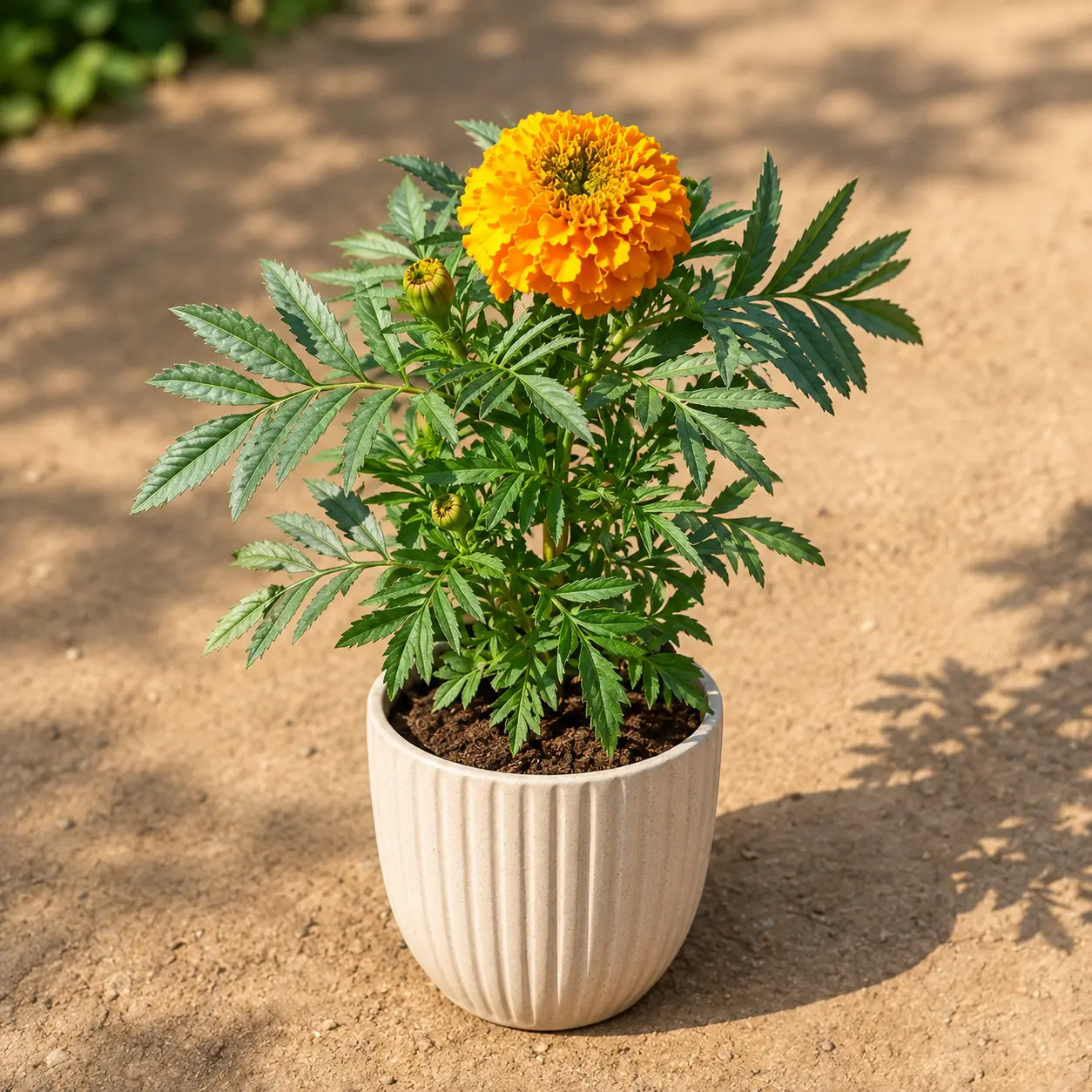
Best for: Bigger Blooms & Display
Complete Care Guide for Marigold Plant
🌡️ Temperature
18°C – 29°C (Ideal: 18°C – 24°C)
Marigold grows best in warm weather, with daytime temperatures between 18°C and 29°C. For seed germination, temperatures of 21°C to 24°C are ideal, while soil temperatures should be at least 15°C to 18°C for successful direct sowing. Growth slows significantly when temperatures drop below 10°C. Marigolds are tender annuals and cannot tolerate frost or freezing temperatures. Night temperatures of 4°C to 9°C can stunt growth, while temperatures above 35°C can reduce flowering.
✂️ Pruning & Deadheading
Pruning helps marigolds stay bushy and produce more blooms. Pinch back young plants when they reach 8 to 12 inches tall to encourage side branching. Deadhead faded flowers regularly to encourage new blooms. For leggy growth, cut stems just above a leaf node. If the plant becomes overgrown, cut back up to one-third of its height in midsummer. Marigolds die back naturally after frost, so winter pruning is not needed.
🌿 Cleaning Leaves
Marigold plant leaves can collect dust. Wipe leaves gently from base to top using a soft, damp cloth. Mix one litre of water with a few drops of liquid dish soap and a drop of neem oil if you need to remove sticky residue or minor pests. Clean the foliage early in the morning so the leaves dry completely during the day. Prune away yellowing, diseased, or dying leaves promptly and discard them in the trash to keep the plant healthy.
🌬️ Air Circulation
Good air circulation helps prevent fungal diseases like powdery mildew and allows excess moisture to dry quickly, helping maintain plant health. Space individual Marigold plants 8 to 12 inches apart to allow wind and light to pass through. Do not jam many pots together on a balcony or crowd them with dense plants.
Light

Marigolds need plenty of sunlight to grow well and produce abundant blooms. Six to eight hours of direct sunlight daily is ideal for strong stems and heavy flowering.
Dark Indoor – Avoid
Bright Sunny Window – Acceptable
6–8 Hours of Direct Sunlight – Best
Partial Shade – Monitor
Choose the brightest spot available rather than relying only on window direction.
- South-facing window: Often receives the most direct sunlight during the day and can be excellent for Marigolds.
- West-facing window: Usually receives strong afternoon sunlight. Protect the plant from excessive summer heat if needed.
- East-facing window: Can work well if it receives several hours of direct morning sunlight.
- North-facing window: Usually receives less direct sunlight, so it may not provide enough light for abundant flowering.
- Terrace or balcony: Excellent if the space receives several hours of unobstructed direct sunlight. Provide some protection from extreme summer-afternoon heat if the plant shows signs of heat stress.
 Watering – The Right Approach
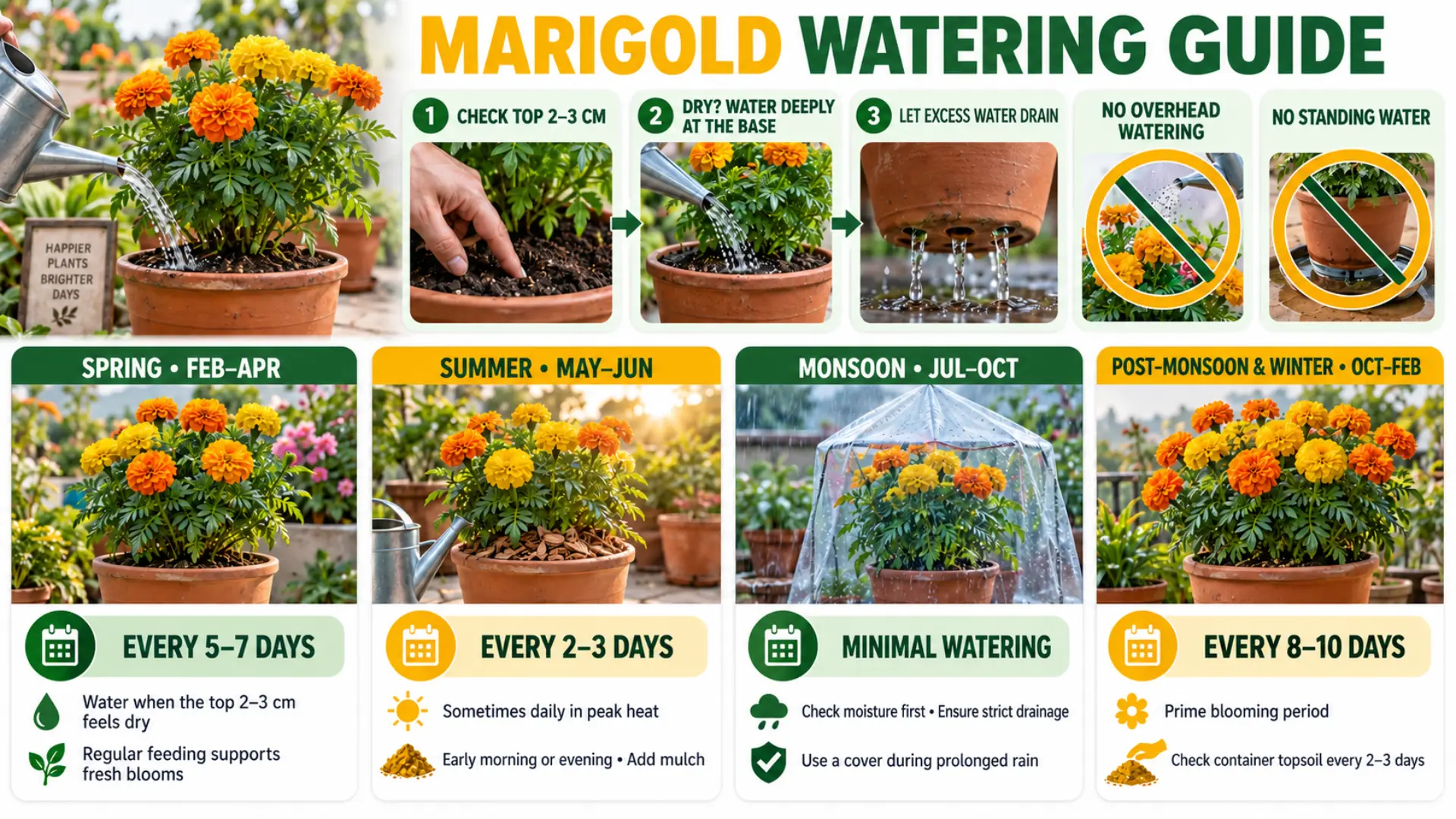
Marigold likes consistently moist soil but cannot tolerate standing water or waterlogged conditions. Water deeply when the top 2–3 cm of soil feels dry, and always water at the base of the plant, not overhead, to prevent flower rot and fungal problems. Ensure well-draining soil, as excess wetness causes root rot.
 Soil Mix & Pot Selection

Marigolds grow best in moderately fertile, loose, and well-draining soil with a neutral to slightly alkaline pH (6.5–7.5).
🌱🟫 Recommended Soil Mix (Ideal for Indian Climate)
- ✅ Coco Peat (50%) retains mild moisture and keeps the pot lightweight
- ✅ Vermicompost (30%) provides rich organic nutrients for heavy, continuous blooming
- ✅ Garden Soil / Red Soil (20%) gives structural stability to the root system
Marigolds (Genda Phool) do not tolerate water stagnation and can easily develop root rot if water pools in the container. Ensure your pot has good drainage holes.
🟫 Optional Additives
Mix in a handful of neem cake powder (about 50 g per 10-inch pot) to protect roots from soil-borne pests and nematodes.
🪴 Choosing the Right Pot
Marigolds need good drainage and sufficient root space for healthy growth and continuous blooming. Choose a pot based on the variety and available growing space.
Tip: For African Marigold varieties, use at least an 8–10 inch deep pot, as these varieties need more root space for continuous bloom. Always ensure the pot has working drainage holes.
 Fertilising – When, What & How Much?
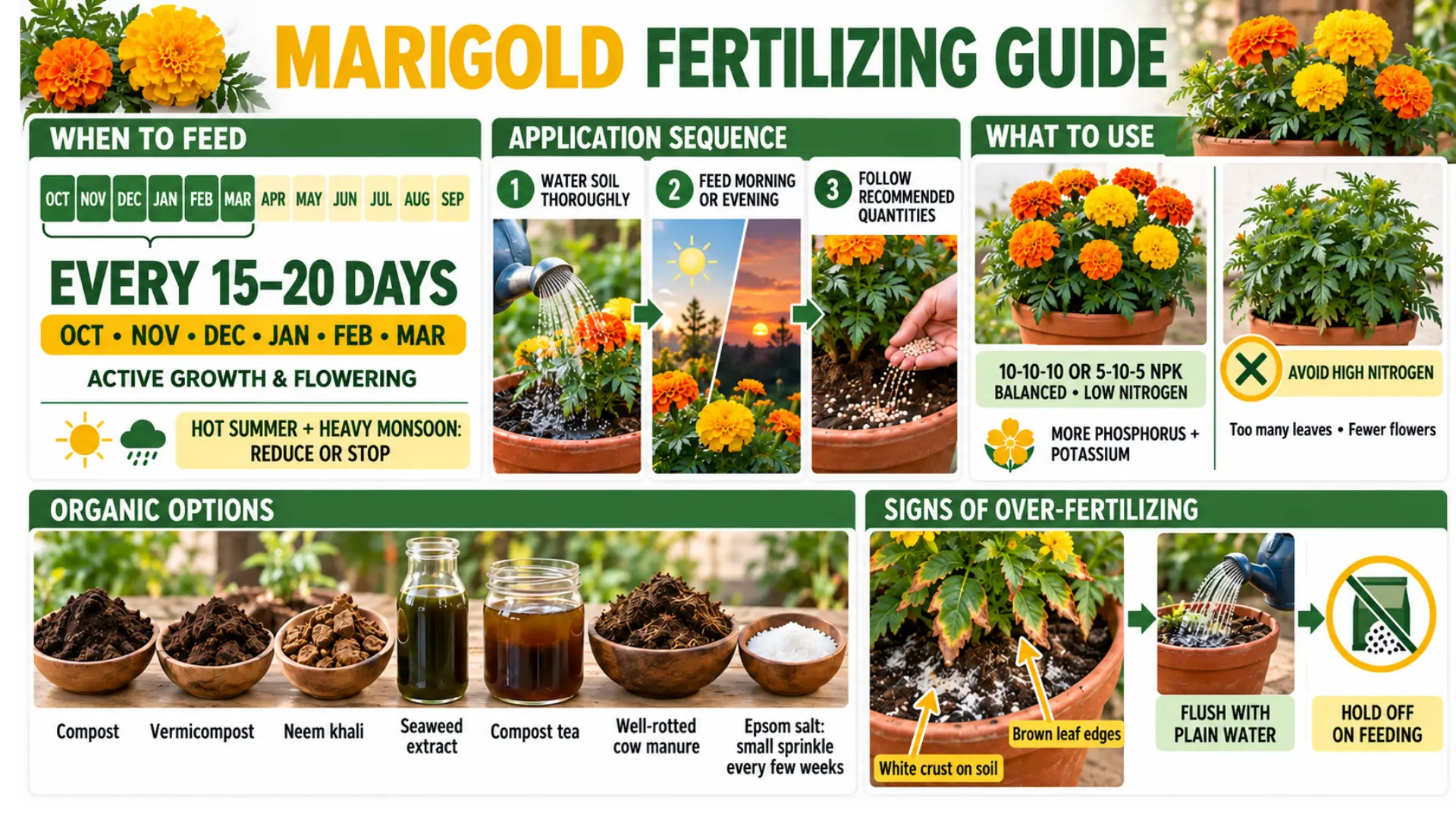
When to Feed
Fertilize Marigolds every 15–20 days during their active growing and flowering period. For most of India, this is from October through March. Reduce or stop feeding during hot summer and heavy monsoon rains. Water the soil thoroughly before applying feed, and fertilize during the cooler morning or evening hours.
What to Use
Apply a balanced, low-nitrogen fertilizer such as 10-10-10 or a 5-10-5 NPK blend to Marigolds. Avoid high nitrogen formulas, as they make the plant grow lots of green leaves instead of vibrant flowers. Choose a formula higher in phosphorus and potassium.
Organic Options
Compost, vermicompost, neem khali, seaweed extract, and compost tea are excellent organic choices for Marigolds. Mix in compost, well-rotted cow manure, or a small sprinkle of Epsom salt for magnesium every few weeks.
Avoid Over-Fertilizing
Too much fertilizer (nitrogen-heavy ones) can cause excessive leafy growth instead of flowers. Always follow the recommended quantities. If you notice white crust on the soil surface or brown leaf edges, flush the soil with plain water and hold off on feeding.
How to Care for Marigold Across Different Indian Climates


Hot & Dry: Rajasthan, Gujarat, Punjab and Haryana
- Sow seeds in September–October for winter blooms.
- Use a 35–50% shade net during extreme summer heat.
- Water early in the morning during hot weather.
- Let the top inch of soil dry between waterings to prevent root rot.
- Protect the plants from excessive heat during April to June.

Warm & Humid: Mumbai, Chennai, Kolkata, Goa and Kerala
- Give some afternoon shade during extreme summer heat.
- Use well-draining soil to prevent waterlogging.
- Ensure containers have good drainage.
- Let the top inch of soil dry between waterings.
- Protect potted plants from prolonged heavy rain.

Hot Summer & Cool Winters: Delhi-NCR
- Sow seeds in September–October for winter blooms.
- Use a 35–50% shade net during extreme summer heat.
- Water early in the morning during hot weather.
- Protect plants from heavy monsoon rainfall and waterlogging.
- Let the top inch of soil dry between waterings.

Temperate: Bengaluru
- Keep Marigolds in a sunny location.
- Provide some afternoon shade during peak summer.
- Use well-draining soil and containers with good drainage.
- Protect potted plants from heavy monsoon rain.
- Let the top inch of soil dry between waterings.

Benefits of Growing Marigold Plant at Home
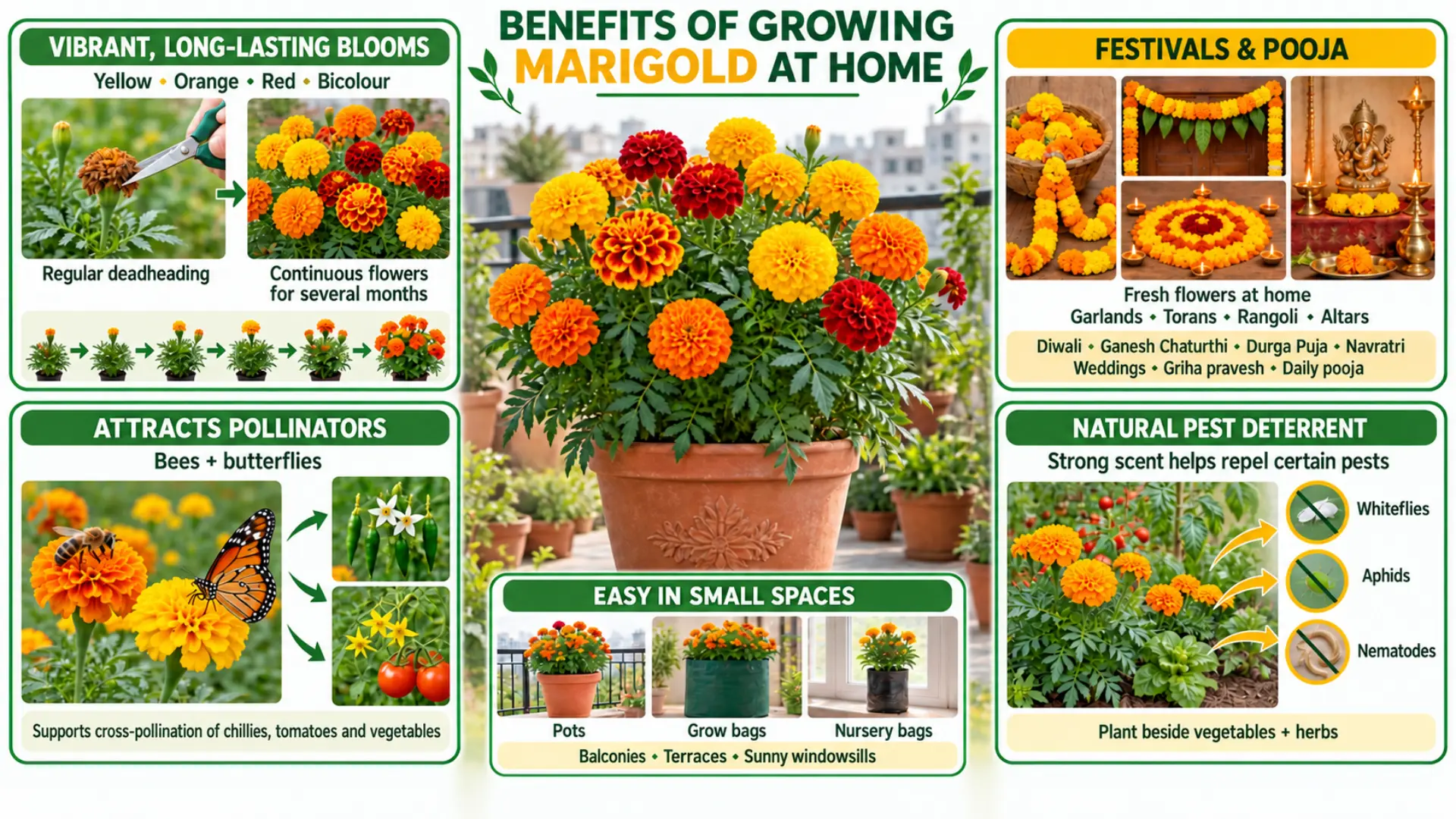
Vibrant, Long-Lasting Blooms
Marigold produces abundant flowers in bright yellows, oranges, reds, and bicolour combinations. With proper care and regular deadheading, a single plant can flower continuously for several months.
Essential for Indian Festivals & Pooja
Indian households use Marigold flowers in garlands, torans, rangoli, and altar decorations. Growing your own means you will have fresh flowers readily available for Diwali, Ganesh Chaturthi, Durga Puja, Navratri, weddings, griha pravesh, and daily pooja.
Attracts Pollinators
If you grow chillies, tomatoes, or other vegetables, Marigolds attract bees and butterflies. They visit Marigold flowers and can help pollinate flowering vegetable plants in your garden.
Natural Pest Deterrent
The strong scent of Marigold foliage and flowers helps repel certain pests such as whiteflies, aphids, and nematodes. Planting Marigold alongside vegetables and herbs can provide a natural layer of pest protection.
Common Problems, Causes & Fixes


Flowers Turning Brown
Cause: Transplant stress, sudden environmental changes, overwatering, or flowers getting wet.
Fix: Place the plant in a sunny, well-ventilated spot. Water at the base and remove browned flowers. Give newly transplanted plants a few days to adjust.
Plant Not Flowering
Cause: Lack of sunlight, too much nitrogen fertilizer, or not removing spent flowers.
Fix: Give the plant 6–8 hours of direct sunlight daily. Avoid excess nitrogen and remove spent flowers regularly. In most parts of India, Marigolds flower best from October to March.

Leggy, Sparse Growth
Cause: Insufficient sunlight or lack of early pinching.
Fix: Move the plant to a brighter spot and pinch the growing tips to encourage side branches and bushier growth.
Yellow Leaves
Cause: Overwatering, poor drainage, nutrient deficiency, or root rot.
Fix: Check the soil before watering and make sure the pot has proper drainage. Remove yellow leaves and add compost if the plant looks weak.
Pests and Leaf Curl
Cause: Aphids, whiteflies, spider mites, thrips, or mealybugs can cause curled, distorted, or damaged leaves.
Fix: Check the new shoots and undersides of leaves regularly. Spray neem oil or a mild soap-water solution in the evening and improve airflow around the plant.

Root Rot and Wilting
Cause: Overwatering or poor drainage can make the soil soggy and damage the roots.
Fix: Let the soil dry slightly between waterings. Ensure the pot has drainage holes. Remove severely damaged roots and repot the plant in fresh, well-draining soil.

Vastu Shastra Placement
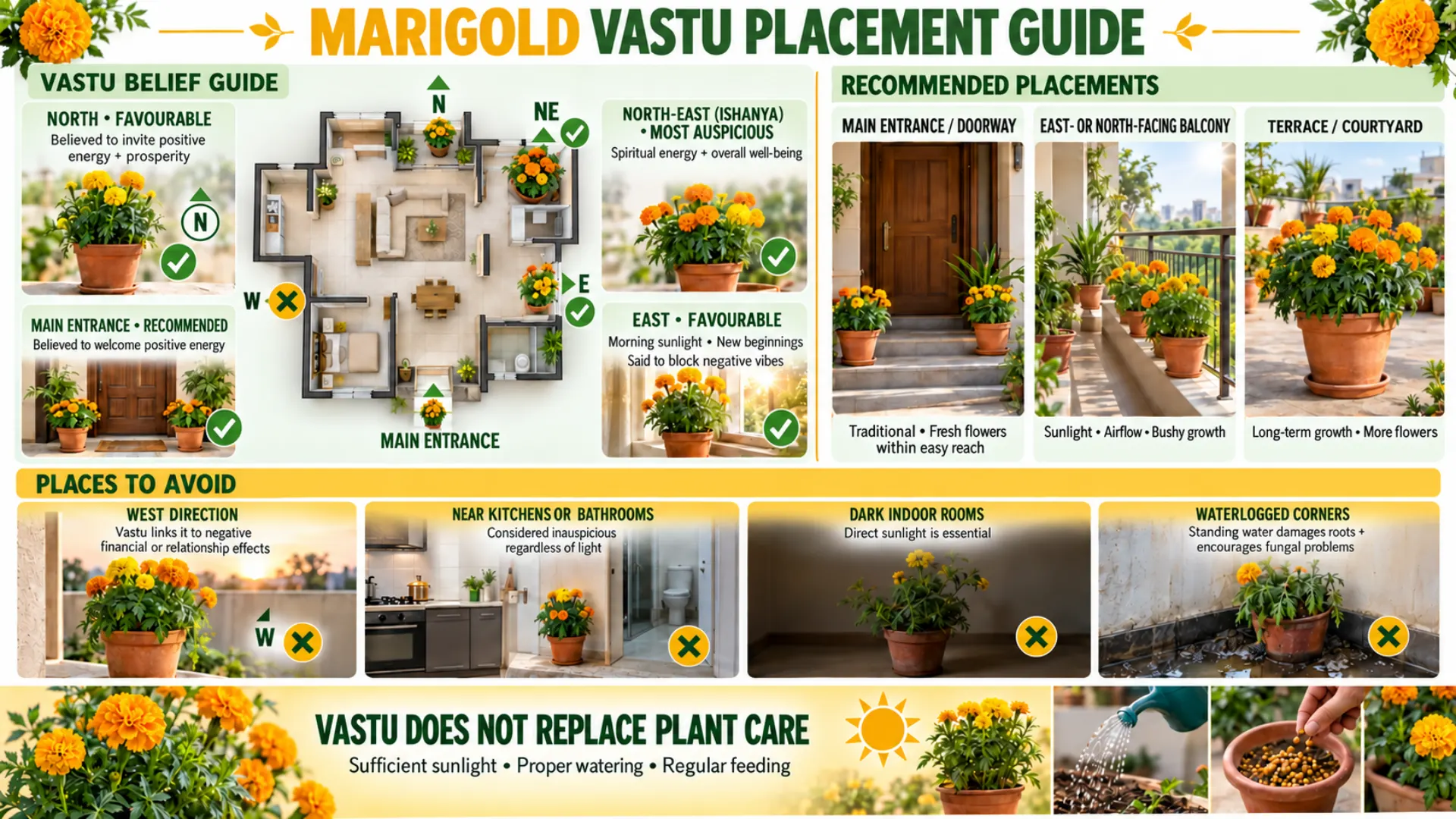
Direction Guide for Marigold Plant
North ✔
A favourable direction for Marigold. Keeping the plant here is believed to invite positive energy and prosperity into the household.
East ✔
Offers gentle morning sunlight and is associated with new beginnings. Placing Marigold near an eastern window is said to block negative vibes from entering the home.
North-East (Ishanya कोण) ✔
The north-east direction is considered the most auspicious direction for Marigold. This corner is linked to spiritual energy and overall well-being in Vastu.
Main Entrance ✔
A traditional and popular placement. Marigolds at the entrance are believed to welcome positive energy while keeping negative influences away.
🍀 Best Placements
- Main Entrance / Doorway — The most traditional placement; also practical for easy access to fresh flowers for daily puja or décor.
- Balcony (East or North-facing) — Ideal for sunlight, airflow, and the space Marigold needs for healthy, bushy growth.
- Terrace / Courtyard — Excellent for long-term growth and larger, more floriferous plants.
❌ Places to Avoid
- West Direction — Vastu advises against placing Marigold in the west, as it is believed to bring negative financial or relationship effects.
- Near Kitchens or Bathrooms — Considered inauspicious placements for Marigold, regardless of light conditions.
- Dark Indoor Rooms — Marigold needs direct sunlight and will not thrive indoors, whatever the Vastu direction.
- Waterlogged Corners — Standing water damages roots and attracts fungal problems, undoing any Vastu benefit.
⚠️ Do not treat Vastu placement as a replacement for proper plant care. Even the most auspicious direction will not help if the plant does not receive sufficient sunlight, proper watering, and regular feeding.
⚠️ Toxicity & Safety
⚠️ Mildly Toxic – Handle With Some Caution
Common garden Marigolds (Tagetes) are not poisonous to humans. The sap can cause mild skin irritation in sensitive individuals, and pets that eat large quantities of leaves may experience brief stomach upset. No special precautions are needed beyond normal supervision of young children and pets.
| Who | Notes | Action |
|---|---|---|
| 🐱🐶 Cats & Dogs | Ingesting large quantities may cause vomiting, diarrhoea, and stomach pain. The sap may also cause drooling or localised skin irritation. | Keep plants out of reach of curious pets where possible. Monitor for discomfort after contact or ingestion. Consult a vet if symptoms persist. |
| 👶 Children | Common garden Marigolds are not poisonous. Eating large amounts of non-edible Tagetes types may cause mild stomach upset or a bitter taste, but they are not life-threatening. | No special action needed for normal contact or accidental nibbling. Supervise young children around the plant as a general precaution. |
| 🧑 Adults | Not poisonous to humans, but the sap may cause skin irritation or allergic reactions in some individuals with sensitive skin. | Wash your hands after handling the plant if you notice irritation. Consult a doctor if a skin reaction persists. |
Companion Plants — What Grows Well with Marigold Plants
Marigold pairs well with other sun-loving flowering plants and vegetables that share similar care needs.
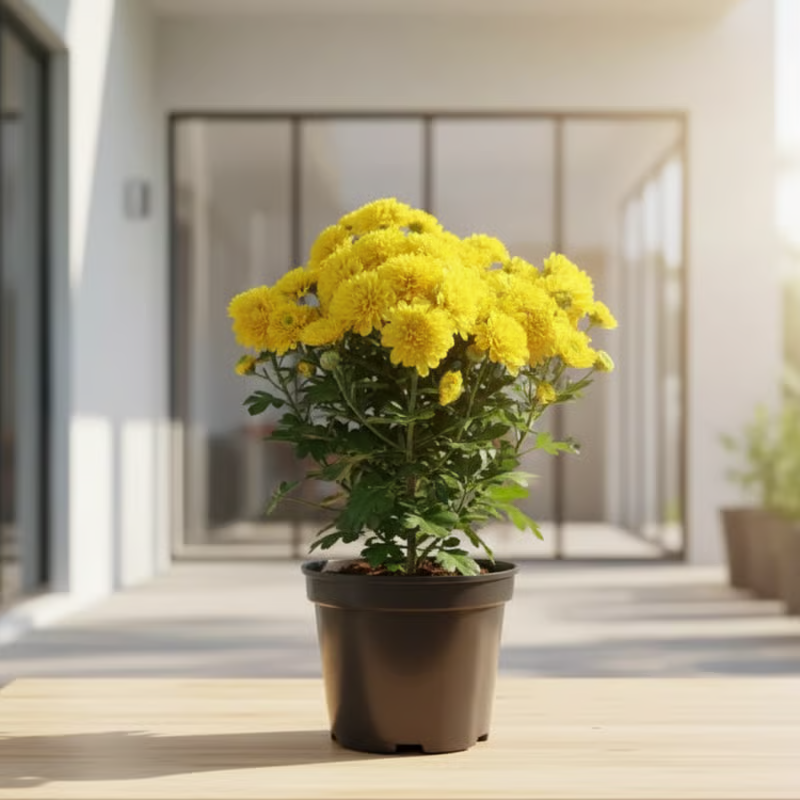
Chrysanthemum / Guldaudi
Both Chrysanthemums and Marigolds thrive from October to March, need 6–8 hours of direct sunlight, and prefer well-draining soil. You can water and feed them on the same schedule. Shop Chrysanthemum plants online at Urvann.
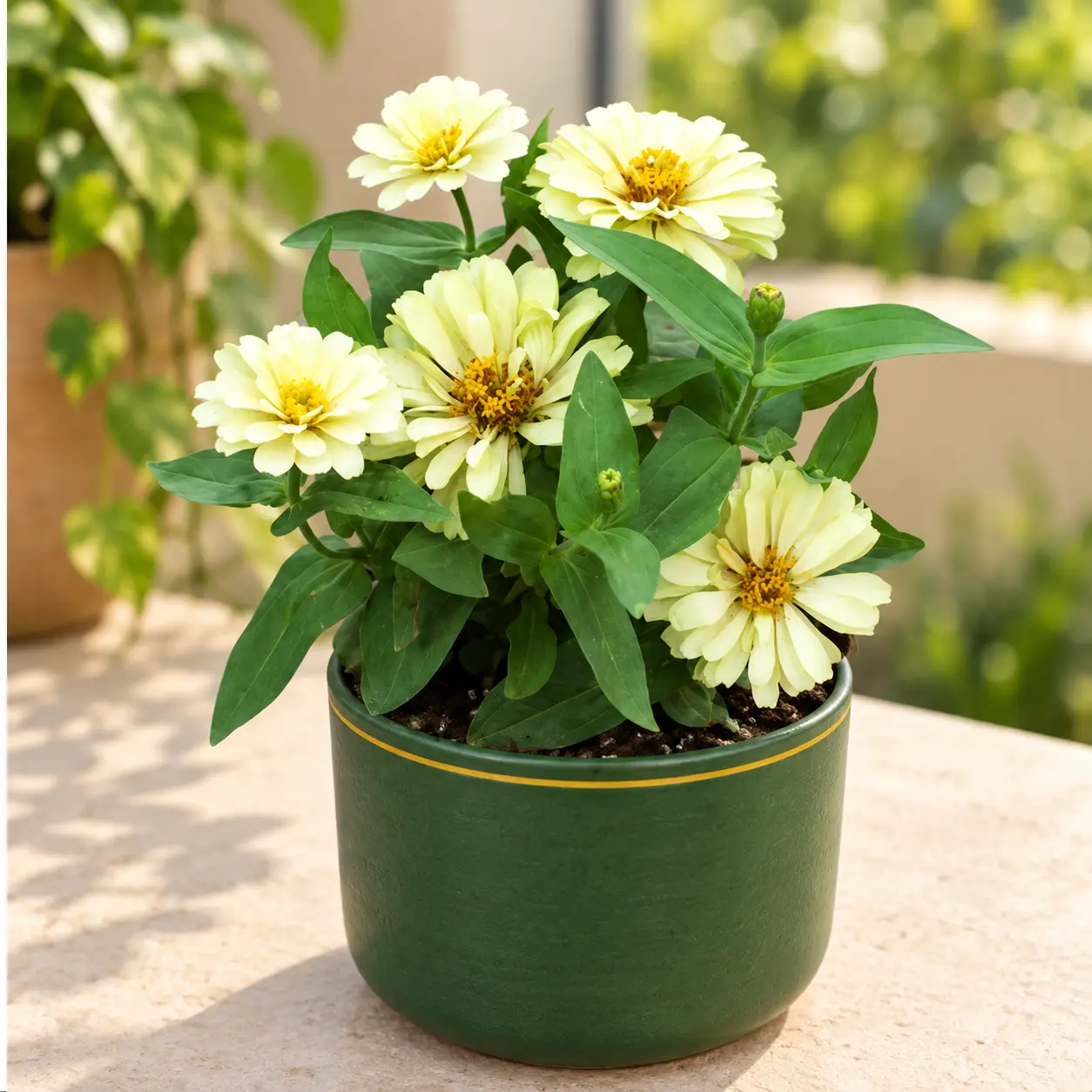
Zinnia
Zinnia is a cheerful, sun-loving annual that shares almost the same growing requirements as Marigold. Both need 6–8 hours of direct sun, flower heavily from spring through the warmer months, and tolerate similar watering schedules. Get Zinnia plants online at Urvann.
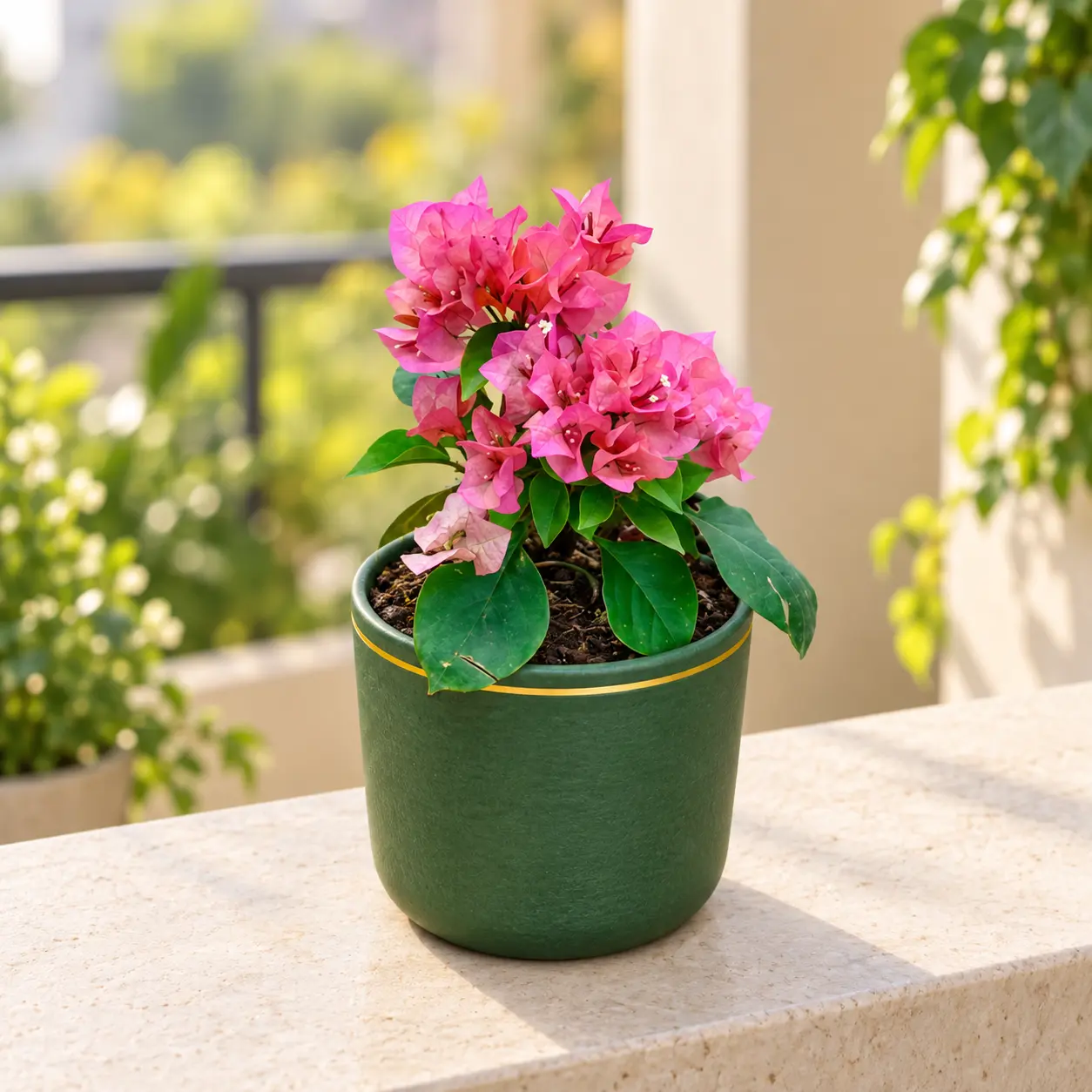
Bougainvillea
Bougainvillea is a hardy, sun-loving climber that tolerates full-sun exposure and infrequent watering, much like Marigold. Bougainvillea adds height and dramatic colour, while Marigold fills in with bushy, low-growing blooms. Shop Bougainvillea plants online at Urvann.
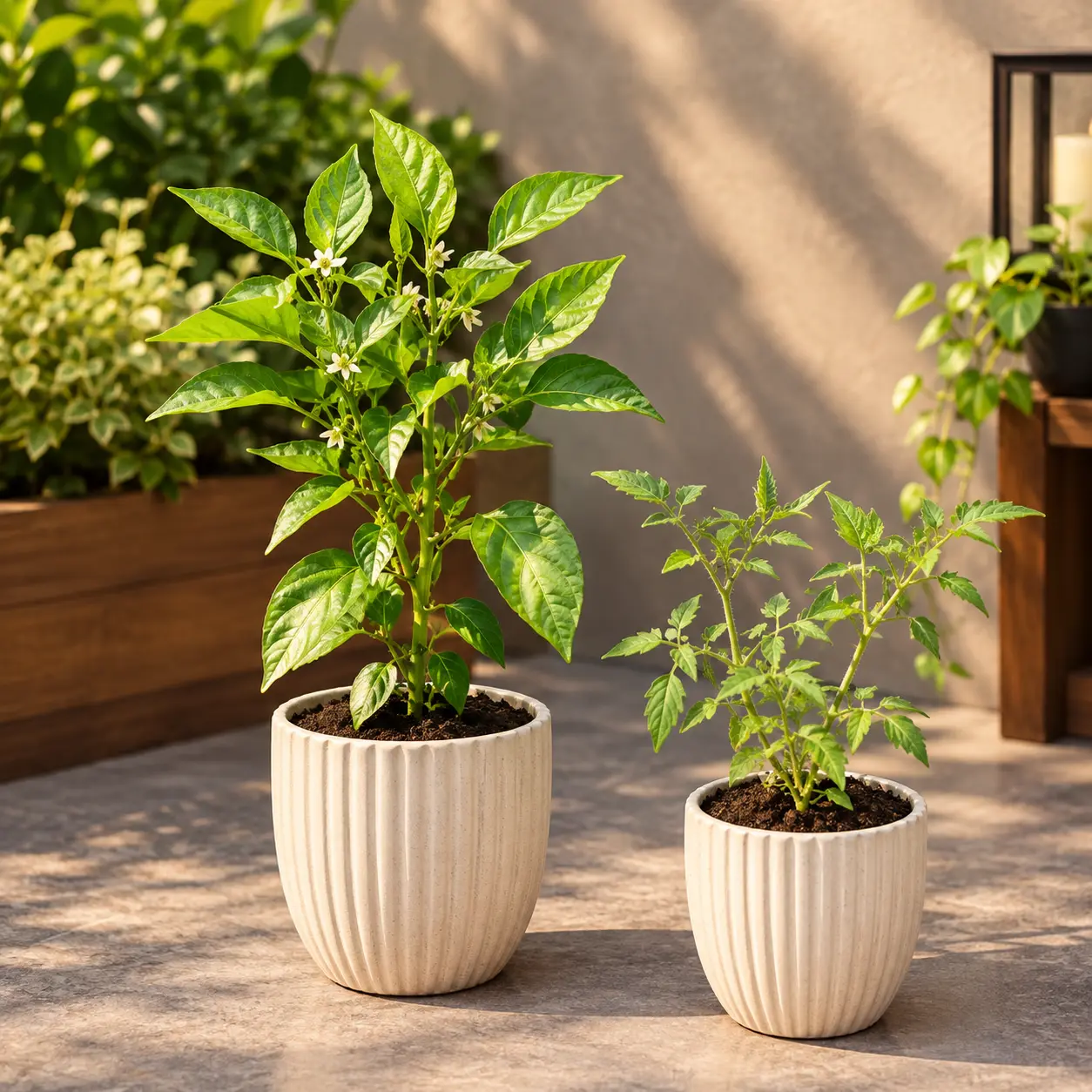
Chilli / Tomato (Kitchen Garden)
Genda is one of the best companion plants for vegetable gardens. Planting it alongside chillies, tomatoes, and brinjal helps deter soil nematodes and certain pests, while adding colour to your kitchen garden. You can purchase the Chilli Plants or Chilli/Mirchi Surya Seeds and Tomato Plants and Seeds from Urvann at competitive prices.

How to Grow Marigold At Home
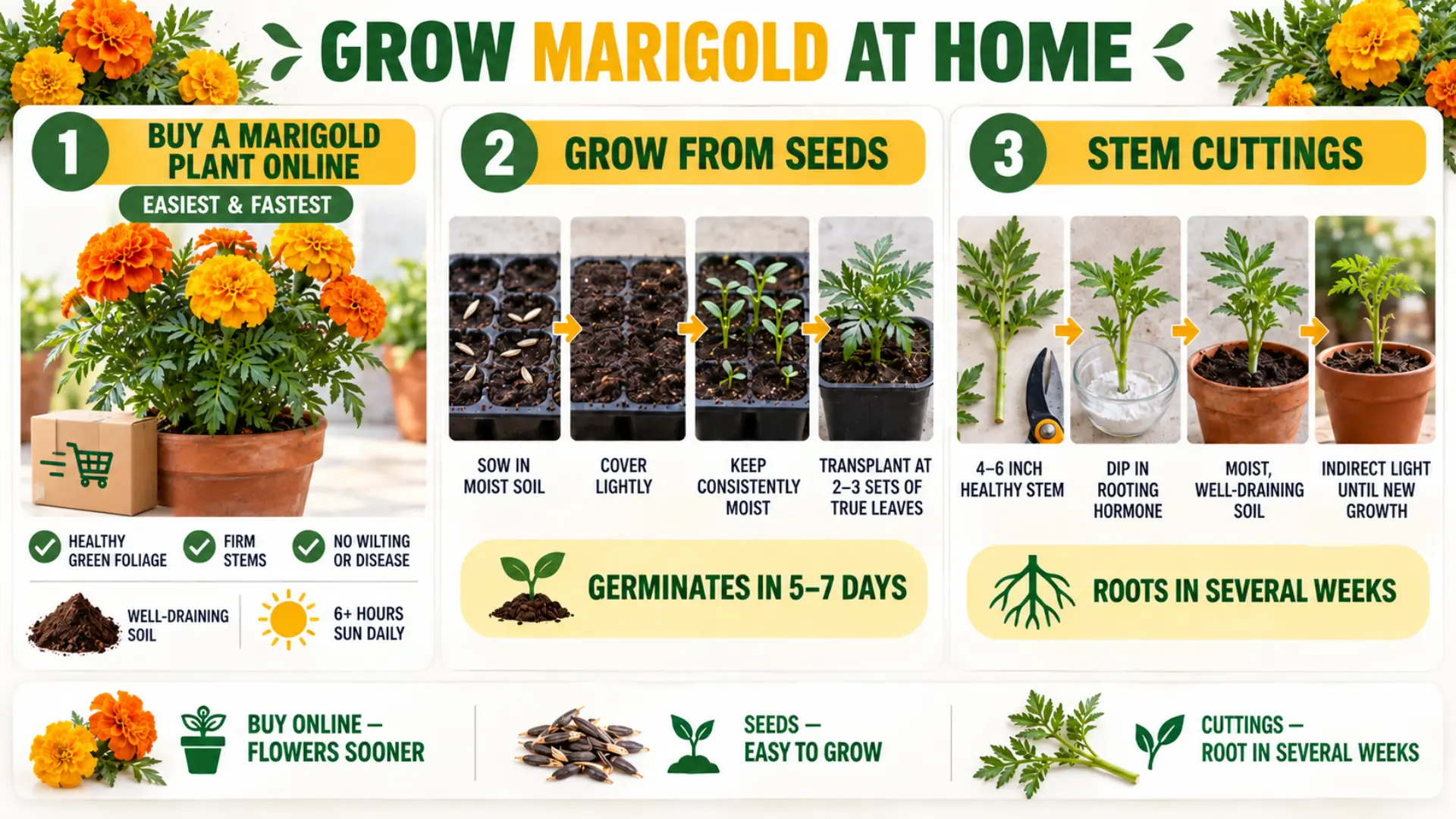
Method 1: Buy a Marigold Plant Online (Easiest & Fastest)
You can start with a healthy nursery-grown Marigold plant if you want to enjoy flowers sooner. Urvann offers Marigold plants in different varieties and colours, making it easy to choose one suited to your home garden or balcony. Look for a plant with healthy green foliage, firm stems, and no signs of wilting or disease. Once you receive the plant, place it in well-draining soil and give it at least 6 hours of sunlight daily.
Method 2: Grow Marigold From Seeds
Marigold is one of the easiest plants to grow from seed. Sow seeds directly in moist soil or a seed tray. Cover lightly with a thin layer of soil. Keep the soil consistently moist. Seeds germinate in 5 to 7 days in warm conditions. Transplant the seedlings into individual pots or garden beds once they have 2 to 3 sets of true leaves. If you want to grow Marigolds at home, you can get Marigold / Genda Orange Navrangi Seeds from Urvann.
Method 3: From Stem Cuttings
Take a healthy 4–6-inch stem cutting with a few leaves, dip the cut end in rooting hormone, and plant in moist, well-draining soil. Keep the soil consistently moist and provide indirect light until new growth appears. Cuttings can take several weeks to root.