


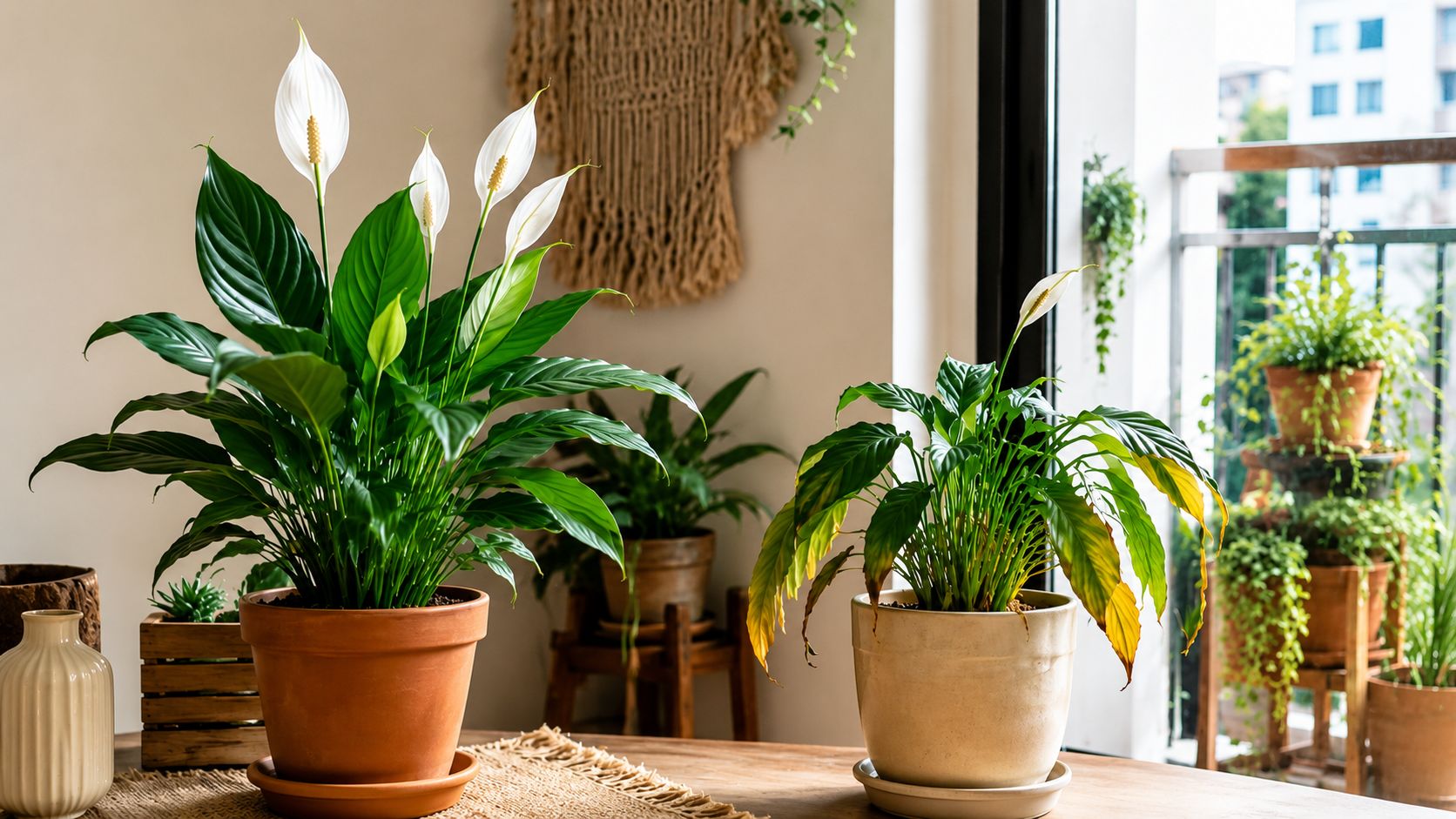
Your new plant dying days after purchase isn't your fault. Discover the real causes, from transplant shock to hidden pests, and how to revive it
Key Takeaways
- A plant wilting or dropping leaves within days of coming home is usually transplant shock, not something you did wrong. Give it 2 to 3 weeks to adjust.
- Underwatering is often mistaken for overwatering. Both look similar (yellow, crispy, drooping leaves), so always check the soil before watering.
- Low light is one of the most common hidden causes of a dying plant. A spot that looks bright to you may still be too dim for it.
- Plants can carry hidden pests like spider mites from the store. Inspect and quarantine new plants before placing them near your existing collection.
- Don't repot immediately. Let a new plant settle in first; repotting adds stress on top of the move.
- Most dying plants can still be revived: check for green tissue under the stem, trim the damage, and fix water or light before giving up.
You picked the healthiest-looking plant at the nursery. It had glossy leaves, a full pot, not a single yellow spot in sight. A week later, that same plant is dropping leaves, drooping, or turning crisp at the edges. So what went wrong?
Here's the truth: in most cases, it isn't you. A dying houseplant right after purchase is one of the most common problems new plant parents face, and it almost always comes down to a handful of predictable reasons. Understanding what's actually happening to your plant is the first step to reviving it, and Urvann is here to walk you through both.
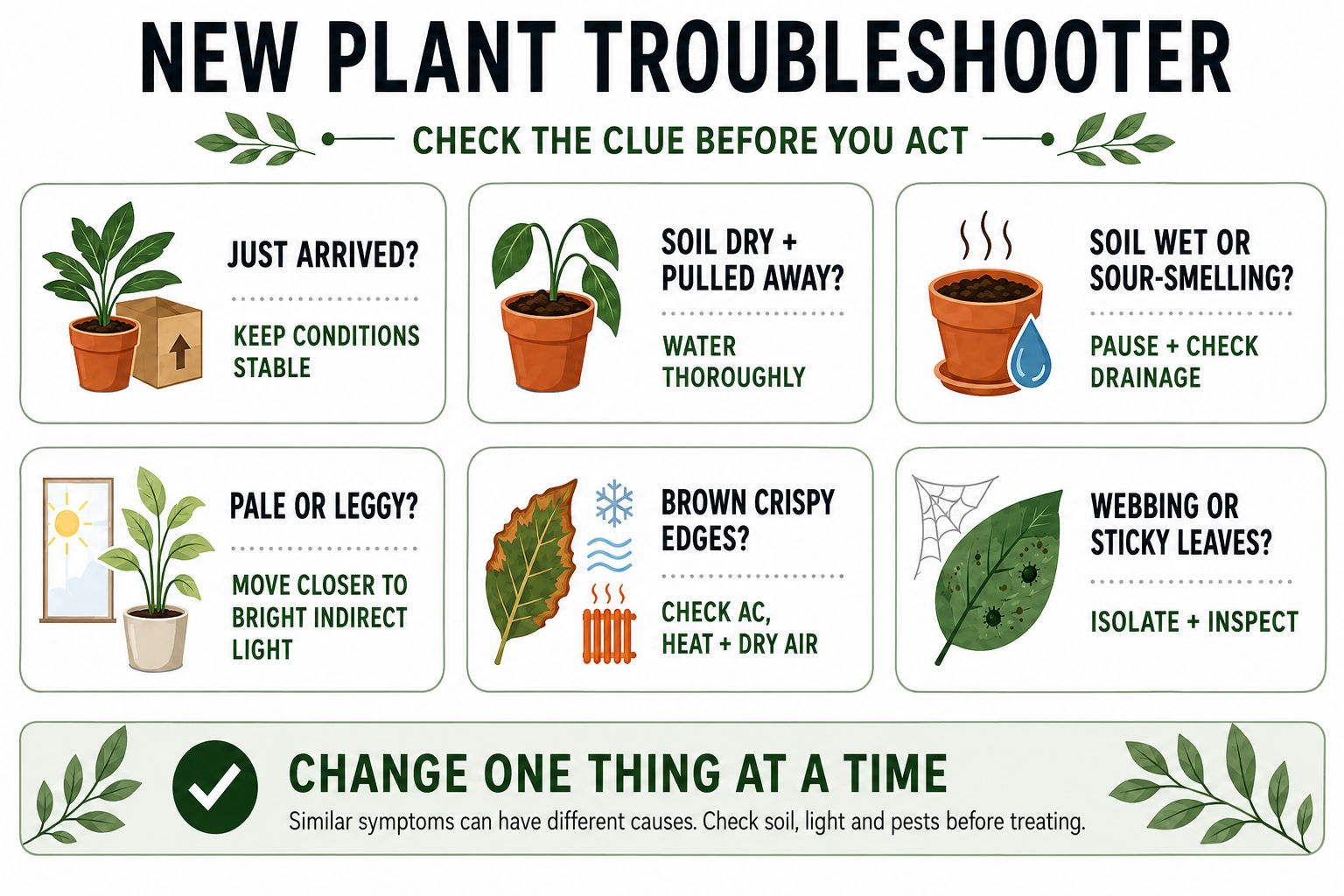
Quick Overview: New Plant Troubleshooter (What to Do, Symptom by Symptom)
1. Your Plant Is in Shock From Leaving the Nursery
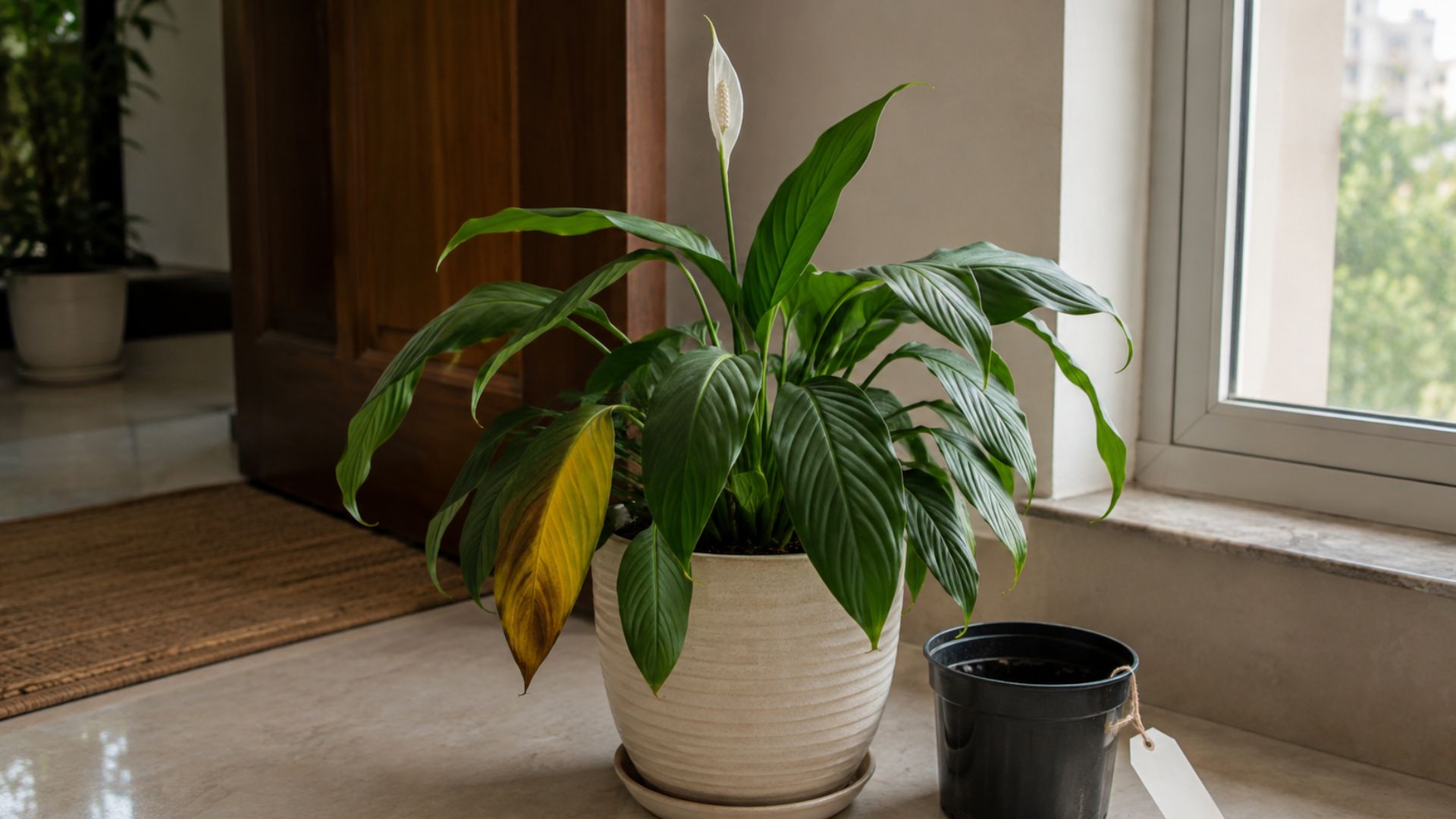
Most plants sold in stores are raised in controlled polyhouses with steady warmth, high humidity, and carefully filtered light.
Your home is a completely different world: drier air, less consistent light, and sudden changes in temperature the moment the plant steps out the door. This abrupt shift is called transplant or environmental shock, and it's the single biggest reason a perfectly healthy plant starts wilting within days of coming home.
Leaves may droop, turn yellow, or drop off entirely as the plant tries to adjust.
The Fix
- Give your new plant 2 to 3 weeks to settle in before making any other changes.
- Keep it in one stable spot, avoid repotting immediately, and resist the urge to overcorrect with extra water or fertilizer.
Note: Some leaf loss during this window is completely normal and doesn't mean your plant is dying for good.
2. Underwatering Is More Common Than Overwatering
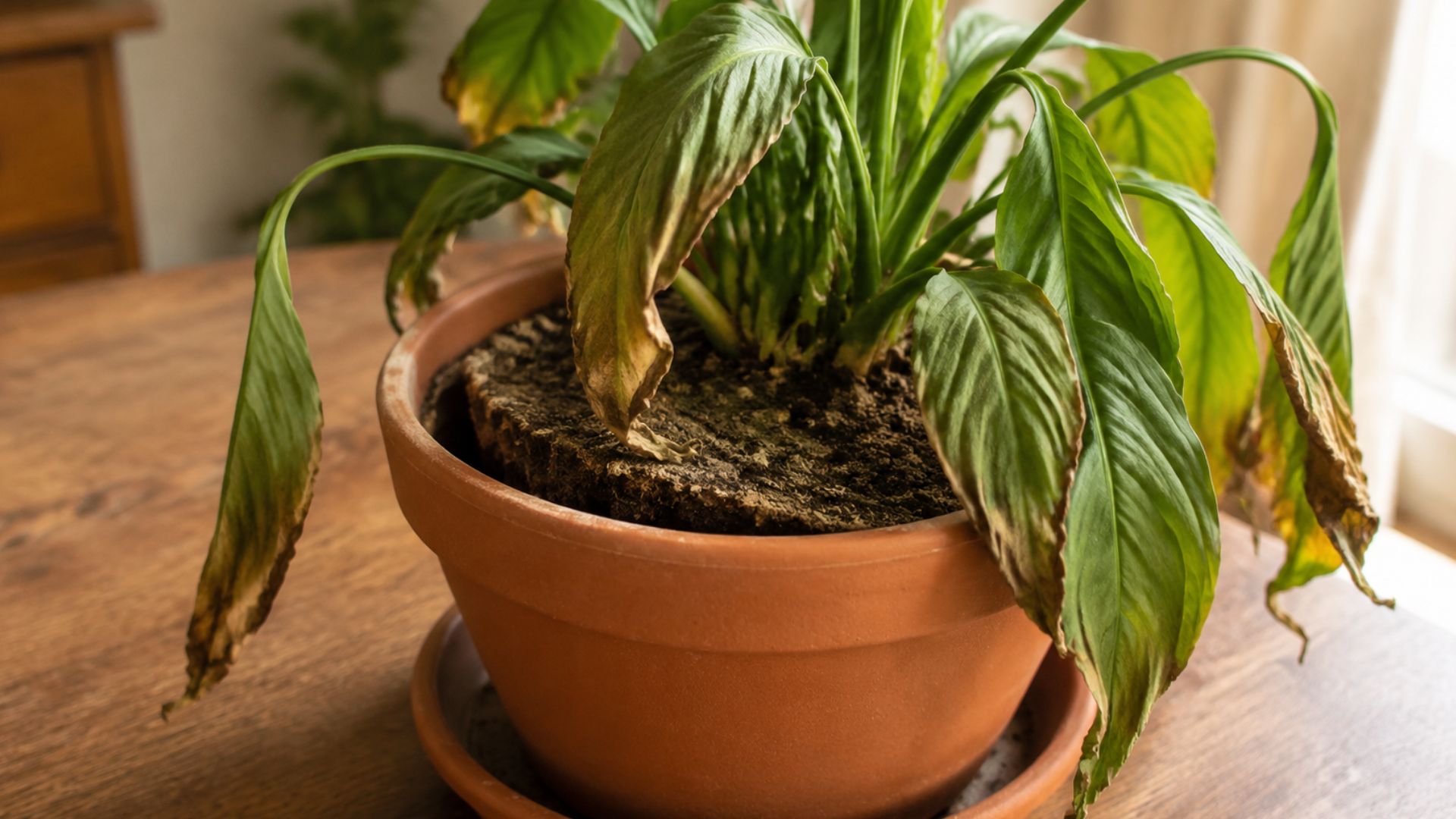
Most people are terrified of overwatering, so they end up doing the opposite: letting the soil go bone dry for too long. A severely underwatered plant looks a lot like an overwatered one; leaves turn yellow, go crispy, or drop off, which is why so many people misdiagnose the problem.
If the topsoil has pulled away from the pot's edges or feels hard and cracked, your plant is dehydrated, not drowning.
The Fix
- Check the soil before every watering session by pushing a finger about an inch deep.
- If it's dry, water thoroughly until it runs out of the drainage holes, not just a light sprinkle on top.
- For a badly dried-out plant, place the pot in a tub of water for 20 to 30 minutes so the roots can soak up moisture from the bottom before draining it out completely.
Note: Watering at the wrong time of day can undo even a correct routine, so it is important to know the best time to water your plants and build a few simple water-saving habits into your routine.
3. It Isn't Getting Enough Light
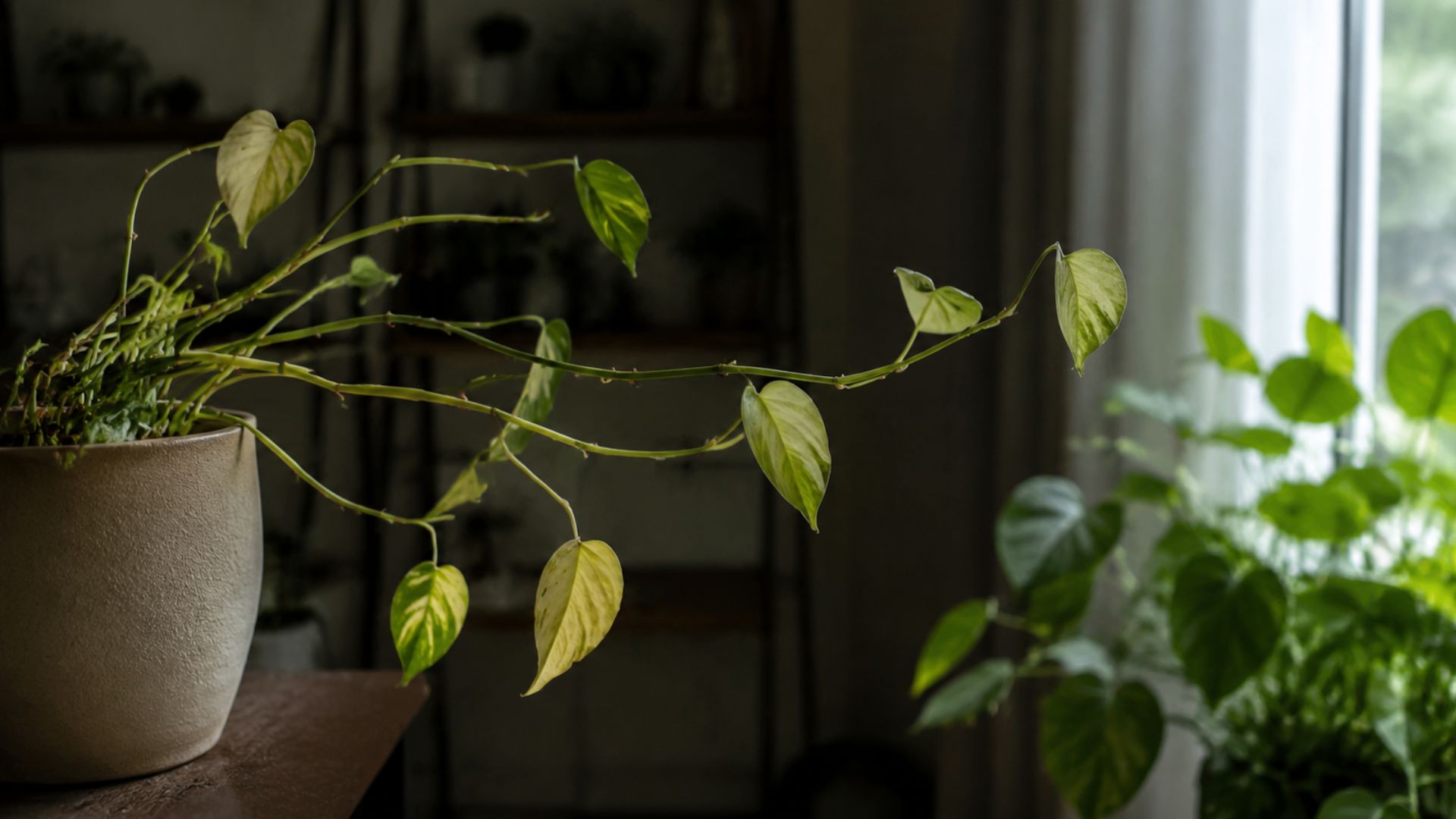
Light is the one thing a plant genuinely cannot do without, and most Indian homes have far less of it than we assume. A spot that looks "bright" to the human eye can still be too dim for a plant that's used to full nursery sun.
Signs your plant needs more light include pale or yellowing leaves, leggy growth reaching toward a window, and slow or no new growth.
The Fix
- Move your plant as close to a bright window as the space allows, ideally where it gets a few hours of indirect sunlight.
- If your home genuinely has low light throughout, choose plants suited to it, like pothos, ZZ plant, or snake plant, rather than fighting the environment.
Note: Urvann's guide to how much sunlight your plant needs can help you match the plant to the spot. If every corner of your home stays dim, these low-light indoor plants for Indian homes are built for exactly that.
4. Dry Indoor Air and Drafts
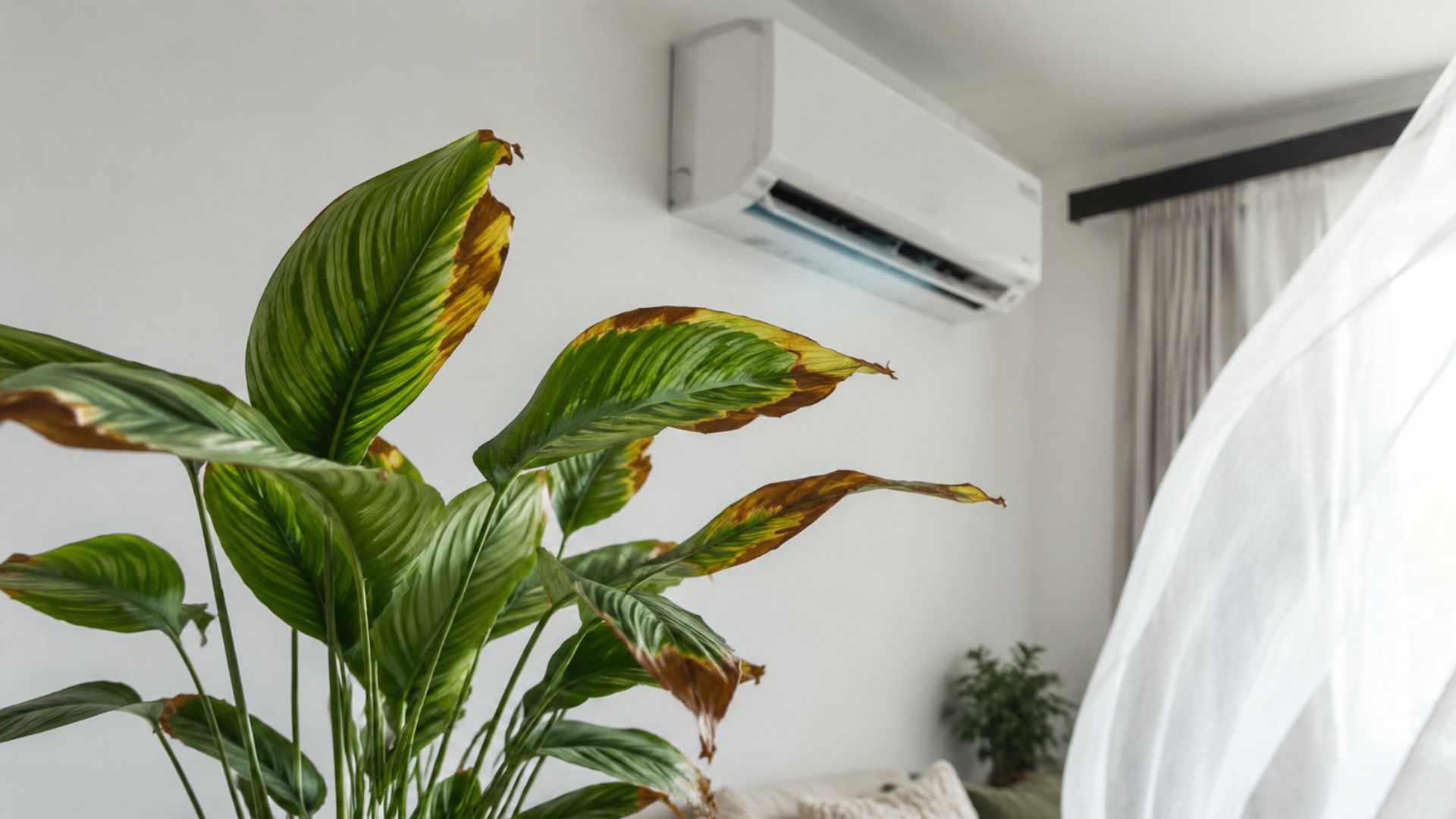
Nurseries are humid. Homes with fans, air conditioning, and heaters are not. This sudden drop in humidity, combined with drafts from AC vents or windows, causes leaf tips and edges to dry out and brown, especially in tropical plants like calathea, peace lily, or areca palm.
The Fix
- Keep new plants away from direct AC blast, room heaters, and drafty windows.
- Grouping a few plants together naturally raises humidity around them, and misting occasionally can help tropical varieties settle in.
5. Hidden Pests Travelling Home With Your Plant
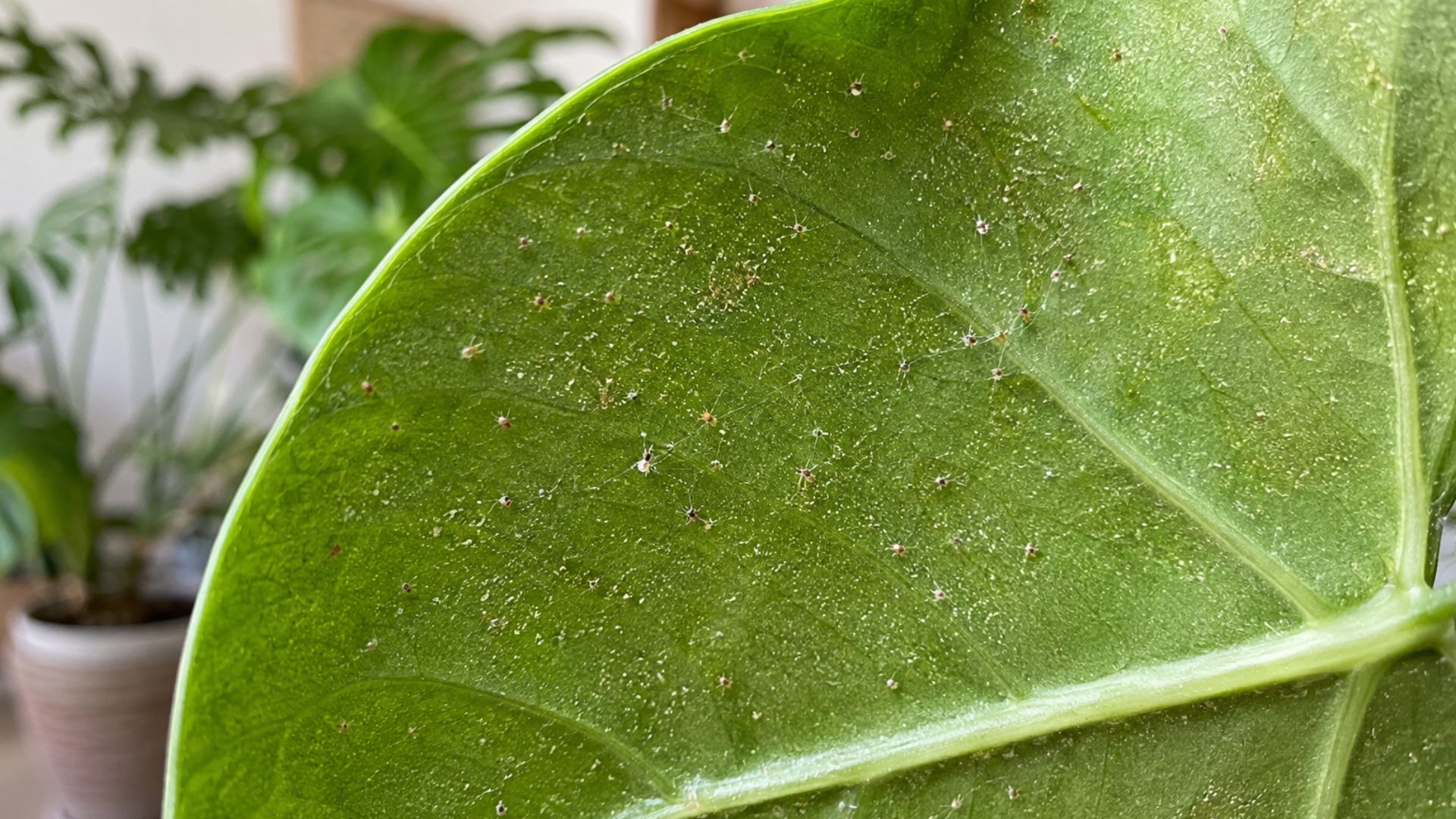
A plant can look completely healthy at the store while quietly carrying spider mites, mealybugs, or aphids. These pests thrive in dry indoor air and multiply fast once they're inside your home, weakening the plant and eventually spreading to your other greens.
The Fix
- Inspect new plants closely, especially the undersides of leaves, before bringing them home.
- Once home, keep a new plant separate from your existing collection for a week or two and check it regularly.
- If you spot webbing, sticky residue, or tiny bugs, wipe leaves down with a mild soap solution or neem oil spray.
6. Repotting or Overhandling Too Soon
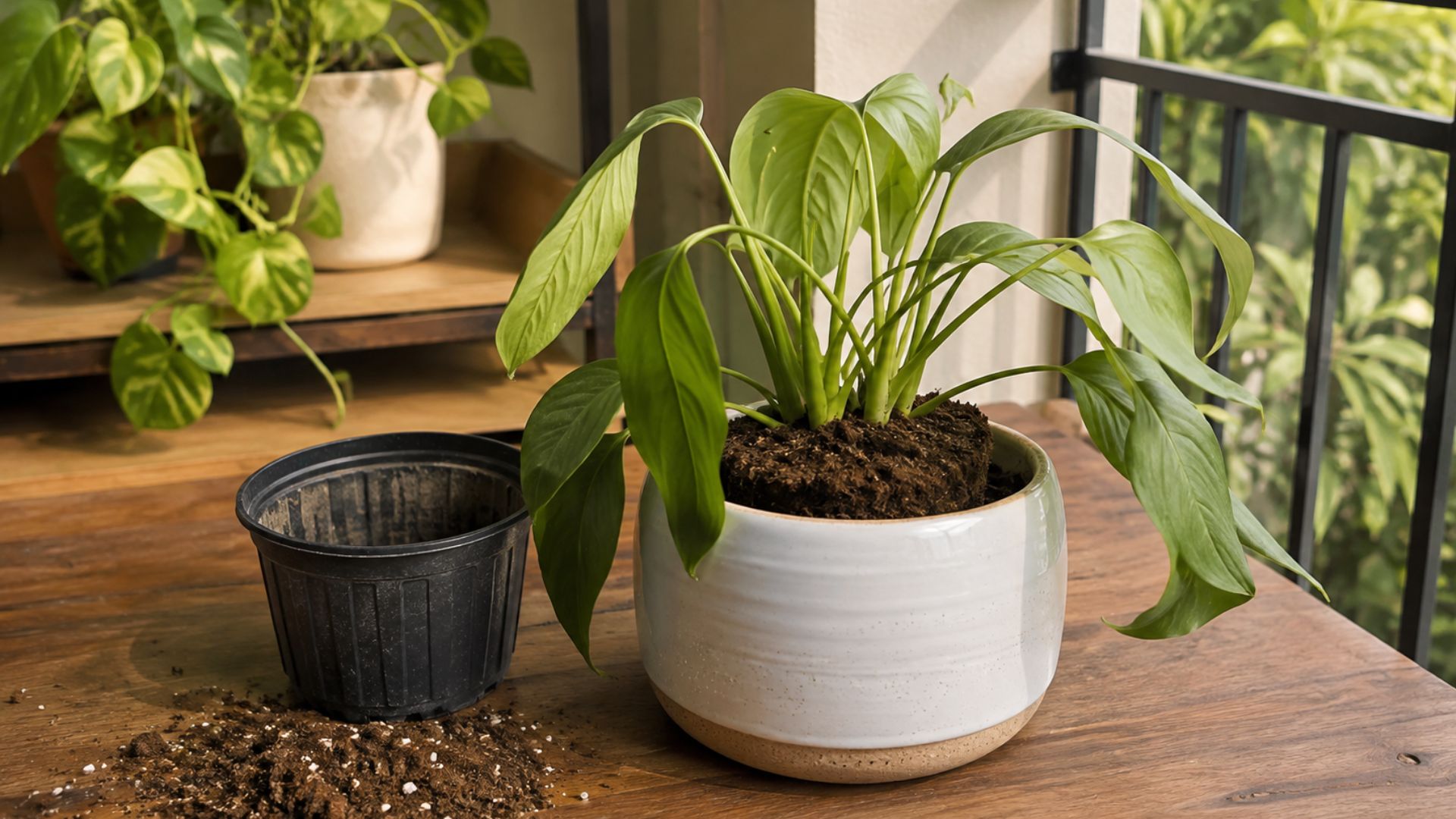
It's tempting to move your new plant into a prettier pot right away, but repotting adds stress on top of the stress it's already dealing with from the move. Roots that are disturbed while the plant is still adjusting often struggle to recover.
The Fix
Let your plant settle into its new environment for at least a few weeks before repotting, unless it's clearly rootbound or the nursery pot has no drainage at all.
How to Revive a Dying or Dehydrated Plant
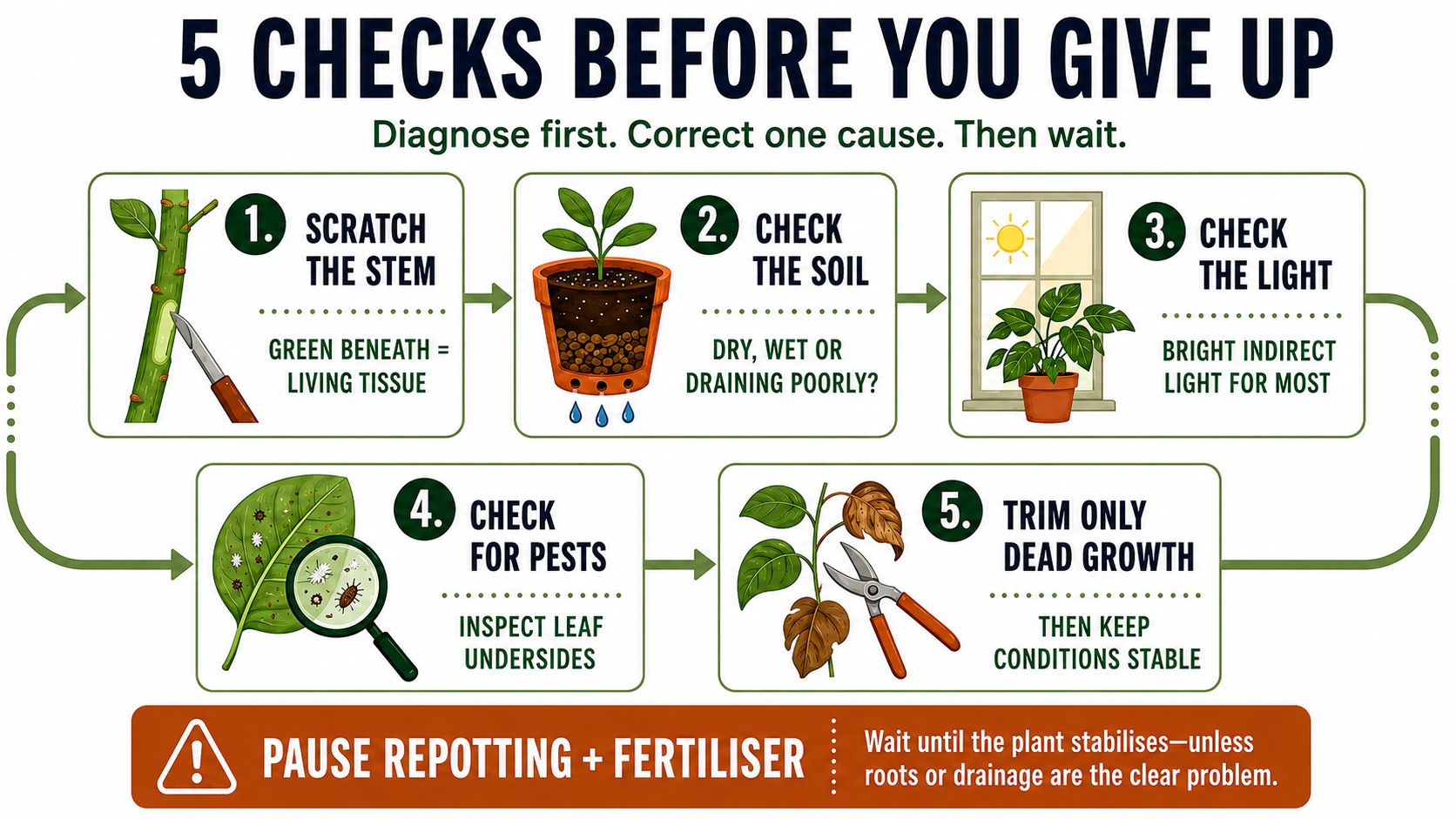
If your plant is already showing signs of decline, don't give up on it just yet. Most stressed plants, even ones that look close to dead, can bounce back with the right care.
1. Check For Life First
Scratch a small section of the stem with your nail. Green underneath means the plant is still alive, even if the leaves look bad.
2. Trim the Damage
Snip off fully yellow, brown, or dead leaves and stems. This redirects the plant's energy toward new, healthy growth instead of trying to save what's already gone.
3. Reassess Water and Light
Nine times out of ten, reviving a dying plant simply means fixing whichever of the two you got wrong: too little water and light, or too much.
4. Stop Guessing and Start Checking
Rather than watering on a fixed schedule, check the soil every time. A moisture meter takes the guesswork out completely if you tend to forget.
5. Be Patient
Recovery isn't instant. Give your plant several weeks of consistent care before deciding whether it's truly beyond saving.
Signs You Should If Your Plant Is Stressed, Not Dead
- Yellow leaves with a firm, green stem underneath
- Drooping that perks back up a few hours after watering
- Leaf drop that has slowed down or stopped
- New, tiny leaves appearing even as older ones fall
Get Low Maintenance Healthy Indoor Plants From Urvann
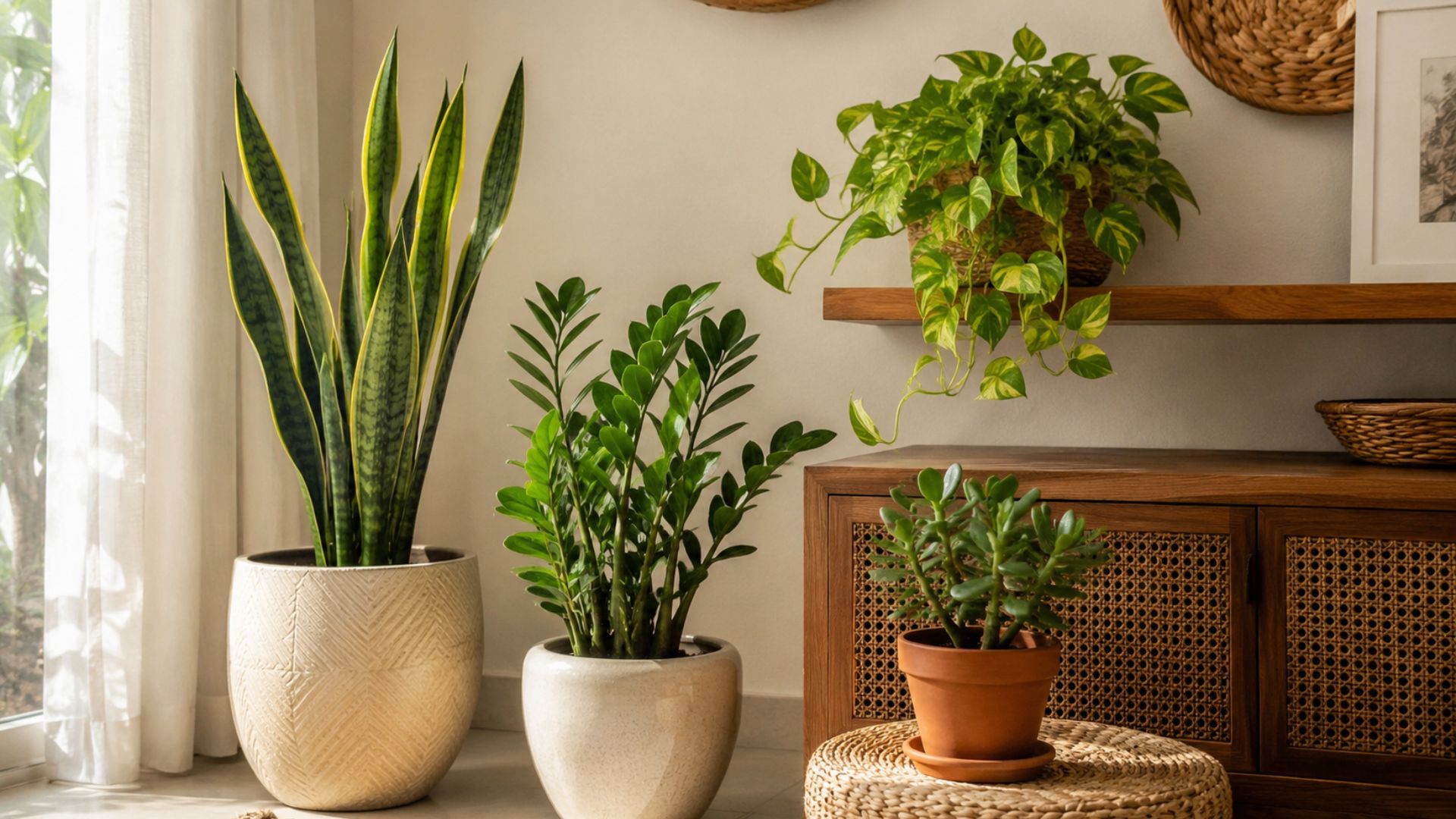
If you'd rather skip the trial and error altogether, start with plants that are naturally forgiving of a beginner's mistakes. Snake plant, ZZ plant, pothos, and jade are about as close to a never-dying plant as houseplants get, tolerating irregular watering, lower light, and the occasional forgotten week.
Explore Urvann's full range of low-maintenance indoor plants to build a collection that thrives with minimal fuss, right from the day it arrives home.
Frequently Asked Questions (FAQs)
1. Why do my plants keep dying even though I'm watering them regularly?
Watering on a schedule instead of checking the soil is the most common cause. Both overwatering and underwatering cause similar symptoms like yellowing and drooping, so it's worth checking soil moisture before assuming your plant needs more water.
2. How can I tell if my indoor plant is dying or just stressed?
Scratch the stem gently. If it's green underneath, the plant is alive and likely just adjusting. Brown, hollow, or mushy stems are a more serious sign.
3. How do you revive a dying indoor plant?
Trim off dead or damaged leaves, correct the watering and light it's getting, and give it a few weeks of stable, consistent care. Avoid repotting or fertilizing until it shows signs of recovery. For the full recovery process, see how to revive a dying plant.
4. How long does it take for a plant to recover from transplant shock?
Most plants need 2 to 3 weeks to adjust to a new home, though some can take up to a couple of months, especially larger or more sensitive varieties.
5. Will houseplants survive if I don't water them for two weeks?
Many common houseplants, including snake plant, ZZ plant, and pothos, can handle two weeks without water. More moisture-loving plants like calathea or peace lily are likely to show stress within days.
6. Why are all my plants dying at the same time?
This usually points to an environmental issue affecting your whole space, such as low overall light, a cold draft, dry indoor air from AC or heating, or a pest infestation that's spread between plants kept close together.
7. Can a plant come back after it looks completely dead?
Yes, in many cases. As long as there's green tissue under the stem or healthy roots below the soil, a plant can recover even after losing most or all of its leaves.
8. What are the easiest, nearly never-dying plants for beginners?
Snake plant, ZZ plant, pothos, and jade plant are excellent choices. They tolerate inconsistent watering, adapt to lower light, and recover easily from minor neglect.