


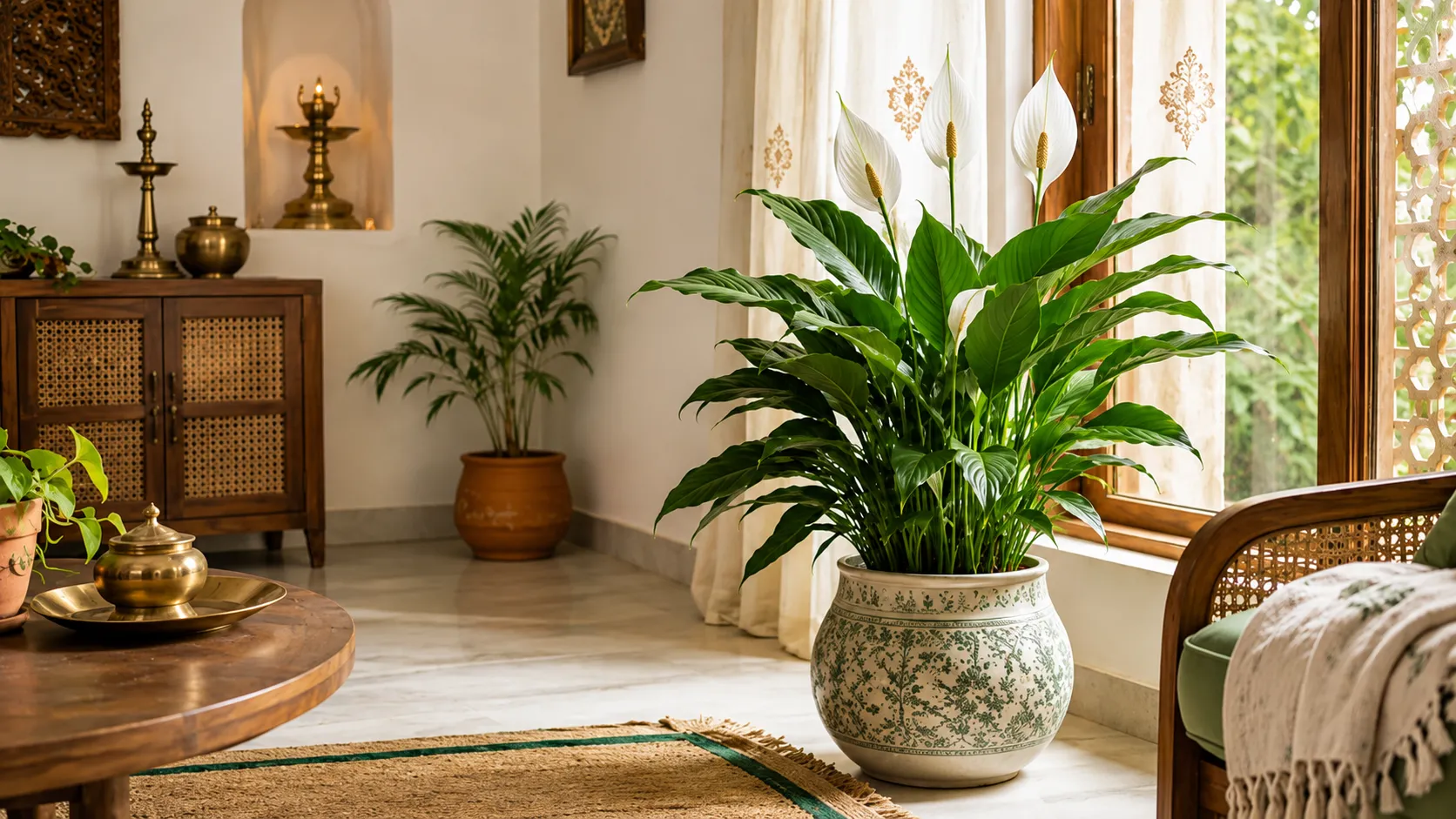
Find the best place to keep a peace lily at home, including ideal rooms, Vastu directions, lighting conditions, and care tips to encourage healthy growth.
| Area/Topic | Best Recommendation | Why It Works |
|---|---|---|
| Best Direction (Vastu) | North | Associated with wealth, prosperity, and career growth |
| Second Best Direction | East | Supports health, positivity, and ideal morning light |
| Best Room Overall | Living room | Strongest energy flow and maximum visual impact |
| Best Low-Maintenance Spot | Bathroom with a frosted window | Humidity helps the plant thrive naturally |
| Best Spot for Sleep & Calm | Bedroom | Creates a soothing and relaxing atmosphere |
| Best Spot for Productivity | Home office or study | Helps create a calmer and more focused workspace |
| Best Light Condition | Bright indirect light | Encourages healthy growth and blooming |
| Best Window Direction | East or north-facing window | Provides gentle, stable light without harsh sun |
| Best Placement Height | Eye level or slightly below | Makes the plant a natural focal point |
| Ideal Temperature | 18 to 27°C | Supports blooming and steady growth |
| Watering Rule | Water only when the topsoil feels slightly dry | Prevents root rot and overwatering |
| Best Pot Choice | White or neutral ceramic planter | Matches the peace lily’s calm visual appeal |
| What Triggers Blooms | Medium indirect light + stable temperature | Helps the plant produce flowers instead of only leaves |
| Main Things to Avoid | Direct sunlight, AC vents, heaters, dark corners | Prevents brown tips, stress, and poor blooming |
| Vastu Zones to Avoid | South, southwest, and centre of the home | Considered unsuitable for peace lily energy |
| Safe Placement Warning | Keep away from pets and young children | Leaves contain mildly toxic calcium oxalate crystals |
| Good Luck Placement | North or east corner of the living room | Believed to attract harmony and positive energy |
| Signs of Wrong Placement | Brown tips, no blooms, drooping leaves | Usually caused by harsh light or unstable conditions |
You bought the peace lily because someone told you that it was lucky, low maintenance, and good for the home.
So you found a corner that looked nice, set it down, and hoped for the best.
But here you are, leaves browning at the tips, no flowers in sight, and a quiet nagging feeling that maybe the plant is not as happy as it should be.
Here is the truth: the peace lily is one of the most forgiving indoor plants you can own. If it is struggling, the spot is almost always the problem, not you, not your watering, not the plant itself.
This guide will tell you exactly where your peace lily belongs: which room, which direction, and which corner. And why getting this right will not just make it bloom, it will change the energy of the room it sits in.
Is a Peace Lily Lucky for Your Home?
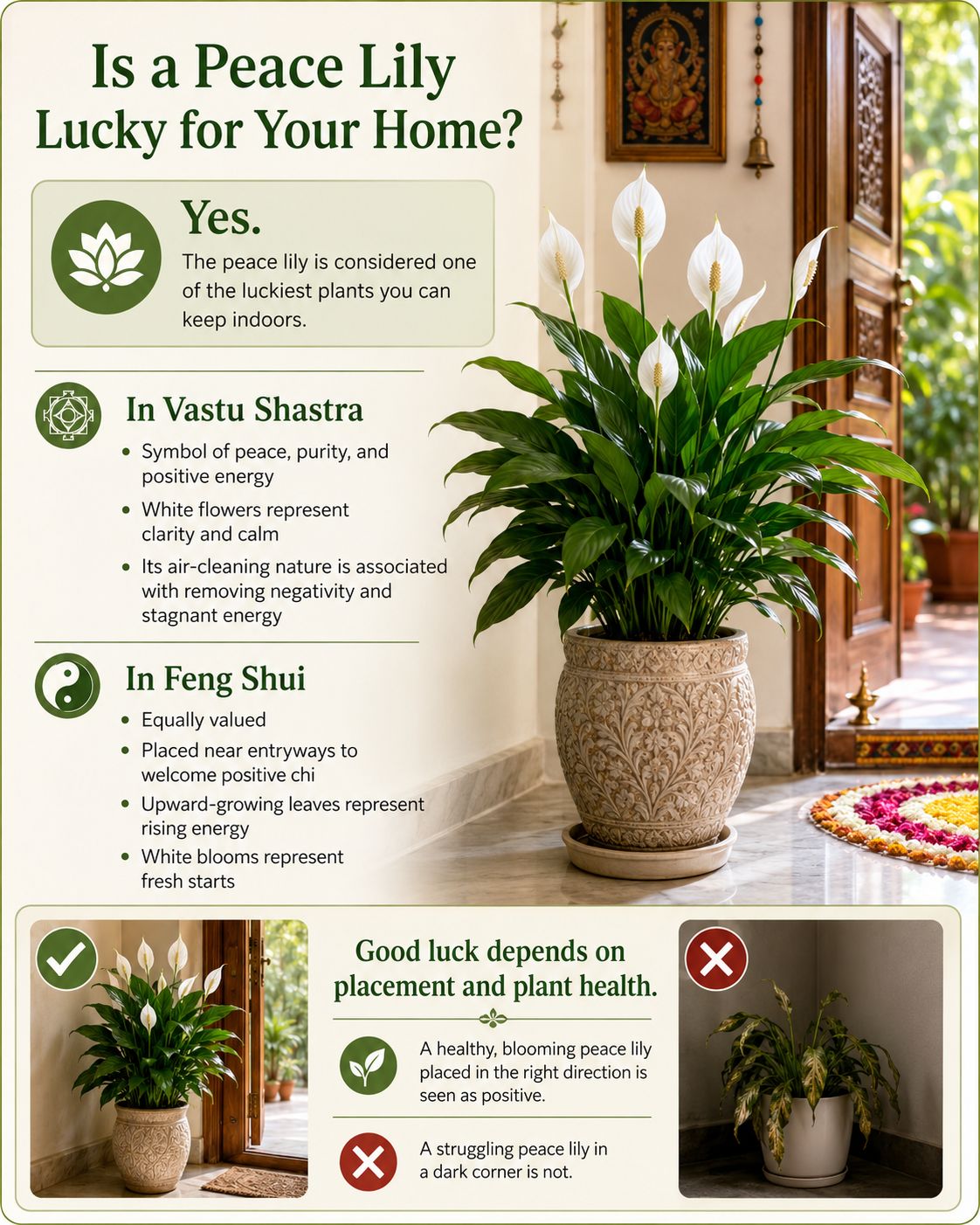
Yes. The peace lily is considered one of the luckiest plants you can keep indoors.
In Vastu Shastra, it’s
- Seen as a symbol of peace, purity, and positive energy
- White flowers represent clarity and calm
- Ability to clean the air represents the removal of negativity, not just physical toxins, but the heavy, stagnant energy that builds up in homes over time
In Feng Shui, it’s
- Equally valued
- Placed near entryways to welcome positive chi into the home
- Upward-growing leaves represent rising energy
- White blooms represent fresh starts
So when people ask whether a peace lily attracts good luck, the answer is yes, but only when it is placed correctly. A struggling, non-blooming peace lily stuck in a dark corner does not bring good energy. A healthy, blooming peace lily placed in the right direction does.
That is exactly what the rest of this guide is about.
Where to Place Peace Lily According to Vastu Shastra
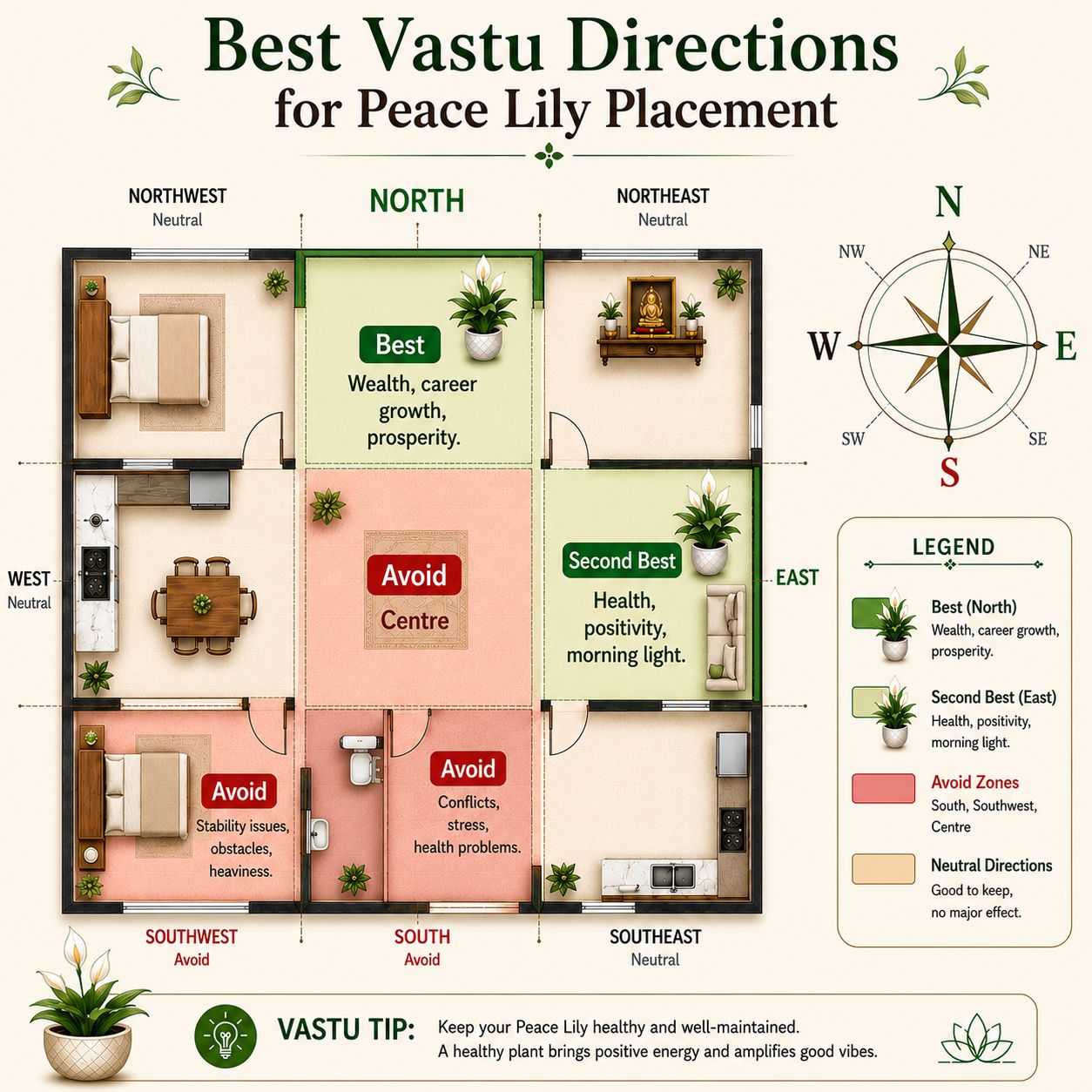
Vastu Shastra gives specific placement guidance for many sacred and auspicious plants, including the Tulsi plant and especially the peace lily.
For the peace lily, two specific directions matter the most: north and east.
North Direction: Best For Wealth and Growth
The north is considered the best direction for a peace lily.
In Vastu, the north is governed by Kuber, the deity of wealth and prosperity. Placing a peace lily in the north zone of your home or room is believed to support:
- Financial stability
- Career growth
- Positive energy flow
- Mental clarity
A home office or study in the northern part of the house is an especially good location. The peace lily’s calming presence aligns well with the purpose of the space.
East Direction: Best for Health and Positivity
The east is the second-best direction for a peace lily.
This direction is associated with:
- Health and wellbeing
- New beginnings
- Morning sunlight
- Fresh and uplifting energy
An east-facing window is also ideal for practical plant care. It provides gentle morning sunlight and bright indirect light through the day, which helps the peace lily grow healthy and bloom more consistently.
This is one of those rare cases where Vastu guidance and plant care requirements perfectly align.
Best Placement for Good Luck
For good luck and harmony, place your peace lily in the:
- North corner of the living room, or
- East corner of the living room
The living room is where family members gather, conversations happen, and guests are welcomed. According to Vastu, this makes it one of the most energetically active spaces in the home.
A healthy, blooming peace lily in this area is believed to attract:
- Peaceful energy
- Emotional balance
- Prosperity
- A welcoming atmosphere
Quick Placement Tips
- Choose spots with bright indirect light
- Avoid harsh afternoon sunlight
- Keep the plant away from AC vents and heaters
- Use clean, uncluttered corners for better visual balance
- Pair it with a simple white or neutral planter for a calm look
What To Avoid
Do not place your peace lily in the south or southwest. These directions are associated with heavy earth energy in Vastu and are not suited for plants that symbolise lightness and peace. Avoid the centre of the home as well; the Brahmasthan in Vastu should remain open and uncluttered.
Room by Room: Where Your Peace Lily Works Hardest
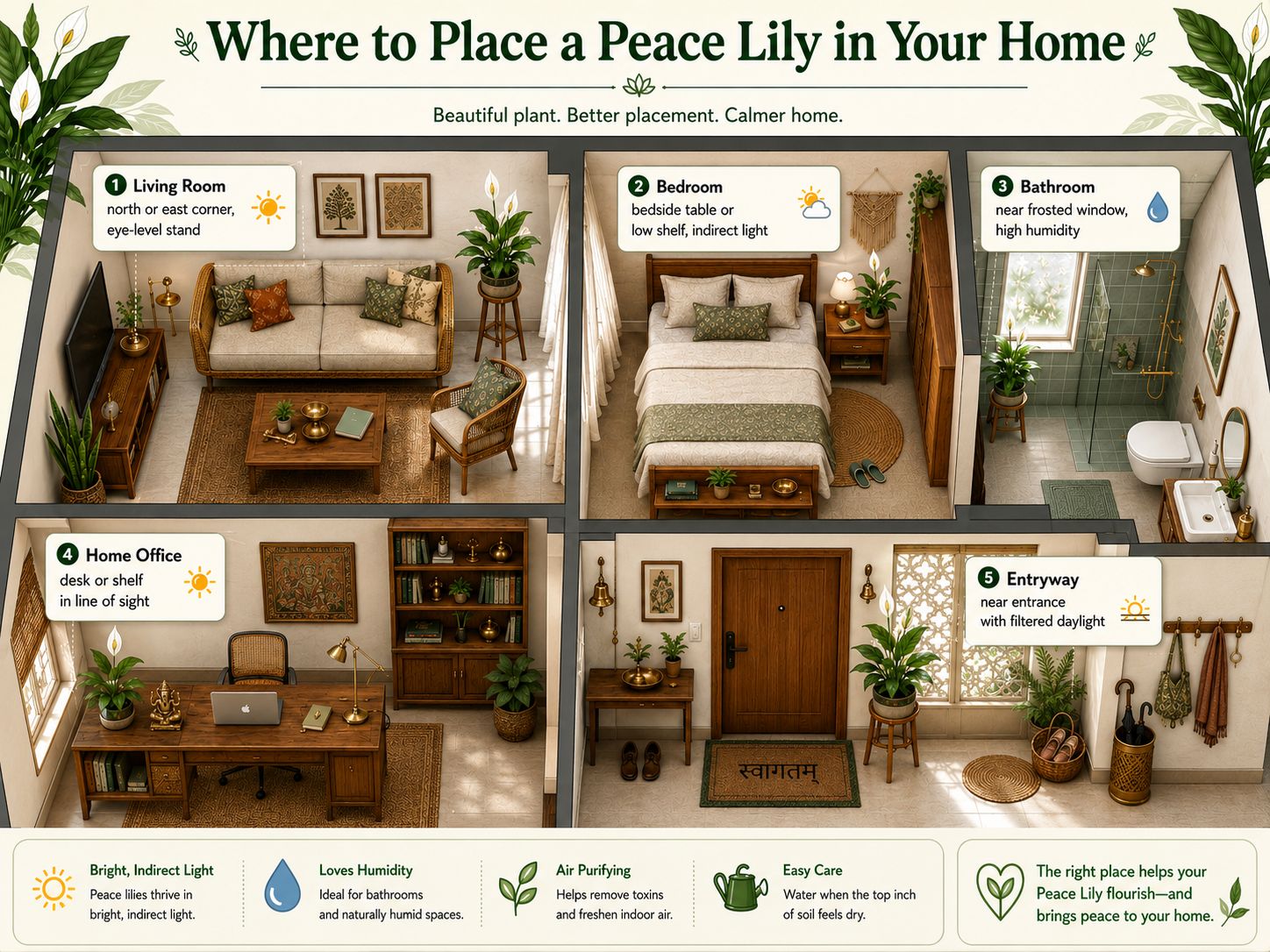
Living Room: The Energy Anchor
The living room is the heart of an Indian home. It is where energy moves most: conversations, gatherings, and daily life. This is where your peace lily makes the biggest impact.
Best Placement in the Living Room
Place your peace lily:
- In the north or east corner
- Away from direct AC airflow or ceiling fans
- In bright indirect light
- On a decorative stand or planter at eye level
A peace lily works beautifully as a natural focal point. Its lush green leaves and white blooms add freshness and calm without overwhelming the space.
Why the Living Room Works So Well
The living room is often one of the busiest spaces in the house, which makes air quality more important here.
A peace lily can help reduce common indoor pollutants, such as:
- Benzene
- Formaldehyde
These pollutants are commonly released from:
- Furniture
- Wall paints
- Cleaning products
- Upholstery and home décor items
Vastu Benefits of Living Room Placement
According to Vastu, placing a peace lily in the living room, especially in the north or east zone, is believed to support:
- Positive energy flow
- Emotional balance
- Harmony in relationships
- A calm and welcoming atmosphere
Bedroom: Yes, It Belongs Here
There is a common myth that plants should not go in the bedroom because they release carbon dioxide at night. The peace lily is one of the few indoor plants that continues to support cleaner indoor air even in low-light, low-activity conditions, which makes it well-suited for bedrooms.
Benefits of Keeping a Peace Lily in the Bedroom
A peace lily can help create a calmer and more comfortable sleeping environment by:
- Increasing indoor humidity
- Reducing dry throat and nasal irritation
- Helping improve the feel of indoor air
- Creating a peaceful and visually relaxing atmosphere
Its calm, low-growing form adds softness to the room without making the space feel crowded or overstimulating.
Vastu Benefits for the Bedroom
In Vastu, bedrooms benefit from peaceful and soothing energy. The peace lily's dark green leaves and white blooms naturally support this environment.
A peace lily in the bedroom is often associated with:
- Emotional calmness
- Reduced stress
- Better relaxation
- Balanced and peaceful energy
Best Placement in the Bedroom
Place your peace lily:
- On a bedside table
- On a low shelf
- In a corner with filtered or indirect light
- Away from direct sunlight
What To Avoid
Avoid placing the plant:
- Directly under an AC vent
- In the direct path of a ceiling fan
- In harsh afternoon sunlight
- In completely dark corners
NOTE: If you have young children or pets in the home, keep the peace lily out of their reach. It contains calcium oxalate crystals, which are mildly toxic if ingested.
Bathroom: Where It Is Genuinely Happiest
If you have a bathroom with even a small frosted window, put a peace lily in it.
Why Bathrooms Work So Well
The humidity from daily showers mimics the peace lily's native tropical rainforest environment. This allows the plant to:
- Absorb moisture from the air
- Need less frequent watering
- Grow fuller and greener
- Thrive with less effort on your part
A bathroom peace lily is often the lowest-maintenance version of itself because the environment does most of the work.
Light Requirements
You only need to make sure the plant gets some indirect light. A peace lily can do well with:
- A frosted window
- A translucent window
- Soft filtered daylight
Even a small amount of natural light is usually enough.
Vastu Perspective
In Vastu, the bathroom is a space of cleansing and release. A living, thriving peace lily in this area is believed to:
- Reinforce cleansing energy
- Reduce heaviness in the space
- Create a fresher atmosphere
- Balance stagnant bathroom energy
Home Office or Study: Focus and Clean Air
The peace lily is one of the best indoor plants for improving the feel of a workspace. Its lush green leaves create a calmer environment, while its air-purifying qualities help indoor spaces feel fresher and more comfortable during long work hours.
Why It Works Well in a Workspace
Indoor plants in workspaces are often linked with:
- Reduced stress
- Better focus
- A calmer atmosphere
- Improved visual comfort
The peace lily, with its soft white blooms and rich green leaves, creates a visual anchor that gives the eyes a place to rest between tasks.
Vastu Benefits for a Home Office
In Vastu, the north direction is associated with:
- Career growth
- Professional success
- Financial opportunities
- Mental clarity
If your home office is in the northern part of your home, placing a peace lily here aligns both practically and energetically.
Best Placement Tips
Place your peace lily:
- On your work desk
- On a nearby shelf
- Within your direct line of sight
- In bright indirect light
Entryway or Foyer: The Welcome Plant
In both Feng Shui and Vastu, the entryway is where the home's energy begins. What you place near the entrance signals the kind of energy you are inviting in.
Why a Peace Lily Works Well Here
The peace lily's upward-growing leaves and white blooms make it an excellent entryway plant.
It is often associated with:
- Openness
- Peace
- Calm energy
- A welcoming atmosphere
A healthy peace lily near the entrance can help the space feel softer, fresher, and more inviting for both guests and residents.
Why It Suits Entryways Practically
Entryways and foyers often receive less natural light than other parts of the home. The peace lily handles these conditions better than many flowering plants because it can tolerate:
- Lower light conditions
- Filtered daylight
- Indoor environments with indirect light
Best Placement Tips
Place your peace lily:
- Near the entrance door
- In bright indirect light
- In a corner with filtered daylight
- Away from strong outdoor drafts
Avoid placing it directly in the path of cold air from outside, especially during winter.
What Triggers a Peace Lily to Bloom and How Placement Is the Answer
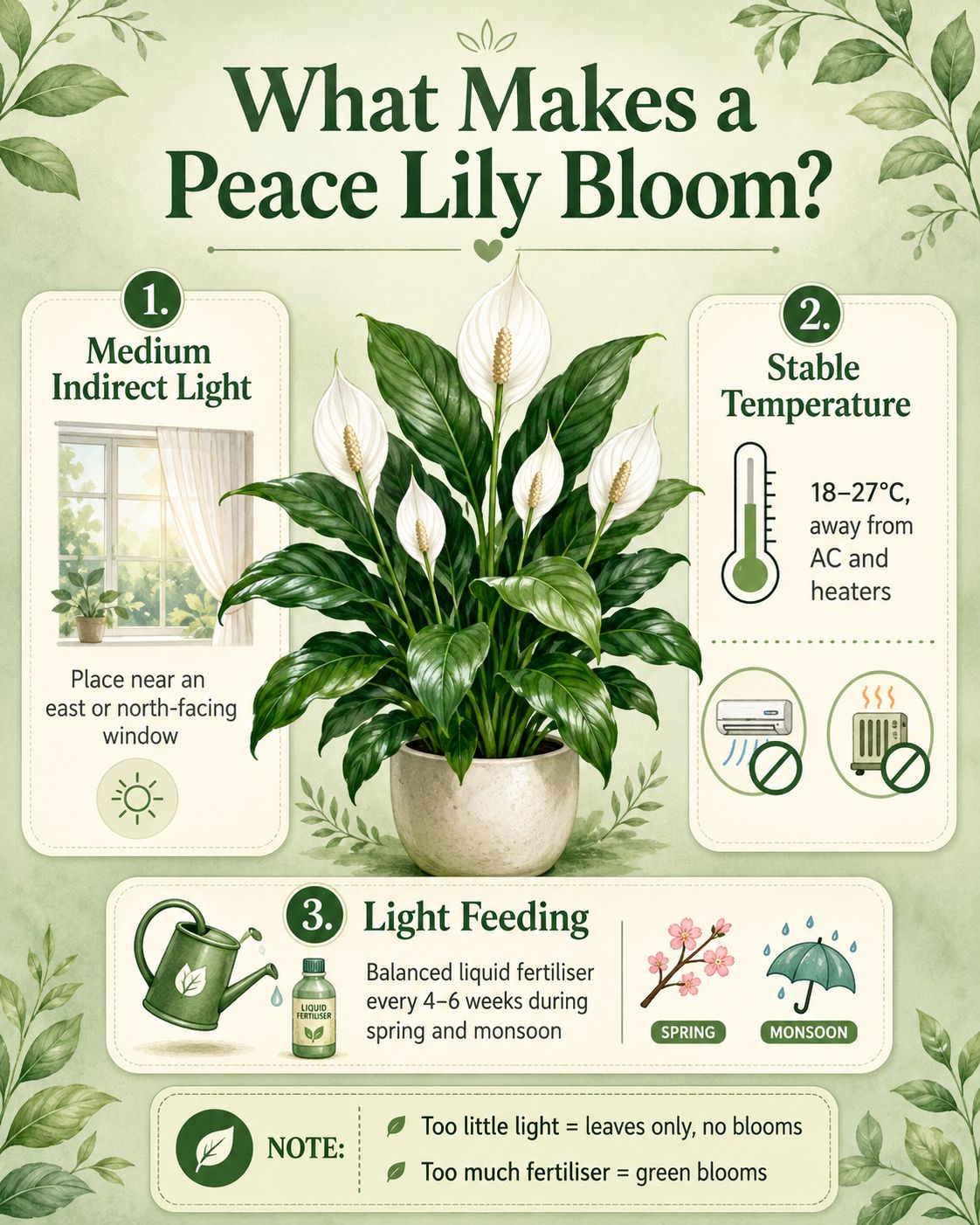
If your peace lily has not bloomed in months, the placement is almost certainly why.
Trigger 1: Light
Here is what most people do not realise: the peace lily does not bloom in darkness. It blooms in medium indirect light. Not bright sun, not a dark corner, but the middle ground that most indoor plant guides call "bright indirect light."
What this means practically: the plant needs to see a decent portion of the sky. Not direct sun coming through the glass, but a window where the sky is visible for several hours a day. An east or north-facing window is the sweet spot.
Too little light and the plant produces only leaves. No blooms. This is why peace lilies sit on living room shelves looking lush but flowerless for years. They are in a spot that is too far from any window.
Trigger 2: Temperature Stability
Peace lilies bloom best when the temperature stays between 18 and 27 degrees Celsius consistently. A plant next to an AC vent experiences temperature swings multiple times a day. It spends its energy adapting to the change instead of producing flowers.
Trigger 3: Feeding During the Right Season
A balanced liquid fertiliser every four to six weeks during spring and monsoon encourages blooms. But over-fertilising, trying too hard to force flowers, actually turns the blooms green instead of white. Less is more here.
NOTE: If your blooms are coming in green rather than white, move the plant closer to a light source and ease back on fertiliser. That is almost always the fix.
Where Not to Place Your Peace Lily
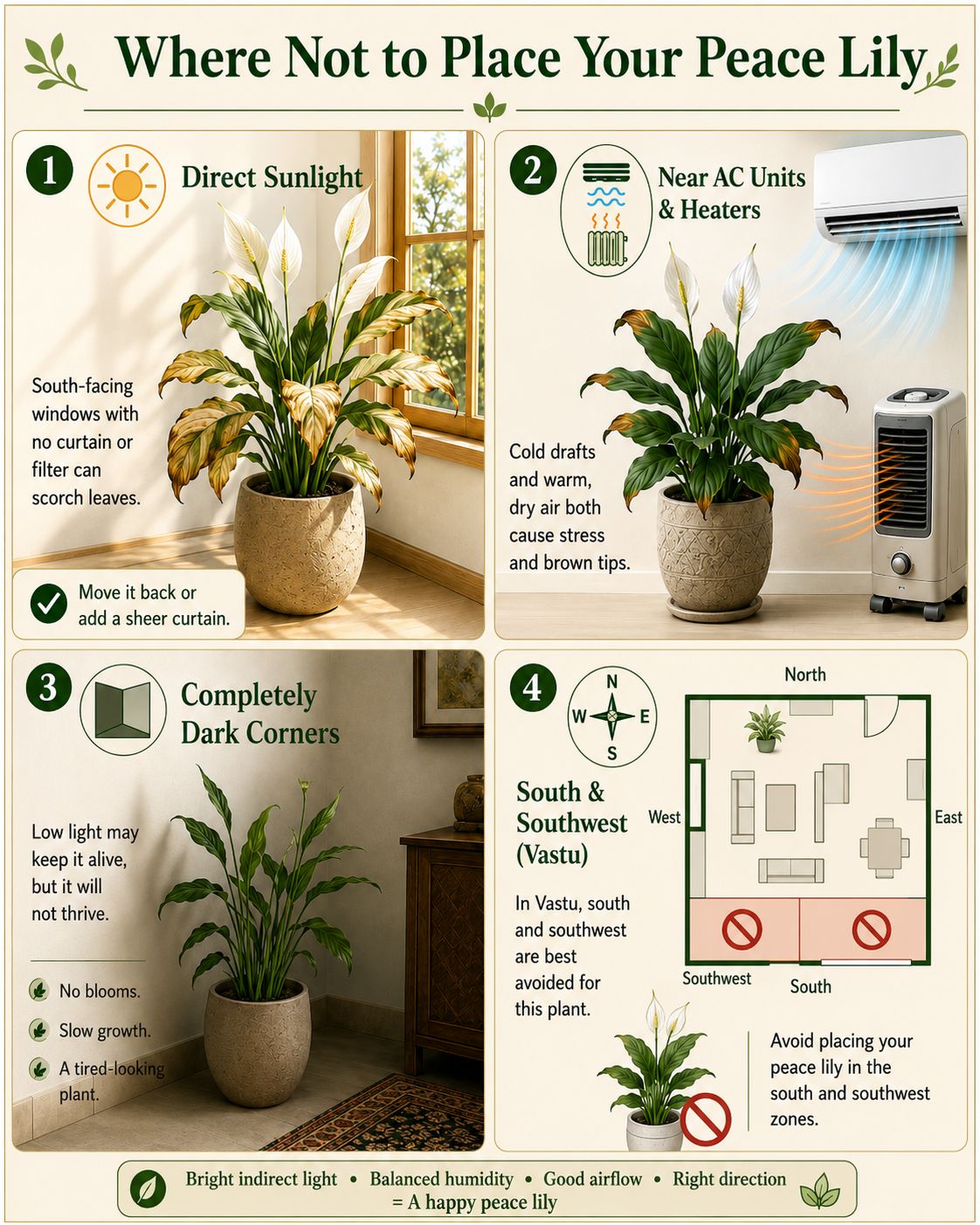
Direct sunlight is the fastest way to damage a peace lily. Pale, scorched, or curled leaves are the signs. South-facing windows with no curtain or filter are a problem. Move it back or add a sheer curtain between the plant and the glass.
Near AC units and heaters is the second most common mistake. Cold air from an AC vent mimics cold drafts, which the peace lily handles poorly. Warm, dry air from a heater strips the humidity the plant needs. Both result in brown leaf tips.
Completely dark corners are not a viable spot, no matter what you have read about peace lilies tolerating low light. They survive in low light. They do not thrive. You will get no blooms, slow growth, and eventually a plant that looks like it is giving up.
The south and southwest zones in Vastu are best avoided for this plant. Save those directions for plants associated with grounding and stability.
The Right Spot Changes Everything
The peace lily is not asking for much. It does not need direct sun, daily watering, or a complicated care routine. What it needs is a spot that matches what it actually is: a tropical, shade-loving, humidity-appreciating plant that blooms when it feels settled and cared for.
Get the placement right, and the rest follows. The blooms come back. The leaves stay green. The air in the room feels cleaner. And if you follow the Vastu guidance, the energy of the space shifts too, toward calm, toward clarity, toward the kind of home you wanted when you bought the plant in the first place.
If you are ready to bring a peace lily home or upgrade the planter it is currently sitting in, explore Urvann's range of peace lily plants, self-watering pots, and ceramic planters. Delivered fresh to your door, straight to the spot where it belongs.
Ready to See Your Peace Lily Thrive?
The right plant in the right place can transform your home. Browse Urvann's healthy peace lily collection and create a greener, more peaceful living space.
Shop Peace Lily Plants on Urvann →Frequently Asked Questions
1. Where to place a peace lily for good luck?
Place it in the north or east zone of your home, ideally in the living room or home office. In Vastu Shastra, the north direction is governed by the deity of wealth and prosperity. A healthy, blooming peace lily in this zone is believed to attract positive energy, financial stability, and calm into the household.
2. Where should I put my peace lily in my house?
The best spots are near an east or north-facing window in the living room, bedroom, bathroom, or home office. It needs bright indirect light, stable temperatures, and protection from AC vents and cold drafts. Among all rooms, the bathroom and bedroom are where it grows most effortlessly.
3. Which is the luckiest plant for the home?
The peace lily consistently ranks among the top lucky plants for Indian homes alongside the money plant, jade plant, and lucky bamboo. What makes it unique is that it combines Vastu significance with proven air-purifying benefits, making it both energetically and physically beneficial. For Indian homes that follow Vastu, it is arguably the most practical lucky plant because its care needs align with its ideal Vastu placement.
4. Can I water a peace lily daily?
No. Daily watering is one of the most common mistakes with this plant. The peace lily prefers the top two inches of soil to dry out slightly between waterings. In Indian summer, this might mean watering every two to three days. In cooler or more humid conditions, once a week is often enough. Overwatering suffocates the roots. Check the soil with your finger before watering. If it still feels moist, leave it for another day.
5. What triggers a peace lily to bloom?
Medium indirect light is the primary trigger. Without it, the plant produces only leaves. Place it within view of an east or north-facing window. Stable temperatures between 18 and 27 degrees Celsius help. A diluted liquid fertiliser every four to six weeks during spring and monsoon supports flowering. Avoid over-fertilising as it turns blooms green instead of white.
6. Should I put sugar in my lily's water?
No. Sugar water does not benefit peace lilies and can actually encourage bacterial growth in the soil. The idea comes from cut flower care, where sugar feeds blooms in a vase. A rooted peace lily gets its nutrients from soil, not water. Stick to a balanced liquid fertiliser during the growing season if you want to encourage blooms.
7. Which plant attracts money?
In Vastu Shastra and Feng Shui, money plant, jade plant, and lucky bamboo are the most commonly associated with financial abundance. The peace lily is not specifically a money-attracting plant but is associated with prosperity when placed in the north direction, which governs wealth and career in Vastu. For a home that wants both beauty and Vastu alignment, pairing a peace lily in the north with a money plant works well.
8. Which plant gives 12 months of flowers?
The peace lily is one of the very few indoor plants that can bloom almost year-round under the right conditions, particularly in India's warm climate. It typically blooms from February through September, with peaks in spring and early monsoon. With adequate indirect light, stable temperatures, and light feeding during the growing season, it can produce flowers for most of the year. Anthurium and ixora are other options for near-continuous blooming indoors.
9. Which plant attracts negative energy?
In Vastu Shastra, certain plants are considered inauspicious indoors. Cactus and thorny plants are believed to create tension and conflict when placed inside the home, particularly in the bedroom or living room. Bonsai is considered to represent stunted growth and is generally avoided indoors. Dried or artificial plants are seen as dead energy and should not be used as substitutes for living plants. The peace lily is the opposite; it is one of the few plants actively recommended for removing stagnant and negative energy from indoor spaces.