


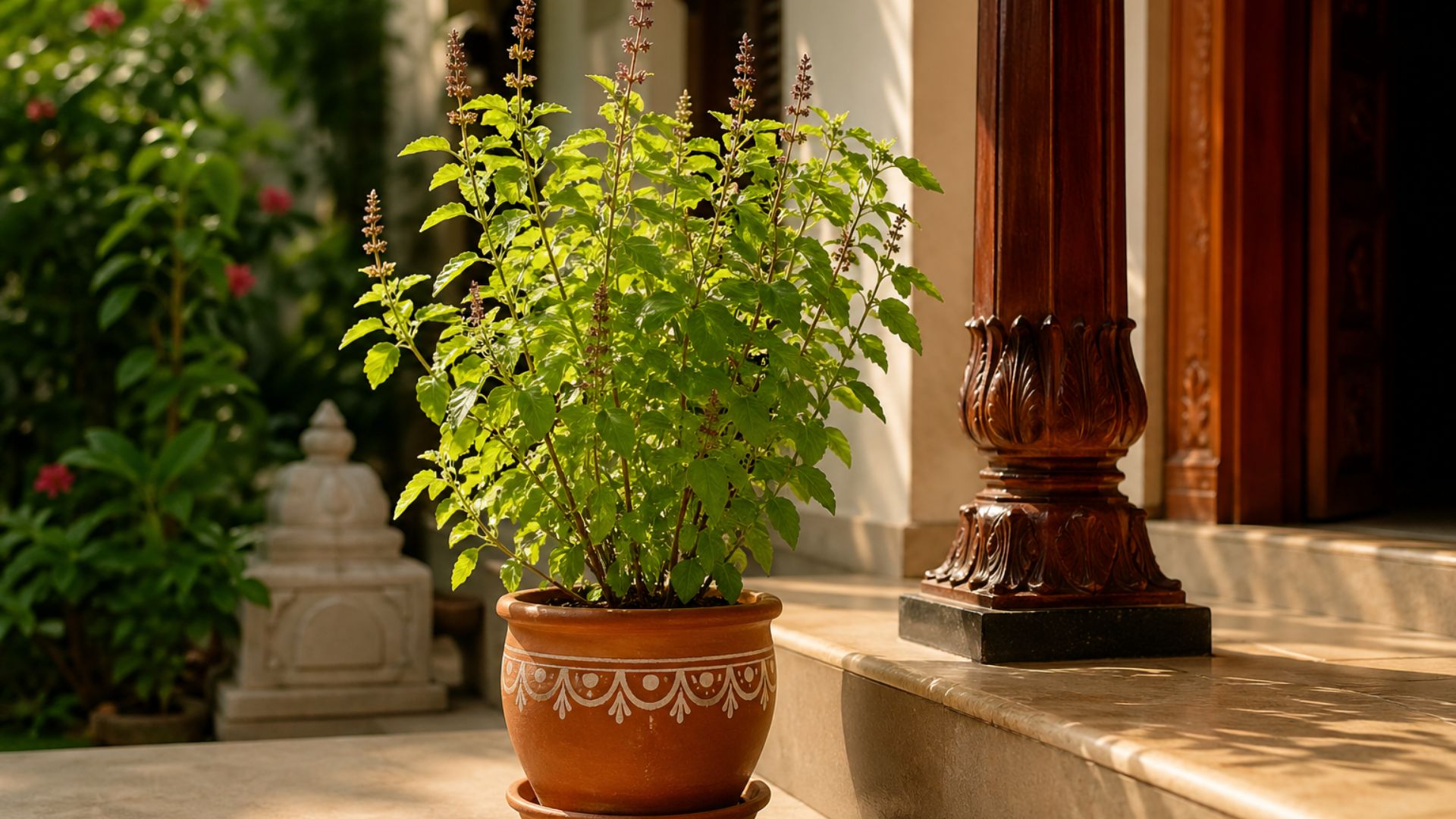
Tulsi - India’s sacred healing herb - is far more than just a plant. Described in Hindu scriptures as Tulasi Devi, the earthly form of Goddess Lakshmi, it holds deep spiritual importance while also offering real medicinal value through compounds like eugenol, antioxidants, and adaptogens.
5 Key Takeaways - What You Will Learn From This Guide?
(Read this before you scroll - it covers the most important points at a glance)
- North-East is the best Vastu direction for Tulsi – Ishaan Kon is the most auspicious corner in Vastu Shastra; it brings positive energy, prosperity, and provides gentle morning sunlight that helps the plant thrive naturally.
- Shyama Tulsi is the most powerful variety – With the highest concentration of eugenol among all varieties, Shyama (Krishna) Tulsi is the most potent for immunity, allergy relief, stress reduction, and devotional worship.
- Overwatering is the number one reason Tulsi plants die – Water only when the top 1–2 inches of soil are completely dry. In summer, that means every 7–10 days—never daily. Always use a pot with drainage holes.
- Direction and care work together – A thriving Tulsi in the east brings more positive energy than a neglected one in the "perfect" north-east corner. Vastu placement and daily care are equally important.
- Tulsi needs 4–6 hours of sunlight – A balcony is the best spot for flat dwellers. Morning sun from 6–11 AM is ideal. For apartments without a courtyard, a bright east or north-facing balcony is the most practical and Vastu-friendly placement option.
Because of this unique blend of tradition and everyday usefulness, a Tulsi plant at home is not just a decorative addition; it becomes a meaningful part of daily life, offering both spiritual value and practical benefits. For many Indian families, it represents peace, positivity, and a connection to daily rituals and natural living. Whether you call it tulsi podha, tulsi gach, holy basil, or even a tulsi tree, it continues to hold a special place in homes across the country.
However, when it comes to keeping Tulsi at home, one question often creates confusion:
Where to keep the Tulsi plant at home? Should it go on the balcony or near the main entrance?
This guide answers all of these questions in a clear and practical way. It brings together Tulsi plant Vastu direction, ideal placement tips, care guidance, and commonly asked questions, so you can place and grow your Tulsi plant correctly from the very beginning.
Quick Answer - Tulsi Plant Vastu Direction & Placement Answers
| Question | Answer |
|---|---|
| What is the best direction for a Tulsi plant? | The North-east is considered the most auspicious. |
| Can Tulsi be kept in the north? | Yes, the north direction is also considered favourable to keep the Tulsi plant. |
| Can Tulsi be placed in the north-west? | Yes, the Tulsi plant can be placed in the north-west, but only if it's kept at the entrance under good sunlight. |
| Is the south direction suitable to place the Tulsi plant? | Usually avoided in Vastu. |
| Where does Tulsi grow best in modern homes? | A bright balcony, east-facing window, or clean entrance area. |
For most homes, the simplest approach is to place Tulsi in the north-east direction, or choose an east-facing spot with good sunlight if that is more practical.
What Is Tulsi (Holy Basil) & Why Is It Important in Indian Homes?
Scientifically known as Ocimum tenuiflorum, Tulsi is a perennial aromatic plant that grows 2–3 feet tall. In Hindu scriptures like the Padma Purana, Tulsi is described as Tulasi Devi, the earthly form of Goddess Lakshmi, who brings prosperity and protection. Many people also wear Tulsi Mala, made from its seeds and wood, as a form of devotion to Lord Krishna and Lord Vishnu.
But its power is not just spiritual. Each leaf contains powerful compounds, eugenol, antioxidants, flavonoids, and adaptogens, that fight infection, reduce stress, and strengthen the body naturally. Ancient families planted Tulsi at their doorsteps as a guardian. Today, 50,000+ Indian families across Delhi, Faridabad, Noida, Bengaluru, and beyond continue this tradition with Urvann.
Why Do People Keep Tulsi At Home?
People choose Tulsi at home for many reasons, like -
- It is considered sacred in Hindu households
- It is linked with purity and positive energy
- It is used in herbal drinks and traditional home remedies
- It is easy to grow in pots, balconies, and terraces
- It suits both compact flats and larger home
Tulsi Plant Vastu Direction - Complete Guide for Placement at Home
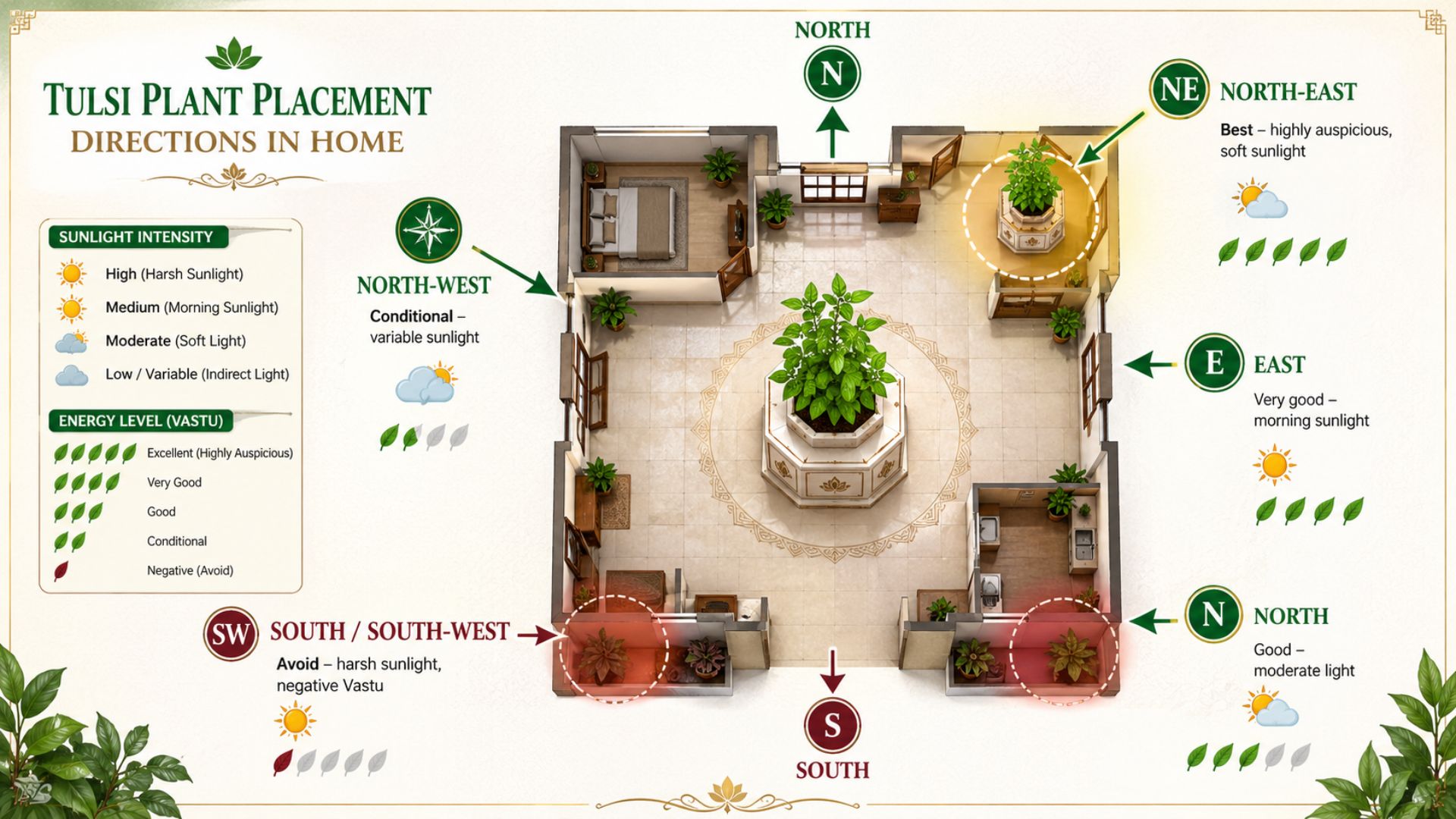
Vastu Shastra provides clear guidance on where and how sacred plants like Tulsi should be placed. But this isn’t just about tradition; the right direction also ensures your plant gets proper sunlight, airflow, and conditions to grow well.
North-East (Ishaan Kon) - Best Placement (The Most Sacred Corner)
The north-east is the most auspicious direction in Vastu Shastra for placing a Tulsi plant. It is governed by the water element and divine energy, making it spiritually ideal. Practically, this corner typically receives gentle morning-to-midday sunlight, soft and consistent, which perfectly supports Tulsi's growth without stressing the plant.
- Most sacred corner in any home
- Governed by the water element
- Linked to peace, clarity & divine energy
- Amplifies positive vibrations in the home
- Intensity - Excellent
- Gentle, consistent morning sunlight
- Promotes healthy leaf & stem growth
- Ideal temperature conditions
- Good natural airflow in most homes
- Works in houses, flats & bungalows
- No special care adjustments needed
- Plant thrives with minimal intervention
East (Purva) - Very Good Alternative
East is the direction of the rising sun and holds deep significance in Indian traditions. For Tulsi, east-facing placement ensures the plant receives the ideal type of sunlight—soft, warm morning rays that gradually build through the day. This supports strong leaf development, healthy green colour, and long-term plant stability. Spiritually, the east represents new beginnings and positive solar energy.
- Direction of the rising sun (Surya)
- Represents new beginnings & vitality
- Auspicious for all sacred plants
- Traditionally used for morning rituals
- Intensity - Very good
- Soft, ideal morning sunlight
- Supports deep green leaf colour
- Best for long-term plant stability
- Works well on east-facing balconies
- Suitable for open windows & courtyards
- Low maintenance once established
- Plant remains vibrant year-round
North (Uttar) - Direction of Kuber (Prosperity)
North is the direction of Kuber, the god of wealth and prosperity, making it a respectable Vastu position for Tulsi. In modern urban homes and apartments, north-facing spaces are often the most accessible and practical. Tulsi can thrive here provided the spot receives adequate natural light and is not overly shaded by nearby buildings or walls.
- Associated with Kuber & prosperity
- Acceptable and respected in Vastu
- Positive energy flow is supported
- Commonly used in traditional homes
- Intensity - Moderate
- Steady diffused light throughout the day
- Less direct sun - monitor plant health
- Supplement if leaves turn pale yellow
- Most accessible in urban flats
- Widely used and a practical choice
- Works on north-facing balconies
- Manageable with regular watering
North-West (Vayavya) - Acceptable with Conditions
North-west is the zone of Vayu, the wind god; it brings movement and change. While not a traditional favourite for Tulsi in Vastu, it can work if conditions are managed well. The sunlight here is variable and can be inconsistent depending on the season, so close attention to the plant's health is necessary. Use this as a fallback, not a primary choice.
- Governed by Vayu (air/wind)
- Not traditionally preferred for Tulsi
- Neutral to slightly unstable energy
- Can be managed with regular prayer
- Intensity - Variable
- Inconsistent light through the day
- Afternoon sun can be harsh in summer
- The plant may need partial shading
- Ensure consistent sunlight access
- Good ventilation & airflow needed
- Monitor plant health weekly
- Only if no better option is available
South / South-West (Dakshina / Nairuti) - Generally Avoided in Vastu
South and south-west are traditionally avoided for Tulsi in Vastu Shastra. The south-west is governed by Rahu and is considered a zone of heavy, grounding energy, not suitable for a sacred plant like Tulsi that is meant to radiate lightness and purity. Practically, these directions often receive harsh afternoon sunlight in Indian climates, which can scorch the plant's delicate leaves and dry the soil too quickly.
- South-West is governed by Rahu & Niruti
- Zone of heavy, unstable energy
- Not considered auspicious for Tulsi
- Believed to diminish positive effects
- Intensity - Harsh
- Harsh afternoon heat can scorch leaves
- Soil dries out too quickly in summer
- Poor airflow is common in the south corners
- The plant may wilt or lose leaves faster
Which Tulsi Is The Best for the Home?
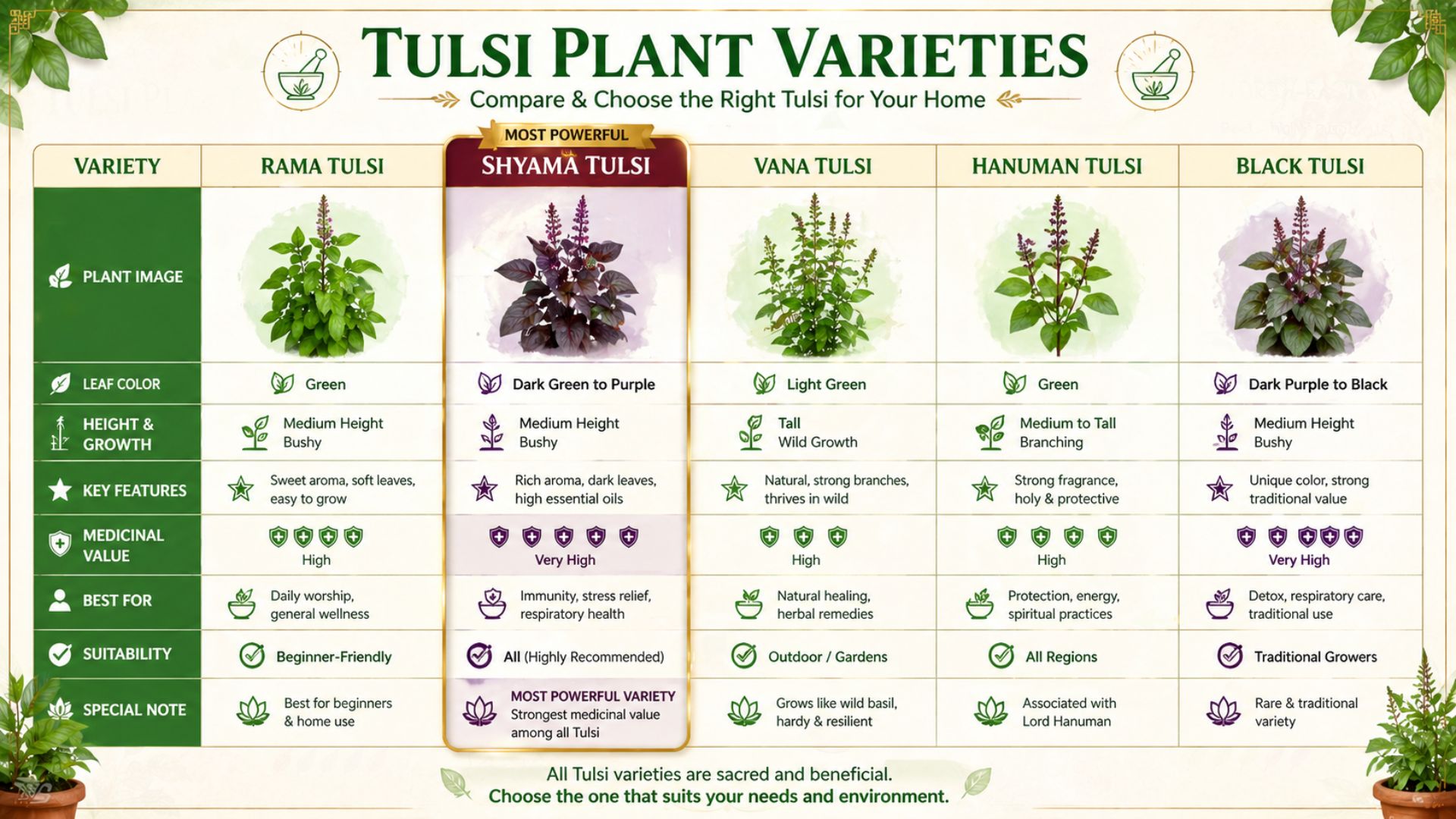
There are several varieties of Tulsi. Here is a quick comparison of the most common ones for home use.
| Type | Appearance | Good for home? | Best suited for |
|---|---|---|---|
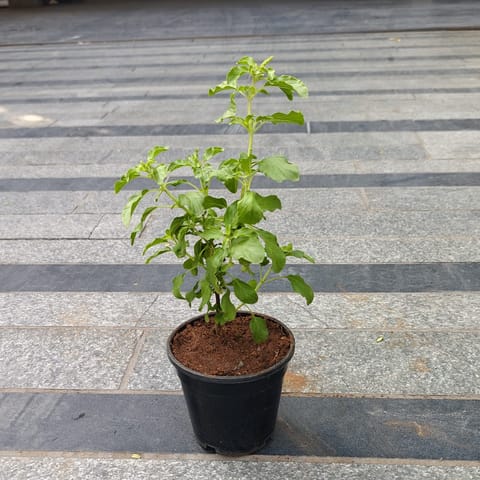
| Rama Tulsi | Bright green leaves | Yes ✓ | Beginners, everyday use |
| Shyama / Red Tulsi | Dark purple-green leaves | Yes ✓ | Strong aroma, traditional homes |
| Van Tulsi | Taller, wild growth | Yes ✓ | Balcony corners, terraces |
| Hanuman Tulsi | Regional variety | Can be | Depends on local availability |
| Black Tulsi | Very dark leaves | Can be | Traditional preference |
Get Your Tulsi Plant Delivered Tomorrow!
Grown at city-based Urvann Farms in Delhi NCR and Bangalore. Your plant travels just 1–2 hours from our nursery to your door — not days in a warehouse. Order before 7 PM for next-day delivery.
- 12+ lakh customers served
- 50+ lakh plants delivered
- 100% EV delivery fleet
- 500+ verified delivery partners
- Plants from ₹29
Where To Keep the Tulsi Plant At Home?
Whether you have a flat, a bungalow, or a compact apartment, the placement logic follows the same principle: clean space, good sunlight, and correct Vastu direction.
Best places to keep Tulsi
- Bright window with morning sun
- Courtyard or verandah
- Clean the raised Tulsi stand
- Near the main door (if clean and sunny)
- A balcony with morning sunlight is the most practical option
Places to avoid
- Dark rooms
- Bathrooms
- Next to dustbins or shoe racks
- Damp, low-airflow corners
- Cluttered indoor areas
- South direction (as per Vastu)
Tulsi Plant Benefits
A Tulsi plant at home is valued not just for tradition, but for its everyday usefulness. From health and air quality to mental well-being and spiritual significance, it plays multiple roles in Indian households.
1. Supports Immunity & Everyday Health
Tulsi is widely known as a natural immunity booster and has been used in Indian homes for generations.
- Helps protect against seasonal colds, coughs, and mild infections
- Rich in antioxidants that reduce inflammation
- Commonly used in kadha, herbal tea, and home remedies
- Especially useful during monsoons and weather changes
Regular use of Tulsi leaves can support long-term wellness in a simple, natural way.
2. Helps Reduce Stress & Improve Mental Well-being
Tulsi contains natural adaptogens that help the body respond better to stress.
- Helps lower stress levels and calm the mind
- Can support better sleep and relaxation
- Often used in daily routines for a sense of balance
Even simple habits like sitting near the plant or using fresh leaves can create a calming effect.
3. Improves Digestion & Gut Health
Tulsi is also known for its digestive benefits, especially in Indian diets.
- Helps reduce bloating and gas
- Supports smoother digestion
- Has antimicrobial properties that help maintain gut balance
It is often used in home remedies for mild stomach discomfort.
4. Improves Air Quality & Freshness at Home
Tulsi acts as a natural addition to cleaner indoor environments, especially in urban homes.
- Adds freshness and mild natural fragrance
- Helps reduce unwanted odours in kitchen and balcony spaces
- Some varieties are traditionally believed to help repel insects
Placing Tulsi near windows, balconies, or kitchens can make the space feel fresher and more alive.
5. Spiritual & Cultural Significance
In many Indian homes, Tulsi is not just a plant—it is part of daily rituals and traditions.
- Considered sacred and associated with purity
- Used in daily prayers and religious practices
- Believed to bring positive energy to the home
This is why Tulsi is often placed in clean, respected areas like entrances or courtyards.
6. Encourages Mindfulness & Daily Routine
Caring for a Tulsi plant naturally builds small, positive habits.
- Encourages daily watering and observation
- Creates a calm, dedicated space in the home
- Adds a sense of connection with nature
Even a small Tulsi plant can become a meaningful part of your daily routine.
How To Maintain a Tulsi Plant At Home
To keep your plant healthy and thriving, you need to take care of sunlight, pruning, watering, fertilising, and more. To understand each of these in detail, read below.
Sunlight
4–6 hours of direct sunlight daily. Morning sun (6–11 AM) is ideal. Protect from harsh afternoon sun (12–3 PM) in peak summer. In North India winters, cover with a thin cloth at night to protect from frost. Outdoor placement on a balcony or terrace is always preferred over indoors.
Watering
The number one reason Tulsi plants die is overwatering. Stick your finger 1–2 inches into the soil; if it feels even slightly moist, do not water. In summer: every 7–10 days. In winter: every 10–14 days. Water in the morning or evening. Never let the pot sit in a tray of water. Do not water for the first 5–7 days after delivery; let the plant settle.
Soil & Pot
Use this proven mix: 50% cocopeat, 30% garden soil, 20% vermicompost. Optional: a handful of neem khali to prevent pests. Always use a pot with drainage holes at the bottom. Start with 3–4 inch pots. Repot into a 2-inch larger pot every 1–2 years in spring (February–March).
Pruning
Pinch the top tips every week to make the plant branch out and grow fuller. Remove old, yellowing leaves from the bottom. Harvest leaves from the top and outer parts of the plant. Never remove more than one-third of the plant at once. Trim flower spikes regularly to redirect energy to leaf growth.
Fertilising
Tulsi does not need heavy feeding. Add vermicompost every 2 months. Use diluted liquid NPK fertiliser once a month for better growth. In spring (February–March), add a handful of cow dung compost. Do not overfeed, as excess fertiliser makes stems weak and reduces fragrance.
Pest Control
Tulsi is mostly resistant to pests due to its strong aromatic oils. If aphids or nymphs appear: spray diluted neem oil (1 tablespoon per litre of water) in the morning. Repeat every 5 days until clear. Crushing a few leaves near the plant also releases more fragrance that deters insects.
| Care Aspect | What To Do | What To Avoid |
|---|---|---|
| Sunlight | 4–6 hours daily, morning light preferred | Harsh afternoon sun (12–3 PM) in peak summer |
| Watering | Only when the top 1–2 inches of soil are dry | Overwatering - the most common cause of death |
| Soil | Well-draining cocopeat + garden soil + vermicompost | Heavy, waterlogged, compacted soil |
| Pot | Drainage holes essential; 3–4 inches to start | Pots without drainage, decorative pots only |
| Pruning | Pinch tips weekly; remove yellowing leaves | Removing more than one-third at once |
| Fertilising | Vermicompost every 2 months | Overfeeding - weakens stems |
| Winter care | Cover at night from frost in North India | Leaving outdoors unprotected in extreme cold |
Tulsi Kadha Recipe - The Classic Home Remedy
How to make Tulsi kadha at home (serves 2)
- Pluck 8–10 fresh Tulsi leaves from the top of your plant in the morning
- Add 2 cups of water to a saucepan along with the Tulsi leaves
- Add 1 inch of crushed fresh ginger and 3–4 black peppercorns
- Optional: add half a cinnamon stick and 2–3 cloves for added warmth
- Boil on medium heat for 5–7 minutes until the water darkens
- Strain into cups, and add a teaspoon of honey if desired
- Drink warm — best consumed on an empty stomach in the morning
Why Is My Tulsi Plant Dying? Problem Solver
| Problem | Likely Cause | Quick Fix |
|---|---|---|
| Leaves turning yellow | Overwatering or waterlogging | Reduce watering immediately, check drainage holes |
| Plant drying out fast | Excess heat or direct afternoon sun | Move to a partial shade or east-facing spot |
| No new growth | Insufficient sunlight indoors | Shift to a brighter balcony or window |
| Weak, thin, leggy stems | Poor airflow or low light | Move outdoors; pinch tips to encourage branching |
| Drooping leaves | Underwatering or heat stress | Water gently; provide temporary shade |
| White spots on leaves | Powdery mildew from humidity | Improve airflow; apply diluted neem oil spray |
| Leaves falling off | Temperature shock or repotting stress | Keep in a stable spot; do not water for 5–7 days |
Summing Up
A Tulsi plant is one of the simplest and most meaningful additions you can make to an Indian home. It only requires a clean spot, a few hours of morning sunlight, and the occasional pinch of dry leaves. In return, it gives you fresh leaves for daily puja, a natural immunity booster for your family's kadha, cleaner air in your home, and the quiet satisfaction of tending something sacred every day.
The most important thing to take away from this guide is that Vastu direction and daily care work together — not independently. Placing your Tulsi in the north-east is meaningful, but a thriving, well-watered plant in the east is infinitely better than a neglected one in the "perfect" corner. Get the placement right, and then get the care right.
Frequently Asked Questions (FAQs) on Tulsi Plant Vastu Guide
Q1. तुलसी का मुख किस दिशा में होना चाहिए?
तुलसी का मुख (यानी पौधे की दिशा) पूर्व (East) या उत्तर (North) दिशा की ओर होना सबसे शुभ माना जाता है।
पूर्व दिशा: सूर्य की पहली किरणें तुलसी पर पड़ती हैं, जिससे पौधा स्वस्थ रहता है और सकारात्मक ऊर्जा बढ़ती है।
उत्तर दिशा: यह दिशा समृद्धि और शांति से जुड़ी मानी जाती है।
ध्यान रखें:
तुलसी को कभी भी दक्षिण दिशा में नहीं रखना चाहिए, क्योंकि इसे वास्तु में कम शुभ माना जाता है।
Q2. Which Tulsi is most powerful?
Among all types, Krishna Tulsi (Shyama Tulsi) is often considered the most powerful.
It has darker leaves, a stronger aroma, and is widely valued in Ayurveda for its higher medicinal potency, especially for immunity, respiratory health, and fighting infections.
Other Important Types of Tulsi
- Rama Tulsi (Green Tulsi): The most common Tulsi is found in Indian homes. It is gentle, easy to grow, and ideal for daily पूजा and regular consumption.
- Vana Tulsi (Wild Tulsi): Known for its natural, wild growth and strong stress-relieving (adaptogenic) properties. It’s excellent for overall wellness.
Q3. Can Tulsi cure an allergy?
Tulsi (Holy Basil) is considered an effective natural remedy to manage and alleviate allergy symptoms rather than a definitive "cure." With regular use, it can significantly reduce the body's sensitivity to common allergens like dust, pollen, and seasonal changes.
How does Tulsi help with allergies?
- Contains eugenol and rosmarinic acid, natural anti-inflammatory compounds that calm the immune response
- Acts as a mild natural antihistamine, reducing overreaction to allergens
- Eases common symptoms like sneezing, runny nose, itchy eyes, and skin irritation
- Strengthens overall immunity with consistent daily use
- Particularly beneficial during seasonal changes, high pollen periods, and monsoon months
Best ways to use it -
- Drink Tulsi kadha daily - ideally on an empty stomach in the morning
- Chew 2–3 fresh Shyama Tulsi leaves each morning for a stronger anti-inflammatory effect
- Add fresh leaves to warm water or honey for a soothing daily drink
Keep in mind -
- Results build gradually with consistent use - not overnight
- For severe allergies or asthma, always consult a doctor alongside using Tulsi as a natural support
Q4. क्या हम मुख्य द्वार वास्तु के सामने तुलसी का पौधा रख सकते हैं?
हाँ, मुख्य द्वार के पास तुलसी का पौधा रखना वास्तु शास्त्र में बेहद शुभ माना जाता है। यह घर के प्रवेश द्वार को सकारात्मक ऊर्जा से भरपूर बनाता है और नकारात्मक शक्तियों को दूर रखता है।
मुख्य द्वार पर तुलसी रखने के फायदे:
- घर में सुख, समृद्धि और सकारात्मक ऊर्जा का प्रवाह बढ़ता है
- नकारात्मक ऊर्जा और बुरी नजर से सुरक्षा मिलती है
- प्रवेश द्वार को एक पवित्र और स्वागत योग्य स्वरूप मिलता है
- प्रतिदिन पूजा के लिए ताजी पत्तियाँ आसानी से उपलब्ध रहती हैं
सही तरीके से रखने के लिए ध्यान रखें:
- तुलसी को उत्तर-पूर्व या पूर्व दिशा में रखें - यह सबसे शुभ माना जाता है
- जिस स्थान पर रखें वह साफ-सुथरा होना चाहिए
- पौधे को पर्याप्त धूप मिलनी चाहिए - कम से कम 4-5 घंटे
- जूते-चप्पल या कूड़ेदान के पास तुलसी न रखें
- पौधे को स्वस्थ और हरा-भरा बनाए रखें - सूखा या मुरझाया पौधा अशुभ माना जाता है
याद रखें: वास्तु में स्वस्थ तुलसी शुभ ऊर्जा लाती है, जबकि उपेक्षित या सूखती तुलसी नकारात्मक ऊर्जा उत्पन्न करती है। इसलिए सही दिशा के साथ-साथ नियमित देखभाल भी उतनी ही जरूरी है।
Q5. Main door Ke Samne Tulsi lagana chahiye ya nahi?
Haan, main door ke saamne Tulsi ka paudha lagana bahut shubh maana jaata hai, lekin kuch zaroori baaton ka dhyan rakhna chahiye.
Kyun lagaani chahiye:
- Ghar mein positive energy aur samridhi aati hai
- Buri nazar aur negative shaktiyon se suraksha milti hai
- Pravesha dwar pavitra aur swagat yogya lagta hai
- Roz puja ke liye taazi pattiyaan aasaani se milti hain
- Vastu Shastra mein yeh ati shubh maana jaata hai
Sahi tarike se lagaane ke liye:
- Direction - North-East ya East disha sabse shubh hai
- Jagah saaf-suthra honi chahiye, clutter nahi
- Kam se kam 4–5 ghante dhoop milni chahiye
- Ek accha Tulsi stand ya raised platform use karein
- Joote-chappal ya dustbin ke paas bilkul na rakhein
Kab nahi lagaani chahiye:
- Agar jagah andhere mein ho aur dhoop na aati ho
- Agar area gandaa ya neglected rehta ho
- Agar paudhe ki regular care possible na ho
Sabse zaroori baat: Vastu mein ek healthy, hari-bhari Tulsi shubh energy laati hai - aur ek sukhaa ya muraajhaa paudha negative energy deta hai. Isliye sahi disha ke saath niyamit dekhbhaal bhi utni hi zaroori hai.
Q6. घर के बाहर मेन गेट पर क्या लगाना चाहिए?
घर के मेन गेट पर ऐसी चीजें लगानी चाहिए जो सकारात्मक ऊर्जा, समृद्धि और सुरक्षा को बढ़ाएँ:
क्या लगाना चाहिए?
- तुलसी का पौधा
सबसे शुभ माना जाता है। यह घर में पॉजिटिव एनर्जी लाता है और वातावरण को शुद्ध करता है।
- तोरण (बंदनवार)
आम के पत्तों या सजावटी तोरण को दरवाज़े पर लगाना शुभ होता है।
- नेम प्लेट (Name Plate)
साफ और सही दिशा में लगी नेम प्लेट अच्छे अवसरों को आकर्षित करती है।
- स्वस्तिक या ॐ का चिन्ह
दरवाज़े पर लगाने से नकारात्मक ऊर्जा दूर रहती है।
- लाइटिंग (दीपक या लैंप)
मेन गेट के पास हल्की रोशनी हमेशा शुभ मानी जाती है।
- विंड चाइम (Wind Chime)
मधुर ध्वनि से पॉजिटिव वाइब्स आती हैं (धातु या लकड़ी की चुन सकते हैं)।
क्या नहीं लगाना चाहिए?
- टूटी-फूटी चीजें
- सूखे या मरे हुए पौधे
- गंदगी या अव्यवस्था
Q7. Which Tulsi is most powerful?
Among all varieties, Shyama Tulsi (Krishna Tulsi) is widely considered the most powerful — both medicinally and spiritually. Its dark purple-green leaves contain the highest concentration of eugenol and other active compounds, making it significantly more potent than other varieties.
Why is Shyama Tulsi considered the most powerful?
- Highest eugenol content among all Tulsi varieties — strongest anti-inflammatory effect
- Most potent for immunity-boosting kadha and home remedies
- Preferred for devotional worship and considered closest to Lord Krishna
- Strongest natural antihistamine properties — best for allergy relief
- Most effective for stress reduction and cortisol management
- Stronger, spicier aroma that is more effective at repelling mosquitoes and insects