


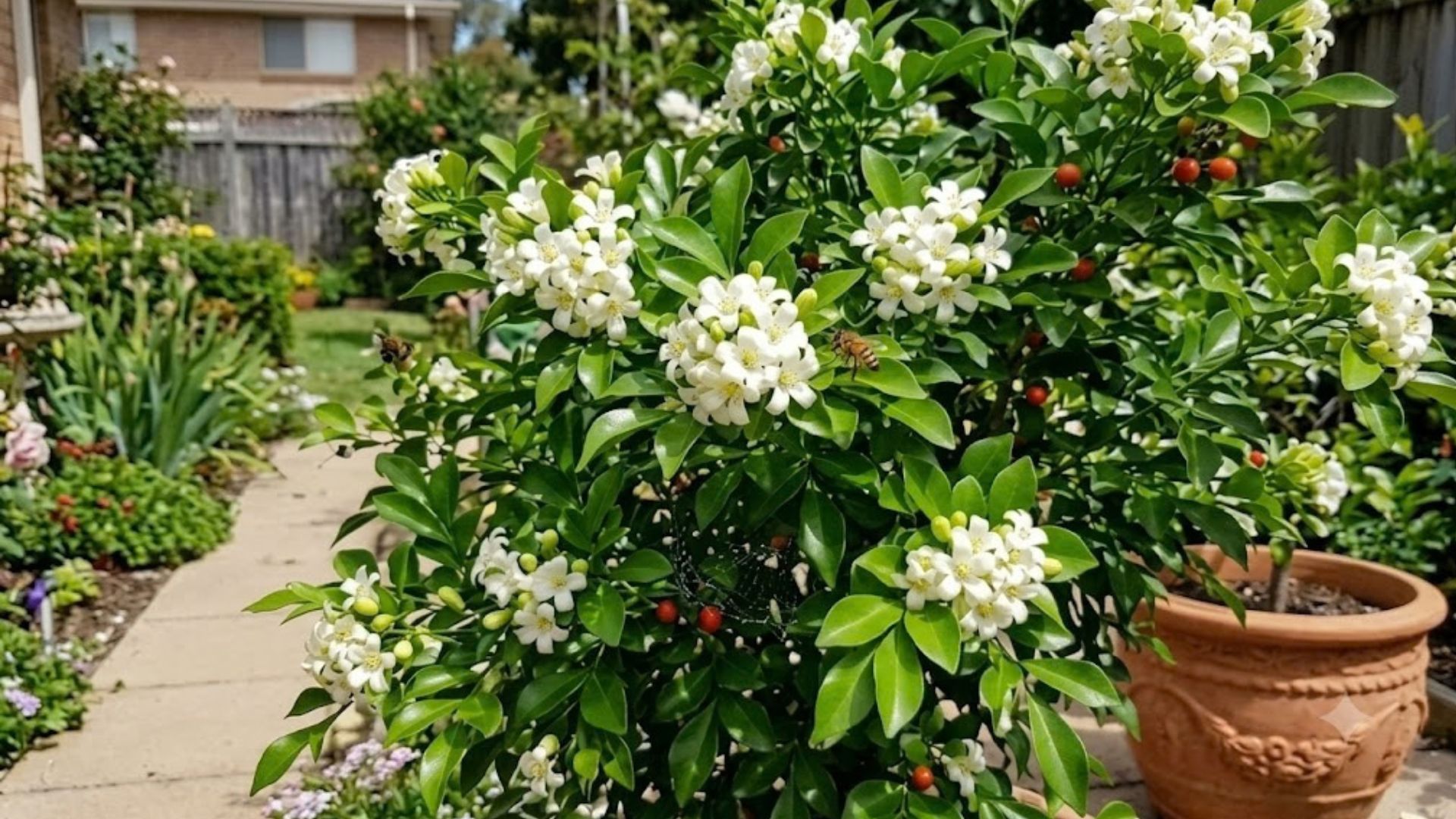
Discover Madhu Kamini’s fragrant white flowers, cultural significance, growing tips, Vastu beliefs, and simple ways to keep this garden shrub healthy and blooming.
Key Takeaway
- The white flowers of मधु कामिनी bloom in flushes from March to October, and the scent is strongest in the evening.
- मनोकामिनी needs 4 to 6 hours of direct sun (6 or more for heavy flowering), well-draining soil, and water when the top 2 to 3 cm of soil is dry.
- Table Kamini is a compact form with smaller leaves, suited to small balconies, low hedges, and bonsai.
- The Madhu Kamini plant is placed in the north or east of the home as per the Vastu tradition.
What if one plant could give you fragrance, beauty, and easy care, all in one?
Madhu Kamini (मधुकामिनी), also called Kamini or Orange Jasmine, is an evergreen flowering shrub with the botanical name Murraya paniculata. It bears clusters of small white flowers with a sweet, citrus-like scent, mostly between March and October in India. It grows in both pots and in the ground, needs 4 to 6 hours of direct sun, and, as per Vastu, should be placed in the north or east of the home.
Whether you place it in a sunny corner, grow it as a hedge, or keep it in a pot on your balcony, it adds a simple yet elegant charm to your home.
This guide explores what makes Madhu Kamini a great choice for homes and gardens, including its benefits, flowering season, easy-care requirements, and Vastu significance, so you can understand what makes this plant special and how to grow it successfully.
Madhu Kamini at a Glance
| Feature | Description |
|---|---|
| Botanical name | Murraya paniculata |
| English names | Orange Jasmine, Orange Jessamine, Mock Orange, China Box, Satinwood |
| Hindi names | Madhu Kamini (मधुकामिनी), Kamini (कामिनी), Manokamini |
| Bengali name | Kamini (কামিনী) |
| Family | Rutaceae (citrus family). Its closest everyday relative is curry leaf (Murraya koenigii). |
| Native to | South and Southeast Asia |
| Plant type | Evergreen shrub or small tree |
| Height | 3 to 5 ft in pots, 6 to 10 ft in the ground, up to 7 m if never pruned |
| Flowers | Small, white, 5 petals, in clusters at branch tips |
| Fragrance | Sweet and citrus-like, strongest in the evening |
| Flowering season | March to October in flushes, peaking in the monsoon |
| Fruit | Small oval berries that turn from green to orange-red |
| Sunlight | 4 to 6 hours of direct sun, 6 or more for heavy flowering |
| Growth rate | Slow to moderate |
| Pot size | 8 to 10 inches for a young plant, 14 to 18 inches for a mature shrub |
| Best time to plant | February to March, or July to August during the monsoon |
What Is the Madhu Kamini Plant Called in English, Hindi, Kannada, and Bengali?
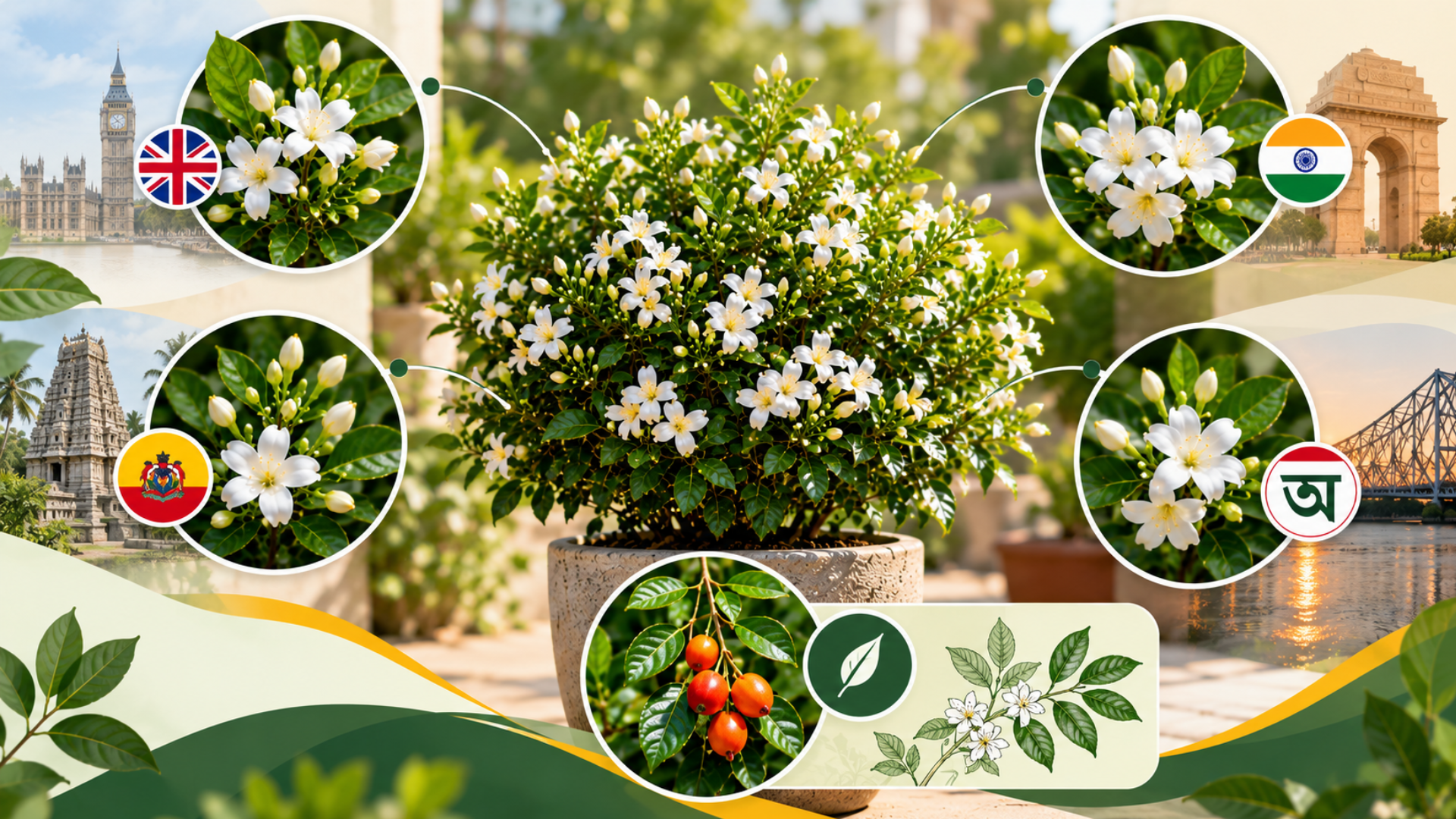
It's a small evergreen shrub that stays fresh year-round (सदाबहार पौधा). Its nectar-rich flowers bloom in clusters and spread fragrance well into the night. The scent has a soft orange-like touch: fresh, light, and calming. That is why it is called Orange Jasmine in English.
- Madhu Kamini plant in English: Orange Jasmine or Orange Jessamine. You may also see names like Mock Orange, China Box, or Satinwood on nursery labels.
- Madhu Kamini plant in Hindi: मधुकामिनी का पौधा. It is also called Kamini or Manokamini in many parts of North India.
- Madhu Kamini plant in Kannada: ಕಾಡು ಕರಿಬೇವು (Kadu Karibevu), a regional name for Murraya paniculata in Karnataka.
- Kamini flower in Bengali: কামিনী ফুল (Kamini phool), a common garden and hedge plant across West Bengal.
- Botanical (scientific) name: Murraya paniculata. The genus is named after the botanist Johan Andreas Murray.
Madhu Kamini belongs to the citrus family, which explains the orange-blossom note in its scent and its small orange-red berries.
What Does the Madhu Kamini Flower Look and Smell Like, and When Does It Bloom?
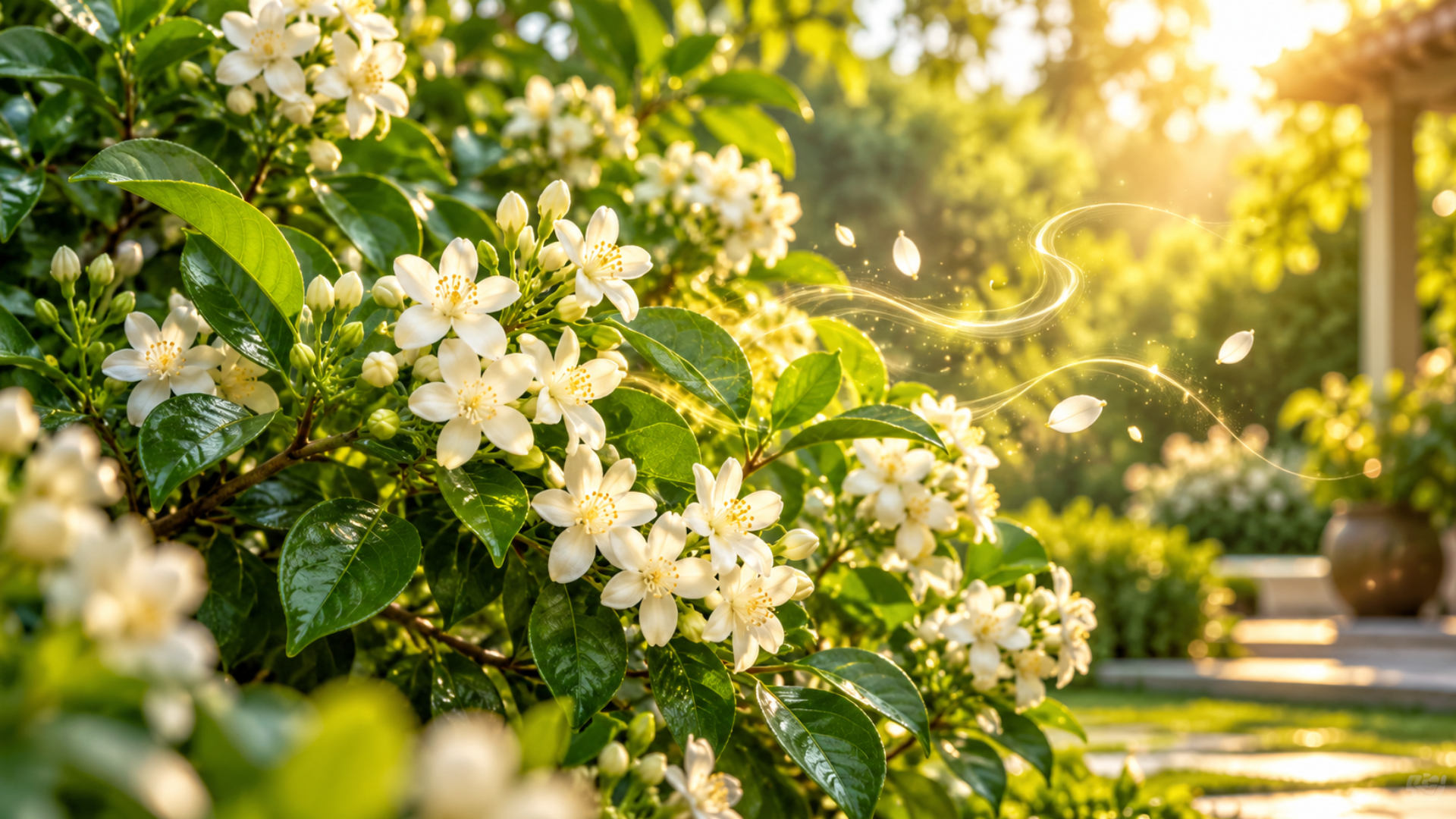
What Does the Madhu Kamini Flower Look Like?
Each flower is about 1.5 cm across, with five creamy white petals that curve slightly backward. The flowers grow in bunches at the tips of branches, set against small, glossy, dark green leaves. In full bloom, a plant looks dotted with white from top to bottom.
What Does the Madhu Kamini Flower Smell Like?
The scent is sweet with a citrus edge, lighter than mogra and less heavy than Raat Ki Rani. It grows stronger after sunset. One plant in full bloom can scent a small balcony or a garden entrance.
When Is the Madhu Kamini Flowering Season in India?
Madhu Kamini does not bloom once a year like many seasonal flowers. It blooms in flushes: bursts of flowers across the whole plant that last about a week. In warm months, a healthy plant repeats a flush every 3 to 6 weeks. Flowers often open a few days after heavy rain or deep watering.
| Months | North India (Delhi, Jaipur, Lucknow, Chandigarh) | South, West and East India (Bengaluru, Mumbai, Chennai, Kolkata) |
|---|---|---|
| February to March | New leaves, first buds by late March | First flushes begin |
| April to June | Flushes after deep watering; potted plants may pause in May and June heat | Regular flushes |
| July to September | Peak flowering, often 3 to 5 days after rain | Peak flowering |
| October to November | Lighter flushes; berries turn orange-red | Flowering continues at a slower pace |
| December to January | Little or no flowering | Light, occasional flowering |
Is There a Red Madhu Kamini Flower?
No. Madhu Kamini flowers are always white. The red or orange colour you may see in autumn comes from its ripe berries. If you saw a climber with clusters of pink and red flowers, it was most likely Madhumalti (Rangoon creeper), a different plant.
What Is the Difference Between Madhu Kamini, Jasmine, Raat Ki Rani, Madhumalti, and Curry Leaf?
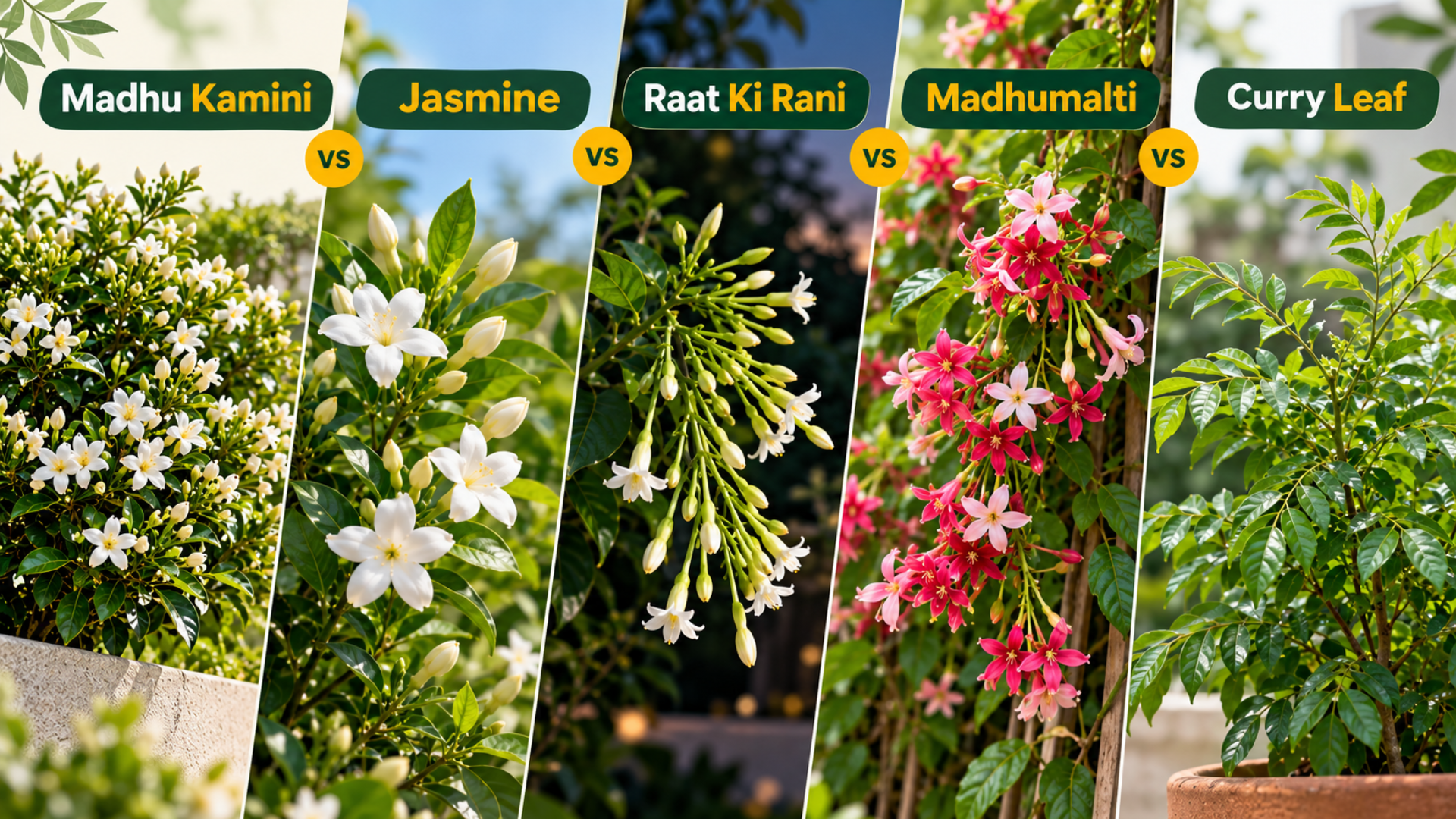
Many people often wonder, "Are Madhu Kamini and Jasmine the same?"
The simple answer is: no, they are not the same. Madhu Kamini is a neat shrub with small clustered flowers and a soft orange-like scent. Jasmine (mogra or chameli) has bigger flowers and a stronger, sweeter fragrance, the kind you smell in a gajra.
Madhu Kamini is also often confused with three other plants, namely Raat Ki Rani, Madhumalti, and Curry Leaf. Here is how to tell them apart.
| Feature | Madhu Kamini | Jasmine (Mogra, Chameli) | Raat Ki Rani | Madhumalti | Curry Leaf |
|---|---|---|---|---|---|
| Botanical Name | Murraya paniculata | Jasminum sambac, J. grandiflorum | Cestrum nocturnum | Combretum indicum | Murraya koenigii |
| Growth Habit | Bushy shrub | Mogra is a shrub; chameli is a climber | Shrub | Climber | Shrub or small tree |
| Flower | Small, white, five petals, in clusters | White, larger, single or layered | Tiny, greenish-white, tube-shaped | Clusters that open white and turn pink, then red | Small and white; not grown for flowers |
| Scent | Sweet and citrus-like, stronger in the evening | Strong and sweet | Very strong, only at night | Mild and sweet in the evening | Scent is in the leaves, not the flowers |
| Worth Knowing | Leaves look like curry leaves but are not used in cooking | Used in gajras and pooja | All parts are toxic if eaten; keep away from pets and children | Needs a wall or trellis | Scent is in the leaves, not the flowers |
Why Is Madhu Kamini Important in Indian Culture and Vastu?
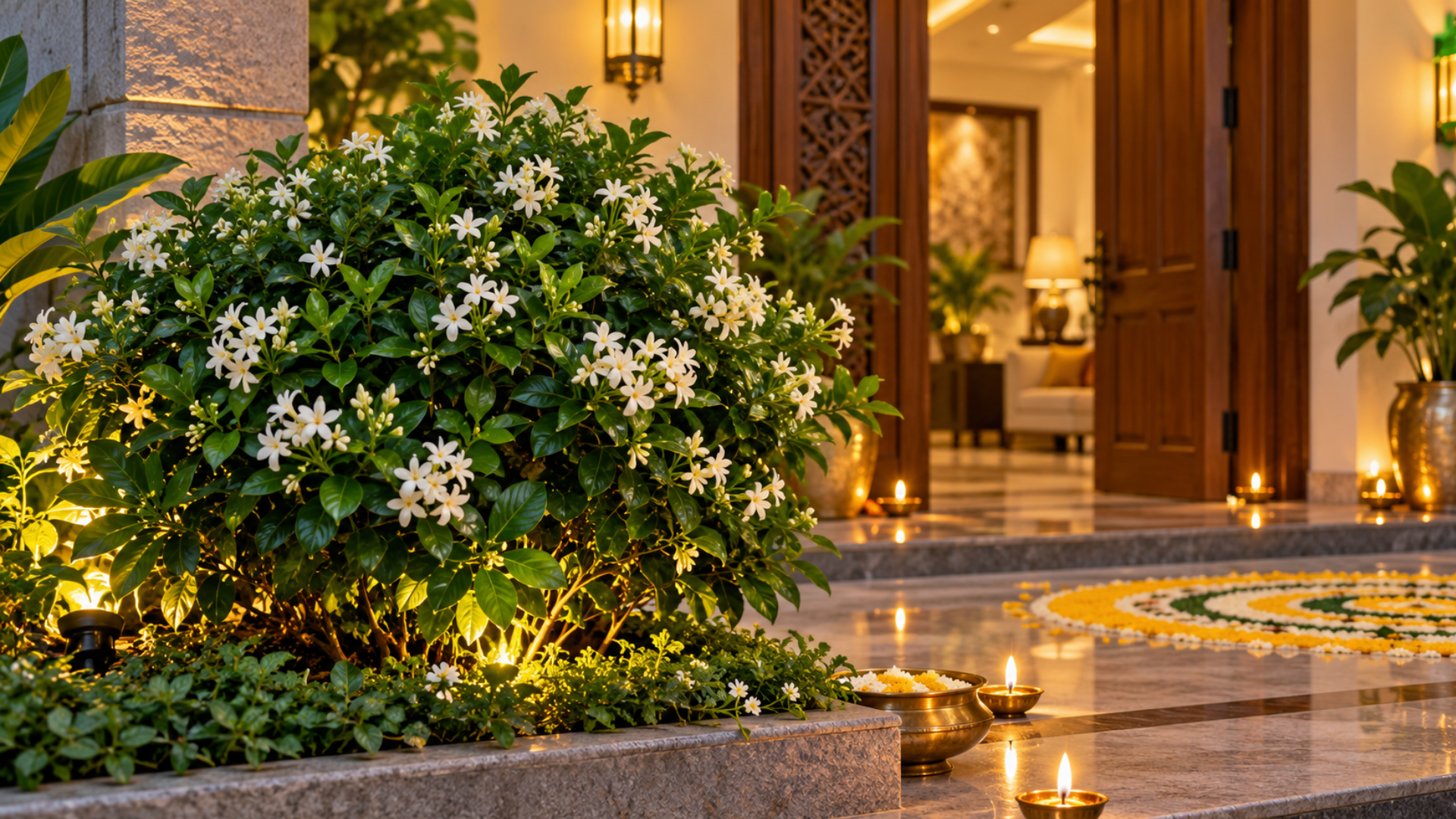
The Madhu Kamini plant has been part of Indian homes for generations. You'll often find it near temples or at home entrances, where its soft fragrance creates a calm environment.
It is also seen as a divine plant. There's a belief that three flowers came from heaven: Aparajita, Parijaat, and Madhu Kamini. Because of this, the flower is linked with purity, love, and prosperity.
Its leaves are considered auspicious and are used in the wedding canopy (शादी का मंडप) during Hindu marriage rituals. Many also believe that keeping this plant near the bedroom promotes a happy married life.
It is sometimes planted near the entrance to ward off negative energy and bring harmony into the home. As per Vastu, placing the Madhu Kamini plant in the north or east direction helps attract positive energy and balance.
Why You Should Grow the Madhu Kamini Plant?
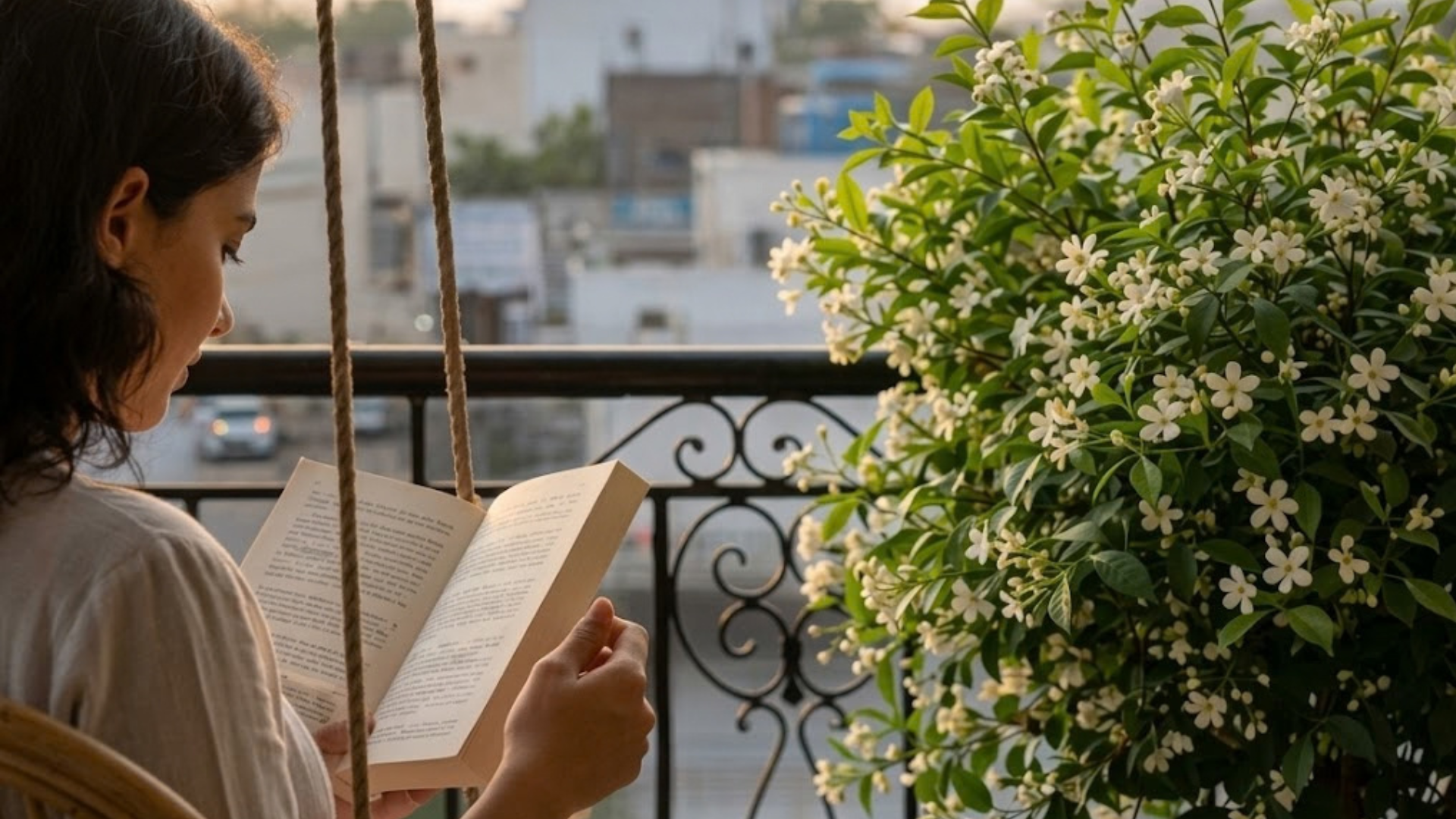
1. Natural Room Freshener, Seriously
The Madhu Kamini flower has a soft, sweet, jasmine-like scent that becomes stronger in the evening. It feels calming and fresh, like "शाम की ठंडी हवा". These flowers can instantly make your space feel relaxed and inviting.
2. Easy to Grow, Even for Beginners
Many people quit gardening because plants die: too much water, too little or too much sun. The Madhu Kamini is different. It's a forgiving plant. Miss a watering? Fine. Skip pruning for a month? Fine. Water it when the top 2 to 3 cm of soil feels dry, give it sun, and it takes care of itself.
3. Fits Perfectly in Any Space
- Small balcony: grows well in a pot as a compact, fragrant shrub.
- Larger garden: can be trained into a neat hedge or a privacy screen.
- Artistic touch: responds well to bonsai pruning.
- Apartment living: a sunny window ledge or grill box is enough for a Table Kamini.
4. Made for Indian Weather
Most popular houseplants are imported varieties that struggle in India's heat and humidity. Madhu Kamini is native to South and Southeast Asia, so it handles Indian summers and monsoon humidity well. In the monsoon, it flowers the most. On 40°C+ afternoons in May and June, move potted plants to light afternoon shade.
5. Attracts Bees and Butterflies
The nectar-rich flowers attract bees and butterflies, creating a lively mini-ecosystem in your garden. It's a small but meaningful way to support nature right from your balcony.
6. A Perfect Gifting Plant
Struggling to find a meaningful gift for a housewarming, birthday or wedding? The Madhu Kamini plant is a fragrant and auspicious choice that people love receiving. It says more than a bouquet ever could.
Madhu Kamini Plant Benefits: Medicinal, Traditional And Astrological Uses
Medicinal Uses of Madhu Kamini Plant
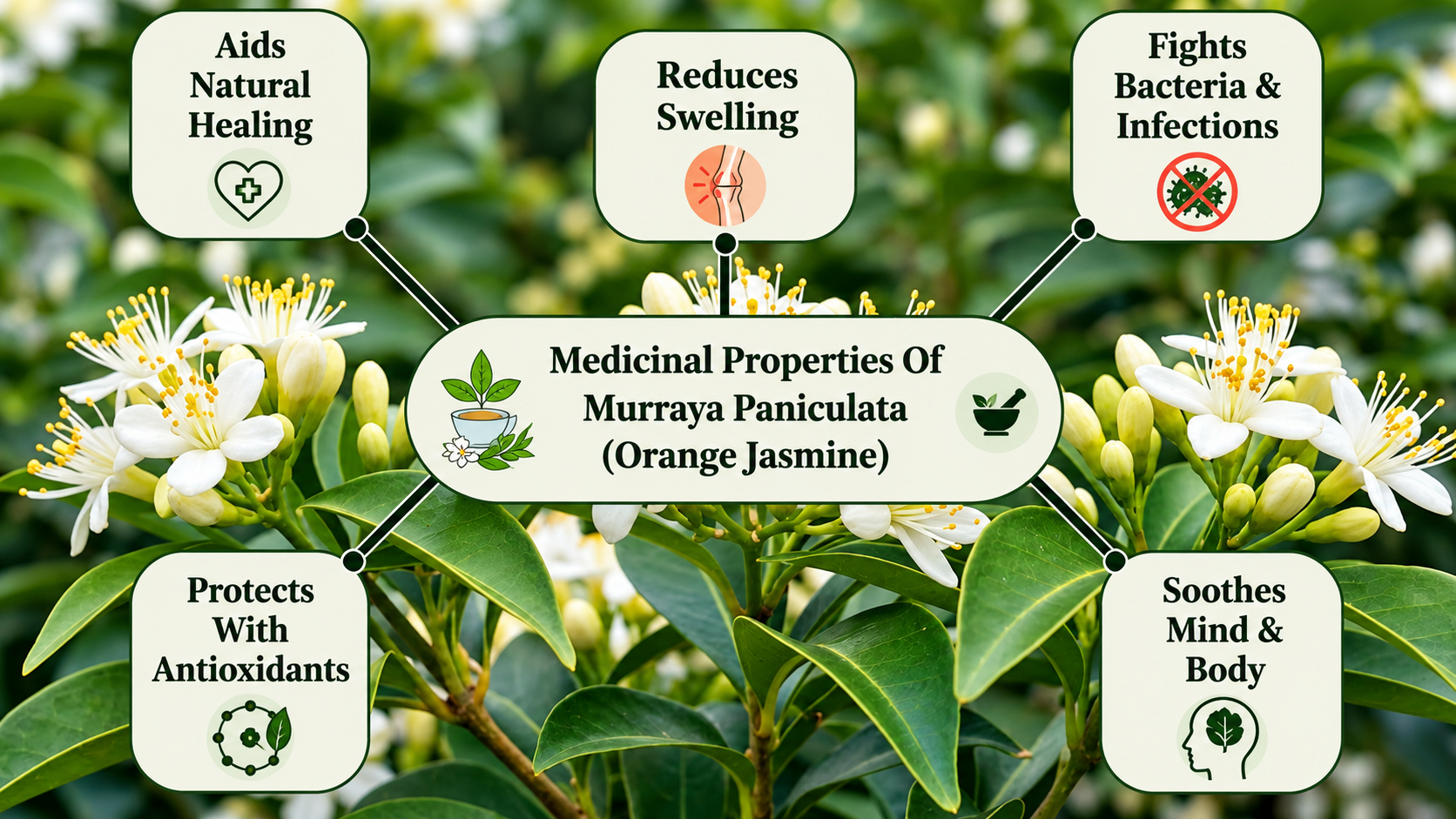
Being born in an Indian family is almost like being born into a house of natural doctors (घर का वैद्य), isn't it? From adrak wali chai to haldi ka doodh, घरेलू नुस्खे are always the first choice. Madhu Kamini has a place in that tradition too. Here are the compounds which are present in this plant to help with medicinal uses:
| Compound | Why It Matters |
|---|---|
| Murraycinine | Helps the body heal naturally |
| Paniculatin | Supports reducing swelling |
| Mahanimbine | Fights bacteria and infections |
| Alkaloids & Flavonoids | Protect the body as antioxidants |
| Essential Oils | Calm the mind and body |
Traditional Uses
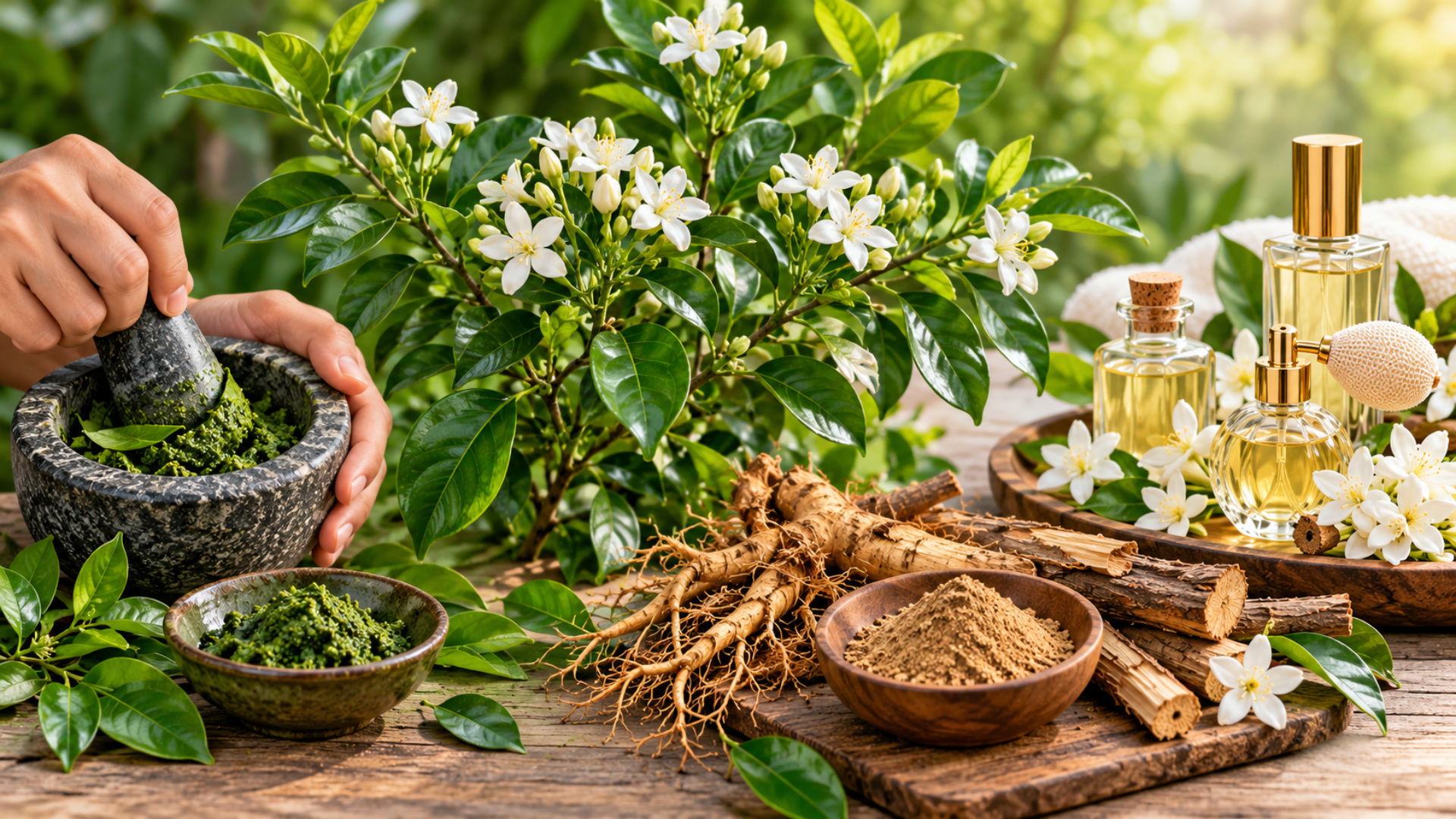
| Plant Part | How It Has Been Used Traditionally |
|---|---|
| Leaves | Crushed into a paste for minor wounds and swelling; used for toothache in folk practice |
| Roots and Bark | Ground and applied on the skin for body pain |
| Flowers | Essential oil used in perfumes and cosmetics |
Quick Safety Note: Please consult before considering Madhu Kamini plants as a remedy.
Kamini flowers are also being used to make a natural aroma bag. A small cotton pouch is filled with fresh or dried Madhu Kamini flowers. It is then kept in the room or cupboard, giving a soft and refreshing fragrance without any support of artificial sprays.
Astrological Uses
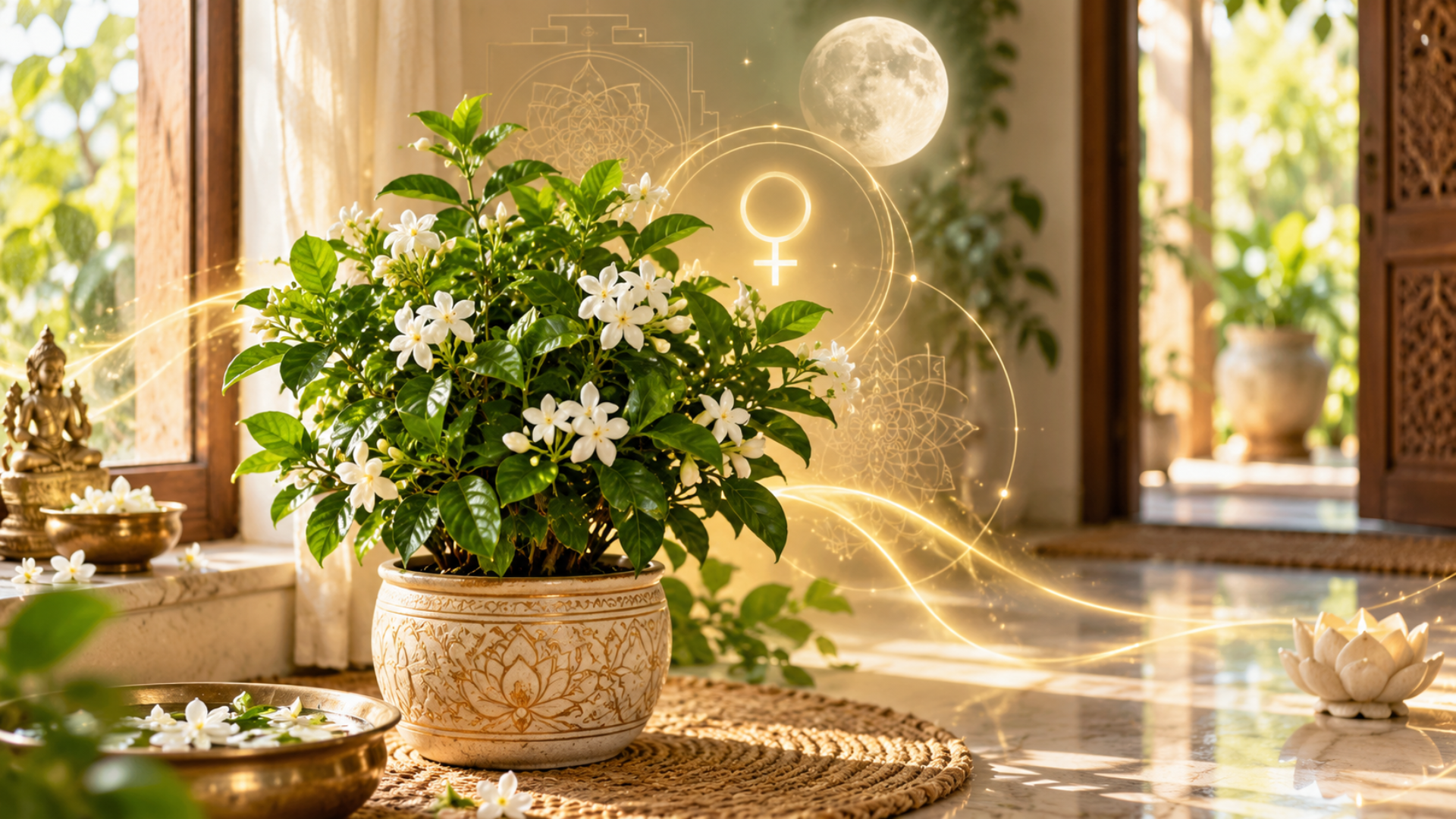
In Vedic astrology, Vastu Shastra, and traditional belief systems, the Madhu Kamini plant is a suitable plant to keep at your home due to its:
- High planetary and spiritual vibrations that influence energy flow, relationships, and well-being.
- Soft, sweet, citrus-like fragrance of Madhu Kamini is associated with the energies of the Moon (peace, mind, and emotions) and Venus (love, harmony, beauty, and luxury).
Madhu Kamini Plant Care in India
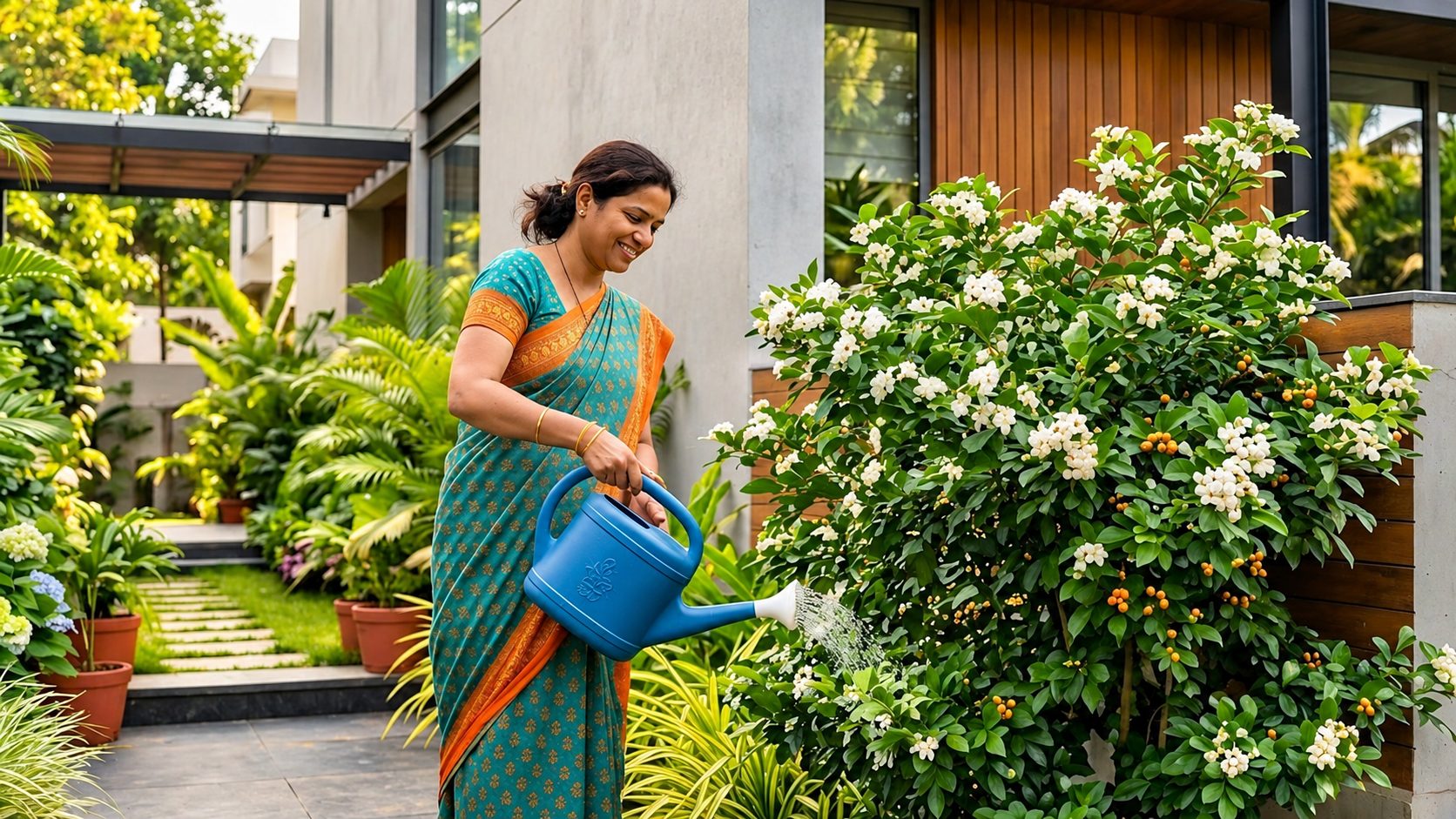
- Light: Madhu Kamini loves the sun. Give it at least 4 to 6 hours of direct sunlight a day, and 6 to 8 hours if you want heavy flowering. A south- or east-facing balcony works best.
- Soil: Use a loose, well-draining mix using 40% garden soil, 30% compost or vermicompost, and 30% cocopeat or coarse sand. A slightly acidic to neutral mix (pH 6 to 7.5) keeps the leaves dark green.
- Watering: Water when the top 2 to 3 cm of soil feels dry, not on a fixed schedule. Soggy soil rots the roots. For potted plants, a 3-litre watering can is a handy option for watering directly around the base of the plant. Use the table below as a guide.
| Season | Potted Plants | Plants in the Ground | Feeding |
|---|---|---|---|
| Summer (April to June) | Daily or on alternate days in Delhi, Jaipur and other hot, dry cities; every 2 days in coastal cities | Twice a week | Compost or vermicompost every 30 days |
| Monsoon (July to September) | Only when the topsoil is dry; make sure the pot drains | Rain is usually enough | Compost every 30 days, plus a flowering fertilizer once a month |
| Post-monsoon (October to November) | Every 2 to 3 days | Once a week | One last feed in October |
| Winter (December to February) | Every 4 to 6 days in North India | Every 10 to 14 days | None until February in North India |
- Pruning: Trim lightly right after each flowering flush to keep the plant bushy. New flowers form on new tips, so pruning at the wrong time cuts off the next blooms. Do any hard pruning in February or March, and avoid pruning from November to January.
- Fertilizer: Feed organic compost or vermicompost every month from February to October. Before and during the monsoon, add a flowering fertilizer that is higher in phosphorus. Avoid urea and heavy doses of fresh manure: too much nitrogen gives plenty of leaves and few flowers.
- Temperature: Thrives in warm climates (20°C to 35°C), so it is suited for most Indian cities. It can handle short dry spells but needs protection from frost in colder hill regions.
- Repotting: If grown in a pot, repot every 2 years into a container one size larger, ideally in February or March. Use fresh potting mix each time.
- Winter Care: In colder months, reduce watering and move potted plants to a warm, sheltered spot. The plant's growth slows down naturally, so do not worry if it drops a few older leaves.
How to Plant and Grow Madhu Kamini (Madhu Kamini Kaise Lagaye)
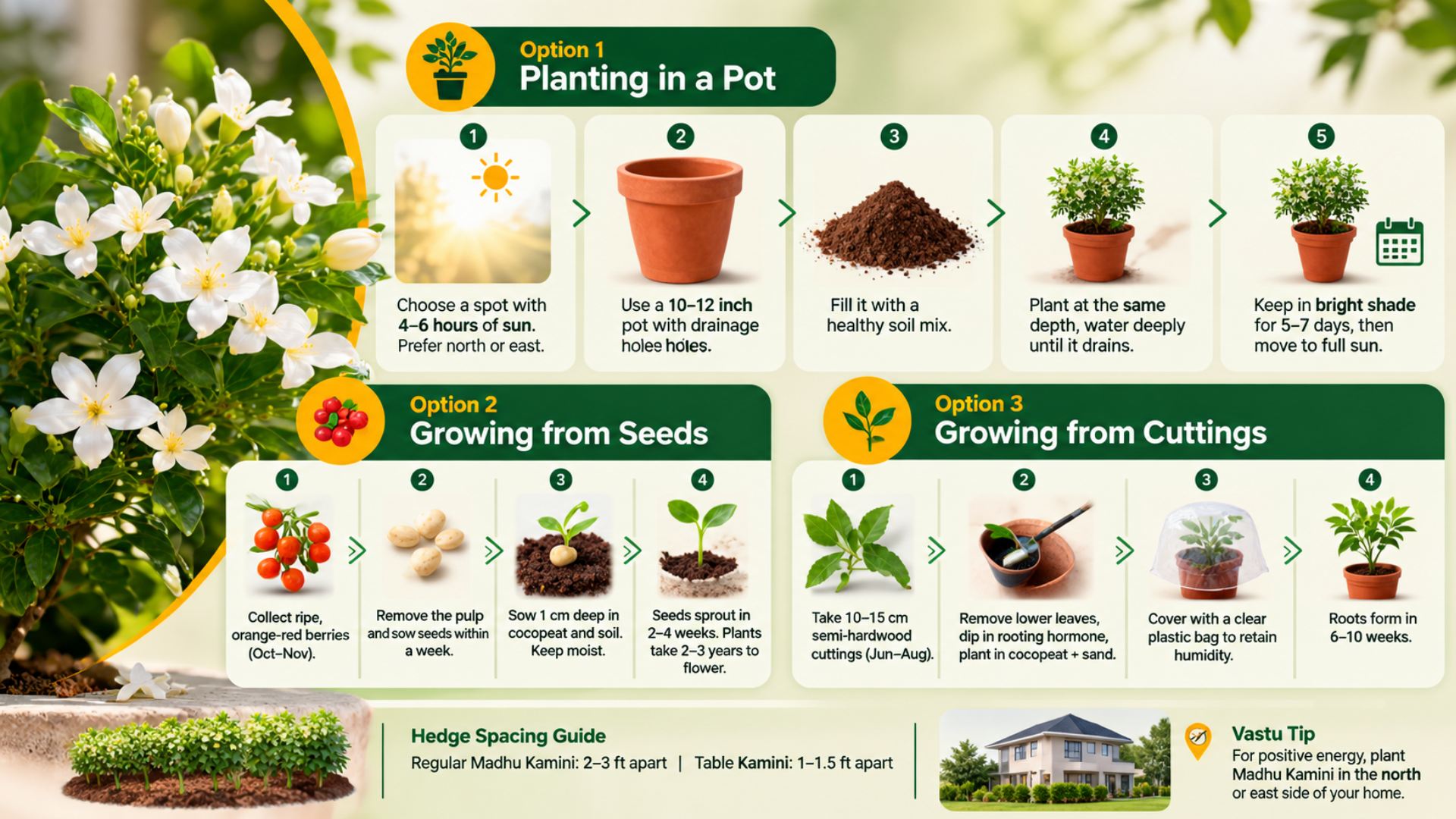
Option 1: Planting a Healthy Madhu Kamini Plant in a Pot
- Pick a spot with 4 to 6 hours of direct sun. For Vastu, choose the north or east side.
- Use a 10 to 12 inch pot with drainage holes.
- Fill it with the soil mix above.
- Plant at the same depth the plant sat in its nursery bag, then water deeply until water runs out of the bottom.
- Keep it in bright shade for 5 to 7 days, then move it to full sun. For a hedge in the ground, space regular Madhu Kamini 2 to 3 ft apart and Table Kamini 1 to 1.5 ft apart.
Option 2: Growing From Seeds
- Collect fully ripe, orange-red berries in October and November.
- Remove the pulp and sow the seeds within a week. The seeds lose their ability to sprout quickly.
- Sow 1 cm deep in a cocopeat and soil mix and keep it moist. Seeds sprout in 2 to 4 weeks in warm weather.
- Seed-grown plants usually take 2 to 3 years to flower.
Option 3: Growing From Cuttings
- Take 10 to 15 cm semi-hardwood cuttings between June and August.
- Remove the lower leaves, dip the cut end in rooting hormone, and plant in a mix of cocopeat and sand.
- Cover with a clear plastic bag to hold humidity and keep in bright shade.
- Roots form in 6 to 10 weeks. Cuttings root slowly, so plant several at a time.
The fastest way to enjoy flowers is to start with a healthy plant that is already flowering age. You can get it from Urvann, offering free next-day delivery in Delhi-NCR and Bengaluru if you order it before 7 PM on any given day.
Why Is My Madhu Kamini Not Flowering?
| Cause | What You Will Notice | Fix |
|---|---|---|
| Too Little Sun | Long gaps between leaves, thin stems | Move it to a spot with 6+ hours of direct sun |
| Too Much Nitrogen | Lots of dark green leaves, no buds | Stop urea; switch to compost plus a flowering fertilizer |
| Pruned at the Wrong Time | Buds disappear after a trim | Prune only right after a flush |
| Plant Is Too Young | Under 2 years old, especially if grown from seed | Give it time; keep feeding and sun steady |
| Winter in North India | No flowers from December to January | Normal; flowering resumes from late March |
| Overwatering | Yellow lower leaves, wet soil for days | Let the top 2 to 3 cm dry before watering |
| Pot Too Small | Roots coming out of the drainage holes | Repot one size up in February or March |
What Are the Common Problems With Madhu Kamini Plants and How Can You Fix Them?
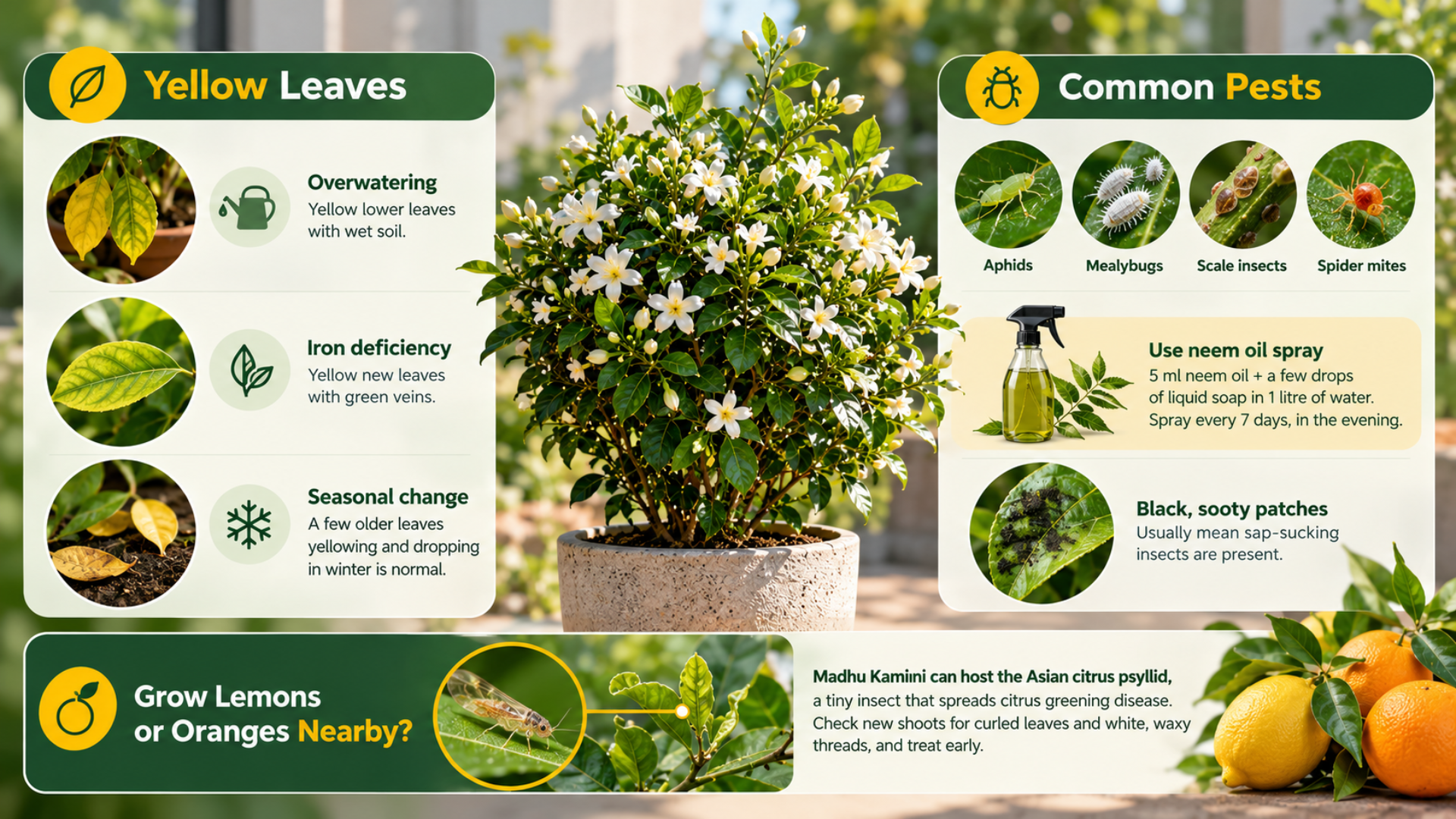
Yellow Leaves
Yellow lower leaves with wet soil mean overwatering. Yellow new leaves with green veins point to iron deficiency. This is common in North India, where tap water and soil are alkaline. Mix in compost and use a fertilizer with chelated iron. A few older leaves yellowing and dropping in winter is normal.
Pests
Watch for aphids, mealybugs, scale insects and spider mites, especially on new shoots. If you spot them early, spray a neem oil solution (5 ml neem oil and a few drops of liquid soap in 1 litre of water) every 7 days, in the evening. Black, sooty patches on leaves usually mean sap-sucking insects are present.
Grow Lemons or Oranges Nearby?
Madhu Kamini is a known host of the Asian citrus psyllid, a tiny insect that spreads citrus greening disease. Check new shoots for curled leaves and white, waxy threads, and treat early.
Final Thought
The Madhu Kamini plant is a lovely choice for any Indian garden. It's fragrant, easy to look after, and works well in different garden styles. Plus, it's not just pretty; it also has a place in Indian tradition and Vastu.
Give it sun, water it only when the topsoil is dry, and prune right after each flush. In return, you get waves of fragrant white flowers from spring to the end of the monsoon, year after year.
Bring home the Madhu Kamini plant from Urvann today.
FAQs for the Madhu Kamini Plant
1. When does Madhu Kamini flower?
In India, Madhu Kamini flowers in flushes from March to October, with the heaviest bloom during the monsoon (July to September). In North India, it rests from December to January.
2. What is Madhu Kamini according to Vastu?
According to Vastu, placing the Madhu Kamini plant in the north or east of your home is believed to bring positive energy, prosperity, and harmony. Its fragrant flowers are said to uplift the mood and attract positivity.
3. Why is my Madhu Kamini not flowering?
The most common reasons are less than 6 hours of sun, too much nitrogen fertilizer, pruning at the wrong time, or a plant under 2 years old. In North India, no flowers in December and January is normal. See the full table above.
4. Does the Kamini plant attract snakes?
There is no scientific evidence that Madhu Kamini's scent attracts snakes. A dense hedge that touches the ground can shelter rats and frogs, which snakes hunt. Keep the base of the hedge trimmed 15 to 20 cm above the soil and clear fallen leaves.
5. Are Madhu Kamini leaves the same as curry leaves?
No. Both belong to the Murraya genus and the leaves look similar, but curry leaf is Murraya koenigii. Madhu Kamini leaves are not used in cooking and should not be eaten without expert advice.
6. Is Table Kamini the same as Madhu Kamini?
Table Kamini is a compact, small-leaved form of Madhu Kamini. It has the same white, fragrant flowers but stays 1 to 3 ft tall in a pot, which suits balconies, low hedges, and bonsai.
7. How fast does Madhu Kamini grow, and how tall does it get?
It grows slowly to moderately, about 1 to 2 ft a year in the ground with good sun and feeding, and slower in pots. Potted plants stay 3 to 5 ft tall; garden plants reach 6 to 10 ft unless pruned.
8. Is Madhu Kamini an indoor plant?
The Madhu Kamini plant can grow indoors only if it gets 4 to 6 hours of direct sun, such as at a south-facing window. It does best outdoors on balconies, terraces or in gardens with full sun.
9. Does Madhu Kamini attract bees?
Yes. The sweet, fragrant flowers draw bees and butterflies, which helps pollinate the other plants in your garden.
Garima
4/16/2026, 10:08 AMPlease don't order you will only lose your money and mental health. You will never get your product. No customer support No COD facility because they wanted to ditch you only. You will only jot down your complaint and they will never respond you.