


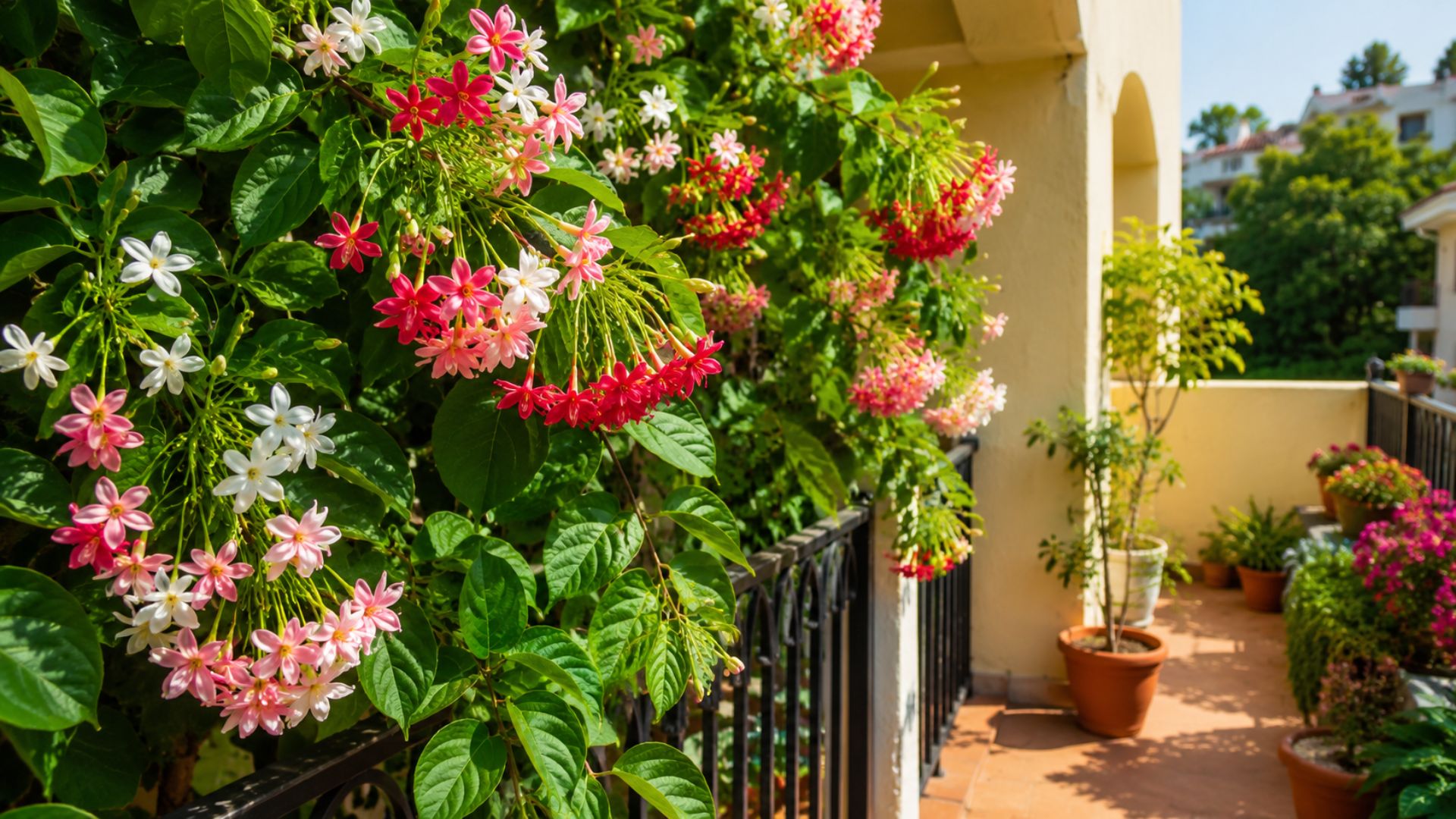
Learn why Madhumalti is a perfect summer garden plant in India, with colour-changing blooms, evening fragrance, fast climbing growth, pollinator benefits, easy care, and Vastu significance.
Key Takeaways
- Madhumalti is one of the best flowering climbers for Indian summer gardens because it thrives in warm, sunny conditions and blooms beautifully when many other plants struggle in the heat.
- It also supports a healthier garden ecosystem by attracting bees, butterflies, sunbirds, and other pollinators through its nectar-rich flowers and fragrance.
- Madhumalti also has cultural, Vastu, and traditional medicinal significance, but its seeds should not be consumed as they contain quisqualic acid and should be kept away from children and pets.
Flowers wilt, leaves curl, and garden corners that looked lush in winter suddenly feel bare. The Madhumalti plant, known scientifically as Combretum indicum and commonly called Rangoon Creeper or Chinese Honeysuckle, does the opposite. It thrives.
With clusters of colour-changing blooms, a sweet evening fragrance, and a vigorous climbing habit that can transform a plain wall or balcony railing in a single season, Madhumalti is one of the most rewarding plants you can grow in an Indian summer garden.
Here are seven reasons why Madhumalti deserves a place in your summer garden.
Reasons Why Madhumalti Is the Perfect Plant for Summer Gardens
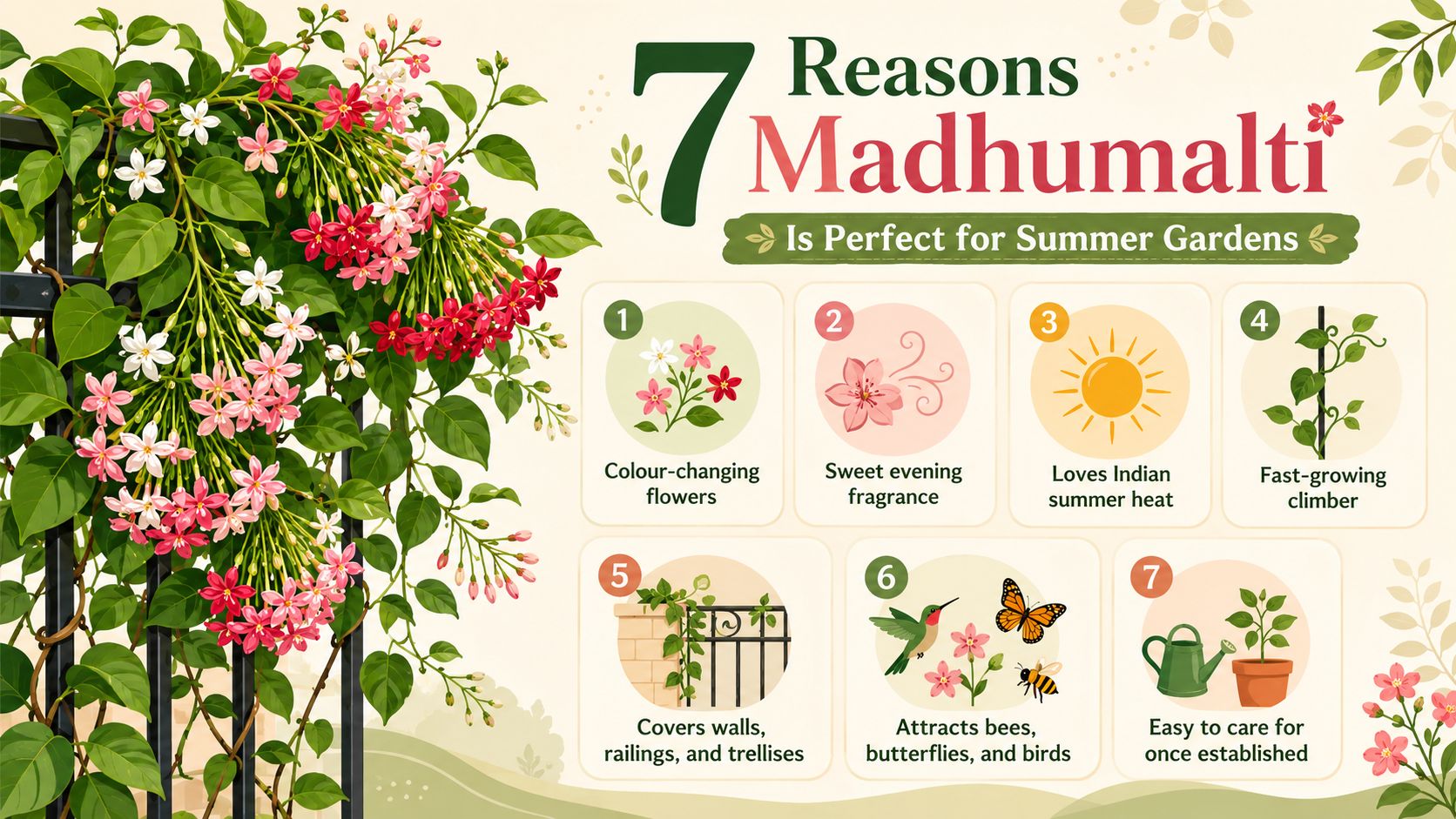
Here are the reasons why you should consider Madhumalti for your garden this summer:
1. One Vine, Three Beautiful Flower Colours
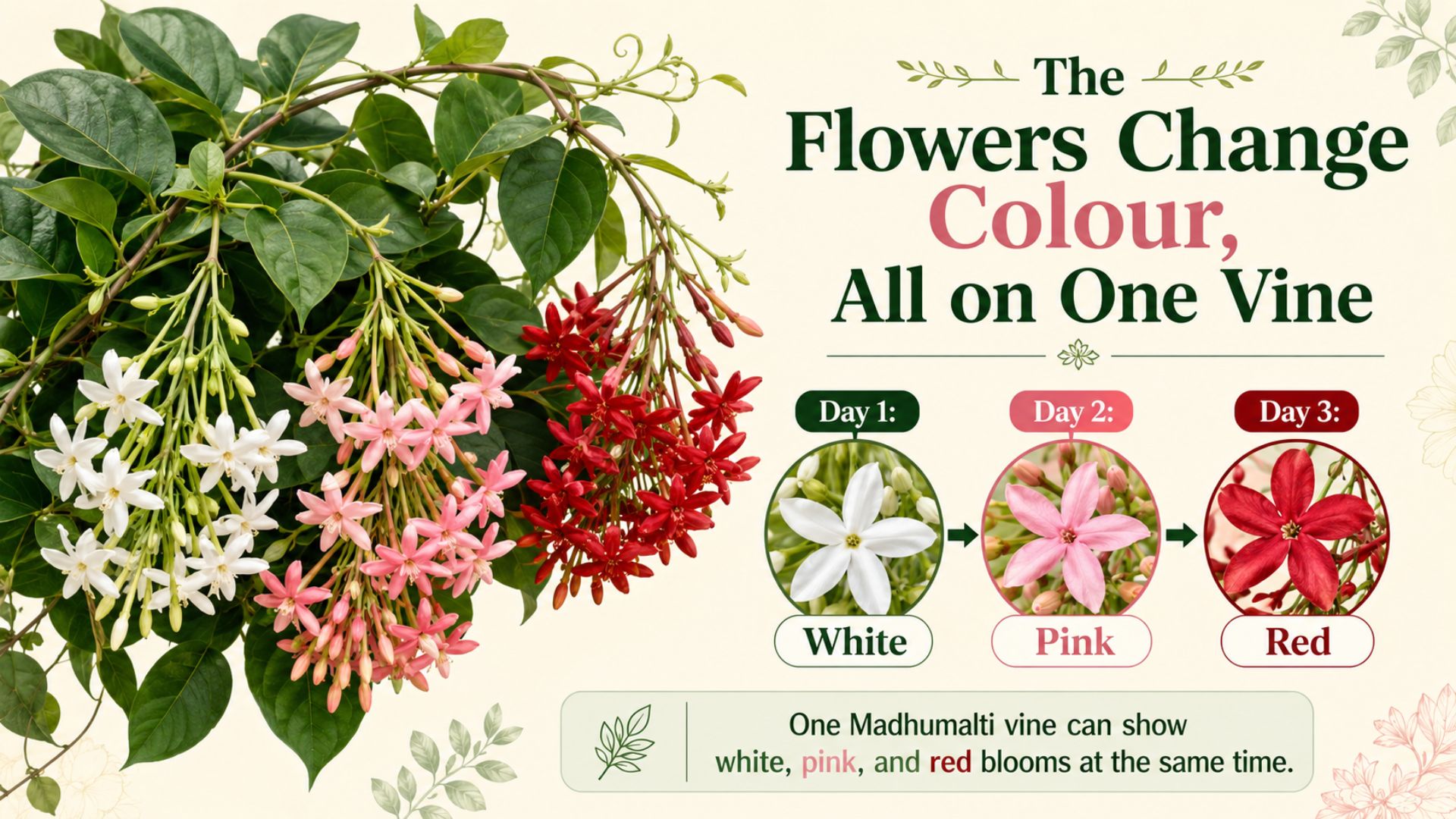
There are few natural spectacles quite as striking as a mature Madhumalti in full bloom. Each flower opens white in the evening, turns soft pink by the second day, and deepens into crimson or dark red by the third. Because flowers at different stages of maturity bloom simultaneously on the same vine, a single plant can display white, pink, and red all at once.
This colour-shifting quality makes Madhumalti one of the most visually dynamic flowering plants for Indian summer gardens. No two days look quite the same.
Madhumalti flowering season in India typically runs from February to May and again from August to November, with the most prolific blooming happening during the peak summer and post-monsoon months.
2. Unforgettable Evening Fragrance
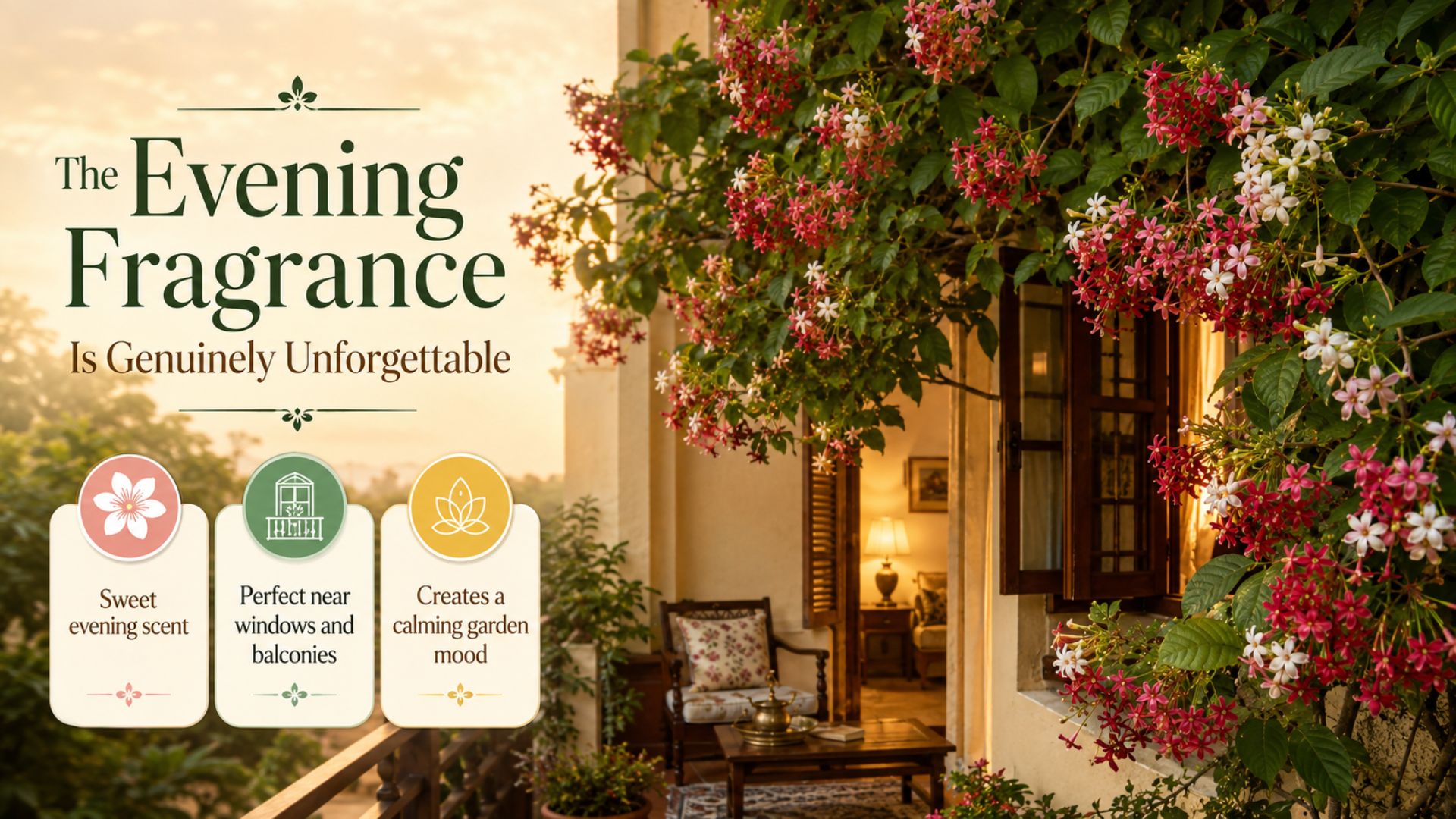
As the day cools and the sun sets, Madhumalti releases a sweet, honeysuckle-like fragrance that drifts through courtyards, verandas, and open windows. This evening scent is one of the plant's most beloved qualities.
Placing a Madhumalti near a seating area, entrance gate, balcony railing, or bedroom window means you'll be greeted by its fragrance every evening through the summer months. The essential oil from the plant is also used in perfumes and aromatherapy for its calming, soothing properties.
Does Madhumalti smell? Absolutely, and beautifully so.
3. Thrives in Indian Summer Heat

While many flowering plants go dormant or drop blooms in peak summer temperatures, Madhumalti actively loves the heat. It is a tropical plant that performs best in warm, sunny conditions, ideally between 25°C and 38°C, which aligns perfectly with Indian summers across most of the country.
It requires at least 5 to 6 hours of direct sunlight daily to bloom profusely. The more sun it gets, the more flowers it produces. This is one of the key reasons it earns its place as an ideal summer garden plant.
4. Madhumalti Grows Fast and Covers Space Beautifully
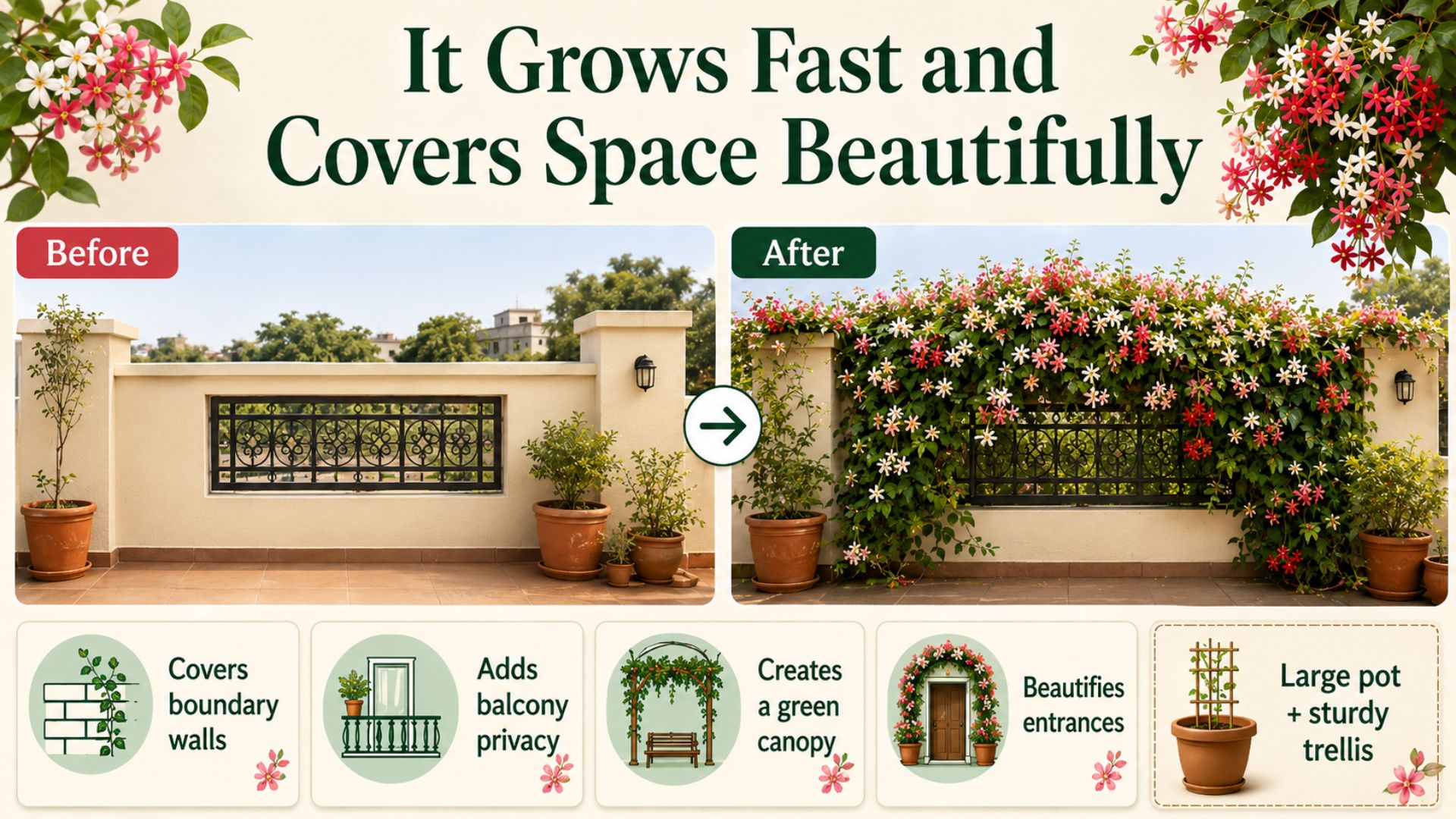
Madhumalti is a vigorous climber. Given a trellis, fence, pergola, or any vertical support, it scales quickly and covers large areas with dense, lush foliage and cascading flower clusters. If you want to:
- Cover an unsightly boundary wall
- Add privacy to a terrace or balcony
- Create a natural green canopy over a seating area
- Beautify a garden entrance
Madhumalti delivers faster than most flowering vines. The monsoon season accelerates leaf growth significantly, setting the plant up for an abundant bloom in the following summer.
Despite its vigorous growth habit, Madhumalti adapts remarkably well to container gardening. A large pot, ideally 12 to 14 inches deep, along with a sturdy trellis or support structure, provides enough space for the vine to flourish on balconies, terraces, and compact urban gardens.
5. Attracts Bees, Butterflies, and Birds
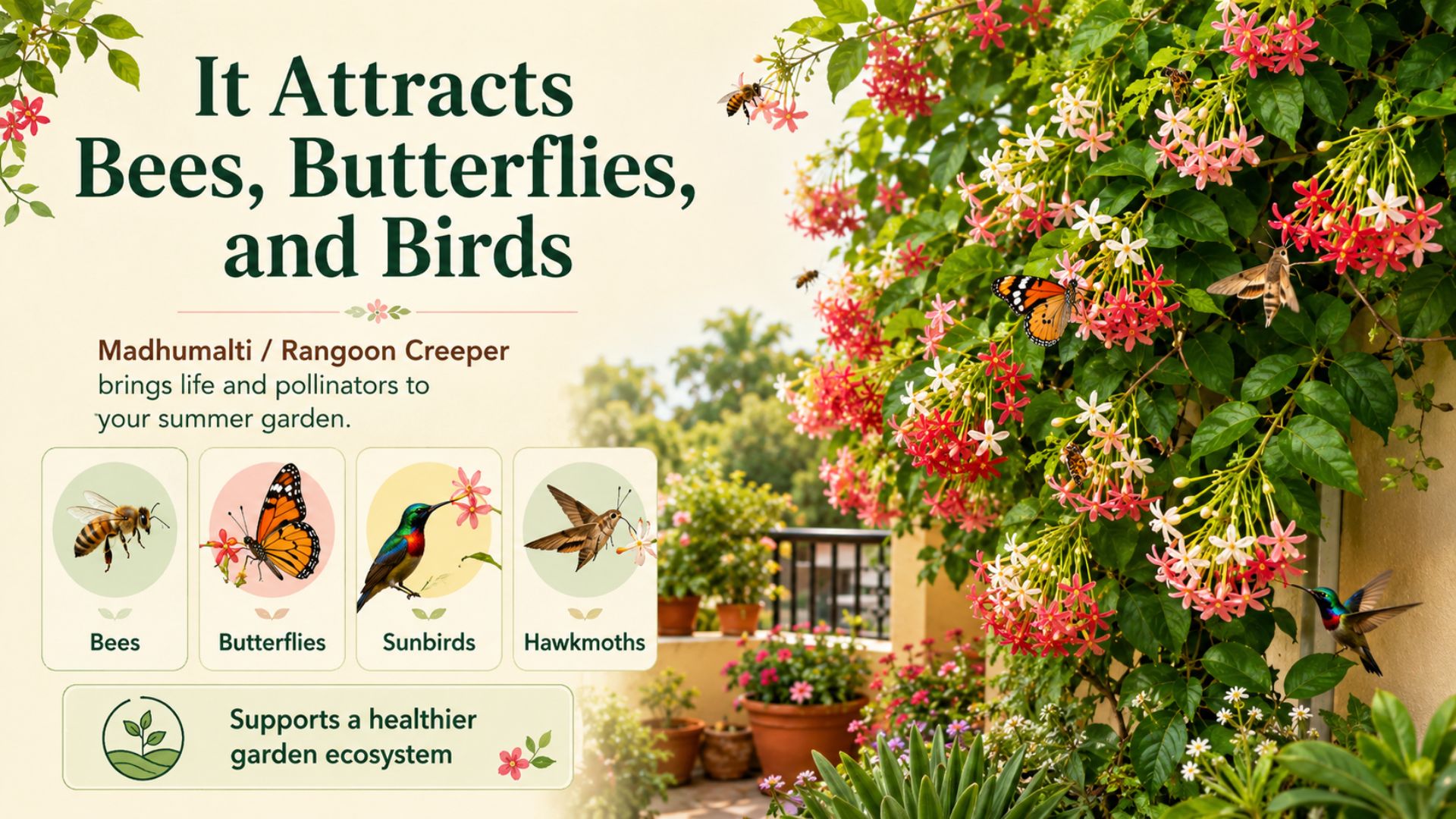
The nectar-rich flowers and sweet fragrance make Madhumalti a magnet for pollinators. Bees, butterflies, sunbirds, and even hawkmoths are drawn to its blooms, particularly in the evenings when the fragrance intensifies.
If you maintain a kitchen garden or grow other flowering plants nearby, having a Madhumalti vine is a natural way to support pollination and create a healthier, more active garden ecosystem. A garden with Madhumalti in bloom will feel genuinely alive.
6. Hardy and Low-Maintenance
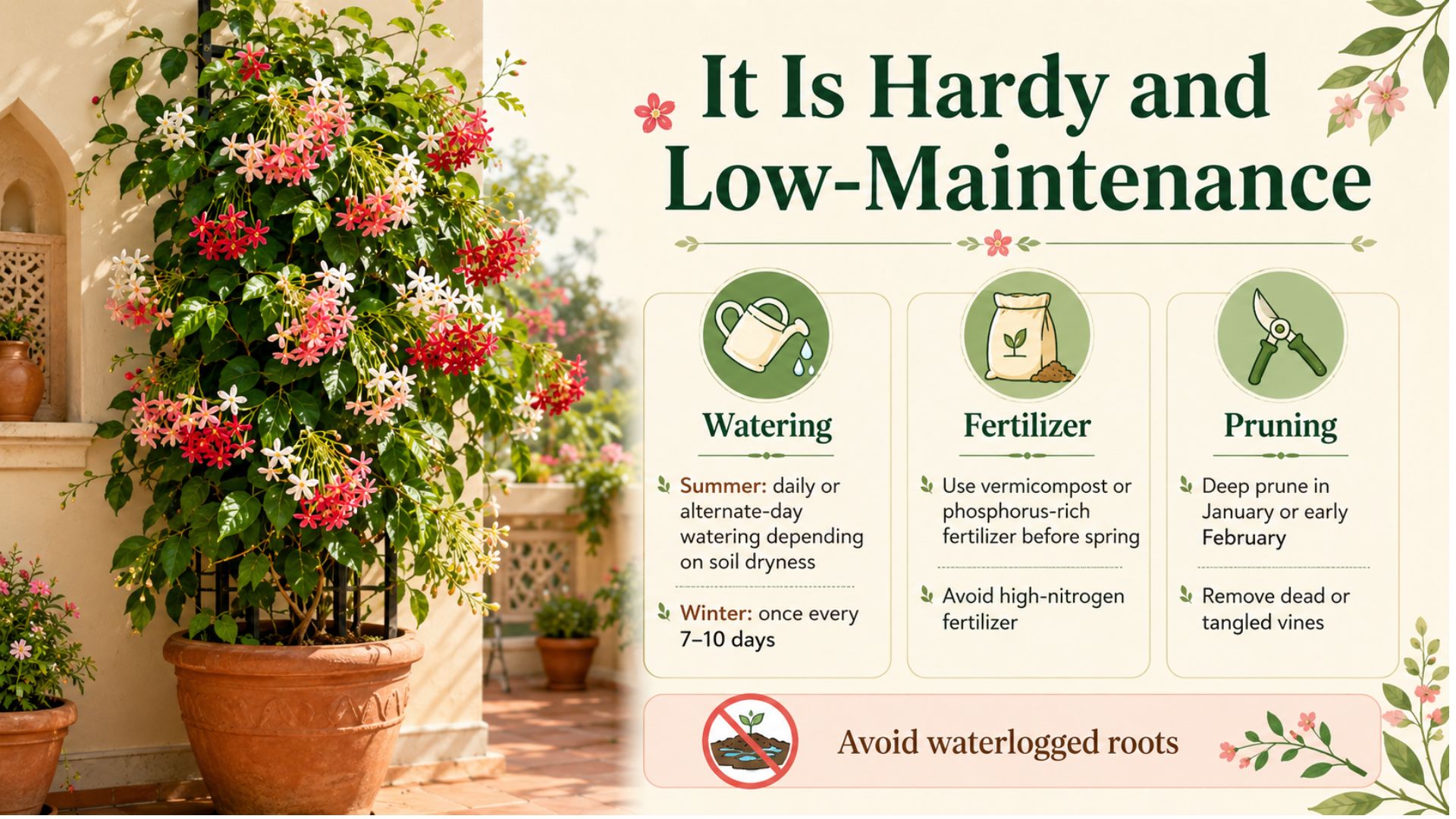
Once established, Madhumalti is one of the most forgiving flowering vines you can grow. It tolerates a range of soil types, bounces back from pruning, and requires minimal fertilization, just a phosphorus-rich feed before the spring blooming season to encourage flowers over foliage.
- Watering: In summer, water daily or every alternate day depending on how quickly the soil dries out. In winter, reduce watering to once every 7 to 10 days. Always ensure the pot or planting area has good drainage. The plant does not like waterlogged roots.
- Fertilizer: Avoid high-nitrogen fertilizers, which promote leaf growth at the expense of flowers. Use vermicompost or a phosphorus-rich fertilizer once before spring for best results.
- Pruning: A deep prune in January or early February, before the spring bloom, encourages vigorous new growth and abundant flowering. Remove tangled or dead vines and keep the main branch intact.
7. Known for Vastu Significance and Medicinal Uses
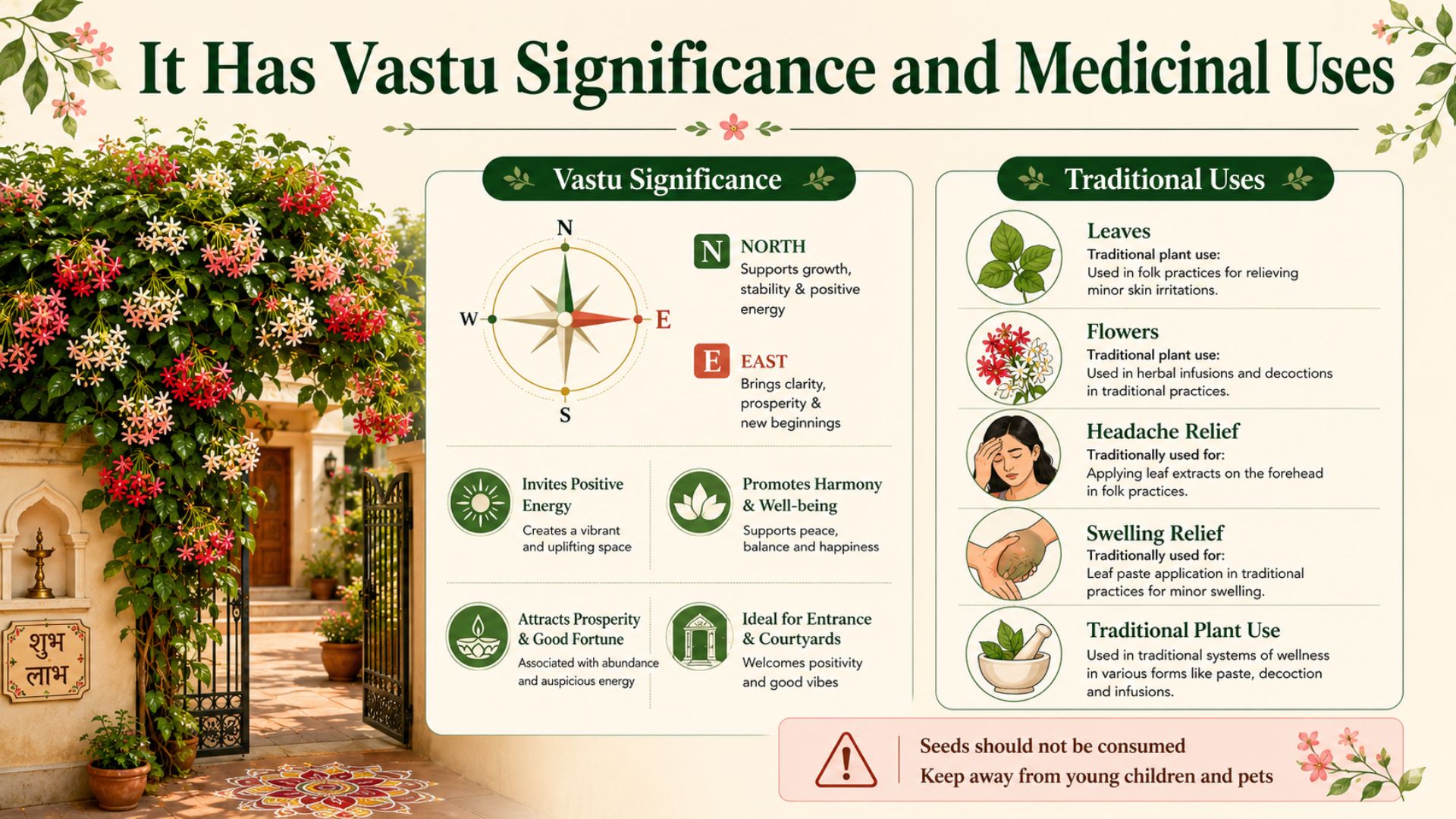
Madhumalti holds a respected place in Indian tradition. According to Vastu Shastra, placing a Madhumalti plant in the east or north direction of your home is believed to promote positive energy, harmony, and prosperity. It is associated with Lord Vishnu in Hindu culture and considered auspicious when planted in gardens or near the entrance.
Madhumalti plants are known for their Vastu significance and their practical benefits. Its fragrance has a known calming effect, and the plant's presence near living spaces creates a more peaceful, welcoming atmosphere.
From a traditional medicine perspective, various parts of the Madhumalti plant have been used for centuries:
- Leaves applied to the forehead to ease headaches
- Leaf extracts used to treat ulcers, boils, and swelling
- Roasted fruits traditionally used for fever and digestive complaints
- The plant is referenced in ancient Ayurvedic texts for its anti-inflammatory and antimicrobial properties
NOTE: The seeds of the plant contain quisqualic acid and should not be consumed. Keep the plant out of reach of young children and pets to be safe.
Bring Madhumalti Home This Summer!
If your garden, balcony, or terrace is missing a focal point this summer, Madhumalti is the answer. One well-placed vine can fill a bare wall with colour, flood your evenings with fragrance, and transform your outdoor space from ordinary to extraordinary, all with minimal care.
At Urvann, we deliver healthy, well-rooted Madhumalti plants directly to your door, next day, across Delhi-NCR and Bengaluru. No nursery visits, no guesswork, just a thriving plant ready to climb.
Shop Madhumalti Plants on Urvann →Frequently Asked Questions (FAQs)
1. What is Madhumalti called in English?
Madhumalti is commonly called Rangoon Creeper or Chinese Honeysuckle in English. Its scientific name is Combretum indicum.
2. In which month do Madhumalti flowers bloom?
The Madhumalti flowering season in India typically runs from February to May and again from August to November. Summer months see the most prolific blooming.
3. Is the Madhumalti plant good for the home?
Yes. It is considered auspicious in Vastu Shastra, carries cultural significance in the Hindu tradition, and brings fragrance, colour, and positive energy to the home environment.
4. Does Madhumalti need full sun?
Yes, it thrives in full sun. A minimum of 5 to 6 hours of direct sunlight daily is recommended for abundant flowering. It can tolerate partial shade but will produce fewer blooms.
5. Can Madhumalti grow in pots?
Absolutely. Use a deep pot of at least 12 to 14 inches with good drainage, a well-draining soil mix, and a sturdy support structure for the vine to climb.
6. Why is my Madhumalti not flowering?
The most common reasons are insufficient sunlight, excessive nitrogen in the fertilizer, or lack of pruning. Switch to a phosphorus-rich fertilizer, ensure at least 5 hours of direct sun, and prune before the spring season.
7. Does Madhumalti attract bees?
Yes. Its nectar-rich flowers and sweet fragrance attract bees, butterflies, sunbirds, and hawkmoths, making it an excellent choice for pollinator-friendly gardens.
8. Is Madhumalti poisonous?
The seeds contain quisqualic acid and should not be ingested. Keep the plant away from young children and pets. The flowers and leaves, however, have a long history of traditional medicinal use when applied externally.
9. What are the Madhumalti plant Vastu benefits?
Placing Madhumalti in the east or north direction of your home is believed to bring positive energy, harmony, and prosperity. It is associated with auspiciousness in the Hindu tradition.