


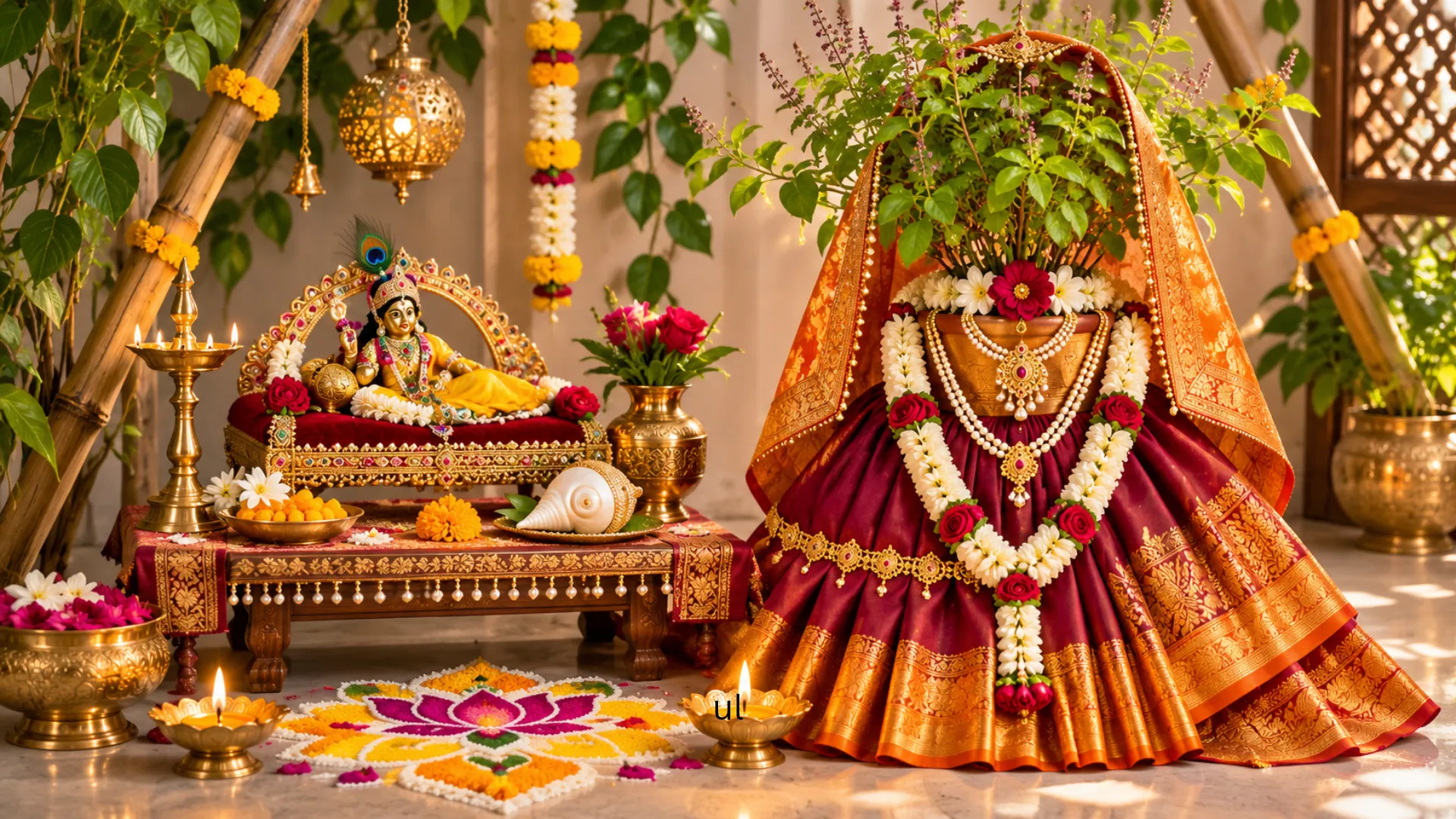
A red chunari, marigold flowers, and a glowing diya bring the warmth of a family wedding to your Tulsi plant and celebrate a cherished tradition at home.
Key Takeaways
-
-
- Tulsi Vivah 2026 date: Saturday, 21 November 2026.
- Dev Uthani Ekadashi: Friday, 20 November 2026.
- Dwadashi Tithi: Begins at 6:31 AM on 21 November and ends at 4:56 AM on 22 November, according to Drik Panchang for New Delhi.
- Tulsi Vivah Shubh Muhurat: The ceremony is traditionally performed in the evening, around Pradosh or Godhuli Kaal.
- Who gets married? Goddess Tulsi and Lord Vishnu, traditionally represented by Shaligram.
- Puja essentials: A healthy Tulsi plant, Shaligram or Vishnu idol, flowers, red chunari, diya, and traditional offerings.
-
Remember how the Tulsi plant in your courtyard or balcony would suddenly become the centre of everyone's attention during Tulsi Vivah?
Someone would bring marigold flowers, someone would carefully drape a red chunari around the plant, and a little diya would light up the entire corner. It felt like a wedding in the family, just on a smaller scale.
Tulsi Vivah is a traditional Hindu festival celebrating the symbolic marriage of Goddess Tulsi and Lord Vishnu, usually represented by the sacred Shaligram stone. The festival also marks the beginning of the traditional wedding season after Chaturmas.
This year, Tulsi Vivah falls on Saturday, 21 November 2026. And if you're planning to celebrate it at home, you might be wondering: Is Tulsi Vivah on 20 or 21 November? What is the shubh muhurat? And how do you perform the puja properly?
This guide will tell you everything you need to know about Tulsi Vivah.
Tulsi Vivah (तुलसी विवाह) 2026 Date: Tulsi Vivah Kis Din Hai?
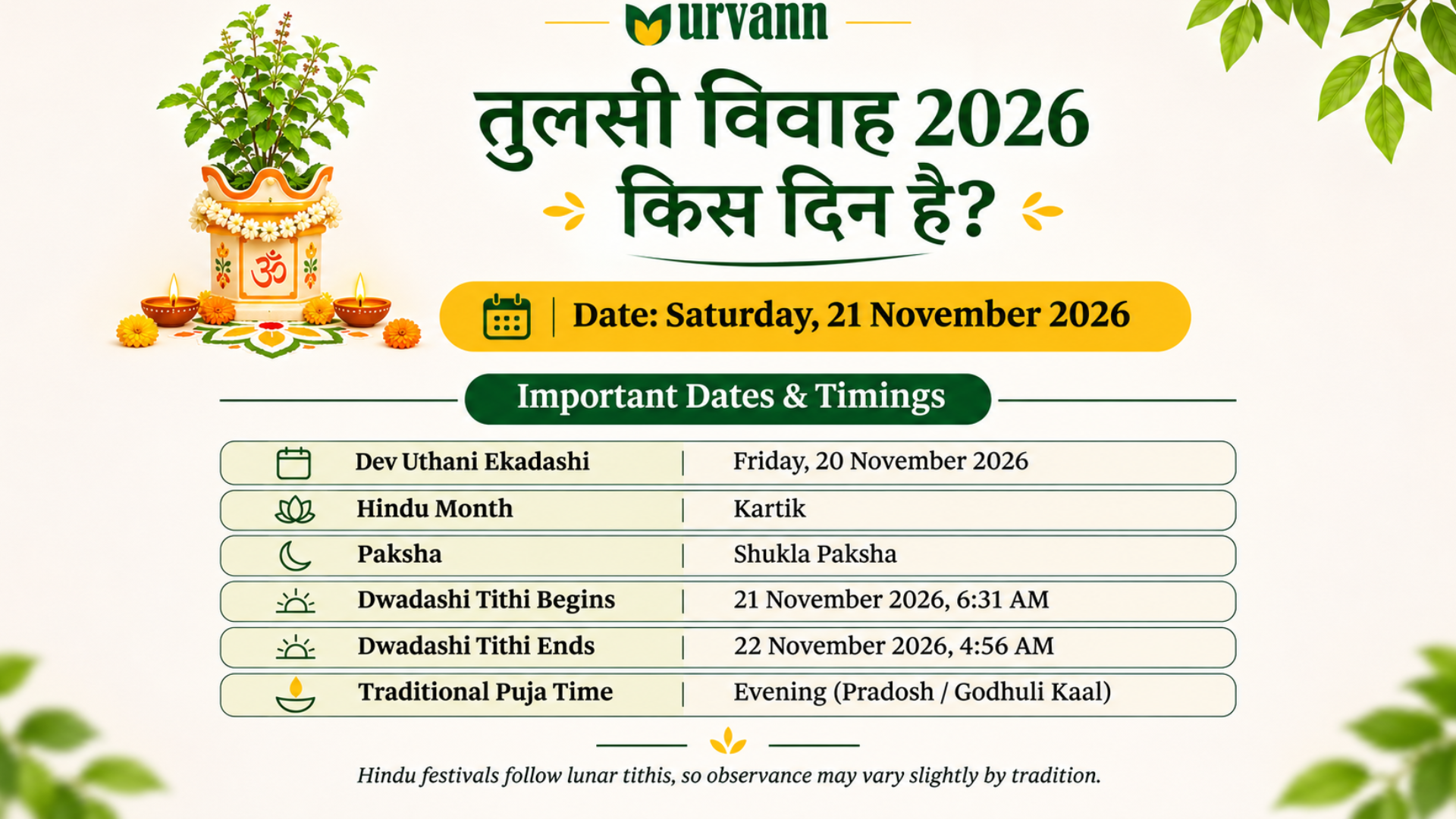
Tulsi Vivah 2026 falls on Saturday, 21 November 2026. According to the Hindu calendar, the festival is associated with the Dwadashi Tithi of Shukla Paksha in the Kartik month.
Here are the important dates and timings:
| Details | Information |
|---|---|
| Tulsi Vivah Date | Saturday, 21 November 2026 |
| Dev Uthani Ekadashi | Friday, 20 November 2026 |
| Hindu Month | Kartik |
| Paksha | Shukla Paksha |
| Dwadeshi Tithi Begins | 21 November 2026, 6:31 AM |
| Dwadashi Tithi Ends | 22 November 2026, 4:56 AM |
| Traditional Puja Time | Evening, around Pradosh/Godhuli Kaal |
The lunar calendar follows tithis rather than fixed dates. This is why Hindu festival dates can change each year, and why different traditions may observe Tulsi Vivah on slightly different days.
Is Tulsi Vivah on 20 or 21 November 2026?
One of the most common questions this year is whether Tulsi Vivah should be celebrated on 20 November or 21 November.
The confusion comes from the close connection between Dev Uthani Ekadashi and Tulsi Vivah.
1. Dev Uthani Ekadashi (देवउठनी एकादशी) – 20 November 2026
Dev Uthani Ekadashi, also called Prabodhini Ekadashi or Devutthana Ekadashi, falls on Friday, 20 November 2026.
According to Hindu tradition, Lord Vishnu awakens from his four-month yogic sleep, known as Yoga Nidra, on this day. This marks the conclusion of Chaturmas, a period during which many Hindu communities traditionally avoid major auspicious ceremonies.
With Lord Vishnu's awakening, the season for weddings and other auspicious occasions begins again.
2. Tulsi Vivah Dwadashi (तुलसी विवाह द्वादशी) – 21 November 2026
Drik Panchang lists Saturday, 21 November 2026, as Tulsi Vivah.
The Dwadashi Tithi begins at 6:31 AM on November 21 and continues until 4:56 AM the following morning. Therefore, Dwadashi remains in effect throughout the evening of November 21.
This makes November 21 the main date listed for the Tulsi–Shaligram wedding in the referenced calendar.
Can Tulsi Vivah Be Celebrated on Another Day?
Yes. Some families perform Tulsi Vivah on Dev Uthani Ekadashi, while others follow the Dwadashi date.
Certain Hindu traditions also consider the period from Prabodhini Ekadashi to Kartik Purnima auspicious for Tulsi Vivah. The exact observance depends on regional customs, family traditions, and Panchang guidance.
If you are following Drik Panchang's main 2026 festival date for New Delhi, celebrate Tulsi Vivah on 21 November. If your family follows a different tradition, consult your local priest or Panchang before selecting the ceremony date.
What are the Shubh Muhurat and Puja Timings of Tulsi Vivah?
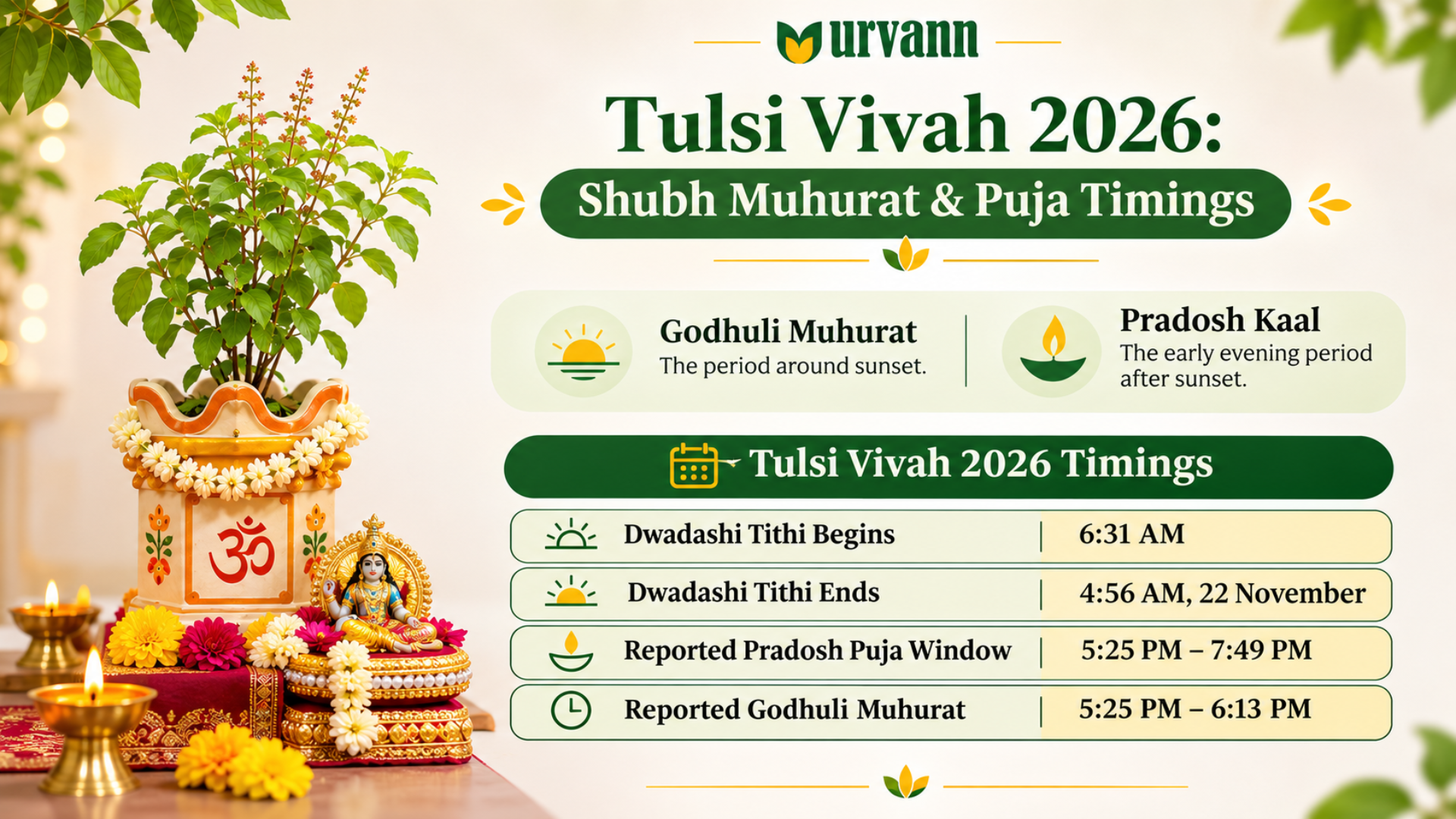
Tulsi Vivah is traditionally celebrated during the evening, especially around Pradosh Kaal or Godhuli Muhurat.
Godhuli (गोधूलि) refers to the period around sunset, while Pradosh (प्रदोष) is the early evening period after sunset. Both hold significance in Hindu worship.
For November 21, 2026, the following timings have been published for the festival:
| Puja Timing | Time (IST) |
|---|---|
| Dwadashi Tithi Begins | 6:31 AM |
| Dwadashi Tithi Ends | 4:56 AM, 22 November |
| Reported Pradosh Puja Window | 5:25 PM - 7:49 PM |
| Reported Godhuli Muhurat | 5:25 PM - 6:13 PM |
Does Tulsi Vivah Muhurat Change According to City?
Yes. Since Pradosh and Godhuli are related to sunset, the relevant worship period can change depending on your location.
For example, sunset occurs earlier in Kolkata than in Mumbai. Therefore, a single evening time window may not be suitable for both cities.
If you are celebrating in Delhi, Mumbai, Jaipur, Bengaluru, Kolkata, or another Indian city, check a location-specific Panchang for the appropriate ceremony time.
Tip: Prepare the mandap, flowers, decorations, and puja samagri before sunset. This allows your family to begin the main ceremony during the chosen auspicious period without rushing.
Tulsi Vivah Puja Samagri List: Things You Need at Home
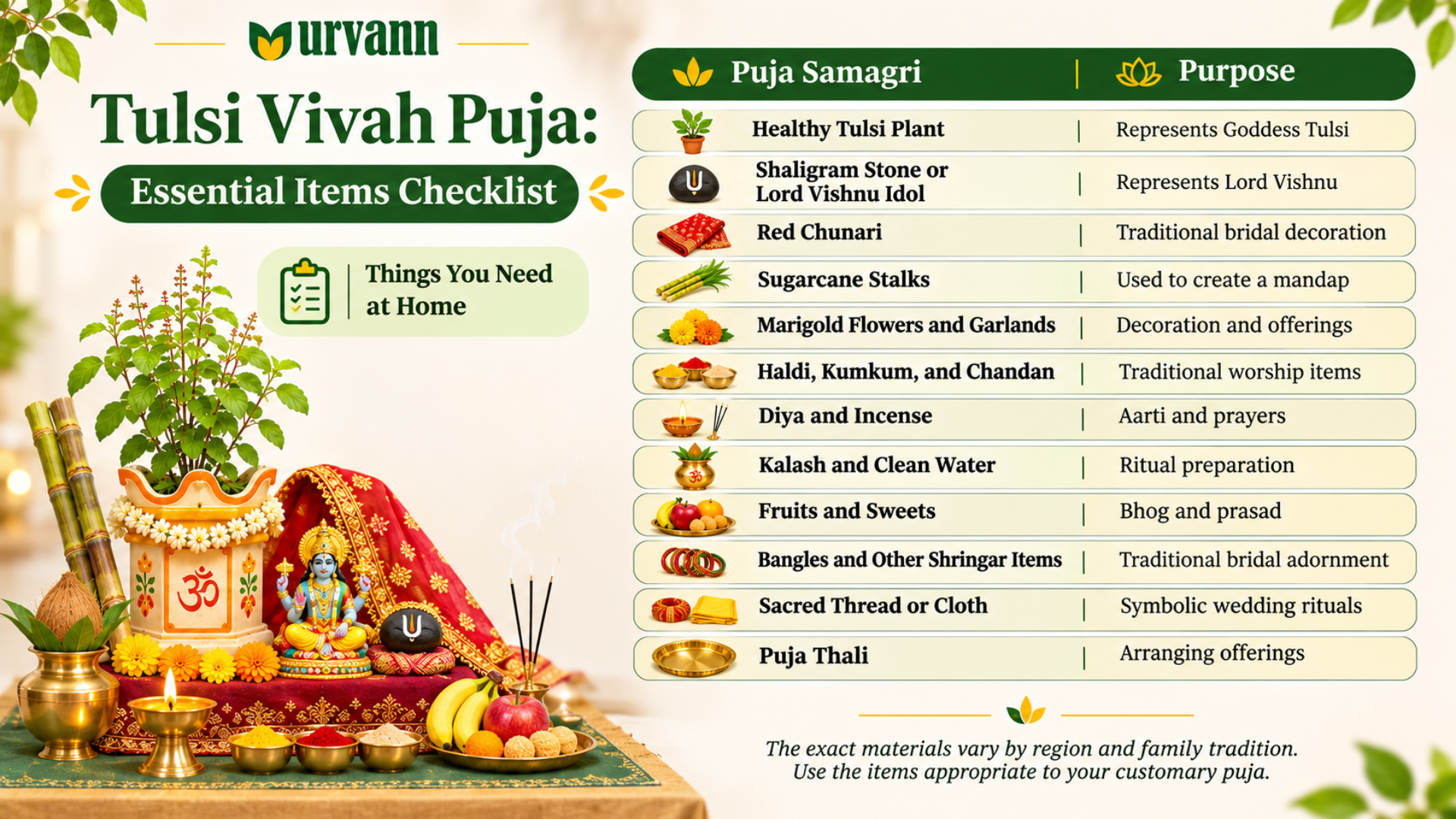
You do not need an elaborate wedding setup to celebrate Tulsi Vivah. A healthy Tulsi plant, traditional offerings, and a clean prayer space are enough for a simple ceremony according to your family's customs.
Here is a practical Tulsi Vivah puja samagri checklist:
| Puja Samagri | Purpose |
|---|---|
| Healthy Tulsi Plant | Represents Goddess Tulsi |
| Shaligram Stone or Lord Vishnu Idol | Represents Lord Vishnu |
| Red Chunari | Traditional bridal decoration |
| Sugarcane Stalks | Used to create a mandap |
| Marigold Flowers and Garlands | Decoration and offerings |
| Haldi, Kumkum, and Chandan | Traditional worship items |
| Diya and Incense | Aarti and prayers |
| Kalash and Clean Water | Ritual preparation |
| Fruits and Sweets | Bhog and prasad |
| Bangles and Other Shringar Items | Traditional bridal adornment |
| Sacred Thread or Cloth | Symbolic wedding rituals |
| Puja Thali | Arranging offerings |
The exact materials vary by region and family tradition. Use the items appropriate to your customary puja.
Which Tulsi Plant Is Suitable for Tulsi Vivah?
Both Rama Tulsi and Shyama Tulsi are commonly grown and worshipped in Indian households. The plant chosen for Tulsi Vivah may depend on the family's tradition.
Rama Tulsi is generally known for its green leaves, while Shyama Tulsi often has darker, purplish stems and foliage.
You can use an established, healthy Tulsi plant already growing at home. There is no need to purchase a new one specifically for the occasion.
If you are planning to bring Tulsi into your home, explore Urvann's Rama Tulsi and Shyama Tulsi plant collection.
A well-established plant is easier to decorate and care for during the celebration.
Tulsi Vivah Kaise Karen? Step-by-Step Puja Vidhi at Home
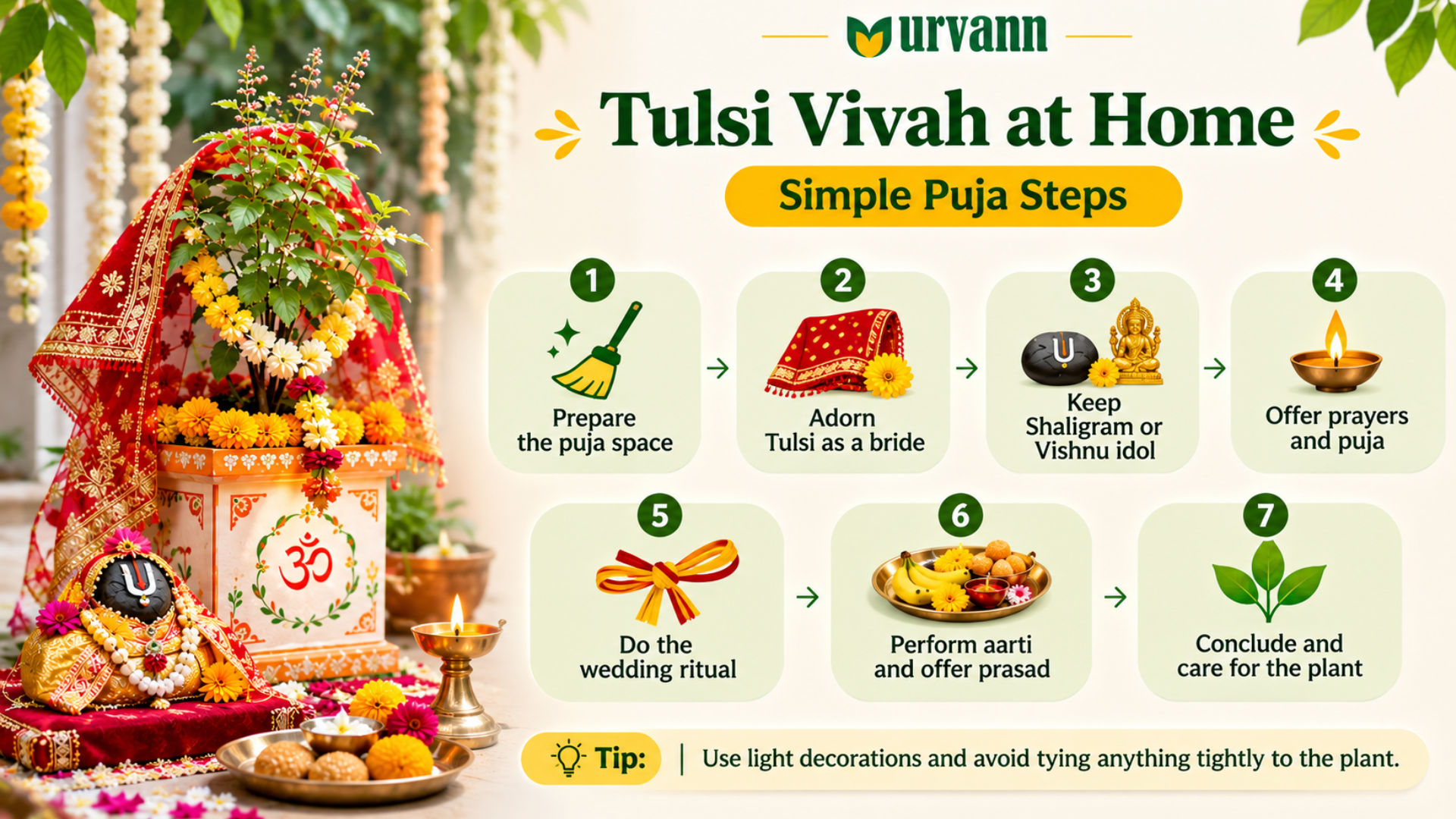
Wondering how to perform Tulsi Vivah at home (Tulsi Vivah kaise karen)?
The ceremony follows many customs associated with a Hindu wedding. Some families conduct an elaborate puja with a priest, while others celebrate with a simpler household ritual.
Here is a basic Tulsi Vivah puja vidhi that you can adapt according to your family tradition.
Step 1: Clean and Prepare the Puja Area
Start by cleaning your courtyard, balcony, terrace, or prayer area. Place the Tulsi plant on a clean, stable surface where family members can gather comfortably. If the Tulsi plant is already growing in a fixed Tulsi Vrindavan, there is no need to move it. Make sure there is enough space around the plant for decorations and the puja ceremony.
Step 2: Decorate the Tulsi Plant as a Bride
Tulsi is traditionally decorated like a bride during the wedding ceremony.
You can use a red chunari, flower garlands, bangles, and other traditional shringar items. Many households also prepare a small mandap using sugarcane stalks. Decorate the area with marigold flowers, rangoli, and diyas to create a festive atmosphere.
Tip: Avoid tying heavy decorations tightly around the Tulsi plant. Secure the chunari to a support or mandap instead of pulling on the delicate stems.
Step 3: Place Lord Shaligram or Vishnu's Idol
Place the Shaligram stone near the Tulsi plant on a clean puja thali or suitable platform.
Shaligram is traditionally worshipped as a representation of Lord Vishnu. If your family does not have a Shaligram, some household traditions allow the use of a Lord Vishnu idol or image. Arrange flowers, water, and other customary offerings around the setup.
Step 4: Begin the Tulsi Vivah Puja
Light a diya and begin the ceremony with prayers to Lord Ganesha, Goddess Tulsi, and Lord Vishnu, according to your tradition.
Offer flowers, chandan, and other appropriate puja materials. Family members may chant Tulsi and Vishnu mantras or sing devotional songs. The ceremony can also include a traditional sankalp, or statement of devotional intention.
Step 5: Perform the Tulsi–Shaligram Wedding Ritual
The central part of Tulsi Vivah is the symbolic marriage ceremony.
In many households, a sacred cloth or thread is used to represent the wedding bond between Tulsi and Shaligram. Some families perform a symbolic kanyadaan ceremony, followed by prayers and parikrama. The number of circumambulations and other wedding customs can differ between communities. Follow your family's traditional procedure or the instructions of your priest.
Avoid tying the ceremonial thread directly around delicate Tulsi stems.
Step 6: Perform Aarti and Offer Prasad
After the wedding ritual, perform aarti for Goddess Tulsi and Lord Vishnu. Offer fruits, sweets, and other customary bhog. Family members can sing devotional songs and seek blessings for peace, happiness, and family well-being. Finally, distribute prasad among everyone present.
Step 7: Complete the Celebration
Once the puja is complete, carefully remove any decorations that may affect the plant's growth. Do not leave heavy fabric, tight strings, or sharp decorative objects attached to the Tulsi plant. Remember that the living plant needs care even after the celebrations are over.
How to Decorate a Tulsi Plant for Tulsi Vivah at Home
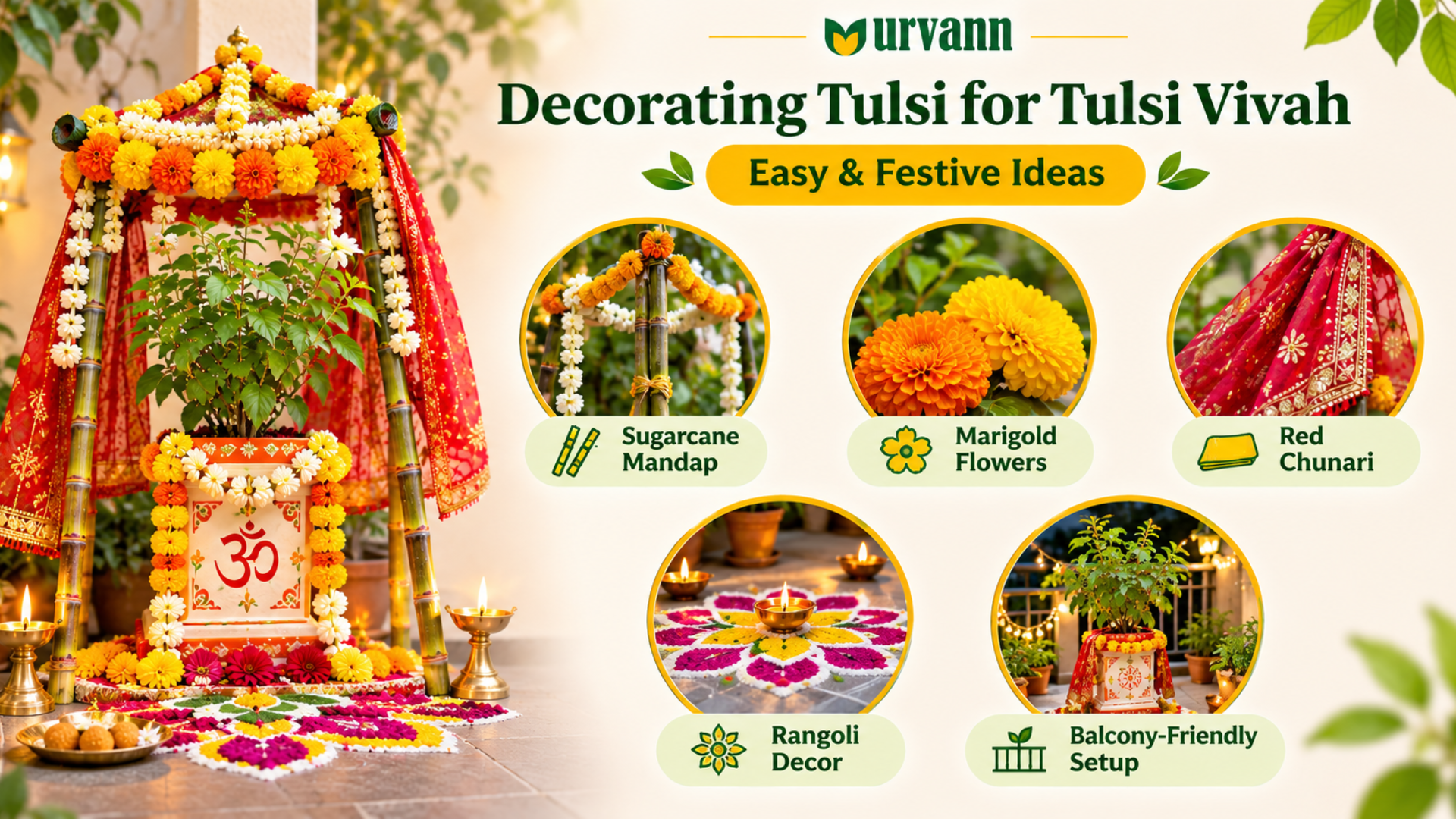
One of the most beautiful parts of Tulsi Vivah is decorating the sacred plant for the wedding.
Whether you have a large courtyard or a small apartment balcony, you can create a festive setup without spending too much.
1. Create a Traditional Sugarcane Mandap
Arrange sugarcane stalks around the Tulsi pot to create a small wedding canopy. The mandap can be decorated with flowers and lightweight fabric. Use a separate support structure so the weight does not fall on the plant.
2. Decorate With Marigold Flowers
Marigold flowers, commonly called Genda, are widely used in Indian festival decorations. Arrange loose flowers around the pot or use garlands to decorate the mandap. You can also create a small floral border around the Tulsi plant.
3. Add a Red Chunari
A red chunari represents the traditional bridal attire of Goddess Tulsi. Drape it loosely over the mandap rather than wrapping it tightly around the plant. This keeps the festive appearance while protecting the foliage.
4. Create a Rangoli Around the Tulsi Pot
Decorate the surrounding floor with colourful rangoli patterns. You can add flower petals, traditional designs, and small diyas. Keep burning lamps at a safe distance from the leaves, stems, and hanging fabric.
5. Make a Simple Balcony Tulsi Vivah Setup
If you live in an apartment, place your Tulsi pot on a stable plant stand or low table. Decorate the surrounding space with flowers, a lightweight mandap, and a few carefully positioned diyas. A small balcony can be just as welcoming for the celebration as a large courtyard.
Tip: If your Tulsi plant has grown tall or uneven, avoid heavy pruning immediately before the festival just for decoration. Keep the plant healthy and decorate around its natural shape.
Tulsi Vivah Ki Katha: The Story of Goddess Tulsi and Lord Vishnu
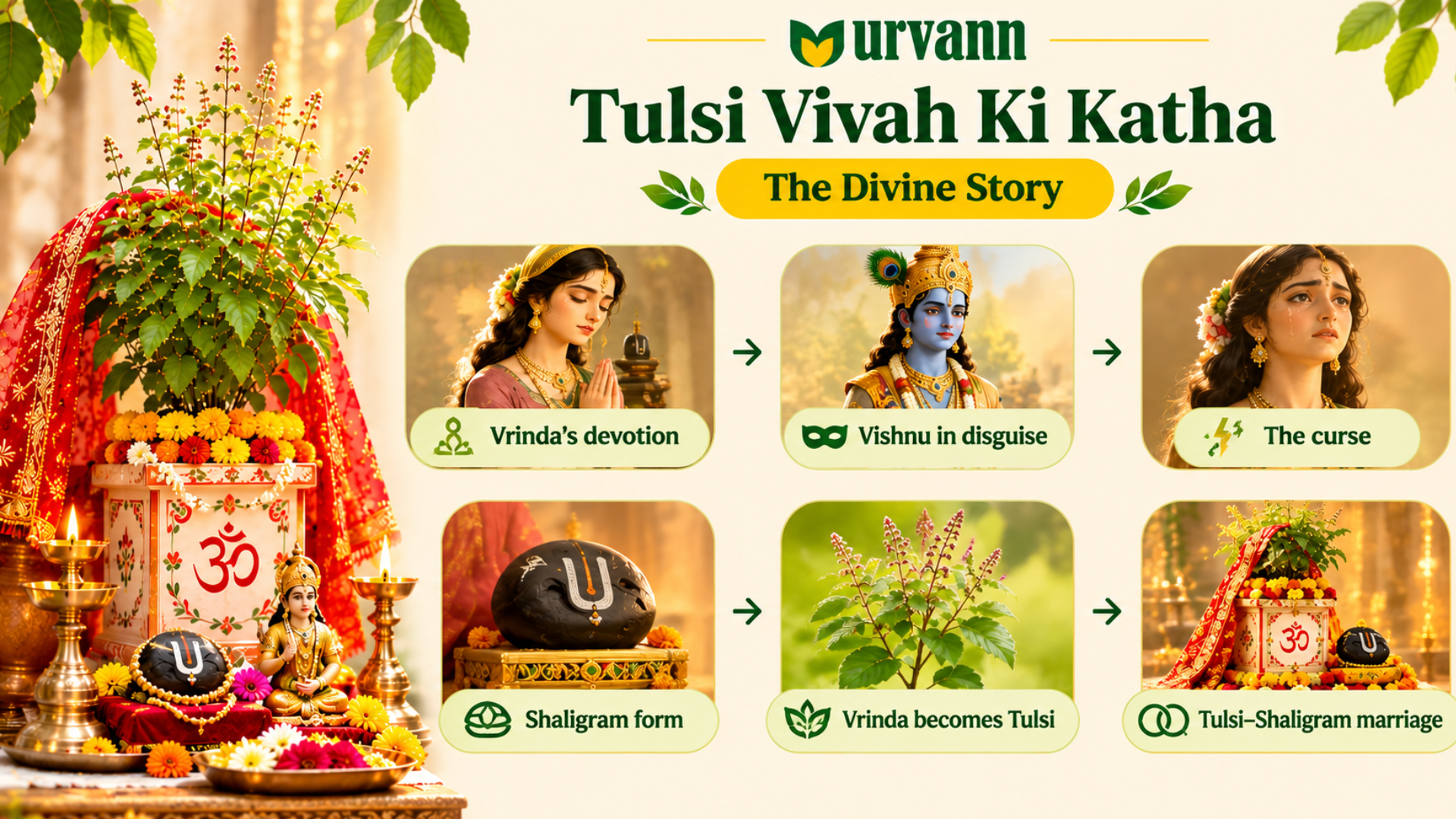
The traditional Tulsi Vivah ki katha explains the sacred connection between Goddess Tulsi, Vrinda, Lord Vishnu, and Shaligram.
According to a well-known Hindu legend, Vrinda was a devoted woman married to Jalandhar, a powerful king.
Vrinda's devotion and fidelity were believed to protect her husband.
The story describes how Lord Vishnu used a disguise to break this protection, enabling Jalandhar to be defeated. When Vrinda discovered the deception, she cursed Lord Vishnu to become a stone.
This curse is associated with Lord Vishnu's Shaligram form.
According to the legend, Vrinda later became associated with the sacred Tulsi plant, and Lord Vishnu promised that Tulsi would always hold a special place in his worship.
The symbolic marriage of Tulsi and Shaligram is celebrated in remembrance of this divine relationship.
Different Puranic and regional traditions narrate parts of this story differently.
For devotees, the festival represents faith, devotion, and the sacred bond between Tulsi and Lord Vishnu.
Tulsi Vivah Mantra and Aarti for Home Puja
Chanting devotional mantras is an important part of Tulsi Vivah for many families. You can include simple prayers to Goddess Tulsi and Lord Vishnu during the ceremony.
Tulsi Mata Mantra
ॐ श्री तुलस्यै नमः।
Om Shri Tulasyai Namah.
Meaning: Salutations to Goddess Tulsi.
Lord Vishnu Mantra
ॐ नमो भगवते वासुदेवाय।
Om Namo Bhagavate Vasudevaya.
Meaning: Salutations to Lord Vasudeva, a name of Lord Vishnu.
These short invocations are suitable for devotional chanting during household worship. Families may also recite a traditional Tulsi Mata Aarti, Vishnu Aarti, or other prayers according to their customs. If you follow a specific family or regional puja method, use the mantras prescribed within that tradition.
Spiritual Significance and Traditional Benefits of Tulsi Vivah
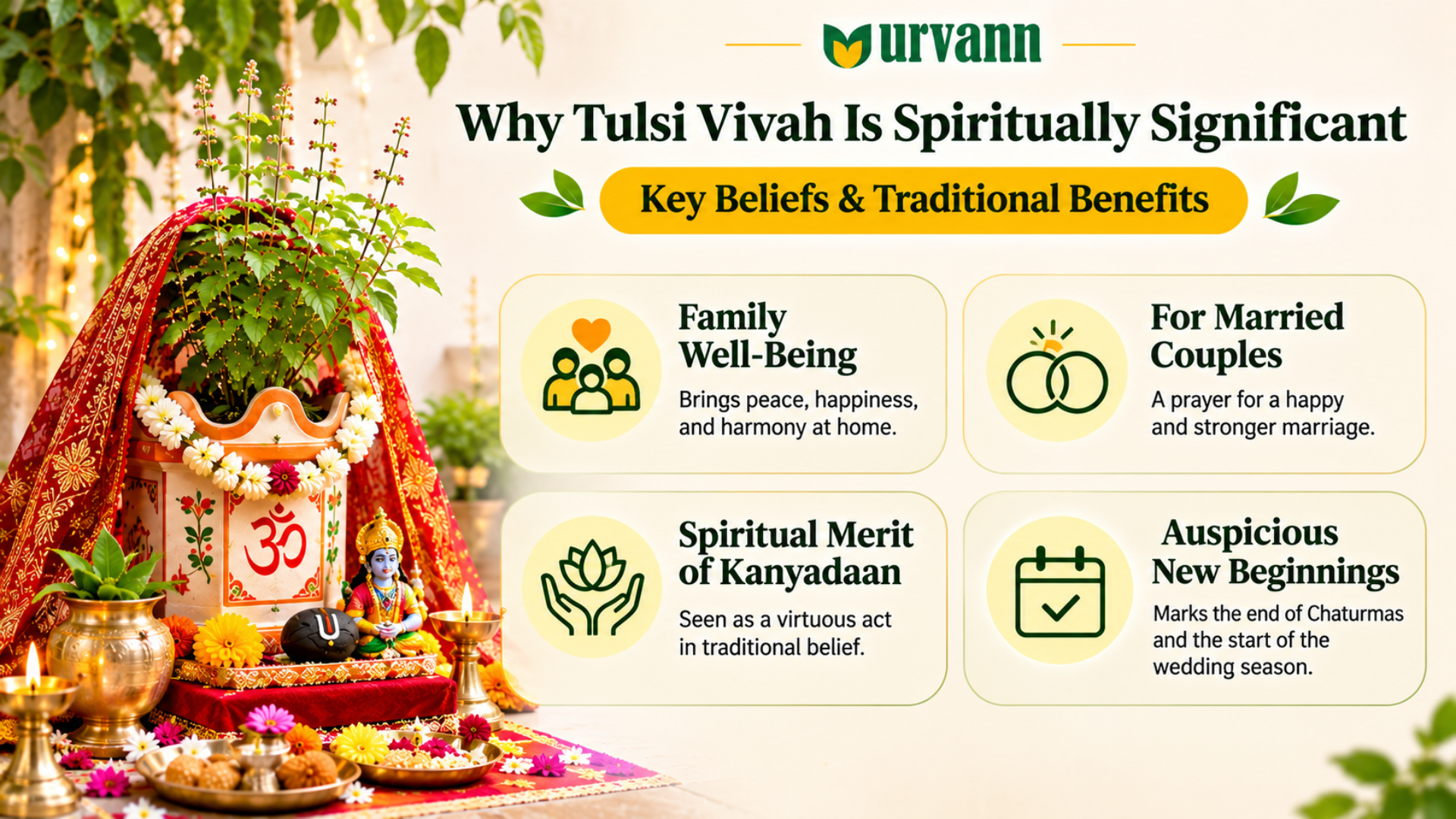
Tulsi Vivah holds deep religious significance in Hindu households.
The festival is associated with devotion to Lord Vishnu, respect for Goddess Tulsi, and the beginning of auspicious activities after Chaturmas.
1. Blessings for Family Well-Being
According to traditional belief, performing Tulsi Vivah with devotion brings blessings for peace, happiness, and harmony within the family.
2. Significance for Married Couples
Many married couples participate in the ceremony and pray for a happy and harmonious married life.
3. The Spiritual Meaning of Kanyadaan
Tulsi Vivah is traditionally associated with the spiritual merit of kanyadaan, the symbolic giving away of a daughter in marriage.
Some devotional narratives describe the merit of Tulsi Vivah in especially generous terms. These statements belong to religious belief and should not be understood as measurable or guaranteed outcomes.
4. Beginning of Auspicious Occasions
The festival is closely linked to the end of Chaturmas and the resumption of the traditional Hindu wedding season. For many families, Tulsi Vivah marks a joyful return to celebrations and new beginnings.
How to Care for Your Tulsi Plant After Tulsi Vivah
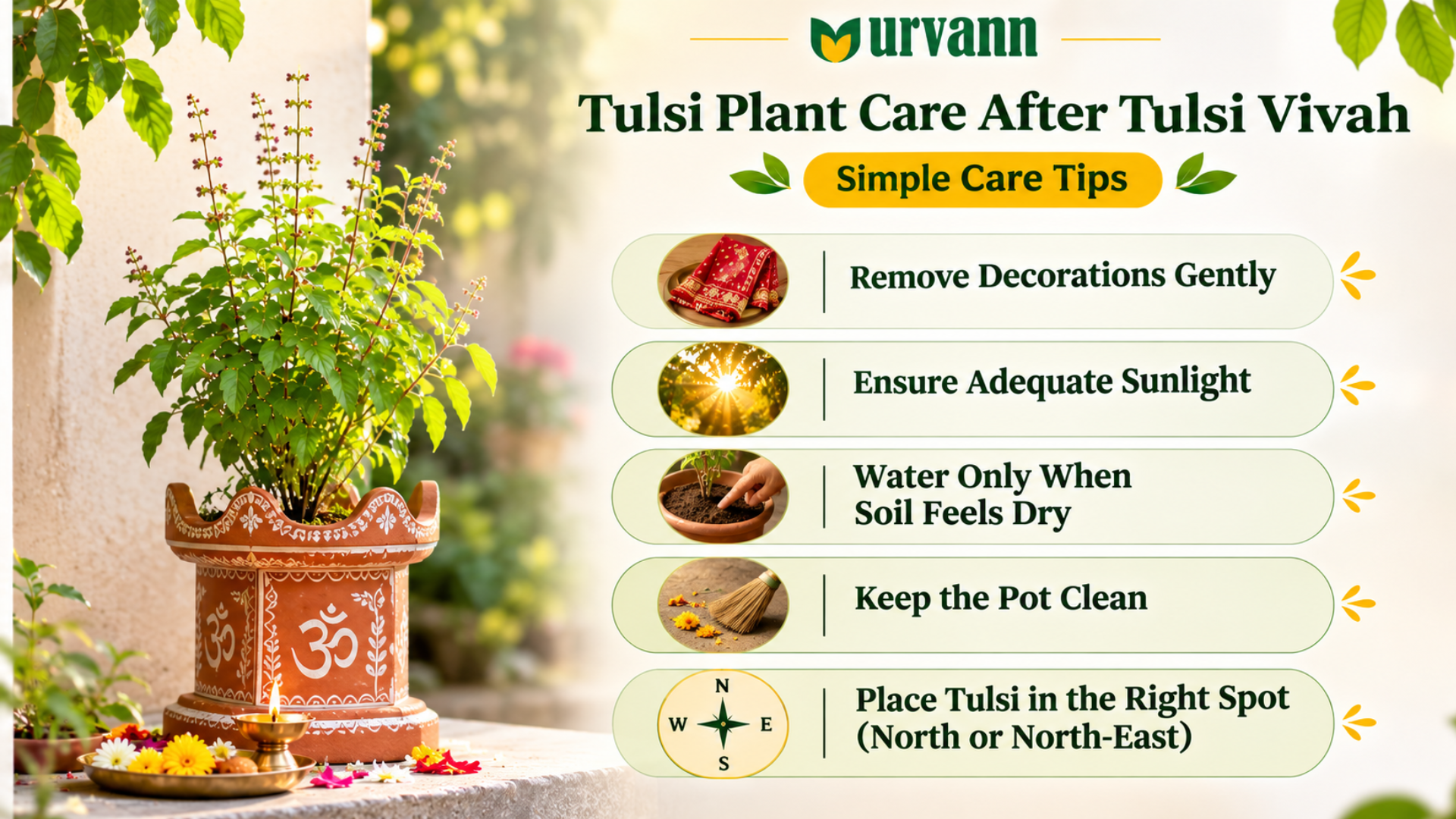
The decorations may come down after the festival, but your Tulsi plant continues to need regular attention.
Here are a few simple ways to keep it healthy:
1. Remove Decorations Carefully
Take down the chunari, threads, garlands, and ornaments without pulling on the stems or leaves. Avoid leaving wet fabric or tightly tied decorations around the plant.
2. Give the Plant Enough Sunlight
Tulsi grows best in a bright, well-ventilated location with several hours of sunlight. If you moved the plant indoors for the ceremony, return it gradually to its usual suitable growing location.
3. Check the Soil Before Watering
Tulsi prefers well-draining soil. Check whether the upper layer of soil has started to dry before watering. Avoid leaving the pot standing in excess water, especially during cooler weather.
4. Keep the Pot Clean
Remove fallen flowers and used offerings from the soil surface. Do not allow sweets, oil, or other puja materials to collect around the roots.
5. Choose the Right Place for Tulsi
According to common Vastu beliefs, north and north-east directions are considered favourable for Tulsi plants. However, sufficient natural light, drainage, and airflow are also important for healthy growth. For detailed guidance, read Urvann’s guide on the best direction and placement for a Tulsi plant according to Vastu.
You can also follow our complete guide on how to grow and care for a Tulsi plant for watering, sunlight, soil, and everyday maintenance tips.
Conclusion
Tulsi Vivah 2026 falls on Saturday, 21 November. Whether your family celebrates with a traditional sugarcane mandap, colourful marigold flowers, devotional songs, or a simple evening puja, the occasion is an opportunity to come together and honour Goddess Tulsi and Lord Vishnu.
You don't need elaborate decorations to make the day special. A healthy Tulsi plant, a few traditional offerings, and sincere devotion can create a meaningful celebration at home. And once the festivities are over, continue caring for your Tulsi plant with the same attention.
If you're looking to bring a Tulsi plant into your home, explore Urvann's collection of Rama Tulsi and Shyama Tulsi plants and choose one suited to your space.
Happy Tulsi Vivah!
Frequently Asked Questions About Tulsi Vivah 2026
1. Is Tulsi Vivah on November 20 or November 21?
Dev Uthani Ekadashi falls on November 20, while Drik Panchang lists Tulsi Vivah on November 21, 2026. Some families follow different dates according to their regional or household traditions.
2. What is the best time for Tulsi Vivah in 2026?
Tulsi Vivah is traditionally performed in the evening around Pradosh or Godhuli Kaal. One published festival guide lists 5:25 PM to 7:49 PM on November 21 as the evening Pradosh window. Check your city's Panchang for the appropriate timing.
3. Tulsi Vivah kiske sath hota hai?
Tulsi Vivah is the symbolic marriage of Goddess Tulsi with Lord Vishnu, commonly worshipped in the form of Shaligram.
4. Can we perform Tulsi Vivah at home without Shaligram?
Some household traditions allow a Lord Vishnu idol or image to be used when Shaligram is unavailable. The appropriate practice depends on the family's religious customs.
5. Which Tulsi plant is best for Tulsi Vivah – Rama or Shyama?
Both Rama Tulsi and Shyama Tulsi are sacred varieties commonly kept in Indian households. The choice depends on family tradition. Ideally, use a healthy, well-established plant.
6. Who can perform Tulsi Vivah?
Tulsi Vivah is celebrated by individuals and families in different ways. Men, women, married couples, and unmarried devotees may participate according to their traditions. Some elaborate rituals may be conducted with a priest.
7. Can Tulsi Vivah be performed after November 21?
Some traditions observe Tulsi Vivah on another auspicious day between Prabodhini Ekadashi and Kartik Purnima. Follow your family's custom and consult a local Panchang or priest when choosing an alternative date.
8. Can Tulsi Vivah be celebrated on a balcony?
Yes. A small balcony with a healthy Tulsi plant, simple decorations, and a clean puja area can be used for a household celebration. Keep diyas away from leaves and fabric, and ensure the setup is stable.
9. When should Indians living abroad celebrate Tulsi Vivah 2026?
Indians living in the USA, UK, Canada, Australia, or other countries should follow their local Panchang to determine the correct Tulsi Vivah date and shubh muhurat. While Tulsi Vivah falls on 21 November 2026 in India, the date and auspicious timings may differ abroad due to local sunrise, sunset, and lunar tithi calculations. Always check your city's Panchang rather than following Indian Standard Time (IST) directly.