


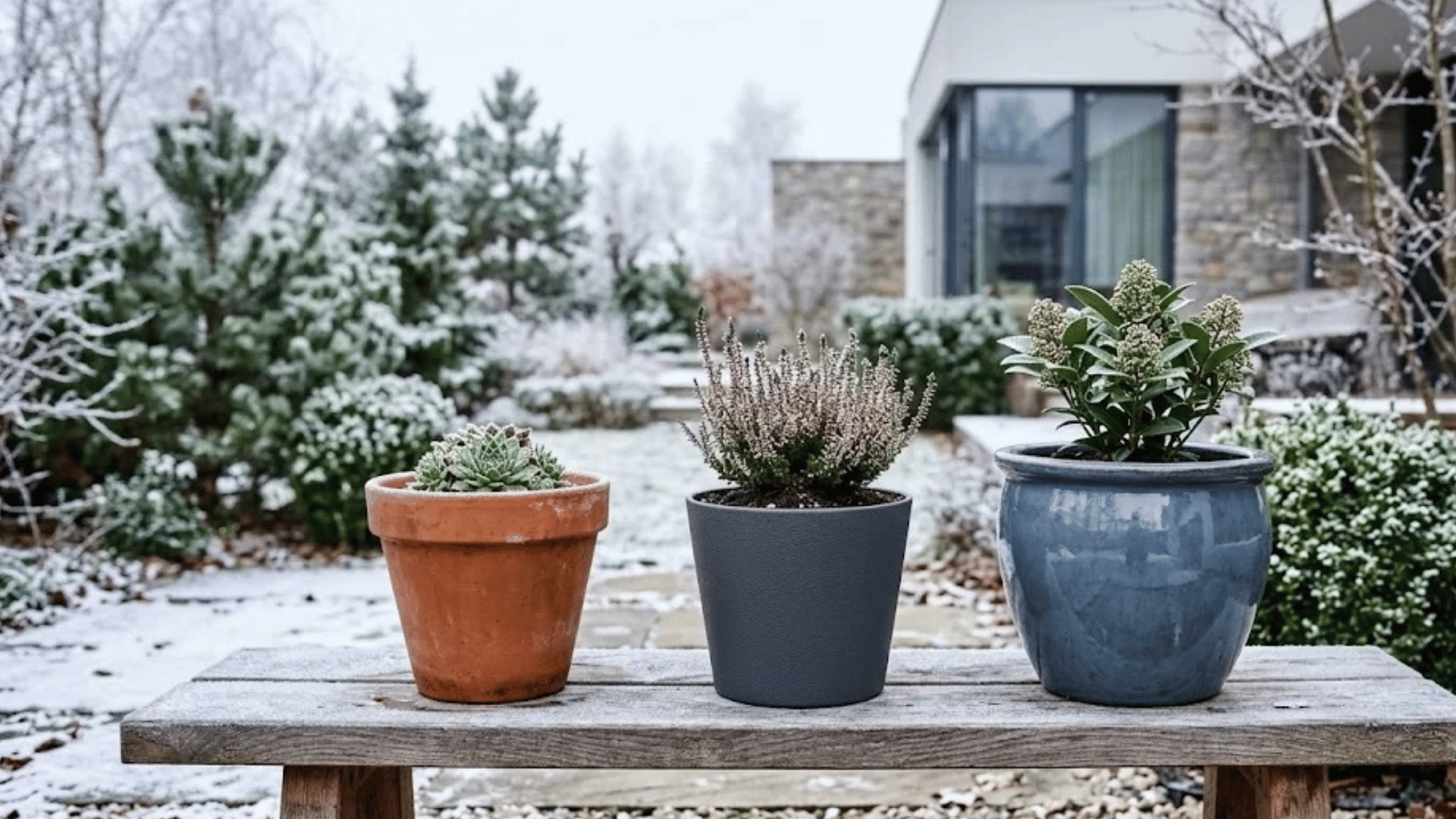
Compare terracotta, plastic and ceramic pots for winter. Learn how each affects drainage, moisture and durability, and choose the right planter for your garden.
Key Takeaways
-
-
- Plastic pots are lightweight, retain moisture, and are generally more resistant to winter breakage.
- Terracotta pots suit plants that prefer drier soil but can crack in freezing temperatures.
- Glazed ceramic pots retain moisture and look attractive, but not all are frost-proof.
- Proper drainage and reduced watering help prevent waterlogging during winter.
- Choose your pot based on your plant's needs, local winter temperatures and placement.
-
Choosing the right pot for winter can make a real difference to your plants' health. But which is better: terracotta, plastic or ceramic?
Plastic pots are generally a practical choice for outdoor winter gardening because they're lightweight, retain moisture and are less likely to break in freezing conditions. However, that doesn't mean they're the best option for every plant.
Terracotta pots allow moisture to escape through their porous walls, making them suitable for plants that prefer drier soil. However, they can crack when absorbed water freezes. Glazed ceramic pots retain moisture longer and offer a decorative look, but not all are frost-proof.
In many parts of India, winter brings cooler temperatures rather than severe frost. This makes drainage, watering habits and plant requirements just as important as pot durability.
So, which pot should you choose?
Let's compare terracotta, plastic and ceramic pots to find the right option for your winter garden.
Terracotta vs Plastic vs Ceramic Pots: Winter Comparison
Before choosing your next planter, it's helpful to understand how each material responds to cold weather.
| Feature | Terracotta Pots | Plastic Pots | Glazed Ceramic Pots |
|---|---|---|---|
| Material | Porous, unglazed fired clay | Non-porous plastic | Fired clay with a glazed finish |
| Winter durability | Can crack during freezing | Generally good; quality matters | Depends on frost-proof rating |
| Moisture retention | Low | High | Medium to high |
| Weight | Relatively heavy | Lightweight | Generally heavy |
| Root-zone moisture | Dries faster | Stays moist longer | Stays moist longer |
| Best suited for | Plants needing faster-drying soil | Outdoor balconies and movable plants | Indoor and sheltered decorative displays |
| Main winter concern | Freeze-thaw cracking | Waterlogging and brittle low-quality plastic | Cracking, trapped moisture and drainage |
The Takeaway: Choose plastic for convenience and reduced breakage risk, terracotta for faster soil drying, and glazed ceramic for decorative settings. In freezing conditions, always check the manufacturer's frost-proof rating.
Why Does Pot Material Matter During Winter?
Pot material affects how quickly the soil dries, how easily you can move the plant, and whether the container can survive freezing temperatures.
The biggest concern in cold climates is something called the freeze-thaw cycle.
When water enters a pot's porous walls or becomes trapped inside the container, it can freeze and expand. Repeated freezing and thawing puts pressure on the material, eventually causing cracks or flaking.
Terracotta is particularly vulnerable because its porous clay walls absorb moisture.
Plastic behaves differently. Its non-porous walls don't absorb water in the same way, and some plastic materials can tolerate minor movement without shattering.
But winter isn't only about frost.
In many Indian cities, temperatures remain above freezing. There, the bigger issues may be slower soil drying, reduced plant growth, cool winds, and overwatering.
This means you should consider two things separately: Will the pot survive the weather, and will the plant grow well inside it?
1. Are Terracotta Pots Good for Winter?
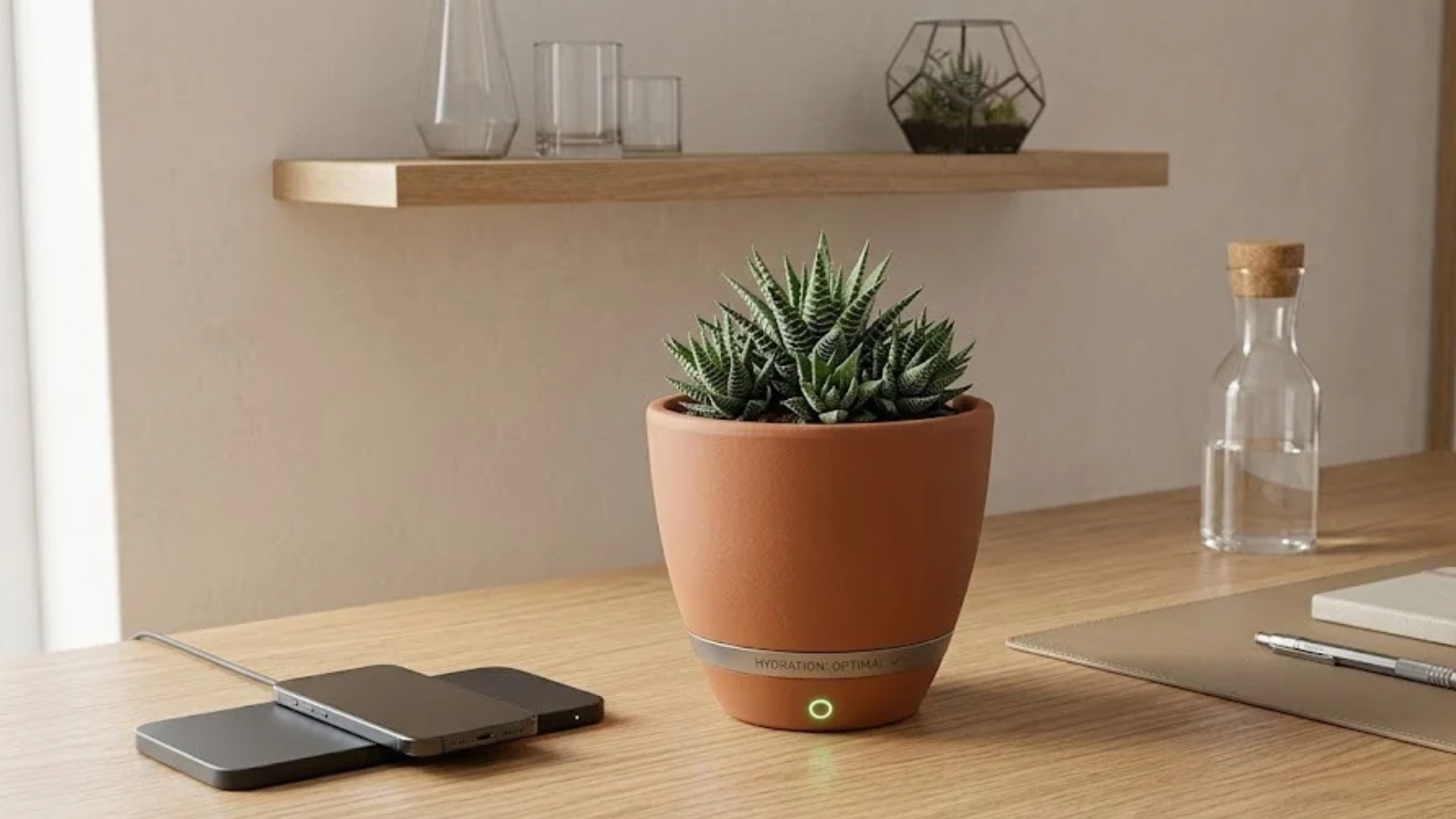
Terracotta pots are suitable for mild winters and plants that prefer faster-drying soil. However, ordinary unglazed terracotta can crack when exposed to freezing temperatures.
Terracotta is made from fired clay. Its walls contain tiny pores through which moisture can escape.
This helps the potting mix dry faster than it would in plastic or glazed ceramic.
Advantages of Terracotta Pots
One of the biggest advantages is moisture control.
If you grow plants that don't like their roots sitting in wet soil, terracotta can be a useful choice.
For example, succulents, cacti and certain herbs generally benefit from a potting mix that dries between waterings.
Terracotta also has a natural, earthy appearance that suits balcony gardens, patios and indoor plant collections.
Disadvantages of Terracotta During Winter
The same porosity that makes terracotta useful can create problems in freezing weather.
Water absorbed into the clay may freeze and expand. Over time, this can cause cracks, chips, or surface flaking.
Terracotta can also be heavy, especially in larger sizes, making it less convenient when you need to move plants into shelter.
How to Protect Terracotta Pots in Winter
If you already use terracotta planters, you don't necessarily need to replace them.
- Move ordinary terracotta pots into a sheltered, frost-free location when freezing weather is expected.
- Keep drainage holes clear so water doesn't collect inside.
- Store empty pots clean and dry, preferably under cover.
- Choose products specifically labelled frost-proof if you need to keep terracotta outdoors in freezing conditions.
Best Choice: Use terracotta for plants that prefer faster-drying soil and for locations without hard frost.
2. Are Plastic Pots Better for Winter?
Plastic pots are generally a practical choice for outdoor winter gardening because they're lightweight, retain moisture and are less likely to shatter than terracotta or ceramic.
However, not every plastic pot performs equally well.
Thick-walled, weather-resistant plastic is usually a better outdoor choice than thin, brittle plastic.
Advantages of Plastic Pots
- Easy to move: Plastic planters are lightweight. This makes it easier to rearrange plants during winter or move frost-sensitive species to a protected location. For balcony gardeners, portability can be particularly useful when space and weight are limited.
- Better moisture retention: Plastic is non-porous, so moisture doesn't escape through the sides as it does with unglazed terracotta.
- This may reduce watering frequency, particularly for plants that prefer consistently moist soil.
- Lower breakage risk: Good-quality plastic is less likely to shatter if a pot accidentally tips over.
Disadvantages of Plastic Pots
Plastic retains moisture longer, which can become a disadvantage in winter.
Cold soil often dries slowly. If you continue watering at your summer frequency, the roots may remain excessively wet.
Cheap plastic pots can also become brittle in very cold temperatures, while lightweight containers may tip over in strong winds.
Plastic alone doesn't guarantee adequate protection for roots during severe frost.
How to Use Plastic Planters During Winter
Choose sturdy plastic pots with proper drainage holes.
For exposed balconies, look for a broad, stable base and secure taller plants against strong winds.
Check the soil before watering rather than following a fixed schedule.
If freezing temperatures are expected, move tender plants into shelter and consider insulating the outside of the container.
You can explore plastic planters for plants at Urvann to compare sizes, shapes, and designs.
Best Choice: Plastic works well for balcony gardens, larger movable plants, and outdoor spaces where breakage and weight are concerns.
3. Can Ceramic Pots Stay Outside in Winter?
Glazed ceramic pots can be used during winter, but their ability to withstand freezing depends on the ceramic body, construction, and frost-proof rating.
Ceramic planters are made from fired clay. Many decorative ceramic pots have a glazed surface that reduces moisture loss through the container walls.
That makes them different from unglazed terracotta.
Advantages of Ceramic Pots
Glazed ceramic pots generally retain soil moisture longer than terracotta.
They also come in different colours, finishes and designs, making them popular for indoor plants and decorative displays.
Their weight can provide stability for some plants in breezy locations.
For example, a glazed ceramic planter can work well for a Money Plant in a protected indoor space, provided excess water can drain away.
Disadvantages of Ceramic Pots in Winter
A glazed surface doesn't automatically make a ceramic pot frost-proof.
Some ceramic planters have unglazed interiors, bases, or exposed edges that can absorb water.
If that moisture freezes, the container may crack.
Ceramic pots are also relatively heavy and can break if dropped while being moved.
Another concern is drainage. Some decorative ceramic planters don't have drainage holes.
How to Protect Ceramic Pots in Winter
Check whether your ceramic planter is rated for outdoor freezing conditions.
If it isn't, move it into a sheltered area before frost arrives.
For outdoor ceramic pots, use pot feet to keep drainage openings clear and avoid leaving the base in standing water.
For indoor styling, you can also place a plastic nursery pot inside a decorative ceramic container. Just remove any collected water from the outer pot.
Explore ceramic planters at Urvann for indoor and decorative planting options.
Best Choice: Glazed ceramic is well suited to indoor winter displays, sheltered balconies and situations where appearance is important.
Which Pot Should You Choose for Your Winter Garden?
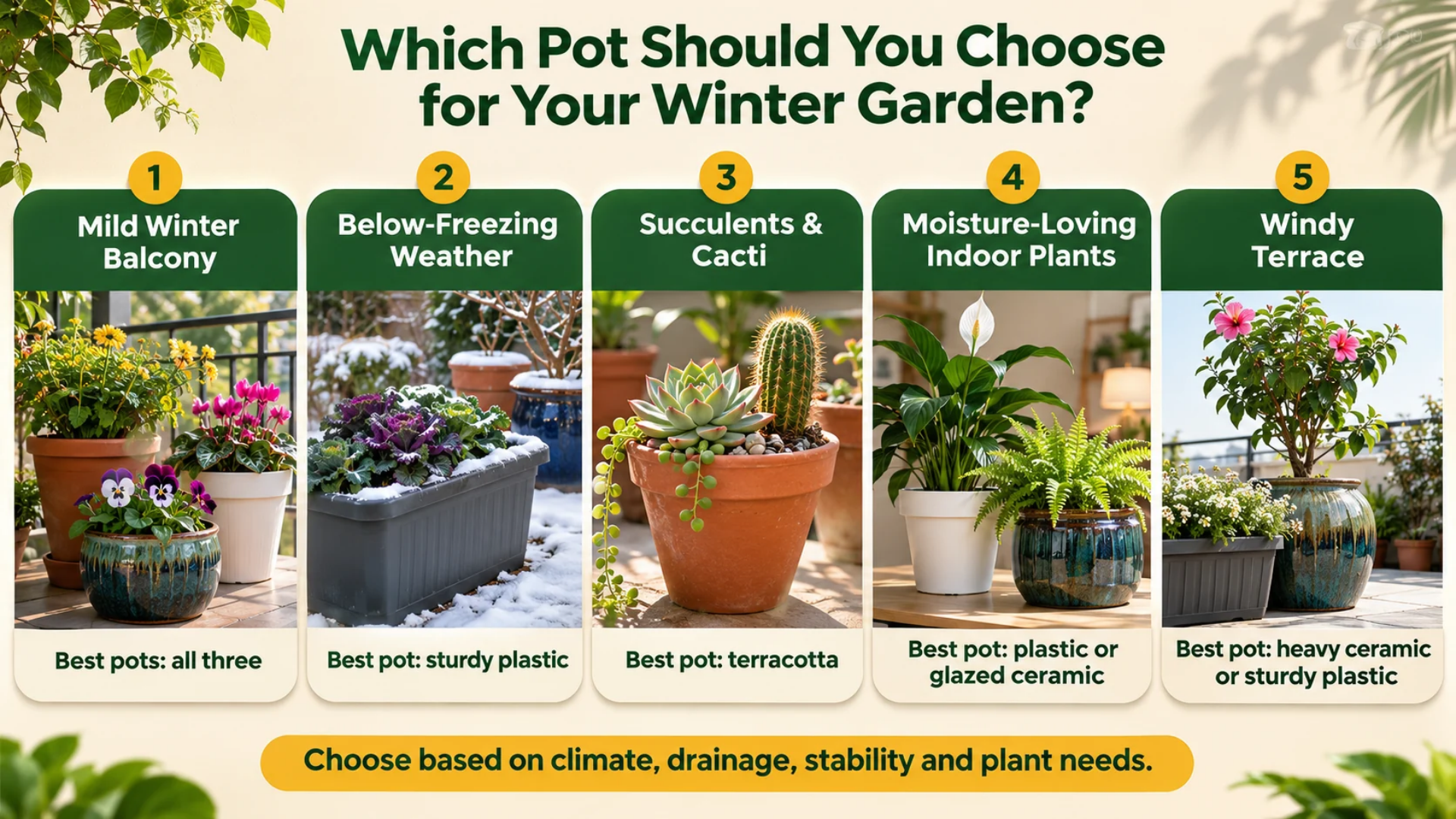
Now that you understand the differences, let's match the material to common gardening situations.
1. For a Balcony With Mild Winters
Terracotta, plastic, and glazed ceramic can all work when freezing temperatures aren't a concern.
Choose based on the plant's moisture needs, the pot's weight, and how often you'll move it.
Plastic may be more convenient if you regularly rearrange your balcony plants.
2. For a Garden Where Temperatures Drop Below Freezing
Sturdy plastic pots are usually the more practical option.
For terracotta or ceramic, choose products specifically rated frost-proof or move vulnerable containers into a protected location.
Remember that even a frost-proof pot doesn't make the plant inside frost-hardy.
3. For Succulents and Cacti
Unglazed terracotta can be useful because it helps the potting mix dry faster.
However, many succulents and cacti are sensitive to cold. Protect the plant itself if your local winter temperatures fall below its tolerance.
4. For Moisture-Loving Indoor Plants
Plastic or glazed ceramic can be useful because they retain moisture longer than terracotta.
For plants such as Peace Lily or certain ferns, this may help maintain the moisture they prefer.
Still, consistently moist soil shouldn't mean permanently waterlogged soil.
5. For a Windy Terrace
Look beyond material alone.
A broad base, appropriate pot size, and secure placement matter when growing tall or top-heavy plants.
A heavy ceramic pot may offer stability, while a sturdy plastic planter is less likely to shatter if it falls.
6 Winter Care Tips for Terracotta, Plastic and Ceramic Pots
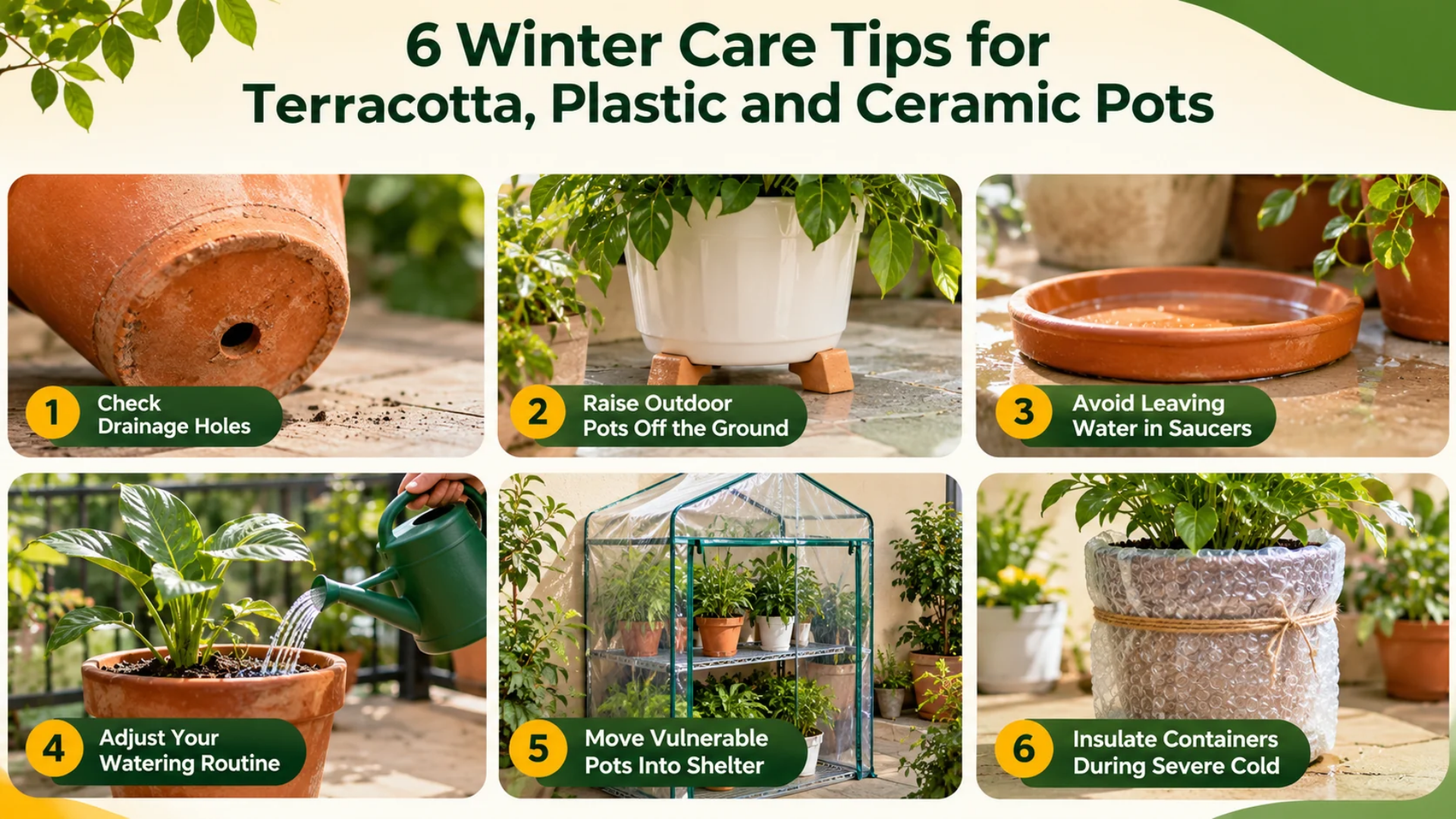
Whichever planter you choose, a few simple adjustments can help protect both the pot and the plant.
1. Check Drainage Holes
Every planted container should have an effective way for excess water to escape.
Blocked drainage can leave roots in saturated soil and increase the risk of freeze-related container damage.
2. Raise Outdoor Pots Off the Ground
Use pot feet, bricks, or suitable supports to create a small gap beneath your outdoor planters.
This helps water drain freely instead of collecting beneath the pot.
3. Avoid Leaving Water in Saucers
Saucers can trap excess water.
During freezing weather, remove outdoor saucers or ensure they cannot collect standing water.
For indoor plants, empty saucers after watering.
4. Adjust Your Watering Routine
Many plants use less water during cooler periods, particularly when their growth slows.
But don't assume every winter plant needs the same watering schedule.
Check the potting mix and consider the plant species, sunlight, temperature and container material.
5. Move Vulnerable Pots Into Shelter
If freezing temperatures are forecast, protect ordinary terracotta and non-frost-proof ceramic pots.
A covered porch, suitable greenhouse or other sheltered location may help.
For tender plants, choose a location that also meets their temperature and light requirements.
6. Insulate Containers During Severe Cold
You can wrap the outside of vulnerable containers with insulating materials such as bubble wrap or horticultural fleece.
This may reduce rapid temperature changes around the roots.
However, insulation doesn't replace proper winter protection for plants that cannot tolerate freezing.
Which Pot Wins for Winter?
There isn't one planter that works best for every plant or every winter.
Plastic is generally the most practical choice for outdoor winter gardening, especially when you want a lightweight container with a lower risk of breakage.
Terracotta remains useful for plants that prefer faster-drying soil, while glazed ceramic offers an attractive choice for indoor and protected spaces.
Before buying, check your local winter temperatures, the plant's watering requirements, drainage holes, and the container's frost-proof rating.
If you're planning to refresh your winter garden, explore the collection of pots and planters at Urvann and choose one that suits your plants and growing space.
Frequently Asked Questions (FAQs)
1. Are terracotta pots better than ceramic pots for winter?
Terracotta is useful for plants that need faster-drying soil, while glazed ceramic retains moisture longer. Neither ordinary terracotta nor decorative glazed ceramic should be assumed frost-proof. In freezing locations, check the product rating before leaving either outdoors.
2. Will plastic pots crack in winter?
Plastic pots can crack in winter, particularly if the material becomes brittle or experiences severe temperature changes. However, sturdy plastic containers are generally less prone to shattering than ordinary terracotta and ceramic pots.
3. Which pots can stay outside all winter?
Weather-resistant plastic pots and containers specifically rated frost-proof are among the more suitable choices. The correct option depends on local temperatures, drainage, construction, and whether the plant itself can tolerate winter outdoors.
4. How do you stop terracotta pots from cracking in winter?
Protect them from freezing moisture. Keep drainage clear, move vulnerable pots into a sheltered location, and store unused terracotta pots clean and dry. For exposed freezing conditions, choose terracotta explicitly certified frost-proof.
5. Are ceramic pots frost-proof?
Some ceramic pots are frost-proof, but glazing alone doesn't guarantee it. Check the manufacturer's specifications before leaving a ceramic planter outside in freezing weather.
6. Do plants need less water in winter?
Many plants require less frequent watering when temperatures fall, and growth slows. However, watering needs depend on the species, soil moisture, sunlight, and container material. Check the soil before watering rather than following a fixed winter schedule.
7. Which pot is best for an Indian winter balcony?
For many Indian balconies with mild winters, plastic pots are convenient because they're lightweight and easy to rearrange. Terracotta works well for plants that prefer drier soil, while glazed ceramic suits decorative displays. In frost-prone locations, choose appropriate weather-resistant or frost-proof containers.