

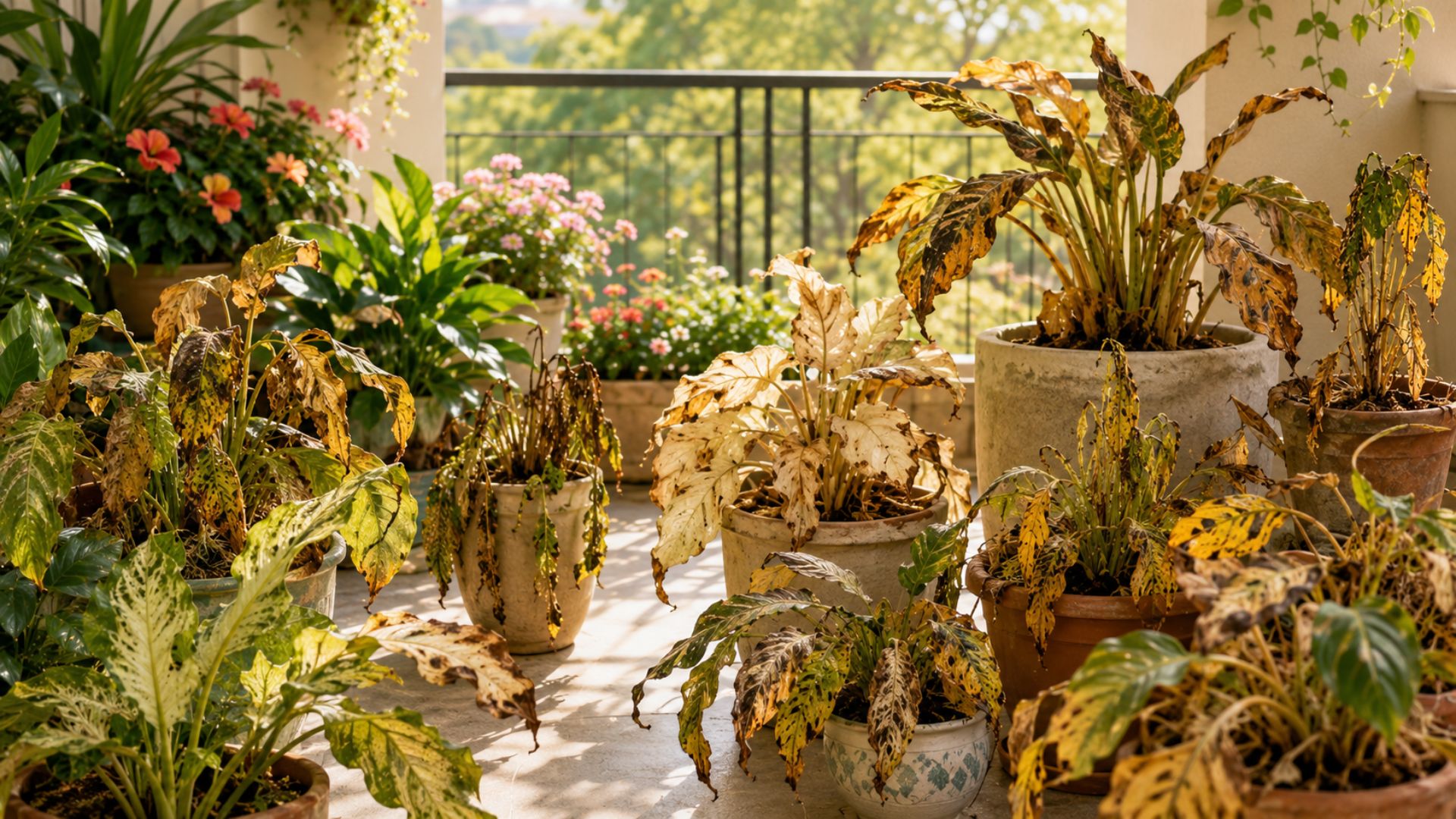
Learn what yellow, brown, curling, drooping, white, or spotted plant leaves mean, common causes behind leaf problems, and simple fixes for healthier indoor and balcony plants.
Key Takeaways
- Plant leaves often reveal problems long before the entire plant shows signs of decline. Changes such as yellowing, browning, curling, drooping, black patches, white spots, or pale growth are valuable clues that can help identify issues related to watering, light, pests, diseases, roots, or environmental conditions.
- Overwatering and underwatering are responsible for a large percentage of common leaf problems. Surprisingly, both can cause similar symptoms, including yellow leaves, curling foliage, and drooping stems. Checking soil moisture before watering is one of the most effective ways to prevent unnecessary plant stress.
- Environmental conditions play a major role in plant health. Strong summer heat, monsoon humidity, poor indoor airflow, low light levels, and direct AC exposure can all affect how leaves look and grow. Understanding seasonal changes helps plant owners adjust care routines before problems become severe.
- Many leaf issues are mistakenly treated with fertilisers, Epsom salt, or plant tonics when the real cause is poor drainage, incorrect watering, root damage, insufficient light, or pest infestations. Identifying the root cause first is usually more important than adding nutrients.
- Some leaf problems are harmless and temporary. A few yellow lower leaves, pale new growth that darkens over time, or slight leaf drop after repotting are often normal parts of a plant's growth and adjustment process. Not every discoloured leaf is a sign of disease.
You bring home a healthy money plant, tulsi, hibiscus, aglaonema, or a flowering plant, and for the first few days, everything looks perfect. Then suddenly, one leaf turns yellow. A few days later, the edges look brown, the leaves start curling, or the plant begins to droop.
Naturally, the first thought is, “Is my plant dying?”
GOOD NEWS: Yellow leaves, brown tips, curling leaves, drooping stems, or yellow spots on leaves do not always mean your plant is gone. Most of the time, your plant is simply giving you a signal. It may be asking for less water, more light, better drainage, fresh soil, pest control, or just a little time to adjust to your home.
In Indian homes, plant leaf problems are very common because our plants deal with intense summer heat, unbearable monsoon humidity, fair, low-light rooms, sunny balconies, and changing watering habits. So before you panic, let us decode what your plant leaves are trying to tell you.
Quick Guide: What Your Plant Leaves Are Telling You?
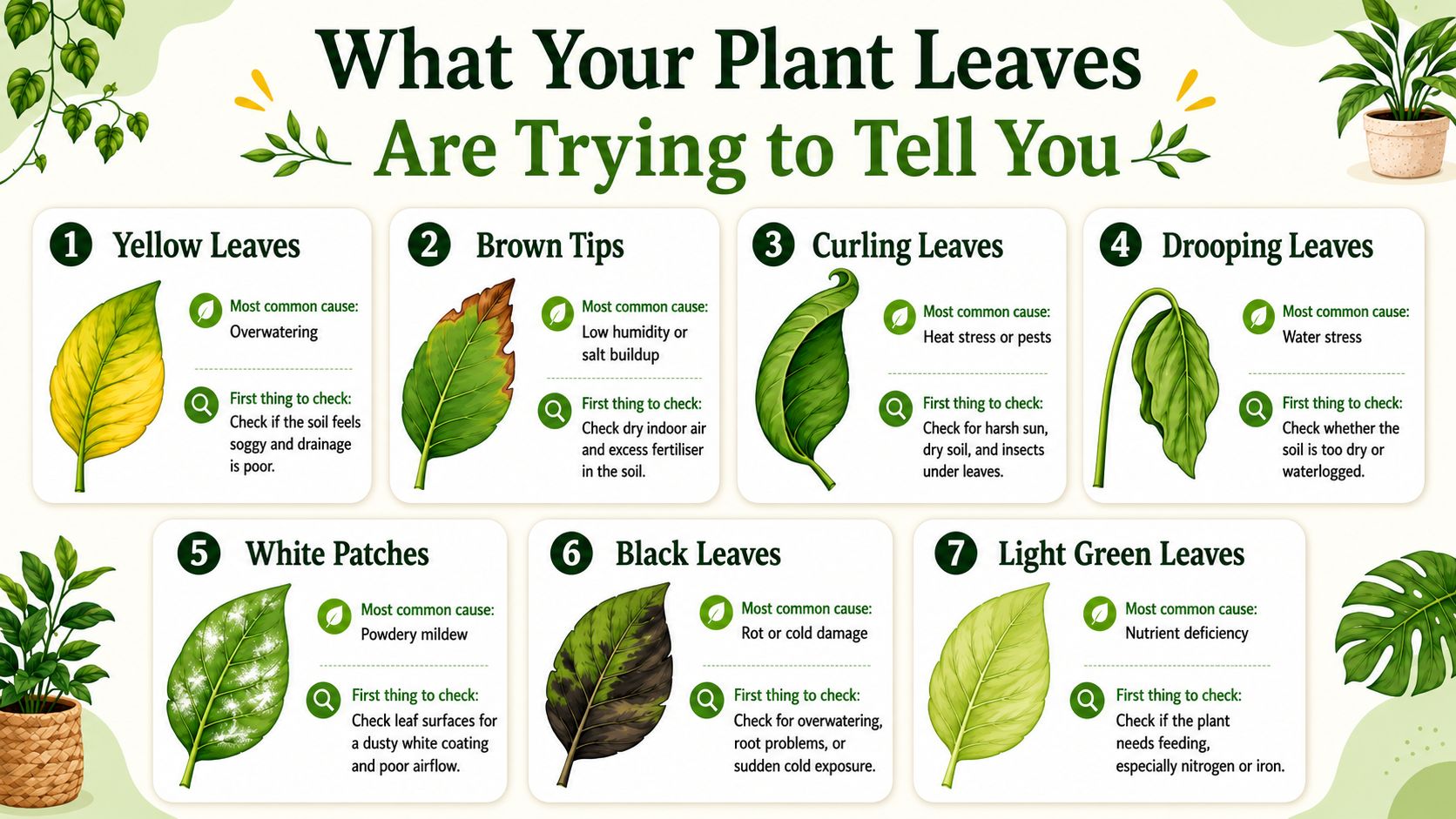
| Leaf Problem | What It Usually Means | First Thing to Check |
|---|---|---|
| Yellow leaves | Watering issue, poor drainage, nutrient deficiency, low light, or ageing | Soil moisture and drainage |
| Brown tips | Dry air, underwatering, excess fertiliser, salt build-up, or heat stress | Watering routine and sunlight |
| Brown crispy edges | Too much direct sun, dry soil, hot balcony, or low humidity | Balcony direction and soil dryness |
| Curling leaves | Heat stress, pests, underwatering, overwatering, or sudden weather change | Leaf undersides and soil condition |
| Drooping leaves | Too much water, too little water, root stress, or heat | Soil feel and pot weight |
| Bleached leaves / white patches | Harsh sunlight, sunburn, powdery mildew, or chemical damage | Light exposure and leaf surface |
| Yellow spots on leaves | Pests, fungal issues, nutrient deficiency, or water sitting on leaves | Spots, pests, and air circulation |
| Black leaves | Root rot, fungal disease, cold damage, or severe overwatering | Smell of soil and root condition |
| Light green leaves | New growth, low light, or nutrient deficiency | Whether old or new leaves are affected |
Simple rule: One or two old yellow leaves are usually not a big problem. But if many leaves are turning yellow, brown, curling, or drooping together, your plant needs attention.
Before You Fix the Plant, Check These 5 Things
Most plant leaf problems come from one of these five areas:
- Watering - too much water or too little water
- Light - too much harsh sun or too little brightness
- Soil and drainage - soggy soil, blocked holes, or compact soil
- Pests or disease - insects, fungus, yellow spots, black patches
- Weather or location stress - summer heat, monsoon humidity, AC air, sudden movement
Before adding fertilizer or changing the pot, always check these basics first.
1. Yellow Leaves on Plants: What Does It Mean?
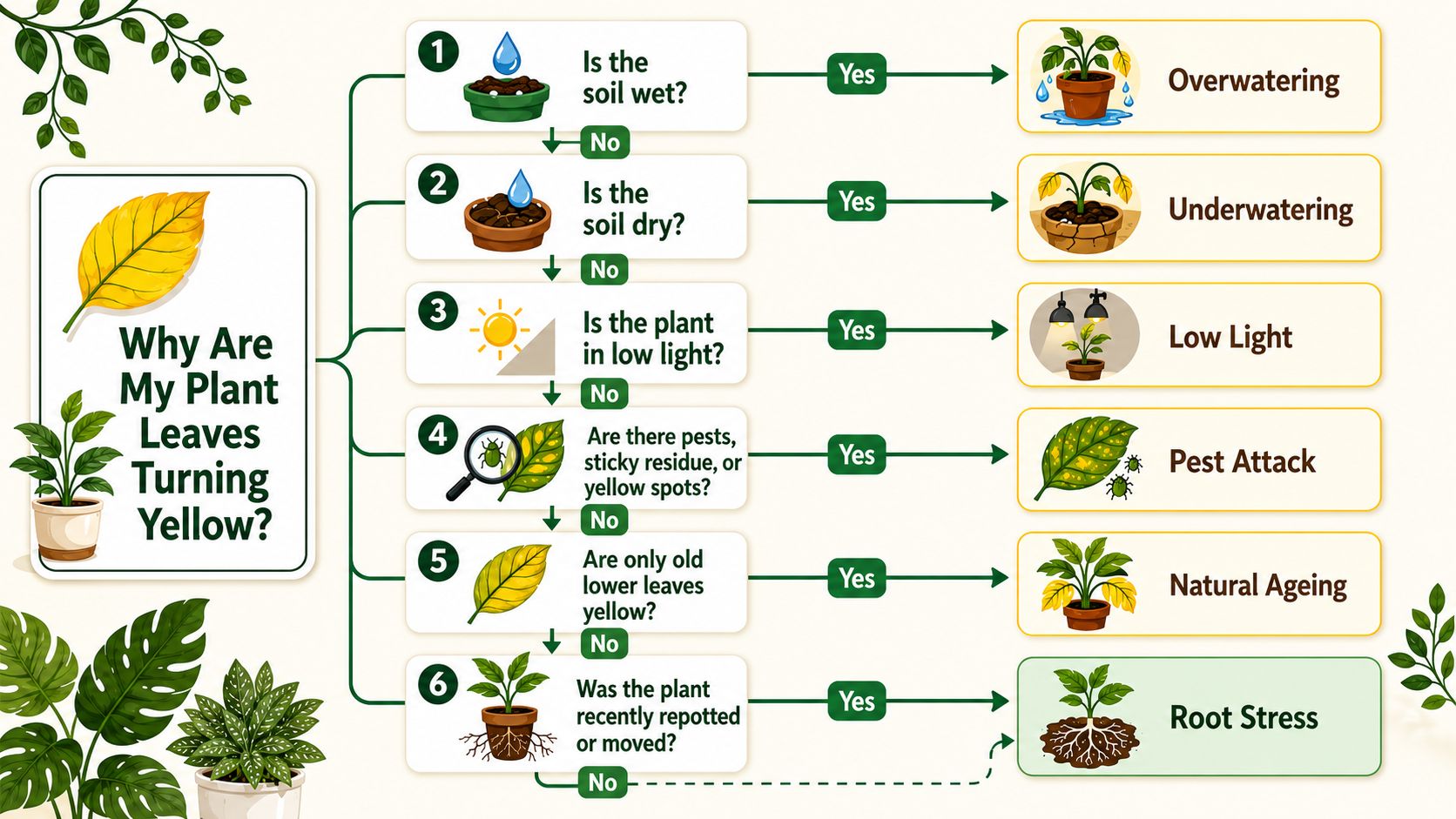
Yellow leaves are one of the most common signs that a plant is under stress. If your plant leaves are turning yellow, it usually means something is affecting its ability to maintain healthy growth. Common causes include watering issues, poor drainage, insufficient light, nutrient deficiencies, pests, or environmental stress.
In gardening, the abnormal yellowing of green leaves is known as chlorosis. Simply put, chlorosis occurs when a plant cannot produce enough chlorophyll, the green pigment that gives leaves their colour and helps them make food through photosynthesis. Leaves affected by chlorosis are often referred to as chlorotic leaves.
However, yellow leaves are a symptom, not a diagnosis. Because chlorosis can be caused by many different factors, it is important to identify the underlying problem before adding fertilizer, Epsom salt, or other plant supplements.
Common Causes of Yellow Leaves
| Cause | How It Looks | What to Do |
|---|---|---|
| Overwatering | Yellow, soft, droopy leaves; wet soil | Let the soil dry, check the drainage |
| Underwatering | Yellow, dry, crispy leaves | Water deeply and regularly |
| Low light | Pale, light green leaves; slow growth | Move to bright indirect light |
| Poor drainage | Yellow leaves with soggy soil | Use a pot with drainage holes |
| Nutrient deficiency | Older or newer leaves turn yellow | Use balanced fertiliser carefully |
| Pest attack | Yellow spots, curling, sticky residue | Check leaves and isolate plant |
| Natural ageing | One or two lower leaves turn yellow | Remove old leaves |
| Root stress | Yellowing after repotting or movement | Keep care routine stable |
When Are Yellow Leaves Normal?
Yellow leaves are not always a sign of disease or poor plant health. In many cases, they are a normal part of a plant's growth cycle or adjustment process.
Yellowing may be completely normal when:
- Only one or two older, lower leaves are turning yellow.
- New growth appears healthy and green.
- The plant was recently delivered, repotted, or moved to a new location.
- It is adjusting to different light, temperature, or humidity conditions.
- A flowering plant is nearing the end of its blooming cycle.
- Seasonal changes are causing older leaves to shed naturally.
If the rest of the plant looks healthy and continues to produce new growth, occasional yellow leaves are usually nothing to worry about.
NOTE: But if many leaves are turning yellow together, or yellow leaves are appearing with curling, black spots, pests, or mushy stems, the plant needs quick care.
How to Fix Yellow Leaves on Plants?
- Start with the soil. Put your finger 1–2 inches into the potting mix.
- If the soil is wet, wait before watering again. If the soil is dry, water deeply until extra water drains out from the bottom. If the soil smells bad, the plant may have root rot due to overwatering.
- Also check the light. Many indoor plant leaves turning yellow happen because the plant is either kept in a dark corner or suddenly moved into harsh direct sunlight.
- Check the underside of leaves for pests.
- Avoid adding fertilizer to a very stressed plant.
- Wait 1-2 weeks to see if new growth improves.
2. Brown Leaves and Brown Tips: What Does It Mean?
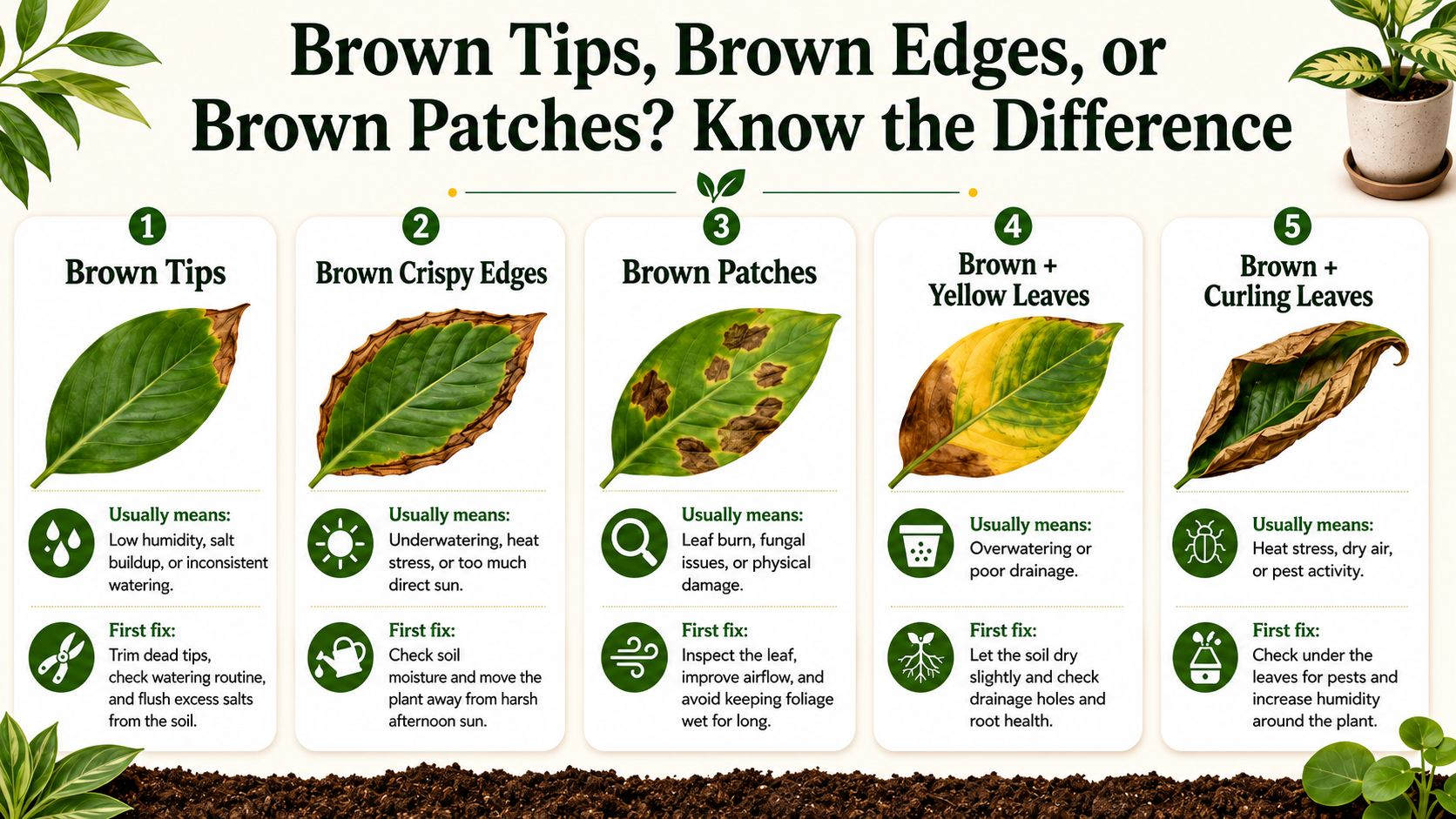
Brown leaves are usually a sign that your plant is losing moisture faster than it can absorb it. This can happen due to underwatering, low humidity, excessive heat, harsh sunlight, fertiliser burn, or root stress.
In Indian homes, brown leaf problems are especially common during summer. Plants growing in west-facing or south-facing balconies, near hot windows, or in rooms with dry AC air are more likely to develop brown tips, crispy edges, or dry patches as they struggle to cope with heat and moisture loss.
Types of Brown Leaf Problems
| Brown Leaf Symptom | What It Usually Means | Common Cause |
|---|---|---|
| Brown tips | Dry air, hard water, excess fertiliser | Low humidity or salt build-up |
| Brown crispy edges | Heat stress or underwatering | Harsh sun or dry soil |
| Brown patches | Sunburn, fungal issue, or leaf damage | Direct sun or disease |
| Brown lower leaves | Natural ageing or watering issue | Old leaves or poor soil moisture |
| Brown + yellow leaves | Root stress or watering imbalance | Overwatering or underwatering |
| Brown + curling leaves | Heat, pests, or dryness | Hot balcony or low humidity |
Why Are My Plant Leaves Turning Brown and Crispy at the Edges?
Brown, crispy leaf edges are usually a sign of heat stress, excessive sunlight, or rapid moisture loss. This problem is especially common in balconies, terraces, and outdoor spaces exposed to strong afternoon sun.
Plants growing in small pots are more susceptible because the soil dries out quickly, causing the leaf margins to become dry, brown, and brittle even when watered regularly.
How to Fix Brown Crispy Leaf Edges
- Move sensitive plants away from harsh afternoon sunlight.
- Use a shade net or place plants where they receive filtered light.
- Water deeply in the morning to help plants cope with daytime heat.
- Repot into a slightly larger container if the soil dries out too quickly.
- Add mulch to the top of outdoor pots to reduce evaporation and maintain consistent soil moisture.
By improving watering practices and protecting plants from excessive heat, most cases of brown tips and crispy leaf edges can be prevented or reversed over time.
When Are Brown Leaves a Sign of a Serious Plant Problem?
Brown leaves are usually caused by minor issues like inconsistent watering or natural aging. However, they may indicate a more serious problem if they are:
- Soft, wet, or mushy to the touch
- Spreading rapidly across the plant
- Accompanied by black spots or dark patches
- Associated with a foul or rotten smell from the soil
- Occurring alongside stem rot or blackened stems
- Appearing on new growth and young leaves
These symptoms can point to root rot, fungal infections, bacterial diseases, or severe watering stress. If you notice any of these signs, inspect the roots, check soil moisture levels, and address the underlying issue as soon as possible to prevent further damage.
3. Curling Leaves: What Does It Mean?
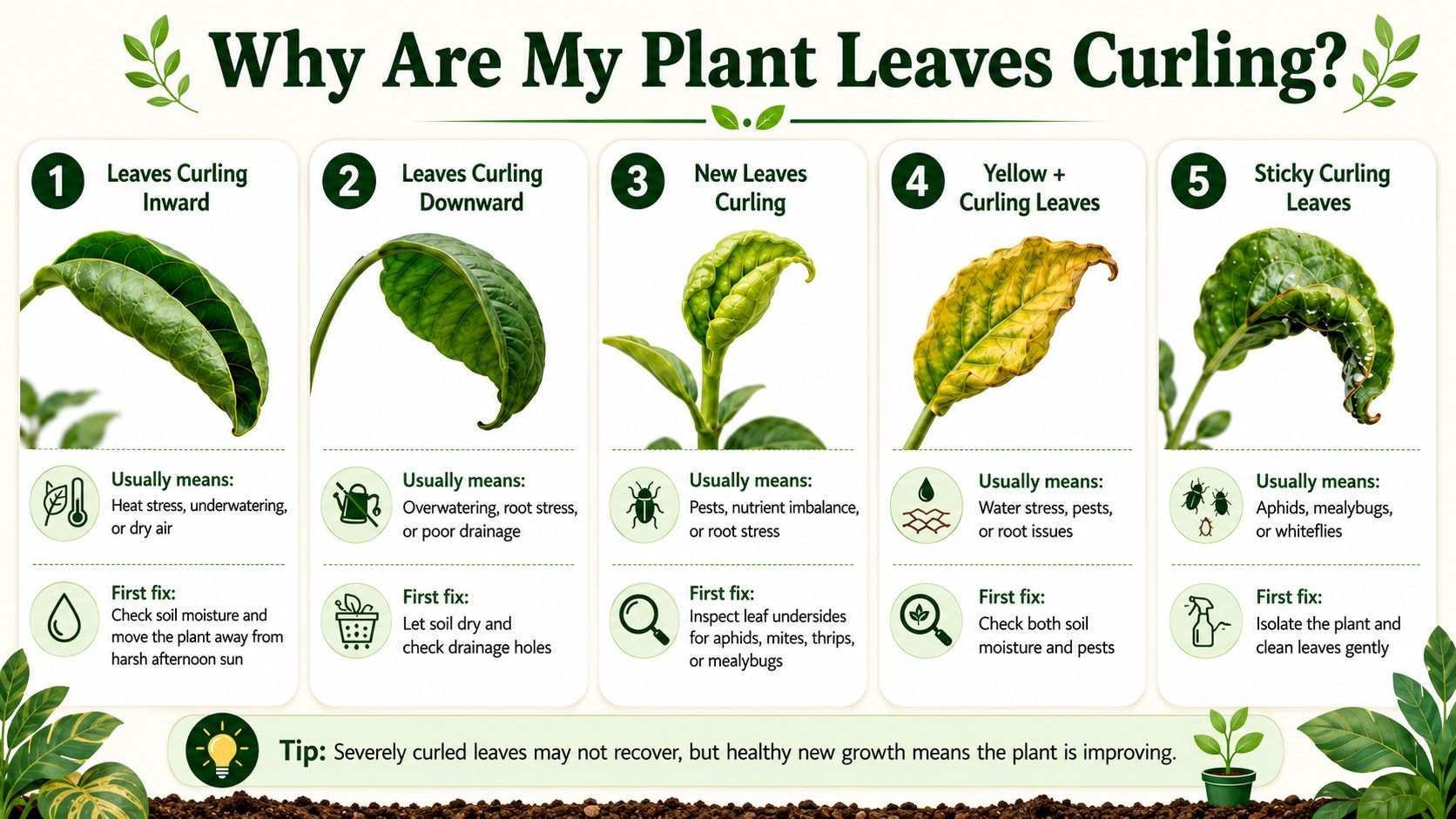
Curling leaves are often a plant's way of protecting itself from stress. Depending on the cause, leaves may curl inward, upward, downward, or become twisted and distorted.
Leaf curling is usually an early warning sign that something in the plant's environment is out of balance. Common triggers include water stress, pest infestations, excessive heat, low humidity, nutrient imbalances, or sudden changes in weather conditions.
Curling Leaf Diagnosis Table
| Curling Type | Possible Meaning | What to Check |
|---|---|---|
| Leaves curling inward | Underwatering or heat stress | Dry soil and hot location |
| Leaves curling downward | Overwatering or root stress | Wet soil and drainage |
| New leaves curling | Pests or nutrient imbalance | Leaf undersides |
| Yellow + curling leaves | Water stress, pests, or root issues | Soil and insects |
| Dry curled leaves | Underwatering or sun stress | Soil dryness and sunlight |
| Sticky curled leaves | Aphids, mealybugs, or whiteflies | Sticky residue and pests |
| Curling with yellow spots | Pest or fungal issue | Spots and airflow |
Common causes of curling leaves include:
- Underwatering or overwatering
- Hot temperatures and intense sunlight
- Low humidity, especially indoors
- Pest attacks such as aphids, spider mites, or thrips
- Sudden temperature fluctuations
- Root stress from compacted soil or poor drainage
- Excess fertiliser or nutrient deficiencies
How to Fix Curling Leaves on Plants
- Check soil moisture and adjust your watering routine if needed.
- Inspect the undersides of leaves for pests and treat promptly.
- Protect plants from harsh afternoon sun and extreme heat.
- Increase humidity around indoor plants if the air is too dry.
- Ensure pots have proper drainage and roots are not waterlogged.
- Avoid excessive fertilizer use and follow recommended application rates.
- Give the plant time to recover after sudden weather changes or repotting.
Once the underlying stress is corrected, new growth should emerge normally, although severely curled leaves may not return to their original shape.
4. Drooping Leaves: What Does It Mean?
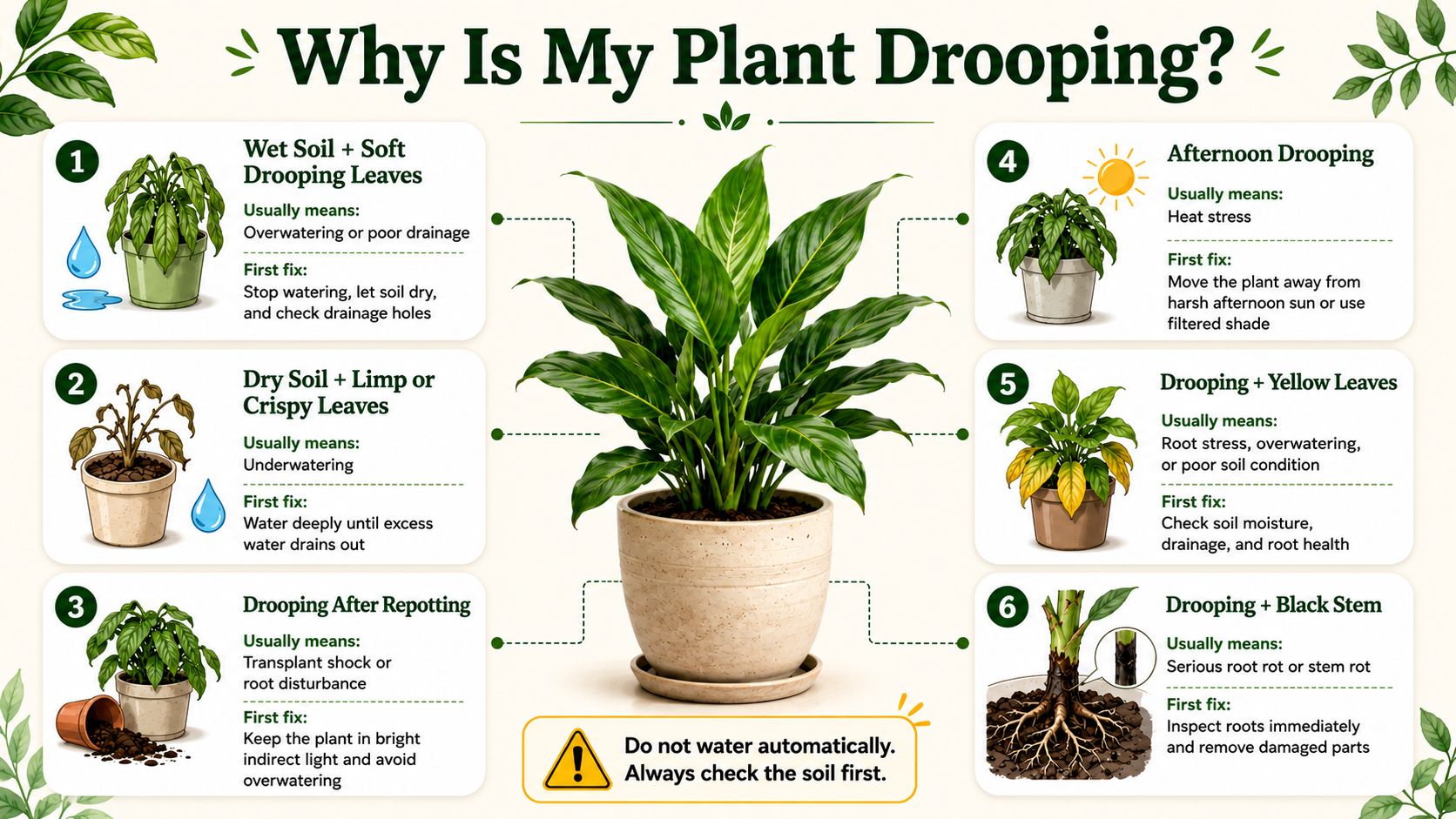
Drooping leaves usually indicate that a plant is struggling to maintain the right balance of water, temperature, or root health. Both underwatering and overwatering can cause leaves and stems to lose their firmness and hang down.
Before watering, always check the soil moisture. The right solution depends on whether the soil is too dry, too wet, or the plant is experiencing another type of stress.
Drooping Leaves Diagnosis Table
| Soil Condition | Leaf Condition | Likely Cause | What to Do |
|---|---|---|---|
| Wet soil + drooping | Soft, limp leaves | Overwatering | Stop watering and improve drainage |
| Dry soil + drooping | Limp or crispy leaves | Underwatering | Water deeply |
| Moist soil + drooping | Recently repotted plant | Transplant shock | Keep stable and wait |
| Hot afternoon + drooping | Recovers by evening | Heat stress | Provide shade |
| Drooping + yellow leaves | Root stress | Overwatering or poor drainage | Check roots and soil |
| Drooping + black stem | Serious root/stem rot | Severe overwatering | Act quickly |
Common Causes of Drooping Leaves
- Underwatering and dry soil
- Overwatering and poor root oxygenation
- Heat stress from strong sunlight and high temperatures
- Repotting shock after root disturbance
- Root-bound conditions in overcrowded pots
- Root rot or drainage problems
- Sudden environmental changes
How To Fix Drooping Leaves on Plants?
- Check soil moisture before watering, as both dry and wet soil can cause drooping.
- Water deeply if the soil is dry and the plant appears thirsty.
- Allow excess moisture to dry out if the soil is wet, and improve drainage if needed.
- Protect plants from harsh afternoon sun, especially during hot summer months.
- Water outdoor plants in the morning to help them cope with daytime heat.
- Give newly repotted plants time to recover in bright, indirect light.
- Repot root-bound plants into a slightly larger container with fresh potting mix.
- Avoid fertilising stressed plants until they show signs of recovery.
- Keep growing conditions stable and avoid moving the plant repeatedly.
What NOT To Do When a Plant Droops?
- Do not water automatically without checking the soil first.
- Do not assume drooping always means the plant is thirsty.
- Do not repot immediately unless root problems are clearly visible.
- Do not add fertiliser to a stressed or struggling plant.
- Do not move the plant frequently between locations.
- Do not place a drooping plant in harsh direct sunlight to "help it recover."
White, Bleached, Spotted, Black, and Light Green Leaves: What Does It Mean?
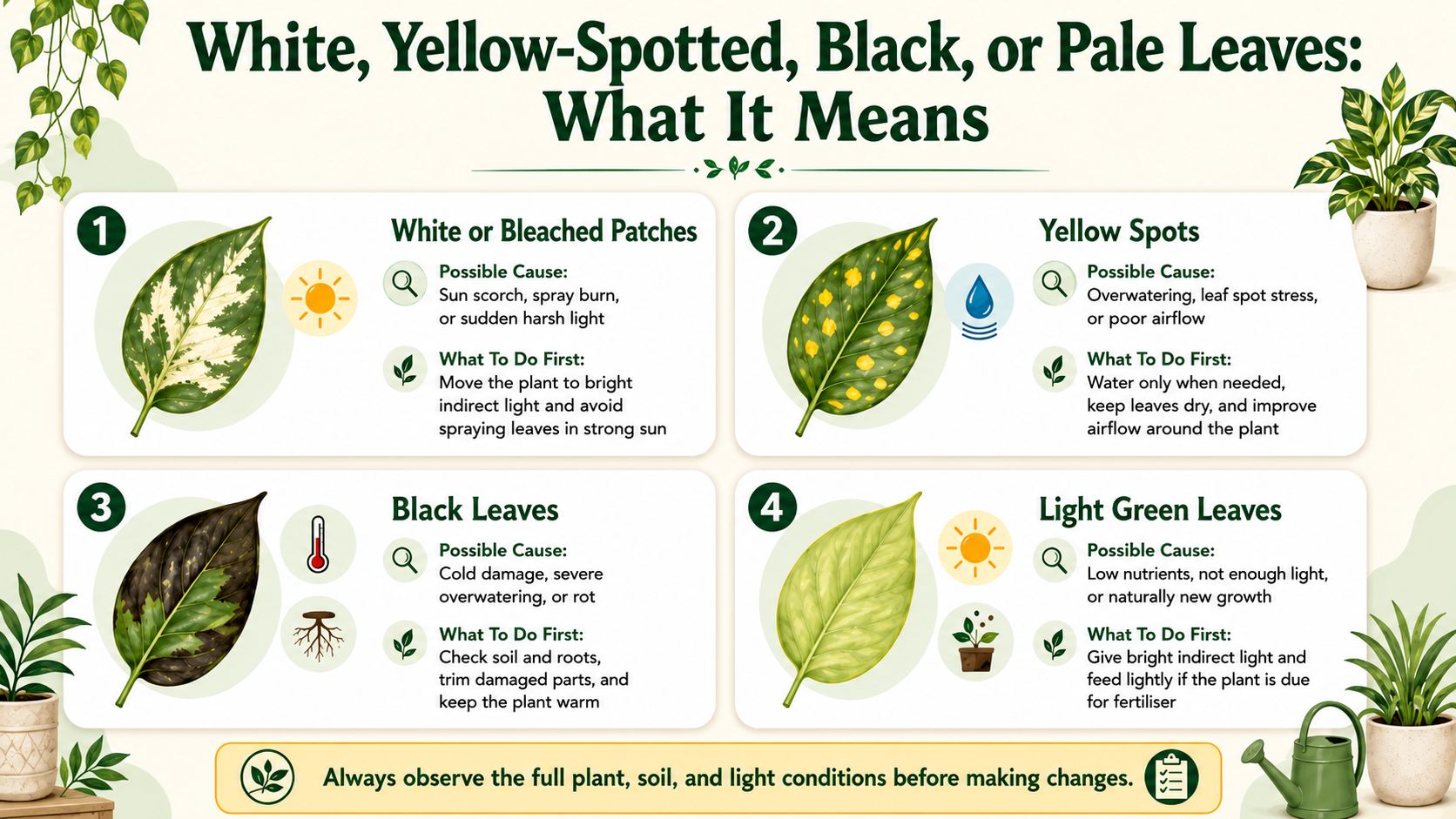
Leaf colour and texture changes can reveal a lot about a plant's health. Besides yellowing, browning, curling, and drooping, you may also notice white patches, bleached areas, spots, blackened leaves, or unusually light green growth.
These symptoms often indicate environmental stress, pest infestations, fungal or bacterial diseases, nutrient deficiencies, or improper light exposure. Identifying the pattern early can help prevent the problem from spreading and improve the plant's recovery.
White or Bleached Leaves
Bleached leaves look pale, faded, or whitish. This often happens when a soft indoor plant is suddenly placed in strong direct sunlight.
Common causes:
- Sunburn
- Harsh afternoon sun
- Powdery mildew
- Chemical spray damage
| White Leaf Issue | How It Looks | What to Do |
|---|---|---|
| Sunburn | Dry white or brown patches | Move to filtered light |
| Powdery mildew | White powder-like layer | Improve airflow and remove affected leaves |
| Spray damage | Patchy white marks | Avoid spraying in direct sunlight |
| Low chlorophyll | Pale weak leaves | Improve light and nutrition |
Yellow Spots on Leaves
Yellow spots on leaves may happen because of pests, fungal disease, or poor airflow.
For houseplants, yellow spots often appear when leaves stay wet for too long or pests feed on the leaf surface.
Common causes:
- Spider mites
- Aphids
- Fungal leaf spot
- Water sitting on leaves
- Poor ventilation
- Nutrient deficiency
Fix: Isolate the plant, inspect the underside of leaves, remove infected leaves, avoid overhead watering, and improve airflow.
Black Leaves
Black leaves usually indicate that plant tissue has died or is dying. Unlike yellow or brown leaves, blackening is often associated with disease, root damage, cold injury, or severe watering problems and should be investigated promptly.
Common causes:
- Root rot
- Severe overwatering
- Fungal infection
- Cold damage
- Bacterial disease
- Stem rot
If the leaves are black, mushy, and the soil smells bad, inspect the roots immediately. Soft, dark, foul-smelling roots are a strong indicator of root rot caused by overly wet conditions.
Light Green Leaves
In many plants, new leaves emerge in a lighter shade of green and gradually darken as they mature and produce more chlorophyll.
However, if older leaves and new growth across the entire plant are becoming pale or losing their rich green colour, the plant may not be producing enough chlorophyll to support healthy growth.
Common causes:
- Insufficient light exposure
- Nitrogen or other nutrient deficiencies
- Depleted or poor-quality soil
- Poor root health
- Overwatering and reduced nutrient uptake
- Root-bound conditions
- Incorrect soil pH affecting nutrient availability
If the plant continues to produce pale leaves despite proper watering, check its light conditions, soil quality, and feeding routine. Healthy new growth should gradually develop a deeper green colour over time.
Common Plant-Specific Leaf Problems
| Plant | Common Leaf Problem | Likely Cause | Simple Fix |
|---|---|---|---|
| Money plant | Yellow leaves, drooping, pale growth | Overwatering, low light, dirty water | Bright indirect light, clean water, better drainage |
| Tulsi | Yellow leaves, dry leaves, leaf drop | Too much water, low sunlight, pests | Full sun, airy spot, avoid soggy soil |
| Hibiscus | Yellow leaves, curling, buds dropping | Pests, nutrient deficiency, heat stress | Bright sun, pest check, regular feeding |
| Marigold | Yellow leaves, brown patches | Overwatering, fungal issue | Full sun and well-draining soil |
| Moringa | Yellow leaves, weak growth | Water stress or nutrient deficiency | Sunlight and balanced watering |
| Banana plant | Yellowing leaves, brown edges | Nutrient need, old leaves, water stress | Rich soil and consistent watering |
| Oleander | Yellow leaves | Water imbalance or pests | Check soil and leaf undersides |
| Dahlia | Yellow leaves, fungal spots | Poor airflow or overwatering | Improve spacing and drainage |
| Amaryllis | Yellow leaves | Dormancy or overwatering | Reduce watering if entering rest phase |
| Mandevilla | Yellow leaves, curling | Low light, root stress, water issues | Bright light and well-draining soil |
| Plumeria | Yellow leaves | Seasonal shedding or water stress | Check the season, sunlight, and watering |
| Aglaonema | Yellow leaves, soft stems | Overwatering or low light | Bright indirect light and less watering |
Indian Home and Weather Factors That Affect Plant Leaves
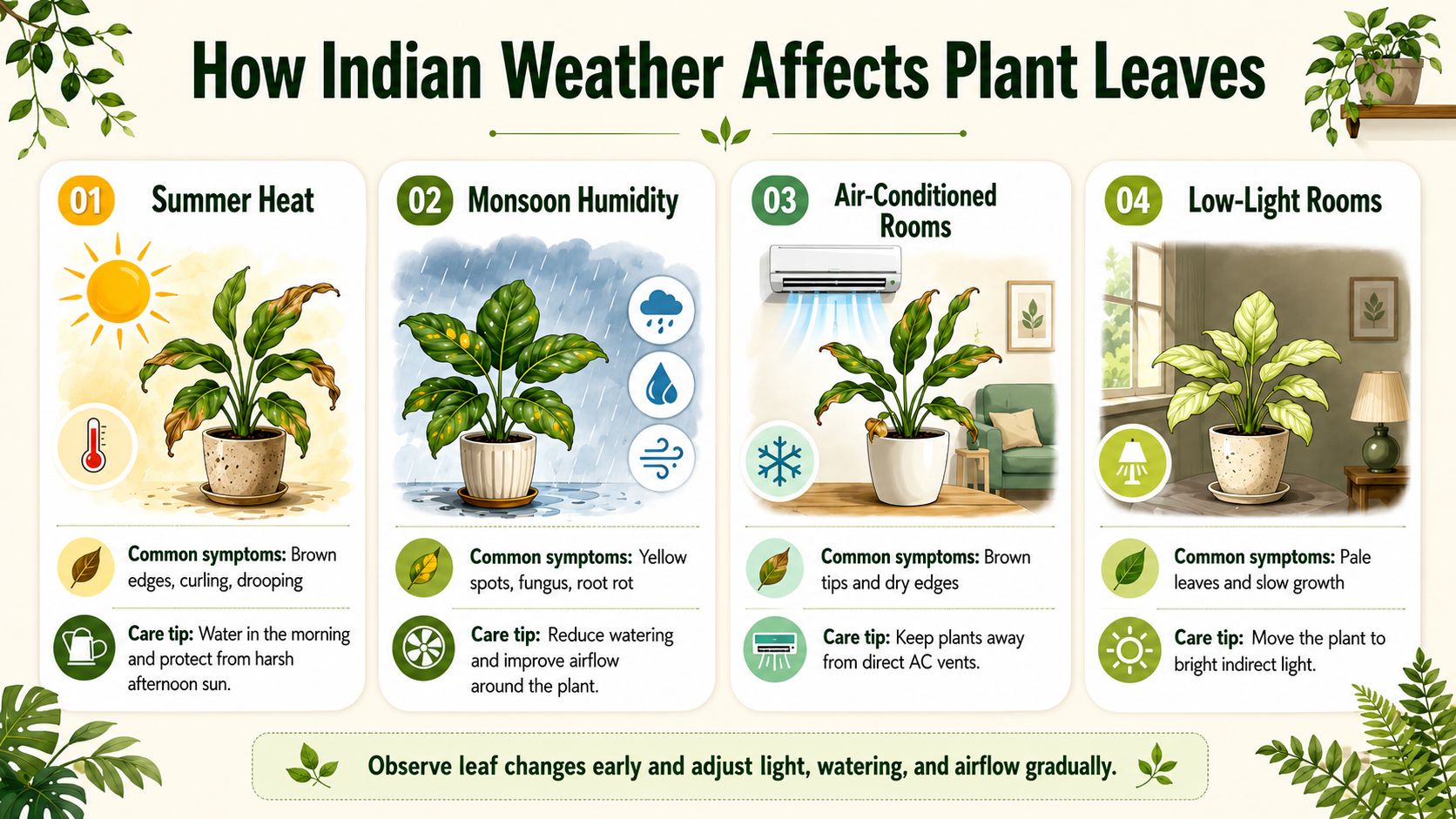
Plant care in India is heavily influenced by seasonal changes, local climate, balcony exposure, and indoor growing conditions. The same plant may show different symptoms in summer, monsoon, or air-conditioned environments.
Understanding how weather affects your plants can help you identify leaf problems more accurately and take the right corrective action.
Summer Heat and Strong Sunlight
During hot Indian summers, plants lose moisture quickly through their leaves and soil. Balconies facing west or south often experience intense afternoon heat, which can stress even healthy plants.
Common summer leaf problems:
- Brown or crispy leaf edges
- Curling leaves
- Afternoon drooping or wilting
- Yellow leaves caused by watering stress
- Leaf scorch from excessive sunlight
- Rapid soil drying, especially in small pots
What To Do:
- Water deeply in the morning.
- Protect sensitive plants from harsh afternoon sun.
- Use larger pots or mulch to reduce moisture loss.
- Increase watering frequency during heatwaves if needed.
Monsoon Humidity and Excess Moisture
While monsoon weather reduces heat stress, frequent rainfall and high humidity can create a different set of problems. Soil often stays wet for longer, increasing the risk of fungal diseases and root-related issues.
Common monsoon leaf problems:
- Yellow leaves or yellow spots
- Black spots or patches on leaves
- Fungal growth on soil or foliage
- Drooping despite wet soil
- Root rot from prolonged moisture
- Increased pest activity
What To Do:
- Reduce watering when the soil remains moist.
- Improve drainage and airflow around plants.
- Remove infected leaves promptly.
- Monitor plants regularly for fungal issues and pests.
Air-Conditioned Rooms and Dry Indoor Air
Indoor plants placed near air conditioners often experience low humidity and constant airflow. Over time, this can dry out leaf tissue and cause visible damage.
Common AC-related leaf problems:
- Brown leaf tips
- Dry or crispy edges
- Curling leaves
- Slower growth
- Increased water loss from foliage
What To Do:
- Keep plants away from direct AC vents.
- Maintain consistent soil moisture.
- Group plants together to improve local humidity.
- Use a humidifier if the indoor air is extremely dry.
Balcony Direction
| Balcony Direction | Common Leaf Problem | Best Care Tip |
|---|---|---|
| East-facing | Usually balanced | Good for many indoor and flowering plants |
| West-facing | Brown edges, curling, drooping | Protect from the afternoon sun |
| South-facing | Heat stress and fast drying | Use sun-loving plants |
| North-facing | Pale or yellow leaves | Choose low-light plants |
Fertiliser, Nutrient Deficiencies, and Epsom Salt
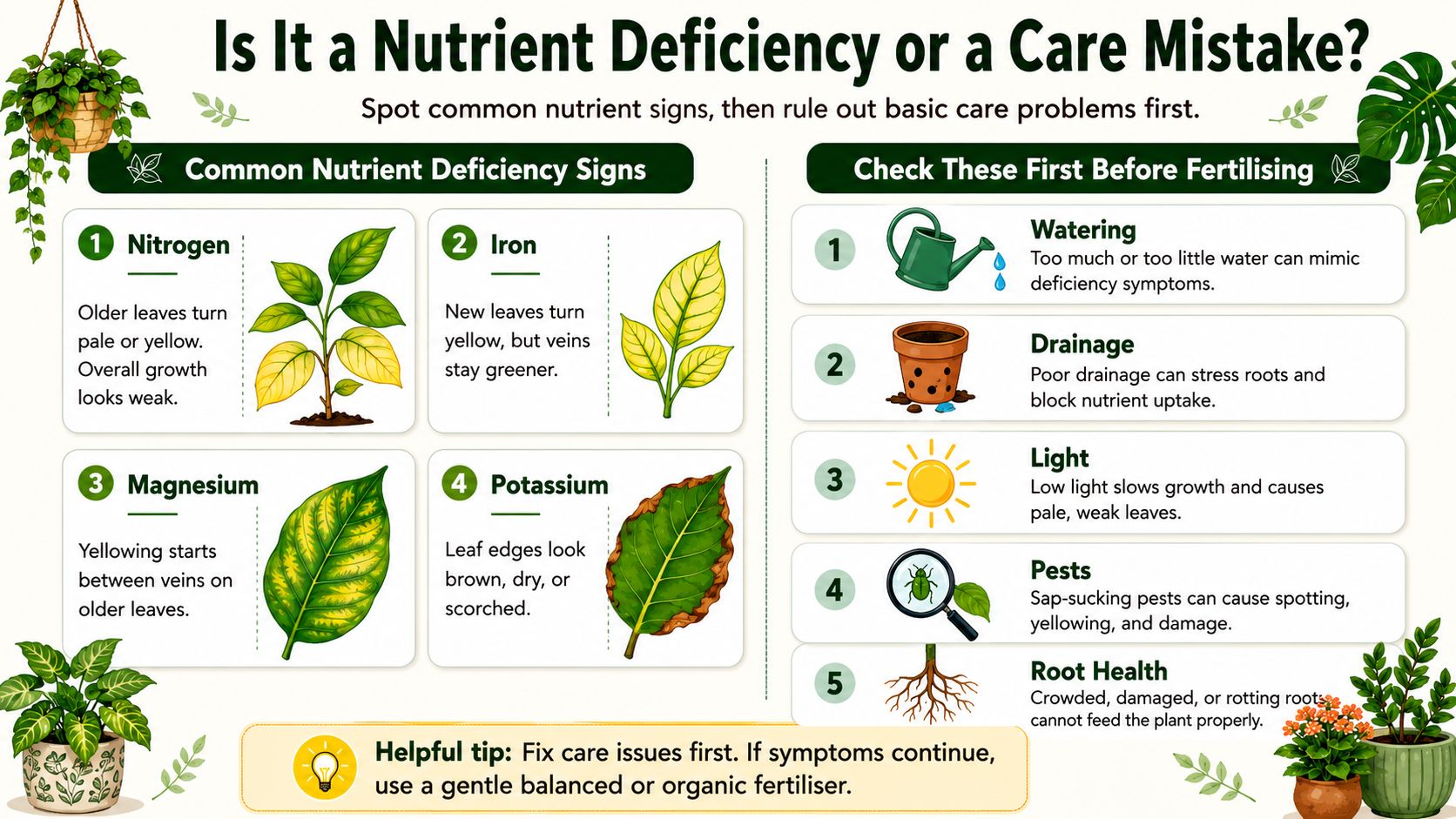
Nutrient deficiencies can cause symptoms such as yellow leaves, pale green growth, poor flowering, slow growth, and reduced plant vigour. However, not every leaf problem is caused by a lack of nutrients.
Many plant issues that resemble nutrient deficiencies are actually caused by overwatering, poor drainage, root damage, low light, pests, or environmental stress. Applying fertiliser without identifying the real cause can sometimes worsen the problem rather than solve it.
Common Nutrient Deficiency Symptoms in Plants
| Nutrient | Common Symptoms |
|---|---|
| Nitrogen | Older leaves turn yellow first, while newer leaves remain green |
| Iron | New leaves turn yellow, but the veins stay green |
| Magnesium | Yellowing develops between the veins of older leaves |
| Potassium | Brown leaf edges, weak stems, and poor overall growth |
Keep in mind that similar symptoms can have multiple causes. Always evaluate watering, light, soil conditions, and root health before assuming a nutrient deficiency. To know more about the nutrients, their deficiencies, and best fertilizers to maximise the harvest, then check out - 7 Best Fertilizers for Vegetables to Maximize Your Harvest
What Is Epsom Salt and When Should You Use It?
Epsom salt is a naturally occurring compound made of magnesium and sulphur. It is sometimes used to correct magnesium deficiencies in plants, particularly when leaves show yellowing between the veins while the veins themselves remain green.
However, Epsom salt is not a universal solution for yellow leaves. If the underlying issue is overwatering, root rot, poor drainage, insufficient light, pests, disease, or a different nutrient deficiency, applying Epsom salt is unlikely to help and may create nutrient imbalances over time.
Use Epsom salt only when there is a reasonable indication that the plant is lacking magnesium.
Fertiliser Best Practices
- Use a balanced fertiliser appropriate for the plant type.
- Follow the dosage instructions on the product label.
- Water the soil before applying fertiliser if the potting mix is very dry.
- Avoid fertilising plants that are severely stressed, diseased, or suffering from root rot.
- Increase feeding during active growth periods and reduce it during winter, extreme heat, or other stress conditions.
- Remember that healthy roots, proper watering, and adequate light are just as important as fertiliser for plant growth.
In many cases, correcting watering, drainage, or light conditions restores plant health more effectively than adding extra fertiliser.
🌱 Give Your Plants the Nutrition They Need
Looking to support healthy growth, greener leaves, and better flowering? Shop premium-quality organic fertilisers and Epsom salt from Urvann. Our carefully selected plant nutrients are suitable for indoor plants, balcony gardens, flowering plants, vegetables, and more.
- High-quality gardening essentials
- Trusted by home gardeners across India
- Free next-day delivery on orders placed before 7 PM
Shop Organic Fertilisers & Epsom Salt at Urvann Today!
Summing Up
Plant leaves are often the first indicator that something is changing in your plant's environment. Whether you notice yellow leaves, brown tips, curling foliage, drooping stems, black patches, or pale new growth, the key is to identify the underlying cause before taking action.
In most cases, problems can be traced back to watering, light, soil conditions, pests, weather changes, or nutrient imbalances. By understanding these signals early, you can correct issues before they affect the overall health of your plant.
Looking for healthy plants, quality potting mixes, organic fertilisers, Epsom salt, gardening tools, and plant care essentials? Explore Urvann's complete gardening collection and enjoy free next-day delivery on orders placed before 7 PM.
Frequently Asked Questions (FAQs)
Q1. Why Do Indoor Plant Leaves Have Brown Tips?
Brown leaf tips are one of the most common problems in indoor plants such as the Peace Lily, Areca Palm, Spider Plant, Aglaonema, Money Plant, and Calathea. In most cases, the issue is related to environmental conditions rather than disease.
Common causes of brown leaf tips include:
- Dry indoor air and low humidity
- Underwatering or inconsistent watering
- Excess fertiliser application
- Hard water with high mineral content
- Salt build-up in the soil
- Direct airflow from air conditioners or heaters
- Irregular watering schedules
How To Fix Brown Leaf Tips on Indoor Plants
- Water thoroughly so moisture reaches the entire root zone, not just the soil surface.
- Avoid over-fertilising, especially during slow growth periods.
- Keep plants away from direct AC vents, coolers, and heaters.
- Flush the soil with clean water occasionally to remove excess salts and fertiliser residues.
- Trim only the dry brown portions of the leaf if desired.
- Avoid cutting into the healthy green tissue, as this can create additional stress for the plant.
Q2. पीले पत्तों की चिंता कब करनी चाहिए?
हर पीला पत्ता किसी बड़ी समस्या का संकेत नहीं होता। कई बार पौधे के पुराने और निचले पत्ते प्राकृतिक रूप से पीले होकर गिर जाते हैं, जो उसकी सामान्य वृद्धि प्रक्रिया का हिस्सा है।
हालाँकि, अगर एक साथ कई पत्ते पीले होने लगें या पीलेपन के साथ अन्य लक्षण भी दिखाई दें, तो यह पौधे में किसी गंभीर समस्या का संकेत हो सकता है। विशेष रूप से तब ध्यान देने की आवश्यकता है जब:
- बहुत सारे पत्ते एक साथ पीले हो रहे हों।
- पत्ते मुड़ने (curling) या झुकने (drooping) लगें।
- मिट्टी से सड़ी हुई या बदबूदार गंध आने लगे।
- तना (stem) नरम, काला या गलता हुआ दिखाई दे।
- पत्तों पर कीड़े, चिपचिपा पदार्थ या धब्बे नजर आएँ।
- नई पत्तियाँ भी पीली निकलने लगें।
ऐसी स्थिति में केवल खाद या पानी बढ़ाना समाधान नहीं होता। सबसे पहले मिट्टी की नमी, ड्रेनेज, रोशनी, जड़ों की स्थिति और कीटों की मौजूदगी की जाँच करें। सही कारण का पता लगाकर समय पर देखभाल करने से पौधे को स्वस्थ होने में मदद मिलती है और समस्या बढ़ने से रोकी जा सकती है।
Q3. Should I Cut Yellow Leaves Off Plants?
Yes, you can remove yellow leaves, but it is important to understand why the leaf has turned yellow before pruning it. Yellow leaves are often a symptom of an underlying issue such as overwatering, underwatering, low light, nutrient deficiency, or natural ageing.
If a leaf is completely yellow, brown, dry, or dead, it is no longer contributing much to the plant's growth and can be safely removed using clean, sharp scissors or pruning shears. Removing dead foliage can improve the plant's appearance and allow it to direct more energy toward healthy leaves and new growth.
However, if a leaf is only partially yellow or the yellowing has appeared recently, it is often better to wait and observe. The plant may still be drawing nutrients from that leaf, especially if the issue is temporary or related to natural ageing.
When you can remove yellow leaves:
- The leaf is completely yellow or brown.
- The leaf is dry, damaged, or dying.
- The yellow leaf is an older, lower leaf that is naturally shedding.
- The plant has already produced healthy new growth.
When you should wait:
- Only a small part of the leaf is yellow.
- New leaves are turning yellow and the cause is still unknown.
- The plant is stressed after repotting, transport, or environmental changes.
- Multiple leaves are yellowing at the same time.
Q4. ಪ್ರಶ್ನೆ: ಹಳದಿ ಎಲೆಗಳು ಹೆಚ್ಚು ನೀರು ಹಾಕುವುದರಿಂದ ಬಂದಿವೆಯೋ ಅಥವಾ ಕಡಿಮೆ ನೀರು ಹಾಕುವುದರಿಂದ ಬಂದಿವೆಯೋ ಎಂದು ಹೇಗೆ ತಿಳಿಯುವುದು?
ಹಳದಿ ಎಲೆಗಳ ಕಾರಣವನ್ನು ತಿಳಿಯಲು ಮೊದಲು ಮಣ್ಣಿನ ಸ್ಥಿತಿಯನ್ನು ಪರಿಶೀಲಿಸಿ. ಮಣ್ಣು ನಿರಂತರವಾಗಿ ಒದ್ದೆಯಾಗಿದ್ದು, ಕುಂಡ ಭಾರವಾಗಿದ್ದರೆ ಅಥವಾ ಮಣ್ಣಿನಿಂದ ದುರ್ವಾಸನೆ ಬರುತ್ತಿದ್ದರೆ, ಸಮಸ್ಯೆ ಹೆಚ್ಚಾಗಿ ಹೆಚ್ಚು ನೀರು ಹಾಕುವುದರಿಂದ (Overwatering) ಆಗಿರಬಹುದು. ಇಂತಹ ಸಂದರ್ಭಗಳಲ್ಲಿ ಎಲೆಗಳು ಹಳದಿಯಾಗುವುದರ ಜೊತೆಗೆ ಮೃದುವಾಗಿ ಕಾಣಬಹುದು ಮತ್ತು ಸಸ್ಯವು ಕುಸಿಯಲು ಆರಂಭಿಸಬಹುದು.
ಮತ್ತೊಂದೆಡೆ, ಮಣ್ಣು ಸಂಪೂರ್ಣ ಒಣಗಿದ್ದು, ಗಟ್ಟಿಯಾಗಿದ್ದರೆ ಹಾಗೂ ಎಲೆಗಳ ಅಂಚುಗಳು ಒಣಗಿ ಕಂದು ಬಣ್ಣಕ್ಕೆ ತಿರುಗಿದ್ದರೆ, ಕಡಿಮೆ ನೀರು ಹಾಕುವುದು (Underwatering) ಕಾರಣವಾಗಿರಬಹುದು. ಇಂತಹ ಎಲೆಗಳು ಸಾಮಾನ್ಯವಾಗಿ ಒಣ, ಸುಕ್ಕುಗಟ್ಟಿದ ಅಥವಾ ಮಡಚಿಕೊಂಡಂತೆ ಕಾಣುತ್ತವೆ. ಸರಿಯಾದ ಕಾರಣವನ್ನು ಗುರುತಿಸಲು ಮಣ್ಣಿನ ತೇವಾಂಶವನ್ನು ಪರೀಕ್ಷಿಸುವುದು ಅತ್ಯಂತ ಮುಖ್ಯ.
Q5. Can leaves recover from turning yellow?
In most cases, fully yellow leaves do not turn green again because they have already lost much of their chlorophyll, the pigment responsible for photosynthesis. Once a leaf becomes completely yellow, it is usually nearing the end of its life cycle.
However, a yellow leaf does not always mean the entire plant is unhealthy. If the roots, stems, and growing conditions are still healthy, the plant can recover and produce fresh green growth. The key is to identify and correct the underlying cause, whether it is overwatering, underwatering, poor drainage, low light, nutrient deficiency, pests, or environmental stress.
After improving the plant's care routine, monitor the new leaves rather than the old yellow ones. Healthy new growth is the best sign that the plant is recovering successfully.
Q6. Why are my Money Plant leaves turning yellow?
Yellow leaves on a Money Plant are most commonly caused by overwatering, but several other factors can also contribute to the problem. If the soil remains constantly wet, the roots may struggle to absorb oxygen, causing older leaves to turn yellow and eventually fall off. Low light is another common reason, as Money Plants grow best in bright, indirect light.
For Money Plants grown in water, dirty or stagnant water can lead to yellowing leaves and poor growth. Poor drainage, compacted soil, sudden temperature changes, and nutrient deficiencies may also affect leaf colour.
To fix the problem, check the soil moisture, ensure the pot has drainage holes, and place the plant in bright indirect light. If growing it in water, replace the water regularly and clean the container periodically. Once the underlying issue is corrected, healthy new leaves should emerge green and vigorous.
Q7. Why are my plant leaves curling inward?
Leaves that curl inward are often a plant's way of reducing water loss and protecting itself from environmental stress. This symptom is most commonly caused by underwatering, heat stress, low humidity, or strong sunlight. When a plant cannot absorb enough moisture to meet its needs, the leaves may fold inward to conserve water.Dry soil, hot weather, and exposure to harsh afternoon sun can all trigger inward curling. Indoor plants may also show this symptom when the air is too dry, especially in air-conditioned rooms. In some cases, pests such as spider mites, aphids, or thrips can cause new leaves to curl and become distorted.
Check the soil moisture first, inspect the leaves for pests, and ensure the plant is receiving the right amount of light. Once the underlying cause is corrected, new growth should return to its normal shape.
Q8. Bangalore weather mein indoor plants ke leaves yellow kyun ho jaate hain?
Bangalore ka mausam aam taur par mild hota hai, lekin baar-baar hone wali baarish, cloudy conditions aur relatively high humidity ki wajah se indoor plants mein yellow leaves kaafi common hote hain. Sabse bada kaaran overwatering hota hai. Jab soil ko dry hone ka mauka nahi milta, roots ko oxygen kam milti hai aur leaves yellow hone lagte hain.
Low light bhi ek common reason hai, khaaskar monsoon ya cloudy days mein. Kam sunlight ke saath zyada watering karne se problem aur badh sakti hai. Kuch cases mein constantly moist soil fungal growth ya root rot ko bhi trigger kar sakti hai.
Is problem se bachne ke liye watering se pehle soil ki moisture check karein, pots mein proper drainage rakhein, aur plants ko bright indirect light mein rakhein. Cloudy ya rainy weather ke dauran watering frequency ko kam karna aksar yellow leaves ko prevent karne mein madad karta hai.