


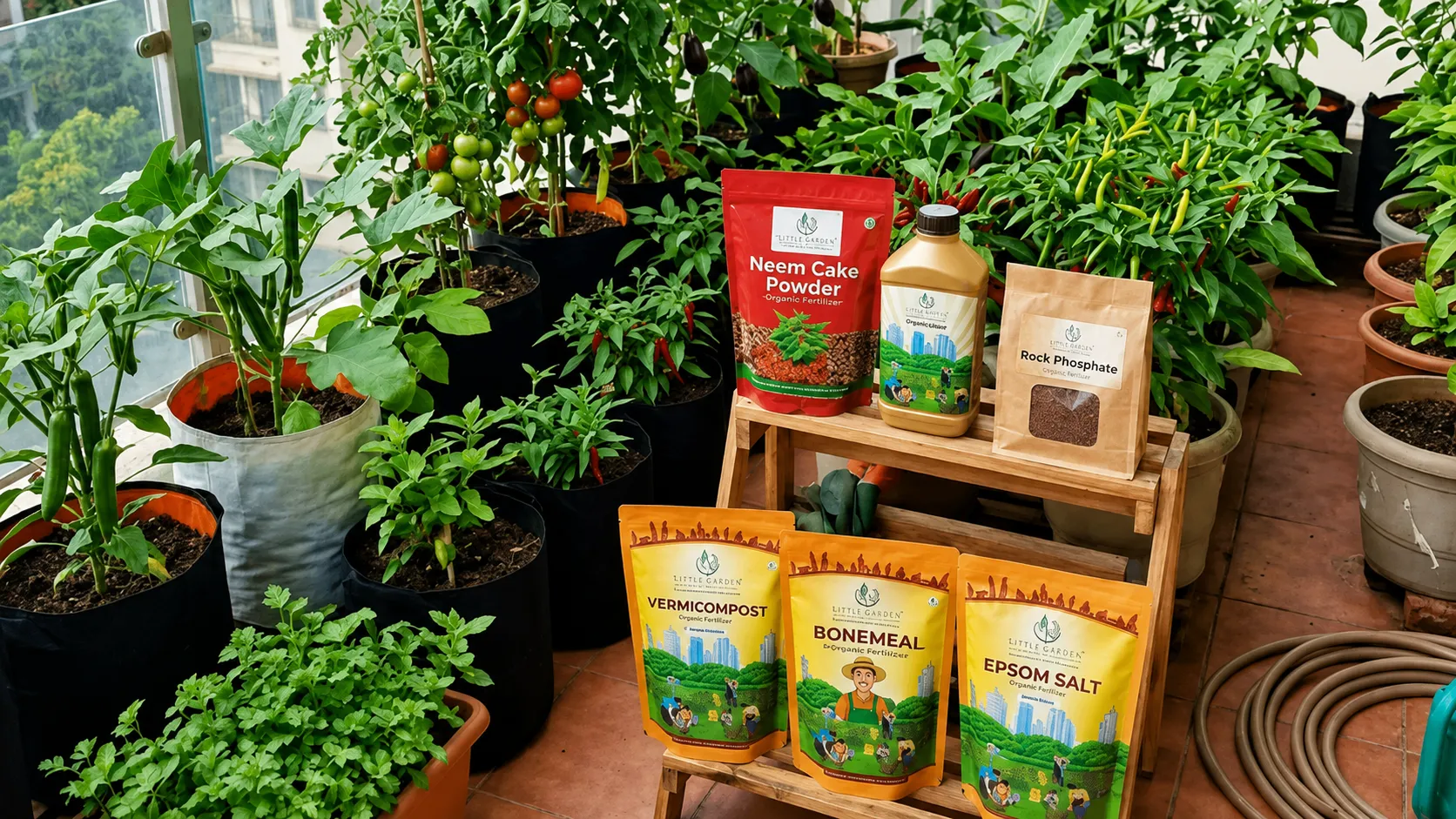
Learn the best fertilizers for vegetables, how NPK works, seasonal feeding tips, and common mistakes to boost healthy growth and maximize garden yields.
Key Takeaways
- Healthy harvest depends on nutrients, not just water or sunlight. In containers and grow bags, soil nutrients deplete quickly, so regular feeding is essential.
- NPK is the foundation of plant nutrition:
- Nitrogen = leafy growth
- Phosphorus = roots, flowers, fruiting
- Potassium = fruit quality, taste, and disease resistance
- Vermicompost is the most important base fertilizer because it improves soil health, boosts microbes, and supports steady long-term growth for all vegetables.
- Combine slow-release organics (vermicompost, neem cake) with targeted boosters (bone meal, rock phosphate, Jeevamrutham, Epsom salt) instead of relying on a single fertilizer.
- Over-fertilizing, feeding at the wrong stage, or ignoring seasonal changes (especially monsoon nutrient washout) can significantly reduce yield.
You planted the seeds. You watered on schedule. You gave them sunlight. And still, thin stems, yellowing leaves, and fruit that drops before it ripens.
In most home gardens, the issue isn’t care; it’s nutrition. Without the right fertilizers, vegetable plants simply don’t have the fuel they need to grow, flower, and produce a healthy harvest.
Fertilizers are the missing link between effort and results. They decide whether your plants stay weak and stressed or grow into productive, fruit-bearing crops.
In pots, grow bags, and terrace beds, nutrients get used up quickly. That’s why regular feeding with the right fertilizers isn’t optional. It is essential for strong growth and consistent yields.
This guide covers the 7 best fertilizers for vegetables, what each one does, when to use it, and how to choose the right option for your garden.
What Your Vegetables Actually Need
Different vegetables need different nutrients, but most fertilizers focus on three key ones:
- Nitrogen (N): Helps plants grow healthy leaves and stems. Leafy vegetables like spinach, methi, and lettuce need more nitrogen. Too much nitrogen in fruiting plants can lead to lots of leaves but fewer tomatoes, chillies, or other fruits.
- Phosphorus (P): Supports strong root growth and helps plants produce flowers and fruits. It is especially important when vegetables start flowering and setting fruit.
- Potassium (K): Helps plants absorb water efficiently, improves disease resistance, and supports better-quality fruits with improved size, colour, and taste.
Plant Nutrition Reference Guide
Here's a quick guide to the nutrients they need and the problems you might notice if they're not getting enough.
| Vegetable | Primary Need | What Happens Without It |
|---|---|---|
| Leafy greens (spinach, methi, lettuce) | High Nitrogen | Pale, slow-growing leaves |
| Fruiting vegetables (tomatoes, chilies, peppers) | Phosphorus + Potassium | Flowers but no fruit |
| Root vegetables (carrot, radish, beetroot) | Potassium | Lush tops, stunted roots |
| Cucumbers and gourds | Balanced NPK | Poor fruit set, yellowing |
| Herbs (coriander, basil, mint) | Low, steady Nitrogen | Leggy growth, weak fragrance |
Beyond NPK, vegetables also need secondary nutrients (calcium, magnesium, sulfur) and micronutrients, many of which are absent from single-input fertilizer routines.
7 Best Fertilizers for Your Vegetable Garden
Here is the list of seven best fertilizers you can utilize for your vegetable garden:
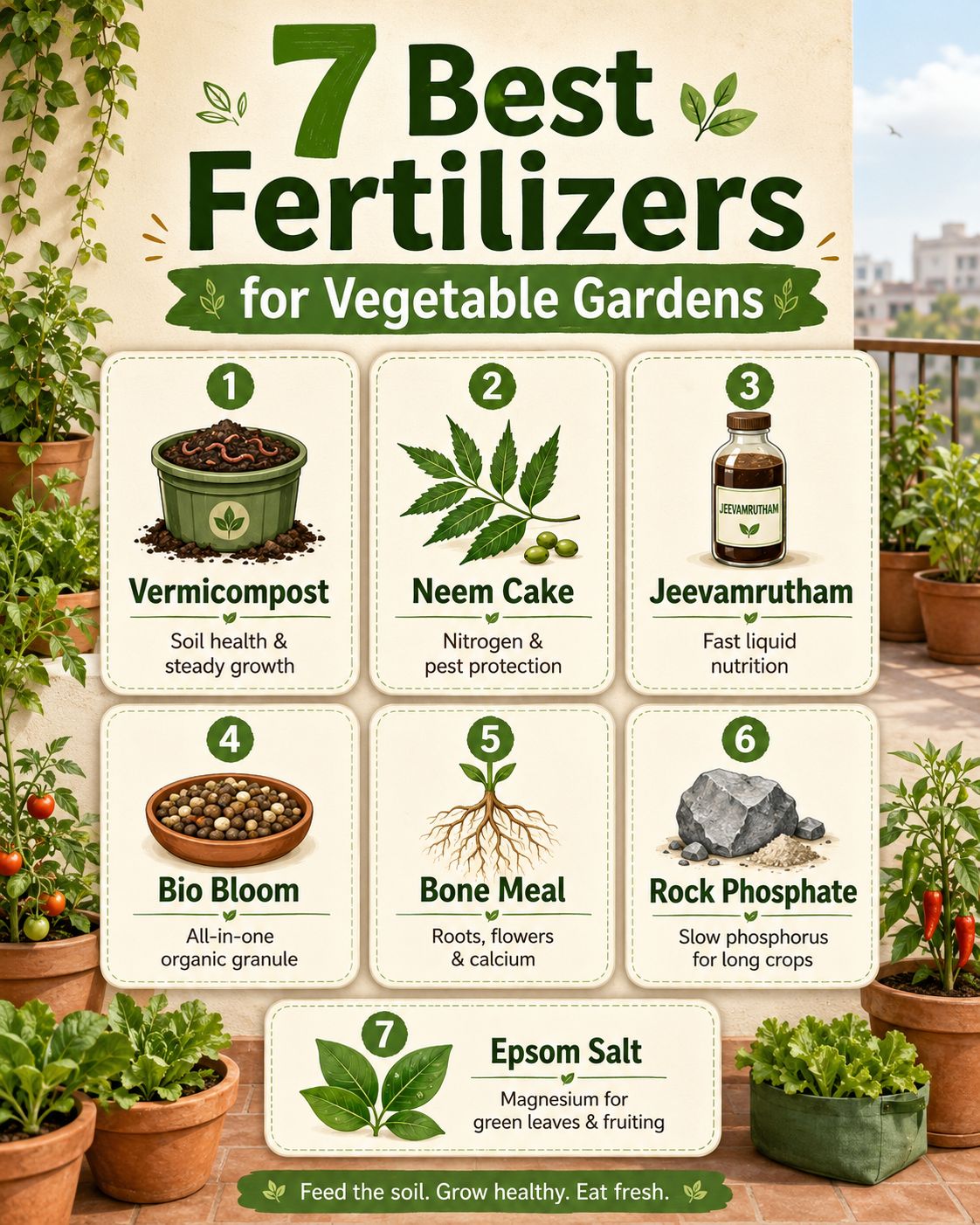
1. Vermicompost (The Foundation Every Vegetable Garden Needs)
- Best for: All vegetables, all growth stages
- Type: Slow-release organic
- NPK: ~1.5-2-1 (varies)
If you use only one fertilizer, make it vermicompost.
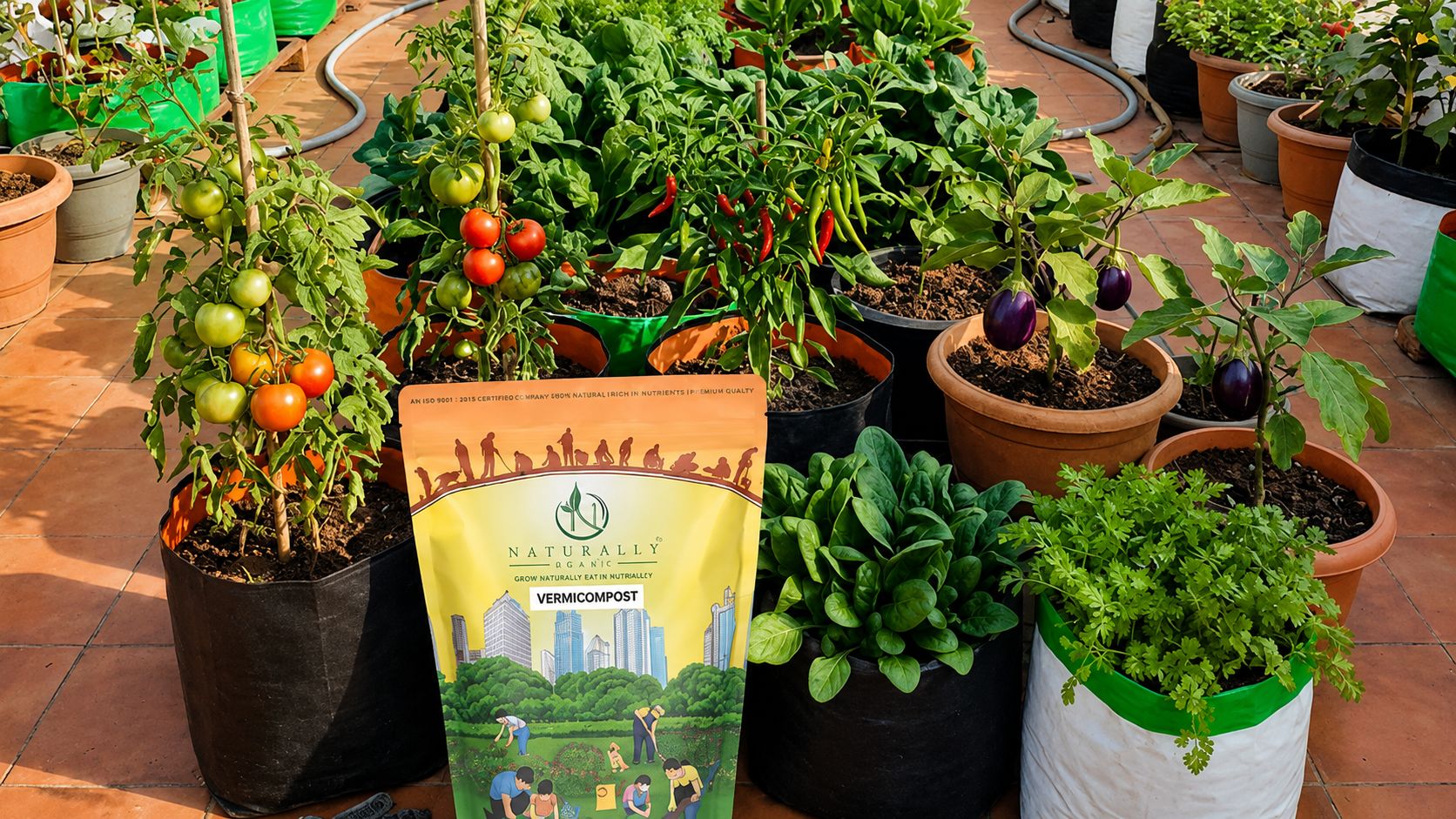
Vermicompost is worm castings made from organic matter processed by earthworms. Unlike synthetic fertilizers that feed the plant directly, vermicompost feeds the soil. It introduces beneficial microbes, improves soil structure, increases water retention, and creates a healthy growing environment where roots can thrive.
For most Indian urban gardeners who grow vegetables in containers and grow bags, vermicompost is essential. Potting soil in a 12-inch pot has very little microbial activity. Vermicompost helps bring that soil to life.
Why It Works In Containers
Container soil compacts over time, reducing airflow and root growth. Vermicompost keeps the soil loose and supports beneficial microbes. Plants grown in vermicompost-rich soil often develop stronger stems, healthier foliage, and better resistance to diseases, especially during the Indian summer and monsoon seasons.
How To Use It
- Mix 20–25% vermicompost into your potting mix before planting.
- Top dress with 1–2 cups per medium pot every 4–6 weeks during the growing season.
- During the monsoon, use vermicompost as your primary fertilizer. Synthetic fertilizers can wash away in heavy rain, while slow-release organic fertilizers remain available for longer.
Get nutrient-rich vermicompost from Urvann to improve soil health and boost vegetable growth.
2. Neem Cake (Nitrogen + Pest Protection in One)
- Best for: Tomatoes, chillies, eggplant, all outdoor vegetables
- Type: Slow-release organic
- NPK: ~4-1-2
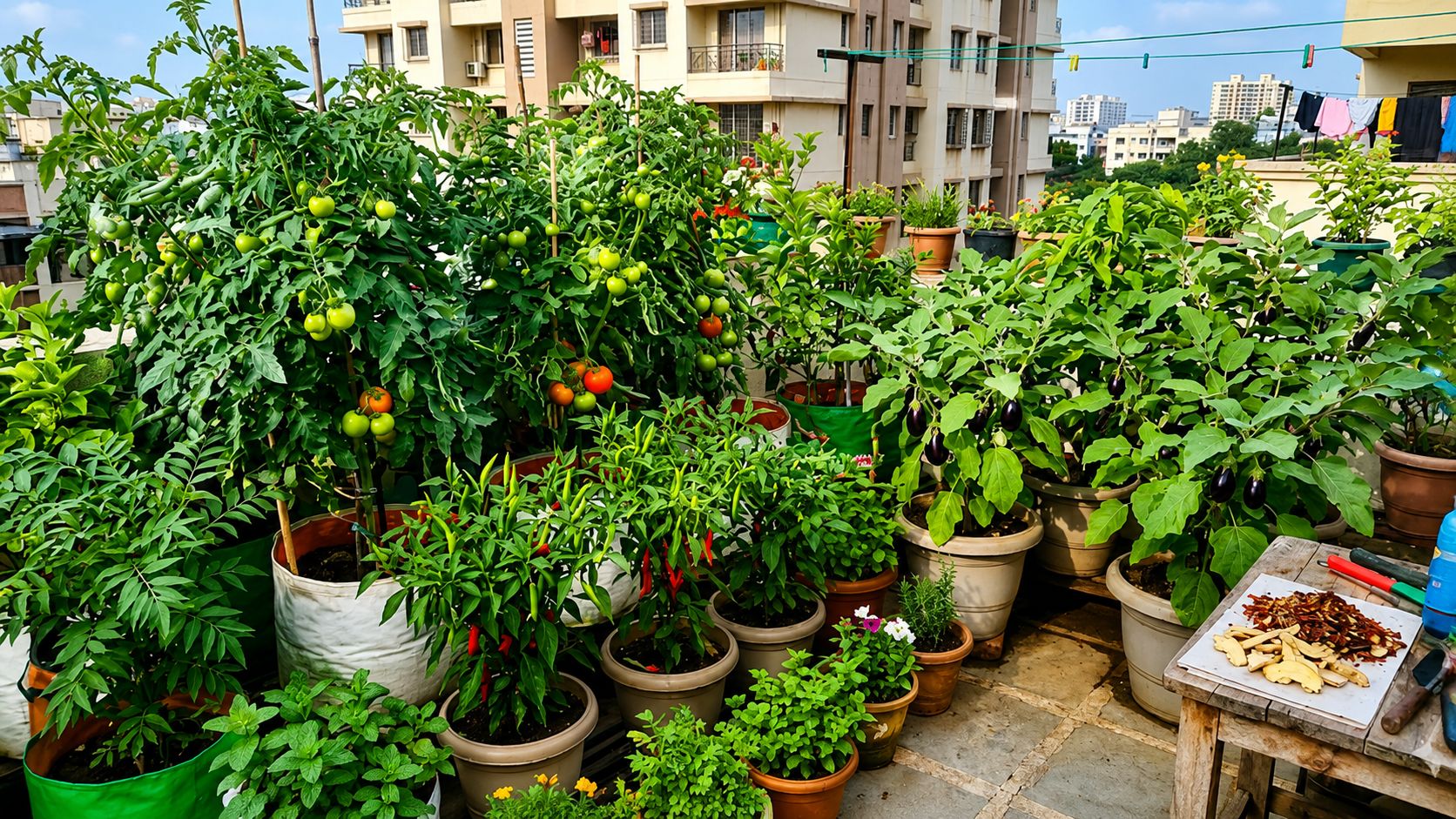
Neem cake is made from neem seeds after the oil has been extracted. It is one of the most useful organic fertilizers for home vegetable gardens because it feeds plants while helping protect the soil from pests.
The slow-release nitrogen supports healthy leaf and stem growth, while natural compounds in neem help reduce problems caused by soil pests such as root-knot nematodes and fungus gnats. Regular use can also improve soil health by supporting beneficial microbes.
How To Use It
- Mix 1–2 tablespoons into the potting mix at planting time.
- Top-dress every 4–6 weeks during the growing season.
Get premium Neem Khali from Urvann to boost plant nutrition and keep soil pest-free.
3. Jeevamrutham (Fast Nutrition Between Regular Feeds)
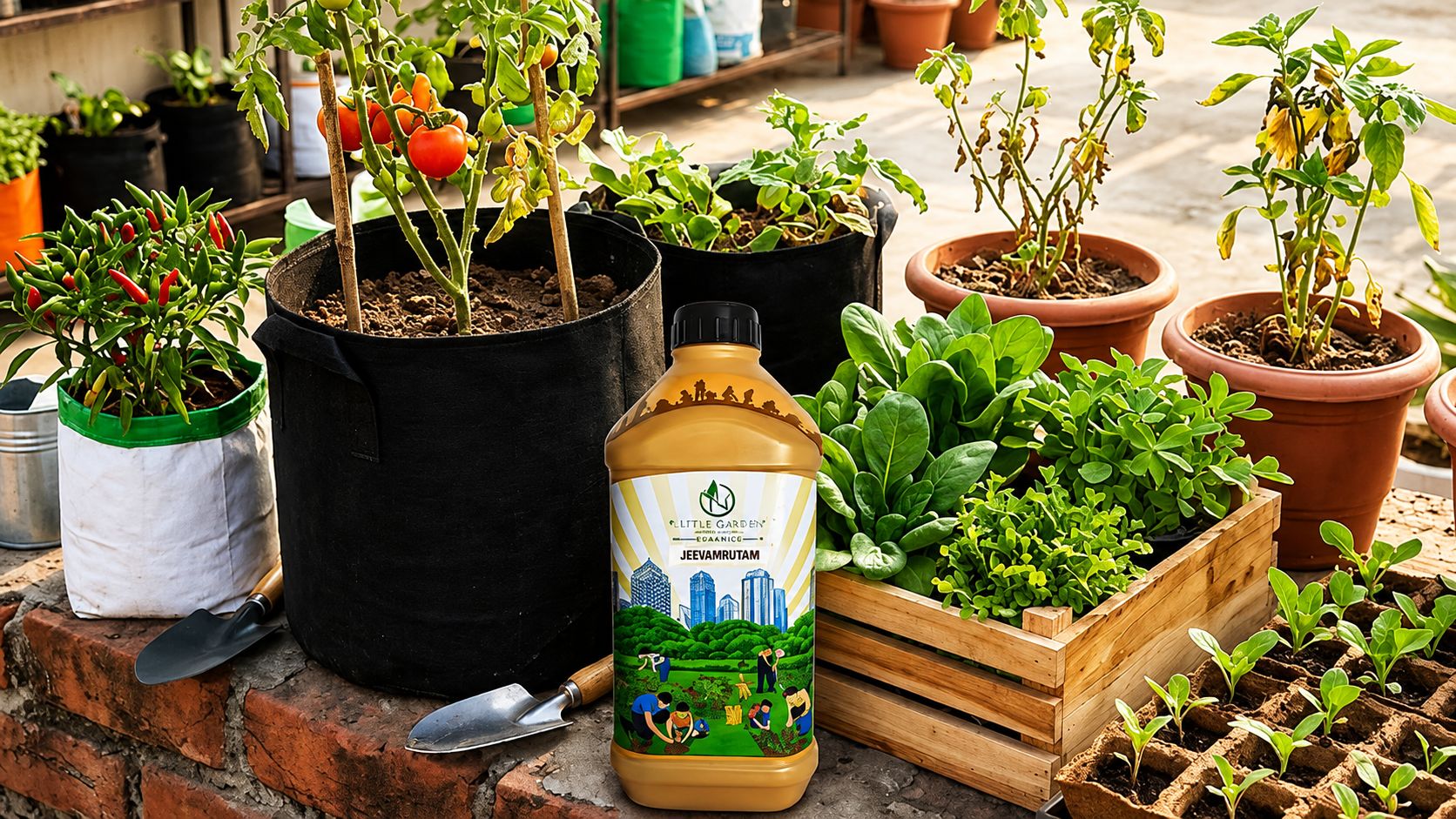
- Best for: All vegetables, especially when plants show stress or slow growth
- Type: Fast-release organic liquid fertilizer
- Key nutrients: Broad-spectrum macro and micronutrients in dissolved form
Jeevamrutham is a traditional bio-enzyme liquid fertilizer made from fermented organic matter, such as plant waste, fruit peels, and kitchen scraps. Beneficial microbes break down these materials into nutrients that plants can absorb quickly, often within hours instead of waiting for them to decompose in the soil.
Jeevamrutham is Especially Useful When
- You notice yellowing leaves between regular fertilizer applications.
- Plants look weak or sluggish after transplanting.
- Heavy monsoon rain has washed nutrients out of containers.
- Seedlings need a gentle boost during their first 2–3 weeks of growth.
How To Use It
- Dilute with water at a ratio of 1:10 to 1:20.
- Apply as a soil drench around the root zone or as a foliar spray on the underside of leaves for quicker absorption.
- Use every 10–14 days between solid fertilizer applications.
Support faster recovery and stronger growth in your plants with Jeevamrutham 1 Ltr from Urvann.
4. Bio Bloom (The All-in-One Organic Granule)
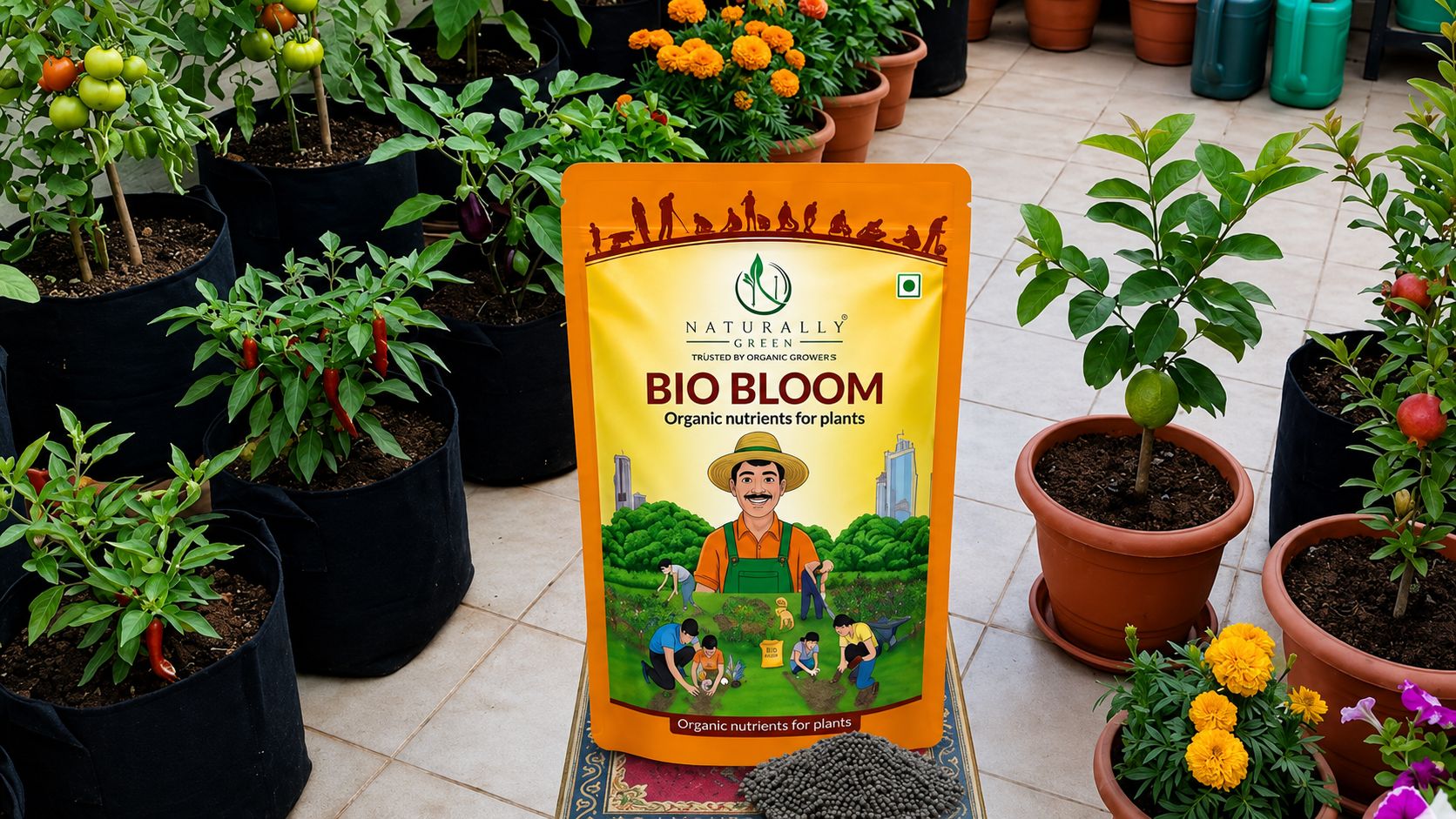
- Best for: All vegetables and flowering plants, especially for gardeners who prefer a single fertilizer solution
- Type: Slow-release organic granule
- Key nutrients: Natural NPK, secondary nutrients, and essential micronutrients
Bio Bloom is designed to provide complete plant nutrition in one product. Unlike fertilizers that focus on only one area, such as soil health or nitrogen supply, it delivers a balanced mix of nutrients to support overall plant growth.
This makes it particularly useful for terrace and balcony gardens where managing multiple fertilizers can be inconvenient. The slow-release formula feeds plants steadily over time, reducing the risk of nutrient spikes and making regular feeding easier.
Why Gardeners Use It
- Provides both macro and micronutrients in one application
- Supports healthy growth, flowering, and fruit production
- Simplifies fertilizer routines for container gardens
How To Use It
- Mix into potting soil at planting time according to package instructions.
- Top-dress around the root zone every 4–6 weeks.
- Suitable for vegetables, flowering plants, and fruit-bearing plants.
Make plant care easier with Bio Bloom from Urvann, a complete fertilizer for steady growth and blooming.
5. Bone Meal (The Root and Flower Maker)
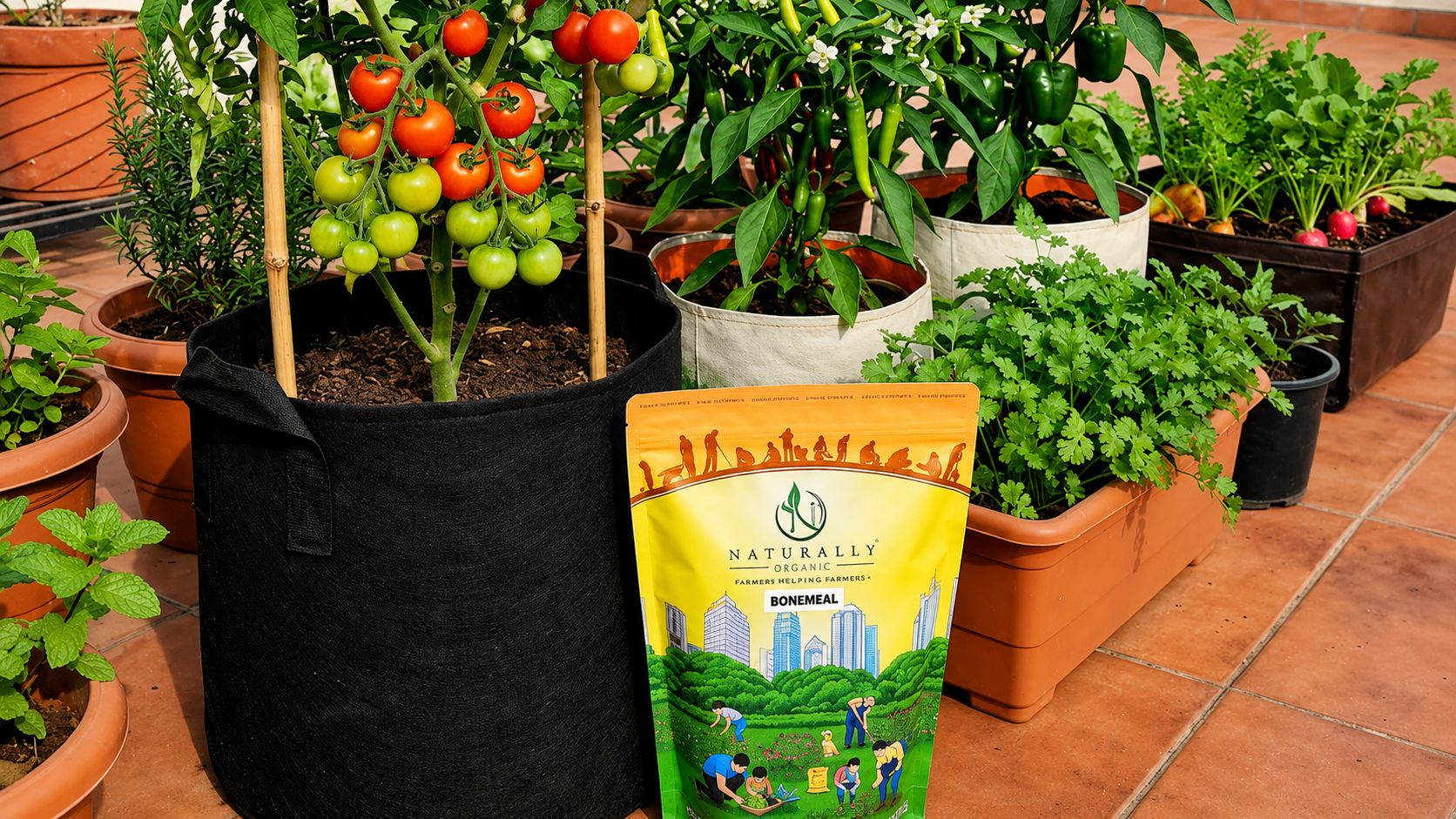
- Best for: Tomatoes, peppers, chilies, and root vegetables
- Type: Slow-release organic fertilizer
- NPK: ~3-15-0, with high calcium content
Bone meal is one of the best fertilizers for vegetables that need strong roots, abundant flowers, and healthy fruit production. Its high phosphorus content supports root development and helps plants produce more flowers and fruits over time.
It also contains calcium, which can help reduce blossom end rot, a common problem in tomatoes and peppers that causes dark, sunken patches on developing fruits.
Why Gardeners Use It
- Encourages stronger root growth
- Supports flowering and fruit set
- Helps reduce calcium-related disorders such as blossom end rot
- Continues feeding plants for several months
How To Use It
- Mix 1 tablespoon per litre of potting soil at planting time.
- Apply during transplanting, when phosphorus has the greatest impact on root establishment.
- Avoid overapplying, as bone meal is highly concentrated in phosphorus.
Strengthen roots and improve flowering naturally with Bone Meal from Urvann for healthier, more productive plants.
6. Rock Phosphate (Slow Phosphorus for Long-Duration Crops)
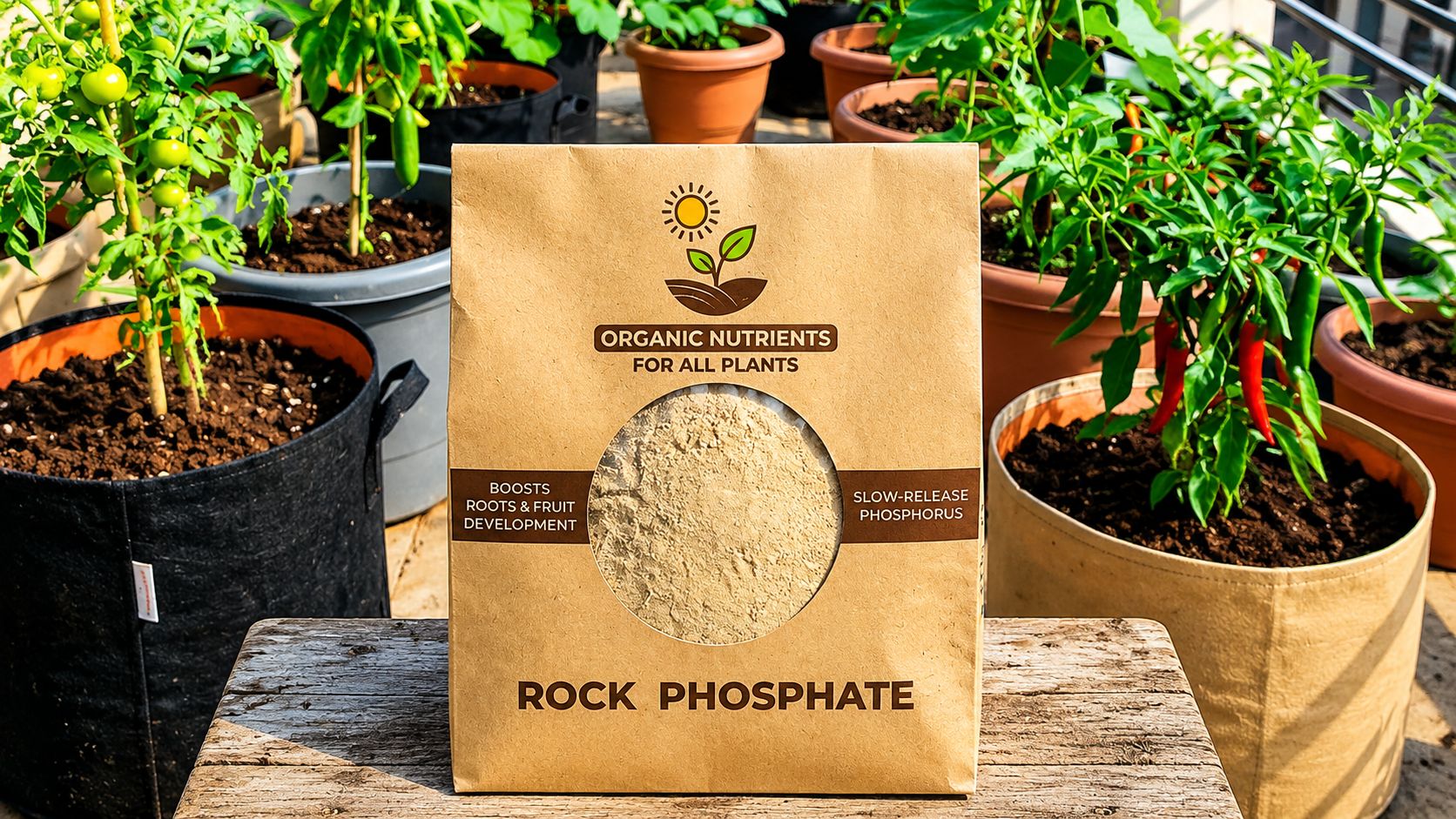
- Best for: Tomatoes, cucumbers, and other fruiting vegetables grown for 3–4 months or longer
- Type: Slow-release mineral fertilizer
- Key nutrients: Phosphorus (18–22%), calcium
Rock phosphate is a long-lasting source of phosphorus that supports strong root growth, flowering, and fruit production throughout the growing season. Because it releases nutrients slowly, it works best for vegetables that remain in the same container for several months. It is also a popular choice for gardeners looking for a plant-based alternative to bone meal.
Why Gardeners Use It
- Provides a steady supply of phosphorus for long-duration crops
- Supports root development and fruit production
- Contains calcium for overall plant health
- Suitable for plant-based gardening routines
How To Use It
- Mix into the potting soil at planting time.
- Use alongside compost or vermicompost to improve nutrient availability.
- Do not rely on it to correct phosphorus deficiencies mid-season, as it releases nutrients slowly.
Strengthen roots and improve flowering over time with Rock Phosphate from Urvann for healthier, longer-growing vegetables.
7. Epsom Salt (Magnesium for Greener Leaves and Better Fruiting)
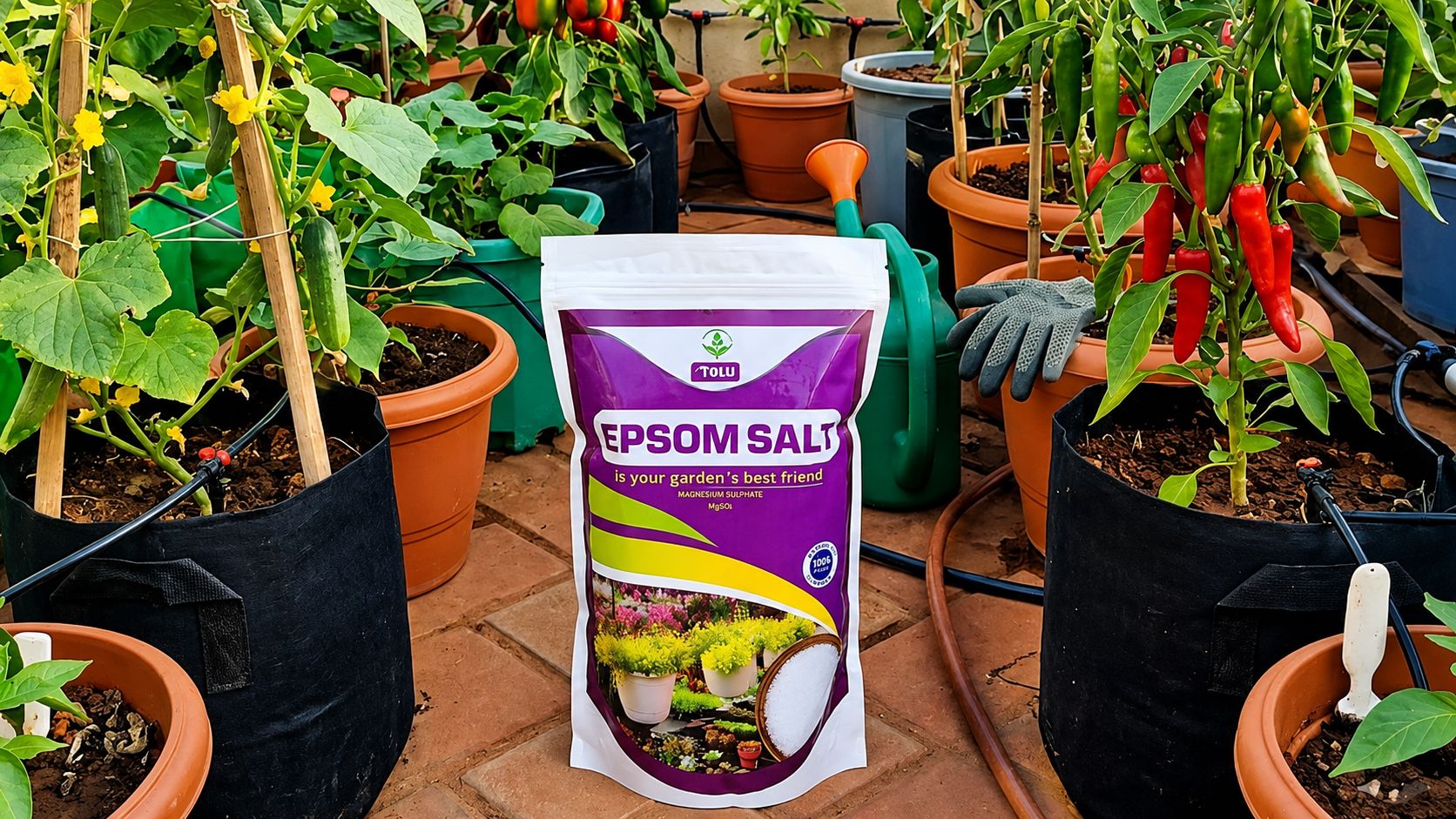
- Best for: Tomatoes, chillies, peppers, cucumbers, and plants showing yellow leaves with green veins
- Type: Fast-dissolving mineral supplement
- Key nutrients: Magnesium (10%), sulphur (13%)
Epsom salt is a simple way to correct magnesium deficiency in vegetable plants. In container gardens, magnesium gradually washes out of the soil with regular watering, especially during the monsoon.
One of the most common signs of deficiency is leaves turning yellow while the veins remain green. Magnesium helps plants produce chlorophyll, which keeps leaves green and supports healthy growth. It also helps improve flowering and fruit development in heavy-feeding vegetables such as tomatoes and chillies.
Why Gardeners Use It
- Corrects magnesium deficiency
- Helps keep leaves green and healthy
- Supports flowering and fruit production
- Works quickly when plants show deficiency symptoms
How To Use It
- Dissolve 1 teaspoon in 1 litre of water and apply as a soil drench every 3–4 weeks.
- For faster absorption, use as a foliar spray at half strength.
- Avoid overapplying, as excess magnesium can interfere with calcium uptake.
Restore green, healthy leaves and improve fruiting naturally with Epsom Salt from Urvann.
Quick Fertilizing Guide for Common Vegetables
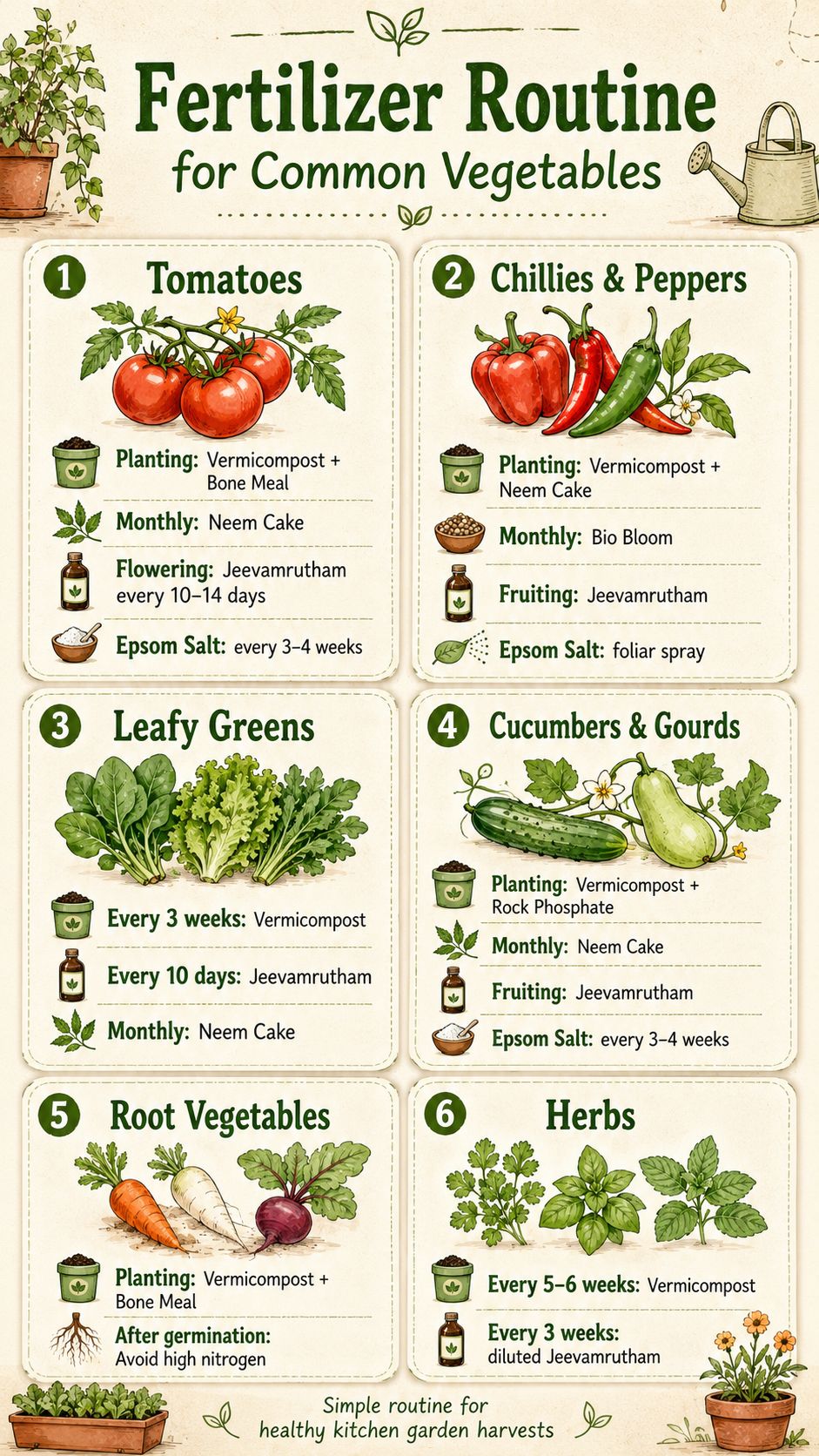
Not sure which fertilizers to use for different vegetables? Use this simple guide to build a balanced feeding routine based on what you're growing.
Tomatoes
- At planting: Vermicompost + bone meal
- Every month: Neem cake
- Every 10–14 days from flowering: Jeevamrutham
- Every 3–4 weeks: Epsom salt
- Watch for blossom end rot, a common sign of calcium deficiency.
Chillies and Peppers
- At planting: Vermicompost + neem cake
- Every month: Bio Bloom
- Every 10–14 days during fruiting: Jeevamrutham
- Every 3–4 weeks: Epsom salt foliar spray
Leafy Greens (Spinach, Methi, Coriander)
- Every 3 weeks: Vermicompost
- Every 10 days: Jeevamrutham
- Every month: Neem cake
- These crops need a steady supply of nitrogen for healthy leaf growth.
Cucumbers and Gourds
- At planting: Vermicompost + rock phosphate
- Every month: Neem cake
- Every 10 days during fruiting: Jeevamrutham
- Every 3–4 weeks: Epsom salt
Root Vegetables (Carrot, Radish, Beetroot)
- At planting: Vermicompost + bone meal
- Avoid high-nitrogen fertilizers after germination.
- Too much nitrogen encourages leaf growth instead of root development.
Herbs (Coriander, Basil, Mint)
- Every 5–6 weeks: Vermicompost
- Every 3 weeks: Jeevamrutham diluted at a 1:20 ratio
- These plants are light feeders and usually do not need heavy fertilization.
The Complete Seasonal Feeding Calendar for Indian Vegetable Gardens
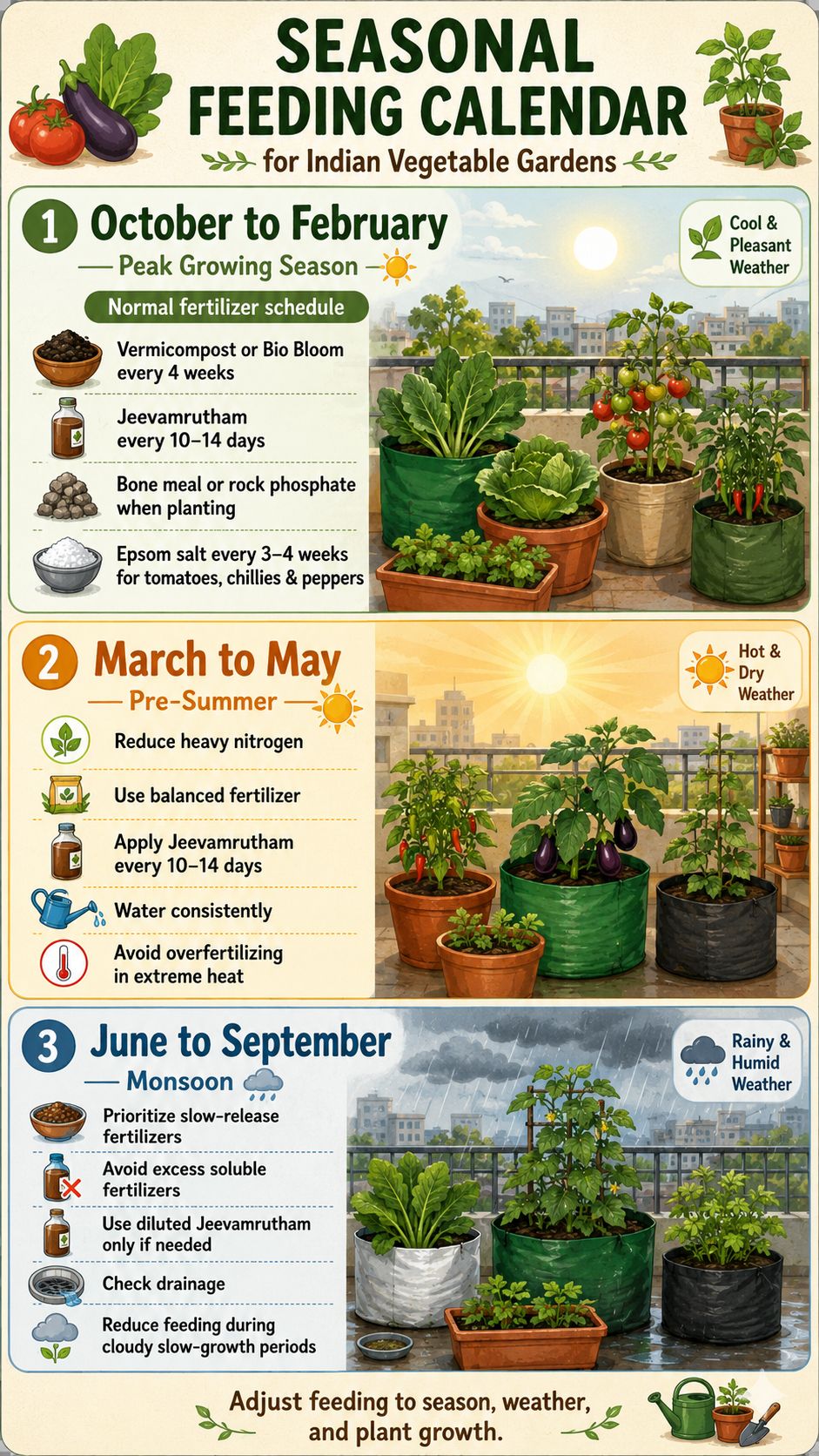
India's changing seasons affect how vegetables grow and how they use nutrients. A feeding routine that works during the cool winter months may not be suitable during summer or the monsoon. Use this seasonal guide to adjust your fertilizer schedule throughout the year.
1. October to February: Peak Growing Season
This is the best time for growing most vegetables in India. Plants grow actively and can make full use of regular feeding.
- Follow your normal fertilizer schedule.
- Top-dress with vermicompost or Bio Bloom every 4 weeks.
- Apply Jeevamrutham every 10–14 days.
- Add bone meal or rock phosphate when planting new vegetables.
- Use Epsom salt every 3–4 weeks for tomatoes, chillies, and peppers.
2. March to May: Pre-Summer
As temperatures rise, vegetables often experience heat stress. Focus on maintaining plant health rather than encouraging rapid growth.
- Reduce heavy nitrogen applications.
- Continue using Bio Bloom as a balanced fertilizer.
- Apply Jeevamrutham every 10–14 days to support plant health.
- Water consistently and monitor plants for signs of stress.
- Avoid overfertilizing during periods of extreme heat.
3. June to September: Monsoon
Heavy rainfall can wash nutrients out of containers and keep soil wet for longer periods. Slow-release fertilizers generally perform best during this season.
- Prioritize vermicompost, neem cake, Bio Bloom, bone meal, and rock phosphate.
- Avoid excessive use of fast-acting or highly soluble fertilizers.
- Use Jeevamrutham as a diluted soil drench if plants show signs of nutrient deficiency.
- Check drainage regularly to prevent waterlogging and root rot.
- Reduce fertilizer applications if plants are growing slowly due to prolonged cloudy weather.
- India's seasons dramatically affect how and when you fertilize. A routine that works in December can harm your plants in June.
Common Fertilizing Mistakes That Affect Your Harvest
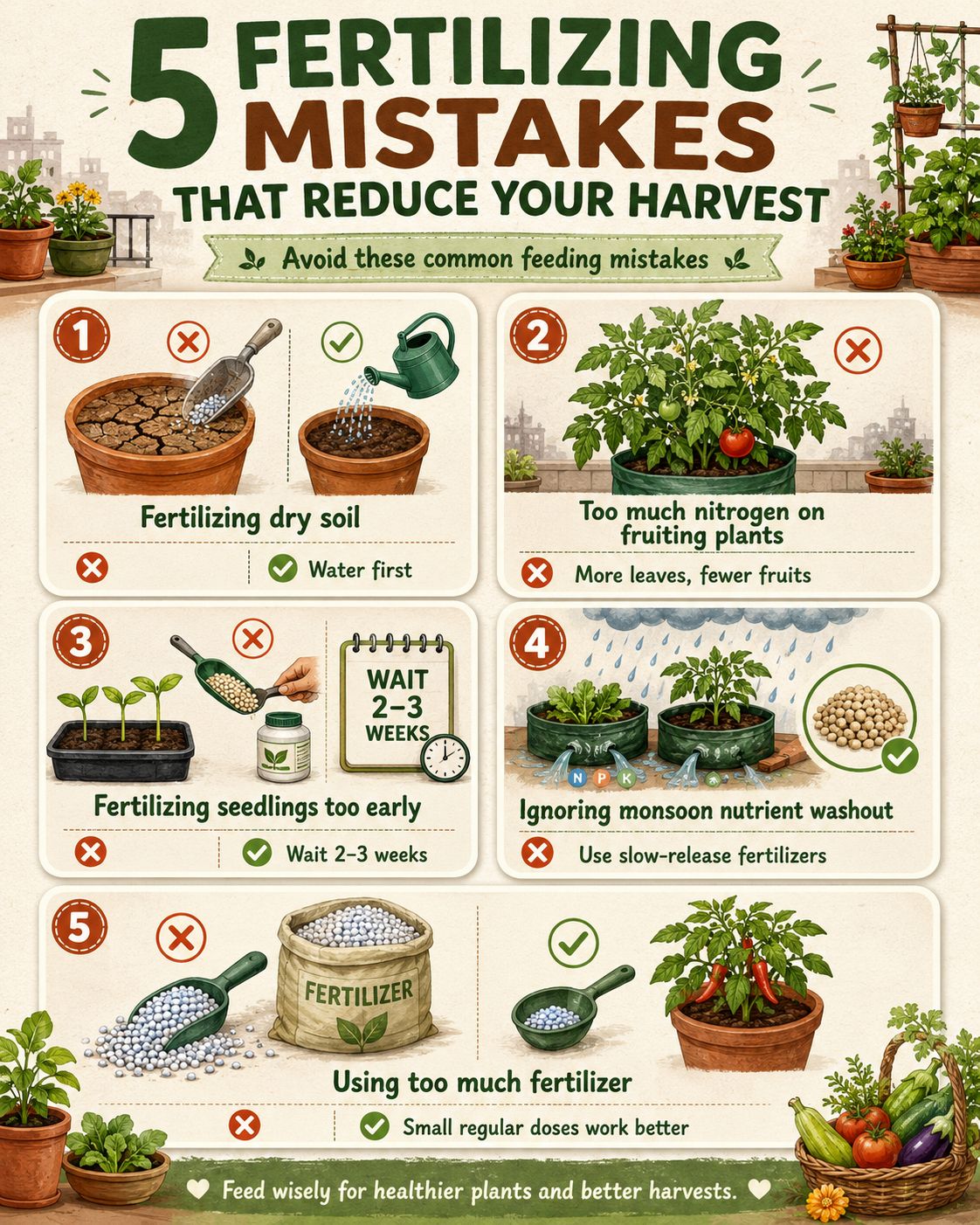
1. Fertilizing Dry Soil
Always water the soil about 30 minutes before applying any fertilizer. Nutrients applied to dry soil can concentrate around roots and burn them. This applies to both organic and synthetic fertilizers.
2. Too Much Nitrogen on Fruiting Plants
Tomatoes, peppers, and cucumbers that receive excess nitrogen grow thick and healthy-looking leaves but produce very little fruit. Once flower buds appear, reduce nitrogen and shift to balanced or potassium-rich feeding.
3. Fertilizing Seedlings Too Early
Seeds already contain enough nutrition for the first 2–3 weeks of growth. Adding fertilizer too early can stress young roots before they are strong enough to absorb nutrients properly.
4. Ignoring the Monsoon Effect
Heavy rain in pots or grow bags can wash away nutrients quickly. Gardeners who continue their dry-season fertilizer schedule from June to September often waste inputs and see weaker plant growth. During the monsoon, switch to slow-release organic fertilizers that stay in the soil longer.
5. More is Better
Container plants have limited soil space. Excess fertilizer has nowhere to go and can build up in the soil. This increases salinity and damages roots. Smaller, regular doses work better than large applications.
Build Your Vegetable Fertilizer Routine on Urvann
Healthy harvests start with healthy soil. Choosing the right fertilizer at the right stage of growth can make a significant difference in plant health, flowering, fruit production, and overall yield.
If you're just getting started, vermicompost is an excellent foundation for most vegetable gardens. You can then supplement it with neem cake for improved soil health and natural pest management, and add liquid fertilizers during active growth and fruiting stages for consistent nutrition.
Whether you're growing vegetables in balcony pots, terrace planters, raised beds, or grow bags, Urvann offers a wide range of fertilizers, composts, soil conditioners, and gardening essentials to help your plants thrive.
Browse Urvann today and build a feeding routine that supports healthier plants and bigger harvests throughout the growing season.
Frequently Asked Questions (FAQs)
1. Which fertilizer is best for vegetables in India?
For Indian terraces and container gardens, start with vermicompost as your soil foundation, add neem cake for nitrogen and pest control, and use Jeevamrutham every 10–14 days for micronutrient support. If you want a simpler routine, Bio Bloom covers most of these needs in a single granular product. This combination is safe for edible produce and works well across all Indian growing seasons.
2. Which is better: NPK or DAP for vegetables?
Both are synthetic fertilizers that are best used for correcting nutrient deficiencies rather than routine feeding. DAP (18-46-0) is high in phosphorus and useful at transplanting time, but it is too concentrated for regular container use. A balanced NPK fertilizer is more versatile. For long-term results, organic inputs such as vermicompost, bone meal, and rock phosphate are often more beneficial because they improve soil health while supplying nutrients.
3. Is 20-20-20 fertilizer good for vegetables?
A 20-20-20 fertilizer can correct nutrient deficiencies quickly, but it is too concentrated for regular container use. It does not improve soil health and can cause root burn if overapplied. Use it only when plants show clear deficiency symptoms.
4. How often should I fertilize vegetables in pots?
Slow-release organics (vermicompost, neem cake, Bio Bloom, bone meal): every 4–6 weeks
- Liquid fertilizers (Jeevamrutham): every 10–14 days at normal strength
- Epsom salt: every 3–4 weeks for crops with high magnesium requirementsAlways water the soil before applying any fertilizer.
5. Which fertilizer is best for leafy vegetables?
Vermicompost provides the ideal soil foundation for leafy vegetables. Combine it with Jeevamrutham every 10 days for readily available nutrients and neem cake once a month for steady nitrogen release. Together, these inputs support the fast, healthy leaf growth needed for crops such as spinach, methi, and coriander.
6. Can I use only organic fertilizers for growing vegetables?
Yes. Many home gardeners successfully grow vegetables using only organic fertilizers such as vermicompost, neem cake, Jeevamrutham, bone meal, and compost. These products provide essential nutrients while improving soil structure, supporting beneficial microorganisms, and promoting long-term soil health. However, consistency is important, as organic fertilizers release nutrients more slowly than synthetic alternatives.
7. What is the best fertilizer for tomatoes, chillies, and other fruiting vegetables?
Fruiting vegetables need balanced nutrition throughout their growth cycle. Start with vermicompost to build healthy soil, add neem cake during the vegetative stage, and supplement with bone meal or rock phosphate before flowering to support fruit development. Regular applications of Jeevamrutham or other liquid organic fertilizers can help maintain steady growth and improve yields throughout the season.