


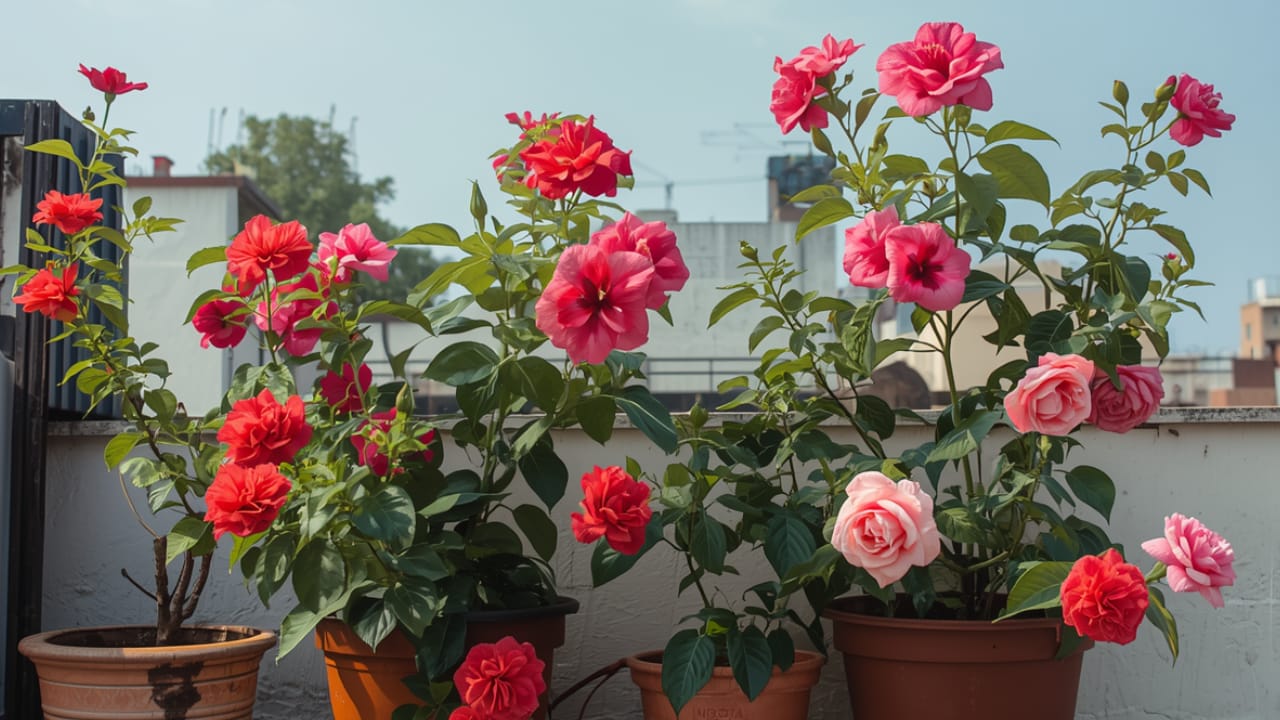
Your flower plant was doing well in February.
| Task | When | How Often |
|---|---|---|
| Watering | Morning (before 9 AM), evening if needed | Daily in extreme heat; every 1–2 days otherwise |
| Finger Test | Before each watering | Every watering |
| Sun Protection | Move or shade during 12 PM – 4 PM | Daily in peak summer |
| Deadheading | Morning | Every 2–3 days |
| Mulch Check | Anytime | Refresh every 4–6 weeks |
| Fertilizing | Cooler days only | Every 3–4 weeks |
| Saucer Check | After watering | Daily |
By May, the leaves look scorched, the blooms have dropped, and the soil dries out within hours of watering. This is not a watering problem. It is a summer problem, and it is one that almost every Indian plant lover runs into once temperatures cross 38°C.
Caring for flower plants in summer requires a different approach from the rest of the year.0
The heat is not just uncomfortable for you. It is actively working against your plant: pulling moisture from the soil, burning delicate petals, stressing roots, and making every small care mistake more costly than it would be in October.
This guide covers exactly what to do, when to do it, and what to stop doing so your flowering plants survive, and keep blooming through the Indian summer.
Not sure which flowers to grow this summer? Here are 10 heat-tolerant summer flowering plants that thrive in Indian heat.
Why Indian Summers Hit Flower Plants Harder?
Summer is actually something entirely different.
In North India, temperatures regularly hit 42–45°C between April and June. Even in cities with milder summers like Bangalore and Pune, the combination of heat, dry air, and strong afternoon sun creates stress conditions that most flower plants are not built to handle without help.
The situation is even more extreme for plants in pots and containers, which is where most Indian apartment gardeners keep their flowers.
Potted plants lose moisture dramatically faster than ground-planted ones. A terracotta pot in direct afternoon sun can dry out completely in under four hours at 40°C. A plastic nursery bag on a south-facing balcony fares only slightly better.
Understanding this is the starting point.
Everything else in this guide flows from one core idea: in Indian summer, your job is to keep roots cool, keep moisture in, and reduce stress on the plant at every step.
1. Water Correctly, Not Just More Often
Watering is the most important summer care task, but most people do it wrong.
Watering more frequently is not the same as watering well.
Time Your Watering Right
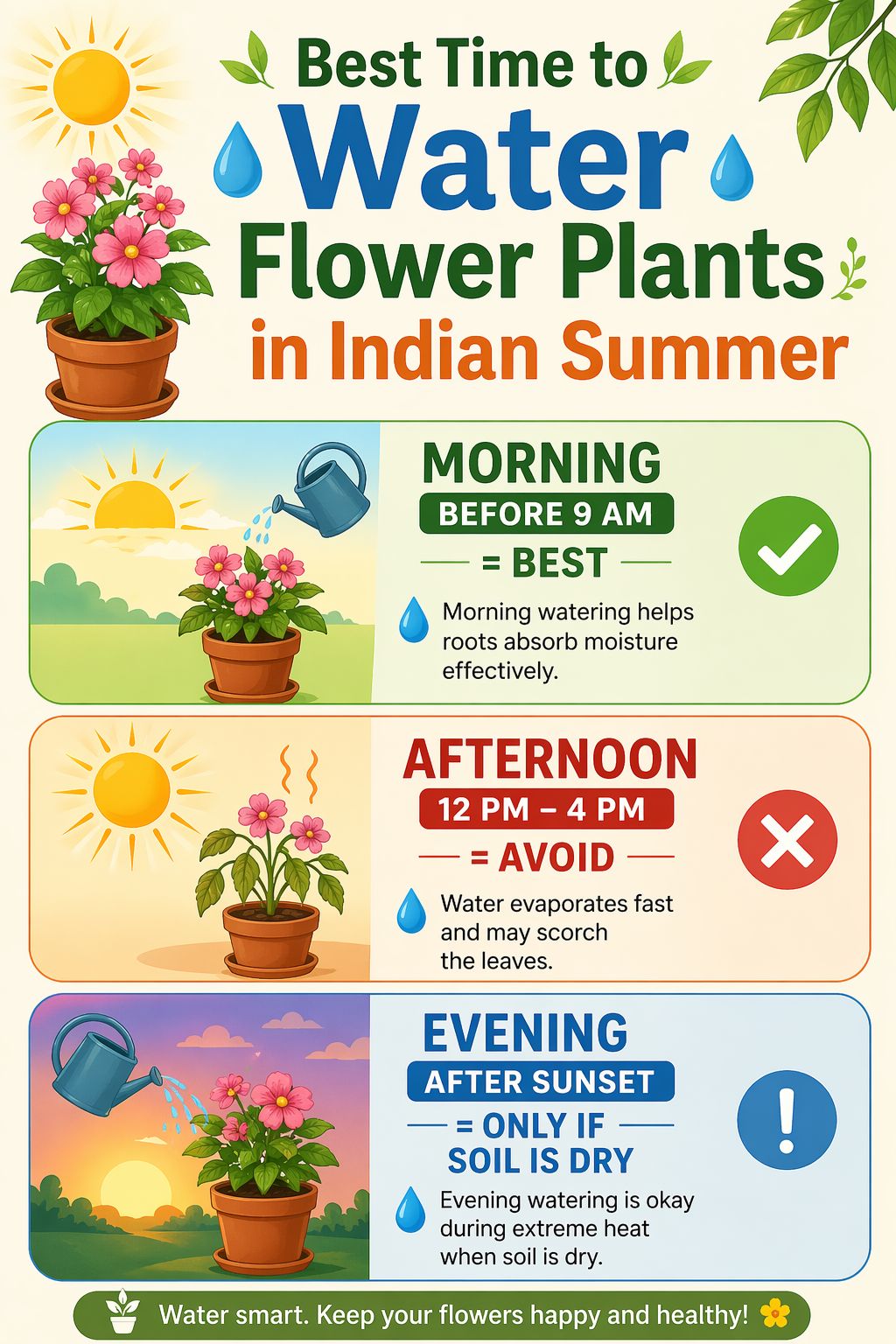
Water early in the morning, ideally before 9 AM.
This gives the soil time to absorb moisture before the heat of the day peaks. The water reaches the roots, the plant takes what it needs, and any excess drains before temperatures climb.
Evening watering is acceptable if your plant is very dry by sunset.
Water after the sun has dropped, not while it is still hot. Avoid watering at midday entirely. Water poured onto hot, dry soil in the afternoon evaporates before it reaches the roots, and wet leaves under strong afternoon sun can scorch.
Water Deeply, Not Lightly
One of the most common mistakes with potted flower plants in summer is giving them a small amount of water every day.
This keeps only the top layer of soil moist and encourages shallow roots that dry out even faster. Instead, water slowly and thoroughly until water drains from the bottom of the pot. This ensures moisture reaches deep into the root zone.
Then wait until the top 2–3 cm of soil feels dry again before watering.
Do The Finger Test Before Every Watering
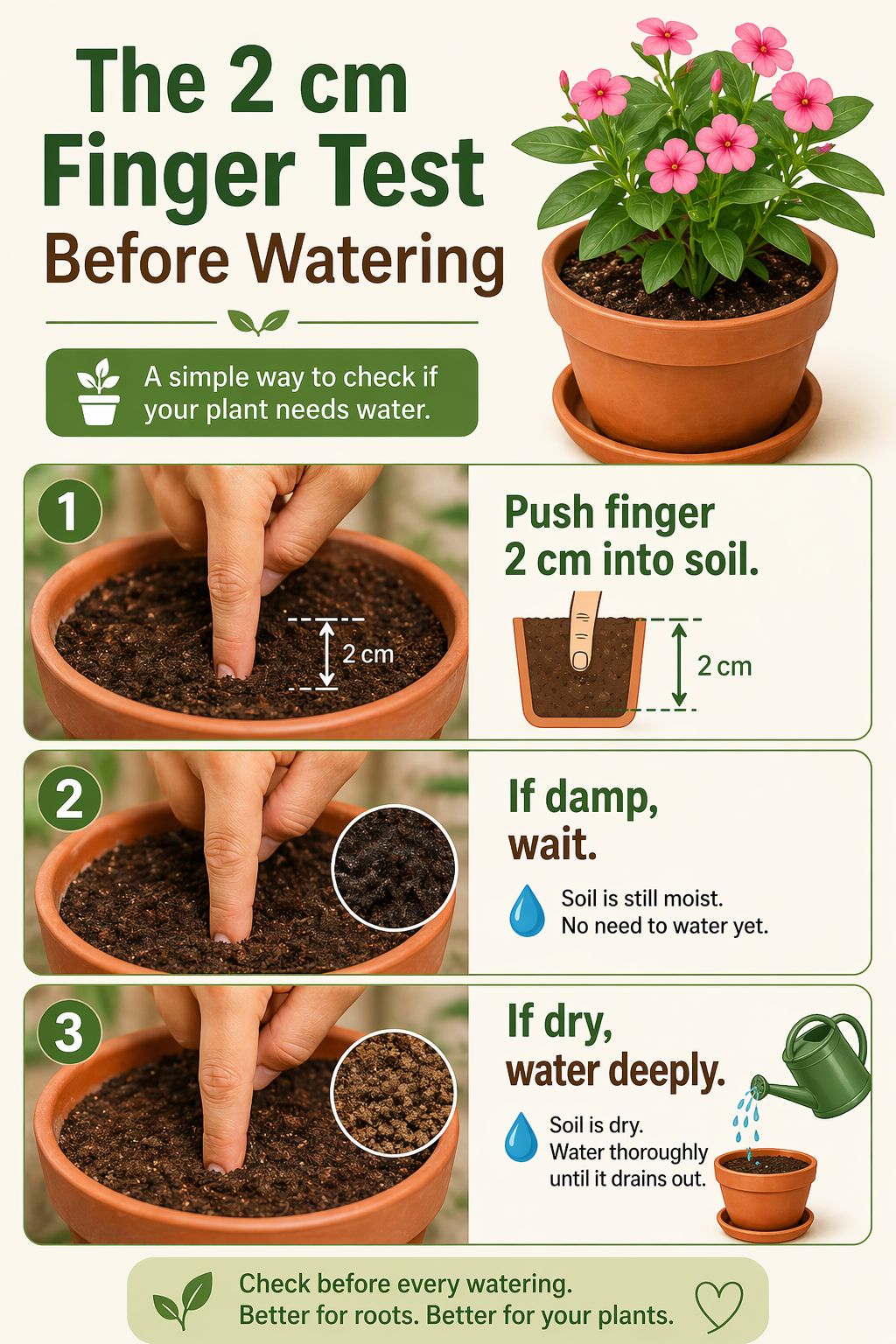
Push your finger about two centimeters into the soil. If it feels damp, wait. If it feels dry, water now. This simple check prevents both underwatering and overwatering, both of which damage flower plants in summer.
Check Twice Daily on Very Hot Days
When temperatures go above 40°C, potted flower plants often need watering both morning and evening.
Check in the early evening. If the soil is dry and leaves look slightly soft, water gently.
NOTE: It is always best to purchase the watering tools from the reliable supplier.
Water The Base, Not The Leaves
Direct water at the soil, not onto the flowers or foliage. Wet petals in heat can lead to fungal problems and flower drop. Overhead watering also wastes water through evaporation.
2. Protect Plants from Harsh Afternoon Sun
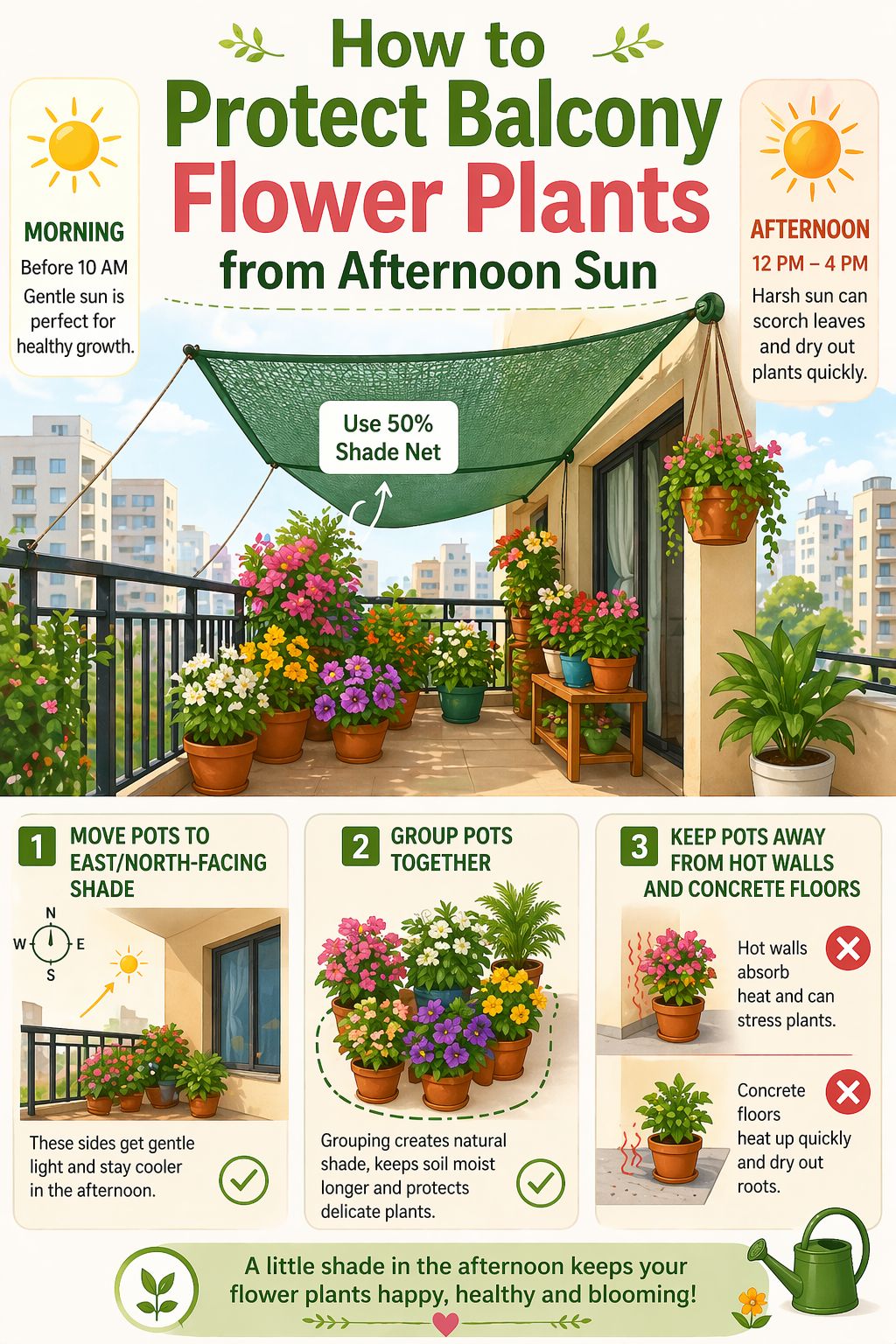
Not all sunlight is the same. Morning sun from sunrise until about 11 AM is gentle and beneficial for most flower plants. Afternoon sun, especially between 12 PM and 4 PM, is intense enough to burn leaves and petals and accelerate soil drying.
Move Pots Out of Direct Afternoon Sun
If your flower plants are in movable pots, this is the simplest solution. Shift them to a spot that gets morning light and afternoon shade. A north or east-facing spot indoors, or an area of the balcony that gets shaded by a wall or overhead cover in the afternoon, works well.
Use Shade Netting For Balcony or Terrace Plants
If you cannot move your plants, shade netting is the practical alternative. A green shade net with 50% sunblock, draped over or around your plants during peak afternoon hours, significantly reduces heat stress. Many Indian gardeners already use these on balconies to block the sun for themselves; the same net protects plants equally well.
Group Pots Together
Plants grouped close together create a small shared microclimate. Moisture from the soil and leaves raises the humidity between them slightly, which reduces how fast each pot dries out. This is a low-effort way to reduce water stress on all your plants simultaneously, especially useful if you have a balcony collection.
Keep Pots Away From Heat-Absorbing Surfaces
A pot sitting on a sun-baked concrete floor or against a south-facing wall absorbs heat from both above and below. If possible, keep pots elevated or on a wooden surface, and pull them away from walls that get intense afternoon sun.
3. Mulch the Soil Surface
Mulching is probably the most underused summer care technique among Indian apartment gardeners. It is inexpensive, easy to do, and makes a significant difference in how long your pots stay moist.
Mulching means covering the top layer of soil in your pot with organic material. This layer acts as a barrier between the sun and the soil, slowing evaporation and keeping root temperature lower.
What To Use For Mulching in Pots:
-
Dry leaves (crush them slightly so they sit flat)
-
Cocopeat is spread as a thin layer on the surface
-
Straw or hay
-
Crushed newspaper (replace every 4–6 weeks)
-
Wood chips or bark pieces
Spread a 2–3 cm layer across the top of the soil, leaving a small gap around the stem of the plant. This gap prevents moisture from sitting against the stem, which can cause rot.
What to Avoid: Do not use pebbles or stones as a mulch layer. Stones absorb heat and can actually make the soil hotter, which defeats the purpose entirely. Use organic, light-coloured material that reflects or absorbs less heat.
A well-mulched pot typically needs watering significantly less frequently than an unmulched one in the same heat. It also keeps roots cooler, which reduces heat stress noticeably.
4. Deadhead Regularly to Keep Blooms Coming
Deadheading (removing spent or faded flowers from the plant) is one of the most effective ways to keep your flowering plants producing new blooms through summer.
When a flower fades, the plant's natural response is to redirect its energy into forming seeds. From a survival standpoint, this makes sense. But it means less energy goes into new buds and roots. In summer, when the plant is already under stress, allowing it to focus energy on seed production instead of new growth works against you.
By snipping or pinching off spent flowers before they begin to form seeds, you redirect that energy back into bloom production.
The plant focuses on what you want: more flowers.
How to Deadhead
-
Use a clean pair of scissors or a small pruner.
-
Cut just below the faded flower head, above the next set of healthy leaves.
-
Do this every 2–3 days during summer.
-
It takes only a few minutes and makes a visible difference within a week or two.
Which Flower Plants Benefit Most From Deadheading in India
Here is the list of the plants that benefit from deadheading in India: Hibiscus, Portulaca, Petunia, Marigold, Bougainvillea (remove spent bracts gently), Ixora, and most annual flowering plants respond very well to regular deadheading. Roses benefit from deadheading combined with a light fertiliser application after the first bloom cycle.
5. Fertilise Carefully (Less Is More in Heat)
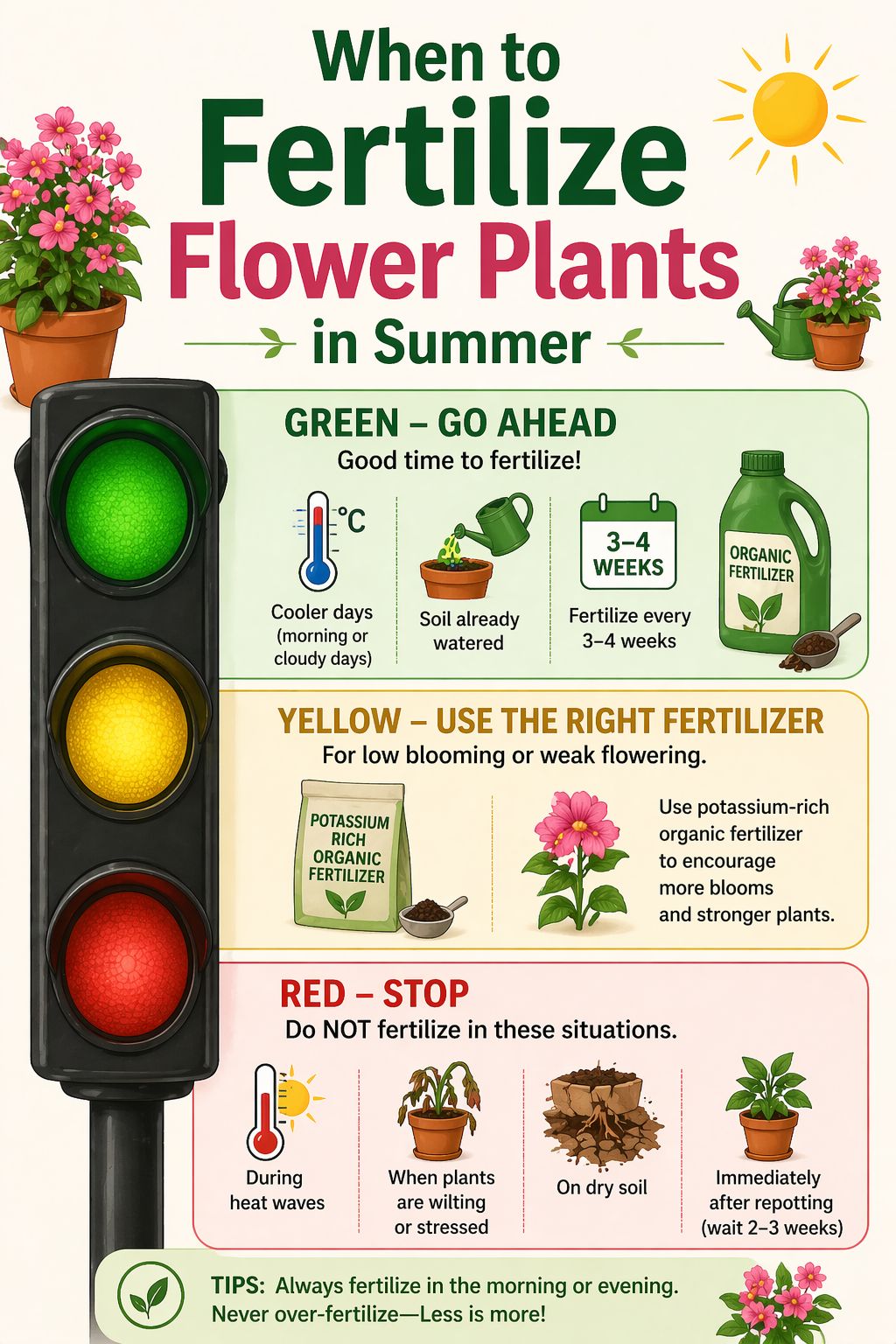
The instinct when a plant looks stressed in summer is to fertilise it. This is usually the wrong move.
A plant that is already wilting, heat-stressed, or showing burned leaves cannot properly absorb nutrients. Adding fertiliser to a stressed plant pushes those nutrients toward the roots faster than they can be taken up, which can burn the roots and make the problem worse.
When Not To Fertilise:
-
During a heat wave (temperatures above 40°C for multiple consecutive days)
-
When the plant is wilting or showing signs of drought stress
-
Immediately after repotting
When And How To Fertilise:
During normal summer temperatures (32–38°C), a light application of organic liquid fertiliser every 3–4 weeks is appropriate for most flowering plants.
Organic options like vermicompost liquid, neem cake solution, or a balanced liquid fertiliser are gentler on roots in heat than chemical granular fertilisers. Always water the plant thoroughly before applying any fertiliser. Never apply fertiliser to dry soil.
Potassium-rich fertilisers support flowering specifically.
If your plants have stopped blooming despite good watering and care, a potassium application may help. But do not apply during peak summer stress, wait for a cooler day or an overcast period.
6. Watch For Pests As They Peak in Summer
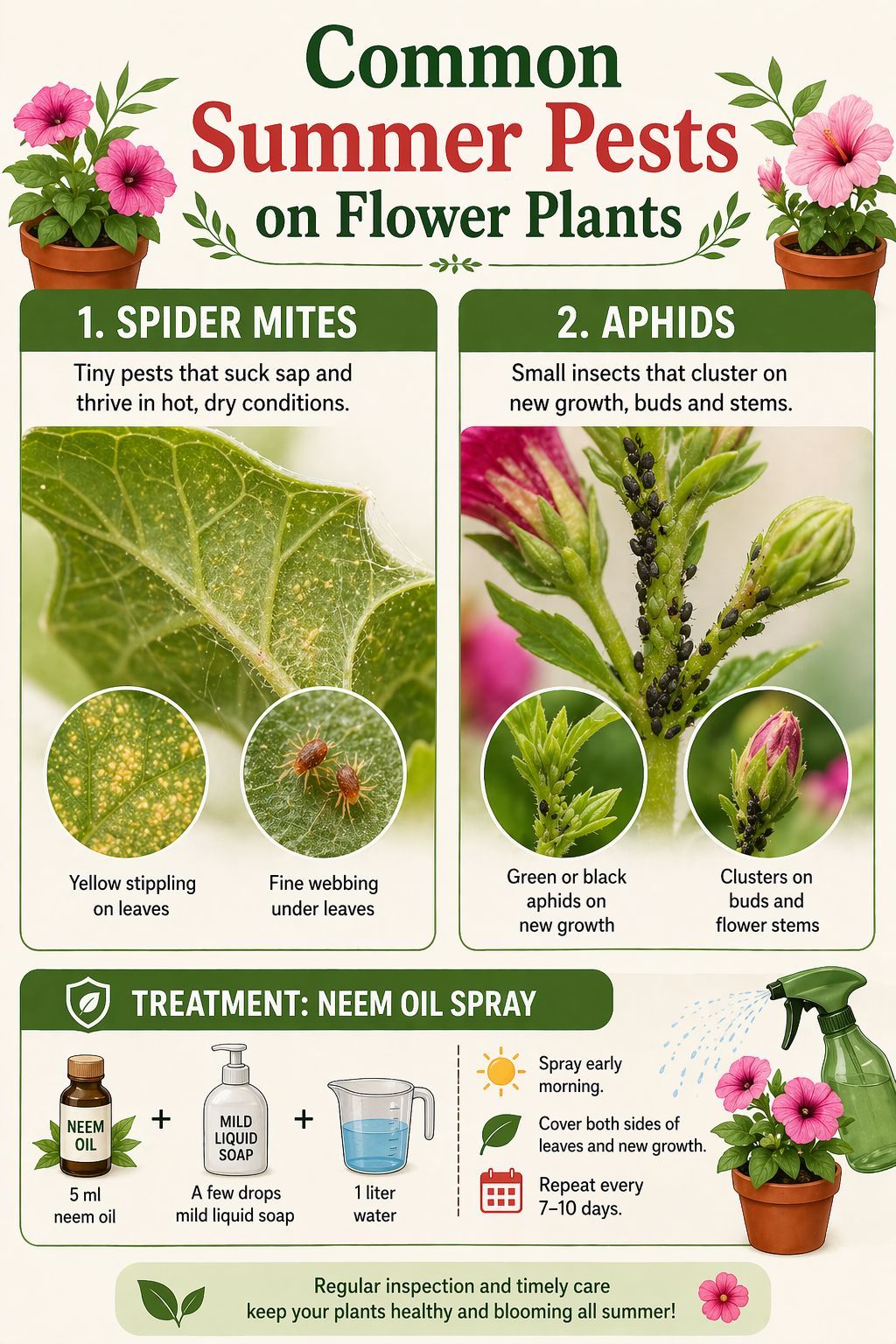
Heat-stressed plants are significantly more vulnerable to pest attacks.
The warm, dry conditions of Indian summer are ideal for spider mites and aphids in particular.
Spider mites thrive in hot, dry conditions. They are tiny and often not visible until you notice fine webbing on the undersides of leaves, or yellowing and stippling on leaf surfaces.
Check the undersides of leaves regularly, especially on Hibiscus, Roses, and other flowering plants with thin leaves.
Aphids cluster on new growth and tender buds. They are small but visible, often green or black, and found on stems and the underside of young leaves. They weaken the plant by feeding on sap and can cause bud drop on flowering plants.
Treatment: Neem oil is the most reliable organic solution for both. Mix 5 ml of neem oil with a small amount of liquid soap in one liter of water. Spray thoroughly on all surfaces of the leaves, including undersides, early in the morning when the temperature is still cool. Repeat every 7–10 days.
Do not spray neem oil or any other solution during the afternoon heat. Spraying on hot, sun-exposed leaves causes scorching.
7. What to Avoid in Summer: The Mistakes That Kill Plants
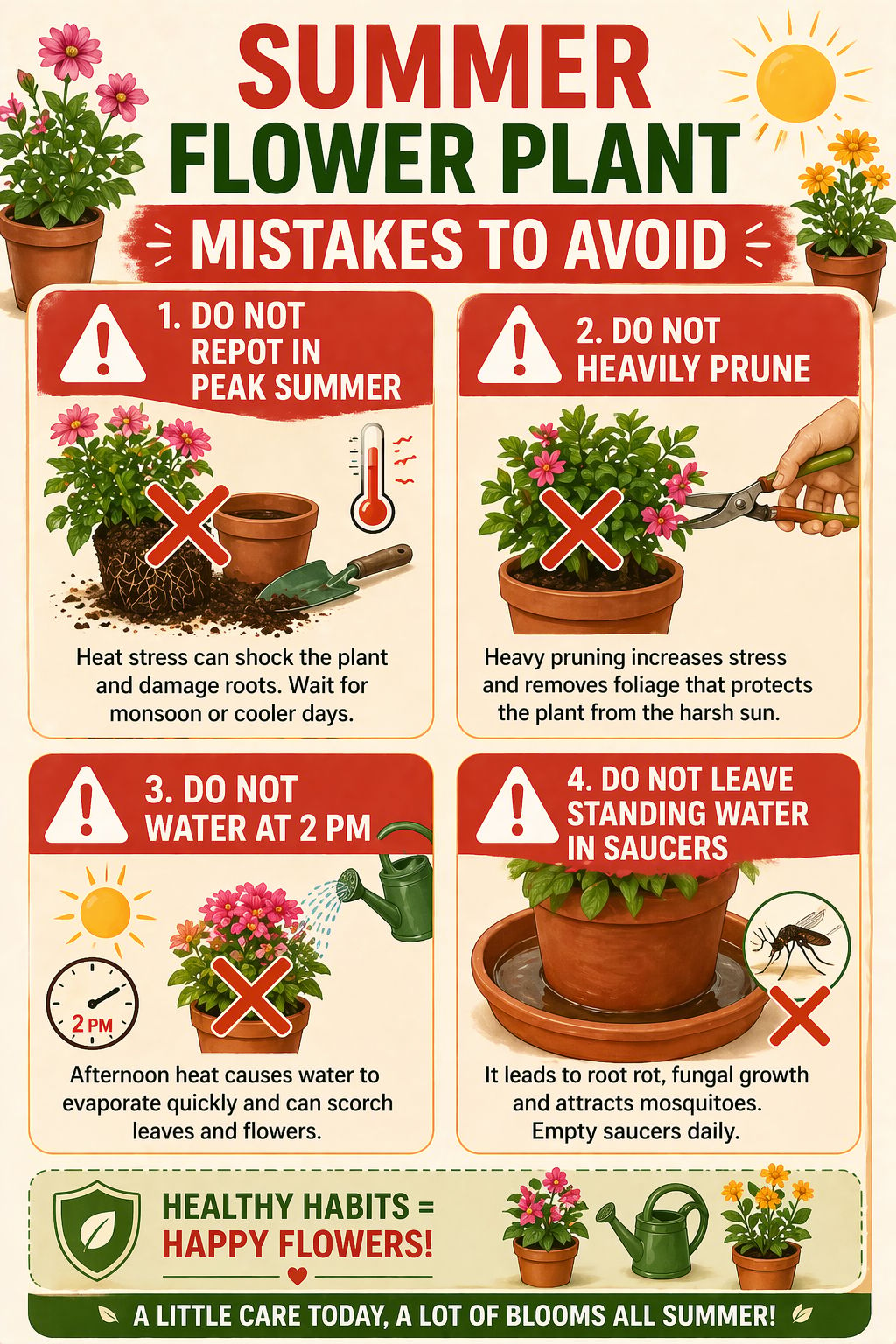
Most summer plant losses come not from neglect but from well-intentioned actions at the wrong time.
Do Not Repot During Peak Summer
Repotting puts a plant under significant stress.
The roots are disturbed, the soil structure changes, and the plant needs energy to re-establish itself. In winter or monsoon, a healthy plant handles this well. In peak summer, it can be fatal.
If your plant is root-bound and genuinely needs a larger pot, do it in late February or early March before temperatures climb, or wait until the monsoon arrives.
If the plant is root-bound and in distress right now, water it more frequently rather than repotting.
Do Not Do Heavy Pruning In Summer
Pruning encourages new growth.
New growth is tender, has thin cell walls, and scorch extremely easily under strong summer sun. Hard pruning in May or June often results in the new growth burning before it can establish. Light maintenance pruning, removing clearly dead or diseased stems, is fine.
Leave any structural pruning for cooler months.
Do Not Water In The Afternoon
Even if your plant looks wilted at 2 PM, resist watering at that time.
Afternoon wilting is often temporary; plants reduce their water uptake in extreme heat as a protective mechanism and often recover by evening. Check again at 6–7 PM.
If still wilted and the soil is dry, water then.
Do Not Leave Standing Water In Saucers
Saucers under pots catch drainage, which is useful.
But in Indian summer, water that sits in a saucer creates two problems: it can lead to root rot if the pot sits in water continuously, and standing water is a breeding ground for mosquitoes.
Empty saucers after watering, or check daily and tip them out.
8. Reading Your Plant: Signs of Summer Stress
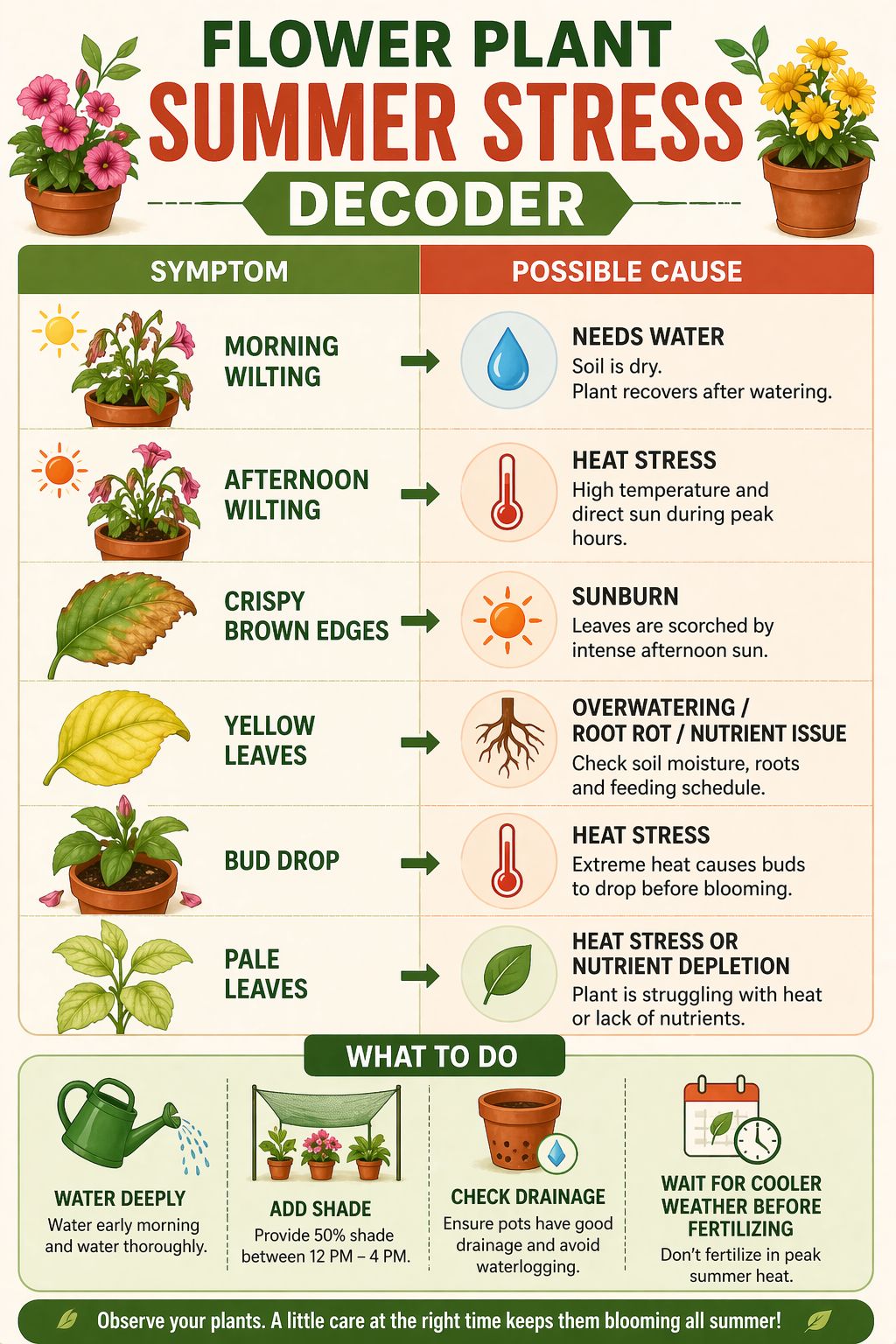
Your flower plant will tell you when something is wrong.
Knowing what each signal means helps you respond correctly rather than guessing.
-
Wilting leaves in the morning: This is a watering problem. The plant is genuinely dry. Water deeply and check again in a few hours.
-
Wilting leaves only in the afternoon: This is likely heat stress, not drought. The plant is conserving water during peak heat. Check again in the evening before deciding to water.
-
Brown, crispy leaf edges or patches: Sunburn. The plant is getting more direct sun than it can handle. Move it or add shade.
-
Yellow leaves throughout the plant: Can mean overwatering, root rot, or nutrient deficiency. Check the roots; if they smell or look brown and mushy, the problem is overwatering. Reduce watering frequency and ensure drainage holes are clear.
-
Bud or flower drop without blooming: Heat stress or extreme temperature fluctuation. Focus on consistent watering, shade during peak hours, and deadheading spent flowers nearby.
-
Pale, faded leaf color: Usually a combination of heat stress and nutrient depletion. Wait for a cooler period before applying a light fertiliser.
Essential Summer Products for Flowering Plants
Good care is easier when you have the right tools and materials. Here are some essential products you will need for caring for flowering plants during the summer:
-
Potting mix: The Bhoojeevan Organic Soil Potting Mix and Grow Pure Soil Potting Mix are well-draining, nutrient-rich mixes suited for potted flowering plants. Both help retain the right level of moisture without waterlogging roots in summer heat.
-
Cocopeat: The Large Cocopeat Brick - 5 Kg expands up to 25 litres and works both as a soil amendment and as a mulch layer on the surface of your pots. It improves water retention and keeps roots cooler, exactly what potted flower plants need in summer.
-
Vermicompost: The Grow Pure Organic Vermicompost and Bhoojeevan Organic Vermicompost are gentle, organic nutrition sources safe to use during non-peak summer periods. Far less likely to burn roots than chemical granular fertilisers in heat.
-
Mustard Cake: The Mustard Cake - 1 Kg is an organic manure specifically suited for flowering plants. It releases nutrients slowly, which is ideal in summer when you want to feed without stressing roots.
-
Neem Oil: The Neem Oil - 100 ml is a natural pest repellent that handles aphids and spider mites without harming beneficial insects. Keep a bottle ready so you can act the moment you spot the first signs of infestation.
Get the important products now from Urvann to take care of flowering plants smoothly and easily.
Final Word
Indian summer is hard on flower plants. But it is manageable if you shift your care routine to match the season.
Water early and deeply. Protect from the afternoon sun. Mulch the soil. Deadhead spent flowers regularly. Watch for pests before they escalate. And stop the habits that stress plants more than the heat does: midday watering, summer repotting, heavy pruning.
Do these things consistently, and your flowering plants will not just survive the Indian summer. They will keep blooming through it.
Looking for flowering plants for your home or balcony? Explore Urvann's collection of flowering plants, expert-grown, quality-checked, and delivered next day across Delhi, Bangalore, and more.
Frequently Asked Questions
1. How do you take care of flower plants in summer in India?
The four most important actions are: water deeply in the early morning before 9 AM, protect plants from direct afternoon sun between 12 PM and 4 PM, mulch the soil surface to retain moisture and keep roots cool, and deadhead spent flowers every 2–3 days to encourage new blooms. For potted plants on balconies, check soil moisture daily and water twice on days when temperatures exceed 40°C.
2. Do flower plants need to be watered every day in summer?
Most potted flower plants in Indian summer need watering at least once a day, and twice a day when temperatures go above 40°C. However, the right frequency depends on pot size, soil type, and sun exposure. Always do the finger test, push your finger 2 cm into the soil. Water only when it feels dry at that depth. Watering on a fixed schedule without checking soil moisture causes as many problems as underwatering.
3. How do I keep my flower plants alive in summer?
Focus on three things: keep roots cool and moist through deep morning watering and mulching, protect leaves and petals from harsh afternoon sun, and avoid actions that add stress — repotting, heavy pruning, and fertilizing during heat waves. A plant that is well-watered, shaded in the afternoon, and not disturbed will survive even a harsh Indian summer.
4. How do I make flower plants bloom all summer?
Deadhead regularly and remove spent flowers before they form seeds. This redirects the plant's energy from seed production back into making new buds. Combine this with a light application of potassium-rich organic fertiliser every 3–4 weeks during cooler periods, consistent deep watering, and adequate morning sunlight. Plants like Hibiscus, Portulaca, and Marigold bloom continuously through summer with this routine.
5. What is the best fertiliser for flowering plants in summer?
Organic liquid fertilisers are the safest choice in summer. They are gentler on roots than granular chemical fertilisers, which can burn roots when temperatures are high. Apply every 3–4 weeks, always to well-watered soil, and only on days when the temperature is manageable. Never fertilise a plant that is wilting, showing heat stress, or during a heat wave — wait for a cooler day first.
6. Why are my flower plants' leaves turning yellow in summer?
Yellow leaves in summer usually point to one of three causes: overwatering and root rot, underwatering and heat stress, or nutrient depletion. Check the roots first — if they are brown and mushy, reduce watering and ensure the pot has proper drainage. If the roots look healthy and the soil is dry, increase watering frequency. If the plant looks healthy otherwise, a light application of balanced organic fertiliser after the heat breaks may help.
7. Should I repot my flower plant in summer?
Avoid repotting during peak summer. Repotting disturbs roots and triggers transplant shock, which is far harder for a plant to recover from under heat stress. If your plant is root-bound and clearly struggling, water it more frequently as a short-term measure and wait until the monsoon arrives or temperatures drop before repotting.
8. How do I prevent my flower plant from dying in the summer heat?
Move pots out of direct afternoon sun, water deeply every morning, mulch the soil surface with dry leaves or cocopeat, and group pots together to create a shared humid microclimate. Avoid watering in the afternoon, avoid fertilizing stressed plants, and do not repot or prune heavily until the heat passes. Check for pests weekly and treat early with neem oil spray.
9. Does sugar or salt help flower plants in summer?
No. Sugar and salt added to soil or water do not benefit flowering plants and can actively harm them. Salt in particular draws moisture out of roots through osmosis, which worsens dehydration in summer. Stick to plain water for watering and organic fertilisers for nutrition.
10. How do I care for flower plants in pots in summer, specifically?
Potted plants lose moisture much faster than ground-planted ones and need extra attention in summer. Use a moisture-retaining potting mix with cocopeat. Mulch the soil surface. Move pots away from heat-absorbing concrete floors and walls. Water in the morning and evening on very hot days. Consider double-potting, placing a smaller plastic pot inside a larger ceramic or terracotta one, to insulate roots from external heat.
Arshdeep singh
6/8/2026, 05:48 PMrose lena h