


Delhi's post-Diwali haze can outlast fireworks. See when balcony plants need shelter, how to safely deal with soot, and why extra watering isn't a smoke remedy.
Key Takeaways
-
-
- Delhi's pollution can remain high after the fireworks stop. Continue checking your local AQI before spending time outdoors caring for plants.
- Move smaller plants away from exposed balcony railings before celebrations begin. Keep them in suitable light rather than leaving sun-loving plants in dark rooms.
- Grey or black deposits indicate particle buildup, but yellowing, wilting and brown spots can also result from watering problems, pests or disease.
- Wait for safer outdoor air conditions. Wipe smooth Money Plant leaves with a damp cloth, but handle delicate Tulsi leaves and fuzzy-leaved plants differently.
-
If you've ever caught yourself saying, "I hate Diwali" while looking at Delhi's smoke-filled skies, chances are it's the pollution that's frustrating you, not the celebrations themselves.
As Delhi residents reach for N95 masks, stay indoors and use air purifiers to protect themselves from polluted air, there's one thing many plant lovers might overlook: their balcony plants.
During and after Diwali, smoke, dust, and other pollutants can settle on your plants' leaves. This buildup may reduce the light reaching their surfaces and interfere with the natural processes they rely on to grow. Unlike us, your balcony plants can't simply step indoors to escape the polluted air.
So, how can you tell if your plants are struggling, and what can you do to help them recover?
Let's explore how Delhi's Diwali pollution affects balcony plants, and simple ways to protect and revive your greenery.
How Does Diwali Smoke Affect Balcony Plants?
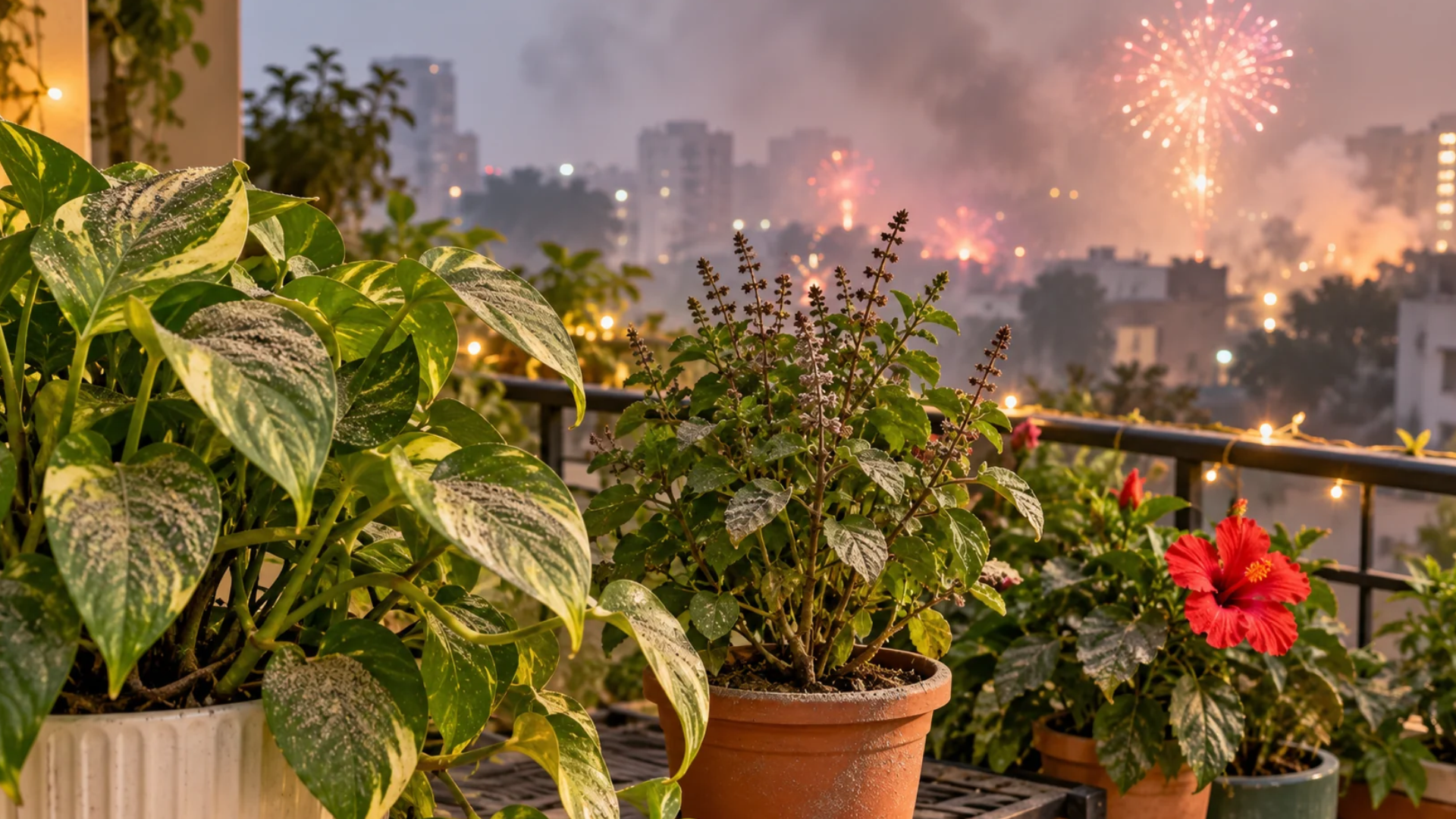
During Diwali, firecrackers add smoke and fine particles to Delhi's already polluted air. Your balcony plants are exposed to this pollution, especially if they're near open railings or areas where crackers are being burst.
Here's how it can affect them:
- Dust and soot settle on leaves: You may notice a grey or dark coating on your Money Plant, Tulsi, or Hibiscus leaves. Heavy dust buildup can reduce the light reaching leaves and interfere with photosynthesis.
- Pollution can affect plant health: Prolonged exposure to high levels of dust and certain air pollutants can affect photosynthesis and normal growth. However, yellowing or drooping leaves alone don't prove pollution damage.
- Nearby firecrackers can cause direct damage: Hot sparks or firecracker debris landing on plants may scorch leaves, damage flowers or leave residue around pots.
One thing to remember: Delhi's air doesn't necessarily clear up when Diwali celebrations end. Road dust, vehicle emissions, seasonal biomass burning and weather conditions can keep pollution levels high afterwards.
That's why protecting your balcony plants shouldn't stop on Diwali night.
How to Protect Balcony Plants from Diwali Smoke
Research on Delhi's vegetation has shown that substantial dust buildup can interfere with photosynthesis and other important plant functions. Here is how you can protect your plants from Diwali Smoke.
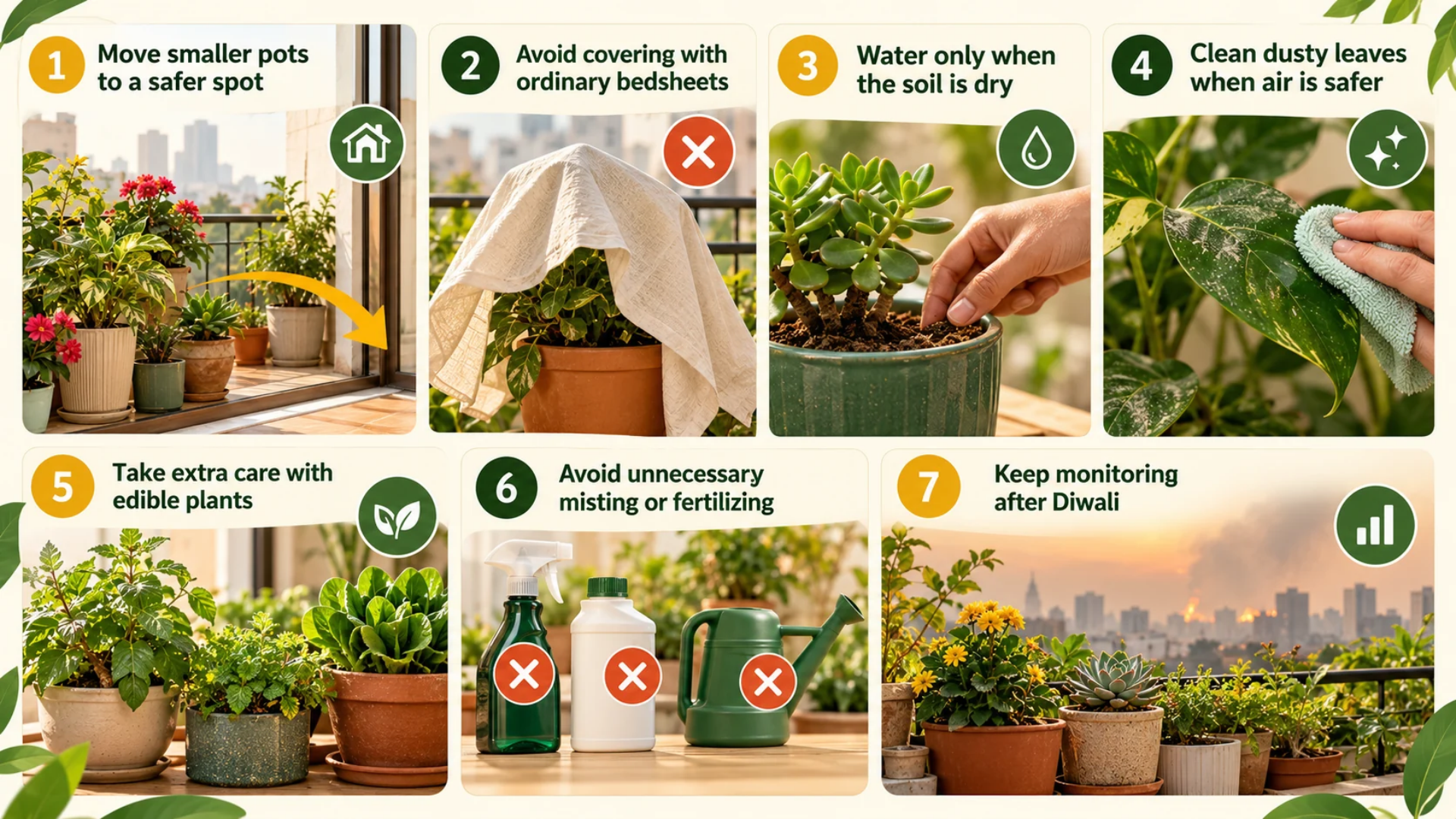
1. Move Smaller Pots Away from Direct Smoke and Firework Debris
If people are bursting firecrackers near your building, start by checking which plants are most exposed.
What To Do
- Move small, movable pots away from the balcony's outer railing, especially if sparks, ash or debris are reaching that area.
- Temporarily shift seedlings and suitable indoor plants, such as Money Plants, into a bright indoor location if smoke is entering the balcony directly.
- Keep larger pots in a sheltered position where possible, without blocking their normal access to sunlight for extended periods.
- Move plants back to their suitable growing positions once the immediate exposure has passed, adjusting them gradually if their light conditions changed significantly.
Moving pots is a practical way to avoid direct debris and smoke plumes. However, it won't eliminate exposure to fine particulate pollution across the city.
For example: If you have a Money Plant and a Rose on your balcony, you can temporarily move the Money Plant indoors near a bright window. A sun-loving Rose should not be kept in a dark room for several days simply to avoid polluted air.
2. Don't Cover Plants with Ordinary Bedsheets to Block Pollution
You may come across advice recommending cotton sheets, curtains or garden covers to protect plants from Diwali smoke.
But an ordinary cloth cover is not a tested PM2.5 filtration system. It cannot be relied upon to protect plants from fine airborne particles or gaseous pollutants.
What To Do Instead
- If the balcony has a sheltered inner section, move vulnerable pots there temporarily. Avoid wrapping plants in plastic or enclosing them in airtight materials.
- Do not place loose fabric, plastic sheets or other combustible covers near diyas, candles, sparklers or fireworks.
- A protective cover may stop some larger debris from reaching a plant, but it should not be presented as a reliable solution to Delhi's air pollution.
3. Check Soil Moisture Instead of Giving Extra Water
One common recommendation is to water plants heavily before Diwali to help them withstand smoke.
However, extra watering does not stop particulate matter from settling on leaves.
Check the potting mix before watering. If it feels dry at the depth appropriate for your plant, water normally and allow excess water to drain. If it is still moist, don't water just because the air is polluted.
Delhi's autumn and winter weather can affect how quickly pots dry, but sunlight, wind, container size and plant species also matter.
Remember: Keeping roots healthy helps plants maintain normal growth. Overwatering a plant in an attempt to protect it from smoke may create an entirely different problem.
Not sure when your plants actually need watering? Read our guide on the best time to water plants to understand how timing and growing conditions affect watering needs.
4. Wait for Safer Air Before Cleaning Dusty Leaves
You may notice grey dust, black residue or small particles collecting on leaves after Diwali.
Don't rush onto the balcony to wash every plant while the air is heavily polluted.
First, check the Air Quality Index on the Delhi government's official AQI dashboard.
If the air is in the Very Poor or Severe category, postpone non-essential outdoor plant cleaning.
Once conditions are safer, inspect your plants. If leaves have significant visible deposits, clean them carefully using a method suitable for the plant.
For example:
- Money Plant: Gently wipe smooth leaves with a soft cloth dampened with clean water.
- Rose and Hibiscus: If foliage is dusty, use a gentle rinse where appropriate, allowing leaves to dry afterwards.
- Tulsi: Handle the delicate leaves gently. If cleaning is needed, use a light rinse without damaging the stems.
- Cacti and fuzzy-leaved succulents: Avoid routine spraying. Remove loose dust carefully with a soft brush where suitable.
A thin dusting that does not obscure the leaf surface may not need immediate removal.
Don't use detergent, vinegar, oil or homemade chemical mixtures to clean smoke residue.
Cleaning can remove accumulated surface particles, but it cannot reverse leaf tissue that has already been damaged.
5. Take Extra Care with Tulsi, Herbs and Vegetables You Plan to Eat
If you grow Tulsi, mint, coriander, spinach or vegetables on your Delhi balcony, pay particular attention to visible soot and ash deposits.
Firework-related particles can contain metals and other chemical constituents, so edible leaves covered with substantial residues deserve extra caution.
Avoid harvesting visibly contaminated leaves during an active pollution episode.
When conditions are safer, inspect the produce and wash it thoroughly under clean running water before use. Remove damaged or heavily soiled outer leaves.
If leaves are heavily coated with soot or identifiable firework debris and cannot be cleaned satisfactorily, discard them rather than consuming them.
Washing removes surface dirt and some deposited particles, but it cannot guarantee removal of every possible contaminant.
Tulsi also needs appropriate sunlight, drainage and seasonal watering. Explore our Tulsi plant care guide for its regular growing requirements.
6. Don't Mist, Fertilize or Spray Plants Just Because the AQI Is High
A high AQI reading does not mean every balcony plant needs an additional treatment.
Avoid unnecessary pesticide sprays, fertilizers or repeated misting in an attempt to counteract smoke exposure.
Instead, maintain appropriate light, soil moisture and drainage, and monitor your plants for actual symptoms.
If a plant develops yellowing leaves, black spots or persistent drooping, investigate other causes too. These symptoms can result from pests, disease, watering problems or unsuitable light conditions and are not proof of pollution damage.
7. Keep Monitoring Your Plants After Diwali Night
Delhi's polluted air may remain a concern after the celebrations have ended.
Continue checking local AQI reports and inspecting plants for significant dust buildup over the following days.
Clean foliage only when necessary, avoid prolonged low-light conditions and maintain normal plant care.
There is no fixed number of days after Diwali when every balcony plant becomes safe from pollution exposure. Local air quality and visible plant conditions should guide your decisions.
The Takeaway: Protect plants from direct firework debris, preserve their normal growing conditions, avoid unnecessary watering or chemical treatments, and remove substantial leaf deposits when outdoor air is safer. These are more defensible precautions than trying to seal plants under cloth covers or using unproven pollution remedies.
How to Revive Your Balcony Plants After Diwali
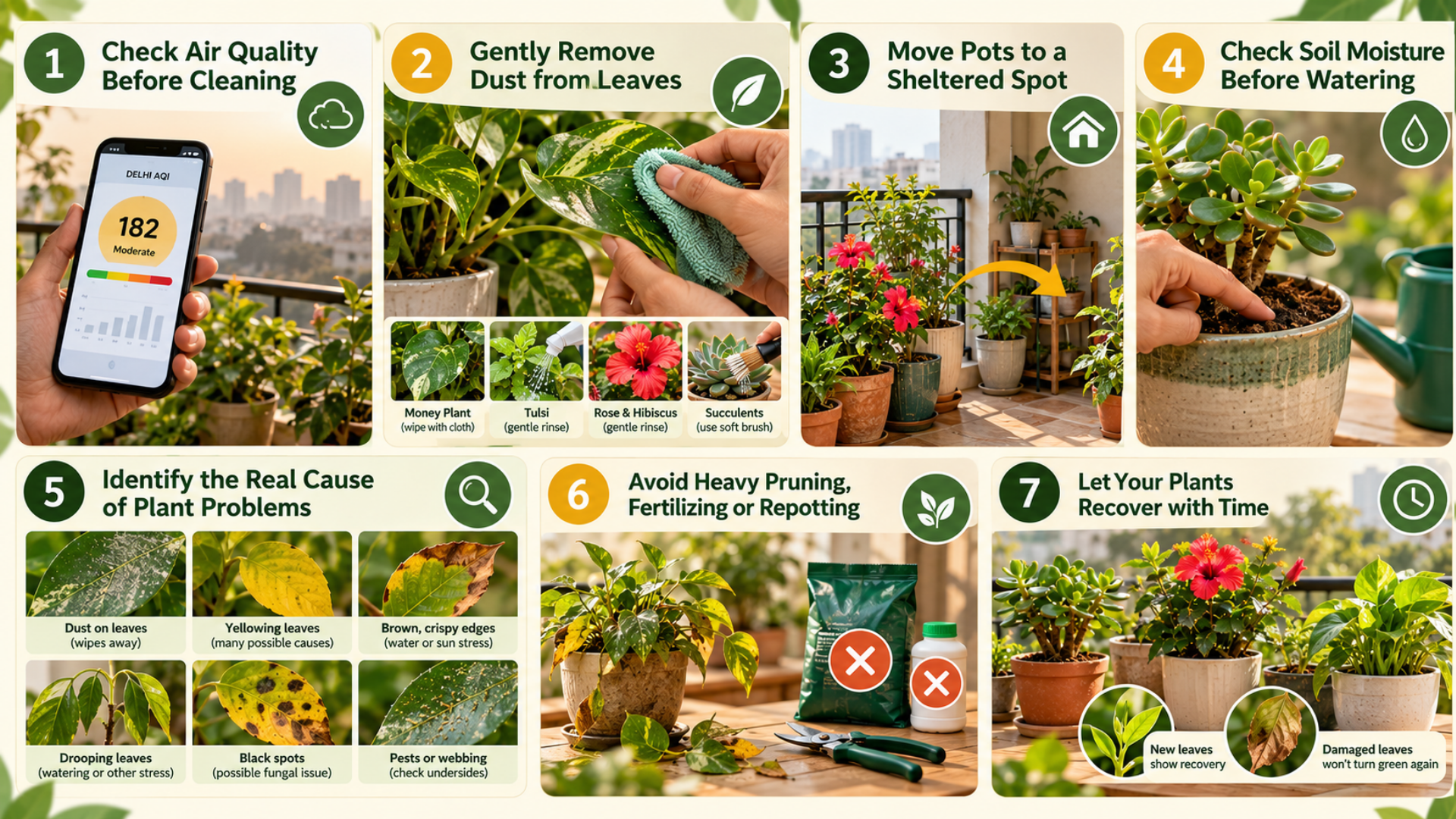
1. Check Delhi's Air Quality Before Cleaning Your Plants
Before starting your post-Diwali garden cleanup, check the Air Quality Index (AQI) for your area on the Delhi government's official AQI dashboard or the Central Pollution Control Board's monitoring website.
If the AQI is Very Poor (301–400) or Severe (401–500), avoid unnecessary outdoor gardening work. Your own exposure to polluted air is more urgent than cleaning a few dusty leaves.
What to do: Wait until outdoor air conditions are safer before carrying out a thorough cleanup. If only a little dust has settled on the leaves, you don't need to clean every plant immediately.
Remember that AQI categories describe risks to human health; they are not direct measurements of plant damage.
2. Gently Remove Smoke Residue and Dust from Leaves
Dust and soot can settle on exposed leaf surfaces. Heavy deposits may reduce the light reaching leaves and interfere with photosynthesis.
Once outdoor conditions improve, inspect the leaves carefully.
- Money Plant and other smooth-leaved plants: Support each leaf with one hand and gently wipe away dust using a soft cloth dampened with clean water.
- Tulsi and other delicate plants: If cleaning is necessary, use a gentle stream of water without bending or damaging the stems.
- Rose and Hibiscus: Gently clean dusty foliage where appropriate, but avoid unnecessarily soaking flowers or leaving leaves wet for long periods.
- Succulents and fuzzy-leaved plants: Avoid rubbing delicate leaf surfaces or spraying plants that are sensitive to wet foliage. Use a soft brush where appropriate.
For plants that tolerate rinsing, clean the leaves during daylight so they have time to dry.
Important: Avoid detergent, vinegar, oil, leaf-shine products or homemade chemical sprays for removing Diwali dust. Plain water is generally sufficient for ordinary surface deposits.
Cleaning removes particles from the leaf surface; it cannot reverse tissue damage that has already occurred.
3. Move Exposed Pots to a More Sheltered Position
Balcony plants near the outer railing may receive more direct exposure to windblown dust, smoke, and soot.
Where practical, move smaller pots a little farther inside the balcony, away from the most exposed edge. A sheltered corner may help reduce direct deposition.
However, don't sacrifice the sunlight your plants need.
For example, Roses, Tulsi and Hibiscus generally need sunny growing conditions, while Money Plants can grow well in bright, indirect light.
If you've temporarily moved plants indoors, gradually readjust them to their usual outdoor light conditions to avoid sudden sun exposure.
Important: Don't seal plants inside plastic bags or cover them with airtight sheets. Plants still need appropriate light, air circulation, and suitable temperatures.
4. Check Soil Moisture Before Watering
A dusty plant doesn't automatically need more water. Smoke and dust accumulation on leaves are not the same as dehydration.
Before watering, check the potting mix a few centimeters below the surface.
- If the soil is dry: Water according to the plant's needs, allowing excess water to drain.
- If the soil is still moist: Don't add more water simply because the leaves look dull or dusty.
- If the pot is waterlogged: Empty standing water from the saucer and check that the drainage holes are clear.
During Delhi's cooler post-Diwali weather, some pots may dry more slowly than during summer. However, watering needs still depend on the plant, pot size, sunlight and weather.
Gardening Tip: Avoid following a fixed daily watering schedule for every balcony plant.
5. Identify the Real Cause of Yellow, Brown or Drooping Leaves
If your plants are showing signs of stress, examine them before assuming Delhi's smoke is responsible.
| What You Notice | What It May Mean | What To Check |
|---|---|---|
| Grey or black powder on the leaf surface | Deposited dust or soot | Check whether it wipes away gently |
| Yellowing leaves | Watering problems, ageing leaves, nutrient issues or other stress | Inspect soil moisture and drainage |
| Brown, crispy leaf edges | Water stress, sun scorch or environmental injury | Check soil moisture and light exposure |
| Drooping leaves | Underwatering, waterlogged roots, heat or transplant stress | Check the potting mix before watering |
| Black spots on Rose leaves | Possible fungal black spot disease | Look for distinct lesions and yellowing around spots |
| Sticky leaves or visible webbing | Possible pest infestation | Inspect stems and the undersides of leaves |
Yellowing, curling and drooping leaves aren't always signs of smoke damage. If you're unsure what's affecting your plants, our guide to yellow, brown, curling and drooping leaves explains other common causes and what to check before applying treatment.
Air pollution can contribute to leaf injury, but these symptoms alone cannot confirm smoke damage.
If you notice spreading black spots, soft stems or persistent wilting despite suitable soil moisture, investigate other possible plant-health problems rather than treating them as pollution damage.
6. Avoid Heavy Pruning, Fertilizing or Repotting Immediately
After a pollution episode, it can be tempting to give struggling plants extra fertilizer or completely replace their soil.
But these steps aren't automatically necessary.
- Remove fully dead leaves or damaged flowers when appropriate.
- Avoid heavy pruning simply because a plant has dusty foliage.
- Don't apply extra fertilizer as a treatment for smoke exposure.
- Repot only if there is a genuine root, drainage or potting-medium problem.
- Avoid using pesticides unless you've identified a pest problem.
Instead, maintain suitable light, soil moisture and drainage. Resume normal feeding according to the plant's needs and active growth. If your plant has a genuine drainage or root problem that requires repotting, explore suitable potting mixes for its growing needs. Pollution exposure alone is not a reason to replace the soil.
7. Give Your Plants Time to Recover
After cleaning the foliage and restoring suitable growing conditions, observe your plants over the following days and weeks.
Watch for signs such as new leaves, healthy shoots and normal growth. Existing brown or damaged leaf tissue won't become green again, but healthy new growth can indicate improvement.
There is no fixed recovery period for plants exposed to Delhi's air pollution. Recovery depends on the species, duration of exposure, severity of damage, and overall growing conditions.
Final tip: You don't need expensive products or drastic gardening treatments to deal with ordinary dust buildup. Start with safer air, careful leaf cleaning, correct watering and consistent care.
Diwali Will be Gone. But What About the Dust on Your Plants?
The fairy lights are packed away, the diyas will be gone, but there's still a grey layer sitting on your Money Plant leaves and dust around your Tulsi pot. Sound familiar?
That's the reality of gardening in Delhi around Diwali. And no, your plants don't need a special pollution detox. They need you to check the leaves, clean them when the air is safer, and understand what each plant actually requires.
There's a lesson here for Diwali gifting, too. Don't gift someone a plant just because it's labelled "air-purifying." Choose one they can realistically care for. A Money Plant for someone with a bright indoor corner or a Jade Plant for a sunny windowsill makes a more thoughtful choice.
Explore Urvann's plant-gifting collection or its Diwali gifting guide to choose plants suited to the recipient's space and lifestyle.
After all, a plant shouldn't become another thing someone struggles to keep alive after Diwali.
Frequently Asked Questions (FAQs)
1. What are the top air-purifying balcony plants for Delhi’s climate?
The top air-purifying plants that many Delhi residents consider include Snake Plant, Areca Palm, Spider Plant, and Aloe Vera.
2. Which balcony plants are most sensitive to smoke?
There isn't a scientifically established list of balcony plants that are most sensitive to Delhi's Diwali smoke. Different species respond differently to air pollutants. Young seedlings and plants with delicate leaves may need extra protection from direct firework debris and rough cleaning. Focus on reducing exposure rather than assuming Tulsi, Rose or Hibiscus is necessarily more smoke-sensitive than another plant.
3. How to protect plants from firecracker sparks?
If firecrackers are being burst near your building, move small pots away from balcony railings and exposed corners before celebrations begin. Keep dry leaves, paper decorations and other flammable materials away from diyas and fireworks. Never place plastic sheets or fabric covers near active sparks. Avoid going onto the balcony to move plants while fireworks are landing nearby.
4. What are the best temporary covers for balcony railing plants?
There is no ordinary plant cover proven to protect balcony plants from Delhi's fine smoke particles (PM2.5). Cotton sheets, shade nets and garden fleece should not be treated as pollution filters. They can also create fire hazards near fireworks. Instead, temporarily move movable pots away from exposed railings to a sheltered, well-lit location wherever practical.
5. How to safely wash ash off delicate leaves?
Wait until outdoor air quality improves before cleaning your plants. If delicate leaves have noticeable ash deposits, gently rinse them with a light stream of clean water, provided the plant tolerates wet foliage. Avoid rubbing, high-pressure spraying and household detergents. For plants with fuzzy or water-sensitive leaves, carefully use a soft brush instead. A light dusting may not require cleaning.
6. How to clean soot off delicate balcony plants?
For smooth leaves, such as Money Plant leaves, gently wipe soot-like deposits using a soft cloth dampened with clean water. Support each leaf while cleaning to prevent tearing. For smaller or fragile leaves, use a gentle rinse if suitable for the species. Avoid oils, vinegar and harsh cleaning solutions. If the black coating is sticky or accompanied by insects, investigate pests or sooty mould rather than assuming it is smoke residue.
7. What are the signs that my plant is suffering from smog damage?
A fresh layer of grey or dark dust on leaves is a visible sign of particle deposition, not necessarily plant damage. Heavy deposits may interfere with photosynthesis. Yellowing, brown patches or leaf drop can sometimes occur with environmental stress, but they are not specific to smog. Check soil moisture, sunlight, pests and leaf condition before deciding whether pollution is responsible.
8. क्या दिवाली के दौरान बालकनी के पौधों को घर के अंदर रखना चाहिए?
ज़रूरी नहीं। अगर आपके घर के आसपास पटाखे जलाए जा रहे हैं और धुआँ या चिंगारियाँ सीधे बालकनी तक पहुँच रही हैं, तो मनी प्लांट जैसे छोटे पौधों को कुछ समय के लिए घर के अंदर अच्छी रोशनी वाली जगह पर रख सकते हैं।
लेकिन तुलसी, गुलाब और गुड़हल जैसे धूप-पसंद पौधों को लंबे समय तक अँधेरे कमरे में न रखें। इन्हें बालकनी के किसी सुरक्षित हिस्से में रखें, जहाँ पर्याप्त धूप मिलती हो। पटाखे जलने से पहले ही गमलों को सुरक्षित जगह पर हटा दें।
धुआँ कम होने और बाहर की स्थिति बेहतर होने पर पौधों को धीरे-धीरे उनकी सामान्य जगह पर वापस रख दें।