


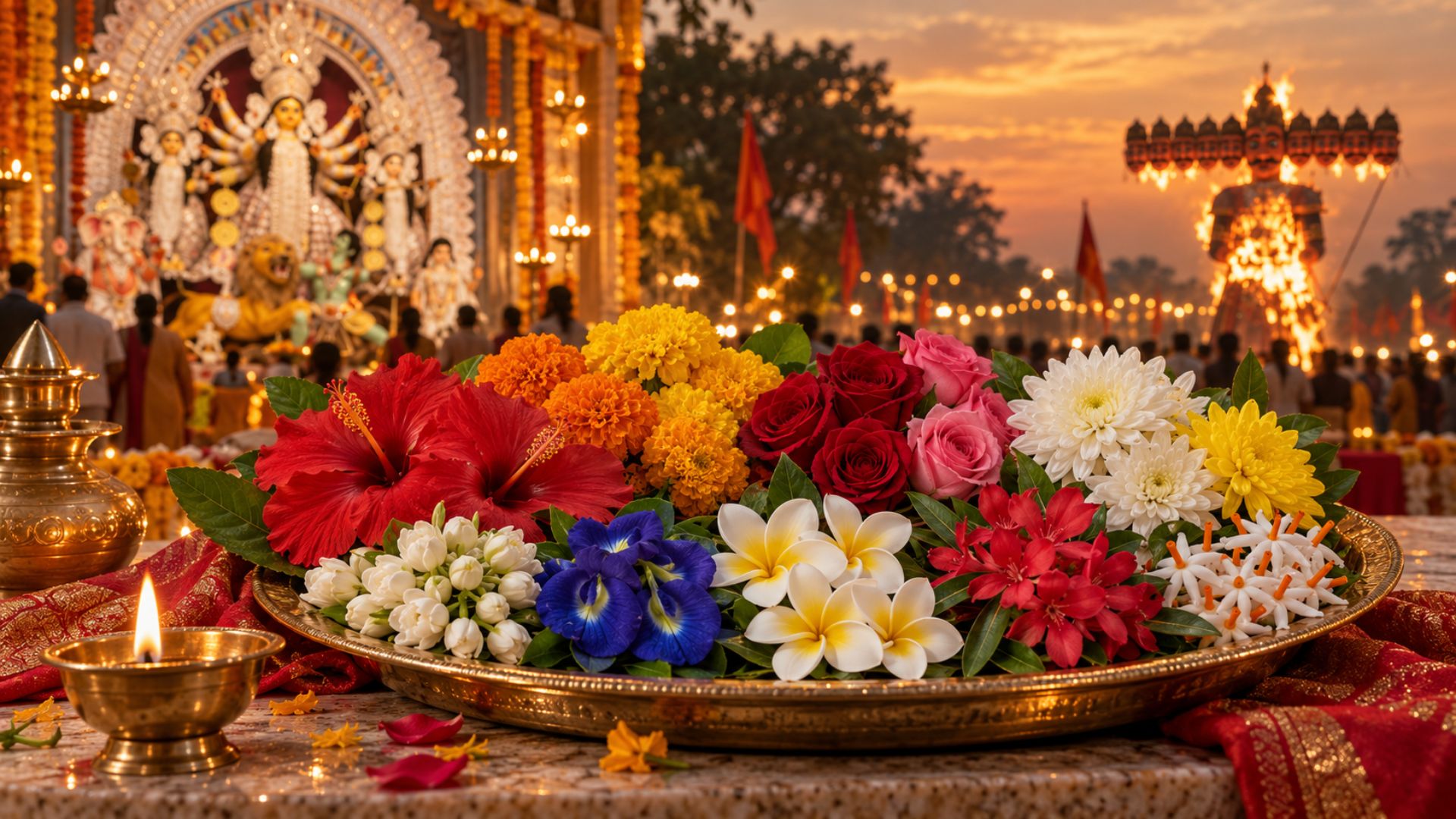
Check out the 9 traditional Durga Puja and Dussehra flowers, their meanings, uses in worship, and tips to grow fresh festive blooms at home.
Key Takeaways
-
-
- Red Hibiscus (Gudhal/Japa Pushpa) is considered an offering for Goddess Durga. The red colour symbolizes devotion, Shakti, and divine energy.
- Marigold, Rose, Mogra, Parijat, Champa, Chrysanthemum, Aparajita, and Kaner are also used in Durga and Dussehra puja.
- Parijat (Shiuli/Harsingar) is considered mostly for Durga Puja in Eastern India. Its white flowers with orange centres are collected in the morning for worship.
- Marigold is one of the most popular festive flowers used in garlands, torans, idol decoration, and puja arrangements during celebrations.
- Consider fresh, clean flowers for puja offerings.
-
A few days before Durga Puja begins, families start preparing for one of the most meaningful parts of the celebration: the puja thali. Along with sweets, lamps, and other offerings, flowers are chosen with care because every bloom placed before Maa Durga carries a feeling of devotion.
The connection between Maa Durga and Vijayadashami makes these celebrations even more special. According to the tradition of Akal Bodhan, Lord Ram is believed to have worshipped Maa Durga before his battle with Ravana, seeking her blessings for victory. Today, Durga Puja and Dussehra are celebrated across India in different ways, but both carry the message of devotion, strength, and the triumph of good over evil.
For many families, choosing flowers for Durga Puja means following traditions passed down through generations. A red Hibiscus offered to Maa Durga, fresh Parijat flowers collected in the morning, fragrant Mogra near the mandir, or Marigold garlands decorating the home all become part of these festive memories.
The flowers used during these celebrations can vary by region, family customs, and availability. In this guide, we explore 9 traditional flowers used for Durga Puja (दुर्गा पूजा) and Dussehra (दशहरा), their meanings, and their role in worship and decoration.
Quick Overview: Flowers to Use for Durga Puja and Dussehra
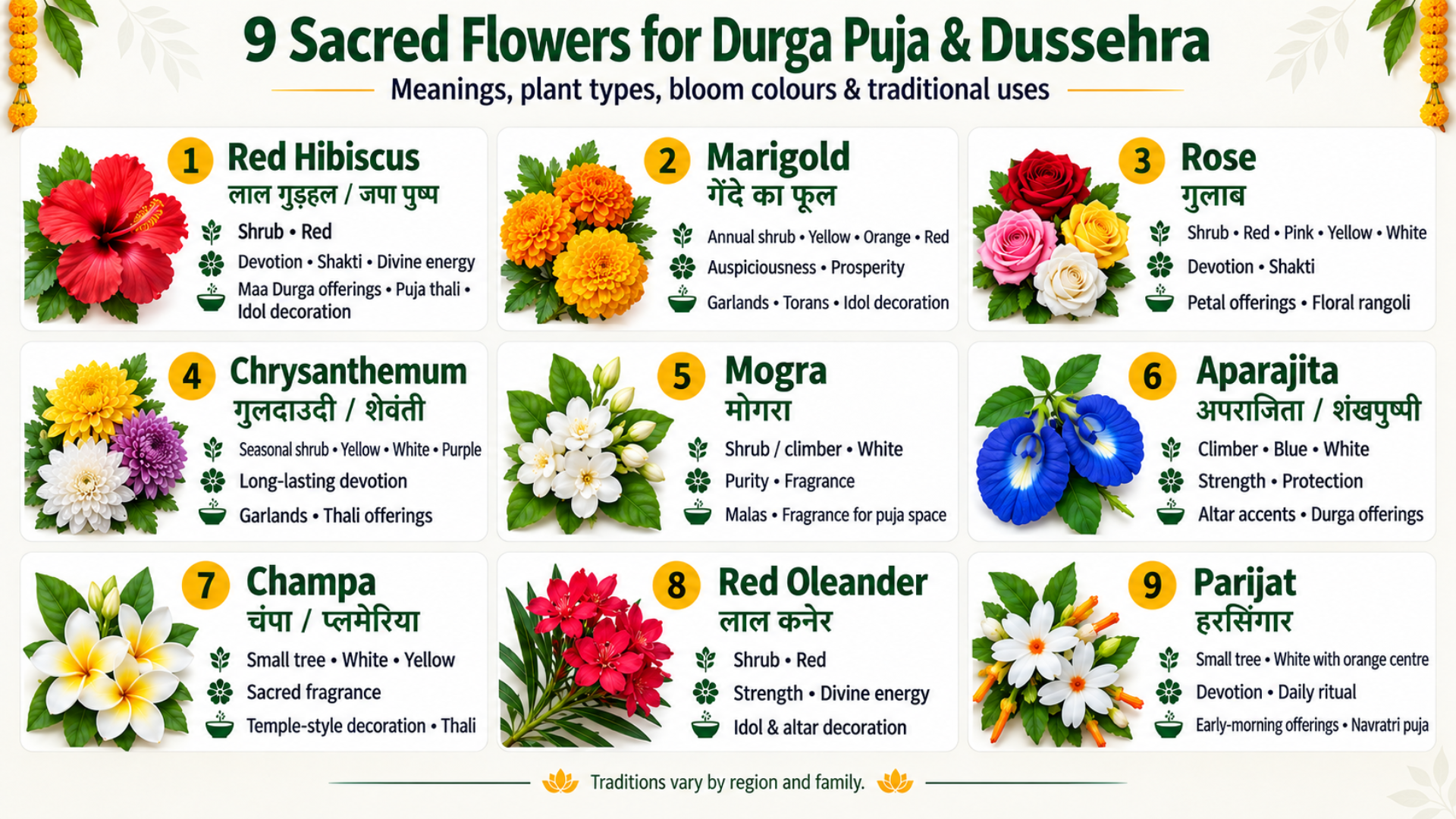
| Flower | Hindi Name | Symbolizes | Plant Type | Bloom Colour | Common Use |
|---|---|---|---|---|---|
| Red Hibiscus | लाल गुड़हल / जपा पुष्प | Devotion, Shakti, divine energy | Shrub | Red | Maa Durga offerings, puja thali, idol decoration |
| Marigold | गेंदे का फूल | Auspiciousness, prosperity | Annual shrub | Yellow, orange, red | Garlands, torans, idol decoration |
| Rose | गुलाब | Devotion, Shakti | Shrub | Red, pink, yellow, white | Petal offerings, floral rangoli |
| Chrysanthemum | गुलदाउदी / शेवंती | Long-lasting devotion | Seasonal shrub | Yellow, white, purple | Garlands, thali offerings |
| Mogra | मोगरा | Purity, fragrance | Shrub/climber | White | Malas, fragrance for puja space |
| Aparajita | अपराजिता / शंखपुष्पी | Strength, protection | Climber | Blue, white | Altar accents, Durga offerings |
| Champa | चंपा / प्लमेरिया | Sacred fragrance | Small tree | White, yellow | Temple-style decoration, thali |
| Red Oleander | लाल कनेर | Strength, divine energy | Shrub | Red | Idol and altar decoration |
| Parijat | हरसिंगार | Devotion, daily ritual | Small tree | White with orange centre | Early-morning offerings, Navratri puja |
NOTE: Flower choices may vary depending on regional traditions, family customs, and availability.
9 Flowers You Can Use for Durga Puja and Dussehra
1. Red Hibiscus (लाल गुड़हल / जपा पुष्प)
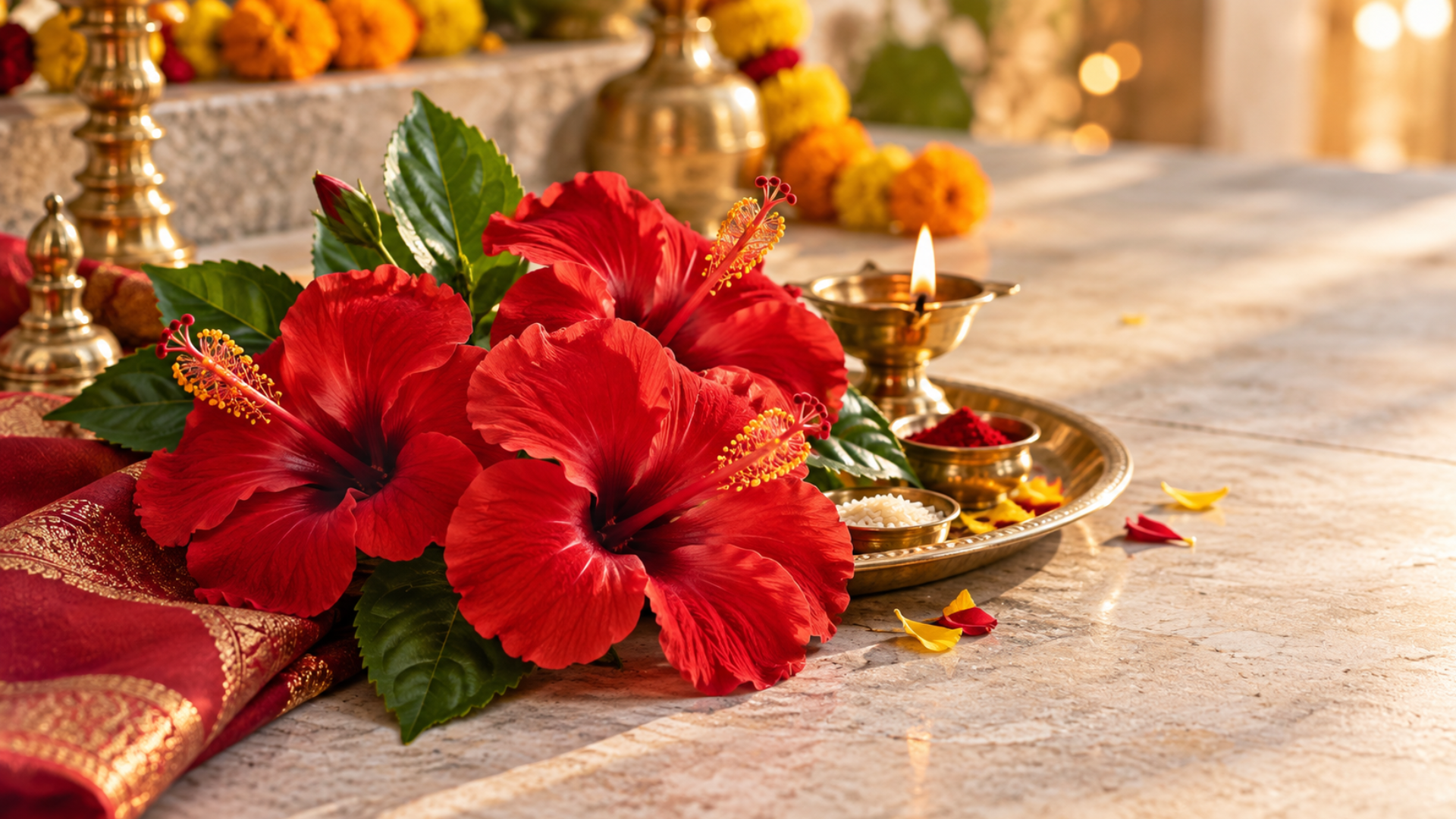
Red Hibiscus is one of the most well-known flowers associated with Goddess Durga worship. Its bright red colour is traditionally connected with devotion, strength, and divine energy. In many Hindu traditions, red hibiscus is offered to Maa Durga and other forms of Shakti during worship.
During Durga Puja and Navratri, Red Hibiscus is commonly used for:
- Maa Durga offerings: Fresh red Hibiscus flowers can be offered during puja as part of devotional offerings, especially in traditions where this flower is associated with Goddess Durga.
- Puja thali: A fresh Hibiscus bloom can be placed in the puja thali along with other offerings.
- Altar and idol decoration: The vibrant red flowers can be used near the Durga idol or worship area to add a traditional touch.
- Homegrown offerings: You can grow Hibiscus plants at home and collect fresh flowers from your own garden during the festive season.
Why Is Red Hibiscus Used?
- The red colour of hibiscus is traditionally associated with Shakti (divine feminine energy) and devotion in many Hindu traditions.
- Its distinct shape and vibrant colour make it a meaningful flower for devotional offerings.
- For many devotees, growing a hibiscus plant at home and offering a freshly bloomed flower during puja creates a personal connection with their worship practice.
2. Marigold (गेंदे का फूल)
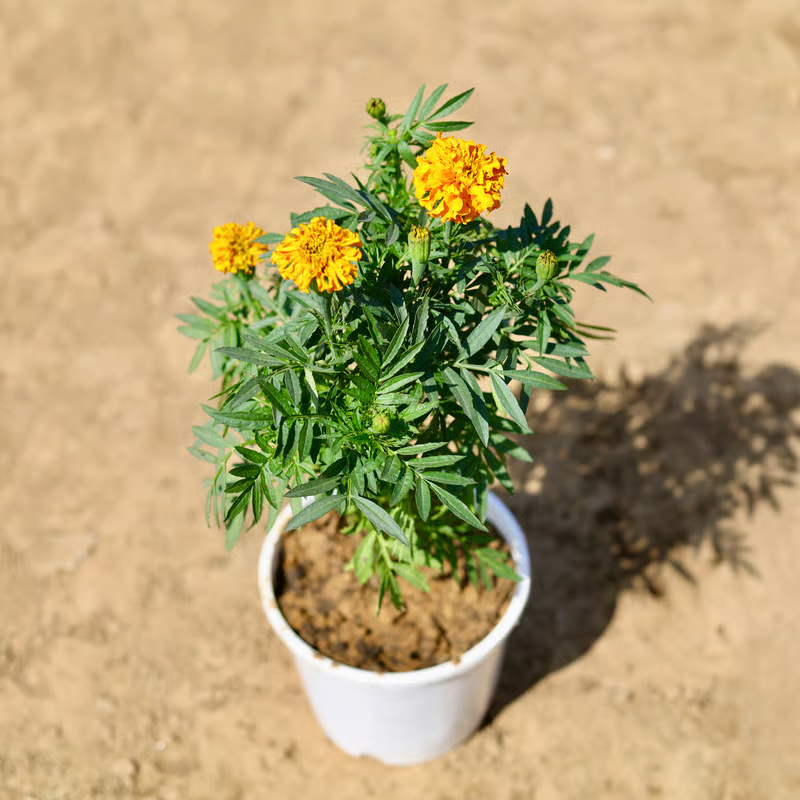
Marigold is one of the most familiar flowers used in Indian puja. Growing Marigold plants at home can provide fresh blooms for festive decorations and worship preparations. During Durga Puja and Dussehra, it is commonly used for:
- Torans and entrance decoration: Marigold garlands are often hung at the entrance of homes or around the puja area to create a festive and welcoming atmosphere.
- Durga idol decoration: Yellow and Orange Marigolds can be arranged into malas or placed around the Durga idol as part of the festive decoration.
- Puja thali: Fresh Marigold blooms can be placed in the puja thali as a simple floral offering.
- Dussehra arrangements: Marigold garlands are often combined with mango leaves and other traditional decorative elements for doorways, altars, and celebration spaces.
Why is Marigold Used?
- Yellow and Orange Marigolds bring a bright, celebratory feel that suits Durga Puja and Dussehra.
- Their compact, full flower heads create a bold visual impact even when used in small quantities.
- Marigolds have a long-standing presence in Indian religious and festive traditions.
3. Rose (गुलाब)
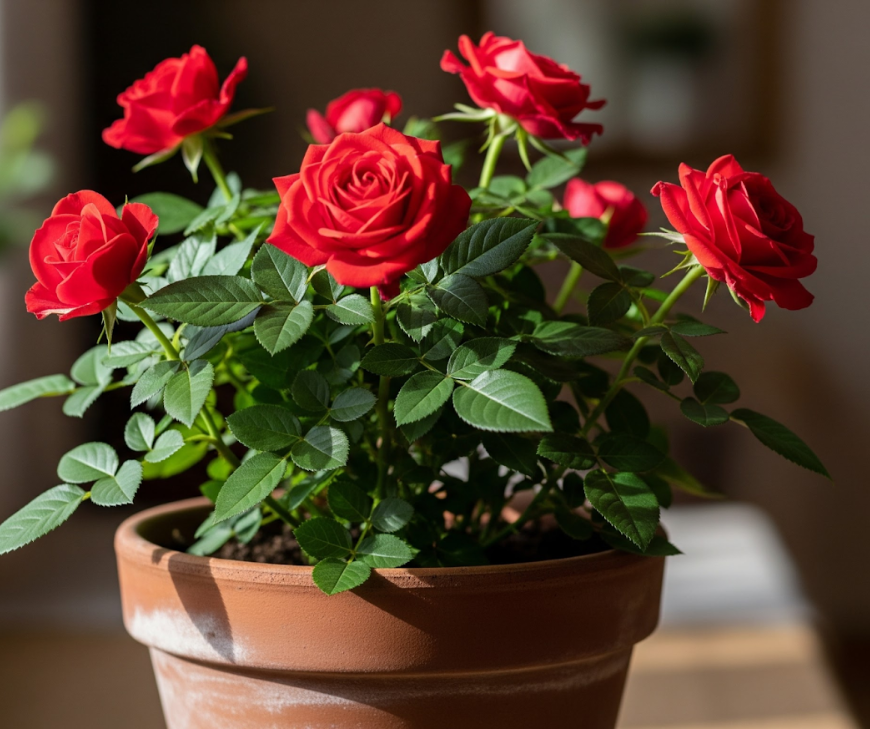
Rose is a popular flower used in many devotional traditions. Known for its beauty, fragrance, and soft petals, it is commonly used for offerings and festive decorations during Durga Puja and Dussehra. During Durga Puja and Dussehra, Roses can be used for:
- Petal offerings: Fresh Rose petals can be added to the puja thali or offered during aarti as part of the floral offering.
- Durga idol decoration: Rose blooms and petals can be used around the idol or mandir decoration.
- Floral rangoli: Rose petals can be arranged with other flowers to create simple rangoli designs.
Why Is Rose Used?
- Roses are valued for their beauty, fragrance, and delicate petals. You can grow Rose plants at home to enjoy fresh flowers for puja and festive decorations.
- Their variety of colours allows families to use them in different ways, from simple puja thali arrangements to larger floral decorations.
- Roses can be offered as whole flowers or petals, making them a flexible choice for different worship practices.
4. Chrysanthemum (गुलदाउदी)
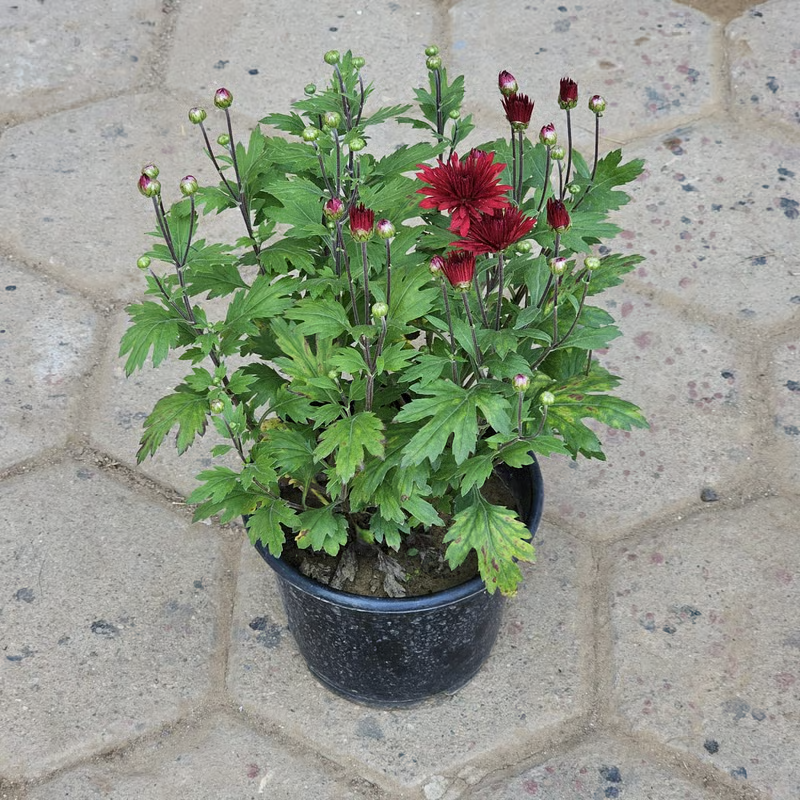
Chrysanthemum is a familiar flower in Indian worship, especially during the festive season. Its yellow and white blooms are commonly used for:
- Durga idol garlands: Its rounded blooms can be strung into malas for the Durga idol during festive worship.
- Puja thali: Individual yellow or white blooms can be added to the thali as part of the floral offering.
- Dussehra decorations: Chrysanthemum flowers can be used to decorate the mandir or puja area during Dussehra, particularly when larger floral arrangements are being prepared.
- Festive flower arrangements: Its dense blooms can be combined with other seasonal flowers to create simple arrangements around the Durga idol.
Why Is Chrysanthemum Used?
- Yellow Chrysanthemums are commonly associated with auspiciousness, positivity, and divine energy.
- White Chrysanthemums are associated with purity and simplicity.
- The flowers stay fresh for a good amount of time, making them practical for puja.
- The flowers of Chrysanthemum plants are widely available during the autumn festive season because this is the time when these plants commonly bloom.
5. Mogra (मोगरा)
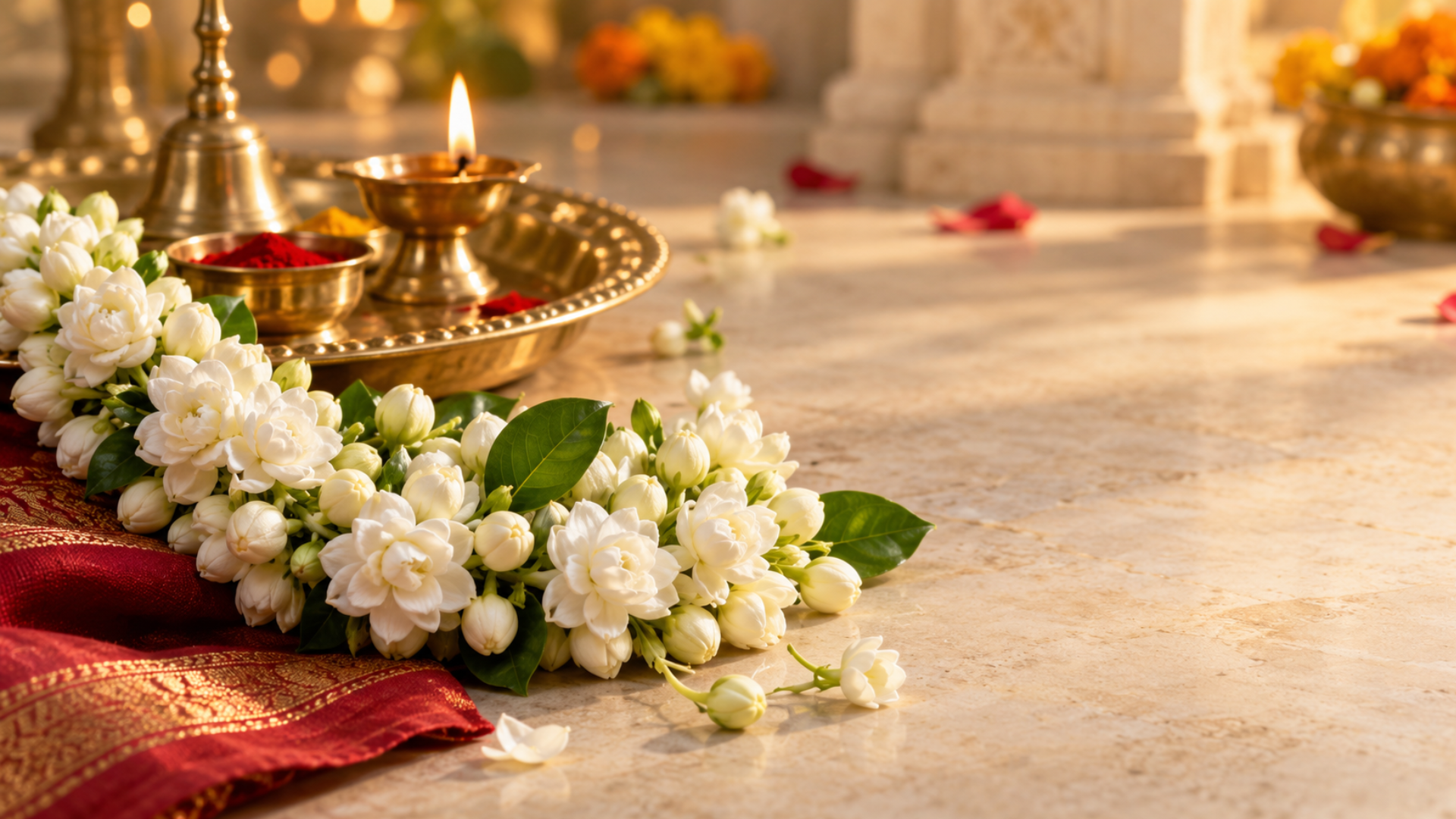
Mogra, also known as Arabian Jasmine, is loved for its small white flowers and strong, pleasant fragrance. It is commonly used in Indian worship and can be offered to Maa Durga in many family traditions.
Mogra can be used for:
- Mogra malas: Its small, fragrant flowers can be strung into malas for the Durga idol or home mandir during Durga Puja.
- Fresh flower offerings: Individual Mogra blooms can be placed in the puja thali or offered to Maa Durga, where this follows the family or regional tradition.
- Puja ambience: Its strong natural fragrance can add a pleasant floral scent to the worship space during Durga Puja and Dussehra.
Why Is Mogra Used?
- Mogra is appreciated for its beautiful white flowers and naturally sweet fragrance, which makes it a popular choice for devotional and festive settings.
- Its small blooms are easy to arrange in malas, puja thalis, and floral decorations.
- For many families, the fragrance of freshly picked flowers from a Mogra plant at home adds a peaceful and traditional feeling to the worship space.
6. Aparajita (अपराजिता/शंखपुष्पी/गौकर्ण)
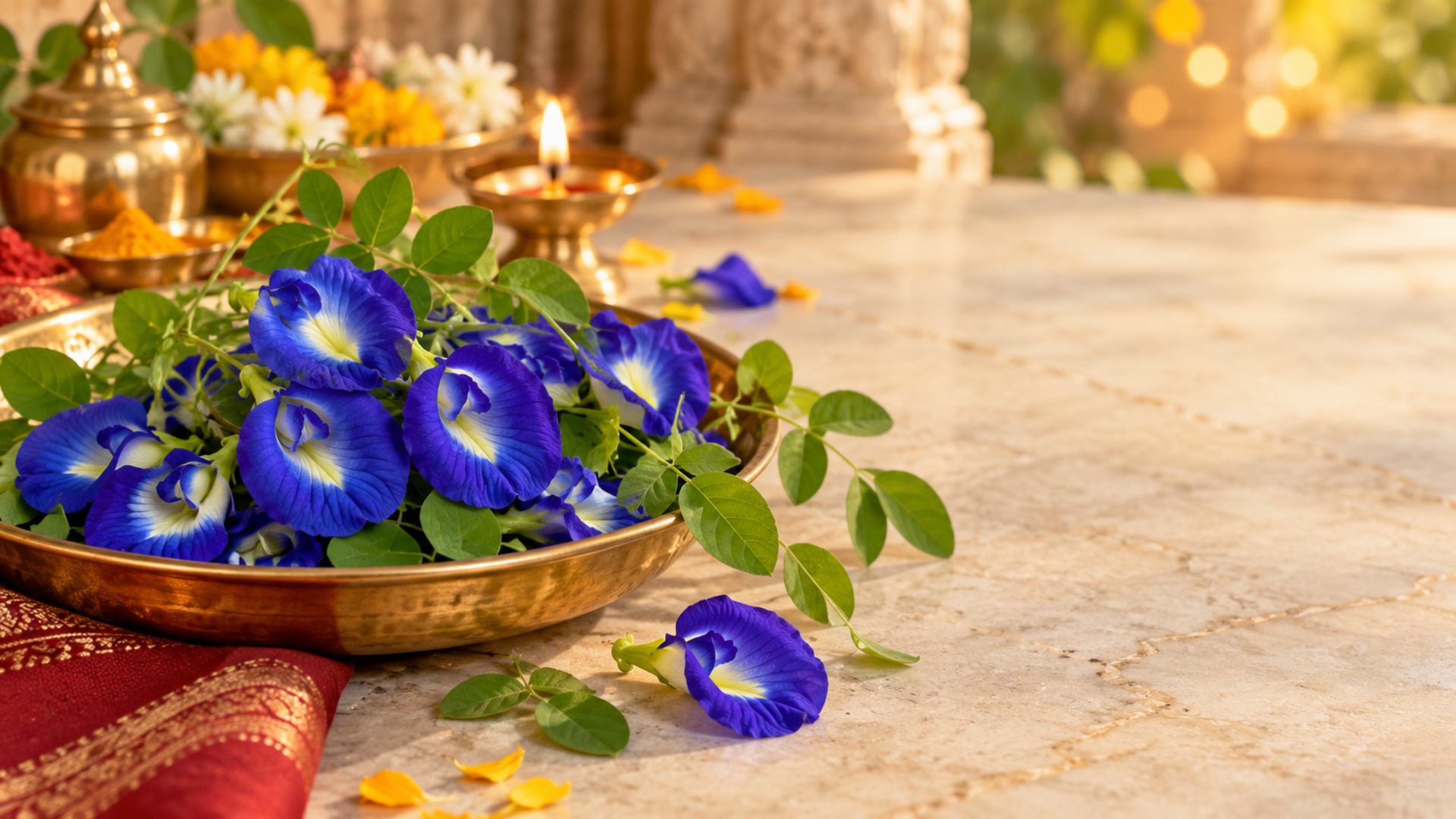
Aparajita (Butterfly Pea) is known for its striking blue flowers and its place in Indian devotional traditions. The name Aparajita means “the undefeated one,” which makes the flower naturally associated with ideas of strength and victory.
Aparajita can be used for:
- Maa Durga offerings: Fresh Aparajita flowers can be offered during worship where this follows local or family traditions.
- Puja thali decoration: Its unique blue or white blooms can add a distinctive touch to the puja thali along with other traditional flowers.
- Festive decorations: Aparajita flowers can be combined with other blooms to create simple floral arrangements around the mandir or worship area.
- Homegrown offerings: As a climbing plant that can be grown at home, Aparajita allows devotees to collect fresh flowers from their own garden for special occasions.
Why Is Aparajita Used?
- Aparajita’s unique blue flowers make it visually different from many commonly used puja flowers.
- For families who grow Aparajita at home, offering a freshly bloomed flower from their own garden can make the worship experience feel more personal and connected with nature.
7. Champa (चंपा/प्लमेरिया/फ्रैंगिपानी)
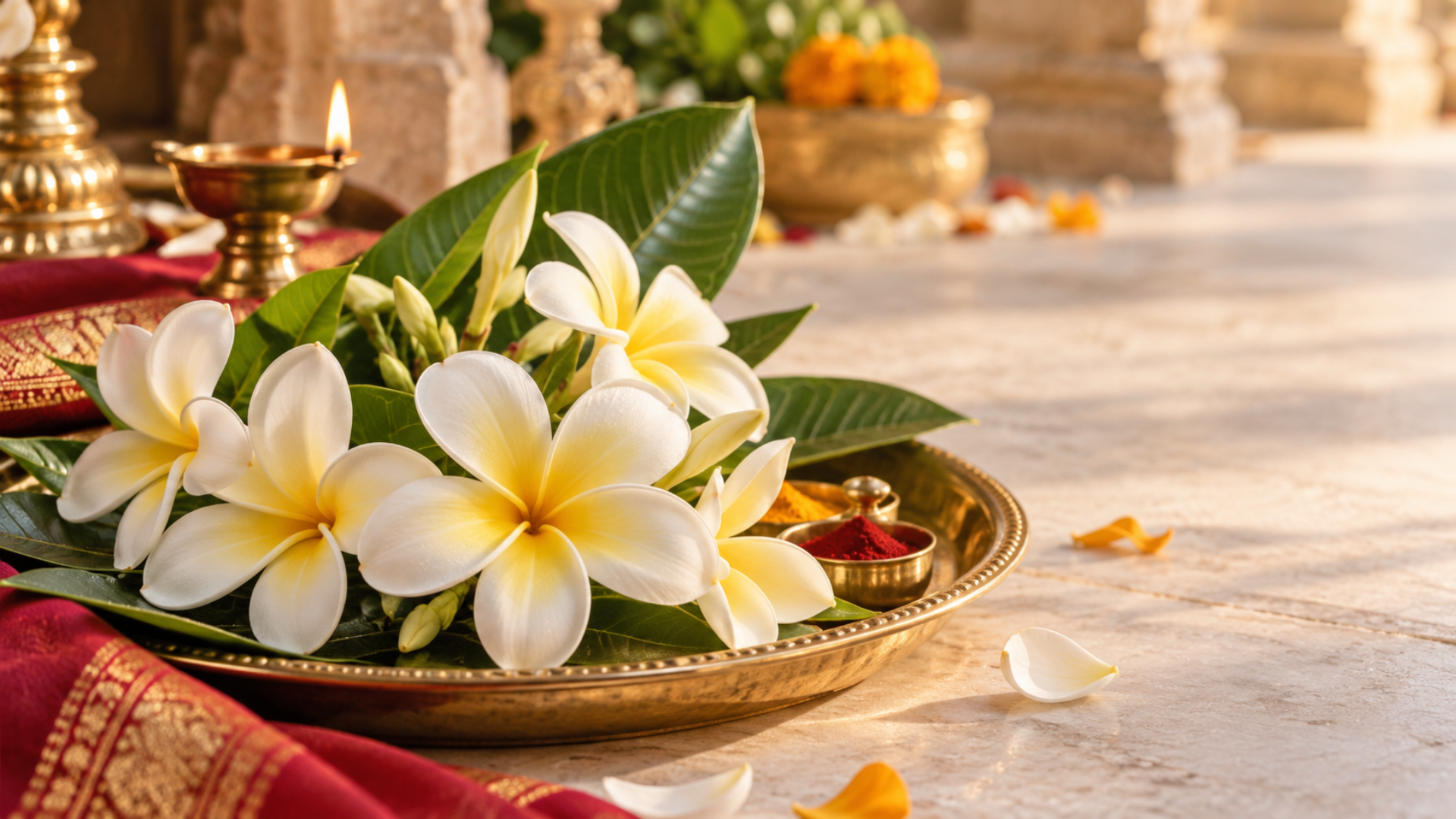
Champa, also known as Plumeria or Frangipani, is a beautiful flowering plant known for its delicate blooms and sweet fragrance. It is commonly found near temples and is used in devotional and cultural practices in many parts of India.
Champa can be used for:
- Fragrant puja offerings: Fresh Champa flowers can be offered during worship, where this follows local or family traditions. Its natural fragrance adds a pleasant atmosphere to the puja space.
- Puja thali decoration: A few fresh Champa flowers can be placed in the puja thali along with other traditional flowers.
- Mandir and festive decoration: The elegant blooms can be used around the Durga idol, home mandir, or worship area to add a natural and traditional touch.
- Dussehra arrangements: Champa flowers can be included in festive floral arrangements where they are part of regional or family customs.
Why Is Champa Used?
- Champa is appreciated for its beautiful appearance and sweet fragrance, which makes it a popular choice for devotional and festive settings.
- The flower’s pleasant scent helps create a calm and peaceful atmosphere during prayers and celebrations.
- For many families, offering a flower from the Champa plant at home carries a special emotional value. Watching the plant grow, waiting for it to bloom, and using that fresh flower during puja can make the festival preparation feel more personal.
8. Oleander (कनेर)
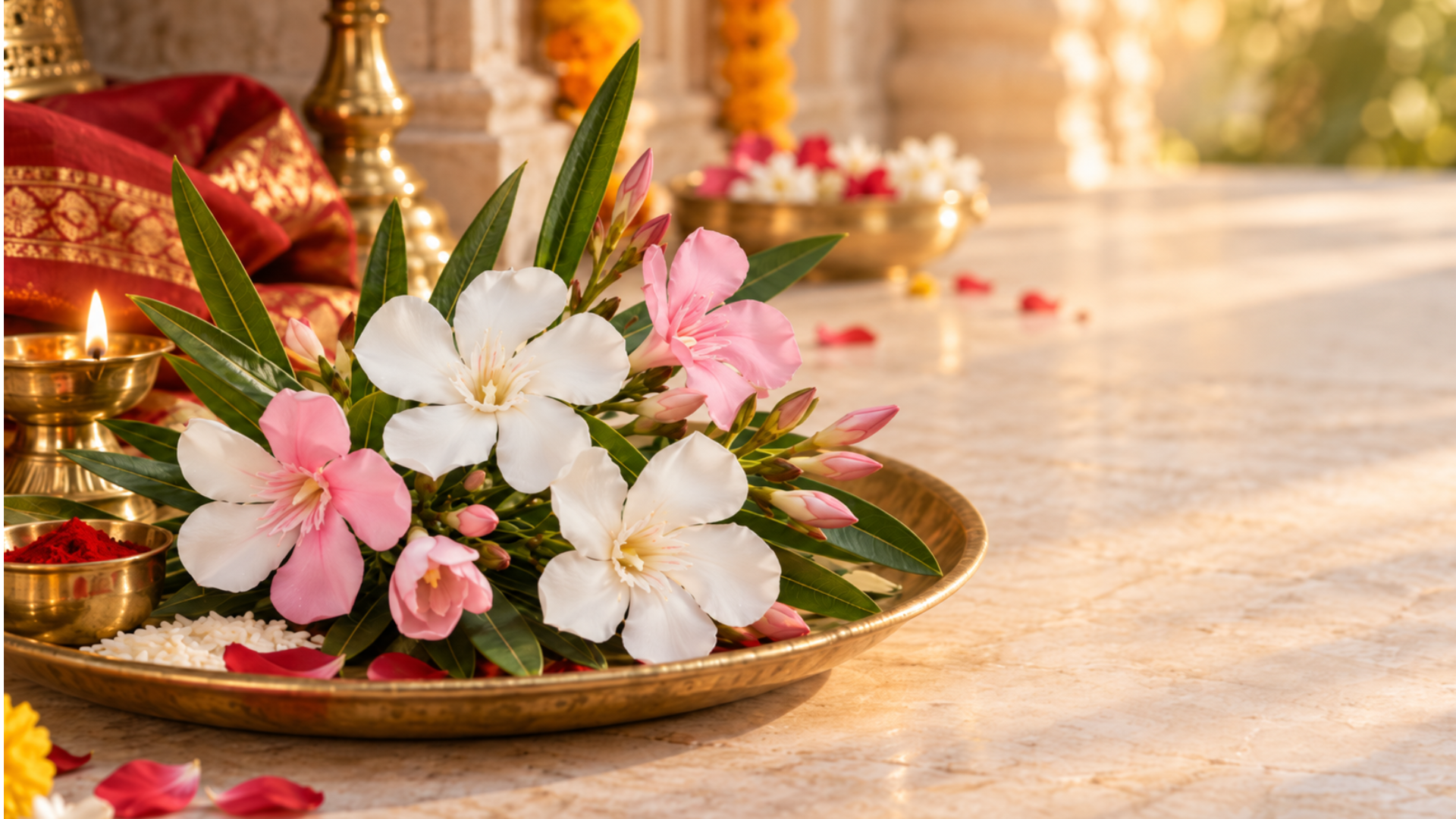
Oleander, also known as Kaner, is a hardy flowering plant commonly grown in warm climates. Kaner produces beautiful flowers in shades of pink, white, and other colours, making it suitable for festive decorations and puja arrangements.
Kaner can be used for:
- Maa Durga offerings: Fresh Kaner flowers can be offered during worship where this follows local or family traditions.
- Durga idol decoration: Kaner blooms can be arranged around the Durga idol, mandir, or puja area to add colour and beauty to the festive setup.
- Festive flower arrangements: Its colourful blooms can be combined with other flowers to create decorative arrangements during celebrations.
- Homegrown offerings: As a low-maintenance flowering plant, Kaner can provide fresh blooms from a home garden for seasonal decorations and worship preparations.
Why Is Kaner Used?
- Kaner flowers are appreciated for their bright colours and ability to bloom in warm climates, making them a practical choice for festive decorations.
- The plant is valued in some devotional traditions and is used for offerings and decorations in certain regions.
- For families who grow Kaner at home, using fresh flowers from their own garden can add a personal connection to festival preparations.
Important: Oleander is toxic if ingested. Never consume any part of the plant, and keep it away from humans, pets, and livestock.
9. Parijat (हरसिंगार)
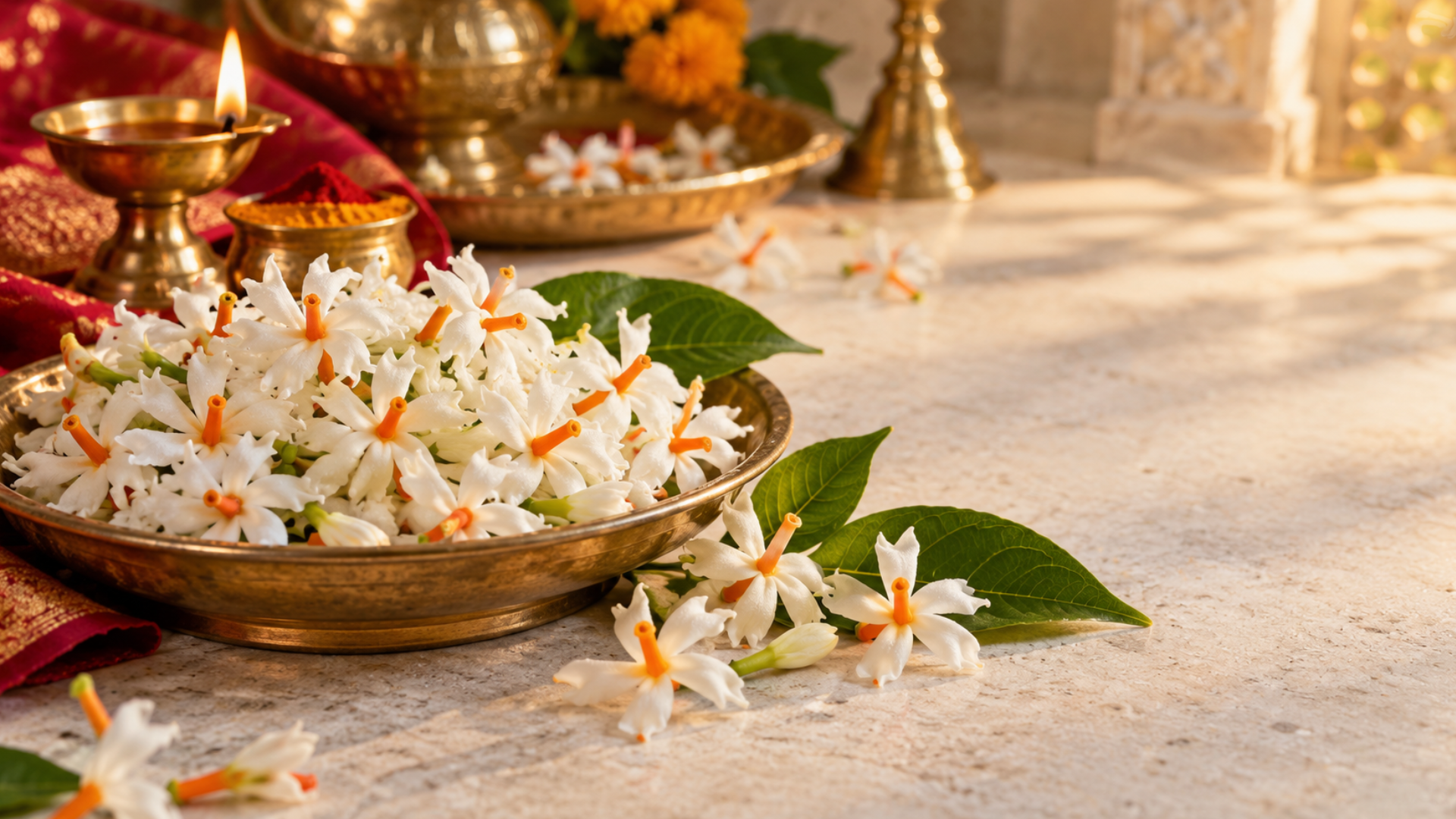
Parijat, also known as Shiuli or Harsingar, is known for its small white flowers with orange centres. The flowers bloom at night and naturally fall by morning, making early morning the best time to gather fresh blooms.
Parijat can be used for:
- Maa Durga offerings: Fresh Parijat flowers can be offered to Maa Durga during Navratri puja, especially on the day associated with Maa Siddhidatri in traditions that use Parijat for the offering.
- Durga Puja decoration: Its white petals with orange centres can add a traditional touch to the puja thali, altar, or mandir during Navratri.
- Dussehra worship: Fresh Parijat flowers can also be included in Dussehra prayers and home worship as part of family or regional traditions.
- Homegrown offerings: Growing Parijat at home allows devotees to gather fresh flowers for Navratri and Dussehra worship directly from their garden.
Why Is Parijat Used?
- Its white petals and orange centre give Parijat a traditional, devotional appearance that suits Durga Puja and Dussehra offerings.
- Its gentle fragrance makes it suitable for decorating the puja thali and mandir during these festivals.
- Parijat naturally flowers at night and drops its blooms by morning, making fresh flowers available for early-morning puja preparations.
- Growing Parijat at home can provide fresh flowers for Durga Puja and Dussehra worship.
How to Choose Flowers for Durga Puja?
The choice of flowers for Durga Puja depends on regional traditions, family customs, availability, and personal preference. Some devotees prefer traditional flowers associated with Maa Durga, while others choose flowers based on fragrance, ease of growing, or availability.
| Situation | Recommended Flowers |
|---|---|
| Traditional offerings | Red Hibiscus, Marigold, Parijat |
| Flowers with fragrance | Mogra, Champa, Rose |
| Easy to grow at home | Marigold, Hibiscus, Rose, Mogra |
| For small balcony gardens | Hibiscus, Aparajita, Mogra |
| Easy to find at the last minute | Marigold, Rose, Chrysanthemum |
Tips for Choosing Flowers:
- Choose fresh, clean flowers without damaged petals for puja offerings.
- If a traditional flower is unavailable, many devotees use other fresh flowers while following their family traditions.
- Growing flowering plants at home can make festival preparations more personal by allowing you to offer flowers from your own garden.
What is the Difference Between Navratri and Durga Puja?
Navratri and Durga Puja are closely connected festivals that celebrate Goddess Durga and Shakti, but their traditions and forms of worship can differ across regions of India.
Navratri is a nine-night festival dedicated to the different forms of Goddess Durga, known as Navdurga. Each day is associated with a different form of the Goddess and has its own worship traditions.
Durga Puja, especially in Bengal and eastern India, celebrates the worship of Maa Durga and her victory over Mahishasura. The main celebrations traditionally take place over five days, from Shashthi (षष्ठी) to Vijaya Dashami (विजयादशमी).
The flowers offered during these festivals can also vary. Some flowers, such as Hibiscus and Marigold, are commonly used across different traditions, while others may be more closely associated with specific regions or family customs. So, the flowers used for Navratri puja do not necessarily have to be the same as those used during Durga Puja.
Frequently Asked Questions (FAQs)
1. What flower represents Durga?
The Red Hibiscus is considered one of the most auspicious and beloved flowers offered to Goddess Durga. Red Roses and Red Oleander are also considered suitable alternatives when Hibiscus is unavailable.
2. Which flower blooms in Durga Puja?
The Shiuli flower (also known as Parijaat or night-flowering jasmine) is closely associated with Durga Puja. Its beautiful blooms are believed to welcome the arrival of Goddess Durga.
3. Which flower is used in Dussehra?
The Marigold is the primary flower used for worship and decoration during Dussehra.
4. Where can I buy flowers for Durga Puja and Dussehra online?
You can buy flowers for Durga Puja and Dussehra online from Urvann. Urvann offers free next-day delivery for orders in Bangalore and Delhi-NCR if you order before 7 PM.
5. How many flowers are needed for Durga Puja?
For daily puja or general Archana, devotees usually offer around 10 to 12 flowers. In special or extended offerings, 108 flower petals may also be used.
6. Are the same flowers used for Durga Puja and Dussehra?
Yes, many of the same flowers, such as Marigolds, Hibiscus, and Parijaat, can be used for both Durga Puja and Dussehra celebrations.
7. Can I use flower petals instead of whole flowers?
Yes, you can use flower petals instead of whole flowers for specific rituals during Durga Puja and Dussehra, such as the widely practiced Pushpanjali where devotees shower the idol with petals.
8. Which flowers can I grow at home for Durga Puja?
Marigold, Hibiscus, and Mogra are the easiest to grow in pots and give you fresh flowers ready in time for the puja. If you'd rather skip the wait, Urvann has flowering plants online so you get healthy, blooming plants delivered straight home.
9. Can I use different flowers if the traditional one is not available?
Yes, if traditional flowers like Hibiscus or Parijaat are not available, you can offer other fresh flowers such as Roses, Marigolds, or Oleander during Durga Puja. Devotion and sincerity are considered the most important part of the offering.
10. Can artificial flowers be used for Durga Puja decoration?
Yes, artificial flowers can be used for Durga Puja decoration, especially for decorating the home, entrance, or puja area. However, for the actual flower offering to Maa Durga, many devotees prefer using fresh flowers as they are considered more traditional and symbolic of purity and devotion. If fresh flowers are not available, you can use clean and beautiful alternatives with sincerity and respect.
11. ಕುಂಡದಲ್ಲಿ ಸೇವಂತಿಗೆ ಬೆಳೆಸುವುದು ಹೇಗೆ?
ಸೇವಂತಿಗೆಯನ್ನು ಕುಂಡದಲ್ಲಿ ಬೆಳೆಸಲು, ಕನಿಷ್ಠ 10-12 ಇಂಚು ಅಗಲದ, ಉತ್ತಮ ಒಳಚರಂಡಿ ಇರುವ ಕುಂಡವನ್ನು ಬಳಸಿ. ಕುಂಡವನ್ನು ದಿನಕ್ಕೆ 5-6 ಗಂಟೆ ನೇರ ಸೂರ್ಯನ ಬೆಳಕು ಬೀಳುವ ಸ್ಥಳದಲ್ಲಿ ಇರಿಸಿ ಮತ್ತು ಮಣ್ಣು ಯಾವಾಗಲೂ ಸ್ವಲ್ಪ ತೇವವಾಗಿರುವಂತೆ ನೀರುಣಿಸಿ. ಪ್ರತಿ 2-3 ವಾರಗಳಿಗೊಮ್ಮೆ ಗೊಬ್ಬರ ನೀಡಿ ಮತ್ತು ಗಿಡ ಹೆಚ್ಚು ಟೊಂಗೆಗಳಿಂದ ಕೂಡಿ ಬೆಳೆಯಲು ಆರಂಭಿಕ ಹಂತದಲ್ಲಿ ಚಿಗುರುಗಳ ತುದಿಯನ್ನು ಚಿವುಟುತ್ತಿರಿ. ಸರಿಯಾದ ಆರೈಕೆಯೊಂದಿಗೆ, ನಾಟಿ ಮಾಡಿದ 8-10 ವಾರಗಳಲ್ಲಿ ಹೂವುಗಳು ಅರಳುತ್ತವೆ.
12. ದಸರಾ ಹೂವಿನ ಅಲಂಕಾರ ಹೇಗೆ ಮಾಡುವುದು?
ದಸರಾ ಹಬ್ಬಕ್ಕೆ ಚೆಂಡು ಹೂವಿನ ಹಾರಗಳನ್ನು ಮನೆಯ ಬಾಗಿಲಿಗೆ ಮತ್ತು ಪೂಜಾ ಸ್ಥಳದ ಸುತ್ತ ಕಟ್ಟಬಹುದು. ಗುಲಾಬಿ ಮತ್ತು ಸೇವಂತಿಗೆ ಹೂವುಗಳನ್ನು ಚೆಂಡು ಹೂವಿನೊಂದಿಗೆ ಬೆರೆಸಿ ದೇವಿಯ ವಿಗ್ರಹದ ಸುತ್ತ ಅಲಂಕರಿಸಬಹುದು. ಹೂವಿನ ದಳಗಳಿಂದ ಸರಳ ರಂಗೋಲಿಯನ್ನೂ ಪೂಜಾ ಸ್ಥಳದ ಬಳಿ ರಚಿಸಬಹುದು. ಮಾವಿನ ಎಲೆಗಳೊಂದಿಗೆ ಚೆಂಡು ಹೂವಿನ ತೋರಣಗಳನ್ನು ಬಳಸಿ ಬಾಗಿಲಿನ ಅಲಂಕಾರವನ್ನೂ ಮಾಡಬಹುದು.