


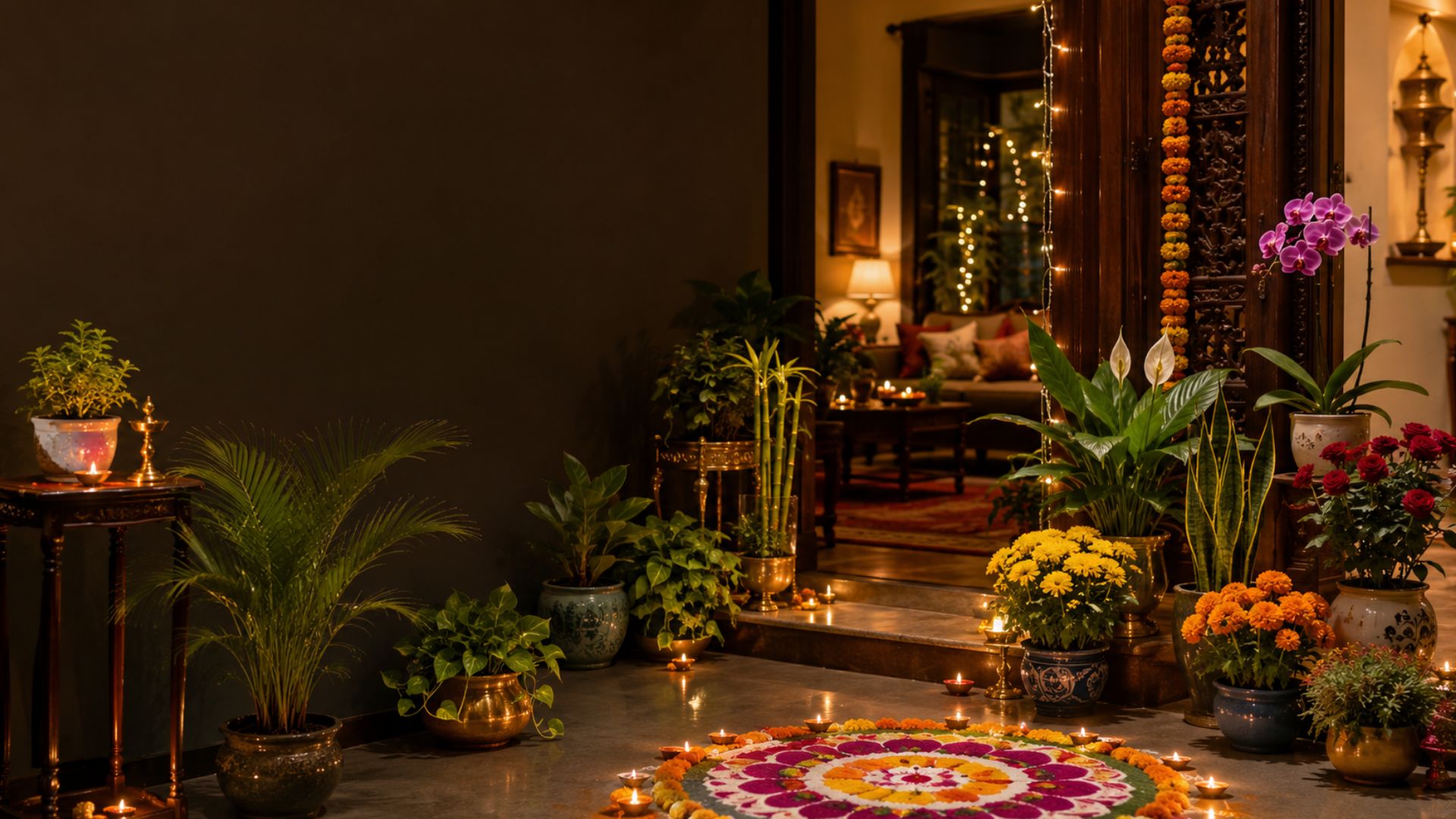
Bring home good vibes this Diwali with 10 lucky plants, their ideal Vastu directions, symbolic meanings, and thoughtful gifting options.
Key Takeaways
- Choose Tulsi for purity, Money Plant and Jade for prosperity, Lucky Bamboo for growth, and Peace Lily for harmony.
- Follow the recommended Vastu direction: keep Money Plant in the southeast, Tulsi in the north, east, or northeast, and Jade near the entrance or southeast corner.
- For easy gifting, choose Money Plant, Jade, Lucky Bamboo, or Snake Plant, especially for colleagues, friends, neighbours, and first-time plant owners.
- Keep plants healthy by removing dead or wilted parts. If you follow Vastu traditions, avoid keeping cactus, Bonsai, Tamarind, Babool, or dried plants indoors.
- Choose a healthy living plant as a lasting Diwali gift that can continue growing long after the sweets and decorations are gone.
Diwali is the festival of light, and greenery is one of the simplest ways to invite that light indoors. Certain plants are considered especially auspicious during this time. They are believed to attract wealth, health, and positive energy when placed correctly, and they double up as thoughtful, living gifts.
Here are 10 lucky plants to bring home this Diwali, along with where to place each one and which ones work best as gifts.
Quick Guide: Lucky Plants for Diwali
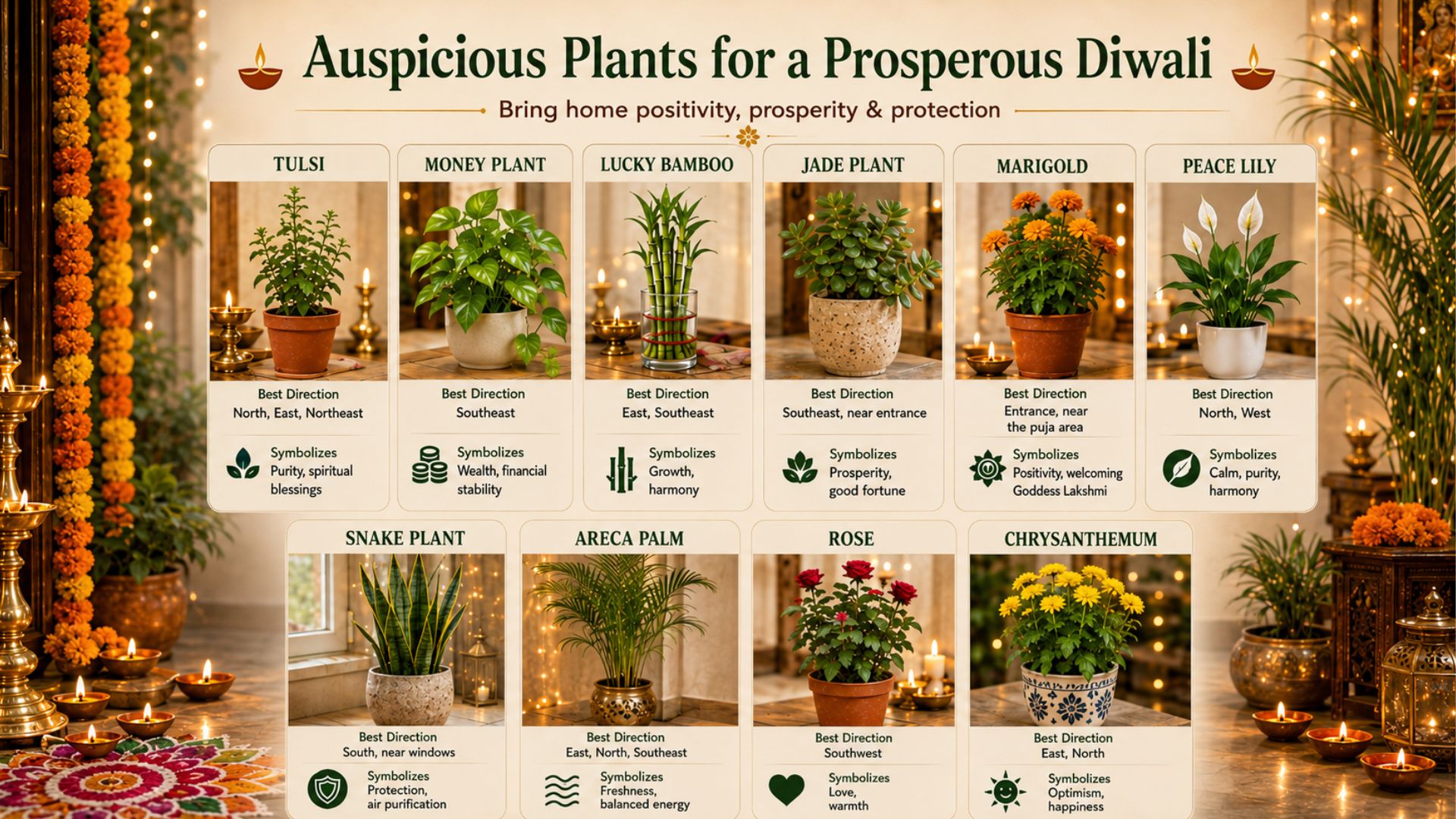
| Plant | Best Direction | What It Symbolizes |
|---|---|---|
| Tulsi (Holy Basil) | North, East, Northeast | Purity, spiritual blessings |
| Money Plant | Southeast | Wealth, financial stability |
| Lucky Bamboo | East, Southeast | Growth, harmony |
| Jade Plant | Southeast, near entrance | Prosperity, good fortune |
| Marigold | Entrance, near the puja area | Positivity, welcoming Goddess Lakshmi |
| Peace Lily | North, West | Calm, purity, harmony |
| Snake Plant | South, near windows | Protection, air purification |
| Areca Palm | East, North, Southeast | Freshness, balanced energy |
| Rose | Southwest | Love, warmth |
| Chrysanthemum | East, North | Optimism, happiness |
1. Tulsi (Holy Basil/तुलसी)
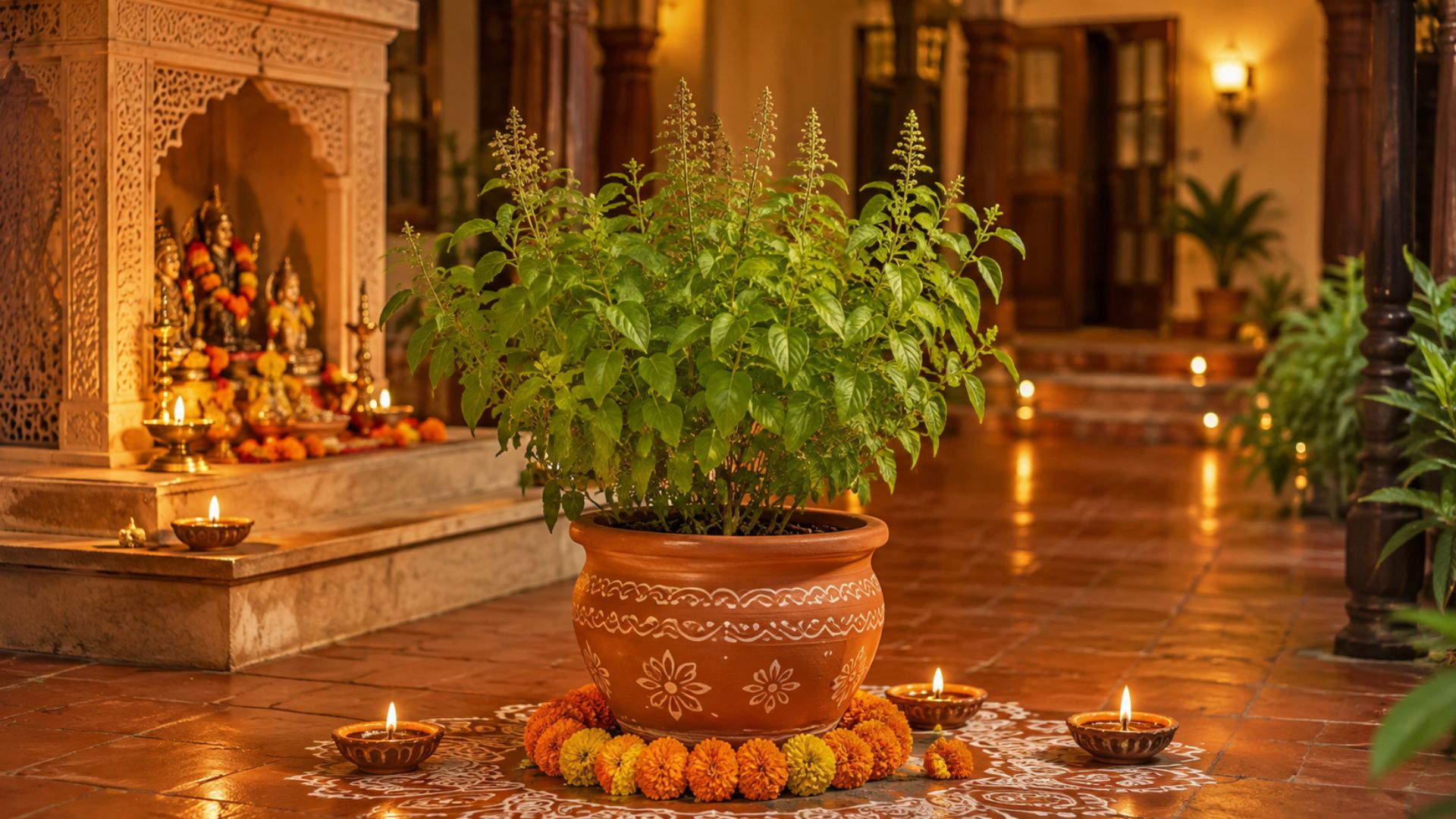
Tulsi is considered one of the most sacred plants in Indian households. Tulsi is believed to purify the air, invite divine blessings, and support the health of everyone at home.
- Placement: North, East, or Northeast direction, ideally near the pooja space.
- Styling tip: Keep it in a simple clay or brass pot near the entrance or courtyard, close to a diya during the festival.
- Gift idea: A small Tulsi plant with a brass diya makes a meaningful gift for elders who value tradition.
2. Money Plant (मनी प्लांट)
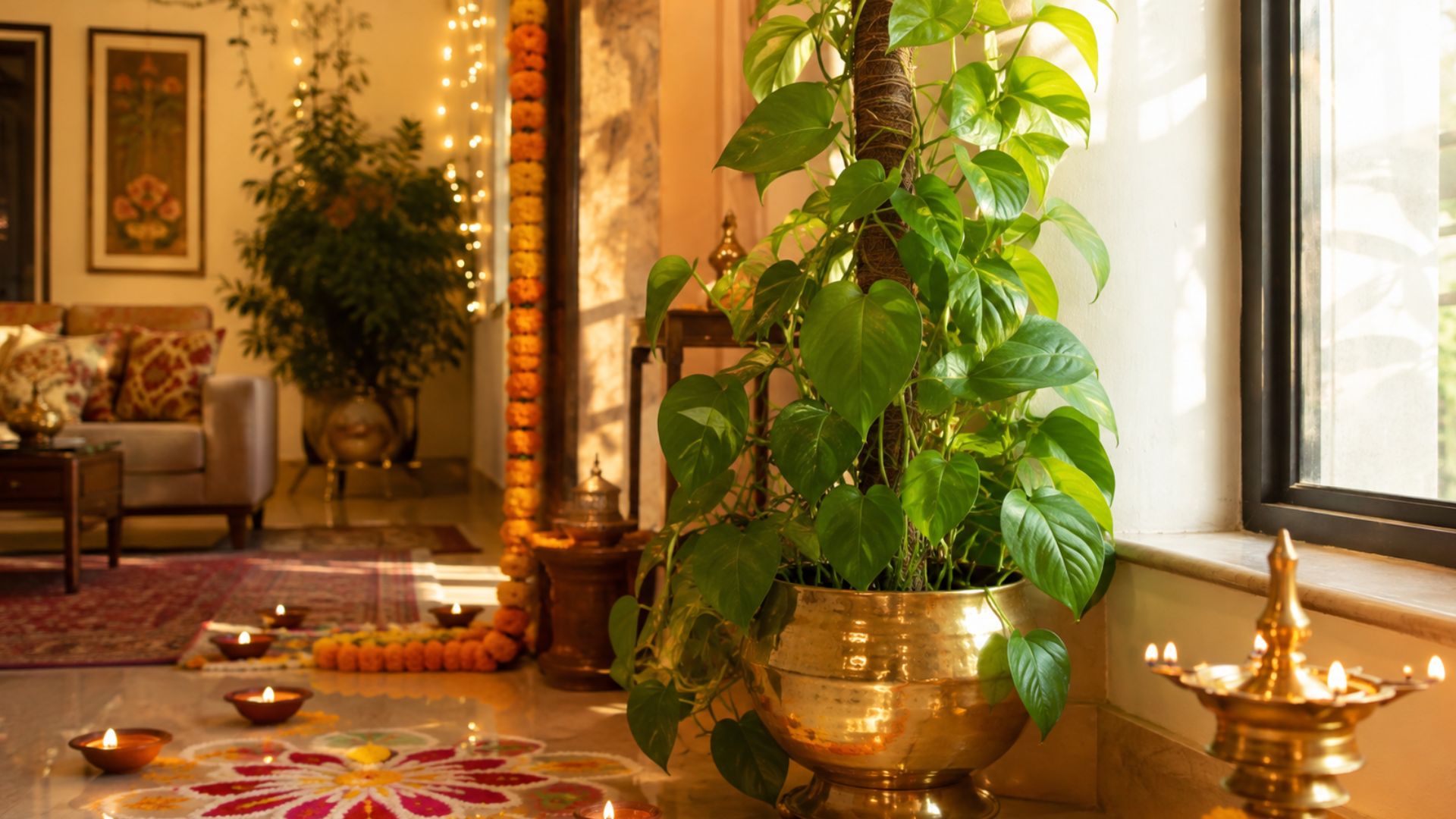
The money plant is the classic Diwali favourite, associated with wealth and financial stability. Its heart-shaped, climbing leaves are said to attract prosperity as they grow upward.
- Placement: Southeast corner. Avoid the northeast and keep it away from the kitchen.
- Styling Tip: Let it climb a moss pole or trail along a shelf. A dried or yellowing money plant is considered inauspicious, so trim it regularly.
- Gift Idea: A money plant in a golden or brass planter is an easy, low-maintenance gift that almost anyone will keep alive.
3. Lucky Bamboo (भाग्यशाली बांस)
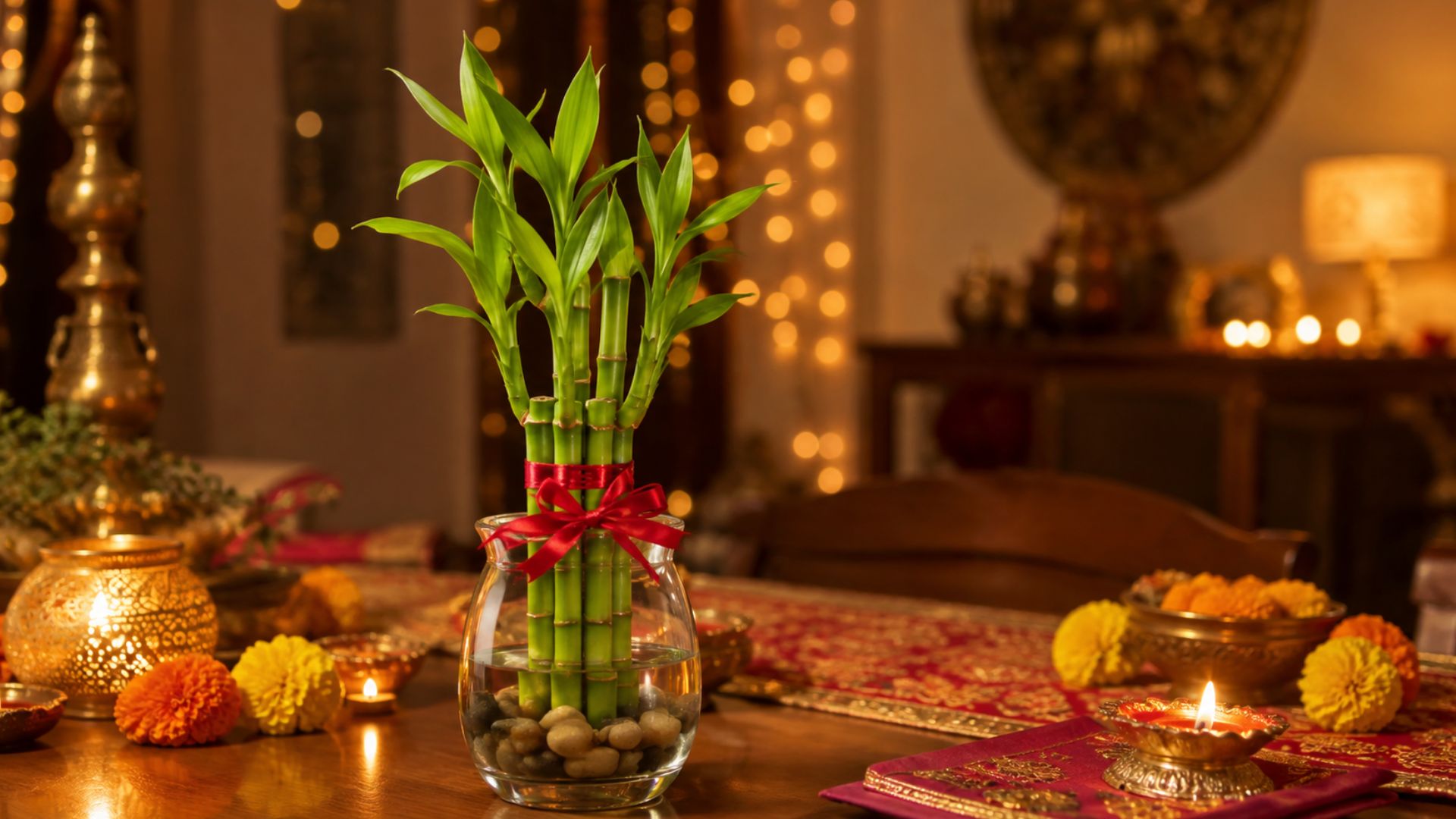
A shared favourite in both Vastu and Feng Shui, lucky bamboo is linked to good fortune, health, and growth. The number of stalks matters here: 3 for happiness, 5 for health, 8 for growth, and 9 for overall luck.
- Placement: East or Southeast direction, or at the centre of a dining or living space.
- Styling tip: Display it in a glass vase with pebbles and water, tied with a red ribbon for the festive look.
- Gift idea: A 5 or 8-stalk lucky bamboo arrangement works well for housewarmings and Diwali hampers.
4. Jade Plant (जेड प्लांट)
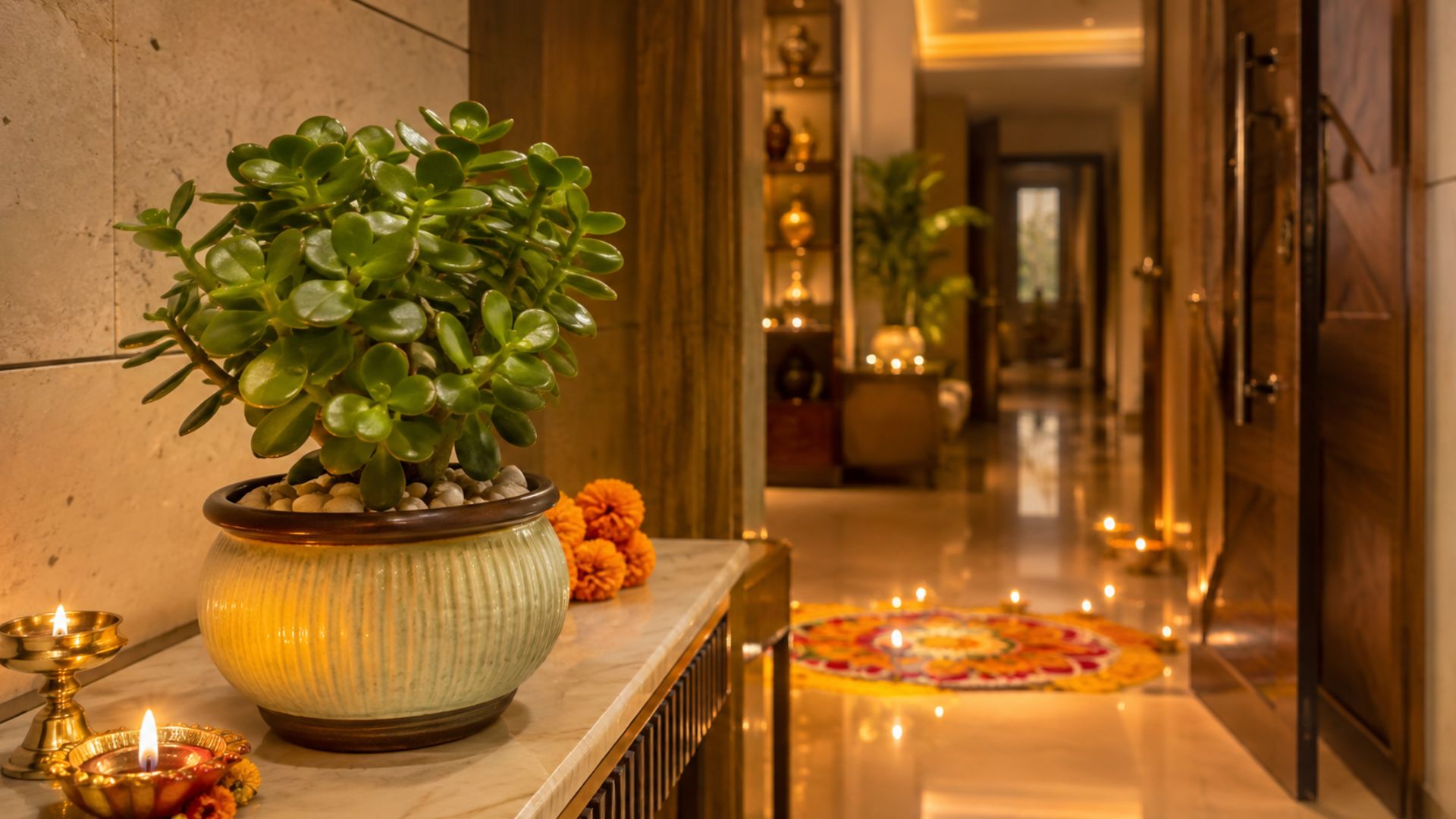
Often called the money plant's succulent cousin, jade has round, coin-shaped leaves that symbolize accumulating wealth. However, it is important to understand how to grow and care for the jade plant.
- Placement: Near the entrance or in the southeast direction.
- Styling tip: A mini jade plant on a study table or office desk is said to support career growth.
- Gift idea: Compact and low-maintenance, jade is ideal for gifting to colleagues or anyone with limited space.
5. Marigold (गेंदा)
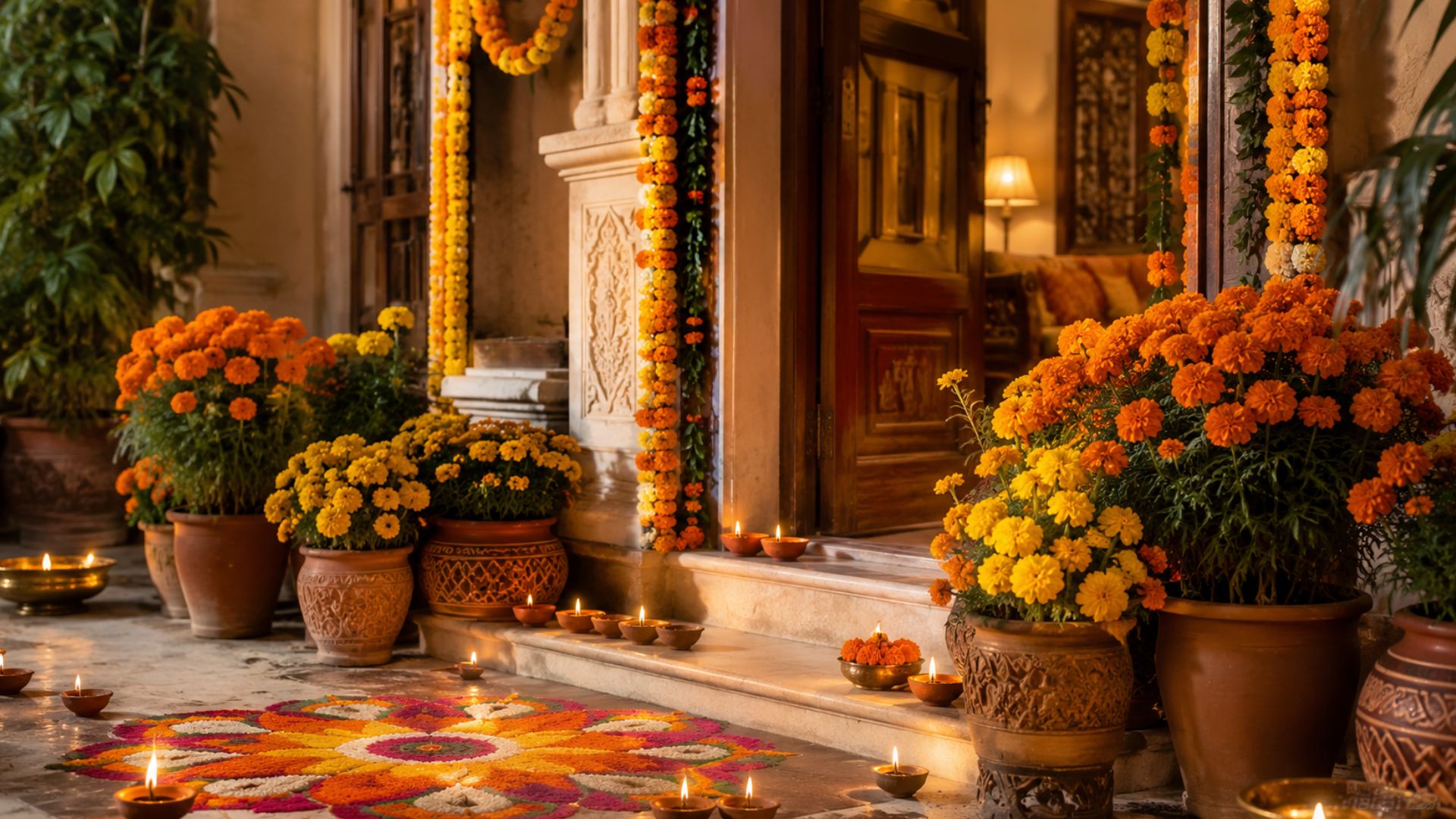
No Diwali decoration is complete without marigold. Its bright orange and yellow blooms symbolize positivity and are traditionally used to welcome Goddess Lakshmi into the home.
- Placement: Near the main entrance, in torans, or around the puja area.
- Styling tip: Use potted marigolds instead of just cut flowers so the festive glow lasts beyond one day.
- Gift idea: A pair of potted marigolds alongside diyas makes an affordable, colourful hostess gift.
6. Peace Lily (पीस लिली)
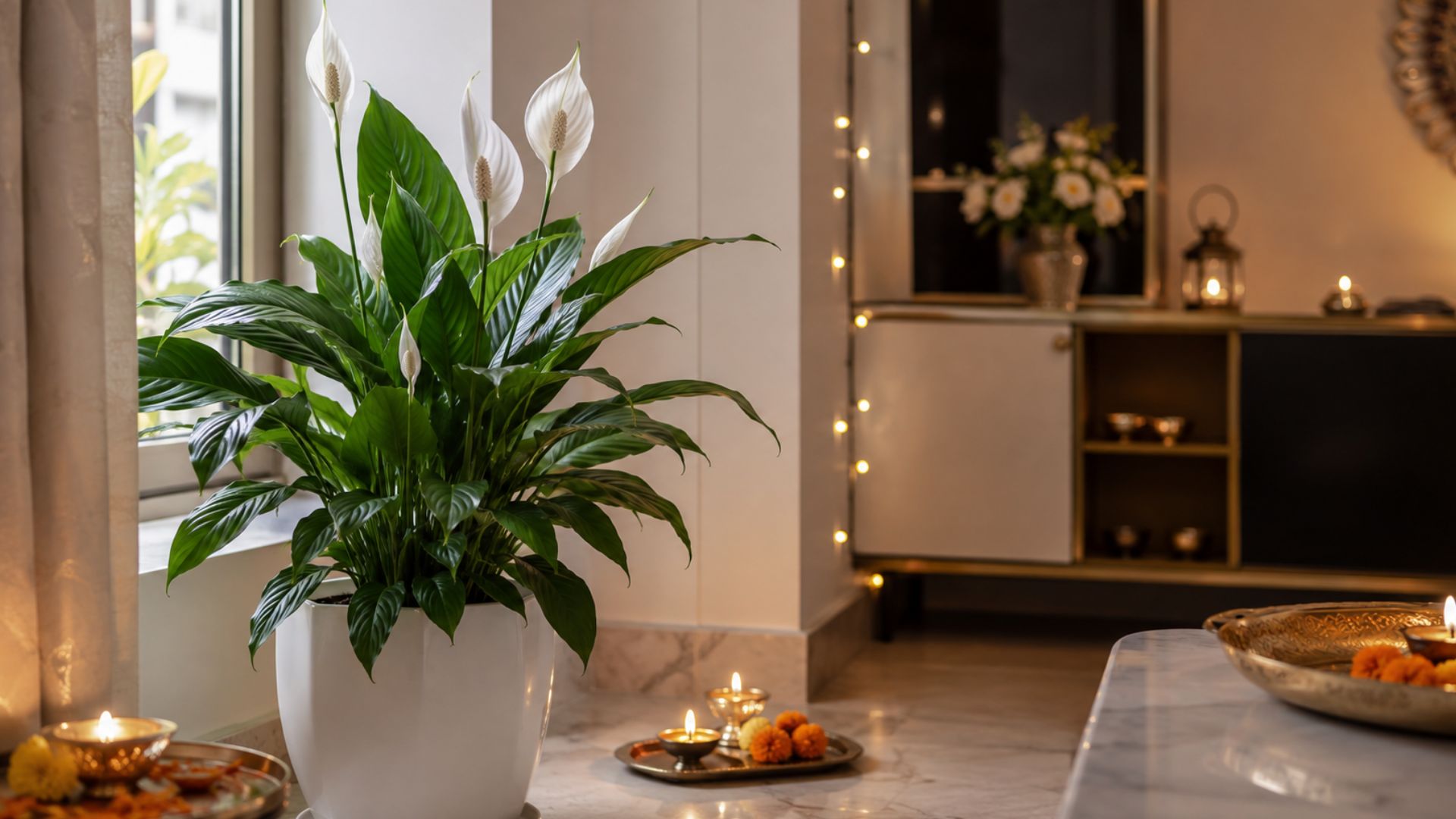
With its calm white blooms, the peace lily is associated with harmony and mental clarity, a welcome contrast to the noise and lights of the festival.
- Placement: Its placement should be in the North or West direction, in the living room or bedroom.
- Styling tip: A white ceramic pot near a window lets the blooms stand out against festive lighting.
- Gift idea: A good pick for someone who wants a calmer, quieter kind of Diwali decor.
7. Snake Plant (स्नेक प्लांट)
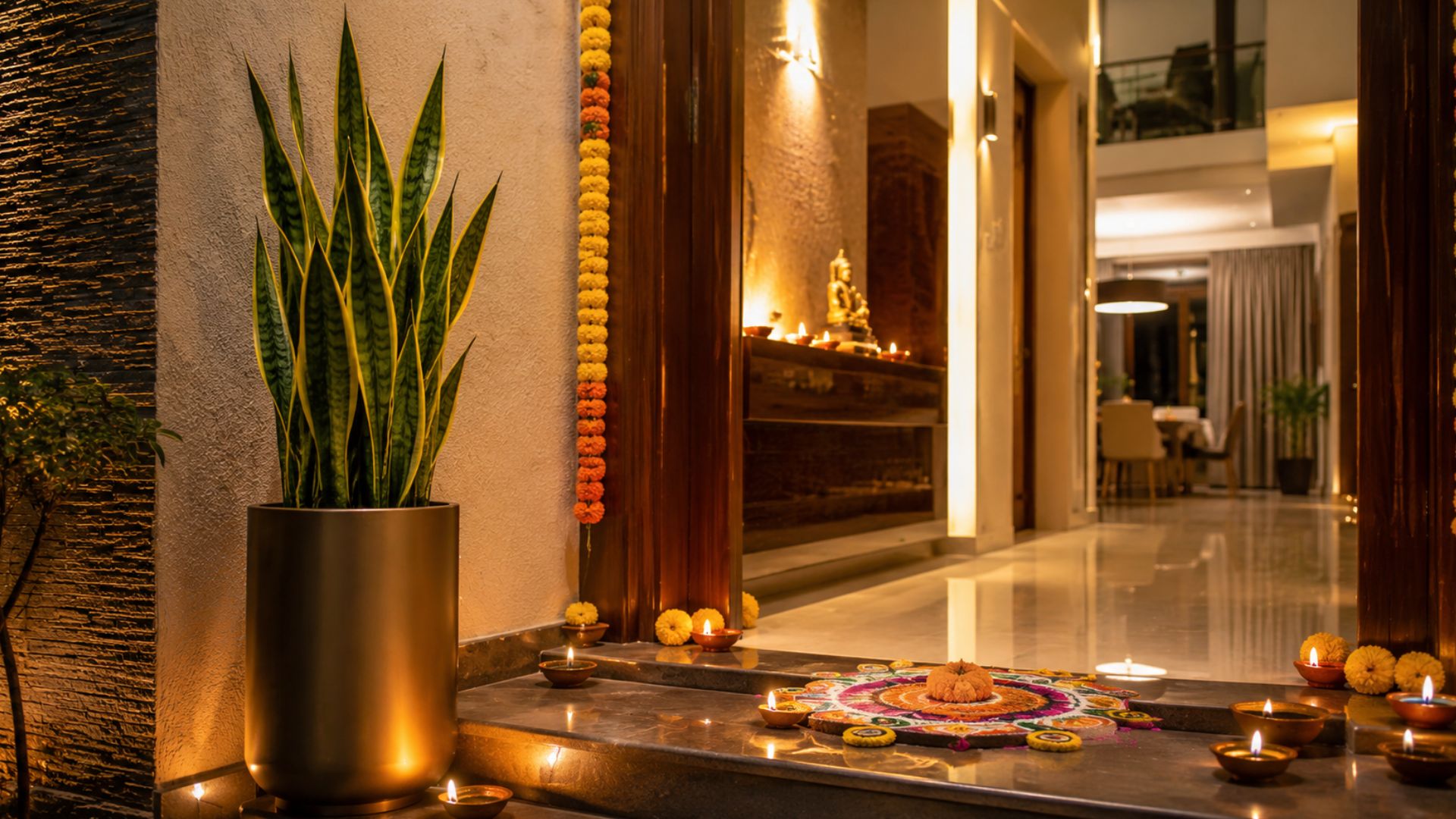
Known for releasing oxygen even at night, the snake plant is considered protective and is believed to absorb negative energy, especially useful with cracker smoke around during Diwali.
- Placement: South direction, near windows or entrances.
- Styling tip: Its upright, sword-like leaves suit a minimalist, modern console or entryway.
- Gift idea: Extremely low maintenance, it's a safe pick for people who are new to plant care.
8. Areca Palm (सुपारी का पाम)
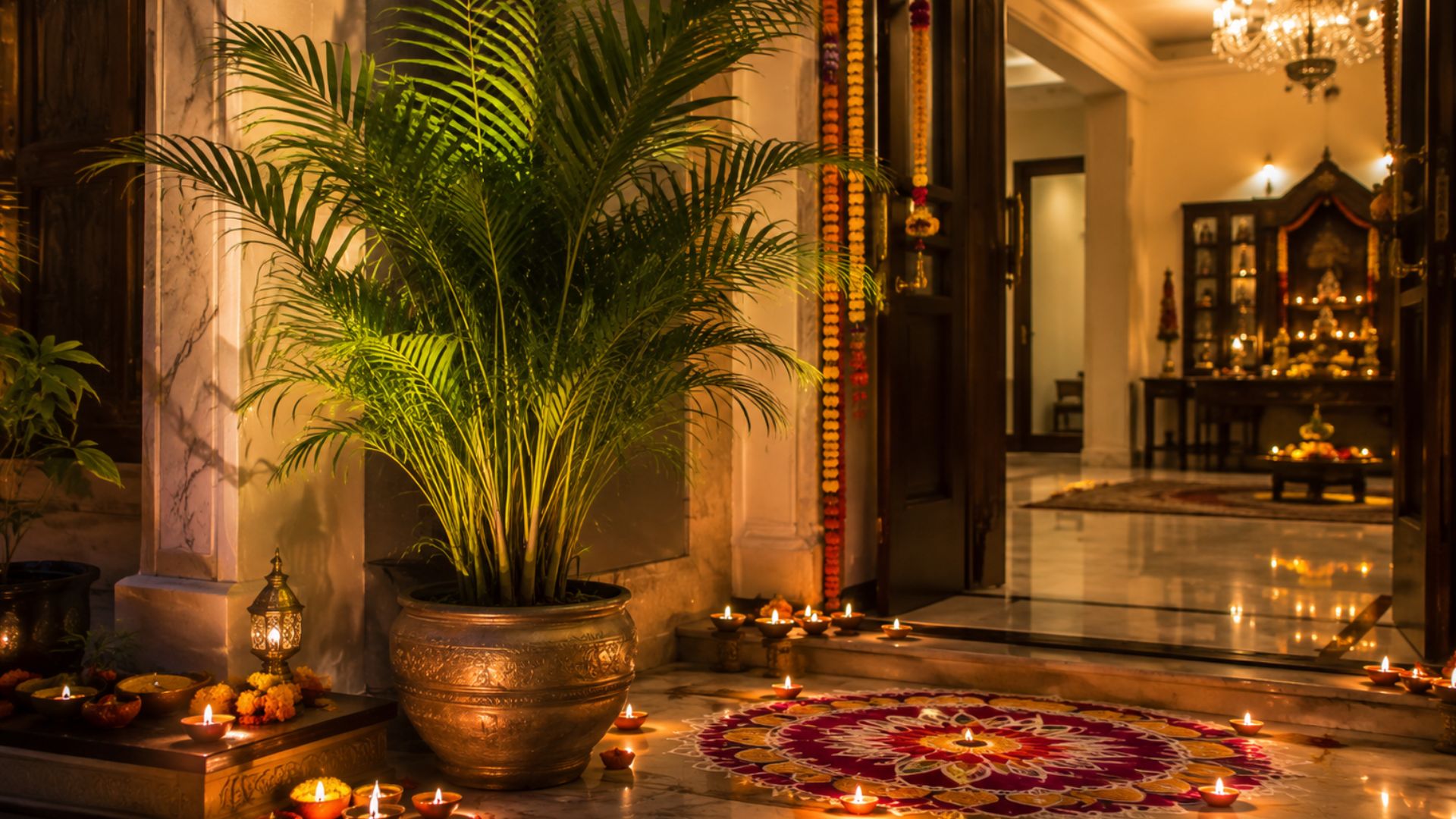
The areca palm is valued for balancing energy in a space and naturally humidifying the air, which is useful as the weather turns dry around Diwali.
- Placement: East, North, or Southeast.
- Styling tip: Place a pair on either side of the main door for a grand, welcoming entrance.
- Gift idea: Better suited as a self-purchase or a larger corporate gift, given its size.
9. Rose (गुलाब)
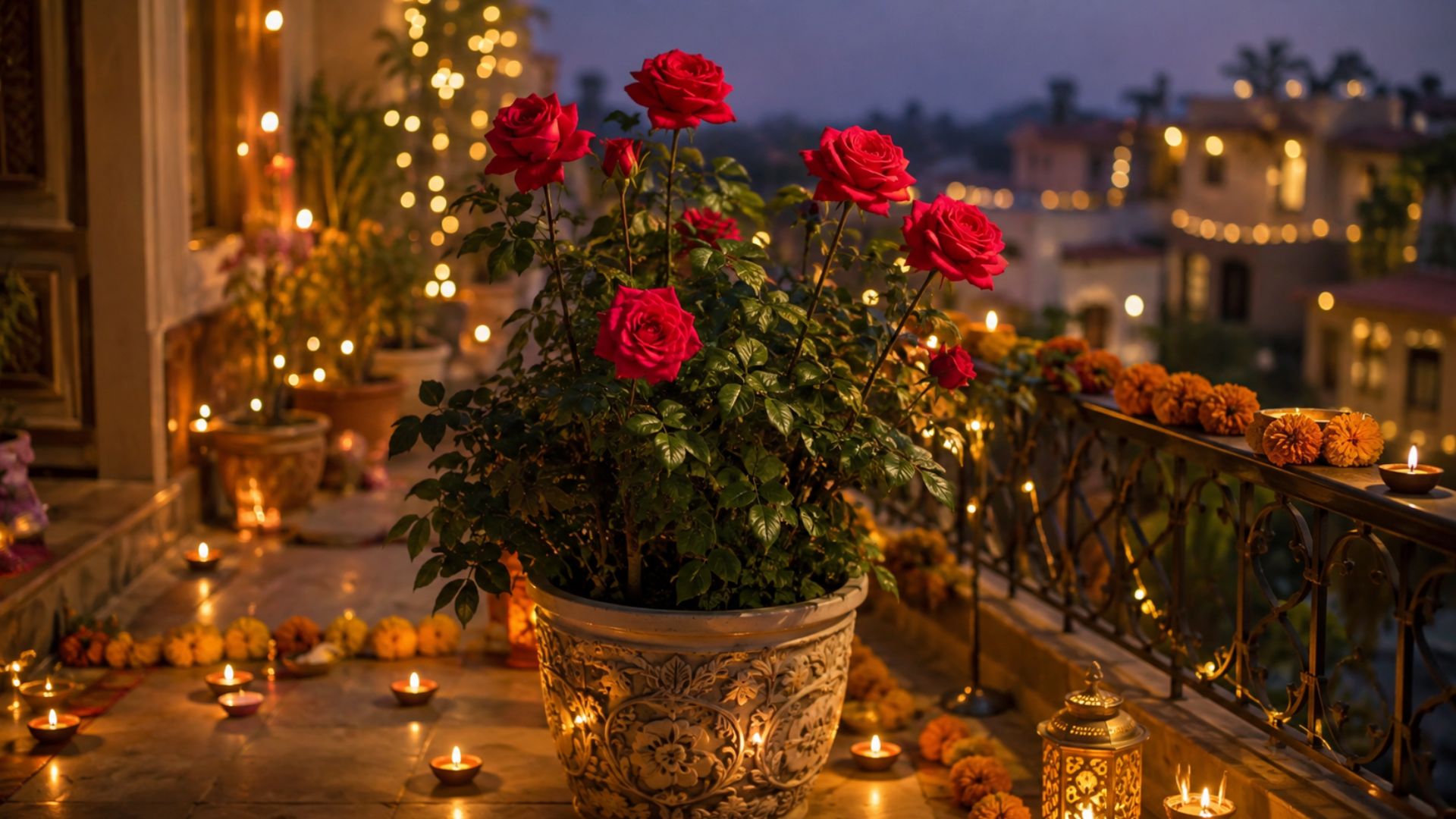
Unlike other thorny plants, the rose is considered an exception in Vastu because of its healing and love-attracting properties.
- Placement: Southwest direction.
- Styling tip: A potted rose on a balcony or terrace corner adds colour and fragrance through the festive season.
- Gift idea: A flowering rose plant is a warmer, more personal gift for close family.
10. Chrysanthemum (गुलदाउदी)
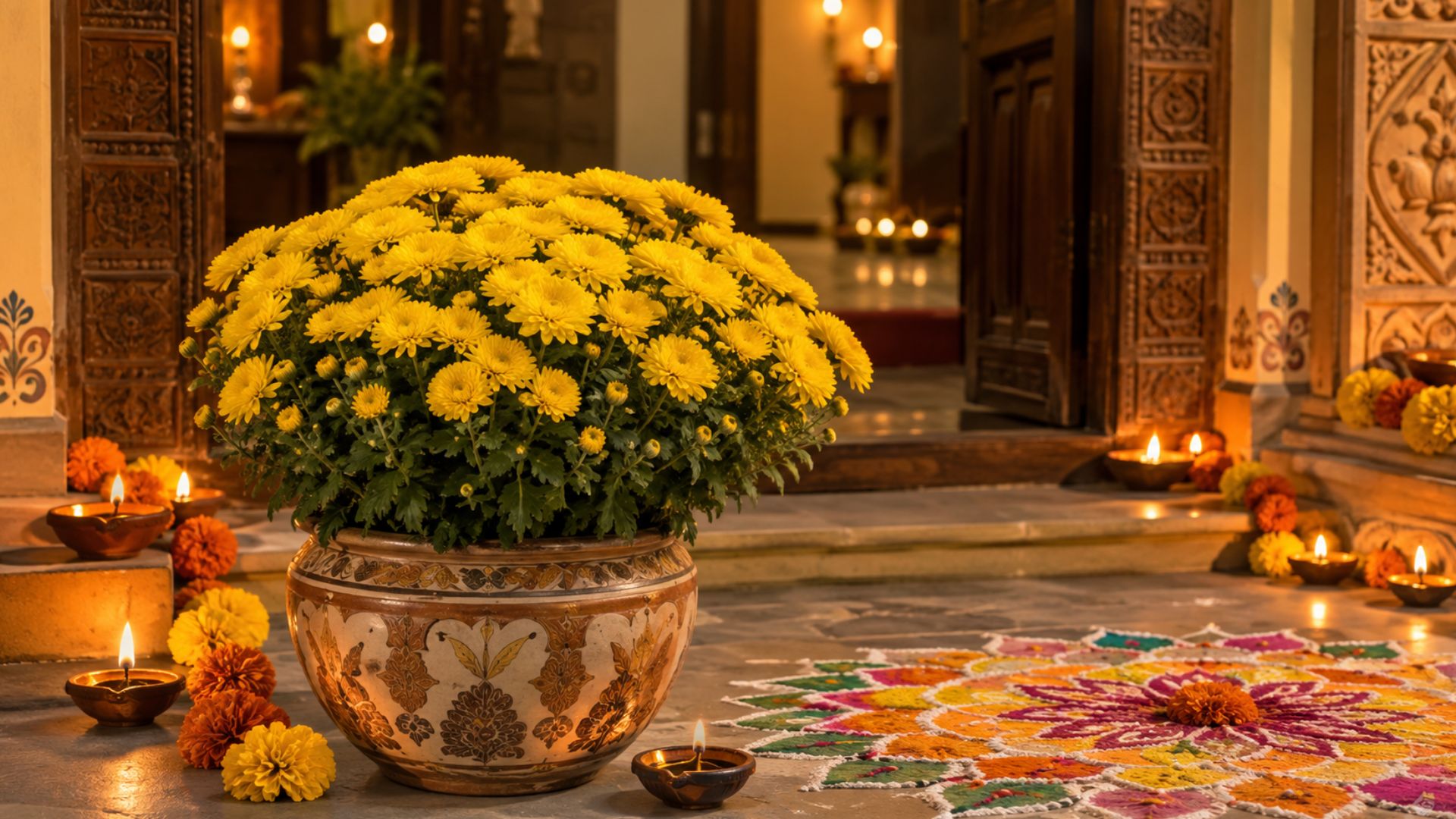
The vibrant chrysanthemum symbolizes optimism, confidence, and happiness, and its yellow blooms echo the mood of Diwali itself.
- Placement: East or North direction.
- Styling tip: Combine with marigolds near the entrance for a bright, layered festive look.
- Gift idea: A cheerful, budget-friendly option for neighbours and building societies.
Plants to Avoid This Diwali
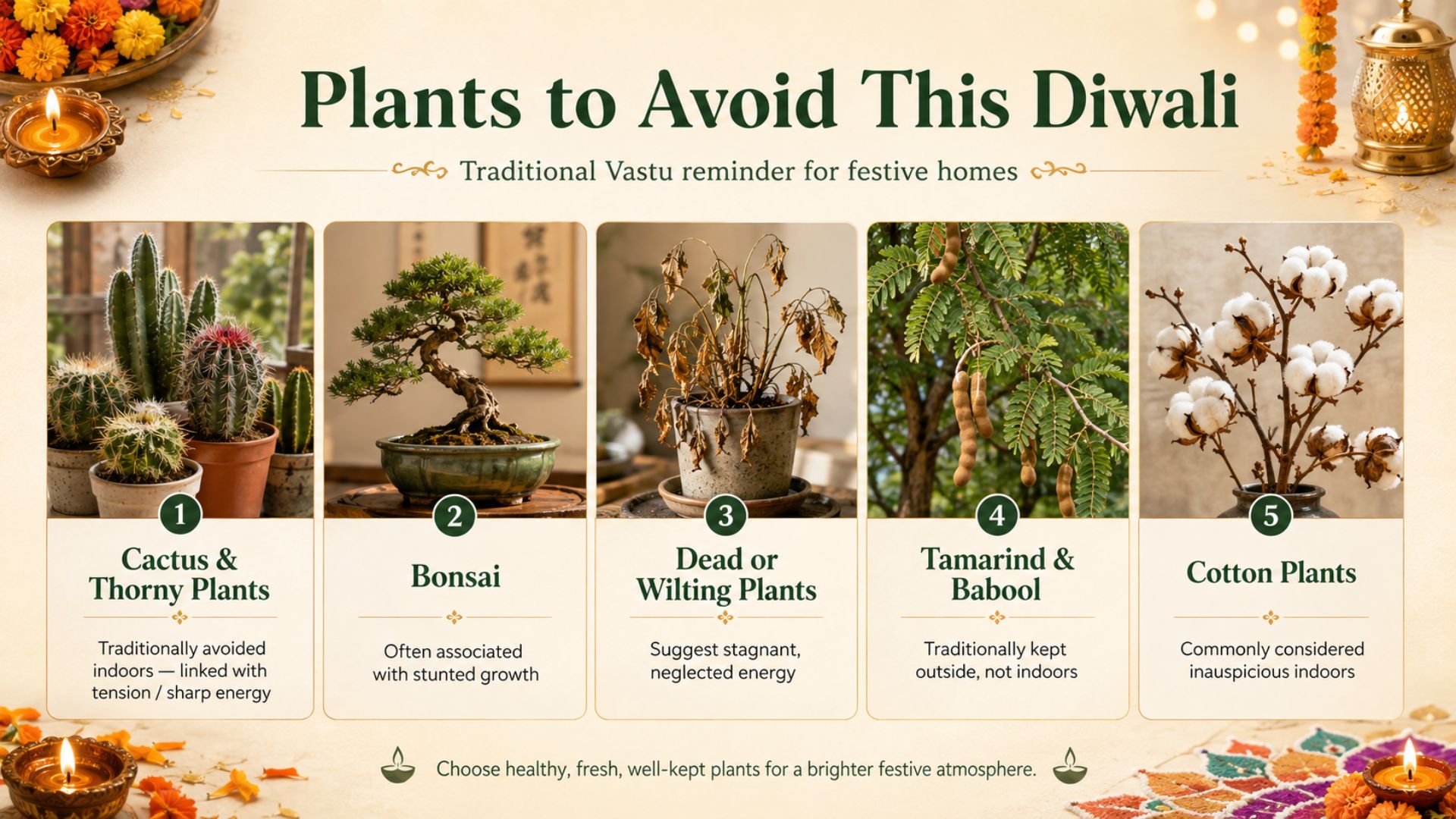
Not every plant is considered auspicious. As per Vastu, it's best to avoid the following indoors during the festive season:
- Cactus and other thorny plants, believed to bring tension and sharp, negative energy
- Bonsai, seen as symbolizing stunted growth
- Dead, dried, or wilting plants, which are said to hold stagnant energy
- Tamarind and Babool, traditionally kept outside the home rather than indoors
- Cotton plants, considered inauspicious despite their soft appearance
If you already own any of these, it's fine to keep them outdoors or in a garden space, just outside the main living areas.
Bring Home the Festive Glow With Urvann
Diwali is as much about renewal as it is about lights and sweets. A few well-placed, living plants available at Urvann can carry that feeling of freshness well beyond the festival itself, brightening your home and making thoughtful gifts for the people you care about.
Pick two or three from this list that suit your space, place them in the right direction, and let the season's good energy settle in.
Frequently Asked Questions (FAQs)
1. Which plants bring good luck at home?
Tulsi, Money Plant, Lucky Bamboo, Jade Plant, and Peace Lily are among the most commonly recommended lucky plants for the home.
2. Which plant attracts money?
The Money Plant, Jade Plant, and Lucky Bamboo are the three most associated with attracting wealth and financial stability.
3. Which plant is not lucky for the home?
Cactus, bonsai, dead or dried plants, tamarind, and cotton plants are generally considered inauspicious to keep indoors.
4. Which plant should I gift someone this Diwali?
Money Plant, Jade Plant, and Lucky Bamboo are safe, low-maintenance choices for most people. For a more premium gift, a flowering rose plant works well.
5. Can I keep a lucky plant in any direction?
No. Each plant is associated with a specific direction for maximum benefit. For example, Money Plant does best in the southeast, while Tulsi is best placed in the north or east.
6. Do artificial plants count as lucky for Diwali?
No. Living plants are considered the source of positive energy. Artificial or dried plants are not treated the same way in Vastu.
Aayushi Baberwal
8/12/2026, 03:01 AMI want to be decorated my home. So beautiful plants I need this plants