

UrvannUrvann is your one-stop online nursery for plants, planters, gardening accessories, and tools. Order fresh plants and get free home delivery on the next day!https://www.urvann.com/s/6176774ef575bbd2b3331c8a/6adf43d3218c1ab5fa5d72cb/webp/final-logo-01-1-_cropped-1-480x480.png
E-176110060DelhiIN
Urvann
E-176Delhi, IN
+919599585773https://www.urvann.com/s/6176774ef575bbd2b3331c8a/6adf43d3218c1ab5fa5d72cb/webp/final-logo-01-1-_cropped-1-480x480.png"[email protected]
Dianthus<p><span style="font-weight: 400;">Some flowers catch your eye, while others make you stop and admire them. Dianthus (डायन्थस/ಡಯಾಂಥಸ್) does both! Known for its delicate, fringed petals and beautiful shades of pink, red, and white, Dianthus brings a cheerful touch to balconies, terraces, and home gardens.</span></p> <p><span style="font-weight: 400;">Belonging to the Caryophyllaceae family, Dianthus includes popular flowering varieties such as Sweet William (Dianthus barbatus), carnations, and garden pinks. Many varieties also have a pleasant, clove-like fragrance that adds to their charm.</span></p> <p><span style="font-weight: 400;">Looking to brighten up your balcony railing, windowsill, or garden pots? Dianthus is a lovely choice for sunny spaces, especially during the cooler growing season in many parts of India. With well-draining soil and proper care, these plants can reward you with beautiful, long-lasting blooms.</span></p> <p><span style="font-weight: 400;">Explore Dianthus plants at Urvann and bring home colourful flowers to brighten your everyday spaces.</span><span style="font-weight: 400;"></span></p> <div style="background: #f6eddc; border: 1px solid #e2c27b; padding: 15px 20px; border-radius: 8px; margin: 25px 0;"> <p><strong>NOTE: </strong>Prices of the products may vary as per the location. Please check the final price based on your delivery address. &nbsp;</p> </div> <h2><br />Why 15 Lakh+ Plant Parents Trust Urvann</h2> <p><span style="font-weight: 400;">⭐ Rated 4.8/5 by 12,340+ verified buyers</span></p> <p><span style="font-weight: 400;">✓ </span><b>Free Next-Day Delivery &ndash; </b><span style="font-weight: 400;">Available on orders placed by 7 PM in Delhi-NCR and Bangalore.</span></p> <p><span style="font-weight: 400;">✓ </span><b>Hassle-Free Replacement &ndash;</b><span style="font-weight: 400;"> 2-day replacement window if the plant arrives damaged or incorrect.</span></p> <p><span style="font-weight: 400;">✓ </span><b>Healthy, Well-Rooted Plants &ndash;</b><span style="font-weight: 400;"> Plants are grown at Urvann Farms before being delivered to customers.</span></p> <p><span style="font-weight: 400;">✓ </span><b>Multiple Sizes &amp; Pots &ndash;</b><span style="font-weight: 400;"> Choose from 3, 4, 5, and 6-inch nursery bags and pots, as single plants or sets of 2.</span></p> <p><span style="font-weight: 400;">✓ </span><b>Complete Garden Care in One Place &ndash;</b><span style="font-weight: 400;"> Along with Dianthus plants, shop</span><a href="https://www.urvann.com/browse/planters-and-pots"><span style="font-weight: 400;"> </span><span style="font-weight: 400;">pots</span></a><span style="font-weight: 400;">,</span><a href="https://www.urvann.com/browse/fertilizers"><span style="font-weight: 400;"> </span><span style="font-weight: 400;">fertilizers</span></a><span style="font-weight: 400;">,</span><a href="https://www.urvann.com/browse/gardening-tools-and-equipment"><span style="font-weight: 400;"> </span><span style="font-weight: 400;">tools</span></a><span style="font-weight: 400;">, and other garden care products.</span></p> <h2><br />Quick Facts About Dianthus Plants</h2> <table style="width: 100%; border-collapse: collapse; font-size: 15px; line-height: 1.6; border: 1px solid #e1e1e1; height: 299px;"> <thead> <tr style="background-color: #2b703a; color: #ffffff;"> <th style="padding: 12px; text-align: left; border: 1px solid #e1e1e1; height: 23px;">Detail</th> <th style="padding: 12px; text-align: left; border: 1px solid #e1e1e1; height: 23px;">Dianthus</th> </tr> </thead> <tbody> <tr style="background-color: #ffffff;"> <td style="padding: 12px; border: 1px solid #e1e1e1; height: 23px;"><strong>Botanical name</strong></td> <td style="padding: 12px; border: 1px solid #e1e1e1; height: 23px;">Dianthus spp. (family Caryophyllaceae)</td> </tr> <tr style="background-color: #f7faf7;"> <td style="padding: 12px; border: 1px solid #e1e1e1; height: 23px;"><strong>Common names</strong></td> <td style="padding: 12px; border: 1px solid #e1e1e1; height: 23px;">Pinks, China Pink (D. chinensis), Sweet William (D. barbatus), Carnation (D. caryophyllus)</td> </tr> <tr style="background-color: #ffffff;"> <td style="padding: 12px; border: 1px solid #e1e1e1; height: 23px;"><strong>Hindi / हिंदी</strong></td> <td style="padding: 12px; border: 1px solid #e1e1e1; height: 23px;">डायन्थस (Dayanthas)</td> </tr> <tr style="background-color: #f7faf7;"> <td style="padding: 12px; border: 1px solid #e1e1e1; height: 23px;"><strong>Kannada / ಕನ್ನಡ</strong></td> <td style="padding: 12px; border: 1px solid #e1e1e1; height: 23px;">ಡಯಾಂಥಸ್ (Dayāṃthas)</td> </tr> <tr style="background-color: #ffffff;"> <td style="padding: 12px; border: 1px solid #e1e1e1; height: 23px;"><strong>Flowering season in India</strong></td> <td style="padding: 12px; border: 1px solid #e1e1e1; height: 23px;">October to February in the plains</td> </tr> <tr style="background-color: #f7faf7;"> <td style="padding: 12px; border: 1px solid #e1e1e1; height: 23px;"><strong>Sun</strong></td> <td style="padding: 12px; border: 1px solid #e1e1e1; height: 23px;">6+ hours of direct sun</td> </tr> <tr style="background-color: #ffffff;"> <td style="padding: 12px; border: 1px solid #e1e1e1; height: 23px;"><strong>Water</strong></td> <td style="padding: 12px; border: 1px solid #e1e1e1; height: 23px;">When the top 1&ndash;2 cm of soil is dry</td> </tr> <tr style="background-color: #f7faf7;"> <td style="padding: 12px; border: 1px solid #e1e1e1; height: 23px;"><strong>Best pot</strong></td> <td style="padding: 12px; border: 1px solid #e1e1e1; height: 23px;">6&ndash;8 inches with drainage holes</td> </tr> <tr style="background-color: #ffffff;"> <td style="padding: 12px; border: 1px solid #e1e1e1; height: 23px;"><strong>Colours</strong></td> <td style="padding: 12px; border: 1px solid #e1e1e1; height: 23px;">Pink, red, white, purple, bicolour</td> </tr> <tr style="background-color: #f7faf7;"> <td style="padding: 12px; border: 1px solid #e1e1e1; height: 23px;"><strong>Fragrance</strong></td> <td style="padding: 12px; border: 1px solid #e1e1e1; height: 23px;">Light, clove-like</td> </tr> <tr style="background-color: #ffffff;"> <td style="padding: 12px; border: 1px solid #e1e1e1; height: 23px;"><strong>Life cycle</strong></td> <td style="padding: 12px; border: 1px solid #e1e1e1; height: 23px;">Perennial in cool climates; usually grown as a winter plant in the Indian plains</td> </tr> <tr style="background-color: #f7faf7;"> <td style="padding: 12px; border: 1px solid #e1e1e1; height: 23px;"><strong>Pets</strong></td> <td style="padding: 12px; border: 1px solid #e1e1e1; height: 23px;">Mildly toxic if eaten, so keep away from cats and dogs</td> </tr> </tbody> </table> <h2><br />Popular Types of Dianthus Plants</h2> <p><span style="font-weight: 400;">The best variety of Dianthus to buy depends on your garden style, whether you want ground cover or cut flowers, and your local climate.</span></p> <table style="width: 100%; border-collapse: collapse; font-size: 15px; line-height: 1.6; border: 1px solid #e1e1e1;"> <thead> <tr style="background-color: #2b703a; color: #ffffff;"> <th style="padding: 12px; text-align: left; border: 1px solid #e1e1e1;">Type</th> <th style="padding: 12px; text-align: left; border: 1px solid #e1e1e1;">Botanical Name</th> <th style="padding: 12px; text-align: left; border: 1px solid #e1e1e1;">Hindi / हिंदी</th> <th style="padding: 12px; text-align: left; border: 1px solid #e1e1e1;">Kannada / ಕನ್ನಡ</th> <th style="padding: 12px; text-align: left; border: 1px solid #e1e1e1;">Height</th> <th style="padding: 12px; text-align: left; border: 1px solid #e1e1e1;">What It Looks Like</th> <th style="padding: 12px; text-align: left; border: 1px solid #e1e1e1;">Best For</th> </tr> </thead> <tbody> <tr style="background-color: #ffffff;"> <td style="padding: 12px; border: 1px solid #e1e1e1;"><strong>China Pink (Rainbow Pink) Dianthus</strong></td> <td style="padding: 12px; border: 1px solid #e1e1e1;">Dianthus chinensis</td> <td style="padding: 12px; border: 1px solid #e1e1e1;">चाइना पिंक</td> <td style="padding: 12px; border: 1px solid #e1e1e1;">ಚೈನಾ ಪಿಂಕ್</td> <td style="padding: 12px; border: 1px solid #e1e1e1;">15&ndash;30 cm</td> <td style="padding: 12px; border: 1px solid #e1e1e1;">Single or semi-double flowers with fringed edges, in many colours</td> <td style="padding: 12px; border: 1px solid #e1e1e1;">Pots, balconies, winter beds. The most common type in nurseries</td> </tr> <tr style="background-color: #f7faf7;"> <td style="padding: 12px; border: 1px solid #e1e1e1;"><strong>Sweet William</strong></td> <td style="padding: 12px; border: 1px solid #e1e1e1;">Dianthus barbatus</td> <td style="padding: 12px; border: 1px solid #e1e1e1;">स्वीट विलियम</td> <td style="padding: 12px; border: 1px solid #e1e1e1;">ಸ್ವೀಟ್ ವಿಲಿಯಂ</td> <td style="padding: 12px; border: 1px solid #e1e1e1;">30&ndash;60 cm</td> <td style="padding: 12px; border: 1px solid #e1e1e1;">Flat clusters of small flowers, often two-toned</td> <td style="padding: 12px; border: 1px solid #e1e1e1;">Garden borders, cut flowers</td> </tr> <tr style="background-color: #ffffff;"> <td style="padding: 12px; border: 1px solid #e1e1e1;"><strong>Carnation (Clove Pink)</strong></td> <td style="padding: 12px; border: 1px solid #e1e1e1;">Dianthus caryophyllus</td> <td style="padding: 12px; border: 1px solid #e1e1e1;">कार्नेशन</td> <td style="padding: 12px; border: 1px solid #e1e1e1;">ಕಾರ್ನೇಷನ್</td> <td style="padding: 12px; border: 1px solid #e1e1e1;">30&ndash;60 cm</td> <td style="padding: 12px; border: 1px solid #e1e1e1;">Large, ruffled double blooms with a strong clove scent</td> <td style="padding: 12px; border: 1px solid #e1e1e1;">Bouquets, tall planters, gifting</td> </tr> <tr style="background-color: #f7faf7;"> <td style="padding: 12px; border: 1px solid #e1e1e1;"><strong>Cottage Pink</strong></td> <td style="padding: 12px; border: 1px solid #e1e1e1;">Dianthus plumarius</td> <td style="padding: 12px; border: 1px solid #e1e1e1;">कॉटेज पिंक</td> <td style="padding: 12px; border: 1px solid #e1e1e1;">ಕಾಟೇಜ್ ಪಿಂಕ್</td> <td style="padding: 12px; border: 1px solid #e1e1e1;">20&ndash;30 cm</td> <td style="padding: 12px; border: 1px solid #e1e1e1;">Very fragrant, frilly flowers over grey-green leaves</td> <td style="padding: 12px; border: 1px solid #e1e1e1;">Fragrance lovers, cooler hill climates</td> </tr> <tr style="background-color: #ffffff;"> <td style="padding: 12px; border: 1px solid #e1e1e1;"><strong>Maiden Pink</strong></td> <td style="padding: 12px; border: 1px solid #e1e1e1;">Dianthus deltoides</td> <td style="padding: 12px; border: 1px solid #e1e1e1;">मेडन पिंक</td> <td style="padding: 12px; border: 1px solid #e1e1e1;">ಮೆಯ್ಡನ್ ಪಿಂಕ್</td> <td style="padding: 12px; border: 1px solid #e1e1e1;">10&ndash;20 cm</td> <td style="padding: 12px; border: 1px solid #e1e1e1;">Low mat of small flowers</td> <td style="padding: 12px; border: 1px solid #e1e1e1;">Ground cover, rockeries</td> </tr> <tr style="background-color: #f7faf7;"> <td style="padding: 12px; border: 1px solid #e1e1e1;"><strong>Allwood Pink</strong></td> <td style="padding: 12px; border: 1px solid #e1e1e1;">Dianthus &times; allwoodii</td> <td style="padding: 12px; border: 1px solid #e1e1e1;">अलवुड पिंक</td> <td style="padding: 12px; border: 1px solid #e1e1e1;">ಆಲ್ವುಡ್ ಪಿಂಕ್</td> <td style="padding: 12px; border: 1px solid #e1e1e1;">20&ndash;40 cm</td> <td style="padding: 12px; border: 1px solid #e1e1e1;">Carnation &times; pink hybrid, repeat-flowering, fragrant</td> <td style="padding: 12px; border: 1px solid #e1e1e1;">Longer bloom in pots</td> </tr> </tbody> </table> <div style="background: #f6eddc; border: 1px solid #e2c27b; padding: 15px 20px; border-radius: 8px; margin: 25px 0;"> <p><strong><em>Note:</em> <span style="font-weight: 400;"><i>Heights are typical ranges and can vary by cultivar.</i></span></strong></p> </div> <h3><br />Dianthus Colours: which one should I pick?</h3> <table style="width: 100%; border-collapse: collapse; font-size: 15px; line-height: 1.6; border: 1px solid #e1e1e1;"> <thead> <tr style="background-color: #2b703a; color: #ffffff;"> <th style="padding: 12px; text-align: left; border: 1px solid #e1e1e1;">Colour</th> <th style="padding: 12px; text-align: left; border: 1px solid #e1e1e1;">Look</th> <th style="padding: 12px; text-align: left; border: 1px solid #e1e1e1;">Shop</th> </tr> </thead> <tbody> <tr style="background-color: #ffffff;"> <td style="padding: 12px; border: 1px solid #e1e1e1;"><strong>Pink and red mix</strong></td> <td style="padding: 12px; border: 1px solid #e1e1e1;">Bold winter-bloom pairing for a sunny balcony</td> <td style="padding: 12px; border: 1px solid #e1e1e1;"><a href="https://www.urvann.com/product/set-of-2-dianthus-pink-and-red-in-4-inch-nursery-pot-1" target="_blank" rel="noopener">Winter Bloom &ndash; Set of 2 Dianthus (Pink &amp; Red) in 6 Inch Pot</a></td> </tr> <tr style="background-color: #f7faf7;"> <td style="padding: 12px; border: 1px solid #e1e1e1;"><strong>Pink and white mix</strong></td> <td style="padding: 12px; border: 1px solid #e1e1e1;">Soft, fresh look; good for gifting</td> <td style="padding: 12px; border: 1px solid #e1e1e1;"><a href="https://www.urvann.com/product/set-of-2-dianthus-pink-and-white-in-6-inch-nursery-pot-1" target="_blank" rel="noopener">Set of 2 &ndash; Dianthus (Pink &amp; White) in 6 Inch Pot</a></td> </tr> <tr style="background-color: #ffffff;"> <td style="padding: 12px; border: 1px solid #e1e1e1;"><strong>Any colour (surprise mix)</strong></td> <td style="padding: 12px; border: 1px solid #e1e1e1;">Lowest price; colours include pink, red, white and purple</td> <td style="padding: 12px; border: 1px solid #e1e1e1;"><a href="https://www.urvann.com/product/dianthus-any-colour-in-4-inch-nursery-pot-21" target="_blank" rel="noopener">Dianthus (Any Colour) in 4 Inch Nursery Pot</a><br /><a href="https://www.urvann.com/product/dianthus-any-colour-in-5-inch-nursery-pot-1" target="_blank" rel="noopener">Dianthus (any colour) in 5 Inch Nursery Pot</a><br /><a href="https://www.urvann.com/product/dianthus-any-colour-in-6-inch-premium-plastic-pot-any-colour--1" target="_blank" rel="noopener">Dianthus (any colour) in 6 Inch Premium Plastic Pot (any colour)</a></td> </tr> <tr style="background-color: #f7faf7;"> <td style="padding: 12px; border: 1px solid #e1e1e1;"><strong>Set of 3 - Dianthus (Red, White, Light Pink)</strong></td> <td style="padding: 12px; border: 1px solid #e1e1e1;">Best-reviewed value set</td> <td style="padding: 12px; border: 1px solid #e1e1e1;"><a href="https://www.urvann.com/product/set-of-3-dianthus-red-white-light-pink-in-4-inch-premium-square-plastic-pot-any-colour--1" target="_blank" rel="noopener">Set of 3 - Dianthus (Red, White, Light Pink) in 4 Inch Premium Square Plastic Pot (any colour)</a></td> </tr> <tr style="background-color: #ffffff;"> <td style="padding: 12px; border: 1px solid #e1e1e1;"><strong>Dianthus with other flowers</strong></td> <td style="padding: 12px; border: 1px solid #e1e1e1;">Mixed winter colour</td> <td style="padding: 12px; border: 1px solid #e1e1e1;"><a href="https://www.urvann.com/product/set-of-3-marigold-genda-dianthus-and-gomphrena-any-colour-in-4-inch-nursery-pot-1" target="_blank" rel="noopener">Marigold, Dianthus &amp; Gomphrena Set of 3</a><br /><a href="https://www.urvann.com/product/set-of-3-dianthus-portulaca-moss-rose-and-petunia-any-colour-in-4-inch-nursery-pot-1" target="_blank" rel="noopener">Set of 3 - Dianthus, Portulaca Moss Rose &amp; Petunia (any colour)</a><br /><a href="https://www.urvann.com/product/set-of-4-petunia-celosia-cockscomb-portulaca-moss-rose-and-dianthus-any-colour-in-4-inch-nursery-pot-1" target="_blank" rel="noopener">Set of 4 - Petunia, Celosia / Cockscomb, Portulaca Moss Rose &amp; Dianthus (any colour)</a><br /><a href="https://www.urvann.com/product/set-of-3-dianthus-zinnia-and-gazania-any-colour-in-4-inch-nursery-pot" target="_blank" rel="noopener">Set of 3 - Dianthus, Zinnia &amp; Gazania (Any Colour)</a></td> </tr> </tbody> </table> <p></p> <div style="background: #f6eddc; border: 1px solid #e2c27b; padding: 15px 20px; border-radius: 8px; margin: 25px 0;"> <p><strong>Note: </strong>These are just a few of the products we offer. Explore our collection to discover more dianthus plants and products that are currently in stock and available to order.<strong><br /></strong></p> </div> <h2><br />Why Should I Grow Dianthus Plants</h2> <p><span style="font-weight: 400;">If you love flowering plants that bring colour, fragrance, and a little charm to your garden, Dianthus deserves a spot in your collection. Here's why these cheerful blooms are worth growing:</span></p> <h3>1. Beautiful Colours and Frilly Petals</h3> <p><span style="font-weight: 400;">Dianthus flowers are hard to miss! They come in lovely shades of pink, red, white, purple, and even eye-catching bi-colour combinations, adding splashes of colour to balconies, window boxes, and garden beds.</span></p> <h3>2. A Lovely Fragrance</h3> <p><span style="font-weight: 400;">Unlike many flowering plants, Dianthus plants aren't just about good looks. Varieties, such as Cottage Pinks (कॉटेज पिंक / ಕಾಟೇಜ್ ಪಿಂಕ್ಸ್) and Fragrant Carnations (सुगंधित कार्नेशन / ಪರಿಮಳಯುಕ್ತ ಕಾರ್ನೇಷನ್), are known for their lovely, spicy fragrance, similar to cloves. You can also explore scented Sweet William (स्वीट विलियम / ಸ್ವೀಟ್ ವಿಲಿಯಂ) varieties.&nbsp;</span></p> <h3>3. Perfect for Winter Gardens</h3> <p><span style="font-weight: 400;">Dianthus is a popular cool-season flowering plant in India. It grows well during the winter months when given enough sunlight and proper watering, making it a wonderful choice for adding colour to your seasonal garden.</span></p> <h3>4. Great for Pots and Small Spaces</h3> <p><span style="font-weight: 400;">Don't have a large garden? No problem! Dianthus plants grow in compact, bushy forms and look lovely in balcony pots, railing planters, window boxes, and small garden corners.</span></p> <h3>5. Easy to Grow and Maintain</h3> <p><span style="font-weight: 400;">Dianthus plants are a breeze to care for and grow! Just find them a sunny spot, make sure they get enough water, and you'll be rewarded with their cheerful blooms. They truly are a gardener&rsquo;s best friend, offering vibrant flowers and lasting beauty all season long.</span></p> <h2><br />When to Plant and Buy Dianthus in India</h2> <table style="width: 100%; border-collapse: collapse; font-size: 15px; line-height: 1.6; border: 1px solid #e1e1e1;"> <thead> <tr style="background-color: #2b703a; color: #ffffff;"> <th style="padding: 12px; text-align: left; border: 1px solid #e1e1e1;">Month</th> <th style="padding: 12px; text-align: left; border: 1px solid #e1e1e1;">What to do</th> </tr> </thead> <tbody> <tr style="background-color: #ffffff;"> <td style="padding: 12px; border: 1px solid #e1e1e1;"><strong>Sept&ndash;Oct</strong></td> <td style="padding: 12px; border: 1px solid #e1e1e1;">Sow Dianthus plant seeds, or start planting nursery saplings as the heat eases</td> </tr> <tr style="background-color: #f7faf7;"> <td style="padding: 12px; border: 1px solid #e1e1e1;"><strong>Oct&ndash;Feb</strong></td> <td style="padding: 12px; border: 1px solid #e1e1e1;">Main flowering season; buy ready-to-bloom plants</td> </tr> <tr style="background-color: #ffffff;"> <td style="padding: 12px; border: 1px solid #e1e1e1;"><strong>Mar&ndash;Apr</strong></td> <td style="padding: 12px; border: 1px solid #e1e1e1;">Dianthus flowering slows; give afternoon shade</td> </tr> <tr style="background-color: #f7faf7;"> <td style="padding: 12px; border: 1px solid #e1e1e1;"><strong>May&ndash;Aug</strong></td> <td style="padding: 12px; border: 1px solid #e1e1e1;">Peak heat; most plants in the plains decline. Plant fresh next season</td> </tr> </tbody> </table> <h2><br />Care Tips for Dianthus Plants</h2> <p><span style="font-weight: 400;">The Dianthus flower season in India lasts from October to late February. Here are some essential care tips to ensure you get the most out of your Dianthus plants.</span><span style="font-weight: 400;"><br /></span></p> <table style="width: 100%; border-collapse: collapse; font-size: 15px; line-height: 1.6; border: 1px solid #e1e1e1;"> <thead> <tr style="background-color: #2b703a; color: #ffffff;"> <th style="padding: 12px; text-align: left; border: 1px solid #e1e1e1;">Care factor</th> <th style="padding: 12px; text-align: left; border: 1px solid #e1e1e1;">How to care for Dianthus plants</th> </tr> </thead> <tbody> <tr style="background-color: #ffffff;"> <td style="padding: 12px; border: 1px solid #e1e1e1;"><strong>Sunlight</strong></td> <td style="padding: 12px; border: 1px solid #e1e1e1;">Provide at least hours of direct sunlight daily to Dianthus plants. Adequate sunlight keeps stems sturdy and encourages heavy flowering.</td> </tr> <tr style="background-color: #f7faf7;"> <td style="padding: 12px; border: 1px solid #e1e1e1;"><strong>Soil</strong></td> <td style="padding: 12px; border: 1px solid #e1e1e1;">Use a well-draining, neutral-to-slightly alkaline or acidic soil mix (ideally around pH 6.5&ndash;7.5). A mix of garden soil, cocopeat, and vermicompost works well for potted Dianthus plants.</td> </tr> <tr style="background-color: #ffffff;"> <td style="padding: 12px; border: 1px solid #e1e1e1;"><strong>Watering</strong></td> <td style="padding: 12px; border: 1px solid #e1e1e1;">Keep the soil moderately moist, especially during the active growing season for Dianthus. Allow the top layer of soil to dry out completely between waterings to prevent root rot and "wet feet".</td> </tr> <tr style="background-color: #f7faf7;"> <td style="padding: 12px; border: 1px solid #e1e1e1;"><strong>Fertilising</strong></td> <td style="padding: 12px; border: 1px solid #e1e1e1;">Add balanced organic fertiliser or vermicompost every 2&ndash;4 weeks during active growth. Avoid excess nitrogen feeds right as the dianthus plant starts flowering, as it promotes foliage over blooms.</td> </tr> <tr style="background-color: #ffffff;"> <td style="padding: 12px; border: 1px solid #e1e1e1;"><strong>Pruning and deadheading</strong></td> <td style="padding: 12px; border: 1px solid #e1e1e1;">Regularly snip off spent or dead dianthus flowers (deadheading) to stimulate continuous blooms and maintain a tidy shape.</td> </tr> <tr style="background-color: #f7faf7;"> <td style="padding: 12px; border: 1px solid #e1e1e1;"><strong>Pest control</strong></td> <td style="padding: 12px; border: 1px solid #e1e1e1;">Watch for aphids, thrips, and spider mites. Spraying the dianthus foliage with neem oil or insecticidal soap every 1 to 2 weeks helps keep pests away.</td> </tr> <tr style="background-color: #ffffff;"> <td style="padding: 12px; border: 1px solid #e1e1e1;"><strong>Placement</strong></td> <td style="padding: 12px; border: 1px solid #e1e1e1;">Grow Dianthus outdoors in a bright, well-ventilated spot. These plants need plenty of sunlight and good air circulation, so they generally do not thrive indoors.</td> </tr> </tbody> </table> <h2><br />Frequently Asked Questions (FAQs) About Dianthus Plants</h2> <p></p> <h3>1. How long does it take for Dianthus seeds to germinate?</h3> <p><span style="font-weight: 400;">If you plant from seeds, the Dianthus sapling will typically germinate in 7 to 14 days (often within 10 to 12 days under ideal conditions).</span></p> <h3>2. What pests and diseases are frequently found in Dianthus plants?</h3> <p><span style="font-weight: 400;">Aphids, spider mites, and whiteflies commonly affect Dianthus flowering plants.</span></p> <h3>3. Is it possible to grow Dianthus plants in pots?</h3> <p><span style="font-weight: 400;">Dianthus grows comfortably in pots and planters. However, you may need to fertilise it more in pots.</span></p> <h3>4. When is the ideal time to sow Dianthus seeds?</h3> <p><span style="font-weight: 400;">Sow Dianthus seeds during the monsoons in the last week of August so the plant can start flowering by October.</span></p> <h3>5. Is it feasible to propagate Dianthus plants using cuttings?</h3> <p><span style="font-weight: 400;">Yes, although getting new saplings from the nursery or growing from seed is better, you can propagate Dianthus through stem cuttings.</span></p> <h3>6. How long do Dianthus blooms last?</h3> <p><span style="font-weight: 400;">Individual Dianthus blooms last for 10 to 19 days, while the overall plant can bloom continuously for several weeks to several months (from spring through early summer, with intermittent reblooming into autumn if properly cared for).</span></p> <h3>7. Can Dianthus plants tolerate heat?</h3> <p><span style="font-weight: 400;">Dianthus plants can tolerate moderate warmth and full sunlight, but most varieties struggle in intense summer heat. When temperatures rise above 29&ndash;32&deg;C (85&ndash;90&deg;F), they may stop flowering, become stressed, or enter dormancy. In warmer parts of India, provide afternoon shade and avoid exposing them to harsh midday sun.</span></p> <h3>9. Are Dianthus plants drought-tolerant?</h3> <p><span style="font-weight: 400;">Yes, Dianthus plants (commonly known as pinks, carnations, or Sweet William) are drought-tolerant. However, young or newly planted Dianthus need regular watering to develop healthy roots. Once mature, they can handle short dry spells, but they bloom better with moderate, consistent moisture. Make sure you grow them in well-drained soil, as excess water and soggy roots can lead to root rot and fungal problems. A sunny spot, occasional watering, and proper drainage will help your Dianthus plants stay healthy and produce beautiful blooms.</span></p> <h3>10. When is the best time to fertilise my Dianthus Plant?</h3> <p><span style="font-weight: 400;">The best time to fertilize a Dianthus plant is in early spring as new growth begins, followed by light, periodic feedings every 4 to 6 weeks (or every 10 to 15 days if using a weak liquid feed) throughout the active growing and blooming season.</span></p> <h3>11. How much water do my Dianthus plants need?</h3> <p><span style="font-weight: 400;">Make sure to water your Dianthus plant when the top 1&ndash;2 cm of soil feels dry and a bit crumbly. If you are not quite sure, just gently poke your finger into the soil to check for moisture! Since this plant thrives in cooler weather, it&rsquo;s best to give it a little less water in the winter to keep its roots happy and healthy. Water the soil, not the leaves or flowers, to avoid fungus. Dianthus tolerates a short dry spell but not soggy soil.</span></p> <h3>12. Do Dianthus like sun or shade?</h3> <p><span style="font-weight: 400;">Yes, Dianthus is a sun-loving plant that thrives in bright sunlight and requires at least 6 to 7 hours daily. It flourishes in winter in North India, when temperatures are chilly and dry.</span></p> <h3>13. Which type of soil is best for growing the Dianthus Plant?</h3> <p><span style="font-weight: 400;">For healthy Dianthus plants, use a well-draining, nutrient-rich soil mix. A good recipe includes:</span></p> <ul> <li style="font-weight: 400;" aria-level="1"><span style="font-weight: 400;">20% </span><a href="https://www.urvann.com/collection/perlite-vermiculite"><span style="font-weight: 400;">perlite</span></a><span style="font-weight: 400;"> or vermiculite for drainage</span></li> <li style="font-weight: 400;" aria-level="1"><span style="font-weight: 400;">20%</span><a href="https://www.urvann.com/collection/garden-soil"><span style="font-weight: 400;"> Garden Soil</span></a><span style="font-weight: 400;"> for structure</span></li> <li style="font-weight: 400;" aria-level="1"><span style="font-weight: 400;">25%</span><a href="https://www.urvann.com/collection/cocopeat-collection"><span style="font-weight: 400;"> Cocopeat</span></a><span style="font-weight: 400;"> to keep moisture</span></li> <li style="font-weight: 400;" aria-level="1"><span style="font-weight: 400;">25%</span><a href="https://www.urvann.com/collection/vermicompost-collection"><span style="font-weight: 400;"> Vermicompost</span></a><span style="font-weight: 400;"> for nutrients</span></li> <li style="font-weight: 400;" aria-level="1"><span style="font-weight: 400;">10%</span><a href="https://www.urvann.com/collection/neem-khali"><span style="font-weight: 400;"> Neem Khali</span></a><span style="font-weight: 400;"> is used for natural pest control.</span></li> </ul> <h3>14. How can I troubleshoot common problems with Dianthus plants?</h3> <p><span style="font-weight: 400;">Common Dianthus problems include yellow leaves from overwatering, weak stems from insufficient sunlight, and fewer flowers from low light or excess nitrogen. Aphids and spider mites can also damage leaves, causing curling, stickiness, or fine webbing.&nbsp;</span></p> <h3>15. डायन्थस के पौधे को कितनी धूप चाहिए?</h3> <p><span style="font-weight: 400;">डायन्थस को रोज़ाना 6&ndash;8 घंटे सीधी धूप की जरूरत होती है। पर्याप्त धूप मिलने से पौधे में ज्यादा फूल खिलते हैं।</span></p> <h3>16. क्या डायन्थस के फूलों में खुशबू होती है?</h3> <p><span style="font-weight: 400;">कुछ डायन्थस किस्मों, जैसे क्लोव पिंक और फ्रेग्रेंट कार्नेशन, में लौंग जैसी हल्की मीठी और मसालेदार खुशबू होती है। हर किस्म सुगंधित नहीं होती।</span></p> <h3>17. ಡಯಾಂಥಸ್ ಗಿಡವನ್ನು ಯಾವಾಗ ನೆಡಬೇಕು?</h3> <p><span style="font-weight: 400;">ಉತ್ತರ ಭಾರತದ ಸಮತಟ್ಟಾದ ಪ್ರದೇಶಗಳಲ್ಲಿ ಸೆಪ್ಟೆಂಬರ್&zwnj;ನಿಂದ ನವೆಂಬರ್&zwnj;ವರೆಗೆ ಡಯಾಂಥಸ್ ಗಿಡವನ್ನು ನೆಡುವುದು ಉತ್ತಮ. ಈ ಸಮಯದಲ್ಲಿ ನೆಟ್ಟರೆ ಚಳಿಗಾಲದಲ್ಲಿ ಚೆನ್ನಾಗಿ ಹೂ ಬಿಡುತ್ತದೆ.&nbsp;</span></p> <h3>18. ಡಯಾಂಥಸ್ ಗಿಡದಲ್ಲಿ ಯಾವಾಗ ಹೂಗಳು ಬಿಡುತ್ತವೆ?</h3> <p><span style="font-weight: 400;">ಭಾರತದ ಅನೇಕ ಸಮತಟ್ಟಾದ ಪ್ರದೇಶಗಳಲ್ಲಿ ಡಯಾಂಥಸ್ ಗಿಡವು ಅಕ್ಟೋಬರ್&zwnj;ನಿಂದ ಫೆಬ್ರವರಿವರೆಗೆ ಹೂ ಬಿಡುತ್ತದೆ. ಹವಾಮಾನ ಮತ್ತು ಗಿಡದ ತಳಿಗೆ ಅನುಗುಣವಾಗಿ ಹೂ ಬಿಡುವ ಸಮಯ ಬದಲಾಗಬಹುದು.</span></p> <h3>19. Will Dianthus grow back every year?</h3> <p><span style="font-weight: 400;">Dianthus can grow back every year if you choose a perennial variety such as Garden Pinks (Dianthus plumarius), and some hardy hybrids can return every year for several seasons when grown in suitable conditions. However, some varieties are biennial or grown as annuals such as Chinese Pinks (Dianthus chinensis), so they may not return after flowering.</span></p> <h3>20. In which month does Dianthus flower in India?</h3> <p><span style="font-weight: 400;">Dianthus is mainly grown as a winter-flowering plant, but its flowering period can vary slightly with the climate. For instance, in Delhi NCR, it generally flowers from October to February, with peak blooms from November to January. Plant it between September and November for the best results. In Bangalore, Dianthus generally flowers from November to February. The city's milder climate can support flowering for a longer period when temperatures remain favourable.</span></p> <h3>21. What should I not plant with Dianthus?&nbsp;</h3> <p><span style="font-weight: 400;">Avoid plants that want shade, constant moisture or rich, soggy soil, such as ferns, hostas, impatiens and caladiums. Their watering needs clash with Dianthus, which dislikes wet roots. Also avoid tall, dense plants that shade it or crowd its airflow. Good companions with similar needs are petunia, marigold and gomphrena.</span></p> <h3>22. Where is the best place to plant Dianthus?&nbsp;</h3> <p><span style="font-weight: 400;">Pick the sunniest, most open spot: a south-facing or open balcony, a terrace, a windowsill with direct sun, or the front edge of a garden bed. The spot should have good airflow and drainage, with no standing water. Use a gritty mix of garden soil, cocopeat and vermicompost.</span></p> <h3>23. Can Dianthus grow in pots?<span style="font-weight: 400;">&nbsp;</span></h3> <p><span style="font-weight: 400;">Yes. Use a 6&ndash;8 inch pot with drainage holes and a light, well-drained mix. Good starting points are a 6-inch pot set or a 4-inch bag set of 3, with a Planters pot.</span><span style="font-weight: 400;"></span><span style="font-weight: 400;"></span></p>

Shop

Dianthus

Some flowers catch your eye, while others make you stop and admire ...

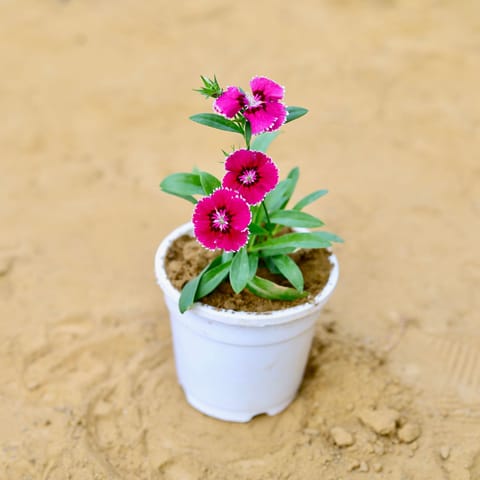
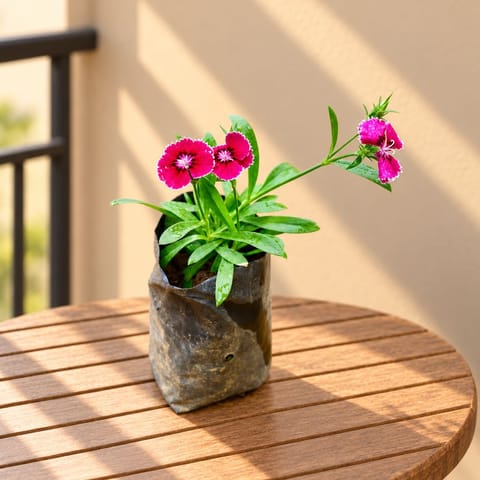
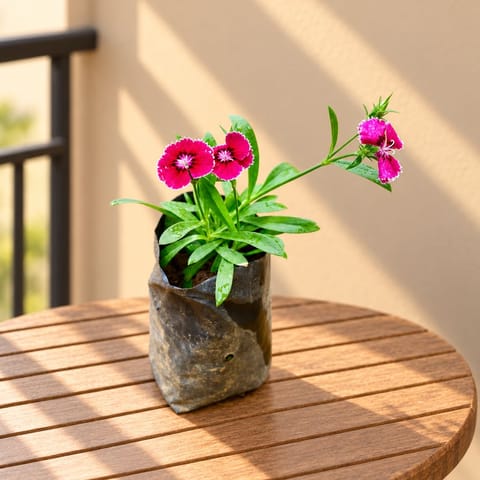
Some flowers catch your eye, while others make you stop and admire them. Dianthus (डायन्थस/ಡಯಾಂಥಸ್) does both! Known for its delicate, fringed petals and beautiful shades of pink, red, and white, Dianthus brings a cheerful touch to balconies, terraces, and home gardens.

Belonging to the Caryophyllaceae family, Dianthus includes popular flowering varieties such as Sweet William (Dianthus barbatus), carnations, and garden pinks. Many varieties also have a pleasant, clove-like fragrance that adds to their charm.

Looking to brighten up your balcony railing, windowsill, or garden pots? Dianthus is a lovely choice for sunny spaces, especially during the cooler growing season in many parts of India. With well-draining soil and proper care, these plants can reward you with beautiful, long-lasting blooms.

Explore Dianthus plants at Urvann and bring home colourful flowers to brighten your everyday spaces.

NOTE: Prices of the products may vary as per the location. Please check the final price based on your delivery address.  


Why 15 Lakh+ Plant Parents Trust Urvann

⭐ Rated 4.8/5 by 12,340+ verified buyers

✓ Free Next-Day Delivery – Available on orders placed by 7 PM in Delhi-NCR and Bangalore.

✓ Hassle-Free Replacement – 2-day replacement window if the plant arrives damaged or incorrect.

✓ Healthy, Well-Rooted Plants – Plants are grown at Urvann Farms before being delivered to customers.

✓ Multiple Sizes & Pots – Choose from 3, 4, 5, and 6-inch nursery bags and pots, as single plants or sets of 2.

✓ Complete Garden Care in One Place – Along with Dianthus plants, shop pots, fertilizers, tools, and other garden care products.


Quick Facts About Dianthus Plants

Detail Dianthus
Botanical name Dianthus spp. (family Caryophyllaceae)
Common names Pinks, China Pink (D. chinensis), Sweet William (D. barbatus), Carnation (D. caryophyllus)
Hindi / हिंदी डायन्थस (Dayanthas)
Kannada / ಕನ್ನಡ ಡಯಾಂಥಸ್ (Dayāṃthas)
Flowering season in India October to February in the plains
Sun 6+ hours of direct sun
Water When the top 1–2 cm of soil is dry
Best pot 6–8 inches with drainage holes
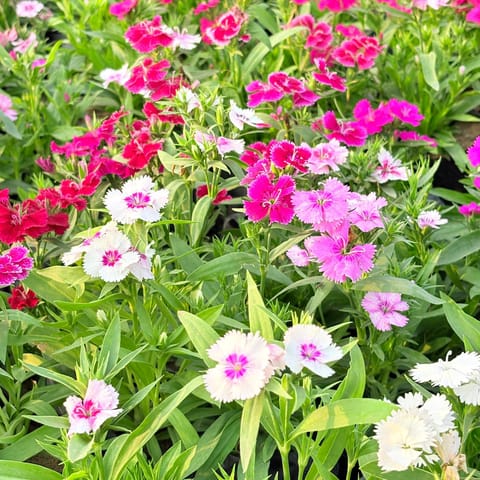
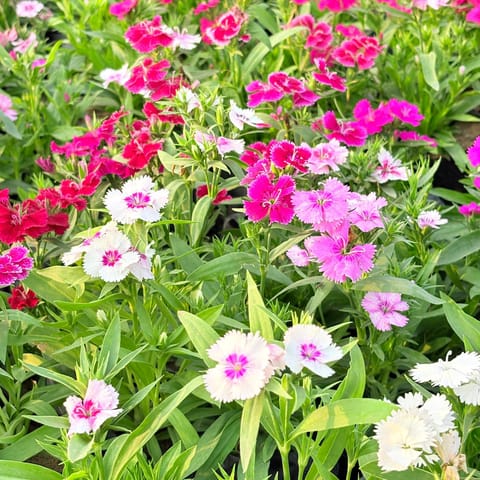
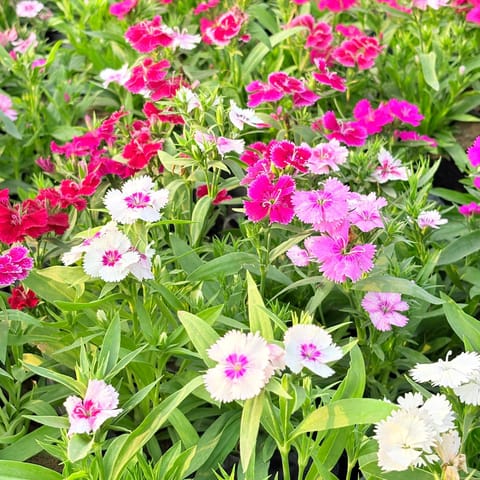
Colours Pink, red, white, purple, bicolour
Fragrance Light, clove-like
Life cycle Perennial in cool climates; usually grown as a winter plant in the Indian plains
Pets Mildly toxic if eaten, so keep away from cats and dogs


Popular Types of Dianthus Plants

The best variety of Dianthus to buy depends on your garden style, whether you want ground cover or cut flowers, and your local climate.

Type Botanical Name Hindi / हिंदी Kannada / ಕನ್ನಡ Height What It Looks Like Best For
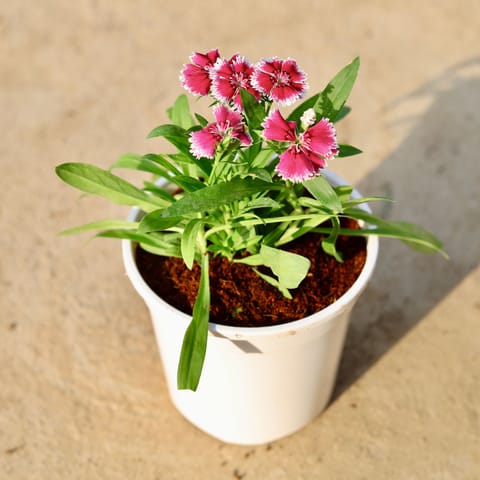
China Pink (Rainbow Pink) Dianthus Dianthus chinensis चाइना पिंक ಚೈನಾ ಪಿಂಕ್ 15–30 cm Single or semi-double flowers with fringed edges, in many colours Pots, balconies, winter beds. The most common type in nurseries
Sweet William Dianthus barbatus स्वीट विलियम ಸ್ವೀಟ್ ವಿಲಿಯಂ 30–60 cm Flat clusters of small flowers, often two-toned Garden borders, cut flowers
Carnation (Clove Pink) Dianthus caryophyllus कार्नेशन ಕಾರ್ನೇಷನ್ 30–60 cm Large, ruffled double blooms with a strong clove scent Bouquets, tall planters, gifting
Cottage Pink Dianthus plumarius कॉटेज पिंक ಕಾಟೇಜ್ ಪಿಂಕ್ 20–30 cm Very fragrant, frilly flowers over grey-green leaves Fragrance lovers, cooler hill climates
Maiden Pink Dianthus deltoides मेडन पिंक ಮೆಯ್ಡನ್ ಪಿಂಕ್ 10–20 cm Low mat of small flowers Ground cover, rockeries
Allwood Pink Dianthus × allwoodii अलवुड पिंक ಆಲ್ವುಡ್ ಪಿಂಕ್ 20–40 cm Carnation × pink hybrid, repeat-flowering, fragrant Longer bloom in pots

Note: Heights are typical ranges and can vary by cultivar.


Dianthus Colours: which one should I pick?

Colour Look Shop
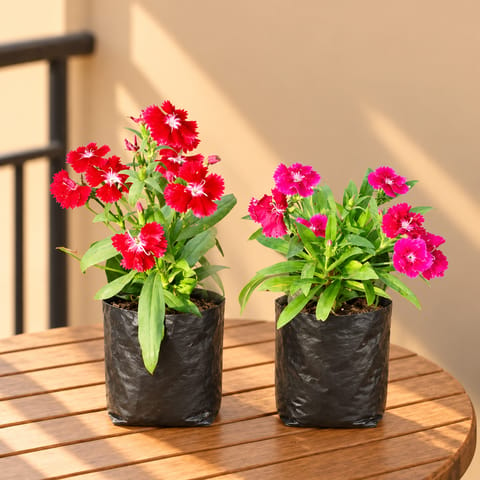
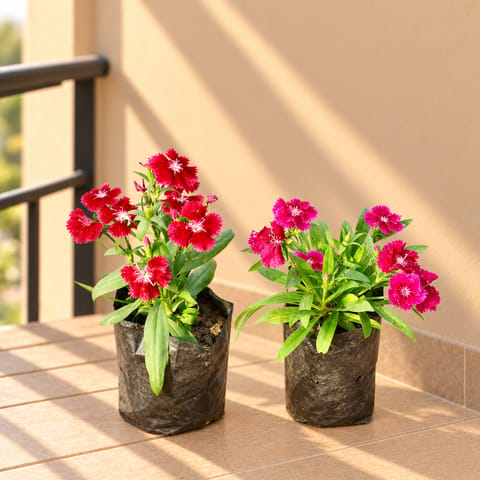
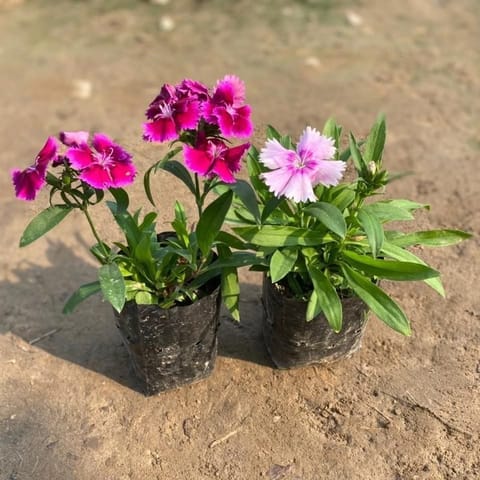
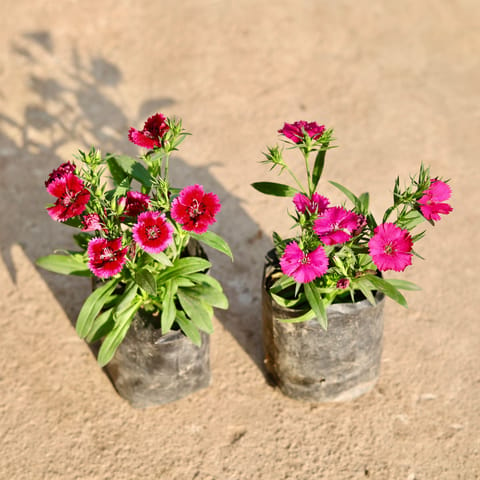
Pink and red mix Bold winter-bloom pairing for a sunny balcony Winter Bloom – Set of 2 Dianthus (Pink & Red) in 6 Inch Pot
Pink and white mix Soft, fresh look; good for gifting Set of 2 – Dianthus (Pink & White) in 6 Inch Pot
Any colour (surprise mix) Lowest price; colours include pink, red, white and purple Dianthus (Any Colour) in 4 Inch Nursery Pot
Dianthus (any colour) in 5 Inch Nursery Pot
Dianthus (any colour) in 6 Inch Premium Plastic Pot (any colour)
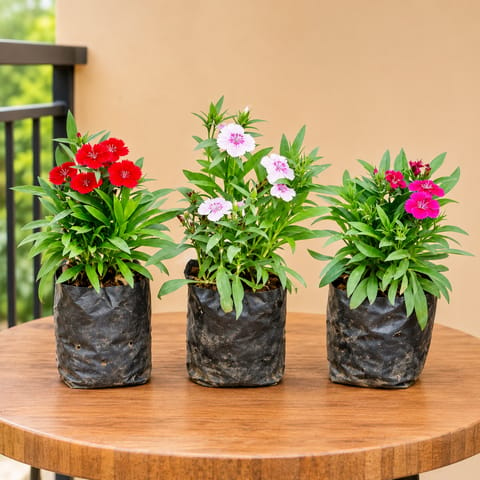
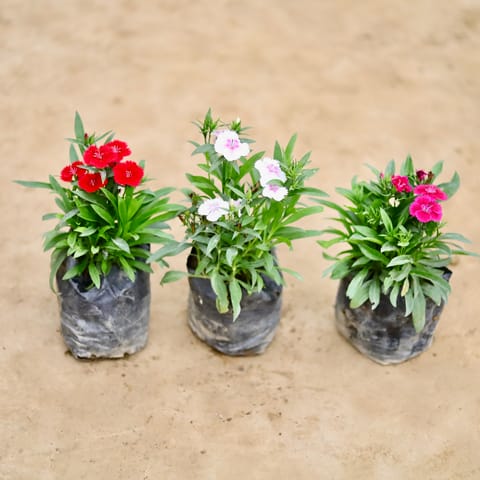
Set of 3 - Dianthus (Red, White, Light Pink) Best-reviewed value set Set of 3 - Dianthus (Red, White, Light Pink) in 4 Inch Premium Square Plastic Pot (any colour)
Dianthus with other flowers Mixed winter colour Marigold, Dianthus & Gomphrena Set of 3
Set of 3 - Dianthus, Portulaca Moss Rose & Petunia (any colour)
Set of 4 - Petunia, Celosia / Cockscomb, Portulaca Moss Rose & Dianthus (any colour)
Set of 3 - Dianthus, Zinnia & Gazania (Any Colour)

Note: These are just a few of the products we offer. Explore our collection to discover more dianthus plants and products that are currently in stock and available to order.


Why Should I Grow Dianthus Plants

If you love flowering plants that bring colour, fragrance, and a little charm to your garden, Dianthus deserves a spot in your collection. Here's why these cheerful blooms are worth growing:

1. Beautiful Colours and Frilly Petals

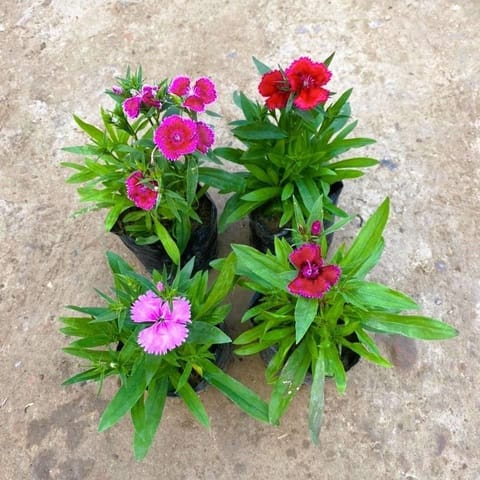
Dianthus flowers are hard to miss! They come in lovely shades of pink, red, white, purple, and even eye-catching bi-colour combinations, adding splashes of colour to balconies, window boxes, and garden beds.

2. A Lovely Fragrance

Unlike many flowering plants, Dianthus plants aren't just about good looks. Varieties, such as Cottage Pinks (कॉटेज पिंक / ಕಾಟೇಜ್ ಪಿಂಕ್ಸ್) and Fragrant Carnations (सुगंधित कार्नेशन / ಪರಿಮಳಯುಕ್ತ ಕಾರ್ನೇಷನ್), are known for their lovely, spicy fragrance, similar to cloves. You can also explore scented Sweet William (स्वीट विलियम / ಸ್ವೀಟ್ ವಿಲಿಯಂ) varieties. 

3. Perfect for Winter Gardens

Dianthus is a popular cool-season flowering plant in India. It grows well during the winter months when given enough sunlight and proper watering, making it a wonderful choice for adding colour to your seasonal garden.

4. Great for Pots and Small Spaces

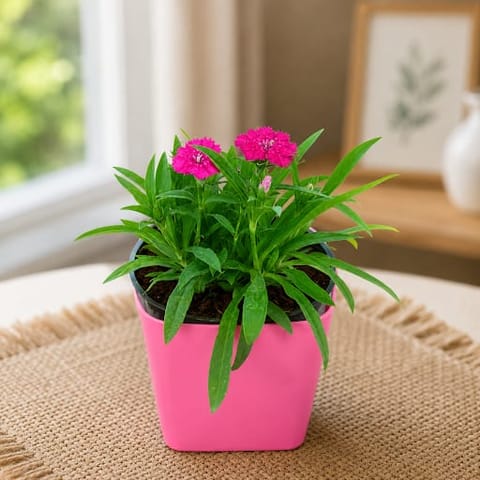
Don't have a large garden? No problem! Dianthus plants grow in compact, bushy forms and look lovely in balcony pots, railing planters, window boxes, and small garden corners.

5. Easy to Grow and Maintain

Dianthus plants are a breeze to care for and grow! Just find them a sunny spot, make sure they get enough water, and you'll be rewarded with their cheerful blooms. They truly are a gardener’s best friend, offering vibrant flowers and lasting beauty all season long.


When to Plant and Buy Dianthus in India

Month What to do
Sept–Oct Sow Dianthus plant seeds, or start planting nursery saplings as the heat eases
Oct–Feb Main flowering season; buy ready-to-bloom plants
Mar–Apr Dianthus flowering slows; give afternoon shade
May–Aug Peak heat; most plants in the plains decline. Plant fresh next season


Care Tips for Dianthus Plants

The Dianthus flower season in India lasts from October to late February. Here are some essential care tips to ensure you get the most out of your Dianthus plants.

Care factor How to care for Dianthus plants
Sunlight Provide at least hours of direct sunlight daily to Dianthus plants. Adequate sunlight keeps stems sturdy and encourages heavy flowering.
Soil Use a well-draining, neutral-to-slightly alkaline or acidic soil mix (ideally around pH 6.5–7.5). A mix of garden soil, cocopeat, and vermicompost works well for potted Dianthus plants.
Watering Keep the soil moderately moist, especially during the active growing season for Dianthus. Allow the top layer of soil to dry out completely between waterings to prevent root rot and "wet feet".
Fertilising Add balanced organic fertiliser or vermicompost every 2–4 weeks during active growth. Avoid excess nitrogen feeds right as the dianthus plant starts flowering, as it promotes foliage over blooms.
Pruning and deadheading Regularly snip off spent or dead dianthus flowers (deadheading) to stimulate continuous blooms and maintain a tidy shape.
Pest control Watch for aphids, thrips, and spider mites. Spraying the dianthus foliage with neem oil or insecticidal soap every 1 to 2 weeks helps keep pests away.
Placement Grow Dianthus outdoors in a bright, well-ventilated spot. These plants need plenty of sunlight and good air circulation, so they generally do not thrive indoors.


Frequently Asked Questions (FAQs) About Dianthus Plants

1. How long does it take for Dianthus seeds to germinate?

If you plant from seeds, the Dianthus sapling will typically germinate in 7 to 14 days (often within 10 to 12 days under ideal conditions).

2. What pests and diseases are frequently found in Dianthus plants?

Aphids, spider mites, and whiteflies commonly affect Dianthus flowering plants.

3. Is it possible to grow Dianthus plants in pots?

Dianthus grows comfortably in pots and planters. However, you may need to fertilise it more in pots.

4. When is the ideal time to sow Dianthus seeds?

Sow Dianthus seeds during the monsoons in the last week of August so the plant can start flowering by October.

5. Is it feasible to propagate Dianthus plants using cuttings?

Yes, although getting new saplings from the nursery or growing from seed is better, you can propagate Dianthus through stem cuttings.

6. How long do Dianthus blooms last?

Individual Dianthus blooms last for 10 to 19 days, while the overall plant can bloom continuously for several weeks to several months (from spring through early summer, with intermittent reblooming into autumn if properly cared for).

7. Can Dianthus plants tolerate heat?

Dianthus plants can tolerate moderate warmth and full sunlight, but most varieties struggle in intense summer heat. When temperatures rise above 29–32°C (85–90°F), they may stop flowering, become stressed, or enter dormancy. In warmer parts of India, provide afternoon shade and avoid exposing them to harsh midday sun.

9. Are Dianthus plants drought-tolerant?

Yes, Dianthus plants (commonly known as pinks, carnations, or Sweet William) are drought-tolerant. However, young or newly planted Dianthus need regular watering to develop healthy roots. Once mature, they can handle short dry spells, but they bloom better with moderate, consistent moisture. Make sure you grow them in well-drained soil, as excess water and soggy roots can lead to root rot and fungal problems. A sunny spot, occasional watering, and proper drainage will help your Dianthus plants stay healthy and produce beautiful blooms.

10. When is the best time to fertilise my Dianthus Plant?

The best time to fertilize a Dianthus plant is in early spring as new growth begins, followed by light, periodic feedings every 4 to 6 weeks (or every 10 to 15 days if using a weak liquid feed) throughout the active growing and blooming season.

11. How much water do my Dianthus plants need?

Make sure to water your Dianthus plant when the top 1–2 cm of soil feels dry and a bit crumbly. If you are not quite sure, just gently poke your finger into the soil to check for moisture! Since this plant thrives in cooler weather, it’s best to give it a little less water in the winter to keep its roots happy and healthy. Water the soil, not the leaves or flowers, to avoid fungus. Dianthus tolerates a short dry spell but not soggy soil.

12. Do Dianthus like sun or shade?

Yes, Dianthus is a sun-loving plant that thrives in bright sunlight and requires at least 6 to 7 hours daily. It flourishes in winter in North India, when temperatures are chilly and dry.

13. Which type of soil is best for growing the Dianthus Plant?

For healthy Dianthus plants, use a well-draining, nutrient-rich soil mix. A good recipe includes:

14. How can I troubleshoot common problems with Dianthus plants?

Common Dianthus problems include yellow leaves from overwatering, weak stems from insufficient sunlight, and fewer flowers from low light or excess nitrogen. Aphids and spider mites can also damage leaves, causing curling, stickiness, or fine webbing. 

15. डायन्थस के पौधे को कितनी धूप चाहिए?

डायन्थस को रोज़ाना 6–8 घंटे सीधी धूप की जरूरत होती है। पर्याप्त धूप मिलने से पौधे में ज्यादा फूल खिलते हैं।

16. क्या डायन्थस के फूलों में खुशबू होती है?

कुछ डायन्थस किस्मों, जैसे क्लोव पिंक और फ्रेग्रेंट कार्नेशन, में लौंग जैसी हल्की मीठी और मसालेदार खुशबू होती है। हर किस्म सुगंधित नहीं होती।

17. ಡಯಾಂಥಸ್ ಗಿಡವನ್ನು ಯಾವಾಗ ನೆಡಬೇಕು?

ಉತ್ತರ ಭಾರತದ ಸಮತಟ್ಟಾದ ಪ್ರದೇಶಗಳಲ್ಲಿ ಸೆಪ್ಟೆಂಬರ್‌ನಿಂದ ನವೆಂಬರ್‌ವರೆಗೆ ಡಯಾಂಥಸ್ ಗಿಡವನ್ನು ನೆಡುವುದು ಉತ್ತಮ. ಈ ಸಮಯದಲ್ಲಿ ನೆಟ್ಟರೆ ಚಳಿಗಾಲದಲ್ಲಿ ಚೆನ್ನಾಗಿ ಹೂ ಬಿಡುತ್ತದೆ. 

18. ಡಯಾಂಥಸ್ ಗಿಡದಲ್ಲಿ ಯಾವಾಗ ಹೂಗಳು ಬಿಡುತ್ತವೆ?

ಭಾರತದ ಅನೇಕ ಸಮತಟ್ಟಾದ ಪ್ರದೇಶಗಳಲ್ಲಿ ಡಯಾಂಥಸ್ ಗಿಡವು ಅಕ್ಟೋಬರ್‌ನಿಂದ ಫೆಬ್ರವರಿವರೆಗೆ ಹೂ ಬಿಡುತ್ತದೆ. ಹವಾಮಾನ ಮತ್ತು ಗಿಡದ ತಳಿಗೆ ಅನುಗುಣವಾಗಿ ಹೂ ಬಿಡುವ ಸಮಯ ಬದಲಾಗಬಹುದು.

19. Will Dianthus grow back every year?

Dianthus can grow back every year if you choose a perennial variety such as Garden Pinks (Dianthus plumarius), and some hardy hybrids can return every year for several seasons when grown in suitable conditions. However, some varieties are biennial or grown as annuals such as Chinese Pinks (Dianthus chinensis), so they may not return after flowering.

20. In which month does Dianthus flower in India?

Dianthus is mainly grown as a winter-flowering plant, but its flowering period can vary slightly with the climate. For instance, in Delhi NCR, it generally flowers from October to February, with peak blooms from November to January. Plant it between September and November for the best results. In Bangalore, Dianthus generally flowers from November to February. The city's milder climate can support flowering for a longer period when temperatures remain favourable.

21. What should I not plant with Dianthus? 

Avoid plants that want shade, constant moisture or rich, soggy soil, such as ferns, hostas, impatiens and caladiums. Their watering needs clash with Dianthus, which dislikes wet roots. Also avoid tall, dense plants that shade it or crowd its airflow. Good companions with similar needs are petunia, marigold and gomphrena.

22. Where is the best place to plant Dianthus? 

Pick the sunniest, most open spot: a south-facing or open balcony, a terrace, a windowsill with direct sun, or the front edge of a garden bed. The spot should have good airflow and drainage, with no standing water. Use a gritty mix of garden soil, cocopeat and vermicompost.

23. Can Dianthus grow in pots? 

Yes. Use a 6–8 inch pot with drainage holes and a light, well-drained mix. Good starting points are a 6-inch pot set or a 4-inch bag set of 3, with a Planters pot.


Showing 24 of 380 products
Today's Deal
Dianthus (any colour) in 4 Inch Nursery Bag

Some flowers catch your eye, while others make you stop and admire them. Dianthus (डायन्थस/ಡಯಾಂಥಸ್) does both! Known for its delicate, fringed petals and beautiful shades of pink, red, and white, Dianthus brings a cheerful touch to balconies, terraces, and home gardens.

Belonging to the Caryophyllaceae family, Dianthus includes popular flowering varieties such as Sweet William (Dianthus barbatus), carnations, and garden pinks. Many varieties also have a pleasant, clove-like fragrance that adds to their charm.

Looking to brighten up your balcony railing, windowsill, or garden pots? Dianthus is a lovely choice for sunny spaces, especially during the cooler growing season in many parts of India. With well-draining soil and proper care, these plants can reward you with beautiful, long-lasting blooms.

Explore Dianthus plants at Urvann and bring home colourful flowers to brighten your everyday spaces.

NOTE: Prices of the products may vary as per the location. Please check the final price based on your delivery address.  


Why 15 Lakh+ Plant Parents Trust Urvann

⭐ Rated 4.8/5 by 12,340+ verified buyers

✓ Free Next-Day Delivery – Available on orders placed by 7 PM in Delhi-NCR and Bangalore.

✓ Hassle-Free Replacement – 2-day replacement window if the plant arrives damaged or incorrect.

✓ Healthy, Well-Rooted Plants – Plants are grown at Urvann Farms before being delivered to customers.

✓ Multiple Sizes & Pots – Choose from 3, 4, 5, and 6-inch nursery bags and pots, as single plants or sets of 2.

✓ Complete Garden Care in One Place – Along with Dianthus plants, shop pots, fertilizers, tools, and other garden care products.


Quick Facts About Dianthus Plants

Detail Dianthus
Botanical name Dianthus spp. (family Caryophyllaceae)
Common names Pinks, China Pink (D. chinensis), Sweet William (D. barbatus), Carnation (D. caryophyllus)
Hindi / हिंदी डायन्थस (Dayanthas)
Kannada / ಕನ್ನಡ ಡಯಾಂಥಸ್ (Dayāṃthas)
Flowering season in India October to February in the plains
Sun 6+ hours of direct sun
Water When the top 1–2 cm of soil is dry
Best pot 6–8 inches with drainage holes
Colours Pink, red, white, purple, bicolour
Fragrance Light, clove-like
Life cycle Perennial in cool climates; usually grown as a winter plant in the Indian plains
Pets Mildly toxic if eaten, so keep away from cats and dogs


Popular Types of Dianthus Plants

The best variety of Dianthus to buy depends on your garden style, whether you want ground cover or cut flowers, and your local climate.

Type Botanical Name Hindi / हिंदी Kannada / ಕನ್ನಡ Height What It Looks Like Best For
China Pink (Rainbow Pink) Dianthus Dianthus chinensis चाइना पिंक ಚೈನಾ ಪಿಂಕ್ 15–30 cm Single or semi-double flowers with fringed edges, in many colours Pots, balconies, winter beds. The most common type in nurseries
Sweet William Dianthus barbatus स्वीट विलियम ಸ್ವೀಟ್ ವಿಲಿಯಂ 30–60 cm Flat clusters of small flowers, often two-toned Garden borders, cut flowers
Carnation (Clove Pink) Dianthus caryophyllus कार्नेशन ಕಾರ್ನೇಷನ್ 30–60 cm Large, ruffled double blooms with a strong clove scent Bouquets, tall planters, gifting
Cottage Pink Dianthus plumarius कॉटेज पिंक ಕಾಟೇಜ್ ಪಿಂಕ್ 20–30 cm Very fragrant, frilly flowers over grey-green leaves Fragrance lovers, cooler hill climates
Maiden Pink Dianthus deltoides मेडन पिंक ಮೆಯ್ಡನ್ ಪಿಂಕ್ 10–20 cm Low mat of small flowers Ground cover, rockeries
Allwood Pink Dianthus × allwoodii अलवुड पिंक ಆಲ್ವುಡ್ ಪಿಂಕ್ 20–40 cm Carnation × pink hybrid, repeat-flowering, fragrant Longer bloom in pots

Note: Heights are typical ranges and can vary by cultivar.


Dianthus Colours: which one should I pick?

Colour Look Shop
Pink and red mix Bold winter-bloom pairing for a sunny balcony Winter Bloom – Set of 2 Dianthus (Pink & Red) in 6 Inch Pot
Pink and white mix Soft, fresh look; good for gifting Set of 2 – Dianthus (Pink & White) in 6 Inch Pot
Any colour (surprise mix) Lowest price; colours include pink, red, white and purple Dianthus (Any Colour) in 4 Inch Nursery Pot
Dianthus (any colour) in 5 Inch Nursery Pot
Dianthus (any colour) in 6 Inch Premium Plastic Pot (any colour)
Set of 3 - Dianthus (Red, White, Light Pink) Best-reviewed value set Set of 3 - Dianthus (Red, White, Light Pink) in 4 Inch Premium Square Plastic Pot (any colour)
Dianthus with other flowers Mixed winter colour Marigold, Dianthus & Gomphrena Set of 3
Set of 3 - Dianthus, Portulaca Moss Rose & Petunia (any colour)
Set of 4 - Petunia, Celosia / Cockscomb, Portulaca Moss Rose & Dianthus (any colour)
Set of 3 - Dianthus, Zinnia & Gazania (Any Colour)

Note: These are just a few of the products we offer. Explore our collection to discover more dianthus plants and products that are currently in stock and available to order.


Why Should I Grow Dianthus Plants

If you love flowering plants that bring colour, fragrance, and a little charm to your garden, Dianthus deserves a spot in your collection. Here's why these cheerful blooms are worth growing:

1. Beautiful Colours and Frilly Petals

Dianthus flowers are hard to miss! They come in lovely shades of pink, red, white, purple, and even eye-catching bi-colour combinations, adding splashes of colour to balconies, window boxes, and garden beds.

2. A Lovely Fragrance

Unlike many flowering plants, Dianthus plants aren't just about good looks. Varieties, such as Cottage Pinks (कॉटेज पिंक / ಕಾಟೇಜ್ ಪಿಂಕ್ಸ್) and Fragrant Carnations (सुगंधित कार्नेशन / ಪರಿಮಳಯುಕ್ತ ಕಾರ್ನೇಷನ್), are known for their lovely, spicy fragrance, similar to cloves. You can also explore scented Sweet William (स्वीट विलियम / ಸ್ವೀಟ್ ವಿಲಿಯಂ) varieties. 

3. Perfect for Winter Gardens

Dianthus is a popular cool-season flowering plant in India. It grows well during the winter months when given enough sunlight and proper watering, making it a wonderful choice for adding colour to your seasonal garden.

4. Great for Pots and Small Spaces

Don't have a large garden? No problem! Dianthus plants grow in compact, bushy forms and look lovely in balcony pots, railing planters, window boxes, and small garden corners.

5. Easy to Grow and Maintain

Dianthus plants are a breeze to care for and grow! Just find them a sunny spot, make sure they get enough water, and you'll be rewarded with their cheerful blooms. They truly are a gardener’s best friend, offering vibrant flowers and lasting beauty all season long.


When to Plant and Buy Dianthus in India

Month What to do
Sept–Oct Sow Dianthus plant seeds, or start planting nursery saplings as the heat eases
Oct–Feb Main flowering season; buy ready-to-bloom plants
Mar–Apr Dianthus flowering slows; give afternoon shade
May–Aug Peak heat; most plants in the plains decline. Plant fresh next season


Care Tips for Dianthus Plants

The Dianthus flower season in India lasts from October to late February. Here are some essential care tips to ensure you get the most out of your Dianthus plants.

Care factor How to care for Dianthus plants
Sunlight Provide at least hours of direct sunlight daily to Dianthus plants. Adequate sunlight keeps stems sturdy and encourages heavy flowering.
Soil Use a well-draining, neutral-to-slightly alkaline or acidic soil mix (ideally around pH 6.5–7.5). A mix of garden soil, cocopeat, and vermicompost works well for potted Dianthus plants.
Watering Keep the soil moderately moist, especially during the active growing season for Dianthus. Allow the top layer of soil to dry out completely between waterings to prevent root rot and "wet feet".
Fertilising Add balanced organic fertiliser or vermicompost every 2–4 weeks during active growth. Avoid excess nitrogen feeds right as the dianthus plant starts flowering, as it promotes foliage over blooms.
Pruning and deadheading Regularly snip off spent or dead dianthus flowers (deadheading) to stimulate continuous blooms and maintain a tidy shape.
Pest control Watch for aphids, thrips, and spider mites. Spraying the dianthus foliage with neem oil or insecticidal soap every 1 to 2 weeks helps keep pests away.
Placement Grow Dianthus outdoors in a bright, well-ventilated spot. These plants need plenty of sunlight and good air circulation, so they generally do not thrive indoors.


Frequently Asked Questions (FAQs) About Dianthus Plants

1. How long does it take for Dianthus seeds to germinate?

If you plant from seeds, the Dianthus sapling will typically germinate in 7 to 14 days (often within 10 to 12 days under ideal conditions).

2. What pests and diseases are frequently found in Dianthus plants?

Aphids, spider mites, and whiteflies commonly affect Dianthus flowering plants.

3. Is it possible to grow Dianthus plants in pots?

Dianthus grows comfortably in pots and planters. However, you may need to fertilise it more in pots.

4. When is the ideal time to sow Dianthus seeds?

Sow Dianthus seeds during the monsoons in the last week of August so the plant can start flowering by October.

5. Is it feasible to propagate Dianthus plants using cuttings?

Yes, although getting new saplings from the nursery or growing from seed is better, you can propagate Dianthus through stem cuttings.

6. How long do Dianthus blooms last?

Individual Dianthus blooms last for 10 to 19 days, while the overall plant can bloom continuously for several weeks to several months (from spring through early summer, with intermittent reblooming into autumn if properly cared for).

7. Can Dianthus plants tolerate heat?

Dianthus plants can tolerate moderate warmth and full sunlight, but most varieties struggle in intense summer heat. When temperatures rise above 29–32°C (85–90°F), they may stop flowering, become stressed, or enter dormancy. In warmer parts of India, provide afternoon shade and avoid exposing them to harsh midday sun.

9. Are Dianthus plants drought-tolerant?

Yes, Dianthus plants (commonly known as pinks, carnations, or Sweet William) are drought-tolerant. However, young or newly planted Dianthus need regular watering to develop healthy roots. Once mature, they can handle short dry spells, but they bloom better with moderate, consistent moisture. Make sure you grow them in well-drained soil, as excess water and soggy roots can lead to root rot and fungal problems. A sunny spot, occasional watering, and proper drainage will help your Dianthus plants stay healthy and produce beautiful blooms.

10. When is the best time to fertilise my Dianthus Plant?

The best time to fertilize a Dianthus plant is in early spring as new growth begins, followed by light, periodic feedings every 4 to 6 weeks (or every 10 to 15 days if using a weak liquid feed) throughout the active growing and blooming season.

11. How much water do my Dianthus plants need?

Make sure to water your Dianthus plant when the top 1–2 cm of soil feels dry and a bit crumbly. If you are not quite sure, just gently poke your finger into the soil to check for moisture! Since this plant thrives in cooler weather, it’s best to give it a little less water in the winter to keep its roots happy and healthy. Water the soil, not the leaves or flowers, to avoid fungus. Dianthus tolerates a short dry spell but not soggy soil.

12. Do Dianthus like sun or shade?

Yes, Dianthus is a sun-loving plant that thrives in bright sunlight and requires at least 6 to 7 hours daily. It flourishes in winter in North India, when temperatures are chilly and dry.

13. Which type of soil is best for growing the Dianthus Plant?

For healthy Dianthus plants, use a well-draining, nutrient-rich soil mix. A good recipe includes:

14. How can I troubleshoot common problems with Dianthus plants?

Common Dianthus problems include yellow leaves from overwatering, weak stems from insufficient sunlight, and fewer flowers from low light or excess nitrogen. Aphids and spider mites can also damage leaves, causing curling, stickiness, or fine webbing. 

15. डायन्थस के पौधे को कितनी धूप चाहिए?

डायन्थस को रोज़ाना 6–8 घंटे सीधी धूप की जरूरत होती है। पर्याप्त धूप मिलने से पौधे में ज्यादा फूल खिलते हैं।

16. क्या डायन्थस के फूलों में खुशबू होती है?

कुछ डायन्थस किस्मों, जैसे क्लोव पिंक और फ्रेग्रेंट कार्नेशन, में लौंग जैसी हल्की मीठी और मसालेदार खुशबू होती है। हर किस्म सुगंधित नहीं होती।

17. ಡಯಾಂಥಸ್ ಗಿಡವನ್ನು ಯಾವಾಗ ನೆಡಬೇಕು?

ಉತ್ತರ ಭಾರತದ ಸಮತಟ್ಟಾದ ಪ್ರದೇಶಗಳಲ್ಲಿ ಸೆಪ್ಟೆಂಬರ್‌ನಿಂದ ನವೆಂಬರ್‌ವರೆಗೆ ಡಯಾಂಥಸ್ ಗಿಡವನ್ನು ನೆಡುವುದು ಉತ್ತಮ. ಈ ಸಮಯದಲ್ಲಿ ನೆಟ್ಟರೆ ಚಳಿಗಾಲದಲ್ಲಿ ಚೆನ್ನಾಗಿ ಹೂ ಬಿಡುತ್ತದೆ. 

18. ಡಯಾಂಥಸ್ ಗಿಡದಲ್ಲಿ ಯಾವಾಗ ಹೂಗಳು ಬಿಡುತ್ತವೆ?

ಭಾರತದ ಅನೇಕ ಸಮತಟ್ಟಾದ ಪ್ರದೇಶಗಳಲ್ಲಿ ಡಯಾಂಥಸ್ ಗಿಡವು ಅಕ್ಟೋಬರ್‌ನಿಂದ ಫೆಬ್ರವರಿವರೆಗೆ ಹೂ ಬಿಡುತ್ತದೆ. ಹವಾಮಾನ ಮತ್ತು ಗಿಡದ ತಳಿಗೆ ಅನುಗುಣವಾಗಿ ಹೂ ಬಿಡುವ ಸಮಯ ಬದಲಾಗಬಹುದು.

19. Will Dianthus grow back every year?

Dianthus can grow back every year if you choose a perennial variety such as Garden Pinks (Dianthus plumarius), and some hardy hybrids can return every year for several seasons when grown in suitable conditions. However, some varieties are biennial or grown as annuals such as Chinese Pinks (Dianthus chinensis), so they may not return after flowering.

20. In which month does Dianthus flower in India?

Dianthus is mainly grown as a winter-flowering plant, but its flowering period can vary slightly with the climate. For instance, in Delhi NCR, it generally flowers from October to February, with peak blooms from November to January. Plant it between September and November for the best results. In Bangalore, Dianthus generally flowers from November to February. The city's milder climate can support flowering for a longer period when temperatures remain favourable.

21. What should I not plant with Dianthus? 

Avoid plants that want shade, constant moisture or rich, soggy soil, such as ferns, hostas, impatiens and caladiums. Their watering needs clash with Dianthus, which dislikes wet roots. Also avoid tall, dense plants that shade it or crowd its airflow. Good companions with similar needs are petunia, marigold and gomphrena.

22. Where is the best place to plant Dianthus? 

Pick the sunniest, most open spot: a south-facing or open balcony, a terrace, a windowsill with direct sun, or the front edge of a garden bed. The spot should have good airflow and drainage, with no standing water. Use a gritty mix of garden soil, cocopeat and vermicompost.

23. Can Dianthus grow in pots? 

Yes. Use a 6–8 inch pot with drainage holes and a light, well-drained mix. Good starting points are a 6-inch pot set or a 4-inch bag set of 3, with a Planters pot.

Load More