
UrvannUrvann is your one-stop online nursery for plants, planters, gardening accessories, and tools. Order fresh plants and get free home delivery on the next day!https://www.urvann.com/s/6176774ef575bbd2b3331c8a/61db06dd744e78df7592f6d9/final-logo-01-1-_cropped-1-480x480.png
E-176110060DelhiIN
Urvann
E-176Delhi, IN
+919599585773https://www.urvann.com/s/6176774ef575bbd2b3331c8a/61db06dd744e78df7592f6d9/final-logo-01-1-_cropped-1-480x480.png"[email protected]
Marigold Collection<p>The marigold, or the beloved Genda Phool as we know it across India, is celebrated in bloom. Its bright orange, golden yellow, and warm red petals have adorned every auspicious occasion in Indian households for centuries.</p> <p>Whether you are decorating your home for Diwali, making garlands for Durga Pooja, or simply want to bring cheerful colour to your garden, marigolds are the flowers that never disappoint and always deliver joy.</p> <p>At Urvann, you'll find a wide range of healthy, climate-tested marigold saplings delivered straight to your doorstep, ready to bring that festive colour home.</p> <div style="background: #f6eddc; border: 1px solid #e2c27b; padding: 15px 20px; border-radius: 8px; margin: 25px 0;"> <p><strong><b>NOTE</b>: <span style="font-weight: 400;">Prices of the products may vary as per the location. Please check the final price based on your delivery address.</span></strong></p> </div> <h2>Why 15 Lakh+ Plant Parents Trust Urvann&nbsp;</h2> <p><span style="font-weight: 400;">⭐ Rated 4.8/5 by 12,340+ verified buyers</span></p> <p><span style="font-weight: 400;">✓ </span><b>Free Next-Day Delivery &ndash; </b><span style="font-weight: 400;">Available on orders placed by 7 PM in Delhi-NCR and Bengalore.</span></p> <p><span style="font-weight: 400;">✓ </span><b>Pan India Deliveries &ndash;</b><span style="font-weight: 400;"> Delivery timelines vary by location.</span></p> <p><span style="font-weight: 400;">✓ </span><b>Hassle-Free Replacement &ndash;</b><span style="font-weight: 400;"> 2-day replacement window if the plant arrives damaged or incorrect.</span></p> <p><span style="font-weight: 400;">✓ </span><b>Well-Watered, Healthy Saplings &ndash; </b><span style="font-weight: 400;">Carefully nurtured in optimal growing conditions to produce abundant, colourful blooms.</span></p> <p><span style="font-weight: 400;">✓ </span><b>Multiple Sizes &amp; Pots &ndash;</b><span style="font-weight: 400;"> Choose from 3, 4, 5, 6, 7, and 8-inch nursery bags and pots, as single plants or sets of 2 and 3.</span></p> <p><span style="font-weight: 400;">✓ </span><b>Complete Garden Care in One Place &ndash;</b><span style="font-weight: 400;"> Along with marigolds, shop </span><a href="https://www.urvann.com/browse/planters-and-pots"><span style="font-weight: 400;">pots</span></a><span style="font-weight: 400;">, </span><a href="https://www.urvann.com/browse/fertilizers"><span style="font-weight: 400;">fertilizers</span></a><span style="font-weight: 400;">, </span><a href="https://www.urvann.com/browse/gardening-tools-and-equipment"><span style="font-weight: 400;">tools</span></a><span style="font-weight: 400;">, and other garden care products.</span></p> <h2><br />Is Marigold Native to India? Origin and Regional Names</h2> <p><span style="font-weight: 400;">Marigolds, scientifically known as Tagetes, are flowering plants originally native to Mexico and Central America. They were brought to India by Portuguese traders in the sixteenth century and quickly became so beloved that they are now considered quintessentially Indian flowers.</span><span style="font-weight: 400;"></span></p> <p><span style="font-weight: 400;">The Hindi name Genda Phool and regional names like Zendu in Marathi, Banthi in Telugu, and Samanthi in Tamil show how deeply these flowers have been embraced across the country.</span><span style="font-weight: 400;"></span></p> <p><span style="font-weight: 400;">They are available in many varieties, from small and compact French marigolds that grow perfectly in pots to large African marigolds with blooms that can reach up to five inches wide and look stunning as cut flowers for decorations.</span></p> <h2><br />Why Marigolds Are Essential and Auspicious in Indian Culture</h2> <p><span style="font-weight: 400;">In Indian culture, marigolds hold deep spiritual and cultural significance that goes far beyond their beauty.</span><span style="font-weight: 400;"></span></p> <p><span style="font-weight: 400;">During Diwali, marigold garlands and rangolis roll out the welcome mat for Goddess Lakshmi, inviting prosperity and good fortune. For Navratri and Durga Pooja, sunny yellow marigolds are offered to Goddess Durga, symbolising power, positivity, and the energy of the sun. In temples, marigolds are a daily favourite, believed to please deities and bring blessings. At weddings, marigolds are non-negotiable, with torans, mandaps, stages, and garlands all leaning heavily on these flowers. Festivals like Ugadi, Onam, and Pongal across South India also wouldn't look the same without them.</span><span style="font-weight: 400;"></span></p> <p><span style="font-weight: 400;">Their bright yellow and orange shades are believed to mirror the sun's energy and life force, and to ward off negativity and evil spirits. They last long, symbolising devotion and endurance, and when something grows this abundantly, it naturally becomes a symbol of prosperity too.</span></p> <h2><br />Why Marigolds Are Beginner-Friendly</h2> <ul> <li style="font-weight: 400;" aria-level="1"><b>Fast Germination: </b><span style="font-weight: 400;">Seeds germinate within five to seven days</span></li> <li style="font-weight: 400;" aria-level="1"><b>Quick Flowering:</b><span style="font-weight: 400;"> Plants begin flowering within eight to nine weeks of planting</span></li> <li style="font-weight: 400;" aria-level="1"><b>Adaptable:</b><span style="font-weight: 400;"> Grow well in most soil types as long as drainage is good</span></li> <li style="font-weight: 400;" aria-level="1"><b>Heat Tolerant: </b><span style="font-weight: 400;">Thrive in Indian summer temperatures up to forty degrees Celsius</span></li> <li style="font-weight: 400;" aria-level="1"><b>Low Water Needs:</b><span style="font-weight: 400;"> Established plants tolerate short dry spells</span></li> </ul> <h2><br />Marigold as a Natural Pest Repellent</h2> <p><span style="font-weight: 400;">Marigolds act as natural pest repellents and help protect other plants in your garden from harmful insects such as:&nbsp;</span></p> <ul> <li style="font-weight: 400;" aria-level="1"><b>Aphids:</b><span style="font-weight: 400;"> The strong scent keeps aphids away from nearby vegetables and roses.</span></li> <li style="font-weight: 400;" aria-level="1"><b>Nematodes: </b><span style="font-weight: 400;">Root secretions help reduce harmful nematode populations in soil.</span></li> <li style="font-weight: 400;" aria-level="1"><b>Whiteflies:</b><span style="font-weight: 400;"> Their strong scent may help discourage whiteflies from settling on nearby vegetable plants.</span></li> <li style="font-weight: 400;" aria-level="1"><b>Mosquitoes:</b><span style="font-weight: 400;"> The fragrance acts as a natural mosquito deterrent in garden areas.</span></li> </ul> <h3>Companion Planting Tips</h3> <ul> <li style="font-weight: 400;" aria-level="1"><span style="font-weight: 400;">Plant Marigolds around tomato plants to protect them from pests</span></li> <li style="font-weight: 400;" aria-level="1"><span style="font-weight: 400;">Intersperse with roses to keep aphids away</span></li> <li style="font-weight: 400;" aria-level="1"><span style="font-weight: 400;">Border vegetable gardens with marigolds for all-round protection</span></li> <li style="font-weight: 400;" aria-level="1"><span style="font-weight: 400;">Place near seating areas to naturally reduce mosquitoes</span></li> </ul> <div style="background: #f6eddc; border: 1px solid #e2c27b; padding: 15px 20px; border-radius: 8px; margin: 25px 0;"> <p><strong><b>Bonus Benefit: </b></strong>Marigolds attract beneficial pollinators like bees and butterflies to your garden, supporting overall garden health.</p> </div> <h2><br />Find Your Perfect Marigold: Complete Variety Guide</h2> <p>When you buy marigold saplings from Urvann, you can choose from various types, colours, and sizes for different needs. All product pages include real marigold plant images taken in Indian gardens.&nbsp;<span style="font-weight: 400;"></span></p> <div style="overflow-x: auto; margin: 25px 0;"> <table style="width: 100%; border-collapse: collapse; font-size: 15px; line-height: 1.6; border: 1px solid #e1e1e1;"> <thead> <tr style="background: #2b703a; color: #ffffff;"> <th style="padding: 12px; text-align: left; border: 1px solid #e1e1e1;">Variety Guide</th> <th style="padding: 12px; text-align: left; border: 1px solid #e1e1e1;">Bloom Size</th> <th style="padding: 12px; text-align: left; border: 1px solid #e1e1e1;">Plant Height</th> <th style="padding: 12px; text-align: left; border: 1px solid #e1e1e1;">Best For</th> <th style="padding: 12px; text-align: left; border: 1px solid #e1e1e1;">Colours Available</th> </tr> </thead> <tbody> <tr> <td style="padding: 12px; border: 1px solid #e1e1e1;">Marigold Red</td> <td style="padding: 12px; border: 1px solid #e1e1e1;">4 inches</td> <td style="padding: 12px; border: 1px solid #e1e1e1;">2-3 feet tall</td> <td style="padding: 12px; border: 1px solid #e1e1e1;">Cut flowers, large gardens, temple offerings, garlands</td> <td style="padding: 12px; border: 1px solid #e1e1e1;">Orange, Yellow, Multicolour</td> </tr> <tr style="background: #f7faf7;"> <td style="padding: 12px; border: 1px solid #e1e1e1;">Marigold (Any Colour)</td> <td style="padding: 12px; border: 1px solid #e1e1e1;">1-2 inches</td> <td style="padding: 12px; border: 1px solid #e1e1e1;">2-12 inches</td> <td style="padding: 12px; border: 1px solid #e1e1e1;">Pots, balconies, borders, small spaces, pest control</td> <td style="padding: 12px; border: 1px solid #e1e1e1;">Orange, Yellow, Red, Bicolour</td> </tr> <tr> <td style="padding: 12px; border: 1px solid #e1e1e1;">Multicolour Mix</td> <td style="padding: 12px; border: 1px solid #e1e1e1;">Varied</td> <td style="padding: 12px; border: 1px solid #e1e1e1;">Varied</td> <td style="padding: 12px; border: 1px solid #e1e1e1;">Colourful displays, festival decorations, variety gardens</td> <td style="padding: 12px; border: 1px solid #e1e1e1;">Orange, Yellow, Red mix</td> </tr> <tr style="background: #f7faf7;"> <td style="padding: 12px; border: 1px solid #e1e1e1;">Gift-Ready Marigold</td> <td style="padding: 12px; border: 1px solid #e1e1e1;">Varied</td> <td style="padding: 12px; border: 1px solid #e1e1e1;">Varied</td> <td style="padding: 12px; border: 1px solid #e1e1e1;">Gifting, doorstep pujas, premium single-pot displays</td> <td style="padding: 12px; border: 1px solid #e1e1e1;">Any Colour</td> </tr> </tbody> </table> </div> <h2><br />How to Grow and Care for Marigold Flowers</h2> <h3>Sunlight</h3> <p><span style="font-weight: 400;">Marigolds love the sun. Six to eight hours of direct sunlight gives you compact plants, bold colours, and loads of flowers. They'll survive on four to five hours, but blooms will be fewer. Deep shade leads to leggy plants and almost no flowers. Sunny balconies, terraces, rooftops, and open garden beds are ideal.</span></p> <h3>Watering</h3> <p><span style="font-weight: 400;">Keep the soil moist, not soggy. Water at the base of the plant and avoid wetting the flowers. In summer, water daily. In moderate weather, every two to three days is enough. During winter, water every three to four days. Always let excess water drain, and never leave pots standing in water. Morning watering works best.</span></p> <h3>Soil &amp; Pots</h3> <p><span style="font-weight: 400;">Use light, well-drained soil enriched with compost. Slightly acidic to neutral soil is perfect. For pots, choose containers at least nine to twelve inches deep with proper drainage holes. Terracotta pots are a bonus.</span></p> <h3>Feeding</h3> <p><span style="font-weight: 400;">Marigolds aren't heavy feeders, but regular light feeding means more and brighter blooms. Fertilize once a month with a well-balanced organic fertilizer with an NPK ratio of 10-10-10 during the growing season.</span></p> <h3>Deadheading</h3> <p><span style="font-weight: 400;">Find flowers that are fading, dry, or turning brown. Pinch or cut the flower stem just above the first set of healthy leaves or a new side shoot. Use your fingers for soft stems or sharp scissors or pruners for thicker stems. Check your plants every 2 to 3 days during peak summer flowering.&nbsp;</span></p> <h2><br />Frequently Asked Questions (FAQs)</h2> <h3>1. Can I grow Marigold flowers at home?</h3> <p><span style="font-weight: 400;">Yes, marigolds are perfect for home gardens and can be grown both in containers and directly in garden beds. They are ideal for borders, containers, and even balcony gardens. Choose pots or grow bags that are at least 9 to 12 inches wide and deep for container growing.</span></p> <h3>2. What is the best time to plant Marigolds in India?</h3> <p><span style="font-weight: 400;">In India, marigolds can be sown all year round; however, they are grown primarily in winter (October to February) and the rainy season (June to September). The optimum temperature range for growth is 18 to 20&deg;C. Seeds germinate best at temperatures ranging from 18 to 30&deg;C.</span></p> <h3>3. Do Marigold plants come back every year?&nbsp;</h3> <p><span style="font-weight: 400;">No, marigolds are annuals and complete their full life cycle in a single season, typically lasting four to six months. They won't regrow from the same roots next year. However, they self-seed easily, so letting a few spent blooms dry on the plant often gives you new marigolds the following season for free.</span></p> <h3>4. Is Marigold the same as calendula?&nbsp;</h3> <p><span style="font-weight: 400;">No. Marigold (Tagetes) and Calendula (Calendula officinalis) are different plants that share a common name but belong to different genera. Tagetes is the marigold used across India for Genda Phool garlands, festivals, and temple offerings, while Calendula is mainly grown abroad for its edible petals and use in skincare.</span></p> <h3>5. How long do Marigold plants bloom?</h3> <p><span style="font-weight: 400;">Marigolds don&rsquo;t believe in short-term commitments. Once they start flowering, they keep going for four to six months, almost continuously. In mild climates, they may even bloom longer. The trick is simple. Remove faded flowers every three to four days. This stops seed formation and pushes the plant to produce fresh blooms instead.</span></p> <h3>6. Do you deliver Marigold saplings across India?</h3> <p><span style="font-weight: 400;">Yes, we do. And we treat plant delivery like a VIP service. We ship healthy marigold saplings across India using eco-friendly packaging that maintains moisture during transit. Plants are packed carefully to avoid damage, and most pin codes enjoy free next-day delivery. Simply enter your pin code on the product page to check availability and delivery time.</span></p> <h3>7. Do Marigolds need full sun or shade?</h3> <p><span style="font-weight: 400;">Marigolds are sun lovers, no doubt about it. They grow best with six to eight hours of full sun every day. They can survive in partial shade, but fewer sun hours usually mean fewer flowers and leggy plants. If you&rsquo;re growing them on a balcony or terrace, place them where they get bright morning and afternoon sunlight.</span></p> <h3>8. How often should Marigolds be watered?</h3> <p><span style="font-weight: 400;">Water Marigolds once every two to three days, or whenever the top inch of soil feels dry. Reduce watering during winter or the rainy season.&nbsp;</span></p> <h3>9. Why are Marigold plants not flowering?</h3> <p><span style="font-weight: 400;">It may be due to the following reasons:&nbsp;</span></p> <ul> <li style="font-weight: 400;" aria-level="1"><span style="font-weight: 400;">Not enough sunlight.</span></li> <li style="font-weight: 400;" aria-level="1"><span style="font-weight: 400;">Too much nitrogen-rich fertilizer.</span></li> <li style="font-weight: 400;" aria-level="1"><span style="font-weight: 400;">Not removing old flowers regularly.</span></li> </ul> <p><span style="font-weight: 400;">Fix the sunlight, ease up on nitrogen, deadhead often, and if needed, switch to a bloom-boosting fertilizer.</span></p> <h3>10. Can Marigolds grow in pots or grow bags?</h3> <p><span style="font-weight: 400;">Yes, and they do exceptionally well. Choose pots or grow bags that are 9-12 inches deep with proper drainage holes. One plant per pot works best for healthy, bushy growth. Use a good-quality potting mix and ensure adequate airflow.</span></p> <h3>11. How long do Marigold plants live?</h3> <p><span style="font-weight: 400;">Marigolds are annual plants. They complete their life cycle in one season and typically live for 4-6 months. But during that time, they flower generously, making them one of the most rewarding seasonal plants you can grow.</span></p> <h3>12. Can you grow Marigolds from seeds at home?</h3> <p><span style="font-weight: 400;">Absolutely. Marigolds are one of the easiest flowers to grow from seeds. Sow seeds about half an inch deep, keep the soil lightly moist, and germination usually happens within 5-7 days. Seed-grown plants start flowering in about 40-50 days.</span></p> <h3>13. Are Marigold flowers edible or useful?</h3> <p><span style="font-weight: 400;">Indian marigolds are widely used for religious offerings, decorations, garlands, and festivals. While they are valued mainly for their vibrant flowers and cultural significance, they are not commonly grown as edible flowers. Use them primarily for decoration, पूजा, and adding colour to festive celebrations.</span></p> <h3>14. Which variety of Marigold is best?</h3> <p><span style="font-weight: 400;">It depends on your goal. African marigolds suit large gardens and cut-flower use with bigger blooms, while French marigolds are more compact and better for pots, balconies, and borders. For festival garlands and temple offerings, Marigold Red is the most traditional choice.</span></p> <h3>15. Where can I buy Marigold plants online?</h3> <p><span style="font-weight: 400;">You can buy healthy, climate-tested marigold saplings online from Urvann, with free next-day delivery in Delhi-NCR and Bengaluru, and doorstep delivery across India.&nbsp;</span></p> <h3>16. What should not be planted near Marigolds?</h3> <p><span style="font-weight: 400;">Marigolds are good companions for most plants, but they're best kept away from beans and cabbage-family vegetables like broccoli and cauliflower, as marigolds' natural compounds can slow their growth.</span></p>

Shop

Marigold Collection

The marigold, or the beloved Genda Phool as we know it across India, is celebrated in bloom. Its br...
The marigold, or the beloved Genda Phool as we know it across India, is celebrated in bloom. Its bright orange, golden yellow, and warm red petals have adorned every auspicious occasion in Indian households for centuries.

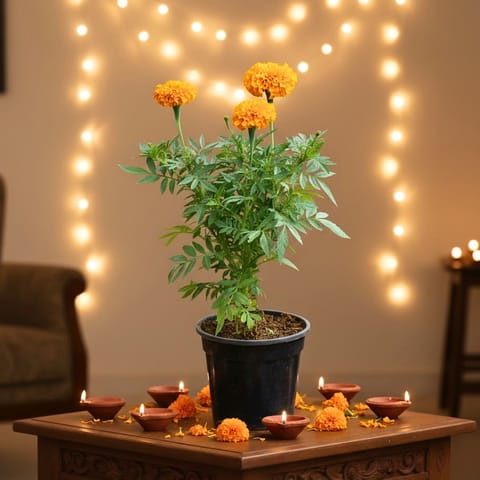
Whether you are decorating your home for Diwali, making garlands for Durga Pooja, or simply want to bring cheerful colour to your garden, marigolds are the flowers that never disappoint and always deliver joy.

At Urvann, you'll find a wide range of healthy, climate-tested marigold saplings delivered straight to your doorstep, ready to bring that festive colour home.

NOTE: Prices of the products may vary as per the location. Please check the final price based on your delivery address.

Why 15 Lakh+ Plant Parents Trust Urvann 

⭐ Rated 4.8/5 by 12,340+ verified buyers

✓ Free Next-Day Delivery – Available on orders placed by 7 PM in Delhi-NCR and Bengalore.

✓ Pan India Deliveries – Delivery timelines vary by location.

✓ Hassle-Free Replacement – 2-day replacement window if the plant arrives damaged or incorrect.

✓ Well-Watered, Healthy Saplings – Carefully nurtured in optimal growing conditions to produce abundant, colourful blooms.

✓ Multiple Sizes & Pots – Choose from 3, 4, 5, 6, 7, and 8-inch nursery bags and pots, as single plants or sets of 2 and 3.

✓ Complete Garden Care in One Place – Along with marigolds, shop pots, fertilizers, tools, and other garden care products.


Is Marigold Native to India? Origin and Regional Names

Marigolds, scientifically known as Tagetes, are flowering plants originally native to Mexico and Central America. They were brought to India by Portuguese traders in the sixteenth century and quickly became so beloved that they are now considered quintessentially Indian flowers.

The Hindi name Genda Phool and regional names like Zendu in Marathi, Banthi in Telugu, and Samanthi in Tamil show how deeply these flowers have been embraced across the country.

They are available in many varieties, from small and compact French marigolds that grow perfectly in pots to large African marigolds with blooms that can reach up to five inches wide and look stunning as cut flowers for decorations.


Why Marigolds Are Essential and Auspicious in Indian Culture

In Indian culture, marigolds hold deep spiritual and cultural significance that goes far beyond their beauty.

During Diwali, marigold garlands and rangolis roll out the welcome mat for Goddess Lakshmi, inviting prosperity and good fortune. For Navratri and Durga Pooja, sunny yellow marigolds are offered to Goddess Durga, symbolising power, positivity, and the energy of the sun. In temples, marigolds are a daily favourite, believed to please deities and bring blessings. At weddings, marigolds are non-negotiable, with torans, mandaps, stages, and garlands all leaning heavily on these flowers. Festivals like Ugadi, Onam, and Pongal across South India also wouldn't look the same without them.

Their bright yellow and orange shades are believed to mirror the sun's energy and life force, and to ward off negativity and evil spirits. They last long, symbolising devotion and endurance, and when something grows this abundantly, it naturally becomes a symbol of prosperity too.


Why Marigolds Are Beginner-Friendly

  • Fast Germination: Seeds germinate within five to seven days
  • Quick Flowering: Plants begin flowering within eight to nine weeks of planting
  • Adaptable: Grow well in most soil types as long as drainage is good
  • Heat Tolerant: Thrive in Indian summer temperatures up to forty degrees Celsius
  • Low Water Needs: Established plants tolerate short dry spells


Marigold as a Natural Pest Repellent

Marigolds act as natural pest repellents and help protect other plants in your garden from harmful insects such as: 

  • Aphids: The strong scent keeps aphids away from nearby vegetables and roses.
  • Nematodes: Root secretions help reduce harmful nematode populations in soil.
  • Whiteflies: Their strong scent may help discourage whiteflies from settling on nearby vegetable plants.
  • Mosquitoes: The fragrance acts as a natural mosquito deterrent in garden areas.

Companion Planting Tips

  • Plant Marigolds around tomato plants to protect them from pests
  • Intersperse with roses to keep aphids away
  • Border vegetable gardens with marigolds for all-round protection
  • Place near seating areas to naturally reduce mosquitoes

Bonus Benefit: Marigolds attract beneficial pollinators like bees and butterflies to your garden, supporting overall garden health.


Find Your Perfect Marigold: Complete Variety Guide

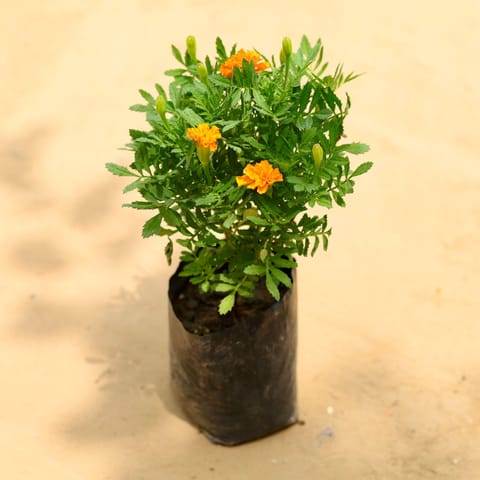
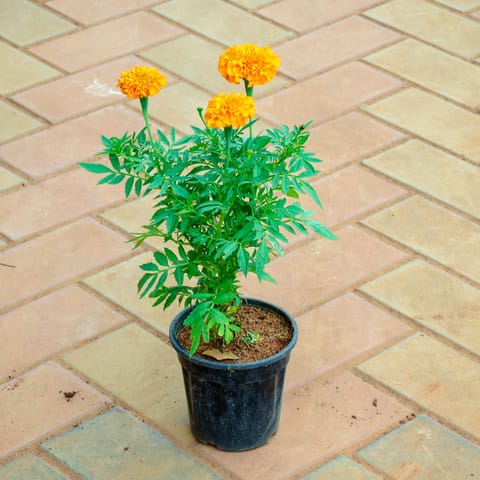
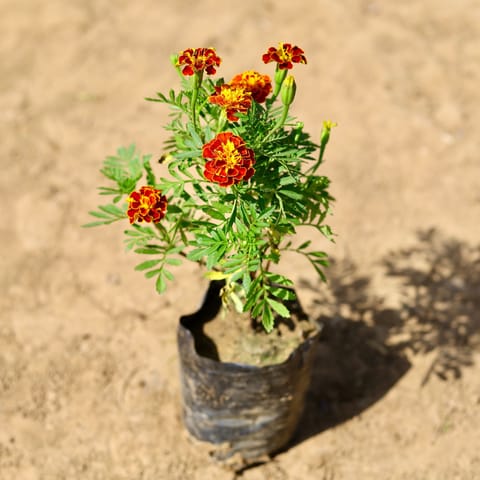
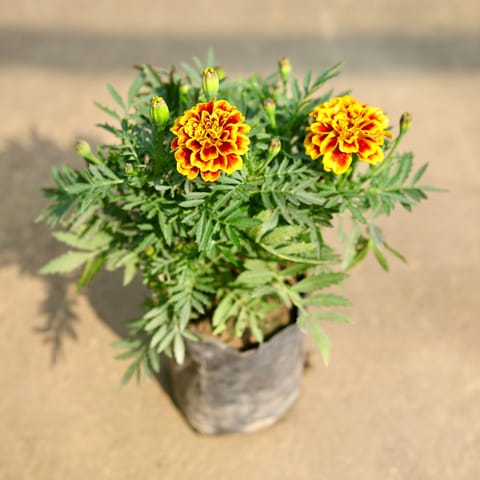
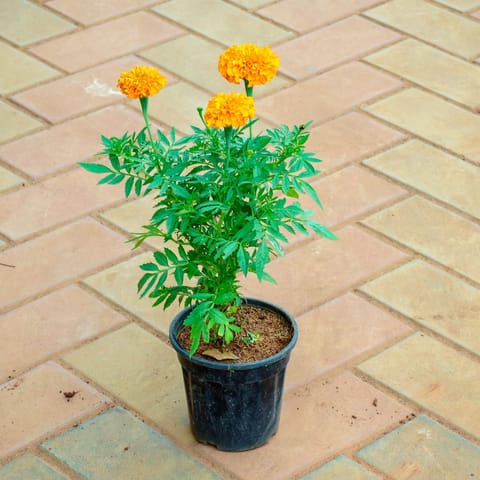
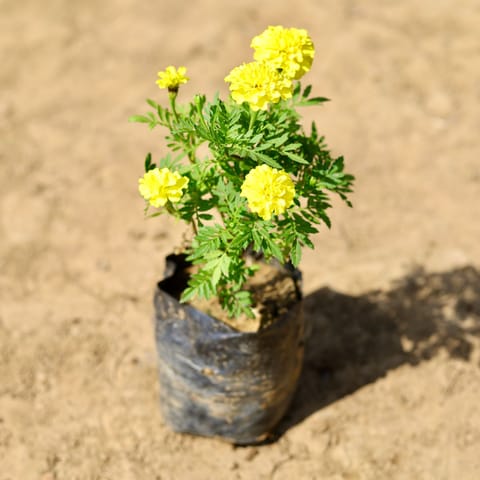
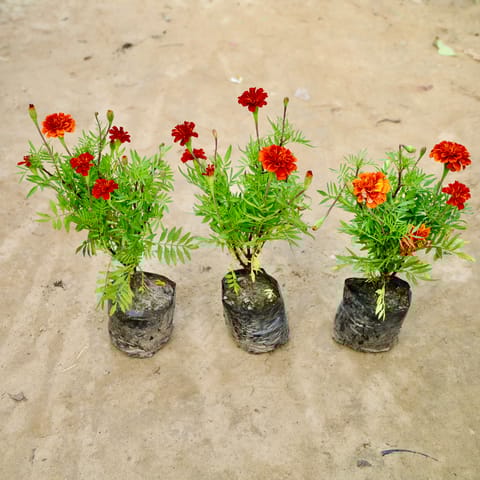
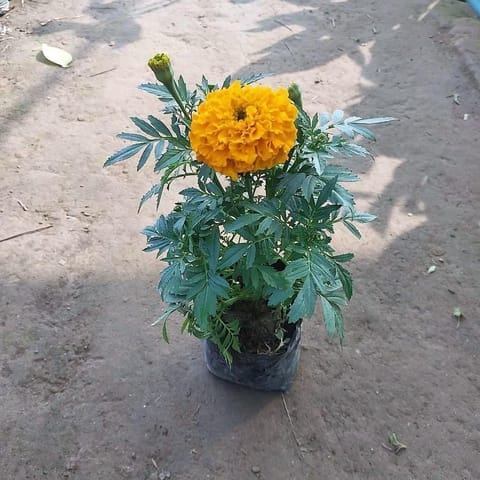
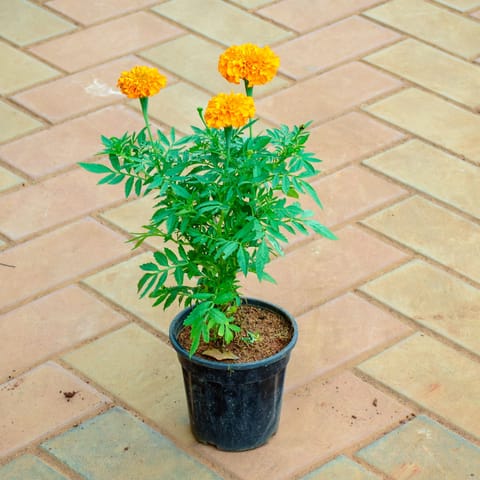
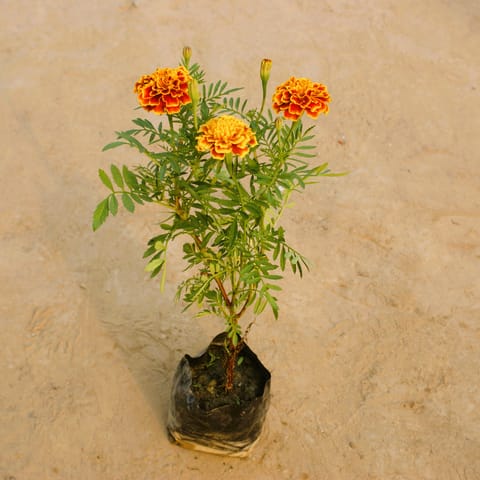
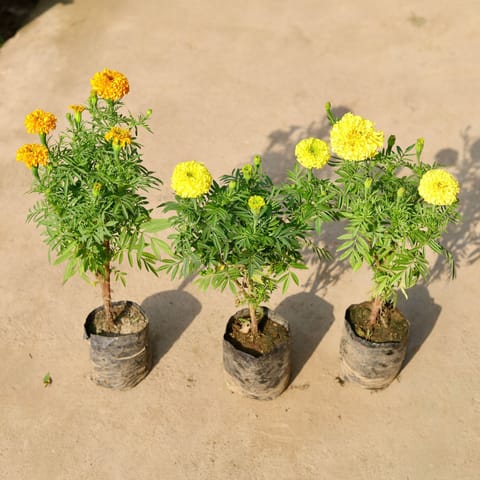
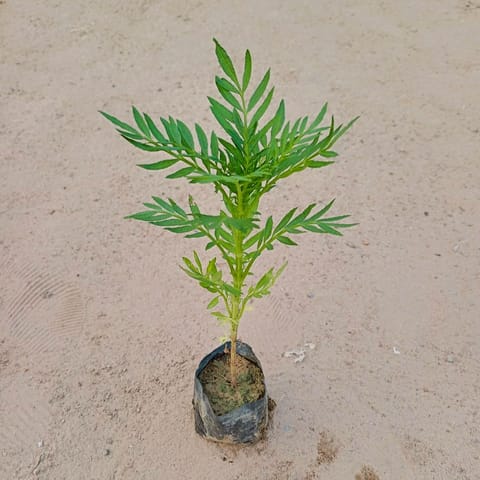
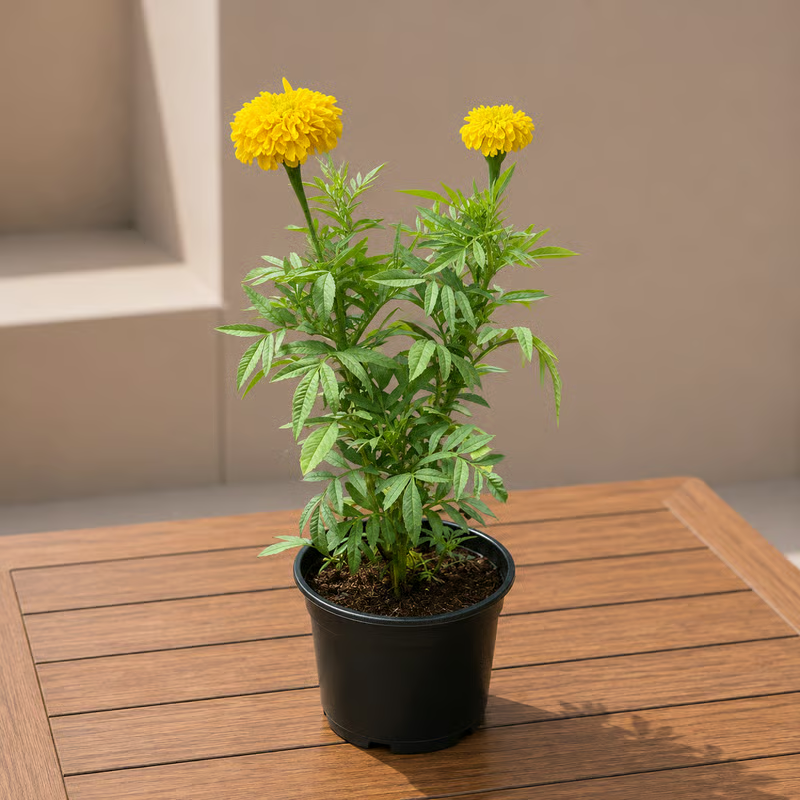
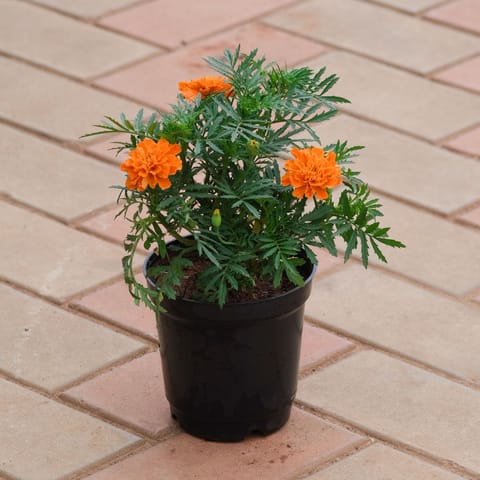
When you buy marigold saplings from Urvann, you can choose from various types, colours, and sizes for different needs. All product pages include real marigold plant images taken in Indian gardens. 

Variety Guide Bloom Size Plant Height Best For Colours Available
Marigold Red 4 inches 2-3 feet tall Cut flowers, large gardens, temple offerings, garlands Orange, Yellow, Multicolour
Marigold (Any Colour) 1-2 inches 2-12 inches Pots, balconies, borders, small spaces, pest control Orange, Yellow, Red, Bicolour
Multicolour Mix Varied Varied Colourful displays, festival decorations, variety gardens Orange, Yellow, Red mix
Gift-Ready Marigold Varied Varied Gifting, doorstep pujas, premium single-pot displays Any Colour


How to Grow and Care for Marigold Flowers

Sunlight

Marigolds love the sun. Six to eight hours of direct sunlight gives you compact plants, bold colours, and loads of flowers. They'll survive on four to five hours, but blooms will be fewer. Deep shade leads to leggy plants and almost no flowers. Sunny balconies, terraces, rooftops, and open garden beds are ideal.

Watering

Keep the soil moist, not soggy. Water at the base of the plant and avoid wetting the flowers. In summer, water daily. In moderate weather, every two to three days is enough. During winter, water every three to four days. Always let excess water drain, and never leave pots standing in water. Morning watering works best.

Soil & Pots

Use light, well-drained soil enriched with compost. Slightly acidic to neutral soil is perfect. For pots, choose containers at least nine to twelve inches deep with proper drainage holes. Terracotta pots are a bonus.

Feeding

Marigolds aren't heavy feeders, but regular light feeding means more and brighter blooms. Fertilize once a month with a well-balanced organic fertilizer with an NPK ratio of 10-10-10 during the growing season.

Deadheading

Find flowers that are fading, dry, or turning brown. Pinch or cut the flower stem just above the first set of healthy leaves or a new side shoot. Use your fingers for soft stems or sharp scissors or pruners for thicker stems. Check your plants every 2 to 3 days during peak summer flowering. 


Frequently Asked Questions (FAQs)

1. Can I grow Marigold flowers at home?

Yes, marigolds are perfect for home gardens and can be grown both in containers and directly in garden beds. They are ideal for borders, containers, and even balcony gardens. Choose pots or grow bags that are at least 9 to 12 inches wide and deep for container growing.

2. What is the best time to plant Marigolds in India?

In India, marigolds can be sown all year round; however, they are grown primarily in winter (October to February) and the rainy season (June to September). The optimum temperature range for growth is 18 to 20°C. Seeds germinate best at temperatures ranging from 18 to 30°C.

3. Do Marigold plants come back every year? 

No, marigolds are annuals and complete their full life cycle in a single season, typically lasting four to six months. They won't regrow from the same roots next year. However, they self-seed easily, so letting a few spent blooms dry on the plant often gives you new marigolds the following season for free.

4. Is Marigold the same as calendula? 

No. Marigold (Tagetes) and Calendula (Calendula officinalis) are different plants that share a common name but belong to different genera. Tagetes is the marigold used across India for Genda Phool garlands, festivals, and temple offerings, while Calendula is mainly grown abroad for its edible petals and use in skincare.

5. How long do Marigold plants bloom?

Marigolds don’t believe in short-term commitments. Once they start flowering, they keep going for four to six months, almost continuously. In mild climates, they may even bloom longer. The trick is simple. Remove faded flowers every three to four days. This stops seed formation and pushes the plant to produce fresh blooms instead.

6. Do you deliver Marigold saplings across India?

Yes, we do. And we treat plant delivery like a VIP service. We ship healthy marigold saplings across India using eco-friendly packaging that maintains moisture during transit. Plants are packed carefully to avoid damage, and most pin codes enjoy free next-day delivery. Simply enter your pin code on the product page to check availability and delivery time.

7. Do Marigolds need full sun or shade?

Marigolds are sun lovers, no doubt about it. They grow best with six to eight hours of full sun every day. They can survive in partial shade, but fewer sun hours usually mean fewer flowers and leggy plants. If you’re growing them on a balcony or terrace, place them where they get bright morning and afternoon sunlight.

8. How often should Marigolds be watered?

Water Marigolds once every two to three days, or whenever the top inch of soil feels dry. Reduce watering during winter or the rainy season. 

9. Why are Marigold plants not flowering?

It may be due to the following reasons: 

  • Not enough sunlight.
  • Too much nitrogen-rich fertilizer.
  • Not removing old flowers regularly.

Fix the sunlight, ease up on nitrogen, deadhead often, and if needed, switch to a bloom-boosting fertilizer.

10. Can Marigolds grow in pots or grow bags?

Yes, and they do exceptionally well. Choose pots or grow bags that are 9-12 inches deep with proper drainage holes. One plant per pot works best for healthy, bushy growth. Use a good-quality potting mix and ensure adequate airflow.

11. How long do Marigold plants live?

Marigolds are annual plants. They complete their life cycle in one season and typically live for 4-6 months. But during that time, they flower generously, making them one of the most rewarding seasonal plants you can grow.

12. Can you grow Marigolds from seeds at home?

Absolutely. Marigolds are one of the easiest flowers to grow from seeds. Sow seeds about half an inch deep, keep the soil lightly moist, and germination usually happens within 5-7 days. Seed-grown plants start flowering in about 40-50 days.

13. Are Marigold flowers edible or useful?

Indian marigolds are widely used for religious offerings, decorations, garlands, and festivals. While they are valued mainly for their vibrant flowers and cultural significance, they are not commonly grown as edible flowers. Use them primarily for decoration, पूजा, and adding colour to festive celebrations.

14. Which variety of Marigold is best?

It depends on your goal. African marigolds suit large gardens and cut-flower use with bigger blooms, while French marigolds are more compact and better for pots, balconies, and borders. For festival garlands and temple offerings, Marigold Red is the most traditional choice.

15. Where can I buy Marigold plants online?

You can buy healthy, climate-tested marigold saplings online from Urvann, with free next-day delivery in Delhi-NCR and Bengaluru, and doorstep delivery across India. 

16. What should not be planted near Marigolds?

Marigolds are good companions for most plants, but they're best kept away from beans and cabbage-family vegetables like broccoli and cauliflower, as marigolds' natural compounds can slow their growth.


Showing 24 of 197 products
Trending
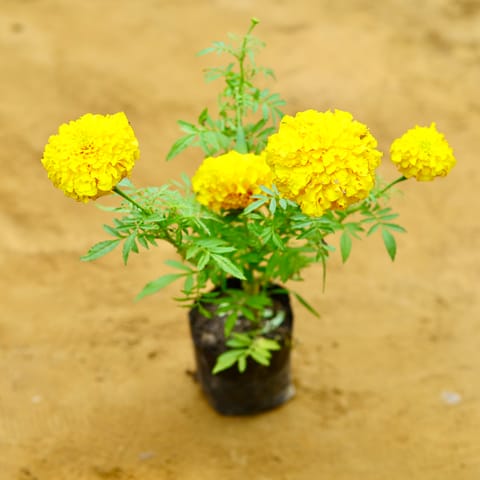
Marigold / Genda Red in 4 Inch Nursery Pot
(17)
₹69₹129 -46%
Must Have
Marigold / Genda Red in 4 Inch Nursery Pot

The marigold, or the beloved Genda Phool as we know it across India, is celebrated in bloom. Its bright orange, golden yellow, and warm red petals have adorned every auspicious occasion in Indian households for centuries.

Whether you are decorating your home for Diwali, making garlands for Durga Pooja, or simply want to bring cheerful colour to your garden, marigolds are the flowers that never disappoint and always deliver joy.

At Urvann, you'll find a wide range of healthy, climate-tested marigold saplings delivered straight to your doorstep, ready to bring that festive colour home.

NOTE: Prices of the products may vary as per the location. Please check the final price based on your delivery address.

Why 15 Lakh+ Plant Parents Trust Urvann 

⭐ Rated 4.8/5 by 12,340+ verified buyers

✓ Free Next-Day Delivery – Available on orders placed by 7 PM in Delhi-NCR and Bengalore.

✓ Pan India Deliveries – Delivery timelines vary by location.

✓ Hassle-Free Replacement – 2-day replacement window if the plant arrives damaged or incorrect.

✓ Well-Watered, Healthy Saplings – Carefully nurtured in optimal growing conditions to produce abundant, colourful blooms.

✓ Multiple Sizes & Pots – Choose from 3, 4, 5, 6, 7, and 8-inch nursery bags and pots, as single plants or sets of 2 and 3.

✓ Complete Garden Care in One Place – Along with marigolds, shop pots, fertilizers, tools, and other garden care products.


Is Marigold Native to India? Origin and Regional Names

Marigolds, scientifically known as Tagetes, are flowering plants originally native to Mexico and Central America. They were brought to India by Portuguese traders in the sixteenth century and quickly became so beloved that they are now considered quintessentially Indian flowers.

The Hindi name Genda Phool and regional names like Zendu in Marathi, Banthi in Telugu, and Samanthi in Tamil show how deeply these flowers have been embraced across the country.

They are available in many varieties, from small and compact French marigolds that grow perfectly in pots to large African marigolds with blooms that can reach up to five inches wide and look stunning as cut flowers for decorations.


Why Marigolds Are Essential and Auspicious in Indian Culture

In Indian culture, marigolds hold deep spiritual and cultural significance that goes far beyond their beauty.

During Diwali, marigold garlands and rangolis roll out the welcome mat for Goddess Lakshmi, inviting prosperity and good fortune. For Navratri and Durga Pooja, sunny yellow marigolds are offered to Goddess Durga, symbolising power, positivity, and the energy of the sun. In temples, marigolds are a daily favourite, believed to please deities and bring blessings. At weddings, marigolds are non-negotiable, with torans, mandaps, stages, and garlands all leaning heavily on these flowers. Festivals like Ugadi, Onam, and Pongal across South India also wouldn't look the same without them.

Their bright yellow and orange shades are believed to mirror the sun's energy and life force, and to ward off negativity and evil spirits. They last long, symbolising devotion and endurance, and when something grows this abundantly, it naturally becomes a symbol of prosperity too.


Why Marigolds Are Beginner-Friendly

  • Fast Germination: Seeds germinate within five to seven days
  • Quick Flowering: Plants begin flowering within eight to nine weeks of planting
  • Adaptable: Grow well in most soil types as long as drainage is good
  • Heat Tolerant: Thrive in Indian summer temperatures up to forty degrees Celsius
  • Low Water Needs: Established plants tolerate short dry spells


Marigold as a Natural Pest Repellent

Marigolds act as natural pest repellents and help protect other plants in your garden from harmful insects such as: 

  • Aphids: The strong scent keeps aphids away from nearby vegetables and roses.
  • Nematodes: Root secretions help reduce harmful nematode populations in soil.
  • Whiteflies: Their strong scent may help discourage whiteflies from settling on nearby vegetable plants.
  • Mosquitoes: The fragrance acts as a natural mosquito deterrent in garden areas.

Companion Planting Tips

  • Plant Marigolds around tomato plants to protect them from pests
  • Intersperse with roses to keep aphids away
  • Border vegetable gardens with marigolds for all-round protection
  • Place near seating areas to naturally reduce mosquitoes

Bonus Benefit: Marigolds attract beneficial pollinators like bees and butterflies to your garden, supporting overall garden health.


Find Your Perfect Marigold: Complete Variety Guide

When you buy marigold saplings from Urvann, you can choose from various types, colours, and sizes for different needs. All product pages include real marigold plant images taken in Indian gardens. 

Variety Guide Bloom Size Plant Height Best For Colours Available
Marigold Red 4 inches 2-3 feet tall Cut flowers, large gardens, temple offerings, garlands Orange, Yellow, Multicolour
Marigold (Any Colour) 1-2 inches 2-12 inches Pots, balconies, borders, small spaces, pest control Orange, Yellow, Red, Bicolour
Multicolour Mix Varied Varied Colourful displays, festival decorations, variety gardens Orange, Yellow, Red mix
Gift-Ready Marigold Varied Varied Gifting, doorstep pujas, premium single-pot displays Any Colour


How to Grow and Care for Marigold Flowers

Sunlight

Marigolds love the sun. Six to eight hours of direct sunlight gives you compact plants, bold colours, and loads of flowers. They'll survive on four to five hours, but blooms will be fewer. Deep shade leads to leggy plants and almost no flowers. Sunny balconies, terraces, rooftops, and open garden beds are ideal.

Watering

Keep the soil moist, not soggy. Water at the base of the plant and avoid wetting the flowers. In summer, water daily. In moderate weather, every two to three days is enough. During winter, water every three to four days. Always let excess water drain, and never leave pots standing in water. Morning watering works best.

Soil & Pots

Use light, well-drained soil enriched with compost. Slightly acidic to neutral soil is perfect. For pots, choose containers at least nine to twelve inches deep with proper drainage holes. Terracotta pots are a bonus.

Feeding

Marigolds aren't heavy feeders, but regular light feeding means more and brighter blooms. Fertilize once a month with a well-balanced organic fertilizer with an NPK ratio of 10-10-10 during the growing season.

Deadheading

Find flowers that are fading, dry, or turning brown. Pinch or cut the flower stem just above the first set of healthy leaves or a new side shoot. Use your fingers for soft stems or sharp scissors or pruners for thicker stems. Check your plants every 2 to 3 days during peak summer flowering. 


Frequently Asked Questions (FAQs)

1. Can I grow Marigold flowers at home?

Yes, marigolds are perfect for home gardens and can be grown both in containers and directly in garden beds. They are ideal for borders, containers, and even balcony gardens. Choose pots or grow bags that are at least 9 to 12 inches wide and deep for container growing.

2. What is the best time to plant Marigolds in India?

In India, marigolds can be sown all year round; however, they are grown primarily in winter (October to February) and the rainy season (June to September). The optimum temperature range for growth is 18 to 20°C. Seeds germinate best at temperatures ranging from 18 to 30°C.

3. Do Marigold plants come back every year? 

No, marigolds are annuals and complete their full life cycle in a single season, typically lasting four to six months. They won't regrow from the same roots next year. However, they self-seed easily, so letting a few spent blooms dry on the plant often gives you new marigolds the following season for free.

4. Is Marigold the same as calendula? 

No. Marigold (Tagetes) and Calendula (Calendula officinalis) are different plants that share a common name but belong to different genera. Tagetes is the marigold used across India for Genda Phool garlands, festivals, and temple offerings, while Calendula is mainly grown abroad for its edible petals and use in skincare.

5. How long do Marigold plants bloom?

Marigolds don’t believe in short-term commitments. Once they start flowering, they keep going for four to six months, almost continuously. In mild climates, they may even bloom longer. The trick is simple. Remove faded flowers every three to four days. This stops seed formation and pushes the plant to produce fresh blooms instead.

6. Do you deliver Marigold saplings across India?

Yes, we do. And we treat plant delivery like a VIP service. We ship healthy marigold saplings across India using eco-friendly packaging that maintains moisture during transit. Plants are packed carefully to avoid damage, and most pin codes enjoy free next-day delivery. Simply enter your pin code on the product page to check availability and delivery time.

7. Do Marigolds need full sun or shade?

Marigolds are sun lovers, no doubt about it. They grow best with six to eight hours of full sun every day. They can survive in partial shade, but fewer sun hours usually mean fewer flowers and leggy plants. If you’re growing them on a balcony or terrace, place them where they get bright morning and afternoon sunlight.

8. How often should Marigolds be watered?

Water Marigolds once every two to three days, or whenever the top inch of soil feels dry. Reduce watering during winter or the rainy season. 

9. Why are Marigold plants not flowering?

It may be due to the following reasons: 

  • Not enough sunlight.
  • Too much nitrogen-rich fertilizer.
  • Not removing old flowers regularly.

Fix the sunlight, ease up on nitrogen, deadhead often, and if needed, switch to a bloom-boosting fertilizer.

10. Can Marigolds grow in pots or grow bags?

Yes, and they do exceptionally well. Choose pots or grow bags that are 9-12 inches deep with proper drainage holes. One plant per pot works best for healthy, bushy growth. Use a good-quality potting mix and ensure adequate airflow.

11. How long do Marigold plants live?

Marigolds are annual plants. They complete their life cycle in one season and typically live for 4-6 months. But during that time, they flower generously, making them one of the most rewarding seasonal plants you can grow.

12. Can you grow Marigolds from seeds at home?

Absolutely. Marigolds are one of the easiest flowers to grow from seeds. Sow seeds about half an inch deep, keep the soil lightly moist, and germination usually happens within 5-7 days. Seed-grown plants start flowering in about 40-50 days.

13. Are Marigold flowers edible or useful?

Indian marigolds are widely used for religious offerings, decorations, garlands, and festivals. While they are valued mainly for their vibrant flowers and cultural significance, they are not commonly grown as edible flowers. Use them primarily for decoration, पूजा, and adding colour to festive celebrations.

14. Which variety of Marigold is best?

It depends on your goal. African marigolds suit large gardens and cut-flower use with bigger blooms, while French marigolds are more compact and better for pots, balconies, and borders. For festival garlands and temple offerings, Marigold Red is the most traditional choice.

15. Where can I buy Marigold plants online?

You can buy healthy, climate-tested marigold saplings online from Urvann, with free next-day delivery in Delhi-NCR and Bengaluru, and doorstep delivery across India. 

16. What should not be planted near Marigolds?

Marigolds are good companions for most plants, but they're best kept away from beans and cabbage-family vegetables like broccoli and cauliflower, as marigolds' natural compounds can slow their growth.

Load More