
Shop

Downalod our app

Please provide your delivery pincode to see products available in your area
Recent Search
Snake Plant 
Few houseplants combine striking looks with near-indestructible hardiness quite like the Snake Plant. Recognised by its tall, sword-shaped leaves marked with green, yellow, and cream patterns, this evergreen perennial has become one of the most popular indoor plants in Indian homes, offices, bedrooms, and workspaces. Whether you are a first-time plant parent or an experienced gardener, the Snake Plant rewards you with bold architectural beauty, excellent air-purifying qualities, and remarkably low-maintenance care.
About the Snake Plant
The Snake Plant, botanically known as Dracaena trifasciata, is a hardy indoor plant with stiff, upright, sword-shaped leaves. Depending on the variety, it can grow from 6 inches to 4–5 feet tall.
Its leaves come in shades of dark green, light green, yellow, cream, and silver, with different patterns and variegation. The plant was formerly classified as Sansevieria trifasciata and belongs to the Asparagaceae family. It is native to dry regions of West Africa.
Snake Plants are easy to care for because they tolerate low light and can go for long periods without water. Bright indirect light, however, encourages faster growth, thicker leaves, and stronger variegation.
Snake Plants also use a specialised form of photosynthesis called CAM (Crassulacean Acid Metabolism). This allows them to take in carbon dioxide at night, an adaptation that helps them conserve water in dry conditions.
Snake Plants Available on Urvann
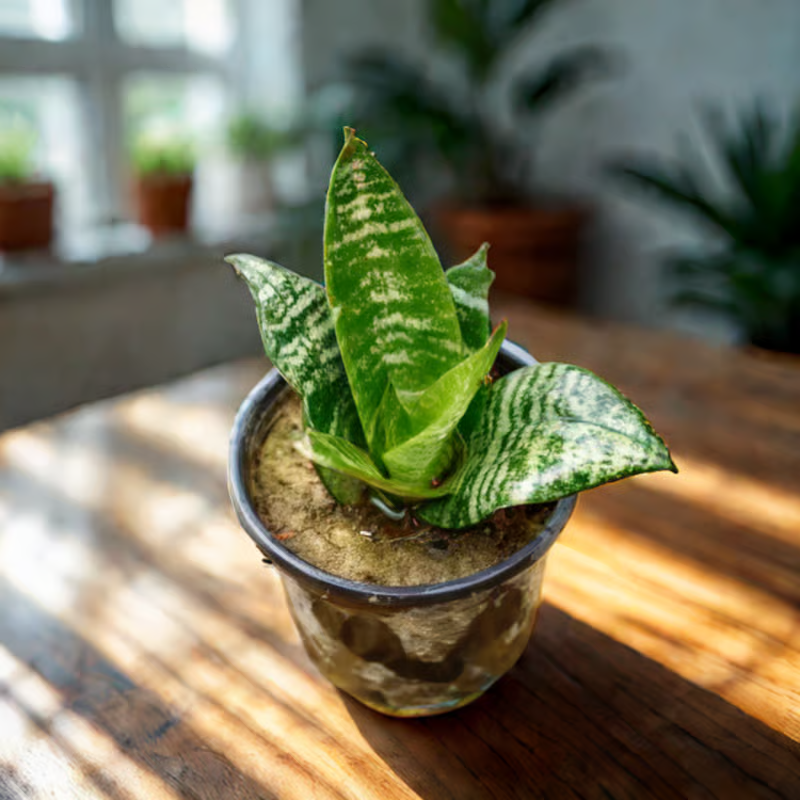
Snake Dwarf Green in 6 Inch White Super Nursery Pot
Best for: Beginners
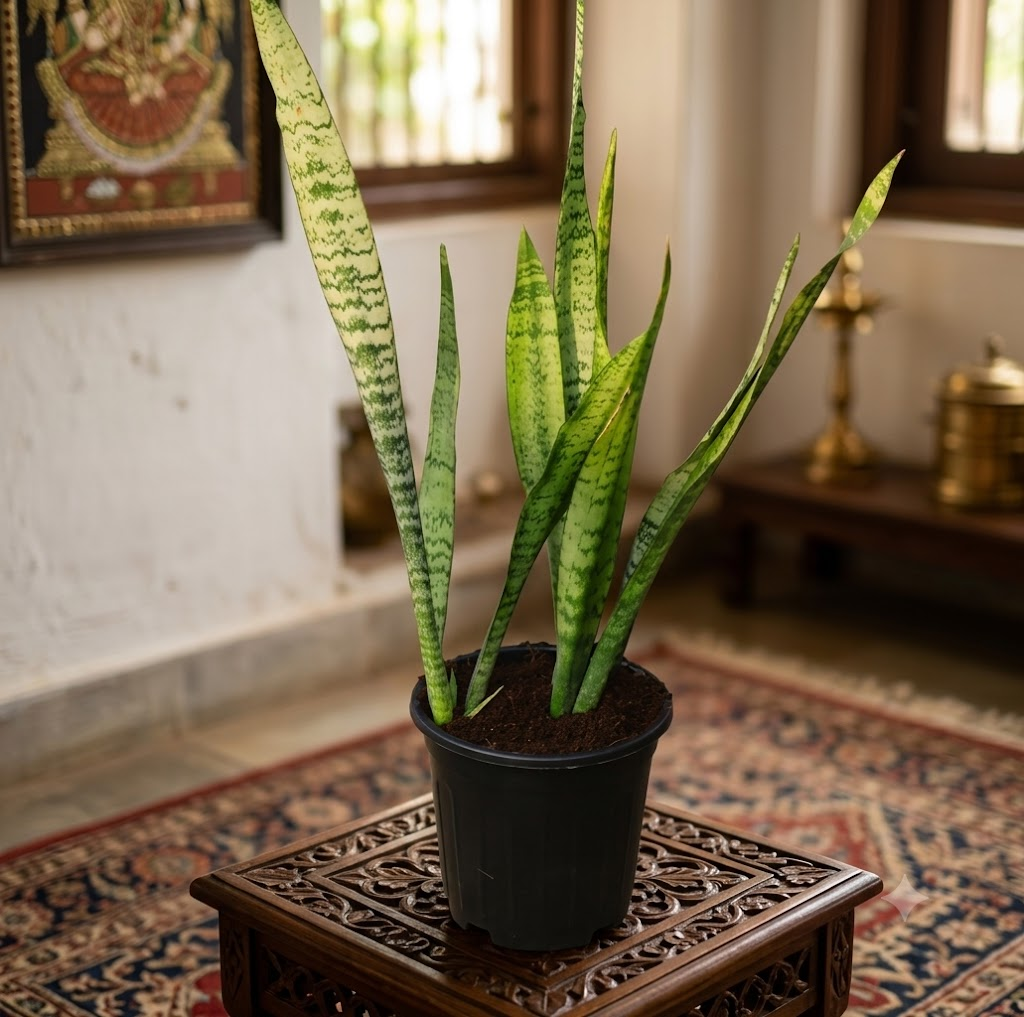
Snake Long in 8 Inch Nursery Pot
Best for: Indoor Decor
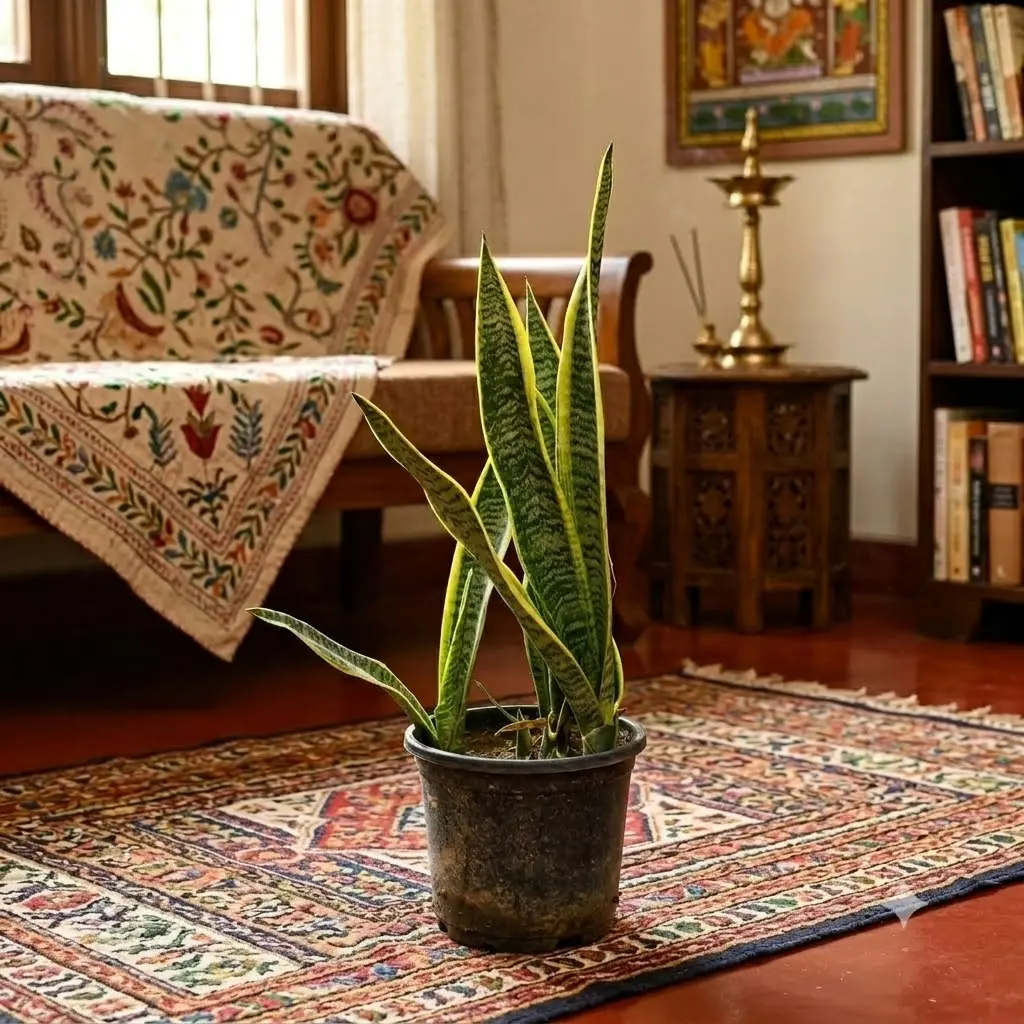
Snake Golden Long in 8 Inch Nursery Pot
Best for: Statement Piece
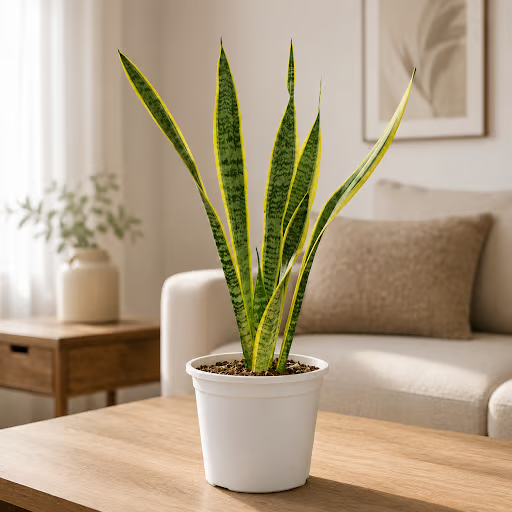
Snake Yellow Long in 8 Inch White Nursery Pot
Ready to Place
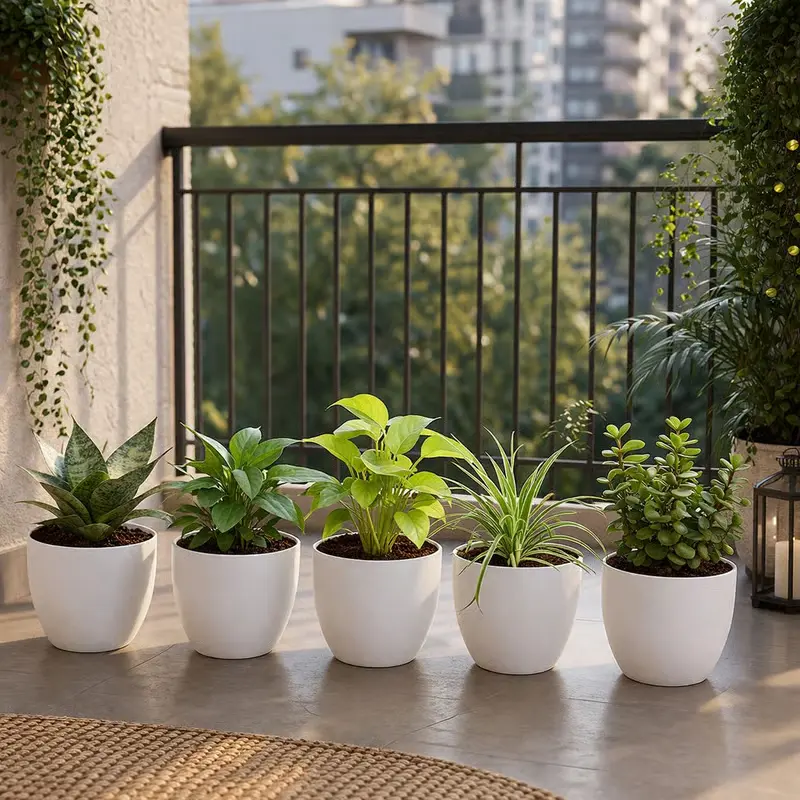
Indoor Plant Combo: The Breathe Better Bundle: Set of 5
Great Value Combo
Complete Care Guide for Snake Plant
🌡️ Temperature
15°C – 35°C (Ideal: 18°C – 30°C)
Snake Plant grows well in typical Indian indoor temperatures and adapts to a wide range of conditions. It does not tolerate frost or prolonged exposure to temperatures below 10°C. Keep the plant away from cold drafts, direct AC airflow, and cold windows during winter. In extremely hot summer regions, avoid placing the plant in direct afternoon sun.
✂️ Pruning
Regular pruning helps keep the plant neat and healthy. Remove yellow, brown, or damaged leaves at any time by cutting them at the base using clean, sharp scissors. Pruning during the growing season (spring and summer) encourages new leaf growth. Avoid heavy pruning in winter, as it may cause stress.
🌿 Cleaning Leaves
Clean leaves = better photosynthesis + healthier growth. Dust collects easily on the broad, flat leaves and can block sunlight. Wipe both sides of each leaf gently with a soft, damp cloth once a month. Avoid harsh chemical leaf-shine sprays, as they can clog the leaf pores and affect the plant's ability to absorb light and exchange gases.
🌬️ Air Circulation
Snake Plants benefit from good air circulation to prevent fungal issues and pest infestations. Keep the plant in a well-ventilated area with space around it. Avoid overcrowding it with other plants, particularly during the monsoon, as excessive humidity and stagnant air can increase the chances of fungal problems.
Light
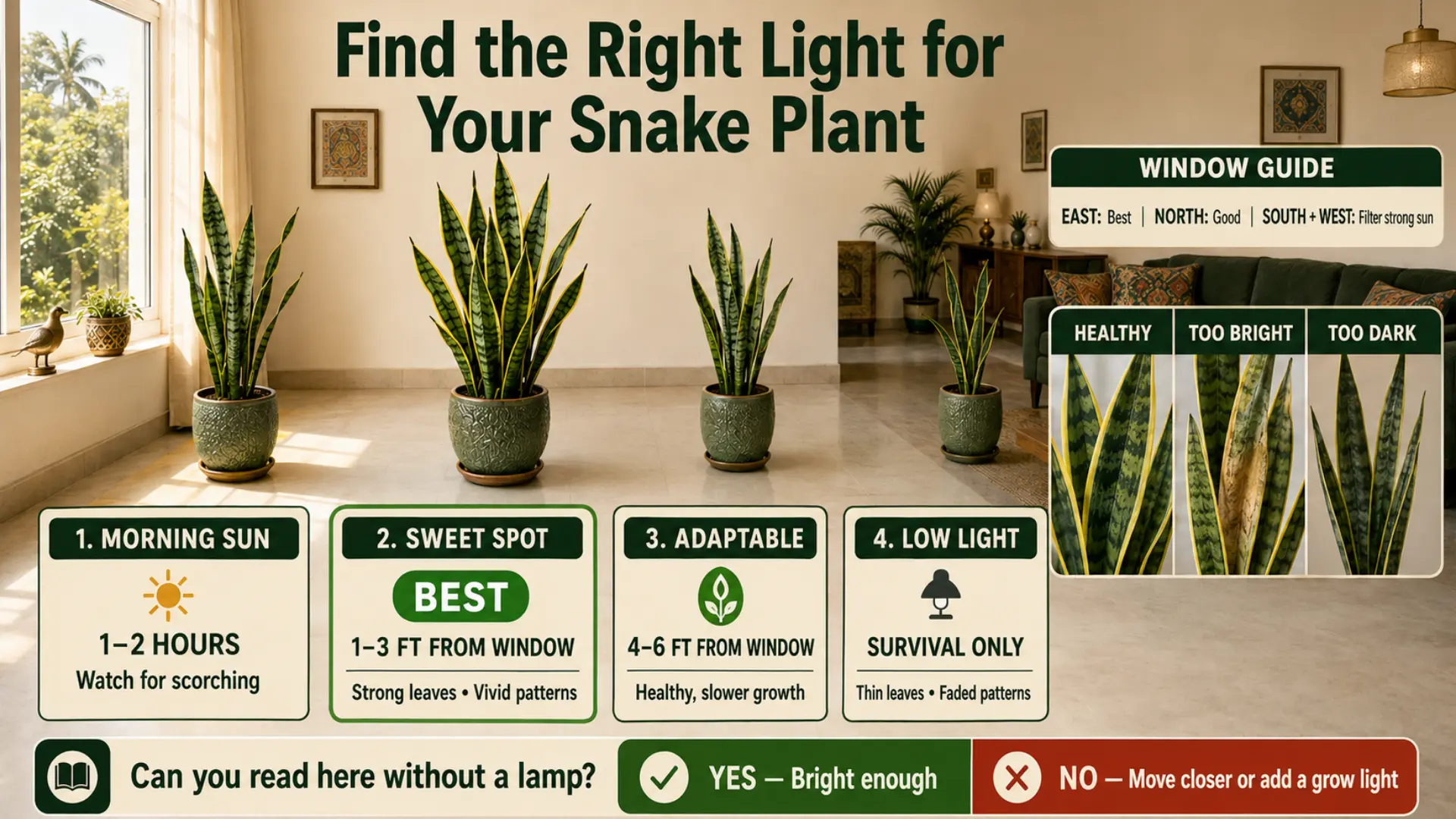
The amount of light your Snake Plant receives influences leaf thickness, colour intensity, and overall growth speed.
Direct Sun – Tolerable (Morning Only)
Bright Indirect Light – Best
Medium Indirect Light – Good
Low Light – Tolerates
- East-facing: Ideal for gentle morning sunlight, encouraging steady growth, thicker leaves, and vibrant colour.
- North-facing: Provides reliable indirect light that supports healthy foliage, though growth may be slightly slower.
- South- or West-facing: Works well when the plant is placed a few feet from the window or behind sheer curtains to soften strong afternoon sunlight.
- Avoid: Dim, windowless rooms for extended periods, intense direct afternoon sun, and locations with continuous AC or heater airflow.
Watering – The Right Way

Snake Plant is a succulent and stores water in its thick leaves. The number one rule is to let the soil dry out completely between waterings. Overwatering is the fastest way to kill a Snake Plant.
- Moist soil: Hold off on watering.
- Dry soil: Give the plant a thorough watering and let the excess drain out completely.
Soil Mix & Pot Selection
Snake Plant grows best in a loose, well-draining potting medium. It does not tolerate waterlogged or compacted soil.
🌱🟫 Recommended Soil Mix (Ideal for Indian Climate)
- ✅ Garden soil or a good-quality potting medium as the base
- ✅ Coarse sand, perlite, or pumice to improve drainage
- ✅ Cocopeat in small quantity to help retain balanced moisture
- ✅ Compost or vermicompost to supply organic nutrients
Aim for a gritty, fast-draining texture similar to cactus or succulent soil mix. The soil should dry out within a few days after watering and never feel soggy, heavy, or waterlogged.
🟫 Alternative: Use Cactus/Succulent Mix
A premade cactus or succulent potting mix works well for Snake Plants. If using regular garden soil in containers, combine
Avoid heavy clay soil or potting mixes with a high percentage of peat, as these retain excessive moisture and increase the risk of root rot.
🪴 Choosing the Right Pot
Different pots affect how quickly the soil dries and how roots behave:
⚠️ Snake Plant roots are strong and can crack weak plastic pots over time. For larger plants, consider using sturdy ceramic, terracotta, or clay containers. 💡 Snake Plants prefer being slightly rootbound. Repot only every 2–3 years, or when roots begin growing out of the drainage holes, the pot loses its shape, or the plant becomes top-heavy.
 Fertilising – When, What & How Much?
Best Fertiliser
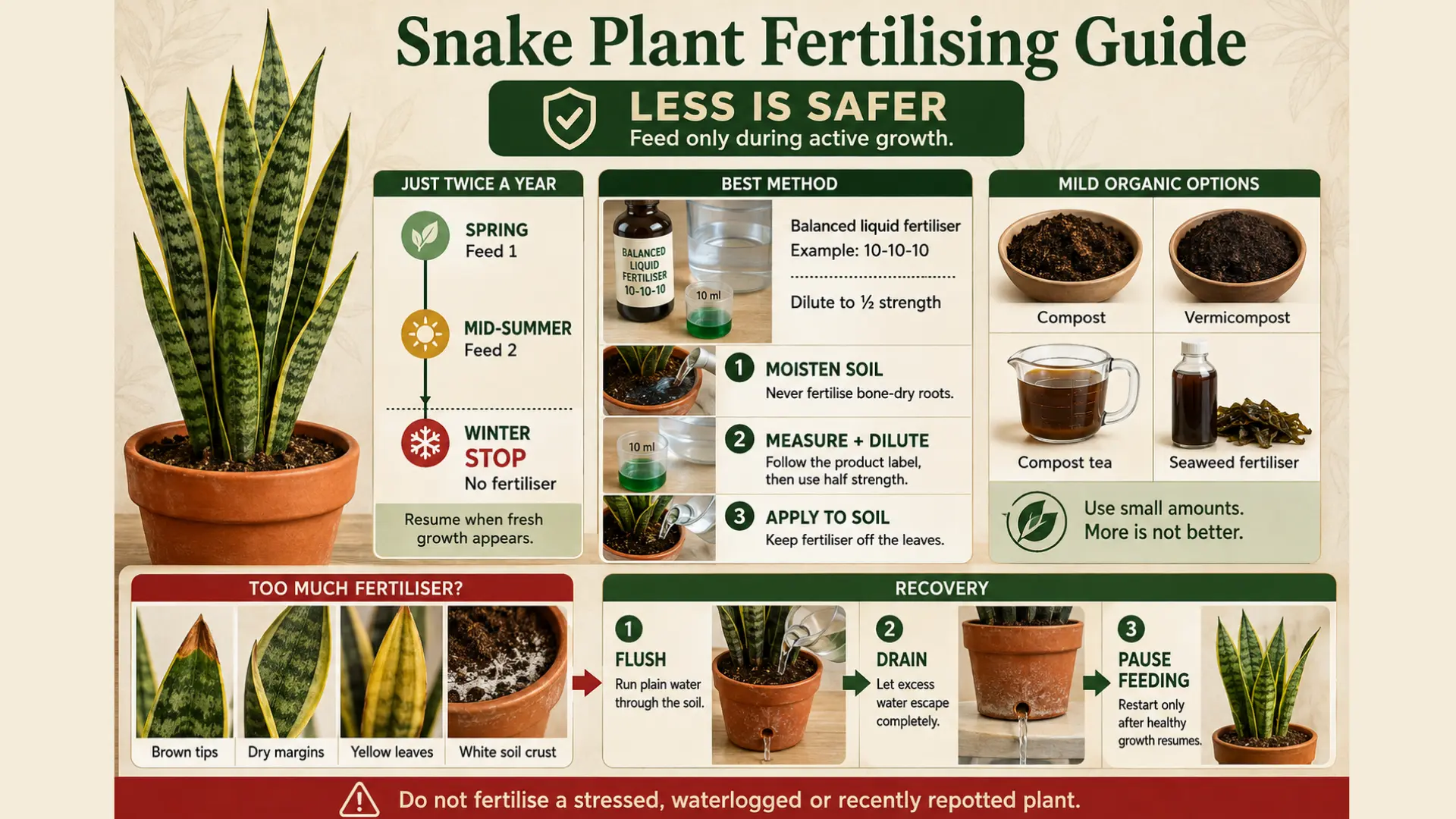
Use a balanced liquid fertiliser (such as 10-10-10) diluted to half the recommended strength. Feed once in spring and once in mid-summer during the active growing period.
Organic Options
Compost, vermicompost, compost tea, and seaweed-based fertilisers offer mild, natural nourishment. Apply in small amounts to prevent salt buildup in the soil.
Winter – Stop Feeding
Do not fertilise during winter. The plant enters dormancy and does not need additional nutrients. Resume feeding when fresh growth appears in spring.
Signs of Over-Fertilising
Brown tips, dry leaf margins, yellowing foliage, or a whitish crust forming on the soil surface. Flush the soil thoroughly with plain water and hold off on feeding until healthy growth resumes.
How to Care for Snake Plant Across Different Indian Climate
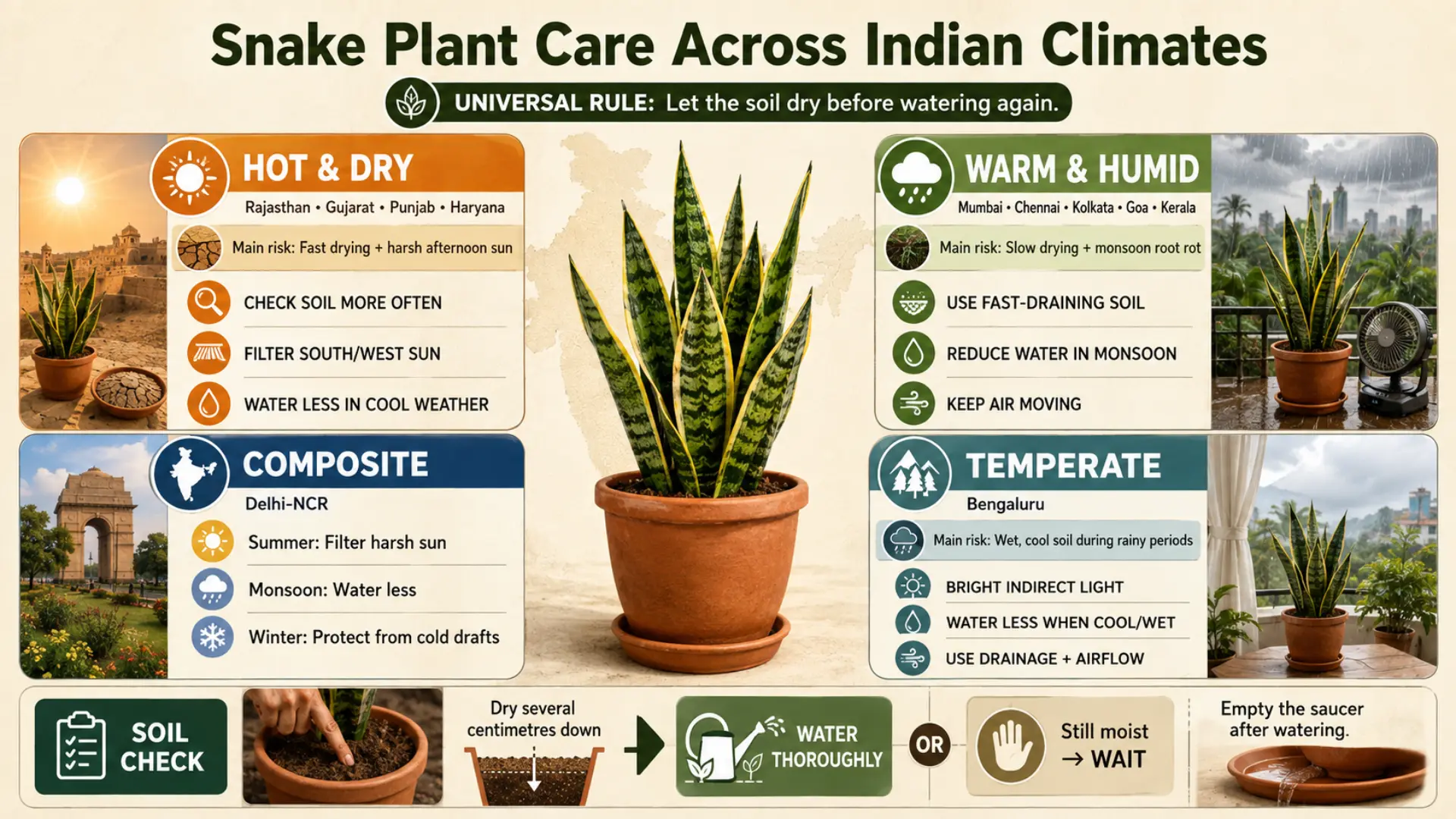
Snake Plant (Dracaena trifasciata) tolerates low light, low humidity, and infrequent watering. However, India's climate varies widely, which affects how quickly soil dries, how much direct sunlight is safe, and how often the plant needs water.

Hot & Dry Climate: Rajasthan, Gujarat, Punjab and Haryana
- Check the soil regularly and water only when it has dried.
- Keep the plant away from harsh afternoon sunlight, especially near south- or west-facing windows.
- Reduce watering when temperatures fall and growth slows.

Warm & Humid Climate: Mumbai, Chennai, Kolkata, Goa and Kerala
- Use well-draining soil and a pot with drainage holes.
- Check the soil before every watering.
- Allow the soil to dry before watering again.
- Reduce watering during heavy monsoon periods.
- Maintain good airflow around the plant.

Composite Climate: Delhi-NCR
- Summer: Check the soil more often and protect the plant from harsh afternoon sun.
- Monsoon: Reduce watering because soil stays wet longer.
- Winter: Reduce watering and keep the plant away from cold windows and drafts.
- Keep the plant in bright, filtered light.

Temperate Climate: Bengaluru
- Check the soil before watering throughout the year.
- Allow the soil to dry between waterings.
- Reduce watering during wetter and cooler periods.
- Keep the plant in bright indirect light.
- Use well-draining soil and provide good airflow.
Benefits of Keeping a Snake Plant at Home

Air-Purifying Houseplant
This plant filters airborne toxins such as formaldehyde, benzene, xylene, and toluene. The air-purifying effect of Snake Plant in a real home is modest compared to sealed lab conditions.
Releases Oxygen at Night
Snake Plants perform CAM photosynthesis and continue to release oxygen at night. This makes them an excellent bedroom plant.
Extremely Low-Maintenance
It can tolerate low light, irregular watering, varying temperatures, and general neglect. This plant is perfect for beginners, busy professionals, and anyone looking for a no-fuss indoor plant.
Versatile Indoor Decor
They are available in various sizes which are suitable for any interior style from modern minimalist to traditional Indian homes.
Reduces Stress
Having greenery indoors can make a space feel more pleasant and calming. It's clean, architectural foliage adds a soothing visual element to homes, offices, and workspaces.
Office & Desk Friendly
Compact varieties like Dwarf Green and Dwarf Yellow are perfectly sized for office desks, bookshelves, countertops, and study tables. This plant can thrive under fluorescent lighting, making them suitable for workplaces with limited natural light.
Nearly Indestructible
This plant can survive weeks without water, adapt to both low and bright light, and tolerate dry indoor air, making them one of the most resilient houseplants you can own.
Perfect for Gifting
Its attractive appearance and positive Vastu significance make Snake Plant a versatile present for occasions such as housewarmings, birthdays, celebrations, and new beginnings.
Common Problems, Causes & Fixes
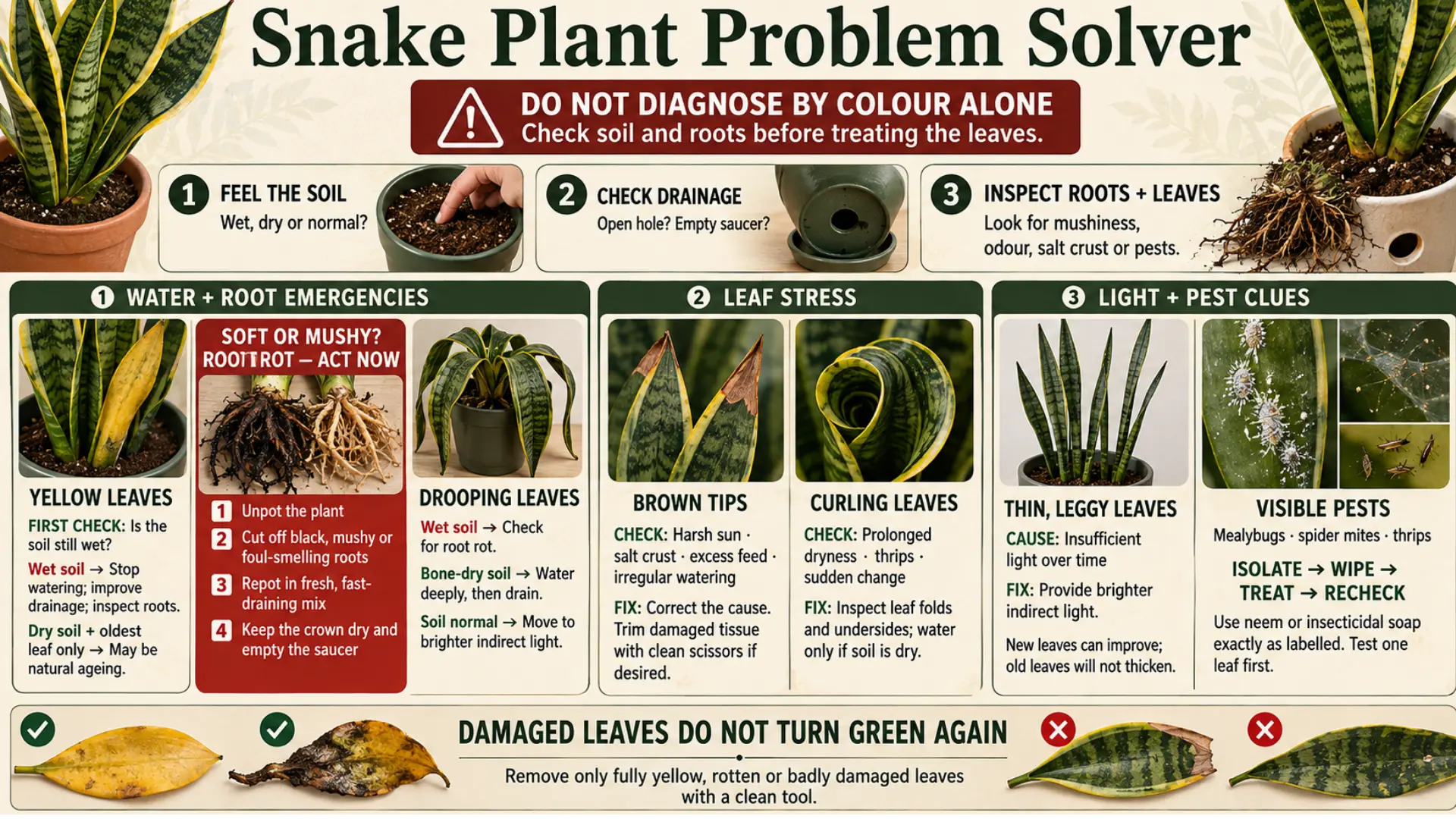
Yellow Leaves
Cause: Overwatering, poor drainage, excessive direct sun, or natural ageing of older leaves.
Fix: Check the soil before watering. If soggy, let it dry completely. Ensure the pot has drainage holes. Remove completely yellowed leaves at the base. Yellow leaves are the earliest sign of overwatering.
Brown Leaf Tips
Cause: Dry indoor air, inconsistent watering, intense direct sunlight, over-fertilising, or mineral buildup from tap water.
Fix: Trim away the damaged portions with clean scissors. Water deeply when soil is dry, avoid concentrated fertiliser, and keep the plant away from scorching sunlight.
Drooping or Falling Leaves
Cause: Overwatering, root rot, insufficient light, or weak roots from poor-draining soil.
Fix: Healthy Snake Plant leaves grow upright. If leaves droop, check for overwatering first. Move the plant to brighter light, reduce watering, and replace the soil with a faster-draining mix if needed. Inspect the roots for rot.
Soft, Mushy Leaves / Root Rot
Cause: Consistently wet soil, pots without drainage holes, water collecting in the leaf rosettes, or sitting in a saucer of water.
Fix: Remove the plant from its pot, cut away all mushy, black, or foul-smelling roots with a clean knife, and repot in fresh, well-draining soil. Allow the soil to dry fully between waterings going forward.
Curling Leaves
Cause: Thrips or other pests, underwatering (bone-dry soil for too long), or sudden environmental changes.
Fix: Inspect the leaves closely for tiny pests. If found, treat with neem oil. If the soil is very dry, give the plant a deep watering. Maintain stable growing conditions.
Thin, Leggy Leaves
Cause: Insufficient light over a prolonged period.
Fix: Move the plant to a brighter location. New leaves should grow thicker and wider with improved light. Older thin leaves will not change shape, but the plant will produce healthier foliage going forward.
Mealybugs / Spider Mites / Pests
Cause: Stagnant air, dusty leaves, crowded plants, or pests spreading from nearby plants.
Fix: Remove visible pests with a cotton swab dipped in diluted neem oil solution. Wipe leaves regularly. Improve air circulation and keep the plant isolated until the infestation is cleared.
Vastu Shastra & Feng Shui Placement
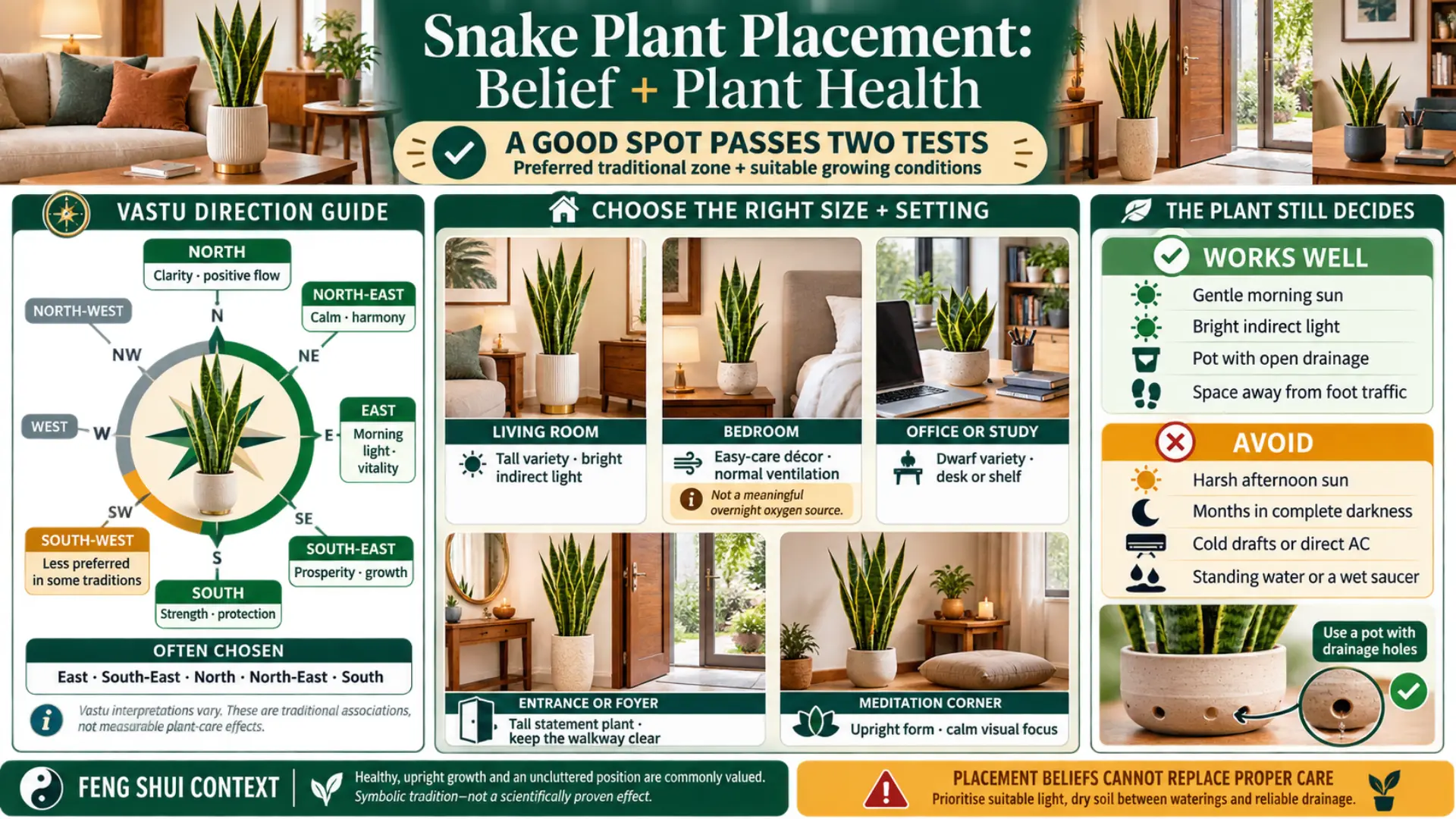
Direction Guide for Snake Plant
East ✔
The East direction is associated with new beginnings, vitality, and positive energy. It also provides gentle morning sunlight, supporting healthy growth and vibrant foliage.
South-East ✔
Traditionally linked with wealth, prosperity, and financial abundance in Vastu Shastra. Placing it in the southeast corner is believed to attract positive energy related to finances and growth.
North ✔
Associated with peace, clarity, and positive energy flow. A suitable placement for this plant, particularly in well-lit indoor spaces.
North-East ✔
Regarded as a spiritually significant direction in Vastu. Placing it here is believed to support a calm, harmonious, and balanced atmosphere.
South ✔
Can work well for Snake Plants, as the south direction is associated with strength and protection. Ensure the plant receives appropriate light in this placement.
South-West ⚠️
Generally less preferred for Snake Plant placement according to some Vastu principles, as its heavier energy may not align well. If placed here, maintain the plant in healthy condition.
✅ Best Placements
- Living Room — Adds a bold, architectural touch to indoor spaces while promoting a fresh atmosphere.
- Bedroom — One of the best plants for bedrooms, as it releases oxygen at night and tolerates low light.
- Office Desk — Its compact varieties are ideal for workspaces, study tables, and shelves.
- Entrance / Foyer — Tall Snake Plants near the entrance create a welcoming and visually striking impression.
- Meditation Corner — Its clean, upright form and calming presence complement spaces used for relaxation.
❌ Places to Avoid
- Harsh direct afternoon sun — Can scorch leaves and cause brown patches.
- Completely dark, windowless rooms for months — Growth will stall and the plant may weaken.
- Cold drafts and AC vents — Prolonged cold exposure can damage the plant.
- Waterlogged areas — Standing moisture increases the risk of root rot.
⚠️ Note: Do not treat Vastu placement as a replacement for proper plant care. Even the most auspicious placement will not help if the plant is overwatered or kept in unsuitable conditions.
⚠️ Toxicity & Safety
⚠️ Mildly Toxic to Pets & Small Children if Chewed or Eaten
Snake Plant contains saponins, naturally occurring compounds that serve as a defence mechanism for the plant. Ingestion can cause gastrointestinal discomfort in pets and children. Keep the plant on higher shelves or in rooms that pets and small children do not access.
| Who | Symptoms | Action |
|---|---|---|
| 🐱🐶 Cats & Dogs | Nausea, vomiting, diarrhoea, drooling | Monitor closely. Contact a vet if symptoms persist or worsen. |
| 👶 Small Children | Mouth irritation, nausea, stomach upset | Rinse mouth, give water. Consult a doctor if symptoms develop. |
| 🧑 Adults | Mild skin irritation from sap in rare cases | Wash affected area with soap and water. Wash hands after pruning. |
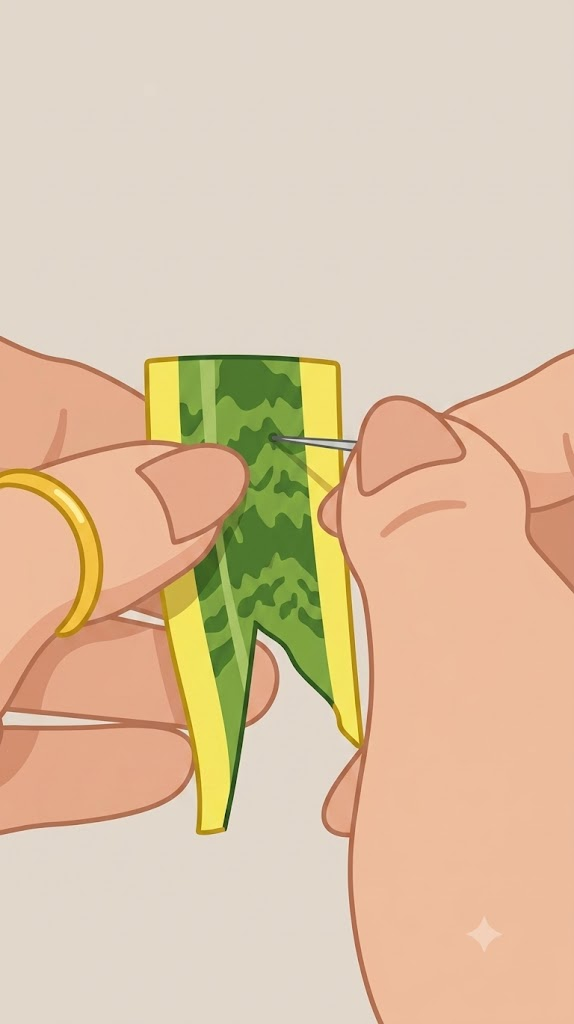
How to Propagate Snake Plant
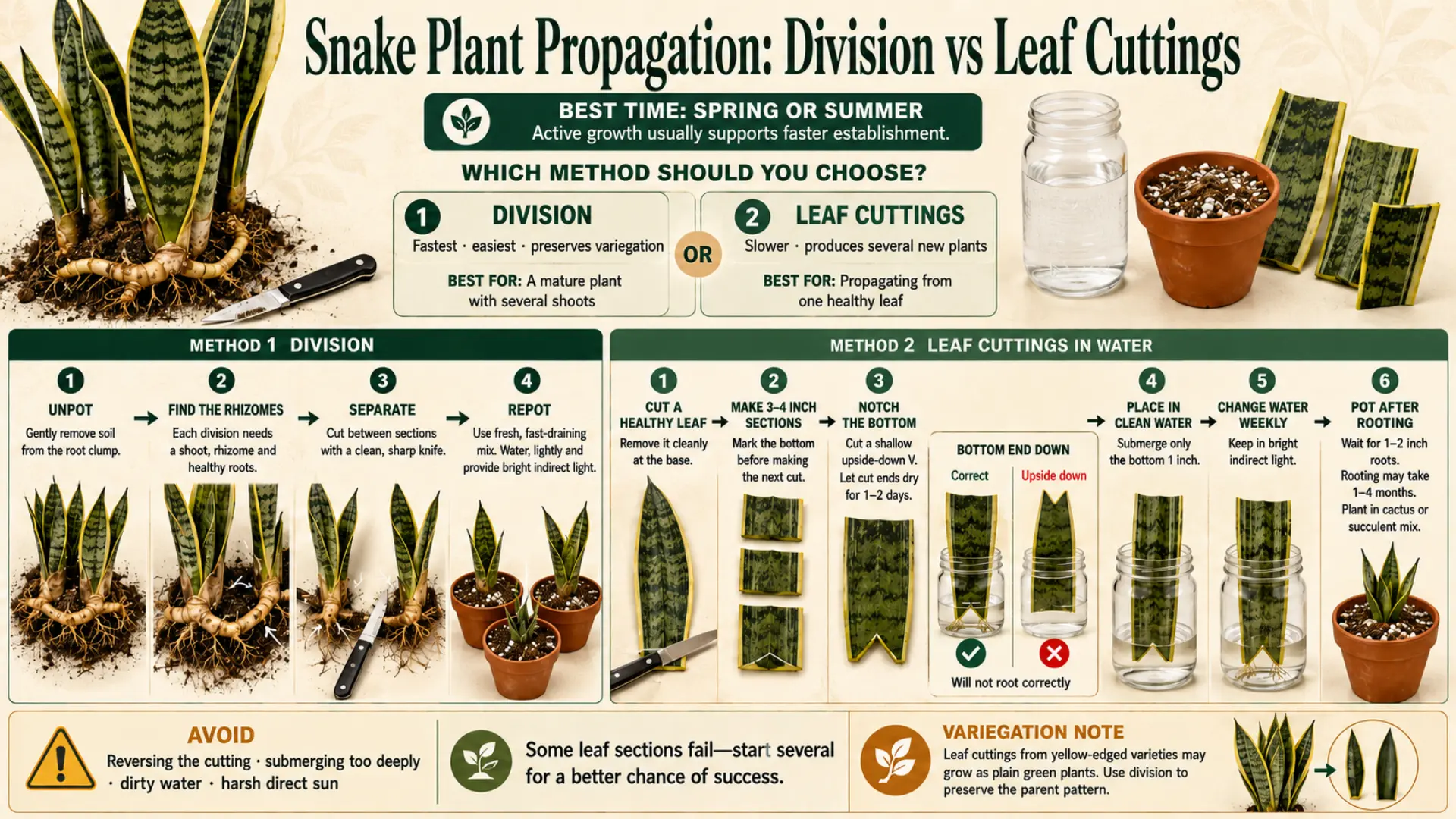
Snake Plants are easy to propagate. The best time is spring or summer, when the plant is actively growing.
Method 1: Division (Easiest)
Remove the plant from its pot. Separate the root clump (rhizome) into sections using a clean, sharp knife, keeping roots intact on each section. Repot each section in fresh, well-draining soil. Water lightly and place in bright indirect light.
Method 2: Leaf Cuttings in Water
Cut a healthy leaf at the base using a clean tool. Cut the leaf into 3–4 inch sections. Mark the bottom end (the end closer to the soil). Place the bottom end in a jar of clean water. Change water weekly. Roots appear in 1–4 months. When roots are about 1–2 inches long, pot the cutting in cactus/succulent soil mix.
Companion Plants — What Looks Great Together
Snake Plant pairs beautifully with these indoor plants from Urvann, both in terms of care needs and visual appeal.
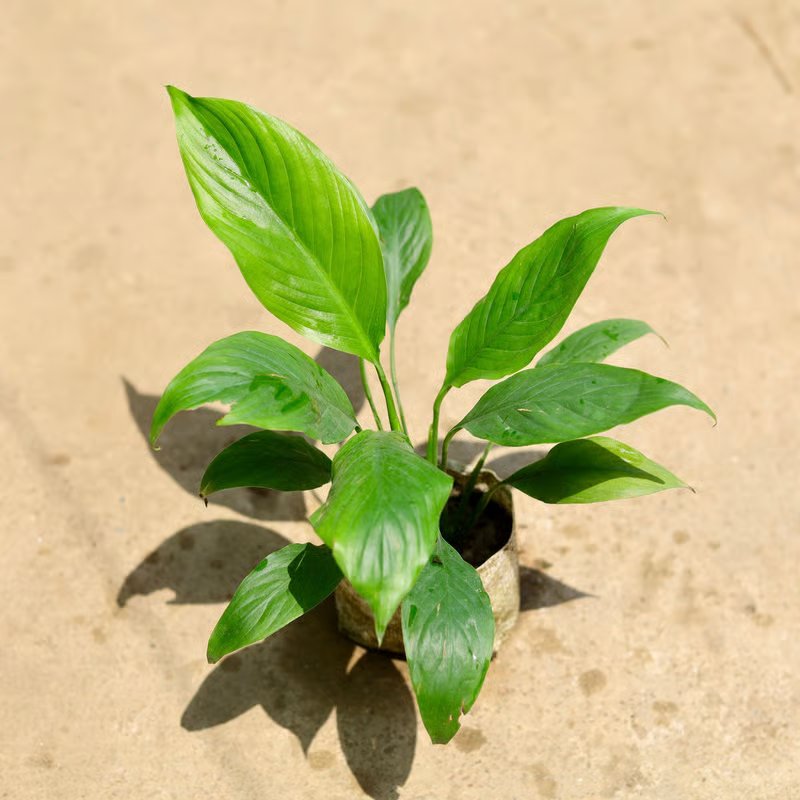
Peace Lily
Its lush, flowing foliage and elegant white blooms create a beautiful contrast with the Snake Plant's stiff, upright leaves. Together, they make a balanced and sophisticated indoor display. Shop Peace Lily Plants online to add grace and greenery to your space.
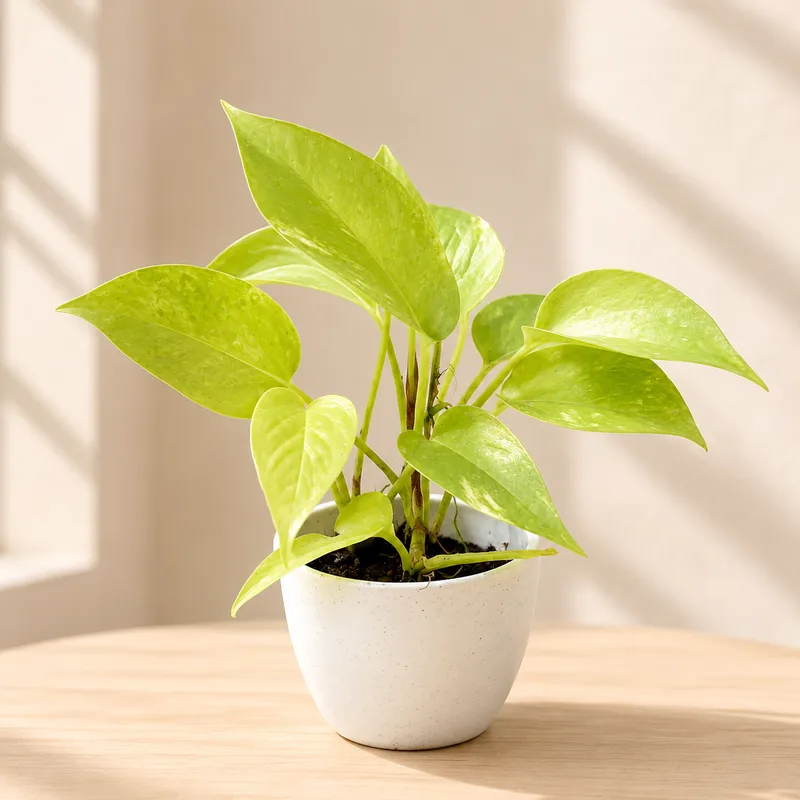
Money Plant
Trailing vines add softness and movement, beautifully complementing the Snake Plant's vertical growth habit. Buy Money Plants online to create a lush, refreshing indoor corner.
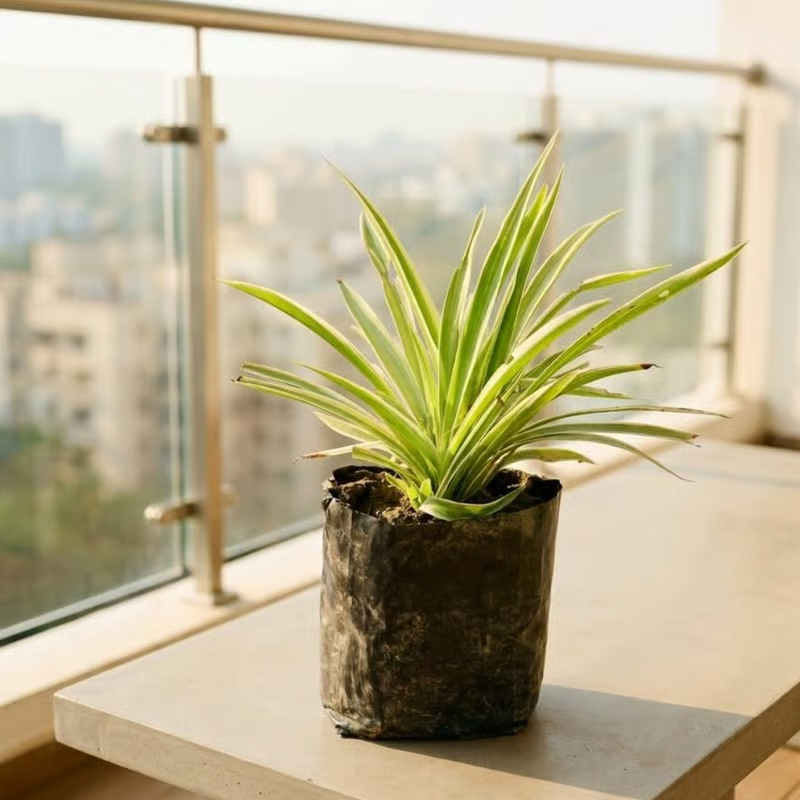
Spider Plant
Its arching, cascading leaves bring texture and freshness to any arrangement. A beginner-friendly companion that pairs well with Snake Plants in care requirements. Shop Spider Plants online.
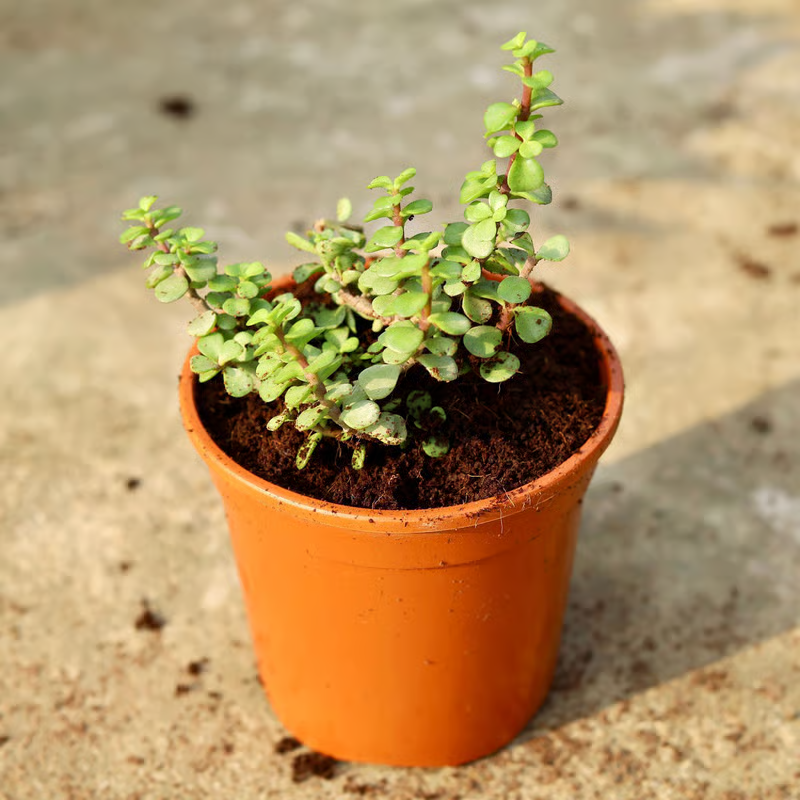
Jade Plant
Its compact form and thick, glossy leaves provide an attractive contrast. Ideal for desks, shelves, and gifting combinations alongside Snake Plant. Buy Jade Plants online.