



Get your winter vegetable seeds to sprout this season. Learn the right soil mix, sowing depth, watering routine, and shade tips for Indian conditions. A month-by-month sowing calendar from October to February is included.
Key Takeaways
-
-
- Use a light, well-draining seed-starting mix. Heavy, compacted soil can prevent germination.
- Sow seeds about 2–3 times their thickness, or follow the seed packet's instructions.
- Keep the soil moist, not waterlogged. Use a fine spray to avoid displacing seeds.
- Protect winter seed trays from strong afternoon heat, especially during October.
- Use pots or seedling trays with drainage holes to prevent waterlogging.
- Test older seeds on a damp paper towel. If fewer than 5 out of 10 sprout within the expected time, consider buying fresh seeds.
- October and November are important sowing months for many winter vegetables. Timing varies by crop and region.
- If seeds haven't sprouted after 3 weeks, check their expected germination time, inspect a few seeds, and re-sow after correcting the problem.
-
You sowed palak, methi, or dhaniya seeds in your pots, watered them regularly, and waited for tiny green shoots to appear. But days have passed, and there is still no sign of growth.
If your winter vegetable seeds aren't sprouting, the problem could be something as simple as planting them too deep, using compacted soil, or giving them too much water. Even the warm afternoons of October can affect germination, especially for cool-season crops.
Seeds need the right balance of moisture, temperature, and oxygen to begin growing. When these conditions aren't right, germination can slow down or fail altogether.
Here are seven common reasons winter vegetable seeds fail to germinate in Indian home gardens, along with simple fixes to help you get them growing.
What Are the Reasons for Seeds Not Sprouting?
1. You Are Using the Wrong Soil
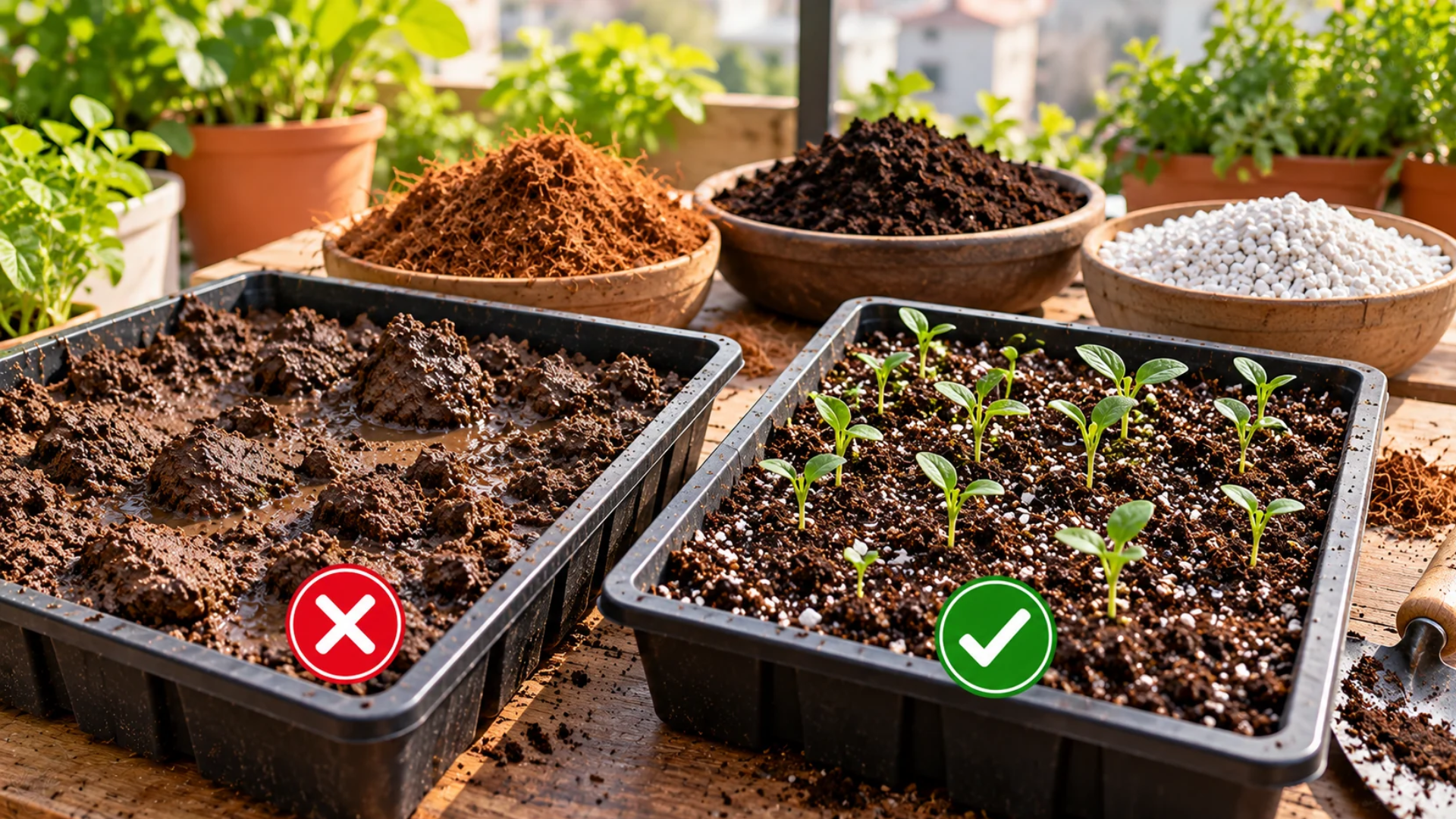
Seeds need three things to germinate:
- Moisture
- Warmth
- Oxygen
The type of soil you use affects how much moisture and oxygen reach the seeds.
Heavy, compacted soil, especially soil with high clay content, can hold too much water and leave little space for air. Without enough oxygen, seeds may struggle to germinate or rot before they sprout.
Fix
Use a light, well-draining seed-starting mix. The ideal ratio for germinating winter vegetable seeds at home is:
- 50% cocopeat (for moisture retention and lightness)
- 30% vermicompost (for gentle nutrition)
- 20% sand or perlite (for drainage)
This mix holds moisture without getting soggy, stays light enough for delicate seedling roots to push through, and gives seeds the oxygen they need to germinate.
Tip: If you are buying a ready-made potting mix, make sure it is labelled for seed starting. Avoid using pure garden soil or heavy clay-based mixes.
2. You Buried the Seeds Too Deep
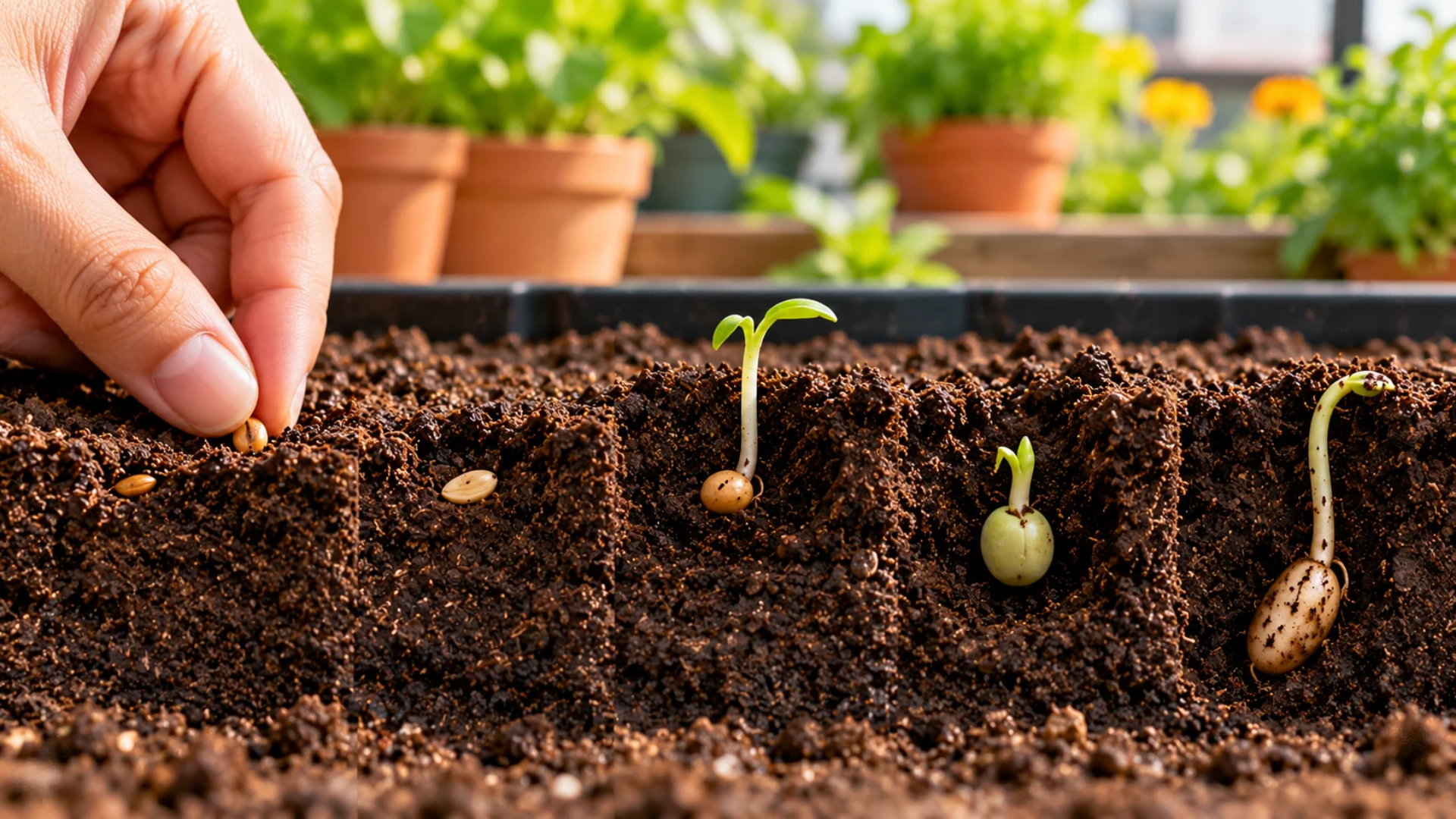
Seeds have a limited store of energy to push their first shoots through the soil. If planted too deep, the shoots may not reach the surface.
Fix
Sow most seeds at a depth of about two to three times their thickness. Check the seed packet for specific instructions.
For common Indian winter vegetables, use these depths:
- Lettuce and sarson: Sow on the surface or cover very lightly, up to 0.5 cm.
- Pyaaz, gobhi, and broccoli: Cover with around 0.5–1 cm of fine soil.
- Palak, dhaniya, methi, and mooli: Sow around 1–2 cm deep.
- Matar: Sow around 2.5–4 cm deep.
For smaller seeds, you don't need a deep hole made with a khurpi. Make a shallow furrow, place the seeds at the recommended depth, cover gently, and keep the soil moist.
3. You Are Overwatering (or Underwatering)
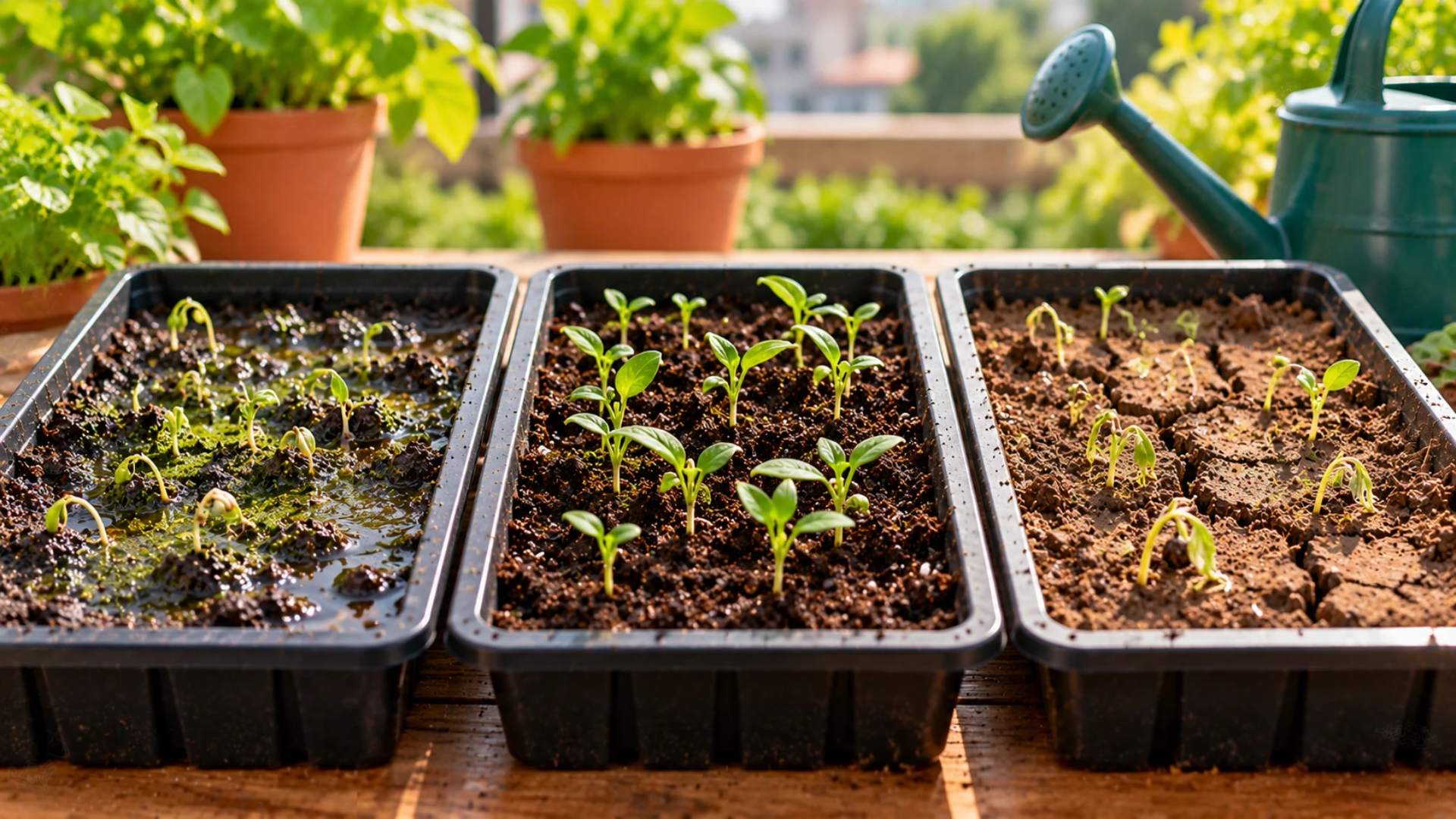
Seeds need moisture to germinate, but they also need oxygen. Too much water can cause seeds to rot, while too little can prevent them from sprouting.
Check your seed tray for these signs to find out which problems you have.
| Signs of Overwatering | Signs of Underwatering |
|---|---|
| Soil stays wet and shiny for long periods. | Soil pulls away from the edges of the pot. |
| Green algae or white mould appears on the soil surface. | The top layer feels dry and crumbly. |
| Seeds become soft or mushy. | Seeds appear dry or shrivelled. |
Fix
Keep the soil consistently moist but never waterlogged. Follow these steps to get the moisture right:
- Check the soil: Touch the surface before watering. It should feel slightly damp, not soaked.
- Water gently: Use a spray bottle or watering can with a fine nozzle to avoid displacing seeds.
- Avoid excess watering: If the soil is already moist, check again later instead of adding more water.
Watering Tip for Indian Winters:In North Indian cities like Delhi, Chandigarh, and Jaipur, cooler evenings can slow soil drying. Water in the morning when needed, and check the moisture before watering again. Avoid leaving seed trays waterlogged overnight. In South India (Bangalore, Chennai, Hyderabad), warmer days dry the soil faster, so check daily and water lightly. Everywhere, avoid leaving seed trays waterlogged overnight.
4. The Temperature Is Too Hot (or Not Right)
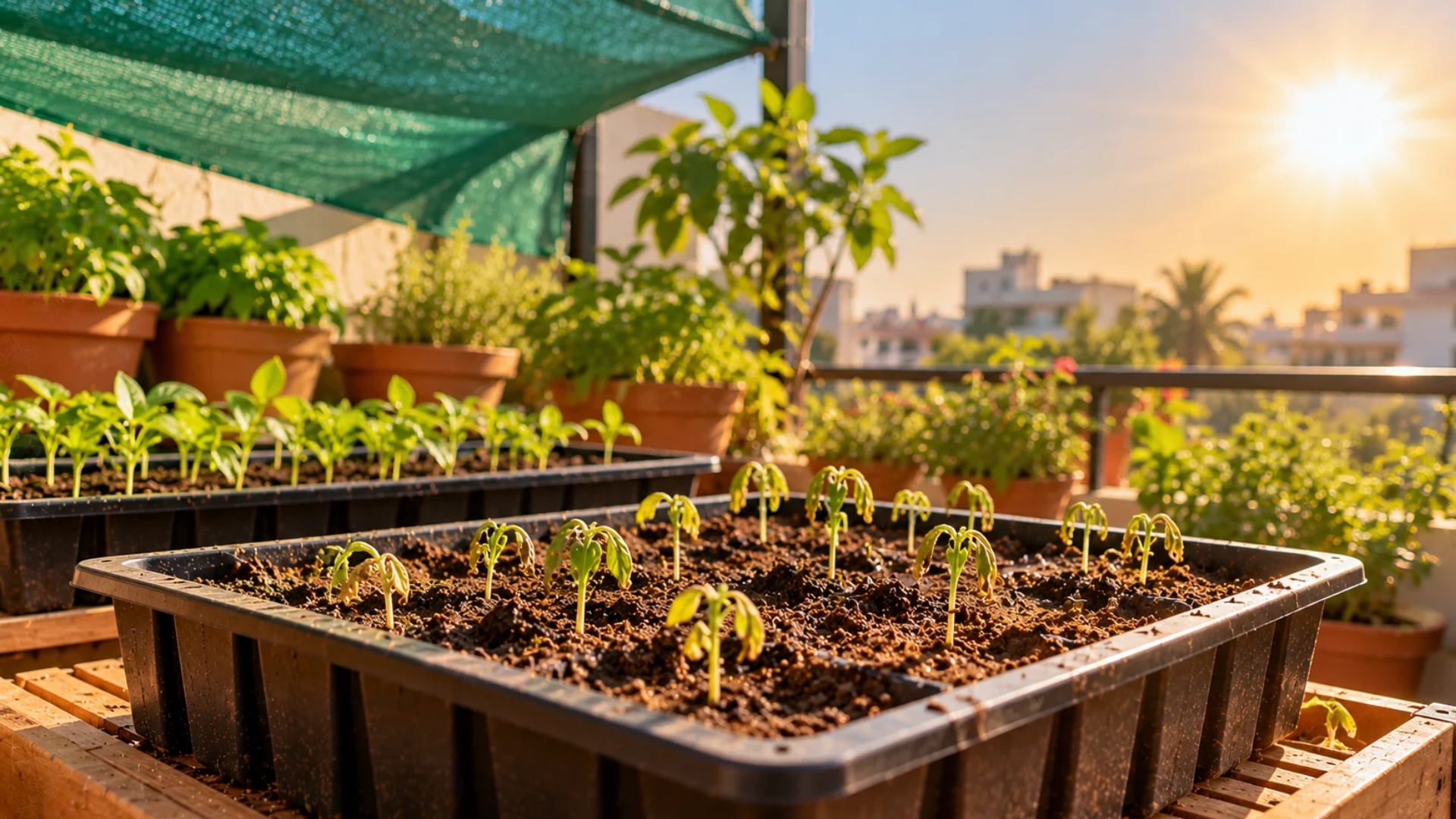
October can still be warm across India. In North India, daytime temperatures can reach 32-35°C. In South India, cities like Chennai and Hyderabad also stay warm, while Bangalore is milder. Many winter vegetable seeds germinate best in cooler conditions, generally around 15-25°C, depending on the crop.
Direct afternoon sunlight can make the soil inside pots much hotter than the surrounding air.
Heat affects the soil in three ways. When the soil gets too hot:
- Seeds may fail to germinate.
- Soil dries out faster, reducing the moisture seeds need.
- Young seedlings may wilt or dry out.
Fix
Use these steps to keep the soil cooler:
- Choose morning sunlight: Place seed trays where they receive morning sun and afternoon shade. East-facing balconies are a good option.
- Provide afternoon shade: On south- or west-facing balconies, use shade cloth during the hottest hours, usually 12 PM to 4 PM.
- Keep trays off hot floors: Place them on a stand, wooden board, or coir mat instead of directly on heated concrete or tiles.
- Adjust as temperatures cool: During November, gradually increase sunlight exposure when daytime temperatures become milder. Keep newly germinated seedlings protected from excessive heat.
Regional tip: Temperatures differ across India, so check your local weather before sowing. In milder cities like Bangalore, you can sow earlier. In warmer cities like Chennai and Hyderabad, use shade or wait for cooler weather before sowing cool-season crops such as peas and broccoli.
5. Your Seeds Are Old or Were Stored Badly
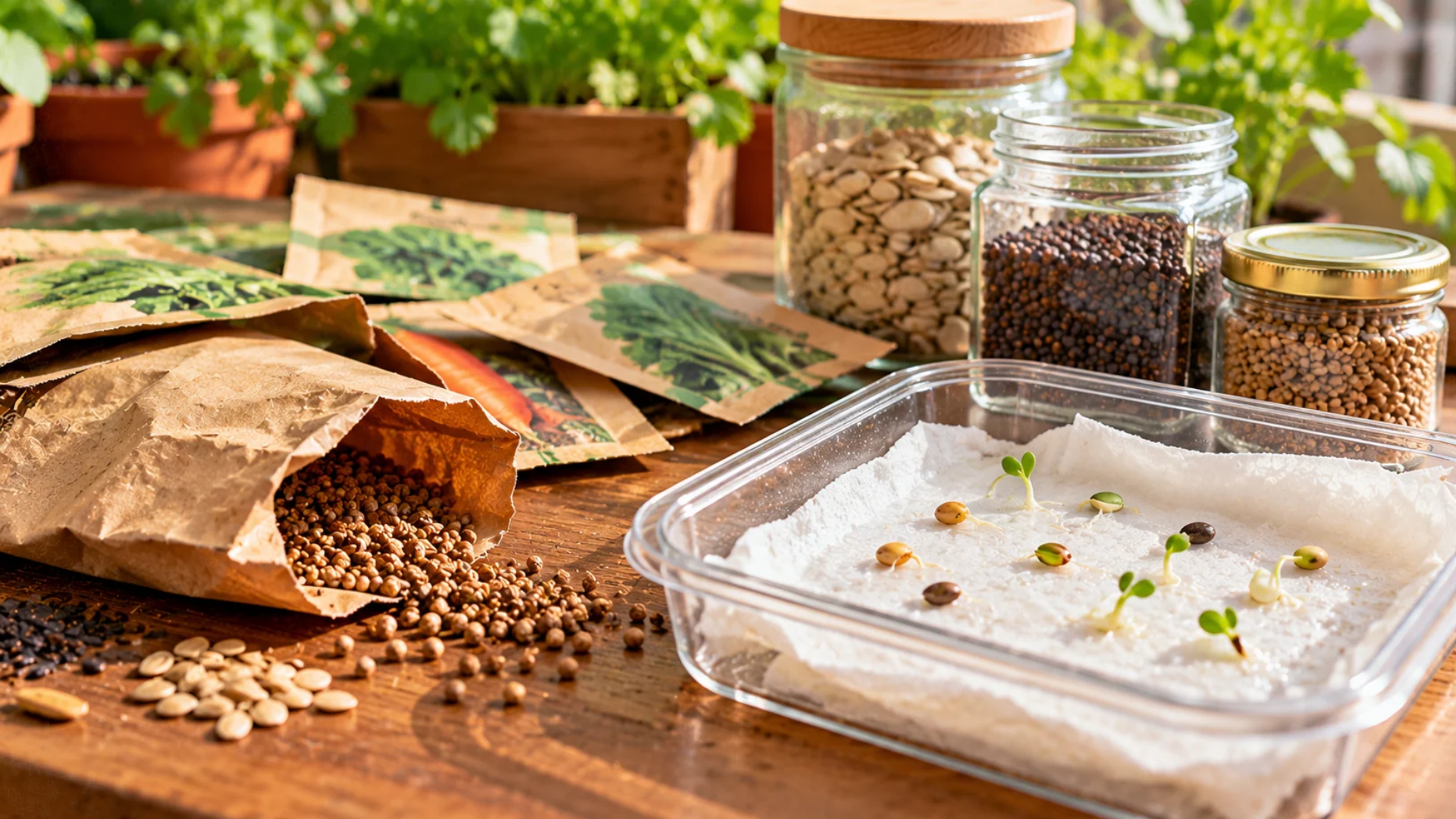
Seeds gradually lose their ability to germinate, especially when exposed to heat and moisture. This can happen when:
- Seeds are stored in open containers exposed to humidity.
- Leftover seeds from the previous winter are kept in a hot kitchen or drawer.
- Seed packets are stored in damp conditions during the monsoon.
Fix
Before sowing older seeds, try a simple paper towel germination test:
- Take 10 seeds from the packet.
- Place them on a damp paper towel and fold it over.
- Put the towel inside a sealed plastic bag or container.
- Keep it at the temperature recommended for the seeds, away from direct sunlight.
- Check every few days. Many seeds sprout within 7–10 days, but some take longer.
Read the results: Once the test period ends, count how many of the 10 seeds have sprouted. This tells you what to do with the rest of the packet.
- 7–10 seeds sprout: The batch is usable.
- 5–6 seeds sprout: Sow extra seeds to make up for poor germination.
- Fewer than 5 sprout: Consider buying fresh seeds.
Storage Tip for Indian Weather: To avoid this problem next time, keep unused seeds in labelled, airtight containers in a cool, dry place. A refrigerator works well for storing thoroughly dried seeds, provided the container stays sealed against moisture.
6. You Skipped Seed Preparation
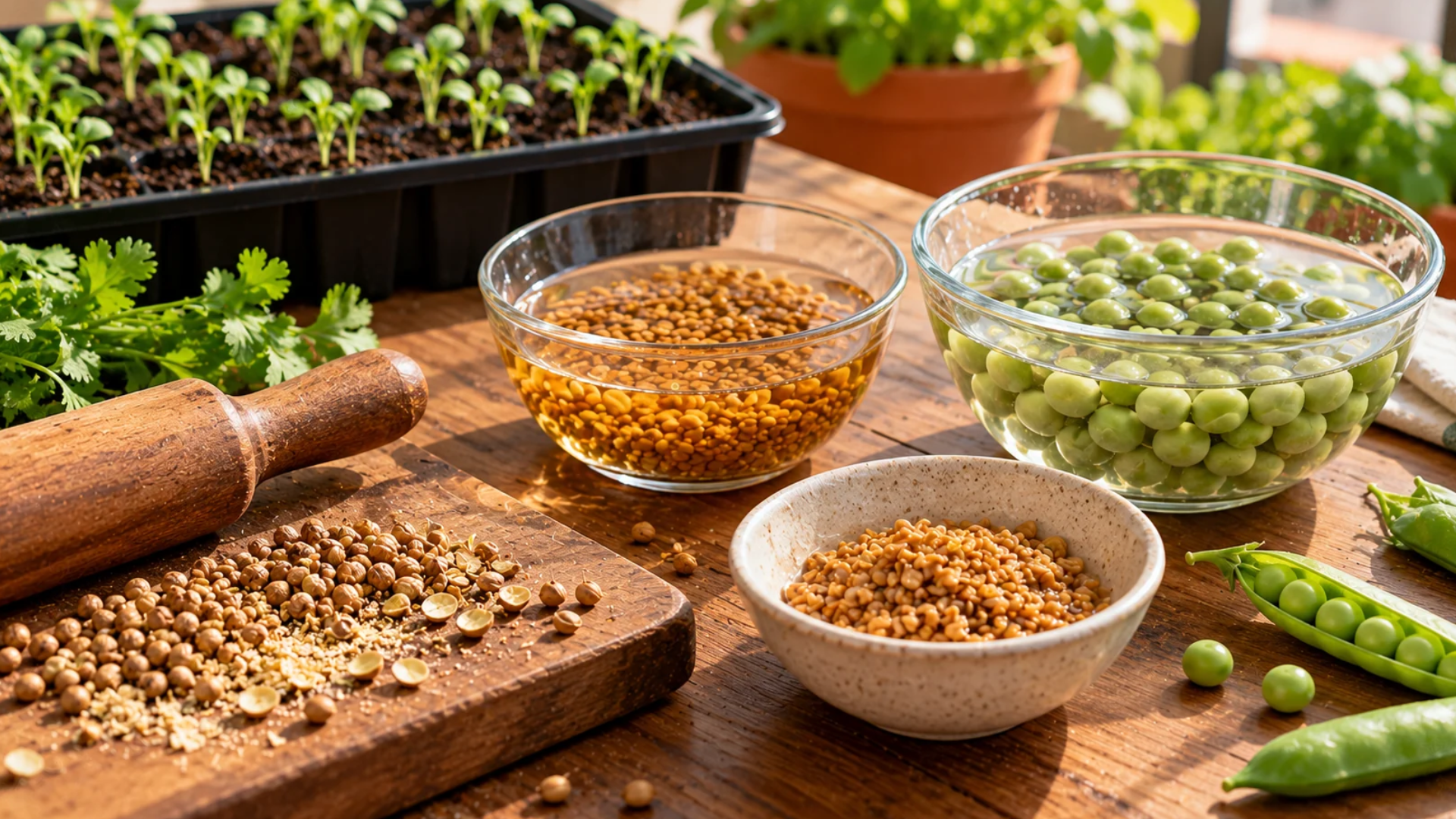
Some winter vegetable seeds germinate faster when soaked or prepared before sowing. However, not all seeds need this step.
Fix
Prepare these seeds before planting:
- Dhaniya (coriander): Gently split the round seed husk into two halves using a belan. Avoid crushing the seeds inside. This can improve germination.
- Methi (fenugreek): Soak seeds in room-temperature water for 8–12 hours. Drain and sow immediately.
- Matar (peas): Soaking for 6–8 hours can speed up germination, but it is optional. Sow immediately after soaking.
Do not soak seeds for too long. Prolonged soaking can deprive them of oxygen and affect germination.
No preparation needed: Palak, mooli, gobhi, broccoli, sarson, and pyaaz can generally be sown directly into moist soil.
7. Your Container Has No Drainage
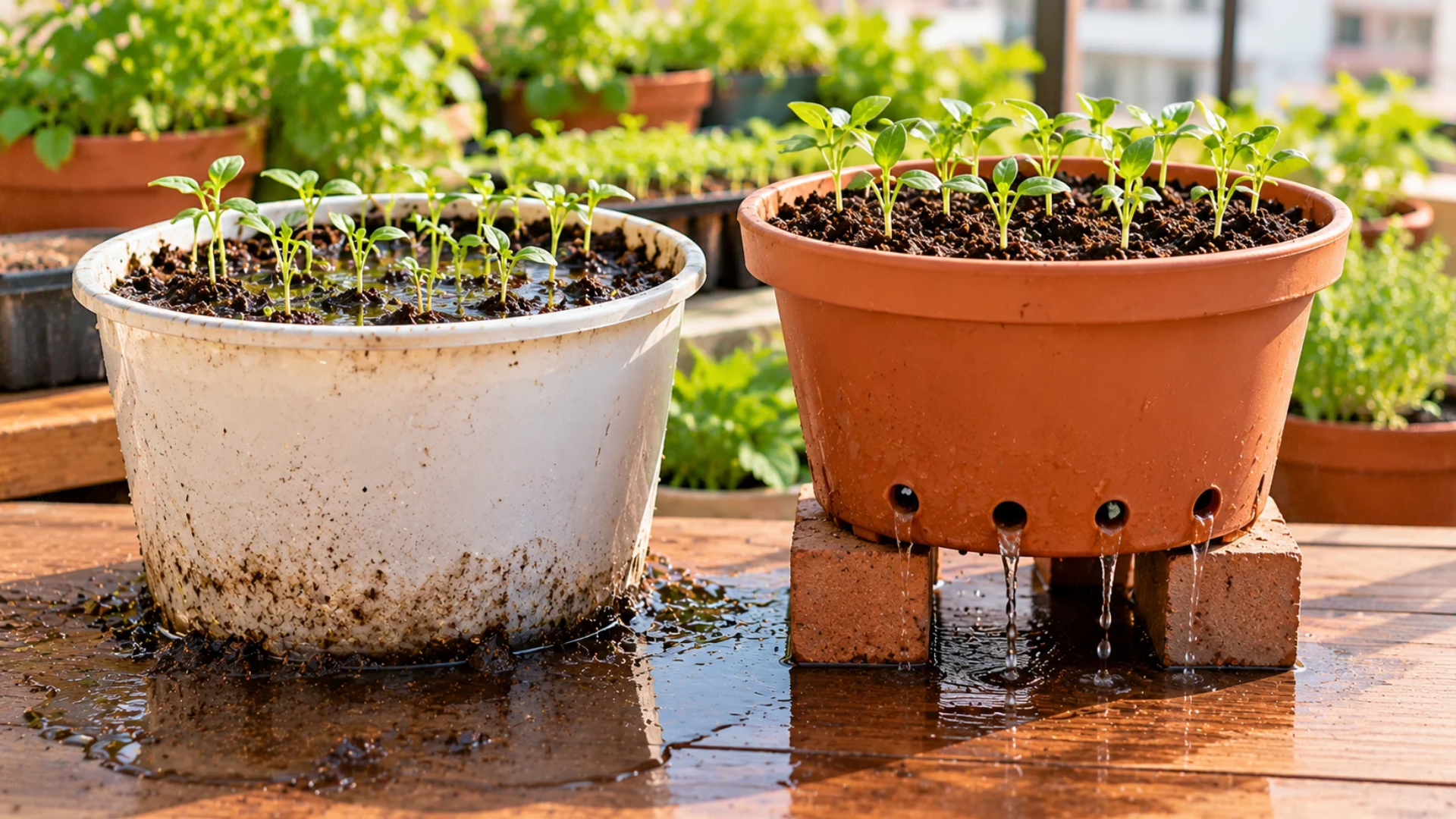
Old buckets, plastic boxes, tin cans, and thermocol containers can be used for seed starting, but they need drainage holes.
Without proper drainage, excess water collects at the bottom, leaving the soil waterlogged. This reduces oxygen around the seeds and increases the risk of seed rot and fungal diseases.
Fix
Use these steps to help excess water drain out:
- Add drainage holes: Make several holes at the bottom of reused containers so excess water can escape.
- Check seedling trays: Make sure the drainage holes are not blocked by soil.
- Raise the containers: Place pots on a stand or bricks to allow water to drain freely.
- Empty saucers: Remove standing water after watering to prevent waterlogging.
- Skip the stone layer: Gravel or broken terracotta at the bottom does not improve drainage. Use a well-draining seed-starting mix instead.
Winter Vegetable Sowing Calendar for India (October–February)
| Month | What to Sow | Sowing Tips |
|---|---|---|
| October | Palak (पालक), methi (मेथी), dhaniya (धनिया), mooli (मूली), gajar (गाजर), sarson (सरसों), matar (मटर) | Sow leafy greens and root vegetables directly. Start peas from mid-October. Transplant suitable gobhi (फूलगोभी), patta gobhi (पत्तागोभी), and broccoli (ब्रोकली) seedlings raised earlier. |
| November | Matar (मटर), gajar (गाजर), mooli (मूली), shalgam (शलगम), beetroot (चुकंदर), pyaaz (प्याज), lettuce (सलाद पत्ता) | Complete the main pea sowing by mid-November. Sow root vegetables directly and raise onion seedlings for later transplanting. |
| December | Palak (पालक), methi (मेथी), dhaniya (धनिया), lettuce (सलाद पत्ता), mooli (मूली) | Sow small batches of leafy greens where temperatures permit. Choose suitable radish varieties and protect young seedlings from frost. |
| January | Mooli (मूली), palak (पालक), methi (मेथी) | Choose suitable late-season radish varieties, such as Pusa Himani. Sow leafy greens where conditions are suitable and protect seedlings during severe cold. |
| February | Mooli (मूली), palak (पालक); tomato (टमाटर), chilli (मिर्च), and brinjal (बैंगन) for spring nurseries | Sow suitable spring varieties of radish and palak. Start warm-season seedlings in protected trays according to local temperatures. |
NOTE: This calendar is a general guide. Check your local temperatures and seed packet instructions before planting.
Conclusion
Winter gardening in India is one of the most rewarding things you can do on a balcony, terrace, or small garden plot. The rabi season gives you cool temperatures, manageable sunlight, and a lineup of vegetables that are genuinely easy to grow once the basics are right.
If your seeds are not sprouting, the fix is almost always one of these: better soil, shallower sowing, correct moisture, or fresh seeds. You do not need expensive equipment. You do not need a green thumb. You need the right information and a willingness to try again.
The best time to sow winter vegetable seeds in India is right now. October and November are your peak window. Fix what went wrong, re-sow, and give yourself the kitchen garden you have been imagining.
Frequently Asked Questions (FAQs)
1. What chemical helps seeds germinate?
No chemical is necessary for home gardening. Seeds germinate naturally when they receive the right combination of moisture, temperature, and oxygen. Some commercial growers use gibberellic acid (GA3) to speed up germination, but for home gardens, simple techniques like soaking seeds overnight and using the right soil mix are effective and far safer.
2. Does vinegar help germinate seeds?
A very dilute vinegar solution (1 teaspoon in 1 litre of water) has been used by some gardeners to soften hard seed coats, similar to a mild scarification technique. However, this is not recommended for most Indian winter vegetable seeds, which germinate well with plain water soaking. Using vinegar at the wrong concentration can damage seeds.
3. How do I get stubborn seeds to germinate?
Stubborn germination is usually caused by one of two things: the seed coat is too hard, or the seed needs a temperature change to break dormancy. For hard-coated seeds, soak in warm water for 8 to 12 hours. For seeds that need cold stratification (common in many perennial flowers and some herbs, but rare in Indian winter vegetables), place them in a damp cloth inside the refrigerator for 2 to 4 weeks before sowing.
4. What triggers seeds to sprout?
Three factors trigger germination: water absorption (the seed swells and softens), temperature within the right range (signals the correct season), and oxygen availability in the soil. When all three conditions are met, the seed's internal enzymes activate, the embryo begins to grow, and the first root pushes downward while the shoot pushes upward.
5. My seeds germinated but the seedlings died. What happened?
This is likely "damping off," a fungal disease caused by excess moisture and poor air circulation. The seedling stem becomes thin and watery at the soil line and collapses. To prevent this, use sterilized or fresh seed-starting mix, avoid overwatering, ensure containers have drainage holes, and provide gentle air circulation around seedlings.
6. Can I reuse soil where seeds failed to sprout?
Yes, if the failure was not caused by disease. Loosen the soil, let it dry out partially, and mix in fresh cocopeat and vermicompost to restore its texture. If you saw mould or fungal growth, discard that soil and start fresh.
7. What should I do if my vegetable seeds haven’t sprouted after 3 weeks?
Check the seed packet first, as germination times vary. If the seeds are overdue, gently inspect one or two:
- Mushy seeds: Excess water or poor drainage may have caused rot.
- Dry, hard seeds: Insufficient moisture may have prevented germination.
- Seeds with white roots: Deep sowing or compacted soil may be blocking growth.
Fix the issue and re-sow 10–15 fresh seeds to test germination before planting more.
8. How can I germinate winter vegetable seeds faster?
You can try the damp cloth method to encourage germination. Here is a step-by-step process:
- Place seeds between two layers of damp cotton cloth or paper towel.
- Keep them in a loosely covered container at a suitable temperature, away from direct sunlight.
- Check daily and keep the cloth moist.
- Once tiny white roots appear, gently transfer the seeds to moist, well-draining seed-starting mix.
This method can be useful for dhaniya, palak, methi, and mooli. Germination time varies by crop, so follow the seed packet’s instructions.
9. किसकी कमी के कारण अंकुरण अच्छा नहीं होता है?
बीज का अंकुरण नमी, ऑक्सीजन और सही तापमान की कमी से खराब होता है। पुराने या खराब बीज और गलत गहराई पर बुवाई भी बड़े कारण हैं। इनमें से किसी एक की कमी होने पर बीज देर से उगते हैं या नहीं उगते।