



Are you looking to add a special touch to your garden?
A garden feels complete with plants that stay green, bloom with color, and make the space feel calm and lively. The Ashoka tree fits all of this perfectly.
Key Takeaway
- The Ashoka tree is a low-maintenance and climate-friendly plant.
- Stays green all year with fresh and colourful leaves.
- Produces beautiful orange-red flowers in season.
- Has strong cultural and spiritual importance in India.
- Used in Ayurveda for health benefits.
- Great for privacy, shade, and garden design.
- Easy to grow with basic care and sunlight.
With its tall, straight trunk, glossy green leaves, and bright orange-red flowers, the Ashoka tree adds beauty, calm, and meaning to any garden. It provides shade, privacy, and even a cultural touch, while being low-maintenance and naturally suited to Indian weather.
For anyone who wants a garden that feels alive, well-kept, and full of character, the Ashoka tree is a must-have.
Read this post to know more about the Ashoka tree and why it’s perfect for your garden.
What Is An Ashoka Tree?
Ashoka Tree, अशोक का वृक्ष, is often called the “sorrowless tree”, and that’s not just a fancy name. The name “Ashoka” comes from Sanskrit, where “A” means without and “shoka” means sorrow. So, it literally means a tree that removes sadness. Because of this belief, people traditionally planted it near homes and temples to bring peace and positivity.
| Ashoka tree scientific name / botanical name | Saraca asoca (also Saraca indica) |
|---|---|
| Ashoka tree family | Fabaceae |
| Known as | Sorrowless Tree (Ashoka tree in English) |
| Regional names | Asoka maram (Tamil/Malayalam), Ashoka chettu (Telugu), Debdaru / Debadaru (Bengali), Asopalav (Gujarati), Ashoka ped (Marathi/Hindi) |
| Type | Flowering, spreading, sacred |
| Height | 9–12 metres |
Features Of The Ashoka Tree
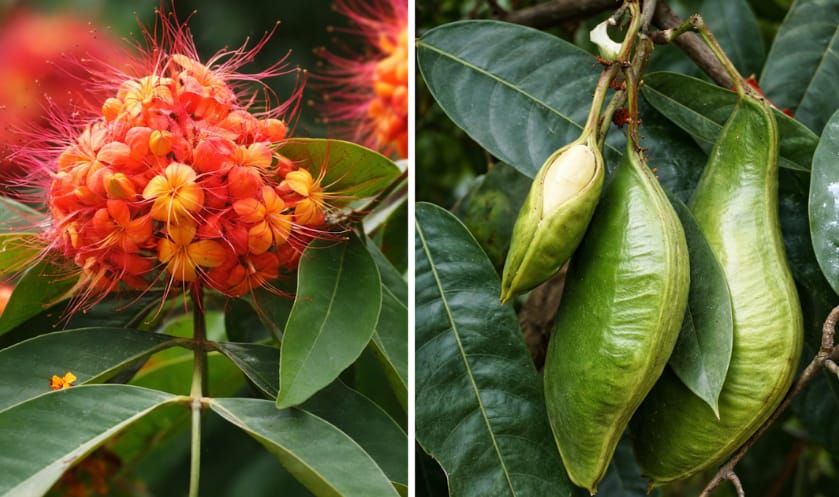
Leaves
- The leaves start in a soft copper-red shade, which gives the tree a unique look.
- As they mature, they gradually turn into a deep, rich green.
- Their dense growth makes the tree look full, lush, and naturally elegant.
Flowers
- The flowers grow in beautiful clusters, making the tree look vibrant and eye-catching.
- One of the most striking features is their colour change—from yellow to orange and then deep red.
- They usually bloom in abundance, adding a warm, decorative charm to the tree.
Fruits & Seeds
- Over time, the tree produces flat pods that contain its seeds.
- These pods add another layer of visual interest after the flowering stage.
- The seeds inside help in the natural reproduction of the tree.
Interesting Fact
In the Sanskrit play Mālavikāgnimitram by Kalidasa, the Ashoka tree is linked to the ritual of Dohada, where it is believed to bloom when touched by a woman’s foot. This poetic idea symbolises love and beauty, and has been part of Indian tradition for over 1,500 years.
Why The Ashoka Tree Is Perfect For Indian Gardens
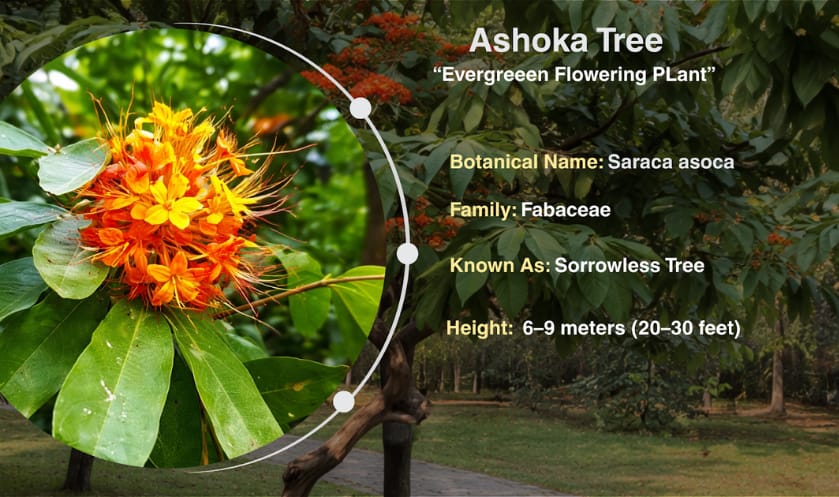
Imagine a tree that quietly fits into your space, handles the weather on its own, and still manages to look beautiful every single day. This is exactly what the Ashoka tree offers.
1. Designed For The Indian Climate
The Ashoka tree is naturally suited to Indian weather. It grows well in heat, handles humidity easily, and does not struggle during the monsoon. Because it is native, it needs very little effort to thrive, making it a great low-maintenance choice for any home garden.
2. A Tree That Looks Alive All Year
One of the best things about the Ashoka plant is that it never looks dull. It stays green throughout the year, with fresh copper-coloured leaves appearing often. Between February and April, the Ashoka flower blooms in bright shades, and later, you will notice elegant seed pods.
3. Beautiful And Elegant Look
If you want a clean and structured garden, the false Ashoka is perfect. Its tall and straight growth, along with dense green foliage, makes it ideal for lining boundaries, decorating pathways, or creating natural privacy screens.
4. Stunning Flowers That Stand Out
The Ashoka tree flower is truly eye-catching. It blooms in clusters and changes colour from yellow to orange to deep red. These fragrant flowers instantly add life and colour to any space during the flowering season.
5. Trusted Medicinal Value
The real Ashoka tree (Saraca asoca) has been used in Ayurveda for centuries. It is especially known for supporting women’s health and is also used for reducing inflammation and improving skin health.
Did You Know?
The ashoka tree features in both the Charaka Samhita and the Sushruta Samhita, two of the oldest and most authoritative texts in Ayurvedic medicine. That's not folk wisdom; that's a 3,000-year clinical record.
6. Good For Your Surroundings
The thick leaves of the Ashoka tree act as a natural sound barrier, which is helpful in busy areas. It also improves air quality and provides cool shade, making your garden more comfortable.
Types Of Ashoka Tree
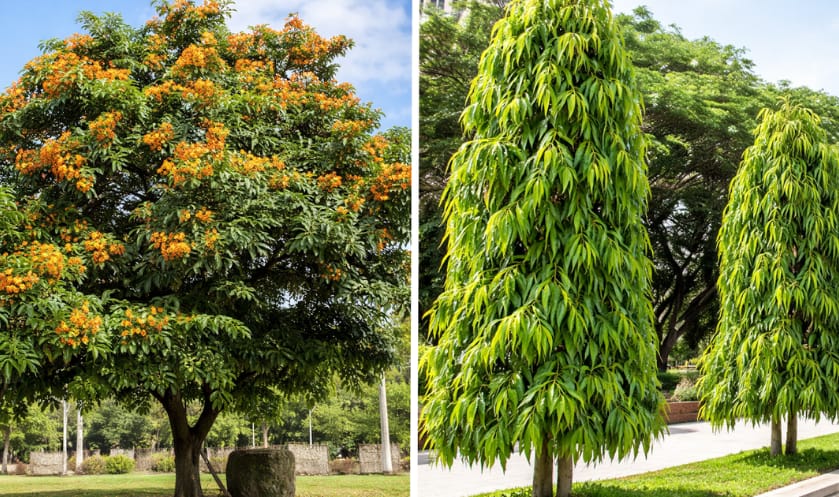
Many people often get confused between the Ashoka tree and the False Ashoka. Are they the same?
The short answer is: no, they are not the same. They may look similar at first, but they are actually very different plants with different uses.
Let’s understand this in a simple way
| Feature | True Ashoka (Saraca asoca) | False Ashoka (Polyalthia longifolia / Debdaru) |
|---|---|---|
| Family | Fabaceae | Annonaceae |
| Growth Shape | Bushy, spreading, full canopy | Tall, straight, narrow (columnar) |
| Height & Form | Medium height, wide growth | Grows tall and compact |
| Flowers | Bright orange-red clusters, mildly fragrant | Small, greenish, no fragrance |
| Main Appeal | Flowers, beauty, cultural value | Structure, height (tall hedge effect), neat look |
| Medicinal Use | Widely used in Ayurveda | Minimal medicinal use |
| Cultural Importance | Strong (temples, traditions) | Not culturally significant |
| Best Use | Garden centrepiece, temple planting | Privacy screens, driveways, boundaries |
| Overall Purpose | Beauty + meaning | Structure + functionality |
So, Which One Should You Choose?
It really depends on what your garden needs.
- If you want flowers, fragrance, and cultural value, go for the real Ashoka tree.
- If you want privacy, height, and a low-maintenance structure, then choose false Ashoka.
Many Indian homes actually plant both together, one for beauty, the other for structure. And that’s what makes the Ashoka plant such a versatile choice for Indian gardens.
Cultural And Religious Importance Of The Ashoka Tree
The Ashoka tree is not just a plant. It carries deep meaning in Indian culture and beliefs.
1. Link With The Ramayana
You may have heard of Sita Ashok. It is believed that Goddess Sita stayed under an Ashoka tree in Ashok Vatika. Because of this, the tree is often linked with hope, strength, and protection during difficult times.
2. Significance In Buddhism
In Buddhism, the Ashoka tree is seen as a symbol of life and awakening. It is believed that Queen Maya gave birth to Siddhartha Gautama under this tree in Lumbini. Because of this, the tree stands for new beginnings and spiritual growth. You’ll often see it planted near monasteries, where it adds a sense of peace and reflection.
3. Symbol Of Love And Happiness
In Hindu beliefs, the Ashoka tree is connected to Kamadeva, the god of love. Because of this, it symbolises love, attraction, and emotional connection.
4. Vastu Benefits For Your Home
Many people plant the Ashoka tree for its vastu benefits. It is believed to:
- Remove grief and negative energy
- Bring mental peace and calmness
- Attract prosperity and positivity
It is also seen as a great choice for new homes and newly married couples, as it is believed to support harmony, love, and fertility in relationships.
How To Grow An Ashoka Tree At Home
Growing an Ashoka tree (Saraca asoca) at home is quite easy if you follow a few basics.
-
Best time to plant
You can plant it in the spring if you’re using pots. For garden planting, the monsoon (June–August) is ideal as the soil stays naturally moist.
-
Sunlight
It needs at least 6+ hours of direct sunlight daily. Full sun helps the plant grow faster and produce more flowers, though it can also manage in partial shade.
-
Watering
For young plants, water every 2–3 days. Once the plant is established, watering once a week is enough. Keep the soil slightly moist, not soggy.
-
Soil
Use well-draining, fertile loamy soil. A slightly acidic to neutral pH (6.0–7.5) works best. Mixing compost improves growth.
-
Fertiliser
Add compost every 3 months. You can also use a balanced NPK fertiliser during spring and after the monsoon for better growth.
-
Pruning
After flowering (April–May), give it a light trim. This improves shape and encourages new growth.
-
Temperature
It grows well between 15°C and 40 °C. However, it is sensitive to frost in very cold regions.
-
Propagation
You can grow it from seeds or cuttings, depending on availability.
What Are Common Ashoka Tree Problems And How Can You Fix Them?
Even though the Ashoka plant is low-maintenance, a few issues can come up. The good part? They’re easy to handle.
-
Yellow leaves
This usually means you are overwatering. Let the soil dry a bit before watering again.
-
Slow growth
The plant may not be getting enough sunlight. Move it to a brighter spot.
-
Pests
Spray neem oil regularly to keep insects away.
-
Powdery mildew
This looks like a white layer on leaves. Improve air flow around the plant.
-
Root rot
Happens due to waterlogging. Make sure the pot or soil drains well.
Final Thought
If you think about it, the Ashoka tree solves a lot of common gardening problems. It handles the climate, stays green through the year, and doesn’t demand constant care. At the same time, it adds beauty and meaning to your space.
Whether you have a small garden or a larger one, it’s the kind of plant that simply works without making things complicated.
If you’re thinking of adding one, Urvann makes it simple. Fresh plants, careful packaging, and quick delivery straight to your door. You just need to place it and watch it grow.
FAQs for the Ashoka Tree
Q1: How fast does the Ashoka tree grow?
The growth depends on the variety. False Ashoka grows quite fast and can gain height quickly, while the real Ashoka grows at a moderate pace. With proper sunlight, watering, and care, you will see steady and healthy growth.
Q2: Can an Ashoka tree grow in pots?
Yes, young Ashoka plants can grow in large pots. However, as the tree grows bigger, it will need to be shifted to the ground. Regular pruning helps control its size and keeps it manageable in containers for longer.
Q3: Does the Ashoka tree need a lot of water?
No, the Ashoka tree does not need too much water. Keep the soil slightly moist but not soggy. Overwatering can cause yellow leaves or root problems. Once established, it becomes quite drought-tolerant and easy to manage.
Q4: What is the lifespan of an Ashoka tree?
The Ashoka tree can live for many years if cared for properly. With the right conditions, it can grow into a long-lasting tree that stays green and healthy, becoming a permanent and beautiful part of your garden.
Q5: Does the Ashoka tree attract birds or insects?
Yes, the Ashoka tree can attract birds, especially when it flowers or produces pods. It may also attract some insects, but they are usually harmless. Regular care and neem oil sprays can easily keep unwanted pests under control.
Garima
4/16/2026, 10:07 AMPlease don't order you will only lose your money and mental health. You will never get your product. No customer support No COD facility because they wanted to ditch you only. You will only jot down your complaint and they will never respond you.