


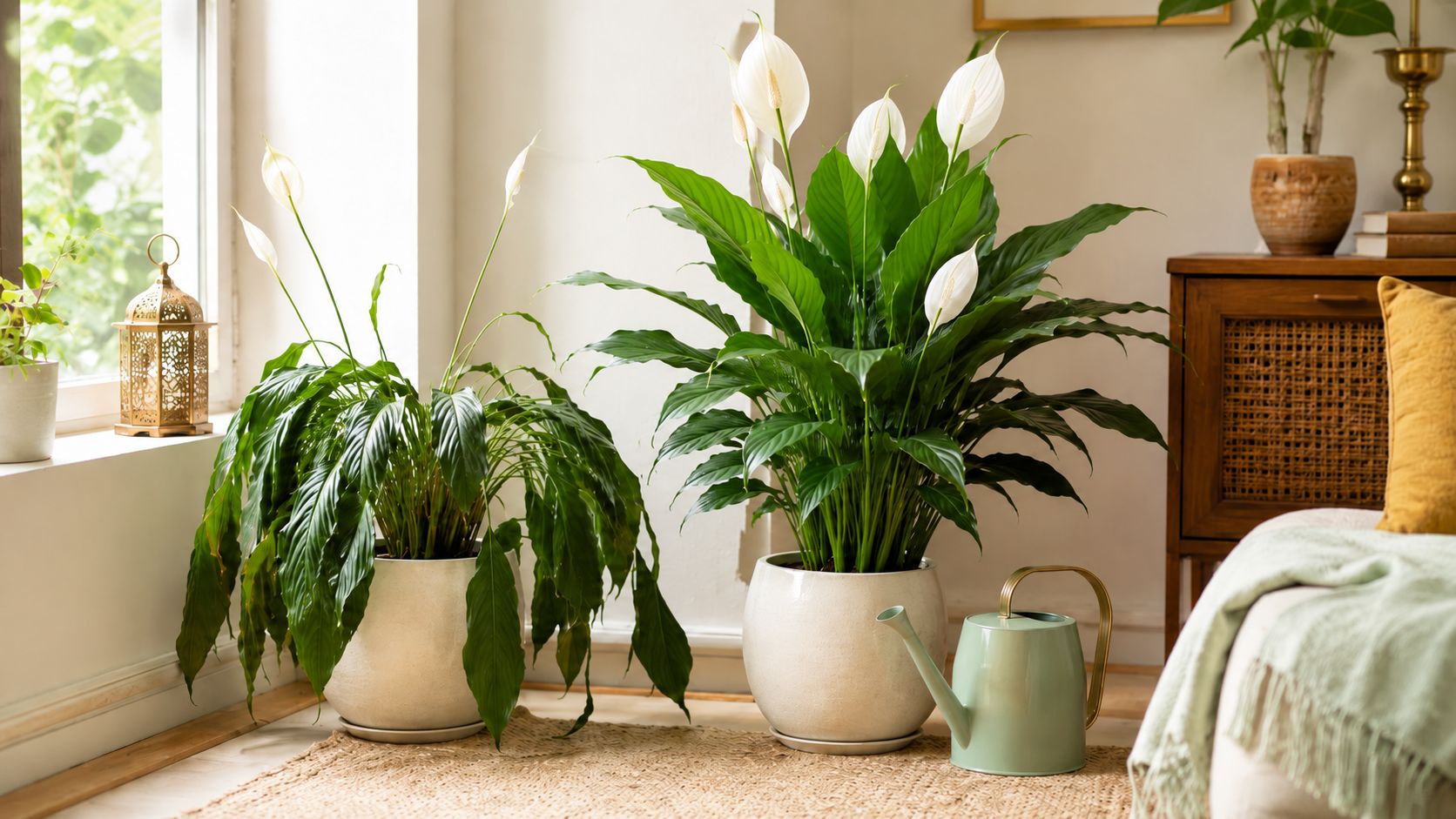
Understand the signs of a drooping Peace Lily, common watering, light, and root issues, and practical solutions to help it recover.
Key Takeaways
- Overwatering is one of the most common reasons for Peace Lily leaves drooping, especially during monsoon or in low-light indoor spaces where the soil takes longer to dry.
- Peace Lilies prefer bright indirect light. Harsh direct sunlight can scorch the leaves, while very low light can weaken the plant and make the soil stay wet for too long.
- AC rooms, dry indoor air, strong fan airflow, and sudden temperature changes can stress Peace Lilies and cause drooping, brown tips, or dull-looking leaves.
A Peace Lily is one of the most popular indoor plants for homes, offices, bedrooms, and living rooms. Its lush green foliage and elegant white blooms bring a fresh, calming, and sophisticated touch to any space.
However, Peace Lilies are highly responsive plants and often communicate their needs through their appearance. One day your plant may look healthy and upright, and the next day you may notice its leaves bending or drooping unexpectedly. If you've ever found yourself wondering,
"Why is my Peace Lily drooping?" there's usually no need to panic.
In most cases, drooping leaves are simply your plant's way of signaling that something in its growing conditions needs attention. It could be asking for water, suffering from overwatering, struggling with poor drainage, lacking humidity, receiving too much direct sunlight, or reacting to sudden environmental changes.
The key is to identify the underlying cause before taking corrective action. Overwatering a thirsty plant or repeatedly moving it from one spot to another can often worsen the problem instead of solving it.
In this guide, we'll explore the most common reasons behind Peace Lily drooping, how to diagnose the issue accurately, and the simple steps you can take to restore your plant's health and keep it thriving.
Why Is My Peace Lily Drooping?
Your Peace Lily may be drooping due to underwatering or overwatering, root rot, poor drainage, improper light, low humidity, temperature stress, repotting shock, or rootbound conditions. Start by checking the soil moisture. If the soil is dry, water deeply. If it is wet, inspect the drainage and roots before watering again.
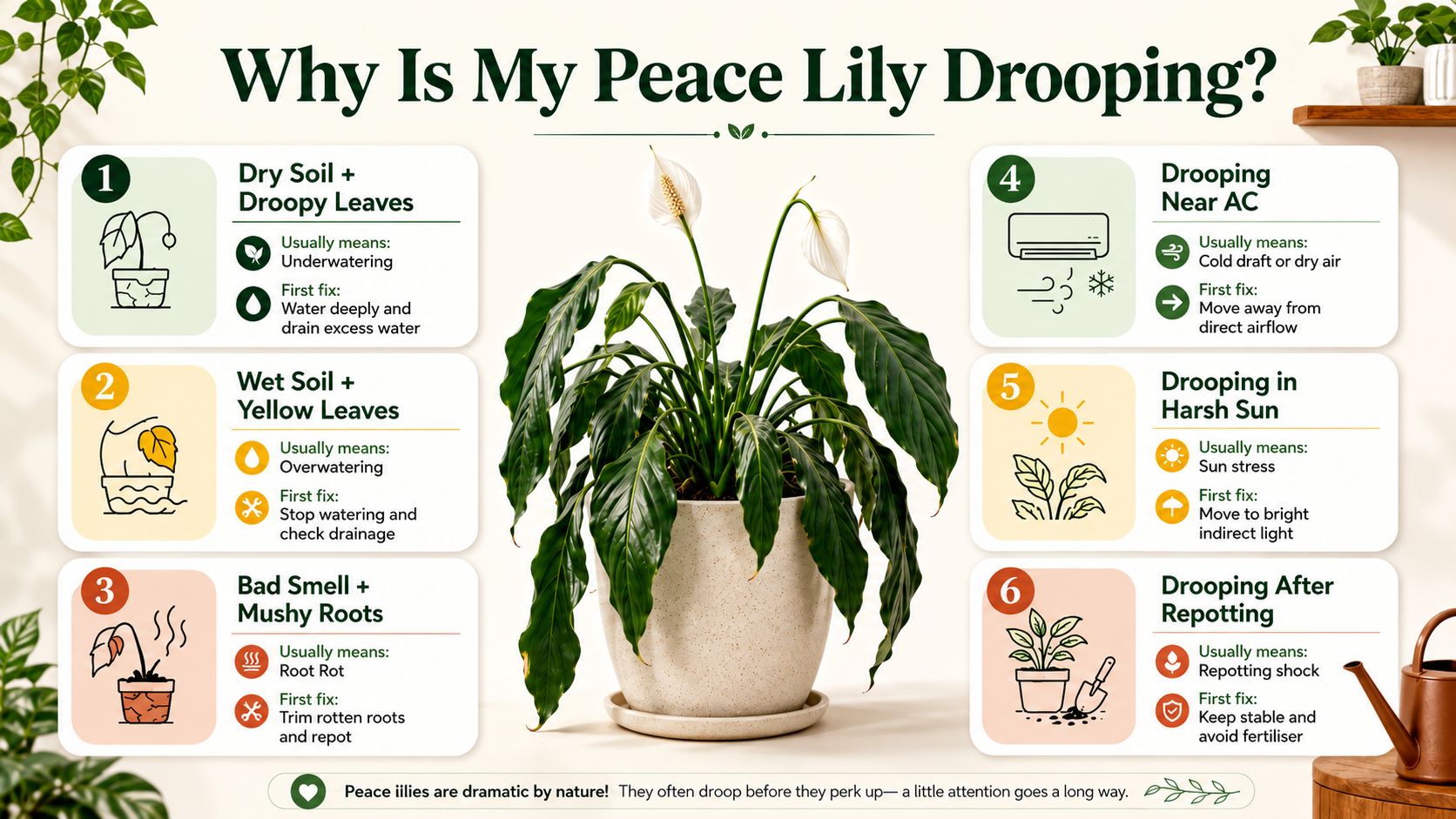
Peace Lily Drooping Diagnosis Table
Use this quick table before you start fixing the plant. It will help you understand what your Peace Lily is trying to tell you.
| What You Notice | Likely Cause | First Thing to Check | Quick Fix |
|---|---|---|---|
| Droopy leaves + dry soil | Underwatering | Top 1–2 inches of soil | Water deeply until excess water drains out |
| Droopy leaves + wet soil | Overwatering | Pot weight and drainage holes | Stop watering and let soil dry slightly |
| Drooping with yellow leaves | Root stress or overwatering | Soil smell and root condition | Check roots and improve drainage |
| Drooping after repotting | Repotting shock | Recent pot change | Keep in bright indirect light and avoid fertilizer |
| Drooping near AC | Cold draft or dry air | Plant placement | Move away from direct AC airflow |
| Drooping in harsh window light | Sun stress | Leaf edges and sunlight exposure | Move to filtered/indirect light |
| Drooping flowers only | Natural bloom aging | Flower age | Trim old flower stalks |
| Drooping with brown tips | Low humidity, underwatering, or water quality | Soil dryness and indoor air | Adjust watering and humidity |
| Drooping with black or mushy stems | Root rot or stem rot | Root colour and soil smell | Remove rotten roots and repot if needed |
Is Your Peace Lily Underwatered or Overwatered?
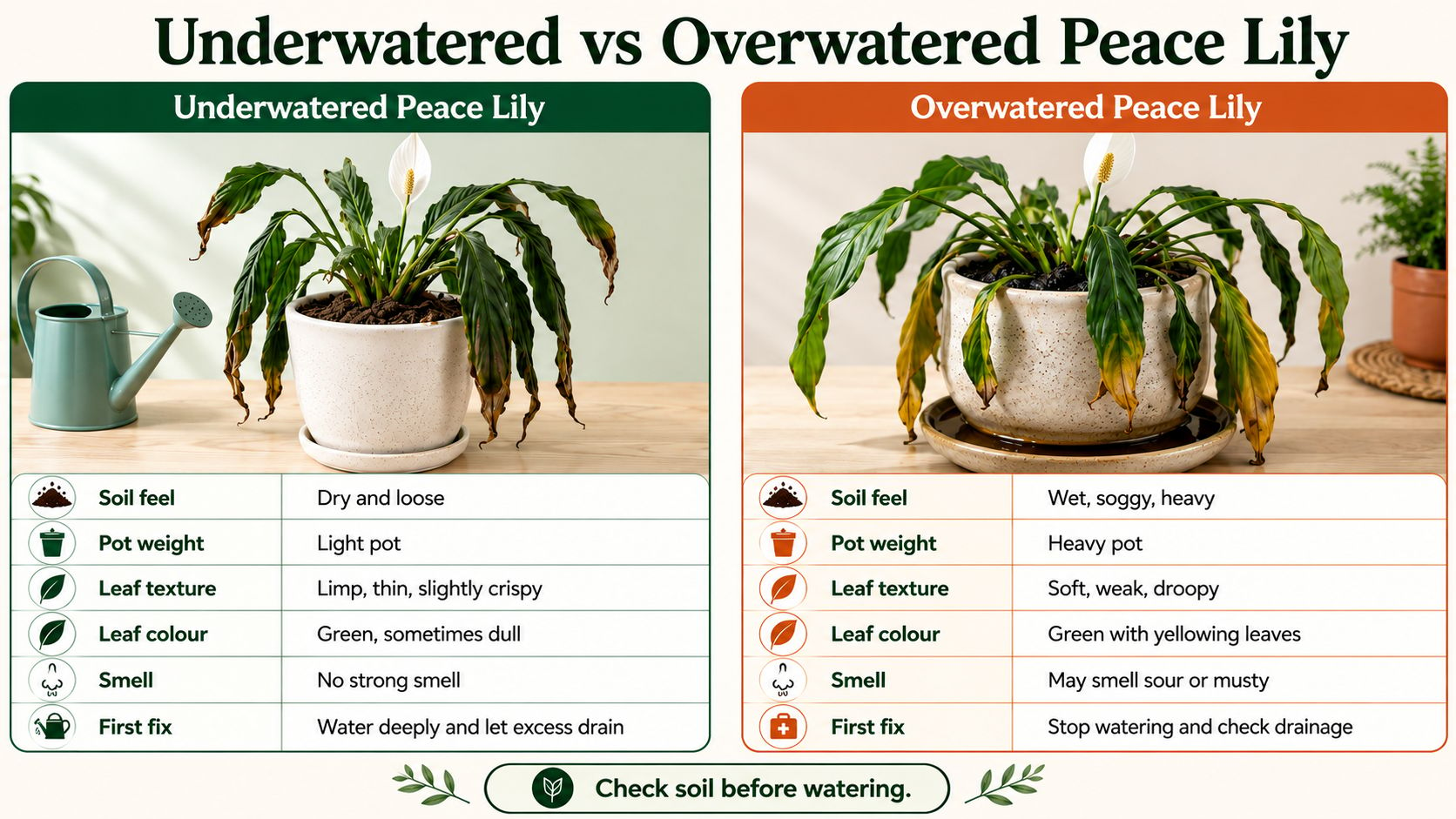
This is where most plant parents get confused. A Peace Lily can droop when it is thirsty, but it can also droop when it has received too much water.
So, do not water immediately just because the leaves are down. First, check the soil.
| Check | Underwatered Peace Lily | Overwatered Peace Lily |
|---|---|---|
| Soil feel | Dry, dusty, or pulling away from pot edges | Wet, soggy, or sticky |
| Pot weight | Very light | Heavy |
| Leaf texture | Limp, thin, sometimes crispy | Soft, weak, sometimes yellow |
| Leaf colour | Green but droopy, sometimes brown tips | Yellowing, pale, or dull |
| Smell | Usually normal | Musty, sour, or rotten smell |
| Recovery after watering | Often perks up within a few hours | Does not improve after watering |
| First fix | Water deeply and drain well | Stop watering and check drainage/root health |
Simple rule:
If the soil is dry, water.
If the soil is wet, wait.
If the soil is wet and smells bad, check the roots.
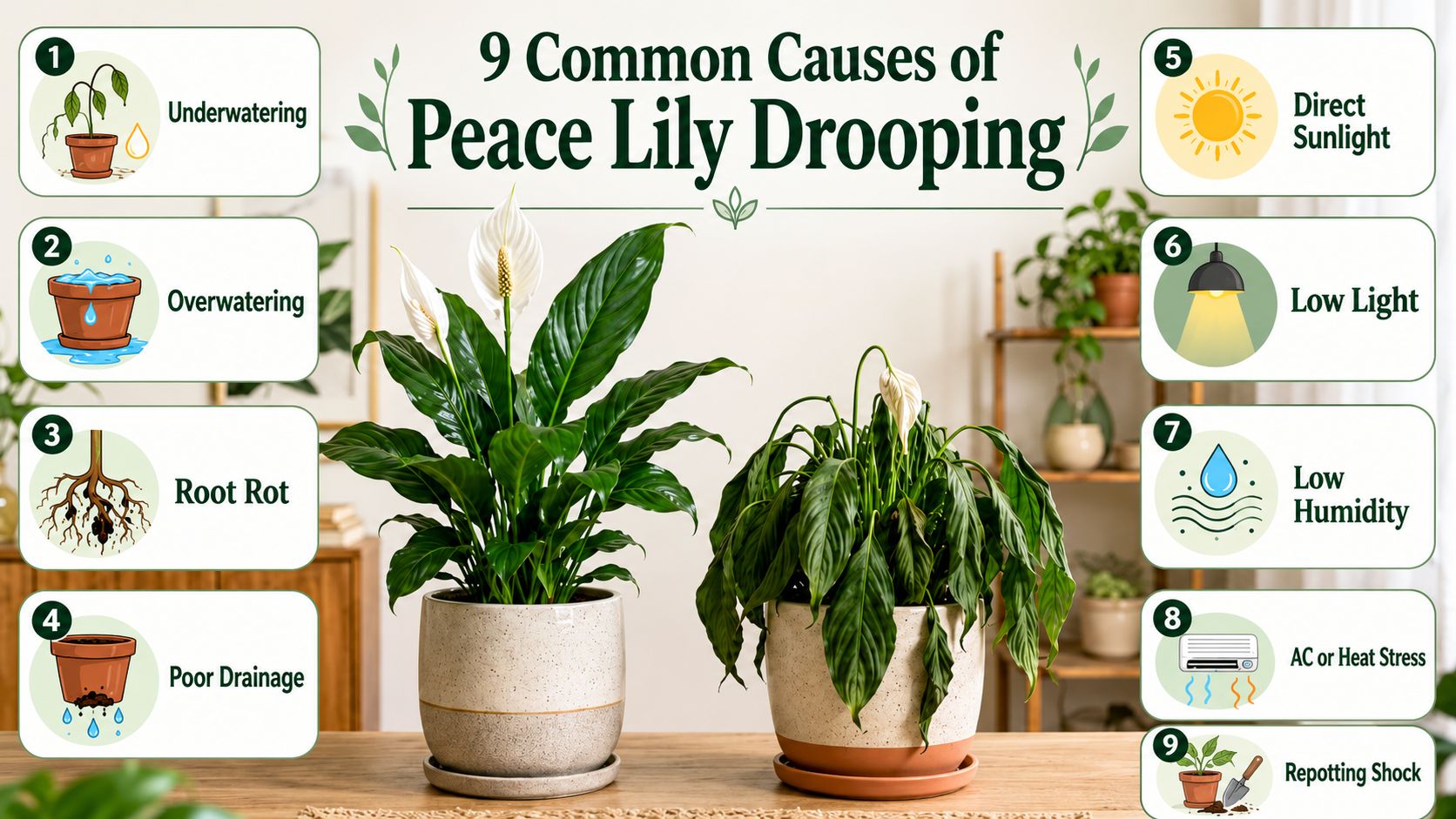
9 Common Causes of Peace Lily Drooping and How to Fix Them
1. Underwatering
Underwatering is one of the most common reasons for a peace lily drooping. Peace Lilies like lightly moist soil, and when the soil becomes too dry, their leaves quickly lose firmness and start bending down.
This is why many people say Peace Lilies are “dramatic” plants. They show thirst very clearly.
Signs to look for
- Leaves look limp and flat.
- Soil feels dry when touched.
- Pot feels very light when lifted.
- Leaf edges may become crispy or brown.
- The plant may perk up after watering.
Why it happens
Underwatering usually happens when:
- You forget to water for many days.
- The plant is kept near a hot window.
- The weather is very warm.
- The potting mix dries out too quickly.
- The plant has become rootbound and cannot hold enough moisture.
In Indian summers, indoor plants near bright windows or balconies may dry faster than expected, especially if the fan or AC is running for long hours.
How to fix it
- Water the Peace Lily slowly and deeply.
- Keep watering until extra water drains from the bottom.
- Empty the saucer after 10–15 minutes.
- If the soil has become too dry and water is running straight through, water it in small rounds.
- You can also bottom-water the plant for 20–30 minutes if the soil has become hydrophobic.
How to prevent it
- Check the top 1–2 inches of soil before watering.
- Lift the pot to understand its weight when dry and when watered.
- Keep the plant away from harsh afternoon sun.
- Increase watering checks during hot weather.
- Avoid letting the soil stay bone dry for too long.
2. Overwatering
Overwatering is another major reason behind peace lily leaves drooping. Many people think drooping always means the plant needs more water, but that is not true.
When the soil stays wet for too long, the roots cannot breathe properly. This causes stress, and the plant begins to droop even though the soil is already moist.
Signs to look for
- Leaves are drooping, but the soil is wet.
- Leaves may turn yellow.
- Pot feels heavy.
- Soil looks dark and soggy.
- The plant does not perk up after watering.
- Lower leaves may become soft or weak.
Why it happens
Overwatering can happen when:
- You water on a fixed daily schedule.
- The pot does not have drainage holes.
- The plant is kept in a decorative pot with collected water.
- The soil is too dense.
- The weather is humid or rainy.
- The plant is in a low-light corner where soil dries slowly.
During the monsoon, many Indian homes become more humid, and the soil takes longer to dry. If you keep watering the same way as in summer, the Peace Lily may become overwatered.
How to fix it
- Stop watering immediately.
- Check if water is sitting in the saucer or outer pot.
- Move the plant to bright indirect light.
- Allow the topsoil to dry slightly before watering again.
- Check drainage holes.
- If the soil smells bad or the plant keeps drooping, inspect the roots.
How to prevent it.
- Do not water just because the top surface looks dry.
- Always check the soil with your finger.
- Use pots with drainage holes.
- Avoid letting the plant sit in water.
- Reduce watering during monsoon and winter.
- Use a well-draining potting mix instead of heavy garden soil.
3. Root Rot
Root rot is a serious cause of drooping Peace Lily plants. It usually happens when the roots sit in wet soil for too long.
Healthy roots need oxygen. When the soil remains soggy, roots begin to rot. Once roots are damaged, they cannot absorb water properly. This is why a plant with root rot can look droopy even when the soil is wet.
Signs to look for
- Drooping leaves even after watering.
- Yellow leaves with wet soil.
- Foul or rotten smell from the soil.
- Black, brown, or mushy roots.
- Mushy stems near the base.
- Leaves becoming weak, dull, or pale.
Why it happens
Root rot usually happens because of:
- Overwatering.
- Poor drainage.
- Heavy soil.
- Decorative pots holding excess water.
- No drainage holes.
- Watering too often in low light or humid weather.
How to fix it
If you suspect peace lily root rot:
- Remove the plant gently from the pot.
- Shake off excess wet soil.
- Check the roots carefully.
- Trim black, brown, mushy, or smelly roots with clean scissors.
- Keep only firm, white, or light-coloured healthy roots.
- Repot in fresh, well-draining soil.
- Use a pot with drainage holes.
- Water lightly after repotting and avoid overwatering again.
How to prevent it
- Never let the pot sit in collected water.
- Avoid watering on a strict schedule.
- Use airy, well-draining soil.
- Keep the plant in bright indirect light.
- Check root health if drooping continues for many days.
4. Poor Drainage or Heavy Soil
Peace Lilies like moisture, but they do not like suffocated roots. If the soil is too compact or the pot does not drain well, the plant may droop even when your watering routine looks correct.
This is very common when Peace Lilies are planted in pure garden soil. Garden soil can become dense in pots, especially after repeated watering.
Signs to look for
- Water stays on top of the soil for too long.
- Soil feels sticky, heavy, or compact.
- The pot remains wet for many days.
- Leaves droop and turn yellow.
- Roots look weak or brown.
- Fungus or white build-up may appear on the soil surface.
Why it happens
Poor drainage may be caused by:
- Dense garden soil.
- No drainage holes.
- Blocked drainage holes.
- Water is sitting in a decorative outer pot.
- Oversized pot holding excess moisture.
- Soil that has compacted over time.
How to fix it
- Check if the pot has drainage holes.
- Remove any water collected in the saucer.
- Loosen the top layer of soil gently.
- If the soil is too heavy, repot with a better mix.
- Use a mix that holds slight moisture but still allows air movement.
A good Peace Lily potting mix should feel soft, airy, and well-draining. It should not become like a hard block after watering.
How to prevent it
- Avoid pure garden soil for potted Peace Lilies.
- Use a well-draining indoor plant potting mix.
- Choose a pot with proper drainage.
- Do not overpot the plant.
- Refresh the soil if it becomes compact over time.
5. Too Much Direct Sunlight
Peace Lilies love bright indirect light, but they do not enjoy harsh direct sunlight. Strong afternoon sun can make the leaves droop, curl, burn, or develop brown patches.
This is especially common in south-facing or west-facing balconies and windows during Indian summers.
Signs to look for
- Leaves droop during the afternoon.
- Brown patches appear on leaves.
- Leaf edges look dry or burnt.
- Leaves may curl slightly.
- Soil dries out very quickly.
- The plant looks better in the evening.
Why it happens
Direct sunlight can cause water loss from leaves faster than roots can replace it. Peace Lilies naturally grow under filtered light, so harsh sun can stress them quickly.
How to fix it
- Move the plant away from direct afternoon sun.
- Keep it near a bright window with filtered light.
Use a sheer curtain if sunlight is too strong.
Avoid placing Peace Lily on open balconies with direct heat.
Trim fully burnt leaves if they cannot recover.
How to prevent it
- Choose bright indirect light.
- Keep the plant 2–4 feet away from very sunny windows.
- Avoid west-facing balcony exposure in peak summer.
- Rotate the plant occasionally for even growth.
- Watch for brown patches after changing its location.
6. Too Little Light
Too much sun is harmful, but too little light can also make a Peace Lily weak and droopy. Peace Lilies can tolerate lower light than many flowering plants, but they still need enough brightness to stay healthy.
If the plant is kept in a dark corner for too long, the leaves may lose strength, and the plant may stop flowering.
Signs to look for
- Leaves look dull and weak.
- The plant leans toward the light.
- Soil stays wet for too long.
- Fewer or no white blooms appear.
- New growth is slow.
- Leaves may droop even with normal watering.
Why it happens
Low light reduces the plant’s ability to use water and produce energy. In low-light flats, corners, corridors, or rooms with closed curtains, the soil also dries more slowly, increasing the risk of overwatering.
How to fix it
- Move the plant to a brighter indoor spot.
- Choose bright indirect light, not direct sun.
- Place it near an east-facing window if possible.
- Keep it in a well-lit living room, bedroom, or office corner.
- Avoid dark shelves, bathrooms with no windows, or closed corners.
How to prevent it
- Keep the Peace Lily where you can read comfortably during the day without switching on lights.
- Rotate the pot every few days.
- Avoid keeping it too far from windows.
- Reduce watering if the plant is in lower light.
7. Low Humidity or Dry Indoor Air
Peace Lilies enjoy moderate humidity. When indoor air becomes too dry, the leaves may droop, curl slightly, or develop brown tips.
This is common in air-conditioned rooms, dry summer weather, and rooms with continuous fan airflow.
Signs to look for
- Drooping leaves with brown tips.
- Crispy leaf edges.
- Leaves look dull or tired.
- Soil may be moist, but leaves still look dry.
- The plant is placed near an AC, fan, or dry indoor air.
Why it happens
Peace Lilies lose moisture through their leaves. If the surrounding air is too dry, the plant loses water faster than it can replace it.
How to fix it
- Move the plant away from AC vents and strong fan airflow.
- Keep it near other indoor plants to create a humid microclimate.
- Place a tray with pebbles and water near the plant, without letting the pot sit directly in water.
- Mist occasionally if the air is very dry, but do not keep leaves wet all day.
- Wipe leaves gently to remove dust.
How to prevent it
- Avoid placing Peace Lily directly below AC airflow.
- Keep it in a stable, bright indoor corner.
- Group humidity-loving plants together.
- Check soil moisture before increasing watering.
- Do not confuse dry air with underwatering.
8. Temperature Stress, AC Drafts, or Heat Stress
Peace Lilies prefer stable indoor temperatures. Sudden changes in temperature can make them droop. In Indian homes, this often happens because of AC rooms, hot windows, kitchen heat, or balcony doors.
Signs to look for
- Leaves droop suddenly after a location change.
- The plant droops near the AC airflow.
- Leaves droop during hot afternoons.
- Leaf tips turn brown.
- Leaves look curled or tired.
- The plant looks stressed even when soil moisture is fine.
Why it happens
Peace Lilies do not like sudden hot or cold air. Direct AC drafts can dry the leaves and chill the plant. Harsh summer heat can also cause water loss and leaf stress.
How to fix it
- Move the plant away from direct AC vents.
- Avoid placing it near heaters, ovens, or hot kitchen areas.
- Keep it away from harsh balcony heat.
- Choose a stable indoor spot with bright indirect light.
- Do not keep shifting the plant every day.
How to prevent it
- Keep the Peace Lily in a temperature-stable room.
- Avoid direct air from the AC, cooler, or fan.
- Protect it from the hot afternoon sun.
- Keep it away from open balcony doors during extreme weather.
- Make changes gradually if moving the plant.
9. Repotting Shock or Rootbound Plant
If your Peace Lily started drooping after repotting, it may be experiencing repotting shock. If it has been in the same pot for a long time, it may be rootbound. Both situations affect the roots and can lead to drooping.
Signs of repotting shock
- Drooping soon after repotting.
- Leaves look tired even with moist soil.
- The plant stops growing temporarily.
- Some older leaves may yellow.
- The plant looks stressed for a few days.
Signs of a rootbound Peace Lily
- Roots are circling the pot.
- Roots come out of drainage holes.
- Soil dries very quickly.
- Water runs through the pot too fast.
- The plant droops even after watering.
- Growth slows down.
Why it happens
Repotting disturbs the roots. Even if you repot carefully, the plant may need time to adjust. On the other hand, a rootbound plant has too little soil left to hold moisture and nutrients.
How to fix repotting shock
- Keep the plant in bright indirect light.
- Do not fertilize immediately.
- Keep soil lightly moist, not soggy.
- Avoid moving the plant again and again.
- Give it time to settle.
How to fix a rootbound Peace Lily
- Choose a pot only one size bigger.
- Use fresh, well-draining soil.
- Gently loosen tightly packed roots.
- Water after repotting and let excess water drain.
- Avoid placing it in harsh sun after repotting.
How to prevent it
- Repot only when needed.
- Avoid using an oversized pot.
- Do not disturb roots too much.
- Repot during active growth periods when possible.
- Let the plant recover before adding fertilizer.
Other Less 9 Obvious Reasons Your Peace Lily May Droop
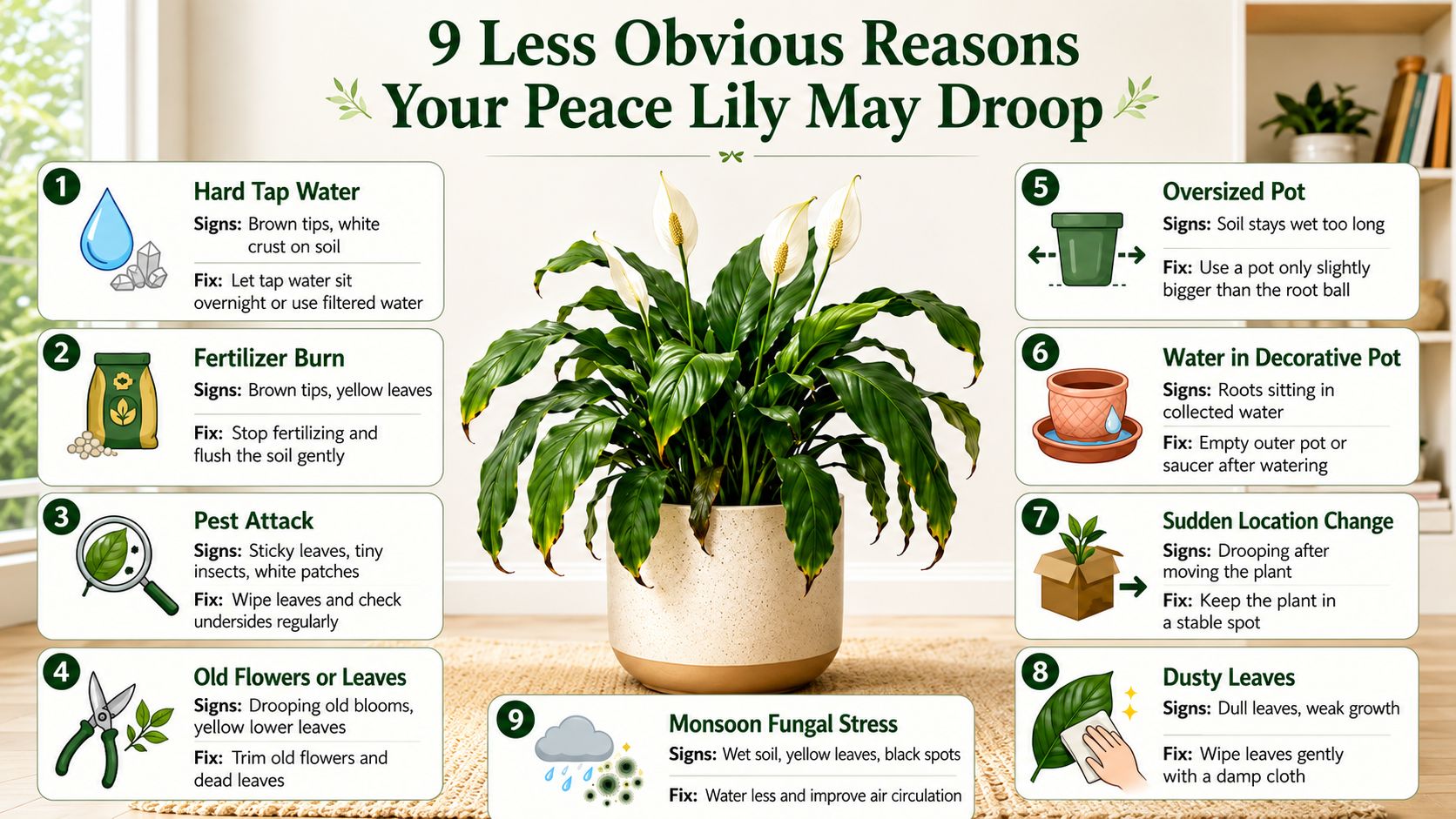
Sometimes the main reason is not obvious. If you have checked watering, light, drainage, and temperature, look for these less common causes.
1. Hard Tap Water or Chemical Build-Up
In many Indian cities, tap water can be hard or high in dissolved minerals. Over time, salts may build up in the soil and affect root health.
Signs:
- Brown leaf tips
- White crust on soil
- Slow growth
- Drooping despite normal watering
What to do:
- Let tap water sit overnight before using.
- Occasionally flush the soil with clean water.
- Remove the white crust from the top layer.
- Use filtered water if the plant is very sensitive.
2. Fertilizer Burn
More fertilizer does not mean faster growth. A stressed Peace Lily should not be fertilized immediately.
Signs:
- Brown tips
- Yellowing leaves
- Drooping after fertilizing
- White salt build-up on soil
What to do:
- Stop fertilizing for a few weeks.
- Flush the soil gently with water.
- Resume feeding only when the plant is healthy.
- Use mild fertilizer during the growing season.
3. Pest Attack
Pests can weaken Peace Lily leaves and make the plant droop.
Common pests include:
- Mealybugs
- Aphids
- Spider mites
- Scale insects
Signs:
- Sticky leaves
- Tiny insects under leaves
- White cotton-like patches
- Yellow spots
- Weak or curling leaves
What to do:
- Wipe leaves with a damp cloth.
- Isolate the plant from other plants.
- Use a mild plant-safe pest solution.
- Check the undersides of leaves regularly.
4. Natural Aging of Old Flowers or Leaves
Sometimes only the old flowers or older lower leaves droop. This is natural and not always a serious issue.
Signs:
- Only old white flowers droop.
- Flowers turn green, brown, or dry.
- Lower old leaves turn yellow slowly.
- New leaves look healthy.
What to do:
- Cut old flower stalks from the base.
- Remove fully yellow or dry leaves.
- Continue normal care.
- Do not overwater just because old blooms are fading.
5. Oversized Pot Holding Excess Moisture
A very large pot may look beautiful, but it can hold more soil than the roots can use. This extra soil stays wet for longer and may cause drooping.
What to do:
- Use a pot only slightly bigger than the root ball.
- Avoid jumping from a small pot to a very large pot.
- Choose drainage over decoration.
- Use an airy potting mix.
6. Decorative Pot or Cachepot Holding Standing Water
Many indoor Peace Lilies are placed inside decorative ceramic pots without checking if water has collected at the bottom.
What to do:
- Remove the inner pot and check for standing water.
- Empty the outer pot after watering.
- Do not let roots sit in collected water.
- Use a tray or saucer that can be emptied easily.
7. Sudden Location Change
Peace Lilies may droop when moved suddenly from nursery shade to a home, from a balcony to AC room, or from low light to harsh window light.
What to do:
- Keep the plant in a stable location.
- Avoid frequent shifting.
- Give the plant a few days to adjust.
- Change its location gradually if needed.
8. Dusty Leaves Blocking Light Absorption
Peace Lily leaves are broad and glossy, which means dust can easily settle on them. Dusty leaves cannot absorb light properly.
What to do:
- Wipe leaves gently with a soft damp cloth.
- Clean both sides of the leaves.
- Avoid using harsh leaf-shine chemicals.
- Clean leaves every few weeks.
9. Monsoon Fungal Stress
During the monsoon, high humidity and slow soil drying can encourage fungal issues.
Signs:
- Soil stays wet too long.
- Yellowing leaves.
- Black spots or patches.
- Weak stems.
- Musty smell.
What to do:
- Improve air circulation.
- Water less frequently.
- Avoid wetting leaves late in the day.
- Keep the plant in bright indirect light.
Seasonal Care Tips to Prevent Peace Lily Drooping in Indian Homes
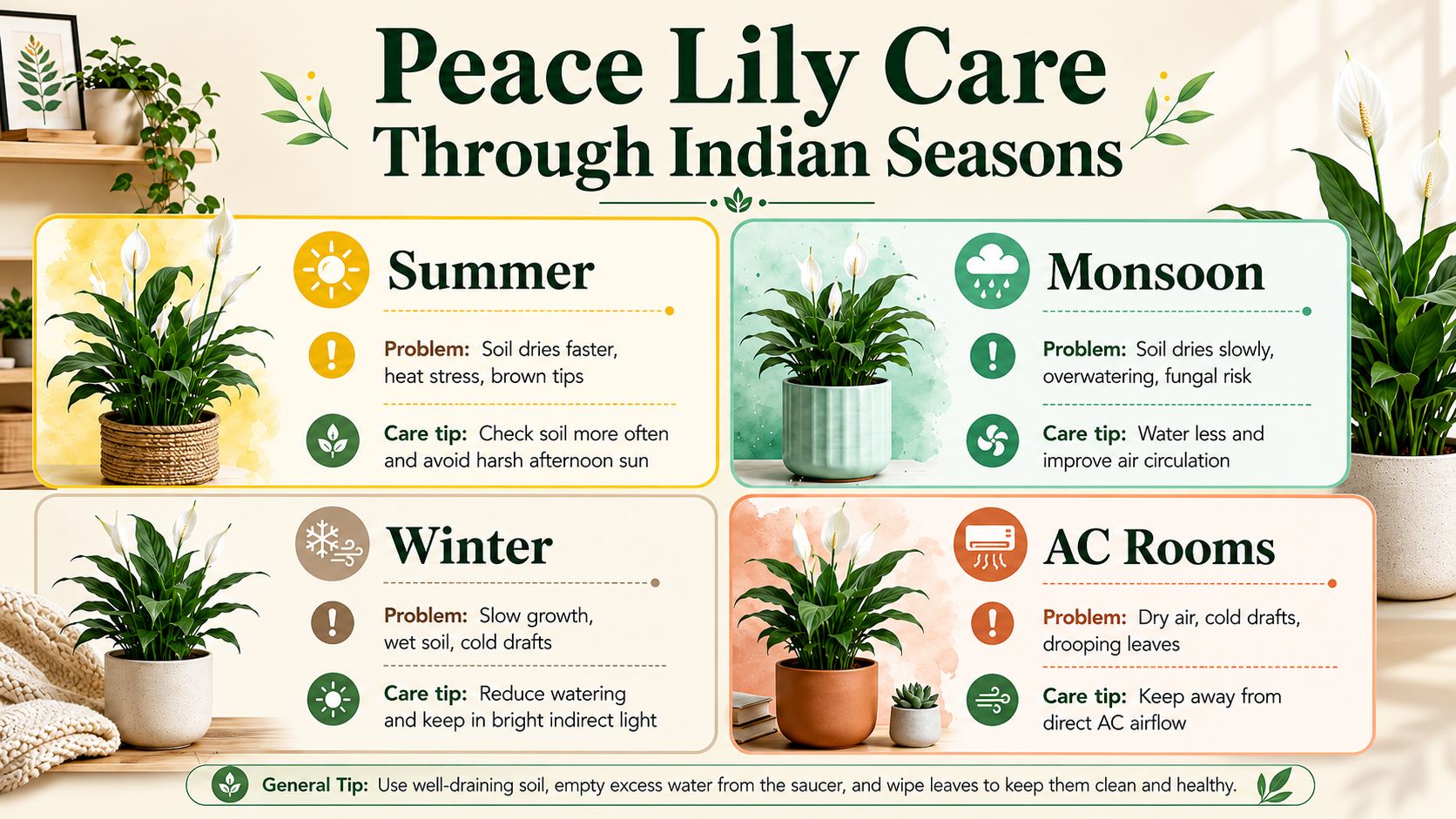
Peace Lily care changes slightly with the season. The same watering routine may not work throughout the year.
1. Summer
Indian summers can be harsh, especially for plants near windows, balconies, or hot walls.
Common summer problems
- Soil dries quickly.
- Leaves droop in the afternoon.
- Leaf tips turn brown.
- Harsh sunlight burns leaves.
- AC rooms dry out the air.
Summer care tips
- Check soil moisture more often.
- Keep the plant in bright indirect light.
- Avoid direct afternoon sun.
- Move away from the hot window glass.
- Keep away from direct AC airflow.
- Water deeply when the topsoil feels dry.
2. Monsoon
Peace Lilies usually enjoy humidity, but monsoons can also bring overwatering problems.
Common monsoon problems
- Soil dries slowly.
- Roots stay wet for too long.
- Fungus or mould may appear.
- Yellow leaves may increase.
- Indoor corners may become too damp.
Monsoon care tips
- Reduce watering frequency.
- Check soil before watering.
- Improve air circulation.
- Keep the pot away from collected rainwater.
- Avoid placing the plant in dark, damp corners.
- Check for pests and fungal spots.
3. Winter
In winter or cooler months, Peace Lilies grow more slowly. They also need less water.
Common winter problems
- Soil stays wet longer.
- Overwatering becomes common.
- Leaves may droop near cold drafts.
- Growth slows down.
Winter care tips
- Water less often.
- Keep the plant away from cold windows at night.
- Avoid overfertilising.
- Give it bright indirect light.
- Let the top soil dry slightly before watering.
What NOT to Do When Your Peace Lily Is Drooping?
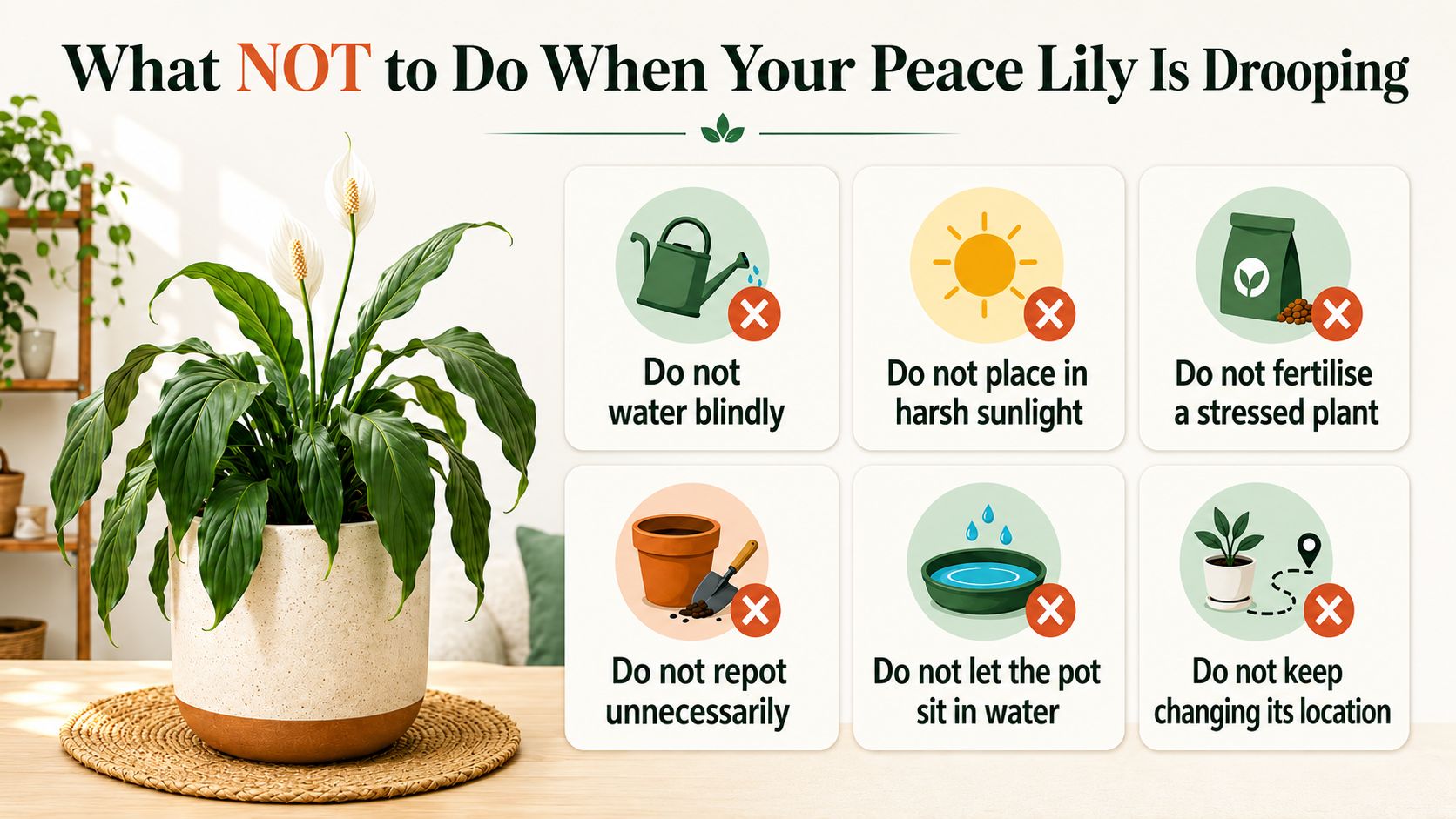
When your Peace Lily starts drooping, the wrong fix can sometimes make the problem worse. Before taking action, avoid these common mistakes:
1. Do Not Water Immediately
Drooping leaves do not always mean the plant is thirsty. If the soil is already moist, additional watering can lead to root stress and even root rot.
2. Do Not Move It Into Direct Sunlight
A drooping Peace Lily does not need more sun. Harsh direct light can scorch the leaves and increase stress.
3. Do Not Fertilize a Stressed Plant
Fertilizer cannot solve problems caused by overwatering, root rot, poor drainage, or temperature stress. Wait until the plant has recovered before feeding.
4. Do Not Repot Unnecessarily
Repotting can add further stress to an already struggling plant. Only repot if the roots are rotting, severely rootbound, or the potting mix has deteriorated.
5. Do Not Leave the Pot Sitting in Water
Standing water prevents roots from getting enough oxygen and can quickly lead to root rot.
6. Do Not Keep Changing Its Location
Peace Lilies prefer stable growing conditions. Frequent movement can make it harder for the plant to recover and adapt.
How To Prevent Peace Lily Drooping in the Future
Once your Peace Lily recovers, the goal is to create a stable care routine.
Here are simple prevention tips:
- Water only when the top 1–2 inches of soil feel dry.
- Use a pot with drainage holes.
- Empty the saucer after watering.
- Keep the plant in bright indirect light.
- Avoid harsh afternoon sunlight.
- Use well-draining indoor plant soil.
- Keep away from AC vents and hot windows.
- Clean leaves occasionally with a damp cloth.
- Check for pests every few weeks.
- Reduce watering during monsoon and winter.
- Avoid heavy garden soil in pots.
- Repot only when the plant is rootbound or the soil has become poor.
A Peace Lily does not need complicated care. It needs balance: enough water, enough light, good drainage, and a stable indoor spot.
When Should You Worry About a Drooping Peace Lily?
Some drooping is normal and fixable. For example, a thirsty Peace Lily may perk up after watering. Old flowers may also droop naturally after blooming.
But you should worry if drooping comes with serious warning signs.
Warning signs to watch for
- Black, mushy roots
- Foul smell from soil
- Yellowing leaves with wet soil
- Black stems near the base
- Drooping that does not improve after correcting care
- Pest infestation
- Soil that stays wet for many days
- Mushy leaves or collapsed stems
If you notice these signs, your Peace Lily may have root rot, stem rot, or severe root stress. In this case, quick action is important.
Summing Up
A drooping Peace Lily can look worrying at first, but in most cases, it is simply your plant’s way of showing that something in its care routine needs attention. It may need water, better drainage, softer light, more humidity, or a stable indoor spot away from harsh sun, AC drafts, and sudden temperature changes.
Before watering again or changing its place, check the basics: soil moisture, pot weight, drainage holes, root health, light exposure, and overall placement. Once you understand the real reason behind the drooping, helping your Peace Lily recover becomes much easier.
With the right balance of watering, bright indirect light, well-draining soil, and seasonal care, your Peace Lily can bounce back and continue adding freshness, calm, and elegance to your home.
And if you are planning to grow more indoor plants at home, Urvann makes it easier to find healthy plants and the right gardening essentials for your space.
Frequently Asked Questions (FAQs)
Q1. Can a drooping Peace Lily recover?
Yes, a drooping Peace Lily can recover in most cases once the real cause is identified and corrected. If the soil is dry, the plant may perk up within a few hours after deep watering. If the soil is wet, the plant may need time to recover from overwatering, poor drainage, or root stress. Check the soil moisture, drainage holes, light, and roots before taking action. Avoid fertilizing or repotting immediately unless the plant shows signs of root rot or severe root-bound stress.
Q2. Should I water a drooping peace lily?
You should water a drooping Peace Lily only if the soil feels dry. First, check the top 1–2 inches of soil with your finger. If it feels dry, water the plant deeply until excess water drains out from the bottom. If the soil is already wet or soggy, do not water again, as the drooping may be due to overwatering, poor drainage, or root rot. Always check the soil before watering.
Q3. Kya humidity ki wajah se Peace Lily droop kar sakti hai?
Yes, humidity Peace Lily ko droop kar sakti hai, especially jab indoor air bahut dry ho. Peace Lily ko moderate humidity pasand hoti hai, isliye AC rooms, strong fan airflow, ya dry summer air mein iske leaves dull, limp, ya droopy dikh sakte hain. Agar soil moist hai but leaves phir bhi droop kar rahe hain, to low humidity ya dry air reason ho sakta hai. Plant ko direct AC airflow se door rakhein, leaves ko occasionally clean karein, aur nearby plants ke saath group karke humidity maintain karne ki koshish karein.
Q4. मेरी पीस लिली की पत्तियाँ पीली और झुकी हुई क्यों हो रही हैं?
पीस लिली की पत्तियाँ पीली और झुकी हुई दिखें, तो इसका सबसे आम कारण अधिक पानी देना, खराब ड्रेनेज, जड़ों में सड़न, या बहुत कम रोशनी हो सकता है। अगर मिट्टी लगातार गीली रहती है और पत्तियाँ पीली होकर झुक रही हैं, तो पौधे की जड़ों को पर्याप्त हवा नहीं मिल रही हो सकती। पहले मिट्टी की नमी, गमले के ड्रेनेज होल और जड़ों की स्थिति जांचें। अगर मिट्टी बहुत गीली है, तो पानी देना रोक दें और पौधे को तेज सीधी धूप से दूर, bright indirect light में रखें।
Q5. Do Peace Lilies need less water during the monsoon?
Yes, Peace Lilies usually need less frequent watering during monsoon because the air is more humid and the soil takes longer to dry. If you keep watering the same way as in summer, the roots may stay wet for too long, which can lead to overwatering, yellow leaves, drooping, or root rot. During the monsoon, always check the top 1–2 inches of soil before watering. If the soil still feels moist, wait for a few more days before watering again.
Q6. Can you keep Peace Lily and Snake Plant together?
Yes, you can keep Peace Lily and Snake Plant together, but they should not be cared for in exactly the same way. Both are popular indoor plants and can look beautiful together in the same room, but Peace Lily needs slightly more moisture and humidity, while Snake Plant prefers drier soil and less frequent watering. Keep them in bright indirect light, but avoid watering them on the same schedule. Water the Peace Lily when the top 1–2 inches of soil feel dry, and water the Snake Plant only when the soil has dried out more completely.
Q7. Should I Cut Drooping Peace Lily Leaves?
No, avoid cutting healthy green drooping leaves right away. Once the underlying issue is corrected, these leaves often regain their upright shape. Only prune leaves that are completely yellow, brown, damaged, mushy, or dead. You can also remove spent flower stalks by cutting them close to the base of the plant.
Q8. ಪೀಸ್ ಲಿಲಿ ಗಿಡ ಚೇತರಿಸಿಕೊಳ್ಳಲು ಎಷ್ಟು ಸಮಯ ಬೇಕಾಗುತ್ತದೆ?
ಪೀಸ್ ಲಿಲಿ ಗಿಡವು ಕೇವಲ ನೀರಿನ ಕೊರತೆಯಿಂದ ಬಾಡಿದ್ದರೆ, ಚೆನ್ನಾಗಿ ನೀರು ಹಾಕಿದ ನಂತರ ಕೆಲವೇ ಗಂಟೆಗಳಲ್ಲಿ ಮತ್ತೆ ತಾಜಾಗಿ ಕಾಣಿಸಿಕೊಳ್ಳಬಹುದು. ಕೆಲವೊಮ್ಮೆ ಅದೇ ದಿನದಲ್ಲಿ ಎಲೆಗಳು ಮತ್ತೆ ನೇರವಾಗಿ ಕಾಣಬಹುದು. ಆದರೆ ಗಿಡವು ಹೆಚ್ಚು ನೀರು, ಬೇರು ಕೊಳೆತ, ಸರಿಯಾದ ಡ್ರೈನೇಜ್ ಇಲ್ಲದಿರುವುದು, ಮರುನೆಡುವಿಕೆಯ ಶಾಕ್ ಅಥವಾ ತಾಪಮಾನ ಬದಲಾವಣೆಯಿಂದ ಬಾಡಿದ್ದರೆ, ಚೇತರಿಸಿಕೊಳ್ಳಲು ಕೆಲವು ದಿನಗಳಿಂದ ಕೆಲವು ವಾರಗಳವರೆಗೆ ಸಮಯ ಬೇಕಾಗಬಹುದು. ಚೇತರಿಕೆಯ ಸಮಯವು ಬೇರುಗಳ ಆರೋಗ್ಯ ಮತ್ತು ನಿಜವಾದ ಕಾರಣವನ್ನು ಎಷ್ಟು ಬೇಗ ಸರಿಪಡಿಸುತ್ತೀರಿ ಎಂಬುದರ ಮೇಲೆ ಅವಲಂಬಿತವಾಗಿರುತ್ತದೆ. ಗಿಡವನ್ನು bright indirect light ನಲ್ಲಿ ಇಡಿ, ಹೆಚ್ಚು ನೀರು ಹಾಕಬೇಡಿ, ಮತ್ತು ಗಿಡ ಸ್ಥಿರವಾಗಿ ಕಾಣುವವರೆಗೆ fertiliser ಹಾಕಬೇಡಿ.
Q9. Should I move my Peace Lily during the rainy season?
You do not need to move your Peace Lily during the rainy season unless it is getting direct rain, sitting in a damp corner, or the soil stays wet for too long. During the monsoon, humidity increases and soil dries slowly, so Peace Lilies are more prone to overwatering and root rot. Keep the plant in bright indirect light, away from direct rainwater, and make sure the pot has proper drainage. If the room feels too damp, move it to a spot with better air circulation.
Q10. Which plant needs less water during the rainy season?
During the rainy season, most indoor plants need less frequent watering because humidity is high and the soil dries slowly. Plants like Snake Plant, ZZ Plant, Jade Plant, Aloe Vera, Cactus, and other succulents need especially less water during the monsoon. These plants store water in their leaves, stems, or roots, so overwatering can easily cause root rot. Always check the soil before watering. If the top layer still feels moist, wait a few more days.
Q11. Can a Peace Lily Recover from Root Rot?
Yes, a Peace Lily can recover from root rot if some healthy roots remain. Remove the plant from its pot, trim away any black, mushy roots, and repot it in fresh, well-draining soil. Water sparingly until new growth appears. The earlier root rot is treated, the better the chances of recovery.