


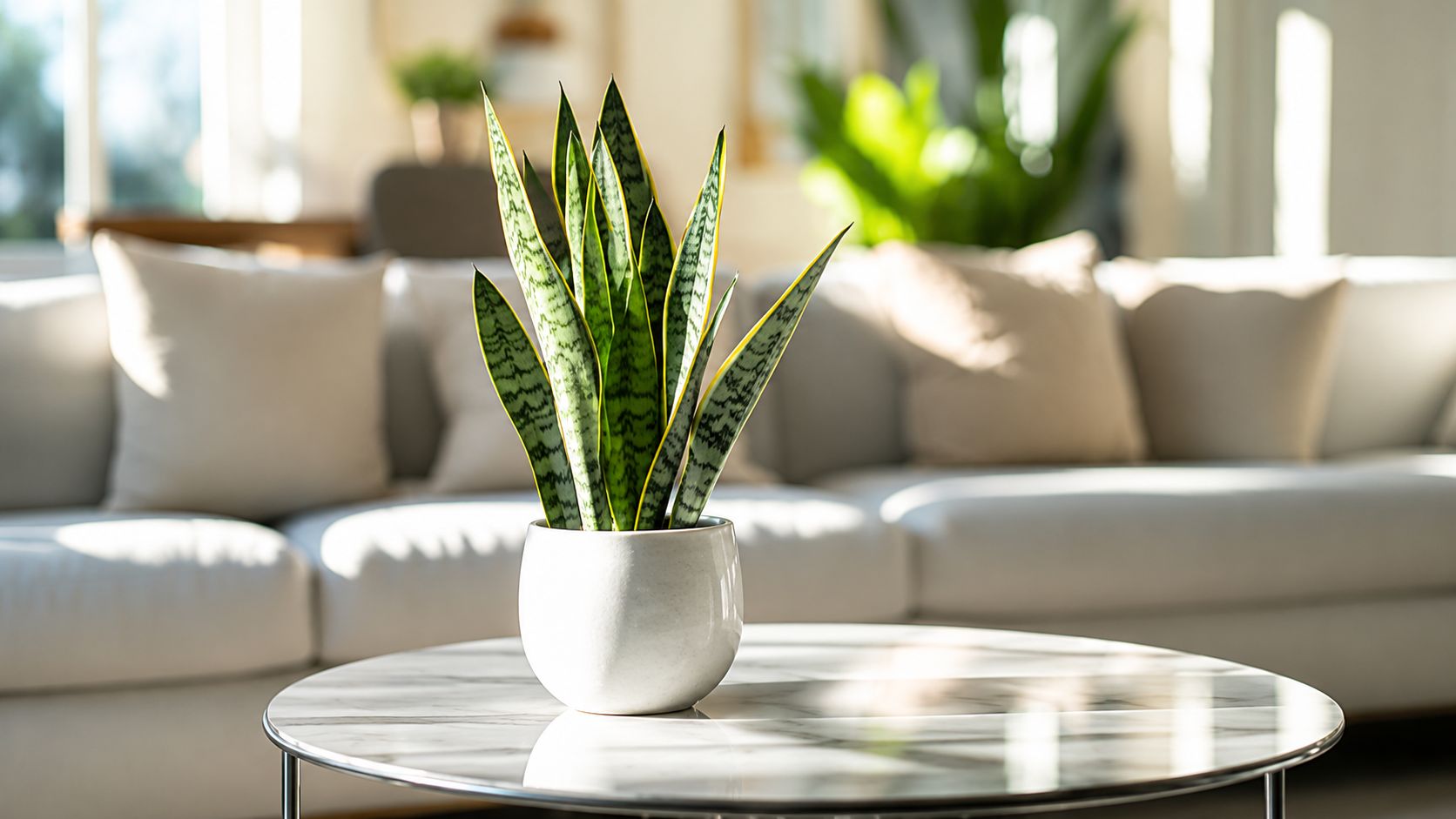
Explore the best places to keep a snake plant at home, from bedrooms to offices, with practical light, care, size, and Vastu placement tips.
Key Takeaways
- Bright, indirect light is ideal, but a snake plant can tolerate low light. Complete darkness is not suitable.
- Living rooms, bedrooms, and offices are generally good options. Bathrooms and kitchens can work if they receive adequate light.
- Avoid prolonged direct sunlight, constantly wet soil, and spots where pets may chew the leaves.
- Choose compact varieties for desks and shelves, and larger varieties for open floor areas.
- As per common Vastu interpretations, southeast, south, and east are commonly recommended. Northeast is the direction most often avoided.
- Vastu placement and practical plant-care requirements are separate considerations. You can follow either or both when choosing a location.
The best place for a snake plant is a well-lit indoor area with bright, indirect light. Living rooms, bedrooms, and offices are generally good choices, while bathrooms and kitchens can also work depending on the light and conditions available.
If you also follow Vastu principles, the southeast, south, or east directions are commonly recommended.
This guide covers both practical placement and Vastu considerations, so you can choose a location based on light, space, plant size, and your personal preferences.
Where Is the Best Place to Keep a Snake Plant?
Before choosing a room, consider these four factors.
1. Light
A snake plant does best in bright, indirect light, although it can tolerate lower-light conditions. Complete darkness, prolonged harsh direct sunlight, and consistently unsuitable lighting conditions can affect its growth over time.
2. Available Space
Consider how much room the plant will have as it grows. Make sure it will not block walkways, crowd furniture, or need to be moved frequently.
3. Plant Size
Choose the size of the snake plant based on where you plan to keep it.
- Small spaces: Compact varieties work well on desks, shelves, and side tables.
- Medium spaces: Medium-sized plants can fit in bedroom corners, beside furniture, or on consoles.
- Large spaces: Taller varieties work well as floor plants in living rooms and offices with more open space.
4. Safety From Pets and Children
If you have pets or small children who may chew the leaves, keep the snake plant at a location where they cannot easily access.
Quick Placement Guide
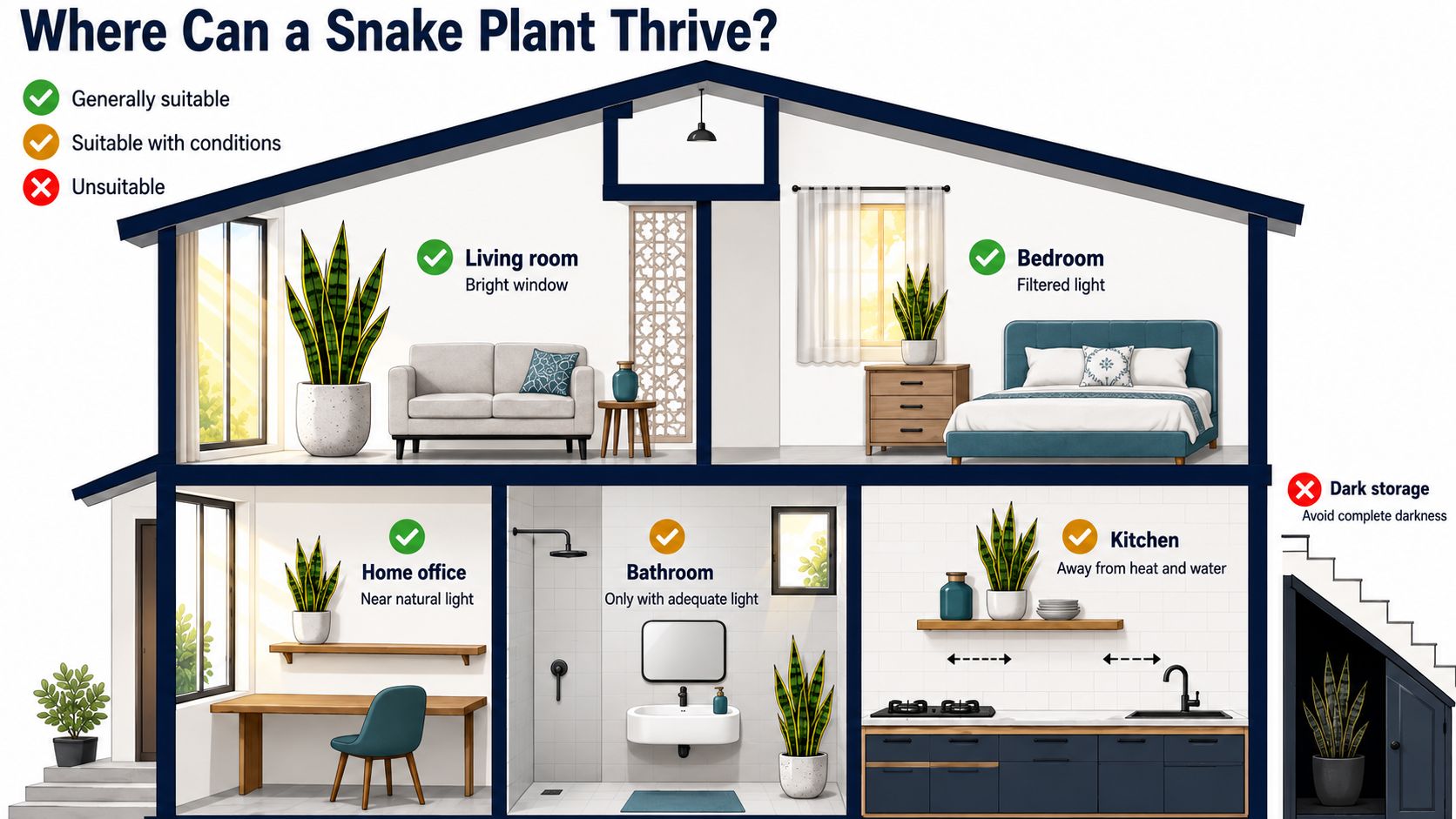
| Location | Suitable? | Best Placement |
|---|---|---|
| Living room | Yes | Near a bright window or a well-lit corner |
| Bedroom | Yes | An area with indirect or adequate indoor light |
| Office | Yes | Desk, shelf, or well-lit corner |
| Bathroom | Sometimes | Only if it gets adequate indoor light |
| Kitchen | Yes, with conditions | A bright spot away from excess heat and splashing water |
| Completely dark room | Not ideal | Choose a brighter location instead |
Can You Keep Snake Plant in the Living Room?
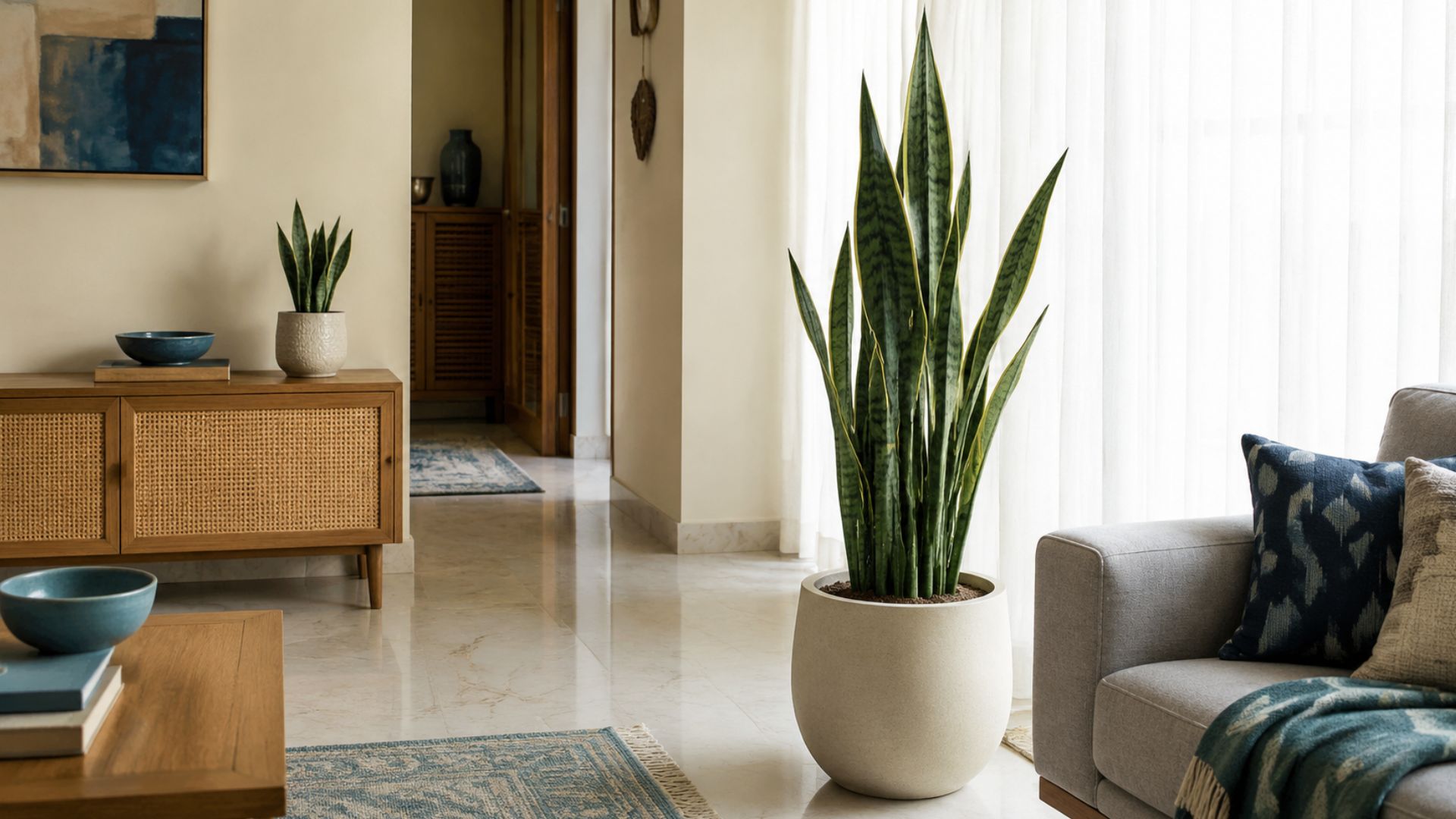
Yes, a snake plant works well in a living room, because most living rooms already have the mix of natural light and open floor space it needs.
Best places in the living room:
- Next to a window that gets bright, indirect light for most of the day
- A well-lit corner that isn't in direct line of harsh afternoon sun
- Beside a sofa or console table if you're using a larger plant as a floor accent
- On a side table or shelf if you're using a smaller variety
A larger snake plant works well as a standalone floor feature, while a compact one fits comfortably on furniture without competing for space.
Can You Keep a Snake Plant in the Bedroom?
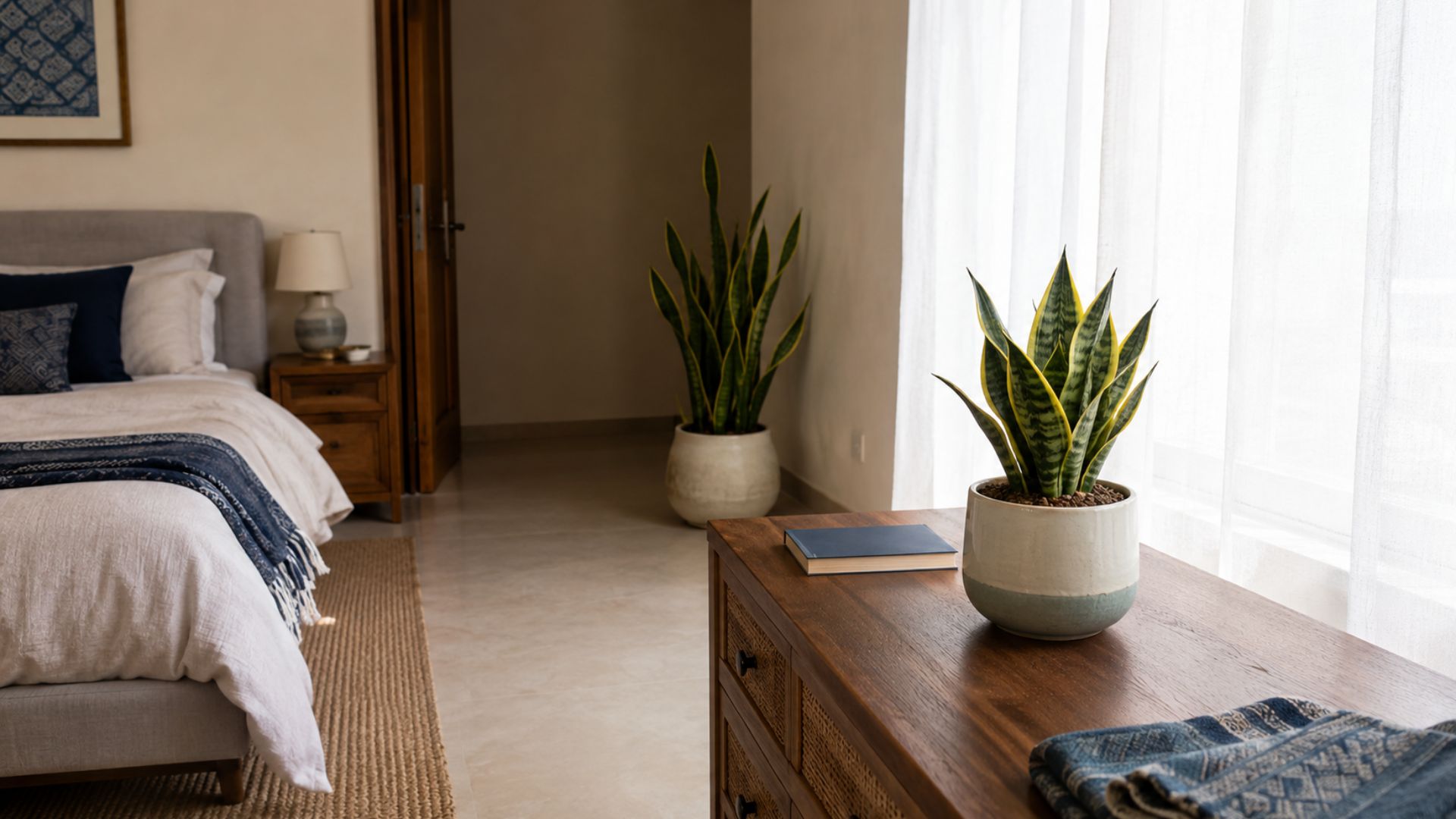
Yes, you can keep a snake plant in the bedroom. Choose a spot with adequate indoor or indirect natural light, and avoid tucking it into a corner that gets no light at all for long stretches.
Where to place it in the bedroom:
- Near a window with filtered or indirect light
- On a dresser or bedside table if you're using a smaller plant
- On the floor near a wall if you're using a larger plant and have the space
Size matters here more than in most rooms, since bedrooms are often smaller and more furniture-dense. A compact variety is usually the more practical choice unless you have a genuinely open corner. If you have pets or small children who sleep in the room, keep the plant somewhere they can't easily reach or chew on it.
Is a Snake Plant Good for an Office?
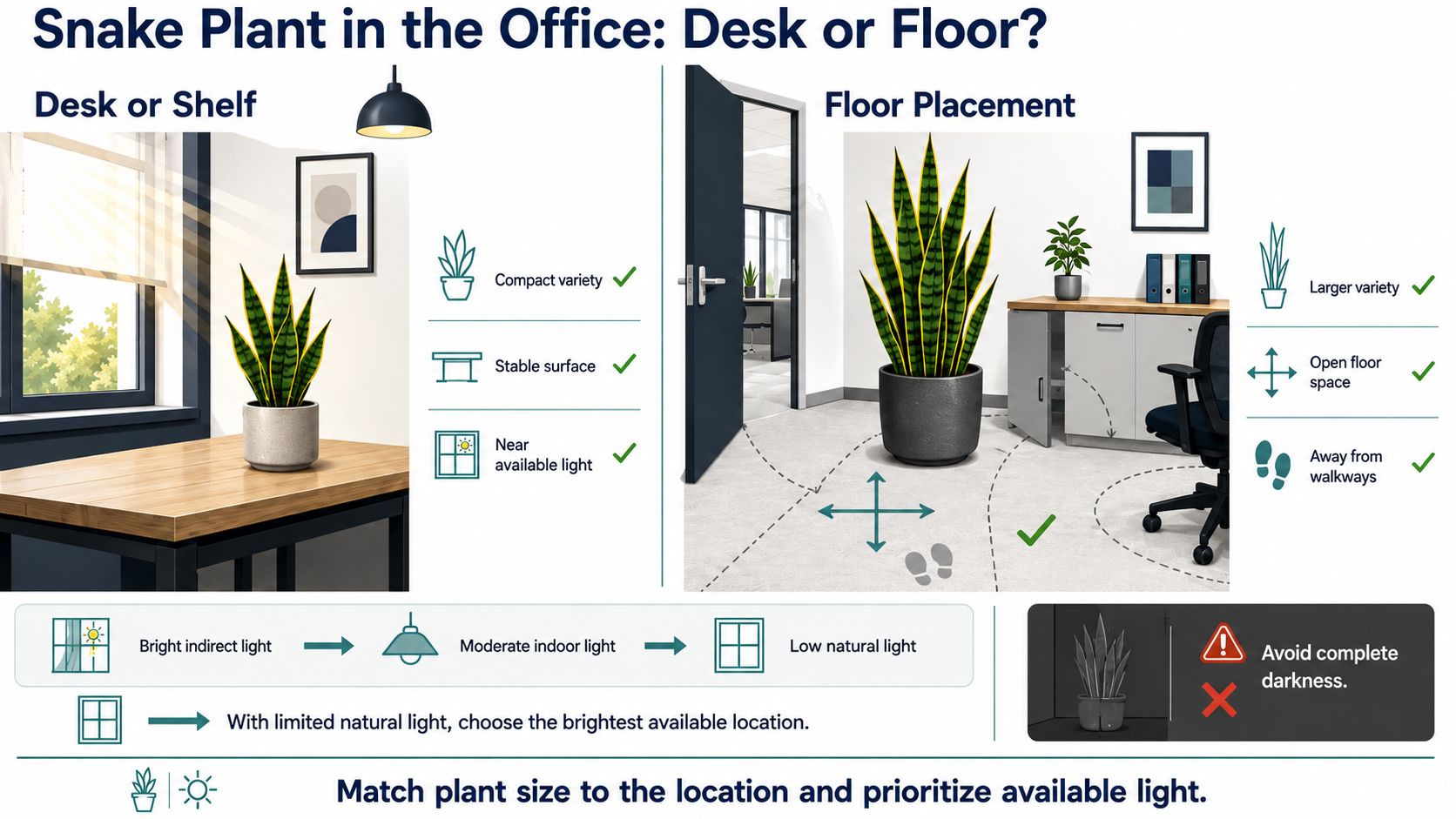
Yes, a snake plant is a good fit for an office. It's low-maintenance, tolerates the relatively stable indoor light and temperature most offices have, and doesn't need frequent watering or attention.
Desk vs. Floor Placement
On a desk or shelf: Better for smaller varieties, and useful if the room doesn't get strong natural light, since desks are often closer to windows or under artificial lighting.
On the floor: Better for larger plants, and works well in a corner or beside furniture where it won't be knocked over.
If your office relies mostly on artificial lighting with little natural light, place it as close to a window as the desk or floor space allows.
Can You Keep a Snake Plant in the Bathroom?
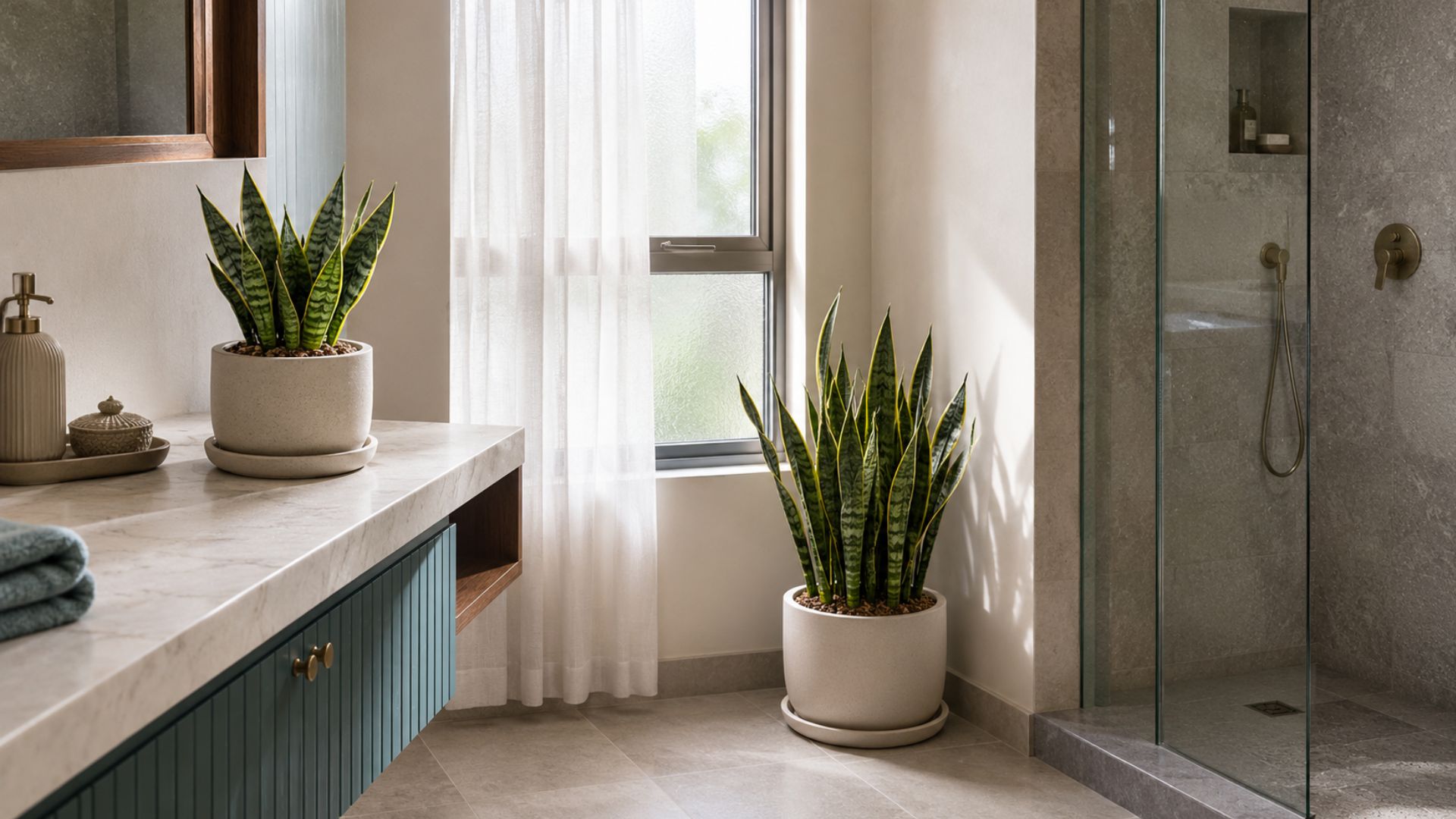
Yes, but only if the bathroom gets adequate natural or indirect light. A snake plant in a bathroom with a window or good ambient light can do fine. One in a windowless, artificially lit bathroom is more likely to struggle, regardless of humidity levels.
A few practical points for bathroom placement:
- Light matters more than humidity. Don't place it in a bathroom purely for the moisture.
- Avoid spots where it will sit in constant waterlogging or standing water from showers.
- Choose a shelf for a smaller plant or floor space for a larger one, depending on what the bathroom layout allows.
Can You Keep a Snake Plant in the Kitchen?
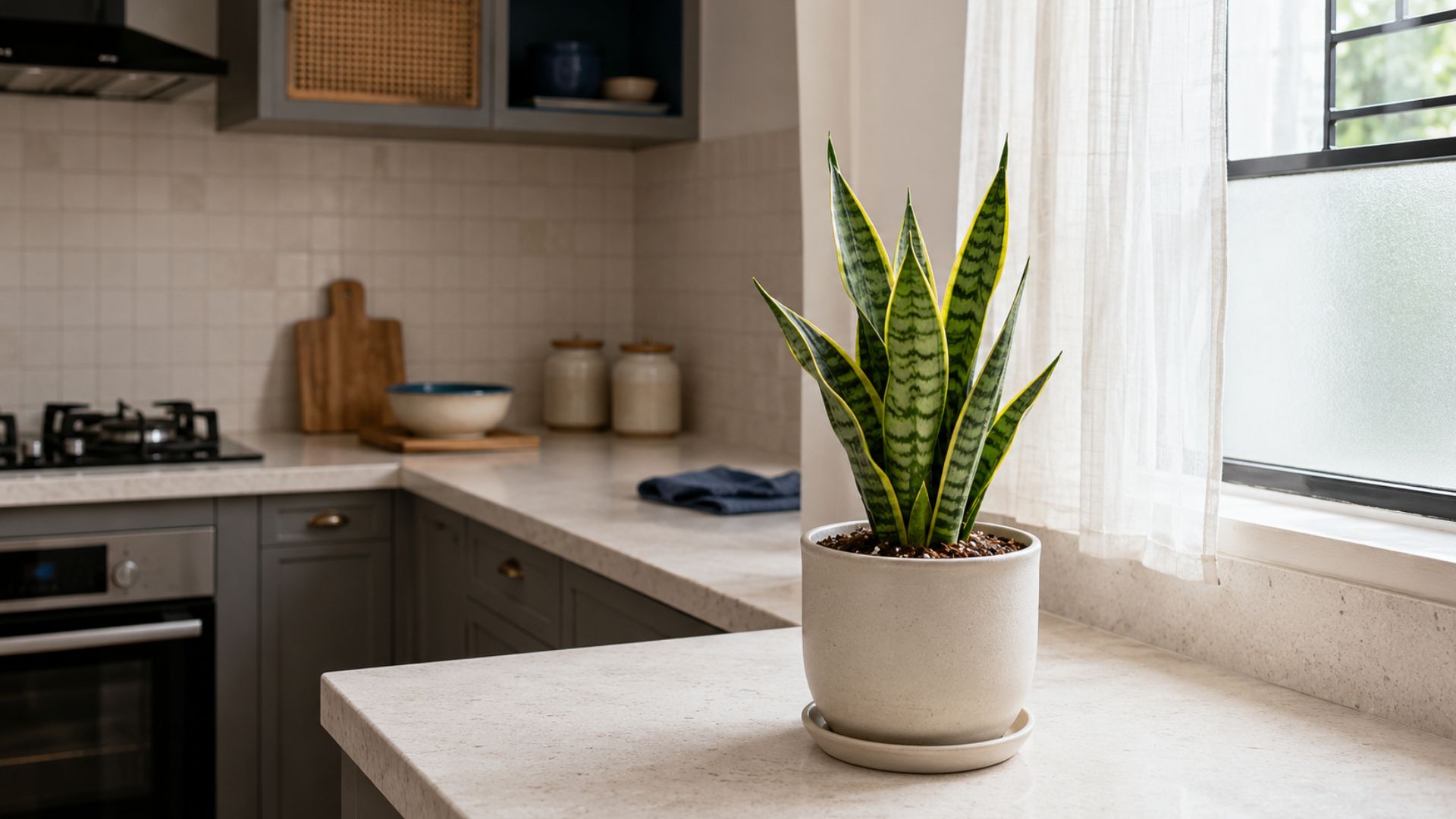
Yes, with a few conditions. A kitchen that gets reasonable light and isn't constantly humid from cooking works fine.
- Place it somewhere it gets some natural light during the day
- Avoid areas right next to the stove or oven where heat is a constant issue
- Keep it away from spots with frequent water splashing, such as directly beside the sink
A countertop corner or a shelf away from the cooking area is usually the safest choice.
Where Should You Avoid Placing a Snake Plant?
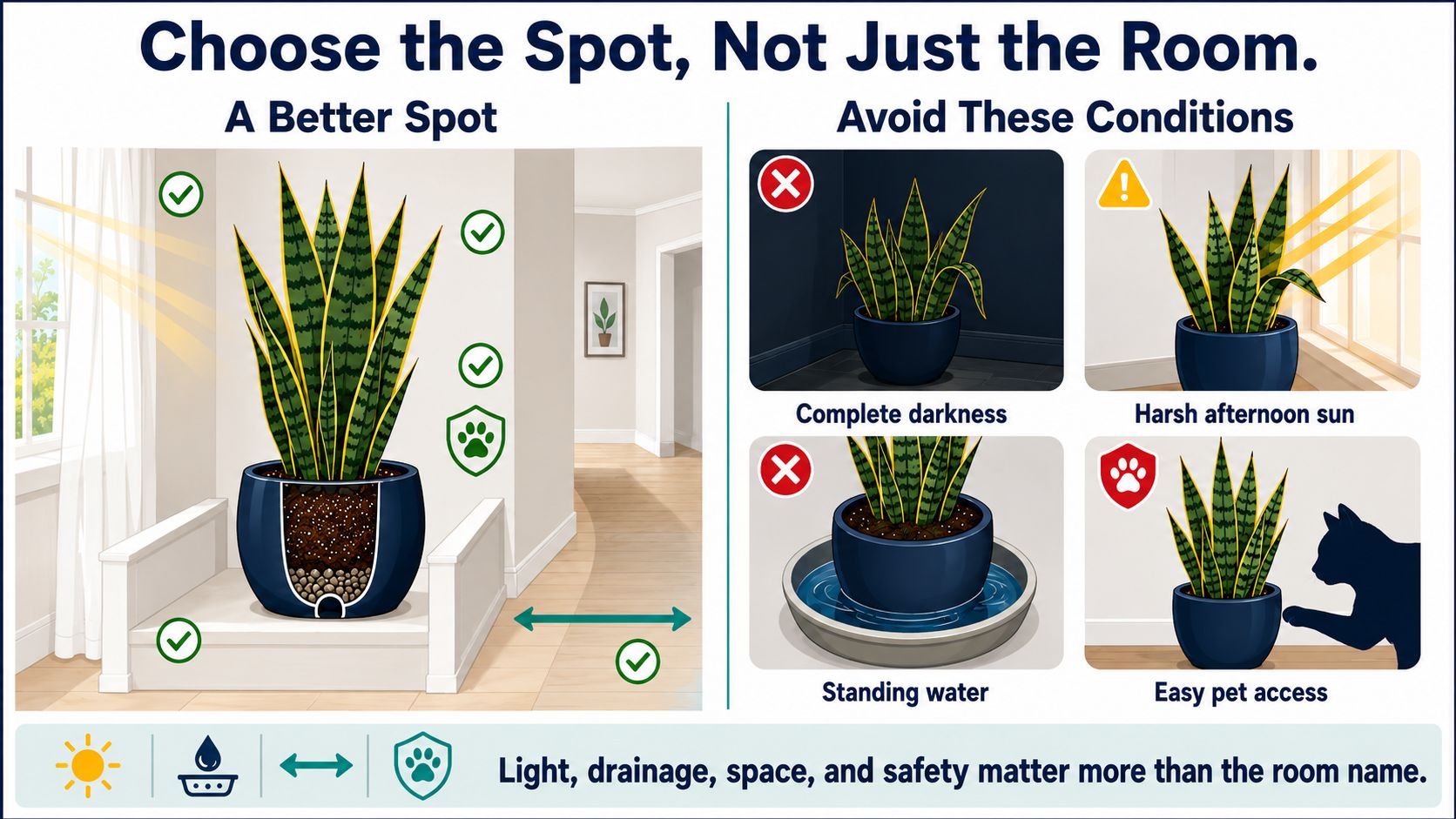
There are a few conditions that consistently don't work for a snake plant, regardless of which room you're in.
1. Completely Dark Areas
The plant tolerates low light, but "low light" isn't the same as no light at all. A windowless storage corner or a spot with no ambient light for most of the day will eventually cause it to decline.
2. Prolonged Harsh Direct Sunlight
Bright, indirect light is ideal. Hours of direct, intense sun, especially through a west-facing window in the afternoon, can scorch the leaves.
3. Constantly Wet or Poorly Drained Conditions
Snake plants are prone to root rot if the soil stays wet. Avoid spots where water pools, or where the pot sits in a saucer that's never emptied.
4. Areas Accessible to Pets That May Chew the Plant
Snake plant leaves aren't meant to be eaten by pets. If you have a cat or dog that chews on houseplants, place it somewhere out of reach rather than on low furniture or the floor.
What Is the Best Direction for a Snake Plant as per Vastu?
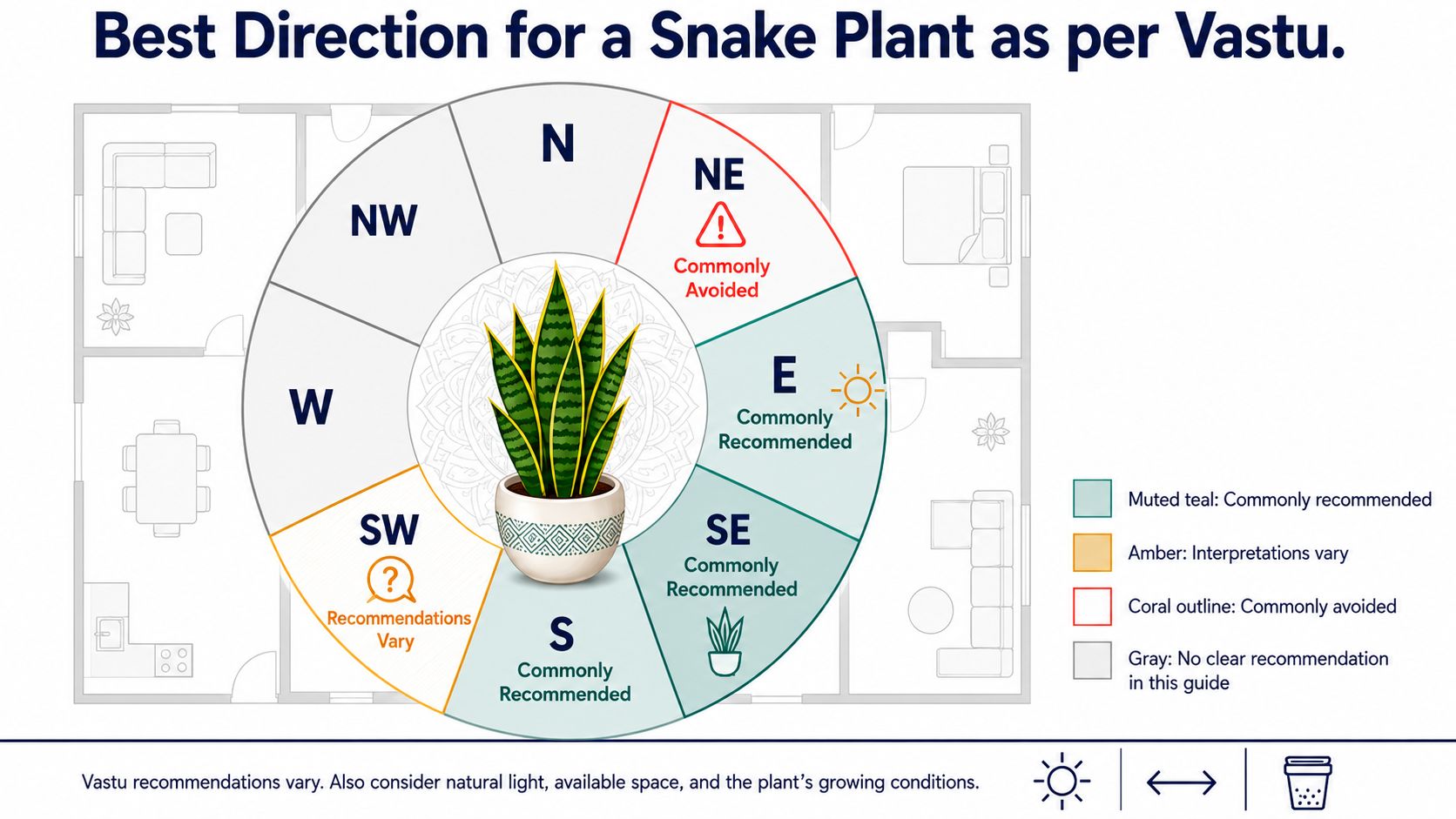
According to common Vastu interpretations, the southeast, south, and east directions are often considered suitable for a snake plant. The northeast direction is the one most commonly advised against. Recommendations vary between sources, so it's worth treating this as general guidance rather than a fixed rule, and weighing it alongside the plant's actual light and space requirements.
Southeast Direction
The southeast is one of the most frequently recommended directions for a snake plant in Vastu, often associated with positive energy in the home.
South Direction
The south direction is also commonly suggested as a suitable placement in many Vastu interpretations.
East Direction
The east direction, often linked to morning light and fresh energy, is another direction regularly recommended for the plant.
What About the Southwest Direction?
Some Vastu sources also recommend the southwest direction, though this isn't universal. Other sources focus only on southeast, south, and east. If you're following Vastu closely, it's worth cross-checking with a source or practitioner you trust rather than assuming one interpretation applies everywhere.
Which Direction Should You Avoid?
The northeast is the direction most consistently flagged as one to avoid across Vastu recommendations for the snake plant.
Is a Snake Plant Good for Home?
This question has two different answers depending on what you're asking.
From a practical standpoint: Yes. It's a low-maintenance indoor plant that tolerates inconsistent watering, adapts to a range of light conditions, and doesn't require much upkeep — making it a reasonably easy plant to keep in most homes.
From a Vastu standpoint: Many people consider it a positive addition when it's placed in a direction and location aligned with their preferred Vastu principles. This is a belief-based consideration rather than a horticultural one, and it's separate from whether the plant will physically grow well in a given spot.
Both can be true at once; a plant can be a good practical fit for your home regardless of what you decide about its placement direction.
How Do You Choose the Right Snake Plant Size for Your Space?
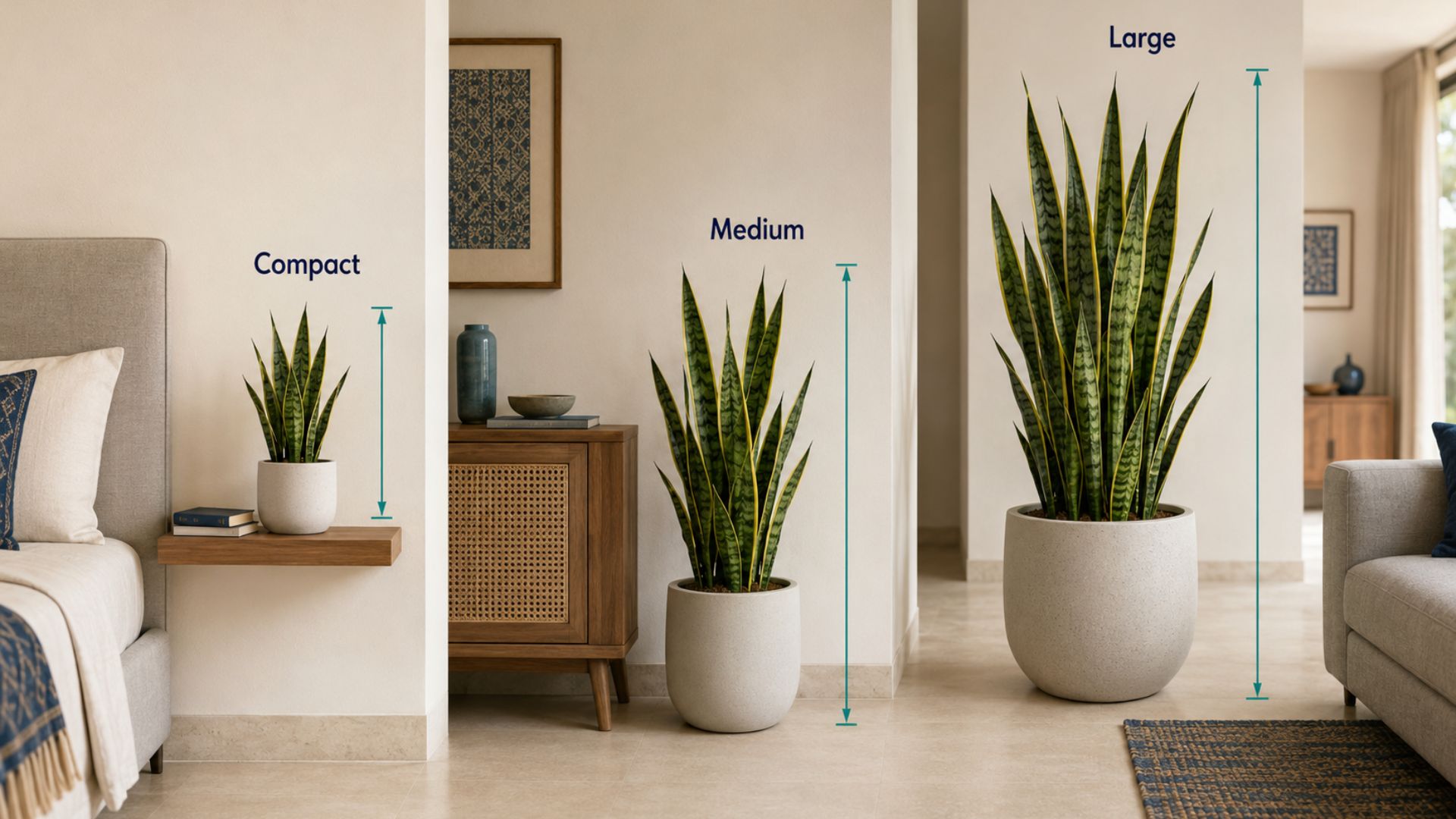
Space availability should factor into your decision as much as light does.
Small spaces: A compact snake plant variety fits well on a desk, shelf, or side table where floor space is limited.
Medium spaces: A medium-sized plant works well in a bedroom corner, on a console, or in a cabinet-adjacent spot with some breathing room.
Large spaces: A larger snake plant works best as a floor feature in a living room or office, where it has room to grow without crowding furniture or walkways.
Matching the plant's eventual size to the space you have will save you from having to relocate it later.
Get a Snake Plant for Your Space
Once you have decided where to place your snake plant, the next step is choosing a variety and size that suits the available space. Compact varieties can work well on desks, shelves, and side tables, while taller plants are better suited to open corners in living rooms or offices.
If you want to compare different sizes and varieties, you can also explore Urvann's snake plant collection to see the options available and choose one based on your space and placement needs.
Frequently Asked Questions (FAQs)
1. Can we keep a snake plant in the bedroom?
Yes. Choose a spot with adequate indoor or indirect light, and keep it out of reach of pets that may chew the leaves.
2. Where should you place a snake plant for good luck?
Many Vastu interpretations suggest the southeast, south, or east directions as favorable placements, though views on this vary between sources.
3. Is a snake plant good for the home as per Vastu?
Many people consider it a positive addition when placed according to their preferred Vastu direction, though this is a belief-based consideration rather than a horticultural one.
4. Is a snake plant bad luck for home?
Most common Vastu interpretations consider the snake plant favorable rather than unlucky, provided it's placed in a generally recommended direction such as southeast, south, or east, and away from the northeast.
5. Can we place a snake plant in the west direction?
West isn't among the directions most commonly recommended in Vastu interpretations for this plant, which tend to favor southeast, south, and east. If you're following Vastu strictly, southeast, south, or east are generally considered the safer choices.
6. Where should you not place a snake plant?
Avoid completely dark corners, spots with prolonged harsh direct sunlight, constantly wet or poorly drained areas, and places accessible to pets that may chew it.
7. Can you sleep with a snake plant in your room?
Yes, a snake plant is commonly kept in bedrooms. Choose a location with adequate light and enough space, and position it away from where pets or children could reach and chew it.
8. What is the Hindi name of a snake plant?
Snake plant can be called सांप का पौधा, स्नेक प्लांट, or सास की जुबान in Hindi. Naming can vary by region and source, so local usage may differ.
9. How do I know if my snake plant is getting enough light?
A spot near a bright window but away from prolonged harsh direct sunlight is usually suitable. If the area receives very little natural or ambient light for most of the day, consider moving the plant closer to a brighter location.
10. What should I do if the Vastu direction has poor light?
If the recommended Vastu direction is too dark, choose a nearby brighter spot that still balances your Vastu preferences with the snake plant's practical needs, such as light and space