


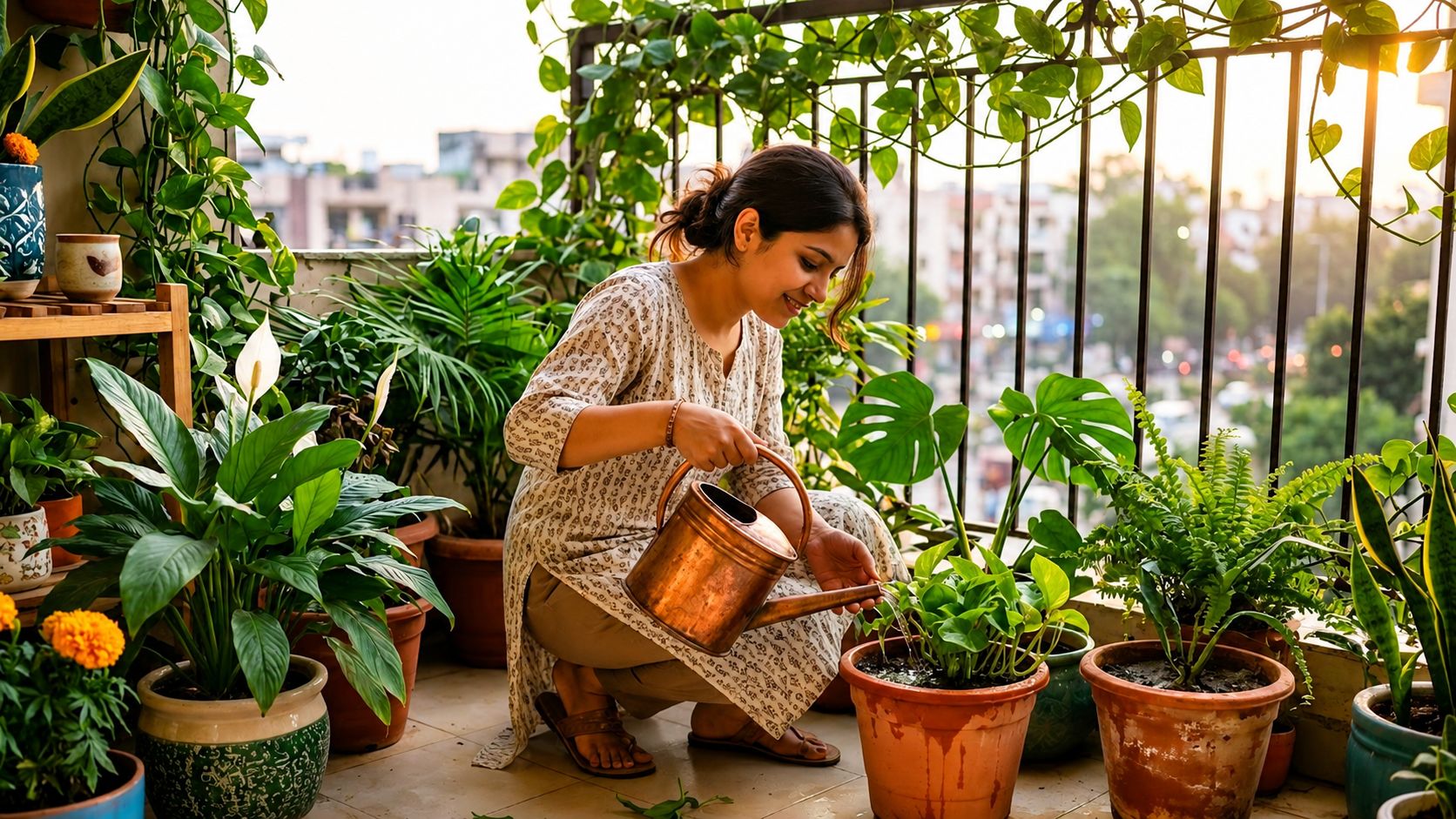
Most plant parents in India are doing one thing wrong without knowing it. They are watering at the wrong time of day. Not the wrong amount. Not the wrong frequency.
Summary:
- The best time to water plants is early morning (6–8 AM) when evaporation is low and plants absorb water effectively.
- Evening watering (before sunset) is acceptable, but midday (10 AM–4 PM) and late night watering should be avoided.
- Seasonal watering matters: daily in summer, reduced in monsoon, and every 3–5 days in winter depending on soil condition.
- Always water deeply at the roots, not the leaves, and ensure excess water drains properly.
- Overwatering is a common mistake—watch for yellow leaves, soggy soil, and soft stems as warning signs.
- Always check soil moisture before watering to avoid unnecessary or harmful watering.
Just the wrong hour, and it is quietly costing their plants their health.
The good news?
This is the easiest fix in gardening. Get the timing right, and your plants absorb more water, face less disease, and thrive even through India's punishing summers.
This guide covers everything you need to know about when to water, when to stop, and how to adapt across seasons, whether you have a terrace garden, a balcony full of pots, or a few indoor plants by the window.
What Is the Best Time to Water Plants?
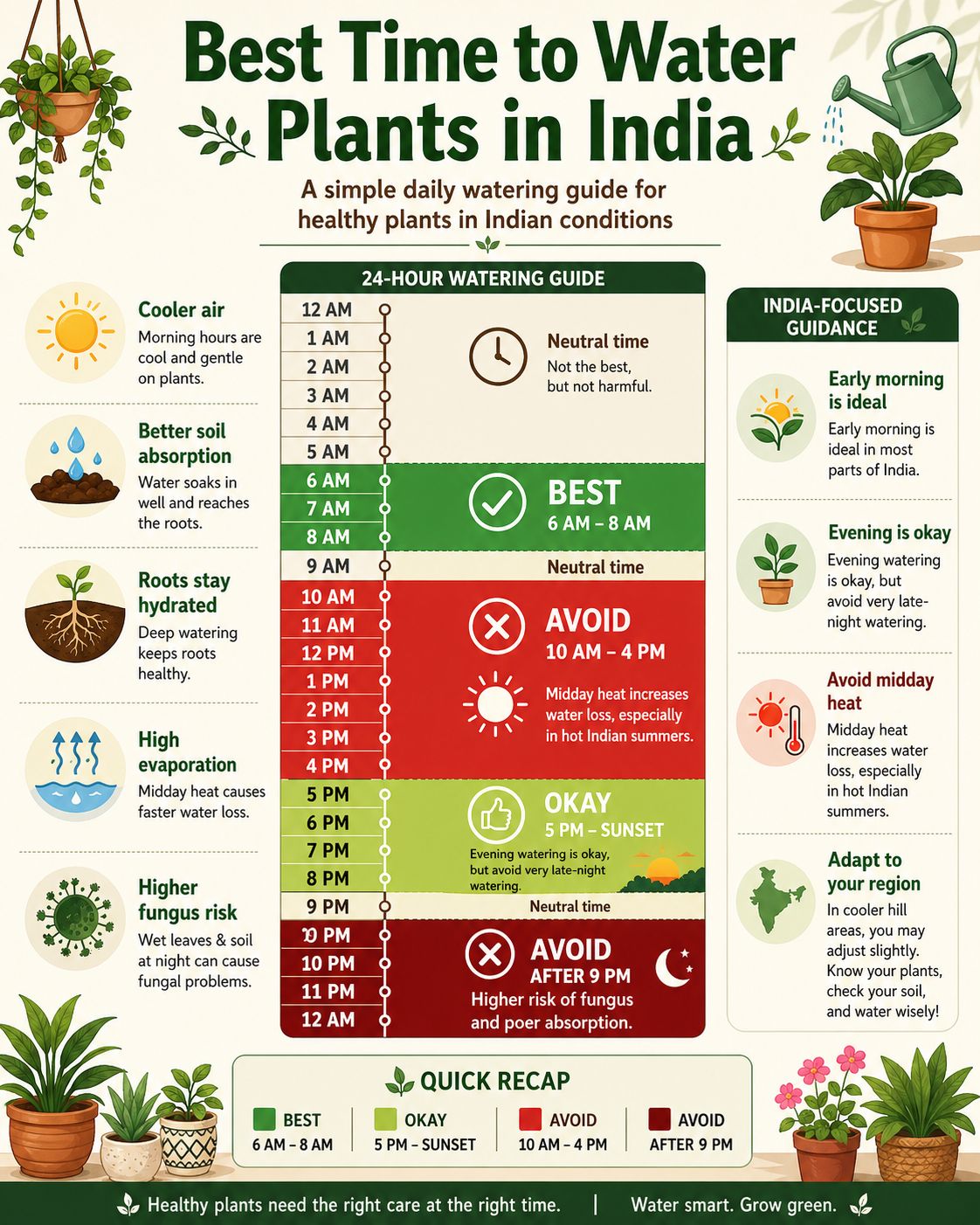
The best time to water plants is early morning, between 6 AM and 8 AM.
At this hour, the soil is cool, the air is calm, and the sun has not yet reached full intensity. Water soaks deep into the root zone instead of evaporating off the surface. Plants absorb what they need to prepare for the heat ahead.
And because the sun rises and dries the leaves throughout the day, there is no moisture sitting on the foliage overnight, which is exactly what invites fungus and disease.
For Indian conditions specifically, aim for 6 to 8 AM. After 9 AM, temperatures in cities like Delhi, Mumbai, Bangalore, and Chandigarh rise fast enough that surface evaporation kicks in, especially from April through June. The earlier you water, the more efficient every drop becomes.
Morning watering is even more important if you have recently added new plants to your home.
Freshly planted roots are shallow and fragile. They need consistent moisture during the day, not unpredictable heat-hour watering that evaporates before it reaches them.
Is It Okay to Water Plants in the Evening?
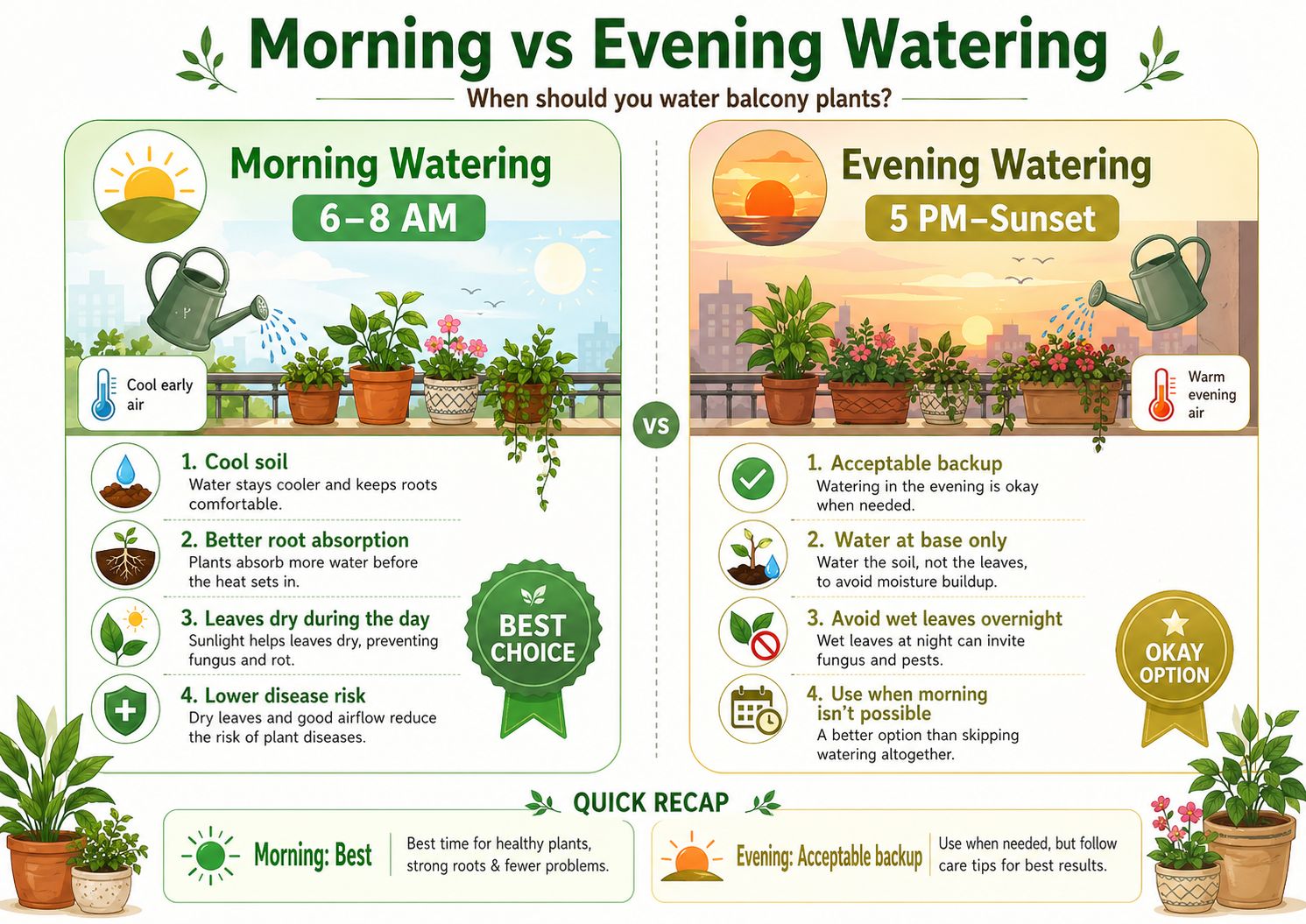
Evening watering is a reasonable second option, not an ideal one.
If mornings are not possible on a given day, watering between 5 PM and sunset works well. Temperatures have dropped, wind has eased, and water has time to penetrate the soil before night. Container-grown plants on balconies and terraces, which dry out faster than ground plants, often benefit from a light evening watering in addition to their morning watering during peak Indian summer months.
The catch: keep water off the leaves. Wet foliage overnight creates the perfect environment for fungal infections, mildew, and rot. Use a watering can with a long spout and direct water straight to the base of the plant. A can with a narrow, targeted spout makes this easy, especially for plants placed close together on a balcony shelf.
If you are browsing watering tools, prioritize a long-spouted can for outdoor and balcony plants, and a smaller precision can for your indoor collection.
When Is the Worst Time to Water Plants?
There are two times of day that actively harm your plants when you water them.
Midday (10 AM to 4 PM) is the worst window for watering. In the Indian summer, this is when the sun is at peak intensity. Water poured on the soil evaporates before it reaches the root zone. You waste water, the plant stays thirsty, and the effort counts for almost nothing. For container plants sitting in direct sun on a terrace, midday watering can also heat the soil further, stressing the roots.
Late at night is equally problematic. After 9 or 10 PM, there is no evaporation happening. Water sits on leaves and in the surface soil, creating conditions that attract pests and fungal disease. Leaves that stay wet through the night are far more vulnerable to infections.
If your plants are wilting in the afternoon heat, do not reach for the watering can. Move them to shade if possible, or mist the air around them. Wait until the temperature drops, and then water properly at the base.
How Many Times Should You Water Plants in Summer?
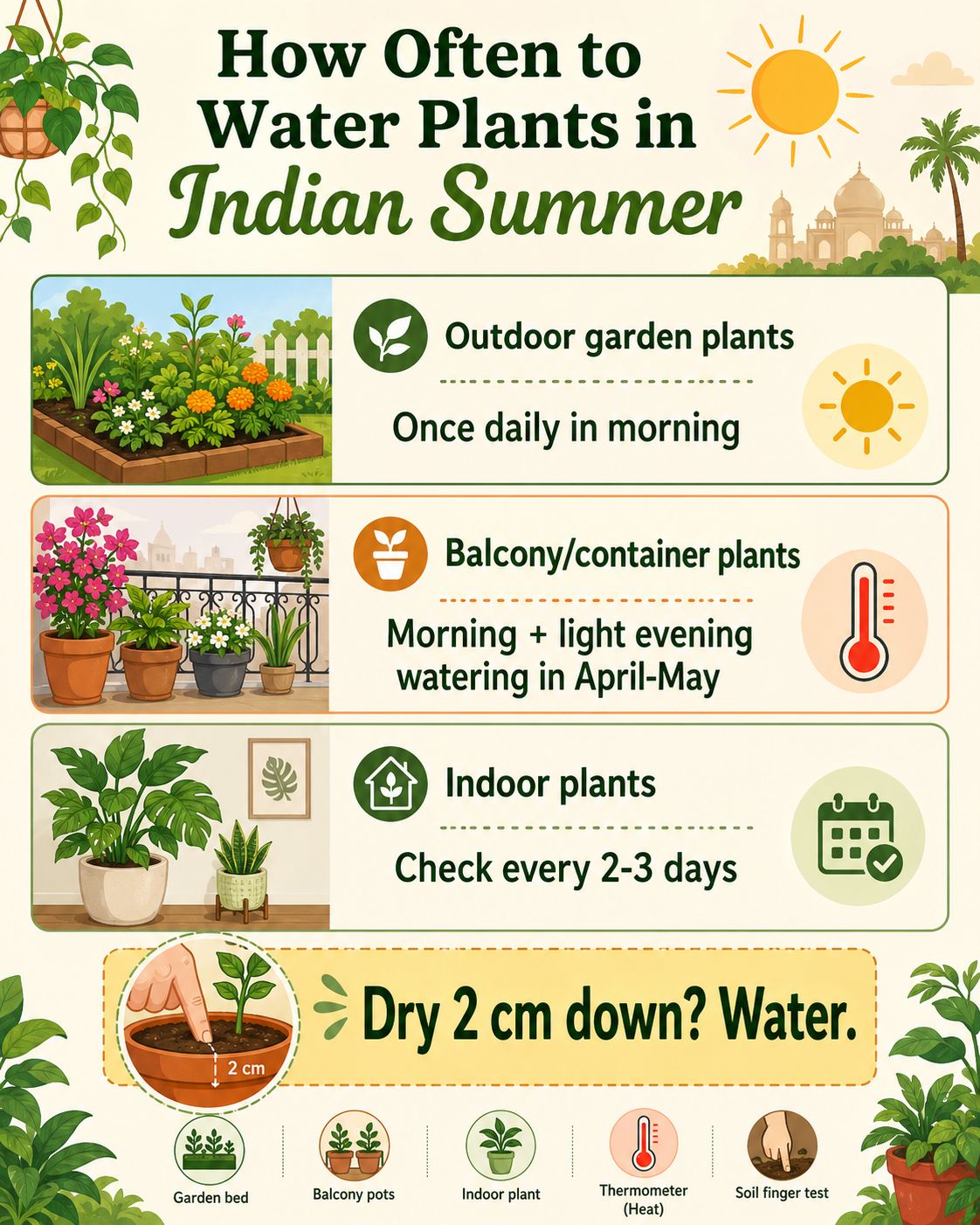
India's summer season (March through June) is the most demanding period for plant care. Soil dries faster, evaporation is high, and plants lose moisture quickly through their leaves.
Outdoor garden plants typically need watering once a day in the morning. Larger, established plants with deep root systems can sometimes go every other day if the soil stays moist below the surface. Use the finger test: push your finger about 2 cm into the soil. If it feels dry, water. If it still feels moist, wait.
Balcony and container plants need more attention. Pots lose water much faster than ground soil because heat affects them from all sides, especially terracotta and clay pots in direct sunlight. During April and May, most container plants need watering twice a day, once in the early morning and once in the early evening.
Indoor plants are more forgiving. They are shielded from direct sun and outdoor heat, so they retain moisture longer. Water them in the morning when needed, checking the soil every two to three days. Plants near windows in full sun dry faster than those in partial shade.
If you want to reduce the frequency of watering without stressing your plants, mulching around outdoor plants with dry leaves, coconut husk, or straw helps lock moisture into the soil for longer. For plants that hold up best through India's summer heat, browse heat-tolerant outdoor plants.
What Are the Three Rules of Watering Plants?
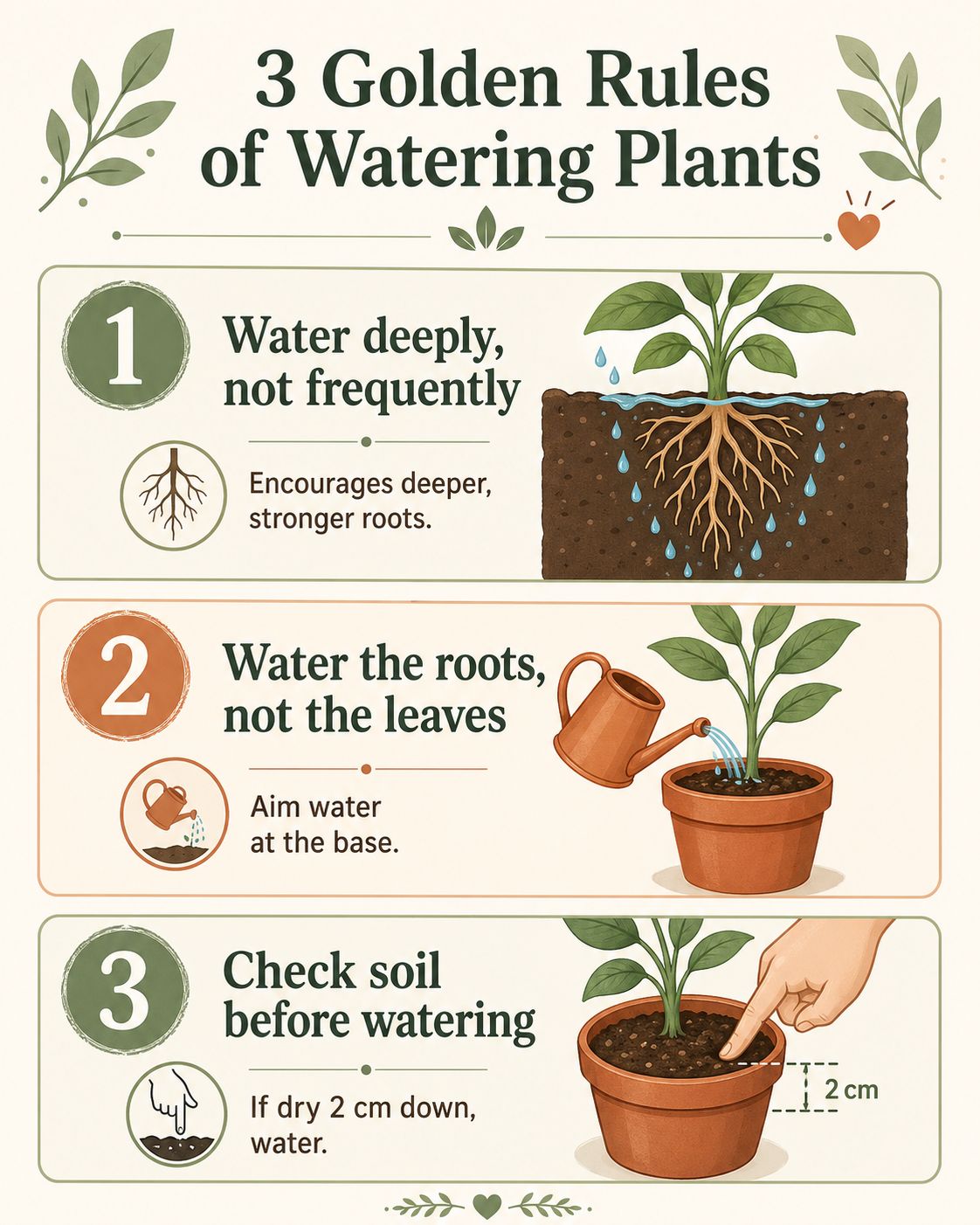
If you only remember three things about watering, make it these.
1. Water Deeply, Not Frequently
Shallow, frequent watering trains roots to stay near the surface, where they are vulnerable to heat and drought. Deep, thorough watering once or twice a day pushes roots downward, making plants more resilient. When you water, hold steady at the base of each plant until you see water begin to drain from the pot's bottom. That is how you know the root ball is fully soaked.
2. Water The Roots, Not The Leaves
The leaves are not where water is absorbed. The roots are. Watering from above might feel intuitive, but it wastes water and leaves foliage wet, which invites disease. Always direct your watering can or hose nozzle toward the soil, not the plant.
3. Check The Soil Before You Water
Plants do not run on a fixed clock. They respond to temperature, humidity, pot size, soil type, and how much sun they receive that day. Overwatering kills more plants than underwatering. Before you water, check the soil. If it is still moist, leave it. If it is dry 2 cm down, it is time.
Seasonal Watering Guide for Indian Gardeners
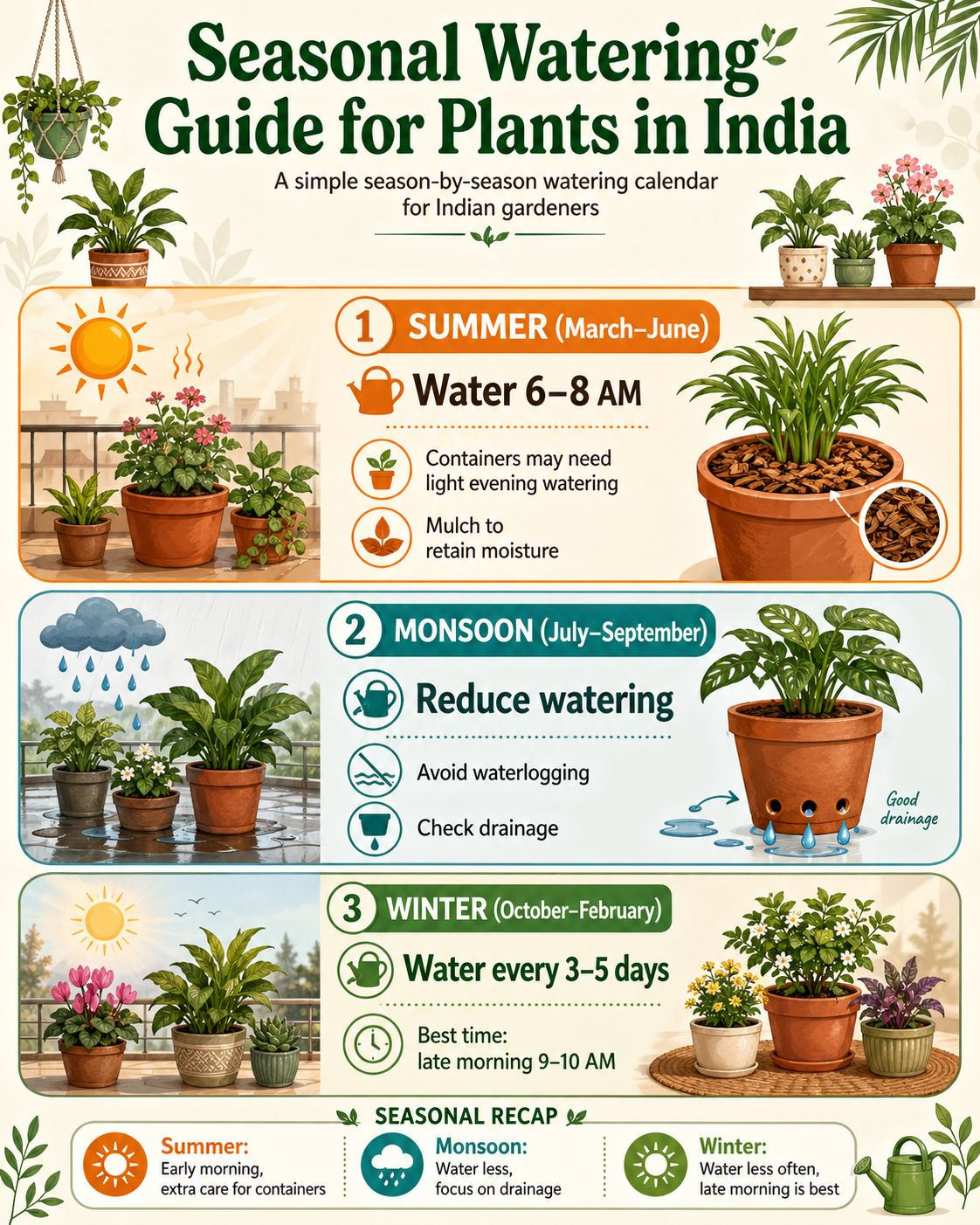
ndia's seasons are dramatic, and your watering schedule should change with them.
Summer (March–June)
This is survival season for plants. Water early (6 to 8 AM) before the heat builds. Container plants may need a second round in the evening. Mulch around outdoor plants. Check pots more frequently, as they dry out within hours on a hot day. If you have recently ordered heat-tolerant plants like bougainvillea, portulaca, or marigolds, make sure they are getting consistent morning hydration as they establish.
Monsoon (July–September)
Natural rainfall usually takes over the heavy lifting. Reduce your watering schedule significantly, but do not stop entirely, especially for potted plants under overhangs that may not receive direct rain. The bigger risk in the monsoon is waterlogging. Make sure your pots have proper drainage holes. Standing water around roots suffocates them and causes rot. If you are buying pots, look for designs with clear drainage at the base.
Winter (October–February)
Cooler temperatures slow evaporation dramatically. Plants need far less water. Water every three to five days rather than daily, and shift your timing to late morning around 9 to 10 AM, so the soil warms slightly before the water hits. Avoid early morning watering in winter, especially for cold-sensitive plants, as the soil temperature is at its lowest then. Indoor plants near heaters may dry out faster than expected, so always check the soil before assuming it is fine.
What Are the Signs of Overwatering?
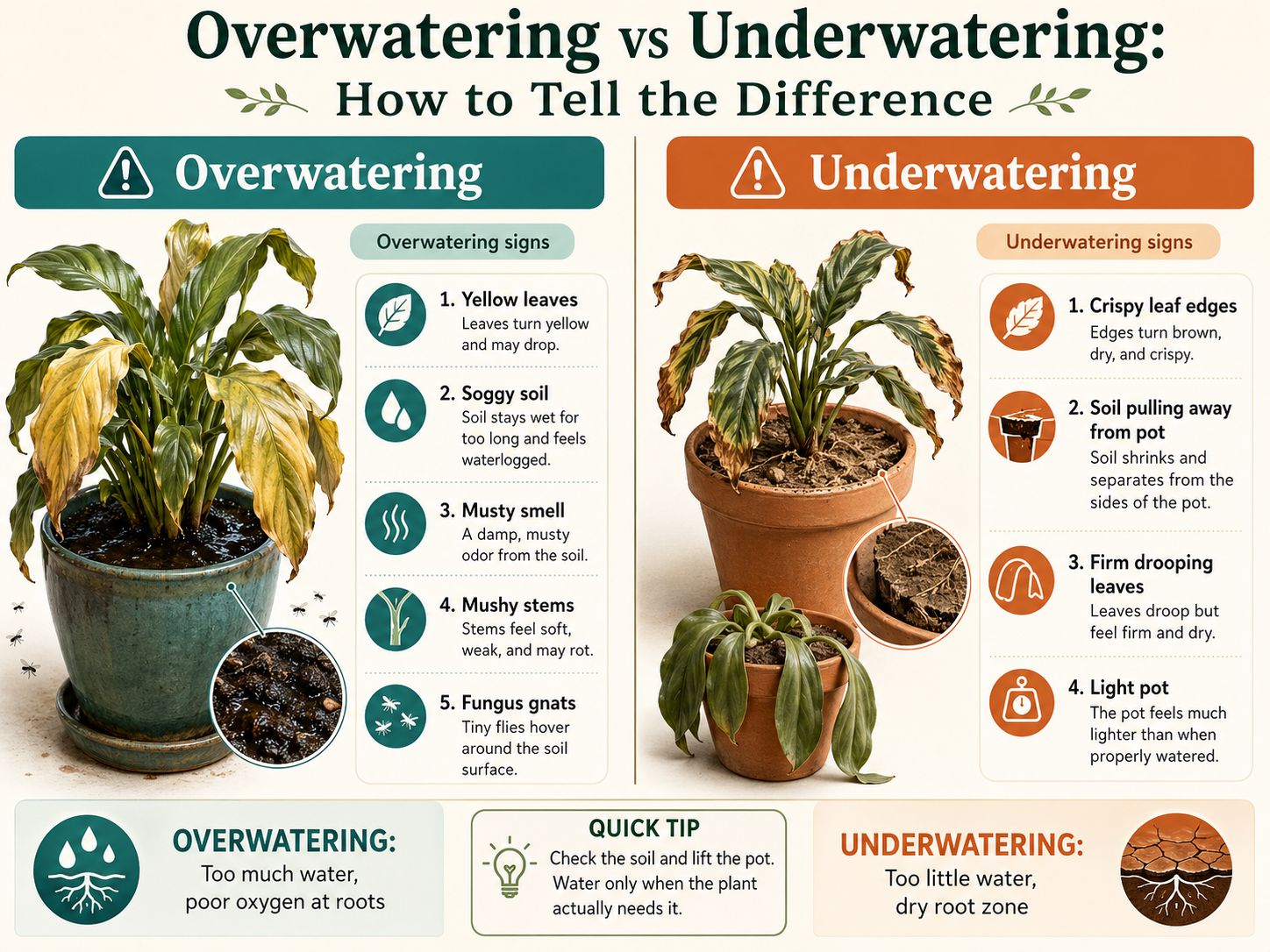
Overwatering is the most common mistake Indian plant owners make, often because they confuse wilting with thirst. Here is how to tell them apart.
Signs of Overwatering
-
Leaves turning yellow, especially the lower leaves
-
Soil that stays wet for days without drying
-
A musty smell from the pot or soil
-
Soft, mushy stems near the base
-
Fungus gnats hovering around the soil
Signs of Underwatering
-
Dry, crispy leaf edges
-
Soil pulling away from the edges of the pot
-
Leaves drooping but still firm to the touch
-
The pot feels very light when lifted
If you have overwatered, stop watering and move the plant to a spot with good airflow. Remove any damaged roots if repotting is needed. Urvann's well-draining potting mixes are formulated to help with this, which means better drainage means less chance of roots sitting in excess water.
How to Water Plants the Right Way
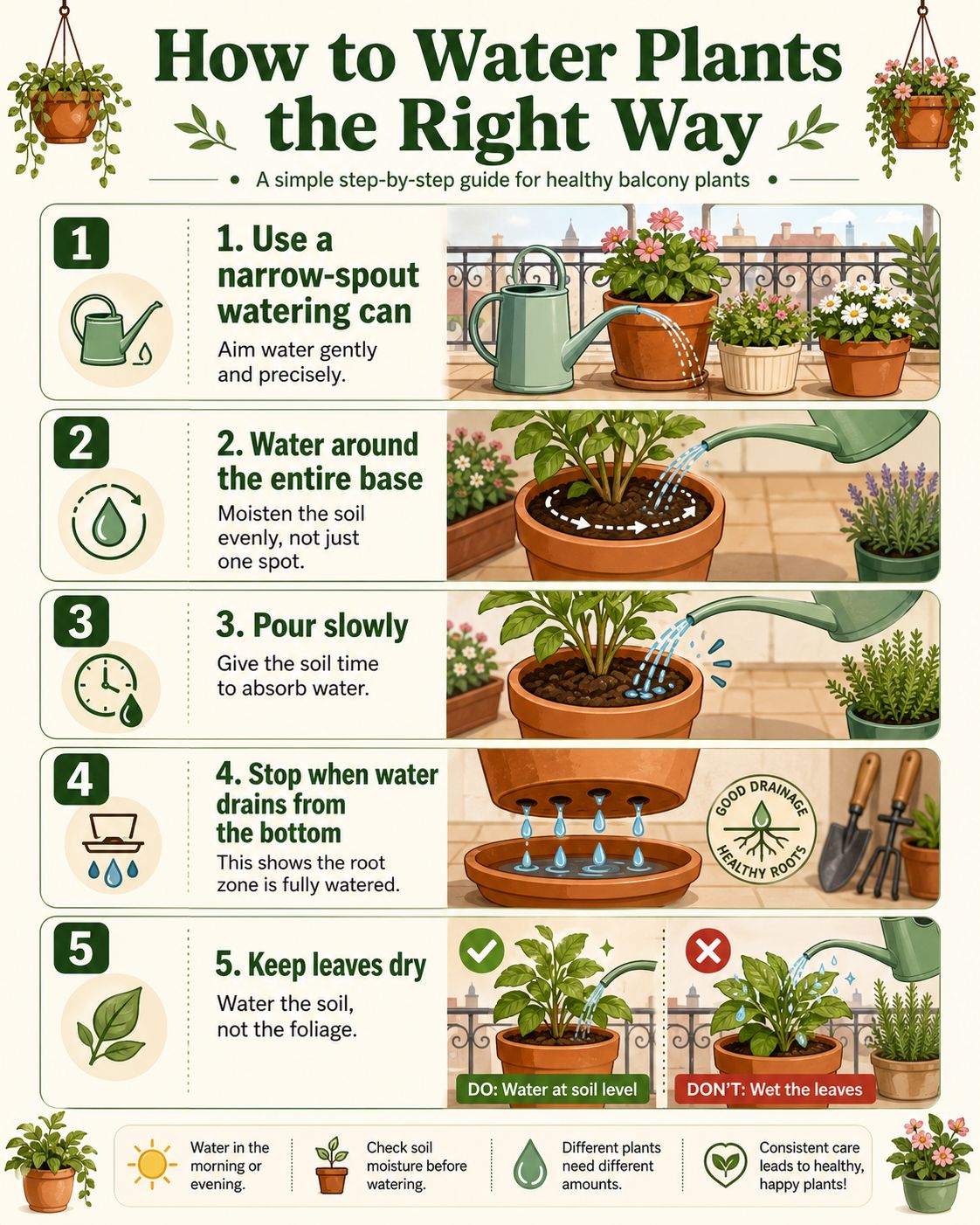
Getting the timing right is step one. Here is how to make every watering session count.
Use the right tool for the job. A watering can with a narrow spout gives you control and keeps leaves dry. For larger outdoor beds, a soaker hose or drip system delivers water directly to roots with no waste. If you are setting up a balcony garden, pairing your plant order with a quality watering can from the start saves you months of trial and error.
Water around the entire base. Do not pour water in one spot. Move around the plant so the entire root system benefits.
Go slow. Water seeps into the soil gradually. Pouring too fast causes runoff before the soil absorbs anything. A slow, steady pour ensures deep penetration.
Self-watering pots solve a real problem. If you travel frequently or forget to water, they release moisture slowly at the root zone and reduce the risk of both over- and underwatering.
Summing Up!
The best time to water plants in India is early morning, between 6 and 8 AM. This single habit, more than any fertilizer, soil upgrade, or pruning technique, will make the biggest difference in your plants' health through every Indian season.
If morning is not always possible, water before sunset. Avoid midday and late night entirely. Check the soil before every session. Water deeply rather than often. And match your frequency to the season: more in summer, far less in monsoon and winter.
Whether you are caring for a single money plant on a windowsill or managing a full terrace garden, the right tools make consistency easier. Explore Urvann's collection of watering cans, self-watering pots, planters with built-in drainage, and ready-to-grow plant bundles, everything you need to build a watering routine that actually works.
Frequently Asked Questions (FAQs)
1. What is the best time to water plants in India?
The best time to water plants in India is early morning, between 6 and 8 AM. At this hour, the soil is cool, evaporation is low, and water reaches the roots before the heat builds. Leaves also have the full day to dry, which reduces the risk of fungal disease. It is a common problem in India's humid summer months.
2. Is it better to water plants in the morning or evening?
Morning is always the better option. Evening watering is a safe fallback if mornings are not possible, but only if you water before sunset and keep water off the leaves. Wet foliage overnight invites fungal infections and root rot. Morning watering avoids this risk entirely and prepares the plant for the heat of the day ahead.
3. How many times should I water plants in summer?
Most outdoor garden plants need watering once a day in the morning during Indian summer. Container and balcony plants dry out faster and may need a second light watering in the early evening during peak months like April and May. Indoor plants generally need watering every two to three days. Always check the soil before watering, rather than following a fixed schedule.
4. What are the signs of overwatering plants?
The most common signs of overwatering are yellowing leaves, soggy soil that does not dry out between waterings, a musty smell from the pot, soft or mushy stems near the base, and fungus gnats hovering around the soil. If you notice these signs, stop watering immediately and move the plant to a spot with good airflow. Overwatering is more damaging than underwatering and is the leading cause of plant loss among home gardeners.
5. When is the worst time to water plants?
The two worst times to water plants are midday (10 AM to 4 PM) and late at night. Midday watering in Indian summer causes most of the water to evaporate before it reaches the roots. Late-night watering leaves moisture sitting on the foliage and soil for hours with no evaporation, creating ideal conditions for fungus, mildew, and pests. If your plants are wilting in the afternoon heat, move them to shade rather than watering immediately.
6. Do all plants need to be watered every day?
No. Watering needs vary by plant type, pot size, season, and sunlight exposure. Succulents and cacti need water only once a week or less. Large outdoor plants with established root systems can go every other day. Container plants in full sun during Indian summer may need daily or twice-daily watering. The best way to know is the finger test: push your finger 2 cm into the soil. If it is dry, water. If it is still moist, wait.
7. Can you overwater plants?
Yes, and it is the most common watering mistake. Overwatering suffocates the roots by blocking oxygen from reaching them, eventually causing root rot. Unlike underwatering, where plants can often recover quickly once watered, root rot from overwatering is difficult to reverse. Always check the soil moisture before each watering session, rather than watering on a fixed schedule regardless of conditions.