


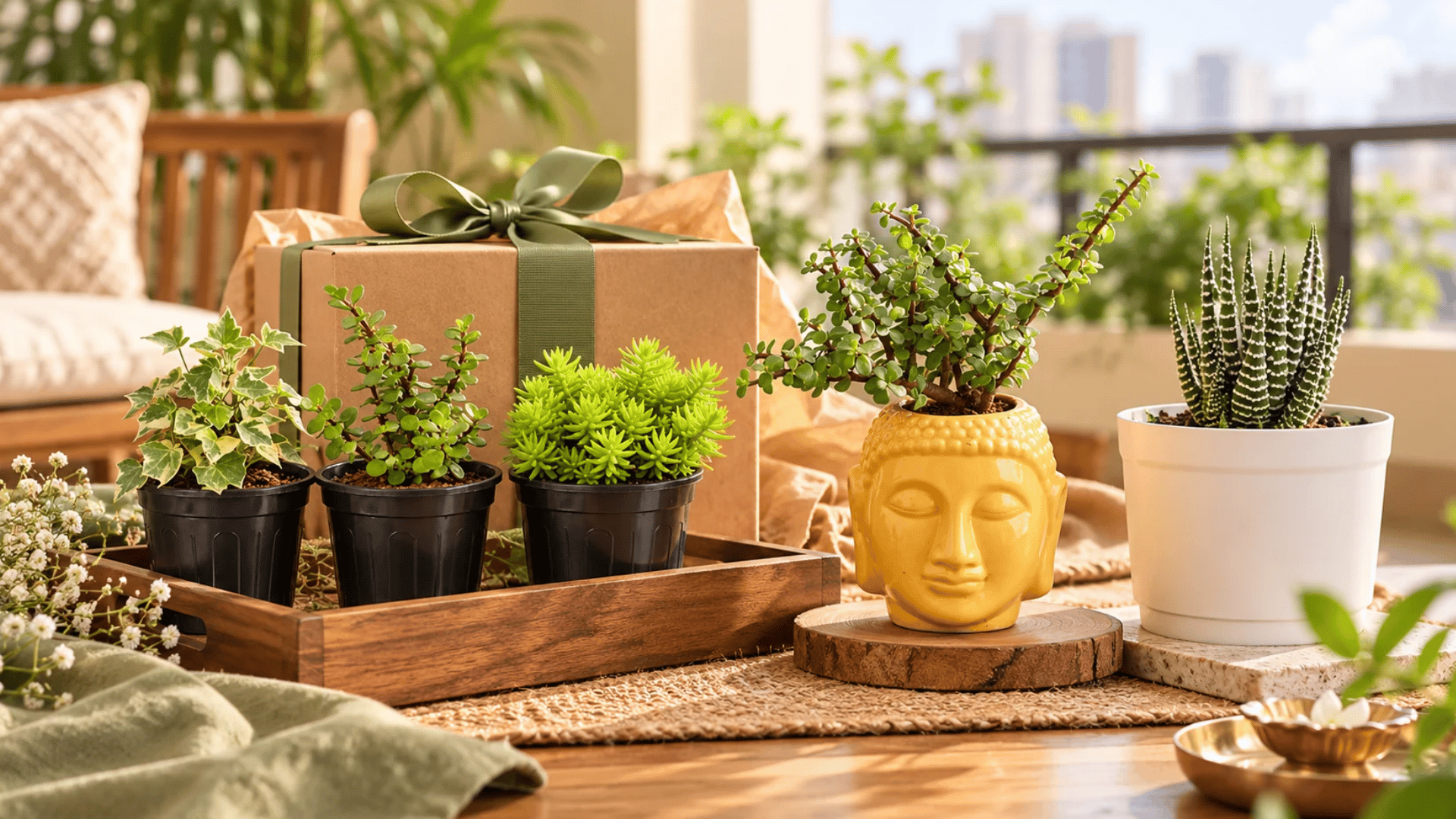
Understand what succulents symbolize, from Jade’s prosperity to Aloe’s healing. Explore popular types, cultural Vastu meanings, and thoughtful gifting ideas.
Key Takeaways
-
-
- Succulents store water in their leaves, stems, or roots, helping them survive dry periods.
- Jade plants are associated with wealth and good fortune in Vastu and feng shui traditions because their rounded leaves resemble coins.
- Different succulents carry different meanings. Echeveria is linked to affection, aloe vera to healing, and Laxmi Kamal to prosperity.
- Succulent symbolism varies across cultures and personal beliefs. These meanings are interpretations, not guaranteed outcomes.
- Choose a succulent based on its growing needs. Consider available light, pot drainage, and watering requirements before gifting one.
-
A succulent can look like a simple gift. But the plant you choose can say quite a lot.
A Jade plant is linked to wealth because its round leaves look like coins. Aloe Vera is associated with healing because its gel has long been used on the skin. Echeveria, with its rose-shaped leaves, is often chosen to express affection.
So what do succulents symbolize as a group?
They are commonly associated with resilience, prosperity, growth, and lasting affection. Much of this meaning comes from the way they grow. Their thick leaves and stems store water, helping them survive dry periods with less frequent watering.
The meaning changes with the species, though. And it can change with the person receiving the plant.
Here, we will dive into the meaning, popular types, and gifting ideas for succulents.
What Do Succulents Symbolize?
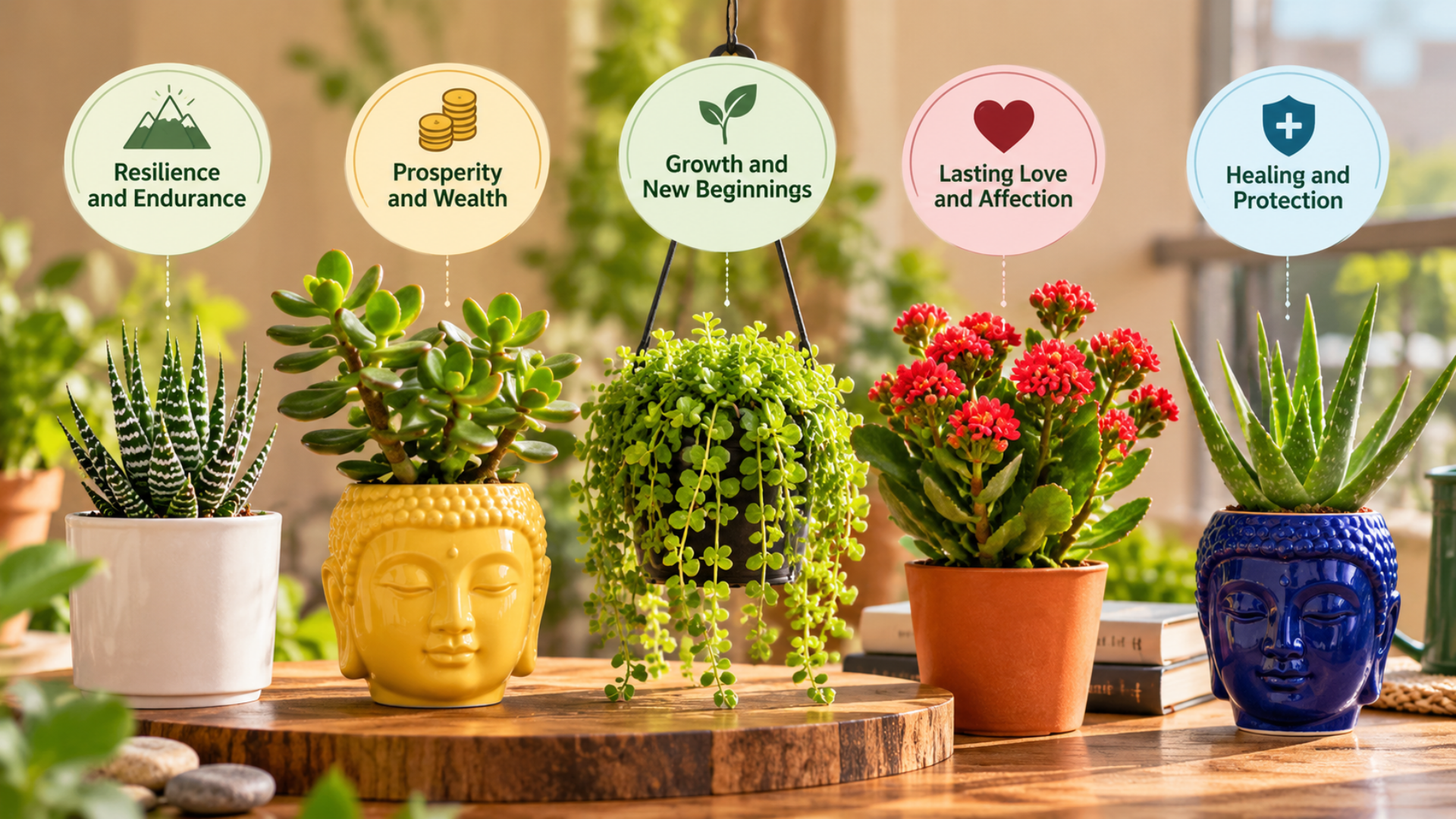
1. Resilience and Endurance
Succulents store water in their leaves, stems, or roots. Many can survive dry periods that would stress other plants. This makes them a symbol of patience, strength, and the ability to keep going through difficult times.
2. Prosperity and Wealth
Look at a Jade plant. Its thick, rounded leaves resemble coins, which explains its association with wealth and good fortune in Vastu and feng shui traditions.
3. Growth and New Beginnings
Some succulents grow new plants from leaves or cuttings. That makes them a fitting gift for someone starting a new job, moving into a new home, or beginning a new chapter in life.
4. Lasting Love and Affection
A potted succulent can live for years with the right care. Unlike a bouquet that fades, it can stay with the person who receives it long after the occasion has passed.
5. Healing and Protection
Aloe Vera is often associated with healing because of its long history of topical use. Its fleshy leaves also reflect the water-storing quality shared by many succulents.
These meanings are not part of one universal tradition. They come from plant features, cultural beliefs, and the associations people make with them.
That distinction matters when you choose a gift.
The Spiritual and Vastu Meaning of Succulents
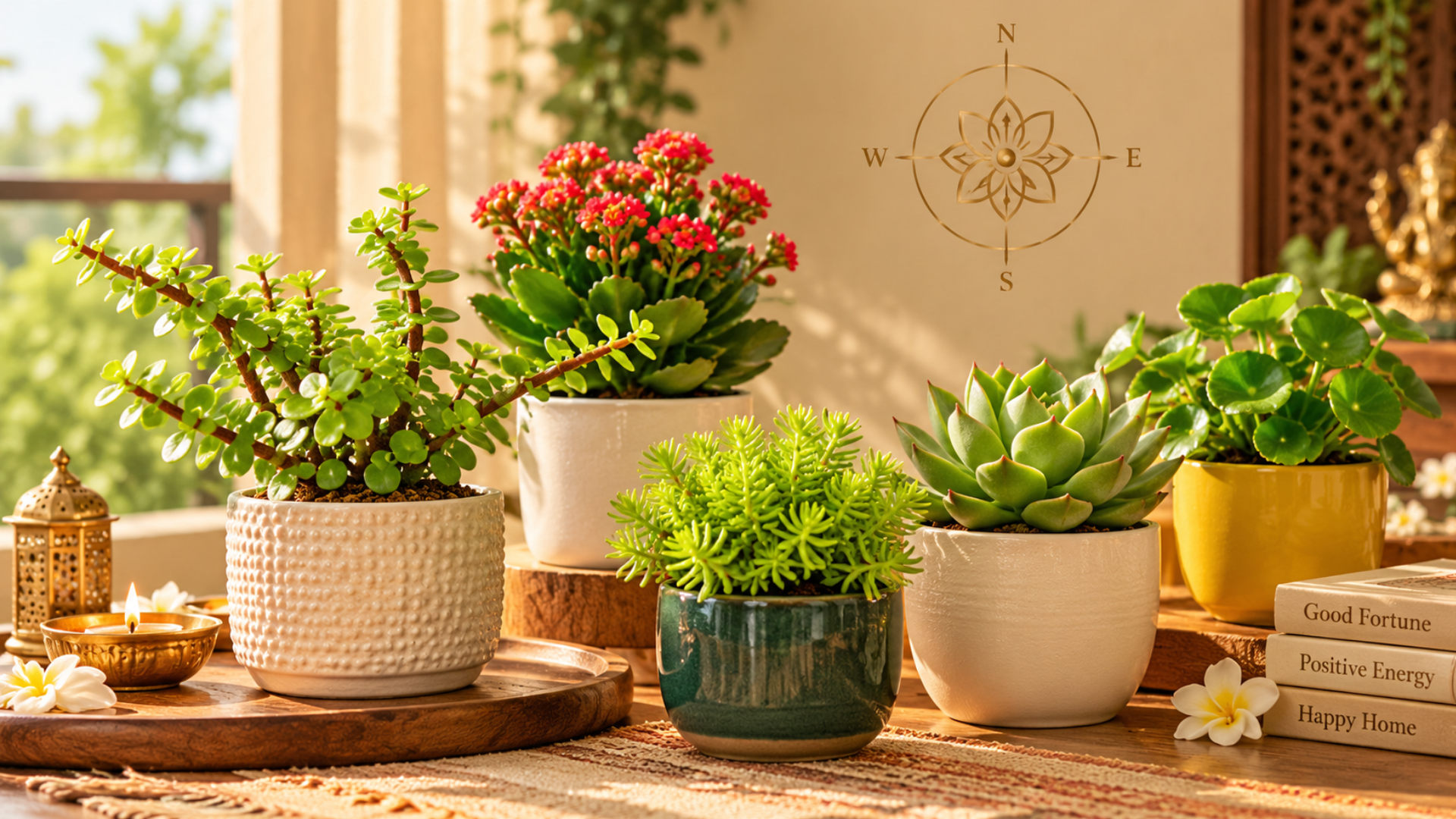
In Indian homes, succulents are sometimes kept for prosperity, balance, and positive energy. Jade and Laxmi Kamal are common choices for this purpose.
Vastu guidance often associates the southeast direction with wealth. Some people place a Jade plant in this area or near an entrance as a reminder of prosperity and growth.
Feng shui is a separate Chinese tradition, but it draws a similar association between rounded leaves and coins. Jade plants are commonly chosen for desks, workspaces, and entrances for this reason.
Laxmi Kamal has a different association. Its name connects it with Goddess Lakshmi, making it a popular choice for Diwali gifts and housewarmings.
What about Cactus?
Some Vastu guidance discourages thorny plants inside the home because thorns are associated with tension. This is a traditional belief, not a rule followed by every household.
If you're gifting a plant to someone who follows Vastu closely, a smooth-leaved succulent such as jade may be a more suitable choice.
Wait, there is one practical point to keep in mind.
A plant still needs the right growing conditions. A Jade plant placed in a dark corner for the sake of Vastu may struggle to grow. Choose a spot with suitable light first, then consider the preferred placement.
The common idea behind these traditions is simple. A plant that stores what it needs and continues to grow with limited water becomes a symbol of patience, endurance, and prosperity.
Popular Succulent Types and What They Mean
Different succulents carry different meanings. Here's how the most popular types are commonly interpreted.
| Succulent | What It Symbolizes | Why | Best Occasion |
|---|---|---|---|
| Jade | Wealth and good fortune | Rounded, coin-like leaves | Housewarming, new job |
| Echeveria | Beauty and affection | Rose-shaped rosette | Anniversary, Valentine’s Day |
| Aloe Vera | Healing and recovery | Long history of topical use | Get-well gift, new home |
| Haworthia | Calm and patience | Compact growth and neat leaves | Office desk, study table |
| Laxmi Kamal | Prosperity and family | Name and cultural association | Diwali, housewarming |
| Kalanchoe | Joy and celebration | Clusters of colourful flowers | Birthday, festival |
| Sedum | Growth and abundance | Some varieties spread and propagate readily | Graduation, new venture |
| Moonstone | Calm and quiet affection | Pale, rounded leaves | Thank-you gift, friendship |
| Red Pagoda | Change and transformation | Leaves can develop red tones in strong light | Career change, new chapter |
1. Jade Plant (जेड प्लांट/ಜೇಡ್ ಗಿಡ): Wealth and Good Fortune
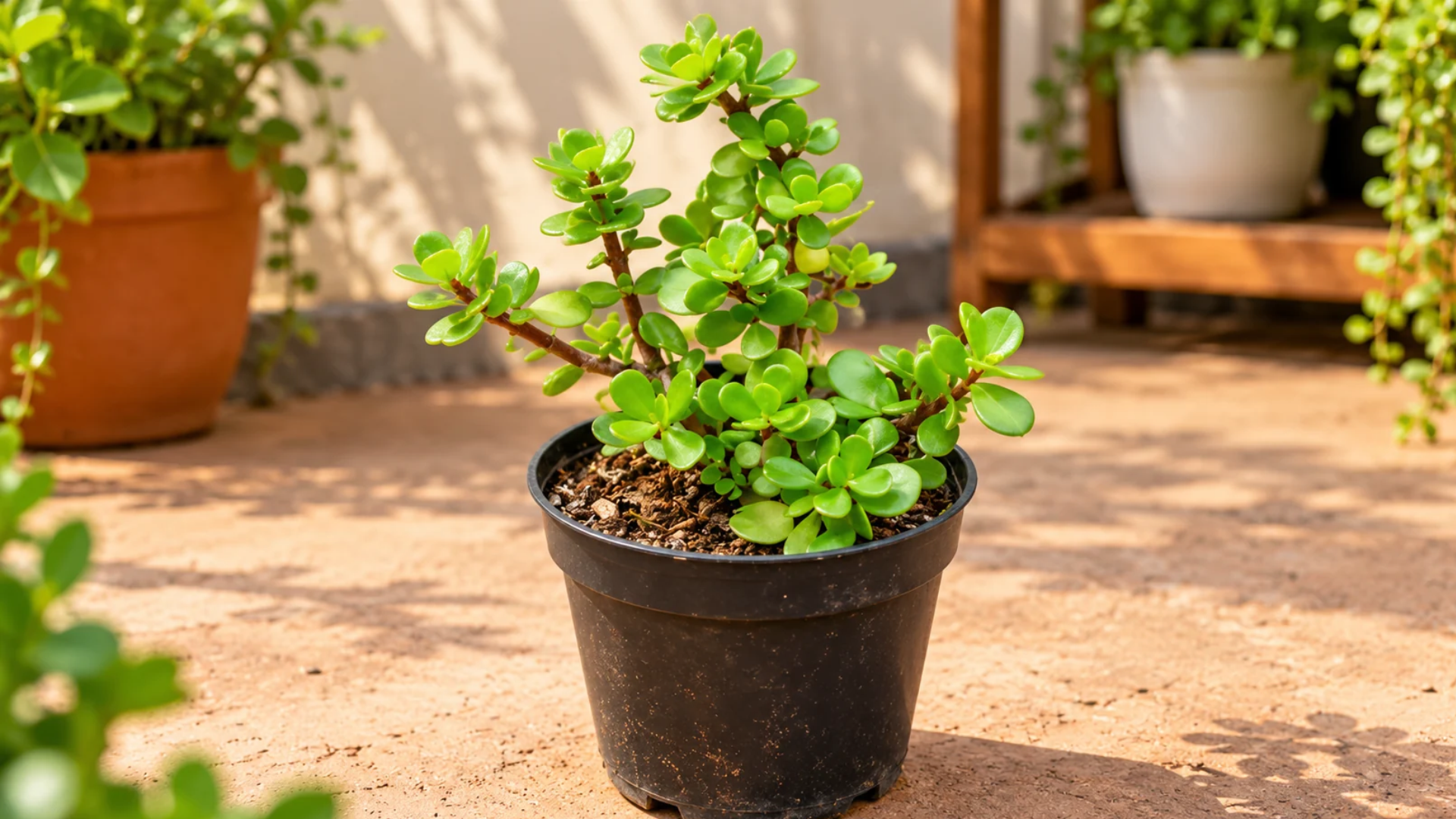
The Jade plant is one of the most recognizable succulents associated with prosperity.
Its leaves are thick, green, and rounded. They look a little like coins, which is why the plant is commonly called a money plant in gifting contexts.
Jade also grows slowly and can develop a woody stem as it matures. That gives it another useful association: growth that takes time.
In Vastu and feng shui traditions, people often keep jade near an entrance or on a work desk to represent wealth and good fortune.
A Jade plant makes a thoughtful gift for a shop opening, a new job or a Griha Pravesh ceremony.
2. Echeveria (एचेवेरिया/ಎಚೆವೇರಿಯಾ): Beauty, Grace and Affection
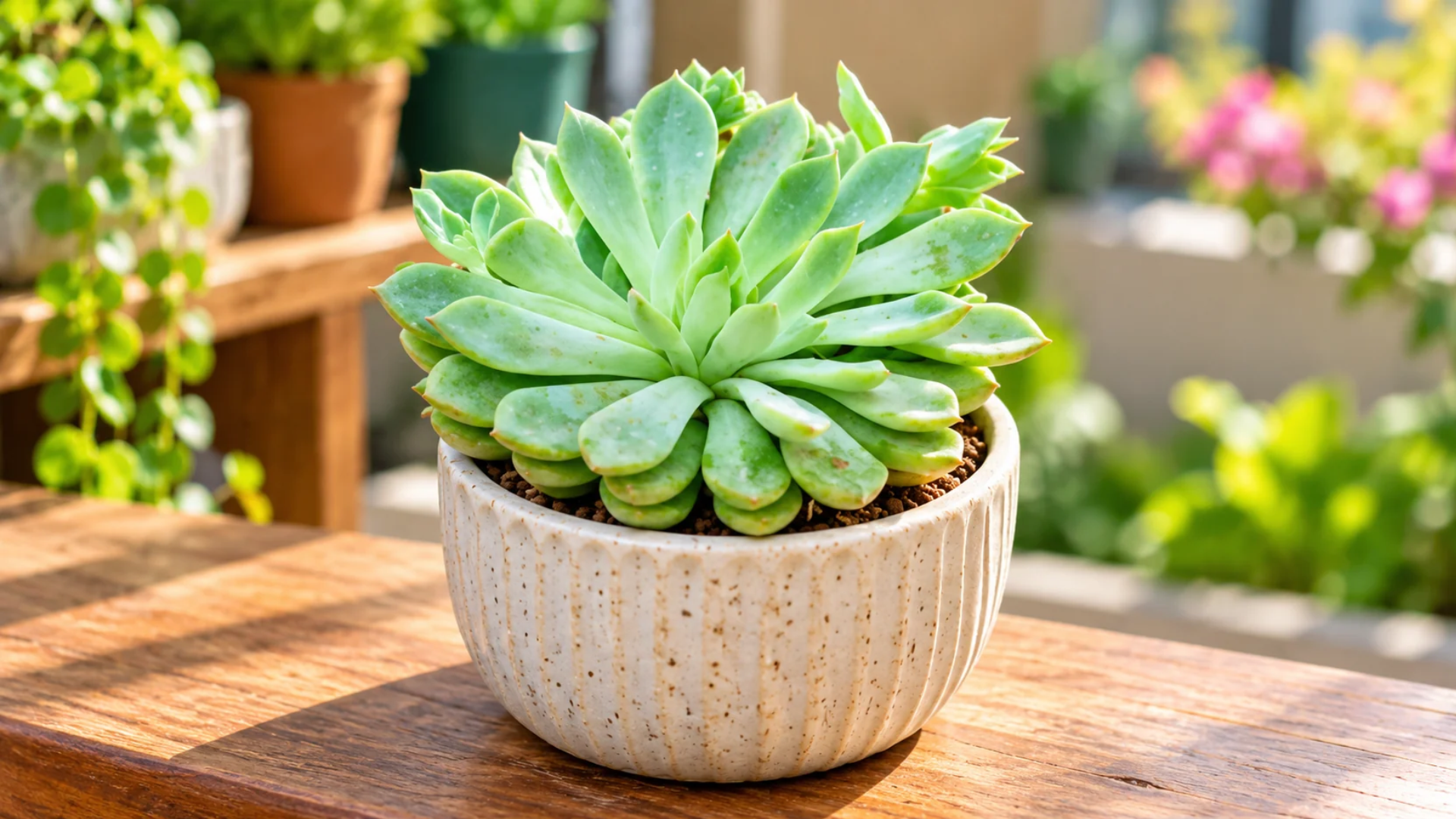
Look at an echeveria from above. Its leaves form a compact rosette, with each layer arranged around the centre.
That shape gives it the appearance of a rose. It is easy to see why people associate it with beauty, grace and affection.
Echeveria comes in different colours and forms, so you can choose one that suits the occasion. It also works well in a small decorative pot.
Gift an Echeveria succulent for an anniversary or Valentine's Day when you want something that lasts longer than a bouquet.
3. Aloe Vera (घृतकुमारी/ಲೋಳೆಸರ): Healing and Recovery
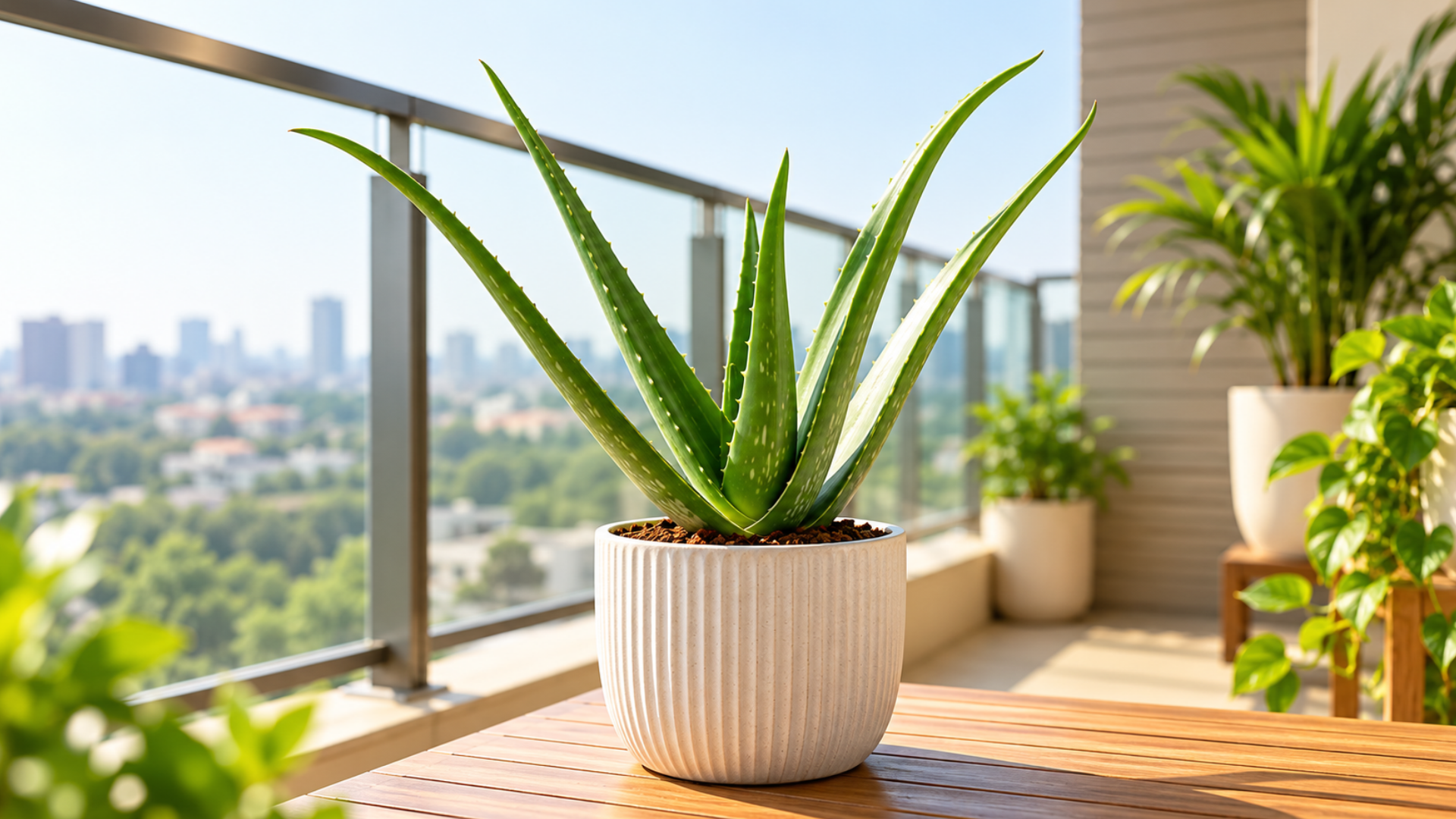
Aloe vera has a practical association with healing. The gel inside its leaves has been used on skin for centuries, and the plant carries that history into its symbolism.
It is also a familiar plant in many Indian households. Its fleshy leaves and simple care needs make it a useful choice for someone who is new to gardening.
An Aloe Vera plant can be a thoughtful gift for a new home or a get-well occasion. The message is one of care and recovery, rather than a promise of medical benefit.
4. Haworthia (हवोर्थिया/ಹವೋರ್ಥಿಯಾ): Calm and Patience
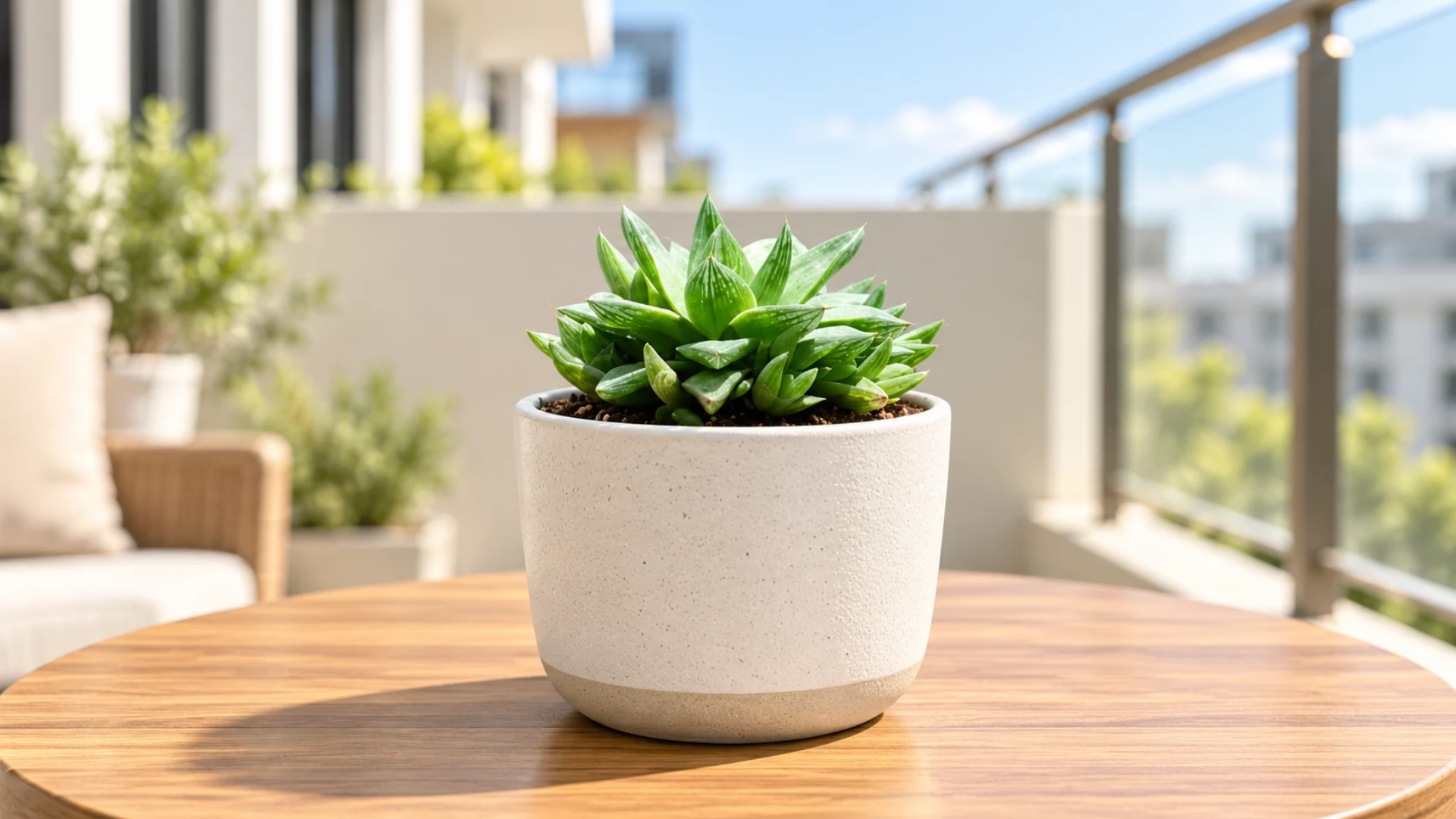
Haworthia stays compact and grows at a relatively slow pace. Many varieties have firm leaves arranged in a neat rosette, with white stripes or translucent tips.
Its small size and understated appearance make it a good fit for a study table or office desk.
The plant is commonly associated with calm and quiet endurance. It suits someone who prefers a little greenery without taking on a large plant.
A Haworthia plant is a good option for a coworker, student, or first-time plant owner. It still needs suitable light and careful watering, so avoid placing it in a completely dark room.
5. Laxmi Kamal (लक्ष्मी कमल/ಲಕ್ಷ್ಮಿ ಕಮಲ): Prosperity and Family
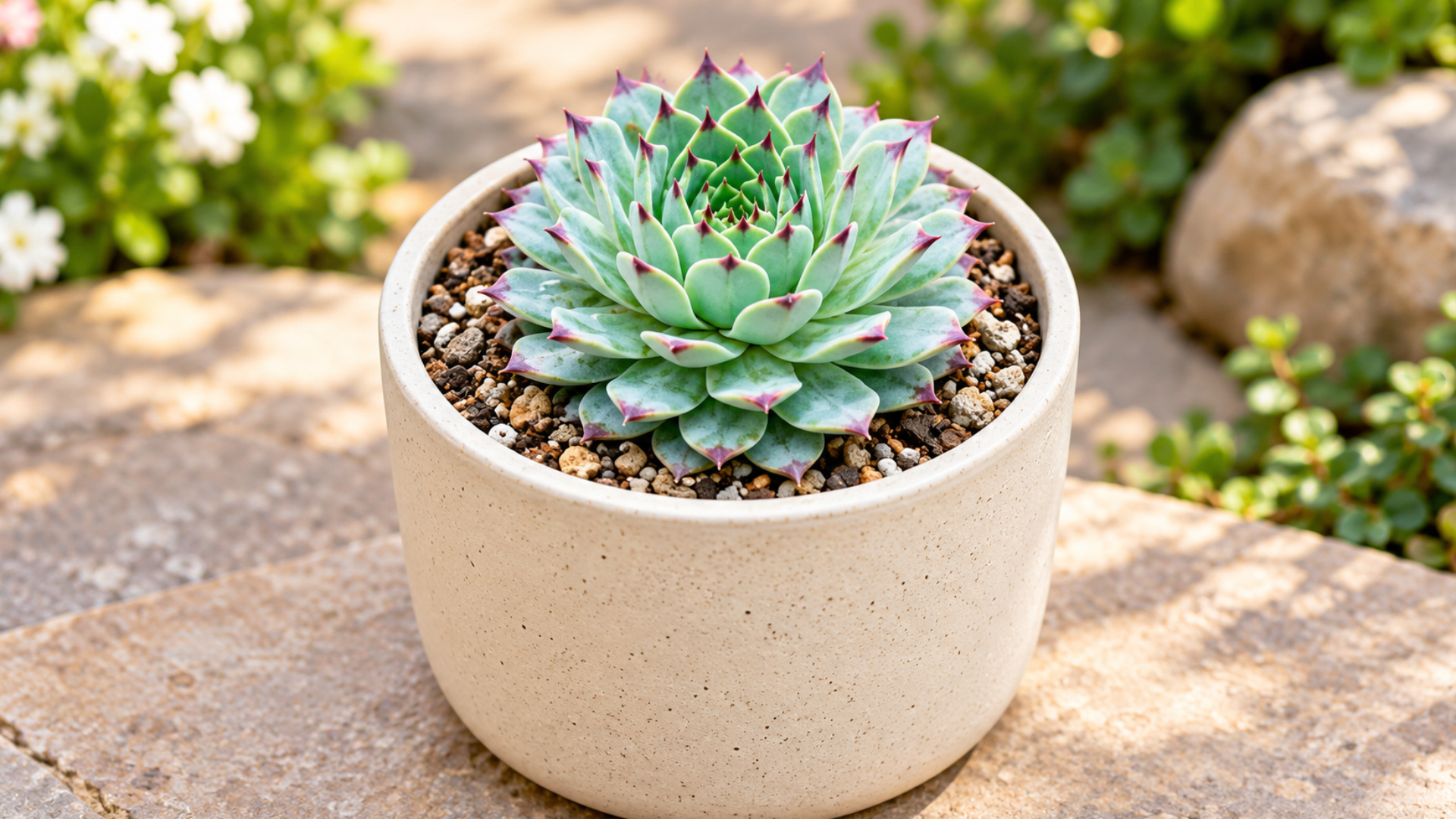
Laxmi Kamal is a popular gifting choice in India because of its association with Goddess Lakshmi and prosperity.
Some succulents also produce smaller rosettes around the parent plant. This growth pattern can be read as a symbol of family, continuity, and new growth.
The name Laxmi Kamal is used for different succulents in the nursery trade, so check the botanical name and growth habit of the exact plant you choose.
A Laxmi Kamal succulent is a suitable option for Diwali, a housewarming or a family celebration.
6. Kalanchoe (कलान्चो/ಕಲಾಂಚೊ): Celebration and Cheer
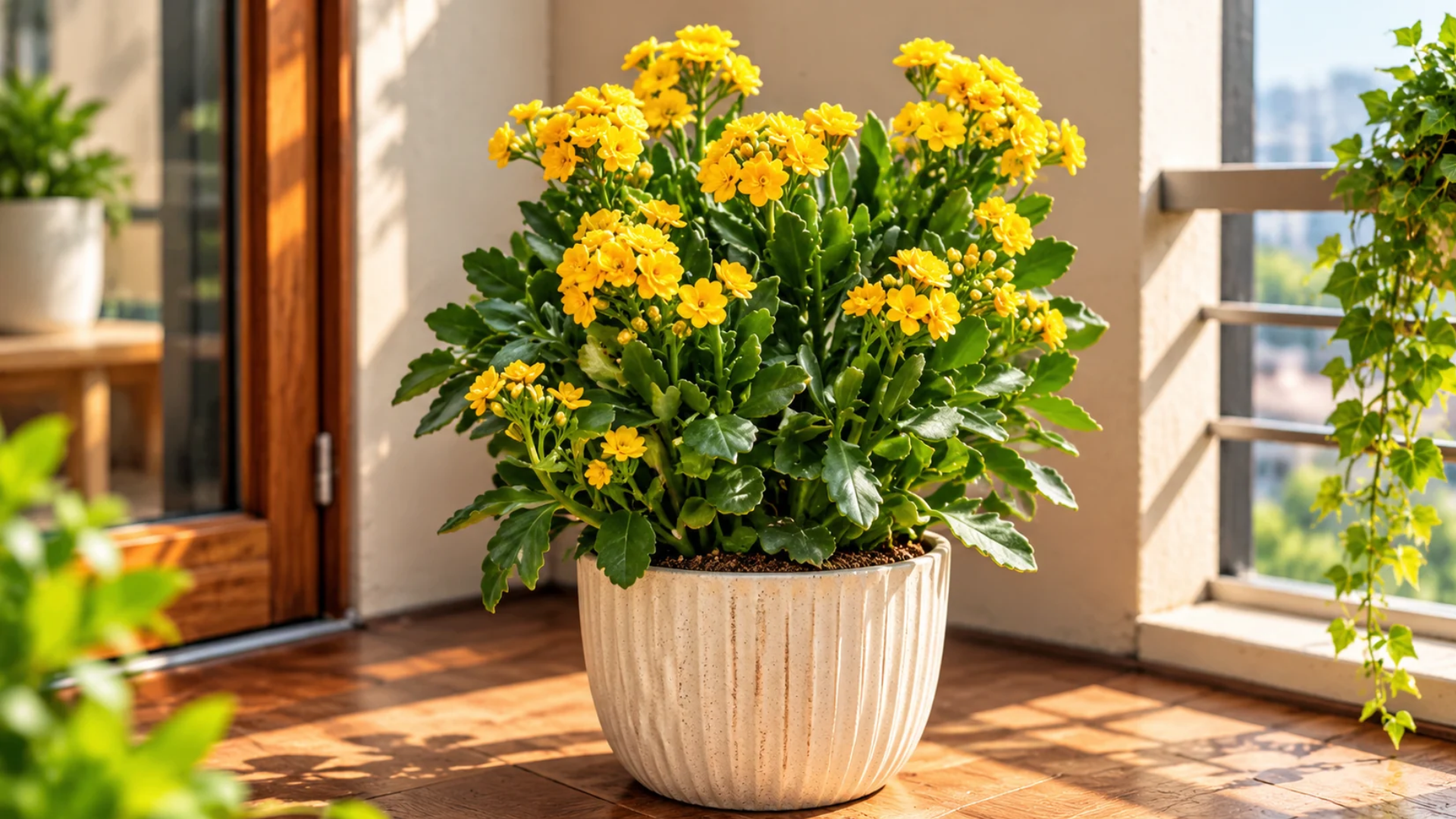
Kalanchoe stands out because it produces clusters of colourful flowers. Depending on the variety, you may find red, pink, orange, white or yellow blooms.
That colour makes it a natural choice for a birthday or festival gift. The flowers also add colour when you want a plant that looks more decorative than a foliage-only succulent.
A Kalanchoe plant can suit someone who enjoys flowering plants but wants a compact option.
7. Sedum (सिडम/ಸೆಡಮ್) , Moonstone (मूनस्टोन/ಮೂನ್ಸ್ಟೋನ್) and Red Pagoda (रेड पगोडा/ರೆಡ್ ಪಗೋಡ)
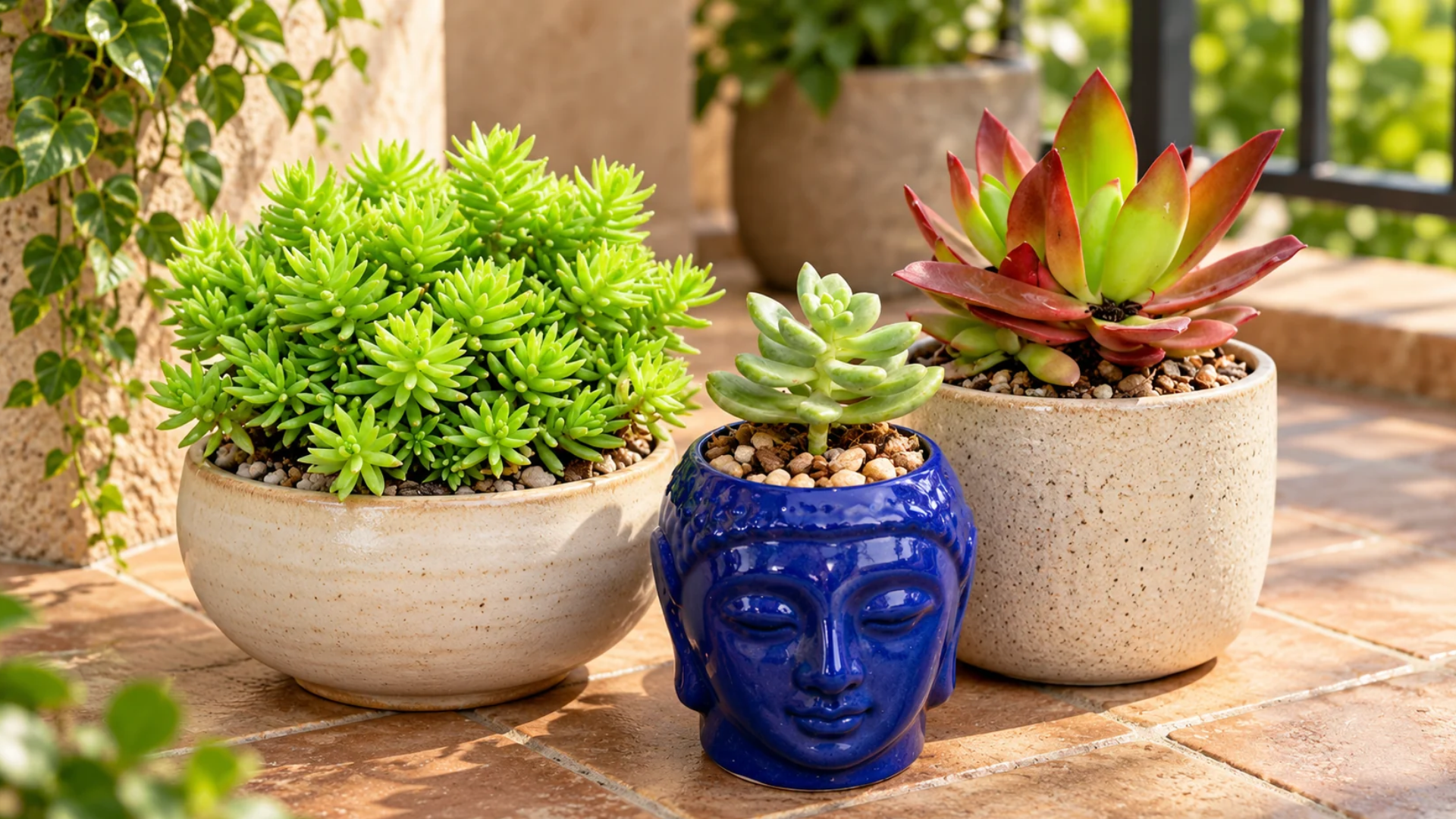
Three more succulents are worth considering when the meaning matters as much as the appearance.
- Sedum is associated with steady growth and abundance. Some varieties spread readily and grow from fallen leaves or cuttings under suitable conditions. That makes sedum a good choice for a graduation or a new venture.
- Moonstone has pale, rounded leaves with a soft, powdery finish. Its appearance lends itself to meanings such as calm, friendship and quiet affection. It works well as a thank-you gift.
- Red Pagoda can develop deeper red tones in stronger light. This change in colour makes it a fitting symbol of transformation or a new chapter.
Succulent Gifting Ideas by Occasion
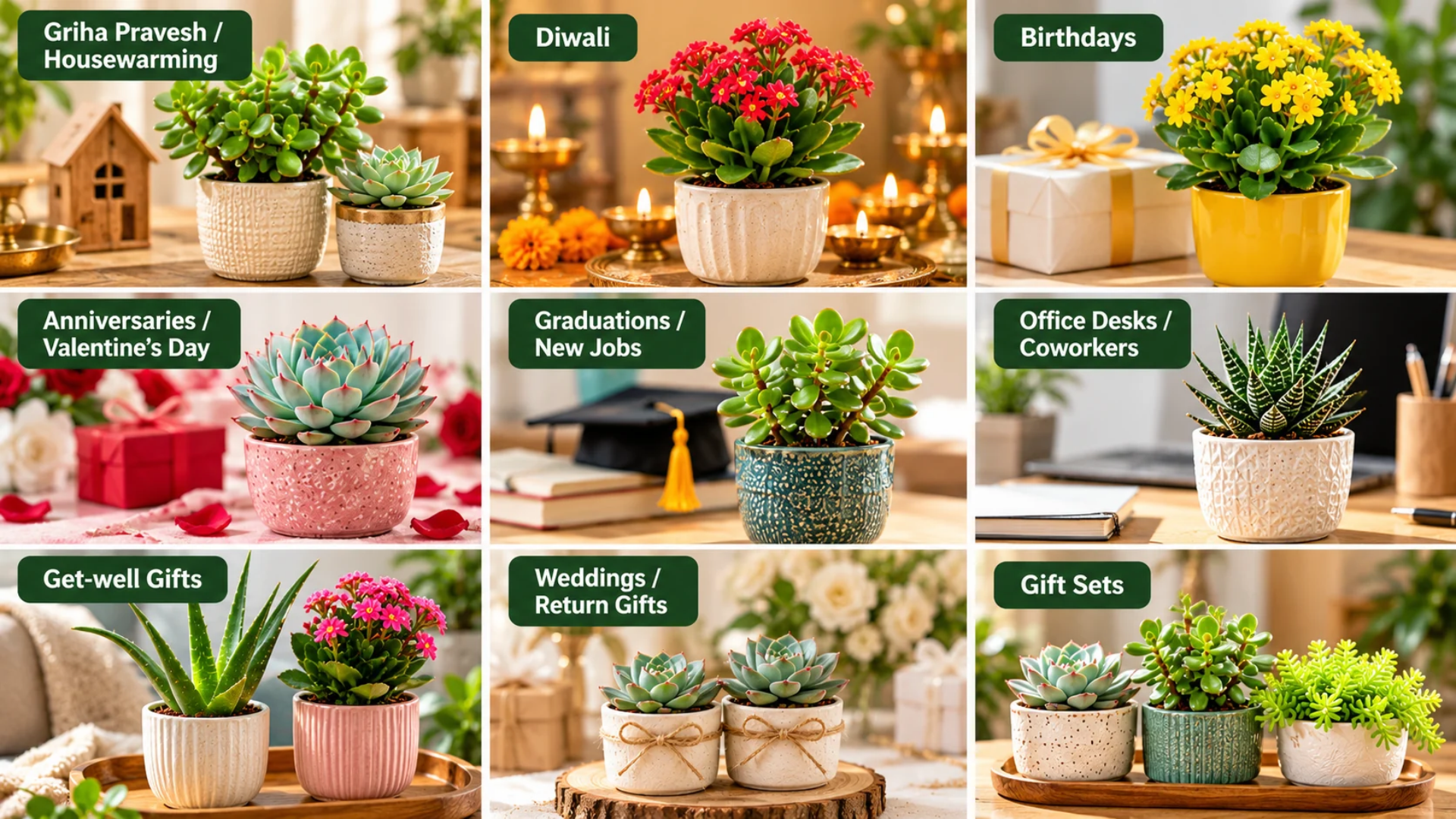
Start with what you want to say, then pick a plant that suits the recipient.
| Occasion | Plant to Pick | Why It Works |
|---|---|---|
| Griha Pravesh/housewarming | Jade (or Jade + Laxmi Kamal) | Linked to wealth and good fortune; the pairing suits traditional gifting |
| Diwali | Laxmi Kamal | Associated with Goddess Lakshmi and prosperity, and stays on after the festival |
| Birthdays | Kalanchoe | Adds colour; pick one already in flower so it looks festive on the day |
| Anniversaries/Valentine’s Day | Echeveria | Its rosette resembles a rose and lasts far longer than cut flowers |
| Graduations/new jobs | Sedum or Jade | Growth and prosperity, without making the gift feel formal |
| Office desks/coworkers | Haworthia (or small Aloe) | Compact enough for a desk with bright, indirect light |
| Get-well gifts | Aloe Vera or Flowering Kalanchoe | Care and recovery, or colour; keep the pot small so it’s easy to place |
| Weddings/return gifts | Small Echeveria or Sedum | Matching pots make practical favours guests can take home and grow |
| Gift sets | One Rosette + one upright + one spreading | Three different shapes hold more interest than three identical plants |
How to Choose a Succulent as a Gift
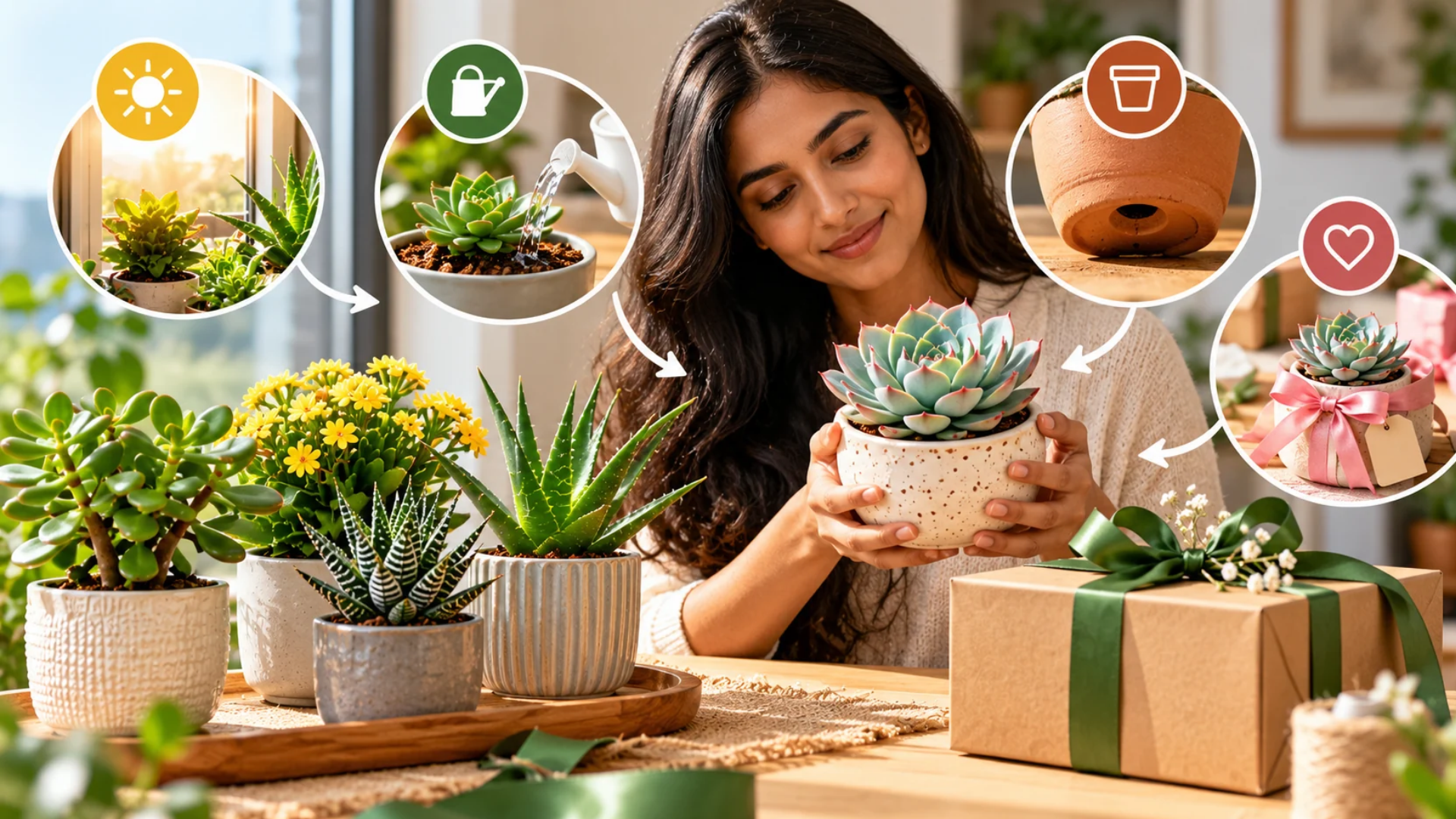
The meaning is one part of the decision. The plant also needs to suit the person's home and routine.
1. Start with the Available Light
Jade, Echeveria, and many Sedum varieties need plenty of light. Haworthia generally suits bright, indirect light. A dark room is not ideal for any of these plants.
2. Think About How Much Care They Can Manage
Jade and Aloe are forgiving when watered correctly, while some echeverias show stress more quickly when their growing conditions are poor. Match the plant to the person, not just the occasion.
3. Choose the Right Pot
A small pot with a drainage hole is a practical choice for most compact succulents. Excess water needs somewhere to go, because soggy soil can damage the roots.
4. Then Choose the Meaning
Once you know the plant will suit the recipient's home, decide what you want it to represent. A Jade plant can express wishes for prosperity, while an echeveria can express affection.
One care tip is worth passing on with any succulent: water when the soil has dried out sufficiently for that plant and pot, rather than following a fixed watering schedule. The right interval depends on light, temperature, soil, and pot size.
Choose a Succulent That Says What You Mean
Succulents are associated with resilience, prosperity, growth, and lasting affection. These meanings come from their physical traits, cultural beliefs, and the way people use plants to mark important moments.
The species makes the difference. Jade is linked to wealth, echeveria to affection and aloe vera to recovery. Choose the one that best suits the occasion, then make sure the recipient can care for it.
Explore succulent plants at Urvann to find a plant for a new home, a new job, or someone you want to remember.
Frequently Asked Questions (FAQs)
1. Is a Jade plant a succulent?
Yes. Jade, or Crassula ovata, stores water in its thick leaves and stems. It is a succulent, but it is not a cactus.
2. Is a succulent plant good luck?
Some traditions associate particular succulents with good fortune. Jade is commonly linked to wealth in Vastu and feng shui, while Laxmi Kamal is associated with prosperity in Indian gifting traditions. These are cultural beliefs, not guaranteed outcomes.
3. Which plant should not be gifted?
Some Vastu guidance discourages gifting thorny plants, including cactus, because thorns are associated with tension. Not everyone follows this belief. If the recipient observes Vastu closely, a smooth-leaved succulent may be a better choice.
4. What does it mean when someone gives you a cactus?
A cactus can represent resilience and protection because it survives dry conditions and has spines. Its meaning depends on the giver and the recipient, so it is best not to assume that every cactus gift carries the same message.
5. Do succulents symbolize love?
Yes, succulents are often associated with lasting affection because they can live for years with the right care. Echeveria is a popular choice because its layered rosette resembles a rose.
6. Which is the luckiest indoor plant?
Jade is one of the succulents most commonly associated with good fortune. Money plant and tulsi are also kept for auspicious reasons in many Indian homes, though neither is a succulent.
7. What is the spiritual meaning of succulents?
Succulents are commonly linked to endurance, renewal, and protection. Their ability to store water and grow through dry periods inspires these interpretations. The specific meaning depends on the species and the cultural tradition.
8. Can I gift a succulent to someone who has never kept a plant?
Yes. Choose a beginner-friendly variety such as Jade or Aloe, provide a pot with drainage, and explain its basic light and watering needs. Even an easy-care succulent needs the right growing conditions.
9. सक्यूलेंट के लिए कौन सी मिट्टी सही है?
ऐसी मिट्टी जिससे पानी तुरंत निकल जाए। 2 भाग मोटी रेत या कोकोपीट, 1 भाग बगीचे की मिट्टी, 1 भाग पर्लाइट और थोड़ी वर्मीकम्पोस्ट मिलाकर बनाएं। अकेली बगीचे की मिट्टी पानी रोक लेती है और जड़ें सड़ जाती हैं।
10. सक्यूलेंट पौधे की देखभाल कैसे करें?
सक्यूलेंट को रोज़ लगभग 6 घंटे तेज़ रोशनी चाहिए, पर अचानक तेज़ धूप से पत्तियां झुलस जाती हैं। मिट्टी ऐसी हो जिससे पानी तुरंत निकल जाए और गमले में जल निकासी छेद ज़रूर हो। पानी तभी दें जब मिट्टी पूरी तरह सूख जाए, गर्मी में हर 2 से 3 हफ़्ते में और सर्दी में उससे भी कम। प्लेट में जमा पानी तुरंत हटा दें, वरना जड़ सड़ जाती है।