


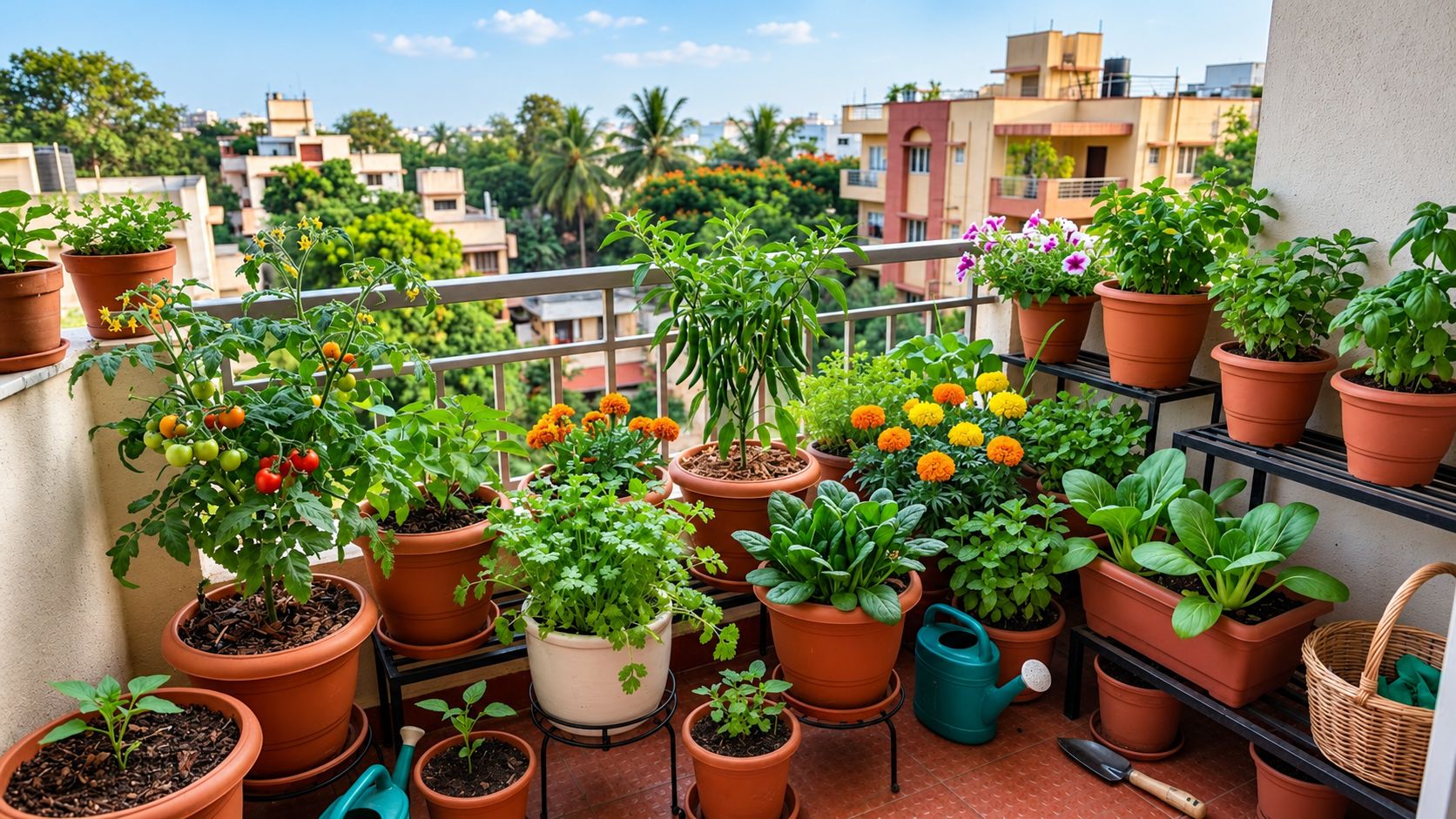
Learn what vegetables, flowers, herbs, and fruits to grow in Bangalore by month with seasonal planting tips for balcony and home gardens.
Key Takeaways
-
-
- Bangalore supports year-round gardening, but each season has different crops that perform best. Summer is ideal for heat-loving vegetables, monsoon supports leafy greens, and winter is the most productive growing season.
- October is the most important planting month in Bangalore because crops started during this transition period get the best growing conditions in the following months.
- Avoid planting based only on availability. Vegetables like Tomato, Peas, and Spinach need the right season to grow well and produce a healthy harvest.
- For summer gardening, choose heat-tolerant crops like Okra, Chilli, Brinjal, and gourds that can handle Bangalore’s warmer months.
- During monsoon, focus on fast-growing leafy vegetables like Spinach, Coriander, and Fenugreek, while ensuring proper drainage to prevent water-related issues.
- Winter is the best time to grow a wide variety of vegetables, flowers, and herbs, including Tomato, Peas, Carrot, Lettuce, and seasonal flowers.
- A successful balcony garden is not about growing everything at once. Start with a few reliable plants, understand their growing cycle, and expand season by season.
-
You plant a few seeds, imagine fresh vegetables growing on your balcony, and wait for the first signs of life.
But weeks pass, and nothing happens. The seeds do not germinate, plants grow weak, or the vegetables you were expecting never arrive.
In Bangalore, the problem is rarely the lack of gardening space. The real challenge is knowing what to grow and when to grow it.
The city’s mild climate allows gardening throughout the year, but every season has its own rhythm. Summer favours heat-loving crops, monsoon brings opportunities for leafy vegetables, and winter creates the perfect conditions for many flowers and vegetables.
Planting at the wrong time can mean wasted seeds, unhealthy plants, and months of waiting for a harvest that never comes.
This month-by-month planting calendar will help you understand what to sow, transplant, and harvest in Bangalore so you can plan your garden around the seasons instead of guessing.
What are the Seasons in Bangalore?
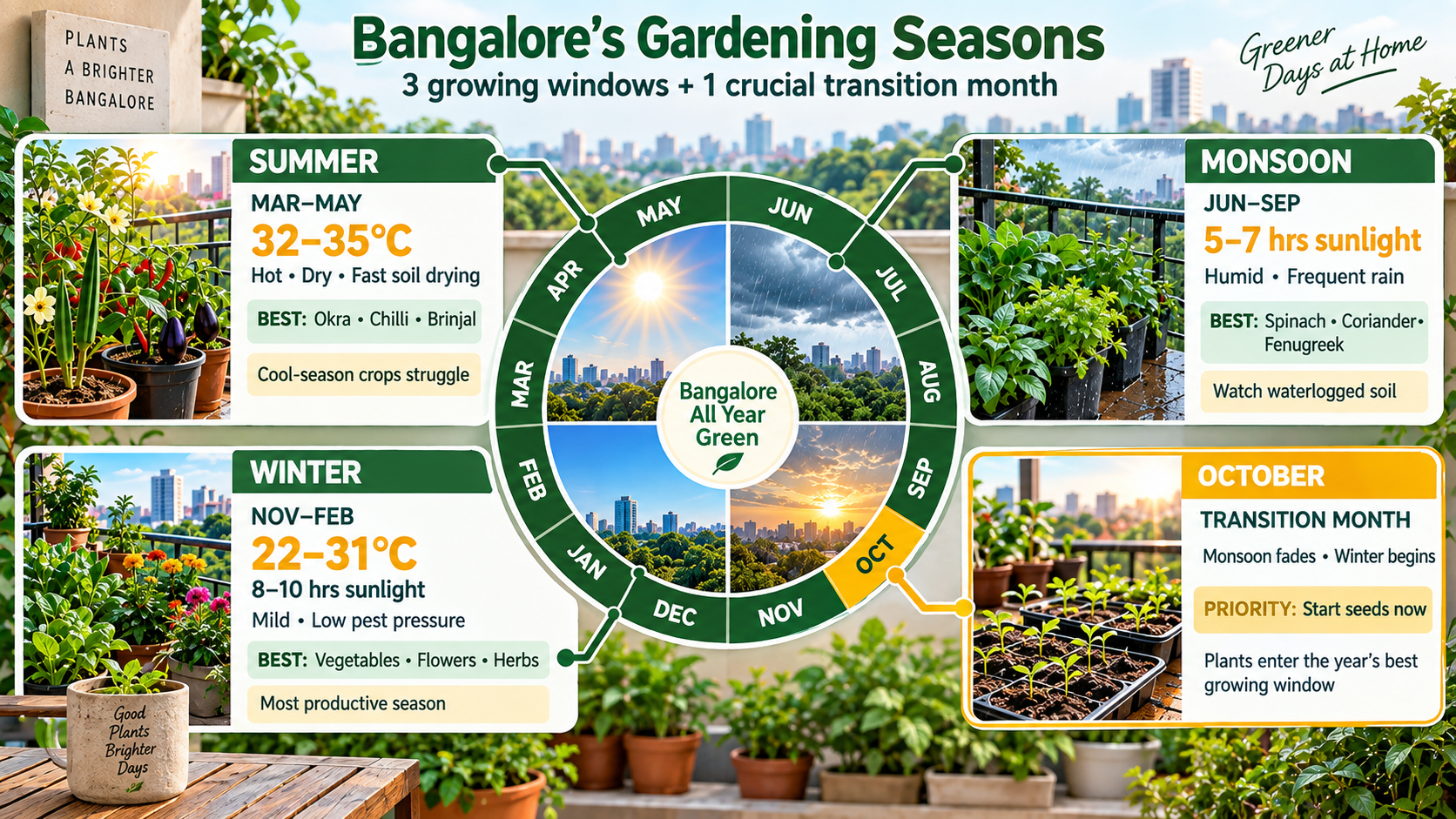
Bangalore's year splits into three distinct gardening windows. Each one favours a different set of plants.
Summer (March to May)
Hot, dry days with temperatures between 32°C and 35°C. Soil dries out quickly. This season suits heat-loving vegetables like Okra, Chilli, and Brinjal. Most cool-season crops fail during this window.
Monsoon (June to September)
Humidity climbs, rainfall is frequent, and direct sunlight drops to 5 to 7 hours per day. Fast-growing leafy vegetables like Spinach, Coriander, and Fenugreek do well. Root vegetables and fruiting crops struggle because the soil stays wet for too long.
Winter (November to February)
Mild temperatures (22°C to 31°C), 8 to 10 hours of daily sunlight, and low pest pressure. This is Bangalore's most productive gardening season. Almost every common vegetable, flower, and herb grows well during these months.
October is a transition month, with monsoon fading and winter not yet fully arrived. It is one of the most important sowing months because seeds started in October produce through the best growing window of the year.
Bangalore Month-by-Month Planting Calendar
January
| Category | What to Sow/Transplant | What to Harvest |
|---|---|---|
| Vegetables | Carrot, Beetroot, Peas, Radish, Lettuce, Cabbage | Tomato (from October sowing), Chilli |
| Flowers | Petunia, Pansy, Dahlia, Dianthus | Chrysanthemum, Calendula |
| Herbs | Coriander, Fenugreek | Mint, Curry Leaves |
January tip: This is the tail end of winter. Crops sown now still have 6 to 8 good weeks before temperatures start climbing. Prioritize fast-growing vegetables like Radish (ready in 25 to 30 days) and Lettuce (harvest in 40 to 45 days) because slower crops may struggle as March heat arrives.
February
| Category | What to Sow/Transplant | What to Harvest |
|---|---|---|
| Vegetables | Tomato (for late crop), Chilli seedlings, Cucumber | Carrot, Peas, Beetroot (from November sowing) |
| Flowers | Marigold, Zinnia, Vinca, Portulaca | Petunia, Dahlia |
| Herbs | Basil, Mint (replant), Coriander | Fenugreek |
February tip: Temperatures start warming up by late February. This is the last comfortable window to transplant tomato seedlings if you want a crop before the summer heat hits. Start Basil now, since it germinates slowly in cool soil and needs the warming trend to establish.
March
| Category | What to Sow/Transplant | What to Harvest |
|---|---|---|
| Vegetables | Okra, Brinjal, Ridge Gourd, Bottle Gourd | Chilli (ongoing), Tomato (final harvest of winter crop) |
| Flowers | Vinca, Portulaca, Gaillardia, Lantana | Marigold, Zinnia |
| Herbs | Curry Leaf (transplant saplings) | Basil, Coriander |
March tip: Summer crops go in now. Okra, Brinjal, and all gourd varieties need the heat to germinate and grow properly. If you sow them even one month earlier, germination will be slow and patchy. March is also the time to stop sowing cool-season crops, since Peas, Carrot, and Lettuce will not perform from this point onward.
April
| Category | What to Sow/Transplant | What to Harvest |
|---|---|---|
| Vegetables | Cucumber, Amaranthus (Rajgira) | Okra (from March sowing starts producing) |
| Flowers | Portulaca, Hibiscus (transplant) | Vinca (ongoing), Gaillardia |
| Fruits | Papaya (transplant to large pot) | Papaya (transplant to large pot) Lemon (ongoing) |
April tip: This is Bangalore's hottest month. Avoid starting new leafy vegetables, since they bolt (flower prematurely and turn bitter) within days. Focus on heat-tolerant fruiting vegetables and gourds. Water pots deeply in the morning because soil dries out completely by afternoon.
May
| Category | What to Sow/Transplant | What to Harvest |
|---|---|---|
| Vegetables | Lobia, Cluster Beans (Gwar) | Cucumber, Okra, Brinjal |
| Flowers | Hibiscus (ongoing), Bougainvillea (prune for fresh growth) | Portulaca (peak bloom) |
| Herbs | None (too hot for herb establishment) | Curry Leaves (ongoing) |
May tip: Not much to sow this month. Focus on maintaining what you already have. Mulch every pot to reduce soil temperature. Pre-monsoon showers may start in late May, and when they do, reduce watering immediately, or you risk root rot in pots that were being watered for summer.
June
| Category | What to Sow / Transplant | What to Harvest |
|---|---|---|
| Vegetables | Spinach, Coriander, Fenugreek, Amaranthus | Cowpea, Cluster Beans |
| Flowers | Jasmine (transplant), Crossandra, Ixora | Hibiscus (ongoing bloom) |
| Herbs | Coriander (succession sow every 2 weeks), Fenugreek, Mint | Basil |
June tip: Monsoon arrives. Leafy vegetables love this weather, since the humidity and cooler temperatures let Spinach, Coriander, and Fenugreek grow quickly. But drainage becomes critical. Ensure every pot has working drainage holes and elevate pots off the floor so water does not pool underneath. Start succession sowing Coriander every 2 weeks for a continuous supply.
July
| Category | What to Sow / Transplant | What to Harvest |
|---|---|---|
| Vegetables | Beans (Pole and Bush), Ridge Gourd, Bitter Gourd | Spinach, Coriander, Fenugreek (from June sowing) |
| Flowers | Impatiens, Coleus, Begonia | Jasmine (begins flowering) |
| Herbs | Coriander (second succession sow) | Mint (ongoing) |
July tip: Climbing vegetables like Beans, Ridge Gourd, and Bitter Gourd do well when started in July. Set up supports or trellises at the time of sowing, since adding them later disturbs the roots. Fungal issues peak this month. Avoid wetting leaves when watering and remove any dead or yellowing foliage immediately.
August
| Category | What to Sow / Transplant | What to Harvest |
|---|---|---|
| Vegetables | Radish, Spinach (second round), Amaranthus | Beans, Ridge Gourd (early harvest) |
| Flowers | Coleus (for foliage colour), Crossandra | Impatiens, Begonia |
| Herbs | Fenugreek, Coriander (third succession sow) | Fenugreek, leafy herbs |
August tip: Monsoon intensity usually starts declining by late August. This is a good time to sow Radish because it matures in under 30 days and will be ready before the monsoon fully ends. Start planning your October and November sowings now by ordering seeds and preparing fresh potting mix, so you are ready when the best growing window opens.
September
| Category | What to Sow / Transplant | What to Harvest |
|---|---|---|
| Vegetables | Tomato (start seedlings indoors/in seed trays), Chilli (start seedlings) | Radish, Spinach, leafy vegetables |
| Flowers | Marigold (start seeds), Chrysanthemum (source plants) | Coleus (peak foliage) |
| Herbs | Coriander (final monsoon sow) | Ongoing leafy herbs |
September tip: This is preparation month. Start Tomato and Chilli seedlings in seed trays now so they are ready to transplant into larger pots in October. Seedlings started in September grow into the strongest plants because they establish during the transition into Bangalore's best weather. If you skip September sowing, your winter crop starts late and produces less.
October
| Category | What to Sow/Transplant | What to Harvest |
|---|---|---|
| Vegetables | Tomato (transplant seedlings), Chilli (transplant), Peas, Carrot, Beetroot, Beans | Late monsoon leafy harvests |
| Flowers | Chrysanthemum, Marigold (transplant), Calendula, Petunia | Marigold (from seed starts flowering) |
| Fruits | Strawberry (transplant runners) | Guava, Papaya |
October tip: The single most important sowing month in Bangalore's gardening year. Monsoon is ending, temperatures are dropping, and the next 4 months are ideal growing conditions. Everything you plant in October has the longest productive window ahead of it. Tomato, Chilli, Peas, Carrot, and Beetroot sown now will give you the best yields of the year. Do not wait until November, since you lose 3 to 4 weeks of prime growing time.
November
| Category | What to Sow/Transplant | What to Harvest |
|---|---|---|
| Vegetables | Lettuce, Cabbage, Cauliflower, Broccoli | Coriander, Fenugreek |
| Flowers | Petunia, Pansy, Sweet Alyssum, Dianthus, Snapdragon | Chrysanthemum (peak bloom) |
| Herbs | Parsley, Coriander | Basil (final harvest before it slows) |
November tip: Cool-season vegetables go in now. Cabbage, Cauliflower, and Broccoli need consistently mild temperatures to form heads, so planting them even one month later (December) cuts into their growing time before February warmth arrives. If you missed October, November is your second chance for Peas and Carrot.
December
| Category | What to Sow / Transplant | What to Harvest |
|---|---|---|
| Vegetables | Cabbage (second batch), Cauliflower, Turnip, Spring Onion | Tomato (from October sowing), Peas, Carrot, Beetroot |
| Flowers | Dahlia (plant tubers), Pansy, Calendula | Petunia (ongoing bloom), Marigold |
| Herbs | Coriander, Fenugreek | Parsley |
December tip: This is harvest season for your October sowings. Tomatoes planted in October should be producing by now. Peas and Carrots are ready to pick. Keep harvesting regularly because leaving mature fruit on the plant signals it to stop producing. December is also the last good window to start Cauliflower and Cabbage before the season turns.
Best Vegetables to Grow in Bangalore Throughout the Year
Some vegetables can be grown in almost every season in Bangalore, while others have a shorter growing window. Choosing the right vegetables based on the season makes it easier to maintain a productive home garden.
If you are starting a vegetable garden or want to try growing multiple crops throughout the year, having a variety of seeds ready can make the process easier. A mixed seed collection like Urvann’s 50 Varieties Indian Vegetable Seeds can help home gardeners explore different crops across seasons, including popular choices such as Tomatoes, Carrots, Radishes, Spinach, Coriander, Beans, Beetroot, and other seasonal vegetables.
Let’s explore the vegetables you can grow in Bangalore throughout the year:
Year-Round Vegetables (Sow Any Month)
| Vegetable | Days to Harvest | Difficulty | Notes |
|---|---|---|---|
| Chilli | 70 to 90 days | Easy | Keep harvesting to encourage more production |
| Curry Leaf | Ongoing (perennial) | Easy | Slow to start from seed. Buy a sapling |
| Amaranthus (Rajgira) | 30 to 40 days | Easy | One of the fastest-growing leafy vegetables |
Best in Winter (October to February)
| Vegetable | Best Sowing Month | Days to Harvest | Difficulty |
|---|---|---|---|
| Tomato | September (seedlings) →October (transplant) | 60 to 90 days | Moderate |
| Carrot | October or November | 75 to 90 days | Easy |
| Peas | October | 60 to 70 days | Easy |
| Beetroot | October or November | 60 to 70 days | Easy |
| Lettuce | November | 40 to 50 days | Easy |
| Cabbage | November | 80 to 100 days | Moderate |
| Cauliflower | November | 90 to 120 days | Moderate |
| Broccoli | November | 80 to 100 days | Moderate |
Best in Summer (March to May)
| Vegetable | Best Sowing Month | Days to Harvest | Difficulty |
|---|---|---|---|
| Okra (Bhindi) | March | 50 to 60 days | Easy |
| Brinjal | March | 70 to 80 days | Moderate |
| Ridge Gourd | March or April | 50 to 60 days | Easy |
| Bottle Gourd | March | 55 to 70 days | Easy |
| Cucumber | April | 50 to 60 days | Easy |
Best in Monsoon (June to September)
| Vegetable | Best Sowing Month | Days to Harvest | Difficulty |
|---|---|---|---|
| Spinach (Palak) | June | 30 to 40 days | Easy |
| Coriander | June (then every 2 weeks) | 25 to 35 days | Easy |
| Fenugreek (Methi) | June or July | 20 to 30 days | Easy |
| Radish | August | 25 to 30 days | Easy |
Bangalore Seasonal Vegetable Charts
Summer Vegetable Chart (March to May)
| Vegetable | Sow in | Harvest by | Heat Tolerance | Container Friendly |
|---|---|---|---|---|
| Okra | March | May onwards | High | Yes (12-inch pot) |
| Brinjal | March | May onwards | High | Yes (12-inch pot) |
| Ridge Gourd | April | June | Moderate | Yes (needs trellis) |
| Cucumber | May | July | High | Yes (10-inch pot) |
| Amaranthus | Any month | 30-40 days after sowing | High | Yes (8-inch pot) |
Monsoon Vegetable Chart (June to September)
| Vegetable | Sow in | Harvest by | Humidity Tolerance | Container Friendly |
|---|---|---|---|---|
| Spinach | June-August | 30-40 days after sowing | High | Yes (8-inch pot) |
| Coriander | June-September | 25-35 days after sowing | High | Yes (8-inch pot) |
| Fenugreek | June-July | 20-30 days after sowing | High | Yes (8-inch pot) |
| Radish | August | September | High | Yes (10-inch pot) |
| Bitter Gourd | July | September-October | High | Yes (needs trellis) |
Winter Vegetable Chart (October to February)
| Vegetable | Sow in | Harvest by | Cold Tolerance | Container Friendly |
|---|---|---|---|---|
| Tomato | October | December-February | High (Bangalore winters are mild) | Yes (12-inch pot) |
| Peas | October | December-January | High | Yes (needs support) |
| Carrot | October-November | January-February | High | Yes (12-inch deep pot) |
| Beetroot | October-November | December-January | High | Yes (10-inch pot) |
| Lettuce | November | January | High | Yes (8-inch pot) |
| Cabbage | November | February | High | Yes (14-inch pot) |
| Cauliflower | November | February-March | High | Yes (14-inch pot) |
What Can You Grow in a Bangalore Balcony Garden?
If you are working with a small apartment balcony rather than a full terrace, you need plants that produce well in limited space. Not every vegetable is practical in a pot. These are the ones that genuinely work.
Best vegetables for a small balcony:
- Chilli: compact plant, produces for months; an 8-inch pot is enough
- Tomato (cherry variety): needs a 12-inch pot and a stake, but keeps producing for weeks
- Coriander: grows in any 6-inch pot, harvest in 25 to 30 days, sow fresh batches every 2 weeks
- Fenugreek (Methi): even faster than coriander, ready in 20 days
- Mint: spreads aggressively; keep in its own pot; harvest leaves regularly
- Curry Leaf: grows into a small bush over time; one plant is enough for a household
- Spinach: monsoon crop that does well in 8-inch pots
What does not work well on a small balcony:
- Gourds (Ridge Gourd, Bottle Gourd): need large pots, heavy trellises, and lots of space
- Cabbage and Cauliflower: need 14-inch pots and take 3 to 4 months to produce one head
- Root vegetables like Carrots: need deep containers and patience
If you have a bigger space, a terrace garden gives you more flexibility to grow a wider range of vegetables, including climbing crops, root vegetables, and seasonal favourites. You can explore different vegetable seeds to choose varieties that match your available space and growing season.
For gardeners who want to try something different, exotic seeds can help you add unique vegetables, herbs, and flowers to your garden.
However, choosing the right plants is not only about space; sunlight also plays an important role. If your balcony receives strong direct sunlight, check our guide on plants that thrive in a Bangalore balcony garden with direct sun.
What Mistakes Do Beginner Gardeners Make in Bangalore?
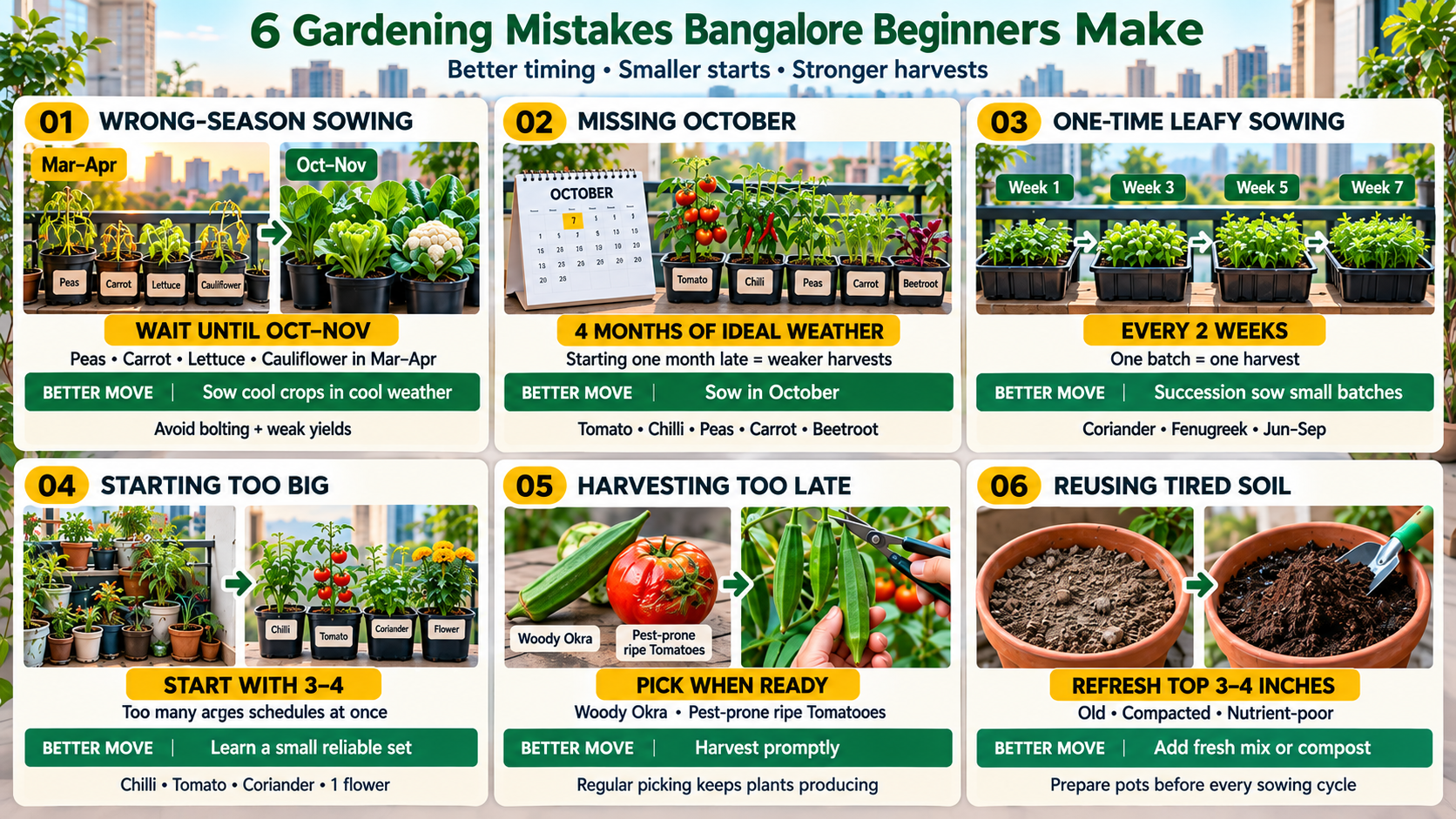
1. Sowing Winter Vegetables in Summer
This is the most common timing mistake. Peas, Carrots, Lettuce, and Cauliflower need cool temperatures to grow. Planting them in March or April means they either bolt (flower prematurely), produce tiny yields, or die in the heat. Wait until October or November.
2. Missing the October Sowing Window
October is the most important month in Bangalore's gardening year, and many beginners do not realise this until it is too late. Tomatoes, Chilli, Peas, Carrot, and Beetroot sown in October get the full benefit of 4 months of ideal weather. Starting a month late means noticeably weaker plants and smaller harvests.
3. Not Doing Succession Sowing for Leafy Vegetables
Sowing one batch of Coriander or Fenugreek gives you one harvest. Then you wait again. Instead, sow a small amount every 2 weeks so you always have a fresh batch coming up. This works especially well during monsoon (June to September) when leafy vegetables grow fastest.
4. Starting Too Many Plants at Once
New gardeners often buy 15 different seedlings in one trip. Half of them die because the gardener cannot keep up with different watering, feeding, and care schedules. Start with 3 to 4 reliable plants (Chilli, Tomato, Coriander, and one flower), learn their cycles, and add more in the next season.
5. Ignoring Harvest Timing
Leaving mature Okra on the plant makes it woody and signals the plant to stop producing. Leaving ripe Tomatoes on the vine too long attracts pests. Harvest as soon as produce is ready to keep the plant pushing out more.
6. Not Preparing Soil Before Sowing
Using old, compacted soil from a previous crop guarantees poor results. Before each new sowing cycle, refresh your pots with new potting mix or add compost to the top 3 to 4 inches. Plants in containers depend entirely on the soil you give them.
Frequently Asked Questions
1. Which vegetables grow best in Bangalore?
Tomato, Chilli, Okra, Brinjal, Spinach, Coriander, Peas, Carrot, and Curry Leaf are the most reliable vegetables for Bangalore. Chilli and Curry Leaf grow year-round. Tomato and Peas do best in winter (October to February). Okra and Brinjal are summer crops (March to May). Spinach and Coriander thrive in monsoon (June to September).
2. What vegetables can I grow in Bangalore throughout the year?
Chilli, Curry Leaf, and Amaranthus (Rajgira) can be sown in any month in Bangalore. Coriander and Fenugreek also grow in most months, though they produce best during monsoon and winter. Most other vegetables have a specific season, so check the monthly calendar above for exact sowing times.
3. Which month is best for planting vegetables in Bangalore?
October is the single best month. Monsoon is ending, temperatures are dropping, and the next 4 months offer ideal growing conditions. Tomato, Chilli, Peas, Carrot, and Beetroot sown in October give the best yields of the year. For summer vegetables like Okra and Brinjal, March is the best month to start.
4. What can I grow during Bangalore monsoon?
Leafy vegetables do best during monsoon: Spinach, Coriander, Fenugreek, and Amaranthus. Climbing vegetables like Beans, Ridge Gourd, and Bitter Gourd also perform well when started in July. Avoid sowing Tomato, Carrot, and other winter crops during monsoon because the soil stays too wet and fungal disease risk is high.
5. What vegetables grow in winter in Bangalore?
Winter (October to February) is the most productive season. Tomato, Peas, Carrot, Beetroot, Lettuce, Cabbage, Cauliflower, Broccoli, Radish, and Beans all grow well during Bangalore's winter months. Start sowing from October to get the maximum growing window.
6. When should I start tomato seeds in Bangalore?
Start tomato seedlings in seed trays in September. Transplant them into 12-inch pots in October. This gives the plants time to establish before the best growing months (November to January). Tomatoes started from October transplants typically begin fruiting by December and continue through February.
7. Can I garden on a Bangalore balcony year-round?
Yes. Bangalore's mild climate supports gardening in every season. The key is choosing the right plants for each season. Chilli, Coriander, Mint, and Curry Leaf grow year-round. Tomato and Peas are winter crops. Okra and Brinjal are summer crops. Spinach and Fenugreek are monsoon crops. A small balcony can produce fresh vegetables in every month if you follow a seasonal planting schedule.
8. ಬೆಂಗಳೂರು ಬಾಲ್ಕನಿ ತೋಟದಲ್ಲಿ ತರಕಾರಿಗಳನ್ನು ಎಷ್ಟು ಸಮಯಕ್ಕೊಮ್ಮೆ ಬಿತ್ತಬೇಕು?
ಕೊತ್ತಂಬರಿ ಸೊಪ್ಪು, ಮೆಂತ್ಯೆ ಮತ್ತು ಪಾಲಕ್ನಂತಹ ಬೇಗ ಬೆಳೆಯುವ ಸೊಪ್ಪು ತರಕಾರಿಗಳನ್ನು ಒಂದೇ ಬಾರಿ ಹೆಚ್ಚು ಪ್ರಮಾಣದಲ್ಲಿ ಬಿತ್ತುವ ಬದಲು 2 ರಿಂದ 3 ವಾರಗಳಿಗೊಮ್ಮೆ ಸ್ವಲ್ಪ ಪ್ರಮಾಣದಲ್ಲಿ ಬಿತ್ತುವುದು ಉತ್ತಮ. ಹೀಗೆ ಮಾಡಿದರೆ ಹಳೆಯ ಗಿಡಗಳನ್ನು ಕೊಯ್ಲು ಮಾಡಿದ ನಂತರವೂ ಹೊಸ ಬೆಳೆ ಸಿದ್ಧವಾಗಿರುತ್ತದೆ. ಟೊಮೆಟೊ, ಮೆಣಸಿನಕಾಯಿ, ಬದನೆಕಾಯಿ ಮತ್ತು ಬೆಂಡೆಕಾಯಿಯಂತಹ ತರಕಾರಿಗಳನ್ನು ಕೆಲವು ವಾರಗಳಿಗೊಮ್ಮೆ ಬಿತ್ತುವುದಕ್ಕಿಂತ ಅವುಗಳಿಗೆ ಸೂಕ್ತವಾದ ಋತುವಿನಲ್ಲಿ ಬಿತ್ತುವುದು ಮುಖ್ಯ. ಬಾಲ್ಕನಿ ತೋಟದಲ್ಲಿ ಹಂತ ಹಂತವಾಗಿ ಬಿತ್ತುವುದರಿಂದ ಎಲ್ಲಾ ಗಿಡಗಳೂ ಒಂದೇ ಸಮಯದಲ್ಲಿ ಕೊಯ್ಲಿಗೆ ಬರುವುದನ್ನು ತಪ್ಪಿಸಬಹುದು.
9. ಬೆಂಗಳೂರಿನಲ್ಲಿ ಭಾರಿ ಮಳೆಯ ಸಮಯದಲ್ಲಿ ಬಾಲ್ಕನಿ ಗಿಡಗಳನ್ನು ಹೇಗೆ ರಕ್ಷಿಸಬಹುದು?
ಪ್ರತಿ ಕುಂಡಿಯಲ್ಲೂ ಸರಿಯಾದ ಒಳಚರಂಡಿ ರಂಧ್ರಗಳು ಇರಬೇಕು ಮತ್ತು ಹೆಚ್ಚುವರಿ ನೀರು ಸುಲಭವಾಗಿ ಹೊರಹೋಗುವಂತೆ ನೋಡಿಕೊಳ್ಳಬೇಕು. ಭಾರಿ ಮಳೆಯ ಸಮಯದಲ್ಲಿ ಸಾಧ್ಯವಾದರೆ ಸಣ್ಣ ಕುಂಡಿಗಳನ್ನು ಬೆಳಕು ಸಿಗುವ, ಆದರೆ ಮಳೆಯಿಂದ ಸ್ವಲ್ಪ ರಕ್ಷಿತವಾದ ಸ್ಥಳಕ್ಕೆ ಸ್ಥಳಾಂತರಿಸಿ. ದೊಡ್ಡ ಕುಂಡಿಗಳನ್ನು ಬಲವಾದ ಗಾಳಿ ಮತ್ತು ನೇರ ಮಳೆಯಿಂದ ಸಾಧ್ಯವಾದಷ್ಟು ರಕ್ಷಿತ ಸ್ಥಳದಲ್ಲಿ ಇಡಿ. ಕುಂಡಿಗಳು ನೀರಿನಲ್ಲಿ ನಿಂತುಕೊಳ್ಳದಂತೆ ನೋಡಿಕೊಳ್ಳಿ, ಏಕೆಂದರೆ ಮಣ್ಣು ಹೆಚ್ಚು ಕಾಲ ನೀರಿನಿಂದ ತುಂಬಿರುವುದರಿಂದ ಬೇರುಗಳಿಗೆ ಹಾನಿಯಾಗಬಹುದು ಮತ್ತು ಶಿಲೀಂಧ್ರ ಸಮಸ್ಯೆಗಳ ಅಪಾಯ ಹೆಚ್ಚಬಹುದು. ಟೊಮೆಟೊ ಮತ್ತು ಮೆಣಸಿನಕಾಯಿಯಂತಹ ಎತ್ತರವಾಗಿ ಬೆಳೆಯುವ ಗಿಡಗಳಿಗೆ ಕಡ್ಡಿ ಅಥವಾ ಆಧಾರ ನೀಡಿ, ಇದರಿಂದ ಬಲವಾದ ಮಳೆ ಮತ್ತು ಗಾಳಿಯಲ್ಲಿ ಅವು ಬಾಗುವುದು ಅಥವಾ ಬೀಳುವುದನ್ನು ತಪ್ಪಿಸಬಹುದು. ಭಾರಿ ಮಳೆಯ ನಂತರ ಎಲೆಗಳು ಮತ್ತು ಮಣ್ಣನ್ನು ಪರಿಶೀಲಿಸಿ, ಹಾನಿಗೊಳಗಾದ ಎಲೆಗಳನ್ನು ತೆಗೆದುಹಾಕಿ ಮತ್ತು ಮತ್ತೆ ನೀರು ಹಾಕುವ ಮೊದಲು ಹೆಚ್ಚುವರಿ ನೀರು ಸಂಪೂರ್ಣವಾಗಿ ಹರಿದುಹೋಗಲು ಬಿಡಿ.