


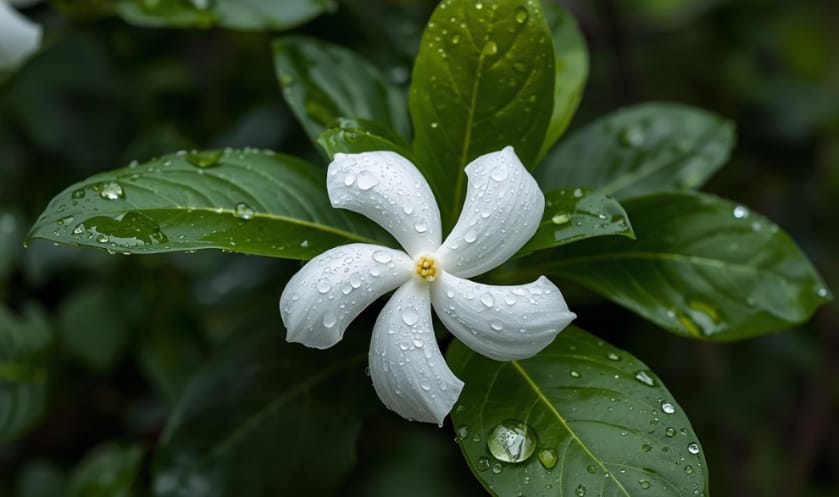
You have probably smelled Indian Jasmine long before you ever thought of growing it.
Summary
- Symbolism: Represents purity, love, divinity, and good fortune in Indian culture
- Common Uses: Pujas, weddings, gajras, festivals, fragrance, and wellness
- Best For: Pots, balconies, terraces, and small home gardens
- Fragrance: Strong, sweet, and calming—especially in the evening
- Care Level: Easy and beginner-friendly
- Why Grow It: Natural air freshener, stress relief, Vastu benefits, and cultural value
Jasmine is common in India. You might have seen it:
- In temple courtyards
- Braided into hair
- Drifting through summer evenings
But, when it comes to growing it at home, most of us hesitate:
- What does it really symbolise?
- Is it only for rituals?
- Is it difficult to care for?
- Will it even thrive in my space?
This guide is for Indian plant lovers who want more than just a beautiful flower. It is for those curious about Jasmine’s deeper meaning, its traditional uses, and whether it truly belongs in a modern home garden.
By the end, you will know if this fragrant, meaningful plant is right for your space and how to grow it at home with healthy, affordable plants from Urvann.
Meaning and Symbolism
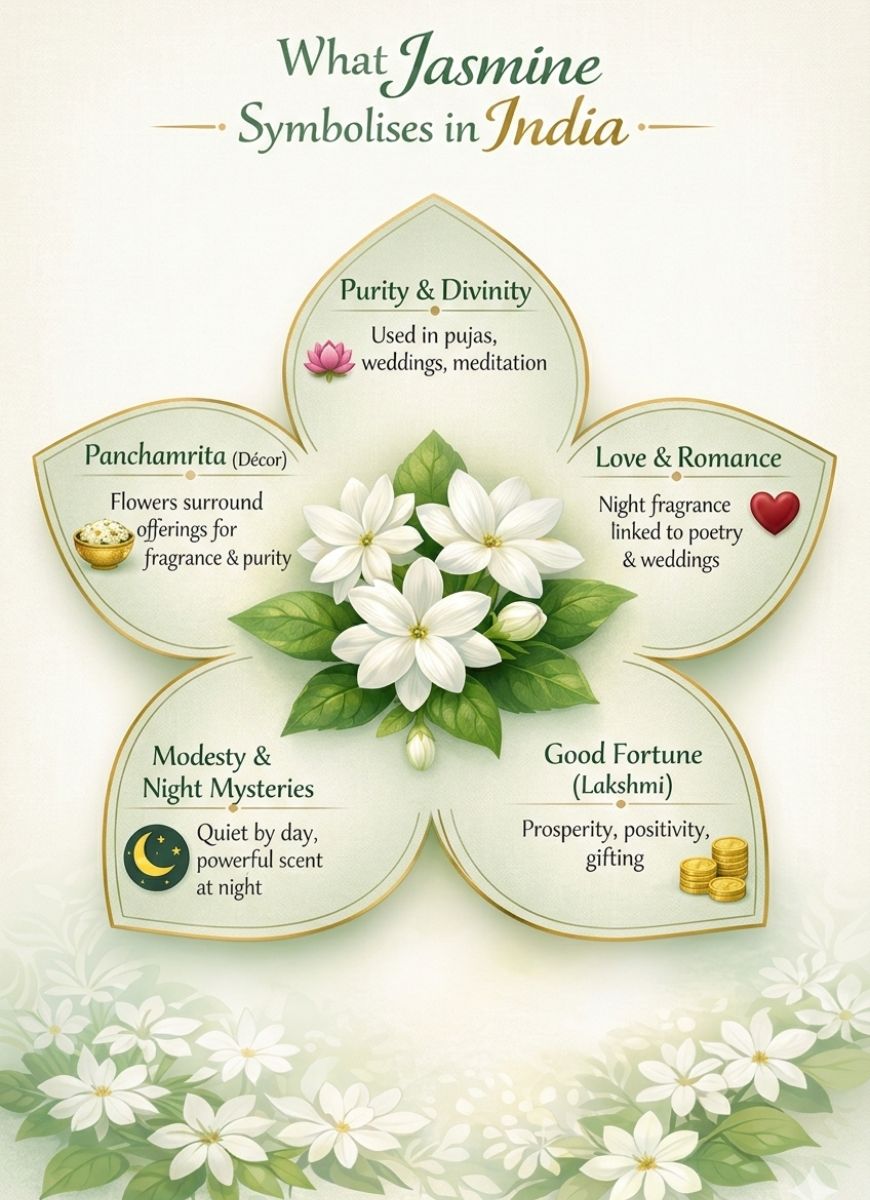
Indian Jasmine (मल्लिका/जाई/चमेली) holds a deep cultural significance in India. This flower symbolises purity, love, divinity, and good fortune. It is a preferred choice for home gardeners seeking both beauty and meaning.
1. Purity and Divinity
Jasmine’s pristine white flowers and calming fragrance symbolise purity. It is often used in pujas, weddings, and meditation to create a sense of peace and spiritual clarity. Garlands adorn deities during festivals like Diwali, and Navratri and even Brides wear Jasmine to represent devotion and grace.
2. Panchamrita
Panchamrita is a sacred blend of milk, curd, honey, ghee, and sugar offered during pujas. Jasmine is not mixed into it, but flowers often surround or decorate the offering to enhance purity and fragrance. Most people keep a small jasmine plant near a home altar or balcony during festivals to give a traditional vibe.
3. Love and Romance
Jasmine has long been linked to love because of its intoxicating night fragrance. It is deeply woven into weddings, poetry, and traditions where women wear it in their hair and couples exchange garlands.
4. Good Fortune
This flower is associated with Goddess Lakshmi, representing prosperity and positivity. It is commonly gifted during housewarmings, births, and festivals to wish good fortune. A potted Jasmine near your entrance or balcony is believed to invite optimism and fresh beginnings.
5. Modesty and Night Mysteries
Jasmine’s beauty is quiet by day but powerful at night. It symbolises modesty and inner depth. Its evening fragrance makes it ideal for balconies or windows where the scent drifts indoors.
Popular Indian Jasmine Varieties
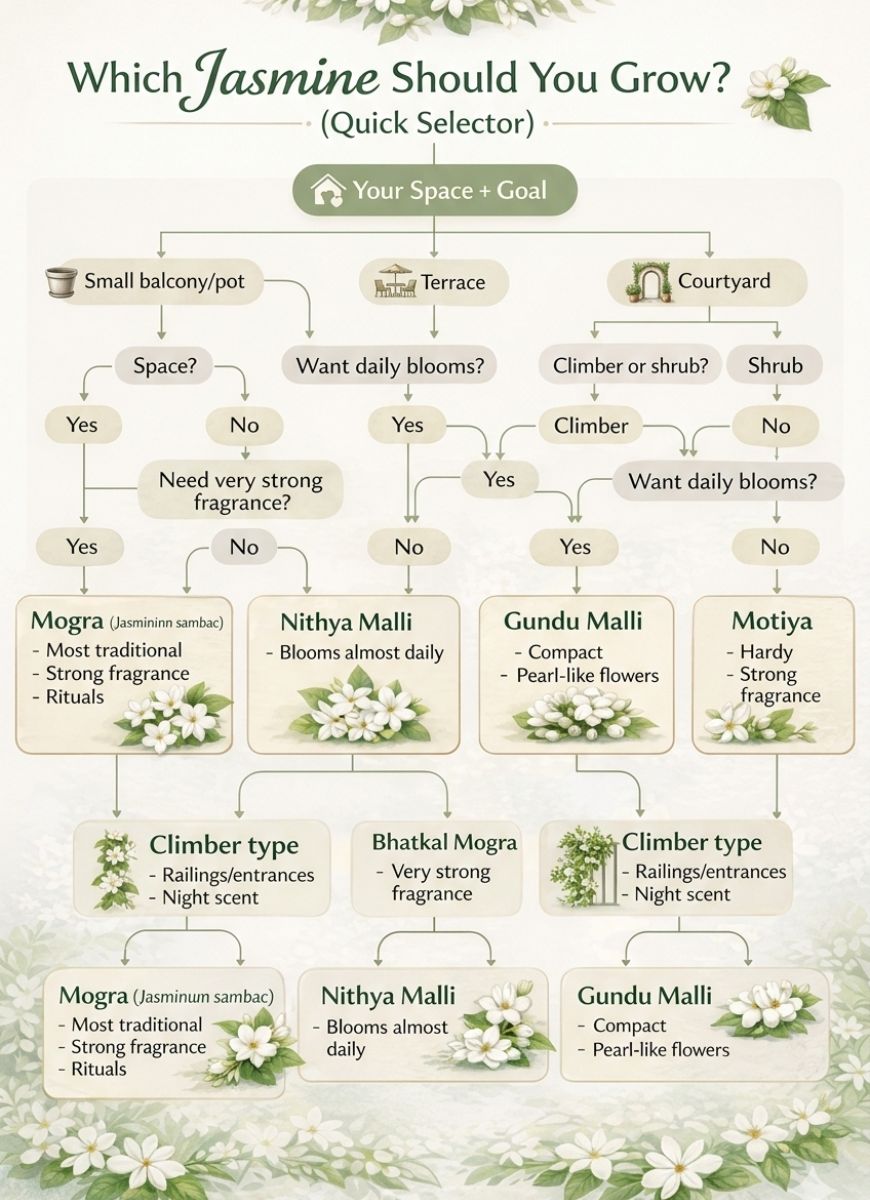
| Jasmine Variety | Best For | Fragrance Level | Growth Type | Difficulty | Why Choose It |
|---|---|---|---|---|---|
| Malika/Mogra (Jasminum sambac) | Pots, balconies, rituals | Strong | Bushy shrub/vine | Easy | Most traditional, highly fragrant |
| Nithya Malli (नित्य मोगरा) | Daily pooja use | Medium-Strong | Creeper | Easy | Blooms almost daily, great for regular fragrance |
| Gundu Malli (गुंदा मोगरा) | Small spaces, decor | Mild | Compact shrub | Easy | Pearl-like flowers, visually stunning |
| Motiya (मोतिया) | Terraces, balconies | Strong | Shrub | Easy | Hardy, ideal for the Indian climate |
| Bhatkal Mogra (भटकल मोगरा) | Courtyards, fragrance lovers | Very Strong | Shrub | Easy-Moderate | One of the most fragrant jasmines |
| Navamallika (नव मल्लिका) | Large pots, gardens | Mild-Medium | Shrubby | Moderate | Bigger blooms, less maintenance focus |
| Arabian Jasmine (Climber Type) (चमेली बेल) | Railings, entrances | Strong | Climber | Easy | Night fragrance + love symbolism |
| Arka Surabhi (अर्का सुरभि मोगरा) | Offerings, variety | Medium | Shrub | Easy | High flower yield with subtle color |
Common Uses of Indian Jasmine
1. Cultural and Traditional Uses
Jasmine garlands are commonly used in:
- Home pujas
- Temples
- Weddings
- Festivals like Diwali and Navratri
Women wear fresh Jasmine in their hair during festivals such as Karva Chauth (करवा चौथ) or family ceremonies, adding grace and romance. It is also gifted during housewarmings and birthdays as a sign of blessing and positivity. Also, it is popular among Indian poetry and art, representing love, femininity, and beauty.
2. Traditional Everyday Uses
Jasming is also:
- Used in gajras for daily wear
- Scattered on beds, or
- Baths for their calming aroma
- Infused into perfumes and attars
Some families even use flowers sparingly to scent teas, sweets, or festive rice dishes.
3. Health and Wellness Uses
In Ayurveda, Jasmine is valued for its cooling and calming nature. Its fragrance helps reduce stress, improve sleep, and create a peaceful atmosphere, especially when the flowers bloom at night.
For beginners, growing Jasmine on a balcony is an easy way to enjoy these benefits naturally without complex care.
Why Does It Belong in Your Home Garden?
1. Natural Air Freshener
Its fragrance drifts through balconies and windows, naturally freshening your home. On humid nights, placing the plant near a window fills the space with a soft, clean scent.
2. Stress Relief & Sleep Aid
Jasmine’s scent has a calming effect that helps you slow down after a long day. Many people love keeping it near a bedroom window or on the terrace where the evening fragrance gently eases stress and promotes better sleep.
3. Easy to Grow
If you are worried about maintenance, don’t be. Jasmine grows happily in pots with partial sunlight, well-drained soil, and moderate watering. It is forgiving, beginner-friendly, and blooms generously in India’s climate even on small balconies.
4. Vastu Shashtra
According to Vastu, placing Jasmine near the north or east side of your home is believed to invite positivity and prosperity.
5. Attracts Beneficial Insects
Jasmine also attracts bees and butterflies, helping nearby plants thrive. It is a simple way to make your balcony or garden feel more alive naturally.
Quick Care Tips
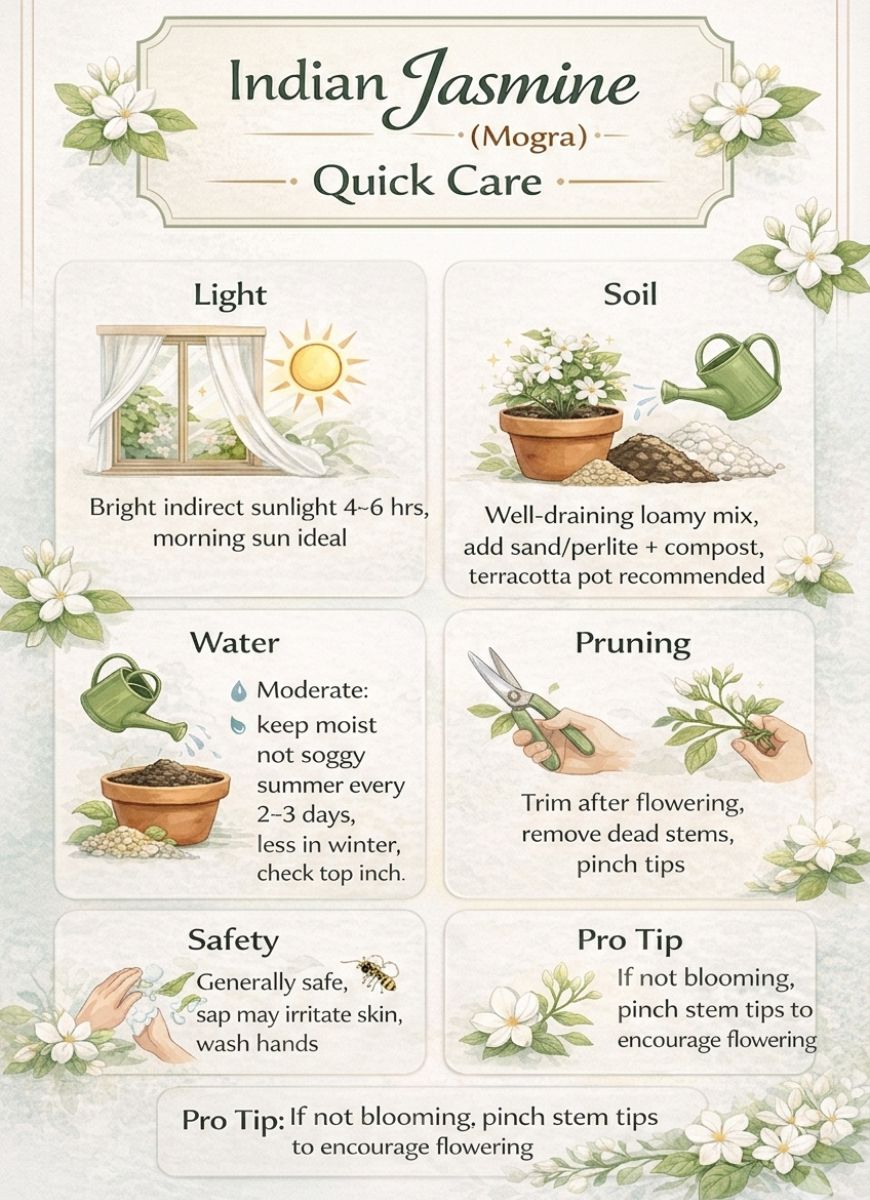
- Light: Bright indirect sunlight for 4-6 hours daily. Perfect for east-facing balconies catching the morning rays without scorching. Indoors, near a sunny window works; avoid full, harsh afternoon sun to prevent leaf burn.
- Soil: Well-draining, loamy mix with sand or perlite; enrich with compost for nutrients. Use terracotta pots to prevent waterlogging, ideal for beginners, avoiding root rot in humid climates.
- Water: Moderate: keep soil moist but not soggy, watering every 2-3 days in summer, less in winter. Check the top inch if dry, water deeply; overwatering invites pests, so err on the dry side for healthy blooms.
- Pruning: Trim after flowering (post-monsoon or spring) to shape and encourage growth. Remove dead stems and pinch tips for more branches. Light annual cuts suffice; wear gloves to avoid sap irritation.
- Safety: Non-toxic to humans and pets, but the sap may irritate sensitive skin. Wash hands post-handling. Keep away from kids’ reach during pruning, as it attracts bees. Place them thoughtfully on balconies. Safe for home rituals or teas in moderation.
Conclusion
By now, you know what Indian Jasmine symbolizes, how it has been traditionally used across homes and rituals, and why it continues to belong in modern home gardens.
You have also seen that growing Jasmine is not complicated or reserved for experts. This plant thrives beautifully in pots, balconies, and small gardens with a little sunlight, moderate watering, and basic care.
Jasmine is a natural choice if you are looking to decorate your space and add emotion, fragrance, and cultural depth.
When you are ready to bring Jasmine home, choose healthy, affordable plants from Urvann.
Grow meaning in your garden every day.
Frequently Asked Questions (FAQs)
1. What does Indian Jasmine smell like?
It has a rich, intense, and intoxicatingly sweet floral scent.
2. Are Jasmine and Mogra the same?
Mogra is a specific type of Jasmine, especially Jasminum sambac, known as Arabian Jasmine.
3. What is Indian Jasmine called?
In India, “Indian Jasmine” most commonly refers to Mogra (Jasminum sambac).
4. Why do Indians use Jasmine?
Indians use Jasmine for a wide range of reasons, from religious devotion to personal well-being.
5. Which Jasmine is native to India?
Jasminum sambac (Arabian jasmine or Mogra/Mallika) is a primary species native to India, alongside Bhutan, thriving naturally across South Asia for centuries and is central to our cultural rituals.
6. Which type of Jasmine is most fragrant?
Jasminum sambac tops the list for fragrance among jasmine varieties with its intoxicating sweet scent peaking at night.