


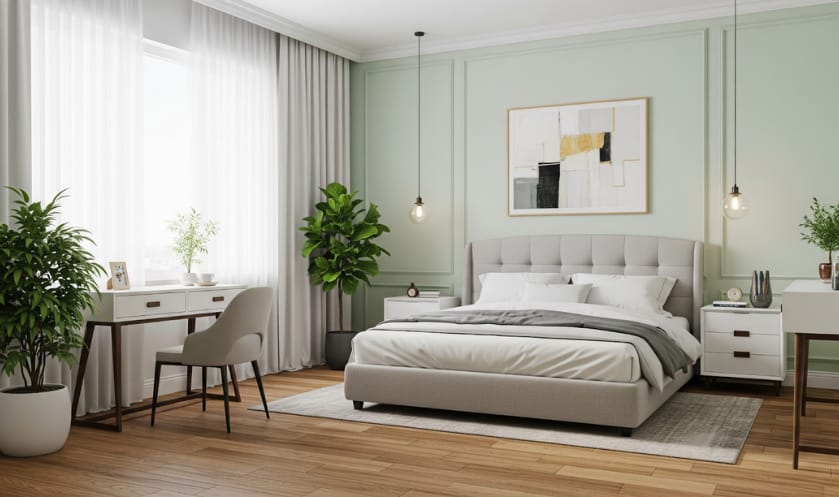
Many people bring plants into their bedroom hoping for calm, better sleep, or a touch of positive energy. But the wrong plant — placed in the wrong direction or chosen without thought — can quietly do the opposite: stagnant energy, restless nights, and a plant that slowly fades away, right in a corner of your room.
- Which indoor plants are actually suitable for bedrooms as per Vastu, and which ones may quietly disturb rest and balance
- The best Vastu directions for placing plants in your bedroom and what each direction supports
- How to choose bedroom plants based on available light, space, and your daily routine
- Easy, low-maintenance bedroom plants that work well in Indian homes and apartments
- Simple placement and care habits that help maintain both plant health and positive Vastu energy
In Vastu Shastra, your bedroom is a sensitive, sacred energy rest zone. Even well-intentioned greenery can disrupt rest and balance if it’s thorny, high-maintenance, or placed in the wrong corner.
Here’s the good news: you don’t need to avoid plants in your bedroom — you just need to choose the right, easy-care ones and place them in the right direction. That’s exactly what this guide will help you do — with simple steps, Vastu insights, and low-maintenance plant picks that fit urban homes and busy lifestyles.
Whether you’re new to plant parenthood or want low-effort greenery that still uplifts your room, you’re in the right place.
Step 1: Start With Vastu “Non-Negotiables”
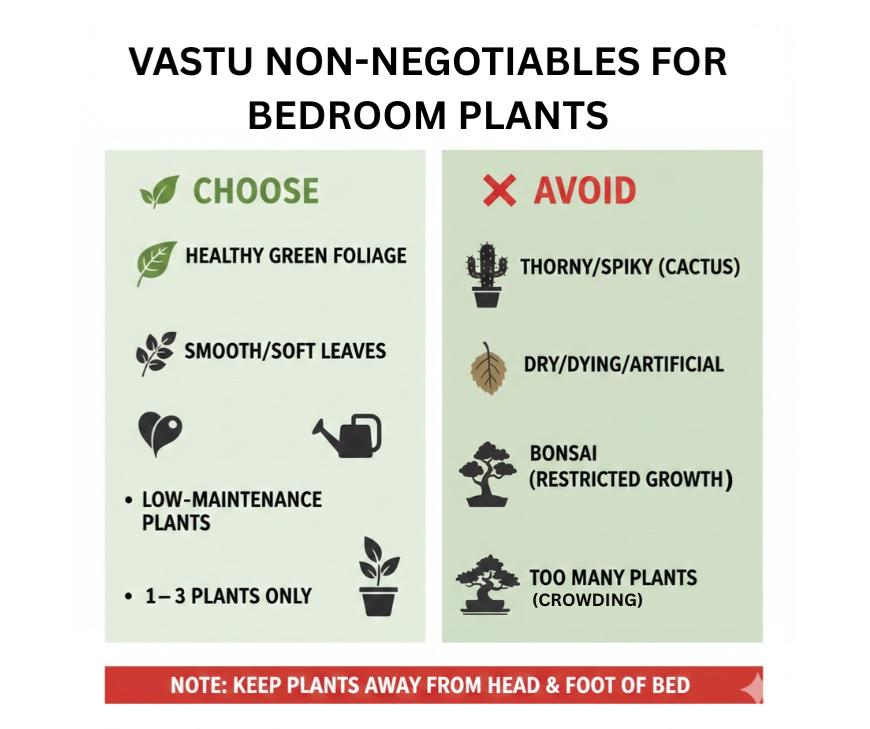
Before choosing any plant, use Vastu to filter out what doesn’t belong in your bedroom:
What to choose
- Healthy, vibrant, green foliage (no dried leaves, no struggling plants)
- Smooth, soft leaves (rounded or smooth foliage feels more restful)
- Plants that don’t need constant care — easy wins for beginners and busy folks (think low water, low light tolerant, also because neglected plants = stagnant energy)
What to avoid
- Thorny or spiky plants like cactus (they can create tension)
- Dry, wilted, artificial, or dying plants (stagnant energy)
- Bonsai (symbolically represents restricted growth)
- Too many plants (bedroom should feel open, not crowded)
A calm plant corner near a window or shelf can transform your room; a neglected or thorny plant near your bed might make rest harder.
Also, keep plants away from the head and foot of the bed. Bedroom plants should support sleep, not sit in your immediate “rest zone.”
Step 2: Identify the Best Bedroom Directions (Vastu Lens)
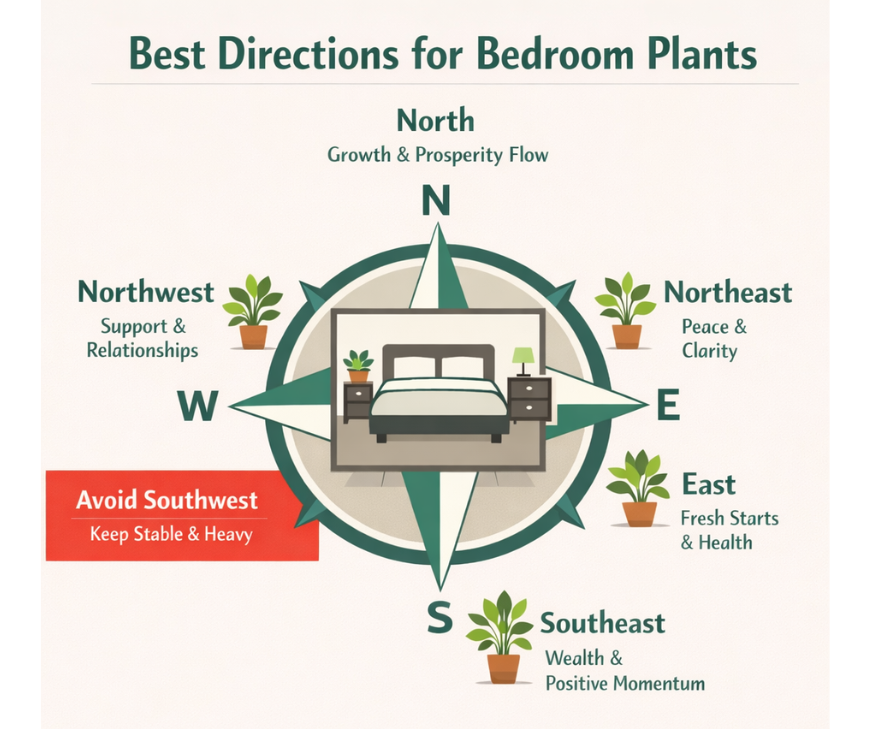
In Vastu, where you place a plant matters as much as which plant you choose.
Think of directions as energetic zones — some bring growth, others bring calm or abundance.
- North: Growth, prosperity flow
- East: Fresh starts, health energy
- Northeast: Peace, clarity of mind
- Southeast: Wealth, positive momentum
- Northwest: Support systems, relationships
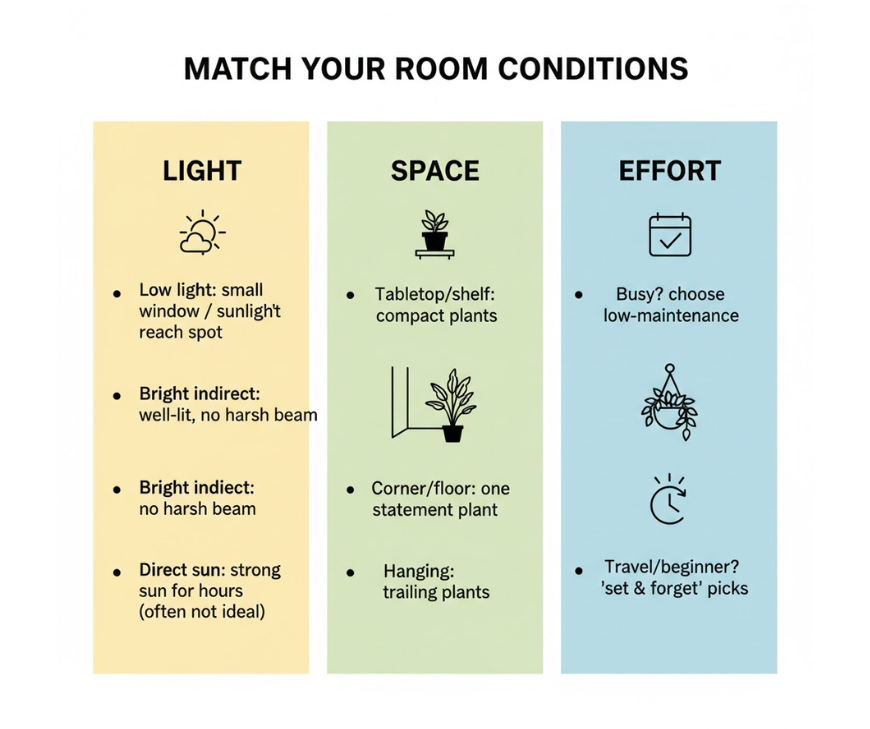
Step 3: Match Your Room’s Conditions (Light, Space, Effort)
Before finalizing your plant:
Check your light (60-second test)
- Low light: the window is small / sunlight doesn’t reach the plant spot
- Bright indirect light: the room is well-lit, but no harsh sun beam hits the leaves
- Direct sun: strong sunlight falls on the spot for hours (usually not ideal for most bedroom indoor plants)
Check your space
- Tabletop/shelf: compact plants that don’t sprawl
- Corner/floor: one statement plant (if your room has breathing space)
- Hanging/vertical: trailing plants if you want greenery without using floor space
Check your effort level
Go for low-maintenance indoor plant options like Money Plant, Spider Plant, and Syngonium if you don’t have much time.
If you want even less effort, go for plants known for surviving low light and “oops-I-forgot-to-water” schedules.
These practical checks, plus the direction guide, make choosing the right plant simple.
Bedroom Plant + Direction Selection Table (Quick Vastu Guide)
Here’s a simple way to pair plants (friendly and easy to care for) with Vastu directions and bedroom conditions:
| Plant | Best Bedroom Direction(s) | Why It Works (Vastu) | Light | Effort |
|---|---|---|---|---|
| Money Plant / मनी प्लांट (Pothos) | Southeast / East | Abundance, smooth positive flow | Low–medium | Very Low |
| Snake Plant / साँप का पौधा | East / North | Protective, stabilising energy | Low–medium | Very Low |
| ZZ Plant / ज़ुज़ू प्लांट | North / East | Steady growth energy, very resilient | Low | Very Low |
| Peace Lily / शांति लिली | North / Northeast / East | Harmony, calm, restful feel | Medium | Low |
| Spider Plant / मकड़ी का पौधा | East / Northwest | Clean energy + gentle freshness | Medium | Low |
| Areca Palm / सुपारी पाम | East / Southeast | Soft, soothing, brings wellness | Bright indirect | Low |
| Rubber Plant / रबर प्लांट | North / East | Grounding presence, elegant foliage | Medium–bright | Low |
| Lucky Bamboo / सौभाग्य बांस | East / North | Symbolic luck + smooth growth energy | Low–medium | Very Low |
These are classic indoor choices known for low maintenance and good indoor performance. Many such easy-care plants are featured in our Indoor Low Maintenance Plants and Plants for Bedroom collections.
Step 4: Select the Right Plant With Simple “If This, Then That” Rules
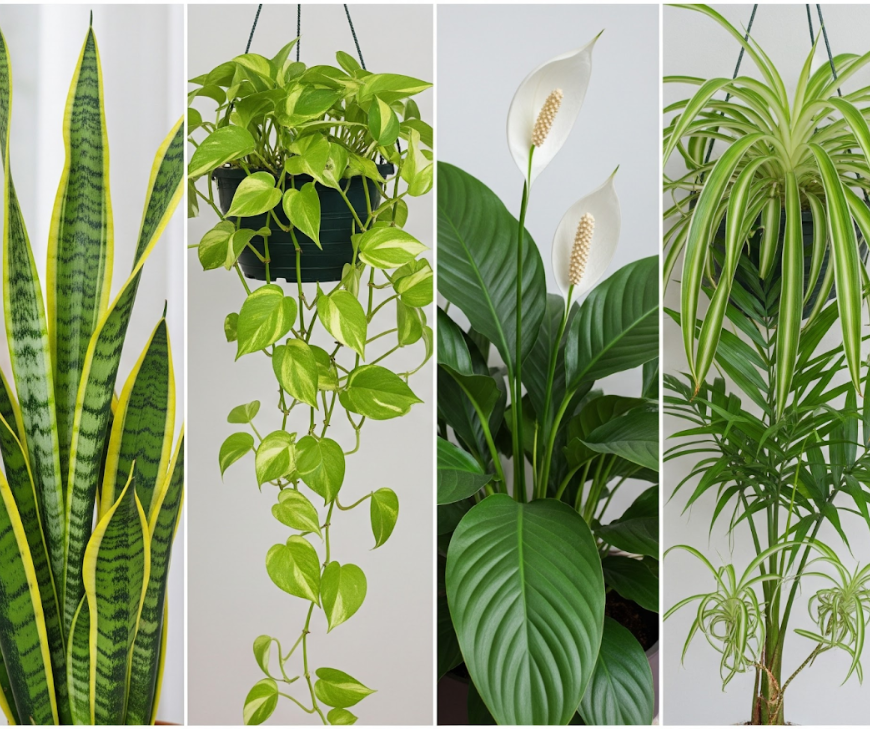
To make it even easier, here’s a selection shortcut:
If your bedroom has low light
Go with:
- ZZ Plant
- Snake Plant
- Money Plant (Pothos)
These tolerate shade and won’t sulk without direct sun. Urban apartments often have corners with softer light — these plants thrive there.
If you want wealth and flow
Place a Money Plant in the Southeast direction.
This is the classic choice when people search for “lucky plants for bedroom” — but keep it practical: place it on a stand/shelf, and away from the bed frame.
If you want restful, calm energy (especially for sleep)
Choose Peace Lily in the North / Northeast direction — its gentle look and tidy habit support relaxation.
If you want “set it and forget it” energy (busy schedule, travel, beginners)
Pick ZZ Plant or Snake Plant — These are your ultra-low effort champions — minimal watering, minimal drama.
If you want a light, fresh vibe
Choose a Spider Plant on a shelf or table in the East / Northwest — it adds movement without crowding space.
If your room has a bright corner
An Areca Palm or Rubber Plant adds a soft statement while staying easy to care for.
Step 5: A 2-Minute Weekly Routine to Keep Vastu Energy Alive
Vastu is big on life energy, and a struggling plant is the opposite of that.
Here’s a weekly habit that keeps them and your space glowing — without extra chores:
- Water only when the soil is dry — most low-maintenance plants like it that way.
- Wipe leaves every week — clean leaves breathe better and look happier.
- Remove wilted/dried leaves immediately — stagnant foliage is both unhealthy and energetically dull.
- Rotate the pot occasionally — for even growth and light distribution.
- Use a clean pot (no cracks/chips) and avoid stagnant water
This simple attention keeps a plant thriving, and a thriving plant supports positive energy in your bedroom.
.png "2-Minute Weekly Routine")
Bringing Vastu Balance Into the Bedroom, Naturally
At the end of the day, bedroom Vastu isn’t about rigid rules. It’s about creating a space that truly lets you rest.
When you choose indoor plants thoughtfully — plants that suit your bedroom’s direction, your light conditions, and your lifestyle — they stop being décor and start becoming quiet supporters of your daily wellbeing. The room begins feeling lighter, and you sleep more deeply.
And caring for your plants feels effortless, not overwhelming, especially when they arrive fresh, locally sourced, and already suited to indoor living.
You don’t need many plants, and you definitely don’t need rare ones.
Just a few healthy, low-maintenance plants placed with intention are enough to bring balance, freshness, and positive energy into your bedroom.
Starting with plants that adapt quickly to your space simply makes this easier, which is where a hyperlocal platform like Urvann fits in naturally, without adding extra effort to the process.
Start small. Choose wisely. Let your bedroom grow calmer, and bring good luck and positive energy with plants, well-placed, one at a time.
Question People Also Ask About Indoor Plants for Bedroom as per Vastu
1. Is it good to put plants in your bedroom as per Vastu?
Yes, it is good to keep plants in the bedroom as long as you choose the right plants and place them correctly. Vastu recommends healthy, leafy, non-thorny plants that promote calm and positivity. Avoid overcrowding, dried plants, or thorny varieties to maintain a restful energy.
2. Which plant is best for the bedroom as per Vastu?
Some of the best plants for the bedroom, according to Vastu, include Snake Plant, Money Plant, Peace Lily, ZZ Plant, and Spider Plant. These plants are easy to maintain, visually calming, and are believed to support positive energy, better sleep, and emotional balance.
3. Which direction is good for plants in the bedroom as per Vastu?
The North, East, Northeast, and Southeast directions are considered best for placing plants in the bedroom.
- East/Northeast support calm and health
- North supports growth
- Southeast supports wealth
Avoid placing plants in the Southwest direction.
4. Can we keep a money plant in the bedroom?
Yes, a Money Plant can be kept in the bedroom as per Vastu if placed correctly. The best direction is the Southeast or East, and it should be kept away from the head or foot of the bed. A healthy Money Plant is believed to attract prosperity and maintain positive energy flow.
5. Which plant is good for a bedroom without sunlight?
For bedrooms with little or no direct sunlight, choose low-light-tolerant plants such as ZZ Plant, Snake Plant, Money Plant, and Lucky Bamboo. These plants survive well in indirect light and are ideal for urban apartments with limited natural sunlight.
6. Which plants should be avoided in the bedroom as per Vastu?
Avoid thorny plants (like cactus), bonsai plants, dried or artificial plants, and very large indoor trees in the bedroom. These are believed to disrupt calm energy, symbolise restricted growth, or create restlessness, which can negatively affect sleep and emotional balance.
7. Which plants release oxygen at night and are suitable for bedrooms?
The Snake Plant is one of the most popular bedroom plants because it releases oxygen at night and improves air quality. This makes it especially suitable for bedrooms, where clean air and a calm atmosphere are essential for restful sleep.
8. How many plants should I keep in my bedroom?
Vastu recommends keeping one to three plants in the bedroom. Too many plants can create clutter and disturb energy flow. A few well-placed, healthy plants are enough to enhance positivity without overwhelming the space.
9. How often should I water bedroom plants?
Most bedroom-friendly, low-maintenance plants prefer watering only when the topsoil feels dry. Overwatering is more harmful than underwatering. Typically, watering once a week (or even less for plants like ZZ or Snake Plant) is sufficient.
10. What are the safest indoor plants for bedrooms?
Safe bedroom plants are those that are easy to care for, non-thorny, and visually calming, such as Spider Plant, Snake Plant, ZZ Plant, Peace Lily, and Money Plant. Always place plants securely and avoid overcrowding bedside areas.
11. Can plants be kept near the bed as per Vastu?
It is best not to place plants directly near the head or foot of the bed. Vastu suggests keeping plants slightly away — on shelves, side tables, or corners — so they support the room’s energy without interfering with rest and relaxation.
12. How to make a bedroom more relaxing using plants?
Choose low-maintenance, leafy plants, place them in Vastu-friendly directions (East or North), keep the room uncluttered, and ensure plants are healthy and dust-free. Even one well-placed plant can make a bedroom feel calmer, fresher, and more balanced.