


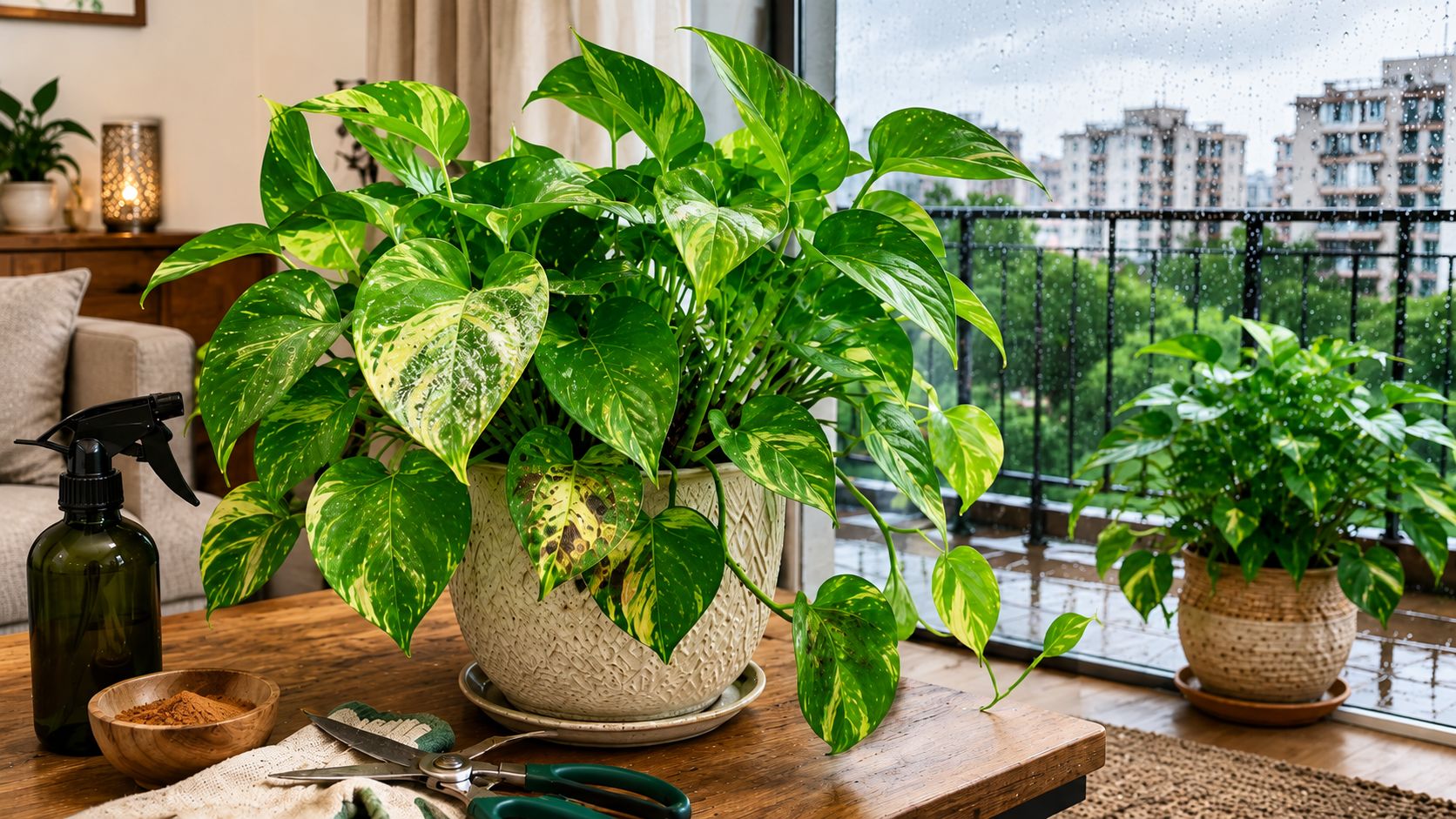
Protect indoor plants from fungus during the monsoon. Learn how to identify fungal infections, use natural remedies, and prevent them from returning.
Key Takeaways
- Confirm the problem first. Dry spots with a yellow border usually indicate fungus. Wet, mushy spots often mean bacteria. Tiny black specks usually point to pests.
- Reduce watering during the monsoon. High humidity, low sunlight, and overwatering are the main causes of fungal infections.
- Use home remedies for mild infections. Spray neem oil every 7 to 10 days. Use baking soda for powdery mildew. Apply cinnamon water to the soil to reduce fungal growth.
- Treat root rot properly. Remove damaged roots, soak healthy roots in diluted 3% hydrogen peroxide, and repot in fresh, well-draining soil.
- Prevent fungal diseases. Check the soil before watering, improve drainage, increase airflow, and avoid heavy fertiliser during the monsoon.
- Isolate infected plants immediately. Remove affected leaves and disinfect pruning tools after every cut to stop the infection from spreading.
The monsoon arrives, and everything turns green and lovely, except your Money Plant, which now has a mysterious white fuzz on its leaves. Or your Alocasia, which was thriving two weeks ago and is now sprouting brown spots with yellow halos.
You're not imagining it. Fungal infections in indoor plants spike every monsoon season in India. High humidity, reduced sunlight, soggy soil, and overcrowded balconies create the exact environment that fungal spores love. The tricky part is that a lot of what looks like fungus is actually something else entirely, and treating it incorrectly can make things worse.
This guide walks you through:
- How to spot a genuine fungal infection
- How to treat it at home using things you already have
- How to prevent it from coming back before the season ends
By the time you're done reading, you'll know exactly what to do when you see something wrong on your money plant.
Wait, Is It Actually Fungus?
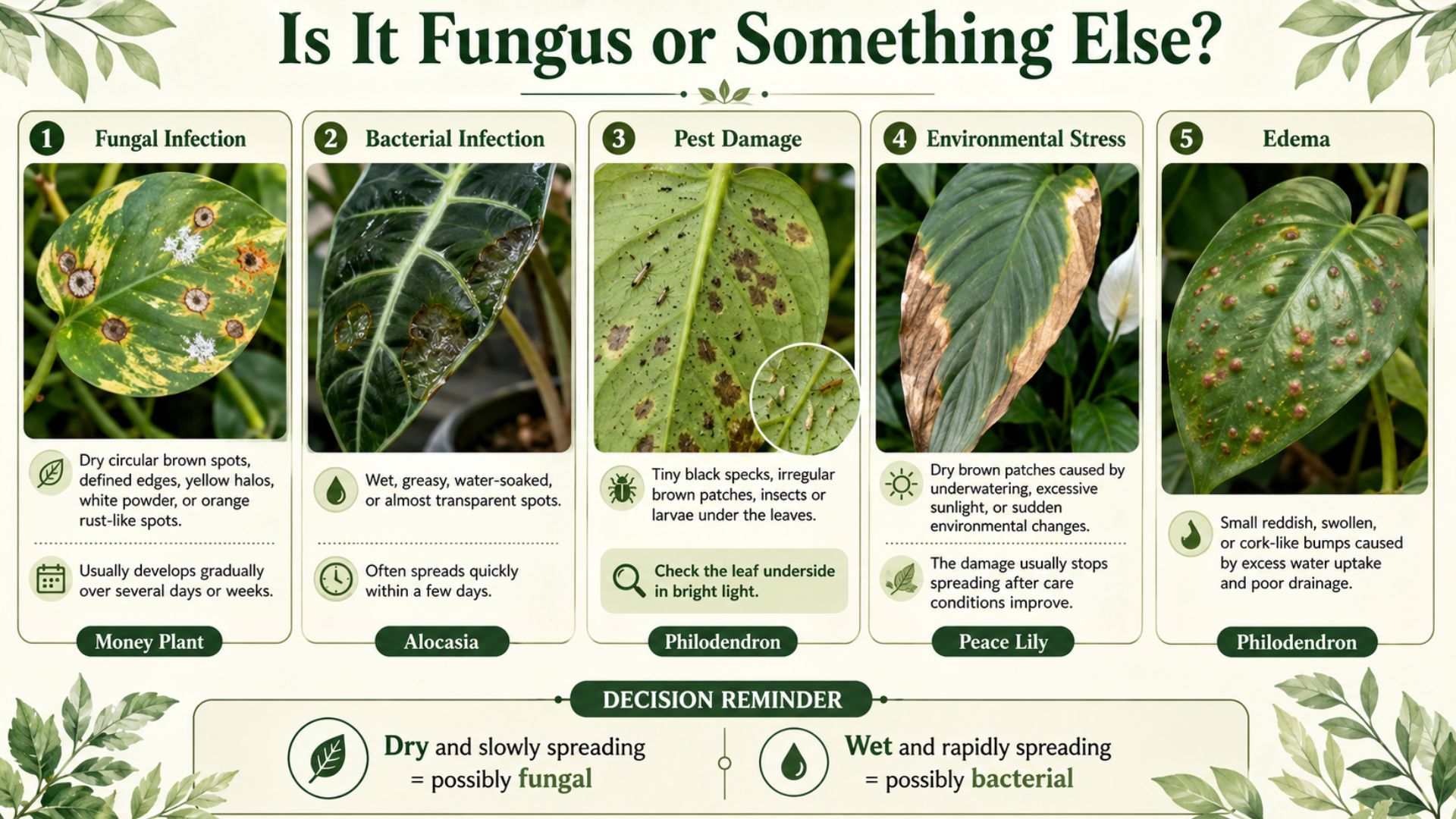
Before you spray anything on your plant, make sure you're dealing with fungus.
Many plant problems look similar, and treating the wrong issue can make things worse. Fungal infections usually have a few common signs. You may notice dry or crispy brown spots with clear edges. Some spots have a yellow ring around them. You might also see a white powdery coating on the leaves or small orange or reddish-brown spots on the underside of the leaves.
These symptoms usually appear slowly over several days or even weeks.
What Isn't Fungus (But Looks Like It)
- Pest damage: Tiny black specks with brown patches in the middle are often caused by thrips, not fungus. Turn the leaf over and check the underside in bright light before deciding it's a fungal infection.
- Environmental stress: Brown patches with yellow edges that stop spreading after you fix your watering schedule are usually caused by underwatering or general plant stress, not fungus.
- Bacterial infection: If the spots look wet, greasy, or water-soaked, the problem is more likely bacterial. Bacterial infections spread much faster than fungal ones. Fungus usually develops over weeks, while bacterial infections can spread within a few days.
- Edema: Small reddish or corky bumps can look like rust, but they are often caused by the plant taking up more water than it can handle. Reduce watering and make sure the pot has good drainage.
If the spots are dry, circular, and have clear edges, there's a good chance your plant has a fungal infection. If the spots are wet, spread quickly, or look almost transparent, the problem is more likely bacterial. In that case, isolate the plant as soon as possible.
Why Monsoon Is Peak Season for Plant Fungus in India
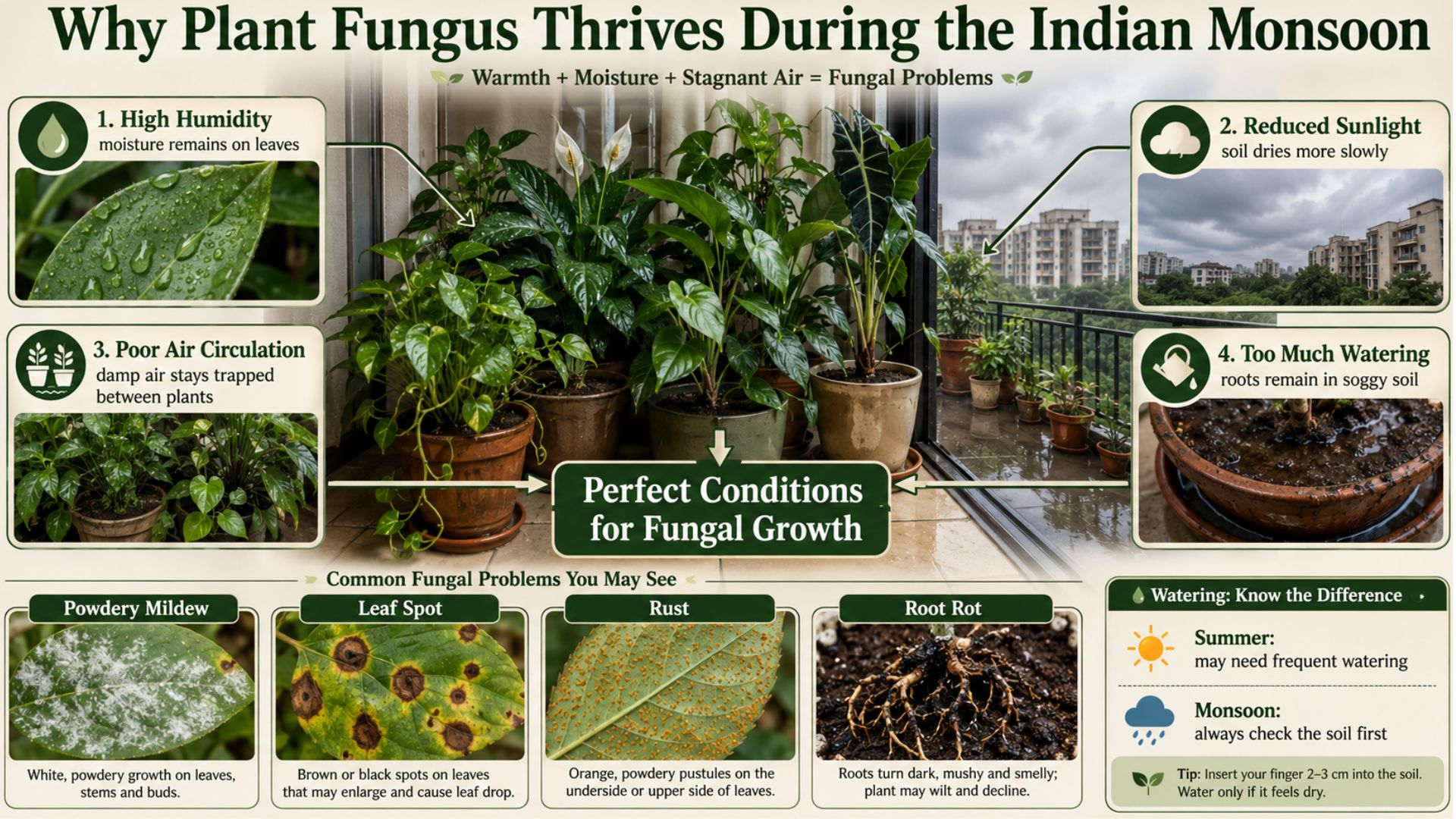
Fungal spores are always present in the air and soil. They only need three things to grow:
- Moisture
- Warmth
- Poor air circulation
The Indian monsoon creates all three conditions.
During the rainy season, humidity often goes above 80%. At the same time, cloudy skies reduce sunlight, so the soil takes longer to dry. Plants kept on balconies or near windows may also get wet from rain, and their leaves can stay damp for hours. If your plants are placed close together, air cannot move freely between them. This creates the perfect environment for fungus to grow.
Another common mistake is following the same watering routine as in summer.
As the weather becomes cooler and more humid, plants need less water. A plant that needed watering every three days in May may only need water every 10 to 15 days in July. If you keep watering as often as you did in summer, the soil stays wet for too long.
This can damage the roots, weaken the plant, and increase the risk of fungal infections.
As a result, problems such as root rot, powdery mildew, leaf spot, and rust often appear during the monsoon, even on plants that looked healthy just a few weeks earlier.
Home Remedies to Treat Fungus on Indoor Plants
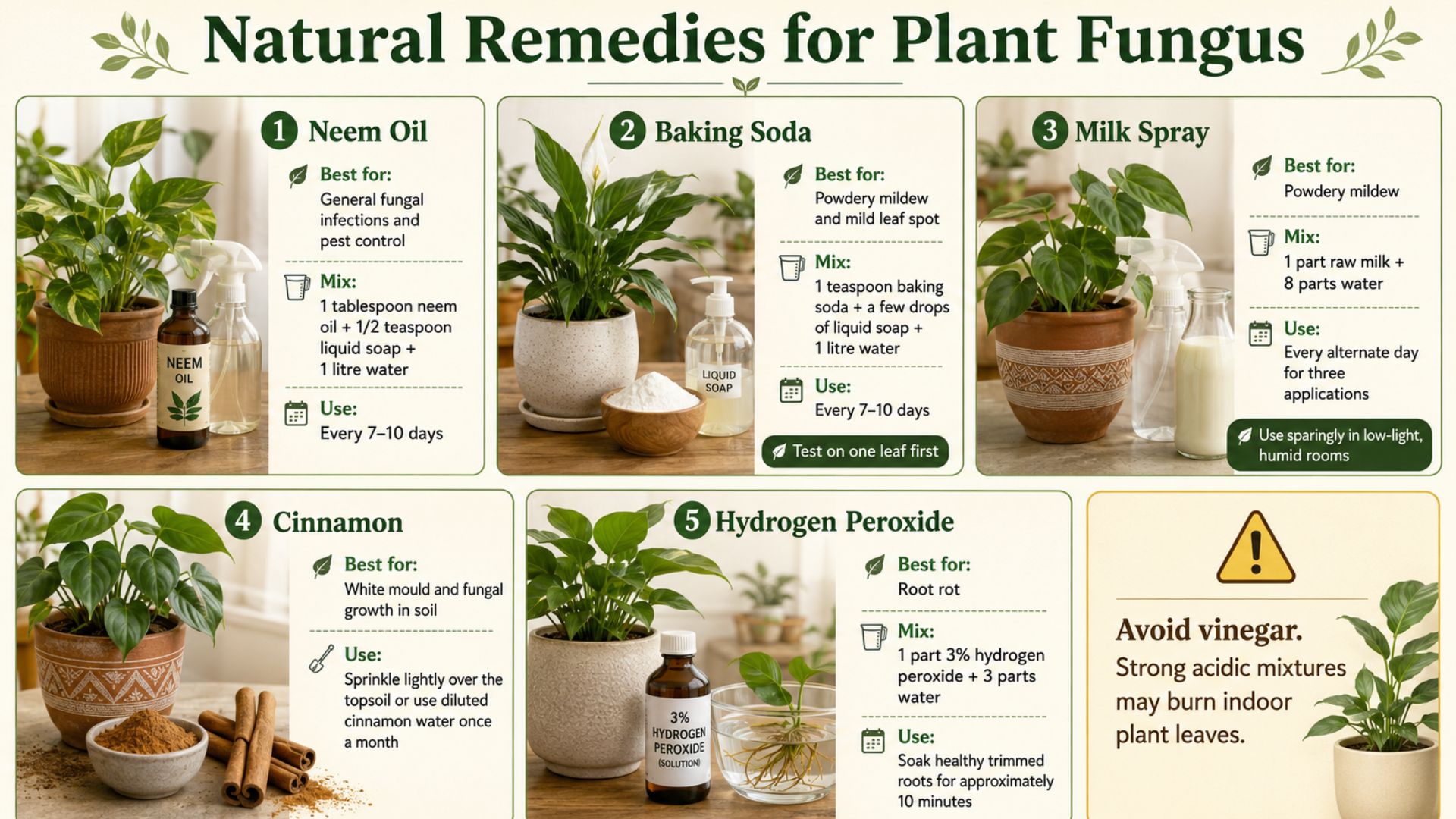
Many mild and moderate fungal infections can be treated with simple ingredients you may already have at home.
Before using any treatment, remove leaves that are badly infected. Then apply the remedy to the remaining parts of the plant.
1. Neem Oil Spray
Neem oil is one of the best natural treatments for fungal diseases.
It contains a natural compound called azadirachtin, which slows fungal growth. It also helps keep many common plant pests away.
Mix 1 tablespoon of cold-pressed neem oil and half a teaspoon of liquid soap in 1 litre of water. Shake the mixture well and spray the entire plant. Make sure you spray both the upper and lower sides of the leaves.
Repeat every 7 to 10 days. Spray early in the morning or in the evening to prevent the wet leaves from getting damaged by strong sunlight.
2. Baking Soda Spray
Baking soda changes the pH on the leaf surface, making it harder for fungal spores to grow.
It works well against powdery mildew and can also help prevent leaf spot. Mix 1 teaspoon of baking soda with a few drops of liquid soap in 1 litre of water. Stir well and spray the affected leaves. Repeat every 7 to 10 days.
If you are using this spray for the first time, test it on one leaf before spraying the whole plant. Some delicate plants may be sensitive to baking soda. Also, avoid using it too often because it can build up in the soil over time.
3. Milk Spray
Milk contains natural proteins that help slow the growth of powdery mildew.
Mix 1 part raw cow or buffalo milk with 8 parts water. Spray the mixture on the affected leaves every alternate day for three applications. After that, you can use it once a month to help prevent fungal infections on flowering and vegetable plants.
This treatment works best when the plant receives some sunlight. If your indoor space is very humid and gets very little sunlight, use milk spray sparingly because leftover milk on the leaves may start to smell.
4. Cinnamon
Cinnamon is a natural antifungal that works well for fungal problems in the soil.
If you notice white fuzzy mould on the soil surface, lightly sprinkle cinnamon powder over the topsoil.
You can also make a cinnamon soil drench. Boil 30 grams of cinnamon powder in half a litre of water until the liquid reduces to about one-quarter. Let it cool and strain it through a cotton cloth. Using two or three layers of cloth helps remove fine particles and prevents your spray bottle from clogging. Mix the strained liquid with 5 litres of water and pour it into the soil once a month.
Cinnamon may also support healthy root growth, so many gardeners use it when repotting plants.
5. Hydrogen Peroxide for Root Rot
If your plant has root rot, gently remove it from the pot. Cut away all soft, brown, or black roots using clean, sterilized scissors.
Mix one part 3% hydrogen peroxide with three parts water. Soak the healthy roots in this solution for about 10 minutes. This helps kill any remaining fungal spores. After soaking, let the roots dry for about 15 minutes. Then repot the plant in fresh, well-draining soil.
A transparent pot can make it easier to monitor new root growth.
If you do not have hydrogen peroxide, allow the trimmed roots to air dry before repotting. This helps the cut surfaces heal and reduces the chance of another infection.
What Not to Use
Avoid using vinegar on indoor plants.
It is highly acidic and can damage leaves if the mixture is too strong. Although some gardeners use a very diluted solution of apple cider vinegar, the margin for error is small. If you are new to plant care, it is safer to use neem oil, cinnamon, or milk instead.
These remedies are much gentler and are less likely to harm your plant.
Step-by-Step: How to Treat an Infected Plant
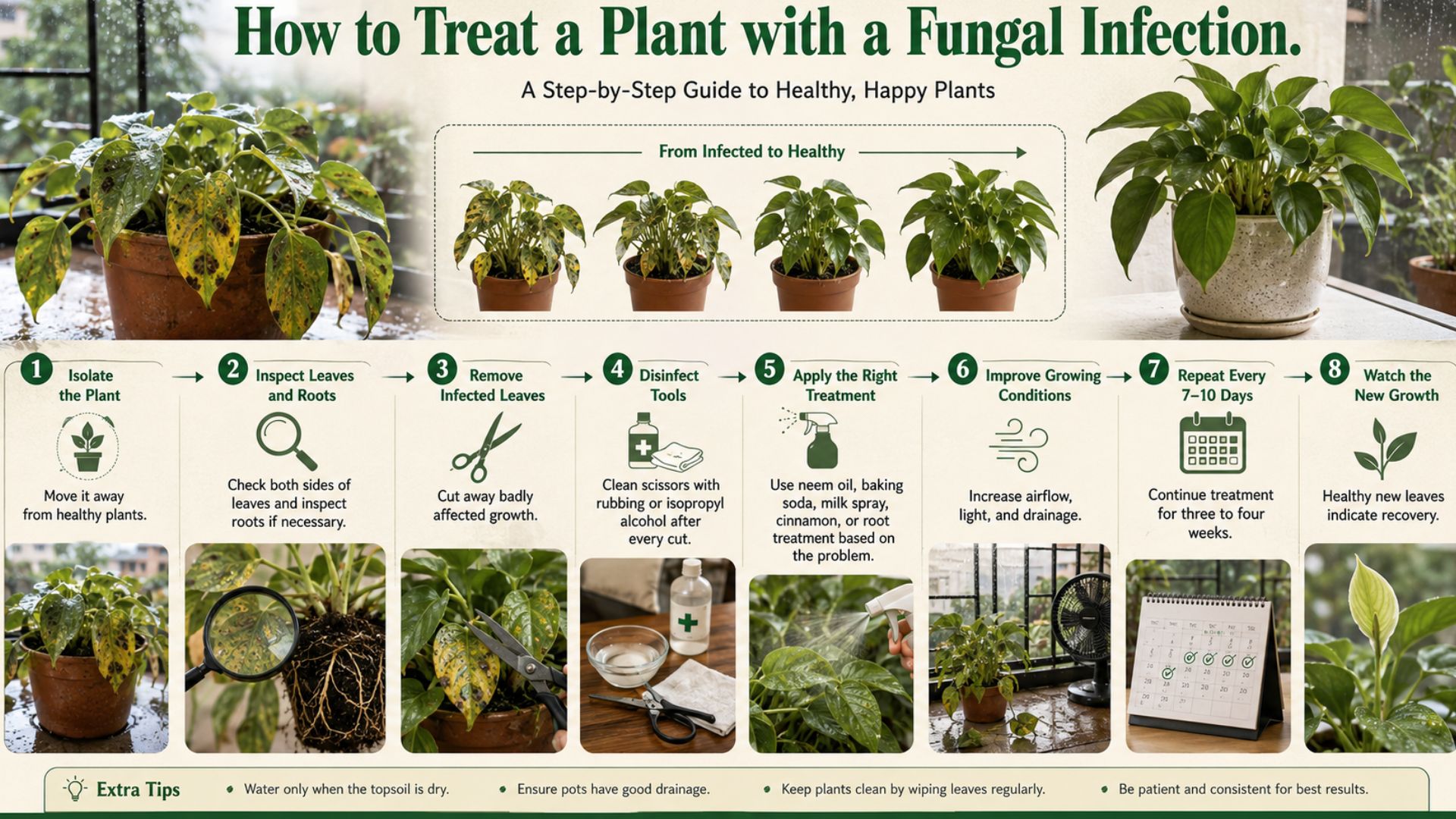
1. Isolate the Plant
Move the infected plant away from your other plants as soon as possible. Fungal spores can spread through the air and by splashing water.
2. Inspect the Plant Carefully
Look at both sides of the leaves for signs of fungus or pests. If you suspect root rot, also check the roots.
3. Remove Infected Leaves
Use clean scissors or pruning shears to remove severely affected leaves. Do not add these leaves to your compost. Seal them in a bag and throw them away.
4. Clean Your Tools
Wipe your scissors or pruners with rubbing alcohol or isopropyl alcohol after every cut. This prevents the infection from spreading to healthy parts of the plant.
5. Apply the Right Treatment
Use neem oil, baking soda, or milk spray depending on the type of fungal infection. Spray both the top and bottom of the remaining leaves.
6. Improve the Growing Conditions
This is one of the most important steps. Place the plant where it gets better air circulation. Do not water again until the top layer of soil feels dry.
7. Repeat the Treatment
Apply the chosen remedy every 7 to 10 days for 3 to 4 weeks. One treatment is usually not enough to remove a fungal infection.
8. Watch for New Growth
Healthy new leaves are a good sign that your plant is recovering. If the new leaves also develop fungal symptoms, inspect the roots again and review the plant's growing conditions.
7 Things to Do Right Now to Prevent Fungal Infections This Monsoon
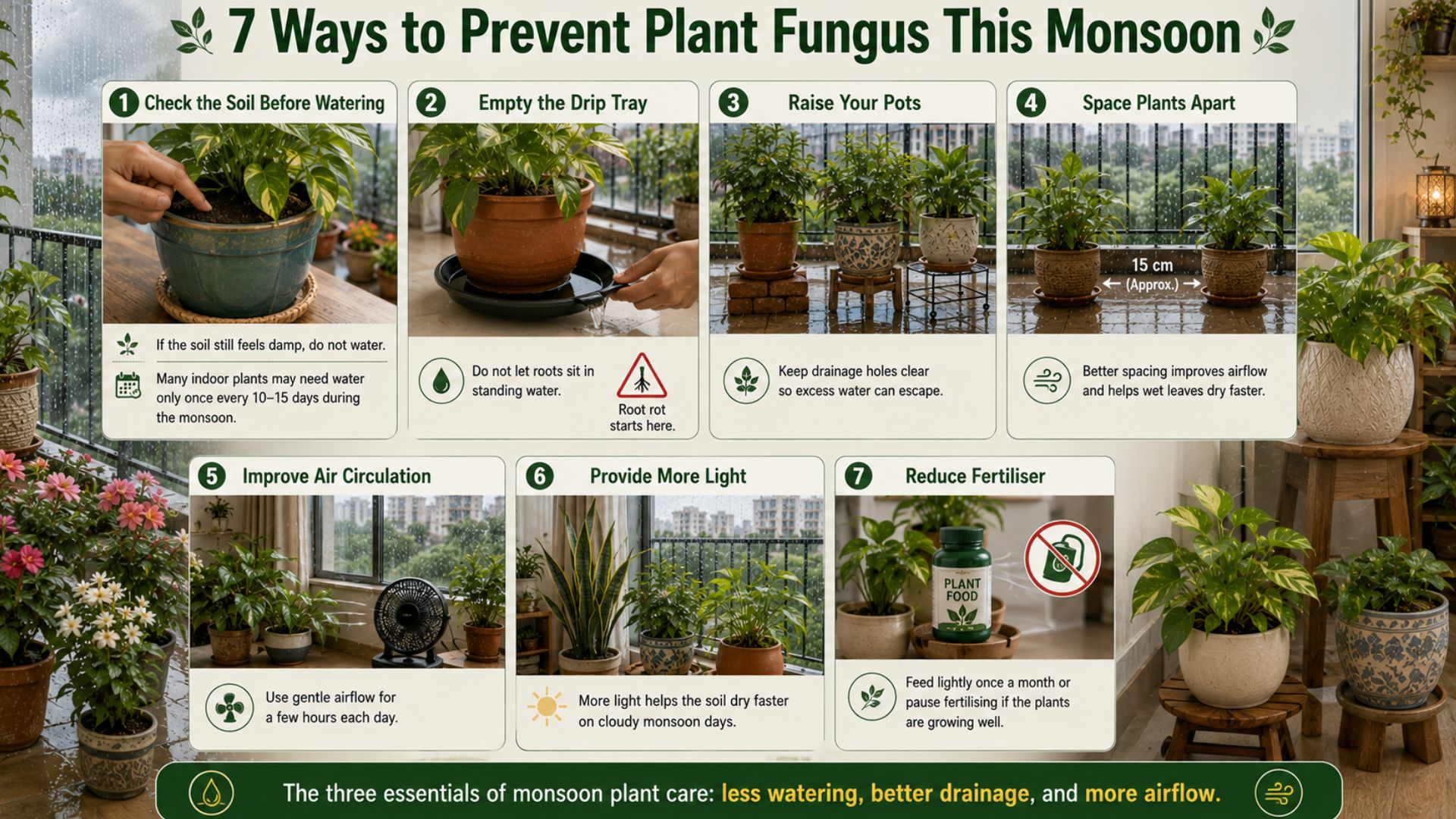
These simple habits help stop fungal infections before they start. Most of them take less than five minutes.
1. Check the Soil Before Watering
Push your finger about an inch into the soil. If it still feels damp, do not water the plant. During the monsoon, many indoor plants need water only once every 10 to 15 days.
2. Empty the Drip Tray
After watering or after rain, empty the tray under the pot. If water stays in the tray, the roots remain wet for too long. This can lead to root rot.
3. Raise Your Pots
Do not place pots directly on the balcony floor. This can block the drainage holes and trap water inside the pot. Place your pots on stands, bricks, or a plant rack so excess water can drain easily.
4. Keep Some Space Between Plants
Plants placed too close together trap moisture and reduce air circulation. Leave at least 15 centimetres of space between pots whenever possible. Better airflow helps the leaves dry faster and lowers the risk of fungal diseases.
5. Improve Air Circulation
If your plants are indoors, use a small fan on a low setting for a few hours each day. Good airflow helps keep leaves dry and reduces the chance of fungal growth. You can also open the windows whenever it is not raining.
6. Give Your Plants More Light
Cloudy monsoon days reduce the amount of sunlight your plants receive. As a result, the soil stays wet for longer. Move your plants closer to a bright window or a covered balcony where they can still receive plenty of indirect light.
7. Reduce Fertiliser During the Monsoon
Plants grow more slowly during humid and cloudy weather. Using too much fertiliser at this time can stress the roots and cause salt to build up in the soil. Feed your plants lightly once a month or skip fertilising for a month or two if they are growing well.
Is White Fungus Harmful to My Plant?
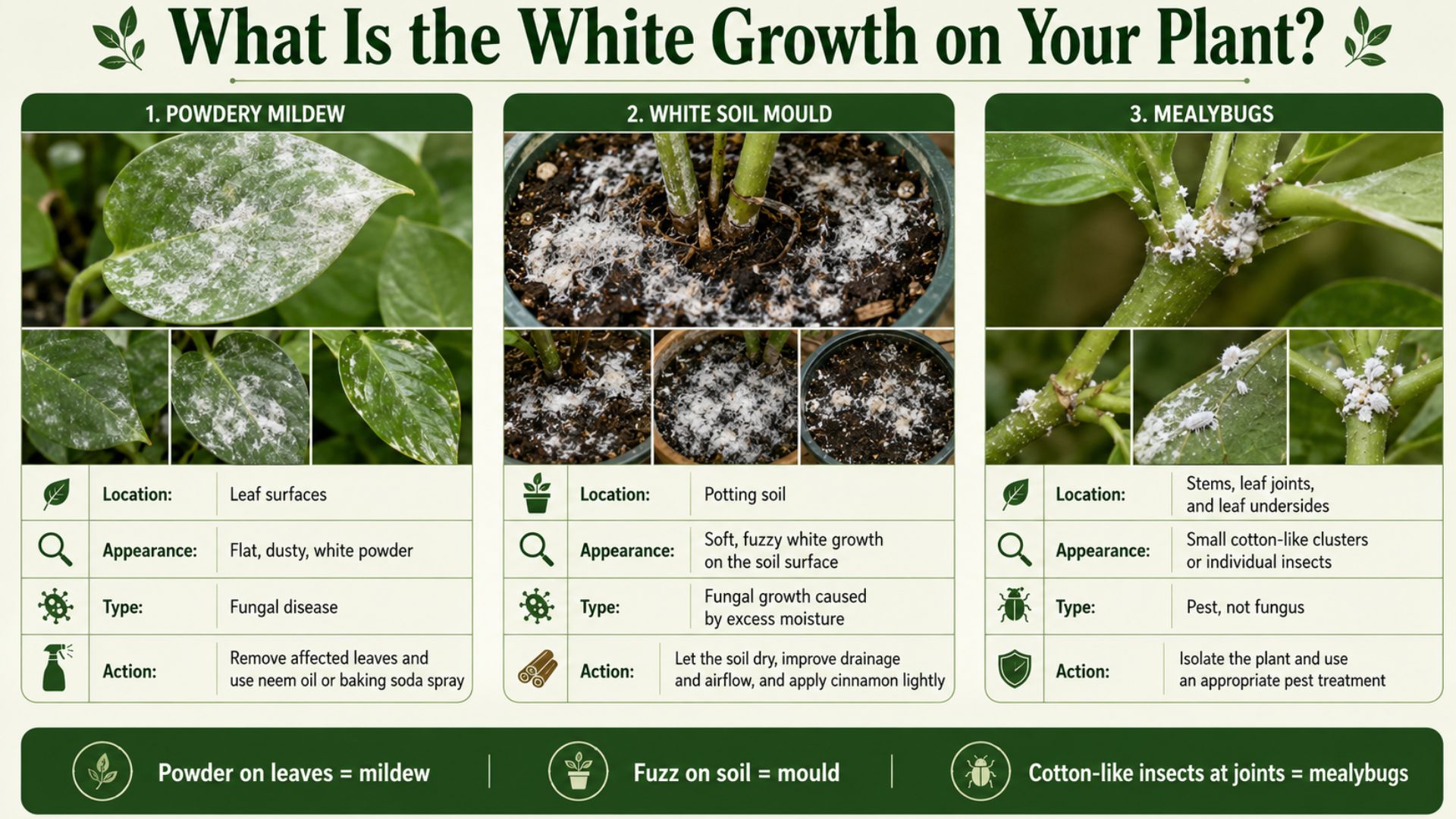
White growth on your plant is not always the same problem.
It could be powdery mildew on the leaves, white mould on the soil, or mealybugs on the stems and where the leaves join the stem. Powdery mildew and white mould are fungal problems. Mealybugs are insects and need a different treatment.
Powdery mildew usually does not kill a plant straight away.
However, if you ignore it, it can block sunlight, weaken the plant, and cause the leaves to turn yellow and fall off. Treating it early makes it much easier to control.
White mold on the soil is usually a sign that the soil is staying wet for too long. This often happens because of overwatering or poor drainage. Let the top layer of soil dry before watering again and improve air circulation around the plant.
If you want to learn more about white fungus on Money Plants and other indoor plants, read our guide on how to remove fungus from houseplants.
What Is the Best Natural Antifungal for Plants?
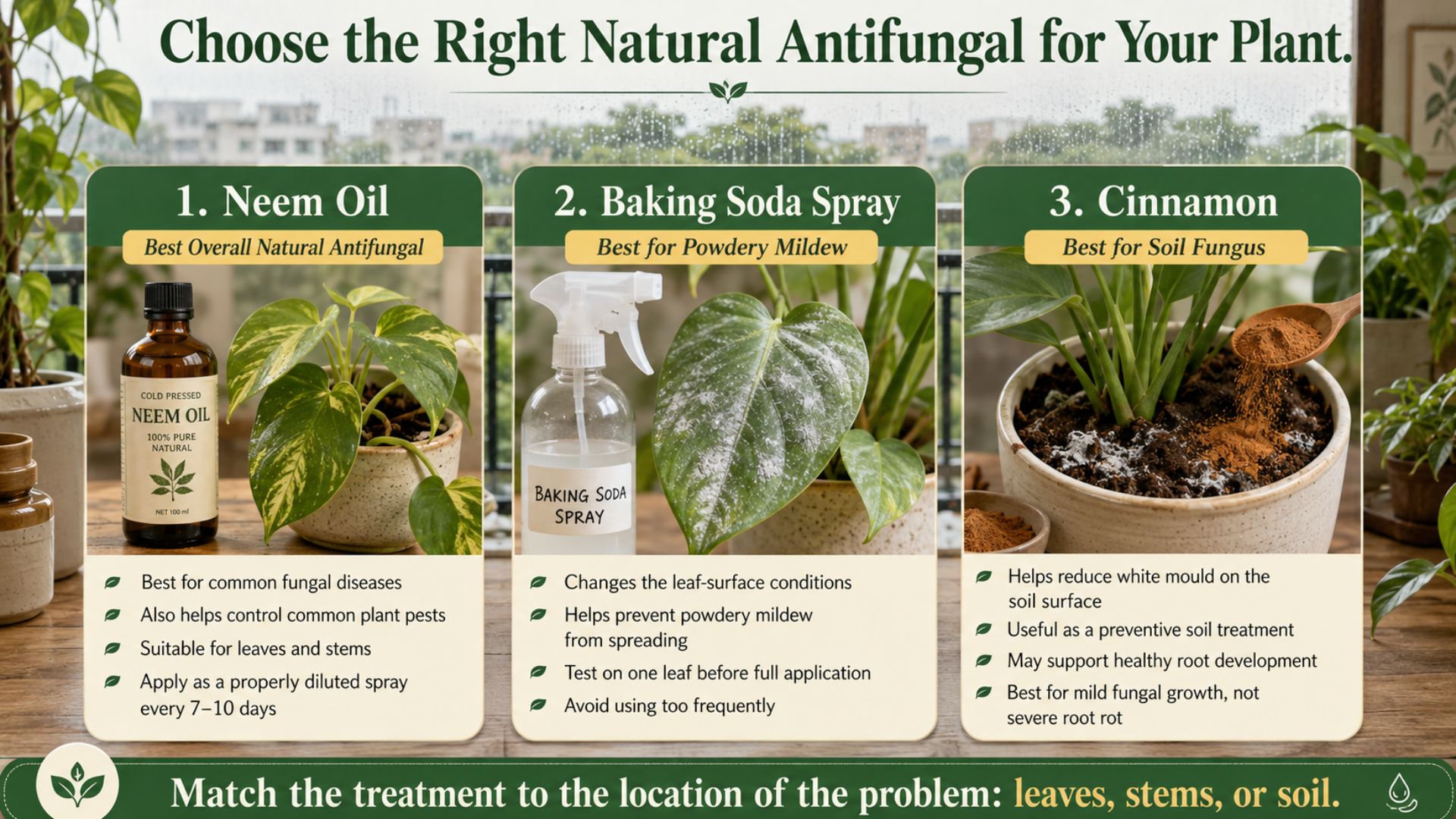
Neem oil is one of the best natural antifungal treatments for indoor plants.
It works against many common fungal diseases and also helps control pests. If your plant has powdery mildew, a baking soda spray can also be effective when used regularly as a preventive treatment. For fungal problems in the soil, cinnamon is a good natural option.
It helps reduce fungal growth and supports healthy roots when used over time.
If you'd like to learn about different fungal diseases and how to identify them, read our guide on fungal diseases in plants.
When Should I Repot or Discard a Plant?
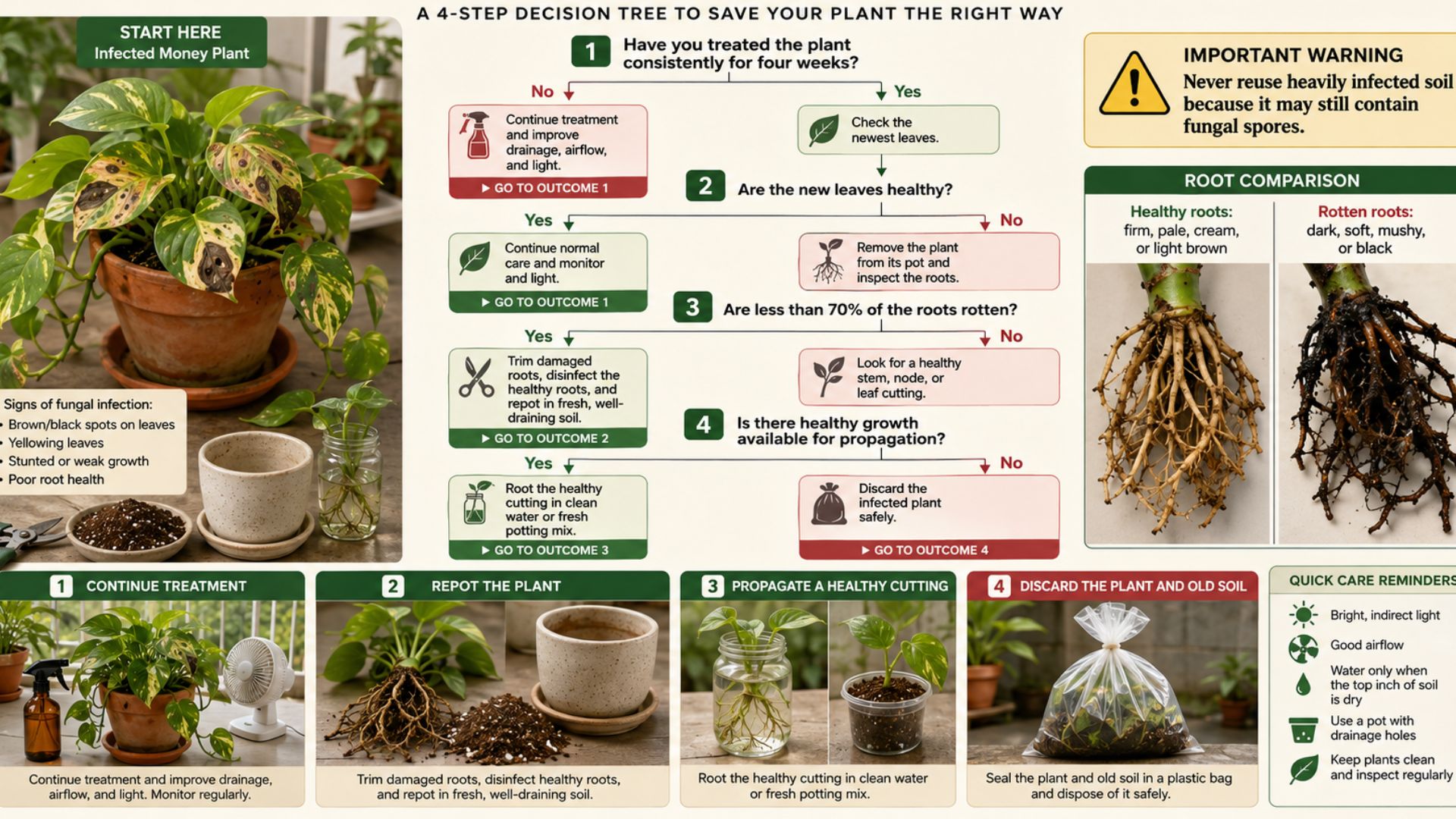
If you have treated your plant for four weeks and the new leaves still show signs of fungal infection, the disease may be too severe to recover from.
The same is true if more than 70% of the roots are rotten after removing the plant from the pot.
Before throwing the plant away, check if you can save a healthy stem or leaf node. You can grow a new plant by rooting it in water or fresh potting mix.
Once you have taken a healthy cutting, throw away the infected plant. Do not reuse the old soil because it may still contain fungal spores.
A Quick Note on Monsoon-Friendly Indoor Plants
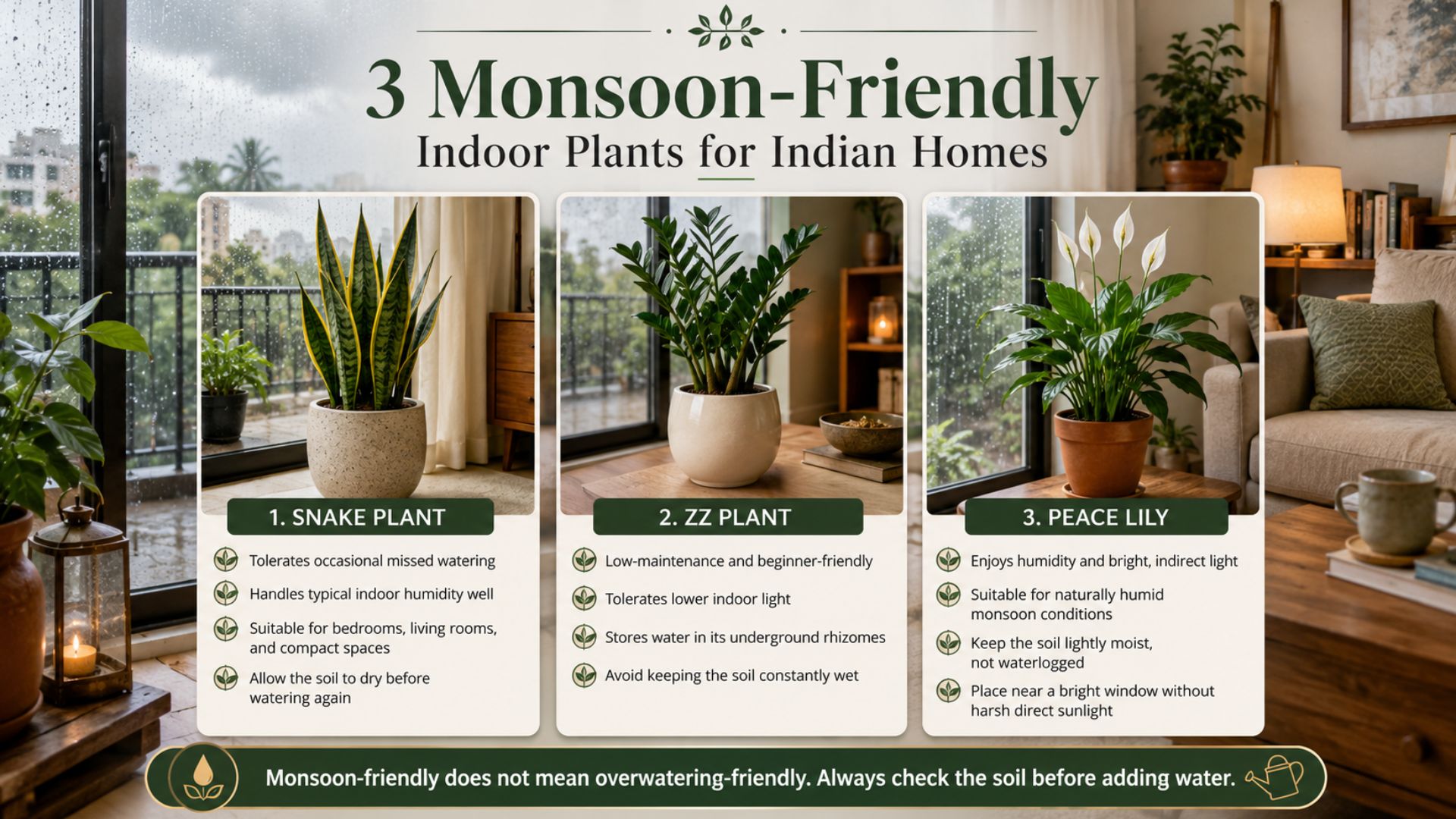
If you want to add new plants during the rainy season, choose varieties that handle humidity well. Snake Plants, ZZ Plants, and Peace Lilies are good choices because they grow well in Indian monsoon conditions and usually need less care than many other houseplants.
Urvann delivers healthy, nursery-grown plants to your doorstep the next day, making it easy to add new plants to your collection.
Frequently Asked Questions (FAQs)
1. How do I get rid of white fungus on plants at home?
Remove the affected leaves with clean scissors. Then spray the plant with a mixture of 1 tablespoon of neem oil, half a teaspoon of liquid soap, and 1 litre of water. Repeat every seven days until the fungus is gone.
Improve air circulation around the plant and let the soil dry before watering again. If you see white mould on the soil, sprinkle a thin layer of cinnamon powder on the surface.
2. Can I use baking soda on all houseplants?
Baking soda is safe for most indoor plants. However, some delicate plants with thin leaves may be sensitive to it. Spray one small leaf first and wait 24 hours before treating the entire plant.
3. How do I treat fungus on a Money Plant during the monsoon?
Money Plants often develop leaf spot or root rot during the rainy season. Make sure the pot drains well and do not water until the top layer of soil is dry. Spray diluted neem oil every 7 to 10 days. Remove leaves that are badly infected so the plant can produce healthy new growth.
4. Does cinnamon really work on plant fungus?
Yes. Cinnamon has natural antifungal properties. It works best as a preventive treatment rather than a cure for a severe infection. Sprinkle cinnamon powder on the soil or use cinnamon water once a month during the monsoon.
5. My plant soil smells musty during the monsoon. What does it mean?
A musty smell usually means the soil is staying too wet. It can also be a sign of root rot or mould growing in the pot.
Remove the plant from the pot and inspect the roots. Cut away any soft, brown roots. Let the healthy roots dry for a short time before repotting the plant in fresh, well-draining soil. You can also add a layer of coarse sand on top of the soil to help the surface dry faster.