


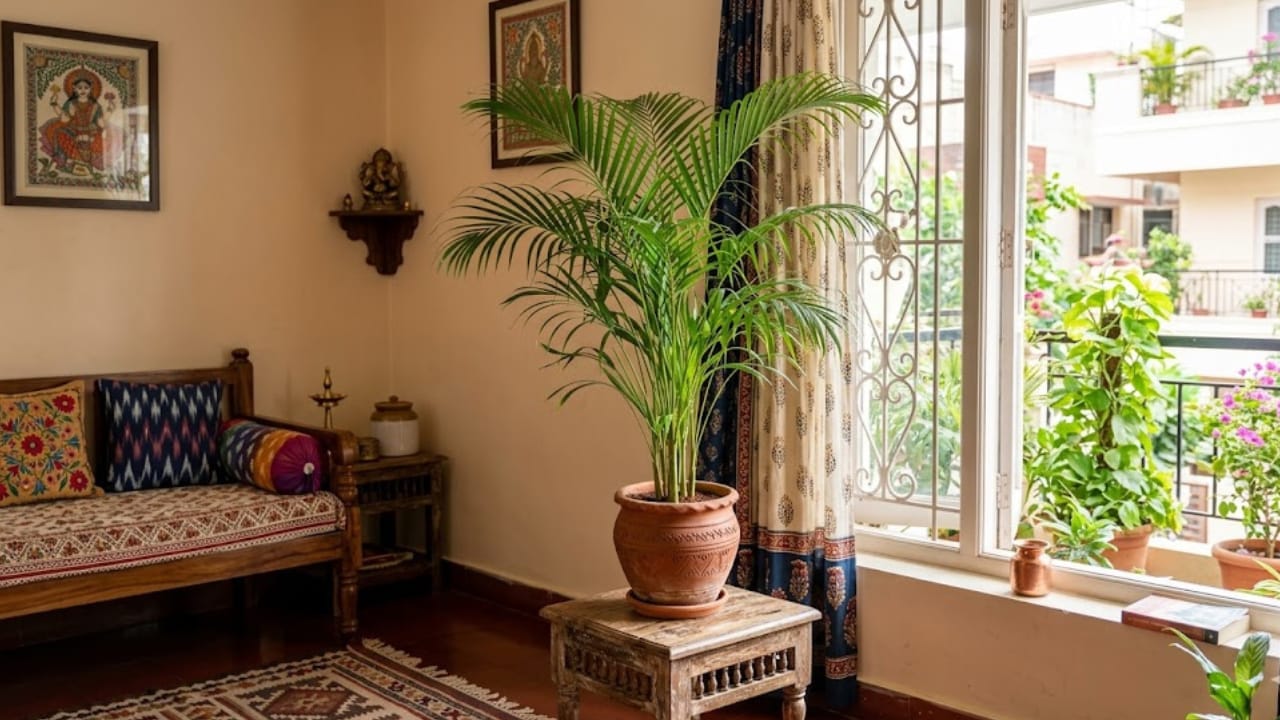
You brought home an Areca Palm, or you are about to. And somewhere in the back of your mind is a quiet worry.
Key Takeaways
- Light: Bright, indirect sunlight
- Water: Only when the top 1 inch of soil is dry
- Avoid:
- Overwatering
- Dry AC air
- Direct harsh sun
- Best Spot: Near a window with soft light and airflow
- Common Issues:
- Yellow leaves → Overwatering
- Brown tips → Dry air
- Beginner Tip: Start with a 6-inch pot or go ~3 ft for instant décor
- Simple Rule: Bright light + less water + good drainage = healthy plant
Will I kill this one, too?
-
Maybe the leaves are already turning yellow.
-
Maybe you are not sure how often to water it.
-
Maybe you just want one plant that actually survives your flat without turning into a weekly problem.
This is not a plant encyclopedia. This is a complete guide about the Areca Palm so that you can grow it carefully.
What Exactly Is an Areca Palm?
The Areca Palm, scientifically called Dypsis lutescens (formerly Chrysalidocarpus lutescens), is native to Madagascar and belongs to the Arecaceae family. In India, it carries several regional names such as Sona Khajur or Guldasta Palm in Hindi, Adike Mara in Kannada, and Kaitha Maram in Malayalam. Most nurseries simply call it "areca" or "areca plant."
You will also hear it called the butterfly palm or golden cane palm, names that describe the way its feathery fronds arch outward in clusters.
The Three Things That Actually Kill Areca Palm in Indian Homes
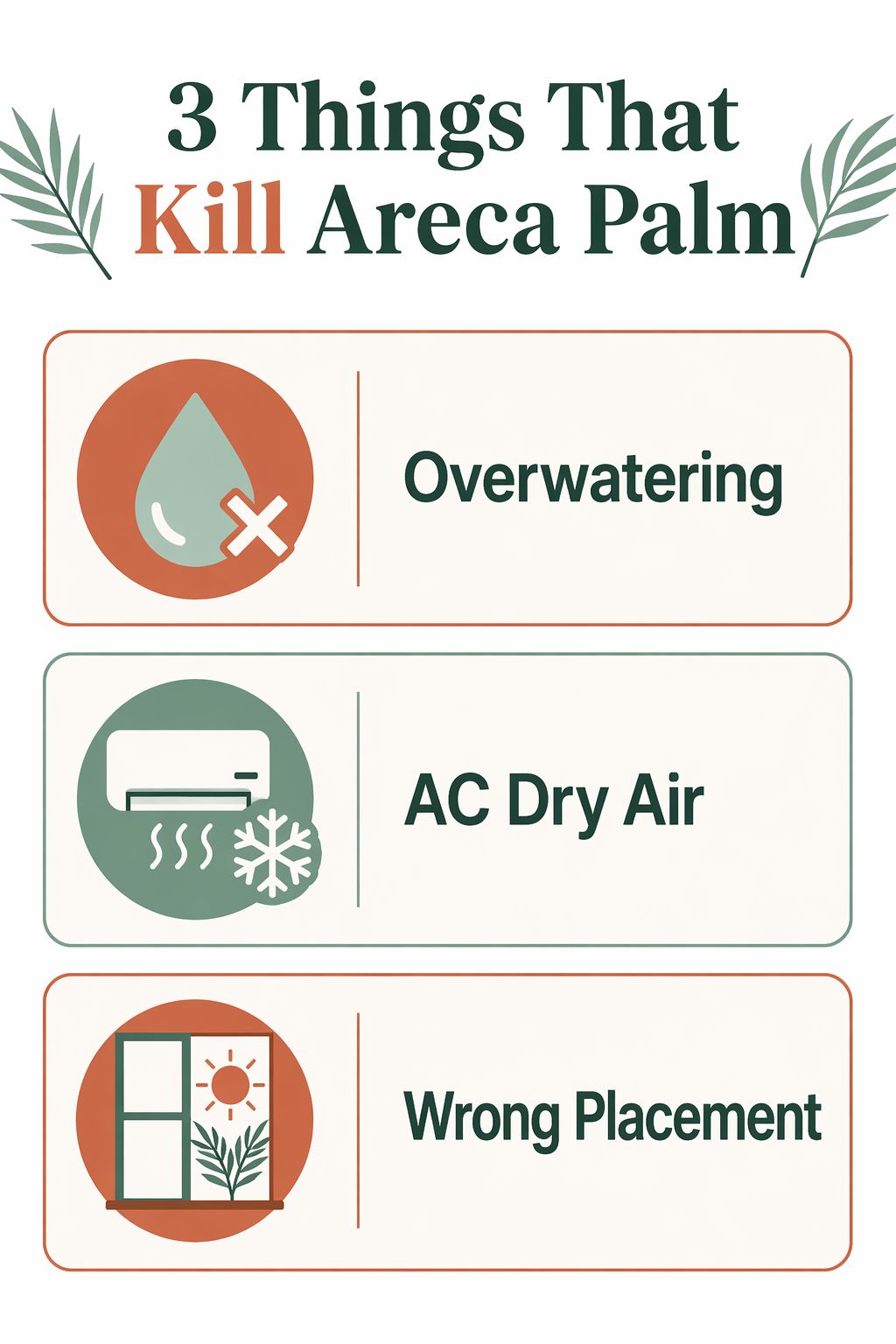
Before anything else, know this. Areca Palm is not difficult. But it has three enemies that quietly finish it off in most Indian homes:
- Overwatering: This is the number one reason. It does not look like a problem until the roots are already gone.
- AC air: The cool air is not the issue. The dryness it creates is. Areca Palm is tropical. It wants humidity.
- Wrong placement: Too dark, and it stops growing. Too much direct sun and the leaves burn.
Get these three things right, and the plant will be fine. The rest is just details.
Where to Keep It
-
Near a window that gets light but not harsh afternoon sun directly on the leaves.
-
East-facing windows are ideal. West-facing windows with a thin curtain work well, too. A bright living room corner is fine. A shaded balcony is great.
-
Avoid dark corners, direct sun after noon, directly beside an AC vent, and closed spaces with no airflow.
Quick Test: If you can read a book in that spot during the day without turning on a light, the plant will be happy there.
Watering: Stop Using a Schedule
The single most useful thing: Always check the soil before you water.
Push your finger about an inch into the soil. Dry? Water it. Still damp? Leave it one more day. That is it. That one habit replaces every watering chart you have ever seen.
The mistake most people make is watering on a fixed day. "It is Sunday, so I water." The soil does not know it is Sunday.
Season-by-Season Care Cheat Sheet
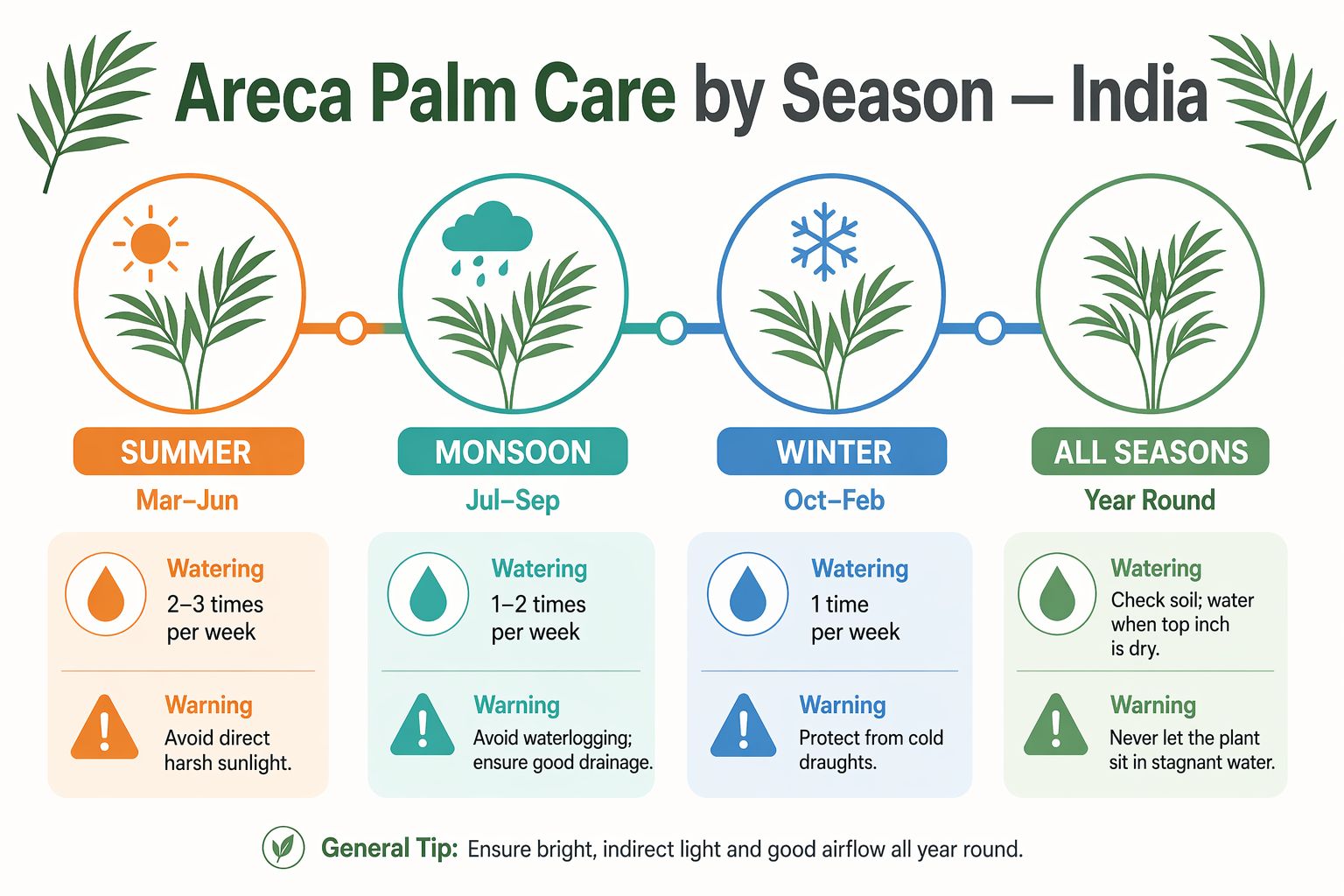
Season-by-Season Care Cheat Sheet
| Season | Watering | What to Watch Out For |
|---|---|---|
| Summer (Mar to Jun) | Every 2 to 3 days | Soil dries fast. Do not let it go completely dry. |
| Monsoon (Jul to Sep) | Once every 5 to 7 days | Overwatering is the biggest risk. Soil stays wet longer. |
| Winter (Oct to Feb) | Once every 7 to 10 days | Cold, wet soil can damage roots quickly. |
Monsoon is the most dangerous season for this plant. The humidity is high, the soil holds water longer, and it is easy to keep watering out of habit. Most yellow leaf problems occur because someone kept their summer watering schedule into July.
If Your Plant is in an AC Room
This deserves a straight answer because most urban Indian homes run AC for at least 6 months a year.
The problem is not the temperature. It is the dry air. Areca Palm is tropical, and it wants moisture around it. When AC strips that out, the leaf tips start browning, the leaves lose their shine, and eventually the plant just looks tired.
What actually helps:
-
Keep it away from the direct vent airflow
-
Mist the leaves every 2 to 3 days
-
Place a small tray with pebbles and water near the pot. As it evaporates, it adds moisture right around the plant
-
If you have other plants, group them together. Plants near each other create a slightly more humid space
It will not thrive in a sealed AC room with zero natural light. But with these small changes, it lives well.
Soil, Pot, and One Rule That Matters
The pot must have drainage holes. Full stop.
Most people with perfect care routines lose plants because they use a decorative pot with no drainage. The water had nowhere to go, and the roots rotted from the bottom.
Use garden soil mixed with cocopeat and a little sand or perlite. The goal is soil that stays slightly moist but never waterlogged.
On pot size: do not go too big. A pot much larger than the root ball holds more water than the roots can use. Snug fit with a little room to grow is right.
How Fast Will It Actually Grow?
Honestly, not very fast.
About 15 to 25 cm per year indoors under good conditions. A 1-foot plant will take 2 to 3 years to reach 3 to 4 feet. That is not discouraging information; it is useful.
It means if you want a corner to look good now, buy a bigger plant. If you enjoy watching something grow and do not mind waiting, start small.
Yellow Leaves and Brown Tips: What Is Actually Going On
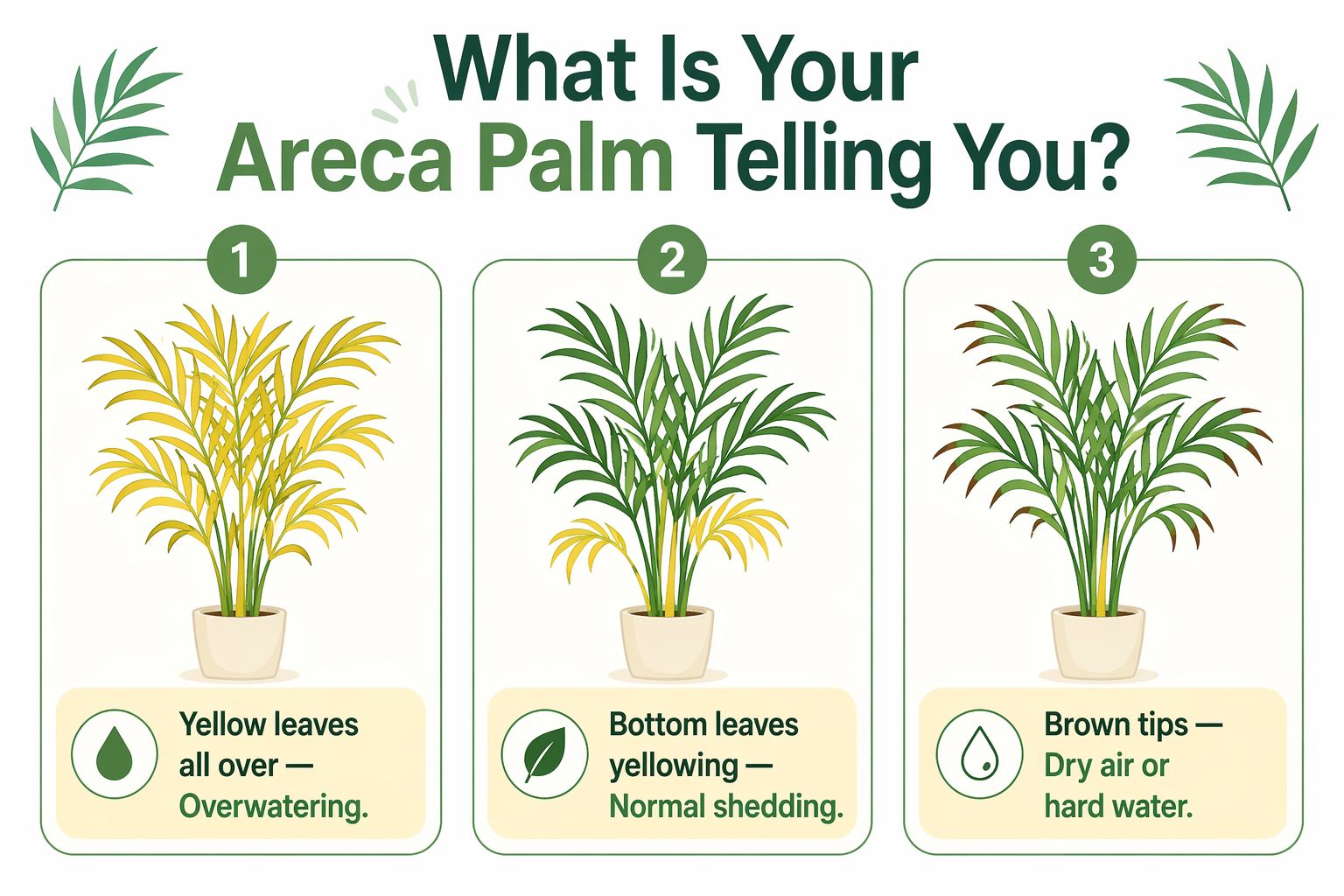
- Yellow leaves all over the plant at once: Almost always overwatering or monsoon overwatering. Check if the soil has been wet for too long. Let it dry out completely before watering again.
- A few yellow leaves at the bottom: Normal. The plant sheds old growth. Do not worry about one or two.
- Brown tips: Dry air, usually from the AC. Sometimes, hard tap water. Use filtered or RO water if possible and mist occasionally. You can trim the tips with clean scissors, but they will not turn green again. New leaves will come in fine.
Can You Grow It From Cuttings?
No. This is a very common misunderstanding.
Areca Palm does not propagate from stem cuttings the way most houseplants do. Seeds and division are possible, but neither is practical for a home buyer. Buy a nursery plant.
That is the only realistic option for most people, and it is genuinely the best one.
Areca Palm and Vastu
In Vastu, Areca Palm is considered good for the home and is usually placed in the east or north-east direction near the entrance or in the living room.
Here is the honest part: those directions also happen to get the best morning light, which is exactly what the plant needs. So the Vastu placement and the ideal plant placement are the same thing.
Follow whichever reason matters more to you.
Which Urvann Areca Palm Should You Buy?
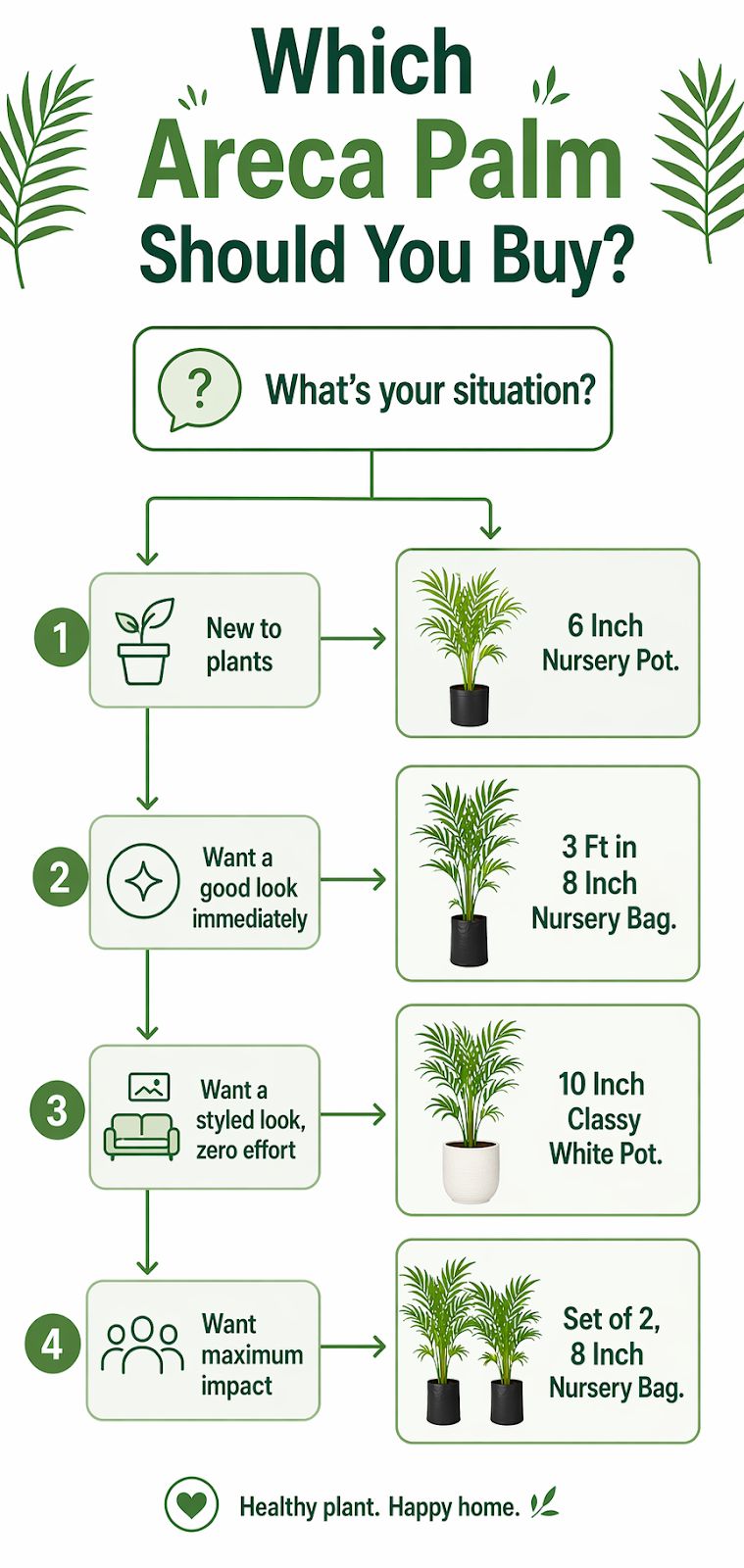
Here is the direct answer based on your situation.
| Your Situation | What to Buy | Why It Works |
|---|---|---|
| You are new to plants or have killed plants before | Nursery Pot Areca Palm in a 6 Inch | Small, forgiving, easy to manage. Low risk while you figure out the right spot and watering rhythm in your home |
| You want it to look good from day one, but you are not decorating a whole room | Areca Palm (~3 Ft) in an 8 Inch Nursery Bag | This is the most bought size for a reason. Big enough to fill a corner, easy enough to handle |
| You want zero effort on the pot and a clean finished look | Areca Palm in a 10 Inch Classy White Plastic Pot or the Areca Palm (~3 Ft) in a 12 Inch White Nursery Pot | Comes pot-ready. Put it down and it looks styled immediately |
| You are decorating a living room or balcony and want a lush, full look | Set of 2 Areca Palm Bushy (~3–4 Ft) in 6 Inch Nursery Bag | Two plants together look dramatically better than one. This is the option that makes a space look intentional |
| You want maximum impact, and you are confident with plants | Set of 2 Areca Palm (~3–4 Ft) in 8 Inch Nursery Bag | The most volume, the most presence. If you want a corner to look finished without waiting months, this is it |
If you’re still unsure, just go with the 3 ft in an 8-inch nursery bag. It works in most Indian homes and is the easiest to manage.
The Short Version: If You Just Want to Know What to Do Today
Here is the checklist for taking care of the Areca Plant in Indian homes:
- Find the brightest spot in your home that does not get direct afternoon sun
- Put the plant there
- Do not water until the top inch of soil feels dry
- If it is in an AC room, mist the leaves every 2 days
- Feed it once a month from March to September
- Trim yellow or brown leaves with clean scissors when you see them
- Do nothing else for now
Frequently Asked Questions (FAQs)
1. How often should I water the Areca Palm in India?
Check the soil. Not the calendar. The top inch is dry, which means water now. Still damp means wait.
2. Why are the leaves turning yellow?
Most likely overwatering. Let the soil dry out completely and check your drainage.
3. Can it survive in an AC room?
Yes. Keep it away from the direct vent, mist regularly, and use a pebble tray for humidity.
4. Can I grow it from a cutting?
No. Buy a nursery plant. Small plant or big plant? If you want décor impact now, go for the 3 ft or the set of 2. If you want to start easy, go small.
5. Which one from Urvann is best for a beginner?
6 Inch Nursery Pot to start. 8 Inch Nursery bag, if you want it to already look good.
6. Why are the leaves on my areca palm curling down?
Curly leaves on an Areca Palm can indicate a few things, including overwatering, underwatering, or environmental stress. To treat it, make sure the soil is well-draining to prevent root rot, adjust watering to match the plant's needs, and provide adequate humidity and bright, indirect light.