


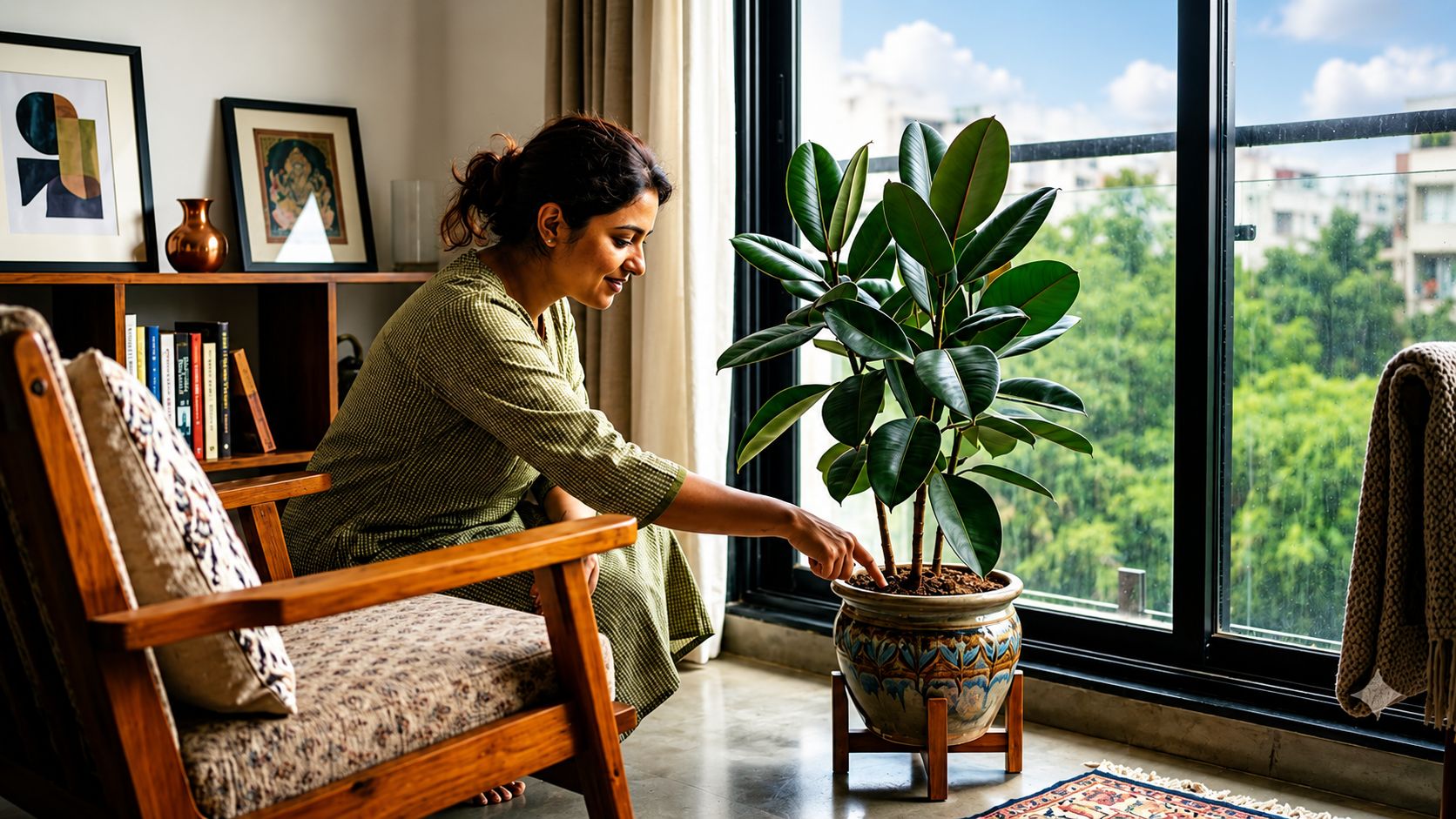
From watering adjustments to pest control, this detailed guide covers everything that your rubber plant needs to survive and thrive through India's monsoon season.
Key Takeaways
- Water only when the top 2–3 inches of soil are dry (about 10–14 days in the monsoon).
- Ensure drainage is clear and the pot never holds water.
- Keep the plant indoors or under cover during heavy rain.
- Place in bright indirect light near an east- or north-facing window.
- Most problems come from overwatering, not lack of nutrients or light.
- Check for pests weekly and treat early (mealybugs, spider mites, fungus gnats).
The monsoon is the most misunderstood season for rubber plant parents in India.
Everyone worries about summer sun or winter cold, but it is July to September that quietly kills more Ficus elastica plants in Indian homes than any other time of year. Overwatering in already humid conditions, waterlogged pots on balconies during downpours, and fungal infections spreading across glossy leaves are among the most common monsoon problems.
That is exactly why this guide exists.
It is written for Indian homes and Indian weather. Whether your rubber plant sits in a Delhi living room, a covered balcony in Bengaluru, or a bright apartment corner in Mumbai, this guide will help you keep it thriving through the rains.
What Is the Rubber Plant?
The rubber plant, botanically known as Ficus elastica, is one of the most popular indoor plants in India today and is known for several indoor benefits, including air-purifying qualities and decorative value.
In India, it is commonly called Rubber Plant (रबर प्लांट) in Hindi and often referred to as “Rubber Fig” or simply “Rubber Tree” in urban households.
Its broad, thick, glossy leaves come in deep green, near-black burgundy, and variegated cream-and-pink shades. It grows upright with a strong central stem and can eventually reach ceiling height indoors under the right conditions.
In nature, the rubber plant is native to Northeast India and Southeast Asia, where it grows under the filtered shade of taller trees. It is used to humidity, but not to heavy, direct rain or waterlogged soil.
As a plant parent during the monsoon, your goal is to recreate that same environment indoors that is humid, bright, and well-drained, but never soggy.
How the Monsoon Affects Rubber Plants in India
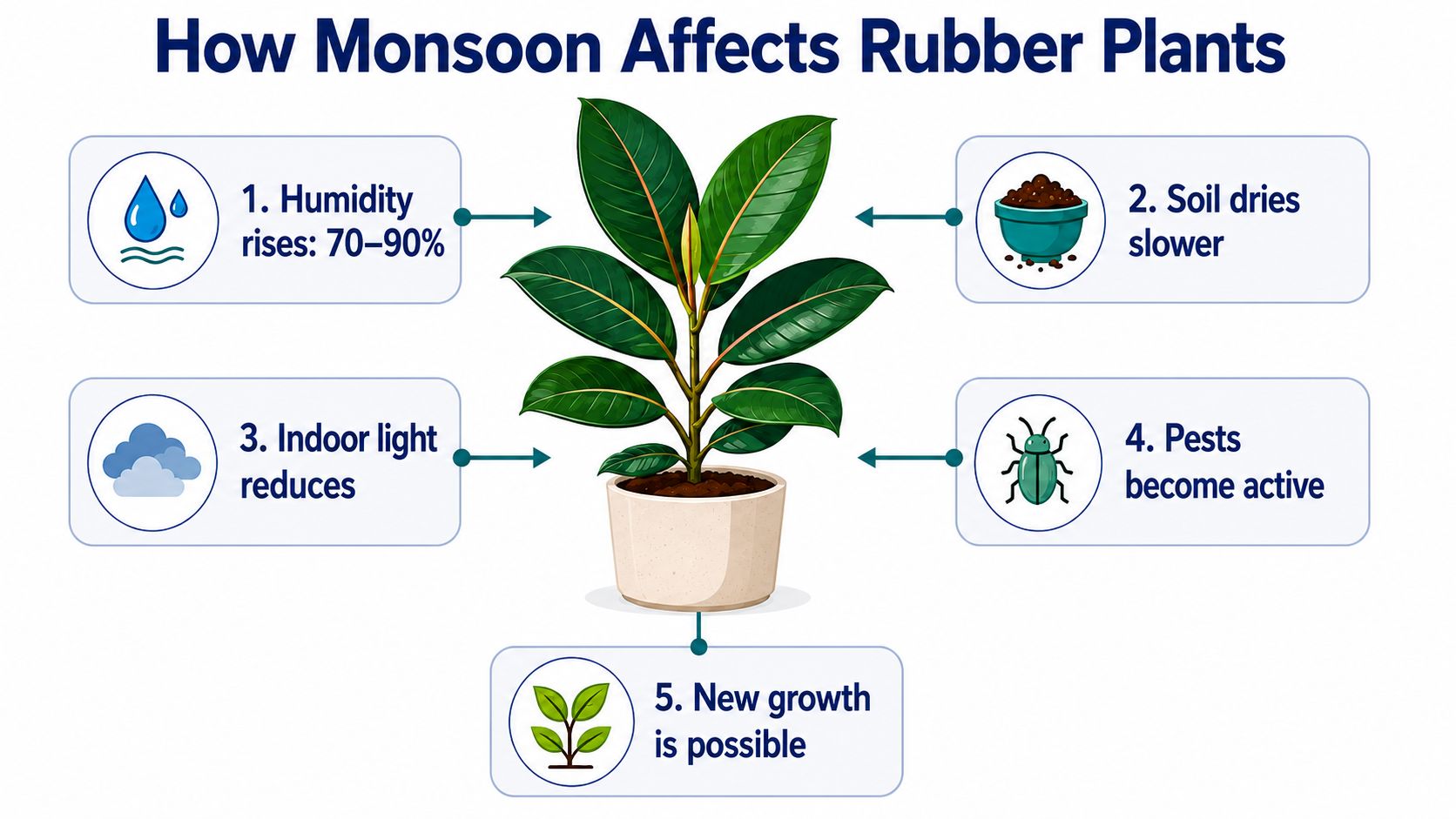
1. Humidity Rises Sharply
Across most Indian cities, relative humidity rises from around 40–50% in summer to 70–90% during peak monsoon. Rubber plants do well in moderate humidity, so they generally enjoy this seasonal increase. However, when high humidity is combined with consistently wet soil, it can quickly lead to root rot and fungal issues.
2. Soil Dries Much More Slowly
Soil dries much more slowly during humid monsoon weeks. This means the same watering schedule that worked in May can become too frequent by August.
3. Light Decreases
Overcast monsoon skies reduce natural light indoors, especially in apartments. This slows the plant’s growth and also lowers its water needs.
4. Pests Become More Active
Warm, humid monsoon weather creates ideal conditions for pests like mealybugs, fungus gnats, and spider mites. This is the season to check your rubber plant more regularly.
5. Monsoon Can Encourage New Growth
Despite its risks, the monsoon is a natural growth season for tropical plants. With the right care, your rubber plant can produce strong new growth from July to September.
Watering: The Most Important Adjustment
This is where most rubber plant parents go wrong during the monsoon, and it is the issue that causes the most damage.
Reduce Watering Frequency
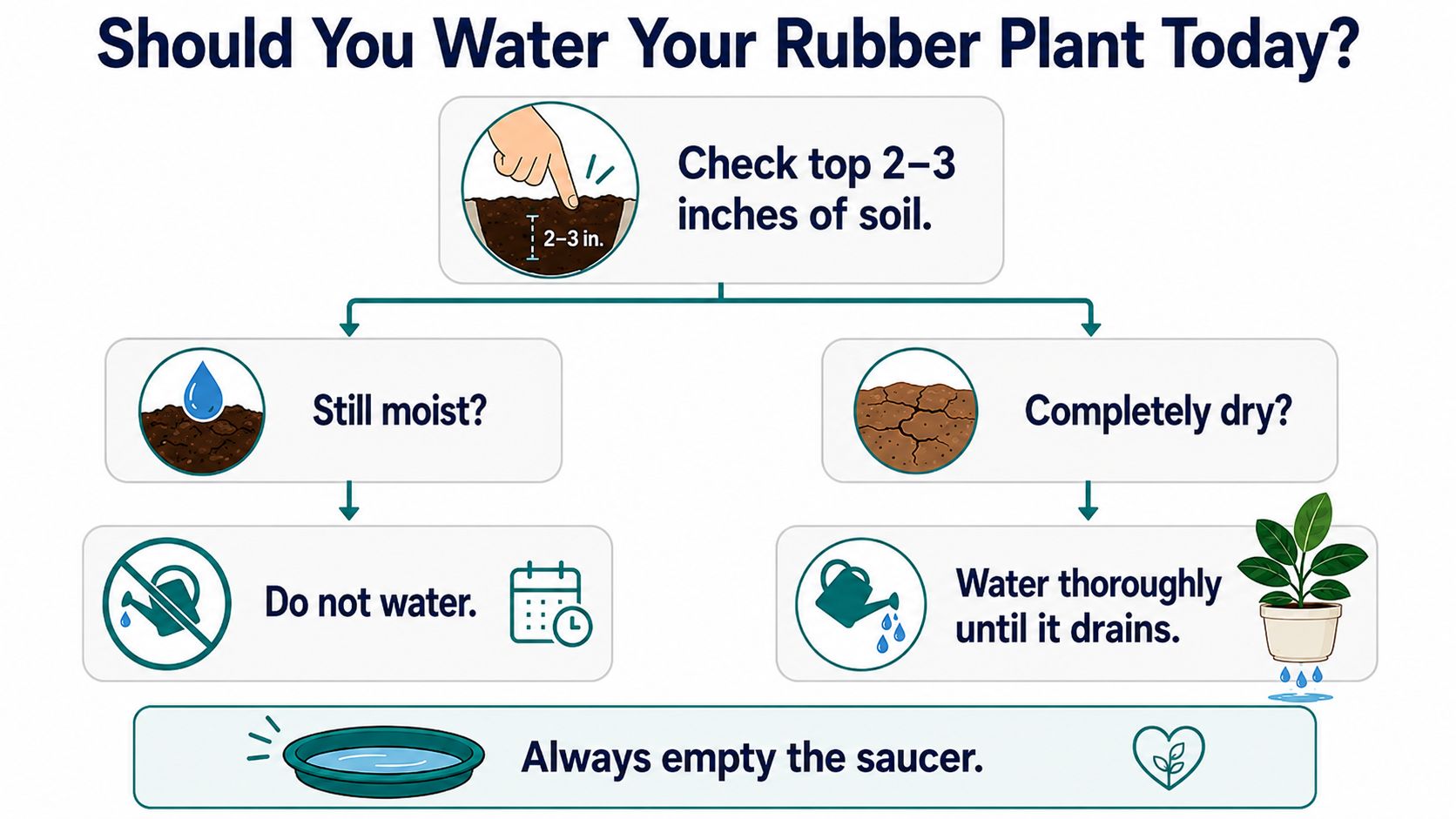
Cut your watering frequency significantly. If you were watering once every 5 to 7 days in summer, shift to once every 10 to 14 days during peak monsoon months. Do not follow a fixed schedule. Always check the soil first.
How to Check Soil Moisture
Push your finger about 2 inches into the soil. If it feels even slightly moist, do not water. Only water when the top 2 to 3 inches are completely dry. You can also use a wooden chopstick or skewer. If the soil sticks to it when you pull it out, wait before watering.
Water Thoroughly When Needed
When you water, soak the soil thoroughly until water drains from the bottom of the pot. Then empty the saucer completely. Never let your rubber plant sit in standing water.
Protect Outdoor Plants from Heavy Rain
If your plant is on an open balcony during the rainy season, move it indoors or to a covered area. Continuous heavy rain can waterlog the soil and leave the plant unable to recover between downpours.
Signs of Overwatering
Watch for these common warning signs:
- Leaves turning yellow from the bottom up
- A foul or sour smell coming from the soil
- Mushy leaves that fall off when touched
- A plant that appears limp despite wet soil
Signs of Underwatering
Look for these symptoms:
- Dull, slightly droopy leaves
- Dry and crumbly soil
- Browning at the leaf tips
Drainage (Your Single Most Important Setup Check)
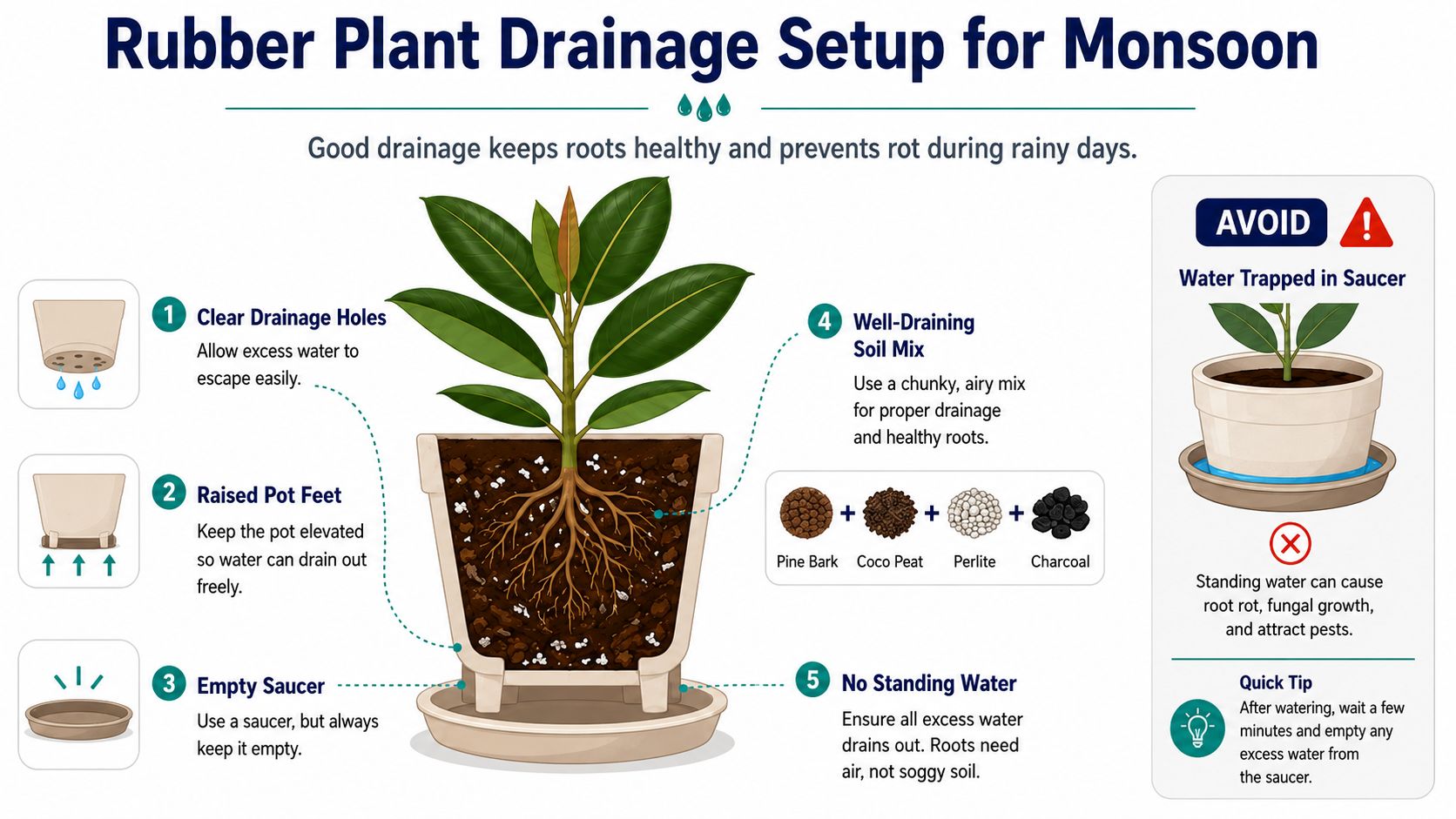
Before the monsoon begins, inspect every drainage hole in your rubber plant’s pot. This is non-negotiable.
If drainage holes are blocked, partially closed, or absent, monsoon humidity can keep the soil too wet even if you are barely watering. Terracotta pots are a good choice because they are porous and allow excess moisture to escape. If you use plastic or ceramic pots, make sure the drainage holes are clear.
Elevate your pot slightly if it sits on a flat surface. Use pebbles, pot feet, or a raised tray so excess water can drain freely instead of getting trapped.
If you plan to repot your rubber plant, do it before the monsoon begins, not during.
Light (Managing Reduced Indoor Light)
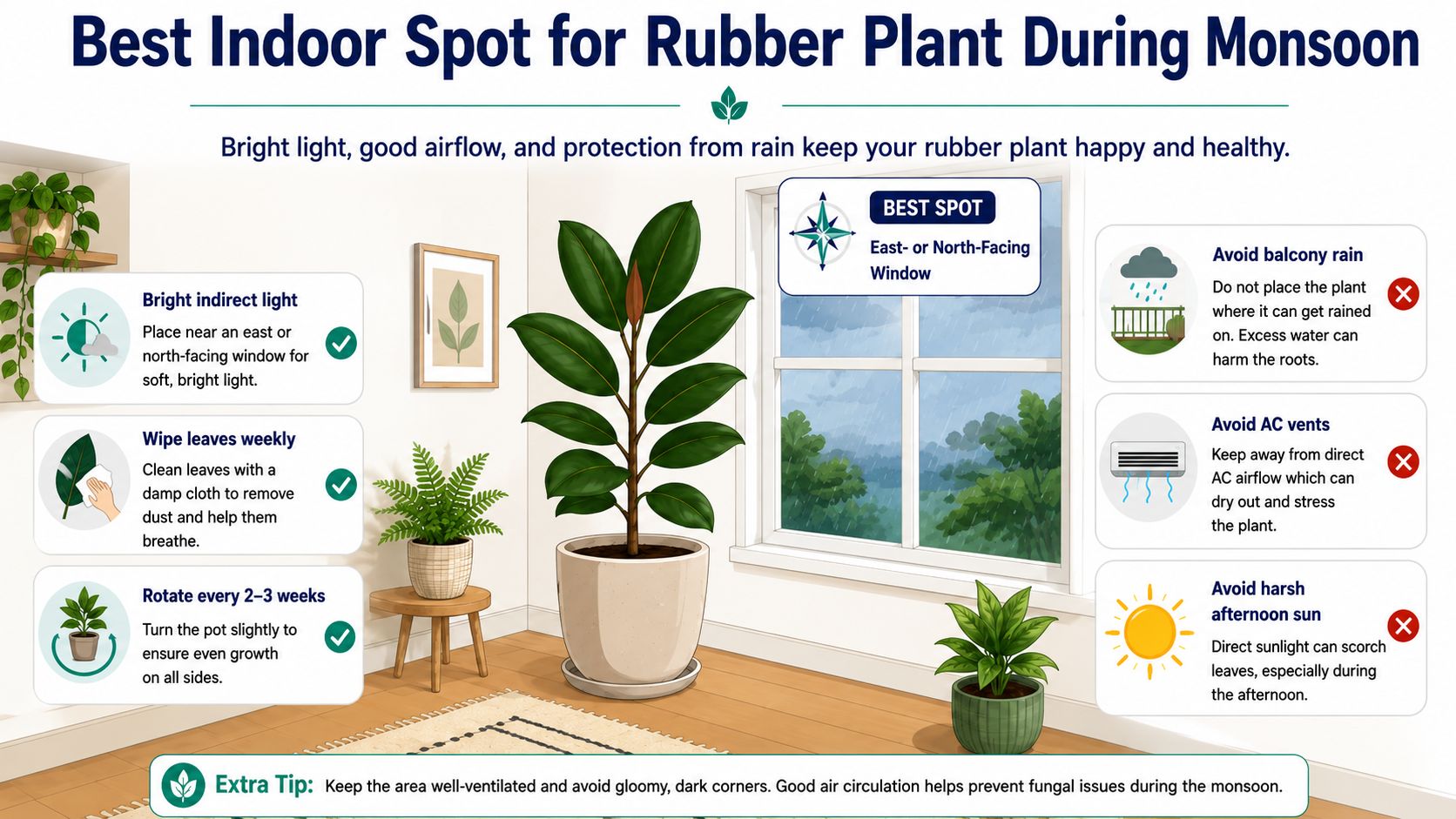
Overcast monsoon skies reduce the bright indirect light that rubber plants need. Here is how to manage it without stressing the plant.
Move your plant closer to an east- or north-facing window so it gets maximum available natural light, but avoid harsh direct afternoon sun.
Wipe the leaves once a week with a clean, damp cloth. This helps the plant absorb more light and also reduces the risk of fungal buildup in humid weather.
Do not switch to direct sunlight on occasional bright days. After low-light conditions, strong afternoon sun can scorch the leaves.
Rotate the pot every two to three weeks so all sides of the plant receive even light and growth stays balanced.
Fertilising During Monsoon (How Much and How Often)
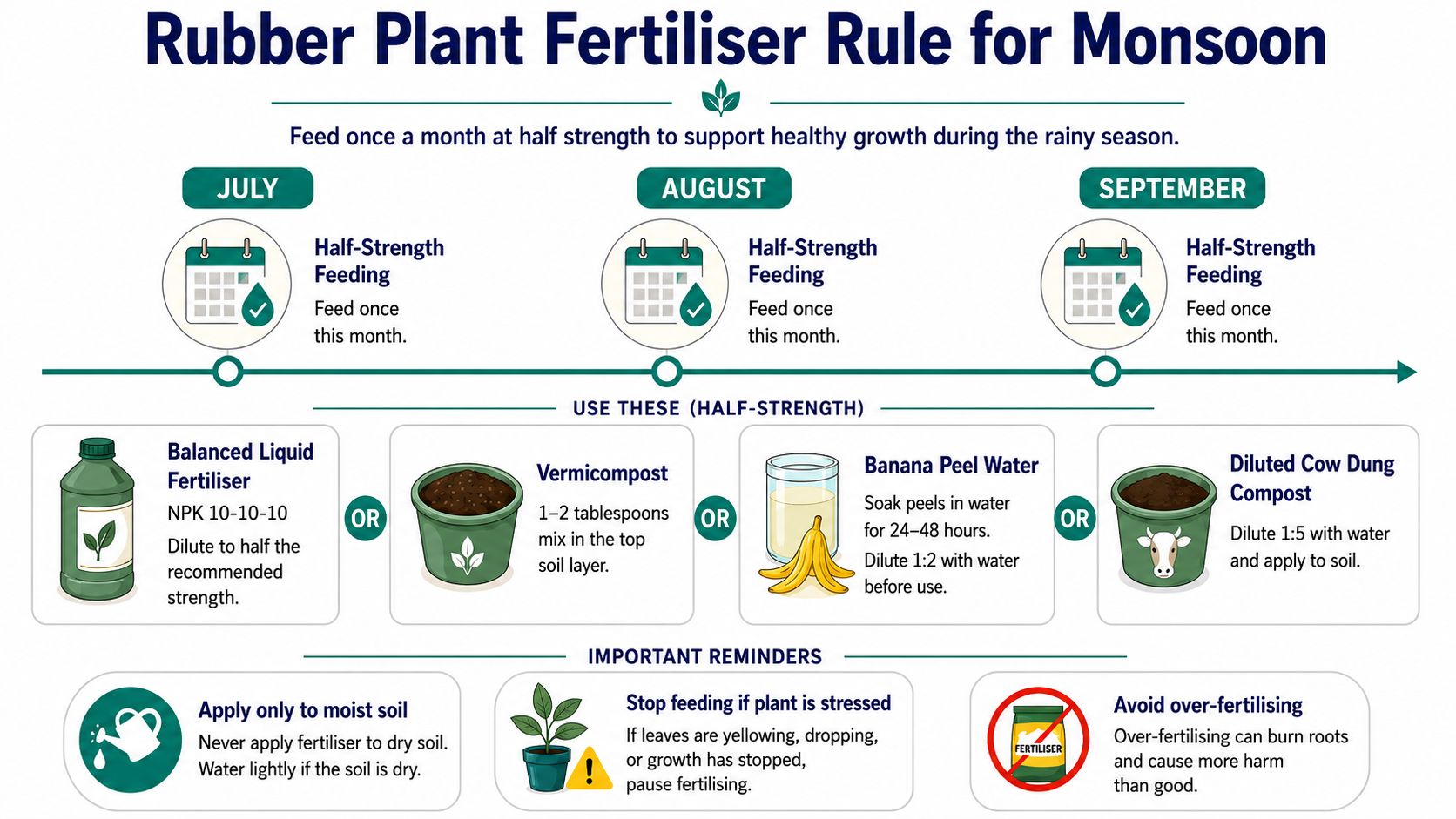
The monsoon is an active growth phase for tropical plants, including rubber plants, but reduced light means their nutrient needs are lower than in summer.
Fertilise at half strength once a month from July to September. Use a balanced liquid fertiliser (NPK 10-10-10 or 19-19-19), diluted to half dose. Always apply to moist soil, never dry soil, to avoid root burn.
Here are the organic alternatives you can consider:
- Add a small handful of vermicompost around the base and water it in
- Soak banana peels in water for 48 hours and use as a mild liquid feed
- Use diluted cow dung compost
Stop fertilising if the plant shows stress, such as yellowing leaves or no new growth. Avoid feeding a stressed plant.
Do not over-fertilise. Brown leaf tips can indicate salt build-up. If this happens, flush the soil with clean water until it drains clear.
Pest Prevention and Leaf Care
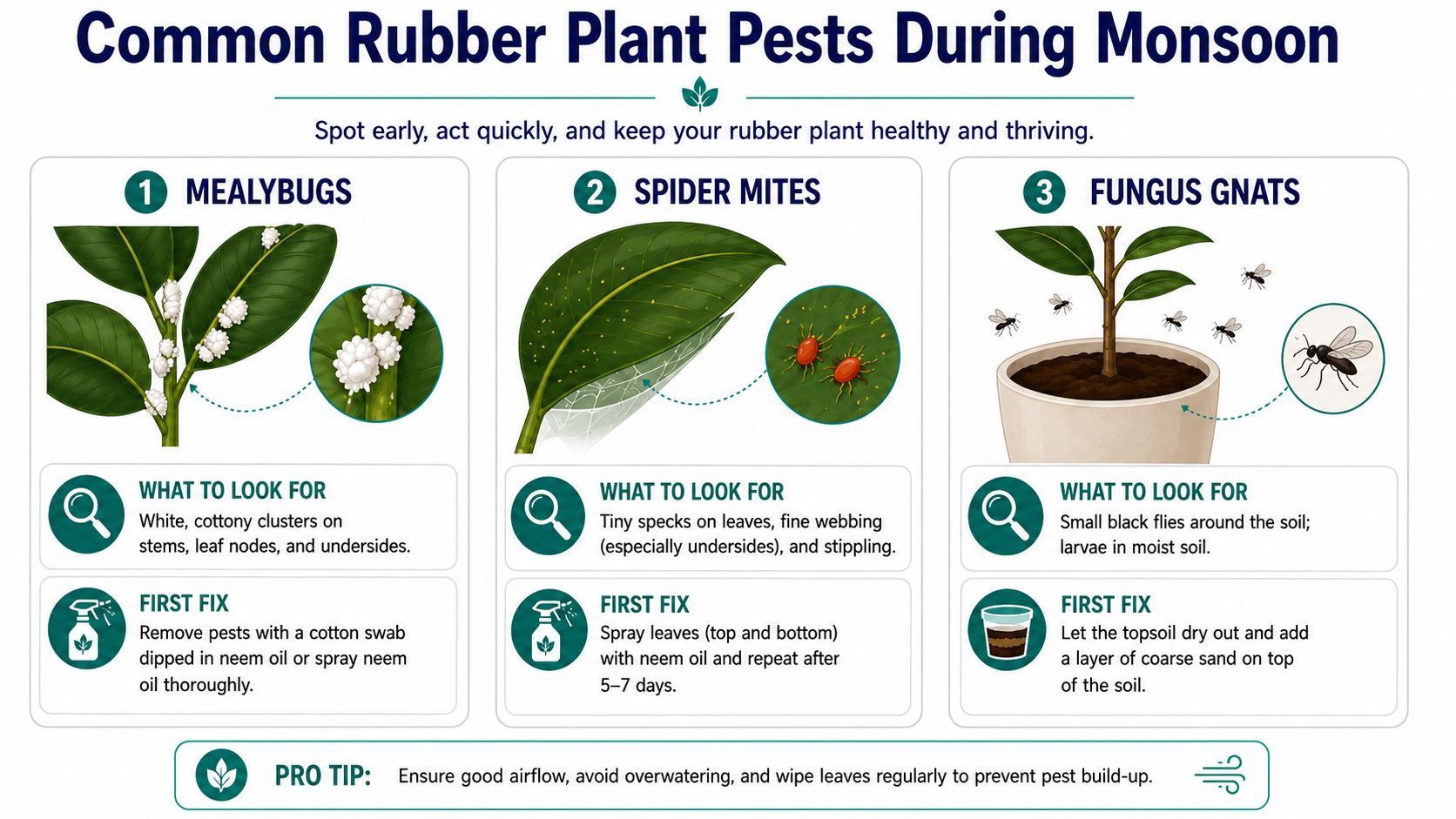
Warm, humid monsoon air creates ideal conditions for common houseplant pests. Check your rubber plant at least once a week during this season.
What To Look For
- Mealybugs: Small, cotton-like white clusters between stems and leaves. Remove them with a cotton swab dipped in neem oil or diluted isopropyl alcohol. You can also spray the plant with diluted neem oil every two weeks as a preventive step.
- Spider mites: Tiny specks with fine webbing on the underside of leaves. Spray leaves with water to dislodge them, then treat with neem oil.
- Fungus gnats: Small flies around the soil, usually caused by overwatering. Let the top layer of soil dry out, and consider adding a thin layer of coarse sand to the soil surface.
Keep leaves clean by wiping them regularly with a damp cloth. Avoid letting water sit on leaf surfaces, as it can cause fungal spots. When misting, aim at the stems and undersides of leaves rather than the tops.
Repotting
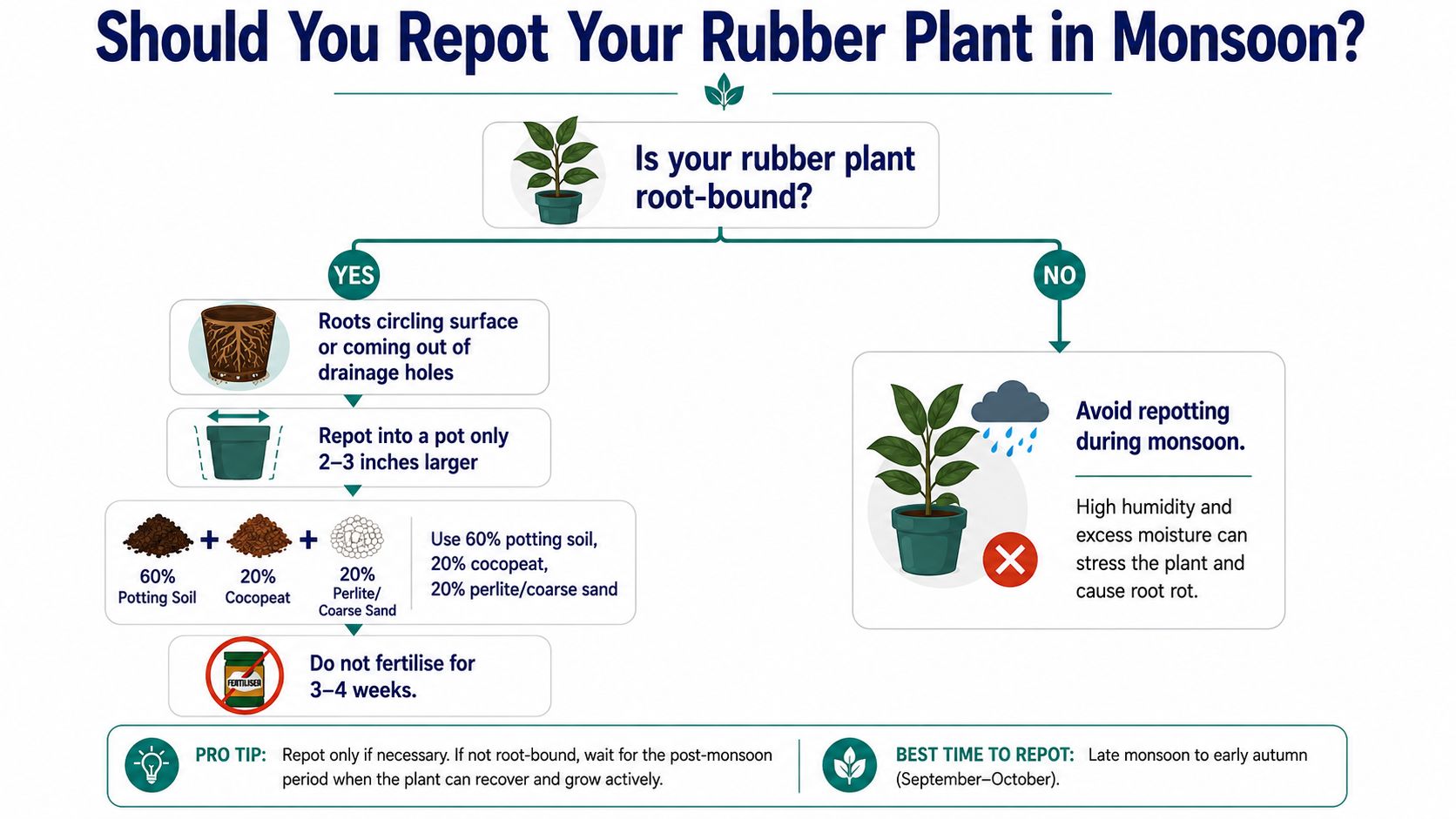
If your rubber plant is severely root-bound, with roots circling the surface or coming out of drainage holes, the monsoon is a reasonable time to repot. High humidity reduces transplant stress because the plant loses less moisture through its leaves.
How To Repot Correctly During Monsoon
- Choose a pot only 2 to 3 inches larger than the current one. A pot that is too large can hold excess moisture and cause problems in rainy weather.
- Use a well-draining mix: 60% potting soil, 20% cocopeat, and 20% perlite or coarse sand.
- Water lightly after repotting and keep the plant in a stable indoor spot for about two weeks while it adjusts.
- Do not fertilise for 3 to 4 weeks after repotting, as fresh soil already contains enough nutrients.
- If the plant is not root-bound, avoid repotting during the monsoon. It can stress the plant unnecessarily.
NOTE: If the plant is not root-bound, avoid repotting during the monsoon. It can stress the plant unnecessarily.
Pruning for Bushier, Fuller Growth
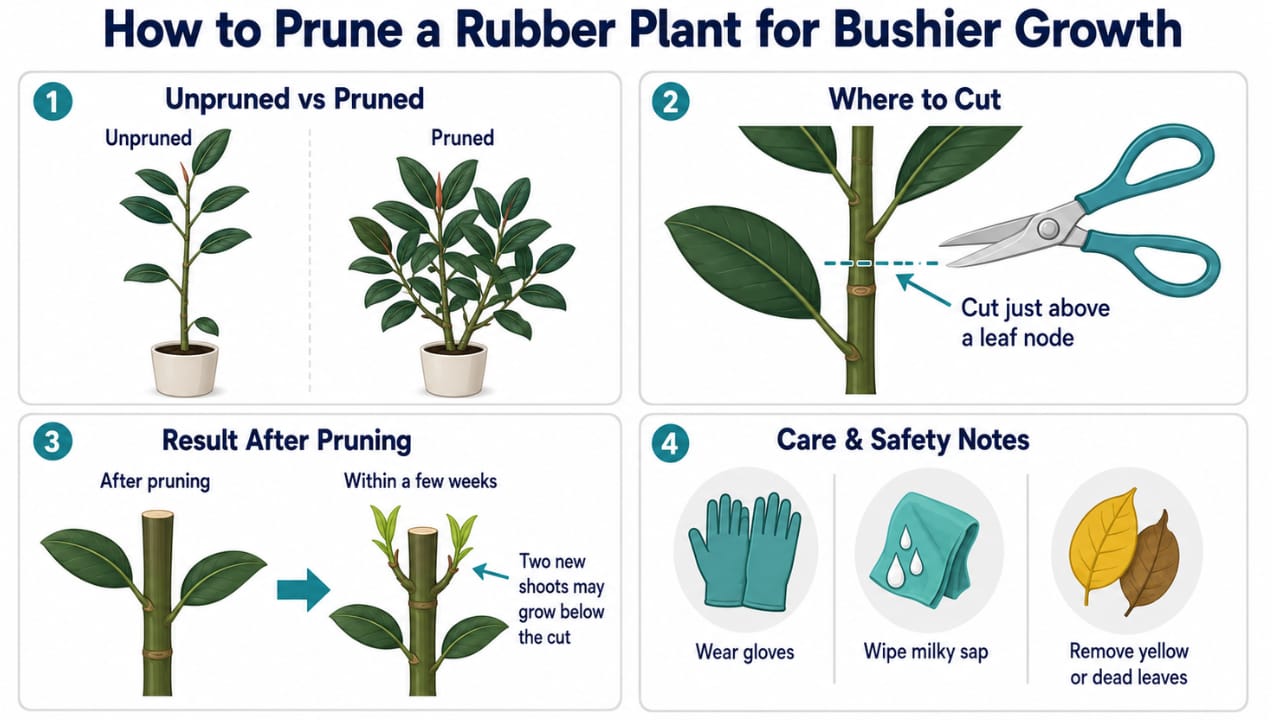
The monsoon growth phase is a good time to decide how you want your rubber plant to grow: tall and tree-like, or bushy and full.
Left unpruned, a rubber plant grows straight upward with leaves mainly at the top. This can make the plant look bare at the base over time.
To encourage branching, cut just above a leaf node using sterilised scissors. The plant usually produces two new shoots below the cut within a few weeks. Pruning early helps create a fuller shape.
Rubber plants release a milky sap when cut, which can irritate skin. Wear gloves and wipe the cut area immediately after pruning.
Remove yellow or dead leaves from the base so the plant can focus energy on healthy new growth.
Propagating Your Rubber Plant During Monsoon
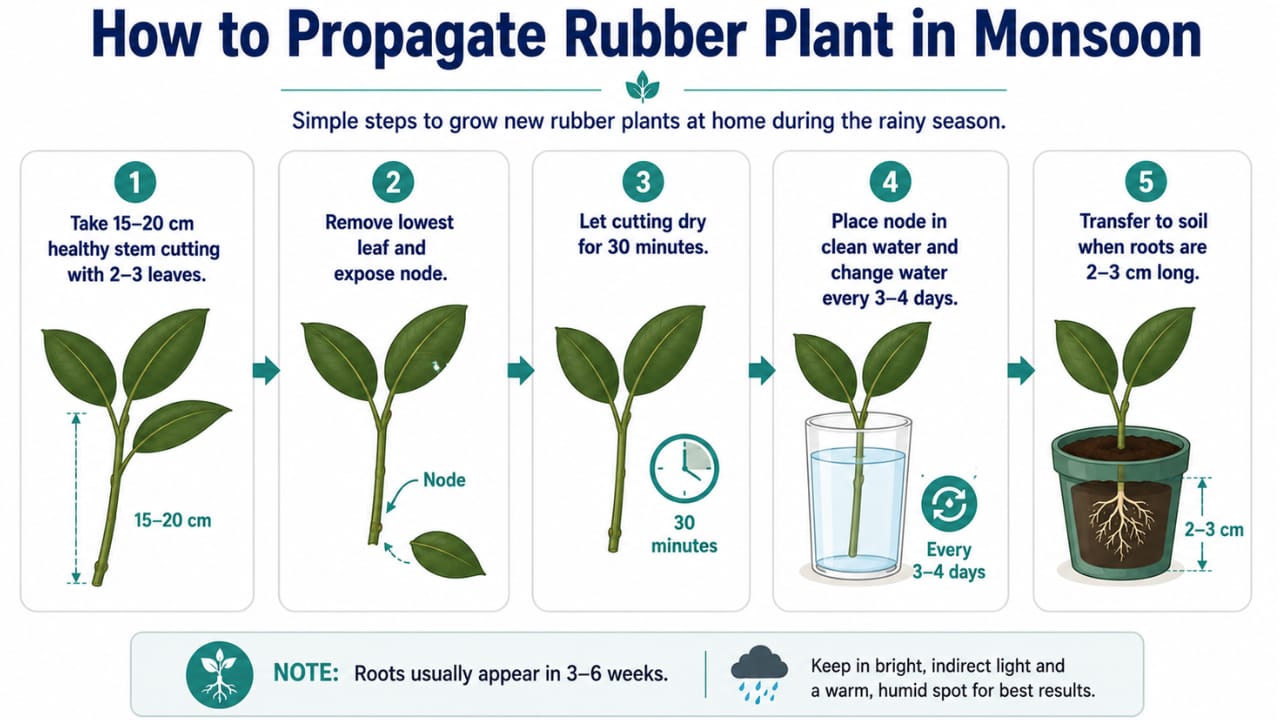
The warm, humid monsoon season is one of the best times to propagate a rubber plant from stem cuttings.
How To Propagate
- Take a healthy stem cutting about 15 to 20 cm long with two to three leaves. Remove the lowest leaf so the node is exposed.
- Let the cutting dry for about 30 minutes before placing it in water or a moist propagation mix.
- Place it in a glass of clean water, making sure only the node is submerged, not the leaves. Keep it in bright, indirect light and change the water every 3 to 4 days.
- Roots usually appear within 3 to 6 weeks. Once they reach 2 to 3 cm, transfer the cutting to the soil.
- Monsoon humidity helps the cutting root grow faster compared to drier seasons.
The high ambient humidity during the monsoon significantly improves rooting success rates compared to dry summer or winter months.
Rubber Plant Monthly Monsoon Calendar
| Month | Key Care Focus |
|---|---|
| June | Check drainage before the rains begin. Slow down the watering frequency. Move outdoor plants to covered positions. |
| July | Inspect for pests weekly. Water only when the soil is completely dry, 2 inches deep. Clean leaves regularly. |
| August | Fertilise at half strength once. Monitor for root rot signs. Keep the plant away from AC vents and cold windows. |
| September | Rains ease; gradually resume normal watering rhythm. Good time to repot if needed before winter. |
Rubber Plant Placement in Indian Homes: Vastu and Practical Tips
The rubber plant is often considered auspicious in Vastu Shastra. Its broad, rounded leaves are associated with abundance and positive energy when placed correctly.
Vastu-Recommended Placement
Place the plant in the southeast corner of your living room or home office. Avoid bathrooms, storerooms, or low-light areas with poor airflow.
Practical Placement for Monsoon Months
During the monsoon, keep the plant near an east- or north-facing window indoors. Avoid balcony edges where rain can reach the pot, and keep it away from air conditioner vents to prevent sudden temperature stress.
Common Rubber Plant Problems During Monsoon and How to Fix Them
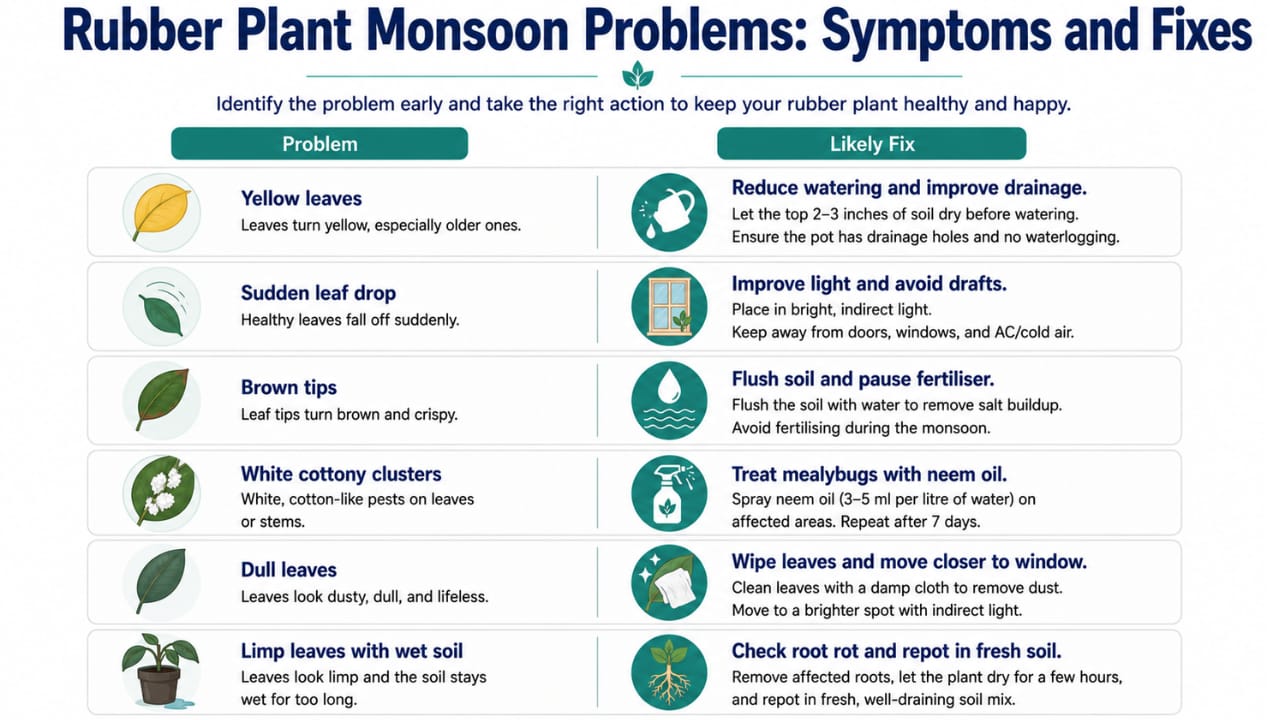
1. Yellow Leaves
Usually caused by overwatering. If the soil is damp more than 2 inches deep, reduce watering. Improve drainage and always empty the saucer after watering.
2. Leaves Dropping Suddenly
Often due to low light combined with overwatering. It can also happen after moving the plant or exposure to cold drafts. Keep it in a stable spot and adjust watering.
3. Brown Tips on Otherwise Healthy Leaves
Can be caused by excess fertiliser or, less commonly, in the monsoon, low humidity. If fertiliser is the issue, flush the soil and pause feeding.
4. White Cottony Clusters on Stems
Mealybugs. Remove with neem oil and check all leaf joints and undersides.
5. Dull, Non-Glossy Leaves
Usually, dust or low light. Wipe leaves and move the plant closer to a window.
6. Leaves That Look Limp, But the Soil is Wet
A sign of root rot from overwatering. Remove the plant, trim damaged roots, and repot in fresh soil. Avoid watering for 7 to 10 days.
Rubber Plant vs. Similar Plants: Which One Should You Choose This Monsoon?
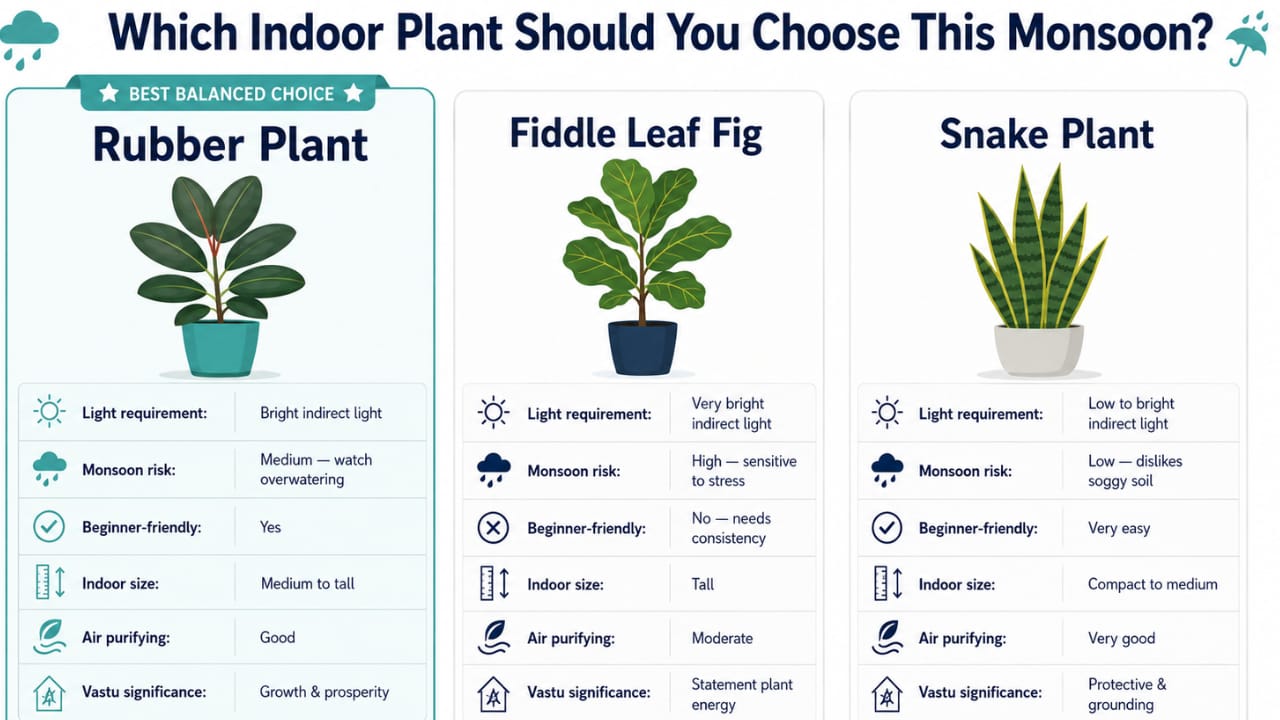
Feature comparison below can help you decide. These popular indoor plants, such as Fiddle Leaf Fig, and Snake Plant are also readily available online at Urvann.
| Feature | Rubber Plant | Fiddle Leaf Fig | Snake Plant |
|---|---|---|---|
| Light requirement | Bright indirect | Bright indirect (less forgiving) | Low to bright indirect |
| Monsoon risk | Medium | High (very sensitive to change) | Very low |
| Beginner-friendly | Yes | No | Yes |
| Size indoors | 3–8 feet | 3–6 feet | 1–4 feet |
| Air purifying | Yes | Yes | Yes |
| Vastu significance | Yes | Yes | Yes |
NOTE: If you are a first-time plant parent facing your first monsoon, the rubber plant is a forgiving and rewarding choice, especially the classic green or Rubber Black variety.
Buy Rubber Plants Online, Delivered Fresh to Your Door
Whether you are looking for a bold Rubber Black to anchor your living room, a classic green rubber plant for your home office, or a rare variegated variety to brighten a bright corner, Urvann has nursery-grown, healthy plants selected for Indian homes and Indian climates.
Urvann provides free next-day delivery in Delhi-NCR and Bengaluru for orders placed before 7 PM. Pan-India delivery is also available with timelines depending on location.
Shop Urvann Rubber Plant Collection →
Frequently Asked Questions (FAQs)
1. Should I water my rubber plant during the monsoon?
Yes, but much less frequently than in summer. Water only when the top 2 to 3 inches of soil are completely dry. In most Indian homes during peak monsoon, this means watering once every 10 to 14 days rather than weekly.
2. Can I keep my rubber plant outside during the monsoon?
Avoid open outdoor exposure during heavy rains. A covered balcony or patio with good air circulation is acceptable, but ensure the plant is not sitting in accumulated rainwater. Most rubber plant parents bring their plants indoors from July to September.
3. Does my rubber plant need sunlight in the monsoon?
Yes. Place it near an east- or north-facing window to maximise available indirect light during overcast days. Avoid direct afternoon sun, but do not move it to a dark corner. Reduced light combined with wet soil is the fastest way to cause problems.
4. Is monsoon a good time to repot my rubber plant?
It can be, if the plant is genuinely root-bound. The high ambient humidity reduces transplant stress. However, if the plant is not root-bound, avoid unnecessary repotting during the rains.
5. Why are my rubber plant leaves turning yellow during the monsoon?
Yellow leaves in the monsoon almost always mean overwatering. Reduce watering frequency, check drainage, and ensure the pot saucer is emptied after every watering.
6. Is it normal for my rubber plant to grow slowly during the monsoon?
Yes. The reduced light from overcast skies slows growth even though the humidity is higher. This is normal and not a cause for concern as long as the plant looks otherwise healthy.
7. How do I keep mealybugs away from my rubber plant during the monsoon?
Spray the plant with diluted neem oil solution (5 ml neem oil plus a few drops of dish soap in 1 litre of water) once every two weeks as a preventive measure. Wipe leaves regularly and inspect the undersides of leaves and stem joints weekly.
8. Can I propagate my rubber plant in the monsoon?
Yes, monsoon is one of the best times to propagate because the warm, humid air supports root development. Take a healthy stem cutting, remove the lower leaves, and place it in a clean glass of water in a bright spot. Roots typically appear within three to six weeks.
9. Does the rubber plant need fertiliser during the monsoon?
A light feed once a month at half the standard dose is beneficial during the monsoon growth phase. Use a balanced liquid fertiliser or vermicompost. Stop fertilising if the plant shows signs of stress.
10. Rubber Plant kis din lagana chahiye?
Rubber plant (Ficus elastica) lagane ya repot karne ka best time March se September hota hai, jab plant active growth me hota hai aur easily adjust kar leta hai.
Best conditions:
- Season: March–September best; October–February avoid karein (slow growth)
- Time of day: Subah ka time, jab dhoop soft ho
- Temperature: 18°C–30°C ideal range
- Soil: Well-draining mix (garden soil + cocopeat + vermicompost + sand)
- Vastu: South-east direction ko shubh mana jata hai
- Care: Bright indirect light aur sirf tab paani jab top soil dry ho
11. Where can I buy rubber plants online in India?
You can shop for rubber plants online at Urvann, which offers free next-day delivery in Delhi-NCR and Bengaluru on all orders placed before 7 PM. Urvann carries a wide range of rubber plant varieties, including the classic Green, Rubber Black, and multiple variegated types, in nursery pots, ceramic planters, and premium plastic pots.