


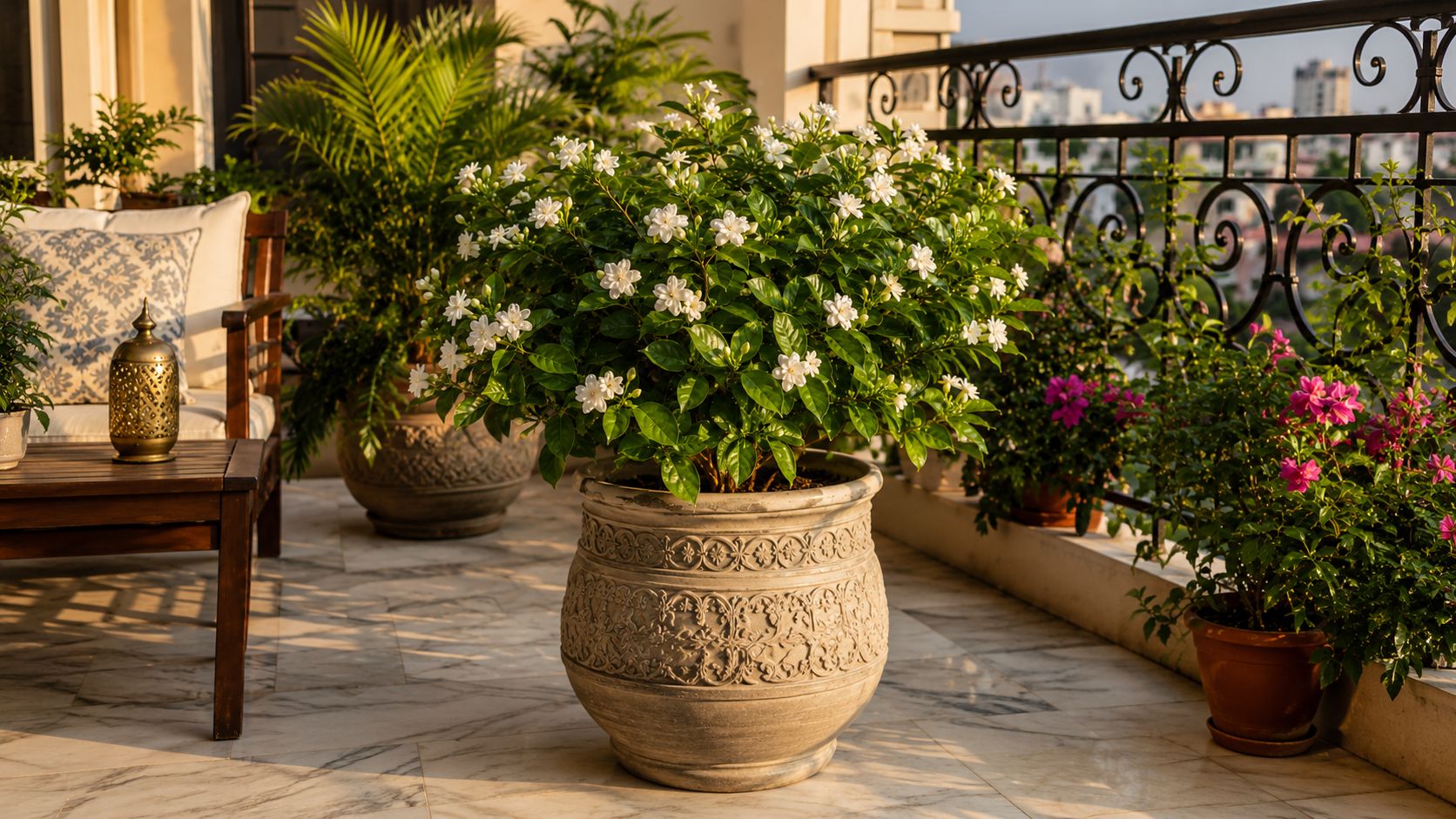
From soil/fertiliser to sunlight and water to pruning, this guide covers all expert tips to get fragrant white blooms of the mogra plant all season.
- Arabian Jasmine · Jasminum sambac
- Balcony & Terrace Friendly
- Beginner Friendly
- Best for Indian Homes
Key Takeaways
- Mogra needs at least 5–6 hours of direct sunlight daily to produce abundant flowers and healthy growth.
- Always use a well-draining potting mix and a pot with drainage holes to prevent root rot and waterlogging.
- Water only when the top 1–2 inches of soil feel dry, adjusting frequency according to the season.
- Feed regularly with organic fertilisers such as vermicompost, banana peel fertiliser, bone meal, and mustard cake to encourage continuous blooming.
- Regular pruning, deadheading, and pinching of growing tips helps create a bushier plant with significantly more flowers.
- Seasonal care matters. Adjust watering, sunlight exposure, fertilising, and protection during summer, monsoon, and winter for year-round health and flowering.
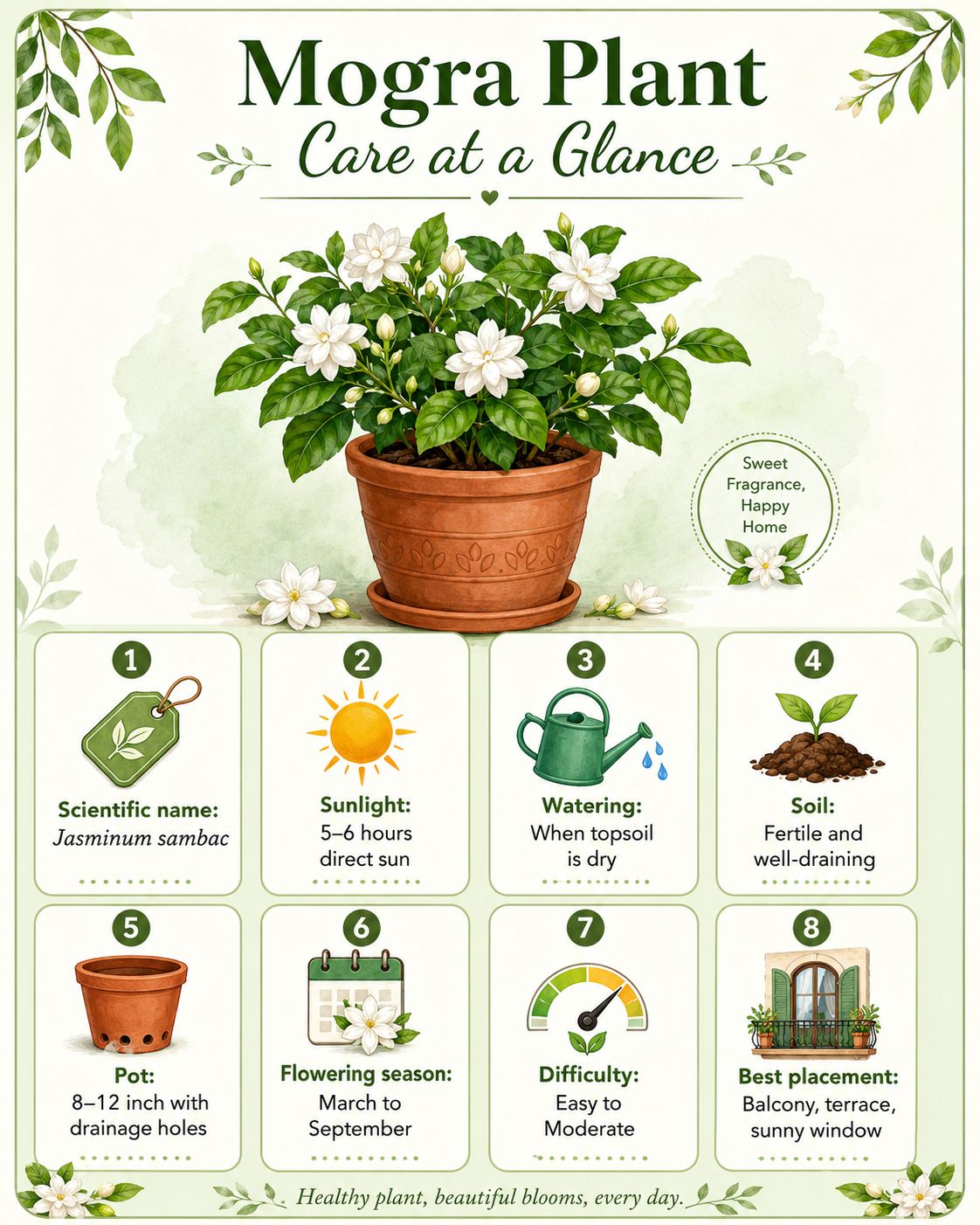
Quick Mogra Plant Profile
|
Common Names
Mogra, Mogara, Motia, Mogra Phool
|
English Name
Arabian Jasmine
|
Scientific Name
Jasminum sambac
|
|
Family
Oleaceae
|
Plant Type
Perennial flowering shrub
|
Flower Colour
White
|
|
Sunlight Needed
5–6 hours daily
|
Flowering Season
Spring to Monsoon (March to September)
|
Watering
When the topsoil is dry
|
|
Difficulty
Easy to Moderate
|
Ideal Placement
Balcony, terrace, sunny window
|
Fragrance
Strong, sweet, iconic
|
Are Mogra and Jasmine the Same?
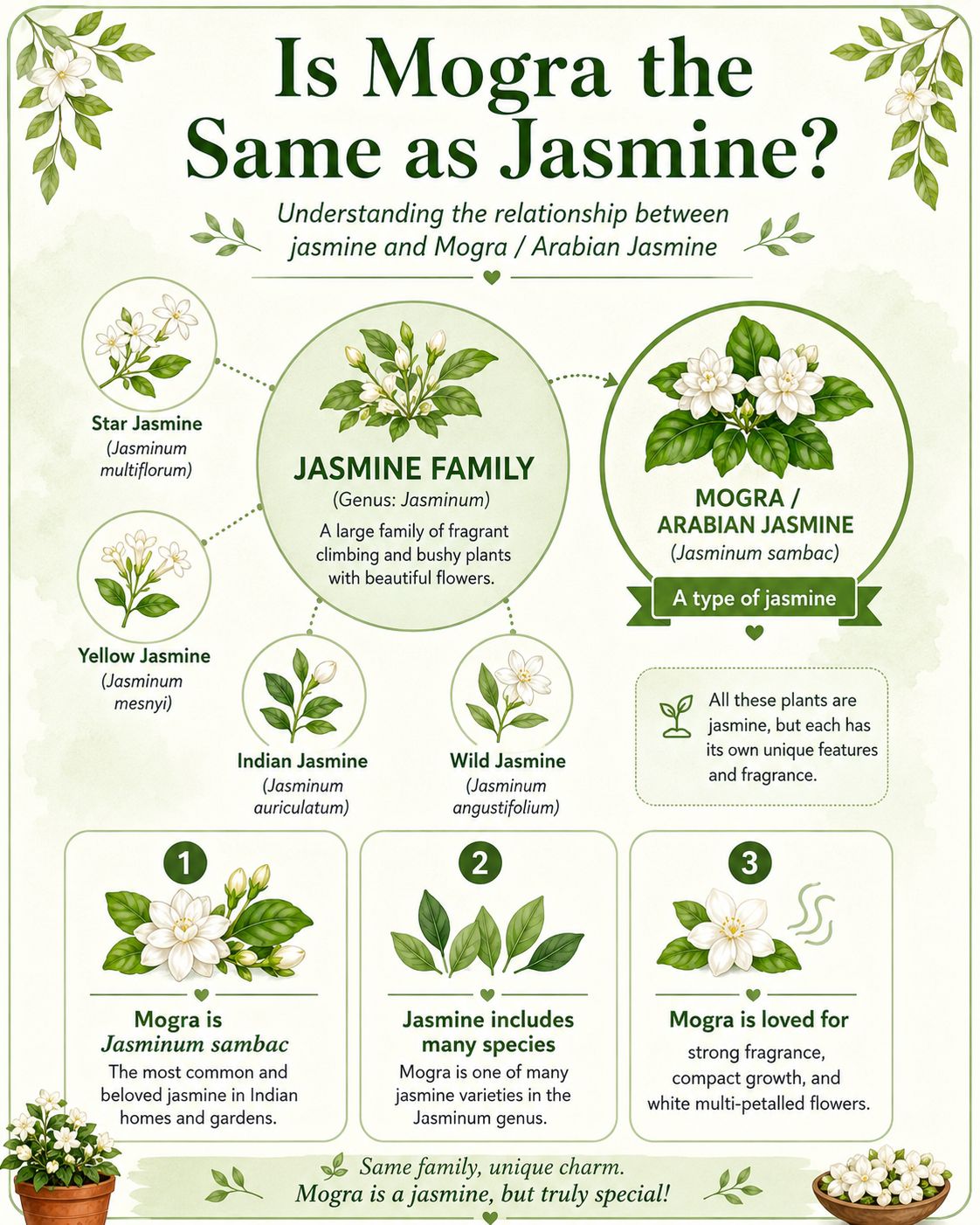
Mogra is actually a type of jasmine. Jasmine is a large group of flowering plants with many different species, and Mogra is one of the most popular varieties within that group. It is especially loved for its strong fragrance, compact growth, and beautiful white multi-petalled flowers.
So while every Mogra plant belongs to the jasmine family, not every jasmine plant is Mogra. Different jasmine varieties can vary in flower shape, fragrance, growth habit, and blooming pattern.
Mogra Plant Varieties: Single Petal vs Double Petal
Not all Mogra plants are the same. There are two common types you will find in Indian nurseries.
💡 Which One To Choose?
If you want more flowers for daily puja or garlands, go with Single Petal Mogra. If you want bigger, showier blooms with a richer scent for your balcony or entrance, try Double Petal Mogra.
Choosing the Right Pot & Soil
Best Pot Size for Mogra
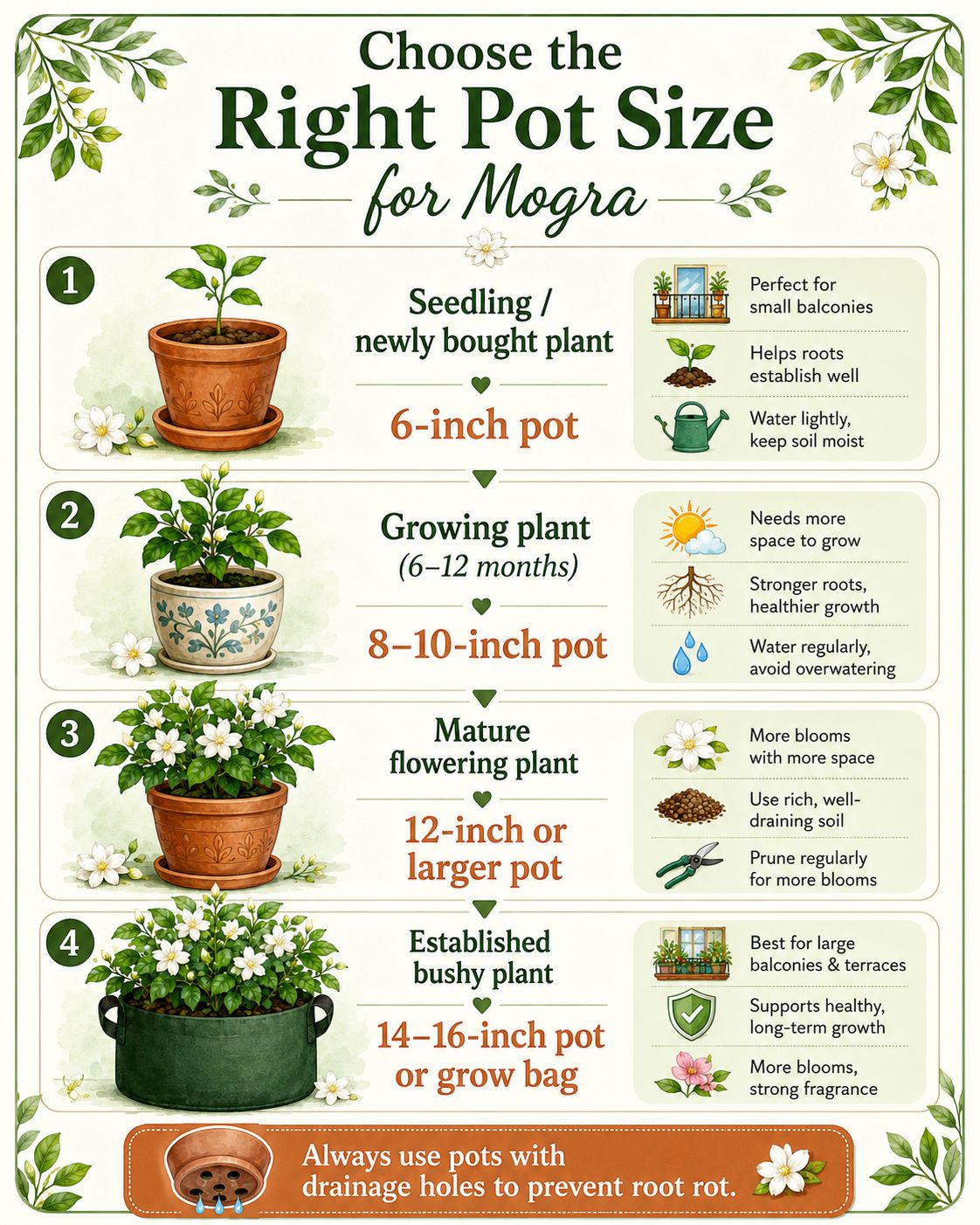
The size of the pot plays a key role in your Mogra plant’s growth and flowering. If the pot is too small, the roots become cramped, limiting the plant’s ability to grow and produce blooms. If it is too large, the soil can stay wet for longer periods, which may affect root health and overall plant performance.
| Plant Stage | Pot Size | Material Recommendation |
|---|---|---|
| Seedling / Newly Bought Plant | 6-inch pot | Any material, including terracotta or plastic |
| Growing Plant (6–12 Months) | 8–10-inch pot | Terracotta preferred for better drainage |
| Mature / Flowering Plant | 12-inch or larger | Terracotta, glazed ceramic, or grow bag |
| Established Bushy Plant | 14–16-inch pot or grow bag | Fabric grow bags are excellent |
IMPORTANT NOTE: Always choose a pot with adequate drainage holes at the bottom. Mogra plants are sensitive to excess moisture and do not thrive in waterlogged soil, as stagnant water can quickly lead to root rot. If you prefer using a decorative pot without drainage holes, place a nursery pot with proper drainage inside it. This setup allows excess water to drain freely while maintaining the aesthetic appeal of your planter.
Best Soil Mix for Mogra in a Pot
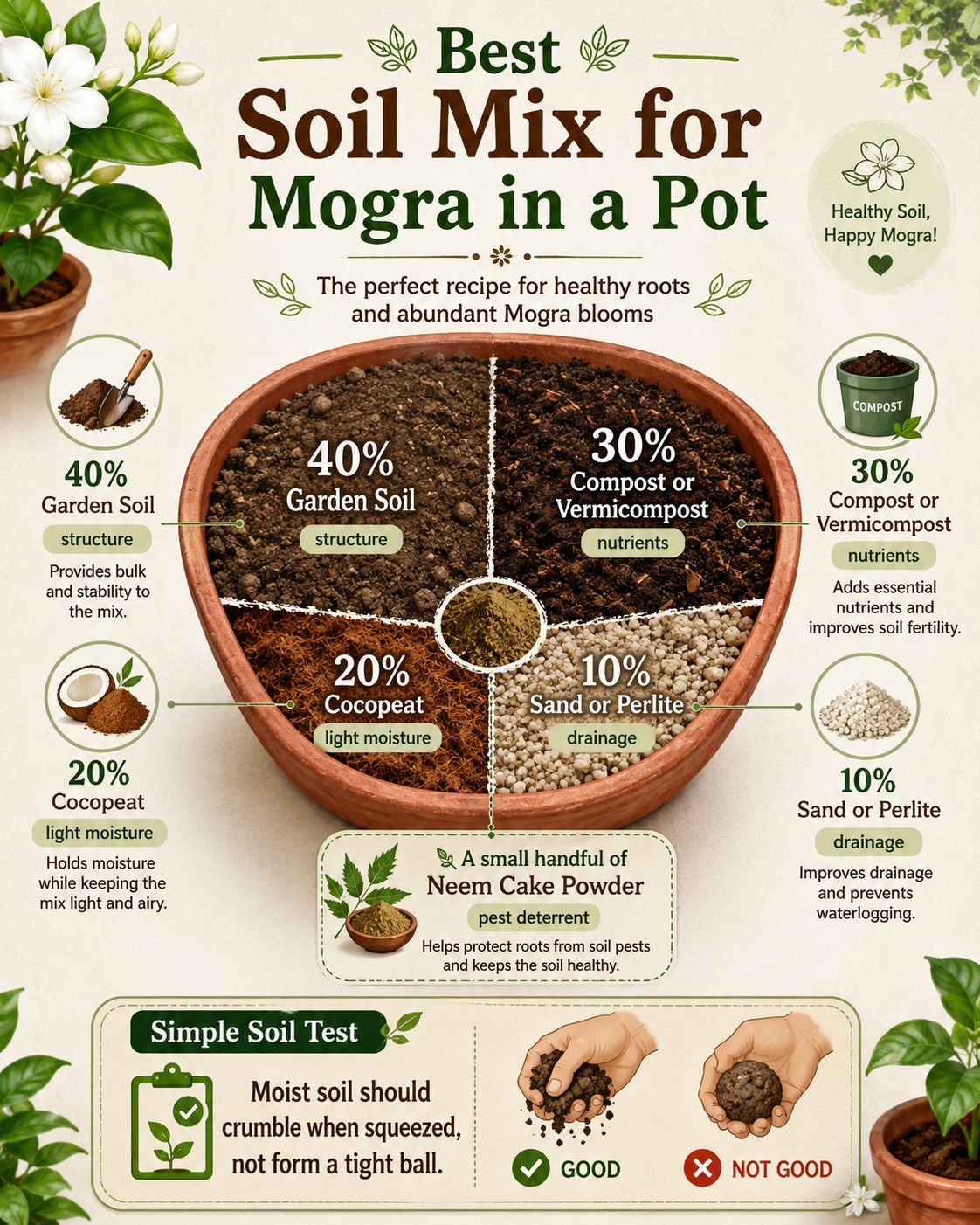
Mogra grows best in fertile, well-draining soil with a slightly acidic to neutral pH (6.0–7.0). Avoid using heavy clay or plain garden soil alone, as they can retain excess moisture, restrict airflow to the roots, and lead to poor growth or root rot.
| Ingredient | Proportion | Why It Helps |
|---|---|---|
| Garden Soil | 40% | Provides structure and base nutrition |
| Compost or Vermicompost | 30% | Slow-release nutrients for healthy growth |
| Cocopeat | 20% | Retains light moisture and improves texture |
| Sand or Perlite | 10% | Improves drainage and prevents compaction |
| Neem Cake Powder | A small handful | Natural pest deterrent in the soil |
🌱 Simple Soil Test: Squeeze a handful of moist soil. If it crumbles apart when you open your fist, the drainage is good. If it holds a tight ball and doesn't break, add more perlite or sand.
When and How to Repot Mogra?
Mogra needs repotting when roots start emerging from drainage holes, growth slows despite good care, or the plant dries out very quickly after watering.
- Choose a pot one size larger than the current one, don't jump two sizes at once.
- Repot in early spring or just before the flowering season begins (February–March in India).
- Water the plant thoroughly a day before repotting to reduce root stress.
- Gently loosen the root ball, remove any dead or mushy roots, and place in the new pot with fresh soil mix.
- Water lightly after repotting and keep in shade for 5–7 days before returning to full sun
Sunlight Requirement for Mogra Plant
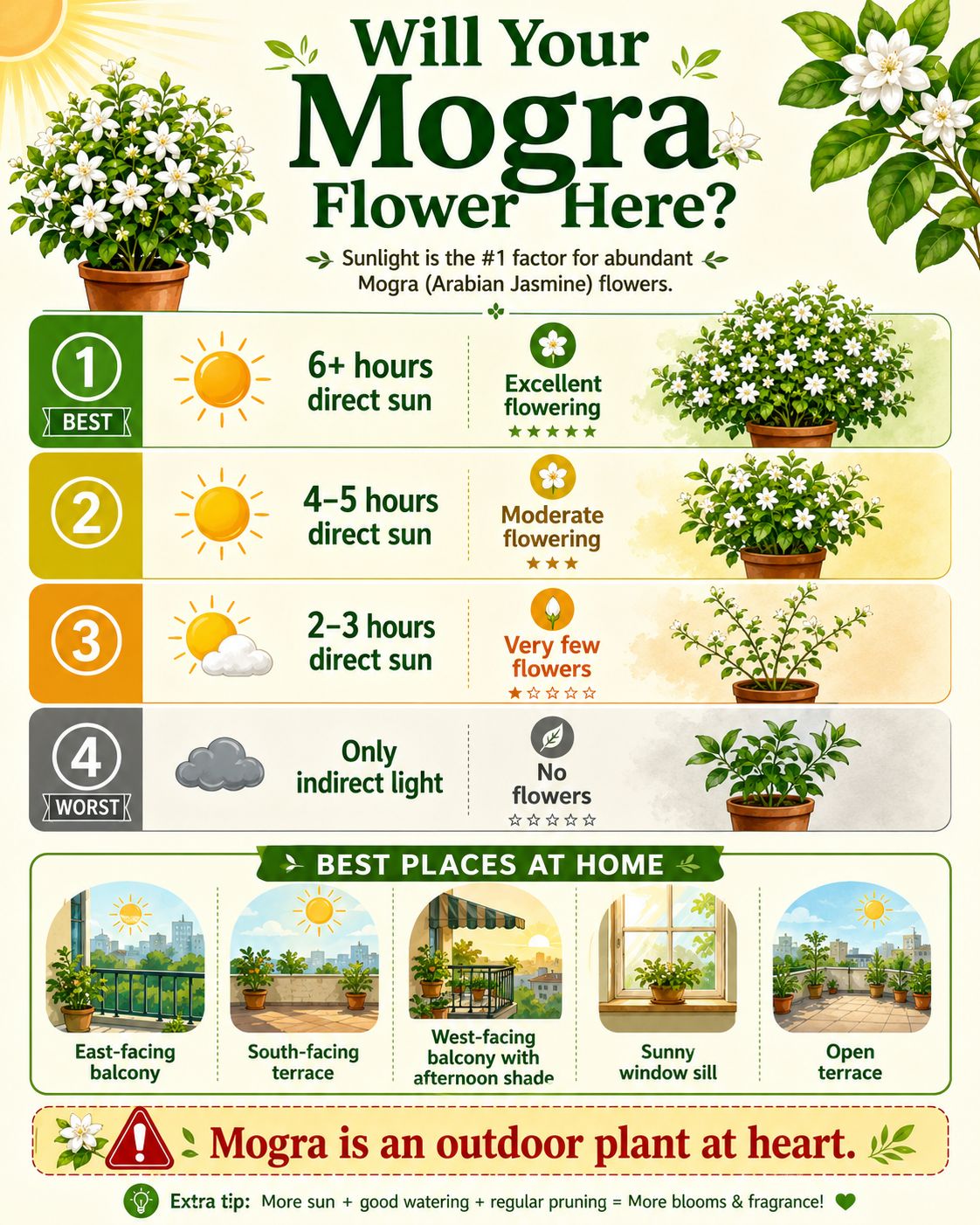
Sunlight is the single most important factor for Mogra flowering. Without adequate light, the plant will grow lush leaves but produce very few or no flowers at all.
| Sunlight Available | Expected Result | What To Do |
|---|---|---|
| 6+ Hours Direct Sun | Excellent flowering, compact growth | Ideal - maintain position |
| 4–5 Hours Direct Sun | Moderate flowering, decent growth | Acceptable - try to increase light |
| 2–3 Hours Direct Sun | Very few flowers, leggy growth | Move to a brighter spot urgently |
| Only Indirect/Filtered Light | No flowers, slow decline | Not suitable - choose a sunnier location |
Best Positions To Keep Mogra Plant At Home
- East-facing balcony
- South-facing terrace
- West-facing balcony (afternoon shade optional)
- South-facing window sill
- Open terrace garden
- Garden corner with morning sun
☀️ Summer Tip: During peak Indian summer (April–June), afternoon sun can be harsh, especially on hot balcony floors where temperatures can exceed 45°C. Morning sunlight (6 AM–12 PM) is more effective and gentle. If your balcony faces west with harsh afternoon sun, consider using a shade net during the 2–5 PM period only.
⚠️ Common Mistake To Avoid: Moving the plant indoors for "decoration" is one of the fastest ways to stop a Mogra from flowering. Even a bright indoor room rarely provides enough light. Mogra is an outdoor plant at heart.
How & When To Water Mogra?
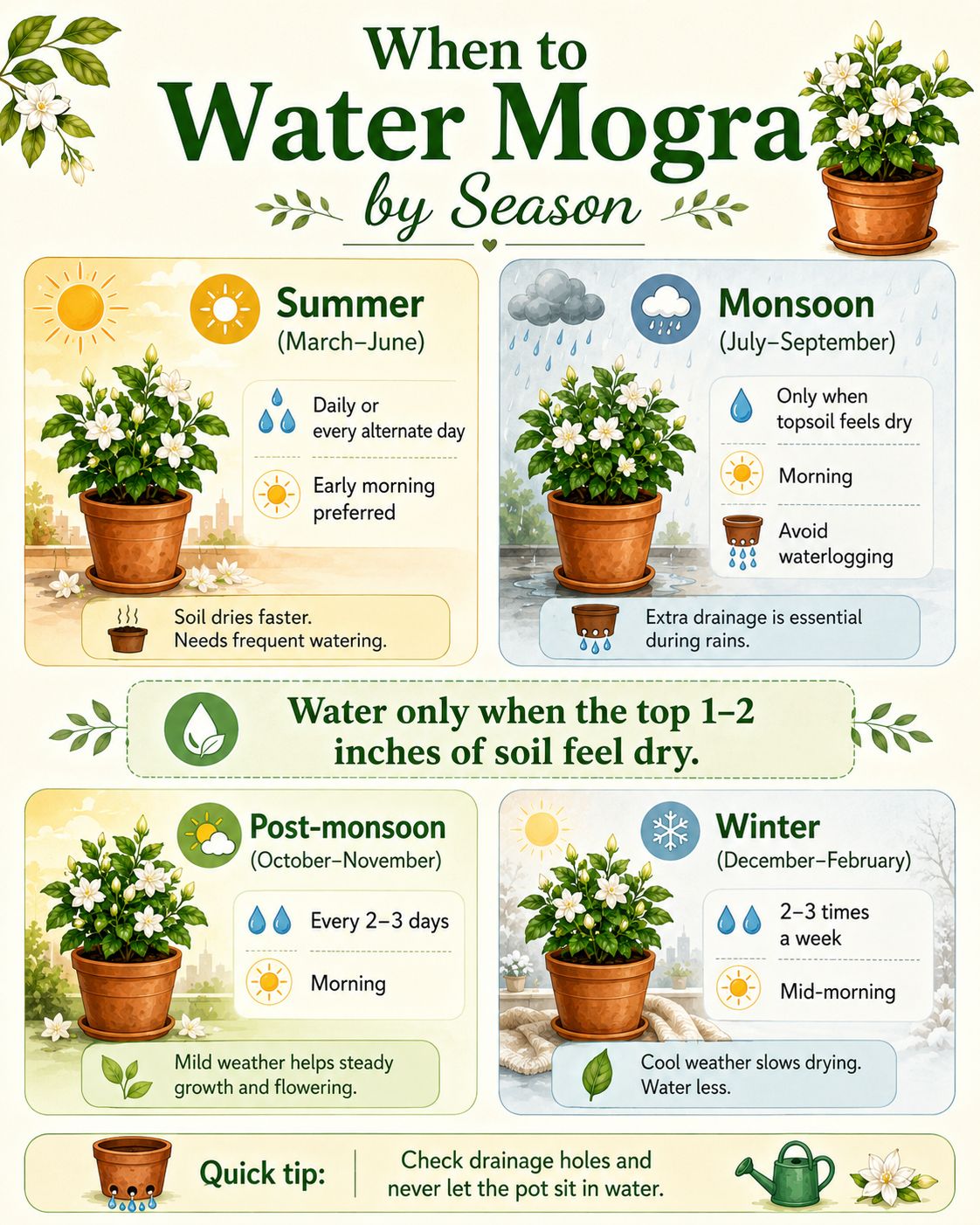
Mogra prefers consistently moist but never waterlogged soil. The golden rule: water only when the top 1–2 inches of soil feel dry to the touch.
Watering Schedule by Season
| Season | Frequency | Time of Day | Extra Notes |
|---|---|---|---|
| Summer (Mar–Jun) | Daily or every alternate day | Early morning preferred | Check soil daily; hot pots dry out fast |
| Monsoon (Jul–Sep) | Only when the topsoil feels dry | Morning | Avoid waterlogging; check drainage |
| Post-Monsoon (Oct–Nov) | Every 2–3 days | Morning | Taper off as the temperature drops |
| Winter (Dec–Feb) | 2–3 times a week | Mid-morning (10–11 AM) | Never water on cold evenings |
What Kind of Water is Best for Mogra?
In Indian cities, most tap water is hard or slightly chlorinated. Mogra can handle tap water, but if you notice leaf tip browning or slow growth, try these:
- Let tap water sit open for 30 minutes before using. This helps chlorine dissipate.
- Collect rainwater during the monsoon. It is naturally soft and slightly acidic, which Mogra responds well to.
- Use room-temperature water. Avoid very cold water during summer mornings.
- Avoid RO reject water. It is often too salty for regular use.
Signs of Overwatering and Underwatering in Mogra
| Symptom | Likely Cause | Fix |
|---|---|---|
| Yellow Leaves (Starting from Older Leaves) | Overwatering or poor drainage | Reduce watering; check drainage holes |
| Brown, Crispy Leaf Edges | Underwatering or dry winds | Water more regularly; mist leaves occasionally |
| Wilting Despite Moist Soil | Root rot from overwatering | Check roots; repot with fresh soil if needed |
| Bud Drops Before Blooming | Inconsistent watering or heat stress | Keep watering regular; avoid sudden dry spells |
| Soft, Mushy Stem Base | Severe root rot | Urgent repotting; remove affected roots |
💧 Water Quality Tip: In cities with hard tap water, use stored overnight tap water or filtered water for Mogra. Extremely hard water (high calcium and magnesium content) can cause a white crust to form on the soil surface and may affect root health over time. If you notice leaf tip browning despite proper watering practices, consider switching to filtered water.
Fertiliser for Mogra Plant
Mogra is a heavy feeder during its growing and blooming season. Without regular nutrition, flower production drops significantly even if sunlight and water are optimal.
Best Organic Fertilisers for Mogra

| Fertiliser | How to Apply | Frequency | Key Benefit |
|---|---|---|---|
| Vermicompost | Mix 1–2 handfuls into the top 2 inches of soil | Monthly | Overall soil health and earthworm activity |
| Well-Rotted Cow Dung Manure | Apply around the root zone | Every 6–8 weeks | Slow-release nutrition and improved soil texture |
| Banana Peel Compost/Liquid | Bury chopped peels in soil or use liquid spray | Every 3–4 weeks | High potassium that directly boosts flowering |
| Bone Meal | Mix ½ tsp into soil | Every 6 weeks | Phosphorus for root strength and bud development |
| Mustard Cake (Sarso Khali) Liquid | Soak overnight, dilute 1:10, apply to soil | Every 3–4 weeks | Balanced nutrients and encourages dense flowering |
| Seaweed Extract | Diluted foliar spray or soil drench | Every 3 weeks | Micronutrients, stress resistance, and rooting support |
| Onion Peel Liquid Fertiliser | Soak peels overnight and use as a soil drench | Monthly | Potassium and phosphorus, a natural flower booster |
🌼 Avoid Excess Nitrogen: High-nitrogen fertilisers (such as urea or excessive use of NPK 20-20-20) encourage lush green leaf growth at the expense of flowering. To maximise blooms, favour phosphorus- and potassium-rich fertilisers such as banana peel compost or bone meal during the flowering season.
Pruning Mogra the Right Way
Pruning is essential for Mogra; it keeps the plant compact, removes exhausted wood, and most importantly, stimulates new flowering shoots. Mogra flowers on new growth, so the more you encourage new branches, the more flowers you get.
When To Prune Mogra?
- After each flowering flush
- Late February / Early March (pre-summer)
- After monsoon (September–October)
- Whenever dead or yellowed branches appear
Step-by-Step Pruning Guide for Mogra Plant
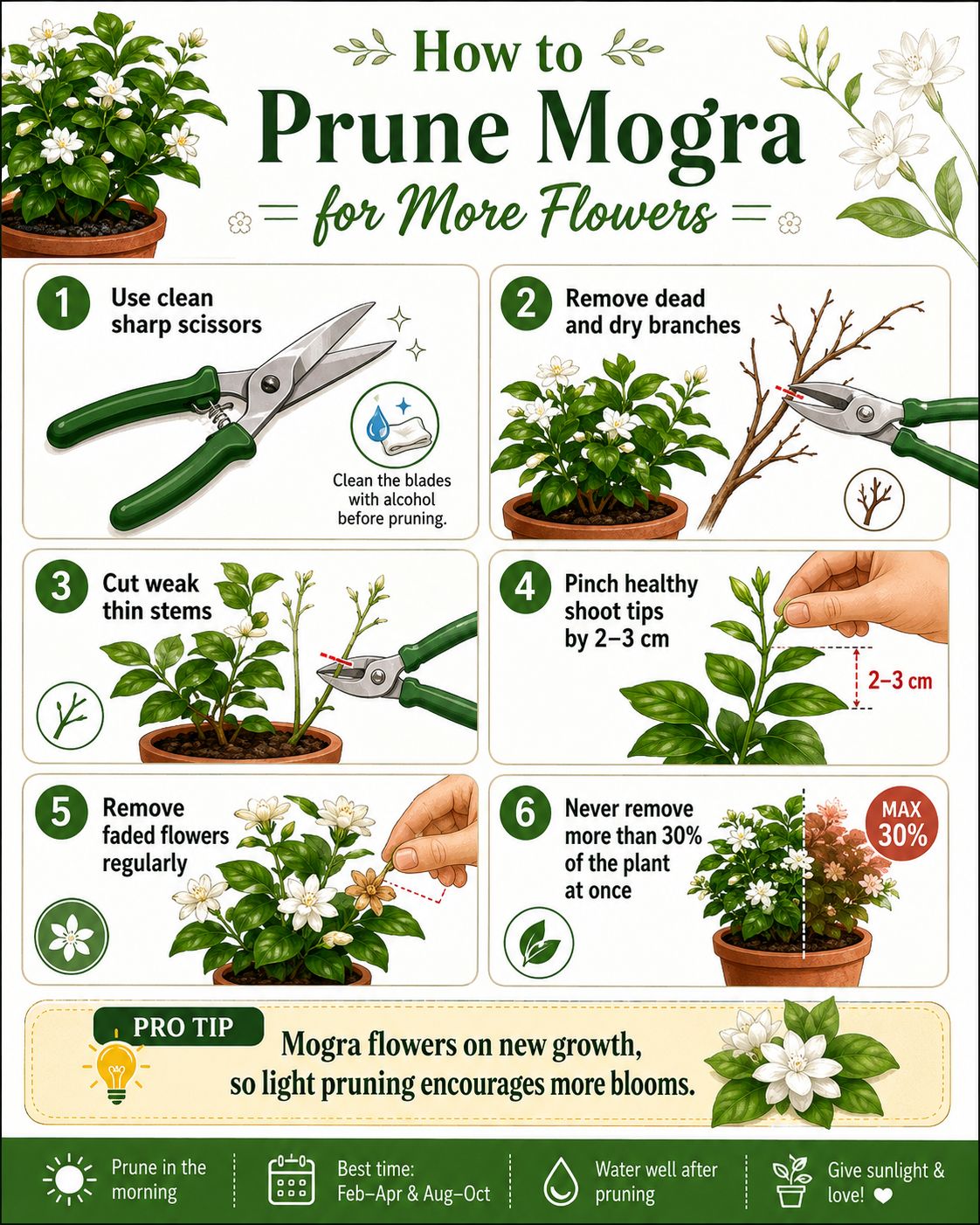
- Use clean, sharp scissors or pruning shears. Wipe blades with rubbing alcohol before use to prevent disease spread.
- Remove dead and dry branches first — cut all the way back to healthy green wood.
- Cut weak, thin stems that are unlikely to bear flowers. These only divert energy.
- Pinch or snip the tips of new, healthy shoots by 2–3 cm. This forces the plant to branch out instead of growing tall and leggy.
- Remove faded flowers (deadheading) regularly — this prevents seed formation and directs energy to new buds.
- Light pruning is always better than heavy cutting, especially for plants under 1 year old. Never remove more than 30% of the plant at once.
✂️ Pro Tip: After pruning, apply a diluted neem oil spray on all cut surfaces and remaining leaves to help prevent fungal infections. Follow with a dose of banana peel liquid fertiliser 3–4 days later to encourage fresh growth. Even if your Mogra is not being pruned, regularly pinching the growing tips of long stems helps create a denser, bushier plant with more flowers. Repeat this every 3–4 weeks during the growing season for the best results.
Year-Round Mogra Care in India
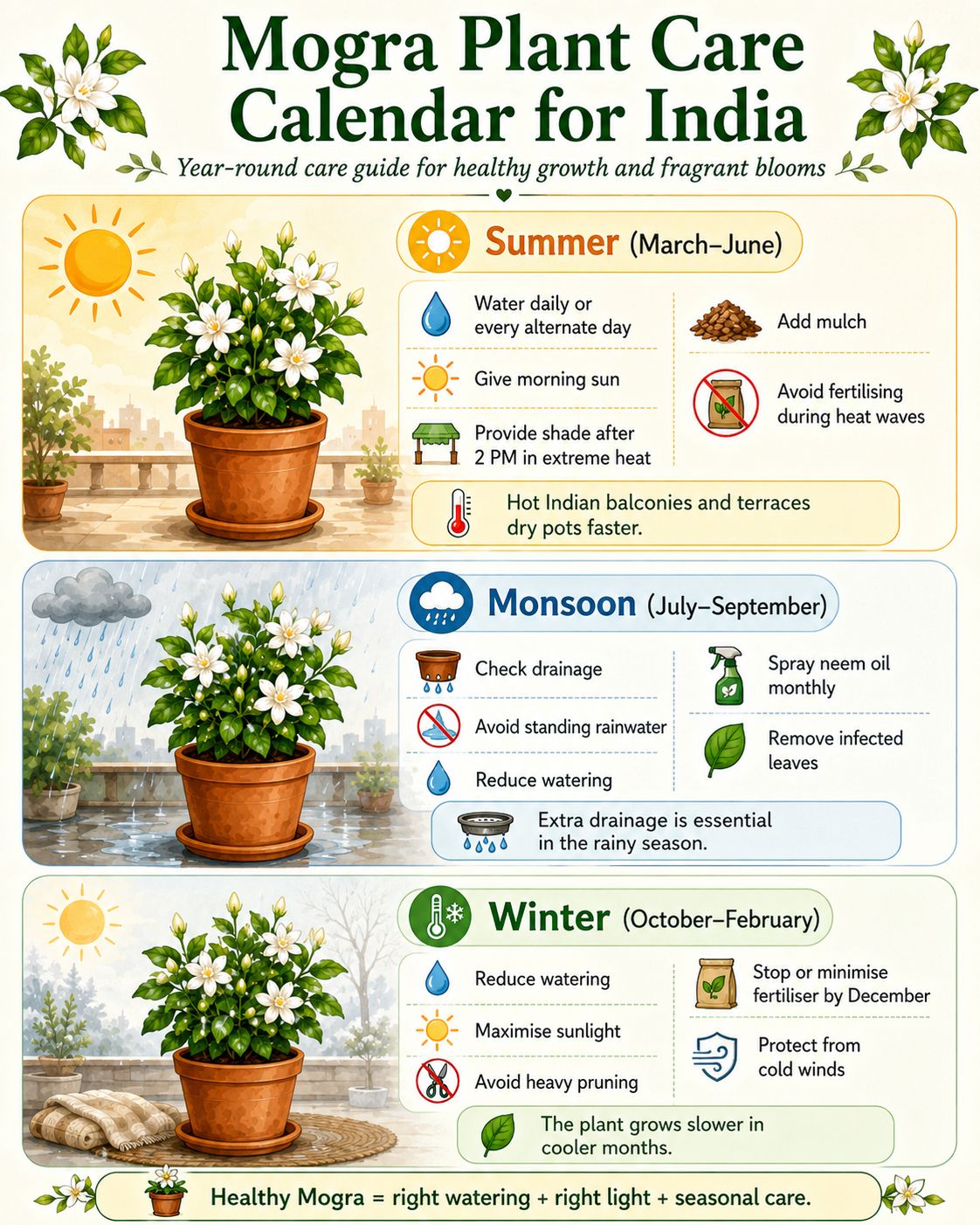
India's varied climate means Mogra care changes throughout the year. Adapting your routine each season makes a big difference in how many flowers you get.
☀️ Summer (Mar–Jun)
- Water daily or every alternate day
- Prefer morning sunlight; shade after 2 PM in extreme heat
- Add mulch (dry leaves, cocopeat) on topsoil to retain moisture
- Avoid fertilising during extreme heat waves (above 44°C)
- Move pot away from hot walls that radiate heat at night
- Mist leaves lightly in the evening during dry heat spells
🌧️ Monsoon (Jul–Sep)
- Check drainage holes, clear them if blocked
- Never let the pot sit in standing rainwater
- Reduce watering, only when topsoil is dry
- Spray diluted neem oil once a month to prevent fungal issues
- Remove yellowed or infected leaves immediately
- Continue light fertilising, dilute more than usual
❄️ Winter (Oct–Feb)
- Reduce watering to 2–3 times per week
- Maximise sunlight exposure, move to the sunniest spot
- Avoid heavy pruning in peak cold months
- Stop or minimise fertilising by December
- Protect from cold winds, wrap pot in newspaper if needed
- Resume full care when temperatures rise above 18°C
Common Mogra Problems & Solutions
Why is My Mogra Not Flowering?
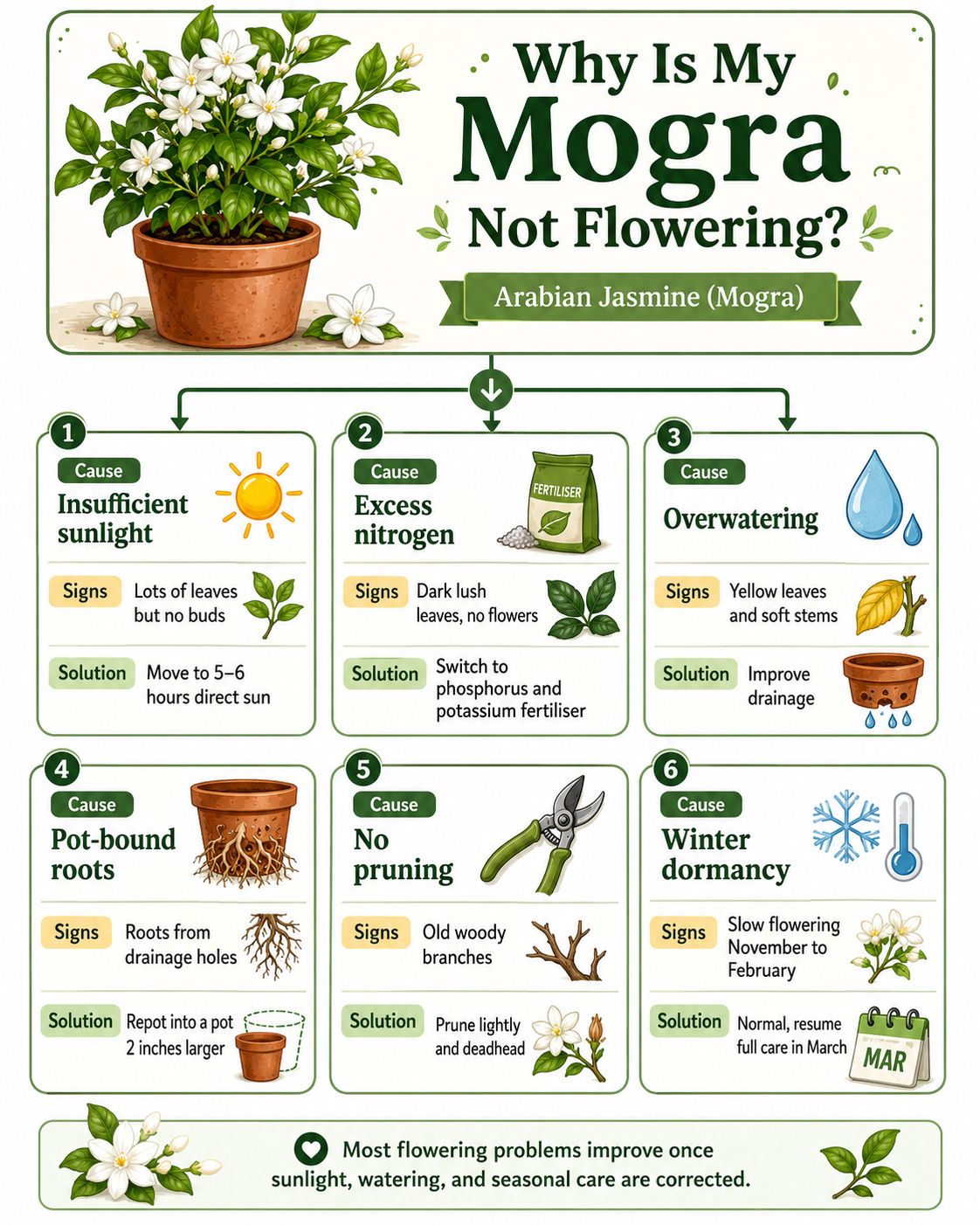
This is the most common Mogra complaint. Here are the six most likely reasons and what to do about each:
| Cause | Signs | Solution |
|---|---|---|
| Insufficient Sunlight | Lots of leaves, no buds; leggy growth | Move to a spot with 5–6 hours of direct sun immediately |
| Excess Nitrogen Fertiliser | Very dark, lush leaves; no flowers | Switch to phosphorus- and potassium-rich fertiliser; skip nitrogen for 2 months |
| Overwatering or Poor Drainage | Yellow leaves, soft stems, sour smell from soil | Improve drainage; let soil dry between waterings |
| Pot-Bound Roots | Roots growing from drainage holes; rapid drying | Repot into a pot 2 inches larger with fresh soil |
| No Pruning or Deadheading | Old, woody branches dominating; no new shoots | Prune lightly, pinch shoot tips, and remove old flowers |
| Winter Dormancy | Slow or no flowering during Nov–Feb in North India | Normal behaviour. Resume full care in March and the plant will rebound |
Pest & Disease Troubleshooting

| Problem | Identification | Treatment |
|---|---|---|
| Mealybugs | White cotton-like clusters on stems and leaf joints | Wipe with neem oil and water solution (1 tsp neem oil + 1 tsp dish soap per litre); repeat weekly |
| Spider Mites | Fine webbing under leaves and a dry, speckled appearance | Spray the underside of leaves with neem oil or insecticidal soap; increase humidity around the plant |
| Aphids | Small green or black clusters on new shoots | Blast off with a water stream, apply neem spray, or introduce ladybirds if in a garden |
| Scale Insects | Brown, shell-like bumps on stems | Scrape off with a toothbrush and apply neem oil solution |
| Fungal Leaf Spots | Brown or black circular spots on leaves | Remove affected leaves, improve air circulation, and apply a copper-based fungicide or neem spray |
| Root Rot | Soft stem base, mushy roots, and wilting despite wet soil | Remove from pot, trim dead roots, repot in fresh well-draining soil, and reduce watering |
| Sooty Mould | Black powdery coating on leaves | Treat the underlying pest (usually aphids or mealybugs) and wipe leaves with a damp cloth |
🛡️ Prevention is Better Than Cure: Spray a diluted neem oil solution (1 tsp neem oil + 1 tsp liquid soap per 1 litre of water) once every 15–20 days as a preventive measure. This simple routine helps keep the most common pests and fungal issues away, ensuring your Mogra stays healthy and blooms consistently.
How To Propagate Mogra?
Mogra is easy to propagate from stem cuttings. This is the most reliable and commonly used method in Indian home gardening.
Propagation from Stem Cuttings
- Choose a healthy, semi-woody stem of about 15–20 cm length (ideally from a spring pruning session).
- Make a clean cut just below a leaf node (the point where a leaf attaches). Remove lower leaves, leaving only 2–3 at the tip.
- Optionally, dip the cut end in rooting hormone powder or in honey (a natural rooting agent) for better success.
- Plant in a small pot with a cocopeat + perlite mix (or just moist cocopeat). Push the stem 4–5 cm into the mix.
- Cover loosely with a transparent plastic bag or place in a humid environment to retain moisture. Keep in bright indirect light.
- In 3–4 weeks, new leaf growth indicates rooting has occurred. Gently tug — if there's resistance, roots have formed.
- Transplant to a 6-inch pot with the full soil mix and slowly introduce to direct sunlight over 1 week
🌱 Best Time to Take Cuttings: Late February to March is the ideal time in India to propagate Mogra from cuttings. During this period, the plant produces fresh new growth, temperatures are warm but not extreme, and cuttings root much faster and more successfully.
Uses of Mogra Flowers in Indian Homes
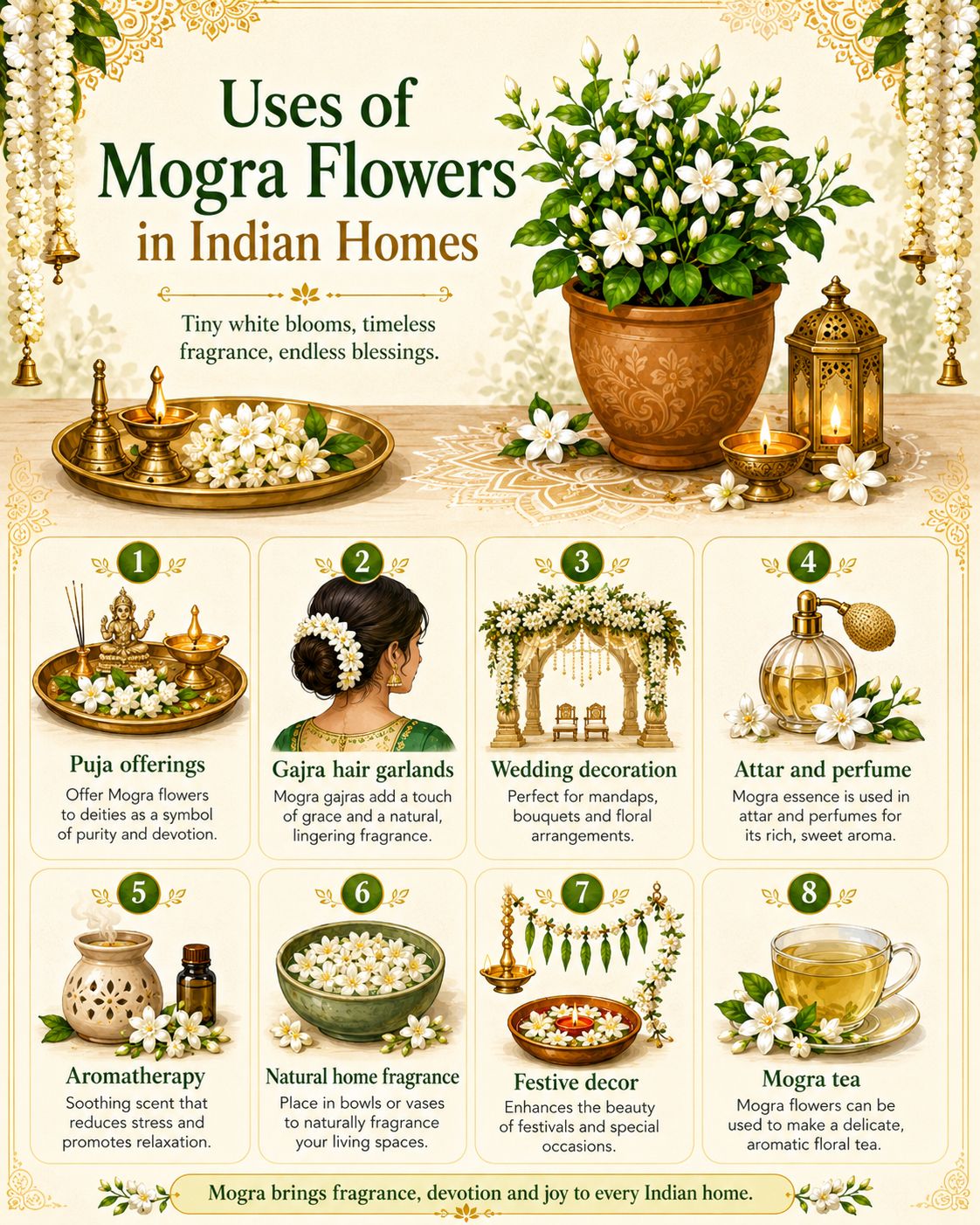
More than a fragrant flowering plant, Mogra is deeply woven into the fabric of Indian culture, daily life, and spirituality.
| Use | Details |
|---|---|
| Puja & Offerings | Fresh Mogra flowers are offered to deities in daily puja, particularly to Lord Vishnu, Shiva, and the Goddess. They are considered sacred and pure. |
| Gajra (Hair Garlands) | Strung into gajras worn by women for weddings, festivals, and daily wear. The fragrance lasts for hours in the hair. |
| Wedding Decoration | Used in mandap decoration, bridal jewellery, floral garlands, and entrance malas for the bride and groom. |
| Attar & Perfume | Mogra attar (concentrated essential oil) is one of the most prized and expensive floral perfumes in India and the Middle East. |
| Aromatherapy | The scent of Mogra is known to help reduce stress and anxiety. Placing the plant near a bedroom window allows the evening breeze to carry its fragrance indoors. |
| Home Fragrance | A potted Mogra on the balcony naturally scents the home without artificial room fresheners or chemical diffusers. |
| Festive Decor | Used during Navratri, Diwali, Onam, and other festivals for flower rangolis and torans (door decorations). |
| Mogra Tea | In some traditions, fresh or dried Mogra flowers are added to green tea to create a fragrant and calming brew. |
गमले में मोगरे की देखभाल — संक्षिप्त मार्गदर्शिका
गमला और मिट्टी: 6–12 इंच के गमले में छेद होना ज़रूरी है। मिट्टी में बगीचे की मिट्टी, वर्मीकम्पोस्ट, कोकोपीट और रेत मिलाएं।
- धूप: रोज़ाना 5–6 घंटे धूप ज़रूरी है — बिना धूप के फूल नहीं आएंगे।
- पानी: ऊपरी मिट्टी सूखने पर ही पानी दें। गर्मियों में रोज़, सर्दियों में हफ़्ते में 2–3 बार।
- खाद: महीने में एक बार वर्मीकम्पोस्ट या केले के छिलके की खाद दें। ज़्यादा नाइट्रोजन से फूल कम आते हैं।
- छंटाई: फूल आने के बाद हल्की छंटाई करें। सूखी टहनियाँ हटाएं और नई शाखाओं की नोक को तोड़ें।
- मोगरा जल्दी कैसे उगाएं: अच्छी धूप + सही मिट्टी + नियमित पानी + केले की खाद — यह चारों मिलकर मोगरे को जल्दी फूलने में मदद करते हैं।
Ready to Bring the Fragrance of Mogra Home?
Start your Mogra-growing journey with healthy, nursery-grown plants, nutrient-rich organic fertilisers, well-draining pots, and all the essentials needed to help your garden thrive. With the right care and supplies, you can enjoy beautiful blooms and Mogra's signature fragrance right at your doorstep.
Shop on Urvann →
Frequently Asked Questions (FAQs)
Q1. Is Mogra the Same as Chameli or Juhi?
No. While Mogra, Chameli, and Juhi all belong to the jasmine family, they are different species with distinct characteristics.
- Mogra (Jasminum sambac) – Also known as Arabian Jasmine, Mogra produces white single or double-petalled flowers with an intense, sweet fragrance. It is the most popular jasmine for home gardens and religious use in India.
- Chameli (Jasminum grandiflorum) – Commonly called Royal or Spanish Jasmine, Chameli bears larger, star-shaped flowers with a lighter, more delicate fragrance than Mogra.
- Juhi (Jasminum auriculatum) – A traditional Indian jasmine known for its small white blooms and pleasant, subtle scent.
For balconies, terraces, and container gardens, Mogra is usually the preferred choice because of its compact growth, abundant flowering, and strong fragrance.
Q2. Can I grow Mogra indoors?
Mogra is not well-suited to growing as a permanent indoor plant. To stay healthy and produce abundant flowers, it requires at least 5–6 hours of direct sunlight every day. Most indoor spaces do not receive enough sunlight to support regular growth and blooming.
You can temporarily bring a Mogra plant indoors for a few days during festivals or special occasions, but it should normally be kept outdoors on a balcony, terrace, patio, or sunny garden spot. If you want to grow it near a window, choose a south-facing or west-facing location that receives several hours of direct sun. Even then, flowering may be less prolific than when the plant is grown outdoors.
Q3. Why are my Mogra buds dropping before opening?
Bud drop is a common issue in Mogra plants, but it can usually be corrected once the cause is identified. The most frequent reason is inconsistent watering. If the soil becomes too dry after flower buds have formed, the plant may shed them before they open.
Other common causes include:
- Sudden temperature fluctuations, such as moving the plant between outdoor heat and air-conditioned indoor spaces.
- Pest infestations, particularly thrips, spider mites, or aphids that feed on developing buds.
- Extreme heat stress, especially during peak summer afternoons.
- Nutrient deficiencies, particularly a lack of essential micronutrients like boron and calcium.
To prevent bud drop, keep the soil evenly moist, avoid relocating the plant while it is budding, inspect regularly for pests, and feed it with a balanced fertiliser. An occasional seaweed extract spray can also help by supplying trace minerals that support healthy bud development and flowering.
Q4. मोगरे में ज्यादा फूल कैसे लाएं?
यदि आपका मोगरा कम फूल दे रहा है, तो सही धूप, पोषण और नियमित देखभाल से इसकी फूलों की संख्या काफी बढ़ाई जा सकती है। मोगरा एक धूप पसंद पौधा है और अच्छी फूलों की पैदावार के लिए इसे रोज़ाना कम से कम 5–6 घंटे की सीधी धूप चाहिए।
मोगरे में ज्यादा फूल लाने के लिए इन बातों का ध्यान रखें:
- पर्याप्त धूप दें – जितनी अच्छी धूप मिलेगी, उतने अधिक फूल आने की संभावना होगी।
- फूल खत्म होने के बाद हल्की छंटाई करें – सूखे फूल और कमजोर शाखाएँ हटाने से नई शाखाएँ निकलती हैं, जिन पर अधिक फूल आते हैं।
- नियमित खाद दें – हर 3–4 सप्ताह में वर्मीकम्पोस्ट, गोबर की खाद या फूलों वाले पौधों की संतुलित खाद डालें।
- फॉस्फोरस युक्त खाद का उपयोग करें – यह कलियों के निर्माण और फूलों की संख्या बढ़ाने में मदद करती है।
- अधिक नाइट्रोजन से बचें – ज्यादा नाइट्रोजन पत्तियों की वृद्धि बढ़ाती है, लेकिन फूल कम कर सकती है।
- नियमित सिंचाई करें – मिट्टी को हल्का नम रखें, लेकिन पानी जमा न होने दें।
- जरूरत पड़ने पर बड़ा गमला चुनें – यदि जड़ें बहुत अधिक भर गई हैं, तो पौधे की वृद्धि और फूलों पर असर पड़ सकता है।
- कीटों पर नजर रखें – एफिड्स, थ्रिप्स और माइट्स जैसे कीट कलियों और फूलों को नुकसान पहुँचा सकते हैं।
सही धूप, संतुलित खाद और समय-समय पर छंटाई के साथ एक स्वस्थ मोगरा का पौधा पूरे गर्म मौसम में भरपूर और सुगंधित फूल दे सकता है।
Q5. Can Mogra be grown from seeds?
While Mogra can technically be grown from seeds, it is rarely propagated this way. Most popular Mogra varieties, especially double-flowered types, produce few or no viable seeds because their extra petals often replace the plant's reproductive structures.
Even when seeds are available, germination can be slow, inconsistent, and may take several months to produce a mature flowering plant. In contrast, stem cuttings are much faster and more reliable. A healthy cutting can develop roots within 3–4 weeks and often starts flowering within the same growing season.
For most home gardeners, the easiest and most successful option is to start with a nursery-grown Mogra plant or a rooted cutting, allowing you to enjoy fragrant blooms much sooner.
Q6. How do I care for Mogra on a high-rise apartment balcony?
Yes, Mogra can thrive on a high-rise balcony, but it may require a little extra care. Upper floors are often exposed to stronger winds, higher temperatures, and reflected heat from surrounding buildings, all of which can affect plant growth.
To help your Mogra flourish:
- Choose sturdy pots such as terracotta or ceramic containers. Their weight provides better stability in windy conditions and helps keep the roots cooler.
- Place the plant in a protected spot, such as a corner of the balcony where it is shielded from strong gusts.
- Water more frequently when needed, as wind and heat can cause the soil to dry out much faster than at ground level.
- Install a wind barrier like a bamboo screen, trellis, or balcony mesh if the area experiences persistent strong winds.
- Monitor sunlight exposure carefully. Depending on the building's orientation and nearby structures, your balcony may receive either intense direct sun or extended periods of shade. Ensure the plant gets at least 5–6 hours of direct sunlight daily for healthy flowering.
Q7. गमले में मोगरा जल्दी कैसे बढ़ाएं?
मोगरा बहुत तेजी से बढ़ने वाला पौधा नहीं है, लेकिन सही देखभाल के साथ इसकी वृद्धि को काफी बेहतर बनाया जा सकता है। यदि पौधे को पर्याप्त धूप, पोषक तत्व और सही मिट्टी मिले, तो यह तेजी से बढ़कर अधिक शाखाएँ और फूल विकसित करता है।
मोगरे की वृद्धि तेज करने के लिए इन बातों का ध्यान रखें:
रोज़ 5–6 घंटे की सीधी धूप दें – मोगरा धूप में सबसे अच्छी वृद्धि करता है।
अच्छी जल निकासी वाली मिट्टी का उपयोग करें – मिट्टी में कम्पोस्ट, कोकोपीट और थोड़ी रेत मिलाने से जड़ों का विकास बेहतर होता है।
उचित आकार का गमला चुनें – बहुत छोटा गमला जड़ों की वृद्धि रोक सकता है, जबकि पर्याप्त जगह वाला गमला पौधे को तेजी से बढ़ने में मदद करता है।
नियमित खाद दें – हर 3–4 सप्ताह में वर्मीकम्पोस्ट, गोबर की खाद या संतुलित जैविक खाद डालें।
सही मात्रा में पानी दें – मिट्टी को हल्का नम रखें, लेकिन पानी जमा न होने दें।
हल्की छंटाई करें – सूखी और कमजोर शाखाएँ हटाने से नई शाखाएँ निकलती हैं और पौधा घना बनता है।
कीटों से सुरक्षा करें – स्वस्थ और कीट-मुक्त पौधे की वृद्धि हमेशा बेहतर होती है।