


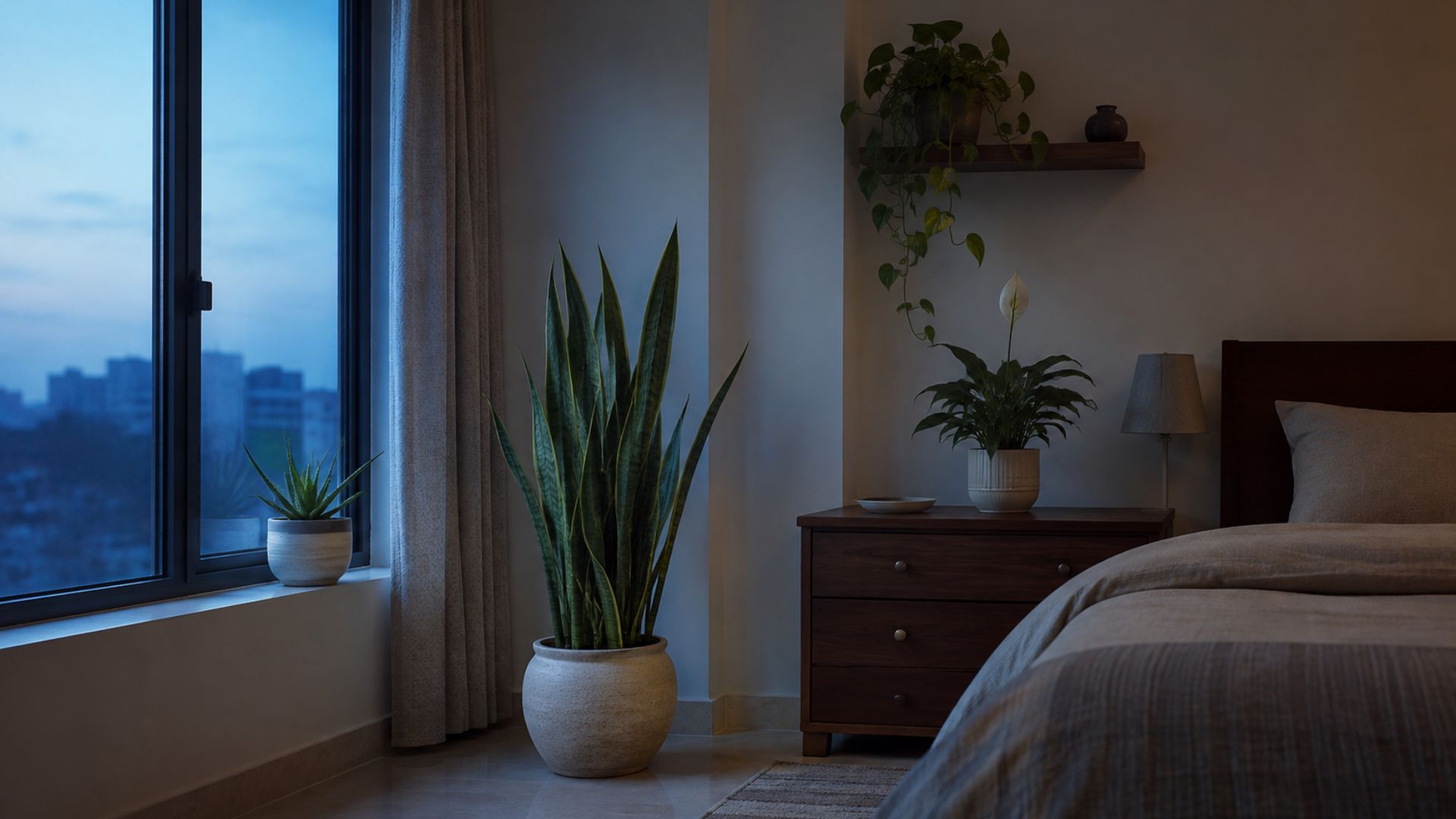
7 bedroom plants, including Snake Plant and Aloe Vera, with the science behind nighttime oxygen, light needs, care tips, and the best choices for Indian homes.
Key Takeaways
- Snake Plant, Aloe Vera, Money Plant, Areca Palm, Peace Lily, Spider Plant, and Tulsi are commonly recommended as plants that release oxygen at night.
- Most plants absorb oxygen and release carbon dioxide at night. A small group, called CAM plants, work the opposite way: they take in carbon dioxide at night and continue releasing oxygen after dark.
- The carbon dioxide an ordinary houseplant releases overnight is far too small to affect a room's air quality; it is completely safe to sleep in a room full of plants.
- Air-purifying ability (filtering toxins) and nighttime oxygen release are two different things that often get mixed together online; this guide keeps them separate.
- A few pots will not replace ventilation in a large room, but they genuinely add fresher air, humidity, and a calmer feel to a bedroom.
Can a few plants on your nightstand actually help you breathe easier at night?
Not really, for most of them. The average houseplant does not meaningfully boost your bedroom's oxygen after dark. But a handful of plants, ones adapted to survive in deserts and dry climates, do something genuinely different: they flip their gas exchange and take in carbon dioxide at night instead of during the day. This is called CAM photosynthesis, and it's the real mechanism behind every "plants that give oxygen at night" list you've seen.
Here's the twist most of those lists skip: only a couple of the plants commonly recommended for bedrooms are true CAM performers.
The rest earn their spot for other reasons: air quality, humidity, and a general sense of calm. This guide walks through 7 plants worth having in your bedroom, either way.
Quick Overview
| Plant | CAM Plant (Night O₂) | Light Needed | Best For |
|---|---|---|---|
| Snake Plant | Yes | Low to bright indirect | Dark corners, bedside table |
| Aloe Vera | Yes | Bright/direct light | Sunny windowsill |
| Money Plant/Pothos | No | Low to bright indirect | Shelves, hanging planters |
| Areca Palm | No | Bright indirect | Adding humidity in dry weather |
| Peace Lily | No | Low to medium indirect | Low light dressers, side tables |
| Spider Plant | No | Low to bright indirect | Pet-friendly homes |
| Tulsi | No | Direct Sunlight | Sunny windowsills, cultural use |
How Plants Release Oxygen at Night
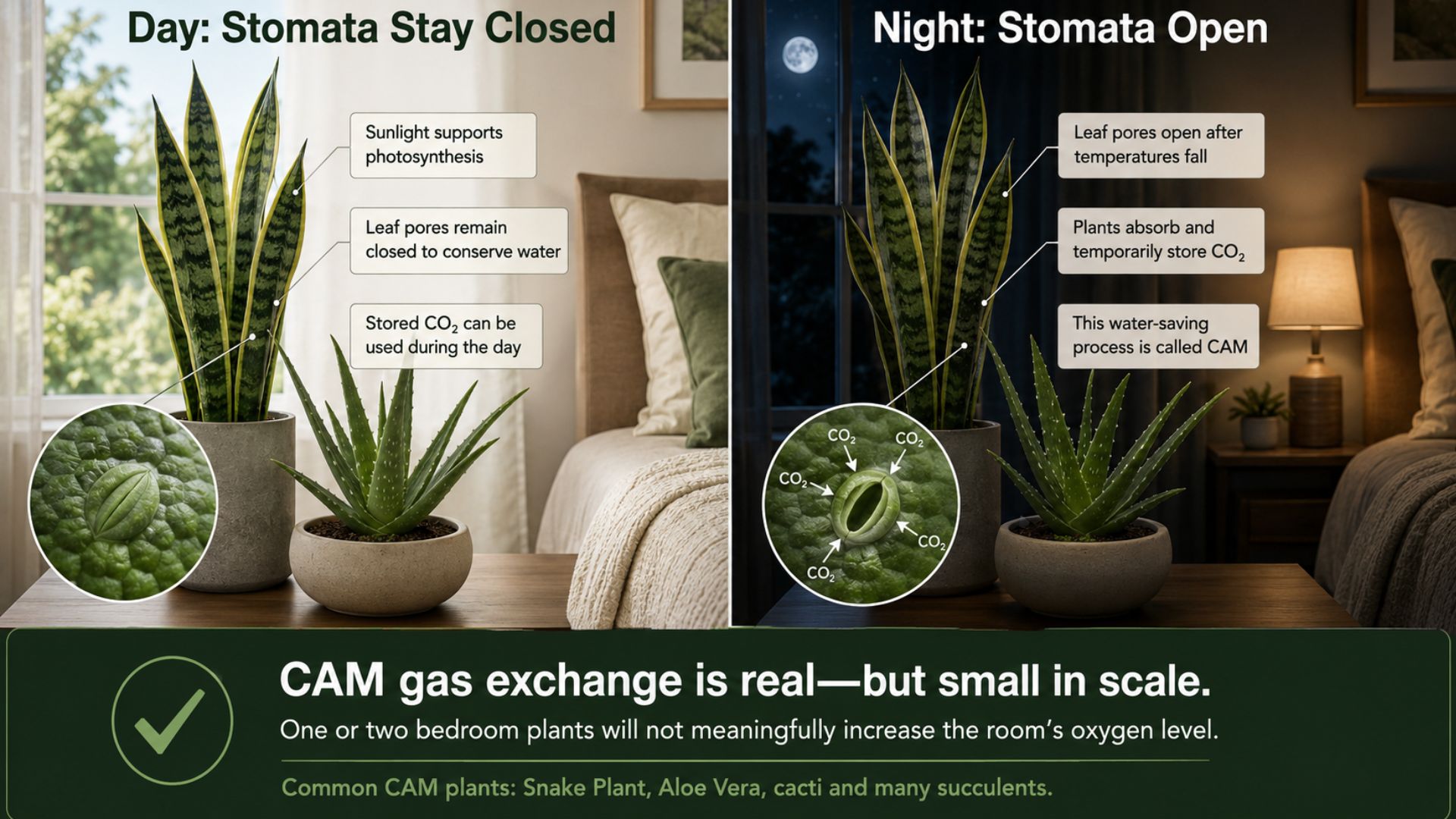
During the day, plants photosynthesise: they take in carbon dioxide, use sunlight to make energy, and release oxygen as a byproduct.
At night, without sunlight, most plants switch to respiration instead. Just like humans, they take in a small amount of oxygen and release carbon dioxide. A small group of plants works differently. Succulents, cacti, and a few other desert-adapted species use a process called Crassulacean Acid Metabolism, or CAM.
CAM plants conserve water by changing when they open their stomata. They keep these tiny leaf pores closed during the hot daytime. At night, they open them to take in carbon dioxide.
This lets them absorb carbon dioxide overnight and store it, rather than losing moisture through open pores in the heat of the day. Snake Plant, Aloe Vera, and other succulents are commonly cited as CAM plants.
Here is the honest caveat: this nighttime gas exchange is real and well documented, but it is a slow, low-volume process.
A pot or two on a bedside table will not meaningfully raise the oxygen level of a bedroom. The value of these plants at night is better understood as "they handle their own gas exchange more efficiently after dark."
Is It Safe to Sleep With Plants in the Room?
Yes. Every plant releases a small amount of carbon dioxide at night through respiration, including the ones on this list, but the quantity is negligible.
A sleeping adult releases far more carbon dioxide through normal breathing than a few potted plants ever will. There is no evidence that a bedroom with a handful of houseplants, even non-CAM ones, causes any harm overnight.
If you enjoy having greenery near your bed, there is no science-based reason to avoid it.
Which Plants Release Oxygen at Night?
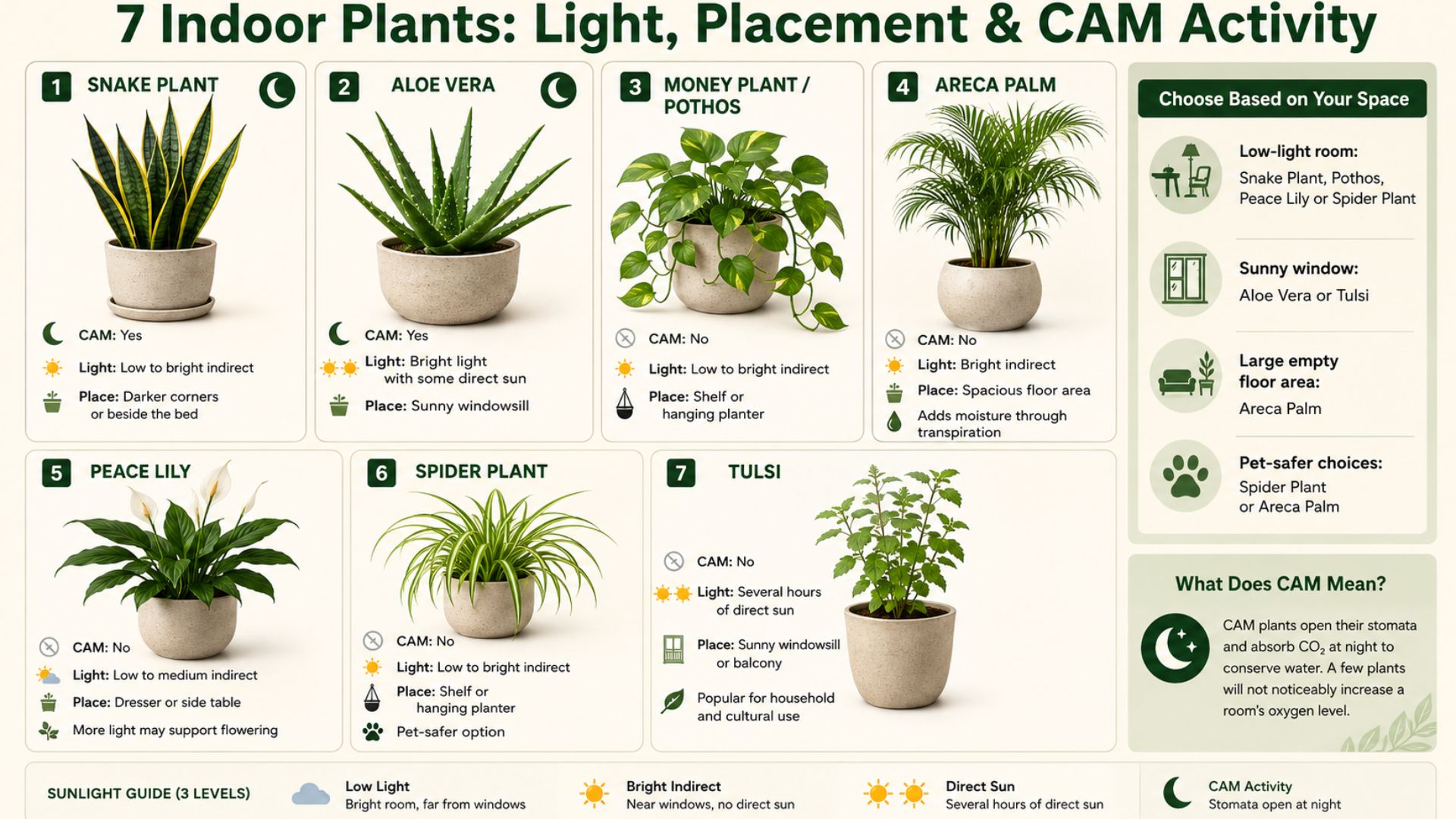
Each of these plants is available at Urvann and is commonly recommended for bedrooms, either for its CAM-driven nighttime gas exchange or its broader air-purifying reputation.
1. Snake Plant (स्नेक प्लांट)
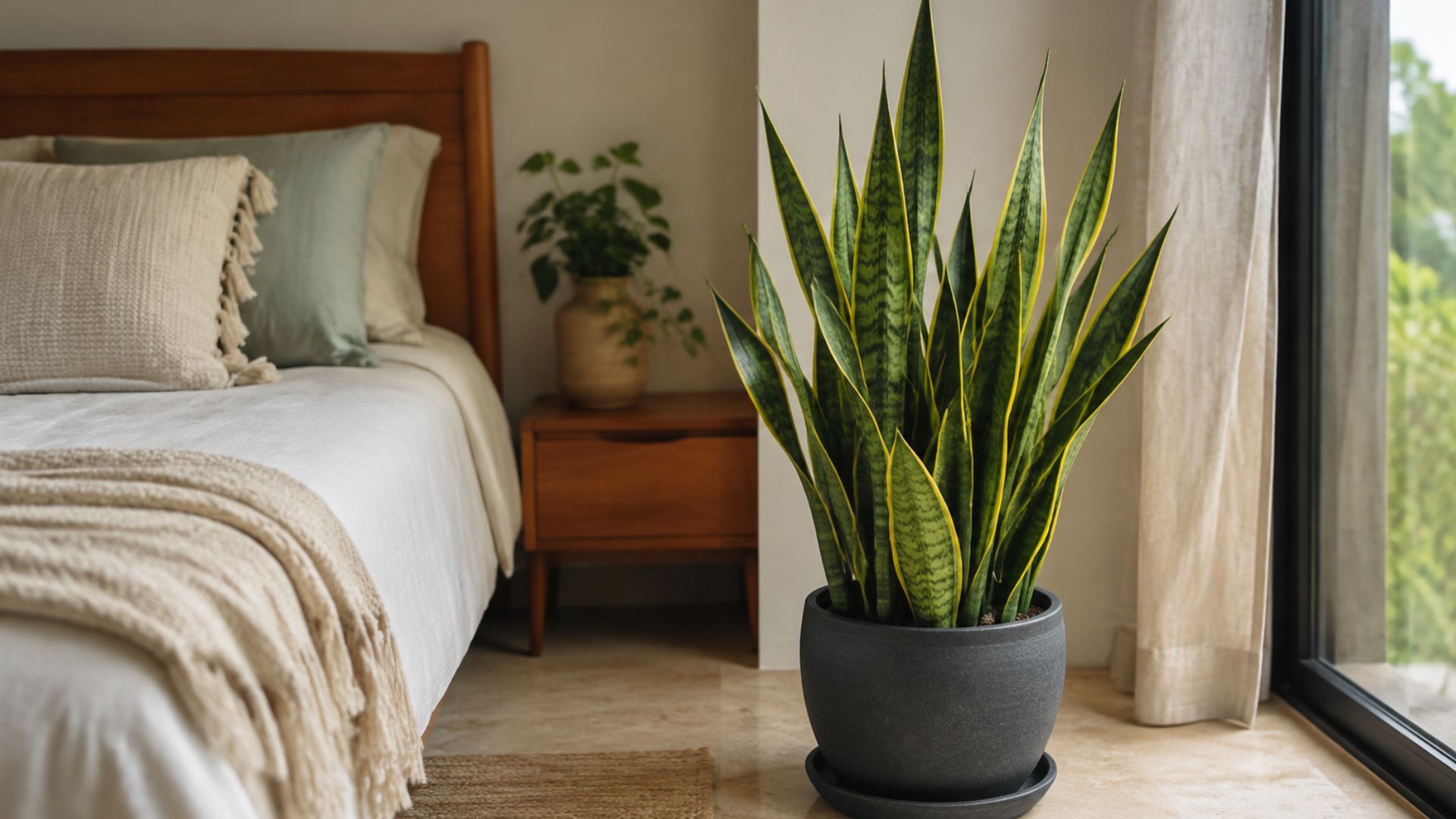
Snake Plant is the most frequently cited CAM plant for bedrooms.
It keeps its stomata closed during the day and open at night, absorbing carbon dioxide after dark. It is also an easy-to-care-for houseplant that can tolerate occasional mistakes.
- Light needed: Tolerates low light but does best in bright, indirect light
- Watering: Let the soil dry out completely between waterings; overwatering is the main risk
- Best spot in your bedroom: A bedside table or a corner that gets some indirect daylight
- Pro tip: It is also known for filtering common indoor toxins like formaldehyde, which adds to its bedroom appeal beyond the oxygen question.
Shop the Snake Plants at Urvann.
2. Aloe Vera (घृतकुमारी/ग्वारपाठा)
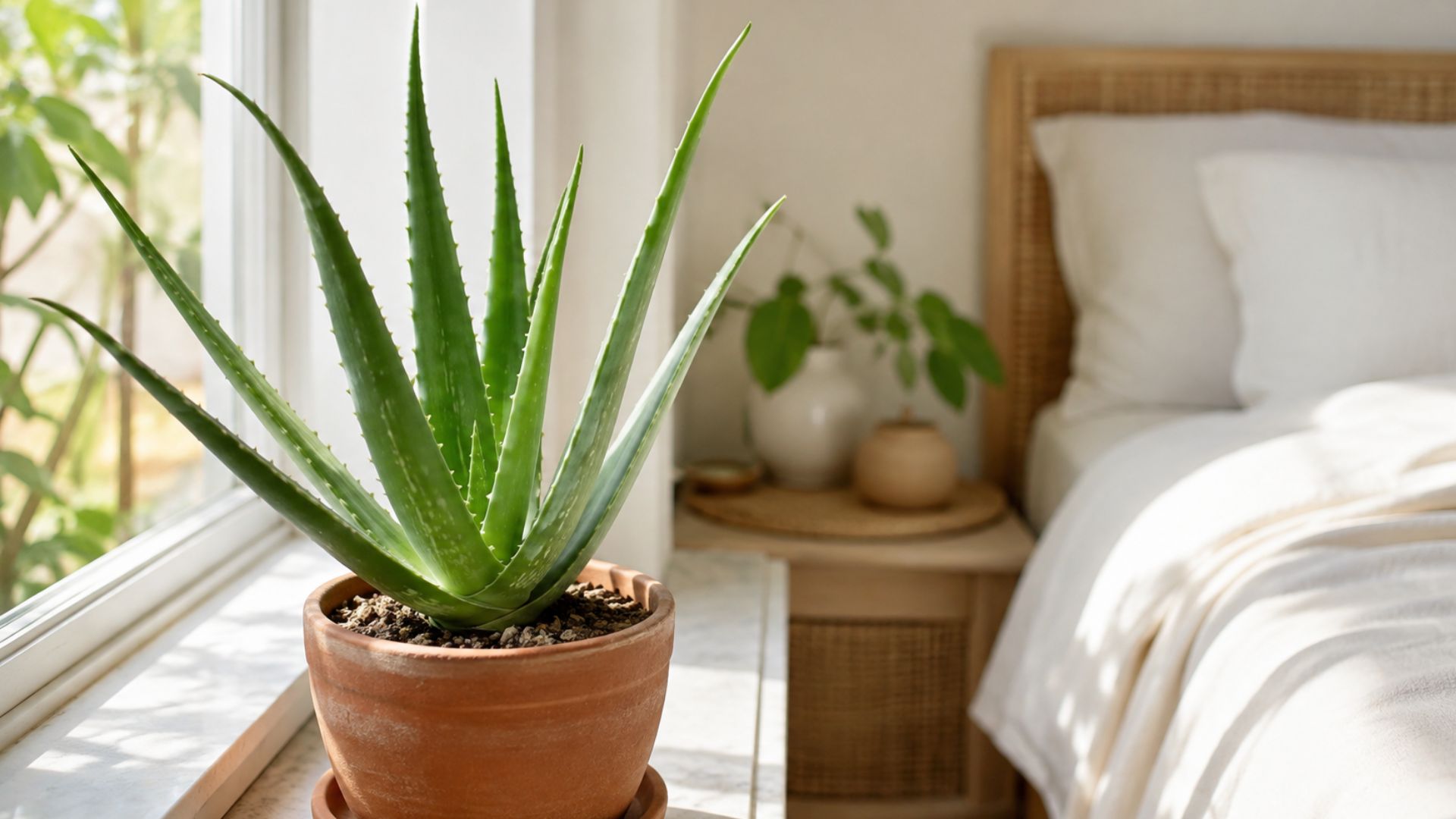
Like Snake Plant, Aloe Vera is a true CAM succulent, which is why it appears on nearly every list of nighttime oxygen plants.
It is also useful well beyond air quality, with a gel commonly used in skin care.
- Light needed: Needs bright light; a sunny window is ideal
- Watering: Water deeply but infrequently, letting the soil dry out fully between waterings
- Best spot in your bedroom: A sunny windowsill or bright side table
- Pro tip: Avoid overwatering. Aloe Vera is far more likely to suffer from too much water than too little.
Shop the Aloe Vera plants at Urvann.
3. Money Plant / Pothos (मनी प्लांट/पैसा बेल)
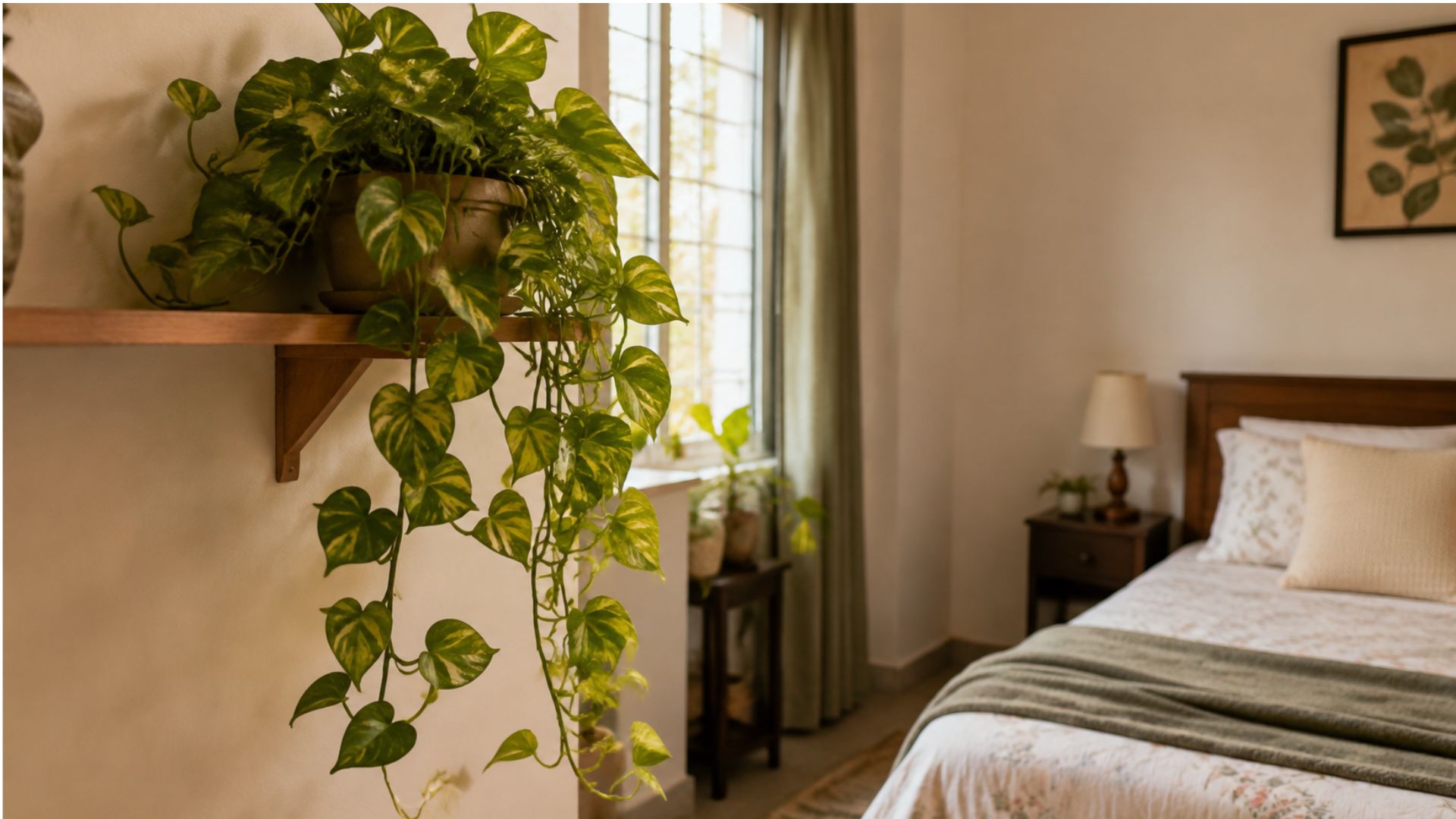
Money Plant is not a CAM plant.
Still, it is a popular bedroom plant in India. It is easy to care for and is often associated with good luck. It can also photosynthesise in low light, making it a good choice for bedrooms.
- Light needed: Adapts well to low to bright indirect light
- Watering: Water when the top inch of soil feels dry, or grow it in a jar of water
- Best spot in your bedroom: A shelf, hanging planter, or trained along a small trellis
- Pro tip: It is mildly toxic if ingested, so keep it out of reach of pets and small children.
Shop the Money Plants at Urvann.
4. Areca Palm (अरेका पाम)
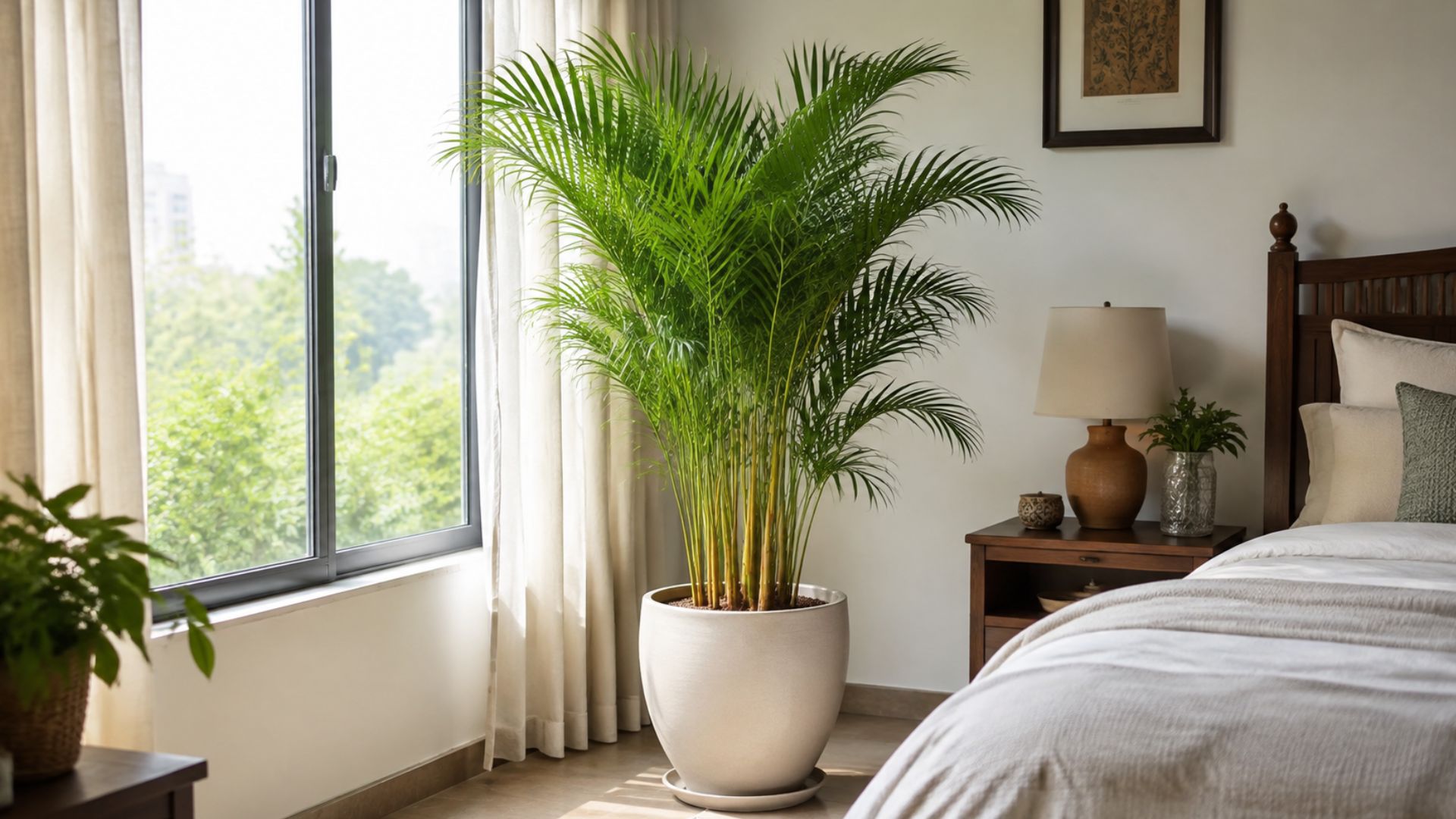
Areca Palm is not a CAM plant either.
However, it is popular for improving indoor air quality and adding moisture to the air. This makes it especially useful in bedrooms during dry weather.
- Light needed: Prefers bright, indirect light; avoid harsh direct afternoon sun
- Watering: Keep the soil lightly moist; water when the top inch feels dry
- Best spot in your bedroom: A floor corner with some natural light
- Pro tip: A mature Areca Palm releases moisture into the air, which can help with dry indoor air during winter.
Shop the Areca Palms at Urvann.
5. Peace Lily (शांति लिली)
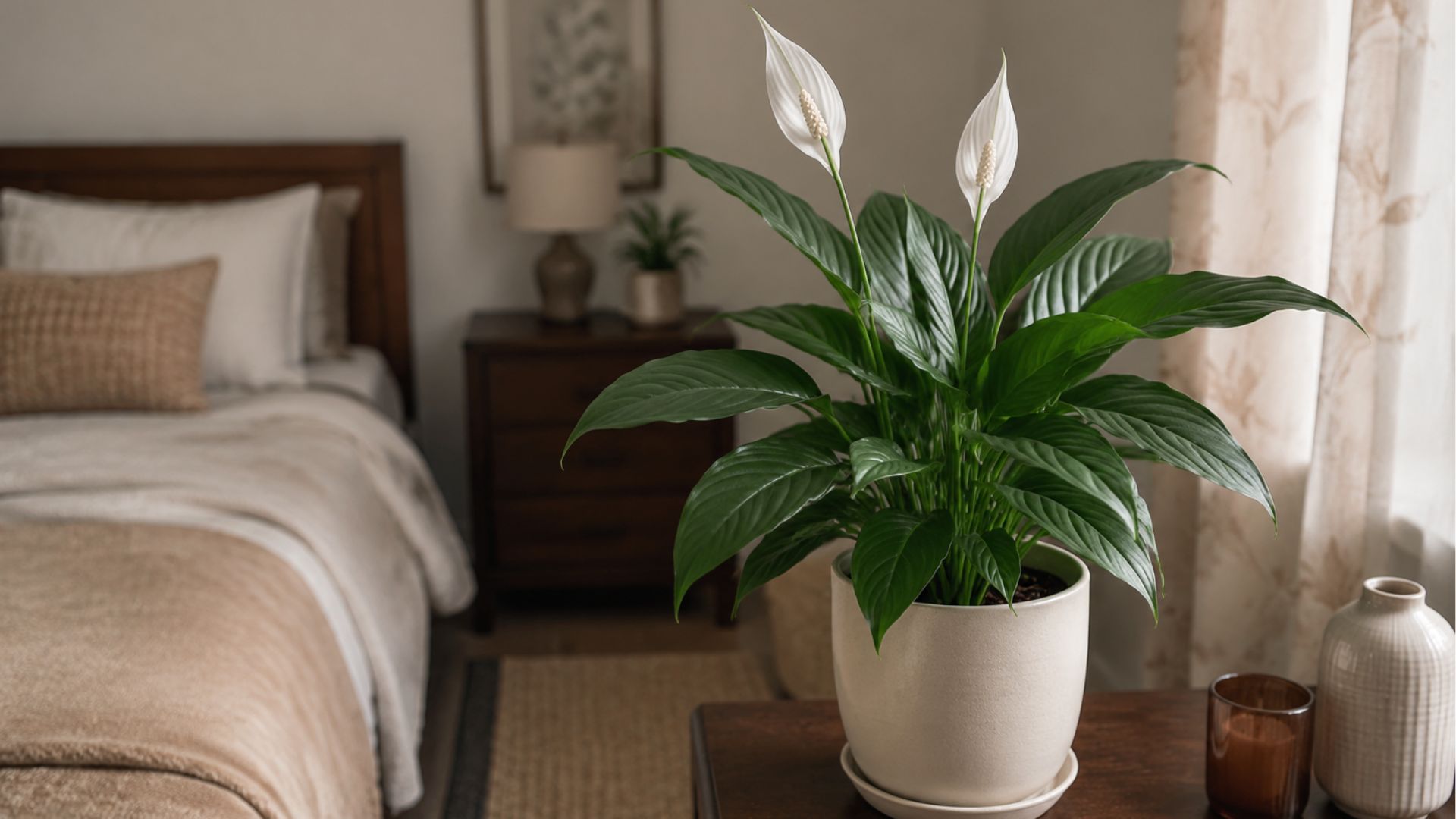
Peace Lily is not a CAM plant.
However, it is a popular bedroom plant because of its air-purifying reputation and beautiful white flowers. It grows well in low, indirect light, which makes it a good choice for bedrooms.
- Light needed: Prefers low to medium indirect light; avoid direct sun
- Watering: Keep soil lightly moist; drooping leaves are a clear, harmless watering cue
- Best spot in your bedroom: A dresser or side table away from direct sun
- Pro tip: It is mildly toxic if ingested, so keep it away from pets.
Shop the Peace Lilies at Urvann.
6. Spider Plant (मकड़ी का पौधा)
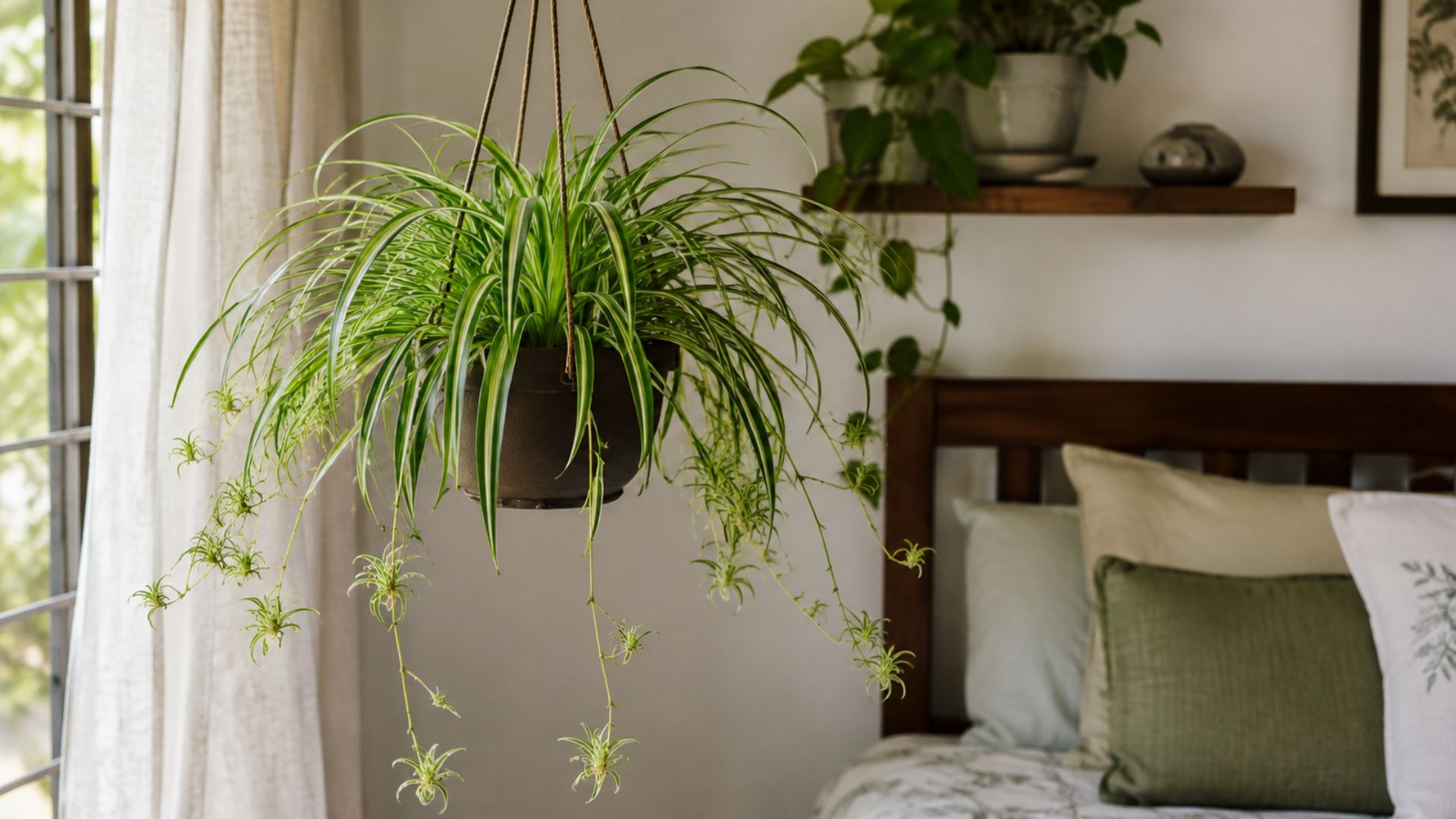
Spider Plant is easy to care for, making it a popular bedroom plant.
It can tolerate low light and is often recommended for its air-purifying reputation. You can also easily grow new plants from the small baby plants it produces.
- Light needed: Adapts well to low to bright indirect light
- Watering: Water when the topsoil dries out, roughly once a week
- Best spot in your bedroom: A shelf or hanging planter
- Pro tip: It is pet-friendly, making it a safe choice for bedrooms shared with cats or dogs.
Shop the Spider Plants at Urvann.
7. Tulsi (तुलसी)
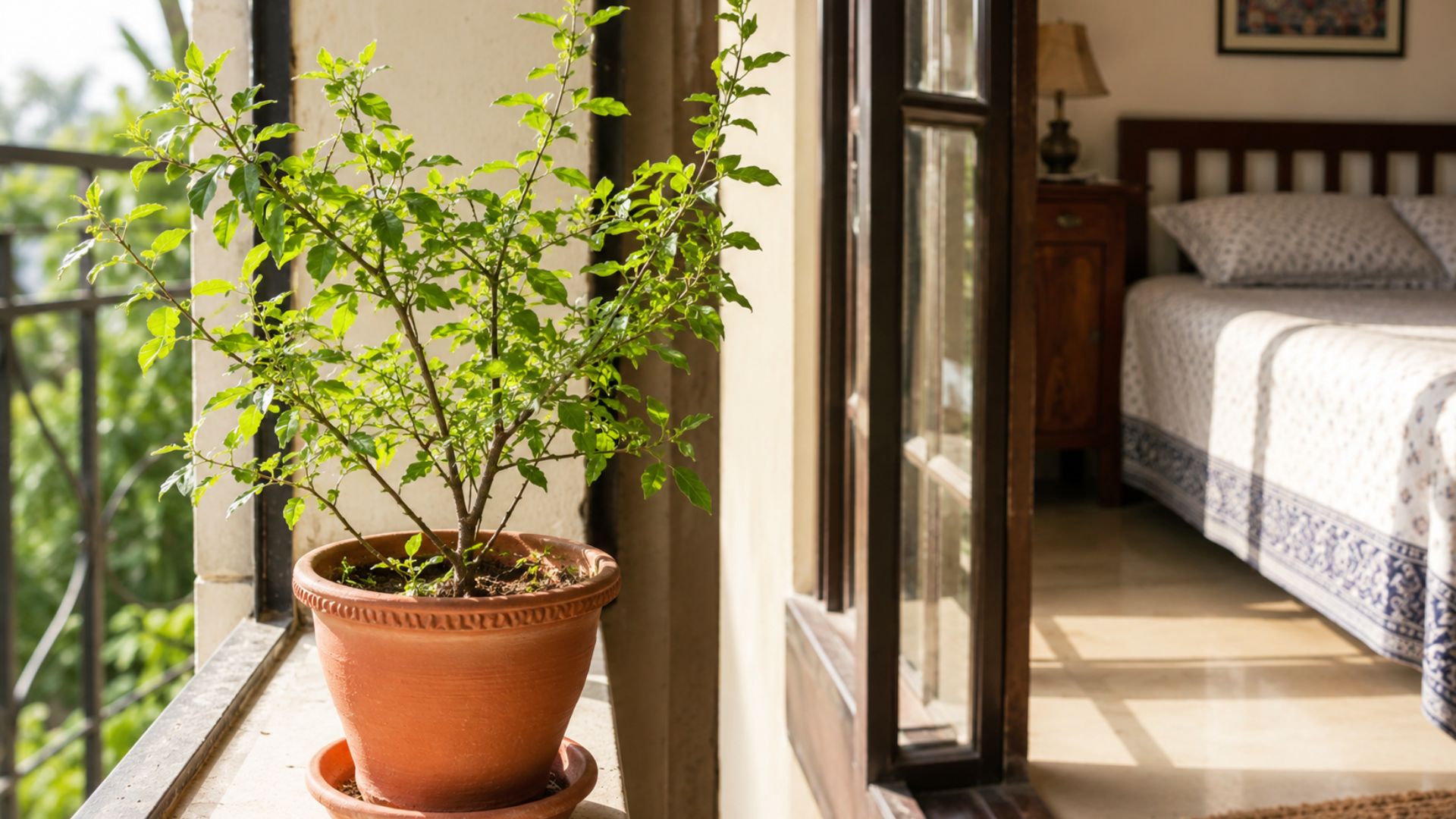
Tulsi has deep cultural and religious importance in Indian homes.
It is also widely believed to help purify the air. Tulsi needs plenty of sunlight, so place it on a bright windowsill rather than in a dark corner of your bedroom.
- Light needed: Needs several hours of direct sunlight; place it in your brightest window
- Watering: Water regularly, keeping soil moist but well-drained
- Best spot in your bedroom: A sunny windowsill; it will struggle in a low-light corner
- Pro tip: Avoid chemical fertilizers on Tulsi if you plan to use its leaves for tea or home remedies.
Shop the Tulsi plants at Urvann.
What About Peepal and Neem? Trees That Release Oxygen at Night

Peepal (Ficus religiosa) and Neem (Azadirachta indica) show up often in searches about nighttime oxygen because both are widely believed in Indian tradition to continue purifying the air after dark.
Both are large trees, so they are not suitable for growing indoors or in a bedroom. If you have a garden, courtyard, or spacious balcony, you can grow a young Peepal or Neem sapling outdoors. They can become a meaningful addition to your greenery over time. Just remember that these are trees, not houseplants.
Browse Urvann's Peepal and Neem collection if you have space in your garden for trees like this.
Do These Plants Work in the Living Room Too?
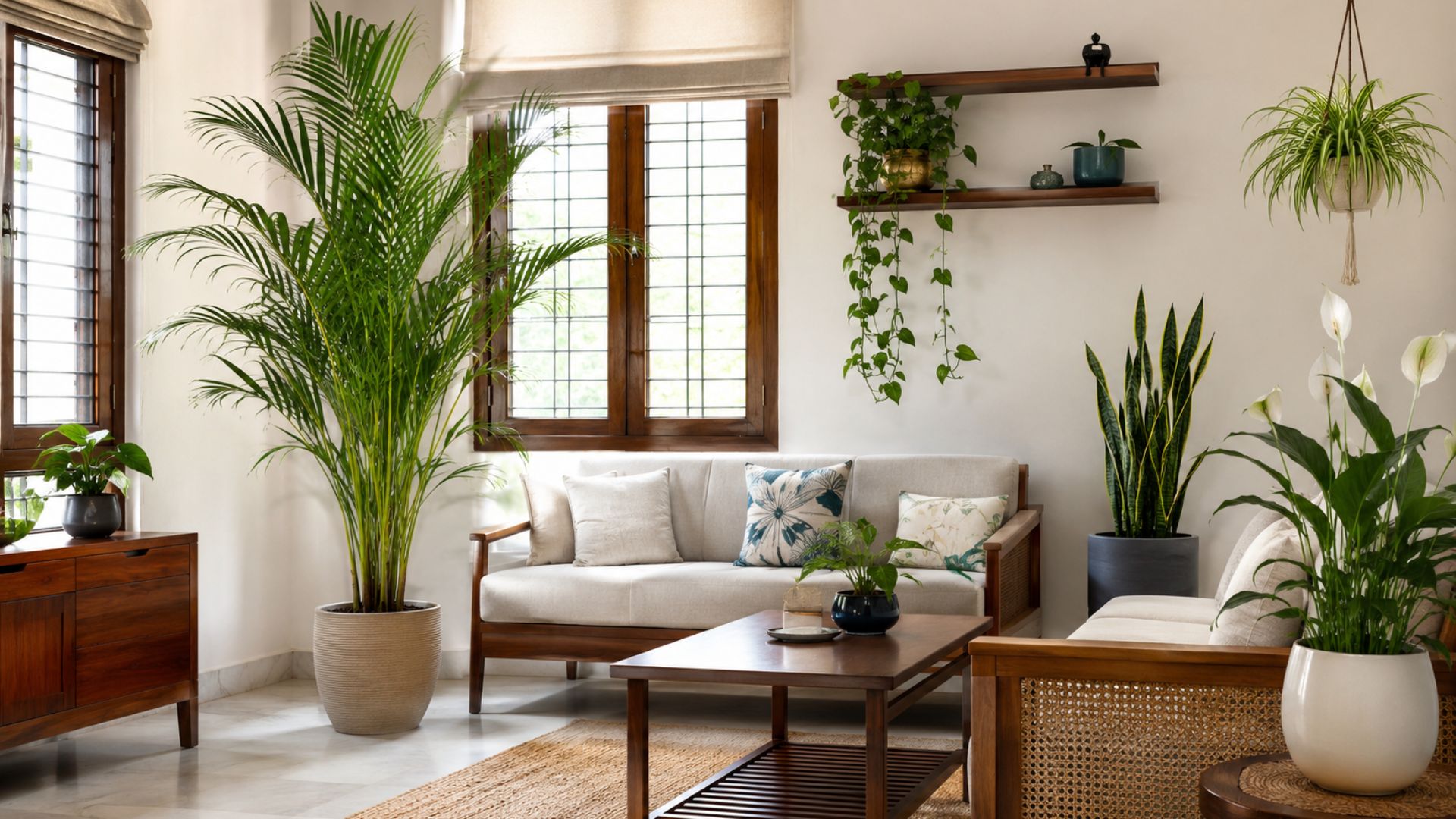
Yes. Money Plant, Areca Palm, Snake Plant, Spider Plant, and Peace Lily are all good choices for living rooms.
Living rooms usually get more natural light and have more space than bedrooms. This makes them a good spot for larger plants, such as a floor-standing Areca Palm or a tall Snake Plant. These plants may feel too large for a small bedside table.
Explore Urvann's full living room plant collection for more options.
How Many Plants Do You Need in a Bedroom?

A commonly cited gardening guideline suggests roughly one medium-sized plant per 100 square feet of living space for a noticeable improvement in air quality.
For an average Indian bedroom, that usually works out to 2 to 4 plants of mixed sizes. There is no need to overcrowd a small room. A Snake Plant on the nightstand and a Money Plant on a shelf is a perfectly reasonable starting point.
Care Tips for Bedroom Plants
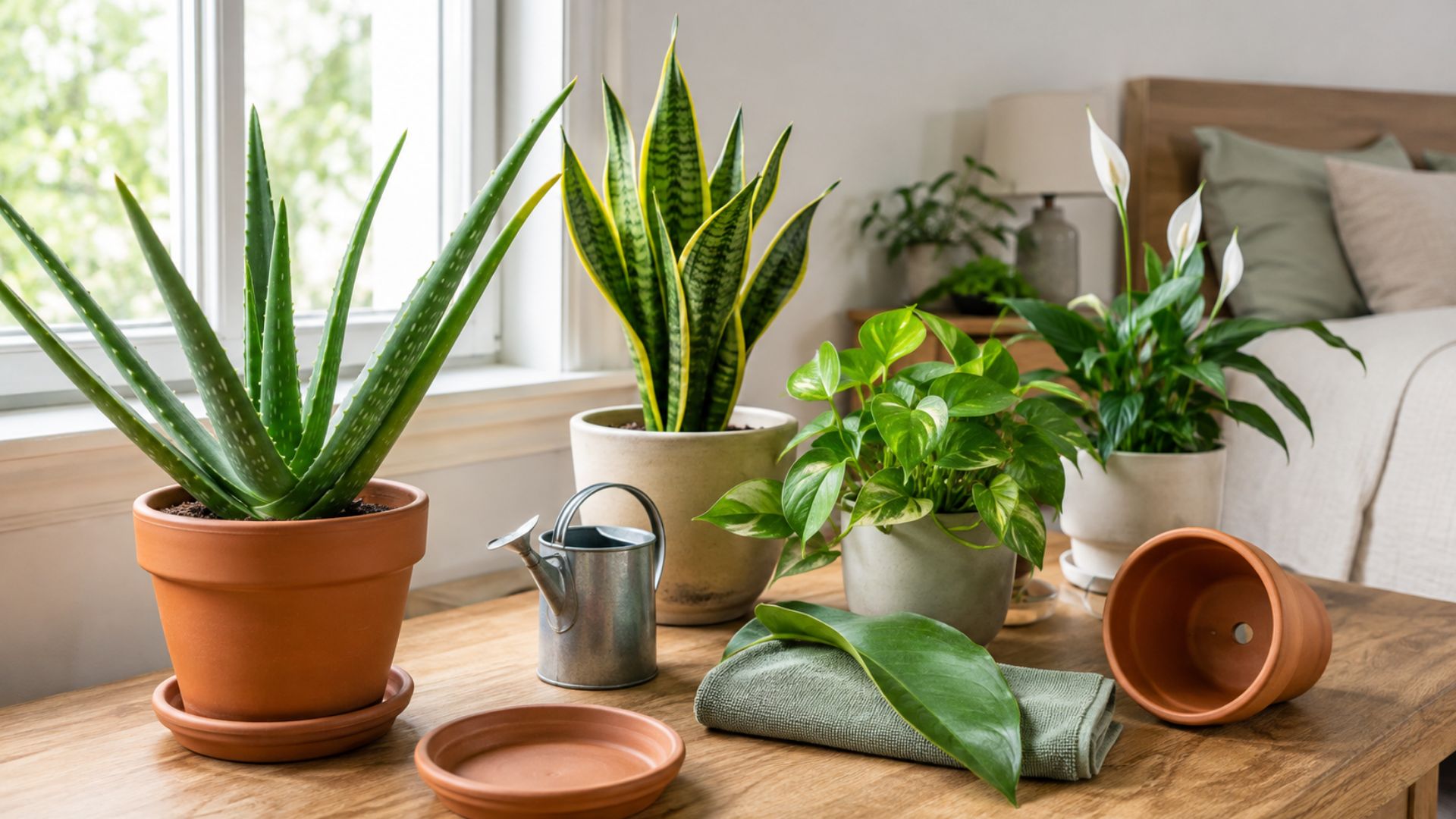
- Match light to the plant: Aloe Vera and Tulsi need real sunlight; Snake Plant, Money Plant, Peace Lily, and Spider Plant tolerate lower bedroom light
- Don't overwater CAM plants: Snake Plant and Aloe Vera store water in their leaves and are more likely to suffer from too much water than too little
- Wipe the leaves occasionally: Dust buildup blocks light and slows photosynthesis; a damp cloth every couple of weeks keeps leaves working efficiently
- Use a well-draining pot: A pot with a drainage hole prevents water from sitting around the roots, especially important for succulents like Aloe Vera
Buying Oxygen-Giving Plants Online
Found a plant that suits your bedroom?
You can order nursery-grown indoor plants online from Urvann. It offers free next-day delivery across Delhi NCR and Bangalore on orders placed before 7 PM, with plants quality-checked before they leave the nursery.
Browse Urvann's full collection of oxygen-giving plants to find a suitable plant for your bedroom.
Frequently Asked Questions (FAQs)
1. Which plant gives oxygen 24 hours a day?
No plant produces large amounts of oxygen throughout the day and night. However, Snake Plant and Aloe Vera are often called “24-hour oxygen” plants. This is because they use CAM photosynthesis, which allows them to exchange gases at night. Most plants mainly do this during the day.
2. Does Snake Plant really release oxygen at night?
Snake Plant is a CAM plant. It opens its stomata at night and absorbs carbon dioxide after dark. This nighttime gas exchange is well documented. However, the amount of oxygen it produces is small, so one Snake Plant will not make a noticeable difference to your bedroom's air quality.
3. Does Money Plant release oxygen at night?
Money Plant is not a CAM plant. So, it does not have the same nighttime gas exchange as Snake Plant or Aloe Vera. It is still a popular bedroom plant because of its air-purifying reputation. It can also continue photosynthesising in low indoor light.
4. Which plant gives the most oxygen?
Larger plants with more leaves, such as Areca Palm and Rubber Plant, can help improve indoor air quality. They are often recommended as good air-purifying plants. For plants that can exchange gases at night, Snake Plant and Aloe Vera are the most commonly recommended choices.
5. Is it safe to sleep in a room full of plants?
Yes. All plants release a small amount of carbon dioxide at night through respiration, but the quantity is far too low to cause any harm. A sleeping adult exhales significantly more carbon dioxide than a room full of houseplants ever would.
6. Does Tulsi release oxygen at night?
Tulsi is widely believed in Indian tradition to purify the air both day and night and is a popular choice for homes for its medicinal and religious significance. It needs considerably more direct sunlight than most bedroom plants, so it does best on a sunny windowsill rather than a dim corner.
7. Which tree releases oxygen at night?
Peepal (Ficus religiosa) is the tree most commonly cited for nighttime oxygen release in Indian tradition, alongside Neem. Both are large outdoor trees best suited to a garden or courtyard rather than an indoor bedroom.
8. What is the best oxygen-giving plant for a dark bedroom?
Snake Plant is the most reliable choice for a bedroom with little natural light. It is a CAM plant, tolerates low light well, and needs very little maintenance compared to sun-loving options like Aloe Vera and Tulsi.