


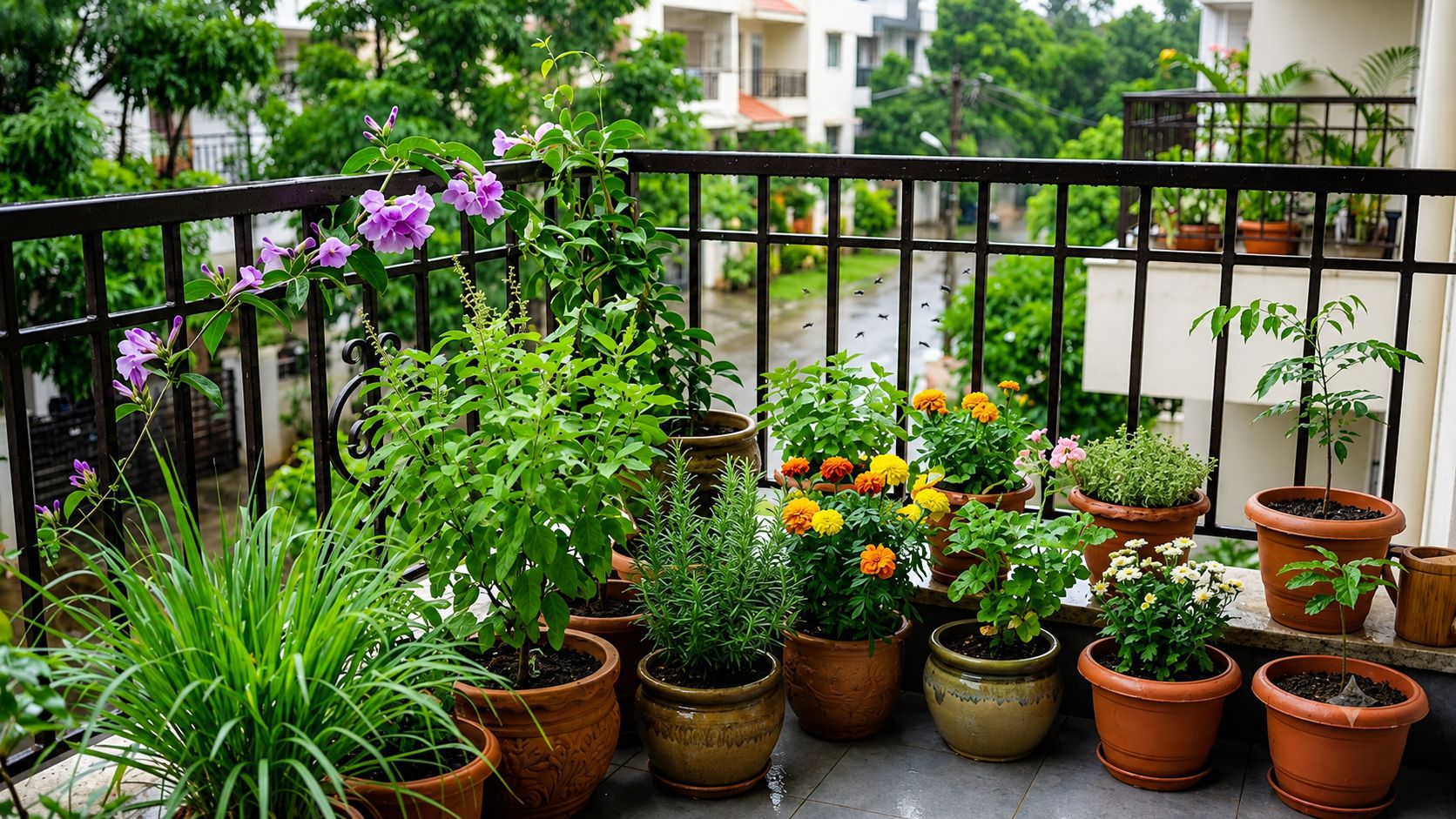
Growing plants like Tulsi, Rosemary, Lemon Grass, and Marigold at home is a natural, low-cost way to keep mosquitoes away during the monsoon.
Key Takeaways
- Plants like Tulsi, Rosemary, Lemon Grass, and Marigold release natural oils that mosquitoes actively avoid.
- The repellent effect works best when leaves are crushed or brushed against, not just left sitting in a pot.
- A mix of 4 to 6 plants, combining a tall one like Lemon Grass with smaller ones like Marigold or Tulsi, gives the best scent coverage on a balcony.
- Plants reduce mosquito activity but do not fully replace nets or sprays in heavy infestation areas.
- Preventing stagnant water in pots and trays matters just as much as the plants themselves, since standing water is where mosquitoes actually breed.
- All 10 plants in this list are low-maintenance and suitable for Indian homes, balconies, and monsoon humidity.
The rain brings relief from the heat, but it also brings mosquitoes indoors. Damp corners, waterlogged pots, and humid balconies become breeding grounds within days. Before you reach for another coil or spray, there is a simple fix already growing in pots all around India: plants.
Several common houseplants and herbs release natural oils that mosquitoes and other insects actively avoid. Keep a few of these near your windows, entryway, or balcony seating, and you get a home that smells good, looks good, and keeps the bugs at a distance.
Here are 10 insect repellent plants you can actually buy and grow at home this monsoon.
How Do Insect Repellent Plants Actually Work?
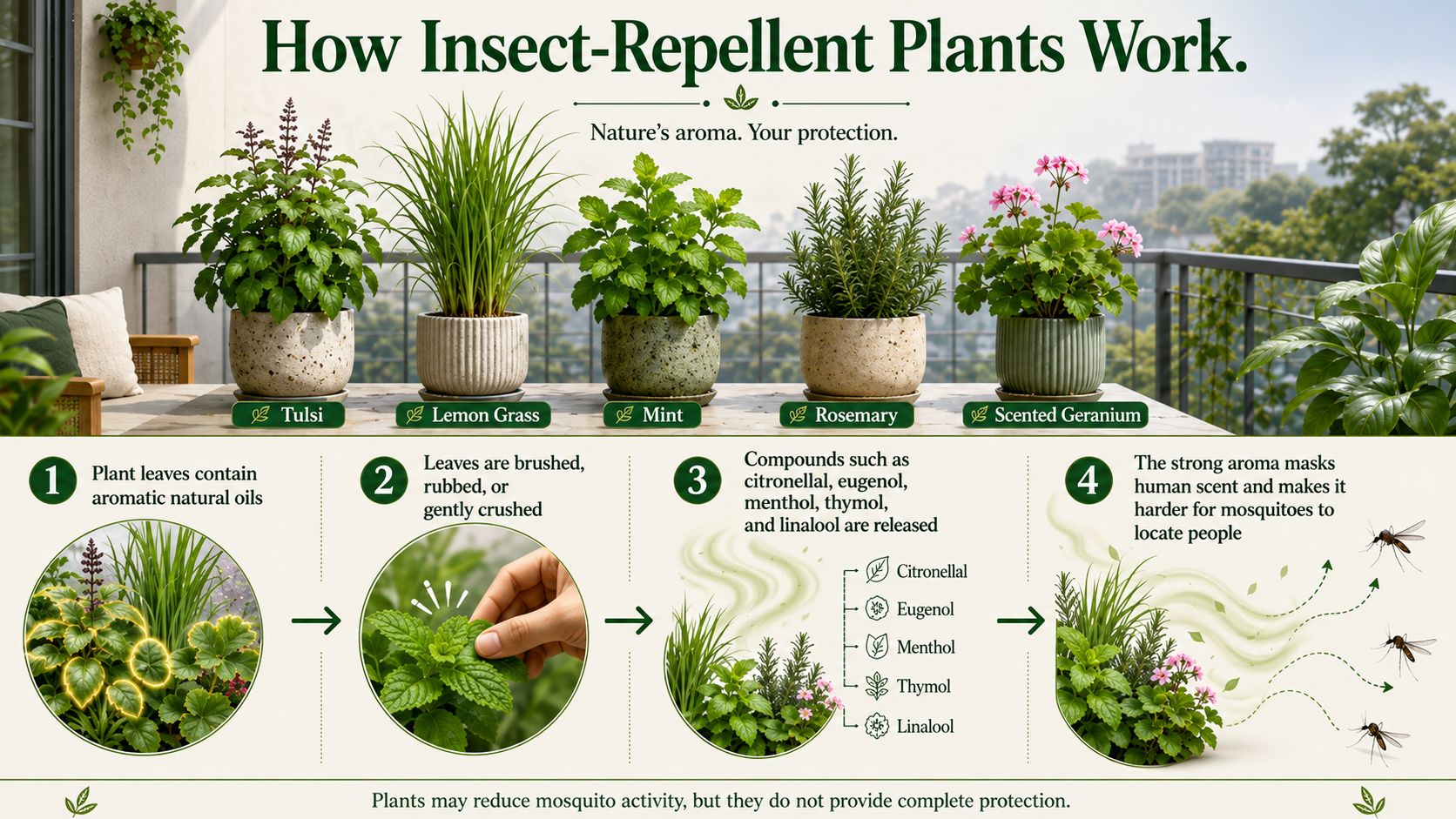
These plants release aromatic compounds like citronellal, eugenol, and linalool from their leaves.
Mosquitoes use scent to find people, and these oils confuse or mask that scent. The effect works best when the leaves are crushed or gently rubbed, since that releases more of the oil into the air. Simply placing a pot on the balcony helps a little. Brushing past it or crushing a leaf now and then helps a lot more.
Note: Plants alone will not give you 100% protection. Pair them with basic monsoon hygiene, like avoiding stagnant water in trays and saucers, for the best results.
Top 10 Insect Repellent Plants for Indian Homes
1. Tulsi (तुलसी/Holy Basil)
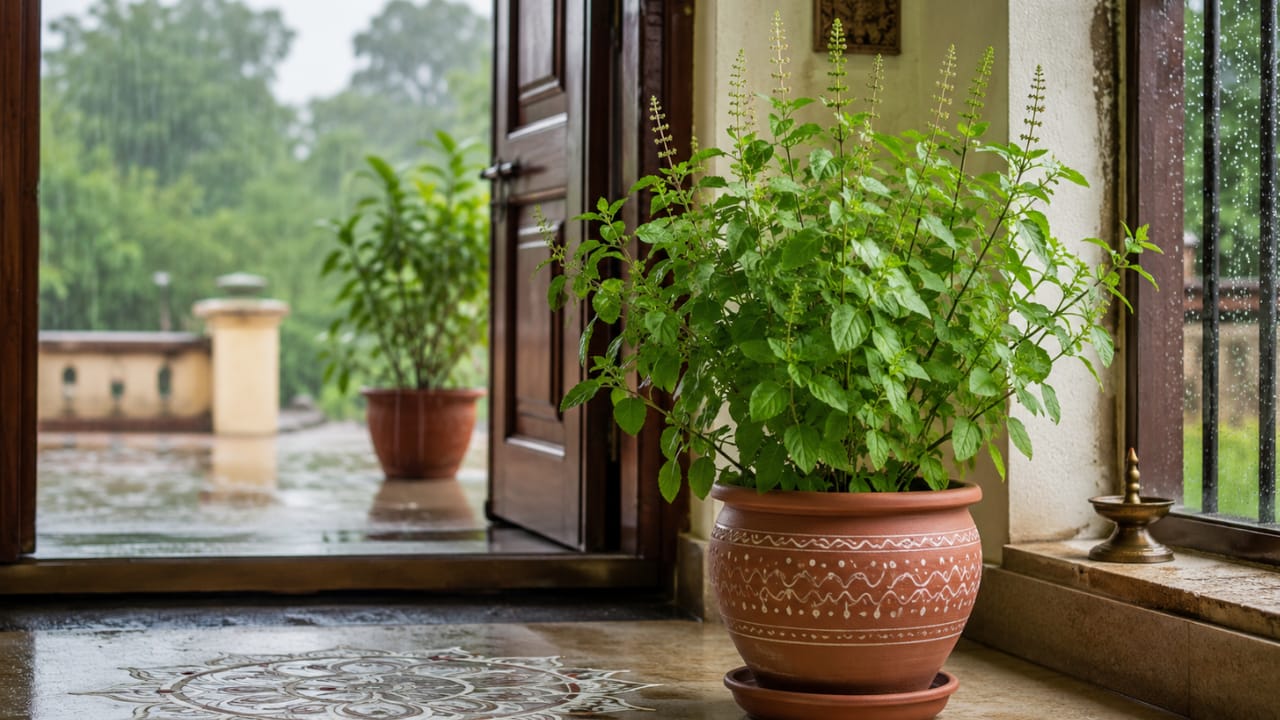
Tulsi is already known in most Indian homes for its spiritual value, but its clove-like scent also works against mosquitoes.
The natural compound eugenol in its leaves is what insects dislike. Eugenol works by interfering with a mosquito's ability to detect carbon dioxide and body heat, which is how they locate humans.
Crushing 2-3 leaves and rubbing them near ankles or wrists gives a short window of natural protection, a practice common in Indian households during monsoon evenings. Keep a Tulsi pot near your main door or a window that gets morning sun.
You can find healthy Rama Tulsi and Shyama Tulsi plants on Urvann.
2. Rosemary (रोज़मेरी)
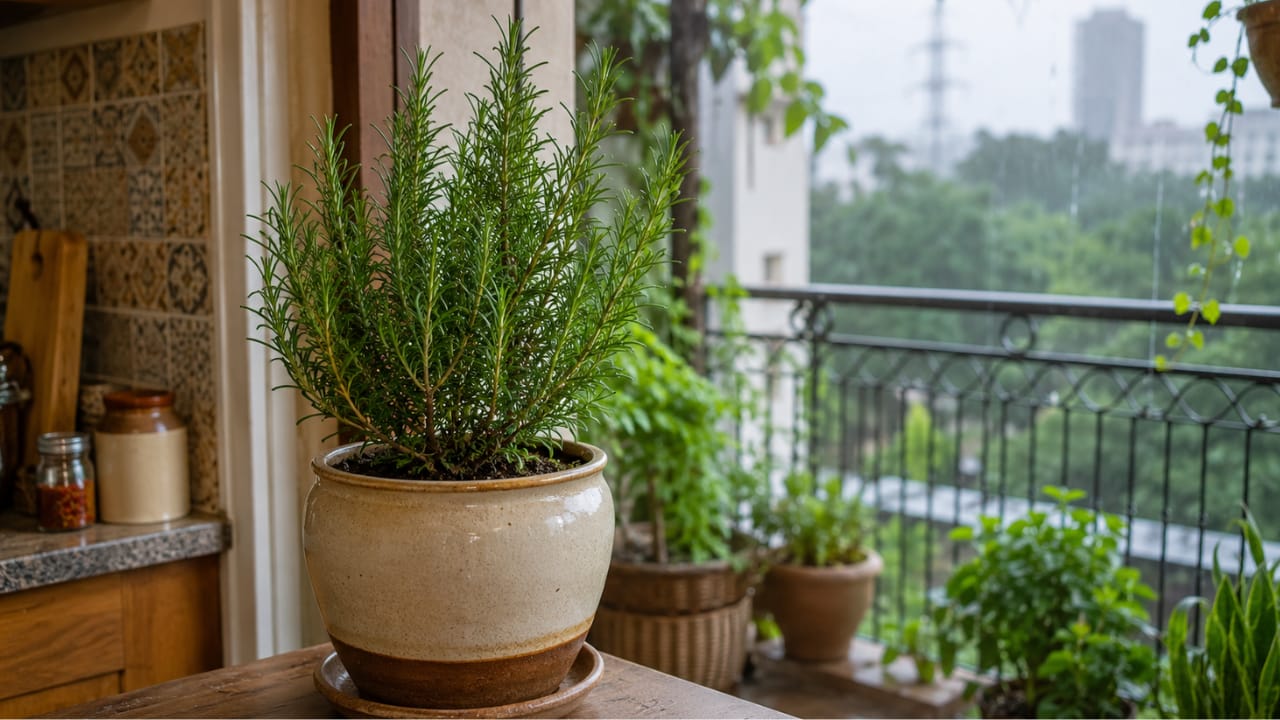
Rosemary has a strong, woody fragrance that mosquitoes and other pests avoid.
It prefers bright light and does not like sitting in wet soil. Burning a few dried Rosemary sprigs is a traditional way to drive mosquitoes out of a room, since the smoke carries the same oils that repel them when fresh. Brushing against the plant while watering also releases camphor and eucalyptol into the air, keeping the immediate area less attractive to mosquitoes. During the monsoon, keep it somewhere it can get airflow and won't stay soggy.
Want to grow Rosemary at home? You can find healthy Rosemary plants on Urvann.
3. Lemon Grass (लेमन ग्रास)
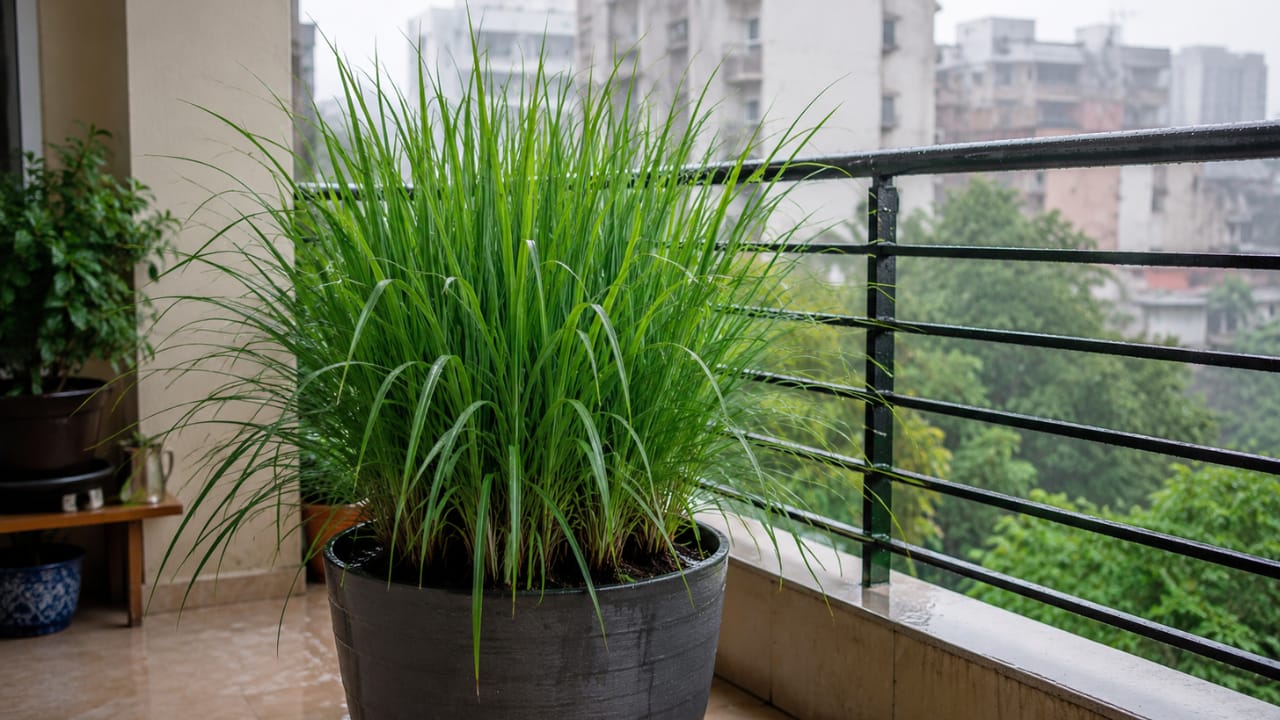
Lemon Grass is one of the most recognised mosquito repelling plants in India, and for good reason.
It belongs to the same plant family as citronella and carries similar lemony oils. Lemon Grass oil is the base ingredient in most citronella candles and sprays sold in Indian markets, so growing the plant gives you the source material directly. Place it in a large pot near your balcony railing where it gets good sun. Crush a blade of grass between your fingers occasionally to release the scent, or snap a few blades and place them in a shallow bowl near seating areas for extra effect on monsoon evenings.
If you're planning to grow Lemon Grass this monsoon, you can easily order one from Urvann.
4. Marigold (गेंदा/Genda)
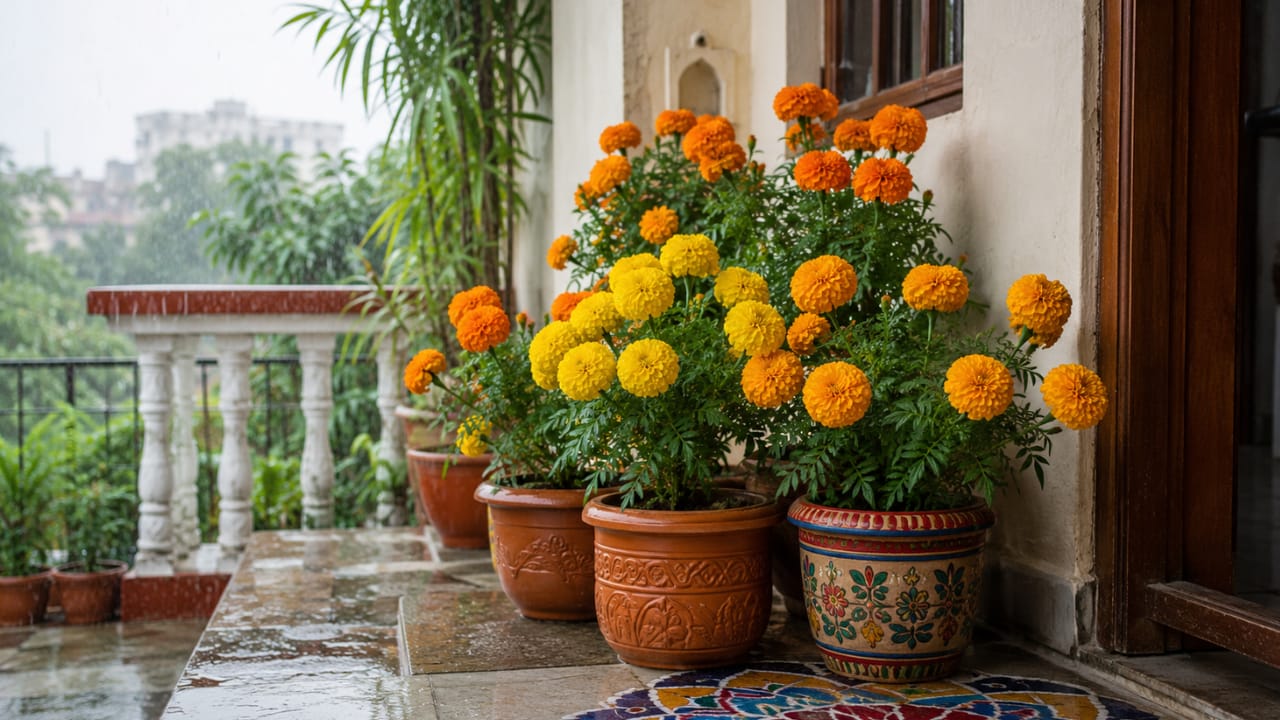
Marigold flowers contain a compound called pyrethrum, the same natural ingredient used in many commercial insect repellents.
Pyrethrum from Marigold is extracted commercially to make natural mosquito coils and sprays. Planting a border of Marigolds around a balcony or entrance creates a low barrier that mosquitoes tend to avoid crossing. Beyond mosquitoes, marigolds also help keep aphids and other small pests away from your other plants. They come in red, yellow, and orange, and are easy to grow even for beginners.
Looking for a plant that adds colour while helping keep insects away? You can find Marigold plants on Urvann.
5. Mint (पुदीना)
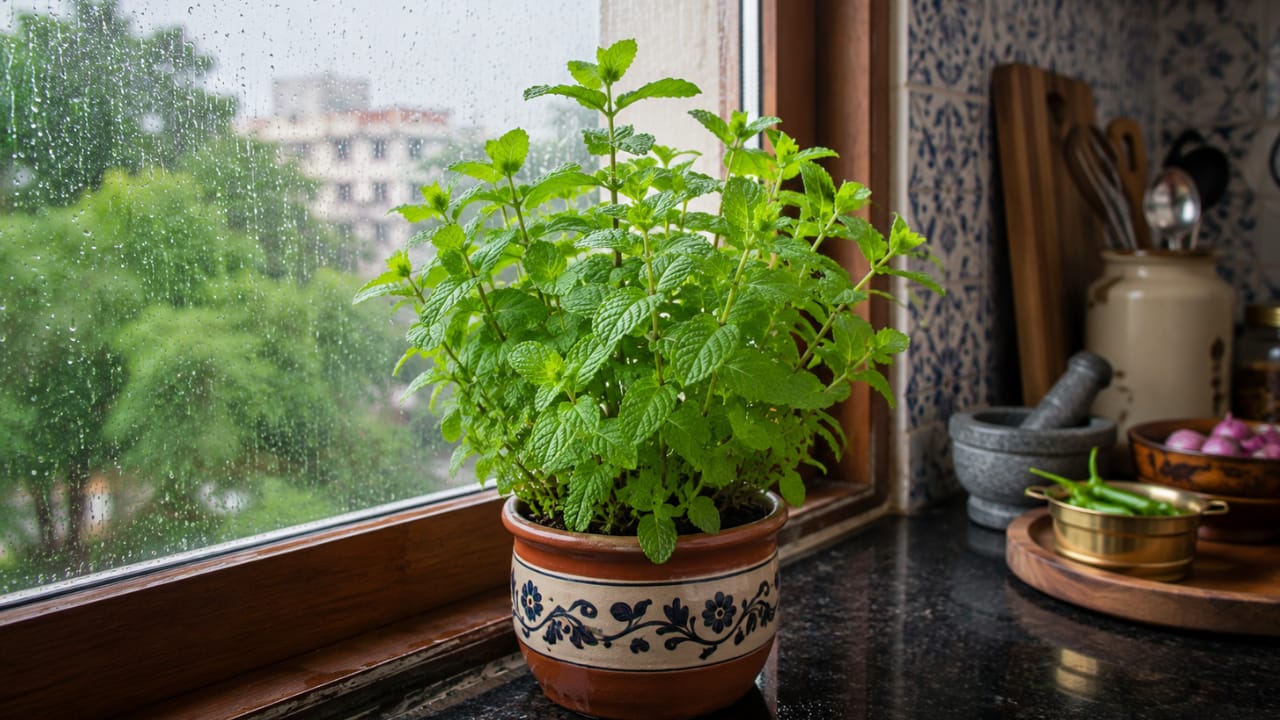
Mint releases menthol, a scent that overwhelms a mosquito's sense of smell.
Menthol irritates a mosquito's sensory receptors on contact, which is why crushed mint leaves are often rubbed directly on skin as a quick repellent. A pot by an open window during monsoon evenings cuts down on mosquitoes drifting in with the breeze. It is one of the easiest plants to maintain and grows fast, sometimes too fast. Keep it in its own pot rather than mixing it with other plants.
Want fresh Mint leaves within easy reach? You can find healthy Mint plants on Urvann.
6. Neem (नीम)
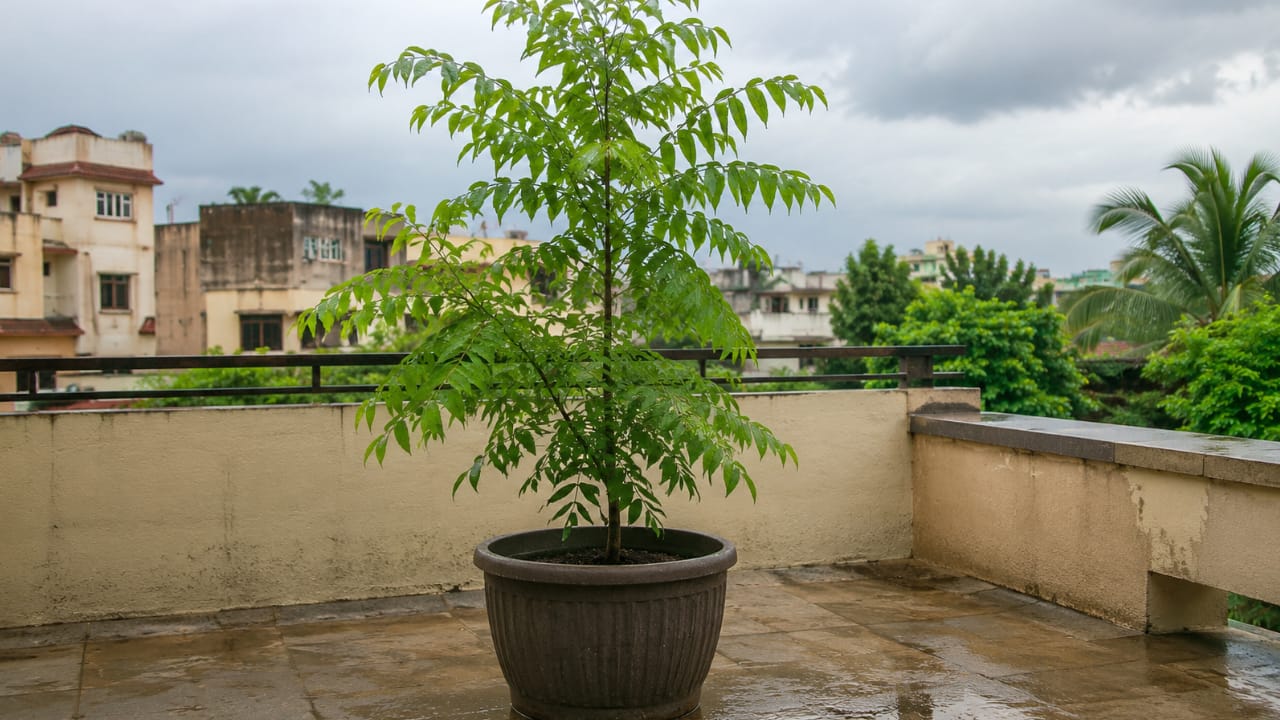
Neem is a well-known name in Indian households for its insect-repelling and antibacterial properties.
Its leaves contain azadirachtin and nimbin, compounds known for keeping mosquitoes and other pests away. Neem oil, extracted from the same leaves, is a common ingredient in Indian-made mosquito repellent creams and coils. Burning a few dried Neem leaves indoors is a common monsoon practice that drives mosquitoes out of a room within minutes. A dwarf Neem in a nursery bag works well in a larger container on a balcony or terrace.
If you have space for a larger balcony or terrace plant, you can find healthy Neem plants on Urvann.
7. Scented Geranium (सुगंधित जेरैनियम)
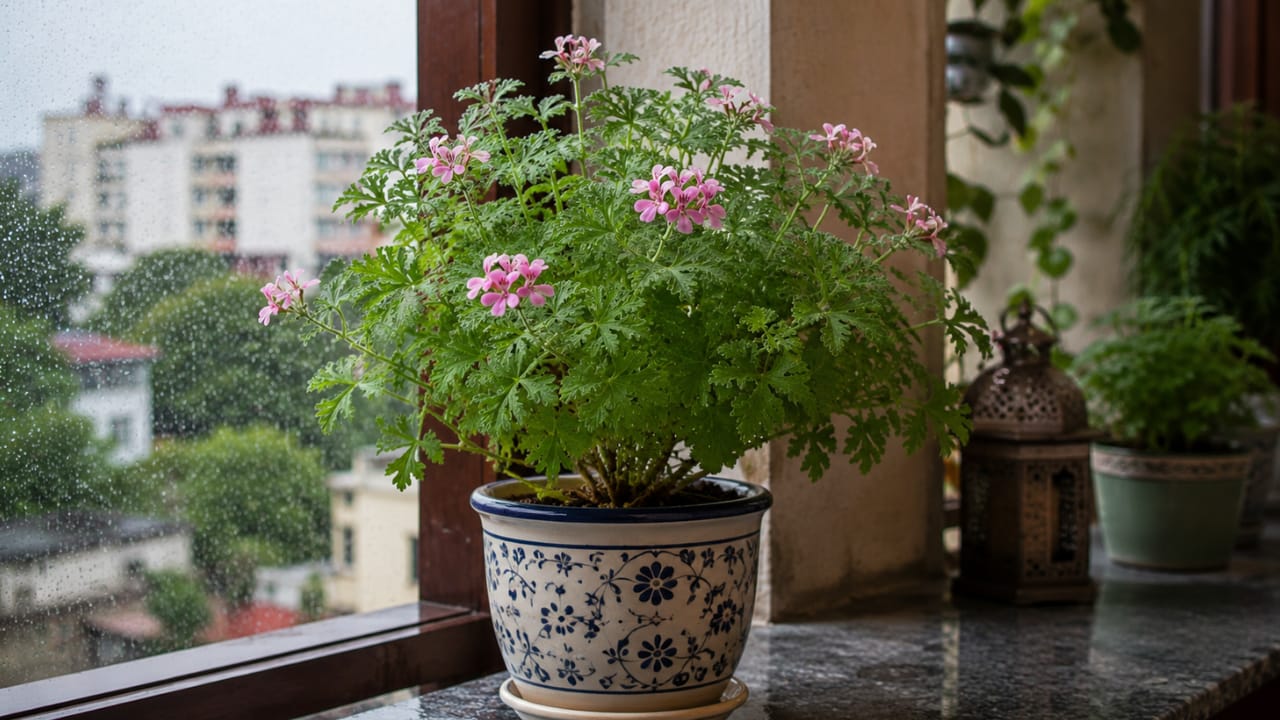
Scented Geranium is part of the same plant family as citronella and carries a similar lemony aroma.
Its citronellal content is close to true citronella, which is why nurseries often call it the "mosquito plant." Rubbing a leaf on exposed skin before sitting outdoors in the evening gives a quick layer of natural protection. It is a compact, flowering plant that looks good on a windowsill while doing the job of keeping mosquitoes at a distance. It prefers a sunny, dry spot, so give it good drainage during the rains.
Want a flowering plant with a fresh citrus-like fragrance? You can find Scented Geranium plants on Urvann.
8. Garlic Vine (लहसुन बेल/Lahsun Bel)
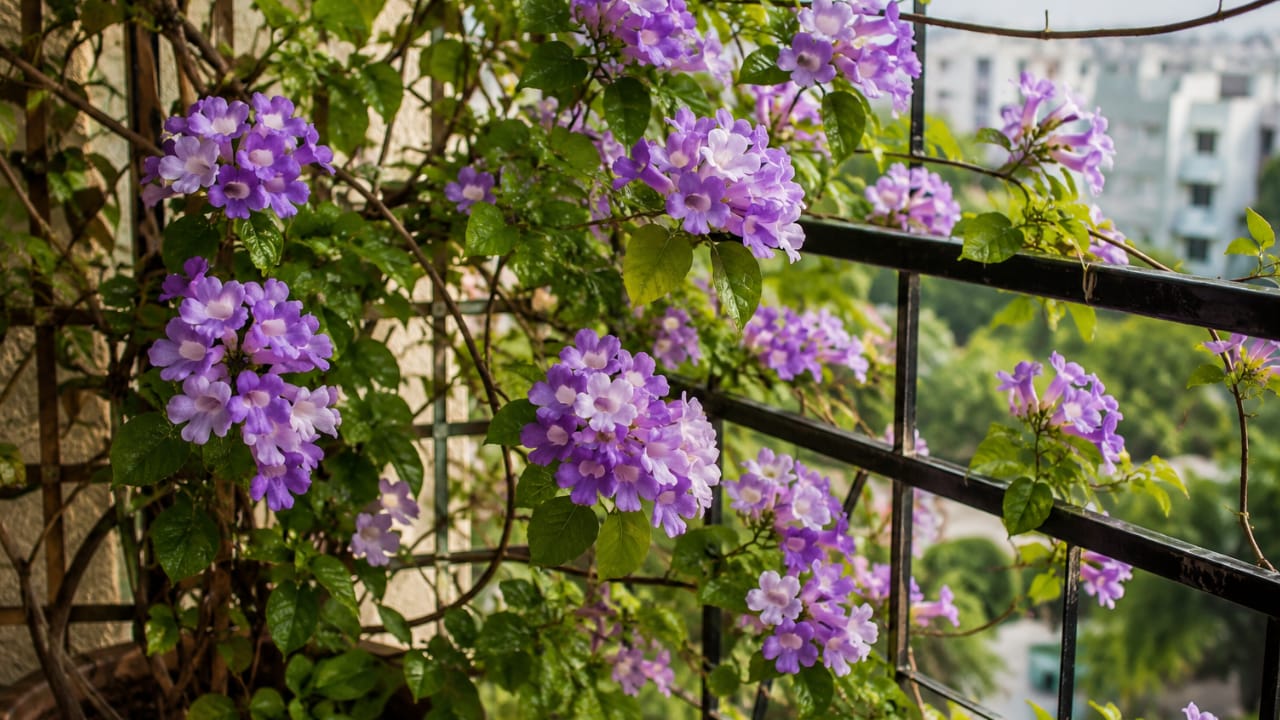
Garlic Vine gets its name from the pungent, garlic-like smell it gives off, which most insects avoid.
The sulfur compounds behind its smell are the same ones that make regular garlic a traditional home remedy against mosquitoes, often boiled in water and sprayed around doorways. Growing the vine near a window or balcony grill lets that scent work passively, without any spraying needed. Unlike regular garlic, this one is a flowering climber with pretty purple blooms, so it works well on a trellis, grill, or balcony railing while doing double duty as a natural repellent.
If you're looking for a flowering climber for your balcony or railing, you can find Garlic Vine plants on Urvann.
9. Ajwain (अजवाइन/Carom Plant)
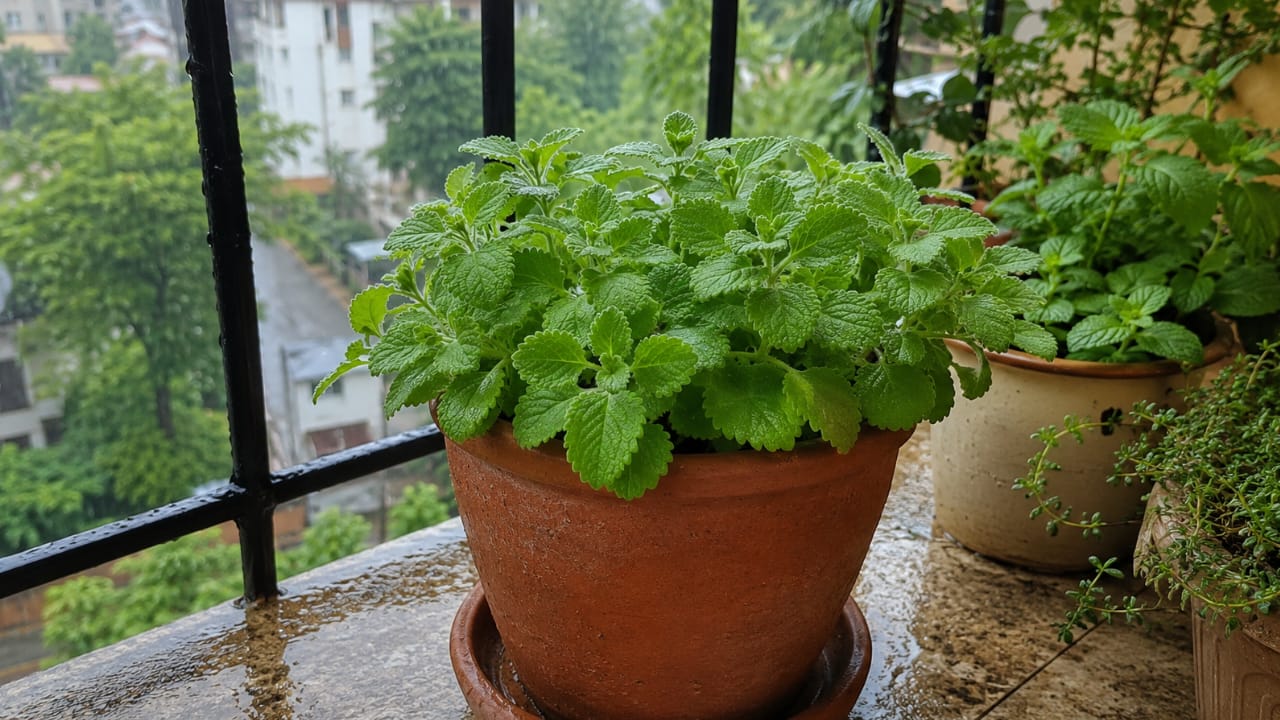
Ajwain is mostly known as a kitchen spice, but the plant itself has a strong, sharp aroma from its essential oils that insects tend to avoid.
Thymol, the active compound in Ajwain, is used in some commercial mosquito repellent formulations. A small pot near a sit-out area adds a layer of protection to a monsoon herb garden already used for cooking. It is low maintenance and works well in a pot near your kitchen garden or balcony, alongside other herbs like Mint and Basil.
Want an easy-to-grow herb for your kitchen garden? You can find healthy Ajwain plants on Urvann.
10. Chrysanthemum (गुलदाउदी)
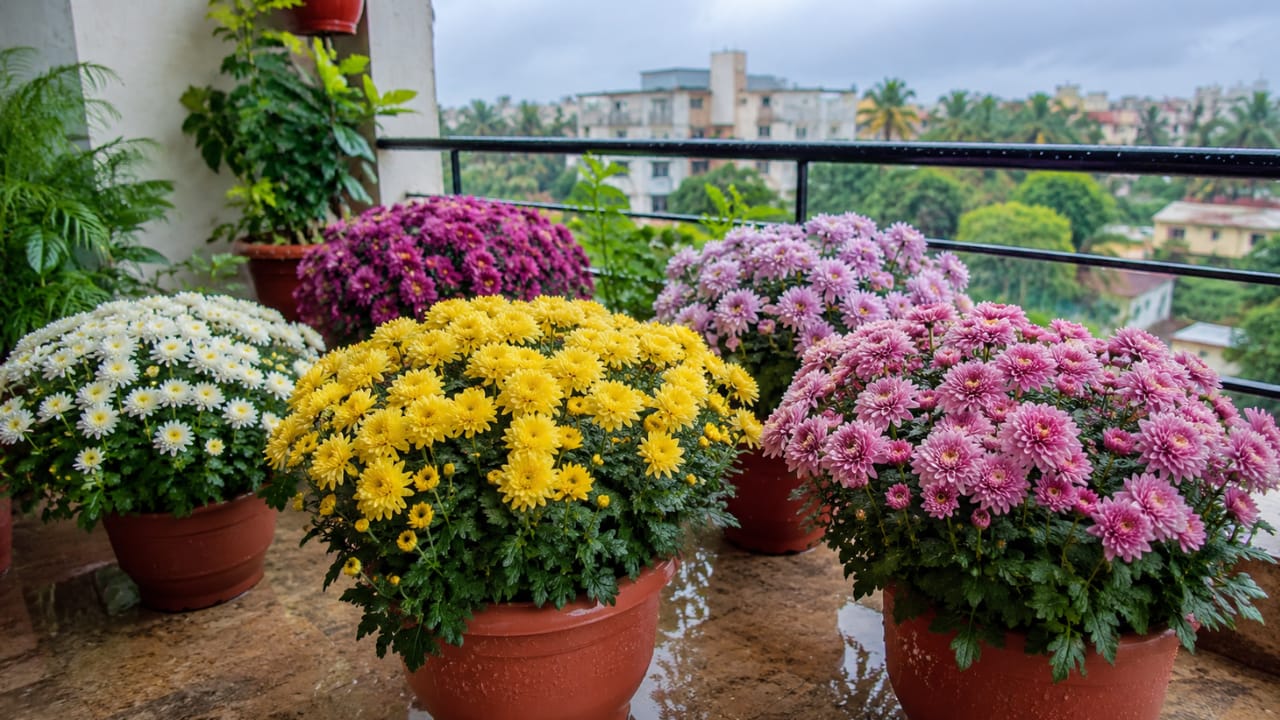
Chrysanthemum flowers are the natural source of pyrethrum, the same insect-repelling compound found in Marigolds.
Chrysanthemum is actually the primary commercial source of pyrethrum, more so than Marigold, which is why crushed dried flowers have long been used as a base for homemade mosquito powders in Indian households. A few pots near a doorway or window ledge extend that same effect naturally. They come in several colours and bloom beautifully through the season, making them a good pick if you want colour on your balcony along with the repellent effect.
Looking to brighten up your balcony with colourful blooms? You can find Chrysanthemum plants on Urvann.
Quick Comparison
| Plant | Key Compound | Best Spot | Sunlight Need |
|---|---|---|---|
| Tulsi | Eugenol | Doorway, window | Morning sun |
| Rosemary | Camphor, eucalyptol | Balcony, kitchen | Full sun |
| Lemon Grass | Citronellal | Balcony railing | Full sun |
| Marigold | Pyrethrum | Windowsill, entrance | Full sun |
| Mint | Menthol | Kitchen window | Partial sun |
| Neem | Azadirachtin | Terrace balcony | Full sun |
| Scented Geranium | Linalool | Windowsill | Full sun |
| Garlic Vine | Sulfur compounds | Trellis, railing | Full sun |
| Ajwain | Thymol | Kitchen garden | Partial sun |
| Chrysanthemum | Pyrethrum | Balcony, terrace | Full sun |
Monsoon Care Tips So Your Plants Do Their Job Well
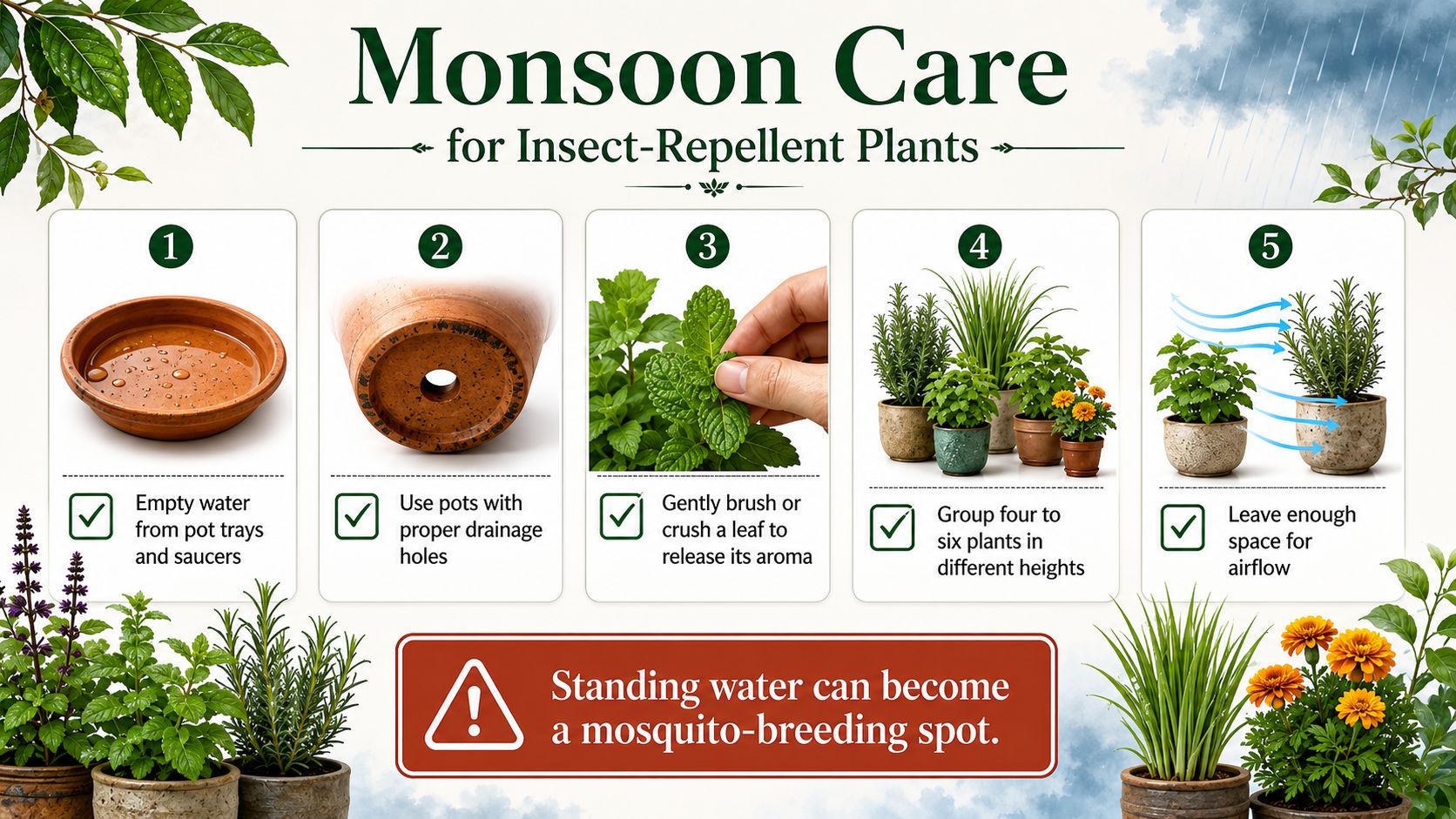
- Do not let water collect. Mosquitoes breed in standing water, so empty saucers and trays under your pots every couple of days.
- Choose pots with drainage holes. Waterlogged soil weakens the plant and defeats the purpose of growing it for pest control.
- Crush a leaf now and then. The scent works best when the oils are released, not just when the plant is sitting quietly in a corner.
- Group 4 to 6 plants together. A mix of a tall plant like Lemon Grass with smaller ones like Marigold and Tulsi covers a wider area with scent.
- Give them airflow. Damp, still air during monsoon can invite fungus, so keep plants where some breeze reaches them.
Bring the Monsoon Indoors, Not the Mosquitoes
You do not need to choose between a green home and a mosquito-free one. These 10 plants let you have both. Pick two or three that fit your space, place them where you spend the most time, and let them do the work through the rains.
Browse the full range of mosquito repellent plants on Urvann and get your monsoon garden started today.
Frequently Asked Questions (FAQs)
1. What is the best plant to keep mosquitoes away?
Lemon Grass and Citronella-family plants like Scented Geranium are considered among the most effective, since they contain high levels of citronellal, the same compound used in most commercial mosquito repellents.
2. Do mosquito-repelling plants really work?
Yes, to an extent. They release natural oils that mask human scent and confuse mosquitoes, but they work best in groups and when leaves are occasionally crushed to release more oil. They are not a complete replacement for nets or sprays in heavy mosquito zones.
3. Which plants keep mosquitoes and insects away indoors?
Tulsi, Mint, and Rosemary are good choices for indoor spaces since they are compact, low-maintenance, and safe to keep close to living areas.
4. Do lemongrass plants repel mosquitoes?
Yes. Lemon Grass contains citronellal and geraniol, the same natural compounds found in citronella, which is why it is a popular mosquito-repelling plant in India.
5. How many mosquito repellent plants do I need for my balcony?
For an average Indian balcony, 4 to 6 plants in a mix of heights, such as one tall Lemon Grass with a few Marigold or Tulsi pots, give good scent coverage.
6. What smell do mosquitoes hate the most?
Mosquitoes use their sense of smell to find people. They are attracted to body odor and the carbon dioxide we breathe out. Strong natural scents can confuse them and make it harder for them to find us. Some smells mosquitoes dislike include citronella (lemongrass), lemon eucalyptus, peppermint, lavender, and garlic.