


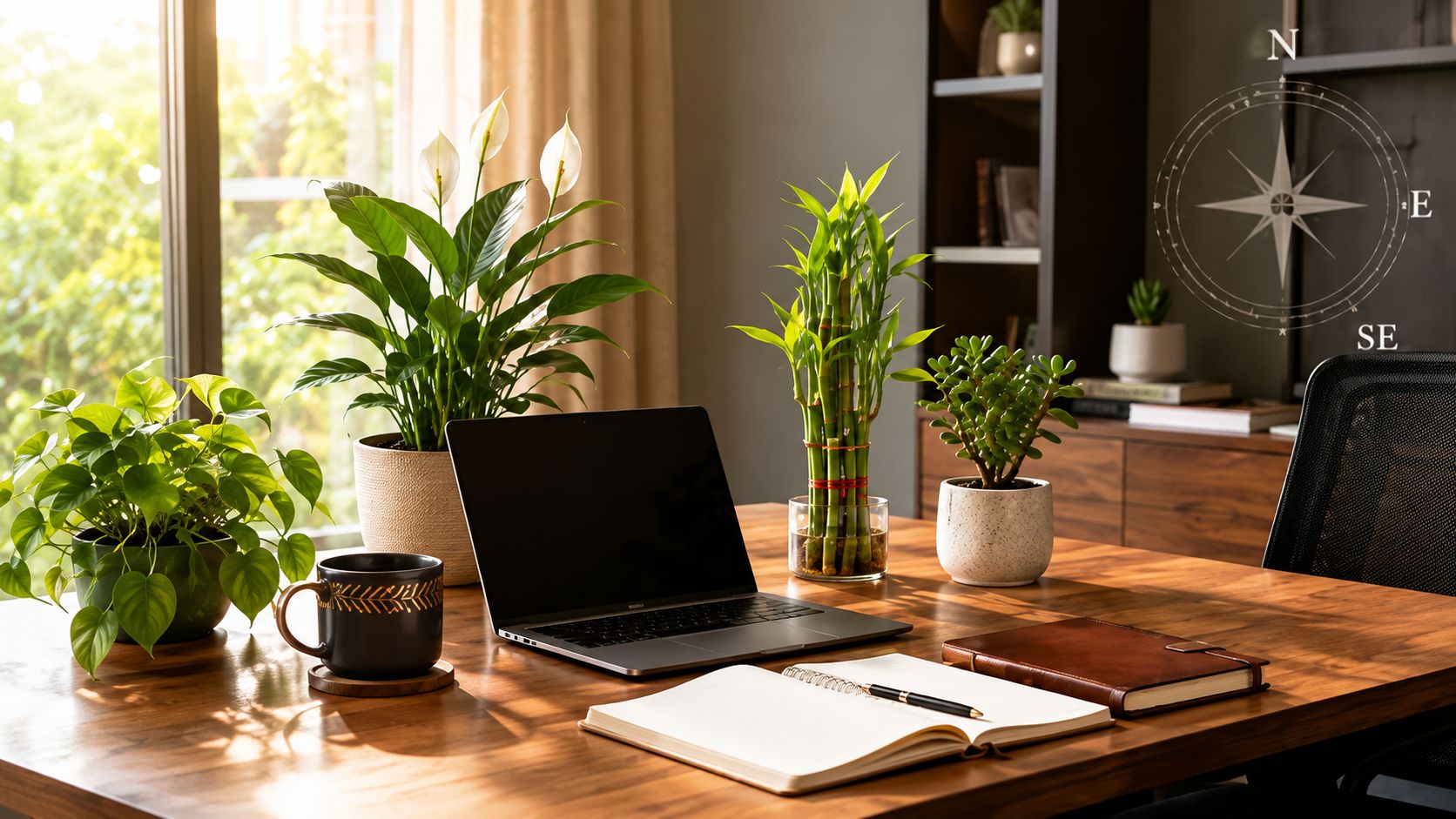
Which desk plant attracts wealth and success? Explore 10 Vastu-approved plants and the ideal directions for prosperity and growth.
Key Takeaways
- Lucky Bamboo, Money Plant, and Jade Plant are the top three Vastu-approved office desk plants for wealth and career growth.
- North and East are the most auspicious directions for office desk plants as per Vastu.
- Avoid cacti, bonsai, and dying plants on your office desk, as they create negative energies.
Adding a plant to your office desk seems simple until you start looking for one.
Some plants are considered auspicious in Vastu Shastra. Others are believed to attract negative energies or are not recommended for workspaces. Then there are practical considerations as well. Many plants struggle in air-conditioned offices and low-light corners, while busy professionals often struggle to care for them.
As a result, many professionals are left wondering:
- Which plant is best for an office desk as per Vastu?
- Where should it be placed for positive energy and growth?
- Which plants are easy to maintain in office conditions?
- Are popular choices like cacti and bonsai actually suitable?
- If you've asked these questions, you're not alone.
The ideal office desk plant should do three things well: complement your workspace, thrive indoors with minimal care, and align with Vastu principles.
Why Vastu Matters for Your Office Desk Plant
Vastu Shastra isn't just about where you place your sofa or which direction your front door faces. It applies to your desk too.
According to Vastu, every direction carries a specific energy.
For example,
- The North is governed by Mercury and represents career growth and financial flow.
- The East is linked to health, vitality, and new beginnings.
- The Southeast is ruled by Venus and the fire element, making it the ideal zone for wealth-attracting plants.
When you place the right plant in the right direction, you're not just decorating — you're aligning your workspace with the natural flow of energy.
The golden rule for desk plants as per Vastu:
- Choose plants with soft, rounded, or heart-shaped leaves.
- Avoid thorny, spiky, or sharp-leaved plants.
- Round leaves attract and hold positive energy.
- Sharp or thorny plants are generally discouraged in Vastu because they are believed to create harsh or disruptive energy.
10 Best Indoor Plants for Your Office Desk as per Vastu
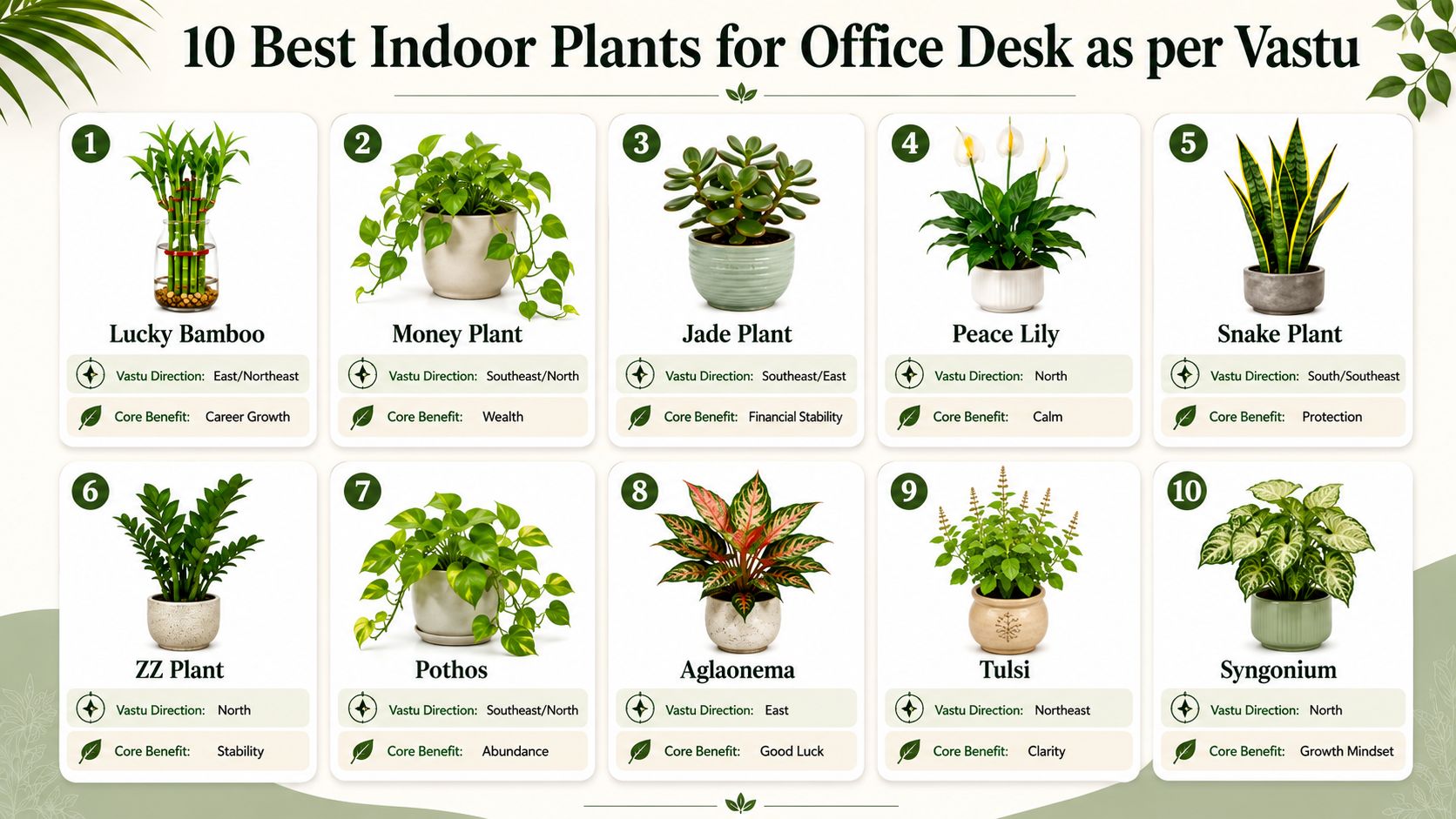
| Plant | Vastu Direction | Core Benefit | Light | Water |
|---|---|---|---|---|
| Lucky Bamboo | East / Northeast | Career growth, prosperity | Indirect | Weekly |
| Money Plant | Southeast / North | Wealth, financial flow | Low to indirect | Every 10 days |
| Jade Plant | Southeast / East | Financial stability, good luck | Bright indirect | Every 2 weeks |
| Peace Lily | North / Left side of desk | Calm, emotional balance | Low light | Weekly |
| Snake Plant | South / Southeast | Protection, air purification | Low to bright | Every 2–3 weeks |
| ZZ Plant | North | Stability, positivity | Low light | Every 2–3 weeks |
| Pothos | Southeast / North | Abundance, upward growth | Low to indirect | Every 10 days |
| Aglaonema | East | Good luck, vitality | Low light | Every 7–10 days |
| Tulsi | Northeast | Clarity, spiritual energy | Bright indirect | Daily misting |
| Syngonium | North | Growth mindset, calm | Indirect | Weekly |
1. Lucky Bamboo
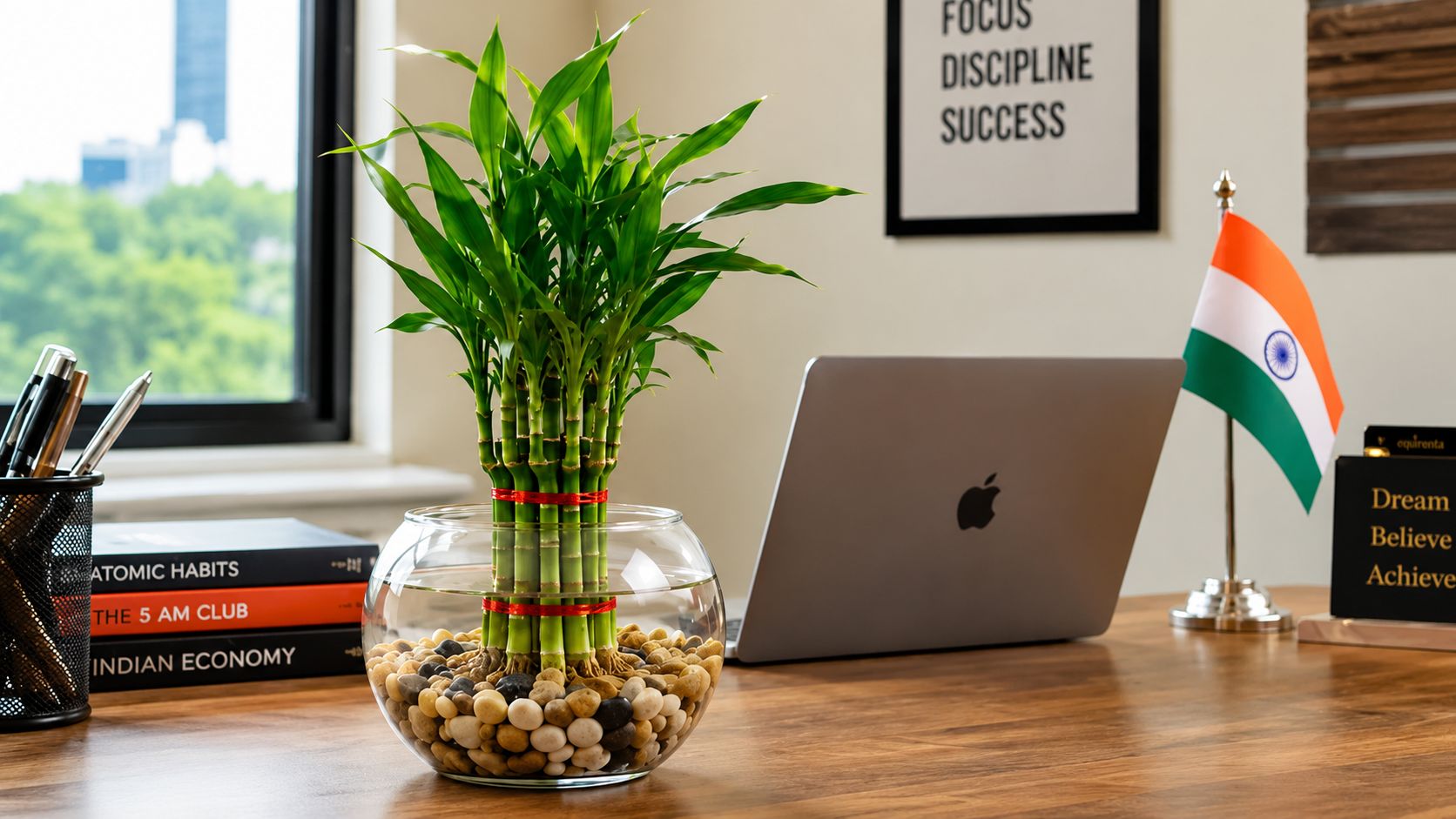
Vastu Verdict: Place in the East or Northeast corner of your desk to attract career growth, harmony, and prosperity.
Lucky Bamboo is the most popular desk plant in Indian offices, and for good reason. It's compact, grows happily in a glass jar of water, and doesn't ask much of you except that you change the water every week. According to both Vastu Shastra and Feng Shui, it represents the harmony of all five natural elements: earth, water, fire, wood, and metal, especially when grown in a jar with pebbles and water.
The number of stalks matters too. Three stalks bring happiness and career growth. Six stalks attract wealth. Eight stalks are for abundance. In Feng Shui traditions, four stalks are generally avoided because the number is considered inauspicious.
Why it works for a desk: Fits in a small glass bowl, grows in water with zero soil mess, thrives in office fluorescent lighting, and looks elegant on any desk setup.
Vastu tip: Keep it in the East direction of your desk. If your desk doesn't have a clear East corner, placing it on the left side of your monitor works well. Use a metallic or ceramic pot, and avoid plastic.
2. Money Plant
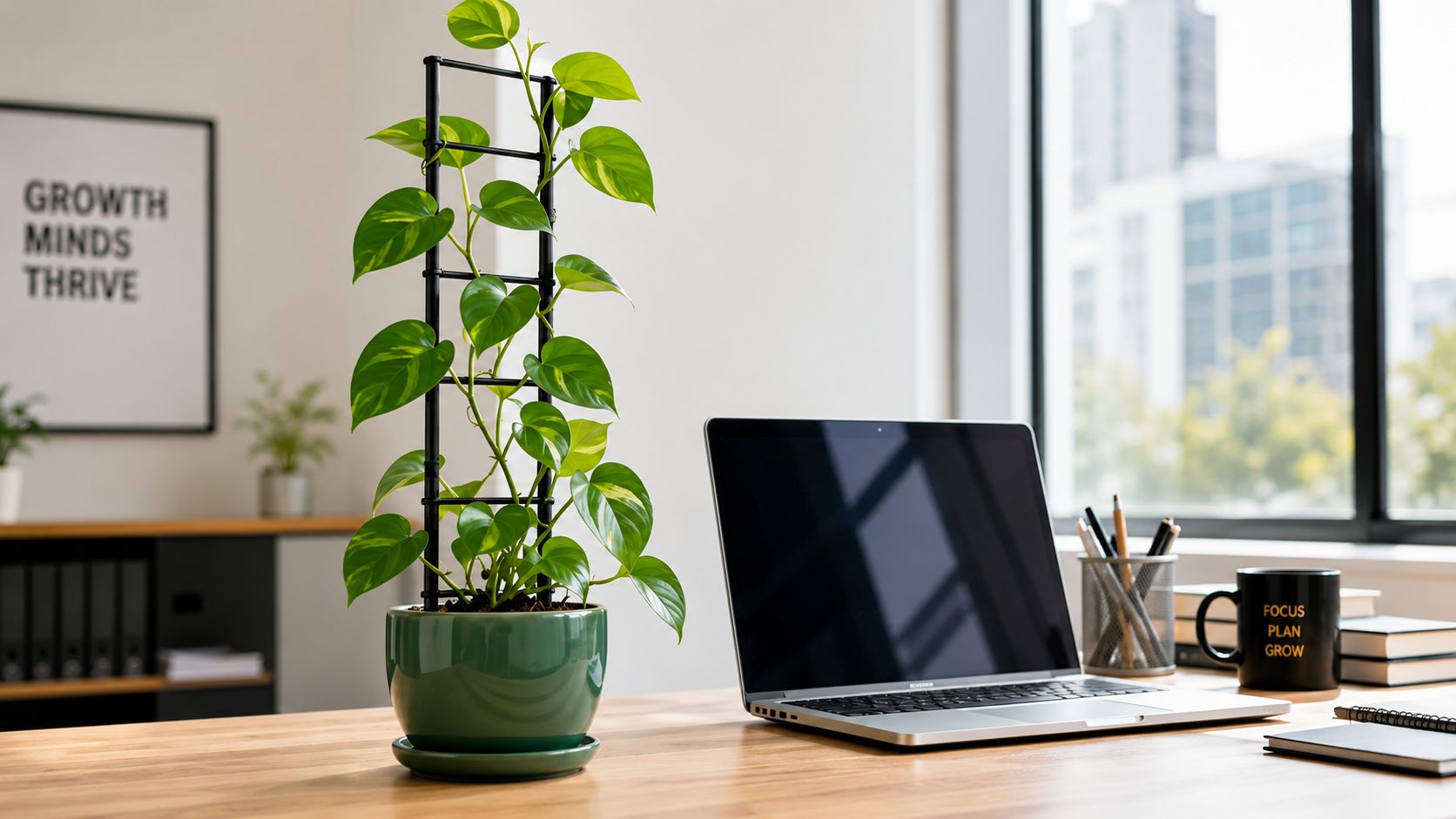
Vastu Verdict: Place in the Southeast corner of your desk to attract financial growth and remove monetary obstacles.
The Money plant needs no introduction in Indian homes or offices. Its heart-shaped leaves loosely resemble coins, and Vastu associates it directly with wealth, financial flow, and prosperity. In Vastu, the Southeast zone is often associated with wealth and financial activity.
One important Vastu tip most people miss: Let the vines grow upward rather than hanging down off the desk edge. Upward growth symbolizes progress and abundance. Downward growth can symbolically represent financial decline.
Why it works for a desk: Survives weeks of neglect, grows in both water and soil, thrives in low office light, and can be propagated from a single cutting.
Vastu tip: Keep it in a green vase in the Southeast corner. Trim yellow or drooping leaves immediately, as wilting leaves create stagnant energy according to Vastu.
3. Jade Plant
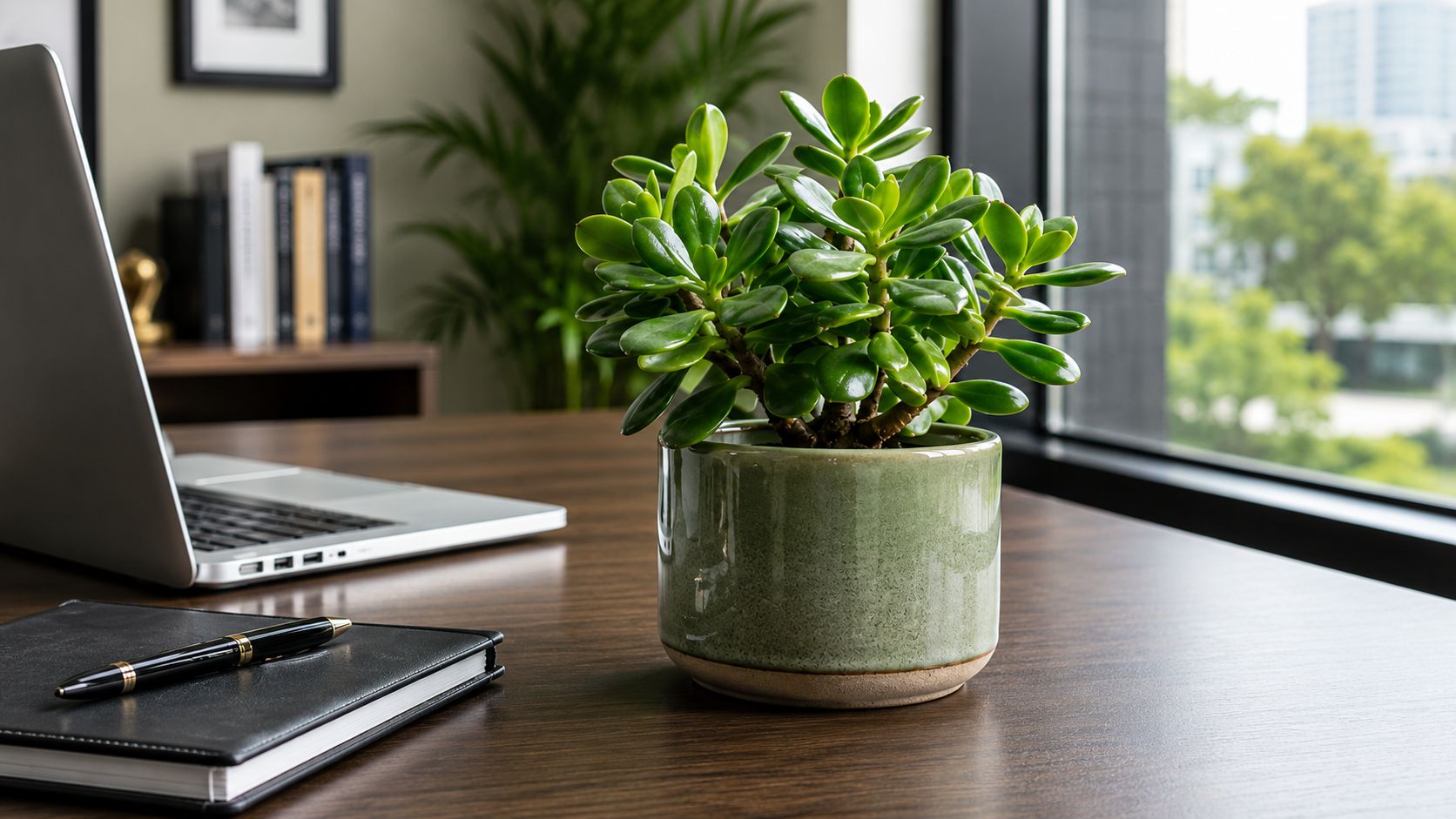
Vastu Verdict: Place in the Southeast or East corner of your desk to attract financial stability and long-term good luck.
The Jade Plant's thick, round leaves are one of the reasons it is highly regarded in Vastu. In both Vastu and Feng Shui, round leaves symbolize coins and wealth accumulation. The plant is often called the "plant of good fortune" because of its association with wealth and prosperity.
Jade Plants thrive in AC-cooled rooms, need watering only every two weeks, and can sit on a desk for months without demanding much attention. For busy professionals who want a Vastu-compliant plant without a maintenance commitment, the Jade Plant is one of the most practical choices.
Why it works for a desk: Compact size, drought-resistant, symbolically powerful, and looks beautiful in a small ceramic pot.
Vastu tip: Place it toward the Southeast corner of your desk. Keep the leaves wiped and dust-free, as dusty leaves are believed to signal blocked energy in Vastu.
4. Peace Lily
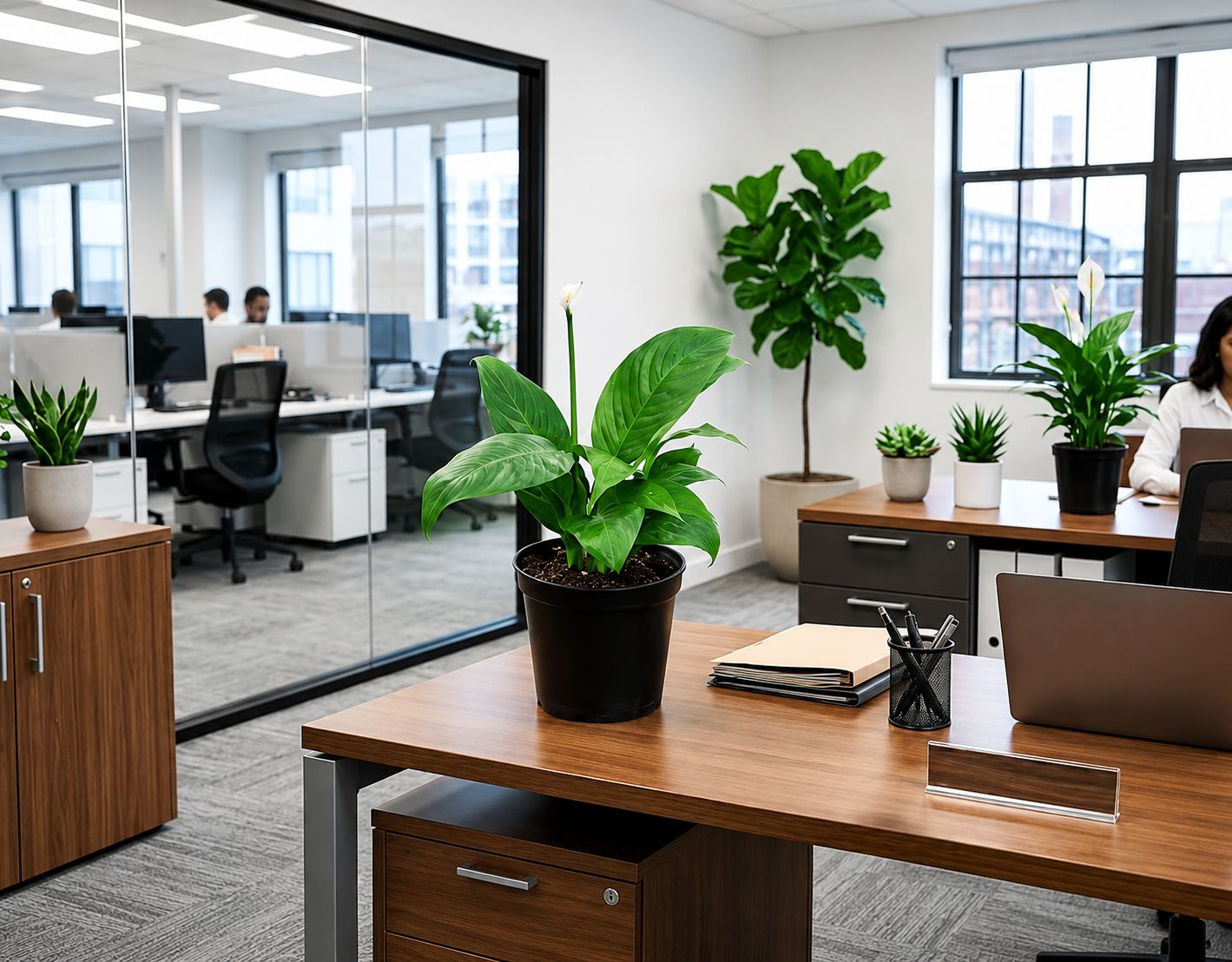
Vastu Verdict: Place on the North side or the left side of your desk to balance emotions, reduce work stress, and invite new opportunities.
If your workday runs hot with back-to-back meetings, tight deadlines, and difficult conversations, the Peace Lily is exactly what your desk needs. Its elegant white spathes carry a calming presence, and according to Vastu, the North direction opens doors to new career opportunities and financial flow.
The Peace Lily is one of the few flowering plants that genuinely thrives in low office light. It droops visibly when it needs water, which makes it one of the most forgiving plants to care for. It practically tells you when it's thirsty.
Why it works for a desk: Thrives in shade and indirect light, signals when it needs water, brings a sophisticated aesthetic, and purifies the air in AC-heavy offices.
Vastu tip: Place it on the left side of your desk or in the North direction. Avoid direct sunlight, as it can scorch the leaves and reduce the plant's calming energy.
5. Snake Plant
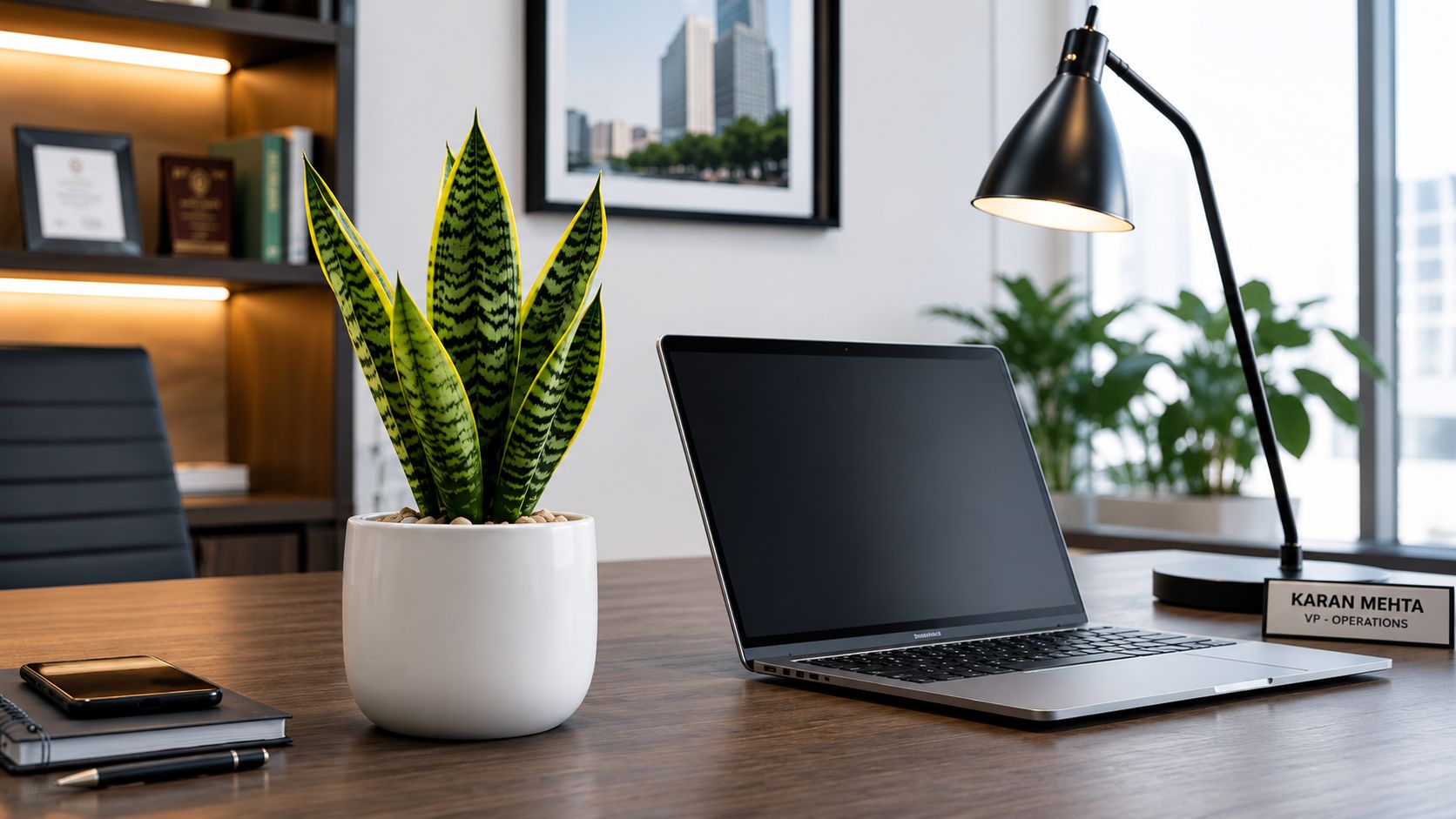
Vastu Verdict: Place on the South or Southeast side of your desk to ward off negative energy and purify your workspace air.
The Snake Plant, also called Mother-in-Law's Tongue, is one of the toughest plants you can keep on an office desk. It survives low light, irregular watering, AC vents, and weeks of neglect without much trouble. According to Vastu, its upright sword-like leaves act as a protective shield against negative energy in the workplace.
The plant's strong vertical growth pattern is associated with stability, resilience, and steady progress. Its clean, architectural appearance also makes it a popular choice for modern office desks and workspaces.
Why it works for a desk: Extremely low maintenance, compact, visually appealing, and thrives in the low-to-medium indirect light conditions common in most Indian offices.
Vastu tip: Keep it in the South or Southeast corner of your desk. Avoid placing it directly under an AC vent, as sudden cold blasts can stress the leaves.
6. ZZ Plant
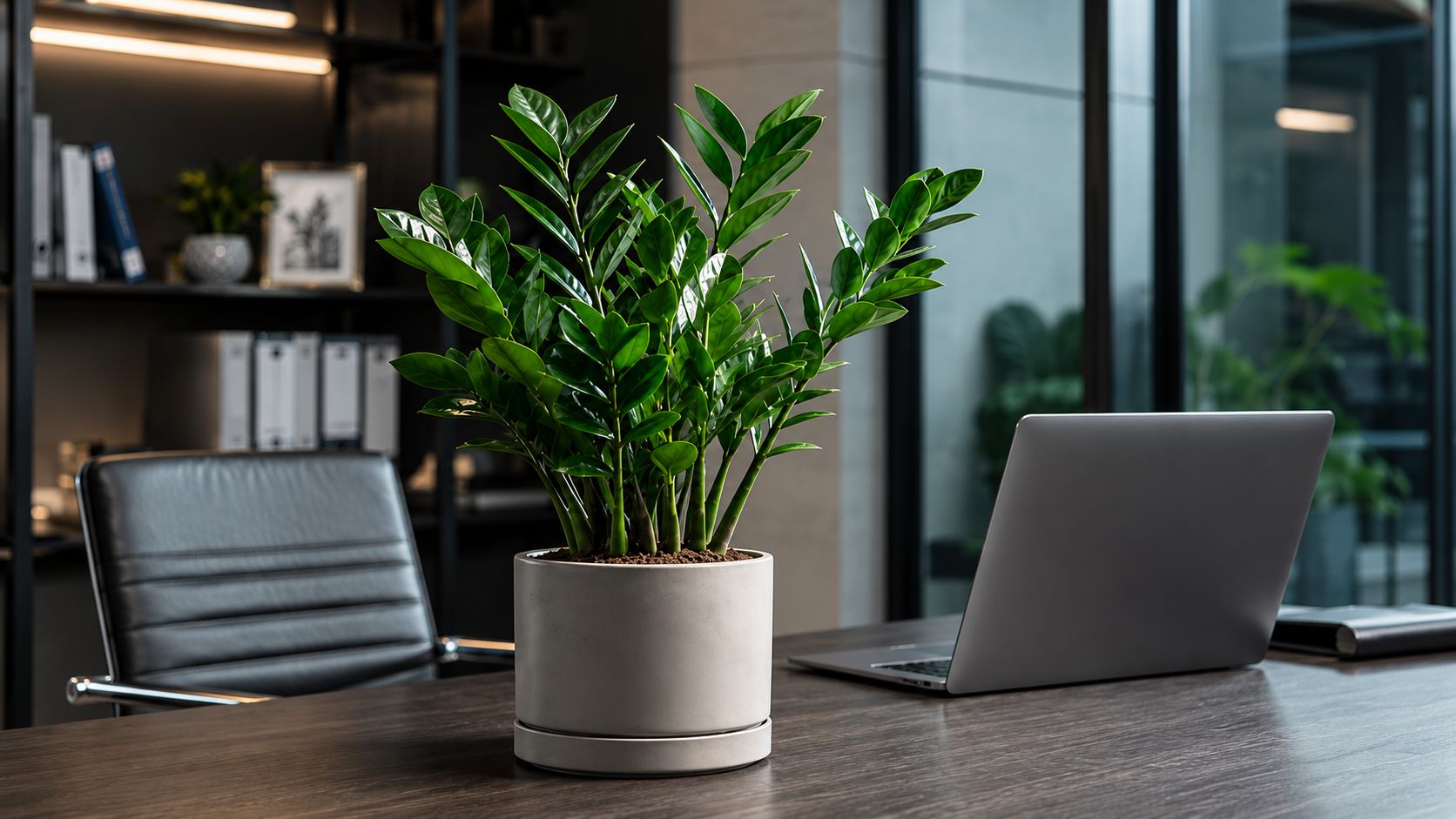
Vastu Verdict: Place the plant in the North direction of your desk for stability, positivity, and steady career growth.
The ZZ Plant, short for Zamioculcas zamiifolia, is what most plant lovers call "nearly indestructible." Its glossy, dark green leaves hold water in underground rhizomes, which means it can go two to three weeks without watering and still look impeccable on your desk.
In Vastu, the ZZ Plant is associated with the North direction, the zone of Mercury, career growth, and financial abundance. Its strong, stable root system symbolises groundedness and resilience, qualities many professionals want to cultivate in their workspace.
Why it works for a desk: Handles fluorescent lighting, survives forgetful watering schedules, looks sharp in minimalist office setups, and is generally resistant to common indoor pests.
Vastu tip: Place it in the North corner of your desk. The ZZ Plant's upright structure makes it ideal for positioning beside your monitor without cluttering your workspace.
7. Pothos
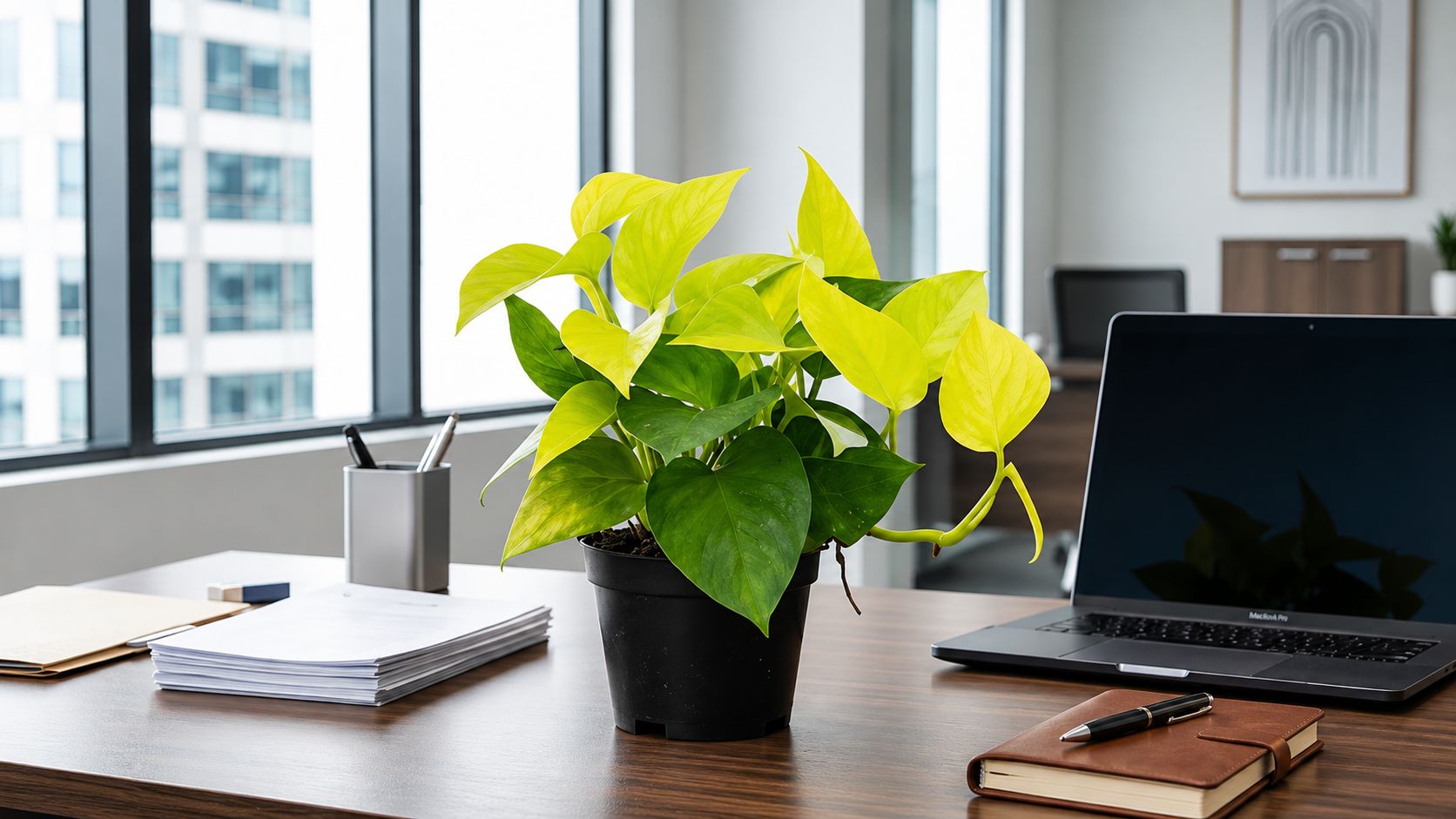
Vastu Verdict: Place in the Southeast or North direction, and train the vines to grow upward for wealth and abundance.
Pothos and Money Plant are often confused and sometimes used interchangeably in India. While both belong to the same plant family, Pothos typically refers to the trailing vine variety with variegated green-and-yellow leaves. Both carry the same Vastu benefits: wealth attraction, positive energy, and financial flow.
The key Vastu distinction for Pothos is the direction of growth. Train the vines to climb upward on a small desk trellis or wind them up along a monitor stand. In Vastu, upward-growing plants symbolise career advancement and increasing prosperity. Downward-hanging vines can have the opposite symbolic effect.
Why it works for a desk: Extremely adaptable to low light, propagates easily, helps create a greener workspace, and looks lush even with minimal care.
Vastu tip: Let it grow up, not down. Change the water every 10 days if grown in a water vase. Remove yellow leaves immediately, as they are believed to represent stagnant energy in Vastu.
8. Aglaonema
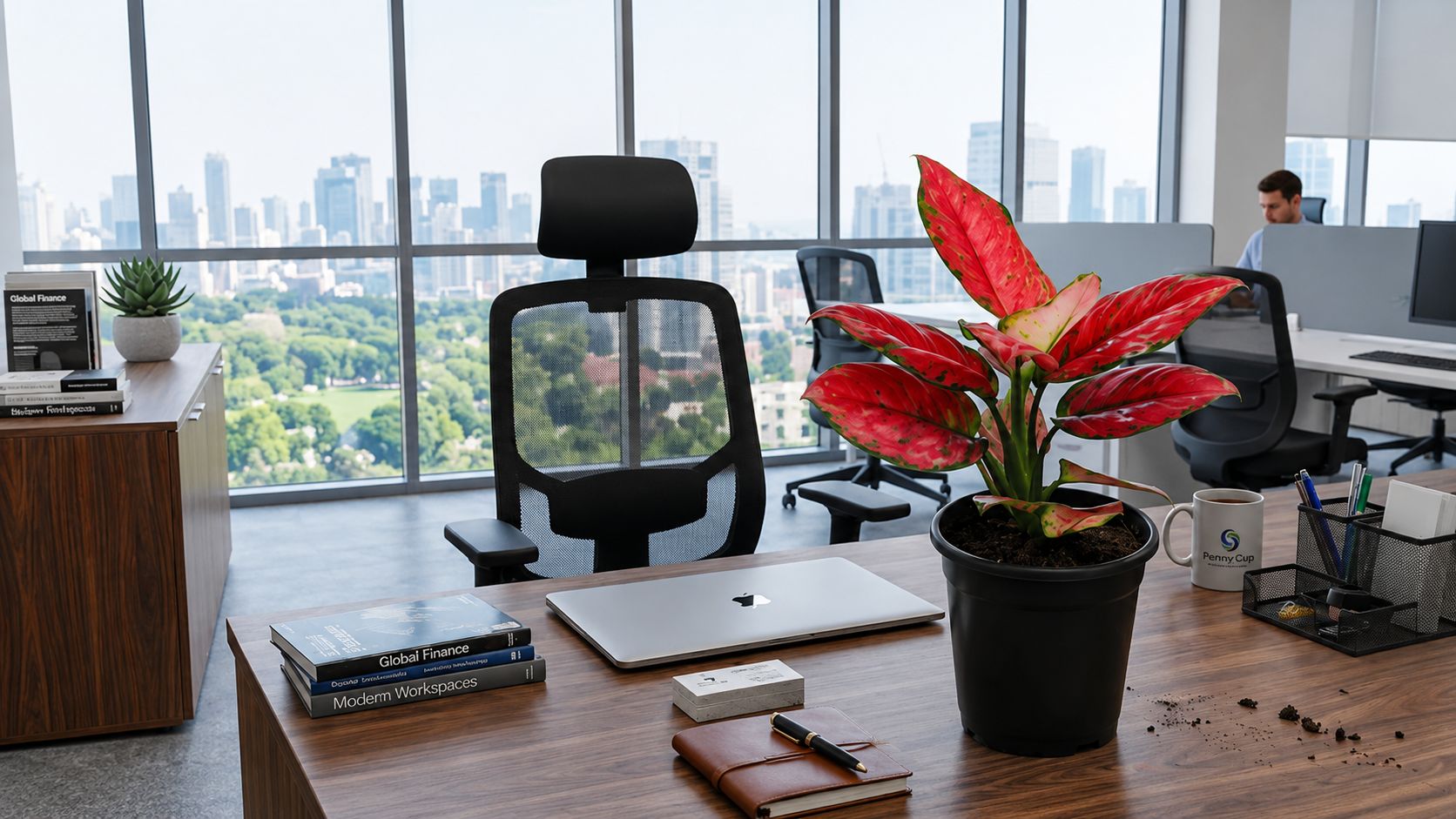
Vastu Verdict: Place it in the East direction of your desk to attract good luck, vitality, and positive energy.
The Aglaonema, known as Chinese Evergreen, is one of the most underrated desk plants for Indian offices. It comes in stunning varieties ranging from deep green to pink and red, and it thrives in the kind of low-light conditions that challenge many other plants.
In Vastu, the East direction is linked to social connections, health, and vitality. Placing an Aglaonema in the East of your desk is believed to attract positive client interactions, collaborative energy, and good fortune in professional relationships.
Why it works for a desk: Tolerates poor light, needs watering only every 7 to 10 days, has a compact size that fits most desks, and its colourful foliage adds visual interest without being distracting.
Vastu tip: Keep it in the East direction of your desk. Some Vastu practitioners prefer red or pink varieties because these colours are often associated with energy and motivation.
9. Tulsi
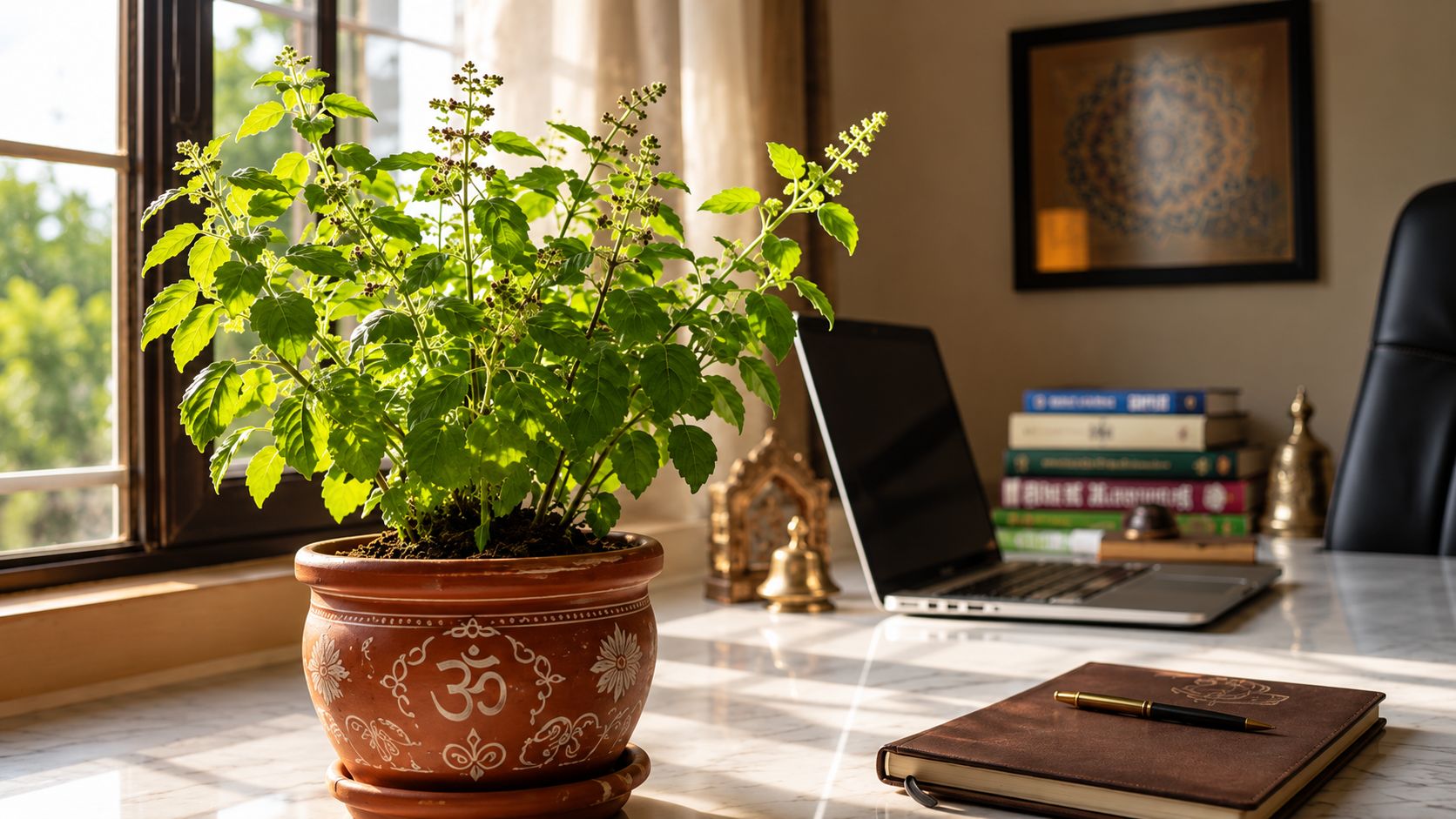
Vastu Verdict: Place in the Northeast corner of your desk for spiritual clarity, mental focus, and air purification.
Tulsi is one of the most sacred plants in Vastu Shastra, and the Northeast is its ideal direction, a zone associated with spirituality, mental clarity, and a growth mindset. In Indian offices, a small Tulsi pot in the Northeast corner is believed to purify both the air and the energy of the workspace.
Practically speaking, Tulsi needs more light than most desk plants. It works best if your desk is near a window with morning sunlight. If your office has no natural light, Tulsi may struggle. In that case, consider placing it on a nearby windowsill and simply visiting it during breaks.
Why it works for a desk: Medicinal properties, air-purifying qualities, deep cultural significance in Indian households, and a strong association with mindfulness and spiritual grounding.
Vastu tip: Northeast is the most recommended direction for Tulsi. Avoid placing it in the South or Southeast, as these directions are generally not considered ideal for the plant according to Vastu principles.
10. Syngonium
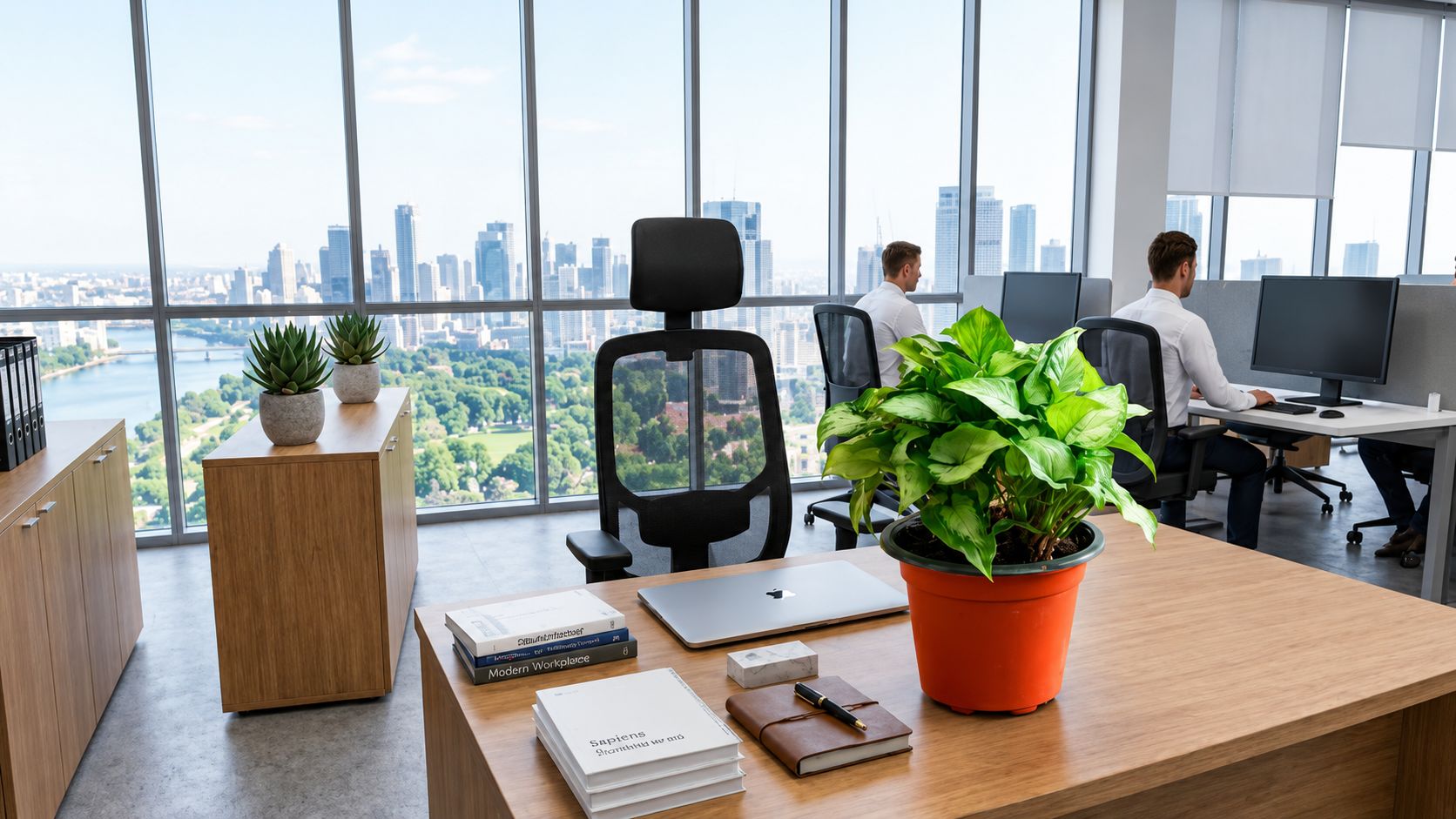
Vastu Verdict: Place in the North direction for a growth mindset, calm focus, and steady career progression.
The Syngonium, also called the Arrowhead Plant because of its distinctive leaf shape, is one of the most desk-friendly plants available. It stays compact, grows slowly, and adapts beautifully to the indirect light and air-conditioned conditions common in Indian offices.
In Vastu, the Syngonium is associated with the five natural elements, making it a harmonising plant for workspaces where multiple people interact. Its soft, rounded arrowhead leaves align with Vastu's preference for gentle, non-threatening leaf shapes, and its controlled growth makes it easy to manage on a busy desk.
Why it works for a desk: Compact, slow-growing, low maintenance, thrives in indirect light, and comes in attractive green and pink varieties that add colour without clutter.
Vastu tip: Place it in the North direction of your desk to support career growth. Water it weekly and remove any yellowing leaves promptly.
Plants To Avoid on Your Office Desk as per Vastu
Here are the ones Vastu specifically warns against:
- Bonsai: A bonsai tree looks beautiful, but in Vastu it symbolises stunted, restricted growth. The very act of pruning it to stay small is believed to limit the career and financial growth of the person it sits near. Avoid it entirely in a professional workspace.
- Cacti on your main desk surface: Sharp spines facing your body or your colleagues create aggressive Sha Chi energy. If you love cacti, keep them in the Southeast corner only and away from your direct line of sight.
- Dying or wilting plants: This is the most important rule of all. A plant with yellow leaves, dry soil, and drooping stems creates stagnant negative energy — more harmful than having no plant at all. If your desk plant is struggling, either revive it immediately or replace it.
- Artificial plants: Fake plants carry no life energy in Vastu. They add aesthetic value but contribute nothing to the energy flow of your workspace. If you can't maintain a real plant, a healthy succulent that needs watering is a better choice than a plastic one.
Vastu Tips for Desk Plant Placement
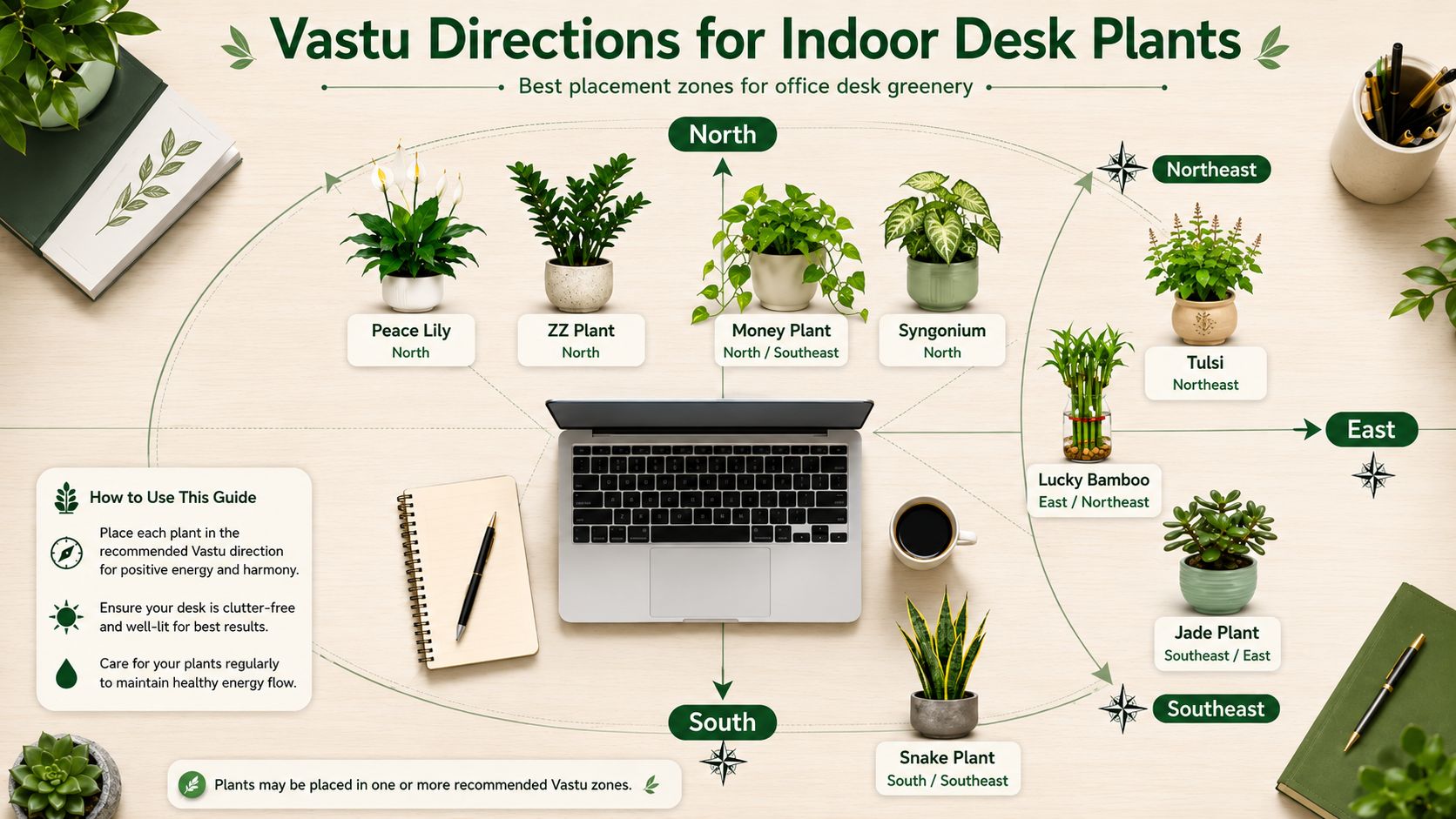
Getting the plant right is only half the job. Here's how to place it correctly:
1. Face it North or East
These are the two most auspicious directions for desk plants in an office setting. North is associated with career growth and financial flow, while East is linked to health, vitality, and positive social energy.
2. Keep it off the Ground
A plant placed on your desk is believed to have a more active presence than one kept on the floor. For desk-specific Vastu benefits, position the plant at the same level as your workspace.
3. Use Ceramic or Clay Pots
Plastic pots are generally considered neutral in Vastu. Ceramic and clay pots are natural materials that support the earth element and complement indoor plants beautifully.
4. Remove Dead Leaves Immediately
In Vastu, a decaying leaf on an otherwise healthy plant is believed to disrupt the flow of positive energy. Check your plant regularly and trim any yellow or brown leaves.
5. Avoid AC Vents
Direct cold air can stress plants and lead to leaf damage or drop. Keep your desk plant at least two feet away from AC vents or heating outlets.
6. Don't Overcrowd Your Desk
One healthy, well-maintained plant often creates a cleaner and more balanced workspace than several plants competing for space and attention. Choose one plant, place it thoughtfully, and care for it consistently.
Find the Perfect Office Desk Plant for Your Direction
Adding a plant to your office desk isn't just about making it look nicer, though it certainly helps. It's also about choosing a plant that supports the atmosphere you want in your workspace.
The 10 plants on this list are all Vastu-approved, low-maintenance, and well-suited to Indian office conditions. Start with one. Choose the plant that matches your desk direction, place it correctly, and enjoy a workspace that feels more balanced, vibrant, and welcoming.
All 10 plants are available on Urvann with free next-day delivery in Delhi-NCR and Bengaluru for orders placed before 7 PM. Explore Urvann’s collection and choose a plant to help create a workspace that feels more positive, productive, and welcoming every day.
Frequently Asked Questions (FAQs)
1. What is the best indoor plant for an office desk as per Vastu?
Lucky Bamboo is the most widely recommended desk plant as per Vastu. It is compact, grows in water, thrives in indirect light, and represents the harmony of all five natural elements. Place it in the East or Northeast corner of your desk for career growth and prosperity.
2. Which plant is lucky for an office desk?
Money Plant, Lucky Bamboo, and Jade Plant are considered the three luckiest plants for an office desk as per Vastu. Money Plant attracts financial flow when placed in the Southeast, Lucky Bamboo brings career growth in the East, and Jade Plant symbolises steady wealth accumulation.
3. Which plant is almost impossible to kill on a desk?
The ZZ Plant and Snake Plant are among the most resilient desk plants for Indian offices. Both tolerate low light, irregular watering, and air-conditioned environments remarkably well. The ZZ Plant can go two to three weeks without water and still maintain its healthy appearance.
However, no plant is completely impossible to kill. Even these hardy varieties need basic care, including occasional watering, adequate light, and proper drainage. With minimal attention, both ZZ Plants and Snake Plants can thrive for years on an office desk.
4. Which plant is good for an office room?
Snake Plant, Peace Lily, and Aglaonema are excellent choices for air-conditioned offices because they adapt well to low-light indoor environments and require minimal maintenance. Their ability to thrive in typical office conditions makes them popular desk plants for professionals seeking both greenery and convenience.
5. Can I keep Tulsi on my office desk?
Yes, but only in the Northeast direction and only if your desk receives adequate natural light. Tulsi needs sunlight to thrive, so it works best near a window. Avoid placing Tulsi in the South or Southeast direction, as these locations are generally not recommended in Vastu principles.
6. Which direction should I place a plant on my office desk?
North and East are the two most auspicious directions for office desk plants as per Vastu. North is governed by Mercury and supports career growth and financial abundance. East is linked to health, vitality, and positive energy. Avoid placing plants in the West or Southwest corners of your desk.
7. Office ki negative energy kaise hatayein?
Vastu ke anusaar, office mein positive energy badhane ke liye sahi plants aur unki placement zaroori maani jaati hai. Snake Plant, ZZ Plant, Lucky Bamboo, aur Peace Lily jaise plants workspace ko fresh aur balanced banane mein madad karte hain. Negative energy kam karne ke liye Snake Plant ko South ya Southeast, Lucky Bamboo ko East, aur ZZ Plant ko North direction mein rakhein. Saath hi, sukhe ya murjhaaye hue paudhon ko hataakar healthy plants rakhein, kyunki Vastu mein ye positive energy ke pravah ko support karte hain.