



Read about how to grow Aloe Vera at home, from choosing the right pot and soil to watering schedules across Indian seasons, plus tips for propagation and fixing common problems.
Key Takeaways
- Aloe Vera stores water in its leaves, so it needs infrequent watering. Water once every 7 to 10 days in summer, once every 14 to 21 days during monsoon, and once every 3 to 4 weeks in winter.
- Overwatering, not underwatering, is the main reason these plants die. Always let the soil dry out completely before watering again.
- The plant needs 4 to 6 hours of bright, indirect light daily. Direct afternoon sun in Indian summers can scorch the leaves.
- Use a well-draining succulent or cactus soil mix. A combination of cocopeat, river sand, perlite, and compost works well in Indian conditions.
- A terracotta pot with a drainage hole is the best choice for most Indian climates, especially during monsoon.
- Propagation from pups is more reliable than propagation from leaf cuttings or seeds. Let the separated pup callous for 24 to 72 hours before planting.
- Fertilize only once a year, in early spring, using a diluted or phosphorus-heavy fertilizer.
- Brown leaf tips usually mean underwatering or too much sun. Yellow, soft, or mushy leaves usually mean overwatering or root rot.
There is a good chance you have seen an Aloe Vera plant somewhere in your childhood home. Maybe it was sitting near the kitchen window, growing quietly in an old clay pot, or placed on a sunny balcony where nobody gave it much attention, yet it kept growing.
For many Indian families, Aloe Vera is not just another plant. It is the plant someone remembers when they need a fresh leaf, the plant that gets passed from one pot to another through small pups, and the one that stays around for years with very little care.
Aloe Vera (घृतकुमारी or ग्वारपाठा in Hindi, ಲೋಳೆಸರ in Kannada) is one of the easiest plants to grow once you understand its simple needs. It does not need constant watering or daily care. It only needs the right amount of sunlight, well-draining soil, and occasional attention.
This guide will help you understand how to grow a healthy plant through Indian summers, monsoons, and changing seasons
Aloe Vera Plant Information
- Botanical Name: Aloe vera (L.) Burm.f.
- Common Indian Names:
- घृतकुमारी (Ghritkumari)
- ग्वारपाठा (Gwarpatha)
- కలబంద (Kalabanda)
- ಲೋಳೆಸರ (Lolesara)
- Plant Type: Succulent plant
- Why Beginners Like Aloe Vera: Aloe vera is a popular choice for beginners because it is low-maintenance, drought-tolerant, and easy to grow indoors or outdoors. It requires minimal watering, adapts well to different conditions, and can grow successfully with basic care.
How to Grow Aloe Vera at Home
Aloe vera can be grown in pots, in garden beds, in water, from seeds, and from cuttings. Each method works in Indian conditions, but some are faster and more reliable than others. Let’s dive into each method:
How to Grow Aloe Vera in Pots
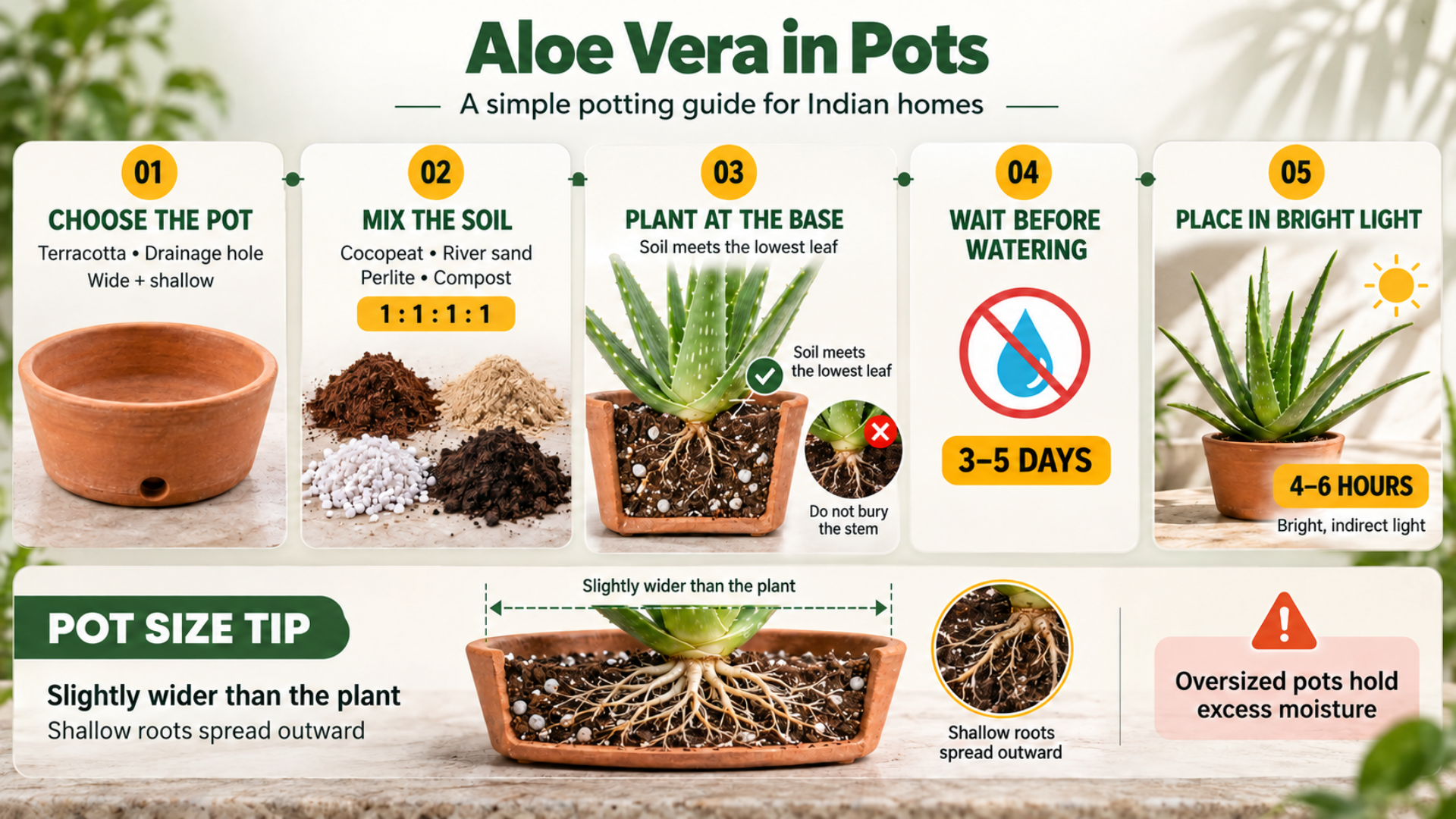
This is the most common method in Indian homes.
- Pick a terracotta pot with at least one drainage hole at the bottom. Terracotta is ideal because it absorbs excess moisture from the soil, reducing the risk of root rot. Plastic pots retain more water and work better only in very hot, dry regions like Rajasthan or interior Maharashtra where soil dries out within a day or two.
- Fill the pot with a well-draining succulent or cactus soil mix. If you do not have a pre-made mix, combine equal parts cocopeat, river sand, perlite, and compost. Avoid using regular garden soil on its own. It holds too much water and compacts around the roots.
- Plant the Aloe so the soil reaches only up to the base of the lowest leaf. Do not bury the stem deeper than this. Burying it too deep suffocates the plant and slows growth.
- Do not water for the first 3 to 5 days after potting. This gives the roots time to settle into the new soil without the risk of rot.
- Place the pot near locations that receive 4 to 6 hours of sunlight throughout the day (south-facing or west-facing window).
Pot Size Tip: Pick a pot that is only slightly wider than the plant. Aloe Vera has a shallow root system that spreads outward rather than downward. A wide, shallow pot works better than a deep, narrow one. A pot that is too large retains excess soil moisture that the roots cannot absorb, leading to rot.
How to Grow Aloe Vera from Seeds
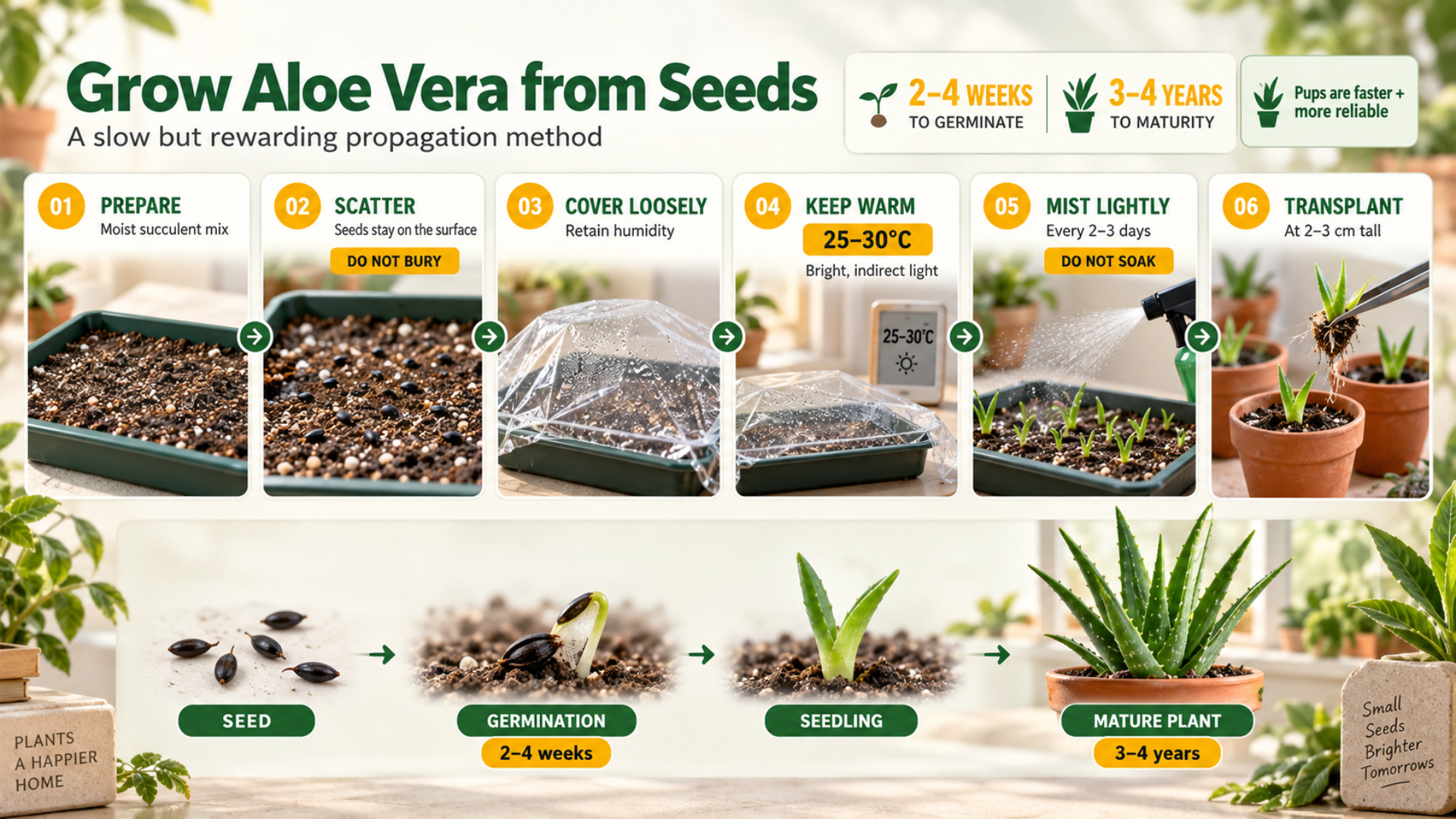
This method is slow; seeds usually take 2 to 4 weeks to germinate, and the plant takes 3 to 4 years to reach maturity. Most growers in India skip this method because pup propagation is faster and more reliable.
If you want to try seeds:
- Fill a shallow tray with moist succulent soil mix.
- Scatter the seeds on the surface. Do not bury them. They need light to germinate.
- Cover the tray loosely with plastic wrap to retain humidity.
- Place in a warm spot (around 25°C to 30°C) with indirect light.
- Mist the soil lightly every 2 to 3 days. Do not soak it.
- Seedlings should appear within 2 to 4 weeks. Once they are 2 to 3 cm tall, transplant them into individual small pots.
How to Grow Aloe Vera from Cuttings
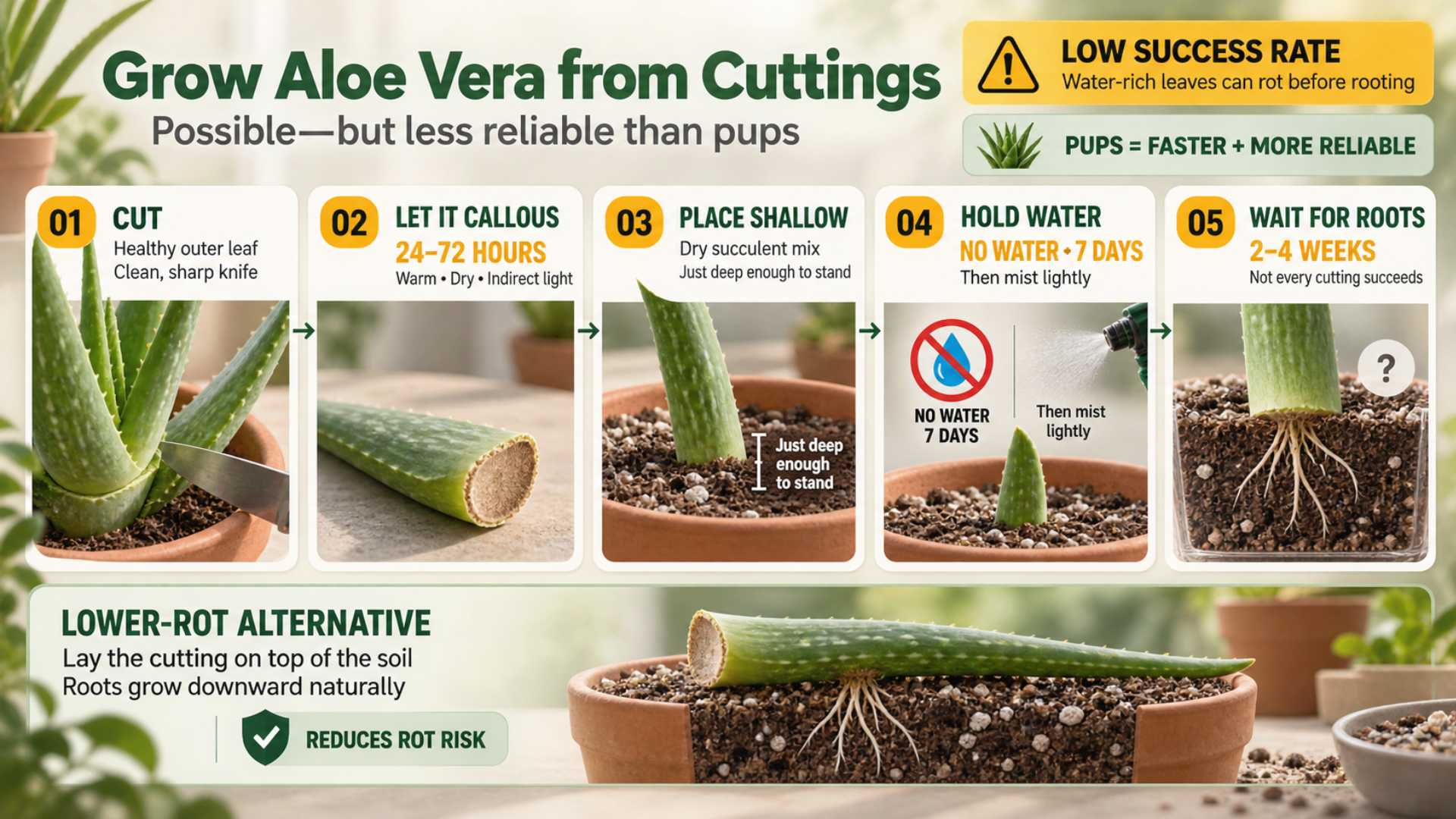
Leaf cuttings are less reliable than pups for Aloe Vera. The cut leaves contain a lot of water, which makes them prone to rot before roots develop. Still, it can work with the right approach.
- Cut a healthy, thick leaf from the outer ring of the plant using a clean, sharp knife. Cut as close to the main stem as possible.
- Place the cutting in a warm, dry spot with indirect light for 24 to 72 hours. This lets the cut end form a dry callous, which prevents rot when it contacts soil.
- Once calloused, place the cut end into dry succulent soil mix. Do not push it in deep. Just enough to keep it upright.
- Do not water for the first week. After that, mist the soil lightly every few days.
- Roots may take 2 to 4 weeks to develop. Not every cutting will succeed.
An alternative method: Place the cutting on top of the soil rather than inside it. Let the roots grow downward into the soil on their own. This reduces the chance of rot.
How to Grow Aloe Vera in Water
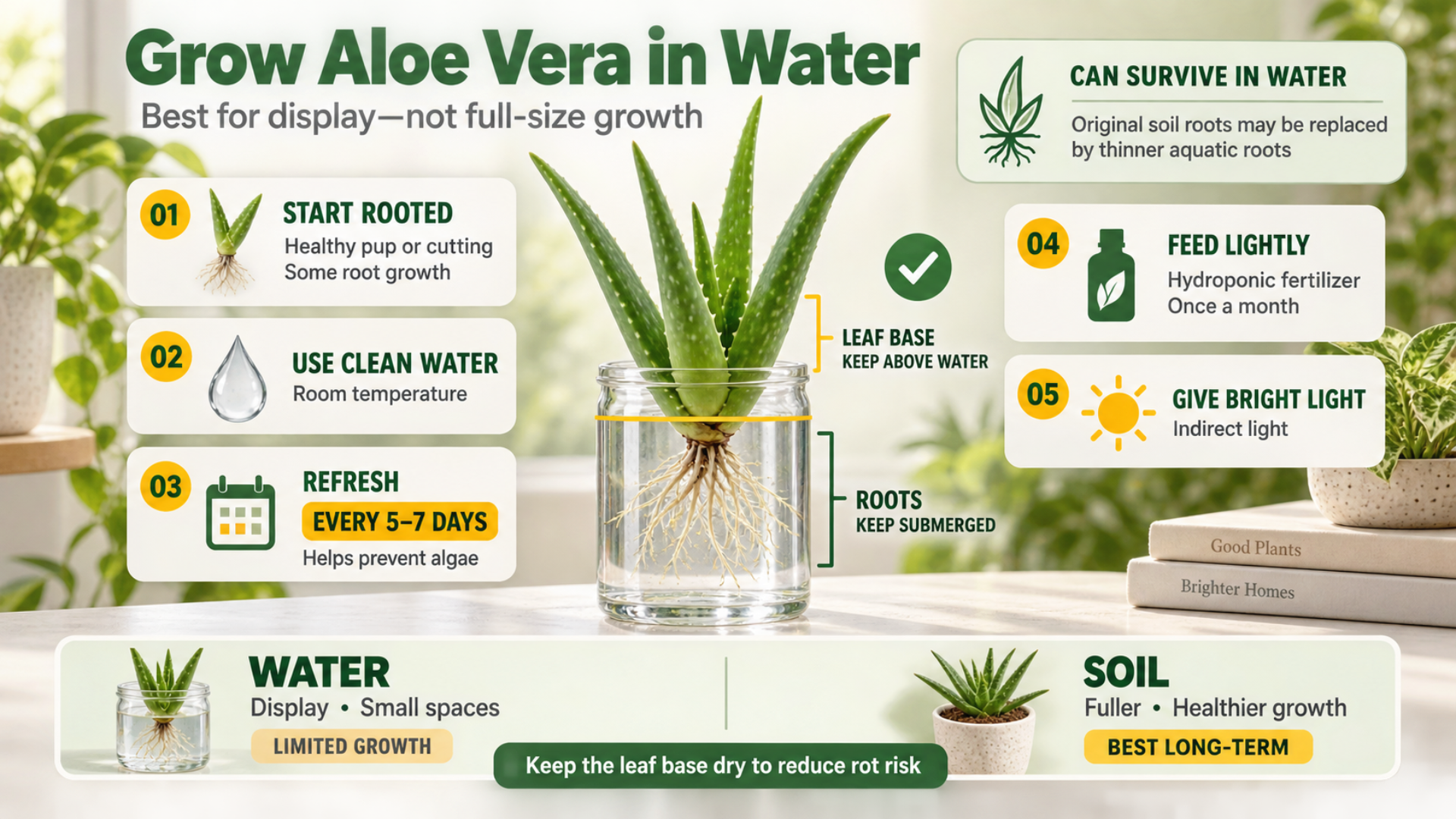
Aloe vera can survive in water, but it will not grow to full size. The original soil roots may rot in water and get replaced by thinner aquatic roots over time.
- Take a healthy pup or cutting with some root growth.
- Place it in a clean glass jar so the roots sit in water, but the base of the leaves stays above the water line.
- Use room-temperature water. Change the water every 5 to 7 days to prevent algae buildup.
- Add a small amount of liquid fertilizer meant for hydroponics once a month.
- Keep in a bright spot with indirect light.
This method works for display or small spaces, but for a full, healthy plant, soil is better.
How to Grow Aloe Vera Indoors
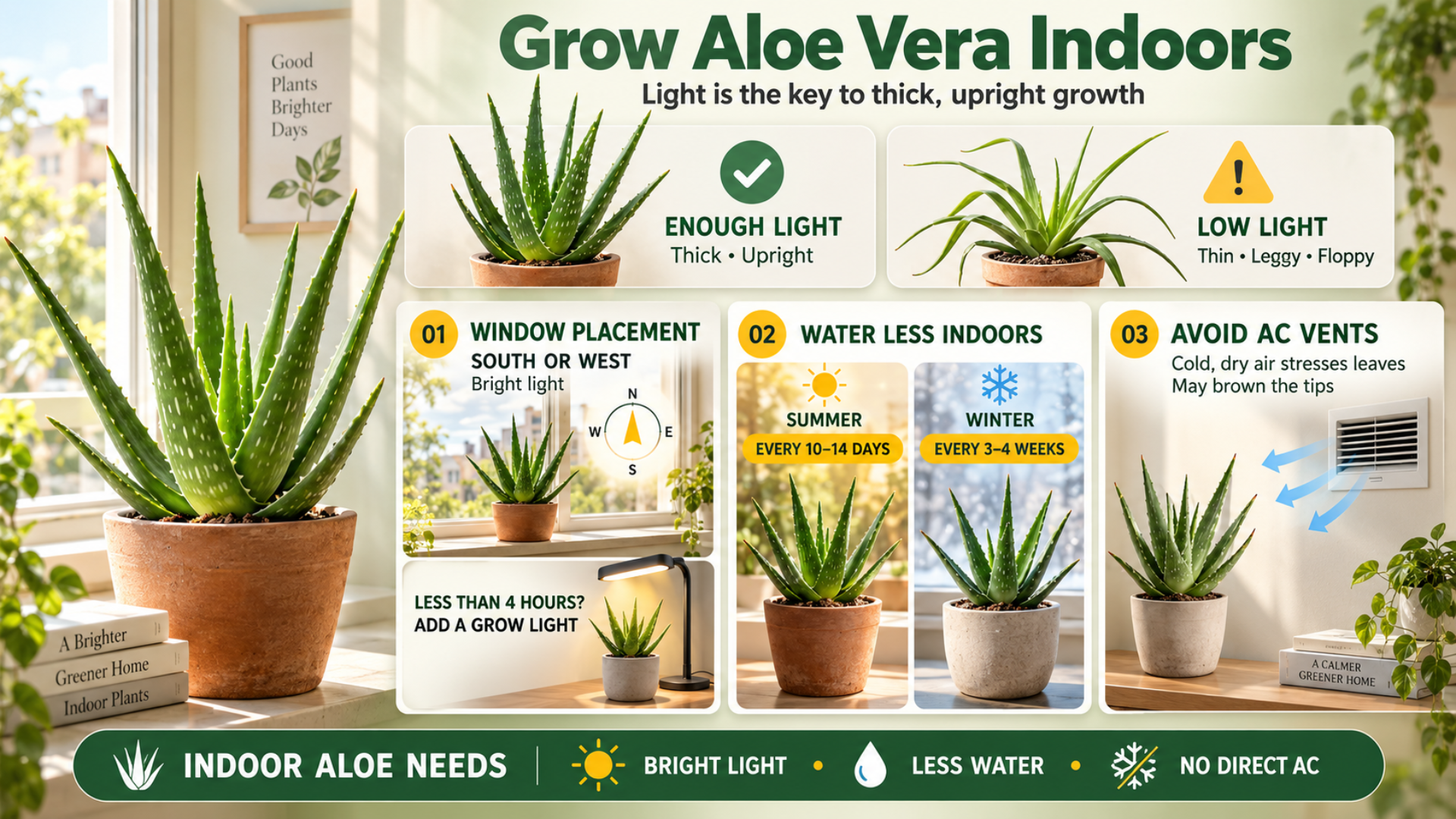
Aloe vera can grow indoors, but it needs enough light. Without adequate light, the leaves grow thin, leggy, and floppy instead of thick and upright.
Place the pot near a south-facing or west-facing window. If your home does not get enough natural light (less than 4 hours of bright light daily), use a grow light to supplement.
Indoor Aloe Vera needs less water than outdoor plants because indoor air is usually less hot and the soil dries out more slowly. Water once every 10 to 14 days in summer and once every 3 to 4 weeks in winter.
Keep the plant away from AC vents. Cold, dry air from air conditioning can stress the leaves and cause browning at the tips.
How to Care for Aloe Vera Plant
Sunlight
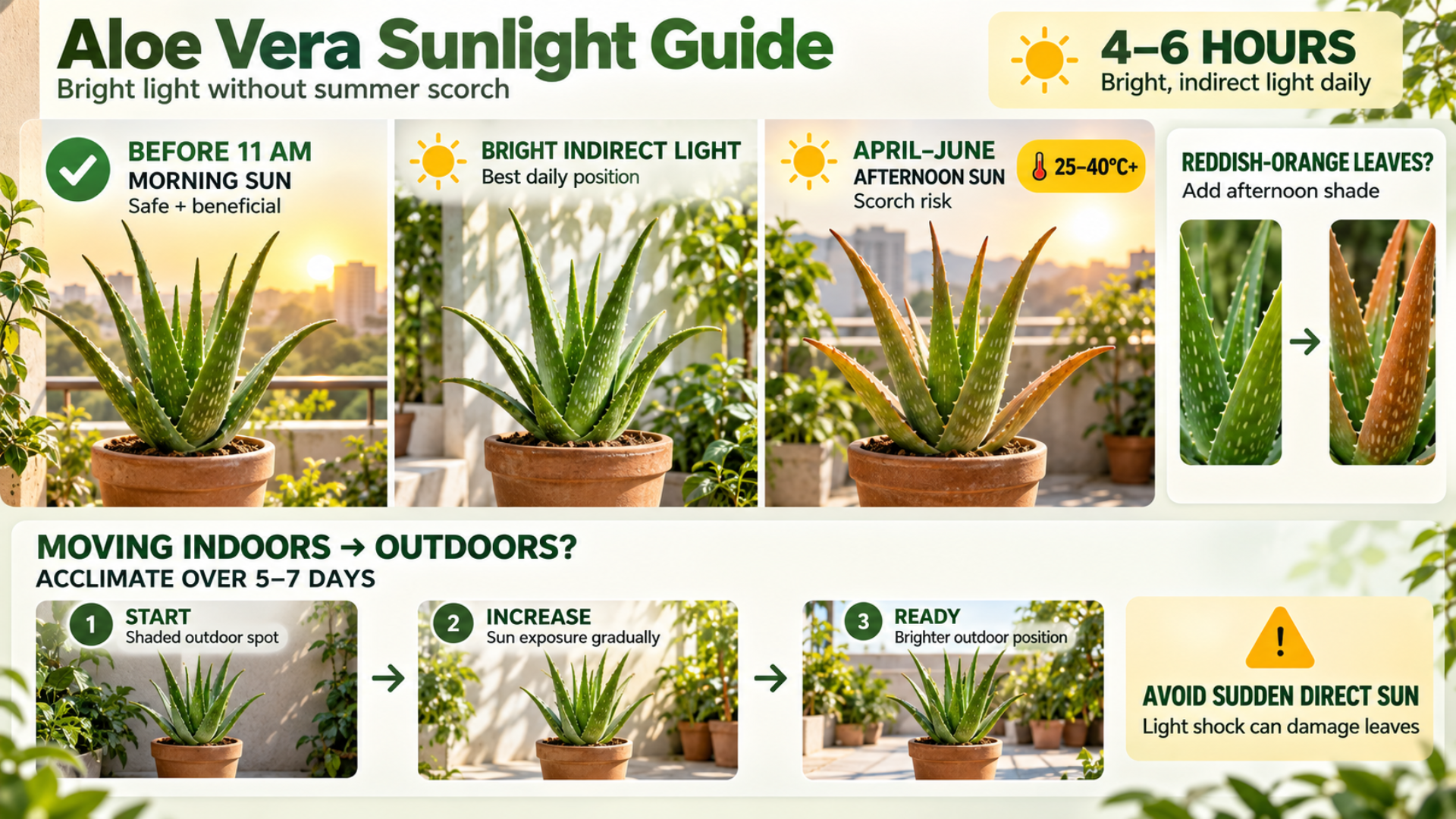
This plant needs 4 to 6 hours of bright, indirect sunlight daily. In Indian conditions (25°C to 40°C and above), direct afternoon sun during peak summer (April to June) can scorch the leaves, turning them pale, orange, or brown.
Morning sun (before 11 AM) is safe and beneficial. If the leaves start turning reddish-orange, move the plant to a spot with more shade during the afternoon.
If you bring an indoor aloe outside for more light, do it gradually over 5 to 7 days. Start with a shaded spot and slowly increase sun exposure. A sudden shift from indoor light to direct outdoor sun can shock and damage the plant.
Watering: Summer, Monsoon, and Winter
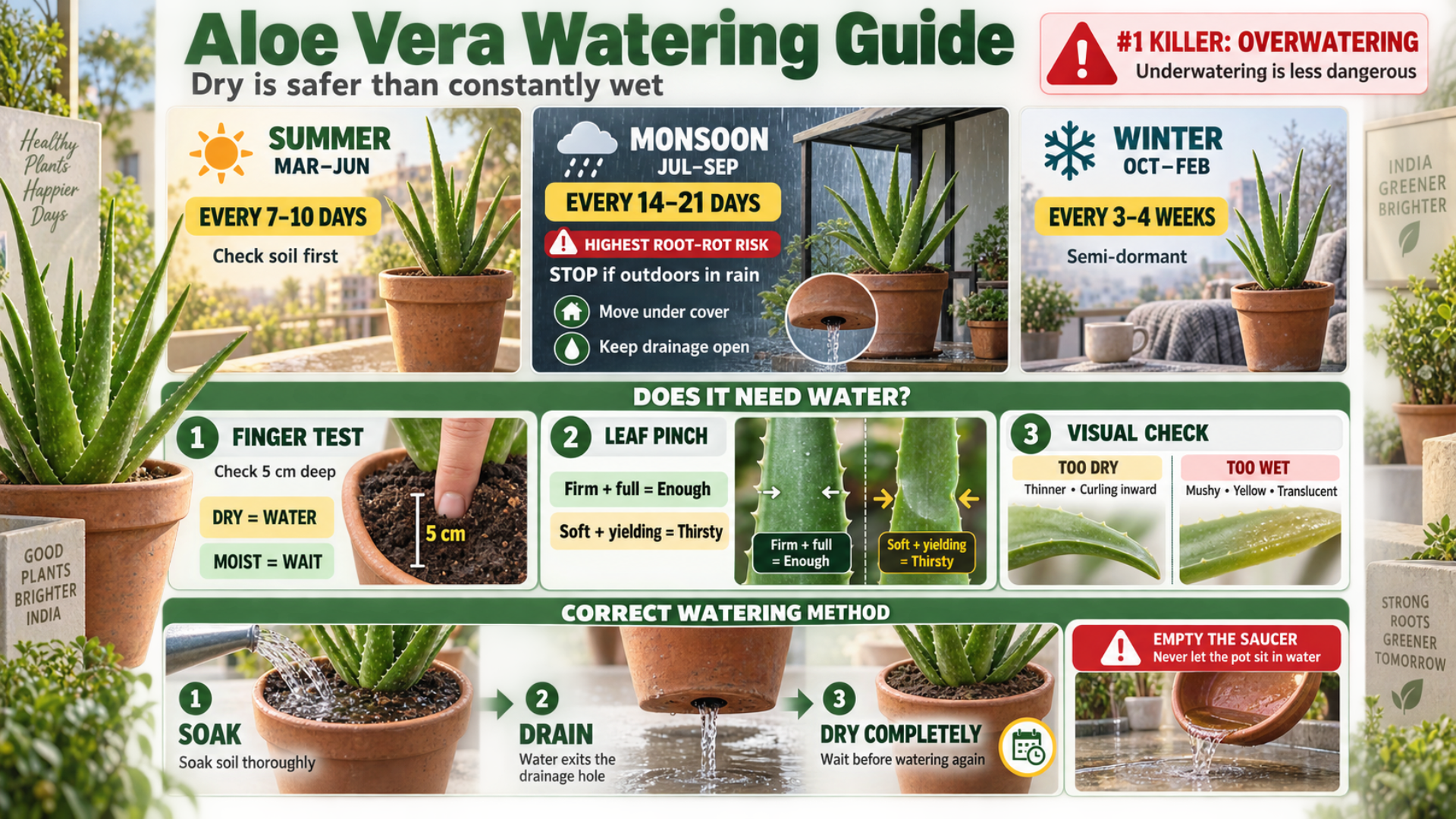
Overwatering is the number one reason aloe vera plants die. The leaves store water internally, so the plant can tolerate dry soil for extended periods. Underwatering is far less dangerous than overwatering.
- Summer (March to June): Water once every 7 to 10 days. The soil dries faster in heat, so check before watering.
- Monsoon (July to September): Reduce watering to once every 14 to 21 days, or stop entirely if the plant is outdoors and receiving rain. This is the most dangerous season for aloe vera in India. High humidity and constant moisture cause root rot faster than any other time of year. Move potted aloe to a covered area during heavy rain. Make sure the pot's drainage hole is not blocked.
- Winter (October to February): Water once every 3 to 4 weeks. Aloe vera goes semi-dormant in cooler months and uses much less water.
How To Check If Your Aloe Needs Water
- Finger test: Push your finger 5 cm into the soil. If it feels dry all the way down, water the plant. If there is any moisture, wait.
- Leaf pinch test: Gently squeeze an outer leaf. If it feels firm and full, the plant has enough water. If the leaf feels soft or gives easily under pressure, the plant is thirsty.
- Visual check: Leaves that look slightly thinner or start curling inward are signs of underwatering. Leaves that are mushy, yellowish, or translucent are signs of overwatering.
When you water, soak the soil thoroughly until water drains out from the bottom of the pot. Then let the soil dry completely before the next watering. Do not let the pot sit in a saucer of collected water.
What Is the Best Soil Mix for Aloe Vera Plant?
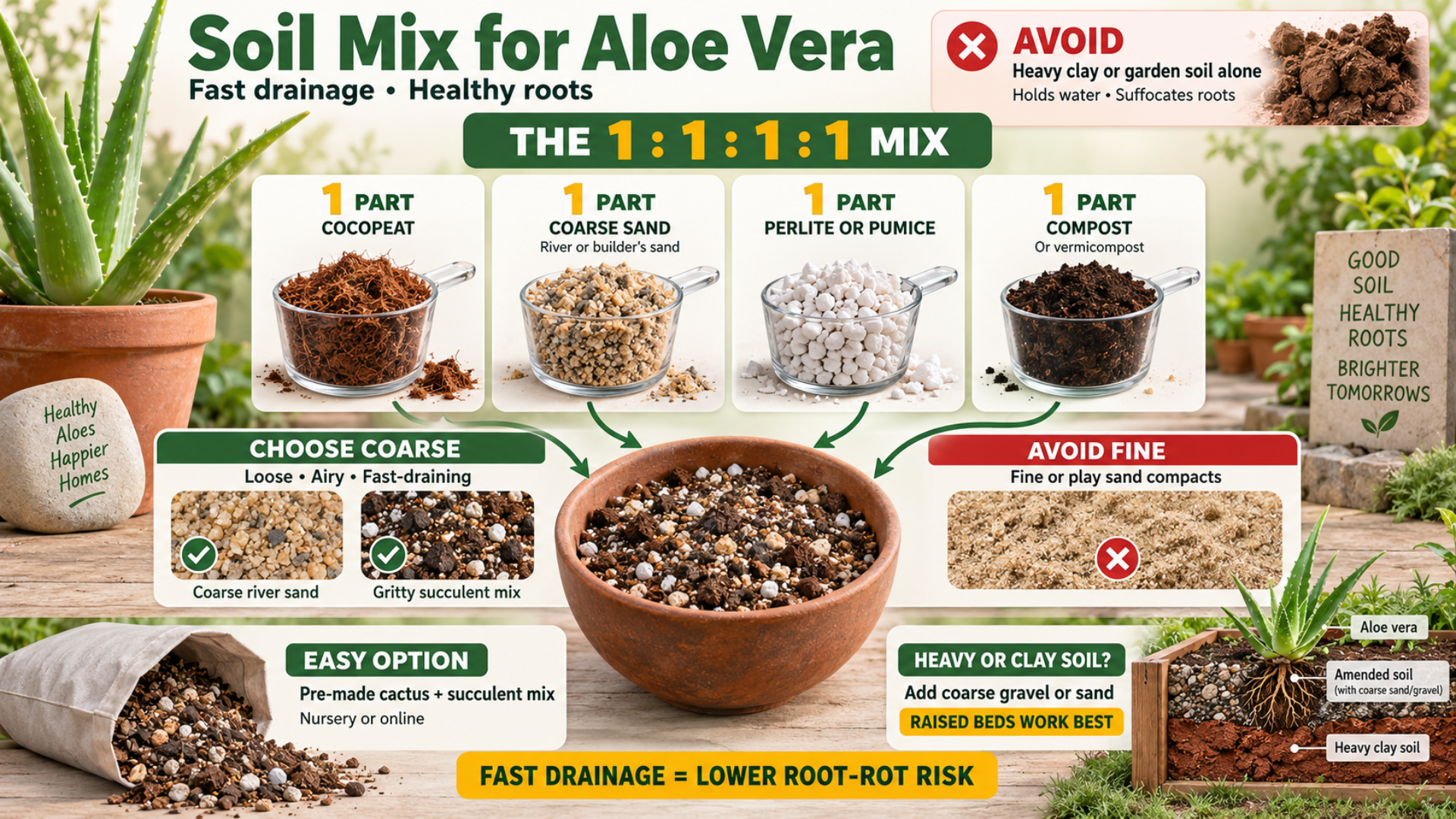

Aloe vera needs soil that drains fast and does not hold water for long. Heavy clay soil or regular garden soil retains too much moisture and suffocates the roots.
Recommended mix for Indian conditions:
- 1 part cocopeat
- 1 part river sand or coarse builder's sand (avoid fine sand or play sand, which compacts)
- 1 part perlite or pumice
- 1 part compost or vermicompost
Pre-made cactus and succulent mixes also work well.
If you are planting in a garden bed in an area with heavy or clay soil, add coarse gravel or sand to the planting area to improve drainage. Raised beds work even better.
The Right Pot for Aloe Vera Plant
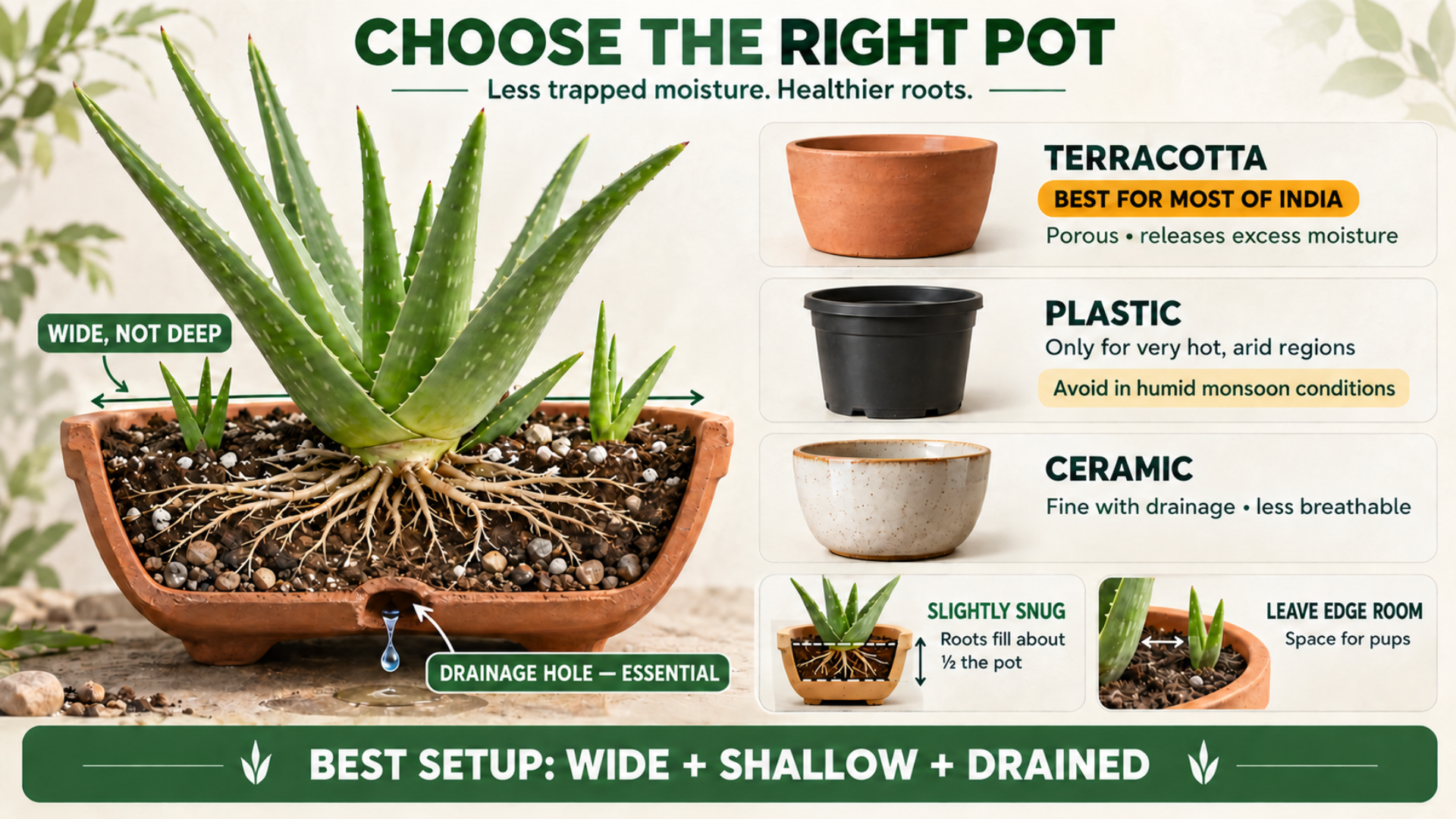
The pot material, size, and shape all affect how much moisture stays around the roots.
Material
- Terracotta is the best choice for most of India. It is porous, so it wicks away excess moisture from the soil. This is especially important during the monsoon season.
- Plastic pots work in very hot, arid regions where the soil dries too fast. In humid coastal areas or during the monsoon, plastic pots retain too much water.
- Ceramic pots with drainage holes are fine, but they do not breathe like terracotta.
Shape
Go wide, not deep. Aloe Vera roots spread horizontally near the surface. A deep pot leaves unused soil at the bottom that stays wet and invites rot.
Size
The roots should fill about half the pot by volume. A slightly snug pot is better than an oversized one. Leave a little extra room around the edges for pups to emerge as the plant matures.
Drainage
A drainage hole at the bottom is non-negotiable. If you have a decorative pot without a hole, use it as an outer cover and keep the plant in a terracotta pot inside it.
Fertilizing
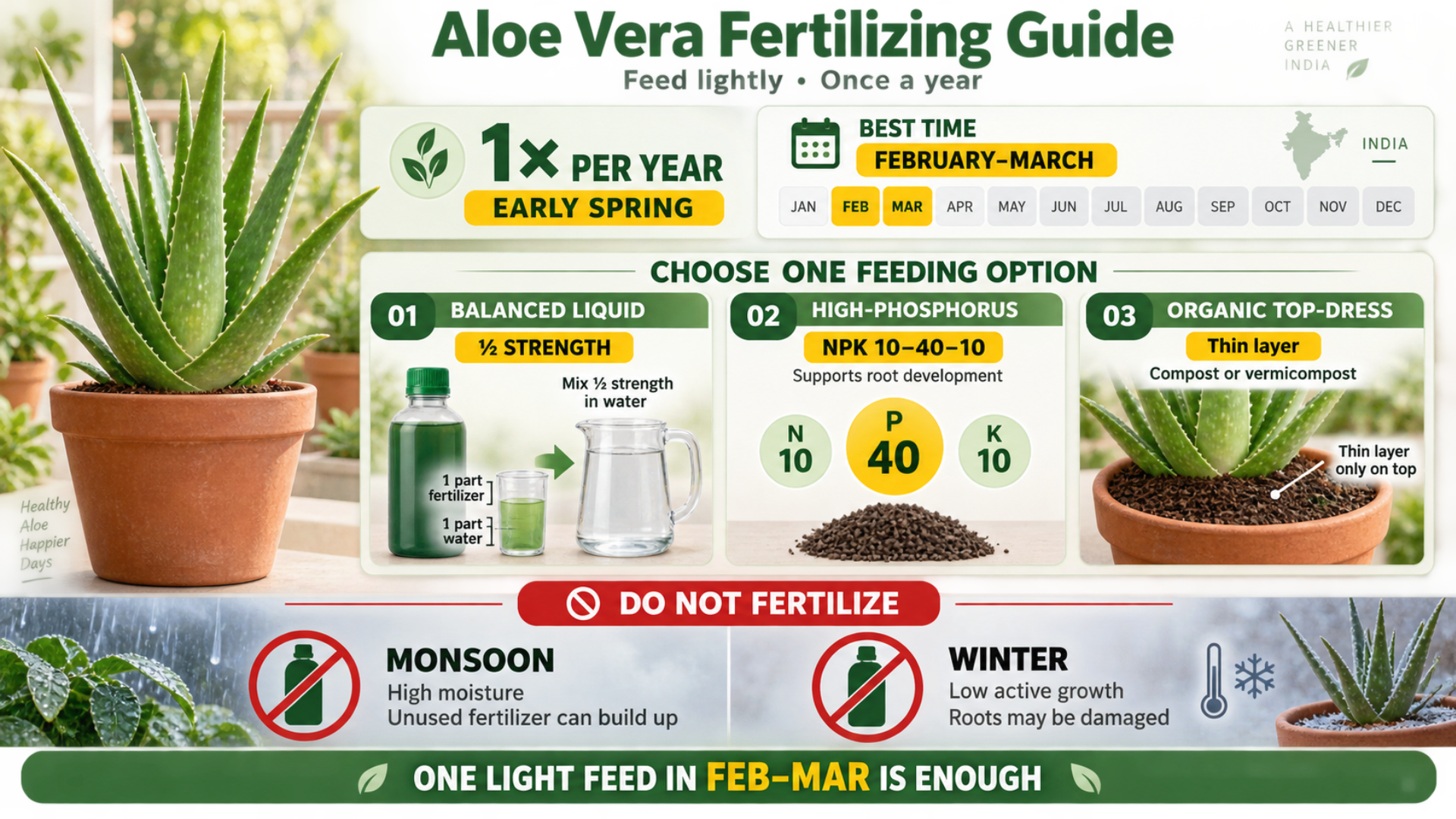
Aloe Vera does not need much fertilizer. Once a year, in early spring (February to March in India) is enough.
Use a balanced liquid fertilizer diluted to half strength, or a phosphorus-heavy fertilizer (look for an NPK ratio like 10-40-10) to support root development. You can also add a thin layer of compost or vermicompost to the top of the soil once a year.
Do not fertilize during the monsoon or winter. The plant is not actively growing during these periods, and unused fertilizer can build up in the soil and damage the roots.
Temperature and Humidity
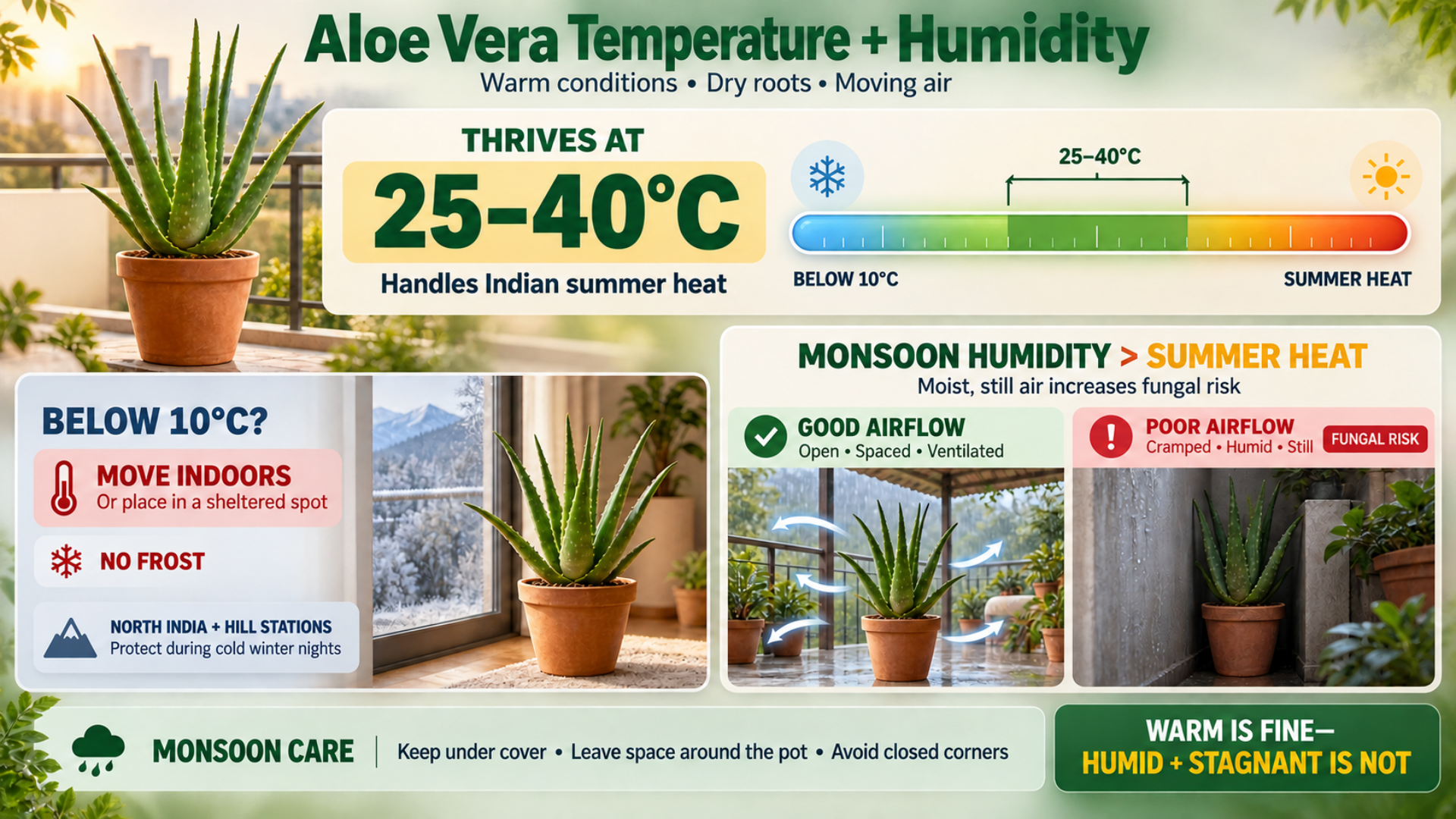
Aloe vera thrives between 25°C and 40°C. It handles Indian summer heat well, but it cannot survive frost. If temperatures in your area drop below 10°C in winter (parts of North India, hill stations), bring the plant indoors or to a sheltered spot.
High humidity during the monsoon is a bigger threat than heat. Good air circulation around the plant reduces the risk of fungal problems. Avoid placing the plant in cramped, poorly ventilated corners.
How to Make Your Aloe Vera Plant Grow Faster
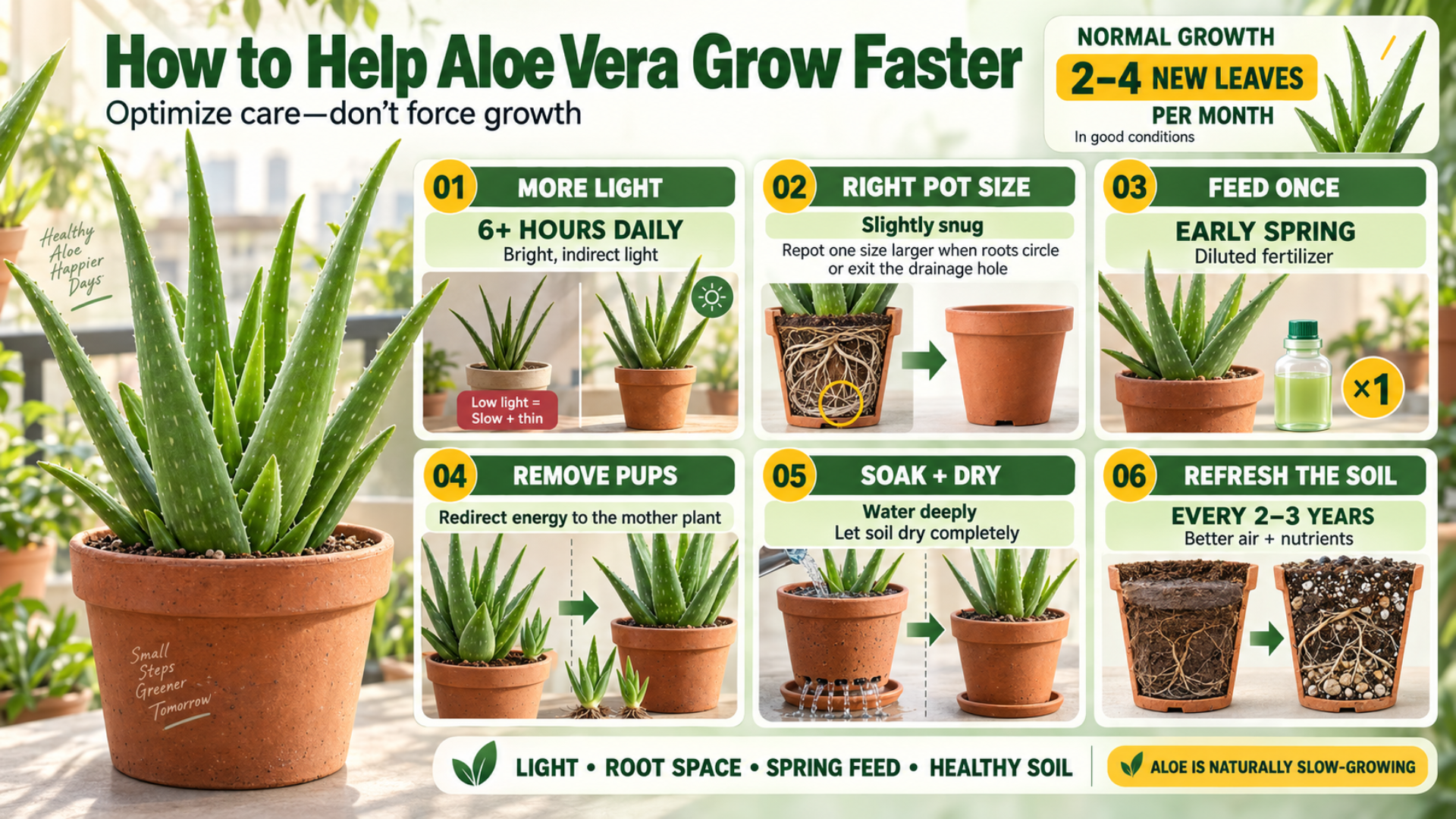
Aloe vera is not a fast grower. It typically adds 2 to 4 new leaves per month in good conditions. There are a few things you can do to speed up growth:
Give it More Light
Aloe vera grows faster with brighter, indirect light. 6 or more hours daily is ideal. Plants kept in low light grow slower and produce thinner leaves.
Use the Right Pot Size
A slightly snug pot encourages the plant to focus energy on leaf growth rather than root expansion. But do not keep it in a pot that is too small. If roots start circling the bottom or poking out of the drainage hole, it is time to repot into a pot one size larger.
Feed it Once in Spring
A single dose of diluted fertilizer at the start of the growing season gives the plant a nutrient boost.
Remove pups. When the mother plant produces pups, it diverts energy to them. Separating the pups allows the mother plant to put all its energy into its own growth.
Avoid Overwatering
Waterlogged roots cannot absorb nutrients. Keeping the soil cycle of soak-and-dry consistent promotes healthy root function and faster leaf production.
Repot Every 2 to 3 Years
Over time, soil breaks down, compacts, and loses its drainage capacity. Fresh soil gives the roots better access to air and nutrients.
Propagation: Step by Step
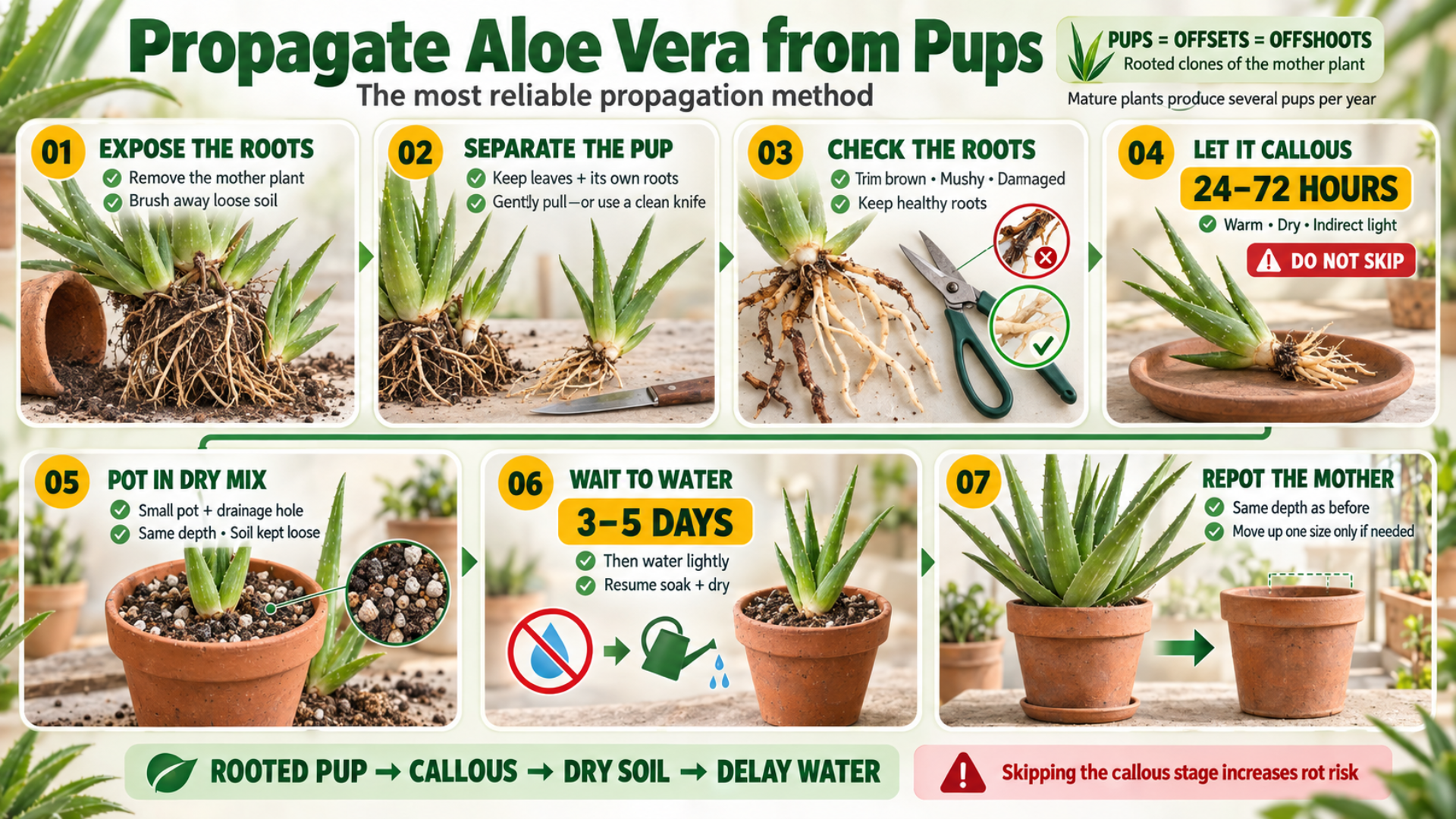
The most reliable way to propagate Aloe Vera is through pups (also called offsets or offshoots). These are small plants that grow at the base of the mother plant. They share the mother's root system and are essentially clones.
Aloe plants do not produce pups until they are a few years old. A healthy, mature plant will produce several pups per year.
Step 1: Remove the mother plant from its pot. Brush away loose soil so you can clearly see where the pups attach to the mother plant's roots.
Step 2: Separate the pup from the mother plant by gently pulling it away by hand. If the roots are tangled, use a clean, sharp knife to cut the pup free. Each pup should have at least a few leaves and some roots of its own.
Step 3: Check the pup's roots. Trim away any brown, mushy, or damaged sections with clean scissors. Keep as much healthy root as possible.
Step 4: Place the separated pup in a warm, dry spot with indirect light for 24 to 72 hours. This callousing step is critical. It lets the cut surfaces dry and seal, which prevents rot when the pup is planted. Skipping this step is a common cause of propagation failure.
Step 5: Fill a small pot (with a drainage hole) with dry succulent soil mix. Plant the pup at the same depth it was growing before. Do not pack the soil tightly. The roots need air pockets around them.
Step 6: Do not water for 3 to 5 days. Let the roots settle into the dry soil first. After that, give a light watering and resume the normal soak-and-dry cycle.
Step 7: Repot the mother plant back into its container. If the mother has outgrown its pot, this is a good time to move it to a pot one size larger. Plant it at the same depth as before.
Troubleshooting: Common Aloe Vera Problems
Brown Leaf Tips
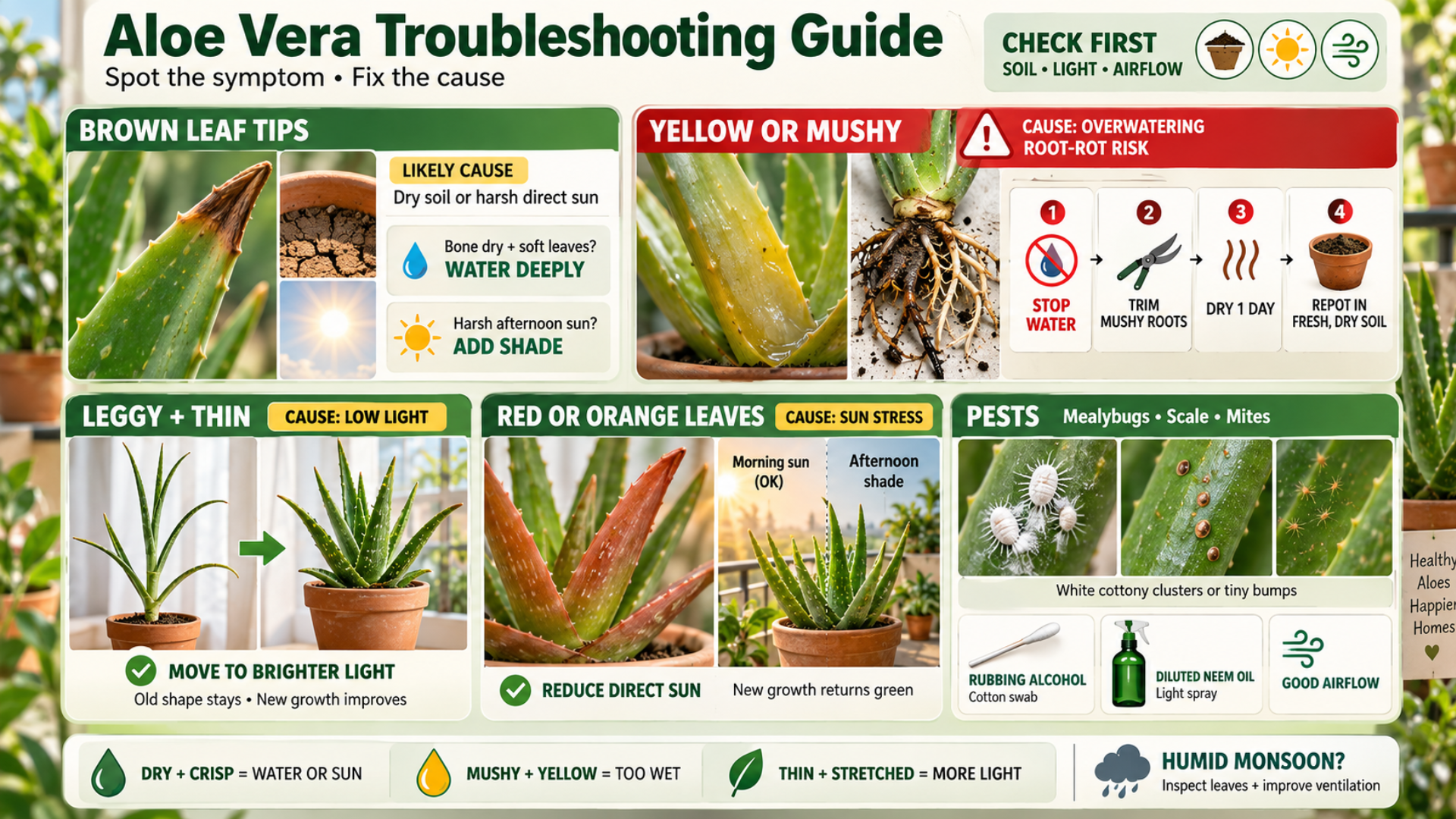
Brown, dry tips usually mean the plant is underwatered or getting too much direct sun. Check the soil. If it is bone dry and the leaves feel soft, water the plant thoroughly. If the plant is in harsh afternoon sun, move it to a spot with morning sun and afternoon shade.
Yellow or Mushy Leaves
Yellow, soft, or translucent leaves are a sign of overwatering. The roots are sitting in too much moisture and beginning to rot. Stop watering immediately. Remove the plant from the pot, trim any brown or mushy roots, let the root ball dry for a day, and repot in fresh, dry soil.
Leggy, Thin Growth
If the plant is growing tall and thin with widely spaced leaves instead of forming a compact rosette, it is not getting enough light. Move it to a brighter spot. The plant will not revert to its original shape, but new growth will come in thicker and more compact.
Red or Orange Leaves
Leaves turning red, orange, or purplish-brown are under sun stress. This is not fatal. Move the plant to a location with less direct sun, and the new growth will return to normal green.
Pests
Aloe Vera is mostly pest-resistant, but in humid Indian conditions (especially during monsoon), it can attract mealybugs, scale insects, and mites. These appear as small white cottony clusters or tiny bumps on the leaves.
Wipe them off with a cotton swab dipped in rubbing alcohol, or spray the plant with a diluted neem oil solution. Good air ventilation around the plant reduces pest problems.
The Right Way to Cut Aloe Vera Leaves for New Growth
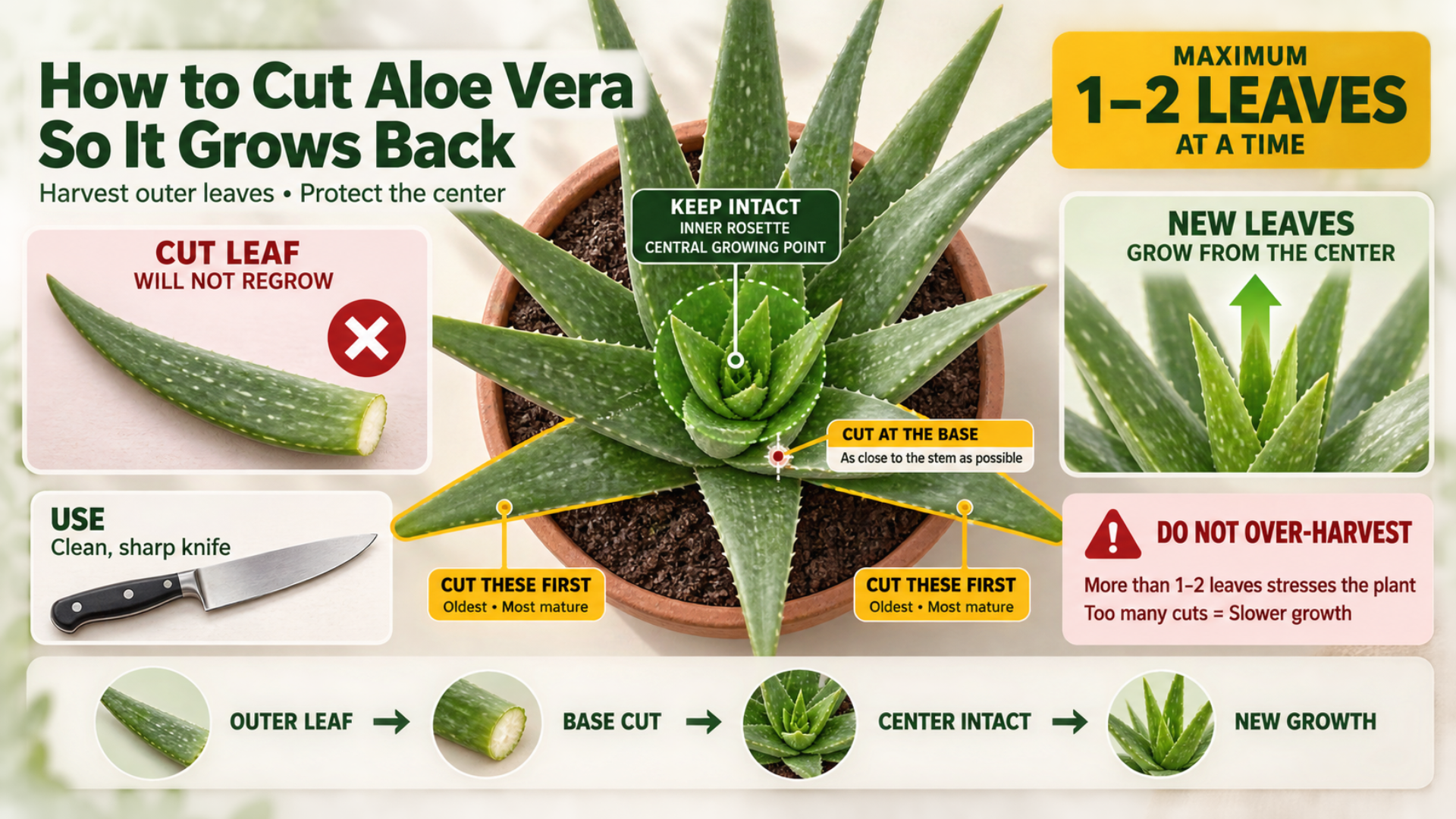
When you need gel or want to trim the plant, always cut outer leaves first. These are the oldest and most mature. Cut at the base of the leaf, as close to the main stem as possible, using a clean, sharp knife.
The cut leaf will not regrow. But the plant will continue producing new leaves from its center. As long as you leave the inner rosette and central growing point intact, the plant will keep growing.
Do not remove more than one or two leaves at a time. Taking too many leaves at once stresses the plant and slows its growth.
Can Pets Be Around Aloe Vera Plants?
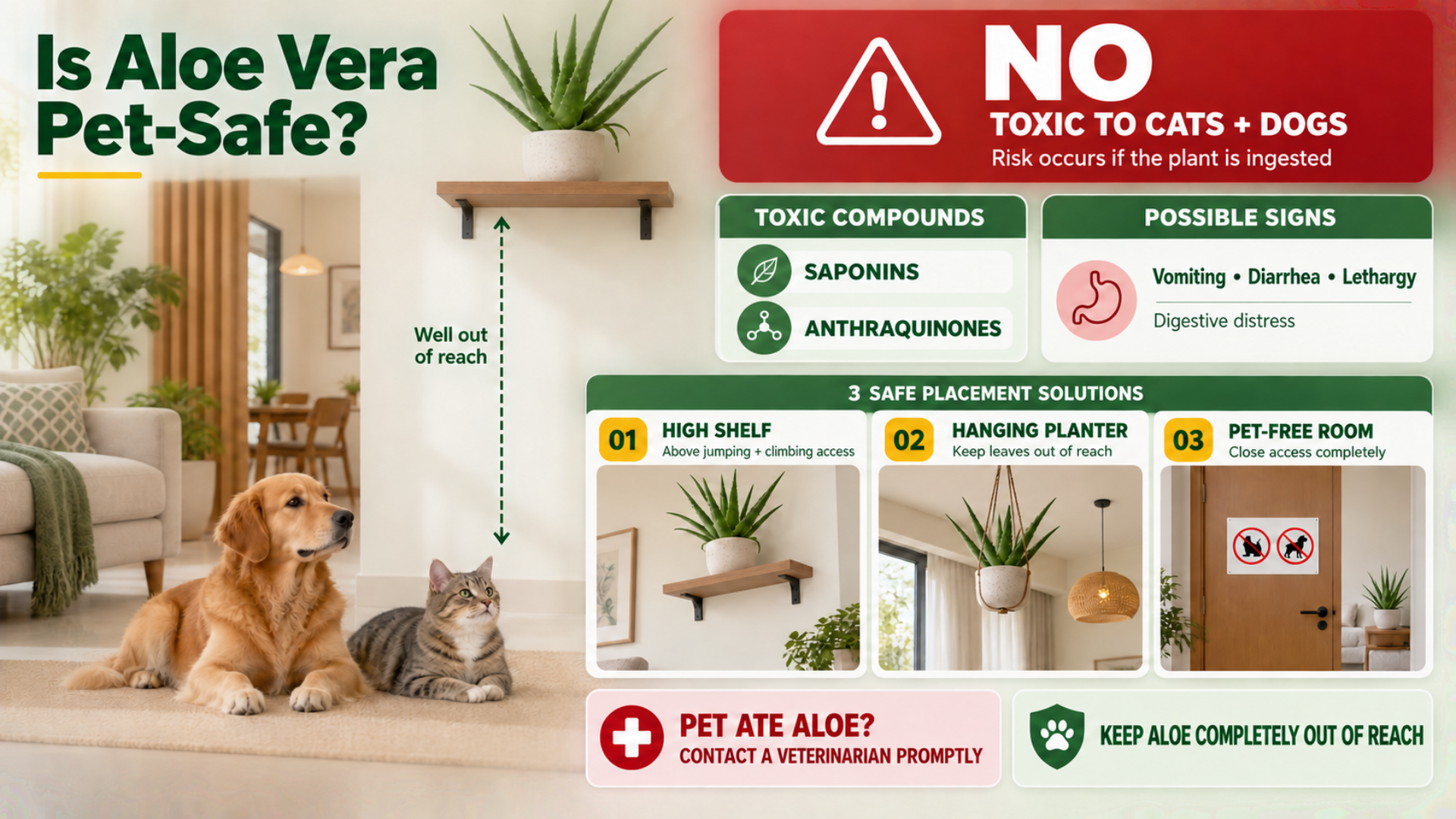
Aloe vera is toxic to cats and dogs. The plant contains compounds called saponins and anthraquinones that can cause vomiting, diarrhea, and digestive distress if ingested by pets.
If you have cats or dogs at home, keep Aloe Vera pots on high shelves, hanging planters, or in rooms that your pets cannot access.
Buying Aloe Vera Plants from Urvann
There is something special about bringing home your first Aloe Vera plant, watching a small plant settle into your space, growing new leaves, and becoming a part of your daily routine. For Bangalore homes, balconies, and gardens, Aloe Vera is a great choice as it adapts well to the city’s moderate climate. Instead of waiting for propagation, you can start with a healthy Aloe Vera plant that is ready to grow in your home.
Aloe Vera is a thoughtful choice for beginners and plant lovers who want a low-maintenance plant that stays green throughout the year. With the right care, your plant can become a long-lasting part of your home garden, whether you keep it on a balcony, windowsill, or terrace.
Explore the Aloe Vera Collection to find a plant that suits your space.
Frequently Asked Questions (FAQs)
1. How long does an Aloe Vera plant live?
With proper care, this plant can live 5 to 25 years. Most indoor plants have shorter lifespans because they eventually outgrow their pots or suffer from inconsistent care. Regular repotting and avoiding overwatering are the two biggest factors in keeping an aloe alive long-term.
2. Can Aloe Vera grow in full sun in India?
It handles Indian heat well, but harsh afternoon sun during peak summer (April to June) can scorch the leaves. Morning sun with afternoon shade is the safest combination. In cooler months (October to February), full sun is fine.
3. How often should I water Aloe Vera in India?
In summer, once every 7 to 10 days. During monsoon, once every 14 to 21 days or less. In winter, once every 3 to 4 weeks. Always let the soil dry completely before watering again.
4. Can I grow Aloe Vera from a single leaf?
It is possible but unreliable. Leaf cuttings often rot before developing roots because of the high water content inside the leaf. Propagation from pups is much more successful.
5. Why is my Aloe Vera plant turning brown?
Brown leaf tips usually indicate underwatering or too much direct sun. Brown, mushy leaves at the base indicate overwatering or root rot. Check the soil moisture and light exposure to identify the cause.
6. Is Aloe Vera an indoor plant or outdoor plant?
It can be both. It grows best outdoors in bright, indirect light. It also grows well indoors near a south-facing or west-facing window, as long as it gets at least 4 hours of bright light daily.
7. Does Aloe Vera need to be pruned?
No regular pruning is needed. Remove dead, damaged, or dried leaves by cutting them at the base. The plant sheds old leaves naturally over time.
8. Can I keep Aloe Vera in the bedroom?
Yes. It releases oxygen at night (unlike most plants that release oxygen only during the day) and absorbs indoor air pollutants like formaldehyde. It is a practical bedroom plant, provided it gets enough light during the day.
9. Why are my Aloe leaves thin?
Thin aloe vera leaves are usually caused by lack of sunlight, underwatering, poor drainage, or young plant growth. Aloe needs bright light and proper watering to store enough moisture in its leaves. Place it in a sunny spot, water deeply only when the soil is completely dry, and use well-draining soil to encourage thicker, healthier leaves.
10. How long does Aloe Vera take to grow?
Aloe vera usually takes around 3 to 4 years to reach full maturity when grown from a small plant or pup. New pups may show noticeable growth within 6 months to 1 year, while individual leaves can take about 1–2 years to become large and thick enough for harvesting. Growth depends on sunlight, watering, soil quality, and overall care.
11. ಬೆಂಗಳೂರಿನ ಬಾಲ್ಕನಿಯಲ್ಲಿ ಅಲೋವೆರಾ ಗಿಡ ಇಡಬಹುದೇ?
ಹೌದು, ಬೆಂಗಳೂರಿನ ಬಾಲ್ಕನಿಯಲ್ಲಿ ಅಲೋವೆರಾ ಗಿಡವನ್ನು ಸುಲಭವಾಗಿ ಬೆಳೆಸಬಹುದು. ಇದು ಕಡಿಮೆ ಆರೈಕೆ ಬೇಕಾದ ಗಿಡವಾಗಿದ್ದು, ದಿನಕ್ಕೆ 4–6 ಗಂಟೆಗಳಷ್ಟು ಬೆಳಕು ಸಿಗುವ ಸ್ಥಳದಲ್ಲಿ ಚೆನ್ನಾಗಿ ಬೆಳೆಯುತ್ತದೆ. ನೀರು ನಿಲ್ಲದಂತೆ ಉತ್ತಮ drainage ಇರುವ ಕುಂಡವನ್ನು ಬಳಸಿದರೆ, ಬಾಲ್ಕನಿ ಅಥವಾ ಕಿಟಕಿಯ ಹತ್ತಿರ ಆರೋಗ್ಯಕರವಾಗಿ ಬೆಳೆಸಬಹುದು.
12. ಅಲೋವೆರಾ ಗಿಡಕ್ಕೆ ಹೆಚ್ಚು ನೀರು ಹಾಕಿದರೆ ಏನಾಗುತ್ತದೆ?
ಅಲೋವೆರಾ ಗಿಡಕ್ಕೆ ಹೆಚ್ಚು ನೀರು ಹಾಕಿದರೆ ಬೇರುಗಳು ಕೊಳೆಯುವ (root rot) ಸಾಧ್ಯತೆ ಹೆಚ್ಚಾಗುತ್ತದೆ. ಇದರಿಂದ ಎಲೆಗಳು ಹಳದಿ ಬಣ್ಣಕ್ಕೆ ತಿರುಗಬಹುದು ಅಥವಾ ಮೃದುವಾಗಿ ಕಾಣಬಹುದು. ಅಲೋವೆರಾ ಕಡಿಮೆ ನೀರು ಬೇಕಾದ ಗಿಡವಾಗಿದ್ದು, ಮಣ್ಣಿನ ಮೇಲ್ಭಾಗ ಒಣಗಿದ ನಂತರ ಮಾತ್ರ ನೀರು ಹಾಕುವುದು ಉತ್ತಮ.